Introduction
The southern African region has been identified as particularly vulnerable to climate change (Niang et al., Reference Niang, Ruppel, Abdrabo, Essel, Lennard, Padgham, Urquhart, Barros, Field, Dokken, Mastrandrea, Mach, Bilir, Chatterjee, Ebi, Estrada, Genova, Girma, Kissel, Levy, MacCracken, Mastrandrea and White2014). Over the 21st century, scientists predict that the region will experience increasing temperatures, more frequent extreme weather events (floods, droughts, heat spells), increasing aridity, sea-level rise and unpredictable precipitation patterns (Müller, Reference Müller2009). In the region, 70% of the population directly depends on farming for food and livelihoods (SADC, 2012). Scientists expect that climate trends will negatively affect agricultural production in these areas, compromising food security and the overall local-level rural economy, which in turn can lead to macroeconomic vulnerability (United Nations Economic Commission for Africa, 2012).
Naturally occurring crop wild relative (CWR) populations offer an essential source of diversity for crop improvement, allowing mitigation of the region's agricultural systems to both short- and long-term changes in climate. CWR are wild plant species that have some degree of genetic relationship to cultivated species, including food, fodder, medicinal, ornamental and industrial crops (Maxted et al., Reference Maxted, Ford-Lloyd, Jury, Kell and Scholten2006). CWR contain an indispensable reservoir of traits due to the adaptation of individual populations to local environmental conditions and their escape from the genetic bottleneck of high yielding variety production (Tanksley and McCouch, Reference Tanksley and McCouch1997). CWR diversity is important for the enhancement of crops, particularly to promote their adaptation to current and future uncertain and variable production conditions. However, ecosystems and populations of CWR contained within them are increasingly threatened by the impacts of human-mediated environmental changes. CWR are negatively impacted by the same range of factors as any other wild species, including habitat conversion and degradation, invasive species and climate change (Jarvis et al., Reference Jarvis, Lane and Hijmans2008; Kell et al., Reference Kell, Qin, Chen, Ford-Lloyd, Wei, Kang and Maxted2015). However, since many CWR species grow in agricultural areas, they are highly sensitive to intensive management practices such as cultivation of monocultures and use of chemicals, as well as to genetic pollution (Hawkes et al., Reference Hawkes, Maxted and Ford-Lloyd2000; Kwieciński, Reference Kwieciński2009; Maxted and Kell, Reference Maxted and Kell2009; Kell et al., Reference Kell, Maxted, Bilz, Maxted, Dulloo, Ford-Lloyd, Frese, Iriondo and Pinheiro de Carvalho2012). Conservation of CWR both in their natural habitats (in situ) and off-site (ex situ) is imperative as it will increase access to resources and use in the development of resiliency strategies at local and national levels. Furthermore, the flora of southern Africa contains rich CWR diversity that is of potentially high value for local, regional and global food and economic security.
The study was carried out in the context of the Southern African Development Community (SADC) CWR project (http://www.cropwildrelatives.org/sadc-cwr-project/), which aimed to address in situ conservation and sustainable use of CWR within the SADC region to help mitigate the predicted adverse impacts of climate change on agricultural production and thus underpin regional food and economic security. The project was implemented under the umbrella of the SADC Secretariat, an inter-governmental organization which includes the 15 countries of Angola, Botswana, the Democratic Republic of the Congo, Lesotho, Madagascar, Malawi, Mauritius, Mozambique, Namibia, Seychelles, South Africa, Swaziland, United Republic of Tanzania, Zambia and Zimbabwe. National Strategic Action Plans for the conservation and sustainable use of CWR in three exemplar SADC countries (Mauritius, South Africa and Zambia) were developed and training provided to all countries in the methodological framework.
While national approaches to genetic resources conservation are essential because the responsibility for those resources lies with nation states, the concept of an integrated approach that harmonizes national and regional priorities and actions has also been proposed (Maxted et al., Reference Kell, Qin, Chen, Ford-Lloyd, Wei, Kang and Maxted2015). In this concept, CWR conservation planning is undertaken at both national and regional levels to ensure that representative samples (populations) of priority species at both levels are targeted for active conservation. This approach also acknowledges the common value of CWR diversity across the region (especially in the centres of diversity and domestication of crops), that their conservation is a shared responsibility of the countries in the region, and that there is a wide variation in the timescale for the development of national CWR conservation strategies (Kell et al., Reference Kell, Ford-Lloyd, Brehm, Iriondo and Maxted2017). A SADC-wide CWR conservation strategy would ensure that regionally important CWR resources are targeted for conservation action across their full range, and further, provide a framework for informing the development of policy on the conservation of regionally important plant genetic resources for food and agriculture (PGRFA). This paper describes an analysis that was undertaken to identify priority CWR taxa at regional scale in the SADC region as a first step towards the development of a regional CWR conservation strategy.
Materials and methods
Generating a CWR checklist of the SADC region
The starting point for creating a regional CWR conservation strategy is the generation of a regional CWR checklist (i.e. the CWR taxa that occur in the region). We used a process first described by Kell et al. (Reference Kell, Knüpffer, Jury, Ford-Lloyd, Maxted, Maxted, Ford - Lloyd, Kell, Iriondo, Dulloo and Turok2008) which involves generating a list of genus names containing crop taxa, matching them to genera in a floristic checklist of the geographic area of interest, and extracting the taxa in the floristic checklist in the matching genera. The result of extracting matching taxon names with associated authorities constitutes what is known as a CWR checklist (Maxted et al., Reference Kell, Qin, Chen, Ford-Lloyd, Wei, Kang and Maxted2015). A complete checklist uses a broad definition of a CWR, which is all taxa found in the same genus as a crop taxon (Maxted et al., Reference Maxted, Ford-Lloyd, Jury, Kell and Scholten2006), lists CWR present in a geographic area that are related to all types of crops, and thus usually results in a substantial proportion of the flora being included (Kell et al., Reference Kell, Knüpffer, Jury, Ford-Lloyd, Maxted, Maxted, Ford - Lloyd, Kell, Iriondo, Dulloo and Turok2008; Maxted and Kell, Reference Maxted and Kell2009; Maxted et al., Reference Maxted, Kell, Ford-Lloyd, Dulloo and Toledo2012). However, at this time no digitized regional floristic checklist for all 15 SADC countries exists, nor individual national checklists for each country. Therefore, a partial checklist was produced by creating a list of genus names containing regionally important crops and matching them with taxa in publically available datasets containing records of crops and related wild species in all countries of the world.
To generate the list of regionally important crop genus names, we first generated a list of crops cultivated in the SADC region by consulting FAOSTAT (http://www.fao.org/faostat/en/#home) production data and integrating two datasets from the SADC Plant Genetic Resource Centre (SPGRC) located in Lusaka, Zambia. As FAOSTAT does not include all crops/crop groups important to the region, project partners from the SPGRC reviewed the initial list and added missing crops, such as buckwheat (Fagropyrum esculentum Moench). The incorporation of the SPGRC datasets also proved valuable production value data on minor crops are that are often not recorded at a national level The SPGRC provided data on: (i) species in their base collection held for long-term storage and for repatriation to national genebanks; (ii) names of regionally important fruit, nut, vegetable, cereal, legume, oil producing, medicinal, spice, ornamental, forage and fodder, and forestry crops; and (iii) names of crops that have their centre of origin and diversity within the SADC Region (e.g. hausa potato Plectranthus rotundifolius (Poir.) J. K. Morton, kei apple Dovyalis caffra (Hook. F. & Harv.) Warb, marula tree Sclerocarya birrea (A. Rich.) Hochst and natal plum Carissa macrocarpa (Eckl.) A. DC.).
We obtained floristic data from two sources: (a) the Harlan and de Wet Crop Wild Relative Inventory (www.cwrdiversity.org – Vincent et al., Reference Vincent, Wiersema, Kell, Fielder, Dobbie, Castañeda-Álvarez, Guarino, Eastwood, León and Maxted2013) and (b) GRIN Taxonomy for Plants (https://npgsweb.ars-grin.gov/gringlobal/taxon/taxonomyquery.aspx). We used Microsoft Access software to perform queries to match the list of crop genus names to the taxa that occur in the SADC region according to these sources, including both native and introduced taxa.
While crops may fall into several use categories (e.g. human food, animal food, food additives, materials, fuels, medicines and environmental), human food and beverage crops were given priority because of their crucial role in sustaining human life. Following the matching process, we excluded species that were (i) only related to non-human food and/or beverage crops, (ii) confirmed to only be cultivated in the region (e.g. coffee Coffea arabica Linn. and sorghum Sorghum bicolor Linn. Moencihs), and (iii) known to be invasive (e.g. Brassica tournefortii Gouan and Solanum sisymbriifolium Lam). To complete this task, we consulted: (a) Mansfeld's World Database of Agricultural and Horticultural Crops (http://mansfeld.ipk-gatersleben.de), (b) the Plant Resources of Tropical Africa (PROTA) online database (http://www.prota.org), and (c) regional specialists from the SPGRC. Some species, such as shea tree (Vitellaria paradoxa C.F. Gaertn) and tamarind (Tamarindus indica Linn.) are known to be semi-cultivated, cultivated on a very small scale, harvested directly from the wild, or cultivated and also naturalized or growing wild. We did not exclude these species from the partial checklist, as their inclusion or exclusion was determined through subsequent prioritization actions.
Selecting the SADC region's priority CWR taxa
To prioritize the checklist, two criteria were applied: (i) the relative socioeconomic value of the food or beverage crop or crop groups to which they are related; and (ii) their potential or known value in crop improvement programmes – see Ford-Lloyd et al. (Reference Ford-Lloyd, Kell, Maxted, Maxted, Ford-Lloyd, Kell, Iriondo, Dulloo and Turok2008), Maxted and Kell (Reference Maxted and Kell2009) and Kell et al. (Reference Kell, Ford-Lloyd, Brehm, Iriondo and Maxted2017). The first criterion was applied at the stage of creating the partial CWR checklist which includes only wild relatives of human food and beverage crops (see section ‘Generating a CWR checklist of the SADC region’).
The second criterion takes account of a narrower definition of a CWR, which includes taxa that are considered to have greatest potential to contribute traits for crop improvement due to their relatively close genetic relationship to crops (Maxted et al., Reference Maxted, Ford-Lloyd, Jury, Kell and Scholten2006). These taxa are in general more easy to use in conventional plant breeding programmes (Maxted and Kell, Reference Maxted and Kell2009; Kell et al., Reference Kell, Ford-Lloyd, Brehm, Iriondo and Maxted2017) and may potentially be more acceptable in crop improvement programmes using biotechnological techniques due to their relatively close genetic relationship (Kell et al., Reference Kell, Ford-Lloyd, Brehm, Iriondo and Maxted2017).
In addition, more distantly related taxa with documented confirmed or potential use in plant breeding were prioritized, as first proposed by Maxted and Kell (Reference Maxted and Kell2009). To collate this information we consulted: (a) the Harlan and de Wet Crop Wild Relative Inventory (http://www.cwrdiversity.org – Vincent et al., Reference Vincent, Wiersema, Kell, Fielder, Dobbie, Castañeda-Álvarez, Guarino, Eastwood, León and Maxted2013) and (b) GRIN Taxonomy for Plants (https://npgsweb.ars-grin.gov/gringlobal/taxon/taxonomysimple.aspx). Gene pool concepts and information on confirmed or potential use in breeding programmes was lacking for numerous species. We conducted additional research by consulting the following sources: (c) Mansfeld's World Database of Agricultural and Horticultural Crops (http://mansfeld.ipk-gatersleben.de), (d) Plant Resources of Tropical Africa (PROTA) online database (http://www.prota.org), (e) selected books from Kole's volume Wild Crop Relatives: Genomics and Breeding Resources (2011) and (f) peer-reviewed articles and books (e.g. Morton Reference Morton1987; Cooper et al., Reference Cooper, Poirier, Murphy, Oswald and Procise1998; Kalinganire et al., Reference Kalinganire, Weber and Coulibaly2012; Ayala-Silva et al., Reference Ayala-Silva, Salas, Reed, Gubbuk and Winterstein2014).
Ideally, a third criterion, the relative threat status of the CWR taxa, would also be applied (see Kell et al., Reference Kell, Ford-Lloyd, Brehm, Iriondo and Maxted2017). However, this was not possible as there is currently no harmonized Red List of plant species available for the SADC region. Finally, the SADC CWR regional priority species list (Allen et al., Reference Allen, Kell, Magos Brehm and Gaisberger2017) nomenclatural basis was mainly determined using GRIN Taxonomy (https://npgsweb.ars-grin.gov/gringlobal/taxon/taxonomysimple.aspx).
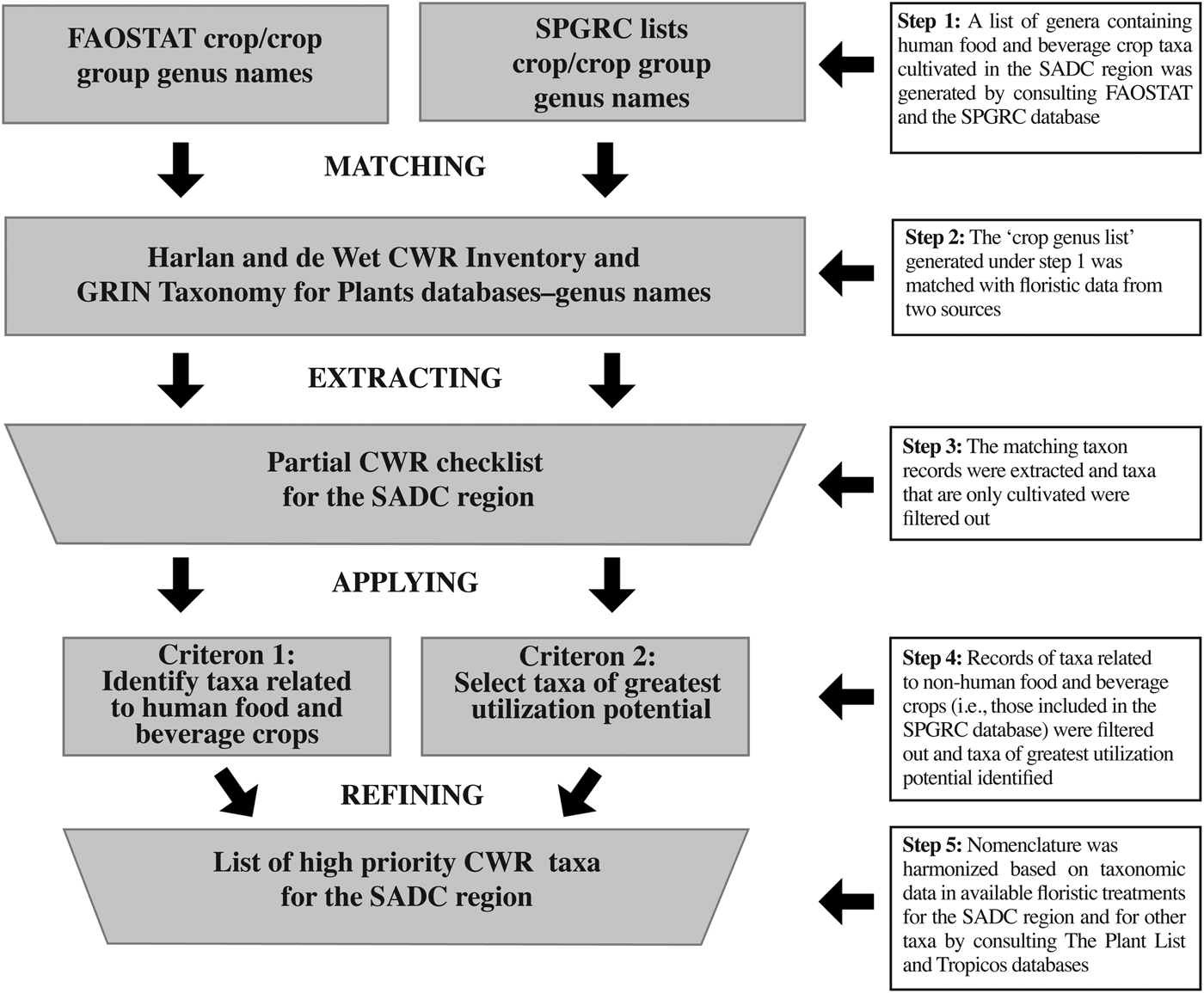
The available floristic checklists of the SADC countries (e.g. Braun et al., Reference Braun, Dlamini, Mdladla, Methule, Dlamini and Dlamini2004; da Silva et al., Reference Da Silva, Izidine and Amude2004; Mapaura and Timberlake Reference Mapaura and Timberlake2004; Kobisi Reference Kobisi2005; Phiri Reference Phiri2005; Setshogo Reference Setshogo2005; Figueiredo and Smith Reference Fgueiredo and Smith2008; Klaassen and Kwembeya Reference Klaassen and Kwembeya2013) were consulted to harmonize and integrate the accepted nomenclature in the various SADC countries with the GRIN Taxonomy nomenclature used to create the checklist. The Plant List (http://www.theplantlist.org/) and Tropicos (http://www.tropicos.org/) were consulted for taxa not included in those treatments. For this project, it was decided that introduced status would not prevent a species from being prioritized for conservation. Depending on how long the species have been present, some introduced CWR populations may harbour important genetic diversity, especially because many taxa can adapt rapidly to new environments (Ford-Lloyd et al., Reference Ford-Lloyd, Engels, Jackson, Jackson, Ford-Lloyd and Parry2014). For example, the centre of origin and diversity of sunflower resides in the Americas (Wales et al., Reference Wales, Akman, Watson, Sánchez Barreiro, Smith, Gremillion, Thomas, Glibert and Blackman2018). Yet, sunflower is the third largest grain crop produced in South Africa after maize and wheat (DAFF, 2016a). The priority list includes two introduced wild sunflower species (Helianthus argophyllus (Torr. & A. Gray) and H. debilis Nutt. subsp. cucumerifolius (Torr. & A.Gray) Heiser) that have naturalized in South Africa. These two wild priority taxa represent a local source of adaptive traits for the sunflower seed industry and South Africa and are important resources to the region as a whole. Figure 1 shows a conceptual diagram of the approach we used to create the SADC CWR Inventory.
Conceptual diagram showing the approach of creating the partial checklist and identifying priority CWR taxa for the SADC region.

Results
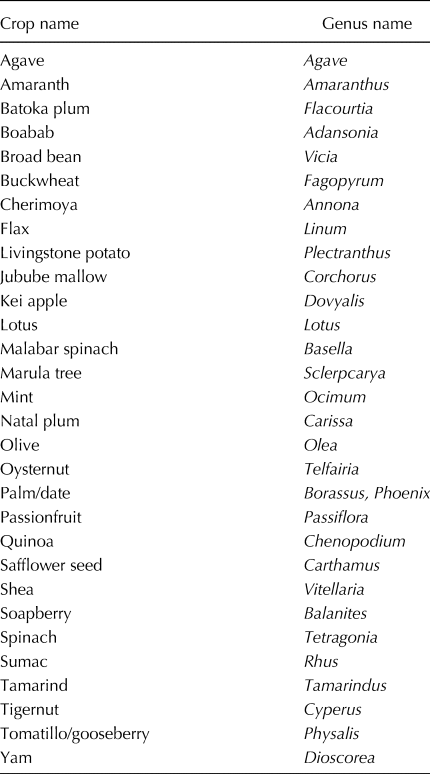
We found that the SADC region cultivates 92 human food and/or beverage crops. Table 1 shows the 30 human food and/or beverage crops/crop groups that were sourced from the SPGRC datasets. After extracting the list of genera encompassed by these human food and/or beverage crops/crop groups and including additional genera containing other regionally important non-human food and/or beverage crop taxa sourced from the SPGRC lists, we generated a list of 323 genera (see section ‘Generating a CWR checklist of the SADC region’). After the matching, we found that the SADC region contains 1900 CWR species in 216 genera which are related to crops/crop groups that fall into several use categories (e.g. human food and beverages, animal food, food additives, materials, fuels, social, medicines and environment uses).
The 30 crops/crop groups and the associated genus names sourced from the SPGRC lists

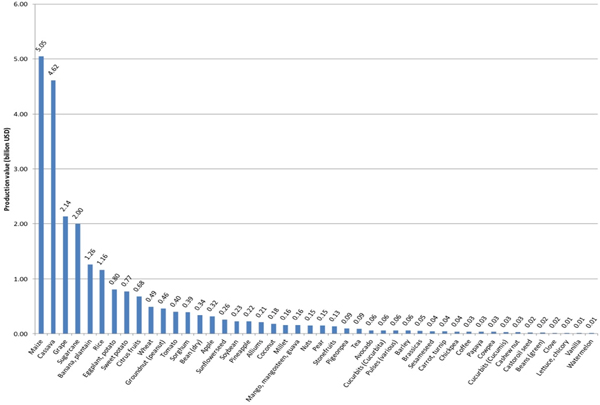
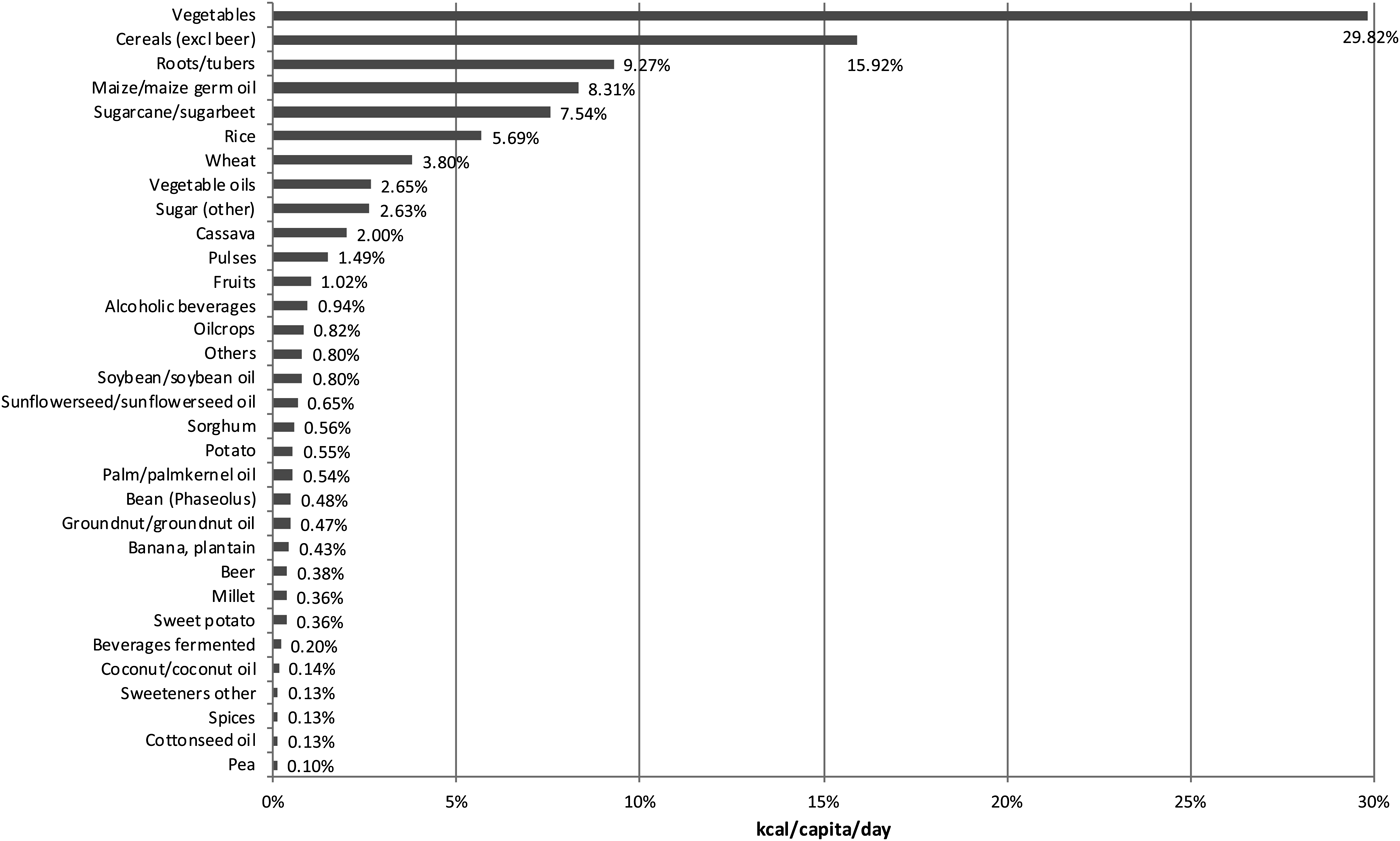
After applying the first prioritization criterion, we found that 745 of 1900 CWR species (nearly 40%) are related to 64 of 92 human food and/or beverage crops/crop groups that are cultivated in the region. These species are therefore of high potential value for food security in the region as they are potential gene donors to human food/beverage crops cultivated in the region. Figure 2 shows the crops/crop groups that contributed 0.1% or more of dietary energy (kilocalories) per capita per day over the 10-year period 2003–2012 in the SADC region. FAOSTAT records dietary energy supply data in more broadly defined crop categories than production value data (e.g. the category ‘vegetables’ is used to record food supply values rather than listing the specific crops). However, we found that all of the 64 crops/crop groups fit in the energy supply categories listed by FAOSTAT and thus are important for regional food security due to their value as plant-derived energy sources. Additionally, many of these crops provide a source of essential micronutrients to the diets of those living in the region. For example, millions of smallholders in southern Africa farmers cultivate cowpea (Vigna unguiculata (L.) Walp.) as a subsistence crop (Singh et al., Reference Singh, Ehlers, Sharma, Freire Filho, Fatokun, Tarawali, Singh, Kormawa and Tamo2002). The pulses are high in protein and carbohydrates, and the fresh leaves and pods provide an excellent source of vitamins like A, B and C, and minerals like iron and calcium (Singh, Reference Singh2014). Furthermore, 46 of these crops/crop groups have an average annual production value of US$10 million or more in the SADC region (Fig. 3), and of these, 31 have 592 CWR species that occur in the region. This means that c. 80% of the partial checklist contains CWR species that are not only of potential value for food security, but also of particularly high potential economic value for the region.
The 46 human food crops/crop groups with an average annual production value of more than US$10 million in the SADC region over the 10-year period 2003–2012. Data source: FAO (2014).

Average annual contributions of human food crops/crop groups to dietary energy over the 10-year period (2002–2011). Data source: FAO (2014).

The 745 CWR species in the partial checklist constitute the region's base priority list. Ideally, the SADC region would promote the conservation of all these species – however, realistically this is unlikely to be initially feasible. Therefore, to effectively guide limited funds and resources for conservation, we undertook further prioritization of this list.
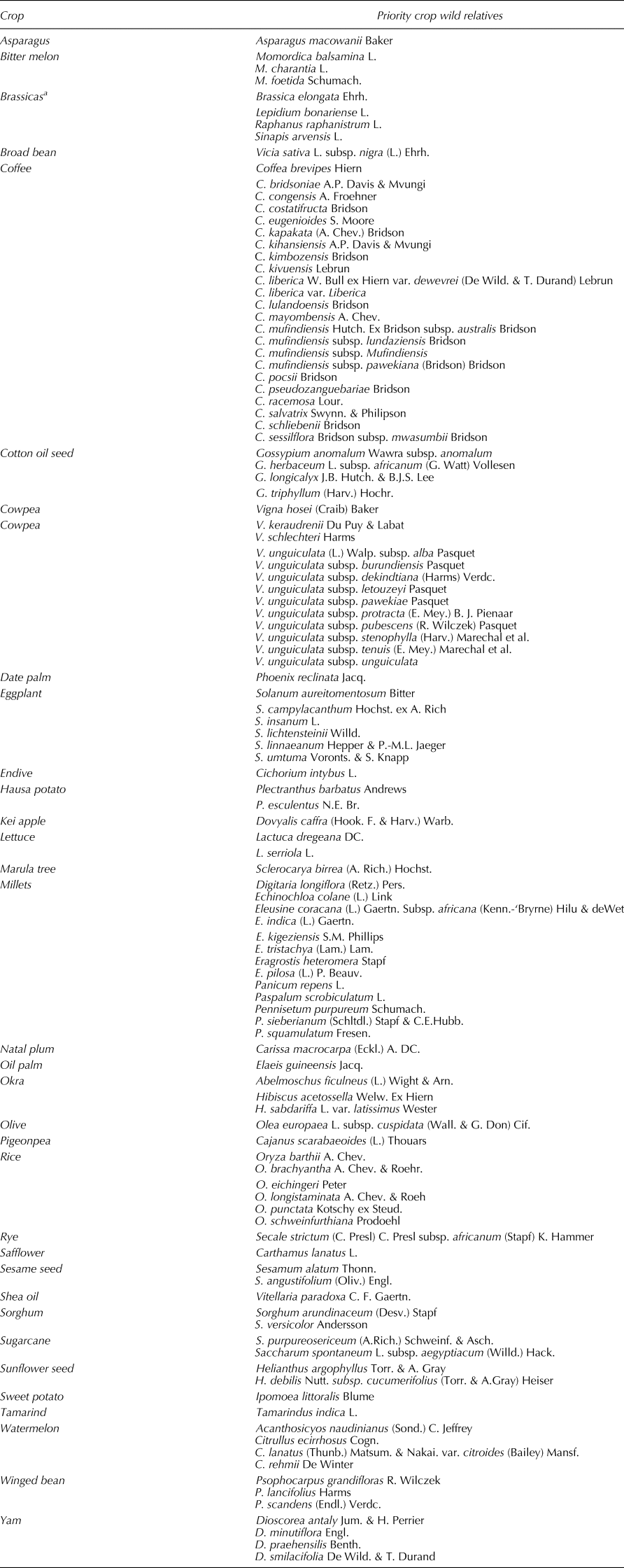
After applying the second prioritization criterion, we found that 113 taxa (100 species and 13 sub-specific taxa) (Table 2) are closely related to 34 human food and/or beverage crops/crop groups or are more distantly related but have been utilized successfully or have shown potential to provide traits of interest for crop improvement. Eighty-four of the 113 regional priority CWR taxa are of particularly high value as they are related to 23 of the 46 food and beverage crops/crop groups reported by FAOSTAT with a production value of more than US$10 million in the SADC region over the 10-year period 2003–2012. Food and beverage crops with priority CWR taxa in the region include rice, millet, eggplant, cucurbits (cucumber, gherkin and melon), sorghum, sugarcane, sweet potato, pulses (e.g. cowpea, pigeon pea and sword bean), sesame seed, coffee, lettuce, watermelon, okra, olive, asparagus, coffee and sorghum (see Table 2). These 113 CWR taxa are of highest priority for conservation action.
List of CWR taxa that are of high value as potential trait donors to crops of particular importance for food and/or economic security in the SADC region, as well as to some crops that are globally important

a Cabbage, cauliflower, broccoli, brussels sprout, pak-choi, kale, kohlrabi and other brassicas.
According to the results of analyses of worldwide plant-derived energy supply by Kell et al. (Reference Kell, Qin, Chen, Ford-Lloyd, Wei, Kang and Maxted2015), the region also contains CWR diversity that is related to crops that make a major contribution to global food security – including millet (23 species), rice (six species) and sorghum (three species). Reviewing FAOSTAT trade data for crops that have a global export value of more than US$10 billion for any year in the 10-year period 2003–2012, our analysis shows that the region contains CWR diversity that is also of potential value for global economic security. Crops of particular global economic importance that have CWR diversity in the region include coffee (23 species), rice (six species), sugar (one species) and oil palm (one species).
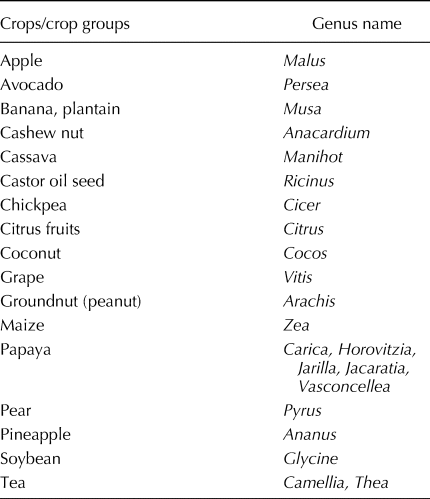
Furthermore, this analysis highlights the fact that the region is highly dependent on crops like cassava, maize, soybean and wheat that have their wild genetic resources found elsewhere in the world (Fig. 3). Table 3 lists the 17 crops/crop groups reported by the FAO to have an agricultural production value of US$10 million or more over the period 2003–2012 in the SADC region that have their CWR diversity located outside of the region.
Crops/crop groups of particular economic importance to the SADC region with their CWR resources occurring outside the region

Data source: FAO (2014).
Twenty-two of the 100 priority species have already been utilized for crop improvement and a further 20 contain traits of interest – these species are therefore illustrative of the high value of CWR diversity in the SADC region. Examples of their uses are pest and disease resistance conferred to rice (Oryza brachyantha A. Chev. & Roehr.) (Brar et al., Reference Brar, Dalmacio, Elloran, Aggarwal, Angeles, Khush and Khush1996), okra (Hibiscus acetosella Welw. Ex Hiern) (Schippers, Reference Schippers, Grubben and Denton2004) and coffee (Coffea racemosa Lour.) (Mondego et al., Reference Mondego, Guerreiro-Filho, Bengtson, Drummond, Felix, Duarte, Ramiro, Maluf, Sogayar and Menossi2005), as a source of graft stock for watermelon (Citrullus lanatus (Thunb.) Matsum. & Nakai. var. citroides (Bailey) Mansf.) (USDA, 2011), and to improve yields in sorghum (Sorghum arundinaceum (Desv.) Stapf) (Cox et al., Reference Cox, House and Frey1984) and millet (Pennisetum purpureum Schumach.) (Hanna, Reference Hanna1997). A study by Hannachi et al. (Reference Hannachi, Sommerlatte, Breton, Msallem, El Gazzah, Ben El Hadj and Bervillé2009) confirms that Olea europaea L. subsp. cuspidata, a wild olive species native to the SADC region, contains valuable genetic resources which have the potential to aid in the development of disease-resistant rootstock for domesticated olive trees (O. europaea L.).
Spanning 19 families and 46 genera, the priority taxa comprise a broad spectrum of plant types from annuals, to biennials and perennials, and from long-lived tree species to transient weeds. Prioritized wild species are distributed throughout the SADC region in a range of environments from dense forests, to dry mountain slopes, coastal deserts, orchards, roadsides, tropical rainforests and in the disturbed soils around small-scale agricultural fields. Results of species distribution modelling indicate that the highest richness of the priority CWR taxa is found in Madagascar, Malawi, Mozambique, South Africa, Swaziland, Tanzania and Zimbabwe (see SADC-CWR Project 2018).
Discussion
CWR are an essential source of diversity for adapting agricultural crops to climate change. Wild plant populations that thrive without human assistance, unlike our crops, tend to be more resilient and able to survive temperature fluctuations, salt, floods and drought – all the extreme characteristics of a warming planet (Tanksley and McCouch, Reference Tanksley and McCouch1997; Heywood et al., Reference Heywood, Casas, Ford-Lloyd, Kell and Maxted2007). Wild plant diversity is therefore of agricultural relevance and the introgression of genes from CWR into crops offers us the opportunity to reduce dependence on inputs (e.g. nitrogen, phosphate, pesticides, water), increase resistance to pests and pathogens and tolerance of extreme environmental conditions such as drought, heat and salt stress, and improve nutritional quality (Hajjar and Hodgkin, Reference Hajjar and Hodgkin2007; Maxted and Kell, Reference Maxted and Kell2009; Dempewolf et al., Reference Dempewolf, Baute, Anderson, Kilian, Smith and Guarino2017). Anthropogenic pressures such as land development, large-scale intensive agriculture and climate change itself are putting severe pressure on the natural distribution of CWR and threatening their existence (Harlan, Reference Harlan1995; Maxted et al., Reference Maxted, Kell and Brehm2011; Kell et al., Reference Kell, Maxted, Bilz, Maxted, Dulloo, Ford-Lloyd, Frese, Iriondo and Pinheiro de Carvalho2012). It is critical that steps are taken to identify priority species and areas for conservation and to develop integrated conservation strategies to ensure these resources are protected.
Before achieving effective conservation and utilization of CWR diversity at the national or regional level, two actions are required: (1) an inventory of the prioritized CWR taxa, and (2) a coherent and coordinated policy (Kell et al., Reference Kell, Knüpffer, Jury, Ford-Lloyd, Maxted, Maxted, Ford - Lloyd, Kell, Iriondo, Dulloo and Turok2008; Maxted et al., Reference Kell, Qin, Chen, Ford-Lloyd, Wei, Kang and Maxted2015). The results of this study provide the first step and the basis for regional policy and strategy development. We identified 745 CWR species that constitute the region's base priority list and prioritized 100 of these species for immediate conservation action and collated ancillary information to produce the SADC CWR Inventory. These species are of particularly high potential socio-economic value – however, the remaining 645 species, as well as wild species-related economically important non-food crops could be incorporated into the regional conservation strategy as resources become available in the future (Maxted et al., Reference Kell, Qin, Chen, Ford-Lloyd, Wei, Kang and Maxted2015).
The development of a regional conservation strategy is critical for achieving effective conservation of valuable CWR taxa that are important to the region as a whole (Maxted et al., Reference Kell, Qin, Chen, Ford-Lloyd, Wei, Kang and Maxted2015; Kell et al., Reference Kell, Qin, Chen, Ford-Lloyd, Wei, Kang and Maxted2015, Reference Kell, Ford-Lloyd, Brehm, Iriondo and Maxted2017). However, it is important that individual countries within the SADC region simultaneously develop their own national CWR conservation plans, as sovereignty over genetic resources is a national responsibility. National Strategic Action Plans for the Conservation and Sustainable Use of Crop Wild Relatives have been prepared in Mauritius (Republic of Mauritius, 2016), South Africa (DAFF, 2016b) and Zambia (Ministry of Agriculture, Republic of Zambia, 2016) and training was provided to all countries in the region in the context of the SADC CWR project. However, as already highlighted, Maxted et al. (Reference Kell, Qin, Chen, Ford-Lloyd, Wei, Kang and Maxted2015) and Kell et al. (Reference Kell, Ford-Lloyd, Brehm, Iriondo and Maxted2017) argue that a regional approach to CWR conservation is necessary to complement the national approach because national approaches alone may exclude CWR taxa which are regionally important and the pace which nations can develop national CWR conservation strategies may differ. Furthermore, the authors note that because wild plant populations are not restricted to national borders, their conservation is the shared responsibility of the countries which share their distribution.
The complementarity between regional and national approaches to CWR conservation planning can be illustrated with an example from the SADC region. Oryza schweinfurthiana Prodoehl was afforded high priority for conservation action at regional level because it has been classified as a secondary wild relative of rice, O. sativa L. by USDA, ARS, NPGS (2018). According to the same source, this species is native to several countries in the region, including South Africa, for which a CWR checklist and list of priority taxa has been prepared (SANBI, ARC and DAFF 2017) as a first step in the development of a National Strategy and Action Plan for the Conservation and Sustainable Use of CWR. However, this species was not included in the checklist of CWR in South Africa. The reason for its exclusion is not known, but its inclusion at regional level means that the species will be included in regional CWR conservation planning, the results of which will in turn inform national conservation planning. Based on the results of regional conservation planning, the need to conserve populations of this species will be promoted both in those countries containing regional priority populations (based on results of regional diversity and gap analyses), and in all other countries in which it occurs as a recommended species for inclusion in national CWR conservation planning.
Our results show that the SADC region contains wild genetic resources that are not only of potential value for food and economic security in the region, but also to other regions around the world, and that the region cultivates many crops that have their wild genetic resources located elsewhere. The interdependence among countries and regions for food products and plant genetic resources has been long acknowledged (e.g. see Vavilov Reference Vavilov1926; FAO 1998, 2001) and FAO (2011) highlighted the fact that the impacts of climate change will increase global interdependence on PGRFA, as crops will need to be continually adapted to novel environmental conditions. The results of a study by Khoury et al. (Reference Khoury, Bjorkman, Dempewolf, Ramirez-Villegas, Guarino, Jarvis, Rieseberg and Struik2014) demonstrate that now, more than ever, countries rely on PGRFA that originate outside their borders due to the increased homogeneity of staple human food crops across the world. Further, Kell et al. (Reference Kell, Qin, Chen, Ford-Lloyd, Wei, Kang and Maxted2015) emphasized the importance of considering the value of CWR more broadly than at national level since no country is self-sufficient in food supply.
The SADC region contains a wealth of CWR diversity that has the potential to promote food and economic food security at local, regional and global levels. CWR offer an essential resource in a more populous world with a rapidly changing climate, where higher temperatures, variable rainfall, extreme weather events and limited natural resources are negatively affecting agriculture and food security. Therefore, it is urgent that the required steps are taken to raise awareness of their potential contribution at a policy level (both nationally and regionally) and to undertake systematic and integrated conservation at national and regional levels. In tandem with increased efforts to conserve CWR diversity, there is also an imperative to improve access to CWR genetic resources and rapidly upscale efforts to characterize and pre-breed material to enhance its use in crop improvement programmes.