Introduction
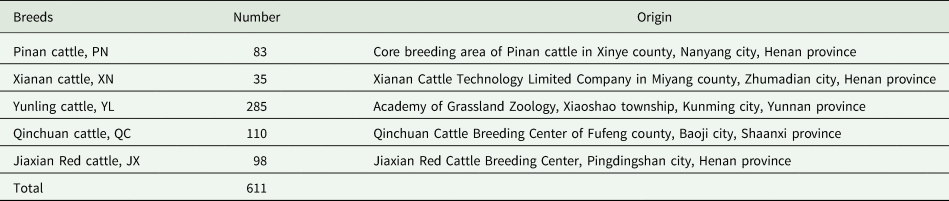
One primary problem with the Chinese beef cattle industry was imbalance between beef supply and demand, but the root of this problem was breeds. There were several salient cattle (Bos taurus) breeds, including Pinan cattle (PN), Xianan cattle (XN), Yunling cattle (YL), Qinchuan cattle (QC) and Jiaxian red cattle (JX). PN was an ideal raw material for producing high-grade leather because of its thin fur and became the first live cattle registrar in China because of its tender meat. XN was the first beef cattle breed with independent intellectual property rights in China. YL was the first new breed of beef cattle to adapt to the tropical and subtropical areas of southern China. Above all, these breeds played an important role in animal husbandry in China, but there was still a gap with foreign breeds (Cheng et al., Reference Cheng, Jiang, Yang, Cao, Huang, Lan, Lei, Hu and Chen2020).
One way to overcome this problem is molecular breeding (choosing better genotypes), including single-nucleotide polymorphisms (SNPs), insertion and deletions (indels), CNVs, etc. As a form of widespread genomic structural variations, CNV has a wider coverage and greater genetic effect than SNPs and indels (Schuch et al., Reference Schuch, Paixão-Côrtes, Longo, Roman, Riesgo, Ranzan, Becker, Riegel and Schuler-Faccini2019). CNVs can directly modulate phenotype by changing gene copy number (CN) and gene structure or disturbing gene regulatory sequence. Previous studies have shown that SH3RF2-CNV was significantly associated with growth and carcase traits in chickens (Jing et al., Reference Jing, Wang, Cheng, Wei, Hou, Li, Li, Han, Li, Sun, Tian, Liu, Kang and Li2020), Opn4-CNV were significantly associated with body weight traits (Li et al., Reference Li, Yang, Shi, Zhang, Shi, Xu, He, Lei, Wang, Chen and Huang2020). Numerous studies have reported the association between gene-CNV and growth traits (Feng et al., Reference Feng, Li, Cheng, Jiang, Huang, Wang, Huang, Pi, Hu and Chen2020; Shi et al., Reference Shi, Li, Zhang, Wang, Wang, Xu, Liu, Wen, He, Lei, Chen and Huang2020; Zhang et al., Reference Zhang, Zhong, Lin, Liang, Ye, Xu, Ji, Zhang, Zhang and Zhang2021). As far as we know, the previous research on CNV mainly concentrated on other animals and the research on cattle focuses on genome-wide association analysis (Mei et al., Reference Mei, Junjvlieke, Raza, Wang, Cheng, Zhao, Zhu and Zan2020; Yang et al., Reference Yang, Niu, Zhang, Zhao, Zhu, Chen, Zhang, Gao, Gao, Liu, Li and Xu2021), but lacks the experimental verification part on whether cattle CNV is associated with growth traits. The CNVs in the zinc finger protein 146 (ZNF146) gene have not been particularly reported.
In addition, previous laboratory sequencing showed that there was CNV at Chr 18: 47225201-47229600 (5.0.1 version) site of the ZNF146 gene related to the growth and development of Chinese cattle (Huang et al., Reference Huang, Li, Wang, Yu, Cai, Zheng, Li, Zhang, Chen, Asadollahpour Nanaei, Hanif, Chen, Fu, Li, Cao, Zhou, Liu, He, Li, Chen, Chen, Lei, Liu and Jiang2021). ZNF146 is a transcription factor containing ten zinc finger structures. The ZNF146 gene is expressed in liver, skeletal muscle and breast cells. Bioinformatics predicts the function of the ZNF146 gene, and it is found that the ZNF146 gene is related to mesoderm formation. However, Not only it could promote the development of tumour but also it is essential for muscle development. Therefore, it was of interest to confirm the association between ZNF146-CNV and growth traits in cattle. If our predicted results are not verified, they cannot be used in practice, which will affect the breeding process. So, we proposed the hypothesis that ZNF146-CNV may have effects on cattle growth traits.
The aims of this study are to predict and confirm the function of ZNF146, so as to find molecular markers conducive to the growth and development of Chinese yellow cattle.
This study considers ZNF146-CNV as the main subject of its study. To illuminate this uncharted area, we predicted function of ZNF146 gene and verified the association between ZNF146-CNV and growth traits in cattle. Through this research, combined with biochip technology and other related technologies, cattle individuals with excellent growth traits can be screened as soon as possible, so as to save production cost and shorten breeding time.
Materials and methods
Function prediction of the ZNF146 protein
Online software UniProt (https://www.uniprot.org/), ProtParam (https://web.expasy.org/protparam/) and ProtScale (https://web.expasy.org/protscale/), NetPhos3.1 (http://www.cbs.dtu.dk/services/NetPhos/), NetOGlyc4.0 (http://www.cbs.dtu.dk/services/NetOGlyc/) and Scratch Protein Predictor (http://scratch.proteomics.ics.uci.edu/), SignalP 4.1 Server (http://www.cbs.dtu.dk/services/Signalp-4.1/), TargetP 1.1 Server (http://www.cbs.dtu.dk/services/TargetP-1.1/index.php) and PSORT (https://www.genscript.com/psort.html), Kiharalab (https://kiharalab.org/) and (http://www.genecards.org/) were separately used to predict the physicochemical properties of ZNF146 protein, the physicochemical properties of ZNF146 protein, the potential phosphorylation site and glycosylation site of ZNF146 protein, the signal peptide of ZNF146 protein, subcellular localization of ZNF146 protein, the secondary and tertiary structures of ZNF146 protein and the function of ZNF146 protein.
Sample preparation and data collection
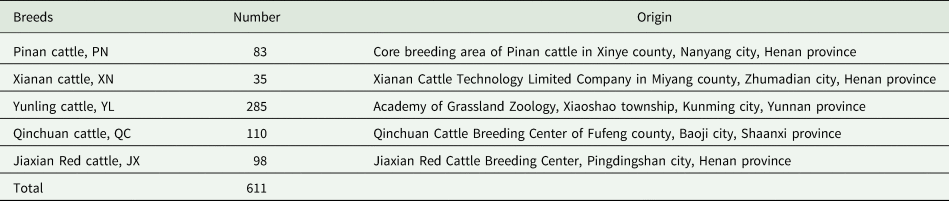
To explore the genetic variation of the cattle ZNF146 gene, the whole blood samples were collected by jugular vein with no need for anaesthesia or euthanasia from five groups: YL (N = 285), QC (N = 110), JX (N = 98), PN (N = 83) and XN (N = 35), which were reared in Henan, Yunnan and Shaanxi provinces, respectively. These cattle were selected to be unrelated for at least three generations. These animals were fed ad libitum under comfortable conditions and they were of the same age and sex (female). At the same time, the basic data were collected and recorded (body height, cross height, oblique length, chest circumference, abdominal circumference, tube circumference, chest width, chest depth, hip circumference, waist angle width, sciatic bone width, head length, forehead width, rump length, body weight, etc.) for later association analysis. The specific information of the sample is shown in Table 1.
Information about venous blood samples from five breeds of cattle in China
Genomic DNA extraction and dilution
Genomic DNA of samples were isolated from 1 ml of 2% heparin-treated whole blood samples according to standard procedures using phenol–chloroform methods (Ding et al., Reference Ding, Zhang, Hu, Wen, Huang, Shi, Feng, Wang, Lei and He2022) and concentration and purity to quality standard were checked by a spectrophotometer, diluted to a uniform concentration of 10 ng/μl with sterilized distilled water and stored at −20°C for use.
Primer design
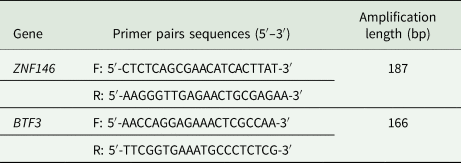
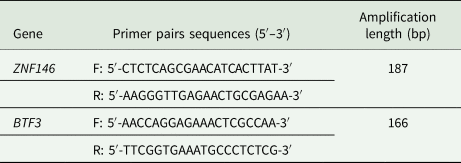
A 4400 bp CNVR of the ZNF146 gene at Chr 18: 47225201-47229600 (5.0.1 version) was predicted in Chinese cattle by bioinformatics analysis. Quantitative polymerase chain reaction (qPCR) primers of the ZNF146-CNV and the BTF3 gene (internal reference) (Table 2) were designed by NCBI database (http://www.ncbi.nlm.nih.gov/) and were synthesized by Company Limited of Bioengineering Biotechnology (Shanghai).
Primer information for qPCR
CNV genotyping
QPCR is an acceptable method to evaluate CNVs (Liu et al., Reference Liu, Li, Huang, Yang, Lan, Lei, Qu, Bai and Chen2016; Yang et al., Reference Yang, Zhang, Xu, Qu, Lyv, Wang, Cai, Li, Wang, Xie, Ru, Xu, Lei, Chen, Huang and Huang2020). According to reference gene basic transcription factor 3 (BTF3), which is widely recognized as having two copy numbers (normal type) in different species, copy number of ZNF146 was detected by qPCR.
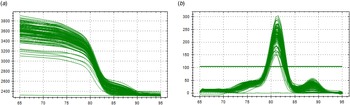
QPCR experiments were conducted using SYBR® Green in triplicate reactions, each with a reaction volume of 10 μl, which contained 1 μl of genomic DNA, 5 μl of 2× Taq TM II, 0.5 μl of upstream primers, 0.5 μl of downstream primers and 3 μl ddH2O. Thermal cycling conditions were as follows: pre-denaturation at 95°C for 2 min; denaturation at 95°C for 10 s, annealing at 60°C for 20 s and 39 cycles; extension at 72°C for 10 min and preservation at 4°C. The results are shown in Fig. 1(a) and (b). The primers were checked by the melting curve. All experiments were conducted in triplicate. The copy numbers were calculated as 2 × 2−ΔΔCt and data were rounded to the nearest integer (Liu et al., Reference Liu, Li, Huang, Yang, Lan, Lei, Qu, Bai and Chen2016). The CNV types were classified as deletion homozygous (=0), deletion heterozygosity (=1), normal (=2), duplication heterozygosity (=3), duplication homozygous (=4), duplication heterozygosity (=5) and duplication with three homozygous copy or more than 6 copy (⩾6) based on the 2 × 2−ΔΔCt values.
(Colour online) Primer specific detection: (a) The amplification curve by qPCR in the invention and (b) Melting curve drawn by qPCR in the invention.

Statistical analysis
The number of individuals of various types (deletion, normal and duplication) and the frequency of each type in the population was counted. The calculation formula is as follows:

PC: the frequency of a certain type of copy number; NC: the number of individuals of type of CNV in the population and N: the total number of detected groups.
The association analysis was performed using a full statistical model followed by a reduced statistical model, which was used in the final analysis. The full statistical model included fixed effects of copy number, age, sex, management group, birth season, farm (which correlated with breed) and sire of the cattle. The five breeds were from five different farms. One breed had the same geographical distribution. The phenotype measurement and sample collection were both in the same season (Jiang et al., Reference Jiang, Cheng, Cao, Ma, Chaogetu, Huang, Lan, Lei, Hu and Chen2019).
The full statistical model: Yijklmnpq = μ + Fi + Bj + Ak + Sl + Dm + CNVn + eijklmnpq, where Yijklmnpq = the observation of the growth traits (withers height, height hip cross, body length, heart girth, circumference of cannon bone, chest width, chest depth, hip girth, hip width, hucklebone width, head length, forehead width, rump length and body weight); μ = the overall mean of each trait; Fi = the fixed effect due to i th farm; Bj = the fixed effect due to j th; Ak = the fixed effect due to k th; Sl = the fixed effect due to l th birth season; Dm = the fixed effect due to m th geographical distribution; CNVn = fixed effects of the n th CNV type of ZNF146; (k = 1, 2, 3) and eijklmnpq = random residual error. Different species data led to different parameters in the model, so for the full statistical model, Fi = 0 given that each breed in the full statistical model were of the same farm, Bj = 0 given that each breed in the full statistical model was analysed separately, Ak = 0 given that all the individuals in the full statistical model were of the same age, Sl = 0 given that all the individuals in the full statistical model were of the same season and Dm = 0 given that each breed in the full statistical model were of the same geographical distribution. In the reduced statistical model, factors with no significant effects on phenotypic variation were excluded. Notably, sire effect was not included in the model because these animals were unrelated for at least three generations. Thus, the reduced model was as follows for each breed:

Therefore, one-way analysis of variance is used to describe the impact between CNV area on ZNF146 gene and growth traits by SPSS 25.0 software.
Results
Prediction of basic characteristics of ZNF146 protein
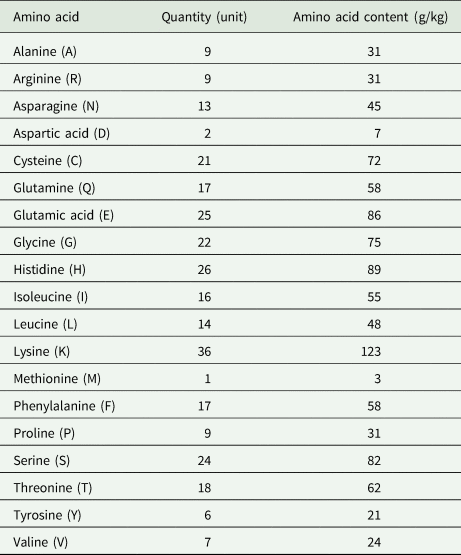
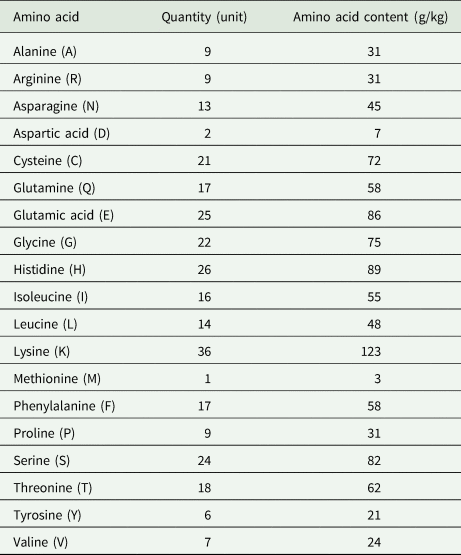
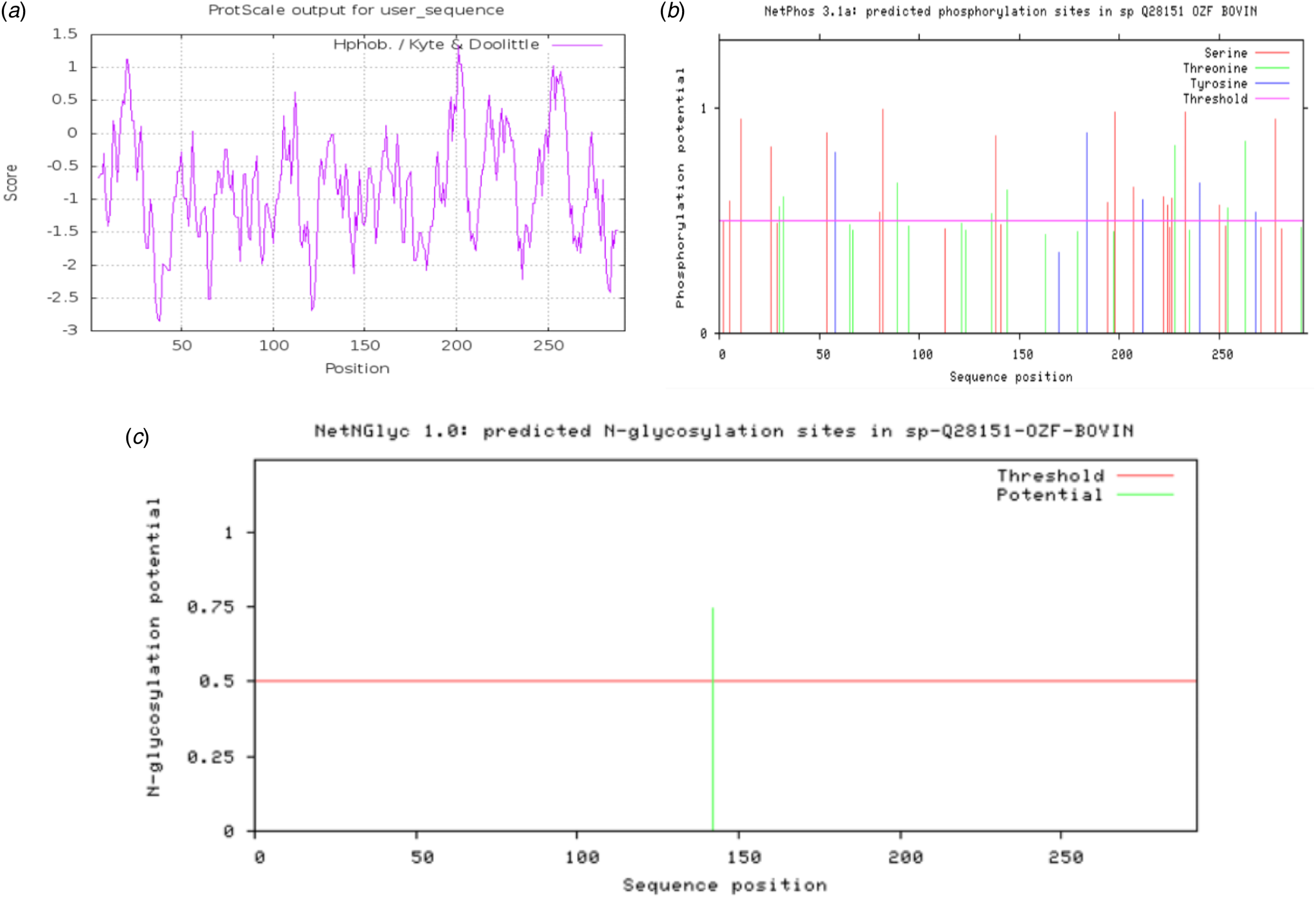
The online tool ProtParam was used to analyse the physical and chemical properties of ZNF146 protein. We found the theoretical Isoelectricpoint (PI) of ZNF146 protein is 9.13 and Lys (K) is the most, which showed it is a basic protein. Its extinction coefficient was 10 190 and instability index was 40.36 (>40), which showed it is a unstable protein. The grand average of hydropathicity was −0.868, which indicated that the protein had certain hydrophilicity. In line with results of the online tool ProtParam, the hydrophilic residues in the amino acids of ZNF146 protein account for a large proportion (Table 3).
Amino acid composition of ZNF146 protein
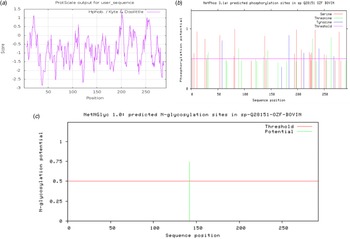
Online software Net Phos3.1 was used to analyse the potential phosphorylation and online software NetOGlyc4.0 and NetNGlyc1.0 were used to analyse O-glycosylation or N-glycosylation. From the results, it is clear that there were 29 potential phosphorylation sites in ZNF146 protein, including five potential tyrosine (Y) phosphorylation sites, eight potential threonine (T) phosphorylation sites and 16 potential serine (S) phosphorylation sites (Fig. 2(b)) and there was one potential N-glycosylation site or zero potential O-glycosylation site at amino acids 142 in ZNF146 (Fig. 2(c)), which probably explains that the reason why proteins have complex functions.
(Colour online) Physicochemical properties of ZNF146 protein in cattle: (a) hydrophobicity analysis of ZNF146 protein in cattle, (b) analysis of potential phosphorylation sites of ZNF146 protein in cattle and (c) analysis of potential N-glycosylation sites of ZNF146 protein in cattle.
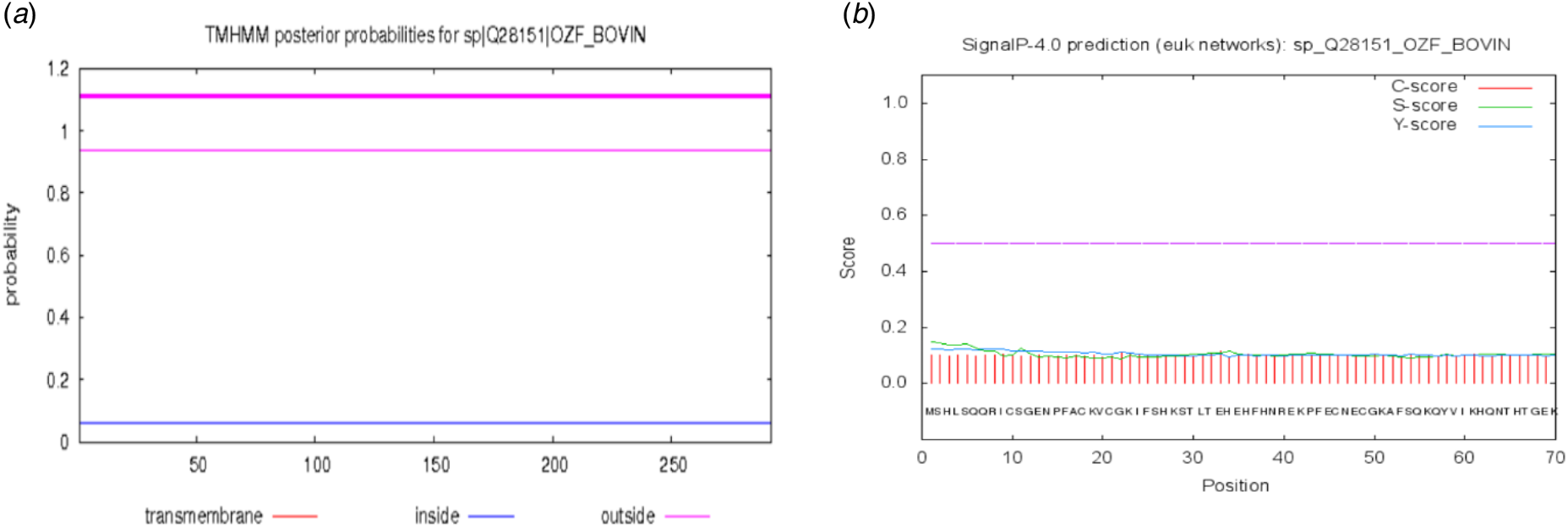
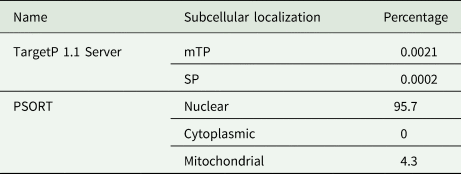
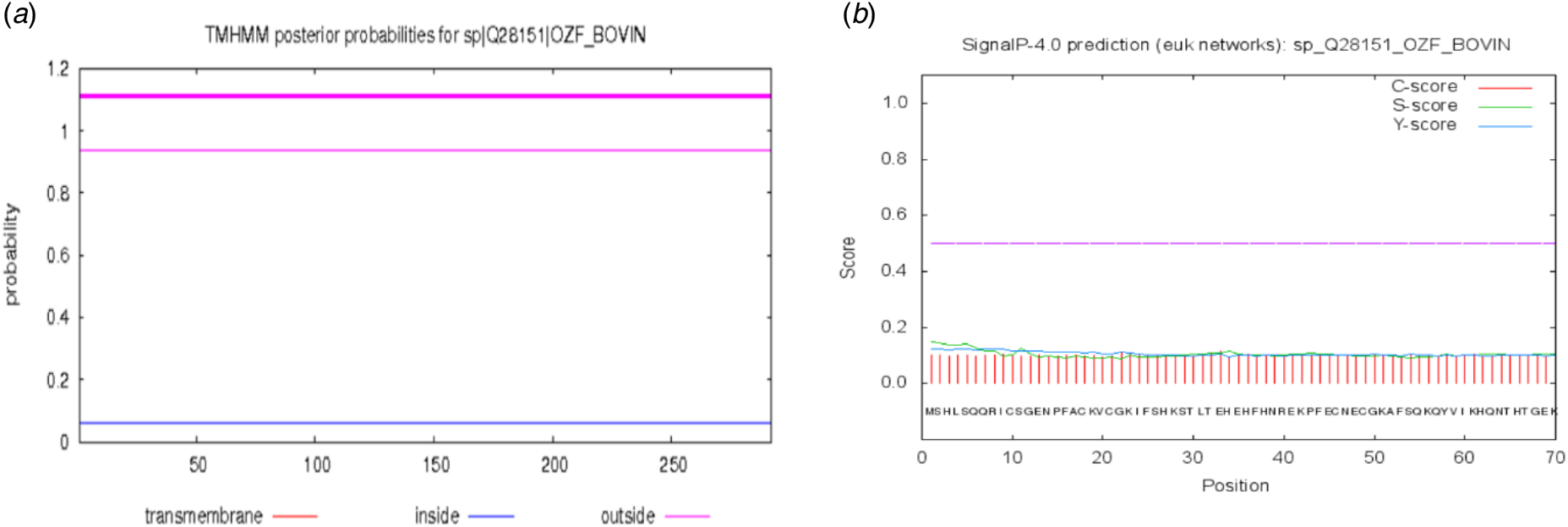
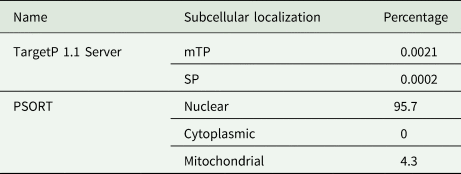
By using TMHMM 2.0 Server online software, we were surprised that there were 0 transmembrane helices (TMHs) in the coding product of the gene, the predicted value of amino acid residues in the TMH was 0.00081, the predicted value of TMHs in the first 60 amino acids of the protein was 0 and the total probability of being located in the cytoplasmic side of the membrane was 0.06235 (Fig. 3(a)). By using SignalP 4.1 Server online software, we found the critical value of ZNF146 protein was D = 0.1379 (the critical value of signal peptide and non-signal peptide was D = 0.450). This suggested that ZNF146 protein belongs to non-secretory protein. Another finding was that the proportion of mTP was 0.0021, the proportion of SP was 0.0002 and there was no signal peptide by using TargetP 1.1 Server and PSORT online software. It could be inferred that there was no transport after synthesis; ZNF146 protein was mainly distributed in nuclear and a small amount in mitochondrial (Table 4).
(Colour online) Prediction of transmembrane region, signal peptide and subcellular localization of cattle ZNF146 protein: (a) Prediction of transmembrane structure of cattle ZNF146 protein in cattle and (b) Prediction of signal peptide of ZNF146 protein in cattle.
Subcellular localization of ZNF146 protein
Bioinformatics prediction function of ZNF146 protein
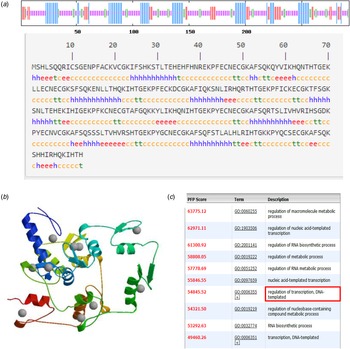
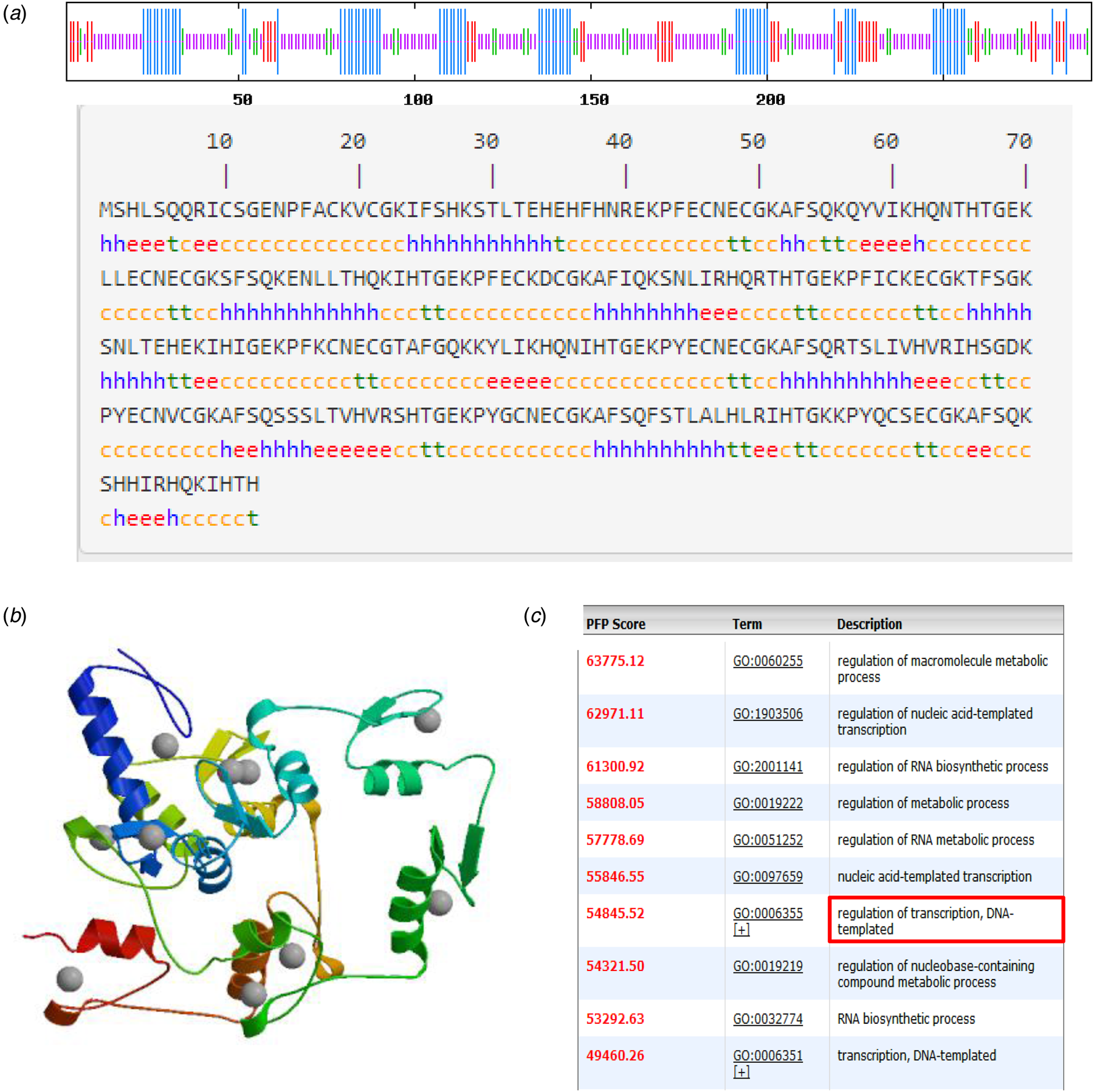
As shown in Fig. 4(a), the secondary structure of ZNF146 protein is mainly random coil, accounting for 51.37%. In Fig. 4(b), we constructed a possible three-level structure model of cattle ZNF146 protein using the Swiss model platform in ExPASY, showing that global model quality estimation value is 0.66, and the similarity with the template is 51.26%. One possible implication of this is that ZNF146 protein has the structural basis for its function. Online software Kiharalab (https://kiharalab.org/) predicted that ZNF146 play a role in the skeletal system development and Genecard (http://www.genecards.org/) predicted that ZNF146 gene is expressed in liver, skeletal muscle and breast cells, and is amplified or overexpressed in pancreatic cancer, which promotes the development of tumour. Initial observations suggest that ZNF146 gene affects the proliferation of muscle cells, and then affects the growth and development of cattle (Fig. 4(c)).
(Colour online) Prediction of structure and function of ZNF146 protein: (a) Prediction of the secondary structure of ZNF146 protein in cattle (Note: h, alpha helix; e, extended strand; c, random coil; t, beta turn), (b) Three level structure model of ZNF146 protein in cattle and (c) Function prediction of ZNF146 protein in cattle.
Distribution of different CNV types of ZNF146 gene
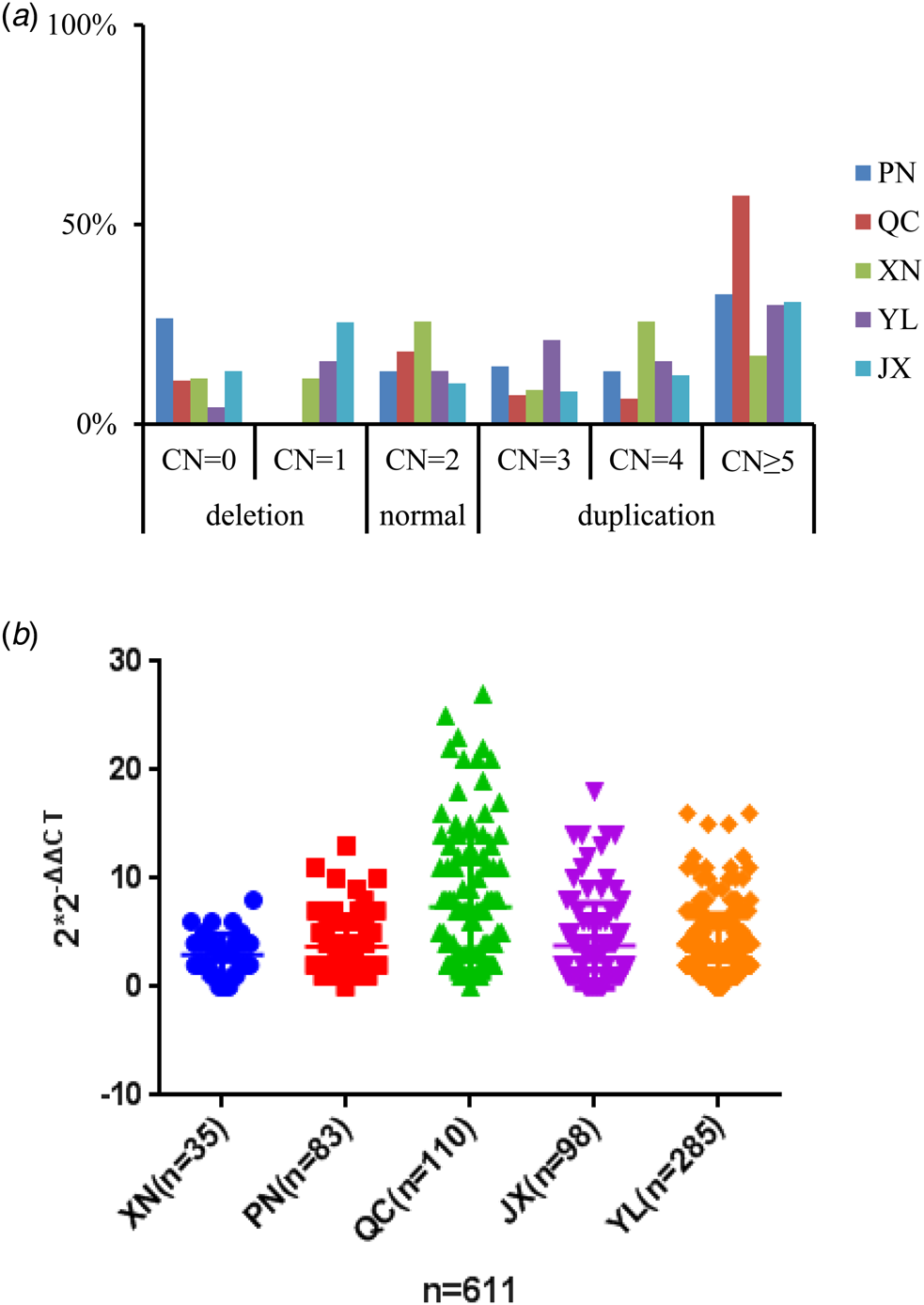
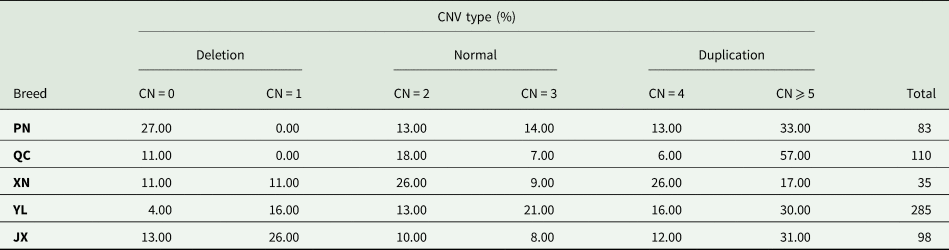
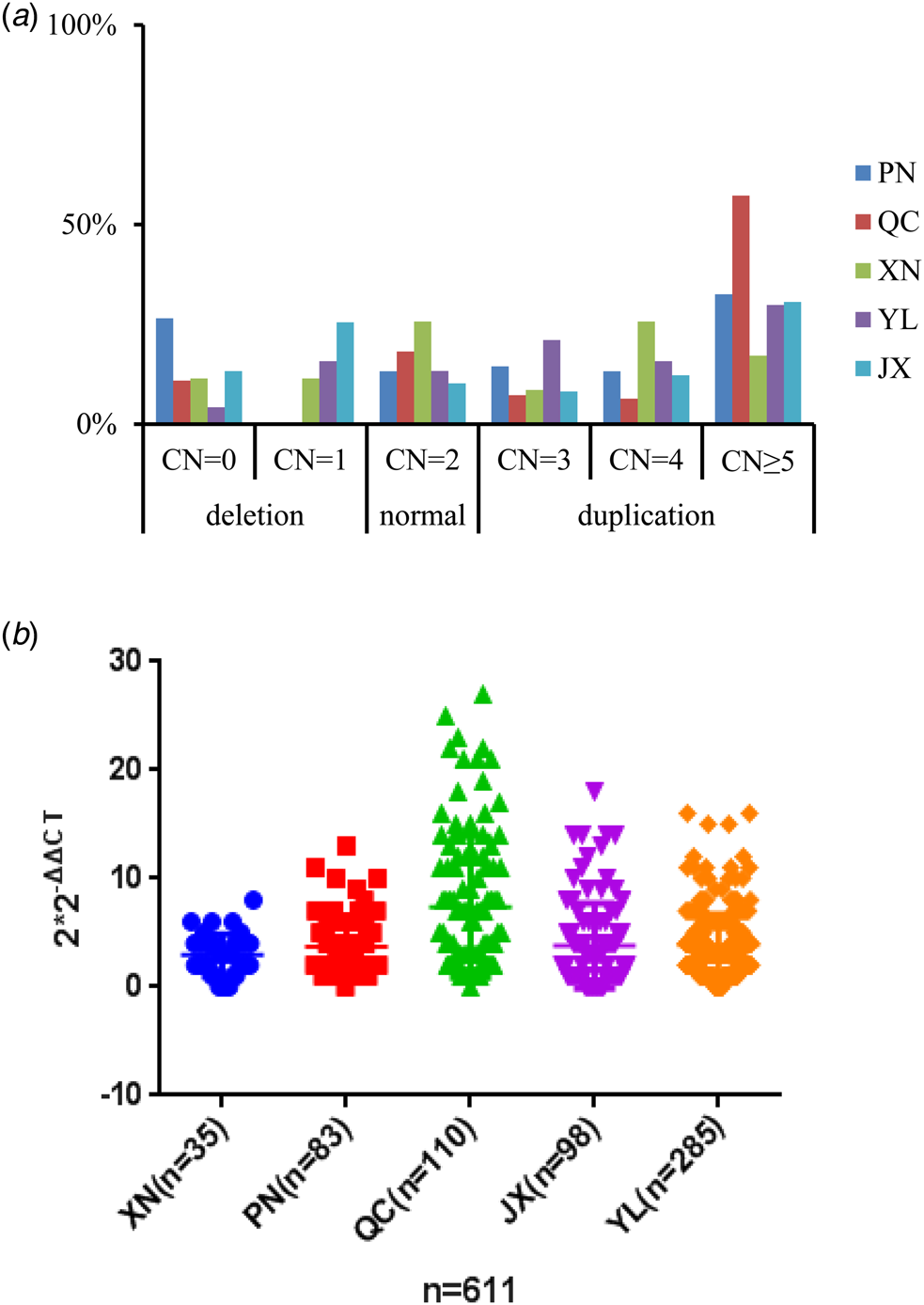
In a preliminary experiment, 50 individuals were selected randomly to judge whether CNV exists in the population and learn the distribution density of CNV types. Then we completed the experiment with the remaining 611 individuals. As shown in Fig. 5(a) and (b) and Table 5, we discovered that the frequency of deletion is least among three types. Further analysis showed that duplication with three homozygous copy or more than six copy type was the majority (33%), while the distribution of deletion heterozygosity (one copy) type was rarely detected in this population (0%) in PN; duplication with three homozygous copy or more than six copy type was the majority (57%), while the distribution of deletion heterozygosity (one copy) type was rarely detected in this population (0%) in QC; normal (two copy) and duplication homozygous (four copy) was the majority (26%), while the distribution of duplication heterozygosity (three copy) was rarely (9%) detected in XN; duplication with three homozygous copy or more than six copy type was the majority (30%), while the distribution of deletion homozygous (zero copy) was rarely detected in this population (4%) in YL; three homozygous copy or more than six copy type was the majority (31%), while the distribution of duplication heterozygosity (three copy) was rarely detected in this population (8%) in JX (Fig. 5(a) and (b)). Together, the present findings represent these breeds have genetic similarity, and breeding has achieved initial effect after artificial and long-term selection.
(Colour online) Distribution of ZNF146-CNV in cattle population in the invention: (a) Distribution histogram of ZNF146-CNV in cattle population in the invention and (b) Distribution scatter diagram of ZNF146-CNV in cattle population in the invention (Note: PN, Pinan cattle; QC, Qinchuan cattle; XN, Xianan cattle; YL, Yunling cattle; JX, Jiaxian red cattle).
Frequency of different CNV types in four yellow cattle breeds
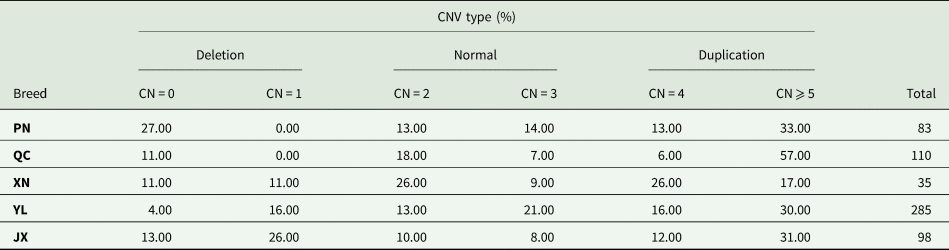
CNV, copy number variations; CN, copy number; PN, Pinan cattle; QC, Qinchuan cattle; XN, Xianan cattle; YL, Yunling cattle; JX, Jiaxian red cattle.
Associations between ZNF146-CNV and growth traits in YL
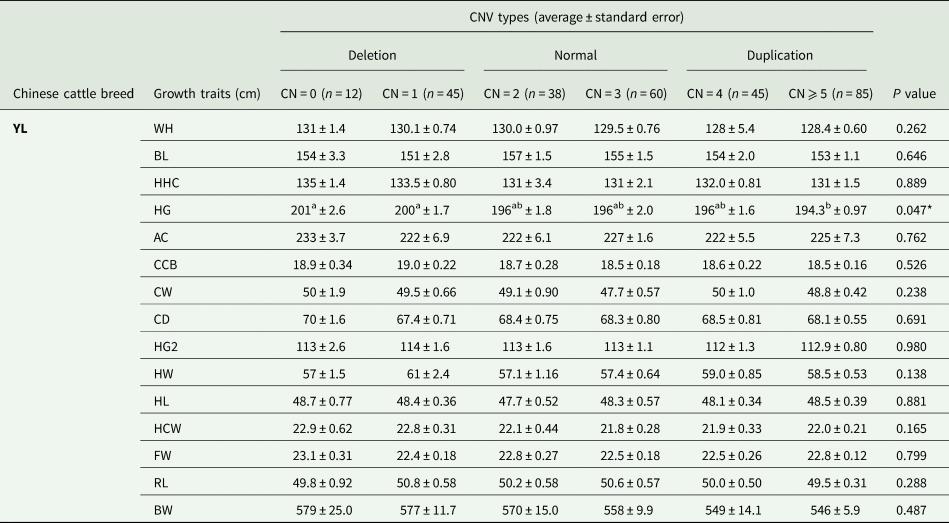
In YL, qPCR and SPSS analysed CNV types of 285 YL. As shown in Table 6, there was a significant association between ZNF146-CNV and heart girth (P < 0.05). In terms of heart girth, the population with CN = 0 is optimal, and its mean value is 201 ± 2.6. Although the association between ZNF146-CNV and hip width and hucklebone width is not significant, it has a significant trend. The deletion type of ZNF146 gene can be used as a candidate molecular genetic marker to improve the heart girth of YL. It is hopeful to be used as a molecular marker to improve the hip width and hucklebone width of YL, so as to speed up the breeding process of excellent growth performance of Chinese yellow cattle.
Association analysis between CNV of ZNF146 gene and different growth traits of YL
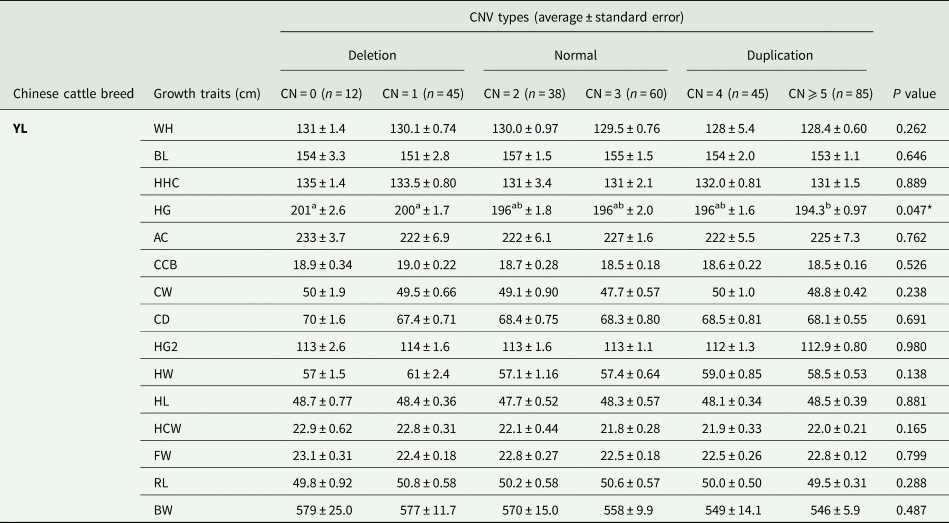
CNV, copy number variations; CN, copy number; WH, withers height; BL, body length; HHC, height hip cross; HG, heart girth; AC, abdomen circumference; CCB, circumference of cannon bone; CW, chest width; CD, chest depth; HG2, hip girth; HW, hip width; HL, head length; HCW, hucklebone width; FW, forehead width; RL, rump length; BW, body weight; BH, back height.
Note: There was no significant difference in the same letters on the shoulder mark (P > 0.05), but there was significant difference in the different letters on the shoulder mark (*P < 0.05).
Associations between ZNF146-CNV and growth traits in QC
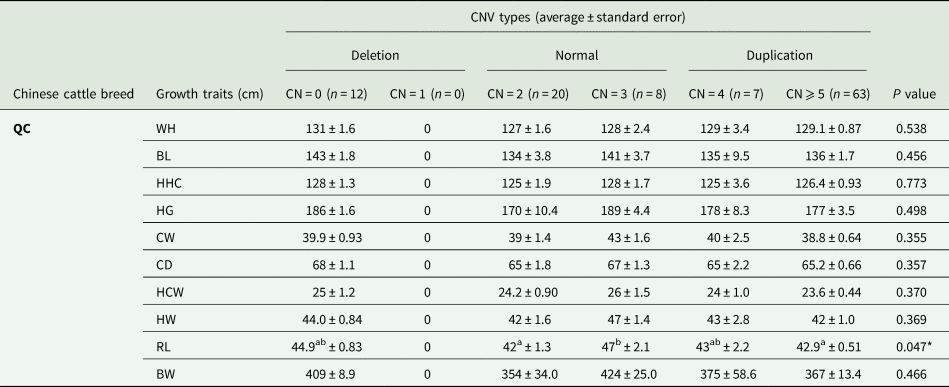
As shown in Table 7, qPCR and SPSS analysed CNV types of 110 QC and there was a significant association between ZNF146-CNV and rump length (P < 0.05). In line with previous studies, the population with CN = 0 is optimal in rump length. The deletion type of ZNF146 gene can be used as a candidate molecular genetic marker to improve the rump length of QC.
Association analysis between CNV of ZNF146 gene and different growth traits of QC
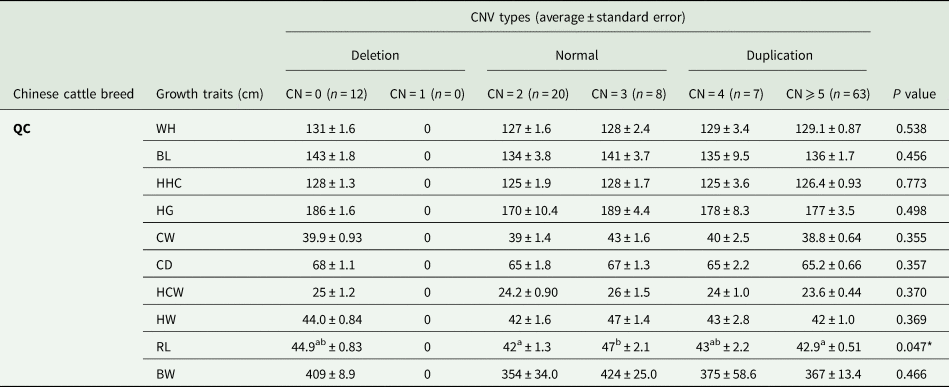
CNV, copy number variations; CN, copy number; WH, withers height; BL, body length; HHC, height hip cross; HG, heart girth; CW, chest width; CD, chest depth; HCW, hucklebone width; HW, hip width; RL, rump length; BW, body weight.
Note: There was no significant difference in the same letters on the shoulder mark (P > 0.05), but there was significant difference in the different letters on the shoulder mark (*P < 0.05).
Associations between ZNF146-CNV and growth traits in JX
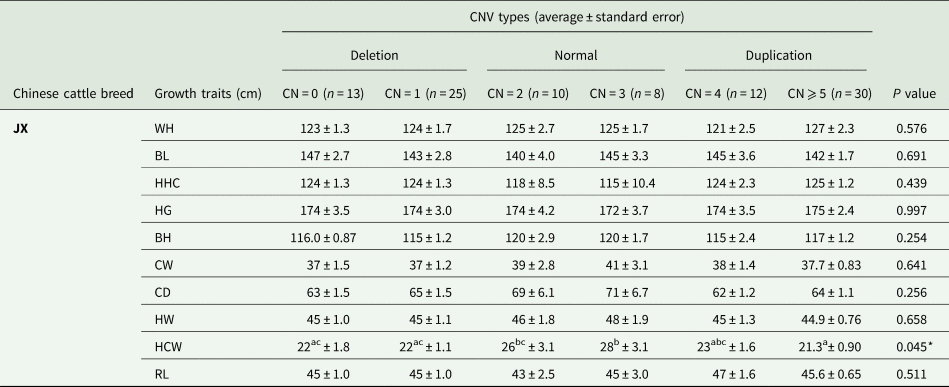
SPSS analysis revealed that there was a significant association between ZNF146-CNV and hucklebone width in 98 JX (P < 0.05) and the population with CN = 3 is optimal in hucklebone width. Its mean value is 28 ± 3.1. The duplication type of ZNF146 gene can be used as a candidate molecular genetic marker to improve the hucklebone width of QC (Table 8).
Association analysis between CNV of ZNF146 gene and different growth traits of JX
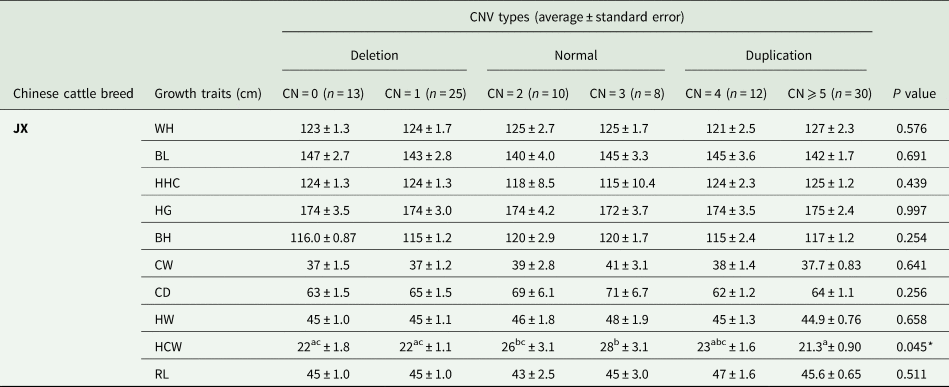
CNV, copy number variations; CN, copy number; WH, withers height; BL, body length; HHC, height hip cross; HG, heart girth; BH, back height; CW, chest width; CD, chest depth; HW, hip width; HCW, hucklebone width; RL, rump length.
Note: There was no significant difference in the same letters on the shoulder mark (P > 0.05), but there was significant difference in the different letters on the shoulder mark (*P < 0.05).
Associations between ZNF146-CNV and growth traits in PN
As shown in Table S1, there was no significant association between ZNF146-CNV and growth traits in PN (P > 0.05). Therefore, we can carry out the next step of breeding according to the significant trend (Table S1).
Associations between ZNF146-CNV and growth traits in XN
As shown in Table S2, there was no significant association between ZNF146-CNV and growth traits in XN (P > 0.05). Thus, the direction of our future efforts is circumference of cannon bone and heart girth growth traits (Table S2).
Discussion
We confirmed the influence of ZNF146-CNV on growth traits and determined the function of ZNF146 gene. The hypothesis was confirmed. We predicted that ZNF146 is a transcription regulator that affects the proliferation of tumour cells. Similarly, the research suggests that zinc finger-like proteins are the largest family of transcription regulators in mammals, which play an important role in embryonic development, cell differentiation, cell transformation and cell cycle regulation. Therefore, it is preliminarily speculated that ZNF146 has an effect on muscle growth and development. To verify the association between ZNF146 gene and growth and development, the association analysis results show that ZNF146-CNV was significantly associated with rump length of QC, hucklebone width of JX and heart girth of YL. Similarly, Xu et al. (Reference Xu, Zheng, Li, Yao, Hua, Yang, Wen, Song, Cao, Liu, Zhang, Yang, Hao, Dang, Lan, Lei, Qi, Chen and Huang2019) found that CNV of KLF3 gene had a positive effect on growth traits such as body weight and chest girth. Therefore, CNV of ZNF146 gene can be used as an important molecular marker for QC, YL and JX.
This experiment only explained the effect of ZNF146 gene on the growth and development of cattle from the macro level, lack of the effect of ZNF146 gene on the proliferation and differentiation of muscle cells, lack of the effect of ZNF146 gene on the growth and development of cattle from the micro level. Therefore, the next major plan is to fully explain the effect of ZNF146 gene on the growth and development of cattle, in order to contribute to the breeding of Chinese cattle.
Conclusion
This novel study predicted the function of ZNF146 gene, investigated the distribution of CNVs in ZNF146 in Chinese cattle breeds and identified ZNF146 gene as a positional candidate for cattle growth traits. Association analysis between ZNF146-CNV and cattle phenotypic traits indicated that ZNF146-CNV can potentially be used as a molecular marker for QC, YL and JX breeding programmes.
Supplementary material
The supplementary material for this article can be found at https://doi.org/10.1017/S0021859622000302.
Author contributions
X. T. D. and X. L. wrote the manuscript. Other authors revised the manuscript critically. All authors read and approved the final manuscript.
Financial support
This research has been supported by the Henan Beef Cattle Industrial Technology System (S2013-08); Science-Technology Foundation for innovation and creativity of Henan Academy of Agricultural Sciences (2020CX09); supported by China Agriculture Research System of MOF and MARA (CARS-37); The National Key Research and Development Program of China (2018YFD0501700).
Conflict of interest
The authors declare that they have no known competing financial interests or personal relationships that could have appeared to influence the work reported in this paper and they have no conflicts of interest.
Ethical standards
The protocols used for the animals in this study were recognized by the Faculty Animal Policy and Welfare Committee of Northwest A&F University (FAPWC-NWAFU, protocol number NWAFAC1008). Written informed consent was obtained from individual or guardian participants.
Consent for publication
Neither the entire paper nor any part of its content has been published or has been accepted elsewhere. Its publication has been approved by all co-authors.