Introduction
Mental disorders are the leading cause of disease burden, and affected 970.8 million people worldwide (James et al., Reference James, Abate, Abate, Abay, Abbafati, Abbasi and Abdelalim2018). China accounts for 17% of the global disease burden attributable to mental, neurological, and substance use disorders, constituting 10% of its national disease burden (Baxter et al., Reference Baxter, Charlson, Cheng, Shidhaye, Ferrari and Whiteford2016). As a country undergoing profound societal change, China faces growing challenges to reduce the disease burden caused by mental disorders (Chang et al., Reference Chang, Gong, Li, Yue, Yu, Yao and Feng2021). Over the past decades, the focus of the deinstitutionalization movement has shifted from mental hospitals to community mental health centers (Bhugra et al., Reference Bhugra, Tasman, Pathare, Priebe, Smith, Torous and Ventriglio2017). In this context, the importance of family members providing a supportive role – commonly referred to as family caregivers in developing countries – is well established (Sin et al., Reference Sin, Elkes, Batchelor, Henderson, Gillard, Woodham and Cornelius2021). In general, family caregivers assume responsibility for the physical, emotional, medical, and usually financial care of the unwell relative, especially in low- and middle-income countries (Ran, Xiang, Simpson, & Chan, Reference Ran, Xiang, Simpson and Chan2005). As a result, family caregivers of persons with mental disorders, without proper knowledge and support (e.g. financial and health services), often experience high levels of subjective burden (Peng et al., Reference Peng, Chen, Zhang, Yao, Li, Long and Ran2019).
Subjective burden refers to a state characterized by fatigue, stress, and difficulties adjusting to the caregiving role. This state stems from a negative appraisal of the caregiving situation that can threaten the physical, psychological, and emotional health of caregivers (Kim, Chang, Rose, & Kim, Reference Kim, Chang, Rose and Kim2012; Zarit, Reever, & Bach-Peterson, Reference Zarit, Reever and Bach-Peterson1980). The level of burden is associated with caregiver's socio-demographic characteristics, such as gender, education, marital state, family size, household income, and kinship types (Peng et al., Reference Peng, Chen, Zhang, Yao, Li, Long and Ran2019; Ran et al., Reference Ran, Chui, Wong, Mao, Lin, Liu and Chan2016; Sin et al., Reference Sin, Elkes, Batchelor, Henderson, Gillard, Woodham and Cornelius2021). For example, evidence showed that a higher level of burden in caregivers of persons with schizophrenia (PWS) was associated with female caregivers, larger family size, and lower income (Peng et al., Reference Peng, Chen, Zhang, Yao, Li, Long and Ran2019). Additionally, caregivers' perceived burden is well established as being highly correlated with impaired hope state, and low quality of life (QOL) (García-Castro, Alba, & Blanca, Reference García-Castro, Alba and Blanca2020; Hernandez, Barrio, & Yamada, Reference Hernandez, Barrio and Yamada2013; Vadher et al., Reference Vadher, Desai, Panchal, Vala, Ratnani, Rupani and Vasava2020). Low QOL of caregivers may be related to the time consuming and psychologically demanding care and great personal cost. Caregivers of PWS may have limited time for leisure and socializing (Fan & Chen, Reference Fan and Chen2011; Vadher et al., Reference Vadher, Desai, Panchal, Vala, Ratnani, Rupani and Vasava2020). Impaired hope among caregivers may result from poorer physical competence, elevated symptoms of psychological distress, feeling of stigmatization, plus repeated psychosis onset and costly unreimbursed medical expenses for patients (Fan & Chen, Reference Fan and Chen2011; García-Castro et al., Reference García-Castro, Alba and Blanca2020).
Furthermore, the chronic burden of providing care to PWS is likely to generate negative emotions among the caregivers which is barrier to early treatment and rehabilitation care and a predictive factor of poorer long-term outcome of these patients (Ran et al., Reference Ran, Chui, Wong, Mao, Lin, Liu and Chan2016). For example, as the caregiving burden becomes more severe, family caregivers may not collaborate well with mental health professionals to provide effective treatment (Ran et al., Reference Ran, Xiang, Chan, Leff, Simpson, Huang and Li2003). Therefore, how to reduce family caregiving burden is crucial to provide appropriate treatment and rehabilitation care and improve the outcome of PWS in the community (Ran et al., Reference Ran, Xiang, Simpson and Chan2005; Wong, Kong, Tu, & Frasso, Reference Wong, Kong, Tu and Frasso2018). However, limited research has been conducted on reducing caregiving burden and improving mental wellbeing in family caregivers of PWS (Sin et al., Reference Sin, Gillard, Spain, Cornelius, Chen and Henderson2017). The possible reasons may include (1) caregivers' outcomes are not considered as the main outcomes in most previous studies (Sin & Norman, Reference Sin and Norman2013), or (2) most caregivers are not recipients of health and/or social care services, and hence their needs are not considered as priority (Kuipers, Reference Kuipers2010).
With the special social, cultural, and economic factors, the situation of family caregiving burden of PWS in China is worse (Zhou et al., Reference Zhou, Rosenheck, Mohamed, Ou, Ning and He2016). First, Chinese health belief derives its origin from the three pillars of Chinese philosophy, including Confucianism, Buddhism, and Taoism, which influence most caregivers, with a belief that they have to take care of their unwell family members with as much time and effort as possible (Zhang et al., Reference Zhang, Wong, Yu, Ni, He, Bacon-Shone and Ran2019). Second, community mental health services in China remain limited and most caregivers of PWS cannot receive necessary support from public social services, which may enhance caregiving burden (Huang et al., Reference Huang, Wang, Wang, Liu, Yu, Yan and Wu2019; Ran et al., Reference Ran, Chui, Wong, Mao, Lin, Liu and Chan2016). Third, the economic burden of mental illness is serious in China, such as high cost of in-patients and out-patients services and inadequate or limited health insurance. Moreover, the caregiving burden may be worse in rural areas due to deeply rooted traditional values, limited health resources, and financial adversity (Yu et al., Reference Yu, Peng, Bai, Luo, Yang, Li and Ran2020). However, the interventions on reducing caregiving burden among caregivers of PWS, especially in rural China, remain unresearched (Sin et al., Reference Sin, Gillard, Spain, Cornelius, Chen and Henderson2017; Yu et al., Reference Yu, Liu, Tang, Zhao, Liu and Xiao2017).
A meta-analysis including 32 RCTs and 2858 caregivers has shown that psychoeducation (e.g. individual or group programs) ameliorates caregiving-related outcomes, in particular burden and QOL (Sin et al., Reference Sin, Gillard, Spain, Cornelius, Chen and Henderson2017). However, the outcome is different from other studies indicating that psychoeducation did not reduce family caregivers' burden (Sin & Norman, Reference Sin and Norman2013). Therefore, further studies should be conducted to explore the effectiveness of psychosocial interventions on reducing family caregiving burden. Another research gap identified from literature review is that follow-up data of intervention were lacking, limiting the evidence on caregivers' long-term outcomes (Ran, Chan, Ng, Guo, & Xiang, Reference Ran, Chan, Ng, Guo and Xiang2015; Sin et al., Reference Sin, Gillard, Spain, Cornelius, Chen and Henderson2017). Moreover, most of the RCTs were not multi-arm studies comparing at least two active interventions with treatment as usual (Jaki & Wason, Reference Jaki and Wason2018; Parmar, Carpenter, & Sydes, Reference Parmar, Carpenter and Sydes2014). Finally, most previous studies focused on psychoeducation, the effectiveness of alternative interventions on reducing family caregiving burden should be explored.
Enhancing contact model (ECM), proposed by Dr Ran, a new model of comprehensive contact intervention focusing on positive contact for family caregivers of persons with schizophrenia (FCPWS) and PWS in our previous work, has been proved to be a stable and effective anti-stigma intervention (Li et al., Reference Li, Zhang, Yau, Wang, Wong, Yang and Ran2020; Ran et al., Reference Ran, Peng, Yau, Zhang, Li, Wong and Lu2021, Reference Ran, Wang, Lu, Weng, Zhang, Deng and Lu2022). However, the ECM intervention has neither been evaluated for reducing caregiving burden nor other psychological outcomes (e.g. QOL, hope) in a randomized controlled trial. It is still unknown whether the ECM intervention is also effective in reducing family caregiving burden of PWS and improving caregivers' hope and QOL.
The aim of this study was to investigate the effectiveness of ECM intervention for reducing family caregiving burden and improving hope and QOL among FCPWS in rural China. We hypothesized that, comparing with either psychoeducational family intervention (PFI) or treatment as usual (TAU) groups, ECM can generate more effective outcomes on family caregiving burden, hope, and QOL among FCPWS across immediate (post-intervention), mid- (3-month follow-up), and long-term (9-month follow-up) follow-up.
Methods
Study design and setting
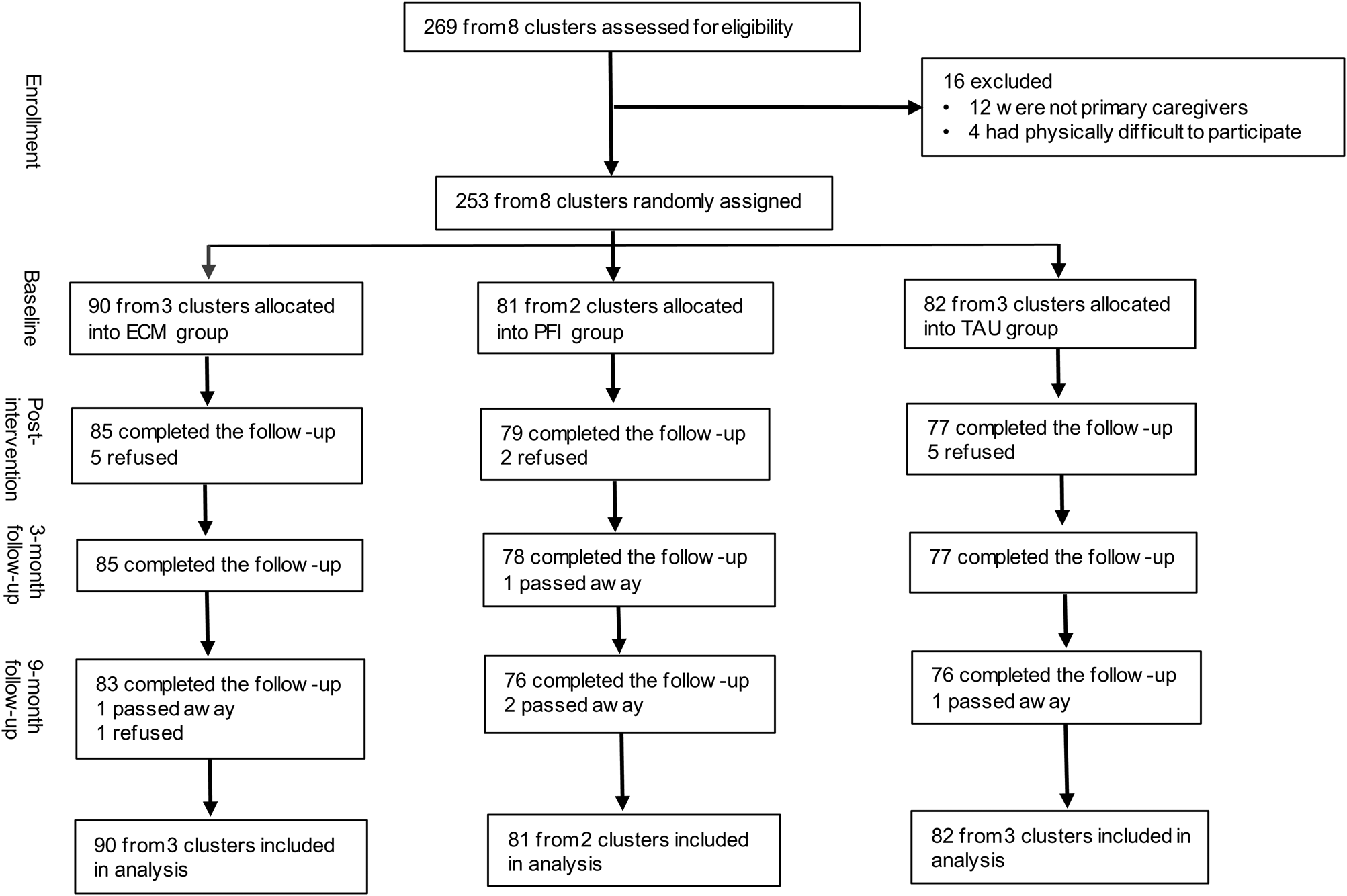
We conducted a parallel, three-arm, single-blinded, cluster randomized controlled trial in Xinjin district, Chengdu city in Southwest China (Fig. 1). The trial was approved by the University of Hong Kong Human Research Ethics Committee (HKUHREC). The research protocol was approved by General Research Fund (GRF, Grant No: 17605618), University Grants Committee, Hong Kong. This trial is registered with ChiCTR, number ChiCTR 2000039133.
The CONSORT diagram of participation flow.

Participants
The inclusion criteria were: (1) being the main family caregivers of person diagnosed with schizophrenia by International Classification of Diseases 10th Revision; (2) aged 18–75 years; and (3) living with and caring for PWS. The main family caregivers in this study were referring to these family members who take the major responsibility of caring for PWS (e.g. time, effort, duty) in household. The exclusion criteria were: (1) likely to engage in an imminent risk behavior (e.g. suicide or violence); or (2) identified by a trained health professional as unsuitable to join the study (e.g. unable to communicate). These health professionals (e.g. doctors, primary health care providers) worked at local township hospitals or village clinics, and were in charge of community health care and management of persons with mental illness and their family caregivers. These local health professionals helped to identify the participants who might be unsuitable to join the study (e.g. unable to communicate). Participants were referred to the study by the local mental health professionals (e.g. psychiatrist, primary health care providers). Written informed consent was obtained from all participants, who were provided with a detailed explanation of the study's objectives, risks, and benefits, the voluntary nature of participation, and their rights to withdraw. All family caregivers received 140 RMB as compensation for their participation in all 12 sessions (e.g. around 12 RMB for each session).
Randomization and masking
To reduce possible contamination between FCPWS in the same township, the study used a cluster randomized controlled trial. Eight rural townships in the Xinjin district, used as a cluster, served as the unit of randomization. Randomization was conducted by a staff member of the local mental hospital who was not involved in the study, with a pre-determined list generated by an online randomization program (www.randomization.com) in the allocation sequence of 1:1:1 ratio. Three townships were assigned to the ECM group, two townships were assigned to the PFI group, and three townships were assigned to the TAU group. FCPWS in these townships were allocated to the three groups accordingly. In view of the nature of the interventions, the trained research team member who delivered the intervention was aware of the research allocation, but all the local mental health professionals, assessors, and participants were blinded to it. Independent and trained assessors were blind to the research design and completed the baseline and the follow-up assessments.
Procedures
Participants who were allocated to receive the ECM intervention were offered a 12-session peer group intervention on a weekly basis (approximately 90 min per session). Mixed with different delivering methods (e.g. training, discussion, role play, take-home practice), the ECM intervention comprised two parts: (1) provision of brief psychoeducational training to improve the understanding of psychiatric symptoms, treatment, and recovery (e.g. reducing caregiving burden and improving hope and QOL, etc.) (4 weeks, family groups) (Ran et al., Reference Ran, Xiang, Chan, Leff, Simpson, Huang and Li2003, Reference Ran, Chan, Ng, Guo and Xiang2015, Reference Ran, Xiang, Simpson and Chan2005), and (2) stigma-reducing via enhanced contact: (a) to increase single family contact with PWS (e.g. contact between family caregivers and patients with schizophrenia at home and in public) (4 weeks), and (b) to improve group family contact with other FCPWS (e.g. contact and support among peer FCPWS) in the community (4 weeks). This part emphasized frequency (e.g. times of contact) and quality of contact (e.g. positive contact) between PWS and FCPWS. The major contents in the ECM intervention are shown elsewhere (Ran et al., Reference Ran, Wang, Lu, Weng, Zhang, Deng and Lu2022). Each group included around 10 family caregivers (ranging from 8 to 15 participants). Via peer group support and sharing experiences, participants were introduced with how to cope with discriminatory experiences modeled on the behavioral problem-solving component. Real-life examples of successful adaptation to discrimination in the rural community in our previous studies were provided as well. Family member co-leaders were trained to facilitate a sense of reality and intimacy. To simulate an on-site real-life caring situation, one or two PWS serving as teaching participants were invited to attend each session. Moreover, besides the ECM intervention sessions, all participants in the ECM group were assigned home practice (e.g. positive contact) at home or community each week.
Similar to part 1 of the ECM intervention, the PFI focused on psychoeducation of the causes and effective treatment of schizophrenia, emphasizing the possibility of gradual stabilization and recovery (e.g. reducing caregiving burden and improving hope and QOL, etc.) (Corrigan, Reference Corrigan2012; Dixon, Adams, & Lucksted, Reference Dixon, Adams and Lucksted2000). We also integrated concepts such as family beliefs, attitudes, burden, stigma, medication, and treatment compliance. Building on the PFI approach (Dixon et al., Reference Dixon, Adams and Lucksted2000; Ran et al., Reference Ran, Xiang, Simpson and Chan2005), the PFI reflected a contemporary understanding of schizophrenia from bio-psycho-social perspectives, but focused on education and information rather than explicitly focusing on contact as in the ECM group. Serving as control, participants in the TAU group were visited at home or township hospitals by the trained primary mental health professionals (around 15 min each time) to discuss their general concerns about their relatives with schizophrenia at four timepoints respectively. Although these participants at the TAU group might seek treatment help on their own, we provided no further intervention. The ECM, PFI, and TAU protocols developed by the research team were used to guide the intervention sessions and assessments (Ran et al., Reference Ran, Xiang, Simpson and Chan2005, Reference Ran, Chan, Ng, Guo and Xiang2015).
Based on the requirement of intervention provider, a researcher (with a master degree in psychology and 4-year counselling experience) was selected and accepted 3-day (around 30 h in total) intensive training program provided by the research team. The training program mainly included knowledge of schizophrenia and anti-stigma intervention (e.g. ECM and PFI). The intervention provider was assessed by research team after the training program and met the requirement for delivering both the ECM and the PFI interventions. Moreover, the trained intervention provider attended biweekly group supervision sessions with the research team at University of Hong Kong (HKU) via Skype or WeChat and bimonthly field supervision in the Xinjin district, Chengdu city. A trial steering committee was established to oversee the activities in all three groups. There was no harm assessed in the study.
Measurements
Assessments took place in participants' homes, villages, clinics, or township hospitals. The measures included (1) demographic characteristics of PWS and FCPWS; (2) primary outcome was the 12-item Zarit Burden Interview Short Form (ZBI-SF) with the internal consistency coefficient of 0.88 in this study. The ZBI-SF is focusing on subjective caregiving burden and rated on a five-point Likert scale ranging from ‘never’ to ‘nearly always’. Examples of items are ‘Do you feel strained when you are around your relative?’ and ‘Do you feel stressed between caring for your relative and trying to meet other responsibilities (work/family)?’ High scores represent higher sense of burden; (3) secondary outcomes included the six-item State Hope Scale (SHS) measuring an individual's feelings of hope about ongoing events with a 0.90 Cronbach's α of its internal consistency in this study; and (4) the 26-item WHO Quality of Life (WHOQOL-BREF) scale developed by the WHOQOL Group with the internal consistency coefficient of 0.86 in this study.
Sample size
With reference to other intervention studies, this study (with a three-arm, four-time point design) was expected to have a moderate effect size (0.2) (Perlick et al., Reference Perlick, Nelson, Mattias, Selzer, Kalvin, Wilber and Corrigan2011). Assuming 90% power, a significance criterion of 0.05, and 0.5 as the correlation among repeated measures (Multivariate Analysis of Variance, repeated measures, between factors) (Ran et al., Reference Ran, Chan, Ng, Guo and Xiang2015), 201 family caregivers were needed, as calculated by the statistical software G-Power 3.1.9.2 (Faul, Erdfelder, Lang, & Buchner, Reference Faul, Erdfelder, Lang and Buchner2007; Perlick et al., Reference Perlick, Nelson, Mattias, Selzer, Kalvin, Wilber and Corrigan2011). Despite between-cluster variation may decrease power (Bobak, Barr, & O'Malley, Reference Bobak, Barr and O'Malley2018), we did not account design effect due to the budget constraint and the pragmatic nature of the trial. Assuming an attrition rate of 15%, 231 family caregivers from eight clusters were needed in total for three arms (e.g. 77 in each arm). There was no allowance for multiplicity in the sample size calculation.
Statistical analysis
We included all participants who were enrolled in the study in the analyses, including those who dropped out or were lost to follow-up (intention to treat). According to the statistical analysis plan, the analysis of variance and Pearson χ2 statistic were used for continuous and categorical variables respectively. We calculated an intra-cluster correlation coefficient (ICC) to assess the proportion of variance in study outcomes. We further used a mixed-effect model with unstructured covariance matrix for continuous variables with four repeated measures at pre-intervention (T0), post-intervention (T1), 3-month follow-up (T2), and 9-month follow-up (T3). We calculated standard errors and confidence intervals using robust estimation methods to account for the clustering of observations. By controlling for gender, marital status, relationship, employment, education, baseline interest, family size, and household income in the mixed-effect model (Peng et al., Reference Peng, Chen, Zhang, Yao, Li, Long and Ran2019; Ran et al., Reference Ran, Chui, Wong, Mao, Lin, Liu and Chan2016), we estimated the mean ZBI-SF score among the three groups at the immediate (T1), mid-term (T2), and long-term (T3). The Kenward-Roger approximation was used to estimate denominator degrees of freedom. We took the cluster effect into consideration by the following. First, we randomized the cluster as unit rather than as individual to ensure the potential cluster effect was generated by chance. Moreover, we made a two-level of nesting constructure in the model: level 1 was the nesting of different timepoints within each individual, and level 2 was within the township, the clusters. The present model included random effects of intercept (baseline ZBI-SF score) and slope (time: baseline, post-intervention, 3-month, and 9-month follow-ups), one fixed effect (group: ECM, PFI, and TAU), and the group × time interaction.
In order to induce a robust statistical reference, we adjusted the pre-specified subgroups to achieve the balance of sample size in different groups. The adjusted subgroup analyses examined whether intervention effects differed by age group, sex, personal monthly income, and relationship. Linear regression method was used to compare the variable ‘positive contact’ and ‘positive contact sites’ respectively, and Pearson association between ‘times of positive contact’ and the variables of interest. Missing data were assumed missing at random. First, multiple imputation by fully conditional specification was used to address missing data. Second, the 10 imputed datasets were then analyzed using a mixed-effect model with both fixed and random effects. Third, the coefficient estimates (e.g. treatment difference) obtained from each analyzed dataset were then pooled for inference. Data analysis engaged three researchers and was processed and verified by using SAS software, version 9.4.
Results
Participant characteristics
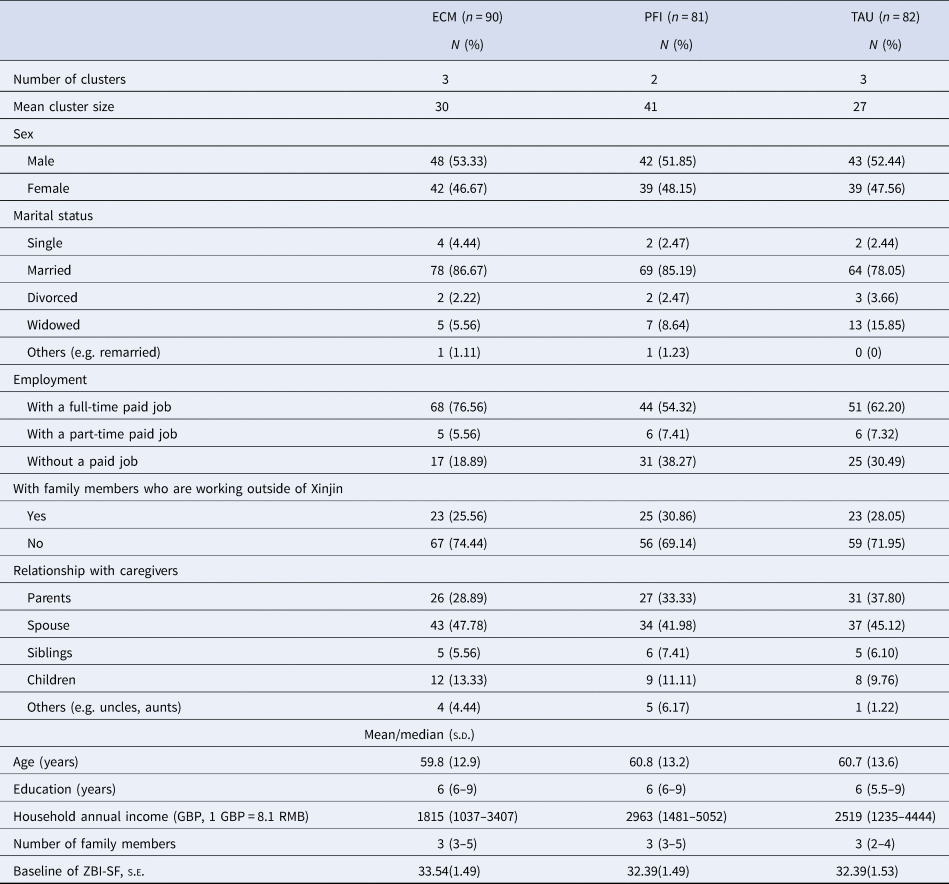
We randomized eight rural townships with FCPWS sample ranging from 17 to 55. The ICC for primary outcome was 0.03. These townships belong to the Xinjin district, Chengdu city, Sichuan province, which has an average gross domestic product (GDP) among all the provinces of China. In April 2019, we screened 269 FCPWS, 253 were eligible and consented to participate. Ninety of them were randomized at the township level to the ECM group, 81 to the PFI group, and 82 to the TAU group (see Fig. 1). The average attendance rates of FCPWS were above 95% in both the ECM and the PFI groups each session. Our overall retention rate was above 92% and these were similar across groups at all follow-ups. Baseline characteristics of FCPWS were summarized in Table 1. There was no statistically significant difference among three groups in the demographic characteristics at baseline.
Demographic characteristics of participants at baseline assessment (n = 253)

Note: ECM, enhancing contact model; PFI, psychoeducational family intervention; TAU, treatment as usual. The participants of three arms from 8 clusters (townships). Education, household annual income and number of family members are medians (interquartile range); age is mean (standard deviation). GBP, Great Britain Pound, and RMB, Renminbi.
Primary and secondary outcomes
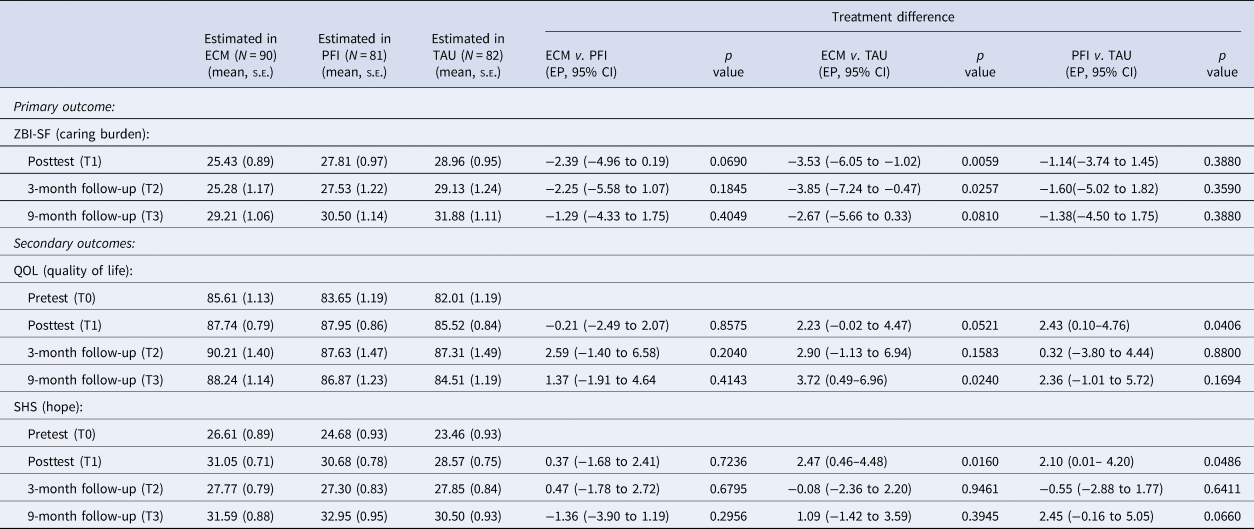
Table 2 shows participants' outcomes of the ZBI-SF, QOL, and SHS scores across time. There were no statistically significant differences of ZBI-SF scores at baseline assessment among three groups.
Caregivers' outcomes of ZBI-SF, SHS, and QOL (intention-to-treatment analysis)

s.e., standard error; EP, estimated parameter; CI, confidential interval.
Note: The analysis based on the intention-to-treatment population (N = 253). Treatment difference analysis was based on linear mixed-effect model after adjusting for baseline demographic characteristics.
At the post-intervention (T1), participants in the ECM group had a statistically significantly lower ZBI-SF score than those in the TAU group [estimated point (EP) = −3.53, 95% CI −6.05 to −1.02, p = 0.0059]. There were no statistically significant differences of ZBI-SF scores between the ECM and PFI group, and PFI and TAU group. For QOL, participants in the PFI group had statistically significantly higher QOL scores than those in the TAU group (EP = 2.43, 95% CI 0.10–4.76, p = 0.0406). There were no statistically significant differences of QOL scores between the ECM and TAU group (EP = 2.23, 95% CI −0.02 to 4.47, p = 0.0521). As for state of hope, we found participants in ECM and PFI groups had statistically significantly higher SHS scores than those in TAU group (EP = 2.47, 95% CI 0.46–4.48, p = 0.0160, and EP = 2.10, 95% CI 0.01–4.20, p = 0.0486, respectively).
At 3-month follow-up (T2), participants in the ECM group had statistically significantly lower total ZBI-SF scores than those in the TAU group (EP = −3.85, 95% CI −7.24 to −0.47, p = 0.0257). As for QOL and SHS, we did not find statistical difference among three groups.
At 9-month follow-up (T3), participants in the ECM group had statistically significantly higher QOL scores than those in the TAU group (EP = 3.72, 95% CI 0.49–6.96, p = 0.0240). As for ZBI-SF and SHS, we did not find statistical differences among three groups.
Subgroup analysis
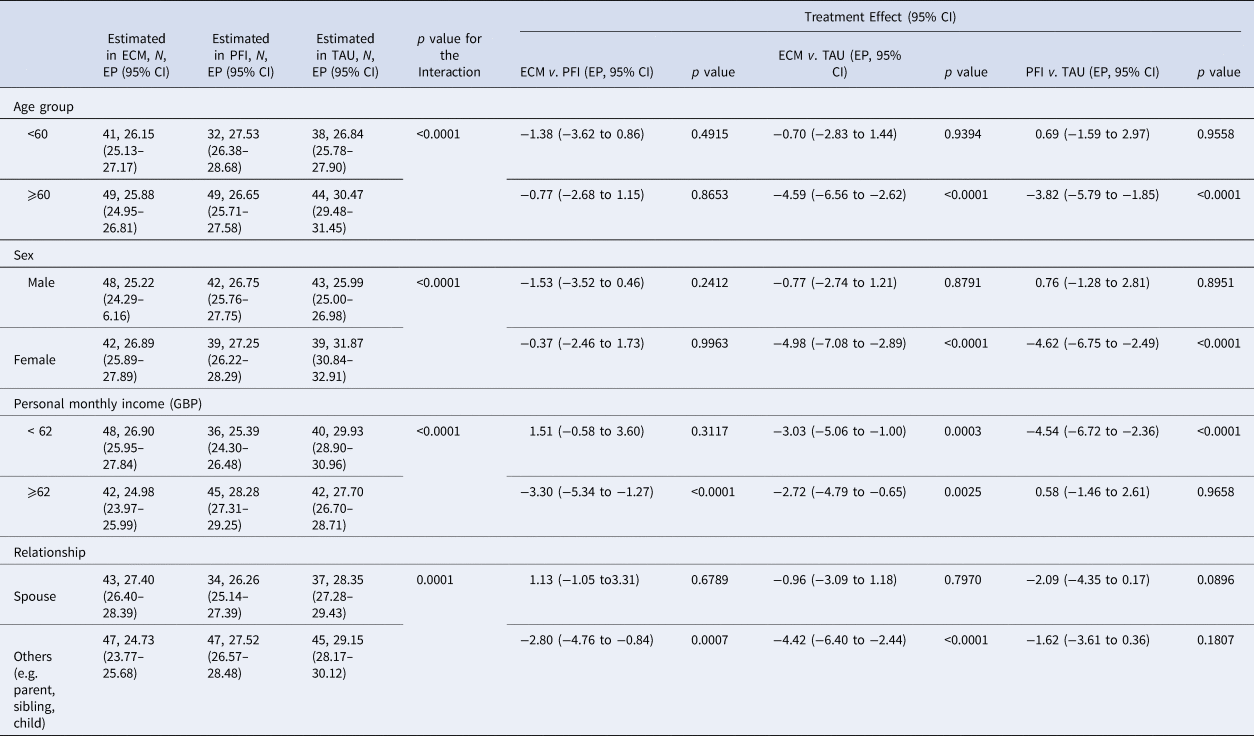
Table 3 shows the results of subgroups analysis of 3-month follow-up (T2) on ZBI-SF scores. Compared with TAU group, there were statistically significantly lower ZBI-SF scores in elder participants (⩾60 years old) both in the ECM and the PFI groups (EP = −4.59, 95% CI −6.56 to −2.62, p < 0.0001; EP = −3.82, 95% CI −5.79 to −1.85, p < 0.0001, respectively). Compared with TAU group, there were statistically significantly lower ZBI-SF scores in female participants both in the ECM and the PFI groups (EP = −4.98, 95% CI −7.08 to −2.89, p < 0.0001; EP = −4.62, 95% CI −6.75 to −2.49, p < 0.0001, respectively). In participants with lower monthly income (<62 GBP), the ZBI-SF scores were statistically significantly lower in the ECM and the PFI groups than that in the TAU group (EP = −3.03, 95% CI −5.06 to −1.00, p = 0.0003; EP = −4.54, 95% CI −6.72 to −2.36, p < 0.0001, respectively); while in participants with higher monthly income (⩾62 GBP), the ZBI-SF scores were statistically significantly lower in the ECM group than those in PFI and TAU groups (EP = −3.30, 95% CI −5.34 to −1.27, p < 0.0001; EP = −2.72, 95% CI −4.79 to −0.65, p = 0.0025, respectively). In other caregivers (e.g. parent, sibling, child), the ZBI-SF scores were statistically significantly lower in the ECM group than those in PFI and TAU groups (EP = −2.80, 95% CI −4.76 to −0.84, p = 0.0007; EP = −4.42, 95% CI −6.40 to −2.44, p < 0.0001, respectively).
The results of subgroup analysis of ZBI-SF scores in 3-month follow-up (intention-to-treatment analysis)

Note: The analysis based on the intention-to-treatment population (N = 253). ZBI-SF scores in 3-month were based on linear regression analysis including intervention, subgroup and the interaction between intervention and subgroup. EP, estimated parameter. 62 GBP ≈ 500RMB.
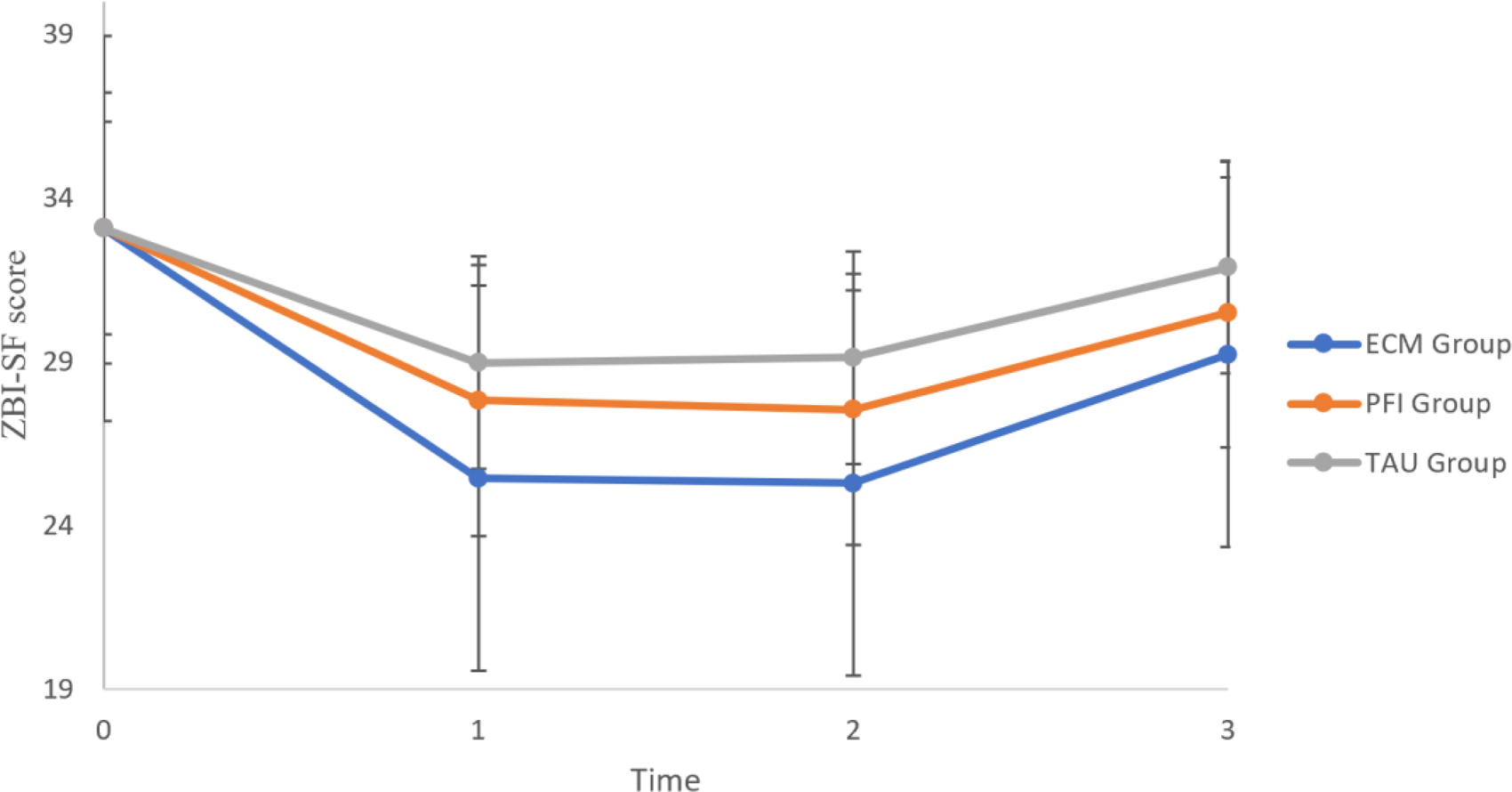
Figure 2 illustrates estimated participants' caregiving burden outcomes trajectory over time based on mixed-effect model. In general, all the three groups were featured by quadratic changes in ZBI-SF score during their courses. However, different patterns between intervention groups (ECM and PFI) and control group (TAU) were observed: As for ECM and PFI groups, ZBI-SF scores continued to fall after intervention and reach the lowest point at 3-month follow-up. Afterwards, both groups followed by a rise in ZBI-SF score at 9-month follow-up. However, TAU group had a drop in ZBI-SF score firstly and hit the lowest point at post-intervention, and then an increase until 9-month follow-up.
Predicted family caregivers' caring burden (ZBI-SF) trajectory over time.
Note: Predicted ZBI-SF outcome was computed based on linear mixed-effect model after adjusting for baseline demographic characteristics. Time: 0 = baseline, 1 = post-intervention, 2 = 3-month follow-up, 3 = 9-month follow-up; ECM, enhancing contact model; PFI, psychoeducational family intervention; TAU, treatment as usual. The high and low lines are 95% CI.

Intervention adherence analysis in ZBI-SF
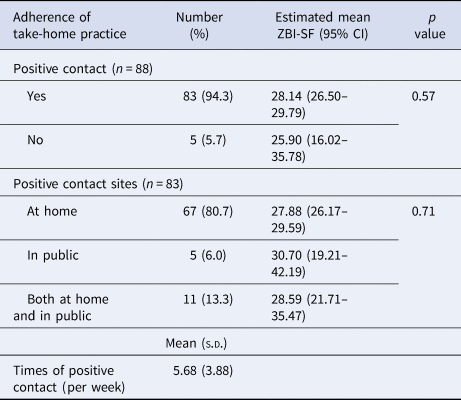
Table 4 shows the intervention adherence of FCPWS’ take-home practice (e.g. positive contact) in the ECM group. We found that 94.3% participants in the ECM group used enhancing contact skills (e.g. positive contact) contacting with their mentally ill relatives at home and in public. Among them, 80.7% participants conducted positive contact at home, 6.0% in public, and 13.3% at home and in public. The mean time of positive contact per week between FCPWS and PWS was 5.68.
The analysis of intervention adherence during the 9-month follow-up in ZBI-SF (n = 88, in the ECM group)

Note: The intervention: the take-home practice (e.g. positive contact).
Discussion
To our knowledge, this is the first randomized controlled trial in rural China to examine the effectiveness of the ECM intervention on reducing the family caregiving burden and improving hope and QOL of FCPWS. The overall retention rate was above 92% in three groups at all follow-ups. This indicates a good data quality in this trial. Although the ECM intervention was designed to target affiliate stigma among FCPWS (Ran et al., Reference Ran, Wang, Lu, Weng, Zhang, Deng and Lu2022), the ECM intervention, combined both psychoeducation and contact intervention, also showed the more stable effectiveness than the PFI on other areas including caregiving burden, QOL, and hope in various extent which are crucial psychological wellbeing variables among FCPWS as well. This study also indicates that the reduced family caregivers' stigma of mental illness may be associated with the reduced family caregiving burden and the improved hope and QOL (Allerby et al., Reference Allerby, Sameby, Brain, Joas, Quinlan, Sjöström and Waern2015; Guan et al., Reference Guan, Huang, Wiley, Sun, Bai and Tang2020; Zhang et al., Reference Zhang, Subramaniam, Lee, Abdin, Sagayadevan, Jeyagurunathan and Chong2018).
The possible reason why a stigma targeting intervention can have an extra benefit may lie in the fact that by psychoeducation and enhancing contact with PWS, caregivers may accordingly change their mindset and correct misconceptions they had before. For example, FCPWS who have changed their caregiving attitudes may tend to be more willing and proactive to care PWS in daily life. This attitude-shifting of FCPWS may reduce their subjective burden and improve other psychological wellbeing (e.g. hope and QOL). Moreover, the ECM intervention is designed to target stigma though, it also comprises comprehensive aspects including stigma, caregiving burden, QOL, and hope (Guan et al., Reference Guan, Huang, Wiley, Sun, Bai and Tang2020; Ran et al., Reference Ran, Wang, Lu, Weng, Zhang, Deng and Lu2022). Therefore, a reduction of stigma of mental illness might lead to the reduction of other aspects (e.g. caregiving burden, hope, and QOL) since these variables might interact with each other. Future research should further explore the relationship among these variables, and advance statistical modeling analyses (e.g. mediator or moderator effect, and multilevel path modeling) to identify the underlying mechanism.
Regarding the theoretical contribution, this research extended the contact theory by emphasizing enhancing positive contact instead of general contact which was also reported by our previous works (Li et al., Reference Li, Zhang, Yau, Wang, Wong, Yang and Ran2020, Reference Li, Deng, Zhang, Wang, Wei, Wong and Ran2021; Ran et al., Reference Ran, Peng, Yau, Zhang, Li, Wong and Lu2021). Moreover, this study has also addressed that contact theory may be used in a broad context, not only stigma of mental illness, but also caregiving burden, hope, and QOL in a non-western context. For example, the results of this study indicate that the ECM group has reduced caregiving burden and improved QOL than the PFI group in different time-points (e.g. reduced caregiving burden at T2 and T3, improved QOL at T3). Meanwhile, compared with the TAU group, the PFI group performed as good as ECM in many other areas (e.g. improved QOL and hope at T1). The results indicate that ECM is a highly structured, systematic, and integrated approach for addressing various aspects of mental wellbeing. Future research should further examine the efficacy of the ECM intervention in more extended targeted stakeholders, such as mental health professionals.
The results showed that both the ECM and the PFI groups were more effective in reducing family caregiving burden than the TAU group in various demographics. However, only the ECM group had statistically significant lower ZBI-SF scores in participants with high personal income and non-spousal relationship with PWS. Both the ECM and the PFI groups had statistically significantly lower ZBI-SF scores compared with the TAU group in elder, female participants, and participants with a high personal income. This may suggest different mechanisms exist behind the intervention groups which is consistent with our previous findings (Ran et al., Reference Ran, Wang, Lu, Weng, Zhang, Deng and Lu2022). Future research should figure out the ‘active ingredients’ to answer the question of what works for whom and why, and then examine and refine the mechanisms to improve intervention options. Cultural-specific guidance and intervention targeting different demographic features should be provided to family caregivers to mitigate their caregiving burden and improve their hope and QOL during long periods of home care (Peng et al., Reference Peng, Chen, Zhang, Yao, Li, Long and Ran2019).
Regarding the burden trajectory over time, the ZBI-SF score in the ECM group was continuously dropping from 33.54 (1.49) at the baseline to 25.43 (0.89) at T1, and 25.28 (1.17) at T2. This suggests that the ECM intervention has a short-term and middle-term effect on burden reduction. However, there was a rising trend between T2 and T3, which indicates that the benefit of the ECM intervention does not remain in a long term. We attributed this decreasing-and-rising transition to the fading effect (e.g. burden reduction) over time. All authors of this study suggest that it is crucial to investigate whether a booster intervention approach (e.g. extra maintenance session in the 3-month follow-up) could extend the positive outcome trajectories in the future research (Ran et al., Reference Ran, Wang, Lu, Weng, Zhang, Deng and Lu2022). The similar case can be observed in the trajectory of QOL and HSH. Although the caregiving burden is the primary outcome, the improvement of secondary outcomes (QOL and hope) can be regarded as the by-products of the intervention, which need further research to explore the underlying mechanism. Further studies using a mixed research design are warranted to explore the mechanism of change and maintenance of positive intervention effects. The qualitative study with stakeholders can investigate what their attitudes toward the intervention, and the quantitative study using mediation or/and moderation model can identify the mechanism explaining trajectories changes over time.
The outbreak of COVID-19 and its following policies and interventions of fighting epidemic (e.g. lockdown city, social distance) in the research site during the study might influence the results of this study. For example, it was just around the outbreak of COVID-19 (January 2022) when the assessment of T2 was carried out. Governments at all levels in China, including the local authority of the research site, had launched a series of schemes to control the COVID-19 pandemic and prevent resurgence and importation of new cases. Such schemes included lockdown city, keeping social distance, and stay-at-home orders, which led to a greater reduction of social contact and poor mental health (Benke, Autenrieth, Asselmann, & Pané-Farré, Reference Benke, Autenrieth, Asselmann and Pané-Farré2020). Further studies should be conducted to explore the potential impact of the COVID-19 pandemic and consider the pandemic as a potential confounding variable to ensure the validity of results (Horn, Weston, & Fisher, Reference Horn, Weston and Fisher2020).
The intervention adherence analysis showed that most FCPWS (94.3%) in the ECM group followed take-home practice to use positive contact skill during 3- and 9-month follow-up, which is much higher than the average rate of adherence (67%) to mental health clinical practice among other trials (Bauer, Reference Bauer2002). The high intervention adherence in this study indicates: (1) the ECM intervention is acceptable and fitting for FCPWS in rural China; (2) the quality of findings of this follow-up study is relatively high; and (3) FCPWS considered ECM as meaningful, so they continued with it to improve their family care and facilitate mental health recovery for their relatives with schizophrenia. Authors of this study also suggest that the intervention adherence should be included as an important assessment aspect for improving the quality of anti-stigma and psychosocial interventions (Ran et al., Reference Ran, Wang, Lu, Weng, Zhang, Deng and Lu2022).
This study has several limitations. First, we did not take into account ICC in the sample size calculation so we might not effectively compare the different effects between the PFI and the TAU groups. The within-group analysis was not included as well because of the limited sample size. Nevertheless, our trial is still one of the largest trials compared to prior studies on FCPWS (Ran et al., Reference Ran, Chan, Ng, Guo and Xiang2015; Thornicroft et al., Reference Thornicroft, Mehta, Clement, Evans-Lacko, Doherty, Rose and Henderson2016). Further fully powered trials are warranted to test the effect among the ECM, the PFI, and the TAU groups. Second, because of the diversity in the participants' socioeconomic characteristics in rural China, our findings may not be generalizable to developed countries or urban areas. However, our sample site, Xinjin district, Chengdu city, has an approximately median level GDP per capita in China, the findings of this study may be generalized to other areas with similar socioeconomic status. Third, all authors of this study suggest that it is important to investigate whether a long-term intervention approach could extend more positive outcome trajectories (e.g. extra maintenance session in the 3-month follow-up). Fourth, the impact of culturally specific values (e.g. filial piety, face concern) should also be examined in further intervention studies.
Although community mental health care has been developed in current China, over 90% of PWS are cared for by their family caregivers at home in rural areas (Ran et al., Reference Ran, Xiang, Chan, Leff, Simpson, Huang and Li2003, Reference Ran, Chan, Ng, Guo and Xiang2015, Reference Ran, Peng, Yau, Zhang, Li, Wong and Lu2021). Given the limited community mental health services and the important role of family caregivers in caring for PWS in China, a systematic and multifaceted view should be taken into account rather than just tackle a sole aspect (e.g. stigma, caregiving burden, QOL, hope) when designing and planning psychosocial intervention programs to let FCPWS reap maximum benefits from the intervention. Policy makers should encourage these multifaceted intervention programs which would be both cost- and time-effective. Almost previous anti-stigma programs solely focus on reducing stigma and potentially ignore the other psychological outcomes. This research serves as exploratory research which tries to manage various aspects of recovery into one intervention program in rural China. This may be more practicable and acceptable particularly by the underdeveloped authorities with limited financial and medical resources.
Data
The de-identified data are available on reasonable request to the corresponding author.
Acknowledgements
We thank all the collaborative institutes (Chengdu Xinjin Second People's Hospital, Township hospitals in Chengdu Xinjin district), research collaborators, and participants for support and data collection.
Author contributions
MSR designed this study. MSR, YZW, WL, and ML conducted this study. MSR, YZW, TMZ, YLIW, ML, and WL collected data. YZW and XW conducted data analysis. YZW and MSR wrote the first draft of the paper. All authors made contributions to critical revision of the manuscript.
Financial support
General Research Fund, University Grants Committee, Hong Kong SAR (GRF, Grant No. 17605618, 2018–2021, PI: Prof. Ran). The funder of the study had no role in study design, data collection, data analysis, data interpretation, or writing of the paper. The corresponding author had full access to all the data in the study and had final responsibility for the decision to submit for publication.
Conflict of interest
None.