A research project is underway to characterize the properties of volcanic muds and residual and sedimentary clays from the mid-Atlantic Azores archipelago (Portugal) to assess their potential for peloid formulations to be used in spa centres.
The island of São Miguel is already known for having materials suitable for therapeutics; the Caldeiras da Ribeira Grande fumarolic field contains a particular type of mud that is a product of in situ maturation, where sediments and mineral thermal waters (Na-SO4 type) along with pluvial waters are mixed constantly in a very large pool (Carvalho et al., Reference Carvalho, Mateus, Nunes and Carvalho2014), providing a natural maturation process (Quintela et al., Reference Quintela, Costa, Terroso, Sá, Nunes and Rocha2015). The peloids extracted from this boiling mud pool are used in a local thermal centre, which has existed since 1811, for the relief of pain associated with rheumatic diseases and for skin pathologies. However, São Miguel has low reserves of these muds (Quintela et al., Reference Quintela, Costa, Terroso, Sá, Nunes and Rocha2015) which cannot meet the increasing demand.
The need for new materials has led to this research, which is the mineralogical and geochemical characterization of clayey materials from Santa Maria Island, Azores archipelago, to evaluate their potential for use in pelotherapy practices or cosmetic formulations, alone and/or mixed with volcanic muds from São Miguel.
Particular attention is focused on the clay-mineral contents due to their applications in healthcare, (e.g. in pharmaceutical formulations) (López-Galindo & Viseras, Reference López-Galindo and Viseras2004). Kaolinite, the most abundant phyllosilicate in almost all samples, may be used topically or ingested, as well as in cosmetic formulations (Awad et al., Reference Awad, López-Galindo, Setti, El-Rahmany and Iborra2017). Smectite is used in the treatment of gastrointestinal disease such as diarrhoea (Guarino et al., Reference Guarino, Bisceglia, Castellucci, Iacono, Casali, Bruzzese, Musetta and Greco2001) and it may protect the intestinal mucosal barrier and adsorb toxins. Palygorskite is also used in health in anti-diarrhoeal and antacid medicines (López-Galindo & Viseras, Reference López-Galindo and Viseras2004).
Geological setting
The Azores archipelago is composed of nine volcanic islands and a few islets and is located in the North Atlantic Ocean, 1600 km west of the European continent. Santa Maria, the oldest and most easterly island of the archipelago, shows intense pedogenesis as a consequence of intense volcanic activity, alterations in sea level and intense erosion episodes (Nunes et al., Reference Nunes, Lima and Medeiros2007).
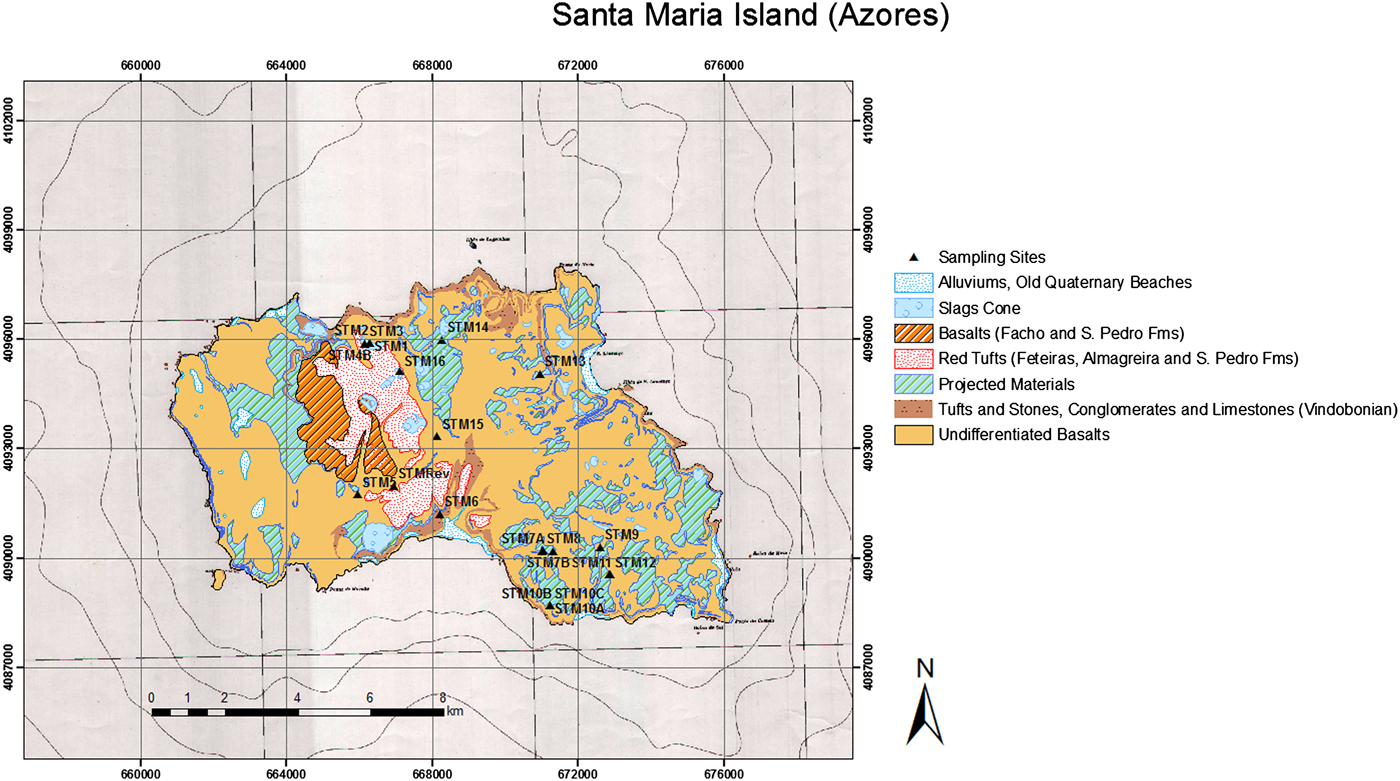
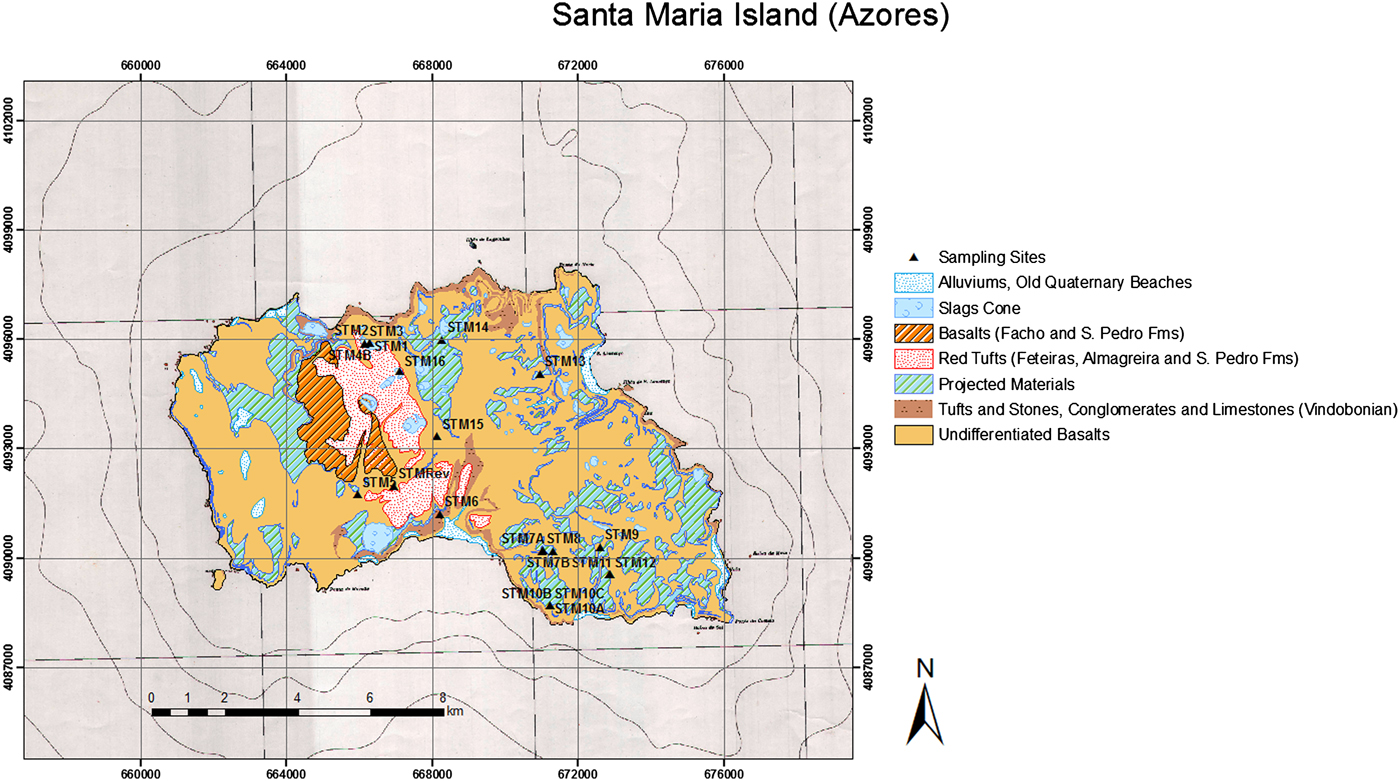
In general, the outcropping formations have been altered to form residual deposits (Serralheiro, Reference Serralheiro2003). In particular, the Feteiras and Almagreira Formations (Fig. 1), corresponding to the most recent volcanism on the island of explosive character, are composed of pyroclasts that were later altered to red clays under the action of a hot and humid climate (Madeira, Reference Madeira1986). In addition to these residual outcrops, sedimentary rocks, limestones and marls do occur (of Vindobonian age), with clay-rich levels.
Geological map of Santa Maria Island and sampling sites. Fms = formations.
Materials and methods
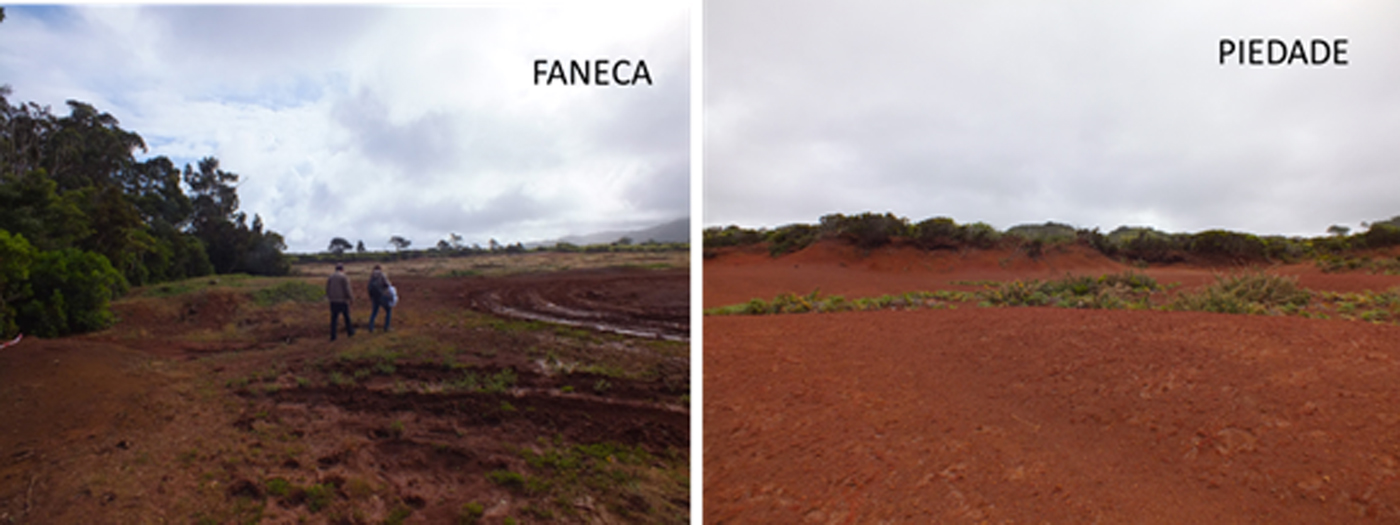
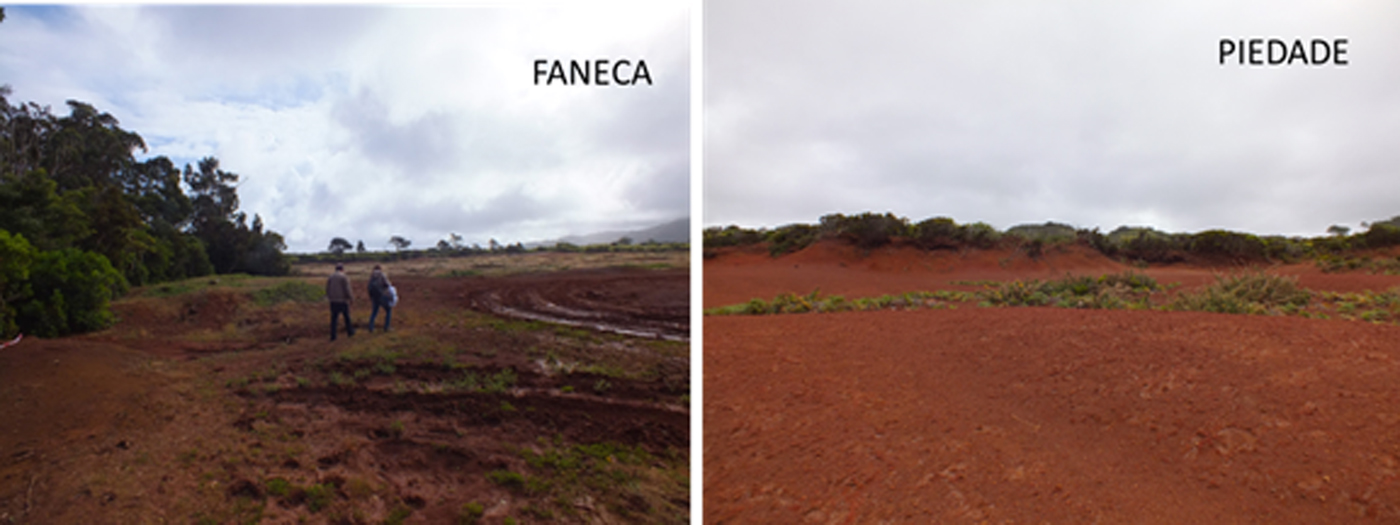
An extensive sampling campaign was conducted all around the island, covering all of the outcropping geological formations, with special focus on the most weathered ones; a total of 20 samples were collected, with eight of them being representative of two well-known formations: the Faneca Deposit (five samples: STM1, 2, 3, 4A and 4B), also known as ‘Red Desert’, and the Piedade or Malbusca Deposit (three samples: STM10A, 10B and 10C), and both of these formations belong to the Feteiras Formation (Fig. 2).
General view of the Faneca and Piedade deposits.
One sample was collected from a clayey level of the Vindobonian marly limestones and the remaining 12 samples were collected from various sites on the island, where alteration of the volcanic rocks was more visible. The samples with references STM1, 2, 3, etc., were projected with ArcGis software on the geological map of the island (Fig. 1).
The analytical methodologies used are those recommended by López-Galindo et al. (Reference López-Galindo, Viseras and Cerezo2006) and Gomes (Reference Gomes2017). All samples were submitted to chemical, mineralogical and technological characterization, with particular emphasis on those allowing the assessment of their potential as therapeutic clays (Rebelo et al., Reference Rebelo, Viseras, Galindo, Rocha and Silva2011a). After performing wet sieving (63 µm), the samples were dried at ~50°C and were disaggregated gently before testing. The <2 µm size fractions were separated by sedimentation according to Stokes’ law. Mineralogical analyses of the <63 µm and <2 µm fractions were carried out by X-ray diffraction (XRD) using a Panalytical X'Pert-Pro MPD, Cu-Kα radiation (λ = 1.5405 Å) on randomly oriented powders (bulk sample) and oriented aggregates (<2 µm). The oriented aggregates were treated with glycerol and exposed to heat treatment at 500°C. Mineralogical analysis was performed on random powder mounts using the (hkl) peaks for non-clay minerals and the (00l) basal peaks for clay minerals on oriented mounts; the identification of the different mineral phases followed the criteria recommended by Schultz (Reference Schultz1964), Brindley & Brown (Reference Brindley and Brown1980) and the Joint Committee for Powder Diffraction Standards. Semi-quantitative mineralogical analysis was performed from determination of the peak areas of certain reflections for each mineral, and these were calculated following the ‘reflective powers method’ (Galhano et al. Reference Galhano, Rocha and Gomes1999; Oliveira et al., Reference Oliveira, Rocha, Rodrigues, Jouanneau, Dias, Weber and Gomes2002). Determination of chemical composition (major and trace elements) was assessed by X-ray fluorescence (XRF) spectrometry using a Panalytical Axios PW4400/40 XRF spectrometer. The loss on ignition was also determined by heating the samples at 1000°C for 2 h.
The Chemical Index of Alteration (CIA) was determined using the Nesbitt and Young method, described by Goldberga & Humayun (Reference Goldberga and Humayun2010). This method includes the most frequent elements in volcanic soil composition (CIA = [Al2O3/(Al2O3 + CaO + Na2O + K2O] × 100).
The cation-exchange capacity (CEC) was determined using ammonium acetate (NH4CH3CO2) as the saturation solution. The exchangeable cations were determined by inductively coupled plasma mass spectrometry using an Agilent Technologies 7700 series instrument. The pH values of the samples were assessed with using a HANNA HI 9126 instrument (Rebelo et al., Reference Rebelo, Rocha and Ferreira da Silva2010, Reference Rebelo, Viseras, Galindo, Rocha and Silva2011b; Quintela et al., Reference Quintela, Terroso, da Silva E. and Rocha2012, Reference Quintela, Costa, Terroso and Rocha2014). Consistency parameters (liquid limit and plastic limit) were determined according to Rebelo et al. (Reference Rebelo, Rocha and Ferreira da Silva2010, Reference Rebelo, Viseras, Galindo, Rocha and Silva2011b) and Quintela et al. (Reference Quintela, Terroso, da Silva E. and Rocha2012, Reference Quintela, Costa, Terroso and Rocha2014). The Abrasivity Index (AI; Einlehner AT-1000 apparatus) and cooling kinetics (Thermometer, Lutron TM-9064) were also determined. The viscosity was assessed with a Haake Viscotester iQ, Thermo Scientific instrument (Rotor: CC25DIN/Ti). The chemical composition of the <2 µm fraction was determined by scanning electron microscopy (SEM) with a Hitachi SU70 instrument coupled with energy-dispersive X-ray spectroscopy (EDS) (Bruker QUANTAX 400 EDS spectrometer).
All of these analyses were carried out in accordance with the protocols and norms followed in the Department of Geosciences and in the Department of Materials Engineering of the University of Aveiro (Rebelo et al., Reference Rebelo, Rocha and Ferreira da Silva2010, Reference Rebelo, Viseras, Galindo, Rocha and Silva2011b; Quintela et al., Reference Quintela, Terroso, da Silva E. and Rocha2012, Reference Quintela, Costa, Terroso and Rocha2014).
Results and discussion
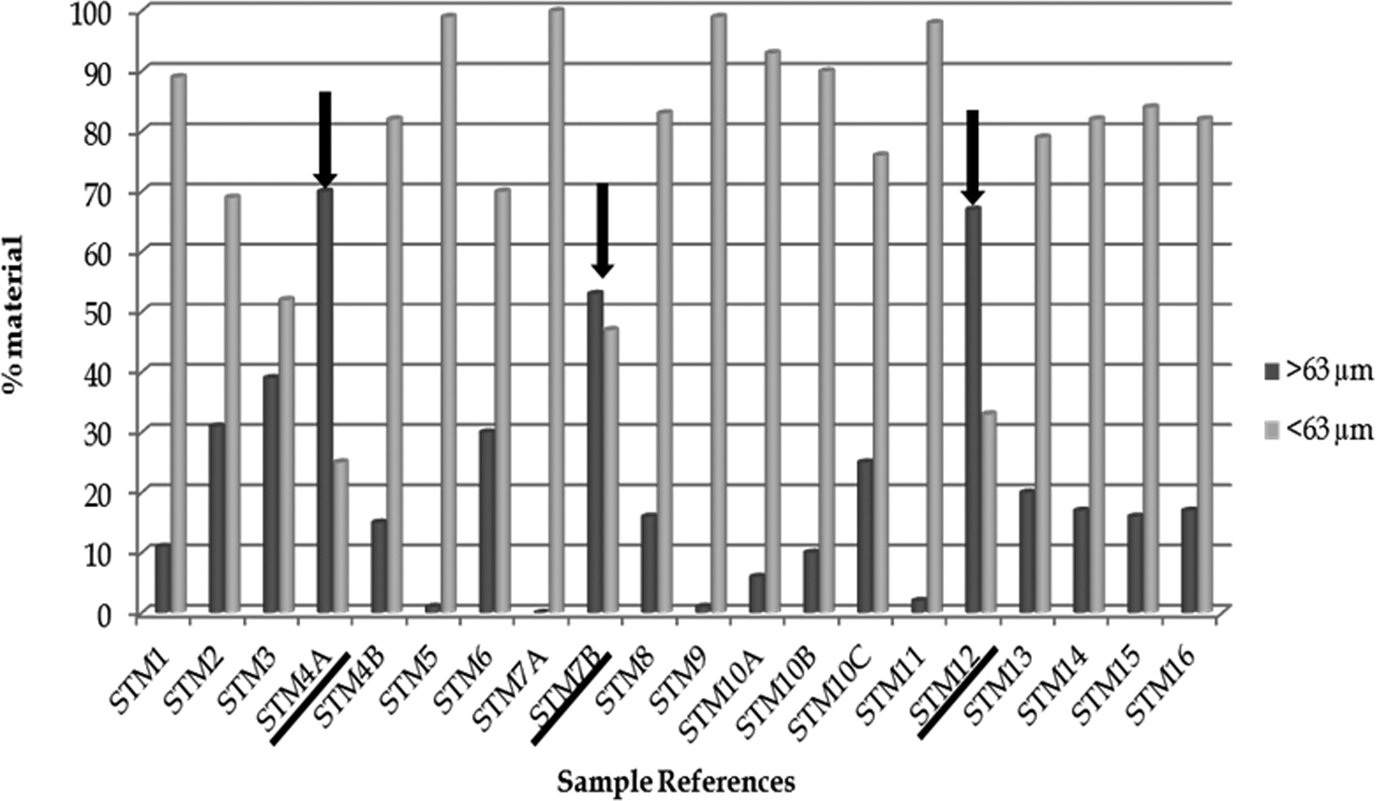
Almost all of the samples except for STM4A, STM7B and STM12 are richer in the finer fraction (<63 µm) than the coarser fraction (>63 µm) (Fig. 3), indicating that the materials are suitable for application as peloids application with respect to particle size (Gomes & Silva, Reference Gomes and Silva2007).
Particle-size distribution results. Arrows point to the sample references for which the >63 µm values are greater, and the underlined samples are the corresponding (coarser) samples.

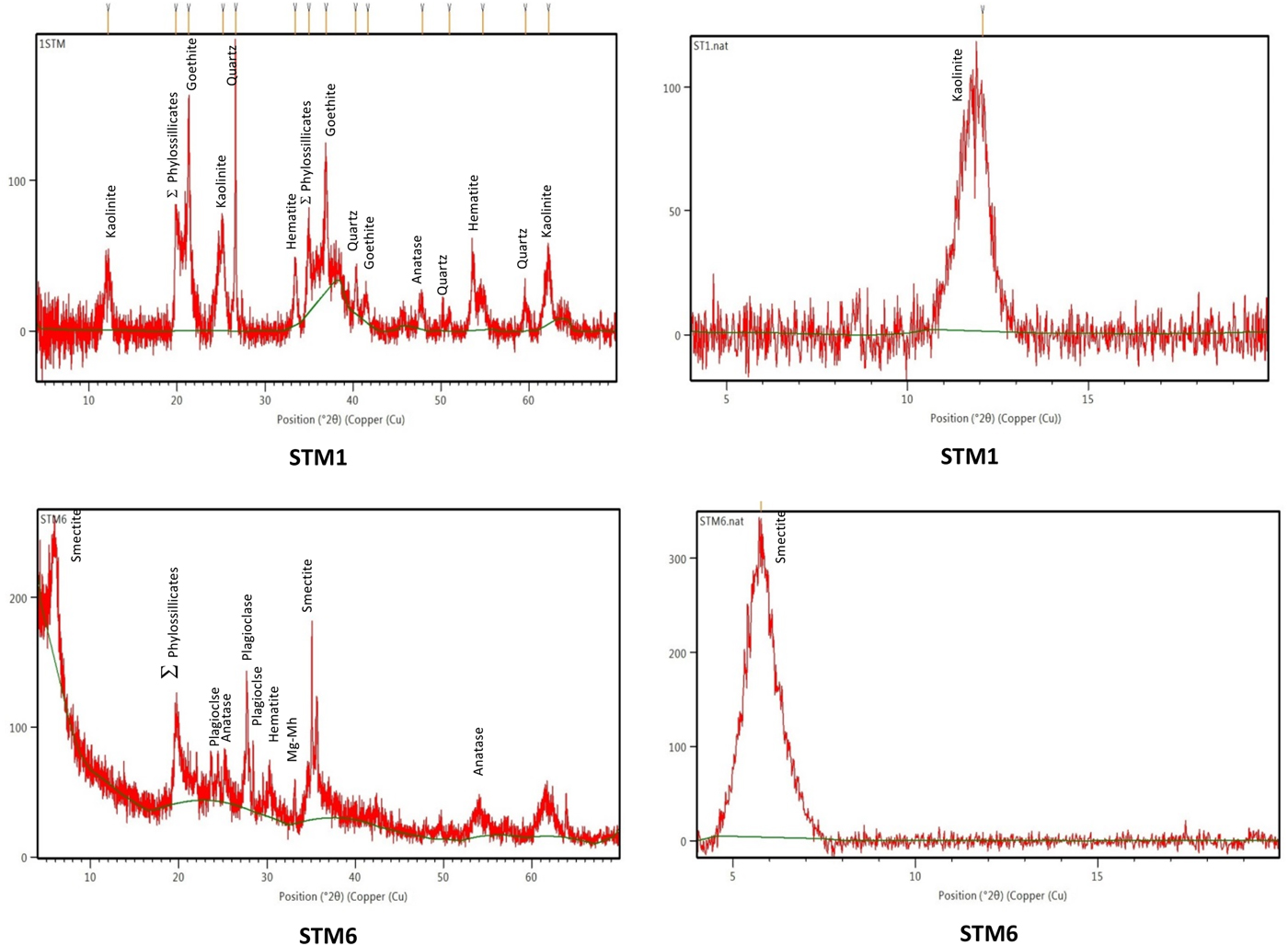
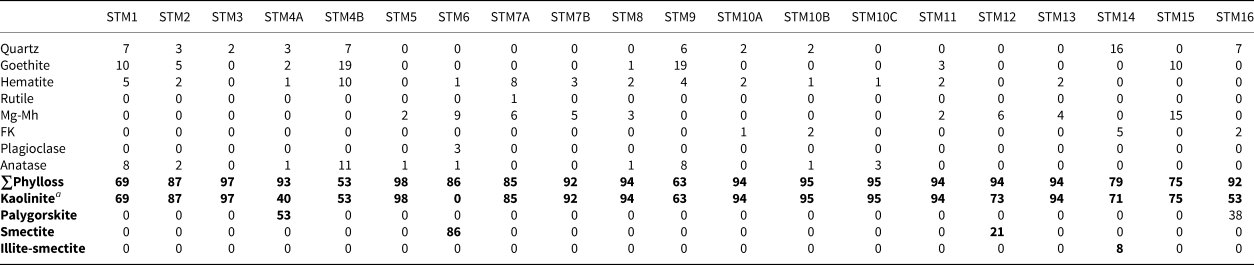
Mineralogically, all of the samples are very rich in phyllosilicates (69–98%), kaolinite being the most common, with the exception of STM6 (the sedimentary sample), in which smectite is the only clay mineral identified. In addition to STM6, STM12 also presents a small amount of smectite, and STM4A (sampled from a more mature soil profile) contains palygorskite, probably due to intense pedogenesis (Knidiri et al., Reference Knidiri, Daoudi, El Ouahabi and Rocha2014; Xie et al., Reference Xie, Qiu, Chen, Xu, Wang, Lu, Xu and Ji2015; Draidia et al., Reference Draidia, El Ouahabi, Daoudi, Havenith and Fagel2016). The kaolinite is very disordered and, in general, shows some expansion with glycerol treatment, pointing to the presence of discrete amounts of mixed-layer kaolinite-smectite.
Figure 4 shows the XRD traces for the <63 µm and the <2 µm fractions of a residual (STM1) and a sedimentary (STM6) sample. All three clay minerals identified are relevant for pharmaceutical formulations (López-Galindo & Viseras, Reference López-Galindo and Viseras2004).
XRD traces of a residual sample (STM1) and a sedimentary sample (STM6). Left: <63 µm; right: <2 µm.
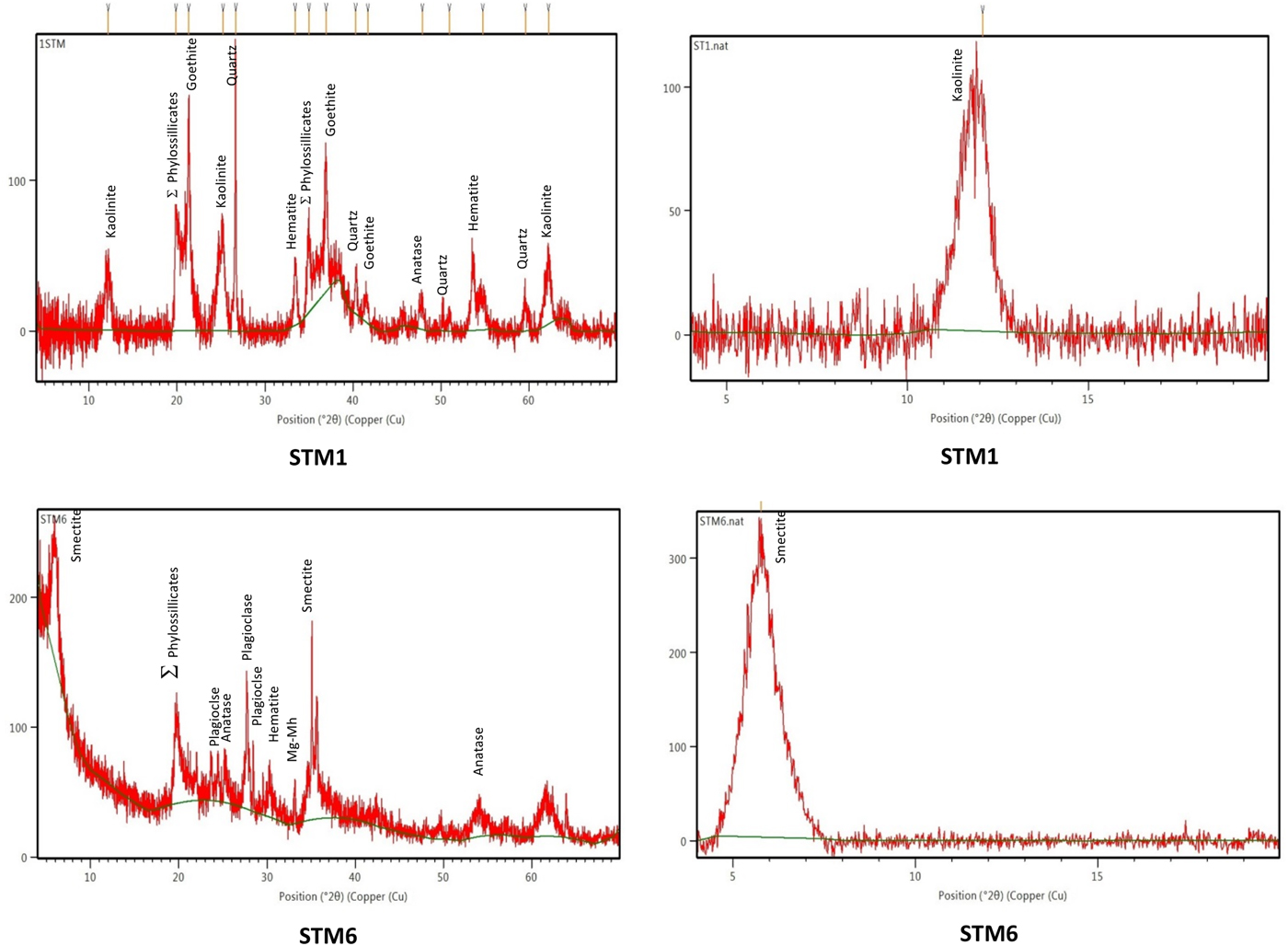
Table 1 shows the qualitative and semi-quantitative compositions of both the <63 µm and the <2 µm fractions; the <2 μm fraction results were recalculated for the total amount of phyllosilicates in each <63 μm composition.
Qualitative and semi-quantitative mineralogical compositions (wt.%) of the studied samples.

Entries presented in bold highlight those particular minerals that are most relevant for the target applications.
a Including mixed-layer kaolinite-smectite.
∑Phylloss = sum of phyllosilicates; FK = potassium feldspar; Mg-Mh = magnetite-maghemite.
The major element chemical composition (Table 2), in general, is in accordance with the mineralogical composition. The samples richer in TiO2 contain abundant anatase. Similarly, those rich in Fe2O3 contain abundant Fe-oxides/oxyhydroxides, goethite and/or hematite and/or magnetite-maghemite, as expected from the alteration stage and colour of the samples. Nevertheless, sample STM12, although rich in TiO2 and Fe2O3, is free from Ti oxides and Fe oxides/oxyhydroxides. This is attributed to the very low structural order of the Ti and Fe oxides in this sample. The chemical compositions of the Faneca and Piedade deposits are compatible with clayey soils resulting from alteration of basaltic rocks, with the main differences between them being the TiO2 and Fe2O3 contents, which are greater in the Faneca samples (STM1, 2, 3, 4A and 4B) than in their Piedade counterparts (STM10A, 10B and 10C).
Chemical composition (wt.%) of the samples studied (major elements).

LOI = loss on ignition; ND = not detected; QM = identified as trace element.
The trace element compositions of the samples are listed in Table 3. Some trace elements, such as Ba, Ag, Cd, Hg, Pb, Sb, As and U, may be harmful to health, whereas V, Cr, Co, Ni or Cu may be either essential or toxic depending on their bioaccessibility (Alonso et al., Reference Alonso, Montaña, Miranda, Castillo and Hernández2004; Gomes & Silva, Reference Gomes and Silva2007). According to Regulation (EC) No. 1223/2009, Cd, Pb and Cr are unacceptable in cosmetics; Pb, for instance, is present in significant amounts in all 20 samples.
Chemical composition (ppm) of trace elements.

Entries presented in bold indicate the values that are greater than the recommended limits.
ND = not detected; QM = identified as trace element.
The CIA values are very high for all of the samples, in accordance with the mineralogical composition, which is poor in primary minerals (e.g. feldspars) and very rich in kaolinite and Fe oxides/oxyhydroxides (Table 4).
CIA (%) of the samples.

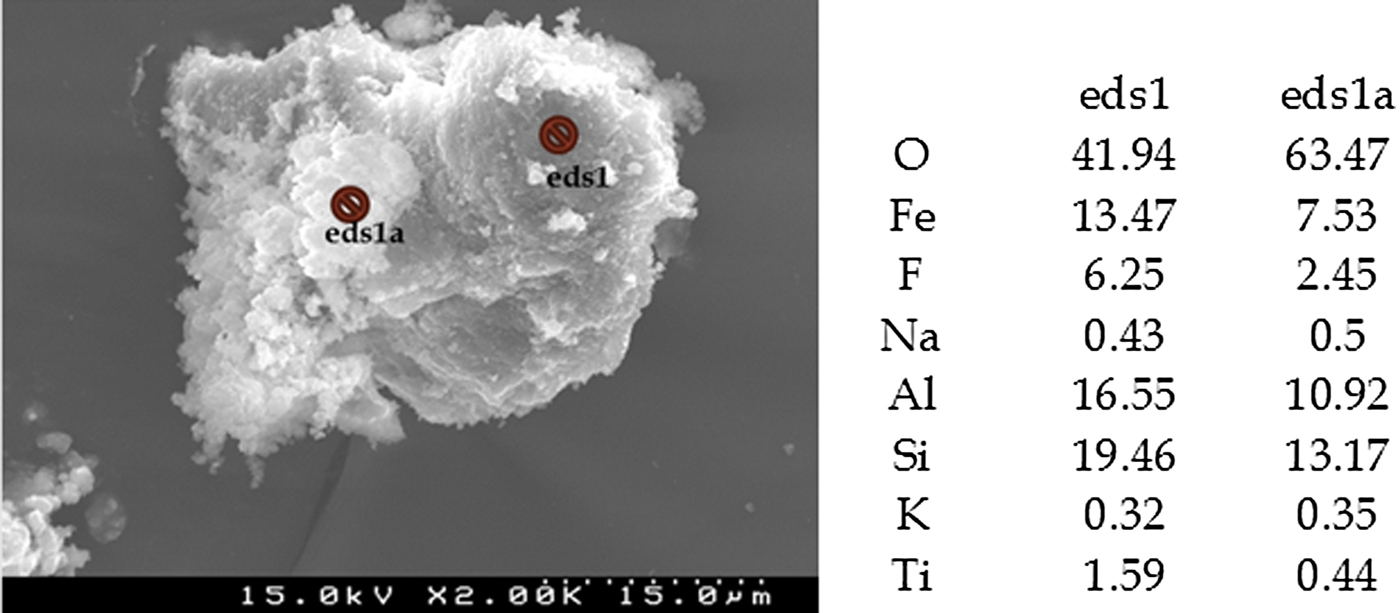
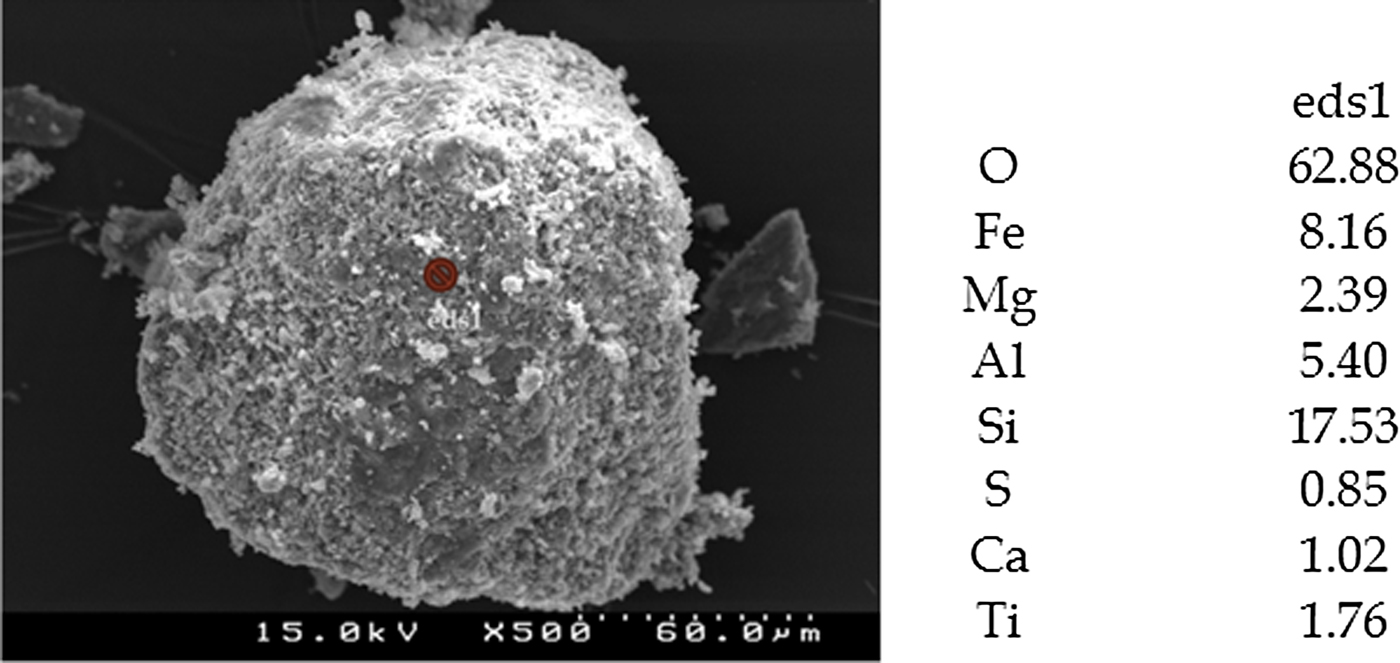
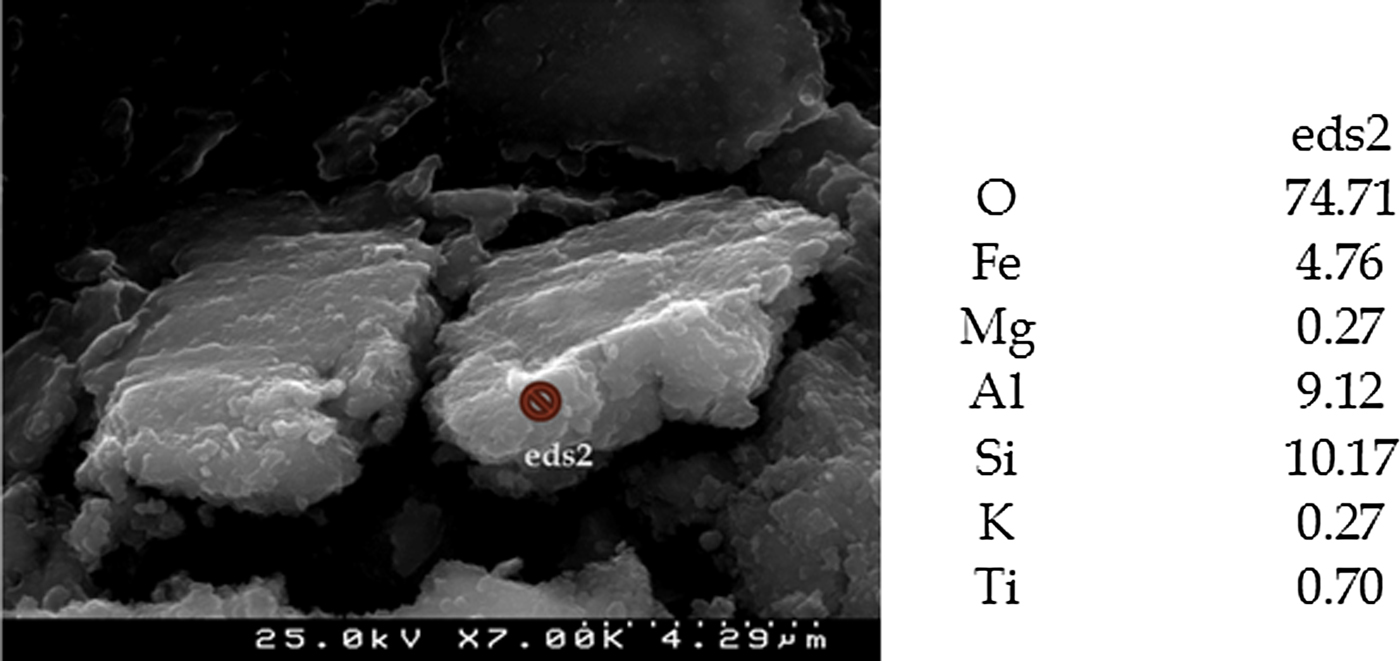
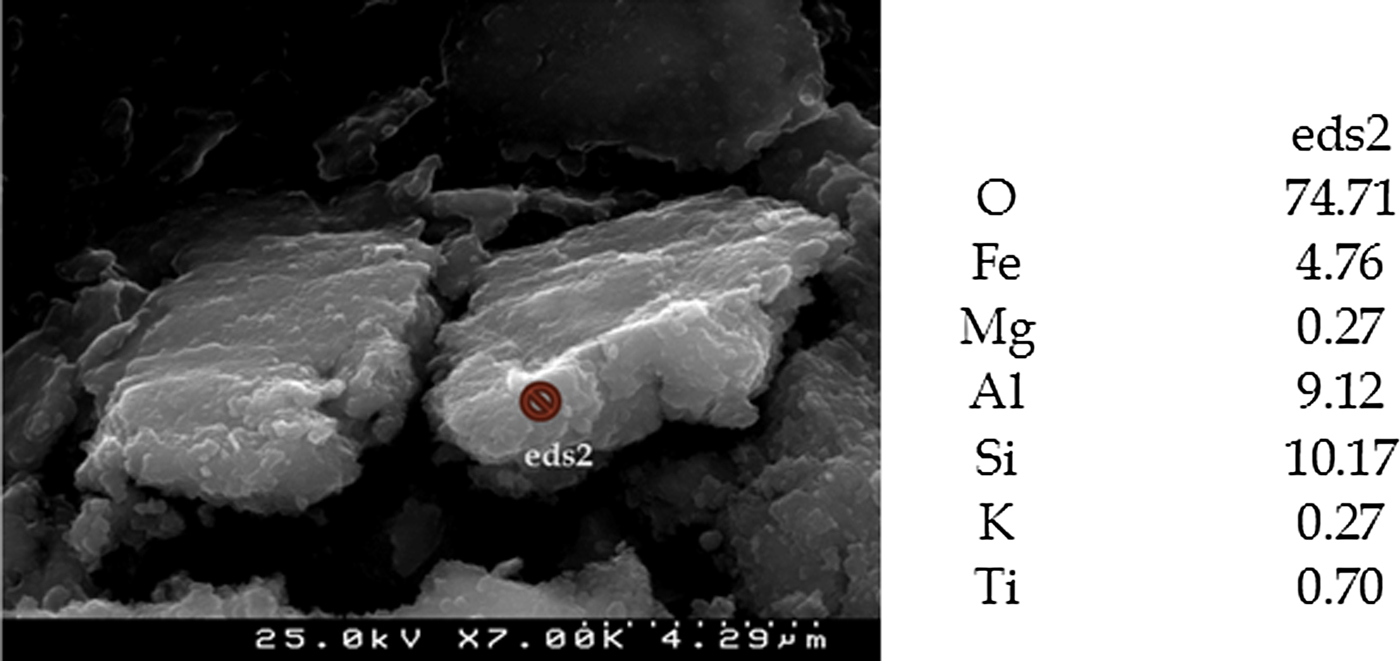
SEM/EDS analysis was performed for some selected samples. Figures 5, 6 and 7 show SEM images from samples STM1, STM6 and STM10A, respectively. The point chemical analyses (wt.%) are in accordance with the chemical composition of the samples (Table 2).
SEM image and EDS analyses from sample STM1 (Faneca deposit), rich in kaolinite.
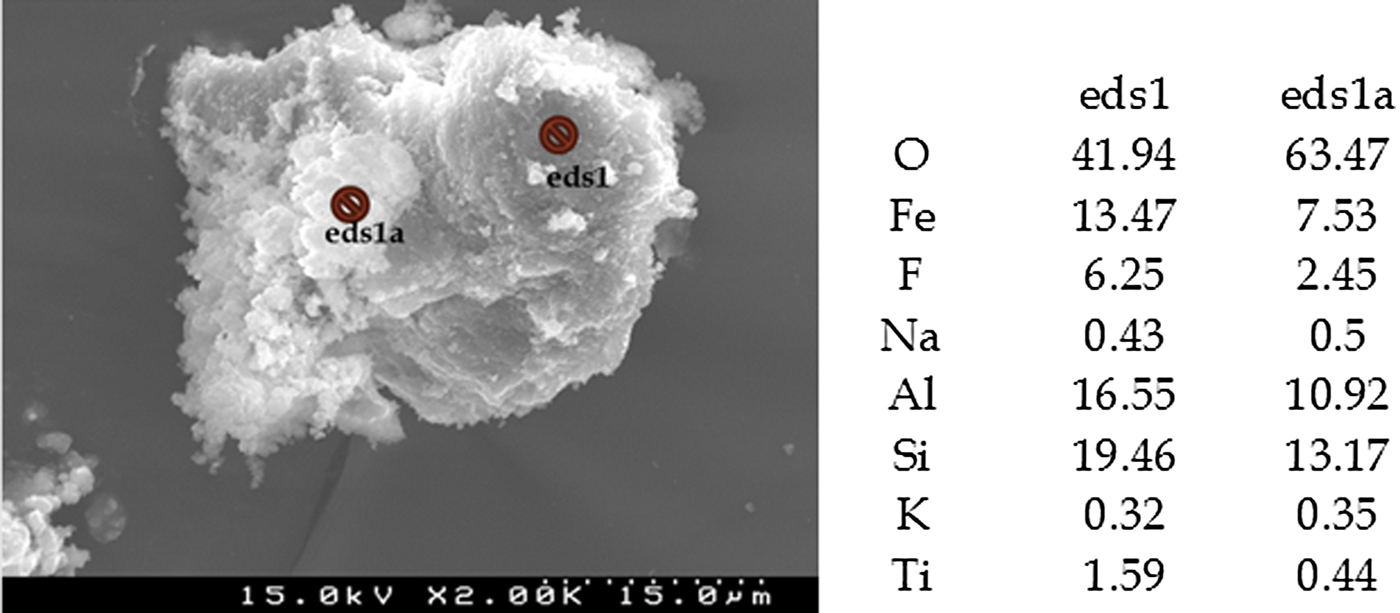
SEM image and EDS analysis from sample STM6, rich in smectite.
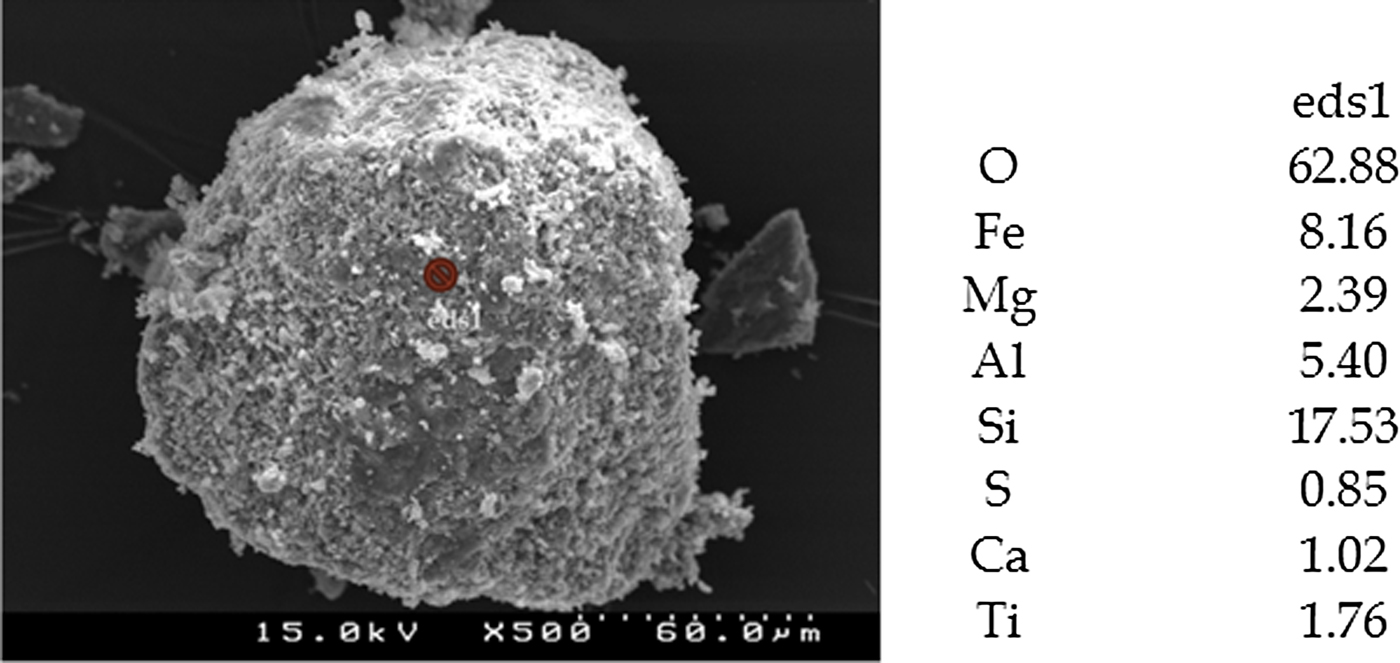
SEM image and EDS analysis from sample STM10A (Piedade deposit), rich in kaolinite.
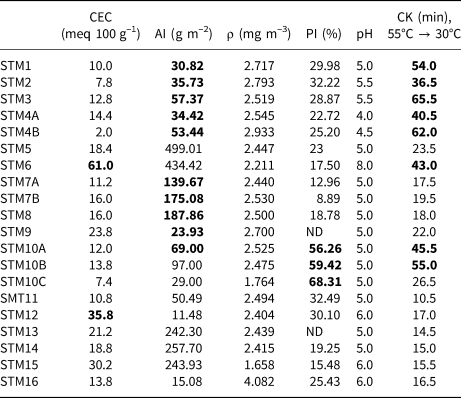
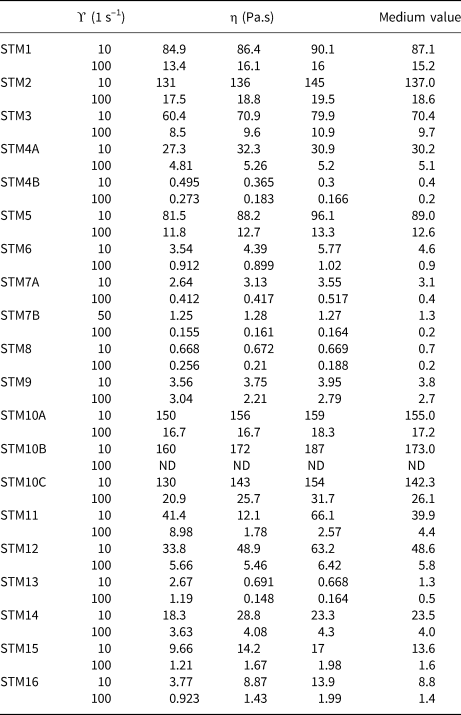
The CEC and the technological properties are listed in Table 5 and the viscosity results are shown in Table 6. The CEC of the samples is low, typical of kaolinite-rich samples (Murray, Reference Murray1999). Samples STM6 and STM12 have greater CEC values, as expected for smectite-rich samples. The AI assessed by the Einlehner method (Quintela et al., Reference Quintela, Costa, Terroso and Rocha2014) is <100 g m–2 for 12 samples, and in some samples it is <50 g m–2. Although AI values <300 g m–2 are considered suitable for aesthetic and pharmaceutical formulations (Rebelo et al., Reference Rebelo, Viseras, Galindo, Rocha and Silva2011a), lower limits (<200 g m–2, or even lower depending on the particular skin application) have been considered in other studies (Rebelo et al., Reference Rebelo, Viseras, Galindo, Rocha and Silva2011b). This suggests that, other than for samples STM5, 6, 14 and 15, the remaining samples have suitable AI values for health application, particularly peloid formulation.
Technological properties of the samples.

Bold entries highlight the best-fit values.
ρ = density; AI = Abrasive Index; CEC = cation-exchange capacity; CK = cooling kinetics; ND = not determined; PI = Plasticity Index.
Viscosity of the samples.

ϒ = shear rate; η = steady-state viscosity; ND = not determined.
The densities of the samples were determined using the pycnometer method, and they are typical of clayey samples (Table 5). Sample STM16 has a high density. In addition, the samples display low plasticity, consistent with their mineralogical composition (Bain, 1971). The Plasticity Index (PI) values of samples STM9 and STM13 were not calculated because it was not possible to determine the plastic limit. The Piedade samples (STM10A, 10B and 10C) have higher PI values. The pH values are consistent with mineralogy: lower pH values were determined in kaolinite-rich samples. Sample STM6 had an alkaline pH, being smectitic.
Application of peloids usually carried out for a duration of 30 min at a temperature of 40–45°C (López-Galindo & Viseras, Reference López-Galindo and Viseras2004). The samples that take longer to dissipate heat have higher heat capacities. Samples from Faneca (STM1, 2, 3, 4A and 4B) and Piedade (STM10A, 10B and 10C) deposits have the best cooling kinetics values.
The viscosity test was performed by recording the steady-state viscosity (η) as a function of shear rate (ϒ). This parameter is mainly important for topical applications; it influences the interactions between skin and peloids because it interferes with chemical and heat transfer (Yvon & Ferrand, Reference Yvon, Ferrand and Veniale1996). The viscosity of the samples may be considered as acceptable for healing/edible clays in comparison with those assessed by Rebelo et al. (Reference Rebelo, Viseras, Galindo, Rocha and Silva2011b). The particle-size distribution controls the viscosity of a clay, with those clays richer in very fine particles having greater viscosity (Baruah et al., 2013). In this study, the viscosity diminishes slowly with every new measurement, indicating that the samples incorporate water, becoming more fluid (Table 6).
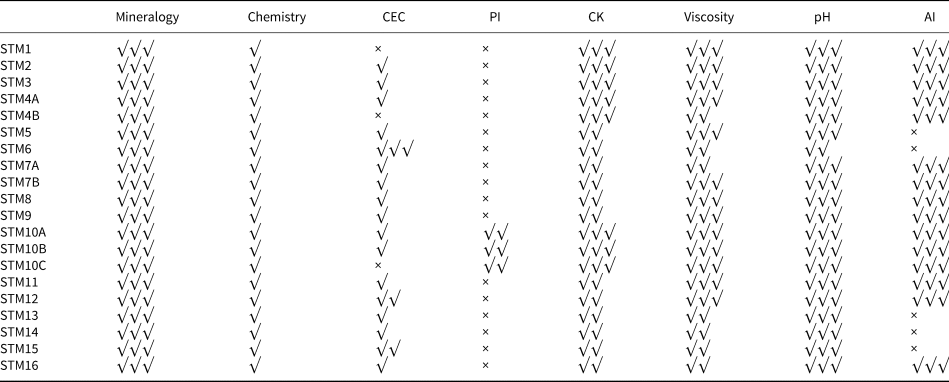
The results from this study were compared with those from previous studies (Carretero, Reference Carretero2002; López-Galindo et al., Reference López-Galindo, Viseras and Cerezo2006; Gomes & Silva, Reference Gomes and Silva2007; Legido et al., Reference Legido, Medina, Mourelle, Carretero and Pozo2007; Viseras et al., Reference Viseras, Aguzzi, Cerezo and Lopez-Galindo2007; Carretero & Pozo, Reference Carretero and Pozo2009, Reference Carretero and Pozo2010; Karakaya et al., Reference Karakaya, Karakaya, Sarıoğlan and Koral2010; Rebelo et al., Reference Rebelo, Rocha and Ferreira da Silva2010, Reference Rebelo, Viseras, Galindo, Rocha and Silva2011a, Reference Rebelo, Viseras, Galindo, Rocha and Silva2011b; Quintela et al., Reference Quintela, Terroso, da Silva E. and Rocha2012, Reference Quintela, Costa, Terroso, Sá, Nunes and Rocha2015; Carretero et al., Reference Carretero, Gomes, Tateo, Bergaya and Lagaly2013) and the best samples for peloid formulation are shown in Table 7.
Sample assessment for peloids formulation.

× = unsatisfactory; √ = satisfactory; √√ = good; √√√ = very good; AI = Abrasivity Index; CEC = cation-exchange capacity; CK = cooling kinetics; PI = Plasticity Index.
The mineralogy of the samples does not pose a problem because peloids may contain kaolinite or smectite as the main clay minerals (Viseras et al., Reference Viseras, Aguzzi, Cerezo and Lopez-Galindo2007). Nevertheless, the chemical composition, particularly that of the trace elements, may be unfavourable; the presence of unacceptable elements such as Pb or Cd (Regulation (EC) no. 1223/2009) suggests that these materials should only be used for peloid formulation after blending them with other clays with smaller amounts of these elements. The remaining properties are all adequate for peloid formulation. The Piedade samples (STM10A, 10B and 10C) satisfy more criteria for acceptable peloid formulation; sample STM6, although being smectite rich, did not show adequate values for all of the parameters (except for CEC) that are relevant to these applications.
Conclusions
Residual and sedimentary clays from Santa Maria Island, Azores, Portugal, show good potential to be blended with São Miguel volcanic muds. They have similar textural, mineralogical and chemical compositions, and the Santa Maria clays improve upon some of the inferior properties of the volcanic muds, such as their pH and AI values; the Santa Maria clays are less acidic and their AI values indicate less abrasive materials than the volcanic muds (Quintela et al., Reference Quintela, Costa, Terroso, Sá, Nunes and Rocha2015).
The presence of heavy metals – potentially toxic elements (PTEs) – deserves special attention. Future work on the bioaccessibility of these PTEs should be performed. The European Cosmetic Regulation (1223/2009) establishes that ‘traces of prohibited substances are only permitted if they are technically unavoidable and if they have no impact on the safety of the cosmetic products’, implying that it is necessary to determine whether their levels are toxicologically acceptable and whether the product is still safe.
The specific surface area of the materials and their thermogravimetric properties should also be assessed, as these are relevant for peloid formulations. In particular, tests to assess their safety and efficacy in terms of heat transfer should be performed, as this is among the most important factors to be considered for peloid applications.
The deposits studied show extensive outcrops, indicating the existence of abundant reserves of clayey materials useful as raw materials for the desired blending with Furnas volcanic muds. Their geological formations, particularly the Feteiras and Almagreira formations, crop out on a large part of the island and always show intensive alteration; thus, additional exploration sites may be prospected in the near future. Even without actual three-dimensional evaluation, it can be suggested that they are abundant, mainly due to the fact that for these particular applications it is not necessary to use excessive amounts of raw materials. Finally, the Piedade samples show better values for the assessed qualities to be selected for the maturation procedure.
Acknowledgements
Supported by GeoBioTec Research Centre (UID/GEO/04035/2013), funded by Fundação para a Ciência e Tecnologia (FCT, Portugal), FEDER funds through the Operational Program Competitiveness Factors COMPETE. FCT granted the second author a PhD scholarship (SFRH/BD/102837/2014).