



LEARNING OBJECTIVES
After reading this article you will be able to:
-
understand the role of the professionals present at a first-tier tribunal hearing, the powers of the tribunal and some relevant case law
-
analyse the criteria for detention under the Mental Health Act 1983
-
apply this knowledge to improve the quality of your written and oral evidence to the tribunal regarding the statutory criteria for detention, including the use of higher adaptive skills such as dealing with difficult questions and performing under pressure.
Mental disorders are a leading cause of morbidity worldwide and are associated with disability and premature mortality. These are, in many cases, early onset and potentially lifelong illnesses, which can increase the risk of suicide and, in some cases, have a complex association with interpersonal violence. For some, in-patient treatment will require involuntary detention. In England and Wales this is authorised under the Mental Health Act 1983.
Any legislation that authorises the involuntary detention of people with mental disorders must have a comprehensive set of safeguards that are focused on protecting the individuals’ human rights. This means ensuring that it is necessary and proportionate and, most important, that individuals have the right to appeal. An appeal against compulsory admission is made to the First-tier Tribunal (Health, Education and Social Care Chamber) Mental Health (hereafter, the Ft-T or tribunal), an independent panel that places the burden of proof on the detaining authority. In this article, the term ‘panel’ refers to the members of the Ft-T at a hearing.
The updated 2022 General Medical Council (GMC) curriculum for higher training in forensic psychiatry includes the need to demonstrate clear and salient oral communication in medicolegal settings and the provision of evidence in such settings. However, there is no model on how to provide written and oral evidence to the tribunal for trainees, and their experience can vary enormously between regions and between psychiatric subspecialties. This article aims to address this gap by exploring the legislation involved and describing the role of the tribunal itself, the psychiatrist’s role as a professional witness and how to provide written and oral evidence.
The Mental Health Act
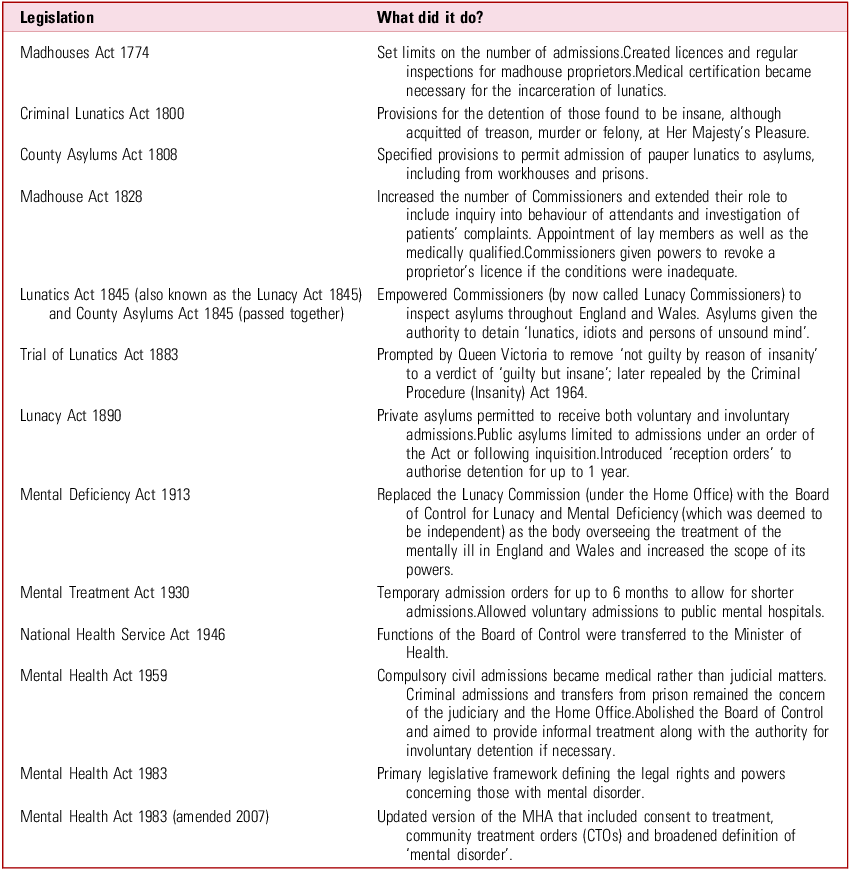
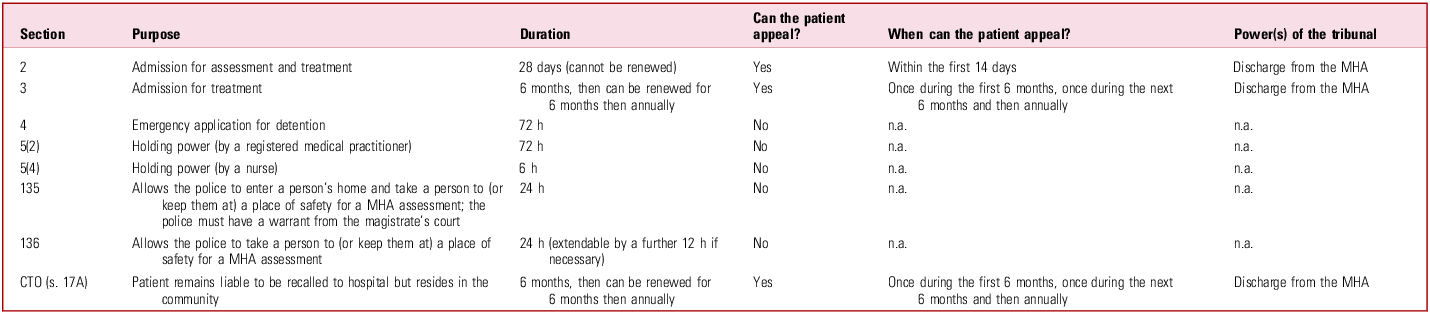
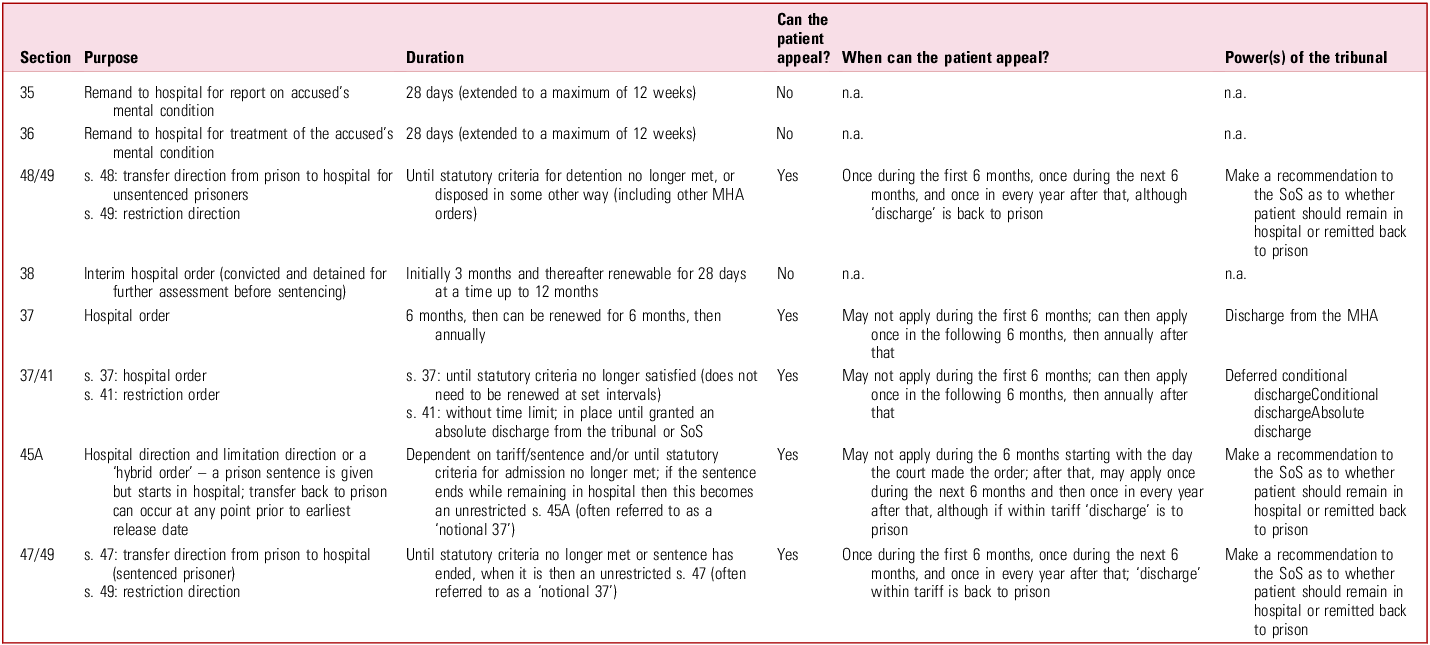
The 2019 Independent Review of the Mental Health Act (MHA) 1983 (amended in 2007) (Department of Health and Social Care 2019) and the subsequent work of the Joint Committee on the Draft Mental Health Bill (2022) deemed the MHA to be in need of modernisation. The law itself has evolved over several hundred years since the Madhouses Act 1774 (Table 1) and the MHA currently has 10 ‘parts’ (Box 1) that are each divided into ‘sections’ (www.legislation.gov.uk/ukpga/1983/20/contents). The most common sections used to authorise detention are summarised in Table 2 and Table 3.
Parts to the Mental Health Act 1983 (MHA) (amended 2007)
I: Application of the Act: this defines the concept of ‘mental disorder’
II: Compulsory admission to hospital and guardianship: this focuses on detention under civil sections of the MHA, the role of the ‘nearest relative’ and aftercare provisions
III: Patients concerned in criminal proceedings or under sentence
IV: Consent to treatment
4A: Treatment of community patients not recalled to hospital
V: Mental Health Review Tribunals
VI: Removal and return of patients within the United Kingdom, etc.: including to the devolved nations and those absent without leave (AWOL)
VII: Management of property and affairs of patients: many enactments in this part have been repealed
VIII: Miscellaneous functions of local authorities and the Secretary of State [for Justice]
IX: Offences
X: Miscellaneous and supplementary
Key pieces of legislation in the development of in-patient psychiatry in England and Wales

TABLE 1 Long description
A table summarizing key legislation in the development of in-patient psychiatry in England and Wales. The table has two columns: Legislation and What did it do?. Row 1: Madhouses Act 1774, Set limits on the number of admissions. Created licences and regular inspections for madhouse proprietors. Medical certification became necessary for the incarceration of lunatics. Row 2: Criminal Lunatics Act 1800, Provisions for the detention of those found to be insane, although acquitted of treason, murder or felony, at Her Majesty's Pleasure. Row 3: County Asylums Act 1808, Specified provisions to permit admission of pauper lunatics to asylums, including from workhouses and prisons. Row 4: Madhouse Act 1828, Increased the number of Commissioners and extended their role to include inquiry into behaviour of attendants and investigation of patients' complaints. Appointment of lay members as well as the medically qualified. Commissioners given powers to revoke a proprietor's licence if the conditions were inadequate. Row 5: Lunatics Act 1845 (also known as the Lunacy Act 1845) and County Asylums Act 1845 (passed together), Empowered Commissioners (by now called Lunacy Commissioners) to inspect asylums throughout England and Wales. Asylums given the authority to detain 'lunatics, idiots and persons of unsound mind'. Row 6: Trial of Lunatics Act 1883, Prompted Queen Victoria to remove 'not guilty by reason of insanity' to a verdict of 'guilty but insane'; later repealed by the Criminal Procedure (Insanity) Act 1964. Row 7: Lunacy Act 1890, Private asylums permitted to receive both voluntary and involuntary admissions. Public asylums limited to admissions under an order of the Act or following inquisition. Introduced 'reception orders' to authorise detention for up to 1 year. Row 8: Mental Deficiency Act 1913, Replaced the Lunacy Commission (under the Home Office) with the Board of Control for Lunacy and Mental Deficiency (which was deemed to be independent) as the body overseeing the treatment of the mentally ill in England and Wales and increased the scope of its powers. Row 9: Mental Treatment Act 1930, Temporary admission orders for up to 6 months to allow for shorter admissions. Allowed voluntary admissions to public mental hospitals. Row 10: National Health Service Act 1946, Functions of the Board of Control were transferred to the Minister of Health. Row 11: Mental Health Act 1959, Compulsory civil admissions became medical rather than judicial matters. Criminal admissions and transfers from prison remained the concern of the judiciary and the Home Office. Abolished the Board of Control and aimed to provide informal treatment along with the authority for involuntary detention if necessary. Row 12: Mental Health Act 1983, Primary legislative framework defining the legal rights and powers concerning those with mental disorder. Row 13: Mental Health Act 1983 (amended 2007), Updated version of the MHA that included consent to treatment, community treatment orders (CTOs) and broadened definition of 'mental disorder'.
The main civil sections under Part II of the Mental Health Act 1983 (MHA), including when appeals to the First-tier Tribunal may take place

TABLE 2 Long description
A table summarizing civil sections under Part II of the Mental Health Act 1983, detailing purposes, durations, appeal rights, appeal timings, and tribunal powers. The table has six columns: Section, Purpose, Duration, Can the patient appeal?, When can the patient appeal?, and Powers of the tribunal. It includes seven rows of data. Row 1: Section 2, Admission for assessment and treatment, 28 days (cannot be renewed), Yes, Within the first 14 days, Discharge from the MHA. Row 2: Section 3, Admission for treatment, 6 months, then can be renewed for 6 months then annually, Yes, Once during the first 6 months, once during the next 6 months and then annually, Discharge from the MHA. Row 3: Section 4, Emergency application for detention, 72 h, No, n.a., n.a. Row 4: Section 5(2), Holding power (by a registered medical practitioner), 72 h, No, n.a., n.a. Row 5: Section 5(4), Holding power (by a nurse), 6 h, No, n.a., n.a. Row 6: Section 135, Allows the police to enter a person's home and take a person to (or keep them at) a place of safety for a MHA assessment; the police must have a warrant from the magistrate's court, 24 h, No, n.a., n.a. Row 7: Section 136, Allows the police to take a person to (or keep them at) a place of safety for a MHA assessment, 24 h (extendable by a further 12 h if necessary), No, n.a., n.a. Row 8: CTO (s. 17A), Patient remains liable to be recalled to hospital but resides in the community, 6 months, then can be renewed for 6 months then annually, Yes, Once during the first 6 months, once during the next 6 months and then annually, Discharge from the MHA.
n.a., not applicable; CTO, community treatment order; s., section.
The Main Criminal Sections under Part III of the Mental Health Act 1983 (MHA), including when appeals to the First-tier Tribunal may take place

TABLE 3 Long description
A table with 10 rows and 5 columns detailing sections of the Mental Health Act 1983. Columns are labeled Section, Purpose, Duration, Can the patient appeal?, When can the patient appeal?, and Power(s) of the tribunal. Row 1: Section 35, Remand to hospital for report on accused's mental condition, 28 days (extended to a maximum of 12 weeks), No, n.a., n.a. Row 2: Section 36, Remand to hospital for treatment of the accused's mental condition, 28 days (extended to a maximum of 12 weeks), No, n.a., n.a. Row 3: Sections 48/49, Transfer direction from prison to hospital for unsentenced prisoners and restriction direction, Until statutory criteria for detention no longer met, or disposed in some other way (including other MHA orders), Yes, Once during the first 6 months, once during the next 6 months, and once in every year after that, although 'discharge' is back to prison, Make a recommendation to the SoS as to whether patient should remain in hospital or remitted back to prison. Row 4: Section 38, Interim hospital order (convicted and detained for further assessment before sentencing), Initially 3 months and thereafter renewable for 28 days at a time up to 12 months, No, n.a., n.a. Row 5: Section 37, Hospital order, 6 months, then can be renewed for 6 months, then annually, Yes, May not apply during the first 6 months; can then apply once in the following 6 months, then annually after that, Discharge from the MHA. Row 6: Sections 37/41, Hospital order and restriction order, Until statutory criteria no longer satisfied (does not need to be renewed at set intervals), Yes, May not apply during the first 6 months; can then apply once in the following 6 months, then annually after that, Deferred conditional discharge/Conditional discharge/Absolute discharge. Row 7: Section 45A, Hospital direction and limitation direction or a 'hybrid order' - a prison sentence is given but starts in hospital; transfer back to prison can occur at any point prior to earliest release date, Dependent on tariff/sentence and/or until statutory criteria for admission no longer met, if the sentence ends while remaining in hospital then this becomes an unrestricted s. 45A (often referred to as a 'notional 37'), Yes, May not apply during the 6 months starting with the day the court made the order, after that, may apply once during the next 6 months and then once in every year after that, although if within tariff discharge is to prison, Make a recommendation to the SoS as to whether patient should remain in hospital or remitted back to prison. Row 8: Sections 47/49, Transfer direction from prison to hospital (sentenced prisoner) and restriction direction, Until statutory criteria no longer met or sentence has ended, when it is then an unrestricted s. 47 (often referred to as a 'notional 37'), Yes, Once during the first 6 months, once during the next 6 months, and once in every year after that; 'discharge' within tariff is back to prison, Make a recommendation to the SoS as to whether patient should remain in hospital or remitted back to prison.
n.a., not applicable. s., section; SoS, Secretary of State for Justice.
The First-tier Tribunal (Mental Health)
The Ft-T differs between the devolved nations of the UK and this article will focus on the Ft-T in England, where we practice. The Ft-T is contained within the Heath, Education and Social Care Chamber (HESC), which was established in 2008 (Courts and Tribunals Judiciary 2024a). It hears applications from those who are detained under the MHA in hospital or subject to a supervisory or restrictive community framework such as a community treatment order (CTO) or hospital and restriction orders under sections 37 and 41 (Table 3). In the most recent data on the tribunal’s workload, in 2022–2023 there were 27 921 applications against detention to the tribunal, 3132 of which were from patients subject to a restriction order under section 41 of the MHA due to the risk of serious harm to the public (Care Quality Commission 2024). The powers of the Ft-T vary depending on what section the patient is subject to, and this is discussed in more detail later in this article. There are also rules regarding when patients can apply for a tribunal hearing and how frequently an application can be made (Tables 2 and 3).
The Ft-T is designed to be an inquisitorial forum, not adversarial, with the burden of proof (usually) placed on the detaining authority, not the patient. The multiprofessional nature of the panel includes a legal member, medical member (consultant psychiatrist) and specialist lay member, who will often have mental health expertise in a different health or social care discipline. All panel members are independent, with no connection with the detaining authority. The patient has the right to legal representation and may be also accompanied by an independent advocate. Should the patient choose not to instruct representation then their capacity to make this decision will be considered. A legal representative may be appointed to act in their best interests if they lack capacity to make this decision.
Before the hearing, the clinical team (who are classed as professional witnesses) will be asked to submit written evidence, including their recommendation on whether the relevant statutory criteria are met. These witnesses include the ‘responsible clinician’ (Box 2), a health nurse (for detained in-patients) and the patient’s allocated care coordinator or a representative from the relevant community team. The patient may be examined by the medical member before the hearing date. Independent expert witness reports may also be sought and submitted as evidence.
The responsible clinician
The term responsible clinician is the nomenclature defined in section 34 of the Mental Health Act 1983 (MHA) that refers to the clinician with overall responsibility for a patient’s care and treatment. This role requires ‘approved clinician’ status: approval by the Secretary of State for Justice or a delegated authority (such as a local authority or National Health Service trust) to carry out specific functions under the MHA, including decisions regarding detention and discharge. Although in practice the responsible clinician is most likely to be a consultant psychiatrist, they can also be members of allied professions, such as a psychologist, nurse, occupational therapist or social worker, provided that they have approved clinician status.
The hearing itself may take place remotely or in-person, depending on the patient’s choice. An Ft-T judge chairs proceedings and the panel will hear evidence from the patient and professional witnesses. The panel and the patient’s legal representative will ask questions of the witnesses. The patient has a choice as to whether or not they would like to attend the hearing and give evidence. The ‘nearest relative’ (Box 3) is not party to the proceedings and may only attend with the patient’s permission. The hearing is otherwise held in private. However, the hearing may be held in public if the patient requests this and the panel agree using specified criteria (AH v West London MH NHS Trust [2010]; AH v West London MH NHS Trust [2011]; AR v West London NHS Trust [2020]). At the end of the hearing, the panel will make their decision in private and will usually inform attendees immediately. This will be followed by a written outcome giving reasons for the decision. Appeals from the Ft-T are taken to the Upper Tribunal.
The nearest relative
The ‘nearest relative’ is specified under the Mental Health Act 1983 (MHA) and, crucially, is not identical to the patient’s next of kin. For those over the age of 18, section 26 of the MHA sets out those who are considered relatives for the purpose of identifying the nearest relative:
-
(a) husband or wife or civil partner
-
(b) son or daughter
-
(c) father or mother
-
(d) brother or sister
-
(e) grandparent
-
(f) grandchild
-
(g) uncle or aunt
-
(h) nephew or niece.
The legal test: what do the statutory criteria mean?
The following is a brief overview of the criteria for detention under the MHA to aid readers in understanding the terminology and how to map medical concepts onto the legal test, including translating clinical concepts into legal language. We would direct readers to the Code of Practice of the Mental Health Act for additional considerations for specific groups, such as people with intellectual disabilities (also know as learning disabilities in UK health services) and children and young people (Department of Health 2015).
It is crucial to remember that, with the exception of restricted patients applying for an absolute discharge, the burden of proof regarding the need for detention is on the detaining authority, not the patient. It is therefore up to the professionals to justify why a person needs to be detained, not up to the patient to justify why they should not be. If, on the balance of probabilities, this test is not met, then the tribunal is obliged to discharge the patient.
The legal test for detention under the MHA comprises multiple limbs, with some slight variations depending on the section itself. For the purposes of this educational article, we will focus on section 3 (admission for treatment), which has three limbs (Box 4). Understanding the terminology used to meet this test can be extrapolated to almost any other section of the MHA. An exception is when the nearest relative applies to discharge someone from detention under section 2, section 3, a CTO or guardianship. The responsible clinician may bar this discharge if they deem the patient is likely to be dangerous to themselves or others. In this circumstance, the Ft-T must apply the dangerousness criteria and determine whether ‘the patient, if released, would be likely to act in a manner dangerous to other persons or to himself’ (section 72). This is in addition to the statutory criteria of the MHA.
Statutory criteria for detention under section 3 of the Mental Health Act 1983 (amended 2007)
‘An application for admission for treatment may be made in respect of a patient on the grounds that –
-
(a) he is suffering from mental disorder of a nature or degree which makes it appropriate for him to receive medical treatment in a hospital; and
-
(b) it is necessary for the health or safety of the patient or for the protection of other persons that he should receive such treatment and it cannot be provided unless he is detained under this section; and
-
(c) appropriate medical treatment is available for him.’
The first limb: mental disorder, nature and degree
The 2007 amendments to the MHA altered the definition of mental disorder from the four categories used in the 1983 Act, ‘mental illness, arrested or incomplete development of mind, psychopathic disorder and any other disorder or disability of mind’, to ‘any disorder or disability of the mind’ (Branton and Brookes Reference Branton and Brookes2010). The aim of this change was to widen the application of the Act to people with personality disorders that did not previously meet the stricter criteria of a psychopathic disorder with the presence of ‘abnormally aggressive or seriously irresponsible conduct’ (HM Government 2007: note 19). The amendments also qualified that ‘disorders or disabilities of the brain are not mental disorders unless (and only to the extent that) they give rise to a disability or disorder of the mind as well’ (HM Government 2007: note 17).
A mental disorder is a prerequisite for detention under the MHA. However, the legal definition of mental disorder within the MHA does not necessarily correlate with a code in a diagnostic manual such as the ICD or DSM. Instead, specific criteria of the Act must apply: the characteristics of the mental disorder termed ‘nature’ and ‘degree’ and the potential consequences of that mental disorder, namely the risks to the person’s health or safety or the safety of others.
The terms ‘nature’ and ‘degree’ are not synonymous with one another and must be specifically applied to that individual’s disorder. The term ‘nature’ refers to the mental disorder itself, its chronicity and pattern over time, its prognosis and the patient’s previous response to treatment. The word ‘degree’ refers to the current manifestation of the disorder. The tribunal need only be satisfied that either nature or degree are present for detention to continue, not both. This was laid out in the case of R v Mental Health Review Tribunal for South Thames Region Ex p. Smith [1998] (Boxes 5 and 6).Footnote a
Mental Health Act 1983: relevant case law
R v Mental Health Review Tribunal for South Thames Region Ex p. Smith [1998]
The First-tier Tribunal (Ft-T) refused to conditionally discharge the applicant from liability to be detained in the hospital, he being under a restriction order pursuant to sections 37 and 41 of the Mental Health Act 1983 (MHA). Detention was upheld on the grounds of nature but not of degree. The High Court addressed the issue of what is meant by the phrase ‘nature or degree’. It concluded that ‘nature’ refers to the particular mental disorder from which the patient suffers, its chronicity, its prognosis and the patient’s previous response to receiving treatment. The judge rejected a submission that the nature of a patient’s disorder is a static condition.
SF v Avon and Wiltshire MH Partnership and RB [2023]
The Upper Tribunal heard an appeal for a woman detained under section 3 of the MHA with diagnoses of autism spectrum disorder and complex post-traumatic stress disorder. The crux of this appeal was regarding the meaning of whether ‘appropriate medical treatment’ was available. It concluded that the Ft-T had erred in law, because interventions that had the purpose of just keeping the patient ‘physically well, safe and protect[ing] those seeking to care for her’ did not satisfy the requirement for therapeutic intent. It also stated that the appropriate medical treatment must be tailored to the patient’s diagnosis.
SS v Cornwall Partnership NHS Foundation Trust [2023]
The Upper Tribunal heard an appeal for a patient detained under section 3, where the evidence to the Ft-T was that the patient was well enough to be discharged if a suitable package of care had been in place. That tribunal adjourned for further aftercare information but 7 weeks later, in similar circumstances, despite some progress, the next panel refused to adjourn again. The patient successfully appealed that refusal. The Upper Tribunal judge stated: ‘The only reasons not to adjourn for aftercare information would be either because it is not relevant because the patient had not reached the stage at which discharge was a realistic prospect, or because there was no realistic prospect of such aftercare information being produced’. The case was remitted to the Ft-T with directions for further evidence.
Case vignette: relying on ‘nature’ only
A 30-year-old man with schizophrenia is detained under section 3 of the Mental Health Act 1983 (MHA). He was admitted with active symptoms of psychosis, including auditory hallucinations and paranoid and persecutory delusions, and had been verbally threatening to his neighbours. He has shown an excellent therapeutic response to clozapine and his psychosis has largely remitted. However, he has lost his residential tenancy and the local authority is yet to find him a suitable placement. Furthermore, he has not yet had any unescorted section 17 leave.
This is one of the most common scenarios where professionals are likely to recommend to a mental health tribunal that a person remains detained but on the grounds of nature only. The man has a mental disorder within the meaning of the MHA, that being schizophrenia. It no longer has much of a degree, now that he has been adequately treated with clozapine. However, its nature is that of a chronic, relapsing and remitting illness that is treatment resistant. There are significant risk considerations that would come with a potential relapse, which would be heightened without adequate testing on section 17 leave and suitable accommodation if discharged.
Readers will notice the use of the term ‘appropriate’ in the statutory criteria. Simply describing what the disorder is and its nature and degree is not sufficient. Indeed, every person with schizophrenia has a mental disorder that has a nature, but the crux of this limb is describing why its nature or degree makes liability to detention appropriate (which can also be thought of as whether it is proportionate).
The second limb: necessary to manage risk
The second limb of the test links the mental disorder’s nature and/or degree to one of three risks: the risk to the patient’s own health or safety, or the risk to others. It is therefore important that the written and oral evidence includes a comprehensive risk assessment. However, not all risks are perpetuated or precipitated by a person’s mental disorder and therefore the presence of risks alone does not necessarily mean the statutory criteria are met. Readers will notice the use of the term ‘necessary’ in this limb. You must therefore justify how these risks are associated with the mental disorder, and in turn, justify why ongoing detention under the MHA is necessary to provide treatment and why this cannot be done in a less restrictive setting. Detention must be necessary to manage this, not simply desirable to the clinical team (Box 7).
Case vignette: necessary or desirable?
A 47-year-old man with schizoaffective disorder has a history of numerous detentions under the Mental Health Act 1983. This has included periods under community treatment orders. He was admitted after an acute relapse with disorganised behaviour, thought disorder, neglect, agitation and aggression. It was likely that the presentation was complicated by crack cocaine use, which was a chronic problem. He required admission to a psychiatric intensive care unit and, later, a prolonged period in a rehabilitation ward. With depot medication, he has improved significantly but he continues to have some residual symptoms. He has recently started unescorted leave and has applied for a tribunal hearing for discharge.
This is a scenario where the treating team might be recommending further testing in the community before discharge, in view of his numerous detentions, substance misuse and residual symptoms. The treating team must be clear that further risk testing in the community and/or supported accommodation is necessary, rather than desirable.
A point of complexity can be the relationship (if any) between mental disorder and interpersonal violence. Clinically, violence is frequently multifactorial and it can be difficult to reliably discern whether violence arises solely from mental disorder or from other criminogenic factors. This is particularly so for those where personality disorder is being relied on as the mental disorder of nature or degree. The takeaway for readers is that the risk limb can only be met if these risks are related to the mental disorder being relied on as being of nature or degree. Risks emanating solely from criminogenic factors or secondary diagnoses may not be relied on.
If detention is necessary only because the required aftercare is not available, then you must explain why that aftercare is not available. This may lead to the hearing being adjourned for appropriate aftercare to be put in place (Box 5).
The wording for section 2 of the MHA is slightly different, using the terms ‘warrant’ and ‘justified’ rather than ‘appropriate’ and ‘necessary’. This may appear trivial, but in 2012 an appeal was made to the Upper Tribunal owing to the inappropriate test being made in a section 3 case (MS v North East London Foundation Trust [2013]). The decision was set aside because applying the wrong legal criteria was considered a serious legal error. The Upper Tribunal also made clear in their decision that the difference in language reflects the difference in purpose and that the conditions for detention are less demanding for section 2 than for section 3.
The third limb: appropriate treatment
The definition of appropriate treatment was clarified in the case of SF v Avon and Wiltshire MH Partnership and RB [2023] (Box 5). This made it clear that this is as crucial as the other limbs of the test. Treatment is not limited to pharmacological interventions. Section 145 of the MHA defines treatments as ‘nursing, psychological intervention and specialist mental health habilitation, rehabilitation and care’ (HM Government 2007: notes 38 and 39). However, it must be related to a therapeutic endeavour and be progressing the patient towards discharge. Restrictive measures that deprive an individual of their liberty solely in order to maintain their safety do not qualify as treatment. Furthermore, a patient’s refusal to cooperate with this treatment or a perceived likelihood that this treatment will be ineffective does not negate this limb of the legal test.
Section 2 authorises detention for assessment and therefore the third limb, of appropriate treatment being available, is not a criterion for detention. However, the powers of section 2 still allow treatment to be delivered.
The powers of the tribunal
Statutory and non-statutory powers
The Ft-T has certain statutory powers that are enacted under section 72 of the MHA. For unrestricted patients, the tribunal may direct that a patient who is ‘liable to be detained under this Act’ be discharged if the statutory criteria for ongoing detention are not met. For those unrestricted cases where it does not discharge, the Ft-T has discretionary powers to make statutory recommendations that the patient be granted leave of absence, be transferred to another hospital or into a guardianship with a view to facilitating discharge at a future date. The Ft-T may also recommend that the responsible clinician consider making a CTO. Although there is no legal obligation for a clinical team to comply with such recommendations, the Ft-T can ‘further consider his case in the event of any such recommendation not being complied with’ (section 72(3)). Therefore, professional witnesses should be prepared to explain their reasoning for not acting on such recommendations. The Ft-T does not have the power to make statutory recommendations in restricted cases. However, it may make extra-statutory recommendations that are similar, but are informal and non-binding and with no associated power for the Ft-T to reconvene if they are not met.
Community treatment orders
A CTO can be recommended by the patient’s responsible clinician for those who have been detained under section 3 of the MHA or for patients detained under Part III of the Act who are not restricted. The Ft-T may hear appeals from patients who wish to be discharged from a CTO. The patient can apply for discharge from a CTO within the first 6 months of its imposition, and then once during each subsequent period of renewal. If the CTO is revoked following a recall to hospital, then the patient must be automatically referred to the Ft-T by the hospital managers. The Ft-T must be satisfied that the statutory criteria to remain on a CTO are met as specified under section 17A (Box 8), and the burden of proof remains on the supervising hospital. Otherwise, the tribunal must discharge the CTO.
Statutory criteria for a community treatment order
A community treatment order (CTO) is legal framework under the Mental Health Act 1983 (MHA) that allows some patients to be treated in the community while still being subject to certain conditions and legal powers, including possible recall to hospital. Conditions may include living at a particular address, attending appointments, taking prescribed medication and allowing visits from mental health professionals.
The criteria for a CTO are:
-
(a) ‘the patient is suffering from mental disorder of a nature or degree which makes it appropriate for him to receive medical treatment;
-
(b) it is necessary for his health or safety or for the protection of other persons that he should receive such treatment;
-
(c) subject to his being liable to be recalled as mentioned in paragraph (d) below, such treatment can be provided without his continuing to be detained in a hospital;
-
(d) it is necessary that the responsible clinician should be able to exercise the power under section 17E(1) below to recall the patient to hospital; and
-
(e) appropriate medical treatment is available for him.’
(section 17A MHA: www.legislation.gov.uk/ukpga/1983/20/section/17A)
Sections under Part III of the MHA (Table 1)
For restricted patients detained under section 37/41 of the MHA, the tribunal has the power to grant a conditional discharge or absolute discharge. A section 41 restriction order can be imposed only by the Crown Court at the time of sentencing if ‘it appears to the court…that it is necessary for the protection of the public from serious harm, having regard to the nature of the offence, the antecedents of the offender and the risk of his committing further offences if set at large’ (Sentencing Council 2020). Indeed, the word ‘serious’ qualifies the concept of ‘harm’ rather than this being based on perceived likelihood, imminency or frequency of committing further offences (R v Birch (1990)). The discretion as to whether a restriction order is imposed is for the Court, even if this is contrary to medical recommendations.
The tribunal’s powers to discharge restricted patients is laid out under section 73 of the MHA. This is ordinarily in the form of a conditional discharge, whereby the patient would no longer be detained in hospital, but would remain liable to be recalled to hospital by the Secretary of State for Justice. Patients are therefore discharged with conditions in place. These must not amount to a deprivation of liberty (Secretary of State for Justice v MM [2018]). A patient who breaches these conditions risks being recalled to hospital by the Secretary of State for Justice.
For a conditional discharge to be granted by the tribunal, the panel must be satisfied that the statutory criteria are no longer met as laid out under section 72 of the MHA. A tribunal may defer the direction for conditional discharge if practical arrangements are still outstanding to meet the proposed conditions. However, the patient must otherwise meet the criteria for conditional discharge with no further treatment required.
The tribunal can vary the conditions of the conditional discharge or remove them all together while also not absolutely discharging the patient from the liability to being recalled (DA v Central and North West London NHS Foundation Trust [2021]).
The tribunal has the power to grant an absolute discharge whereby the conditions and liability to recall from the restriction order would cease to have an effect. The burden of proof for an absolute discharge lies with the patient, making this different from other applications to the tribunal. There is no legal test as such, but there is case law of relevant factors to consider that may be of interest (R (on the application of SC & SoS Health [2005]).
Section 47/49 of the MHA refers to sentenced prisoners transferred to hospital for treatment under the Act. Patients may appeal their section, but the tribunal has no power to discharge the patient. The role of the tribunal is simply to notify the Secretary of State for Justice whether it would have discharged the patient if they had the power to do so. It is the Secretary of State who then has the power to subsequently remit the patient back to prison. For those on an indeterminate sentence (such as a life sentence or an imprisonment for public protection) who have surpassed their minimum tariff imposed by the sentencing judge, the patient may only be released into the community following a parole hearing. If the tribunal would have discharged the patient had they been subject to a section 37/41, then in addition to notifying the Secretary of State for Justice of this, the Ft-T may also provide a discretionary recommendation as to whether the patient should remain in hospital or be remitted to prison while awaiting a parole hearing.
Guidance on giving evidence
Writing a tribunal report
The better your written report, the smoother the tribunal hearing will go. The panel will focus on areas that are not covered in the report, so the more comprehensive the report, the less they will have to ask you. Further to this, a succinct, polished report will give a good impression of your competence before the hearing. With this in mind, the following offers guidance on how to prepare written evidence to the tribunal (Box 9). Reports must comply with the 2013 practice direction made by the Senior President of Tribunals, which should be considered essential reading (Tribunals Judiciary 2013).
Dos and don’ts of written reports
-
(a) Do not copy and paste electronic records
-
(b) Do not copy and paste an old report
-
(c) Do not channel Tolstoy. Keep it short and succinct, normally around 6 to 12 pages will do
-
(d) Do get the report started early
-
(e) Do add page numbers and paragraphs – this helps the panel in their pre-hearing discussion, which will make them like you from the start, but also helps you in answering tricky questions from the panel.
-
(f) Do ensure it is countersigned by the patient’s responsible clinician
-
(g) Do include an appendix if you think there is historical detail that may be required as reference but is not important for the bulk of the report.
(After Tribunals Judiciary 2013)
Start with an introductory paragraph to set the scene. Here you can describe your role, any established diagnoses, the MHA section under which the patient is detained and, if applicable, any forensic or legal considerations. It is useful to include how long you have been involved with the patient’s care.
Next provide a clear timeline of events. This should include a brief summary of relevant contact with mental health services. For example, ‘In March 2019, Mr Jones suffered a relapse of his schizophrenia and presented with agitation and paranoia. It was likely due to medication non-adherence. He was detained under section 3 of the Mental Health Act’. Establish the triggers and circumstances for significant incidents or relapses and be ready to talk about how these factors have been addressed. This will show the panel that you have a good understanding of the patient and will later fit into describing the nature of the mental disorder.
The practice direction requires you to summarise the patient’s progress since admission and it specifically prohibits you from cutting and pasting from electronic records. Focus on the relevant issues and provide summaries and any pattern of incidents that may support your opinion about the legal test. If you feel it necessary to provide the tribunal with a detailed log of incidents, then consider putting this in an appendix rather than in the main body of the report.
The legal test is applied on the day of the hearing, so the panel will expect a comment on current mental state, as this indicates the current degree of mental disorder. Include a reflection on any changes from the point of admission and what might have caused these changes. Reference should be made to the patient’s insight into their mental disorder, their need for treatment and the risks they pose. A patient’s insight may have a significant bearing on whether the statutory criteria are met.
You must give your opinion on risk to the patient’s health and safety and the protection of others. However, you must describe how these risks manifest in relation to the patient’s mental disorder. In the case of a patient with an index offence (the specific criminal offence that they were convicted of), give a brief formulation of this incident. What were the factors that led to the offence? How have they been addressed? What might happen if the patient is discharged now? Who are the potential future victims? In cases where risk to others is significant, then consider attaching a copy of the patient’s latest HCR-20 violence risk assessment as an appendix to the report.
The conclusion should explain clearly why you believe the patient does or does not meet the statutory criteria for ongoing detention. Address each limb of the test in turn (Box 4), including why detention is necessary and your opinion on whether treatment in the community is possible.
The practice direction requires you to provide a report written specifically for the hearing and not simply an addendum to an earlier report. Only file an addendum if you are directed to do so by the Ft-T, which it may do when adjourning a hearing.
Giving oral evidence
Before a trainee or specialist and associate specialist (SAS) doctor gives oral evidence, they should have observed a hearing and have supervised experience of writing a medical report (Tribunals Judiciary 2019). Furthermore, the patient’s responsible clinician should be present at a hearing if a trainee or SAS doctor is giving oral evidence without supervision (Tribunals Judiciary, 2015). Core training years are a good time to gain observational experience of tribunals and we recommend observing as many as possible.
Before the hearing
It is important that the patient has the opportunity to see your report and that they are aware of the opinion(s) you have expressed. This will ensure they are not surprised on the day and may reduce the risk of damaging the therapeutic relationship if you are not supporting discharge. It is also a good chance to understand the patient’s expectations and perform an up-to-date mental state examination that you can draw on during the hearing. During this meeting, give the patient an outline of the future management plan so that they do not hear about these plans for the first time in the hearing.
Read through your report before the hearing and consider what questions the panel may have. You should also ensure you have read the reports of your colleagues and discuss your recommendations, particularly if a colleague will be providing oral evidence on the day of the hearing but is not the author of the report. Disagreements between colleagues can and do happen, but the hearing should not be the first time these differing views are discussed. It is also recommended that you anticipate the possibility of the patient being discharged and have a plan in place for appropriate follow-up.
Consider any foreseeable risks associated with the patient attending their hearing and ensure the team has planned accordingly and have arranged appropriate staffing to facilitate a safe hearing. This includes adhering to the minimum safety standards for face-to-face hearings in accordance with the Courts and Tribunals Judiciary (2024b; HM Courts & Tribunals Service, 2022). Finally, liaise with the panel as soon as possible regarding any last-minute changes or new evidence that has come to light. The panel will need to decide whether there is time to consider this new evidence before the hearing starts or offer an adjournment.
During the hearing
As with most complex tasks, preparation and experience are key. The tribunal is not meant to be adversarial. Do not misinterpret searching questions from the panel as being hostile and do not get frustrated at the panel or assume things are obvious. Also, try not to approach the hearing with a win/lose mentality. Your role is to help explain medical concepts and how these can be mapped onto the legal test for detention under the MHA. You must therefore be prepared to explain medical aspects to the panel in clear and simple terms. If the panel feel you have not answered their question adequately, they will ask again for clarity. If they ask a question that you have already covered in your report, politely refer to that section of your report and let them know that your opinion has not changed. Do not be afraid to concede points when appropriate. The panel will be impressed if a witness can consider and assimilate new information and modify their opinion where necessary.
The hearing is not a memory test and there is no stopwatch running. Be comfortable to take time to refer to parts of the report that you cannot recall and if you need a moment to consolidate your thoughts, then ask for it. Remember that you cannot give evidence on aspects that you do not know. If this is the case, then be honest that you do not know or comment that it is something that needs to be explored. If the question is more appropriately answered by another professional, then remain within your area of expertise and politely suggest this to the panel.
It is important to reflect on your non-technical skills, such as communication and situational awareness. Have an awareness of how you react under pressure and how you manage anxiety, feelings of discomfort and frustration. A little anxiety is common during a hearing (and can be helpful). However, if you are suffering with extreme anxiety, this may be something to reflect on with a supervisor or may be an indicator that you are being asked to undertake a task that is beyond your competence.
The legal representative and cross-examination
Although the panel is not meant to be adversarial, cross-examination from the patient’s legal representative may come across as such. The legal representative fulfils a different role from that of the panel in that they are representing the patient’s interests and acting as an officer of the court to help the tribunal to weigh the evidence. As mentioned above, not all patients will have a legal representative. As part of their cross-examination the legal representative will ask for evidence to illustrate the points you are raising. Here it will be important to distinguish facts from opinions, for example explaining the circumstances of a previous incident (fact) and how this supports your opinion on future risk.
Below are some examples of common lines of cross-examination and how it may be possible to address them.
-
The legal representative may suggest that the patient has shown stability on the ward and that testing with section 17 leave is not necessary. Here you could reflect on the differences between the intensive support in hospital compared with challenges in the community. If illicit drug use is a concern, reflect on the risk of accessing drugs in the community and that this needs a period of testing. It may also be worth discussing current medication adherence and insight into the need for ongoing treatment.
-
It may be argued that the patient has already successfully undertaken leave and that further leave is not required. Here reflect on how the patient has managed discharges or transitions in the past.
-
It may be argued that the patient has adhered to medication in hospital and is willing to accept medication in the community. Here it will be important to reflect on the patient’s insight into the need for medication and report on any previous periods of non-adherence, especially if these were linked to serious incidents or relapses.
-
It may be argued that the treatment for the patient is primarily of a psychological nature and that this treatment can be accessed in the community. It will be important to offer practical input on the likely availability, quality and intensity of community psychological treatment. Appropriate treatment might also include nursing care and the therapeutic environment of the ward which cannot be replicated in the community.
-
In situations where you believe a CTO will be necessary, the solicitor may argue that support in the community will be available to the patient regardless of their detention status. Here it may be helpful to comment on the liability to be detained and conditions of the CTO providing structure and supervision. In making a case for the power of recall you may wish to give examples of whether the patient seeks help appropriately when unwell and their history of engagement with community teams.
-
The legal representative may play down the patient’s risk and refer to a recent period of stability. Here it will be important to offer a robust review of their risk history and lay out the relationship between their mental disorder and any risks they pose when unwell. Do not be shy in describing the severity of harm caused if this has been the case. In some cases, relapse may result in catastrophic circumstances, and it is fair to make this clear.
Conclusion
This article aimed to be an educational resource for professionals giving evidence to the Ft-T, developed from both medical and legal perspectives. It is hoped that this improves confidence in approaching how to map medical concepts onto the legal test that, in turn, should improve the quality of evidence at tribunals, to the benefit of all involved.
This article comes at a time of important policy development around the MHA, which includes the role of the tribunal as one of its core safeguards. The 2019 independent review of the MHA sought to increase the frequency at which patients can appeal their detention to a tribunal and enhance their powers, such as giving patients the means to appeal treatment decisions to the tribunal. Although the latter was not adopted in the Draft Mental Health Bill 2022, it reflects ongoing political scrutiny of the MHA and the wish to adopt principles of choice and autonomy, least restriction, therapeutic benefit and the person as an individual. It is likely that the role of the Ft-T in achieving this aim will be considered again as part of future legislative reform.
MCQs
Select the single best option for each question stem
-
1 When can a patient appeal their detention under section 2 of the Mental Health Act?
-
a Within 7 days of their detention
-
b Within 14 days of their detention
-
c Within 21 days of their detention
-
d Within 28 days of their detention
-
e Within 6 months of detention.
-
-
2 Which of these conditions would not be classed as a mental disorder within the meaning of the Mental Health Act?
-
a Schizophrenia
-
b Emotionally unstable personality disorder
-
c Bipolar affective disorder
-
d Alcohol dependence
-
e Alzheimer’s disease.
-
-
3 The tribunal does not have the power to direct the discharge of patient subject to which of the following Sections of the Mental Health Act?
-
a Section 2
-
b Section 3
-
c Section 37
-
d Section 37/41
-
e Section 47/49.
-
-
4 Which of the following are not requirements of a responsible clinician’s report within the First-tier Tribunal practice directions?
-
a Details of any index offence and other relevant forensic history
-
b Circumstances leading up to the patient’s current hospital admission
-
c Whether the patient has an intellectual disability
-
d An addendum report
-
e Whether or not the patient would be likely to act in a manner dangerous to themselves or others.
-
-
5 Which of the following is expected of a trainee or specialist and associate specialist (SAS) doctor before they give oral evidence at a First-tier Tribunal?
-
a MRCPsych membership
-
b Completion of core psychiatry training
-
c Supervised experience of writing the medical report
-
d 12 months of psychiatry experience
-
e Section 12(2) status.
-
MCQ answers
-
1 b
-
2 d
-
3 e
-
4 d
-
5 c
Data availability
Data availability is not applicable to this article as no new data were created or analysed in this study.
Author contributions
All authors contributed to the construction and revision of the manuscript.
Funding
This research received no specific grant from any funding agency, commercial or not-for-profit sectors.
Declaration of interest
None.



eLetters
No eLetters have been published for this article.