Introduction
Childhood adversities refer to intense and frequently occurring sources of stress that children may undergo in early life (Bellis et al., Reference Bellis, Hughes, Leckenby, Hardcastle, Perkins and Lowey2015), which can be manifested as childhood economic distress, child neglect and abuse, lack of friends, and household dysfunction. Prior studies showed that childhood adversities may be associated with undesirable physical and mental health consequences. Such undesirable health outcomes involved diseases and behaviors related to a higher risk of premature mortality, such as ischemic heart disease, cancer, chronic lung disease, skeletal fractures, liver disease (Felitti et al., Reference Felitti, Anda, Nordenberg, Williamson, Spitz, Edwards, Koss and Marks1998), diabetes, hypertension, high cholesterol (Flores-Torres et al., Reference Flores-Torres, Comerford, Signorello, Grodstein, Lopez-Ridaura, de Castro, Familiar, Ortiz-Panozo and Lajous2020; Norman et al., Reference Norman, Byambaa, De, Butchart, Scott and Vos2012), alcoholism (Kim, Reference Kim2017), drug abuse, depression, suicide attempt (Taillieu et al., Reference Taillieu, Brownridge, Sareen and Afifi2016), smoking, physical inactivity, and severe obesity (Danese & Tan, Reference Danese and Tan2014).
Childhood adversities could produce a profound and long-lasting effect on one’s growth and development. A growing body of research documented that childhood adversities had a long-term negative impact on personal health consequences in lifespan (e.g., Chapman et al., Reference Chapman, Whitfield, Felitti, Dube, Edwards and Anda2004; Lietzén et al., Reference Lietzén, Suominen, Sillanmäki, Virtanen, Virtanen and Vahtera2021; Norman et al., Reference Norman, Byambaa, De, Butchart, Scott and Vos2012; Taillieu et al., Reference Taillieu, Brownridge, Sareen and Afifi2016). The breadth of exposure to childhood adversities was found positively correlated with health risk behaviors and diseases in adulthood. For example, research found that there was an increased risk of asthma onset by 31% for adults exposed to multiple adverse childhood experiences, compared with those who had experienced no more than one form of childhood adversities (Lietzén et al., Reference Lietzén, Suominen, Sillanmäki, Virtanen, Virtanen and Vahtera2021). Furthermore, childhood adversities were associated with lifelong mental disorders, such as dysthymia (a milder but long-lasting form of depression, also called persistent depressive disorder), social phobia, schizoid, and avoidant personality disorders (Taillieu et al., Reference Taillieu, Brownridge, Sareen and Afifi2016). In addition, childhood adversities could increase the risk of depressive disorders, which would carry over into adulthood (Chapman et al., Reference Chapman, Whitfield, Felitti, Dube, Edwards and Anda2004).
However, prior studies mainly examine the effects of childhood adversities on adolescent and early adulthood, less is known about their long-term impacts on mid and late adulthood. Besides, research on long-term impacts of childhood adversities focuses mainly on a limited number, often one or two types, of childhood adversities, but little on the comprehensive or multifaceted types of them. Given that childhood exposure to, such as, child abuse and neglect, may co-occur with the multiform of maltreatment like parental mental health problem and economic distress, it is worth taking multiple categories of adverse childhood experiences into account to estimate the longstanding effects of childhood adversities on health status in adulthood. This study focuses on the generation born before 1970 in China who have arrived in the middle- and old-age phase. Their childhood was in a time of tremendous change in Chinese society that witnessed the international and civil war (before 1949), the founding of a new regime (1949), the worst 3-year famine (1960-1963), and the prolonged socioeconomic chaos by the Cultural Revolution (1966-1976), etc. In this period of economic hardship, food was lacking and in lower quality, and expenditure on household necessities was quite deficient (Espey, Harper, & Jones, Reference Espey, Harper and Jones2010). Breadwinners in a family had to work longer days or take on additional employment to earn sufficient for survival, which led them to having less time to care for their children (Ruiz-Casares & Heymann, Reference Ruiz-Casares and Heymann2009). Older children generally withdrew from school to save fees or to provide substitute care for younger siblings (United Nations Development Program [UNDP], 2009). Psychological distress among both parents in a family also increased, owing to the survival stress (Friedman & Thomas, Reference Friedman and Thomas2007). Therefore, to fill the research gap, this study will investigate the impact of multiple childhood adversities (economic distress, child neglect, child abuse, lack of friends, parental mental health problems) on health status throughout the life span from adolescence to mid-late adulthood.
Literature review
Potential influence of childhood adversities on health
Economic distress
Economic distress in childhood could be defined as the original family’s access to a range of resources, including economic resources (material resources, like money), human resources (non-material resources, like education), and social resources (resources available through social networks and connections) (Krieger et al., Reference Krieger, Williams and Moss1997). Research documented that those who grew up in low socioeconomic status had a higher likelihood of developing health problems. For instance, research found a strongly negative relation between childhood socioeconomic status and cardiovascular disease (Galobardes et al., Reference Galobardes, Smith and Lynch2006). The research by McHutchison et al., (Reference McHutchison, Backhouse, Cvoro, Shenkin and Wardlaw2017) revealed that economic distress associated with parental occupations could increase the risk of stroke in adulthood. It was also found that economic distress was associated with chronic conditions such as depression, obesity, and diabetes (Everson et al. Reference Everson, Maty, Lynch and Kaplan2002). Those who came from low socioeconomic status families were more prone to develop psychopathology compared with their peers from higher socioeconomic status families as well (Reiss, Reference Reiss2013). Furthermore, research suggested that the negative effects of economic distress were evident at a young age, and they were cumulative and could affect morbidity and mortality in old age (Elo & Preston, Reference Elo and Preston1992).
Child neglect
Child neglect, deemed as a form of maltreatment, could be defined as the case that a child’s basic needs or rights are not adequately met, resulting in harm or jeopardy to their health, development, or safety (Kobulsky et al., Reference Kobulsky, Dubowitz and Xu2020). Research suggested that 16% of children in the world suffered psychical neglect and 18% underwent emotional neglect (Stoltenborgh et al., Reference Stoltenborgh, Bakermans-Kranenburg and IJzendoorn2013). Child neglect has become a major worldwide health and social problem.
Plentiful research established that child neglect could cause multiple impairments within individuals and its adverse outcomes persisted throughout the lifespan. The negative effects involved cognitive impairments, mental health problems, and physical health problems (Strathearn et al., Reference Strathearn, Giannotti, Mills, Kisely, Najman and Abajobir2020). For instance, compared to non-neglected controls, children experiencing neglect were significantly more prone to externalize problems such as aggressive, assaultive, destructive, and antisocial/delinquent behavior, and internalize problems including withdrawn, somatic complaints, and anxiety (Bolger & Patterson, Reference Bolger and Patterson2001). In addition, research found that individuals who had child neglect experiences were more susceptible to deficit hyperactivity disorder, such as impulsivity inattention, hyperactivity (Fishbein et al., Reference Fishbein, Warner, Krebs, Trevarthen, Flannery and Hammond2009). Child neglect could also lower self-esteem and had a longstanding influence on one’s whole life (Kim & Cicchetti, Reference Kim and Cicchetti2006). There was strong evidence that child neglect was associated with depression (Kantor et al., Reference Kantor, Holt, Mebert, Straus, Drach, Ricci, MacAllum and Brown2004; Kim & Cicchetti, Reference Kim and Cicchetti2006). Even suicidal behavioral and suicidal expression were found among neglected children as young as 6 years old (Finzi et al., Reference Finzi, Har-Even, Shnit and Weizman2002). Emotional neglect was the greater contributor to the depressive symptomatology than psychical neglect (Kaufman et al. Reference Kaufman, Jones, Stieglitz, Vitulano and Mannarino1994). Some research focusing on biological mechanisms revealed that child neglect might adversely affect individual cognition and health through affecting brain develop, neuroendocrine systems, epigenetics, and cellular aging (Cecil et al., Reference Cecil, Smith, Walton, Mill, McCrory and Viding2016; McLaughlin et al., Reference McLaughlin, Sheridan, Winter, Fox, Zeanah and Nelson2014).
Child abuse
Physical abuse could cause adverse health outcomes including bruises, broken bones, visual and auditory impairment, brain damage, contusions, burns, and death (Finkel, Reference Finkel1999). Research also implied that physical maltreatment was correlated with a wide spectrum of psychological problems. For instance, those having childhood physical abuse experiences were at considerably high risk of depression and anxiety disorders in adulthood (Levitan et al., Reference Levitan, Rector, Sheldon and Goering2003). Physical abuse was also associated with delusion severity (Bailey et al., Reference Bailey, Alvarez-Jimenez, Garcia-Sanchez, Hulbert, Barlow and Bendall2018), and psychosis (Fusar-Poli et al., Reference Fusar-Poli, Tantardini, De Simone, Ramella-Cravaro, Oliver, Kingdon, Kotlicka-Antczak, Valmaggia, Lee, Millan, Galderisi, Balottin, Ricca and McGuire2017). It could increase the odds of conduct disorders such as suicidal behavior (Norman et al., Reference Norman, Byambaa, De, Butchart, Scott and Vos2012) as well.
Moreover, psychological abuse is a pattern of acts repeatedly imposed on children that they are unwanted, unloved, or only of value in meeting another’s needs, and it could result in lifetime damage to individual development and well-being (Gross & Keller, Reference Gross and Keller1992). Studies indicated that psychological maltreatment could result in a wide range of short- and long-term outcomes and many internalizing and externalizing mental health problems among adolescents (Paul & Eckernrode, Reference Paul and Eckenrode2015). For example, evidence showed that there was a strong association between psychological abuse and chronic physical and mental illness, such as depression, injury, drug addiction, and alcoholism (Tomison & Tucci, Reference Tomison and Tucci1997). Research reported that psychological maltreatment could cause many negative outcomes, such as aggression, anxiety, depression, disruptive behaviors, conduct disorders, and hyperactivity among children and adolescents; compared to physical abuse, psychological abuse was a more powerful predictor of low self-esteem, depression, and attributional style (Gross & Keller, Reference Gross and Keller1992).
Children sexual abuse was shown to have the strong relationships with adverse outcomes, such as depression, substance abuse, panic disorders, post-traumatic stress disorders, and suicide (Brown & Anderson, Reference Brown and Anderson1991; Dube et al., Reference Dube, Anda, Whitfield, Brown, Felitti, Dong and Giles2005). The risk of developing a mental health problem among individuals with a history of childhood sexual abuse was found up to eight times higher than those reporting no abuse (Afifi et al., Reference Afifi, MacMillan, Boyle, Taillieu, Cheung and Sareen2014). Furthermore, research revealed more evidence of sexual disturbance or dysfunction, homosexual experiences in adolescence or adulthood among adult woman who had experienced childhood sexual abuse than among non-abused women (Afifi et al., Reference Afifi, MacMillan, Boyle, Taillieu, Cheung and Sareen2014). Male victims with a history of childhood sexual abuse also showed disturbed adult sexual functioning (Afifi et al., Reference Afifi, MacMillan, Boyle, Taillieu, Cheung and Sareen2014). In addition, childhood sexual abuse experience with force or the threat of force was more likely to produce anxiety, fear, and suicidal ideas and behavior among victims (Beitchman et al., Reference Beitchman, Zucker, Hood, DaCosta, Akman and Cassavia1992).
Lack of friends
Social relationships such as connectedness with friends are the important contributors to stress coping and are associated with shaping physical and mental morbidity and mortality patterns (Courtin & Knapp, Reference Courtin and Knapp2017). Lack of friends, as a form of childhood adversities, is a public health concern which has a profound and lasting negative influence on both childhood and adulthood.
Evidence confirmed that lack of friends in childhood was correlated with adverse physical health consequences and a low level of self-rated physical health (Cornwell & Waite, Reference Cornwell and Waite2009). They were found at a greater risk of diabetes, arthritis, emphysema, liver disease, and kidney disease (Tomaka et al., Reference Tomaka, Thompson and Palacios2006). Social isolation could also lead to a high-risk fibrinogen and cumulative inflammation burden (Yang et al., Reference Yang, McClintock, Kozloski and Li2013). Research indicated that lack of friends was considered as the well- established risk factor for mortality (Holt-Lunstad et al., Reference Holt-Lunstad, Smith and Layton2010).
Similarly, more and more evidence revealed that there was a strong negative relationship between lack of friends in childhood and mental health outcomes (Coyle & Dugan, Reference Coyle and Dugan2012; Miyawaki, Reference Miyawaki2015). Individuals living in environment lacking friends were more prone to poorer cognitive function, depression, psychological distress, and a mental health disorder (Cornwell & Waite, Reference Cornwell and Waite2009; Coyle & Dugan, Reference Coyle and Dugan2012; Shankar et al., Reference Shankar, Hamer, McMunn and Steptoe2013).
Parental mental health problems
Ample research has found that compared to adolescents whose parents did not have mental health problems, those with mentally ill parents were at higher risk of developing health problems (Loon et al., Reference Loon, Ven, Doesum, Witteman and Hosman2014; Weissman et al., Reference Weissman, Wickramaratne, Nomura, Warner, Pilowsky and Verdeli2006). The way in which children got along with their parents with mental health problems might have a long-term negative effect on children’s future mental well-being (Maybery et al., Reference Maybery, Ling, Szakacs and Reupert2005). It was proved that there was a relationship between parental mental illness and increased psychiatric risks for their children in the course of life (LeFrancois, Reference LeFrancois2012). Many studies showed that children with mentally ill parents had a high risk of developing the same mental illness as their parents. However, more and more evidence also revealed that it was likely for these children to develop a broad spectrum of other disorders (Bijl et al., Reference Bijl, Cuijpers and Smit2002; Lizardi et al., Reference Lizardi, Klein and Shankman2004). For instance, offspring of parents with a substance abuse problem had a higher prevalence of psychiatric disorders such as anxiety and dependence disorders (Steinhausen, Reference Steinhausen1995). Children of anxious parents were more likely to meet criteria for an anxiety disorder (Hirshfeld-Becker et al., Reference Hirshfeld-Becker, Micco, Simoes and Henin2008). Children of parents with the obsessive-compulsive disorder were at an increased risk of developing social, emotional, and behavioral disorders (Black et al., Reference Black, Gaffney, Schlosser and Gabel2003). And these risks were also associated with other parental psychiatric disorders including panic disorder, depression, dysthymic disorder, bipolar disorder, eating disorders, suicide, and personality disorders (Lizardi et al., Reference Lizardi, Klein and Shankman2004; Weissman et al., Reference Weissman, Wickramaratne, Nomura, Warner, Pilowsky and Verdeli2006). Besides the increase in lifetime psychiatric risks to children, parental mental health problems could also make their children living in families with high conflicts, or exposed to abuse and neglect (Hosman et al., Reference Hosman, van Doesum and van Santvoort2009), which further adversely affected their health.
The longstanding effect of childhood adversities on health
Life course studies have established that the exposure to childhood adversities could lead to a wide range of health problems throughout one’s lifespan. Felitti et al. (Reference Felitti, Anda, Nordenberg, Williamson, Spitz, Edwards, Koss and Marks1998) revealed a graded association between the breadth of exposure to childhood adversities and adult health risks behaviors (e.g., alcoholism, smoking, physical inactivity, and severe obesity), and adult diseases (e.g., ischemic heart disease, cancer, chronic lung disease, skeletal fractures, and liver disease), which are further the leading causes of death in adulthood. Besides, adverse childhood experiences were also correlated with diabetes, hypertension, and high cholesterol in adulthood which are then the important contributors to cardiovascular disease (Norman et al., Reference Norman, Byambaa, De, Butchart, Scott and Vos2012). Data from the Health and Social Support Study (HeSSup), a prospective observational follow-up study on the psychosocial health of the Finnish working-age population Research, found that the adults aged 20-54 who had been exposed to multiple adverse childhood experiences had a greater risk of asthma onset by 31% (Lietzén et al., Reference Lietzén, Suominen, Sillanmäki, Virtanen, Virtanen and Vahtera2021). And risk factors in adulthood contributed by childhood adversities, such as severe life events, smoking, allergic rhinitis, and obesity, may further spread the effect of adverse childhood experiences to asthma onset in adulthood (Lietzén et al., Reference Lietzén, Suominen, Sillanmäki, Virtanen, Virtanen and Vahtera2021). There was also evidence that childhood adversities could increase the risk of depressive disorders, which could extend far into adulthood (Chapman et al., Reference Chapman, Whitfield, Felitti, Dube, Edwards and Anda2004). A long-term follow-up study in the canton of Zurich in Switzerland documented that childhood adversities were the consistently strong risks for chronic mood disorders in early- and mid-adulthood (Angst et al., Reference Angst, Gamma, Rössler, Ajdacic and Klein2011). A 10-year prospective study revealed that individuals aged 18-60 years who had experienced childhood adversities were more likely to attempt suicide and be hospitalized during follow-up (Klein & Kotov, Reference Klein and Kotov2016).
Some potentially important influence process has been revealed. A prospective UK longitudinal study examined the relation of financial adversity in childhood to lung function in midlife. Early financial adversity is associated with adult lung function partly through poor housing and partly through pathways involving continuities in social disadvantage and the associated environmental exposures and behaviors (Bartley et al., Reference Bartley, Kelly and Sacker2012). Evidence from the UK’s National Child Development Study revealed the similar mechanism to partially explain the association between childhood social isolation and inflammation (associated with coronary heart disease) in mid-life (Lacey et al., Reference Lacey, Kumari and Bartley2014). An analysis of data from the British National Child Development Study uncovered new evidence of cumulative disadvantage (McDonough et al., Reference McDonough, Worts, Booker, McMunn and Sacker2015). It shown that adverse circumstances early in the life course cumulated as health-harming biographical patterns across the prime working and family caregiving years. Adversities in early life selected women into long-term employment and marriage biographies that then intensified existing health disparities in mid-life (McDonough et al., Reference McDonough, Worts, Booker, McMunn and Sacker2015).
Data from the West of Scotland Twenty-07 Study revealed the widening of inequalities in anxiety and depression over the life course (Green & Benzeval, Reference Green and Benzeval2013), with the finding that socioeconomic inequalities in anxiety and depression would widen with increasing age. The mechanism behind might be that cognitive function and neurobiological pathways mediated the process between childhood adversities and adulthood depression (Lara & Klein, Reference Lara and Klein1999; MacQueen & Frodl, Reference MacQueen and Frodl2011). Specifically, childhood adversities could impair individual’s cognitive function and cognitive vulnerabilities might trigger the depressogenic risk (Klein et al., Reference Klein, Arnow, Barkin, Dowling, Kocsis, Leon, Manber, Rothbaum, Trivedi and Wisniewski2009). Childhood maltreatment was correlated with depression in adulthood through its effects on hippocampus which is part of a complex network of cortical regions involved in emotion regulation (Vythilingam, Reference Vythilingam, Heim, Newport, Miller, Anderson, Bronen, Brummer, Staib, Vermetten, Charney, Nemeroff and Bremner2002), amygdala activation in response to negative stimuli (McCrory et al., Reference McCrory, De Brito and Viding2010), and medial prefrontal cortex, a region implicated in emotion regulation (Tyrka et al., Reference Tyrka, Burgers, Philip, Price and Carpenter2013). If a child experienced childhood adversities for a long period, the brain could continually produce corticotrophin-releasing hormone (CRH) that was secreted under a stressful situation, keeping the child in a permanently heightened state of alertness (Tsehay et al., Reference Tsehay, Necho and Mekonnen2020). Given this process was irreversible, highly malleable in early childhood and solidified in adolescence, adverse outcomes caused by childhood adversities persisted throughout the lifespan (Tsehay et al., Reference Tsehay, Necho and Mekonnen2020). Furthermore, childhood adversities were also correlated with lifetime presence of specific mental disorders, such as dysthymia, social phobia, schizoid, schizotypal, borderline, and avoidant personality disorders, which might lead to later individual differences in personality development and interpersonal relationships (Taillieu et al., Reference Taillieu, Brownridge, Sareen and Afifi2016). The attachment pattern formed during adverse childhood experiences tended to be everlasting and provided the foundation for later behavior and thinking patterns or “working model” of self and others throughout the lifespan (Ainsworth, Reference Ainsworth1979). Therefore, childhood adversities could have an enduring influence on health in one’s life.
Method and material
Data description
This study uses the data from the CHARLS survey (including the life history survey and the 2015-wave survey), which is initiated to trace the life history and the health status of adults over 45 years old. The information about childhood adverse experience comes from life history survey (2014), and the information about the health status comes from CHARLS-2015 survey. The two datasets are matched through individual IDs. The data applied in this study come from independent third-party platform and thus is exempted from reviewing by institutional review board. The CHARLS survey is conducted using the stratified random sampling method and covering 28 provinces and municipalities (including 150 counties, 450 communities and villages) across China.
Variables
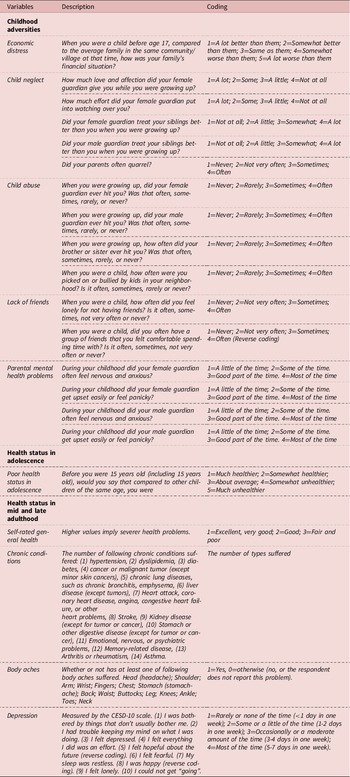
Details about childhood adversity experience (economic distress, child neglect, child abuse, lack of friends, parental mental health problems), health status in adolescence (poor health status in adolescence), and health status in mid and late adulthood (self-rated general health, chronic conditions, body aches, depression) are shown in Table 1 and shown as follows.
Variable description

Childhood adversity experience
Economic distress
Respondents were asked “When you were a child before age 17, compared to the average family in the same community/village at that time, how was your family’s financial situation?” (coded 1=a lot better than them; 2=somewhat better than them; 3=same as them; 4=somewhat worse than them; 5=a lot worse than them).
Child neglect
Respondents were asked (1) “How much love and affection did your female guardian give you while you were growing up?” (coded 1 = a lot; 2 = some; 3 = a little; 4 = not at all); (2) “How much effort did your female guardian put into watching over you?” (coded 1 = a lot; 2 = some; 3 = a little; 4 = not at all); (3) “Did your female guardian treat your siblings better than you when you were growing up?” (coded 1 = not at all; 2=a little; 3=somewhat; 4= a lot); (4) “Did your male guardian treat your siblings better than you when you were growing up?” (coded 1 = not at all; 2 = a little; 3 = somewhat; 4 = a lot); (5) “Did your parents often quarrel?” (coded 1 = never; 2 = not very often; 3 = sometimes; 4=often).
Child abuse
Respondents were asked (1) “When you were growing up, did your female guardian ever hit you?”; (2) “When you were growing up, did your male guardian ever hit you?”; (3) “When you were growing up, how often did your brother or sister ever hit you?”; (4) “When you were a child, how often were you picked on or bullied by kids in your neighborhood?” (all of questions coded 1 = Never; 2 = Rarely; 3 = Sometimes; 4 = Often).
Lack of friends
Respondents were asked (1) “When you were a child, how often did you feel lonely for not having friends? Is it often, sometimes, not very often or never?”; (2) “When you were a child, did you often have a group of friends that you felt comfortable spending time with? Is it often, sometimes, not very often or never? (reverse coding)” (all of questions coded 1 = Never; 2 = Not very often; 3 = Sometimes; 4 = Often).
Parental mental health problems
Respondents were asked (1) “During your childhood did your female guardian often feel nervous and anxious?”; (2) “During your childhood did your female guardian get upset easily or feel panicky?”; (3) “During your childhood did your male guardian often feel nervous and anxious?”; (4) “During your childhood did your male guardian get upset easily or feel panicky?” (all of questions coded 1=a little of the time; 2=some of the time. 3=good part of the time. 4=most of the time).
Health status in adolescence
Poor health status in adolescence
Respondents were asked “Before you were 15 years old (including 15 years old), would you say that compared to other children of the same age, you were… “(coded 1=much healthier; 2=somewhat healthier; 3=about average; 4=somewhat unhealthier; 5=much unhealthier).
Health status in mid and late adulthood
Self-rated general health
It is coded 1=excellent, very good, 2=good, 3=fair and poor.
Chronic conditions
It is coded as the actual number of following chronic conditions suffered: (1) hypertension, (2) dyslipidemia, (3) diabetes, (4) cancer or malignant tumor (except minor skin cancers), (5) chronic lung diseases, such as chronic bronchitis, emphysema, (6) liver disease (except tumors), (7) heart attack, coronary heart disease, angina, congestive heart failure, or other heart problems, (8) stroke, (9) kidney disease (except for tumor or cancer), (10) stomach or other digestive disease (except for tumor or cancer), (11) emotional, nervous, or psychiatric problems, (12) memory-related disease, (13) arthritis or rheumatism, (14) asthma.
Body aches
Respondents are asked “Whether or not has at least one of following body aches suffered. head (headache); shoulder; arm; wrist; fingers; chest; stomach (stomachache); back; waist; buttocks; leg; knees; ankle; toes; neck” (coded 1=yes, 2=no).
Depression
Respondents are asked (1) I was bothered by things that don’t usually bother me. (2) I had trouble keeping my mind on what I was doing. (3) I felt depressed. (4) I felt everything I did was an effort. (5) I felt hopeful about the future (reverse coding). (6) I felt fearful. (7) My sleep was restless. (8) I was happy (reverse coding). (9) I felt lonely. (10) I could not get “going” (all of questions coded 1=rarely or none of the time (<1 day in one week), 2=some or a little of the time (1-2 days in one week), 3=occasionally or a moderate amount of the time (3-4 days in one week), 4=most of the time (5-7 days in one week)).
The effect of sex (coded 1=male, 2=female), and the effects of residence place (coded 1=rural area, 2=not in rural area), age (coded as the actual years of age), education (coded 1=less than lower secondary education, 2=upper secondary & vocational training, 3=tertiary education), and marriage (coded 1=married/cohabitated, 0=separated/divorced/widowed/never married) in mid and late adulthood are controlled.
Analytical strategy
We follow the stepwise procedure to examine the relationships of interest. The linear regressions that have been adjusted with robust standard errors on individual level are conducted to investigate the influences of childhood adversity experience on the health status in adolescence and in mid and old adulthood. The robust standard errors adjustment is applied to overcome the heterogeneity resulting from the violation of independent and identical distribution because of the non-randomized variations in independent variables. Stata 16.0 (Stata Cor p. LLC., College Station, TX, USA) is applied in the analysis.
Results
Main findings
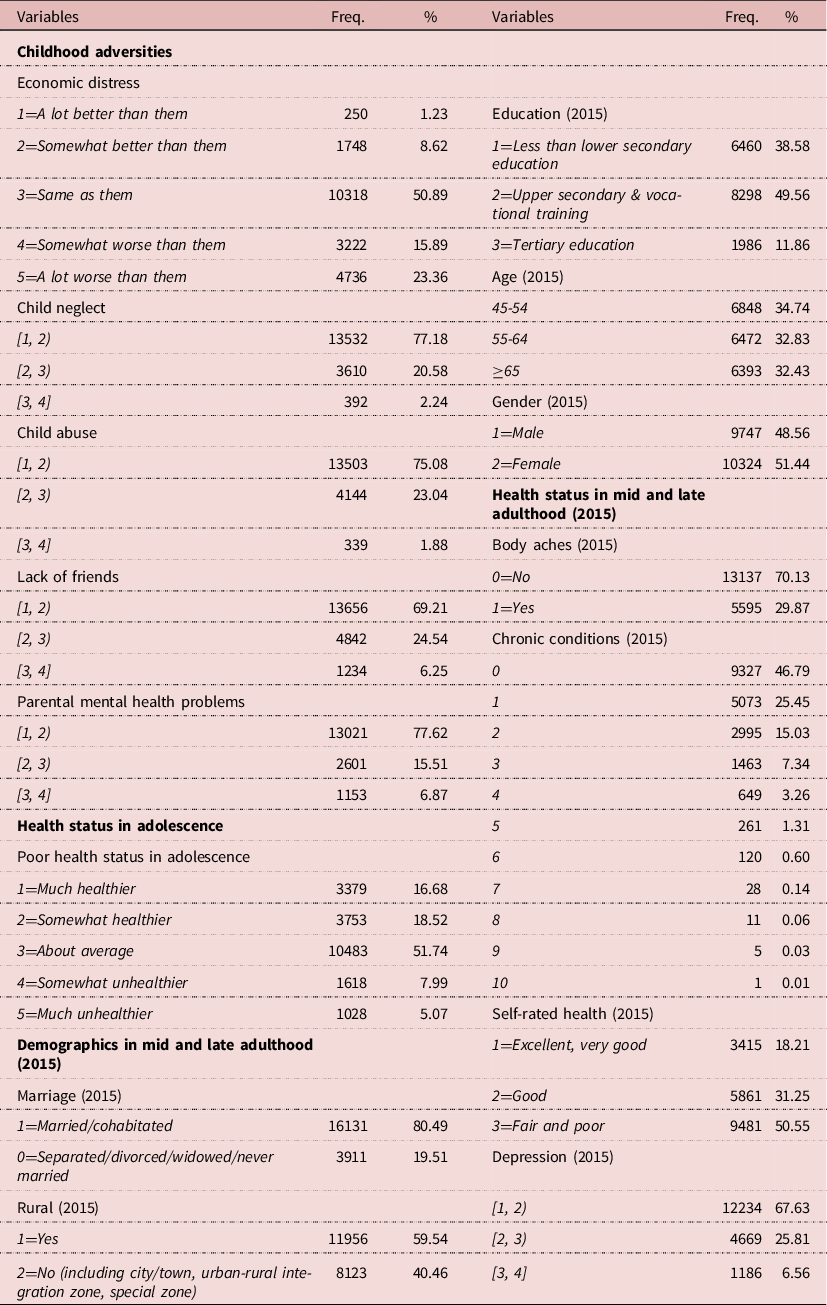
Results of Table 2 show that among the sample of this study, 51.44% are females, 65.26% are 55 years old and above, 80.49% are married or cohabitated, 59.54% live in rural areas, 61.42% have upper secondary & vocational training education and above. 23.36% (4736) experienced a high level of economic distress in childhood, 2.24% (392) experienced a high level of child neglect, 1.88% (339) experienced a high level of child abuse, 6.25% (1234) experienced a high degree of lack of friends in childhood, 6.87% (1153) experienced a high level of parental mental health problems in childhood. Besides, about 13.06% respondents feel worse in health status than others in adolescence, and 51.74% have average health status (similar with others) in adolescence. 29.87% have ever experienced body aches in mid and late adulthood, 53.21% have at least one chronic condition in mid and late adulthood, and 6.56% feel more serious depression in mid and late adulthood.
Descriptive statistics

Notes: The effects of ‘separated/divorced’ ‘widowed’ and ‘never married’ as separate categories on health outcomes were too marginal and not significant. For the sake of briefness, we combined categories to make regression analysis.
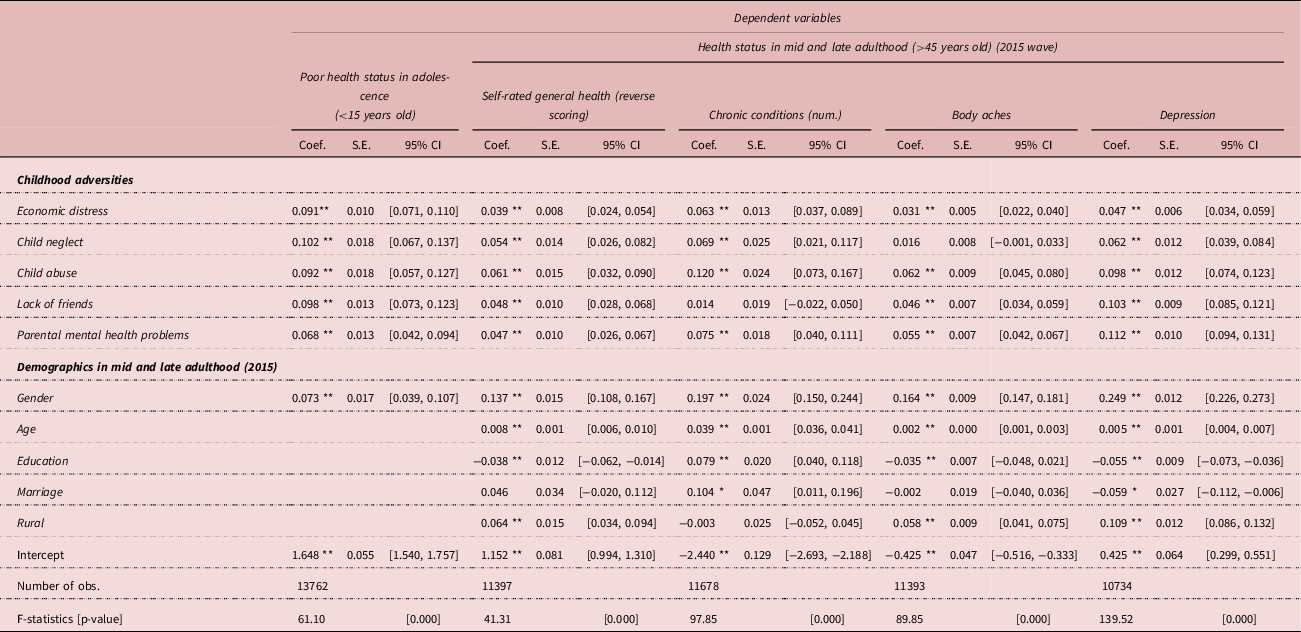
Results of Table 3 show that childhood adversity experience positively predicts poor health status in adolescence (economic distress 0.091; childhood neglect 0.102; child abuse 0.092; lack of friends 0.098; parental mental health problems 0.068; all p-value<0.01). Besides, it is shown that childhood adversity experience, in general, predicts health status in mid and late adulthood in terms of self-rated general health problems (from 0.039 to 0.061, all p-value<0.01), chronic conditions (from 0.014 to 0.120, all p-value<0.01 except for lack of friends), body aches (from 0.016 to 0.062, all p-value<0.01 except for child neglect) and depression (from 0.047 to 0.112, all p-value<0.01).
The influences of early-life experience on health status in adolescence, and in mid and late adulthood

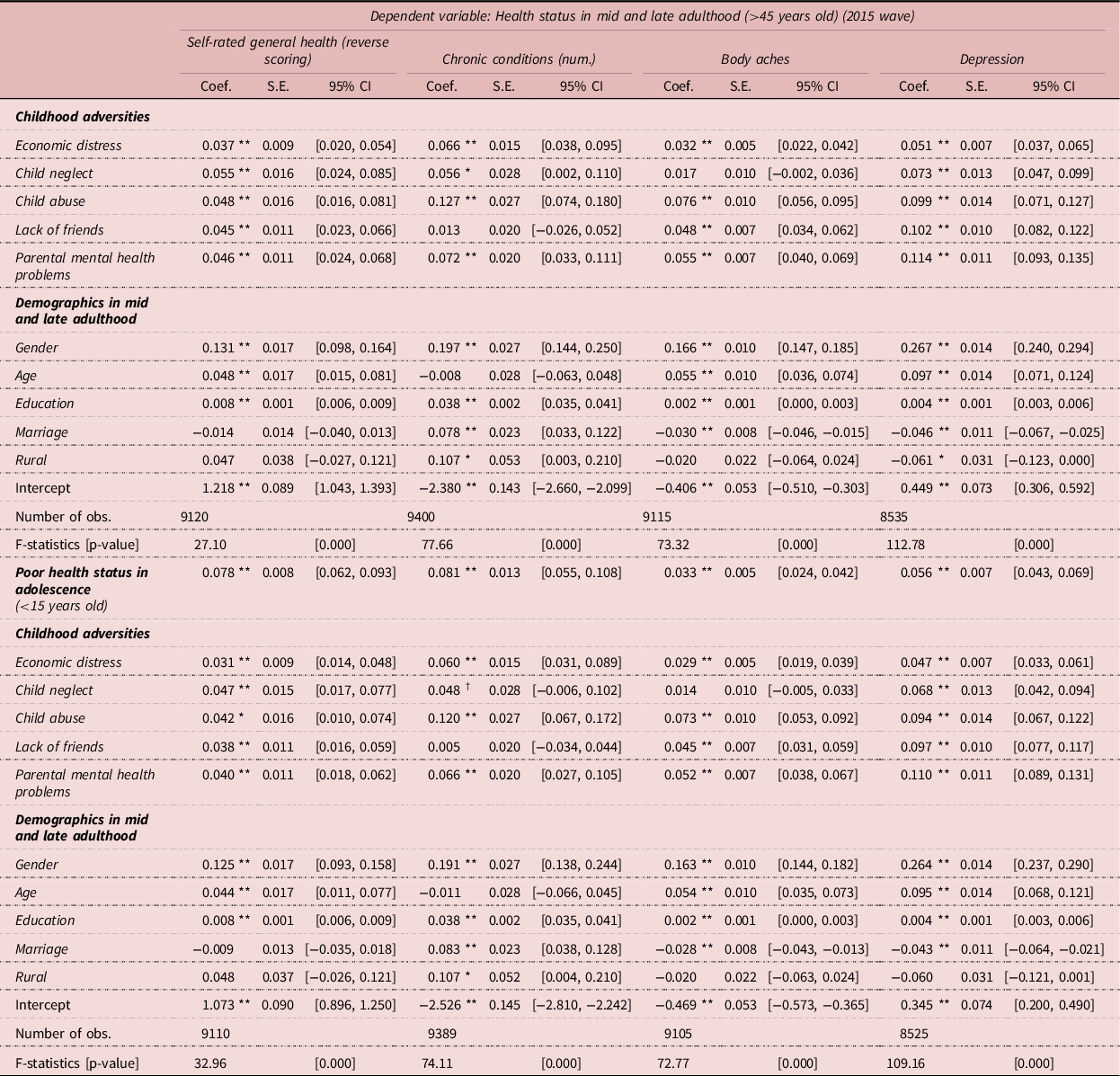
Note: *p<0.05, **p<0.01. Robust standard errors are reported.
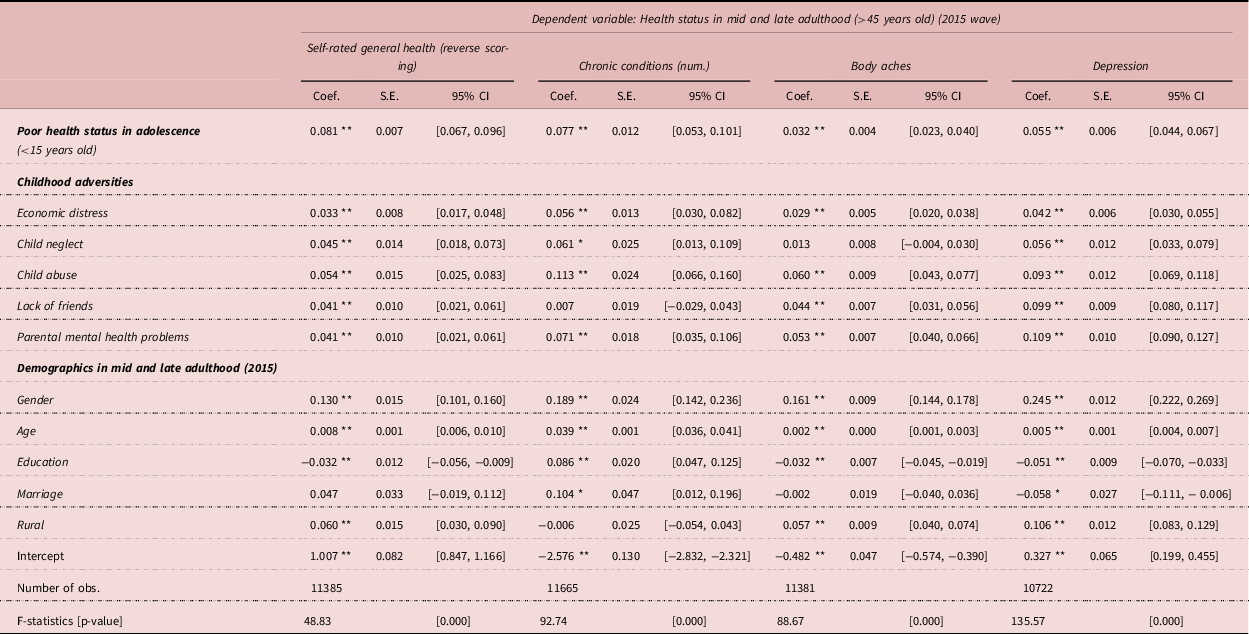
Results of Table 4 indicate that poor health status in adolescence positively predicts health status in mid and late adulthood (self-rated general health problems 0.081, chronic conditions 0.077, body aches 0.032, depression 0.055, all p-value<0.01), after controlling the effects of childhood adversity experience on health status in mid and late adulthood.
The influences of health status in adolescence on health status in mid and late adulthood

Note: † p<0.10, *p<0.05, **p<0.01. Robust standard errors are reported.
To estimate the relative contributions of the potential pathways linking childhood adversities with mid- or late-life health outcomes, we used indirect effect analysis (Baron & Kenny, Reference Baron and Kenny1986; MacKinnon, Reference MacKinnon2008). This methodology enables us to assess the extent to which the total effect of childhood adversities on mid- or late-life health outcomes is explained by a pathway involving health status in adolescence. The multiplication (ab) of two regression coefficients indicates the magnitude of indirect effect, where a is the regression coefficient of childhood adversities on health status in adolescence, b is the regression coefficient of health status in adolescence on mid- or late-life health outcomes, ab is the estimate of the indirect effect of childhood adversities on mid- or late-life health outcomes through health status in adolescence. Taken results of Table 3 & 4 together, Table 5 shows that the effects of childhood adversities on self-rated general health problems, chronic conditions, body aches, and depression in mid and late adulthood through health status in adolescence are all significant.
The life-long effects of early-life experience on health status

Note: M = poor health status in adolescence, Y 1 = self-rated general health problems in late adulthood, Y 2 = chronic conditions in late adulthood, Y 3 = body aches in late adulthood, Y 4 = depression in late adulthood. The significance of life-long influence process is determined by 95% bias-corrected bootstrap confidence interval estimates; if the confidence interval does not include 0, this process is significant (Preacher & Hayes, Reference Preacher and Hayes2008). Robust standard errors are reported. 95% CI is reported in square brackets.
Robustness check
First, a robustness check is conducted to clarify concerns about recall accuracy in terms of early-life experience. Since the information of childhood adversities comes from the life history survey (2014) towards adults over age 45 (measured retrospectively with only one-wave survey), there is lack of an opportunity to check the consistency of answers by multi-wave repeated surveys. Considering childhood adversities may be more prone to recall bias, depending on the mental state of the respondent, we check recall accuracy by examining the cognitive status of respondents at the time of the survey. The word-list recall test in the CHARLS survey (2015) aimed to examine the cognitive status of respondents by showing a word list (10 words) and asking the respondent to answer how many words he/she can remember. Although there are no unified and strict criteria of judging good recall capacity, some literature suggests that respondent with the accurate recall of at least five words can have outperformed half the population (e.g., González, Bowen, & Fisher, Reference González, Bowen and Fisher2008). Thus, we use the subsample of respondents who show the accurate recall of five words and reexamine the regressions described above. Results of Table 6 using the subsample remain robust.
Robustness check by excluding respondents with lower performance of word-list recall test (using 2015 wave)

Note: † p<0.10, *p<0.05, **p<0.01. Robust standard errors are reported.
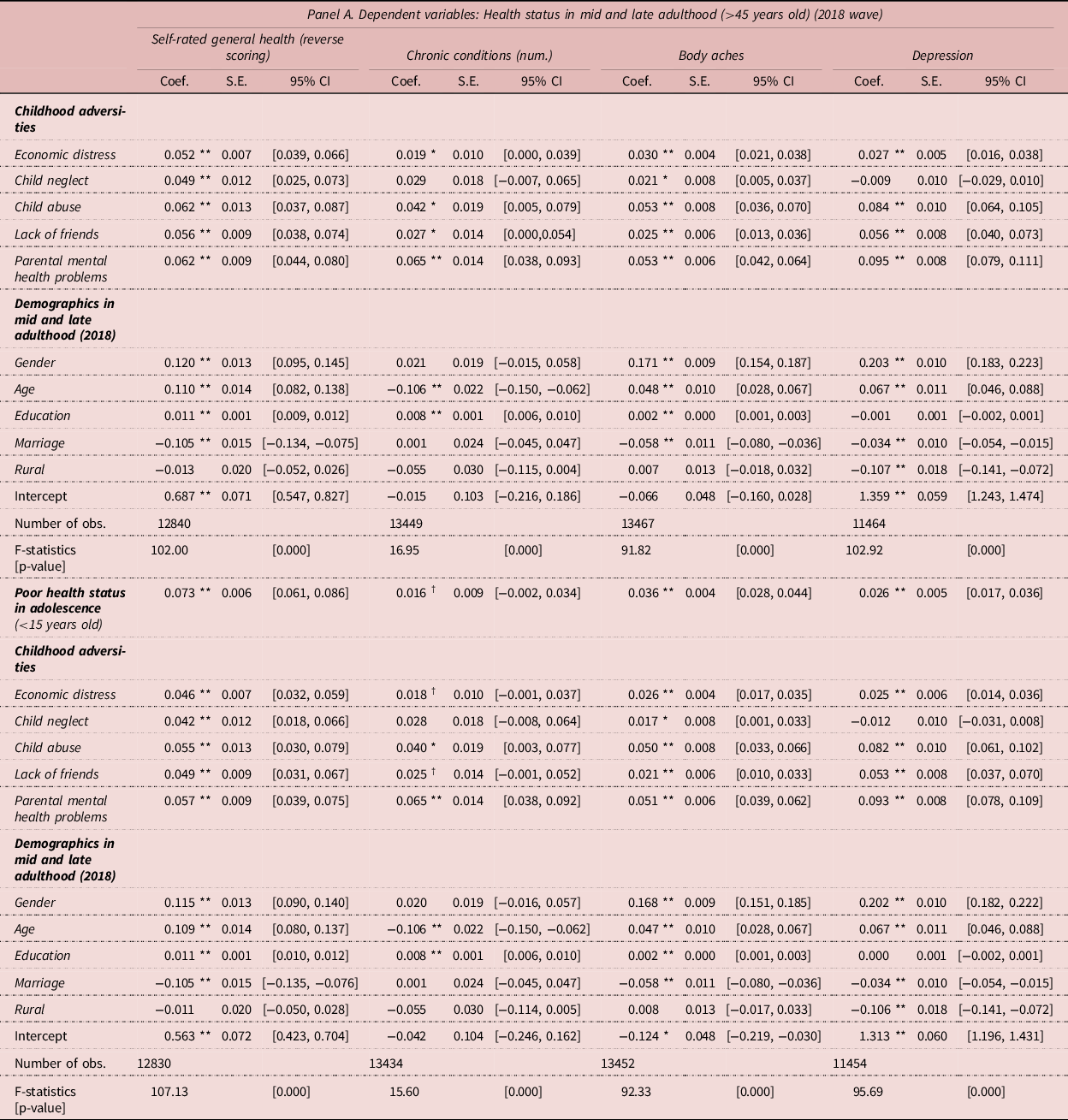
Second, since the one-wave survey of early-life experience prevents us from directly assessing past exposures from pre-existing records, a robustness check is conducted to check the reliability of relationships between variables by using the outcome variable of mid- or late-life health status measured in 2015 and 2018 respectively (2018-wave health status is publicized recently). As shown in Table 7, the relationships between childhood adversities, poor health status in adolescence and health status in mid and late adulthood (2018) are generally consistent with main findings above from data (2015).
Robustness check by using the 2018 wave

Notes: *p<0.05, **p<0.01. Robust standard errors are reported.
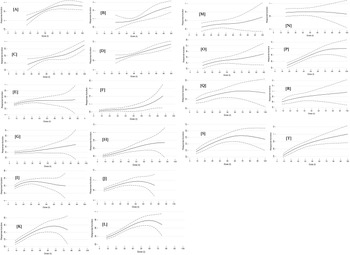
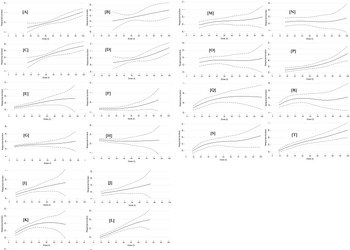
Third, the dose-response test is conducted to reveal a more fine-grained picture of the relationships between each type of childhood adversity and health status. Following the procedure suggested by Cerulli (Reference Cerulli2015), we first standardize each childhood adversity (i.e., = [original value of variable-min]/[max-min]Í100), and then depict the dose-response functions of each pair of childhood adversity and health status (see Fig1 and 2). Fig 1 presents a dose-response effect on health problems in mid and late adulthood (2015). With the increasing level of each childhood adversity, the level of health problems in mid and late adulthood (2015) increases. The similar dose-response effect on health problems in mid and late adulthood (2018) are shown in Fig 2. Thus, the dose-response effect found in this study remains robust.
The dose-response function between economic distress and self-rated health (reverse scoring, 1A), chronic conditions (1B), body aches (1C), depression (1D); between child neglect and self-rated health (reverse scoring, 1E), chronic conditions (1F), body aches (1G), depression (1H); between child abuse and self-rated health (reverse scoring, 1I), chronic conditions (1J), body aches (1K), depression (1L); between lacking friend and self-rated health (reverse scoring, 1M), chronic conditions (1N), body aches (1O), depression (1P); between parental mental health problem and self-rated health (reverse scoring, 1Q), chronic conditions (1R), body aches (1S), depression (1T) in year 2015. Notes: solid line is the average treatment effect and the dash line is the upper and lower bound of 99% confidence interval.

The dose-response function between economic distress and self-rated health (reverse scoring, 2A), chronic conditions (2B), body aches (2C), depression (2D); between child neglect and self-rated health (reverse scoring, 2E), chronic conditions (2F), body aches (2G), depression (2H); between child abuse and self-rated health (reverse scoring, 2I), chronic conditions (2J), body aches (2K), depression (2L); between lacking friend and self-rated health (reverse scoring, 2M), chronic conditions (2N), body aches (2O), depression (2P); between parental mental health problem and self-rated health (reverse scoring, 2Q), chronic conditions (2R), body aches (2S), depression (2T) in year 2018. Notes: solid line is the average treatment effect and the dash line is the upper and lower bound of 99% confidence interval.

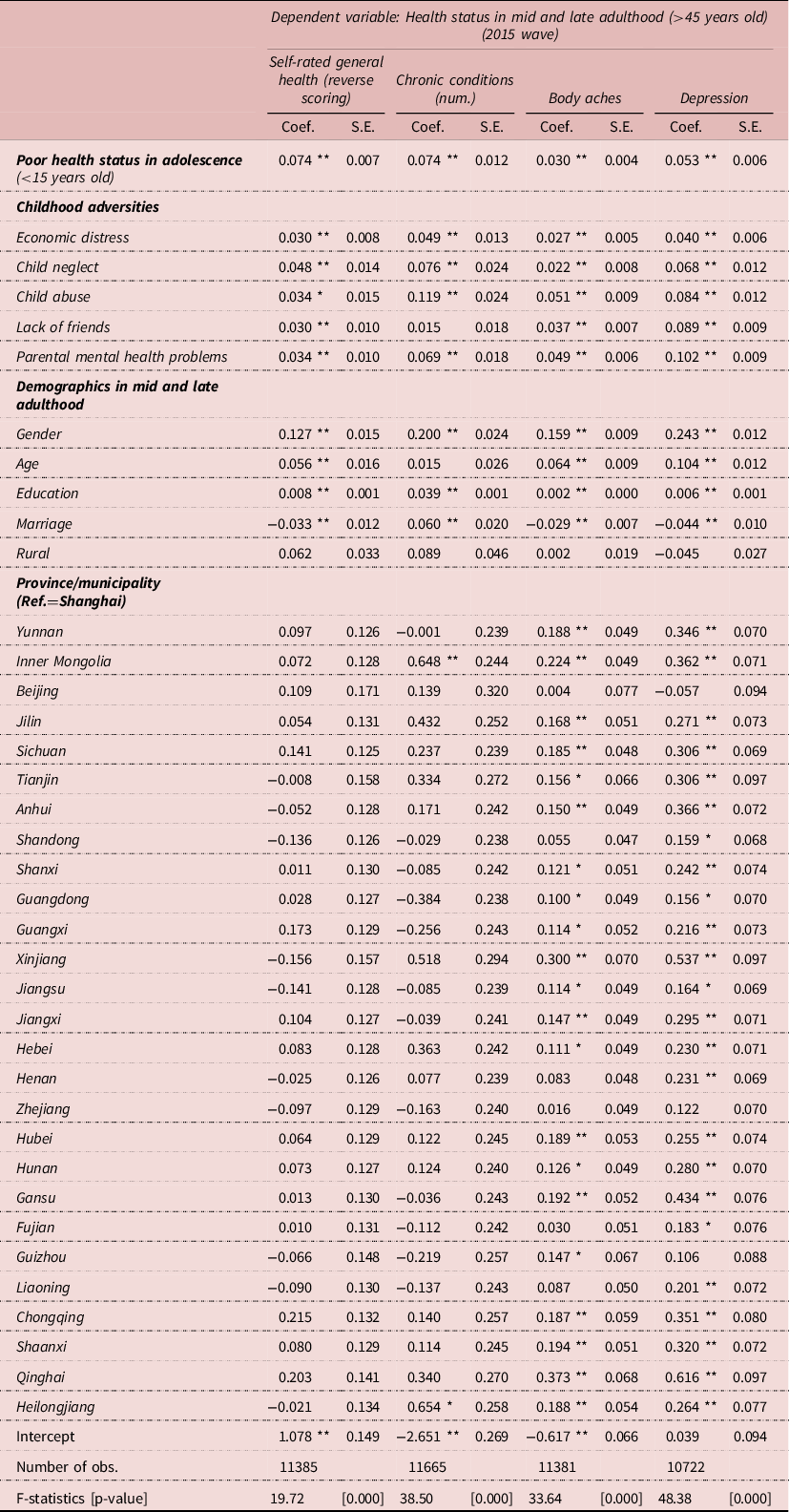
Fourth, the effects across provinces/municipalities have been presented in the Table 8. Results show that the effects across provinces are generally consistent.
Further robustness check by controlling the heterogeneity across provinces (using 2015 wave)

Note: † p<0.10, *p<0.05, **p<0.01. Robust standard errors are reported.
Discussion and Conclusion
The current study examined the prevalence of childhood adversities among people born before 1970 in China, which is in accordance with previous studies reporting high rates of childhood adversities globally (Kessler et al., Reference Kessler, McLaughlin, Green, Gruber, Sampson, Zaslavsky, Aguilar-Gaxiola, Alhamzawi, Alonso, Angermeyer, Benjet, Bromet, Chatterji, de Girolamo, Demyttenaere, Fayyad, Florescu, Gal, Gureje, Haro, Hu, Karam, Kawakami, Lee, Lépine, Ormel, Posada-Villa, Sagar, Tsang, Ustün, Vassilev, Viana and Williams2010). More of the population born before 1970 in China reported childhood adversities associated with socioeconomical suffering. The reported levels of socioeconomical suffering at 23.36% are much higher than the average rate of 3.4% found in the globe covering high-income, high-middle-income, low-middle-income, and low -income countries (Kessler et al., Reference Kessler, McLaughlin, Green, Gruber, Sampson, Zaslavsky, Aguilar-Gaxiola, Alhamzawi, Alonso, Angermeyer, Benjet, Bromet, Chatterji, de Girolamo, Demyttenaere, Fayyad, Florescu, Gal, Gureje, Haro, Hu, Karam, Kawakami, Lee, Lépine, Ormel, Posada-Villa, Sagar, Tsang, Ustün, Vassilev, Viana and Williams2010). This is largely due to China’s difficult economic times at the time.
The findings of this study are consistent with previous studies which found the significant negative associations between childhood adversities and health status in adolescence and adulthood. However, in comparison with previous studies, this study empirically reveals the long-lasting effect of childhood adversity, by extending its effect further into mid and late adulthood. Health in adolescence is found to link childhood adversities and health status in mid and late adulthood. This result reveals the effects of childhood adversities on health at all life-course stages, and their sequential influence from at the early stage to late stage of life. Moreover, individuals who experienced child neglect during childhood displayed the greatest risk of suffering from generally poor health conditions and had an elevated risk of developing chronic conditions, depression, and body aches in mid and late adulthood through their greatly detrimental influences on health status in adolescence.
This study has some policy implications. First, this study provides valuable information on a range of childhood adversities and the persistently negative impacts they have on health throughout life in China. It informs policy makers and practice of the need to target children at risk of adversities. This study provides support for initiatives to improve parenting skills, which need considering in the plan of intervention. In addition, when planning interventions, it is important to consider co-occurrence of adversities. Moreover, the finding of the role of adolescence health could imply that the intervention in adolescence is critical for alleviating or even cutting off the long-lasting damage of childhood adversities to individual health. Despite the well-documented harms of childhood adversities, it has been also recognized that some people are resilient although exposure to high burdens of adversities (Hamby, Grych, & Banyard, Reference Hamby, Grych and Banyard2018; Luthar, Cicchetti, & Becker, Reference Luthar, Cicchetti and Becker2000). Thriving after adversity has been explored by scientists. A strong “portfolio” of strengths, which is composed of self-regulation, meaning making, and the interpersonal context, is considered important for helping people achieve resilience (Hamby et al., Reference Hamby, Grych and Banyard2018). Self-regulation including various aspects of self-control, and interpersonal strengths such as relational skills have received more consideration in resilience after adversity (Hamby, Taylor, Mitchell, Jones, & Newlin, Reference Hamby, Taylor, Mitchell, Jones and Newlin2020). Meaning making, which is regarded as a way of individuals seeking fulfillment by connecting to something larger than themselves, is found particularly important for resilient mental health (Gonzalez-Mendez, Ramírez-Santana, & Hamby Reference Gonzalez-Mendez, Ramírez-Santana and Hamby2018). Poly-strengths comprising these different strengths for resilience after adversity need to be incorporated into adolescent education where school climate, teacher engagement, and connections to groups, such as sports teams, have long been identified as important practices.
This study has still some limitations. First, the use of retrospective reports in this research may have a problem of recall bias, which might not exactly reflect the actual level of childhood adversities under reporting in the China population. Second, since the description of childhood adversity was collected through the retrospective reports from adults over age 45 and the variables in this study were cross-sectional, the information on the time-varying effects of childhood adversities was not available and thus could not be controlled for. Third, it is possible that those with childhood adversities may have died before the study period (i.e., selective attrition), which could cause selection bias that generally leads to an underestimation of the association between childhood adversities and health status in mid and late adulthood (Hernán et al., Reference Hernán, Hernández-Díaz and Robins2004; Shiba et al., Reference Shiba, Kawahara, Aida, Kondo, Kondo, James, Arcaya and Kawachi2021). Fourth, information on childhood adversity is measured retrospectively, which may be biased due to differential recall (i.e., recall bias). The degree of recall bias likely varies by type of childhood adversities. For example, some types of childhood adversities (e.g., economic distress) are so specific that recall bias is likely minimal, whereas others (e.g., not feeling loved by parents) may be more prone to recall bias. However, there was not sufficient variation in the data to assess the associations between the specific type of childhood adversities and the outcome conditional on all other covariates. Individuals with political or other peer pressures may recall their childhood negatively and rate childhood conditions also negatively (common source bias), which could cause an overestimation of the association. Finally, the findings in the current study may not be generalizable to other samples, due to focus on the China population using stratified sampling across the whole country. With the data available, future research can use the global population to track and verify the sequential influence of childhood adversities on individual health across life-course stages.
Acknowledgements
We sincerely thank the CHARLS research team, Open Research Data Platform, Institute for Social Science Survey, National School of Development, Peking University who conduct the national random stratified sampling and publicize their research data.
Author disclosure statement
Funding
This study was not supported by external funding.
Ethical approval and informed consent
The authors assert that all procedures contributing to this work comply with the ethical standards of the relevant national and institutional committees on human experimentation and with the Helsinki Declaration of 1975, as revised in 2008. The ethical approval and informed consent are not required, as this study uses publicly available data source and authors have no contact to human related materials. More specifically, the data applied in this study are publicly available and unrestricted re-use is permitted via an open license. Besides, the CHARLS research team obtained ethics approval (license numbers: IRB00001052–11015, IRB00001052–14030, and IRB00001052–17053) from the institutional review board of the Peking University National School of Development. All respondents provided written informed consent. If the respondent was illiterate, he/she would press the fingerprint after the interviewer dictated the content of the informed consent.
Competing interest
Authors of this study has no competing interest to declare.
Consent for publication
Consent for publication is not required since there are no personal identifying materials included in this manuscript.