Nutrition is essential for healthy human development, directly influencing physical and mental health, with eating behaviour playing a crucial role in shaping habits that can positively or negatively impact well-being and quality of life over time(Reference Firth, Gangwisch and Borisini1,Reference Grajek, Krupa-Kotara and Białek-Dratwa2) . Historically, fruits and vegetables have been associated with various health benefits, including reduced risk of chronic diseases, lower blood pressure, weight control, improved digestive health and a strengthened immune system. These benefits are related to the composition of these foods, particularly the presence of vitamins, fibres, minerals, antioxidants and other essential components. Therefore, their consumption should be continuously encouraged to promote a healthier, balanced diet and positively impact human eating behaviour(Reference Slavin and Lloyd3,Reference Aune4) .
Eating behaviour is defined as the attitudes related to selecting and deciding which foods to eat, including aspects such as food satisfaction, emotional eating, response to food and satiety and food fussiness(Reference Freitas, Albuquerque and Silva5). The eating behaviour of children up to 7 years of age has been associated with the mother’s diet during pregnancy and breast-feeding (and the duration of breast-feeding); the method, time and positive experiences in the introduction of complementary foods(Reference Corrêa, Corso and Moreira6–Reference Fonseca, Ribeiro and Andreoli11) as well as biological, environmental and social factors(Reference Freitas, Albuquerque and Silva5), among others.
The nutritional status of Brazilian children under 6 years of age shows a concerning contrast between undernutrition and overweight. Despite the lack of complete and up-to-date data, studies indicate that children in different regions face weight deficits and excess weight. Limited access to nutritious foods leads to undernutrition, while high consumption of ultra-processed foods, rich in sodium, fats, and sugars, contributes to obesity. These issues are more frequent among children in social and economic vulnerability(Reference Louzada, Martins and Canella12).
Changes in society’s daily routines, such as the need for income, external work obligations and the rising cost of living, along with the increased participation of women in the labour market due to advances in gender equality and rights, have influenced specific dietary patterns. However, despite these changes, household responsibilities have not been equally redistributed, often resulting in women remaining primarily responsible for food-related duties, potentially leading to overload and challenges in maintaining healthy eating practices. This, combined with the growing emphasis on formal education for children from early childhood, has led to an increased demand for schools and daycare centres, directly impacting the daily eating habits of children(13–Reference Nanni, di Bella, Fachelli, López-Roldán and Suter15).
The eating experiences depend not only on the home environment and the stimuli provided by caregivers but also on experiences obtained in the school/nursery environment, since most students spend many hours of the day in the care of third parties in these places. In addition to ensuring that food in the school environment is appropriate for the child’s age and needs, schools and nurseries must ensure positive and healthy experiences for these children(Reference Scaglioni, De Cosmi and Ciappolino16). At the same time, caregivers’ perceptions in this environment often do not coincide with those in the home environment, since it depends on the child’s behaviour, which can vary according to the environment evaluated.
Neglecting the factors mentioned above that influence eating habits, along with changes in societal habits – particularly during the early years – can result in selective eating behaviours and issues with adequate development. Two main factors are commonly associated with the rejection of fruits and vegetables. Picky eating refers to children rejecting or restricting familiar and unfamiliar foods. Additionally, children may exhibit food neophobia, characterised by a reluctance or refusal to try new foods(Reference Dovey, Staples and Gibson17). In more severe cases, the child may present inadequate food consumption and reject a substantial amount of food, which can harm their growth and development(Reference Kamarudin, Shahril and Haron18,Reference Taylor and Emmett19) . In these cases, the child should be diagnosed with Avoidant/Restrictive Food Intake Disorder according to the Diagnostic and Statistical Manual of Mental Disorders(Reference Zimmerman and Fisher20).
Among the ways to reduce the occurrence and severity of a child’s picky eating are (i) sensory approaches with games that stimulate the child’s perceptions, (ii) parental approaches with caregivers being held accountable for the actions that are their responsibility, for example, establishing meal times and monitoring screen time, (iii) social and environmental approaches by encouraging environments that are pleasant for stimulating positive eating experiences(Reference Zimmerman and Fisher20) and (iv) culinary workshops as an alternative to improve children’s eating skills.
Additionally, various practices can be adopted to influence children’s eating behaviours, fostering healthy habits that impact their health and development. Nutritional education, modeling healthy eating habits by parents, involving children in food preparation, creating a pleasant mealtime environment and implementing healthy eating policies in schools can all contribute to the healthy development of children, promoting positive eating habits and a lasting relationship with food(Reference Scaglioni, De Cosmi and Ciappolino21–23).
Thus, this study’s objective was to evaluate caregivers’ perceptions of the consumption and eating behaviour of children aged 3–6 years in the school and home environment.
Material and methods
Population studied
The research was developed following the steps described in Figure 1. Teachers (n=4), children aged 3–6 years and their guardians (n=53) from a private school (Rio Verde, Goiás, Brazil), which already has an established partnership in research projects with the institution, were invited to participate in the present study. All teachers and child guardians over 18 who agreed to participate in the present research and child guardians who authorised (in writing) their participation signed the free and informed consent form. Furthermore, the child was asked if they would like to participate in the research in the presence of another adult who was not part of the research team. Only those who freely agreed to participate were included in the research. After the recruitment step, four teachers, thirty-one children aged 3–6 years, and their guardians agreed to participate in the research.
Assessment scheme for food preference of children aged 3–6 years from the different perspectives.

This cross-sectional study was conducted according to the guidelines in the Declaration of Helsinki. All procedures involving human subjects/patients were approved by the Research Ethics Committee of the Federal Institute of Education, Science and Technology Goiano under Opinion nº 6.166.403. Written informed consent was obtained from all subjects/patients.
Agreement questionnaire regarding food preference statements
The children’s teachers and guardians completed a questionnaire regarding their perception of the children’s eating habits. The Cade, Frear, Greenwood questionnaire(Reference Cade, Frear and Greenwood24) was adapted to Portuguese. The questionnaire consisted of ten declarations regarding the adult’s perception of the child regarding the attitude of liking it, thinking that it is good, being willing to eat and regarding access to fruits and vegetables/vegetables, as well as the parents’ thoughts regarding the importance of eating these foods (Table 1). A five-point scale was used to answer questions ranging from strongly agree to strongly disagree. The results obtained were evaluated as agree (strongly agree and agree), indifferent (neither agree/nor disagree) and disagree (disagree and strongly disagree).
Agreement questionnaire regarding food preference statements of children aged 3–6 years from children’s teachers and guardian’s perspectives

Free drawing and colouring
When applying the free drawing method, children were asked to ‘draw all the fruits and vegetables you know about’. After understanding the method, each child received blank sheets ad libitum. The time was unlimited, and the delivery times of the first and last respondents were registered. Twelve coloured crayons were provided.(Reference Goldner, Sosa and Garitta25)Although the children were instructed to draw one vegetable below the other, they could not follow this request, so the position order was not considered.
The form ‘free colouring’ was created by inserting images of foods mentioned in the FFQ (Item 2·2) answered by the children’s parents and/or caregivers. In this case, the children received a sheet containing thirty items and were asked to colour the ones they usually consume at home and/or in any other environment. The selected items were vegetables widely produced locally, commonly found in local markets and freely accessible illustrations were available. This test was carried out to refine the result obtained by the free drawing method, as it was noticed that children in the assessed age group exhibited a remarkable ability to draw due to the influence of other children.
Food frequency questionnaire
The questionnaire was constructed based on the work of Christian et al. (Reference Christian, Evans and Cade26) with adaptations considering the foods reported by the children in the free drawing and containing 105 types of food. The questionnaire was sent to the children’s parents and/or guardians to check what had been consumed in the last 24 h. The foods were divided into six groups: (i) cereals and their products (nineteen items); (ii) vegetables and their products (twenty-four items); (iii) fruits and their products (thirty-three items); (iv) meat and eggs (twelve items); (v) milk and dairy products (twelve items) and (vi) grains (five items) (online Supplementary material S1). Parents and/or guardians were asked to indicate the meal (breakfast, morning snack, lunch, afternoon snack, dinner or evening snack) during which the child consumed that food.
Statistical analysis
The results were tabulated in Microsoft Excel spreadsheets, and for the agreement questionnaire completed by teachers and the children’s guardians, the results were expressed as relative percentages. Data normality was assessed using the Shapiro–Wilk test, and in cases of non-normal distribution, the Wilcoxon test was applied at a 5 % significance level. All analyses used Statistica 7.0 for Windows (StatSoft Inc., Tulsa).
Regarding food frequency answered by the children’s teachers and guardians and based on a frequency matrix (where 1 corresponded to food consumed and zero corresponded to food not consumed), correspondence analysis was carried out(Reference Ares, Barreiro and Deliza27).
Results and discussion
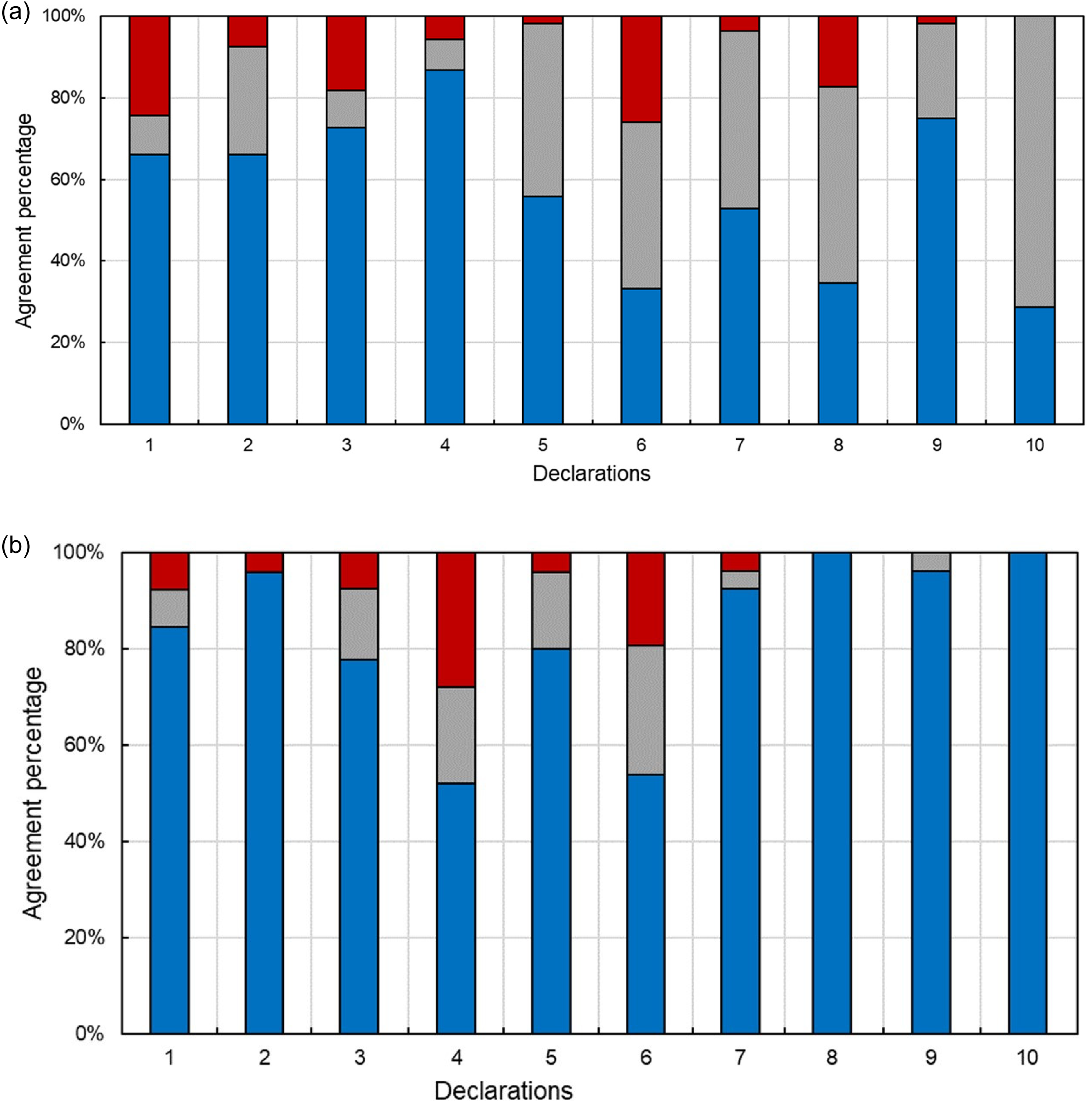
Figure 2 shows the percentages obtained from the agreement questionnaire applied to teachers and caregivers of the children. The results obtained with the questionnaire for both teachers and caregivers of the children did not respect the normal distribution. Therefore, the Wilcoxon test was applied to evaluate the statistical difference between the perception of the children’s eating behaviour provided by the caregivers and by the teachers.
Answers to the agreement questionnaire regarding food preference statements of children aged 3–5 years from teachers (a) and the children’s caregivers (b) where blue is agreement, grey is indifferent and red is disagreement.

Figure 2(a) and (b) demonstrate different profiles described for teachers and caregivers regarding the food preferences of children aged 3–6 years. While teachers indicated a greater amount of indifference/disagreement in their responses, caregivers indicated a greater amount of agreement in their responses. Statistically comparing the responses obtained from teachers and caregivers of children, there was no statistical difference regarding the responses to statements #1 - The child likes to eat fruit (P = 0.79), #2 – the child thinks that eating fruit is good for him/her (P = 0.35), #3 – the child is willing to eat fruit (P = 0.97), #6 – the child likes to eat vegetables (P = 0.64), #7 – the child thinks that eating vegetables is good for him/her (P = 0.61), and #8 and the child is willing to eat vegetables (P = 0.74). Meanwhile, there was a statistical difference regarding the responses to statements #4 – parents seem to think it is good for children to eat fruit (P = 0.007), #5 – the child has easy access to all the fruits they want to eat at home (P = 0.003), #9 – parents seem to think that it is good for the child to eat vegetables (P = 0.40) and #10 – the child has easy access to all the vegetables they want to eat at home (P = 0.00) by the Wilcoxon test.
The first point that should be discussed here regarding the statements is that the parents who participated in the survey reported that they think that fruits (#4) and vegetables (#9) are essential for children’s health (100% for both). However, in the teachers’ view, the parent’s behaviour does not seem to indicate that they believe this statement (86.8 % and 75 % for fruits and vegetables, respectively), and this may be related to the fact that caregivers observe what parents send to school for children to eat, for example.
Regarding children’s access to fruits and vegetables at home, caregivers’ and teachers’ perceptions were even more discordant. Parents who participated in the survey reported that they think that children have access to fruits (#4) and vegetables (#9) (96.2 % and 92.6 %, respectively). However, in the perception of teachers, children’s behaviour does not seem to indicate that they have access to these foods at home (55.8 % and 28.8 % for fruits and vegetables, respectively). This may be associated, for example, with children’s lack of knowledge about traditionally consumed fruits, the difficulty of incorporating fruits into the diet within the school environment and the refusal to consume similar products.
Furthermore, children’s social behaviour may vary across settings, which could explain caregivers’ and teachers’ differing perceptions of these issues. Gittelsohn et al. (Reference Gittelsohn, Toporoff and Story28) reported that children’s consumption of apples, oranges, orange and apple juices, bananas, beans, potatoes, corn, carrots, mashed potatoes, salad, peaches, and watermelon was more frequently reported in the homes than in either school or other community locations.
Also, children’s feeding difficulties (whether selective eating or excessive weight gain) have often been associated with a lack of parental control(Reference Webber, Cooke and Wardle29,Reference Scaglioni, Salvioni and Galimberti30) . Therefore, the children’s teachers believe the parents disagree with statements #4 and #9.
On the other hand, it is also customary for the caregiver’s report to be based on measurement errors, biased in its social desirability or to minimise eating difficulties by comparing the child’s behaviour with much worse children in the family and/or society, and, therefore, this response may demonstrate an overly positivist impression compared with other assessments carried out with the children(Reference Webber, Cooke and Wardle29,Reference Lioret, Campbell and McNaughton31) .
This parental responsibility is often more associated with maternal behaviour, as they spend significantly more time in direct interaction with children than other caregivers(Reference Scaglioni, Salvioni and Galimberti30). Furthermore, about their responsibility, mothers believe that it is their responsibility to make their children less demanding regarding food and consequently reduce food selectivity(Reference Webber, Cooke and Wardle29).
School feeding programmes have highlighted the importance of these strategies in increasing the acceptance of fruits and vegetables among children(Reference Hendy, Williams and Camise32). Implementing programmes to ensure proper nutrition for children is crucial for promoting health and development. However, these programmes face significant challenges due to limited access to health products, often constrained by cost, availability and infrastructure. In contrast, the ease of access to less healthy food options, driven by convenience and lower prices, presents a substantial barrier to fostering healthier eating habits among children(Reference Sogari, Velez-Argumedo and Gómez33,Reference Silva, Araújo and Lopes34) .
The consumption of vegetables by children is, in fact, a greater challenge than the consumption of fruits, primarily due to children’s natural preference for sweeter tastes, which makes fruits more appealing. Additionally, cultural factors, such as how vegetables are often prepared and perceived, can contribute to the reluctance to eat them. Many children are also more exposed to fruits through media and marketing, often portraying them as more desirable. These factors make it harder for children to embrace vegetables as part of their diet despite their nutritional importance. Webber et al. (Reference Webber, Cooke and Wardle29) demonstrated that half of the families interviewed had at least one child in the household who had an intake of less than one vegetable per day, and half had an intake of more than two per day out of thirty-eight families.
In general, practices to improve children’s food choices are based on environmental exposure to food in different types of preparation to improve and increase experiences and taste development. In this sense, parents play a fundamental role in developing food preferences because they are the controllers of these experiences and because this control and influence are directly related to their attitudes(Reference Scaglioni, Salvioni and Galimberti30,Reference Lioret, Campbell and McNaughton31) . Several studies suggest that parental dietary intake is associated with children’s cereals, fruit and vegetables(Reference dos Santos Barroso, Sichieri and Salles-Costa35–Reference Mazza, Morseth and Torheim38). This has been linked to children’s ability to imitate the actions of others and learn by observation(Reference Baumrind39).
Children commonly fall into the food dichotomy, separating foods into good or bad and healthy or unhealthy. Gittelsohn et al. (Reference Gittelsohn, Toporoff and Story28) reported that children separated oranges, apples, bananas, and carrots (fruits and vegetables) as being considered ‘good for you’. Although children and caregivers often identify that fruits and vegetables are considered more appropriate and healthy, this knowledge often does not seem to influence daily food choices(Reference Gittelsohn, Toporoff and Story28).
In addition, other widespread feeding practices of caregivers and even school collaborators with children are (i) restricting liquids, snacks, or other foods before main meals or at any time of the day; (ii) pressuring the child to eat a certain amount or type of foods; (iii) cooking different meals for family members, and (iv) linking the consumption of a particular food or a certain amount of food to rewards, among others(Reference Gittelsohn, Toporoff and Story28–Reference Scaglioni, Salvioni and Galimberti30).
These practices can not only worsen food selectivity but also result in eating disorders and/or obesity and overweight(Reference Scaglioni, Salvioni and Galimberti30). Therefore, considering the relationship with food is complex and interactive, nutritional counseling is essential so that caregivers practice responsive flexibility or positive parenting based on authoritative modelling, based on the perception of each child’s eating behaviour(Reference Webber, Cooke and Wardle29,Reference Scaglioni, Salvioni and Galimberti30) . In addition, it is necessary to discourage other parenting models, such as permissive (not very demanding and avoids confrontation, but is responsible), authoritarian (demanding and controlling, with low levels of responsibility and little cordiality), and uninvolved or neglectful (not demanding and not responsible)(Reference Baumrind39,Reference McCoby40) .
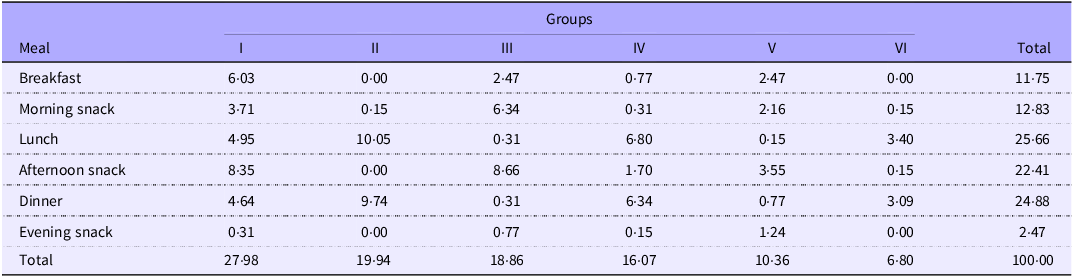
Table 2 presents the relative frequency of food mentioned in the FFQ answered by the children’s caregivers (online Supplementary material S1). Group I corresponded to Cereals and Derivatives, Group II to Vegetables, Greens and Derivatives, Group III to Fruits and Derivatives, Group IV to Meat and Eggs, Group V to Milk and Derivatives, and Group VI to Legumes and Derivatives. Twenty-nine foods out of 105, corresponding to 27.6 % of the items in the questionnaire, were not marked by any of the child’s caregivers.
Relative frequency (%) of food mentioned in the FFQ sent to children’s caregivers to assess the food preferences of children aged 3–5 years

Group I, cereals and their products; Group II, vegetables and their products; Group III, fruits and their products; Group IV, meat and eggs; Group V, milk and dairy products, and Group VI, grains.
In the breakfast, afternoon snacks and evening snack meals, groups I (cereals and their products), III (fruits and their products), and V (milk and dairy products) were more present (Table 2), with relative frequency (%) of 6.03, 8.66 and 1.14, respectively. The foods reported for these three meals were characterised as a ‘snack’ dietary pattern by Vieira-Ribeiro et al. (Reference Vieira-Ribeiro, Andreoli and Fonseca41) (typical bakery foods such as breads, cakes, and biscuits, butter and margarine, coffee and teas).
In the afternoon snacks, breakfast, morning snack, and evening snack meals, the presence of group V, consisting of milk and dairy products, was notable. Although there is no internationally defined dose for milk consumption, different countries have adopted guidelines based on individuals’ age and personalised nutritional needs, typically recommending 1–3 servings per day or up to 400 ml of milk and dairy products. This is due to milk’s widely recognised nutritional benefits in the diet, including its rich content of high-quality protein, calcium (Ca), vitamins, and other essential nutrients that support growth and overall health(Reference Kwon, Lee and Cho42). In the afternoon snacks, breakfast, morning snack, and evening snack meals, the presence of group V, consisting of milk and dairy products, was notable (relative frequency (%) of 2.47, 2.16, 3.55, and 1.24, respectively. Many children evaluated in the present study are breastfed, especially those aged 3–4 years. In addition, the consumption of milk and dairy products is typical in children in the age range evaluated in the present study(Reference Vieira-Ribeiro, Andreoli and Fonseca41). The recommendation of milk consumption for children aged 3–6 years is primarily based on its critical role in bone and dental development, attributed to its high Ca and vitamin D content, which are essential during this growth phase. Additionally, milk provides high-quality proteins necessary for tissue formation and maintenance, including muscles and organs, and other vital nutrients such as phosphorus, potassium, and vitamin A and B-complex vitamins, which support energy metabolism, physical growth and immune system strengthening. As an accessible and nutrient-dense food, milk is a practical dietary complement for children(Reference Bjørklund Holven and Sonestedt43–Reference Givens45).
However, the problem associated with the consumption of milk and dairy products is that many children receive these foods with added sweeteners and flavourings, as indicated in the study by Vieira-Ribeiro et al. (Reference Vieira-Ribeiro, Andreoli and Fonseca41), which may be associated with the prevalence of higher BMI and total and central adiposity. This condition may indicate this association, as an integrative approach to lifestyle is necessary beyond just food intake, such as physical activity, time spent outdoors and exposure to screens, among others(Reference Scaglioni, De Cosmi and Ciappolino16,Reference Lioret, Campbell and McNaughton31) .
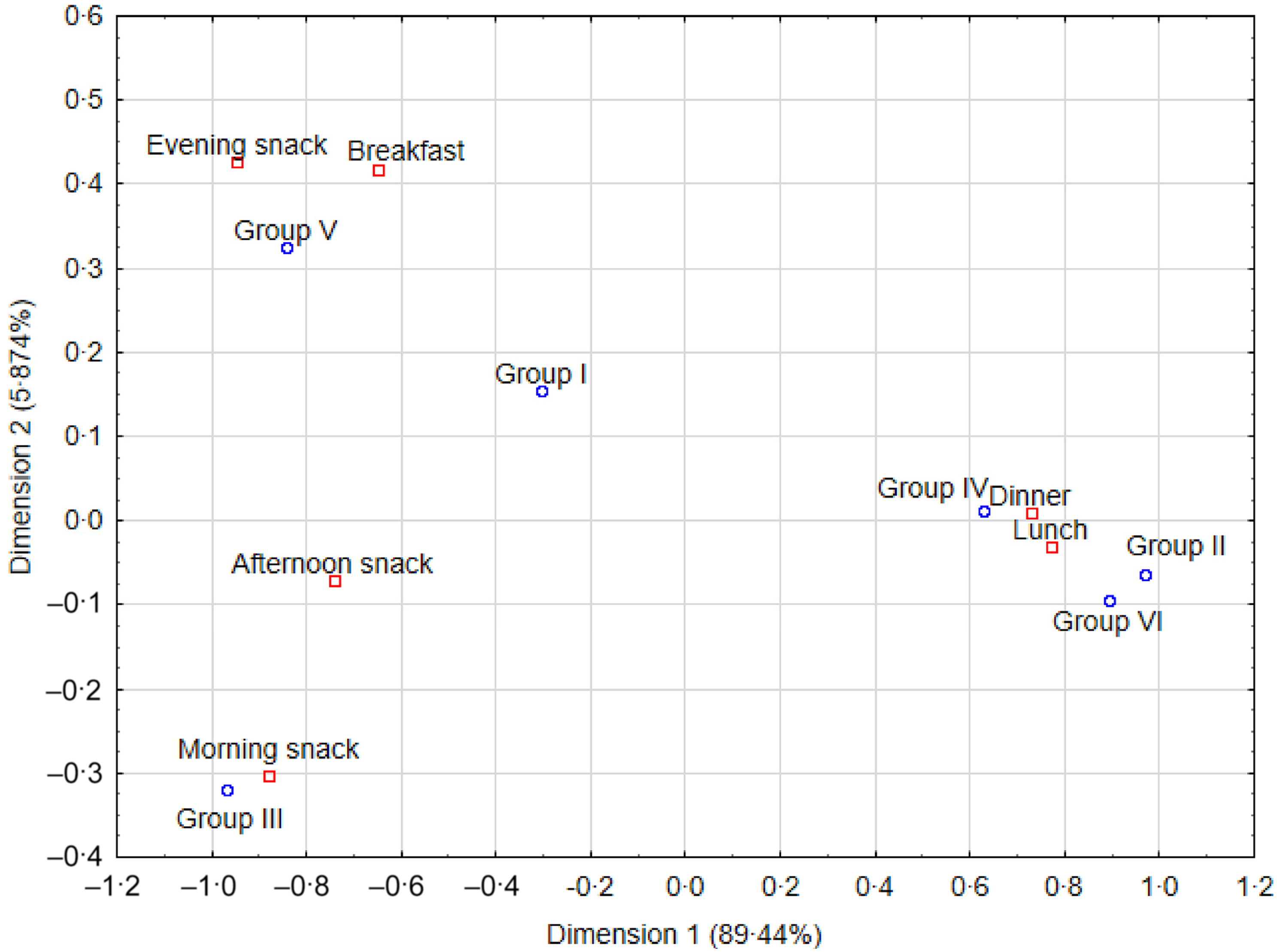
Vieira-Ribeiro et al. (Reference Vieira-Ribeiro, Andreoli and Fonseca41) the traditional Brazilian dietary pattern indicates white rice, beans, vegetables, tubers, baked polenta, and flour, and meats, fish, and eggs. In the present study, these foods were highly associated with dinner and lunch meals (Figure 3), which were also the most important regarding food variety (24.88 and 25.66 %, respectively). This was in line with what was reported by Teixeira et al. (Reference Teixeira, Vitorino and Da Silva46), who indicated that children consume more meals than adolescents. In the present study, it was also possible to notice that meals (usually concentrated in lunch and dinner) shared participation with the afternoon snack (∼25 % each). In addition, Teixeira et al. (Reference Teixeira, Vitorino and Da Silva46) reported that breakfast was the only regular meal for children aged 3–6 years. In the present study, however, this meal contributed only 11.75 % to the daily food variety.
Representing samples in the first and second dimensions of the correspondence analysis of the relative frequency of food citation in the FFQ sent to the children’s caregivers to assess the food preferences of children aged 3–5 years.

Figure 3 presents the representation of samples in the first and second dimensions of the correspondence analysis, which explains about 95.31 % of the original information in the two dimensions. The first and second dimensions represented 89.44 % and 5.87 % of the total variability, respectively. It was possible to observe three distinct groups in correspondence analysis: Group V (milk and dairy products) demonstrated a high association with evening snacks and breakfast; Group III (fruits and their products) demonstrated a high association with morning snacks and Group II (vegetables and their products), IV (meat and eggs), and VI (grains) demonstrated a high association with dinner and lunch.
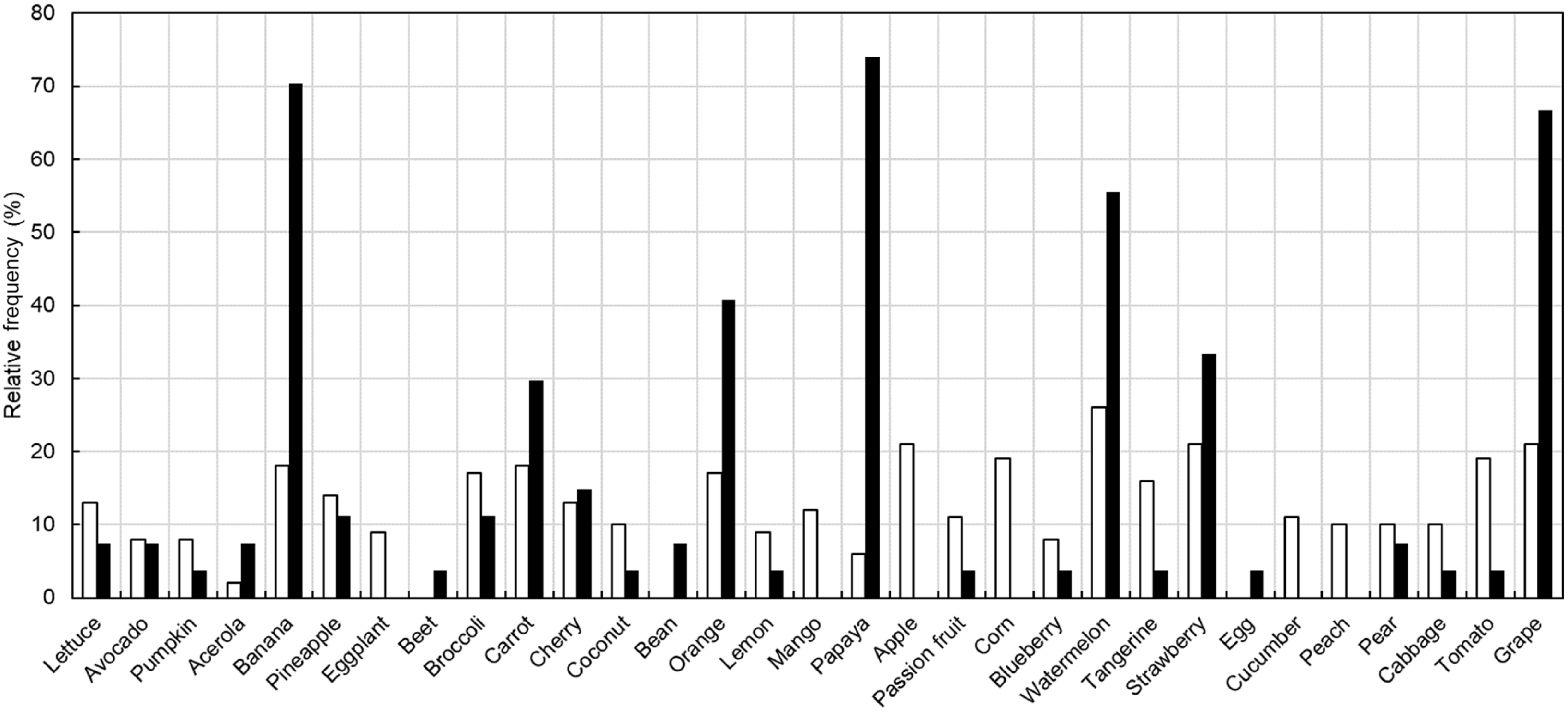
Attention needs to be paid to children’s nutrition as there is a tendency for the consumption of raw salads, vegetables, beans, fresh fruits, and fruit juices to decrease as the child grows up and becomes a teenager(Reference Teixeira, Vitorino and Da Silva46). Figure 4 shows the relative frequency of food checking obtained by free colouring and free drawing activities with the children. It was impossible to list the methods used by preference since most of the children had difficulty following the instruction to ‘draw one below the other’ and drew them side by side. Thus, only frequency and not the order of appearance were considered for the methods used. The foods that were most mentioned by the children using the free colouring method were watermelon (86.7 %), strawberry, apple and grape (70 %) and corn and tomato (63.3 %). The foods that were most mentioned by the children using the free drawing method were papaya (74.1 %), banana (70.4 %), grape (66.7 %), watermelon (55.6 %) and orange (40.7 %).
Relative frequency (%) of food checking obtained by free colouring (white) and free drawing (black) activities for assessing food preferences of children aged 3–5 years.

Apples (71 %), oranges (66 %), bananas (56 %), and grapes (41 %) were the most mentioned foods by American-Indian children (n=85), and among them, apples (74 %), oranges (59 %), and bananas (62 %) were reported as consumed every day(Reference Gittelsohn, Toporoff and Story28).
The frequency of consumption reported by children may vary across different regions, as each region has distinct conditions for growing and cultivating various plant species. These locally available plants can be incorporated more frequently into the diet based on regional production. Factors such as price, availability and cultural preferences also influence consumption patterns, leading to variations in dietary habits depending on the region(Reference Miller, Yusuf and Chow47–Reference Shelef, Weisberg and Provenza49).
Interviews to investigate children’s eating habits can be a challenge. Starting at age 10, it is recommended that the interview be conducted directly with the child. However, for younger children, the research is conducted with caregivers(Reference dos Santos Barroso, Sichieri and Salles-Costa35,Reference Vieira-Ribeiro, Andreoli and Fonseca41,Reference Teixeira, Vitorino and Da Silva46,Reference Viana, Sinde and Saxton50) , which may reflect the caregivers’ perspectives or preferences(Reference Webber, Cooke and Wardle29,Reference Lioret, Campbell and McNaughton31) , or be based on observations of the child’s behaviour(Reference Hendy, Williams and Camise32). Gittelsohn et al. (Reference Gittelsohn, Toporoff and Story28) conducted interviews with children using illustrated cards (as we attempted in the free colouring task in the present study), but it is important to note that in this case, the child is limited to reporting only what is already printed on the cards offered.
Free drawing has been indicated as a qualitative alternative to studying food consumption in child populations through a fun activity(Reference Goldner, Sosa and Garitta25). The child’s ability to respond to free drawing was also age dependent, as with other forms of food consumption assessment (Figure 5). As previously stated, the children evaluated in this study could not follow the recommendation to draw each food item ‘one below the other’.
Children’s responses when asked to draw the food they liked the most and when asked to colour the food they liked the most (a) male, 3 years; (b) female, 4 years, and (c) female, 5 years.

Fruits and vegetables are essential in children’s diets, mainly due to their high fibre content and other vital nutrients such as vitamins, minerals, and antioxidants. Inadequate intake of these foods can lead to digestive issues, nutrient deficiencies, weakened immune function and an increased risk of chronic diseases later in life(Reference Ioniță-Mîndrican, Ziani and Mititelu51,Reference Ramsay, Shriver and Taylor52) .
Poor eating habits, in addition to nutritional deficiencies, can lead to obesity, as they are often linked to the consumption of unhealthy foods that are high in calories, sugars, and fats. Even though overweight or obesity is not commonly diagnosed at this age, behaviours that promote this comorbidity can lead to cumulative increases in positive energy balance throughout life(Reference Lioret, Campbell and McNaughton31). Therefore, both parents and schools should adopt strategies to avoid food restrictions and increase exposure to appropriate foods that can positively contribute to children’s growth and development.
All studies have limitations, and one of the limitations of this study was that it assessed the frequency of consumption on only 1 day a week. As a result, caregivers may tend to answer the FFQ with foods commonly consumed by children rather than what they actually consume. The FFQ is usually administered to the same research participant more than once.
Conclusion
The study observed significant differences in caregivers’ perceptions regarding children’s access to and consumption of healthy foods. Caregivers, particularly parents, acknowledged the importance of fruits and vegetables for children’s health, with 100 % agreeing on the relevance. However, teachers did not perceive the same behaviour among parents, indicating a disconnect between belief and practice. Discrepancies were even more pronounced when considering children’s access to these foods at home, with parents reporting high access to fruits (96·2 %) and vegetables (92·6 %). At the same time, teachers did not observe this in children’s behaviour.
Common foods in children’s diets included rice, beans, vegetables, meats and tubers during main meals, which are highly associated with lunch and dinner. Breakfast, afternoon and evening snacks were predominantly composed of cereals, fruits and dairy products, with dairy being particularly common in evening snacks and breakfast.
In creative activities such as free drawing and colouring, children frequently mentioned fruits such as watermelon, strawberry, apple, and grape, highlighting preferences for these foods. The findings underscore the importance of bridging the gap in perceptions between parents and teachers, ensuring that caregivers and educators work collaboratively to promote healthier eating habits for children.
Supplementary material
For supplementary material/s referred to in this article, please visit https://doi.org/10.1017/S0007114525105412
Acknowledgements
The authors acknowledge the financial support from CNPq, FAPEG, CAPES (001) and IF Goiano.
M. B. E. and A. C. L.: Conceptualisation, investigation, data curation, formal analysis, writing – original draft, supervision, and writing – review and editing and H. M. dos S. L., R. M. da S. F. de O. and T. L. S.: investigation and writing – original draft and writing.
The authors declare that they have no conflict of interest.