

Risks such as interpersonal violence are a common societal concern. For decades, violence prediction tended to be the central focus of professionals working in secure settings, but more recently the goal has shifted to violence prevention, making the key task risk assessment rather than risk prediction (Reference HartHart 1998). Risk assessment in the UK now has a set of best practice guidelines developed by the Department of Health (2007). These set out a framework of principles to underpin risk assessment and management by mental health professionals in all clinical settings. Among the principles defined are that risk management should:
-
• be conducted in a spirit of collaboration
-
• be based on a relationship between the patient and their carers that is as trusting as possible
-
• be built on a recognition of the patient's strengths
-
• emphasise recovery
-
• use the structured clinical judgement approach and risk management plans
-
• be developed by multidisciplinary, multi-agency teams operating in an open, democratic and transparent culture that embraces reflective practice.
Current practice
In introducing the Department of Health guidelines, we assessed the degree to which the existing service was meeting these principles in a medium and low secure hospital with 52 beds. There was already a system of risk meetings, at which representatives from each discipline used a consensus model to discuss and agree each patient's codings on the Historical-Clinical-Risk Management-20 (HCR-20) violence risk assessment scale and Short-Term Assessment of Risk and Treatability (START) (Reference Webster, Douglas and EavesWebster 1997, Reference Webster, Martin and Brink2004). The hospital was also in the process of implementing the Structured Assessment of Protective Factors for violence risk (SAPROF; Reference de Vogel, De Ruiter and Boumande Vogel 2009), a tool that focuses on protective factors for risk of violence and can be used in conjunction with the HCR-20. Finally, there was a patient educational group, called the Safety Planning Group, run by forensic psychologists that introduced and oriented patients to the subject of risk and risk assessment. However, there was no patient collaboration in the risk assessment process. In effect, they were its passive recipients: risk assessment was something done to them, influencing their progress through secure care, but in which they were not involved and to which they could not contribute.
Paternalism in decision-making
The analogy of a child crossing the road is helpful in exploring this disconnect between patient and risk assessment. When a child is first introduced to the risk-laden task of crossing a road, the risk assessment process is managed by the parent. They hold the child's hand and look left and right, assessing the safe time to cross. This is analogous to the patient on first arrival in a secure setting, when staff control the boundaries and risks, making decisions for the patient. However, in our analogy, the parent gradually teaches the child to be aware of the risks themselves and to decide for themselves when it is safe to cross. The parent does this because they know there will come a time when they will not be there to guide the child. The risk is known and the skill set to address is it taught to the child so they can internalise it and become their own risk assessor and manager. Why then in forensic settings do we continue to make risk decisions for our patients, knowing that eventually they will have to face identifiable risks and assess and manage them on their own?
Creating a collaborative process
We realised that achieving a true spirit of collaboration is not a straightforward task; it requires planning, a degree of service change, innovation and a cultural shift for some clinicians. This article is the result of our experience over a 6-month period of taking a risk assessment process from no or little inclusion of the patient to full collaboration with them. It identifies the need to address patient education, have a regular risk meeting to which the patient is invited and contributes to a consensus coding of each risk item, the formulationFootnote ‡ and scenario-planning process, and finally it offers a suggestion for summarising the risk assessment results graphically on a single sheet of paper, making them more accessible to patient, carer and external professionals alike.
Recovery and risk in forensic settings
The recovery philosophy (Reference Shepherd, Boardman and SladeShepherd 2008) has attracted much interest over the past few years in the areas of mental health and psychiatry. It has become a fundamental philosophy that has aroused hope and enthusiasm, being adopted by professional bodies, healthcare agencies and governments to guide policy, practice and services (Care Services Improvement Partnership 2007). In the recovery literature it is generally recognised that people with mental illness can take an active participation in their treatment and, through this process, become agents of change for themselves (Reference Mueser, Corrigan and HiltonMueser 2002).
Barker has noted that ‘Recovery and risk are concepts that often seem to be at odds with each other’ (Reference Barker, Drennan and AlredBarker 2012: p. 23). Therefore, integrating recovery principles into a forensic setting specifically in the area of risk assessment may present forensic services with a challenge. With increasing emphasis being placed on the recovery philosophy and patients' involvement in their treatment and care, forensic services need to pay particular attention to safety planning/risk assessment, as this is one of the main areas that causes difficulties for these services when trying to implement recovery approaches.
In line with the recovery philosophy, authors of the structured professional judgement approach to risk assessment have been clear for the past decade that a good risk assessment needs to be open, transparent and involve the patient (Reference Douglas, Webster and HartDouglas 2001). Patients' understanding of the risk assessment processes that organisations use varies, but generally their knowledge of, and involvement in, frequently used assessments such as the HCR-20 and START is very limited. The Department of Health (2007) also promotes patient involvement in risk assessment. However, in our experience of interfacing with clinicians and researchers in the UK and internationally, there is little evidence of patient involvement at a clinical level.
The consequences of excluding the patient from the assessment process
One of the aims of recovery in forensic populations is that individuals arrive at the point where they are able to attribute blame internally and take ownership and responsibility for their behaviour (Reference Drennan and AlredDrennan 2012). Barker states that ‘risk assessments will need to be completed in a more overtly collaborative and empowering way’ (Reference Barker, Drennan and AlredBarker 2012: p. 31). Before advocating transparency in risk assessment we should explore the alternative: exclusion of patients from the risk assessment process. Excluding the patient creates a situation in which they are not present at discussions about their risk and are therefore shielded from hearing their multidisciplinary team's views. However, at care programme approach (CPA) meetings or tribunals, when decisions about the patient's care pathway are made on the basis of these risk assessments, the patient is present and hears for the first time the team's views of their risk, which may be at odds with their own perceptions. This sudden revelation encourages mistrust, which fosters lack of cooperation, possible rejection and denial of risk issues, and creates an atmosphere in which the patient's cognitive distortions regarding their risk can be strengthened. Ultimately, it creates a negative therapeutic alliance between the patient and their multidisciplinary team which fails to foster conditions in which the patient is likely to embrace the possibility of change (Fig. 1).
The consequences of exclusion and inclusion of the patient in risk assessment.

We believe that collaborative and transparent approaches to risk assessment are more likely to foster trust and a better working alliance between the patient and the team, allowing the opportunity for dissonance and shared formulations and potentially creating conditions where patients are more likely to embrace change (Fig. 1).
Although the Department of Health, regulating bodies, the recovery philosophy and patients themselves are all supporting and advocating for active participation in mental health services, in practice this is not always easily achieved. To assist this process we suggest the following multimodal approach.
A multimodal approach
To achieve transparency and patient involvement in the risk assessment process, the first step is to invite the patient to their risk assessment meeting. In this meeting, they can become an intrinsic part of the risk assessment process by collaboratively completing their risk assessments in conjunction with their clinical team.
However, without knowledge of the key concept of risk and comprehension of the measures used to assess it, patients are at a disadvantage and become disempowered in the risk assessment process. They therefore need risk assessment education. Reference Barker, Drennan and AlredBarker (2012) suggests introducing the concept of risk early on, through the intervention of psychoeducational groups about risk assessment.
The importance of a collaborative approach to risk assessment, along with an emphasis on education, is further supported by the Department of Health's best practice guidelines:
‘As with all aspects of mental healthcare, the key to effective risk management is a good relationship between the service user and all those involved in providing their care. A three-way collaboration between the service user, carers and the care team can often be established […] with the aim of involving the service user in a collaborative approach to planning care. […] This means that the process of risk management should be explained to everybody involved at the earliest opportunity’ (Department of Health 2007: p. 11).
The guidelines subsequently state that service users (patients) ‘should be offered the opportunity to take a lead role in identifying the risks from their point of view’ (p. 21).
The Safety Planning Group
To address these recommendations, we developed an 8-week group programme, the Safety Planning Group, to help educate patients about the concept of risk assessment and introduce them to structured professional judgement. The main goal of the group is to empower patients to become active agents in their risk assessment.
The eight sessions explore different aspects of safety planning and risk assessment (Fig. 2). They incorporate skills needed to create a safety plan, including brainstorming, planning, goal-setting and perspective-taking. Practice and repetition are important components for the skills acquisition process within the programme, so all group members are actively encouraged to participate in exercises in each of the sessions. In all aspects of the programme, group members are encouraged to take an active role, which is positively reinforced through praise. To aid in the uptake and learning process, information is presented using visual aids and handouts.
The levels that make up the eight sessions of the Safety Planning Group. HCR-20, Historical-Clinical-Risk Management-20 Assessing Risk for Violence; SAPROF, Structured Assessment of Protective Factors; START, Short-Term Assessment of Risk and Treat ability.

Semantics: safety v. risk
An important aim of the educational programme is to challenge the preconceptions and negative connotations that the word risk attracts among patients. We have found that patients participating in the groups talk openly about their preconceptions about risk, about how they believe it to be about punishment and gathering information in order to further restrict, detain or punish them. They see the risk assessment process as something intrinsically negative and admit to maladaptive behavioural coping strategies such as avoidance (not attending CPA meetings) and resistance to discussions about risk, to safeguard themselves against something that they predict will have a negative impact on them.
Although the group is essentially about risk and risk assessment, we call it the Safety Planning Group to help the participants link the subject of risk to a more positive phrase and highlight the importance of planning to address risk. Group members are encouraged to challenge negative viewpoints of risk and reframe them to see risk and risk assessment as beacons that highlight what needs to be addressed in order to work through their recovery and progress.
As part of the programme, group members are educated about the importance of strengths (protective factors) as well as risks, to draw their attention to factors that diminish risk as well as increase it. The language in risk assessments is often negative, focusing on factors that increase risk. A focus on risk alone can encourage stigma and pessimism (Reference RogersRogers 2000) in both professionals and patients. Therefore, educating on the importance of strengths is helpful in creating a more balanced view of risk and helping to reduce the negative connotation that patients often attach to risk and the risk assessment process.
The next step
Once patients have been given the opportunity learn about the concepts associated with risk, the next step is to invite them to be a part of their risk assessment process by encouraging their attendance at the multidisciplinary team's risk assessment meetings. Each patient is sent a personal invitation to the meeting, together with a leaflet that provides information on safety planning and risk assessment and highlights the importance of the process and their role within it. The meeting itself is attended by a quorum of one member from the medical, psychological, social and nursing departments. During the meeting three risk assessments are completed (SAPROF, START and HCR-20), which combine to offer a balanced view of risk assessment incorporating both strengths (protective factors) and risk factors.
It is important to note that the risk meeting is structured around a consensus view and that the patient only contributes one part of this. Therefore, competing views are managed by reaching a majority opinion. Although each patient is invited and encouraged to attend their risk meetings, we advocate a flexible approach that allows teams to be responsive to their patients. For example, a patient who is currently hostile may initially respond better to focusing on discussing their protective factors as guided by the SAPROF, rather than the HCR-20, which concentrates purely on their risks.
Improving communication of risk to patients, carers and other professionals
Once the risk meeting has been completed, the patient is invited to attend their next CPA meeting to review and plan their treatment pathway for the next 6 months. In reviewing a patient's progress and treatment pathway it is important that a friendly interface is used in summarising risk assessments and risk reduction strategies that link into the 6-month treatment plan.
A risk assessment summary
Using three risk assessment tools (the HCR-20, START and SAPROF) produces over 25 sheets of paper per patient. For risk assessment to be inclusive of all, we needed an accessible risk summary that could be understood by the majority of patients regardless of their educational background. We devised a one-page report produced from a Microsoft Excel spreadsheet template that summarises each tool as a bar chart, using colour to communicate information (Fig. 3; for an original, full-colour version see online Fig. DS1). This one-page summary allows for easy communication in CPA meetings, focusing on areas of need and progress. The patient can keep a copy to use as the basis of future discussion and it enables collaboration over the 6-month care plan to target future risk reduction goals. It is recovery friendly and external professionals, family members and solicitors find it helpful in digesting the multi-tooled approach to risk assessment.
An anonymised risk graph. The focus of the Short-Term Assessment of Risk and Treatability (START) and Structured Assessment of Protective Factors for violence risk (SAPROF) on protective factors is used to show the patient how they are progressing in their risk reduction (see online Fig. DS1 for a colour version of these charts and further explanation). DOB, date of birth.

The focus of the START and SAPROF on protective factors is used to show the patient how they are progressing in their risk reduction. The height of the bars on the START chart displays variations in the individual's strengths and vulnerabilities, no matter how small. On the SAPROF chart, the use of goal items (areas in which to achieve progress) and key items (protective areas where progress has been made) is extremely helpful in marking out the recovery journey and gauging when a move to a less secure setting might be anticipated.
We are not saying that this format must be followed: we simply offer it as a progressive step in communicating risk to all parties in the spirit of collaboration. We believe that the principles of using simple bar charts (colour coded perhaps to represent two time periods, for instance the present and the previous CPA meeting) displayed on a single sheet are important elements in achieving better risk communication.
Conclusions
Risk assessment and management, if they are to be truly effective, should be done in the spirit of collaboration, with the goal of helping patients to become better assessors and managers of their own risk. This is more likely to be achieved if patients are able to internalise a risk assessment model that they can apply to everyday life. We believe that this is a worthy goal in line with the recovery ethos, and is a process that should start at the beginning of the patient's recovery journey.
It needs a plan for implementation that considers the current framework of the risk assessment process (Fig. 4) and how it needs to be developed to facilitate true collaboration. It is likely to involve a patient education process, regular risk assessment meetings that include the patient, with a consensus model of risk coding, and a rethinking of how risk information is presented to patients and carers in CPA meetings and other settings. We are currently engaged in a study to measure the impact of this process on the risk of future violence.
Multimodal checklist. CPA, care programme approach; CQUIN, Commissioning for Quality and Innovation.

MCQs
Select the single best option for each question stem
-
1 The Departments of Health's best practice guidelines for risk assessment and management highlight that risk assessment should be:
-
a collaborative and transparent
-
b exclusive of the patient
-
c inclusive of the patients only with Axis I diagnoses
-
d collaborative and transparent only if the multidisciplinary team has time
-
e inclusive of patients only in low secure settings.
-
-
2 Exclusion of the patient in risk assessment encourages:
-
a absence of trust, denial and no motivation to change
-
b the clinical team to empower the patient in the risk assessment process
-
c patients to be active agents in the risk assessment process
-
d clinical teams to complete more accurate risk assessments
-
e collaboration between the clinical team and the patient.
-
-
3 Inclusion of the patient in risk assessment encourages:
-
a splits in the clinical team
-
b the clinical team to ignore the views of the patient
-
c conditions where patients are likely to embrace the possibility of change
-
d the patient to mistrust the clinical team
-
e a negative therapeutic alliance.
-
-
4 Achieving transparency and collaboration with the patient in risk assessment includes:
-
a involving the patient only in parts of the risk assessment process
-
b giving the patient copies of the completed risk assessments
-
c inviting patients to multidisciplinary risk assessment meetings without any prior awareness of education in the process
-
d informing the patient before each risk assessment that their multidisciplinary team will be completing an assessment of their risk
-
e educating patients about risk assessment and inviting them to be a part of the risk assessment process.
-
-
5 Communication of risk outcomes to patients, carers and other professionals should include:
-
a copies of the risk assessments with an emphasis on them reading and deciphering the outcomes
-
b information on only the risk factors present
-
c a simple summary that links to treatment planning and the patient's recovery journey
-
d a list of all the risk and protective factors present
-
e the most recent psychiatric report in isolation.
-
MCQ answers
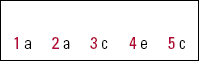
| 1 | a | 2 | a | 3 | c | 4 | e | 5 | c |




eLetters
No eLetters have been published for this article.