




No CrossRef data available.
Article contents
What was the impact of the introduction of extracardiac completion for a single center performing total cavopulmonary connections?
Published online by Cambridge University Press: 20 January 2005
Abstract
Background: Creation of an extracardiac cavopulmonary connection has been proposed as a superior alternative to the lateral intracardiac tunnel for the completion of total cavopulmonary connection. Methods and results: We made a retrospective review of our experience with 125 patients undergoing a total cavopulmonary connection between June 1994 and January 2003. Our experience with the extracardiac connection for completion began in 1999. Since 1994, we have constructed an intracardiac tunnel in 50 patients, and an extracardiac connection in 75. Of the total number, 83 had undergone an earlier partial cavopulmonary connection. Additional intracardiac procedures were performed in 43 patients at time of completion, in 25 of those undergoing extracardiac completion, and in 18 of the patients having an intracardiac procedure. The mean size of the tube used for completion was 19 mm. The mean cross-clamp time for placement of the intracardiac tunnel was 77 min, with a median of 80.5 min, and a mean cardiopulmonary bypass time of 139 min, with a median of 131 min. For construction of the extracardiac connection, a mean cross-clamp time in 24 of the 75 patients was 54 min, with a median of 54 min. Mean cardiopulmonary bypass time for all the patients with an extracardiac connection was 100 min, with a median of 88 min. Reoperations were needed in 10 patients, 6 having intracardiac and 4 extracardiac procedures. Of these, 5 were early and 5 late, including one take down. None of the patients died after these interventions. Taken overall, 8 patients died, with 5 early deaths. In the multivariable analysis, cardiopulmonary bypass time of more than 120 min, atrioventricular valvar replacement, and banding of the pulmonary trunk prior to the total cavopulmonary connection, all reached statistical significance for early death, whereas only heterotaxy syndrome remained as the sole risk factor for late death. There was no significant difference in survival between the modifications used. Discussion: Whereas we could not identify any clinical superiority for the extracardiac approach in the short-term, the concept of extracardiac completion has helped to simplify the overall procedure. Longer follow-up will be required to elucidate any potential advantages.
Keywords
Information
- Type
- Original Article
- Information
- Copyright
- © 2004 Cambridge University Press
Functionally univentricular hearts suffer from the load of pumping both the pulmonary and the systemic circulations.1 Therapeutic operative strategies, therefore, are directed at shortening the period of ventricular volume overload by transforming the circulations to an arrangement in series.2 This is currently achieved by the technique of total cavopulmonary connection, performed either by means of an intracardiac tunnel, or an extracardiac connection.3, 4
Creation of an extracardiac connection was initially proposed for patients with anomalies of the intra atrial anatomy, such as pulmonary and systemic venous return, an atretic or dysplastic left atrioventricular valve, or complex malformations with common atrioventricular valve.5 In patients with failing Fontan circulations, use of the extracardiac connection, when combined with radiofrequency ablation of intraatrial reentry tachycardias, has also produced favourable results.6, 7 An extracardiac connection may offer other distinct advantages in treating functional univentricular hearts, since atrial suture lines and formations of major scars, as well as atrial overdistension by high systemic venous pressure, are all avoided.8 In addition, it is reported that use of the extracardiac tube optimises the dynamics of flow.9 The advantage of avoiding cardiopulmonary bypass, however, remains as yet unproven.10, 11 In terms of size of the conduit, a tube of at least 17 mm diameter is considered to be sufficient for patients of all ages, even up to adulthood.12, 13
To date, however, there are relatively few reports describing the short to mid-term results following creation of extracardiac connections. We have been impressed, nonetheless, by the concept, so since 1999, the majority of patients undergoing surgical intervention for functionally univentricular hearts have been treated with an extracardiac approach. In this retrospective and non-randomized study, we have evaluated the factors which influenced decision making for an extracardiac approach, described our evolving experience, and determined the immediate differences in outcome.
Patients and methods
From June 1994 to January 2003, we have constructed a total cavopulmonary connection in 125 patients with functionally univentricular hearts at the German Heart Centre, Munich. We have chosen the starting point of 1994 since our institutional policy was changed at that time, and modified Fontan operations were gradually abandoned. For this study, we have excluded from analysis those patients with other modifications of the Fontan procedure, including only those in whom we constructed either an extracardiac connection or an intracardiac tunnel, or those patients who required late conversion to an extracardiac or intracardiac modification after an initial classical Fontan procedure. Over the period of study, only three patients were treated with other modifications of the Fontan approach in 1994, and two in 1995.
Of the patients, 84 had a dominant left ventricle, and 41 a dominant right ventricle. Among these, 22 had classical tricuspid atresia, 4 had hypoplastic left heart syndrome, and 6 had isomerism of the atrial appendages, or heterotaxy syndrome. Demographic data are summarized in Table 1.
Table 1. Demographic data.

Of the overall group of 125 patients, 122 had had multiple previous operations, with a mean of 2 per patient. A previous bidirectional partial cavopulmonary connection had been constructed in 83 patients. The mean age at construction of the partial cavopulmonary connection was 33.8 months, with a range from 5 to 166 months, and a median of 19 months. The mean time from the partial to the total cavopulmonary connection was 28 months, with a range from 0.5 to 105.4 months, and a median of 18.2 months. In 20 patients, the pulmonary trunk had been banded as an isolated procedure prior to the total cavopulmonary connection, while 20 had undergone banding along with a subsequent partial cavopulmonary connection, and 66 had undergone initial construction of a systemic-to-pulmonary arterial shunt.
Variables tested for influence on early and late survival are shown in Table 2.
Table 2. Variables tested (multivariate analysis).

For completion of total cavopulmonary connection, we approached through a median sternotomy, using conventional cardiopulmonary bypass with either mild hypothermia at 32°C in patients without cross-clamping of the aorta, or moderate hypothermia at 28°C in patients with cross-clamping. When performing the extracardiac procedure, the operation was always performed on the beating heart. For construction of intracardiac tunnels, we cross-clamped the aorta and used crystalloid cardioplegic solution at a dosage of 40 ml/kg of body weight. For both the intracardiac and extracardiac procedures, we used a nonringed polytetrafluroethylene (GORE-TEX®, W.L. Gore & Assoc., Flagstaff, AZ) graft. The decision to use either an extracardiac connection or an intracardiac tunnel was based on the size of the pulmonary arteries, and therefore on the weight of the patient. In the beginning of our experience with the extracardiac approach, in 1999, only patients weighing around 15 kg were considered suitable for an extracardiac connection. Our criterions have changed over time, however, and we now use an extracardiac tube even in patients weighing 10 kg.
We believe that the initial step in constructing the extracardiac connection should be the anastomosis with the pulmonary arteries. This anastomosis is more demanding, and the position of the tube will influence its path around cardiac structures towards the inferior caval vein.
Before insertion of the extracardiac tube, the inferior caval vein and the pulmonary arteries are widely mobilized, and clamps are placed distally to the right and towards the left pulmonary artery. In patients weighing less than 15 kg, with pulmonary arteries varying in diameter between 6 and 8 mm, we found it necessary to incise the antero-inferior surface of the right pulmonary artery from the take-off of the upper right lobe artery as far as possible towards, or just past, the area of the pulmonary trunk. If needed, this allowed an even enlargement of the pulmonary pathway. Most importantly, additional incisions were required to enlarge the site of the anastomosis (Fig. 1). The borders of the pulmonary arteries could then bulge out to accommodate the larger tube. The tube was then cut slightly in an oblique fashion and anastomosed with a 6-0 or 7-0 running suture. If necessary, an additional short incision was made from the site of the anastomosis towards the partial cavopulmonary connection.

Figure 1. Top views and cross-sections of a step by step approach for anastomosis of a larger GORE-TEX® tube with the pulmonary arteries. Note how the borders of the pulmonary arteries curve slightly out after additional incisions.
Following completion of the pulmonary arterial anastomosis, we divided the inferior caval vein, taking care to preserve a large cuff of atrial tissue. After releasing the clamps at both pulmonary arteries, and allowing the extracardiac tube to fill gradually, the stretched tube was positioned towards the inferior caval vein. The tube as a whole was subsequently shortened, allowing a slight bend around the right-sided cardiac structures. We always trimmed the tube at its lateral aspect, permitting an undistorted and unobstructed anastomosis with the preserved cuff of atrial tissue just adjacent to the inferior caval vein (Fig. 2).

Figure 2. Top view of the inferior anastomosis with the GORE-TEX® tube. Note how a lateral trimming of the tube allows an undistorted placement after anastomosis with the inferior caval vein and adjacent atrial tissue.
In the meanwhile, we had commenced rewarming of the patients, and cardiopulmonary bypass was gradually discontinued. Transpulmonary gradients and saturations of oxygen were checked, and transoesophageal echocardiography was always performed.
Our surviving patients are seen routinely at intervals of three to six months by our paediatric cardiologists in their outpatient clinics. Ventricular function, and atrioventricular valvar regurgitation are assessed by echocardiography, and a 12-lead electrocardiogram is recorded. When assessing these findings, we divided the patients into those with sinus rhythm, ectopic atrial rhythm, atrioventricular escape rhythm, or pacemaker dependent rhythm. Atrioventricular nodal function was measured in terms of the PR interval. First degree atrioventricular block was considered present when the PR interval was longer than 150 ms in children younger than 12 years, longer than 180 ms from 10 to 15 years of age, and longer than 200 ms in adolescents and adults older than 15 years. We defined the Mobitz and Wenckebach variants of second degree atrioventricular block, and complete atrioventricular block, on the basis of the electrocardiographic tracings. Tachycardiac events were assessed only if reported in the medical history.
All patients received heparin in the early post-operative period, with the aim of establishing a partial thromboplastin time of 40 to 60 s. When it proved possible to use oral anticoagulation, we commenced treatment with warfarin, aiming to achieve an international normalized ratio of 3.5 to 4.0. Patients, or parents respectively, were generally taught to use a self-testing apparatus (CoaguCheck®, Roche Diagnostics, Mannheim, Germany).
The variables tested for their influence on the outcomes of the procedures are listed in Table 2. Early or late, or combined early and late, failure of the Fontan circuit was defined as “take-down” or death, and served as one of the parameters of outcome. We eliminated the influence of early mortality by defining late failure as the period beginning 30 days after the completion of the procedure. Survivors were censored at the time of last follow-up. Estimated actuarial survival, and freedom from failure, was determined by the Kaplan-Meier method. Significance during univariable analysis was assessed by the log-rank test for late and total outcomes, and the chi-square test was used to assess the likelihood ratio for early outcomes. For multivariable analysis, we used the Cox proportional-hazard regression model to establish the variables that were independently predictive of late and total survival. For outcomes during the early postoperative period, we performed stepwise logistic regression analysis. Hazard ratios, and odds ratios with 95% confidence interval, were constructed for the significant multivariable predictors. Final models were derived by the forward stepwise selection procedure. Those variables having a level of significance less than 0.1 in the univariable analyses were entered as candidates into the Cox and multiple logistic regression models. A value less than 0.05 was required for a variable to be retained in the equation. All reported p values are 2-tailed. Statistical analysis was performed by means of the SPSS software package (Version 10.1, SPSS, Inc., Chicago, IL, USA). Data are presented as means plus or minus the standard error of the mean, or standard deviations, as indicated.
Results
In 50 of our patients, we constructed an intracardiac tunnel, while an extracardiac connection was used in 75 patients. The sizes of the extracardiac tubes ranged from 16 to 22 mm, with a mean of 18.9 mm, and are shown in Figure 3. In the initial period, we implanted two tubes of 16 mm diameter. These patients weighed 14.9 kg, and 16.7 kg, respectively.

Figure 3. The size of the extracardiac conduit in relation to the weight of the patients.
Since 1999, we have constructed an intracardiac tunnel in 19 patients, who were small, with a mean weight of 12.8 kg, a range from 7.4 to 43.5 kg, and a median of 11.1 kg. Their mean height was 89.1 cm, with a range from 74 to 163 cm, and a median of 87.0 cm. Their mean age was 35 months, with a range from 12.6 to 164 months, and a median of 25.3 months. For those having an intracardiac tunnel, we included a Damus-Kaye-Stansel procedure in one, atrioventricular valvar plasties in five, closure of an atrioventricular valve in one, and atrioseptectomy in another patient. Since August 2001, all patients have received an extracardiac connection, even those weighing as little as 10 kg.
Additional intracardiac procedures were performed in 43 patients at the time of completion. Of these, 18 had intracardiac, and 25 extracardiac completions. Plasties on the pulmonary artery were performed in 36, repair of atrioventricular valves in 18, and revision of the partial cavopulmonary connection in 2 patients. Fenestrations were performed in a total of 31 patients, but only 8 in combination with an extracardiac connection. Since June 2001, we have not performed any fenestrations. In those with intracardiac tunnels, 5 fenestrations were subsequently closed with an occluder, and one surgically, whereas two patients with an extracardiac connection had fenestrations closed, one by intervention and one surgically.
Times for cross-clamping and cardiopulmonary bypass varied. The mean cross-clamp time for an intracardiac tunnel was 77 min, with a range of 9 to 136 min, and a median of 80.5 min. The mean time for cardiopulmonary bypass was 139 min, with a range of 81 to 265 min, and a median of 131 min. For 24 of the 75 patients with an extracardiac connection, the mean cross-clamp time was 54 min, with a range of 11 to 124 min, and a median of 54 min. The mean period of cardiopulmonary bypass for all the patients with an extracardiac connection was 100 min, with a range of 33 to 256 min, and a median of 88 min.
Statistical analysis is depicted in Table 3. In the multivariable analysis, a period of cardiopulmonary bypass longer than 120 min, replacement of an atrioventricular valve, and banding of the pulmonary trunk prior to the total cavopulmonary connection, all reached statistical significance for early failure, whereas only the heterotaxy syndrome remained as the sole risk factor for late, and combined early and late, failure. No differences could be detected when Kaplan-Meier estimates were made of the probability of late survival with a total cavopulmonary connection as a function of the extra and intracardiac modifications (Fig. 4 – log-rank test, p = 0.443).
Table 3. Statistical results – predictors for failure.


Figure 4. Kaplan-Meier estimates of the probability of late survival with a total cavopulmonary connection as a function of the extra- and intracardiac modifications ([squarf ][squarf ][squarf ]: intracardiac tunnel).
In those with intracardiac tunnels, the mean time for intubation time was 65 h, with a range of 7 to 500 h, and a standard deviation of 88.3. In those with extracardiac tubes, the mean intubation time was 52 h, with a range of 7 to 528 h, and a standard deviation of 92.4. The duration of pleural effusions did not reach statistical difference between the groups, with a mean of 4.7 days, a range of 1 to 20 days, and a standard deviation of 3.9 for those having an intracardiac tunnel, and a mean of 5.4 days, with a range of 1 to 45 days, and a standard deviation of 6.9 for those with extracardiac tubes. In similar fashion, no differences were found in the incidence of arrhythmias.
Reoperations were needed in 10 patients, 6 having intracardiac tunnels and 4 extracardiac tubes. Of these, 5 were early, and 5 late, including one “take-down”. Reasons for reintervention within the first 30 days postoperatively were stenoses at the site of the anastomosis with the pulmonary arteries in two, and kinking of an extracardiac connection, with consecutive obstruction at the pulmonary arteries, in two. Late reinterventions followed for pulmonary arteria stenoses in two, obstructions at the site of the inferior caval vein in two, and atrioventricular valvar closure with reduction in the size of the intracardiac tunnel in one. None of the patients died after these reinterventions. In one patient, nonetheless, a successful cardiac transplant was needed.
No late thrombembolic events were observed. Of the entire cohort of 125 patients, 8 died, with 4 each dying in those having intracardiac tunnels or extracardiac tubes. In 5 instances, the deaths occurred early, specifically in one patient with the heterotaxy syndrome undergoing atrioventricular valvar replacement with intraoperative myocardial failure, one with double outlet right ventricle and myocardial failure, one with a dominant left ventricle and totally anomalous pulmonary venous connection and prolonged cardiopulmonary bypass with intraoperative myocardial failure, one with double inlet left ventricle and elevated pulmonary arterial resistance, and the final patient with an unbalanced atrioventricular septal defect and elevated pulmonary arterial resistance. There were 3 late deaths, occurring in two patients with heterotaxy syndromes, one dying of sepsis and the other suddenly, and the other patient having double outlet right ventricle and dying with sepsis.
Discussion
Late problems with the Fontan circulation are partly caused by chronic elevation of pressure in the systemic venous pathways, atrial distension, and impaired ventricular function. As a result, protein-loosing enteropathy, progressive loss of sinus rhythm, thrombembolic complications, and limited exercise capacity are reported. Because of these problems, in recent years creation of a direct cavopulmonary connections has gained increasing interest.2 One of the goals of this modification is to achieve unloading of volume earlier in life in order to preserve ventricular function and to improve long-term prognosis.14 Creation of the total cavopulmonary connection has already been shown to produce clinical improvement when used as conversion of former Fontan circulations.15, 16
For those using the total cavopulmonary connection its good long-term results after constructions of a lateral intracardiac tunnel now provide the comparison for other surgical alternatives.17 In this light, it remains a matter of debate as to whether construction of an extracardiac connection for total bypass of the right heart will translate into better long-term results. Our surgical experience may serve to illuminate this discussion.
It is assumed that initial construction of a partial cavopulmonary connection, and subsequent extracardiac completion, avoids exposing the right atrium to elevated systemic venous pressure, does not endanger the function of the sinus node by surgical manipulations, and limits atrial suture lines and scarring commonly seen subsequent to creation of an intracardiac tunnel.8 Amodeo and colleagues18 found that over nine-tenths of their 60 patients with an extracardiac tube were free from arrhythmia after five years of follow-up. Petrossian and associates,19 describing their experience with 51 patients, found that transient sinus nodal dysfunction developed in less than one-tenth in the early postoperative period. Shirai and co-workers,20 in contrast, observed sinus nodal dysfunction in almost half of a smaller cohort of 16 patients with an extracardiac tube. All these retrospective studies, however, lacked a group of patients with an intracardiac tunnel for comparison. Azakie and colleagues21 have matched the two groups with an intracardiac tunnel and an extracardiac tube, and identified a reduced risk of early and mid-term atrial arrhythmias for those with an extracardiac connection. In our patients, nonetheless, we did not find a reduced risk for arrhythmias in patients having an extracardiac connection as compared to an intracardiac tunnel. It remains unclear to what extent the surgical staging approaches, either the hemi-Fontan procedure or the partial cavopulmonary connection, and also timing of the staging operation, may be additional determinants for the incidence of arrhythmia. Only Cohen and colleagues22 have reported that avoidance of surgery near the sinus node, when comparing hemi-Fontan versus partial cavopulmonary connection, had no significant effect on the development of early sinus nodal dysfunction in the short-term. We believe, however, that it may be too early to draw any definitive conclusions, since very few patients have symptomatic tachycardias within the first 10 years after completion. These findings are supported by a recent publication of Stamm and colleagues on a large cohort of patients,17 and a long-term study carried out at our institution.23
Another potential advantage of an extracardiac tunnel could be limitations or avoidance of cardiopulmonary bypass. Prolonged cardioplegic arrest and cardiopulmonary bypass times are associated with increased risk of early postoperative death or failure.24 Every effort should be made to limit or avoid the use of cardioplegic arrest, and to shorten the duration of cardiopulmonary bypass at the time of completion of the cavopulmonary connection. This is accomplished by performing all necessary intracardiac procedures, such as atrioseptectomy, valvar repair, or relief of obstructions to the ventricular outflow tract, at the time of the partial cavopulmonary connection. It ensures that the total cavopulmonary connection is limited to placement of the extracardiac tube alone, along with pulmonary arterioplasty if needed. Over the course of our experience, we have seen significant reductions in the lengths of our periods of cardiopulmonary bypass, and we have recently achieved times as low as 33 min. In selected cases, the extracardiac connection can even be constructed without the use of cardiopulmonary bypass.10, 11, 25
With growing confidence and expertise, we have changed our criterions for construction of the extracardiac tube. We have shown that conduits of 18 mm diameter can safely be placed in children weighing 10 kg, implying that the third-stage cavopulmonary connection can be performed at a young age. Since 2002, only 2 of our patients have not been treated with an extracardiac tube, each weighing under 9 kg. In the beginning of our experience, we probably misjudged the influence of the weight of the patient, and therefore the sizes of the inferior caval vein, pulmonary arteries, and the extracardiac tube. We now believe that the decision depends primarily on the size of the pulmonary arteries. In children weighing not less than 10 kg, the pulmonary arteries usually have a diameter of around 6 to 8 mm. In our experience, this is large enough to accommodate a tube of 18 mm. Incision of the lower surface of the pulmonary artery, right up to the bifurcation, allows enlargement of the pulmonary arterial pathway, should this be necessary. In case of a mismatch with the inferior caval vein, we found that the use of an adequate cuff of atrial tissue permits an undistorted anastomosis with the GORE-TEX® tube. Our surgical experience, therefore, is at variance with other studies that demanded a weight of at least 15 kg for insertion of a tube of at least 18 mm, or where conduits having diameters of less than 18 mm were implanted in small children.13, 18, 22, 26, 27 Our clinical experience over the short term, however, has not substantiated the generally supported claim that the diameter of the tube should not be oversized by more than one-fifth of the diameter of the inferior caval vein.9, 13 Whether our current approach will result in optimal flow and hydrodynamics, and avoid reoperations over the long term, will require further investigations and longer follow-up.
Regarding the issue of fenestration, our experience is in line with recent findings.8, 29 We found no difference in postoperative outcome in patients irrespective of fenestration, especially in regard to duration of pleural effusions. It is our belief, therefore, that atrial fenestration is dispensable in the majority of the cases treated with an extracardiac connection.
At our institution, heparin is started 24 h post-operatively in all patients after the total cavopulmonary connection. Once the patient is adequately heparinized, and oral medication is indicated, we use warfarin, aiming to achieve an international normalized ratio ranging from 3.5 to 4.5. Along with others30–32 we believe that this approach provides the most effective prophylactic therapy. In a recent analysis on the important issue of potential formation of intracardiac thrombus, it was found that 9 of the 52 reported cases had had construction of a lateral tunnel, with formation of thrombus in one-third.33 To date, however, the role of long-term anticoagulation remains a matter of controversy.34, 35 The findings of Coon and colleagues34 suggest that formation of thrombus may not specifically be related to the type of modification performed. Prospective trials seem warranted to detail the role of transoesophageal echocardiography in detection of thrombus, the potential benefits of routine anticoagulation, and to make comparison of the creation of an intracardiac tunnel versus an extracardiac connection for completion of the total cavopulmonary connection.
In the meantime, it is likely that the approaches will depend on the preference of the individual surgeons. In reviewing our earlier experience, we found that the median age at the time of “unloading” was rather high, with a median of 19 months. We currently favour performing a partial cavopulmonary connection within 6 months, and completing the total cavopulmonary connection within 18 to 24 months. Even though, to date, creation of an extracardiac connection was not been shown to be superior to an intracardiac tunnel in regard to mortality and morbidity, we believe that the concept of the extracardiac tube simplifies the operative procedure, and that its benefits might become obvious over the longer term.
References
Fontan F, Kirklin JW, Fernandez G, Costa F, Naftel DC, Tritto F, Blackstone EH. Outcome after a “perfect” Fontan operation. Circulation 1990; 81: 1520–1536.Google Scholar
Pizarro C, de Leval MR. Surgical variations and flow dynamics in cavopulmonary connections: a historical review. Semin Thorac Cardiovasc Surg Pediatr Card Surg Annu 1998; 1: 53–60.Google Scholar
de Leval MR, Kilner P, Gewillig M, Bull C. Total cavopulmonary connection: a logical alternative to atriopulmonary connection for complex Fontan operations. J Thorac Cardiovasc Surg 1988; 96: 682–695.Google Scholar
de Leval MR. The Fontan circulation: What have we learned? What to expect? Pediatr Cardiol 1998; 19: 316–320.Google Scholar
Marcelletti CF, Iorio FS, Abella RF. Late results of extracardiac Fontan repair. Semin Thorac Cardiovasc Surg Pediatr Card Surg Annu 1999; 2: 131–142.Google Scholar
Setty AP, Finuncane K, Skinner JR, Kerr AR. Extracardiac conduit with a limited MAZE procedure for the failing Fontan with atrial tachycardias. Ann Thorac Surg 2002; 74: 1992–1997.Google Scholar
Marcelletti CF, Hanley FL, Mavroudis C, McElhinney DB, Abella RF, Marianeschi SM, Seddio F, Reddy VM, Petrossian E, de la Torre T, Cologrande L, Backer CL, Cipriani A, Iorio FS, Fontan F. Revision of previous Fontan connections to total extracardiac cavopulmonary anstomosis: A multicenter experience. J Thorac Cardiovasc Surg 2000; 119: 340–346.Google Scholar
Vouhe PR. Fontan completion: intracardiac tunnel or extracardiac conduit? J Thorac Cardiovasc Surg 2001; 49: 27–29.Google Scholar
Lardo AC, Webber SA, Friehs I, del Nido PJ, Cape EG. Fluid dynamic comparison of intra-atrial and extracardiac total cavopulmonary connections. J Thorac Cardiovasc Surg 1999; 117: 697–704.Google Scholar
Burke RP, Jacobs JP, Ashraf MH, Aldousany A, Chang AC. Extracardiac Fontan operation without cardiopulmonary bypass. Ann Thorac Surg 1997; 63: 1175–1177.Google Scholar
Yetman AT, Drummond-Webb J, Fiser WP, Schmitz ML, Imamura M, Ullah S, Gunselman RJ, Chipman CW, Johnson CE, Van Devanter SH. The extracardiac Fontan procedure without cardiopulmonary bypass: technique and intermediate-term results. Ann Thorac Surg 2002; 74: S1416–S1421.Google Scholar
Mainwaring R, Lamberti JJ. Extracardiac conduit fontan for children with heterotaxy and functionally single ventricle. Cardiol Young 1998; 8: 479–485.Google Scholar
Alexi-Meskishvili V, Ovroutski S, Ewert P, Dähnert I, Berger F, Lange PE, Hetzer R. Optimal conduit size for extracardiac Fontan operation. Eur J Cardio-thorac Surg 2000; 18: 690–695.Google Scholar
Hess J. Long-term problems after cavopulmonary anastomosis: diagnosis and management. Thorac Cardiov Surg 2001; 49: 98–100.Google Scholar
Kreutzer J, Keane JF, Lock JE, Walsh EP, Jonas RA, Castaneda AR, Mayer JE Jr. Conversion of modified Fontan procedure to lateral atrial tunnel cavopulmonary anastomosis. J Thorac Cardiovasc Surg 1996; 111: 1169–1176.Google Scholar
McElhinney DB, Reddy VM, Moore P, Hanley FL. Revision of previous Fontan connections to extracardiac or intraatrial conduit cavopulmonary anastomosis. Ann Thorac Surg 1996; 62: 1276–1282.Google Scholar
Stamm C, Friehs I, Mayer JE Jr, Zurakowski D, Triedman JK, Moran AM, Walsh EP, Lock JE, Jonas RA, Del Nido PJ. Long-term results of the lateral tunnel Fontan operation. J Thorac Cardiovasc Surg 2001; 121: 28–41.Google Scholar
Amodeo A, Galletti L, Marianeschi S, Picardo S, Giannico S, Di Renzi P, Marcelletti C. Extracardiac Fontan operation for complex cardiac anomalies: seven years' experience. J Thorac Cardiovasc Surg 1997; 114: 1020–1031.Google Scholar
Petrossian E, Reddy VM, McElhinney DB, Akkersdijk GP, Moore P, Parry AJ, Thompson LD, Hanley FL. Early results of the extracardiac conduit Fontan operation. J Thorac Cardiovasc Surg 1999; 117: 688–696.Google Scholar
Shirai LK, Rosenthal DN, Reitz BA, Robbins RC, Dubin AM. Arrhythmias and thrombembolic complications after the extracardiac Fontan operation. J Thorac Cardiovasc Surg 1998; 115: 499–505.Google Scholar
Azakie A, McCrindle BW, Van Arsdell G, Benson LN, Coles J, Hamilton R, Freedom RM, Williams WG. Extracardiac conduit versus lateral tunnel cavopulmonary connections at a single institution: impact on outcomes. J Thorac Cardiovasc Surg 2001; 122: 1219–1228.Google Scholar
Cohen MI, Bridges ND, Gaynor JW, Hoffman TM, Wernovsky G, Vetter VL, Spray TL, Rhodes LA. Modifications to the cavopulmonary anastomosis do not eliminate early sinus node dysfunction. J Thorac Cardiovasc Surg 2000; 120: 891–900.Google Scholar
Weipert J, Noebauer C, Schreiber C, Kostolny M, Zrenner B, Wacker A, Hess J, Lange R. Occurrence and management of atrial arrythmia after long-term Fontan circulation. J Thorac Cardiovasc Surg 2004; 127: 457–464.Google Scholar
Gentles TL, Mayer JE Jr, Gauvreau K, Newburger JW, Lock JE, Kupferschmid JP, Burnett J, Jonas RA, Castaneda AR, Wernovsky G. Fontan operation in five hundred consecutice patients: factors influencing early and late outcome. J Thorac Cardiovasc Surg 1997; 114: 376–391.Google Scholar
McElhinney DB, Petrossian E, Reddy VM, Hanley FL. Extracardiac conduit Fontan procedure without cardiopulmonary bypass. Ann Thorac Surg 1998; 66: 1826–1828.Google Scholar
Uemura H, Yagihara T, Kawahira Y, Yoshikawa Y, Kitamura S. Total cavopulmonary connection in children with body weight less than 10 kg. Eur J Cardio-thorac Surg 2000; 17: 543–549.Google Scholar
Tokunaga S, Kado H, Imoto Y, Masuda M, Shiokawa Y, Fukae K, Fusazaki N, Ishikawa S, Yasui H. Total cavopulmonary connection with an extracardiac conduit: experience with 100 patients. Ann Thorac Surg 2002; 73: 76–80.Google Scholar
Thompson LD, Petrossian E, McElhinney DB, Abrikosova NA, Moore P, Reddy VM, Hanley FL. Is it necessary to routinely fenestrate an extracardiac fontan? J Am Coll Cardiol 1999; 34: 539–544.Google Scholar
Atik E, Ikari NM, Martins TC, Marcial M-B. Fontan operation and the cavopulmonary technique. Immediate and late results according to the presence of atrial fenestration. Arq Bras Cardiol 2002; 78: 162–166.Google Scholar
Jahangiri M, Kreutzer J, Zurakowski D, Bacha E, Jonas RA. Evaluation of hemostatic and coagulation factor abnormalities in patients undergoing th Fontan operation. J Thorac Cardiovasc Surg 2000; 120: 778–782.Google Scholar
Seipelt RG, Frank A, Vazquez-Jimenez JF, Hanrath P, von Bernuth G, Messmer BJ, Muhler EG. Thromboembolic complications after Fontan procedures: comparison of different therapeutic approaches. Ann Thorac Surg 2002; 74: 556–562.Google Scholar
Sugimoto S, Takagi N, Hachiro Y, Abe T. High frequency of arrythmias after Fontan operation indicates earlier anticoagulant therapy. Int J Cardiol 2001; 78: 33–39.Google Scholar
Balling G, Vogt M, Kaemmerer H, Eicken A, Meisner H, Hess J. Intracardiac thrombus formation after the Fontan operation. J Thorac Cardiovasc Surg 2000; 119: 745–752.Google Scholar
Coon PD, Rychik J, Novello RT, Ro PS, Gaynor JW, Spray TL. Thrombus formation after the Fontan operation. Ann Thorac Surg 2001; 71: 1990–1994.Google Scholar
Jacobs ML, Pourmoghadam KK, Geary EM, Reyes AT, Madan N, McGrath LB, Moore JW. Fontan's operation: is aspirin enough? Is coumadin too much? Ann Thorac Surg 2002; 73: 64–68.Google Scholar
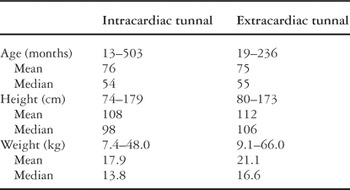
Table 1.
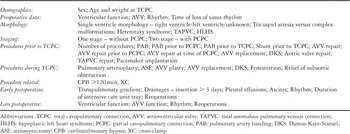
Table 2.

Top views and cross-sections of a step by step approach for anastomosis of a larger GORE-TEX® tube with the pulmonary arteries. Note how the borders of the pulmonary arteries curve slightly out after additional incisions.

Top view of the inferior anastomosis with the GORE-TEX® tube. Note how a lateral trimming of the tube allows an undistorted placement after anastomosis with the inferior caval vein and adjacent atrial tissue.

The size of the extracardiac conduit in relation to the weight of the patients.
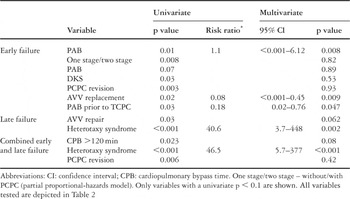
Table 3.

Kaplan-Meier estimates of the probability of late survival with a total cavopulmonary connection as a function of the extra- and intracardiac modifications ([squarf ][squarf ][squarf ]: intracardiac tunnel).
 You have
Access
- 11
- Cited by