

French ambassadors in England
Anglo-French relations in the early modern period can be understood through a rich range of cultural artefacts and purely historical sources. Among the latter, the reports of French visitors, and especially of the resident ambassadors, have always featured prominently, though perhaps excessively pillaged for information on the inner politics of the country they were observing. Essentially devised to maintain a sort of dialogue between their masters, they provide sometimes very oblique insights into their host country.Footnote 1 The reports of Imperial and Spanish ambassadors (summarized in the great series of Calendars Footnote 2) have in many ways shaped our understanding of high politics in the period but no equivalent was undertaken for French archives. However, the French publication of the despatches of Jean du Bellay, Charles de Marillac, and Odet de Selve have thrown a crucial light on Anglo-French relations in the first half of the sixteenth century.Footnote 3 Meanwhile, the 1550s is clearly dominated by the extensive archives of the Noailles brothers during their embassies between 1553 and 1559.Footnote 4
Between that period and the equally rich correspondence of La Mothe Fenelon in the 1570s,Footnote 5 however, there is something of a gap, with only fragments of the despatches from Paul de Foix thought to survive.Footnote 6 As for Michel de Castelnau-Mauvissière, Fénelon's successor from 1575 to 1585, his correspondence is preserved only in parts.Footnote 7 For one French ambassador, it seemed that nothing survived. Armand Baschet, in his survey and transcripts of French ambassadors’ reports, thought that there was nothing to be found for Michel de Seure, who served as French ambassador from early 1560 to early 1562, a crucial period in the re-adjustment of relations between the two countries and Scotland.Footnote 8 In fact, an incomplete series of de Seure's despatches from late 1560 onwards had survived, though in a later copy, and is presented in this publication along with his correspondence with the queen regent of Scotland.
Michel de Seure served as French ambassador at a difficult and turbulent time in Anglo-French relations, marked by the threat of Scottish–French claims to the English throne, the French military presence in Scotland, and the liquidation of that influence by collaboration between the government of Elizabeth I and the Scottish opposition. His despatches thus provide an invaluable insight into this period.
Michel de Seure: the making of an ambassador
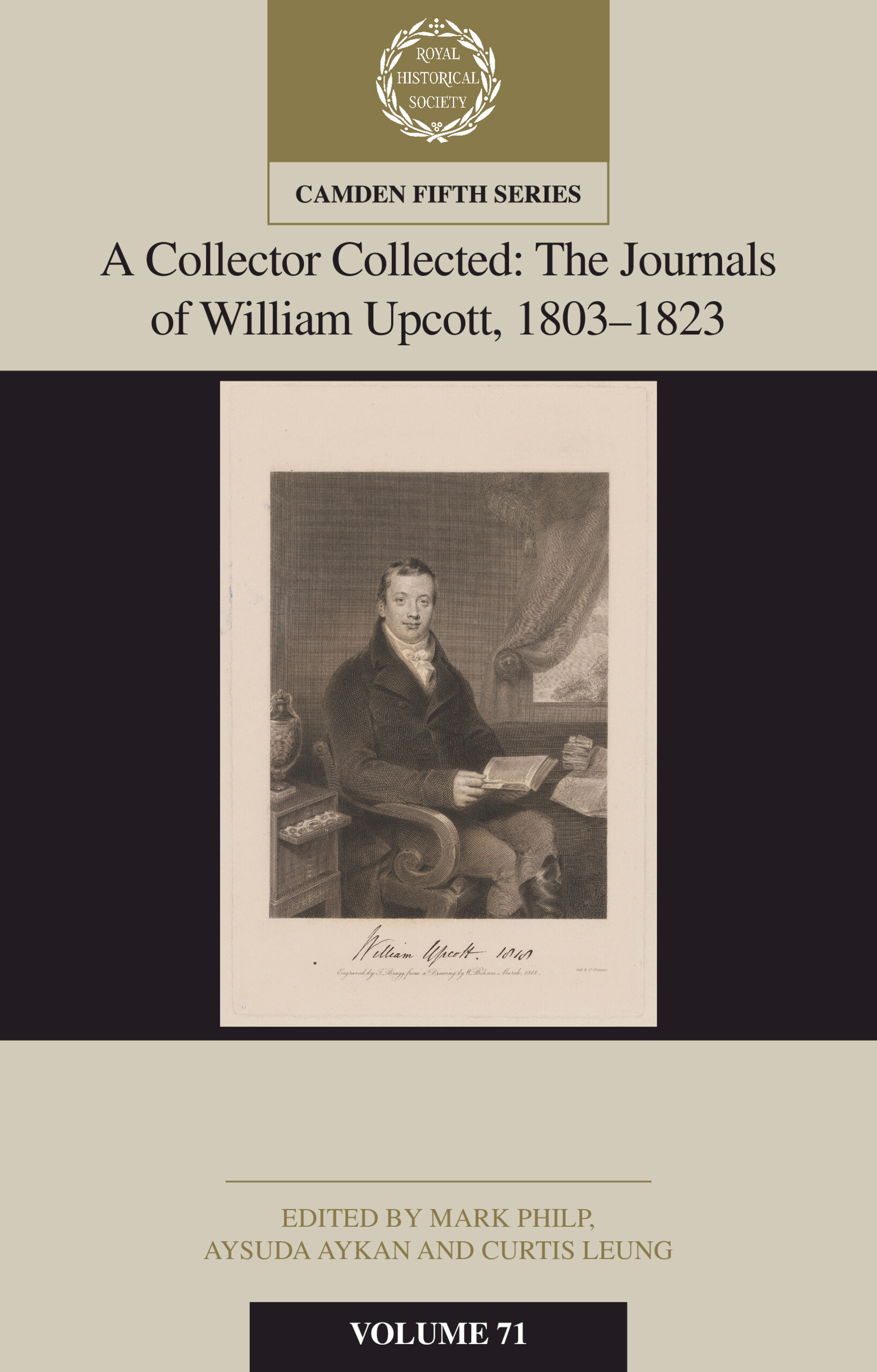
Michel de Seure,Footnote 9 chevalier of Saint John of Jerusalem, was in fact one of the more unusual French ambassadors in Tudor England. His varied experience marks him off from the more mainstream envoys, most of them clerics, lawyers, or courtiers, such as Jean du Bellay, Charles de Marillac, Odet de Selve, Jean Pot, sieur de Chémault, Claude de Laval, sieur de Boisdauphin, and the Noailles brothers. He had travelled widely and gained extensive knowledge of the world; when he was being recommended to the Pope by the papal nuncio in France in 1577, the latter stressed the fact not only that was he high in royal favour and with a lively mind but also that he had travelled on his master's affairs throughout the whole world.Footnote 10
What do we know of his background? Born in the pays of Brie française, he was certainly a nobleman but of rather obscure standing. John Eliot in the later sixteenth century remarked on the numbers and valour of the nobility of Brie and on the courtesy of the people in general.Footnote 11 Genealogies usually note that he was the son of Antoine de Seure, seigneur de la Ville-au-Bois (parish of Lumigny) in Brie, and that his mother was Louise Verdelot, the daughter of Georges Verdelot, seigneur des Prez, and Catherine de Sailly, dame de Mersan.Footnote 12 This does not tell us much about his paternal family but it is important to remember the significance of his links with his mother's family, which was much better known. His cousins included another chevalier de Malte, Nicolas Verdelot (promoted 1546), whose brother was an homme d’armes of the king of Navarre's company in 1556 and was closely related to the family of the Champagnes, who included the comtes de Suze.Footnote 13 His father's ancestors, though they must have been noble, are obscure. The best clue here is that de Seure's armsFootnote 14 correspond exactly with those of an antecedent, Hue de Sèvre, seigneur de Sèvre (near Paris), buried in 1339 and whose tombstone was recovered in 1989.Footnote 15 Sibert's eighteenth-century researches on the knights of Saint-Lazare add that Michel's great-grandfather, Philippe de Seure, was buried at the church of Saint-Martin de Montmorency.Footnote 16 The main point is that the de Seures stemmed from the lesser nobility of the Parisian region and scarcely distinguished themselves before the sixteenth century.Footnote 17
Born at the latest by 1523, the first secure date of de Seure's life is his presentation as chevalier of Saint John of Jerusalem in 1539,Footnote 18 when he must have been at least sixteen according to the statutes of the order. His career was shaped by the military-religious orders. The Order of Saint Lazarus of Jerusalem, suppressed and absorbed into that of the Knights of Saint John of Jerusalem (Rhodes, later Malta) by the Papal Bull Cum Solerti in 1489, continued in France, based at Boigny (Loiret), though there were ongoing disputes with the Knights of Saint John. An attempt by Catherine de Medici to impose de Seure as Grand Prior of France failed in 1564,Footnote 19 but in that year he became Grand Master of the Order of Saint LazarusFootnote 20 in succession to Jean de Lévis-Charlus (thus reinforcing royal control of the order). In 1571 he was given the position of Grand Prior of Champagne in the Order of Saint John.Footnote 21
By the sixteenth century, the original requirement for members of the military-religious orders to take the three vows of poverty, chastity, and obedience had been relaxed, and marriage was permitted in some cases. There is no indication, however, that de Seure ever married. All the same, though it would be mistaken to regard him as some kind of chivalric monk in the twelfth-century mould, there was still a close relationship between the military orders and the crusading ideal. Many knights of the order were associated with naval war and Mediterranean galley fleets, especially when the order was finally fixed at Malta.Footnote 22 The brother of the second duc de Guise was François de Lorraine, Grand Prior of France and general of the galleys in 1557.
Nicolas Durand de Villegaignon, the adventurer and explorer of South America, had become a chevalier of the order in 1531 (he had been born in Provins in 1510 and was nephew to the then Grand Master, Philippe Villiers de l’Isle-Adam). An experienced naval commander by the 1540s (he published an account of the Emperor's Algiers expedition of 1541 in 1553), he commanded the French galley fleet sent to Scotland in 1548 to bring Mary Stuart to France, sailing north from Leith to Dumbarton to collect Mary.Footnote 23 This is the first known military/naval experience of de Seure, for we are told by Jean Beaugué of these galleys, ‘dont estoyent capitaines les seigneurs de Villegaignon et de Seure’. They also took part in the ejection of the English garrison from Inchkeith in June 1549.Footnote 24
De Seure's focus of activity in the 1550s was the Mediterranean.Footnote 25 In May–June 1551 he accompanied Gabriel d’Aramon, French ambassador to Suleiman the Magnificent, on his return journey to Constantinople.Footnote 26 De Seure was commanding a galiot in the small French squadron on this voyage, which sailed from Marseilles via the Balearic islands, initially to Algiers, in order to liaise with the Ottoman Pasha (called ‘king’ in contemporary accounts), al-Hassan, the son of Barbarossa. At first, the French were warmly received, but Hassan was a weak ruler soon to be displaced on orders from Constantinople and the encounter went badly wrong as a result of attempts made by Christian slaves to take refuge with the French fleet. Nicolas de Nicolay, the cosmographer, who was accompanying the expedition and wrote an account of it, relates that, despite de Seure's negotiations, the slave-owners were not pacified and the French had to make a run for it to Malta at a time when the island of Gozo was being attacked and devastated by the Turks.
The Grand Master, Jean d’Omède, persuaded the French to help with the defence of Tripoli by the garrison of the knights of Saint John, who had held it since 1530 but were under siege by Sinan Pasha and Dragut Bey. The siege was a disaster for the order, which was forced to surrender Tripoli. All that de Seure and Aramon could do was negotiate surrender terms with their Turkish allies. Some, including the Grand Master of the Order, blamed the French, though Nicolay claims that they were exonerated. He specifically described de Seure as a ‘gentilhomme de grande expérience et excellent jugement’. All the same, it is clear that the French policy of close relations with the sultan created an inevitable ambivalence towards the outposts of the order. De Seure returned with Jean Chesneau, another chronicler of Aramon's embassy, sent back to France by the ambassador.Footnote 27 He was then sent back with letters of Henri II to Aramon, then at Adrianople, and orders to persuade the Turks to attack the Emperor's fleet, ‘dont il eut fort bonne responce’.Footnote 28 As a result of this mission, the Turkish fleet under Sinan and Dragut attacked Apulia and the bay of Naples, sacking Reggio Calabria on 4 July 1552. Though the French galley fleet under La Garde failed to rendezvous with the Turks, the latter were able to defeat Doria's fleet on 5 August.Footnote 29 Whether de Seure was involved in the Franco-Turkish collaboration under Dragut Pasha on Corsica in 1553 is uncertain but, in view of his later activities in Corsica, seems likely.
In 1554, de Seure was charged with a sensitive mission to Renée de France, duchess of Ferrara and mother-in-law of the duc de Guise. Henri II had become alarmed by reports from Duc Ercole II of his wife's heretical leanings and sent de Seure to investigate. He was simply charged to observe and in fact he recommended his old colleague from Aramon's staff, Jean Chesneau, now no longer welcome to the new French envoy to the Porte, Michel de Codignac, as ‘contrôleur’ of her household.Footnote 30 However, he was soon followed by an Inquisitor, Mathieu Ory, and the duke of Ferrara lost no time in arresting his wife. She remained obdurate under threats and de Seure was astonished that she could ‘subir de si dures extrémités pour une affaire de doctrines’.Footnote 31 De Seure was again sent on mission to Ferrara in April–May 1556.Footnote 32
De Seure's real training as a resident ambassador before his appointment to England began soon afterwards and has left extensive evidence. He was made resident ambassador to Portugal in June 1557, a position which lasted only a little under two years.Footnote 33 His predecessor, Honorat de Caix, had been in post throughout the reigns of Francis I and Henri II and had become acclimatized. De Seure, on the other hand, not only found himself an ambassador at a difficult time but seems to have actively disliked the Portuguese, this despite the significant role of the military-religious orders in Portuguese public life. He seems to have thought life in Lisbon too expensive (ambassadors were always kept short of money) and the people not particularly friendly, though on his departure he promised on his return to Secretary Robertet de Fresnes ‘vous conter des belles dames de Portugal et des grans et magnificques tourneys qui s’y sont faictz depuis que y suis’.Footnote 34 On the other hand, his successor, Jean Nicot, was more agreeable to the Portuguese court and the suspicion remains that de Seure was too confrontational. Being an envoy at Lisbon at a time of war between France and Spain left the ambassador somewhat isolated and his communications subject to the vagaries of English piracy in the Atlantic and Bay of Biscay. His work also involved the pursuit of merchants from Brittany who were carrying on grain trading with Portugal in time of war.Footnote 35 Furthermore he felt cut off, anxious that he had not heard of the return of the Constable to the court of France and had not therefore congratulated him. He feared this would undermine (‘nuire’) his interests with the Constable.Footnote 36
In Portugal, French merchants were increasingly irked by the monopolies created by the Treaty of Tordesillas (1494) and the Papal Bull Ea quae of 1506; like the English, they saw no good reason for their exclusion from the Atlantic trade. Propositions had been made throughout the 1530s and 1540s for bypassing Portuguese control of the trade with South America, involving Portuguese renegades in contact with Jean du Bellay, Marguerite of Navarre, and Mme d’Etampes.Footnote 37 Then in 1557–1558 came the serious attempt at colonization and settlement at Rio de Janeiro, led by the chevalier de Villegaignon, of which André Thevet and Jean de Léry bear such conflicting witness.Footnote 38
The politics of Portugal were also delicate: King Sebastian had just succeeded to the throne at the age of three, under the regency of his formidable grandmother Catalina, Emperor Charles V's youngest sister, and then his uncle Cardinal Henrique; the child's own mother, Juana (the emperor's daughter), was serving as her brother Philip II's representative in Spain during his absence and was never to see her son again. As Seure was soon to observe, Queen Catalina ‘s’est monstré bien fort passionnee pour le Roy d’Espaigne’ in helping the silver fleet to transport its treasures into Spain.Footnote 39 Henri II needed to know what was going on in Lisbon, while French colonial activities at Rio de Janeiro were bound to be a cause of conflict. So de Seure closely monitored the arrival of the urgently awaited Indies fleet at Seville in November 1558, giving minute details on its cargo and suggesting that only by ill luck had the French ships from La Rochelle and Dieppe that had been waiting in ambush at Havana been thwarted and captured. With better fortune, he asserted, this crucial support for the Habsburg monarchy could be cut off.Footnote 40 He lost no time in formulating a strategy for France to undermine Spanish and Portuguese power in South America.Footnote 41 Other tasks involved transmitting news from China to the French court, as well as acting as a collector of ancient marbles for the cardinal of Lorraine.Footnote 42 He also took the trouble to write a treatise on the revenues of Portugal.Footnote 43
De Seure was one of a select few ambassadors in the sixteenth century whose recall was forced by the hostility of his hosts. By January 1559, he was asking the king to ‘pourvoir d’un successeur [. . .] ou qu’elle ayt volonté d’y en tenir ung ordinairement, parce que n’y puis gueres demeurer, à cause que ces seigneurs et gens de deça sont si contraires que à merveilles’.Footnote 44 In February 1559, ‘ces seigneurs si ennuyez de ma demeure envers eulx pour les raisons que votre grande prudence et divin jugement peult bien comprandre’.Footnote 45 But he was unrepentant, telling Secretary Robertet de Fresnes that
je suis gros de sçavoir quel diable ilz pouvoient alleguer contre moy [. . .] car c’est moy qui avoys toutes les raisons du monde de faire ce qu’ilz ont faict. Mais j’estime qu’ilz aient faict comme les chatz qui sont en amour ; ce que je diz est oultre le subson, car il ne leur estoit gueres honnest d’en parler veu qu’ilz n’en avoient nulle cause apparante.Footnote 46
The Constable intimated the recall of de Seure to the Portuguese regent on 28 January 1559.Footnote 47 Meanwhile his replacement by Jean Nicot was being talked of in Lisbon and this was not unwelcome to de Seure, since he regarded Nicot as a good friend.Footnote 48 His recall was minuted by the secretary of state with the face-saving formula that the ambassador needed to return to attend to his private affairs. Henri II's advisers, though they accepted that the ‘maulvaise volunté’ of the Portuguese made it impossible for de Seure to remain, noted that this ‘provient plus de la vigilance et soing’ rather than any ‘occasion que leur ayez donné de vous vouloir mal’.Footnote 49 De Seure left Lisbon in May aboard a Breton ship, delayed by bad weather until the 22nd, when he wrote to the Portuguese secretary of state that he would be leaving the next day.Footnote 50
De Seure had not waited in Portugal for Nicot's arrival, which was delayed by the English blockade of La Rochelle, forcing him to travel via Spain. His first audience was delayed until September.Footnote 51 By that time de Seure had reached La Rochelle, returned to court, and been sent immediately to Marseilles. By September he was at sea again, charged with the delicate task of overseeing the return of French fortresses in Corsica to the Genoese republic in accordance with the Treaty of Cateau-Cambrésis.Footnote 52 From Marseilles he reported in August on the difficulties with his colleague Jean Hurault de Boistaillé.Footnote 53
By August 1559, de Seure was reporting to the new regime dominated by the duc de Guise and the cardinal of Lorraine. Henri II's death and the accession of Francis II and Mary Stuart raised vast problems and dangers, not least for the newly re-established Anglo-French relations. De Seure was no sooner back from Corsica than he received a commission to replace Gilles de Noailles as ambassador in London. The reasons for the appointment of ambassadors in this period are seldom clear, though reliability and experience were obviously important. There is good reason to suppose that de Seure was regarded by the regime as more reliable than the Noailles brothers, who had helped to shape negotiations with England over the previous few years. The Spanish ambassador, Alvaro de Quadra, reported in February 1560 that Noailles had been a creature of the Constable and in June 1561 that de Seure was a strong partisan of the Guises.Footnote 54 It might mistakenly be thought that his combativeness in Portugal was seen as a recommendation by the new regime. In fact, it seems more likely (as will be seen below) that he was called in to pacify and win over Elizabeth at a difficult time.Footnote 55 After all, he was not recalled immediately on the change of regime in December 1560, even though that was expected, and was later to serve Henri III, described in 1583–1584 as ‘plus de Momorancy que de Guise’. Evidently, his patronage loyalties were not fixed, as we have seen in his anxiety to please the Constable on his brief return from captivity to France early in 1559.Footnote 56 That Brantôme thought that de Seure's appointment was strange given his role in religion is, in fact, a misreading of the text.Footnote 57
No doubt the Guise brothers thought that he could be trusted, and he had a record as a man of action. We have seen that he had been entrusted with a wide range of commissions which required toughness, hard work, and dexterity. Nicholas Throckmorton, the English ambassador to France, met him at Neufchâtel, just south of Boulogne, at the end of January 1560 on his way to England to ‘raise the siege of Noailles’, and talked to him for an hour to ‘learn his humour and somewhat decipher him’. He concluded that:
If eare wilbe gyven to honied words, if sweete languaige will persuade, if speeche well applyed and couched will be belevid yf large [. . .] offers of things and effecte of nothing will worke now shall your lordshippes know, that he that can do all these thinges notwithstandinge is now aryved with you; now shall yow well perceyve, that before has thenchanter is com a lande, and will not faile to applye his hole powre to worke that that he canne as conningly handle as anye manne that I know in France, yea in Europe.Footnote 58
Throckmorton was, of course, morbidly suspicious of the Guise regime and bound to distrust anyone close to it. Nevertheless, there is no reason to doubt his general assessment of de Seure's personality. De Quadra confirmed the view that he was a man of ability.Footnote 59 Prospero Santa Croce, papal nuncio at the French court, who had discussions with him in March 1563, thought that he had showed good judgement in his embassies to Portugal and England, was endowed with many good qualities, and was a very good Catholic.Footnote 60 His reputation for cynical wit accumulated. In her narrative of Henri III's arrest of his brother Anjou in 1578 and the enormous offence given on all sides, Marguerite of Valois recalled that Catherine de Medici had deputed de Seure to sleep in the duc d’Anjou's chamber ‘et qu’elle prenoit plaisir d’ouyr quelquesfois causer, pour estre d’humeur libre, et qui disoit de bonne grace ce qu’il vouloit, tenant un peu de l’humeur d’un philosophe cynique’. She asked de Seure what he thought of the whole business and the feigned subsequent reconciliation. He replied : ‘C’est trop peu pour faire à bon escient, et trop pour se jouer’ (‘Madame, I think there is too much of it for earnest, and not enough for jest’).Footnote 61
In the course of his burgeoning career as a royal servant, de Seure was awarded court dignities which would enable him to carry out his tasks more effectively. By 1553, he was panetier du roi,Footnote 62 probably in reward for his service in the Levant and a position which added to his status as ambassador to Portugal. At the start of his embassy to England, in March 1560, he was named gentilhomme de la chambre Footnote 63 and given other lucrative local offices to augment his resources.Footnote 64
The state of Anglo-French relations, 1560–1561
The main problem that de Seure confronted on his arrival at London on 11 February (see letters 2 and 4) was the extremely fragile state of Anglo-French relations.Footnote 65 The loss of Calais in 1558 and the outbreak of an uprising in Scotland against the French-dominated regime of the queen regent, Mary of Lorraine, in May 1559 had made the conclusion of the Anglo-French treaty at Cateau-Cambrésis extremely difficult, and the agreement to defer the question of Calais for eight years scarcely concealed continuing hostility.Footnote 66 The normal English recourse of a Habsburg alliance was brought into question by the promulgation of a Protestant church settlement in 1559 and Philip II's need for peace with France, though the Spanish king was also keen to maintain some influence in England. He could hardly work to undermine Elizabeth and expect to avoid the triumph of Francis II and Mary in Scotland and in England.Footnote 67 There seems little doubt that the French government sought to invoke the influence of Philip on Elizabeth as part of its realignment of diplomacy after the peace of 1559.Footnote 68 The death of Henri II in July 1559 and the accession of Francis II and Mary Stuart, as monarchs of France and Scotland with claims to the English throne, aggravated this problem severely. Energetic French activity in Scotland had evoked an equally sharp English response.Footnote 69 By the spring of 1560, the Guise regime was actively seeking to ensure Philip II's collaboration against Elizabeth's actions in Scotland, though Throckmorton had concluded by March 1560 that Philip would not give the French serious support.Footnote 70
Thus, relations between England and France, especially over intervention in Scotland, deteriorated later in 1559. The Lords of the Congregation gained ground and there were profuse rumours of war. In February 1560, England and the Congregation concluded the Treaty of Berwick. Throckmorton was pressing the queen through Cecil to take steps for defence against what he claimed was a determined Guise plan to invade. He even returned from France for several weeks in November 1559 – an exceptional move – to press his views.Footnote 71 In fact, it seems that Elizabeth accepted Cecil's programme for active intervention in Scotland at the end of December, though debates continued in the Privy Council on the wisdom of compromise with the French (as is shown by Nicholas Wotton's very cautious advice paper of April 1560).Footnote 72 Gilles de Noailles found himself in an impossible position: his letters to Henri Clutin, sieur d’Oysel, in Scotland were intercepted and, as Henry Killigrew and Robert Jones (the chargés d’affaires in Throckmorton's absence) reported from France, he was ‘not acceptable to the house of Guise; the rather, for that he was placed by the Constable’.Footnote 73 By early January 1560 they had learned of the appointment of de Seure to replace him. They reported on 6 January that the Spanish envoy Thomas Perrenot de Chantonnay had invited them to dinner, in the course of which he told them that de Seure (whom they called ‘de La Cievre’) had been to visit him before his departure for England, and more or less implied that Noailles had been recalled because he had been making things worse between the two countries:
And declared, that the French King, his master, minding to continue in amity with England, had appoincted him to goo over to reside his Ambassadour; with offering of service, and such like ceremonious words. The Ambassador, by way of mirth, asked him (as thoughe he mervailed) whether he went into England indeed, and what he shuld do there: saying, that it had not ben seen, that Ambassadors shuld so sone be changed; alledging the small while that Monsieur de Noailes had been in England. Trew it was, quoth the other; and that when States change, the ministers were changed. And for Monsieur de Noailes; he said, that all the rumours wherewith this King and his counsail were peinez (for such was his terme) came by his advertisements; wherin he made things more than they were, wherby he might cause somme broile: and all (he said) was, because Noailles was not contented to be so soon revocqued.
Chantonnay still wondered why Noailles should have been withdrawn, so de Seure answered that: ‘The rumours were not so great as was said; and that the last which came thens came without lettres, because the Ambassadour wold not write tout au rebours to that he had written before.’ De Seure added that the consensus in France was that Elizabeth was not contemplating war and had only limited forces at sea. Killigrew and Jones thought that de Seure seemed to confirm French need for Philip II's approval, but they took the view that the French should not be believed and that they were dissembling to gain time.Footnote 74 They added a few weeks later that ‘th’only cause of De Cievre's sending into England is to use the Englishmen with faire woordis, and to gain tyme, till opportunité may serve to do otherwise: and this is his chief commission, the more t’abuse your majestie.’ As for Scotland, the French did not rate the Scots highly and thought that they would achieve their objectives there easily.Footnote 75 This opinion chimed with what we have seen of Thockmorton's view of de Seure's dangerous persuasiveness.
The accelerating military conflict in Scotland provided the essential framework of de Seure's negotiations in London. The Lords of the Congregation had attempted to form a government and the queen regent had responded by despatching French troops into Fife, who drove them back to Stirling. The arrival of Winter's fleet in the Firth of Forth in January altered the balance and the French withdrew to Leith. The Treaty of Berwick between England and the Lords of the Congregation (27 February 1560) provided the basis for military intervention; some 6,000 English troops commanded by Grey de Wilton, under the duke of Norfolk's overall command, marched north to join the Lords of the Congregation. English ships under the command of William Winter began to put pressure on the French. Meanwhile, the French were strengthening the fortifications of Dunbar, Leith, and the island of Inchkeith. By March, the ailing regent was confined to Edinburgh castle, her correspondence with France regularly intercepted.Footnote 76 Leith was under English bombardment throughout April, though it showed no signs of surrender; indeed, an English assault was bloodily repulsed on 7 May. Nevertheless the French position was increasingly precarious, especially with the declining health of the regent; she died on 11 June.Footnote 77
By late January, as we have seen, de Seure and Throckmorton crossed paths near Boulogne, Throckmorton on his way to France to resume his embassy and de Seure on his way to ‘raise the siege’ of Noailles.Footnote 78 The English envoys at Blois had been poorly treated in being expelled from their lodgings and threatened to ensure to ‘have their ambassador in England in remembrance’.Footnote 79 Throckmorton was also disgruntled on his return to France; he wanted to be recalled and felt slighted when refused audience at court. Not surprisingly, he advised retaliation against de Seure in England, though he admitted that the French were waiting to see how the ambassador was received in England before reacting to his own arrival.Footnote 80 Pondering the reasons for de Seure's appointment, he concluded, strangely, that the French had hoped to gain some advantage by replacing an unpopular ambassador (any new envoy would be given a chance); he could in any case be replaced as needed.Footnote 81 Of course, the French needed to gain some breathing space given the situation in Scotland. But Throckmorton was under attack himself at home for pushing a pro-war policy and took a cynical view of the warm response that he found at the French court in Amboise in February:
They and their Ambassadour Sevre are so well prepared and scholed to observe one order, and singe in one tune, in this their hard cace, as nothing that can be devised, or shall seem meete to be said in words offered to bring the Quenes majestie to lay downe her forces, shall be left unsayed.Footnote 82
Was Throckmorton's judgment a fair one? Early in February, in a despatch that fell into English hands, Guise and Lorraine assured the Scottish queen regent of their support but added that the French king was seeking to allay Elizabeth's suspicions so that she did not lend her support to the Congregation. He was not, however, deceived by the ‘poison caché’ of her gracious response (Appendix I, no. 1).
De Seure certainly seemed to make a good impression at his first audience, around 16 February, and in a series of meetings with the Privy Council down to 6 March, since Elizabeth reported to Throckmorton that he ‘hath made an apparence to us of good disposition’ in matters including Scotland, ‘but how the same may be trusted the event will demonstrate’ (the fact, of course, that she knew from the intercepted letter of real French intentions is telling here). A memorandum had been handed to de Seure, to which he had only objected over the provisions for a full French evacuation of Scotland (he wanted four or five companies to remain and a longer time scale for movement).Footnote 83 De Seure was also given a separate memorandum to outline the queen's position on the titles of Francis II and Mary and insisting on the right of the Scottish lords to resist the French king. De Seure had tried to ensure that Francis and Mary could retain the arms of England simply to declare Mary's nearness of blood and her position as next heir to England. Naturally, neither Elizabeth nor her council could accept this.Footnote 84
Perhaps predictably, de Seure rapidly found himself in hot water when dealing with Mary of Lorraine. This shows that he was by no means a straightforward mouthpiece for Guise interests. The quarrel over the ‘blanc scellé’ of the duc de Châtellerault was bad enough. Châtellerault had joined the Congregation in September 1559 (after his son Arran had escaped from France) but was anxious not to commit himself too far, especially as his French duchy was in jeopardy. He delivered the blanc, it seems, as part of tentative moves to ensure himself with French interests.Footnote 85 Châtellerault's revenues had been confiscatedFootnote 86 but his title remained, and there was hope in France that he could be won back. De Seure, however, seems to have allowed himself to think that the duke had been asking for pardon. We know that he received a letter of defiance from Châtellerault (Appendix I, no. 7), the latter having been told that the French ambassador had spread the rumour that he had asked for a pardon in France for his ‘crimes’. De Seure responded in a long defence of his role as ambassador and offered to defend his honour before the king in arms.Footnote 87 The queen regent was enraged at his conduct and told her brothers that de Seure had acted ineptly.Footnote 88 Not only that; she had concluded that de Seure had arrived with instructions to find some sort of modus vivendi with the English that would have effectively led to a French evacuation of Scotland. Lorraine told Throckmorton in March that de Seure had ‘forgotten himself’ and gone beyond his commission.Footnote 89
At the end of April Marie was distinctly sour about her brothers’ letters lacking ‘sauce ou verjus’ and concluded that they were so overwhelmed that they did not know what to do.Footnote 90 No doubt the accelerating financial crisis in France, coupled with the Conspiracy of Amboise, was giving the Guise regime pause for thought. Marie thought that the offers that de Seure seemed to have made to negotiate would have effectively handed Scotland over to English influence.Footnote 91 Her brothers had assured her early in April that they were determined to help her and that Philip II had undertaken to support this strategy. The tone conveyed is deeply hostile to Elizabeth I but their offers were clearly unimpressive to the regent. This letter fell into English hands and we might suppose that this was what had been intended (as it were, conveying a threat to English plans in Scotland) were it not for the fact that the Lorraine brothers admitted that any serious military support could not be ready until July.Footnote 92
Perhaps this difference of view prompted the sending of a special envoy from France. Early in March, Throckmorton reported the likely sending to England of Jean de Monluc, bishop of Valence, en route to Scotland. Throckmorton thought that this should be prevented. Monluc, he wrote, was a ‘a man of great experience and conning practice; and, if it may be, will go beyond Cievre, of whose complexion he is’. Again, he was sure that the French were just playing for time.Footnote 93 He gave little attention to the fact that Monluc (brother of the tough, no-nonsense Catholic royal commander Blaise) was one of those moyenneurs in the religious spectrum quite capable of envisaging an adaptation to some of Calvin's doctrines. For her part, the Scottish regent thought that Elizabeth only allowed Monluc to travel through to Scotland to delay a French relieving force.Footnote 94 Nevertheless, the sending of Monluc was to have important consequences for the eventual Anglo-French agreement in Scotland. He was commissioned to join Charles de La Rochefoucauld, comte de Randan, and (in Scotland) d’Oysel, Nicolas de Pellevé, and Jacques de La Brosse to treat for peace with the Scottish rebels and the English.
As soon as Monluc had arrived in London, both he and de Seure had to respond to the queen's printed proclamation of 24 March about her rights and intentions in Scotland, intentions that involved the maintenance of peace with France while blaming the conflict on the house of Guise and threatening to expel French garrisons from Scotland.Footnote 95 This began a real war of words in print between the English government and the representatives of France, in which de Seure played a central role. At the end of March, he and Monluc formally responded to the proclamation. Their argument simply denied that the French military presence in Scotland was a threat to England and asserted that the attack on the Guises was unacceptable since it assumed the right to interfere in the affairs of another kingdom and ignored the fact that Francis II was not in a minority and could choose his own ministers. The queen of Scots had no intention of transferring her crown to France nor had the king of France ever had any intention of conquering Scotland.Footnote 96 They received their answer from the Privy Council on 2 April.Footnote 97
Following this and Monluc's departure for Scotland, de Seure went to court on 15 April and presented to the queen and council, in the presence of a special envoy, Florence Diaceto (an old servant of Henry VIII and Edward VI now in French service) a formal response to the proclamation. He had expected the Spanish envoys de Quadra and Glajon to be present but they declined (alleging lack of authorization but fairly obviously embarrassed). So de Seure handed in his written protest, dated 20 April. This was widely printed in England and France, with royal authorization.Footnote 98 To this the English again replied, this time in a Latin publication, to which de Seure drew up a further response.Footnote 99 By this time, Monluc was back in England, having left Edinburgh on 26 April (the regent expected him to be detained there in order to spin out talks).Footnote 100 He had negotiated hard and under difficult conditions with the English and the Lords of the Congregation, holding five sessions before his departure on 26 April.Footnote 101
The interception by Throckmorton of an extremely serious letter from Lorraine and Guise to the regent (who was fully aware of his espionage and convinced that he was a prime mover in the Scottish rebellion) revealed that they had concluded from this interchange that Elizabeth was determined to expel the French from Scotland and thus that massive French military preparations were needed. They informed her that every effort had been made to allay Elizabeth's suspicions and the King had so worked that
Par son ambassadeur il luy a faict entendre qu’il ne souffriroit pas que elle donnast faveur aux rebelles [. . .] [Monluc had been sent since but] Tout cella n’a riens servy sy elle n’a ce que vous aurez peu veoir par les articles qu’elle a faict bailler par son ambassadeur, si honteus que nous croyons qu’elle s’asseuroit bien que nous n’en ferions riens et par ainsy qu’elle passeroit oultre à sa deliberation, qui est la guerre.Footnote 102
More serious military help to the regent in Scotland was clearly being discussed in France early in April and it was hoped that Spanish help would be forthcoming. But by late May, as the consequences of the Conspiracy of Amboise sank in, it seems that the decision to negotiate had been taken.Footnote 103 The passport for Randan (commissioned on 2 May to join Monluc and go north again to negotiate with the English) was issued on 26 May, the same day that the instructions for Cecil and others were issued for negotiations in Scotland. The focus of negotiations thus moved north of the border and de Seure could do little to influence them. Talks began during the regent's last days and speeded up after her death. After long and arduous negotiations with Cecil, the terms of the Anglo-French treaty were agreed early in July and proclaimed on the 7th, alongside a complementary treaty between France and the Scottish government. This provided for the abandonment of all claims to England and Ireland by the French sovereigns, and withdrawal of French troops. The negotiations are usually studied through Cecil's correspondence, though French sources for the background discussions are important and covered here in Appendix I.
The conclusion of the Treaty of Edinburgh dealt for the moment with the military confrontation in Scotland but did not allay continuing English fears about the claims of Francis II and Mary Stuart to England. Mary was reluctant to ratify the treaty, so a real peace was still some way off. De Seure had to deal with a range of problems, not least the details of how the provisions for French withdrawal from Scotland and the cessation of war preparations on both sides would be handled.Footnote 104 There was also the problem of the personnel of the hostage group held in England under the Treaty of Cateau-Cambrésis for the restoration of Calais. This had to be frequently reviewed: not such a simple matter as it might seem. After the signature of the 1559 treaty, four French noblemen had been surrendered as hostages for its accomplishment. These were: Frédéric de Foix, comte de Candalle; Louis de Saint-Maure, marquis de Nesle (also known as the comte de Laval); the marquis de Trans; and Antoine Duprat, sieur de Nantouillet (the chancellor's grandson). By September, the group had been modified to include the vidame d’Amiens (reported as sick and in need of repatriation in September 1560), Louis III de Luxembourg, comte de Roussy, and the baron du Pont, who took the oath as hostages in April 1560. The vidame was a particular problem in that his Protestant sympathies set him at odds with de Seure. In May 1561, it was proposed to send François d’Avagour, comte de Châteauvillain (‘Courteillan’), in place of Roussy. In June, Charles de Moy was sent over as another replacement, along with the Breton Claude, comte de Maure (hostage since May 1560), in place of the baron du Pont (see 20). These arrangements usually caused aggravation, since the queen was reluctant to accept replacement hostages without letters of introduction from the French king. The French for their part thought that it was sufficient for the English ambassador in France to accredit them (ibid.).
The French court was still reluctant to ratify the new treaty and de Seure was constantly under pressure about it.Footnote 105 To add to the problem, there was the growing interest of some opinion-formers in England (most notably Throckmorton) that England should exploit the growing divisions within France in order to strike against Calais.Footnote 106 This inevitably raised tensions. In July 1560 Cecil had cautioned seriously against getting involved in French civil conflicts; the costs and dangers would be high.Footnote 107 The temptations, though, were great and Elizabeth had to steer a wary course; even Cecil was prepared to countenance some action if the risks were not too great.Footnote 108
De Seure had audience at the start of July to ask for a passport for the sieur du Bueil to take messages to France.Footnote 109 In August, he was negotiating with Cecil over the implementation of disarmament provisions under the new treaty (see 9) and then in October with Wotton over French depredations on English shipping, over allegations of French naval preparations in the ports of Normandy, and over the escape of Châtellerault's younger son from France.Footnote 110
In France, the Guises were busy consolidating their hold on power and mastering the challenge of the Bourbons and other princes. In England, de Seure now had to report on a court in which further complications were provoked by the rise of Robert Dudley not only in the queen's affections but in political influence. When the series of his despatches to France begins, he is still reporting to the Guises, bogged down in arguments over treaty ratification (11 and 12). The death of Francis II early in December overturned all calculations. Catherine de Medici now consolidated her hold on power. In the early months of 1561 she hammered out a modus vivendi with Antoine de Bourbon; the Guises, though they could not be sidelined entirely, lost their grip on the government machine. It is therefore interesting that de Seure was not replaced as ambassador; indeed, he continued in the favour of the new regime in France. In the summer months of 1560, Throckmorton had been reporting that Monluc would be joined by the Guise kinsman the duc de Nemours as ambassadors in England. This had not transpired: Monluc had been sent off to Rome and the other high-powered French diplomat, Charles de Marillac (the former ambassador in England), was in Germany.Footnote 111 As for de Seure, Elizabeth, true to form, affected annoyance that he had not received new credentials and thus extracted such a document from the French king in April 1561.Footnote 112
De Seure necessarily had to handle Anglo-French relations in a period when his own country was increasingly riven by political and religious disputes. This, too, was the period when Throckmorton was urging with increasing persuasiveness the policy of alliance between England and French Protestants.Footnote 113 The earl of Bedford was sent to France, ostensibly to offer Elizabeth's condolences, but in his instructions, written by Cecil, entrusted with three objectives.Footnote 114 Unsurprisingly, he was to press for the queen of Scots’ signature to the Treaty of Edinburgh; second, he was to explore her intentions as to a possible remarriage; finally, he was to dissuade the French from sending representatives to the Council of Trent. Unofficially, though, he was to explore the views of the leaders of the Protestant party in the French court and to assess their possible political role. Bedford had extensive talks with the queen mother and all the leading courtiers. Catherine was elusive about the Council. Mary Stuart would not sign the treaty or give any clue as to her marital intentions. And in his contacts with the pro-reform leaders, Bedford's reports on the king of Navarre show the latter to have been subtle but elusive, though Throckmorton as ever found him lukewarm in religion and indecisive. Admiral Coligny, however, he found more amenable.Footnote 115
Bedford had been lavishly entertained and returned with effusive messages of friendship from the French court, but the main problems remained and de Seure had to wrestle with them. The earl had actually reported that de Seure was to be recalled and replaced by a brother of Secretary de L’Aubespine (François, president of the Grand Conseil), and for the first time Paul de Foix was mentioned as his colleague.Footnote 116 Though this proved false, it raised a question mark over the ambassador's support at home – hence the fuss over his credentials.Footnote 117 Meanwhile, the question of treaty ratification remained a major preoccupation. Before he heard of the death of Francis II, de Seure was called in for an audience after what seems to have been a long interval and asked to explain why the treaties had not been ratified. In the detailed report of this audience sent to the Spanish ambassador, de Seure is described as apologizing for his absence and the delay in ratification: ‘A lytle tyme over or under he said was not moch materiall so that in thende all thynges were done as apperteyned to thamitye’, and he blamed the Scots for lack of co-operation. Nevertheless, representatives would shortly be sent. Elizabeth was scarcely satisfied by this and said that she had done her part; that Francis had not done so ‘must needes bee occasion of suspicion of no good meaning’. Elizabeth treated de Seure to one of her rhetorical fancies that she was no faint-hearted princess but a ruler strong in her subjects’ devotion: ‘She came of a race of lyons and therefore could not susteyne the parsone of a sheepe.’ This was followed by a stage-managed moment in which the queen called in Scots representatives, who declared that they had done nothing to impede the ratification. To this de Seure could only answer that he had no specific instructions, only general information from his master. He asked the queen to believe that the new French king had no ill intent towards her and no military preparations. This was plainly an occasion of great embarrassment for de Seure, from which he only just managed to escape with some honour intact.Footnote 118
The despatch in which he reported this audience has not survived, though the following one (12), in which he detailed his talks with the Scottish representatives, conceals any ill feeling they may have had. Elizabeth returned to the question of ratification in January at her next discussion with de Seure, which produced from him a tour d’horizon on Anglo-French relations (14). The queen began by piling up the rhetoric about how praiseworthy it was for the French king to have decided to withdraw his galleys, following this by her dismay at the new king's troubles and her insistence that she had never wished to dabble in his affairs. De Seure tried to draw her out on allowing the vidame d’Amiens to return home on grounds of ill-health; she would not agree until formal arrangements for a replacement had been agreed and then, after a ‘pensive’ pause, she launched into the real matter in dispute: why had the new king not ratified the treaty? De Seure was very cagey about this, asking which treaty was meant: Cateau-Cambrésis or Edinburgh? He was told in no uncertain terms that the queen intended that the last treaty concerning Scotland must be ratified. This was what was most important to her. Finally, de Seure cautioned his masters against Spanish arbitration between England and France, which would only introduce suspicion and doubt. His view was expressed cautiously but clearly: Elizabeth was strong at sea and getting stronger; conflict with her would only benefit Philip II; and raising doubts about the return of Calais under the terms of the treaty would lead to conflict in the long run. This is the first instance we know about of the ambassador attempting to influence the policy of the new regime in France.
As for the ratification, this continued unresolved. When Noailles passed through London in March on his way to Scotland, he was not received by the queen, though he had been instructed, if necessary, to tell her that, in view of the death of the late king, there was no need to proceed further and that amity could be maintained on the basis of the Treaty of Cateau-Cambrésis.Footnote 119 De Seure's audience after the return of Bedford from France was a classic example of its kind: extravagant words of satisfaction on both sides at the earl's reception and then Elizabeth's careful dropping of hints that she expected to hear something of the ratification. De Seure reported that he affected not to see through her ‘artifice’. Yes, he said, it would be good for the matter to be pursued by Throckmorton but actions spoke louder than words and what mattered was the intention of friendship on both sides. Elizabeth then shifted ground to her dissatisfaction with Mary, which de Seure parried by suggesting that the Scottish queen had not refused and that more time was needed. Elizabeth was, he thought, clearly exercised by the matter of Mary's possible marriage (15).
In the middle of April, de Seure was reporting the arrest of the Catholic gentlemen Edward Waldegrave, Thomas Wharton, Arthur Pole, and Edward Hastings, whom he correctly identified as under arrest for their religious dissidence and links to suspect dynastic claims, especially at a time when Elizabeth's marriage was a matter of more insistent discussion. Discussions with a Catholic dissident elicited the view that Elizabeth's preparations in the north were the result of precautions in the event of Mary's marriage to a possible enemy but he thought that the queen had no hostile intentions otherwise. De Seure remained sceptical, while talks with the Scottish envoy Lord James Stewart (later first earl of Moray) were kept under Cecil's observation (17 and 18). Elizabeth's attitude towards Mary's return to Scotland became a problem in July 1561, when de Seure and d’Oysel came to her to ask for a safe conduct.Footnote 120 This she refused on the grounds that Mary had not ratified the treaty (22). Mary's departure by galley direct for Scotland solved this problem and Elizabeth had no objection to the passage by land of the two French lords, Damville (the Constable's son) and the Grand Prior of France (Mary's uncle) (23). After Mary's departure, Elizabeth, then on progress, affected to blame her servants for all this and assured de Seure that she would have given all the safe conducts necessary if she had received the request in time. De Seure's comment on this was ‘believe that if you like’ (‘dont vous croyréz ce qu’il vous plaira’; 24).
For the rest, de Seure continued until the end of his embassy to report on Elizabeth's relations with Mary, on attempts to get the treaty ratified, on the queen's marriage, and on matters of public interest such as the arrest of the earl of Hertford and Katherine Grey (27–29). Regarding Elizabeth's marriage, de Seure, like all foreign observers, was intrigued by the Swedish offers and perhaps even more so by her unsolicited remarks to a Savoyard envoy sent to sound her out about the General Council that she had not so lost her faculties or the use of her legs as to seek a husband. If she were to have one it would just be to serve as a walking stick in old age (‘elle n’avoict perdu la disposition de sa personne ny de ses jambes pour desirer d’avoir mary, lequel elle ne vouldroict prendre, si elle en estoict fiancée, que pour lui servir de scipion ou baston de viellesse’; 29).
Recall
During the queen's progress to East Anglia in the summer of 1561, de Seure seems to have had no audience with her. From that period he began asking for his recall on grounds of ill-health (possibly resulting from problems with his legs); he had no confidence in English doctors and was keen to get home (19, 21, and 26). With the arrival of Paul de Foix as special envoy to Scotland (28), an opportunity arose for de Seure's replacement. Though de Foix returned to France, at some time in December the decision was made there to send him back as resident ambassador (he had already been mentioned as a possible replacement earlier in the year). The decision to recall de Seure was made by 8 January 1562Footnote 121 and he was intending to leave on the 31st, arriving in Paris by mid-February.Footnote 122 De Foix was preparing to leave for his new post around 31 January and to arrive in London in mid-February.Footnote 123 However, the first surviving writing copied into his fragmentary register is a memorandum on English affairs dated 29 March, while his first surviving despatch was not written until 31 May.Footnote 124
De Foix has frequently been described as a ‘cousin’ of the queen of Navarre but his kinship was an extremely distant one and in the female line.Footnote 125 On the other hand, though a papal protonotary and clerical councillor of the Parlement of Paris, he had some sympathy with religious reformFootnote 126 and may have been seen as a contrast with his predecessor. Certainly, the queen of Scotland thought him less well ‘affectioned’ to her cause than de Seure.Footnote 127 One further point that should be remembered is that de Seure's replacement took place in the context of the council at Saint-Germain that decided on the controversial Edict of January. Throckmorton thought de Foix a man likely to come into favour in France and ‘hath with many other good partes in him his spright, as the Frenche men saye, well awake’.Footnote 128 By contrast, de Quadra was suspicious: ‘Foix the new French ambassador here who hears mass and calls himself a Catholic, but whose acts are doubtful’.Footnote 129 De Seure's public life in France after his recall is summarized in Appendix III.
Conditions of service
There is little doubt that de Seure found it difficult to function as an ambassador in a time of such suspicion. His activities were kept under strict surveillance, as he himself pointed out. It was, he reported in January 1561, harder than ever (‘aussi malaisé qu’il m’a esté de nul autre temps’) to report affairs from England because of the ‘grand guet que l’on ordinairement faict sur moy’ (14). His messengers could be overtly arrested and their despatches searched (as was the case at Canterbury in August 1561).Footnote 130 This was also another reason for de Seure to be concerned about the length of time that despatches were taking to arrive in both directions; he clearly suspected interception.Footnote 131
He does not tell us much about his accommodation in London. It had been customary for the English crown to allot suitable accommodation such as BridewellFootnote 132 or Baynard's Castle for foreign ambassadors, even though this privilege was not reciprocated in France. The Noailles brothers were comfortably lodged at the Charterhouse.Footnote 133 This, though, was subsequently taken by Lord North (though he was out of favour under Elizabeth) and then by the duke of Norfolk. By February 1560, the French ambassador was lodged at Saint Paul's Deanery, where English Catholics attending mass were arrested.Footnote 134
All ambassadors at some time complained that they were unpaid and under-resourced. This had been the case with Jean du Bellay in the 1520s and it became a problem that was even more acute in the straightened circumstances of the late 1550s, in which the technical debts of the French crown amounted to over 40 million livres. How was de Seure paid? He had received just 400 lt. (livres tournois) as panetier du roi from 1553 but from 1560 was receiving 1,200 lt. as a gentilhomme de la chambre ‘vacation advenant’.Footnote 135 In addition, he received a pension from the crown – listed as his ‘pension et entretenement’ – paid as and when funds were available. From the complete list of payments by the Trésorier de l’Epargne for 1562 we are fairly well informed of such payments and know that in October 1562 de Seure received 2,000 lt. for his pension as gentleman of the chamber for the calendar year 1562.Footnote 136 Then, as ambassador to England, he received 1,800 lt. per quarter and in June 1562 was paid up to the first quarter of 1562 despite his recall. The rate was 20 lt. per day (600 per month = 7,200 p.a.).Footnote 137 This sum had doubled since the time of Charles de Marillac in 1541.Footnote 138 He therefore received appreciably more than Danzay in Denmark on 3,600 lt. p.a. and Mathieu Coignet in Switzerland on 4,800 lt. p.a. However, La Forest in Flanders, Bernardin Bochetel at the Imperial court, and Saint-Sulpice in Spain were on the same rate as de Seurre, while André Guillart in Rome and Lansac at the Council of Trent each received 12,000 lt. p.a., and 11,800 p.a. went to Petremol, the ambassador in Constantinople.Footnote 139 In addition, all ambassadors had allocations for ‘frais extraordinaires’, unknown for de Seure in 1561 but hovering around 500–600 lt. for six months for other ambassadors (though more for Coignet in Switzerland).Footnote 140 De Seure was thus receiving about 10,000 lt. in salaries and pensions, plus expenses of about 1,000 lt.
One further point should also be remembered: it is true that the crown was deeply in debt, but the whole French economy was desperately short of gold coin. Thus the records of payments in 1562 make clear that large lump-sum payments were being made in silver testons, which had themselves been devalued from 10s. to 12s. in February 1561 because of the sharp rise in gold prices. Part of the payment was even scheduled in copper douzaines. Ambassadors who had been accustomed to receive their pay in gold écus worth around 3 lt. were now confronted by huge sacks of coin.Footnote 141 Quite how the physical problems of making large cash payments in silver were handled is not clear but de Seure was scheduled to receive his quarterly pay not as 600 gold écus but as 1,720 lt. in silver testons (approximately 4,533 testons) and 80 lt. in 1,600 copper douzaines. It can only be assumed that his agents at home received such payments and arranged for letters of credit in London, though when Noailles was sent part of 5,000 écus d’or for secret expenses in early 1554, they were sent by special messenger, and payment was also made for ‘bouges et coffres necessaires’.Footnote 142
To these royal emoluments we should add de Seure's salary of greffier in the court of La Rochelle (a sinecure). Later, he received income from the commanderies of the Orders of Malta and Saint Lazarus acquired in the 1560s and 1570s.Footnote 143 Virtually nothing is known about his family property. Like all ambassadors, he received gifts from his royal hosts on departure. On 1 February 1562 he was given a reasonably handsome gift of 613½ ounces of gilt plate at the end of his embassy to England, though this was rather less than a similar gift made to Guildenstern, the Swedish ambassador.Footnote 144
As for staff, the most important was Jacques de Seure, sieur de Ville-au-Bois, referred to by de Seure as his nephew and ‘le capitaine de Seure’. It appears that he was the son of de Seure's elder brother. He made regular journeys to and from the French court for his uncle: for instance, in January 1562 he was paid 350 lt. for a journey with despatches from France to England and back.Footnote 145 He succeeded his uncle as gentilhomme de la chambre du roi in 1568.Footnote 146 The regularity of despatches was important but not always under his control.Footnote 147 De Seure's secretary was Louis Revol, possibly the man of the same name who later became secretary of state to Henri III, who also carried out missions between England and France.Footnote 148
Sources
Why are French ambassadors’ despatches so fragmentary for this period?Footnote 149 In fact, the disappearance of the archives of the one secretary of state who dealt with English affairs fairly consistently, Jacques Bourdin, is a partial explanation.Footnote 150 The other is the relatively fragmentary state of preservation of the archives of the other major participant, Claude de L’Aubespine. It was de L’Aubespine who countersigned most of the surviving correspondence with England in 1560–1561 and, although the papers of his family survived fairly intact into the nineteenth century, they have since largely been dispersed.Footnote 151 The L’Aubespine archive did, however, preserve a couple of despatches from de Seure in England (10 and 11).
The reports of Charles de Marillac and Odet de Selve, as well as those of the Noailles brothers, derived from their own archives, not that of the central government. Thus the disappearance of de Seure's own archive would have been insurmountable had it not been for the survival of a copy of many of his despatches, made in the later sixteenth century, on the evidence of the script. The volume, ms français 17870, is entitled in manuscript ‘Diverses negociations et autres depesches d’estat’, with a note added and then deleted to the effect that it had been given to its owner (‘monseigneur’) by the bishop of Léon (in Brittany). That owner would almost certainly have been the chancellor Pierre Seguier (d. 1672), and subsequently the marquis de Coislin. The most likely bishop of Léon in that period is René de Rieux (d. 1651) but his long-lasting predecessor, Roland de Neufville (d. 1613), humanist and collector, may also be a possibility. How either of them acquired the manuscript is unknown. The text concerned is between folios 13r and 26v and is copied in a close script of the late sixteenth century, with a number of extracts from other ambassadors’ despatches from the 1550s to the 1580s (for instance, despatches from England of Guillaume de L’Aubespine, marquis de Châteauneuf, the secretary of state's son, to Henri III, Joyeuse, and the poet Philippe Desportes, abbé de Thyron, from 1585 to 1587, fos 29–38).Footnote 152
It would seem likely that the text of de Seure's papers was based on original drafts (‘minutes’) kept by his secretary since they never include the concluding formulae of farewell and dating. My conjecture is that the texts were kept by de Seure's secretary Louis Revol. At all events, the series is not complete, omitting all despatches until December 1560 and then omitting at least half the despatches that must have been sent by the ambassador.
One further source needs to be discussed. In the first months of his embassy to England, de Seure corresponded with Marie de Lorraine, the regent of Scotland. His letters are preserved in a register now in the Archives du Ministère des Affaires Etrangères, Mémoires et Documents, Angleterre 15. This is a compilation of copies that includes the journal of the siege of Leith, probably by Jacques de la Brosse and published by Gladys Dickinson in 1942. The letters included extend from 1557 to 1560.Footnote 153 Dickinson did not fully explain the reasons for the journal and the correspondence being included in this register, though she mentions Pollen's 1901 conjecture that the texts may have been brought to France with the regent's body after her death.Footnote 154 In fact, the correspondence is likely to have been retained by her secretary and neatly complements the correspondence now known as the Balcarres Papers, effectively Marie's correspondence with France down to 1557 (the domestic correspondence is in NAS, SP2). One of the likely candidates for this role is a nephew of Claude de L’Aubespine, Pierre de Grantrie or Grandrye, secretary of Marie de Lorraine and then of Mary Stuart, and later envoy to the Swiss.Footnote 155
The correspondence of the regent with the court of France is included in Appendix I as part of the necessary background to understanding Anglo-French relations in this period. Also included are the surviving letters from the French court to Elizabeth I. Appendix II presents the full texts of the Remonstrances that de Seure drew up as a result of his negotiations with Elizabeth and her ministers in the first part of his embassy.


