




No CrossRef data available.
Article contents
Molecular characterization of haemoparasites infecting bats (Microchiroptera) in Cornwall, UK
Published online by Cambridge University Press: 28 June 2005
Abstract
The presence of haemoparasites from the Order Piroplasmida and the genera Bartonella and Trypanosoma was assessed in the blood of 60 bats, belonging to 7 species, inhabiting sites across Cornwall in southwest England. DNA extracted from macerated heart tissue was incorporated into taxon-specific polymerase chain reactions (PCRs) and amplification products were sequenced as a means of identifying, or assigning an identity, to detected haemoparasites. A Piroplasmida species was detected in 6 Pipistrellus spp., whereas Bartonella infections were detected in 5 bats belonging to 4 different species. Trypanosoma dionisii was detected in 1 Pipistrellus spp. Phylogenetic inference from alignment of a partial 18S rRNA-encoding gene sequence of the pipistrelle-associated Piroplasmida species with homologous sequences available for other members of the Order indicated that this organism was unique but specifically related to members of the genus Babesia, a phylogeny that would be in keeping with the organism being Babesia vesperuginis. Alignment of partial citrate synthase gene sequences from the bat-associated bartonellae revealed 5 distinct genotypes that were probably derived from 2 distinct Bartonella species. The study demonstrates the utility of molecular methods for detecting haemoparasites in dead bats and provides, for the first time, tangible identities for bat-associated Babesia and Bartonella species.
Information
- Type
- Research Article
- Information
- Copyright
- © 2005 Cambridge University Press
INTRODUCTION
The flurry of medical and microbiological interest surrounding the recent human cases of bat rabies (European bat lyssavirus type 2) has highlighted the potential of bat species endemic to the UK to act as reservoirs of zoonotic agents (Nathwani et al. 2003). However, despite this interest, little is known about the parasitic flora of bats and what affect their carriage may have on the health of individuals or on an already diminishing population. Such a shortfall is of particular concern as the last 50 years has seen dramatic declines in the British bat population (Stebbings, 1988a; Harris et al. 1995); in 1989 the mouse-eared bat (Myotis myotis) became the most recent mammalian extinction in the UK and 4 resident species are currently listed IUCN Red List of Threatened Species (http://www.redlist.org). These, and the 12 other remaining species, are all protected by the UK Wildlife and Countryside Act (1981). Although habitat loss and agricultural intensification, rather than any infectious cause, are the likely major causes of the decline in bat numbers (Wickramasinghe et al. 2003), the relative importance of infection as a threat to the long-term survival of UK bat species is likely to be elevated, as seen for other threatened populations (Schmidt-Posthaus et al. 2002).
Haemoparasites are a phylogenetically diverse assortment of organisms associated with a wide range of vertebrate hosts worldwide, and several are important pathogens of humans and livestock. Although relatively few species of bats have been surveyed, a number of different haemoparasites have been observed in their blood including microfilarial nematodes, trypanosomes, piroplasms and plasmodia protozoa, and bacteria belonging to the intra-erythrocytic genus Grahamella (now Bartonella). In the UK, a number of small-scale surveys of several bat species have been reported (Petrie, 1905; Coles, 1914; Wenyon, 1926; Cox, 1970; Molyneux and Bafort, 1971), together with a single, more substantial effort, in which blood film examination was used to assess haemoparasite prevalence in almost 500 representatives of 12 bat species, was reported (Gardner, Molyneux and Stebbings, 1987). Together, these studies have encountered trypanosomes, malaria-like Polychromophilus species, piroplasms assumed to be Babesia vesperuginis, and bartonellae. Attempts to isolate and characterize some of these haemoparasites have resulted in the identification of 3 trypanosome species, Trypanosoma vespertilionis, T. dionisii and T. incertum, and some elucidation of their developmental cycles (including evidence to support their transmission by the bat bug, Cimex pipistrelle) (Baker and Thompson, 1971; Baker et al. 1978; Gardner and Molyneux, 1988a,b). These latter workers also characterized Polychromophilus murinus and implicated the ectoparasitic fly Nycteribia kolenatii in its transmission (Gardner and Molyneux, 1988c), and studied the development of Babesia vesperuensis in naturally infected and experimentally infected captive pipistrelle bats (Gardner and Molyneux, 1987). During this study, the authors made observations that led to them to suggest that B. vesperuginis may induce overt pathologies in its host including lowered blood haemoglobin, significantly raised numbers of circulating white blood cells and enlargement of the spleen. They also concluded that the likely vector for this parasite is the soft tick species, Argas vespertilionis (Gardner and Molyneux, 1987). As yet, specific studies on bat-associated bartonellae have not been reported.
The aim of the study reported herein was to assess haemoparasite diversity in UK bats using molecular methods. We anticipated that this approach should provide not only a sensitive means for determining the presence of the various organisms in both living and dead bats, but also a means for assigning unambiguous genetic identities to them; at present, among the UK bat-associated haemoparasites, DNA sequence data are only available for the T. dionisii and T. vespertilionis (Stevens et al. 1999, Hamilton et al. 2004). In the absence of such data, identification of bat haemoparasites has relied solely on comparative morphology, host cell tropism and host species identity, criteria that are now recognized as being unreliable (e.g. Birtles, Harrison and Molyneux, 1994).
MATERIALS AND METHODS
Source of animals, details of their dissection, attempted cultivation of parasites and nucleic acid extraction from excised hearts
Bats were submitted for post-mortem examination to The Wildlife Veterinary Investigation Centre over a 2-year period, mainly during the warmer months, from geographically wide-ranging sources within Cornwall. The bats were either found dead or died after having been taken into care, mostly within a few days of arrival. Approximately half the samples were submitted frozen. On receipt, each animal was identified to species level using the criteria described by Stebbings (1988b). However, separation of P. pipistrellus from its cryptic sister taxon, Pipistrellus pygmaeus (Jones and Barratt, 1999) was not attempted. Dissection, using a new set of instruments for each animal, began with a midline incision from the mandible to the pelvic rim followed by removal of the pectoral muscles to reveal the ribcage. The diaphragm was incised either side of the costal arch followed by removal of the ribcage using scissors. Using sterile instruments, the great vessels at the base of the heart were held with forceps then the heart was excised and placed into a sterile Eppendorf tube. The spleen was also excised and weighed.
Each heart was sectioned into 8 fragments using a disposable scalpel. These sections were transferred to a sterile Eppendorf tube containing 200 μl of sterile, distilled water and the tubes were vortexed for 2 min, after which the fluid, termed a ‘heart wash’, was removed to a sterile Eppendorf tube. Cultivation of bartonellae was attempted from each heart wash by inoculation of an aliquot of each onto Columbia agar containing 10% whole horse blood. Inoculated plates were incubated at 35 °C in a 5% CO2 atmosphere for up to 30 days and examined weekly for the presence of colonies of putative bartonellae. DNA extracts were prepared from a 50 μl aliquot of each heart wash using alkaline digestion (Bown et al. 2003), then stored at −20 °C until required.
Evaluation of heart washes as sources of haemoparasitic DNA
Field voles (Microtus agrestis), trapped as part of other ongoing studies, were used to evaluate the suitability of the sampling procedure devised for the PM bats. Blood samples had been collected by cardiac puncture from these animals immediately after their euthanasia, and then the bodies had been immediately frozen. The presence of Bartonella species in the field vole blood samples had been determined using the standard procedure of cultivation on axenic media (as described above). For our evaluation study, the frozen bodies of 12 field voles of known Bartonella infection status were thawed, then dissected and hearts were excised. Nucleic acid extracts were prepared from excised hearts as described above, then stored frozen at −20 °C prior to their incorporation as templates into a Bartonella genus-specific polymerase chain reactions (PCR) (see below).
Detection and comparative analysis of haemoparasite DNA
Three separate PCRs were employed, detecting DNA of members of the Order Piroplasmida, members of the genus Trypanosoma, and members of the genus Bartonella respectively. Trypanosoma spp. DNA was detected using a previously described nested PCR targeting an 18S rRNA-encoding gene fragment (Noyes et al. 1999). Piroplasmida DNA was detected using a previously described PCR targeting an 18S rRNA encoding gene fragment (Simpson et al. 2005). Bartonella spp. DNA was detected using a previously described nested PCR, targeting a fragment of the citrate synthase gene (gltA) (Telfer et al. 2005). The success of each PCR was determined by observation of UV-illuminated ethidium bromide-stained 1% (w/v) agarose gels on which an aliquot of each amplification product had been electrophoretically resolved.
Test results were only considered valid if negative control DNA, derived from hearts excised from uninfected field voles and included in all protocols at a ratio of 1 control to every 5 test samples, did not yield a PCR product, and if positive control DNA, derived from blood samples of field voles infected with either Bartonella doshiae, Babesia microti or Trypanosoma evotomys, did yield a product. Typically bat hearts were tested in batches of 10.
Amplification products were purified for base sequence determination using a QIAquick PCR purification kit (Qiagen). The base sequence of each product was determined on both strands using the same primers as used in the second round of each nested PCR. A commercial service was used to prepare sequencing reactions, to resolve sequencing reaction products and to translate these results into sequence data.
Raw sequence data were inputted into a DNA handling and analysis program (SciEd Central, Scientific and Educational Software). For each amplification product, sequence data obtained for forward and reverse DNA strands were aligned and compared and, if in agreement, combined. Products yielding conflicting results were resubmitted for sequence analysis. For unambiguous, combined sequences, primer sequences at either extremity were removed and the remaining sequence was used for comparative analysis. For each haemoparasite/gene fragment targeted, sequences obtained from different bats were compared with one another and with data available in GenBank using BLASTn. Sequence variants for each haemoparasite/gene fragment targeted were aligned with one another and with relevant sequences drawn from the GenBank database using CLUSTALX (Thompson et al. 1997). Phylogenetic relationships between bat-associated haemoparasites and other members of the relevant taxa were inferred using maximum likelihood (DNAML), parsimony (DNAPARS) and distance-matrix (DNADIST and NEIGHBOR) algorithms within the PHYLIP software suite (J. Felsenstein, University of Washington, USA; http://evolution.gs.washington.edu/phylip.html). Results of these analyses were expressed as unrooted phylogenetic trees using the program TREEVIEW (Page, 1996). To test the robustness of proposed branching orders within these trees, bootstrapping was done by construction of dendrograms using 100 randomly selected samples of the aligned sequence data (SEQBOOT).
RESULTS
Structure of sample, post-mortem findings and results of attempted culture of bartonellae
A total of 60 bats were included in the study. Details relating to these animals are presented in Table 1. The majority (36) of bats examined were Pipistrellus spp., but we also studied 15 brown long-eared bats (Plecotus auritus) and representatives of 6 other species. The majority of bats were adults (46), with 39 males and 21 females. Attempted cultivation of bartonellae from the heart washes was not successful. Almost all the culture plates became overgrown with contaminating bacteria within 24 h of incubation. Six culture plates remained sterile after 30 days of incubation. None of these plates had been inoculated with heart washes that yielded a Bartonella-specific PCR product.

Evaluation of heart washes as sources of haemoparasitic DNA
We observed complete correlation between the PCR and cultivation approaches to the detection of Bartonella species in the field voles, with all 6 culture-positive animals yielding a PCR product and all 6 culture-negative animals not yielding a PCR product.
PCR-based detection of haemoparasites and comparison of product sequence data
A total of 11 bats yielded a PCR product in one or more of the assays performed (Table 1). Nine of the infected animals were adults, and 7 were male. All 4 Bartonella-infected bats, and the bat with a co-infection, originated from central Cornwall, in an area lying between the towns of St Austell and Bodmin. Five of the 6 Piroplasmida infected bats were clustered in the Western extremity of the county, around the town of Penzance. There was no obvious temporal correlation with haemoparasite carriage as infected bats were obtained throughout the year. The mean splenic weight of pipistrelles infected with Piroplasmida species, when expressed as a percentage of body weight, was 1·22%, compared to 0·78% in the 25 pipistrelles that were PCR negative for members of the Order. This difference was not statistically significant.
Comparison of the 567 base pair (bp) Trypanosoma species 18S rRNA-encoding gene fragment obtained from bat M409 demonstrated it to be indistinguishable from that of T. dionisii (GenBank Accession number AJ009151).
Comparison of the 624 bp 18S rRNA-encoding gene fragments obtained from the 6 bats infected with a Piroplasmida species revealed all to be indistinguishable from one another, and comparison of this sequence with those held on GenBank revealed that it was unique. Among the members of the order Piroplasmida for which 624 bp or more of sequence data were available, the pipistrelle-associated Piroplasmida species sequence was most similar to that of 2 unnamed genospecies, FD-1 and MD-1, isolated from a fallow deer (Dama dama) and a mule deer (Odocoileus hemionus), sharing 94·2% similarity (37 different sites). The pipistrelle-associated Piroplasmida species 18S rRNA-encoding gene fragment was aligned with homologous sequences from representatives of the 12 lineages of the Order, as defined by Schnittger and colleagues (2003) and from other species that shared high levels of 18S rRNA-encoding gene sequence similarity with the pipistrelle-associated Piroplasmida species. Regions of ambiguity were removed manually leaving a 543 bp alignment from which a phylogeny was inferred. Among the species examined, pipistrelle-associated organism specifically clustered with members of the family Babesiidae rather than those that belonged to the family Theileriidae. The phylogenetic delineation of the Order into these two families has been previously observed (Schnittger et al. 2003) and was well supported by bootstrap analysis of our alignment (Fig. 1). Our analysis did not reveal a significant evolutionary relationship between the pipistrelle-associated Piroplasmida and any other specific Babesiidae member (Fig. 1).

Fig. 1. Unrooted phylogenetic tree inferred using a maximum likelihood approach from an alignment of 543 bp 18S rRNA-encoding gene fragments obtained from the pipistrelle-associated piroplasm and representatives of previously defined piroplasm lineages and other partially characterized Babesia taxa. Significant bootstrap values are indicated at relevant nodes, with numbers representing the percentage of replicates yielding the branching order depicted in ML derived trees, and * and [dagger] indicating well-supported (>50%) branching orders in parsimony and distance-matrix derived trees respectively. The number given in parentheses refers to the Piroplasmida lineage to which the taxon was assigned by Schnittger and colleagures (2003).
Comparison of the 327 bp gltA fragments from the Bartonella species detected in 5 bats revealed each one to be unique. The 5 sequences were very similar, sharing between 92·6 and 97·5% similarity. Among the Bartonella gltA sequence data held on Genbank, the bat-associated sequences were most similar to that of Bartonella vinsonii, sharing 94·1% similarity. Inference of the phylogenetic positions of the bat-associated bartonellae using a maximum likelihood algorithm, following alignment of 298 bp gltA fragments from all currently validated Bartonella species, resulted in a reconstruction in which 4 of the bat-associated bartonellae clustered together on a distinct branch within the radius of the genus (Fig. 2). In reconstructions based on parsimony or distance-matrix inference methods (not shown), these bartonellae (M62, M207, M406 and M451) also formed a cluster, which was supported by high (>75%) bootstrap values (not shown).

Fig. 2. Unrooted cladogram inferred using a maximum likelihood (ML) approach from an alignment of 298 bp citrate synthase gene fragments obtained from bat-associated bartonellae and representatives of the established Bartonella taxa. Nodes lacking significant bootstrap support (<50%) in ML, parsimony or distance-matrix derived inferences, have been collapsed. At remaining nodes, the numbers represent the percentage of ML-examined bootstrap replicates in which the node appeared, whereas * and [dagger] indicate well-supported (>50%) branching orders in parsimony and distance-matrix derived trees respectively.
The EMBL Assession numbers associated with the novel Babesia and Bartonella sequences determined in this study are given in Figs 1 and 2.
DISCUSSION
This study has demonstrated the utility of molecular methods to detect haemoparasites in bat corpses and has used this approach to provide, for the first time, tangible identities for the Babesia and Bartonella species associated with British bats. Indeed, to our knowledge, this study is the first to report the genetic characterization of any bat-associated Babesia and Bartonella species worldwide.
Many of the animals included in the study were not recently dead, but rather had been stored frozen for, in some cases, over 18 months. Such is the threatened status of the UK's bat population that alternatives to invasive sampling of living animals, such as the one presented in this study must be welcomed. As this is the first study to apply molecular methods to the survey of haemoparasites in UK bats, it is valuable to compare its findings with previous studies that have mostly been based on observation of haemoparasites in blood smears. Trypanosome infections in UK bats have been reported in several studies, infecting a range of species including pipistrelles, noctule (Nyctalus noctula), Leisler's (Nyctalus leisleri), serotine (Eptesicus serotinus) and Brandt's (Myotis brandtii) (Petrie, 1905; Coles, 1914; Young, 1970; Baker and Thompson, 1971; Molyneux and Bafort, 1971; Gardner et al. 1987). Gardner and colleagues (1987) determined a national prevalence for trypanosomes (Schizotrypanum) of 13% (65/491) and Young (1970) observed Trypanosoma species in 3/24 (12·5%) P. pipistrellus sampled at an unspecified location in the UK. Both these prevalences are markedly higher that that observed in our Cornish study (2%, 1/60). However, closer examination of the data presented by Gardner and colleagues (1987) reveals that the prevalences of trypanosome infections at different UK locations ranged from 0% (e.g. 0 of 10 bats in Inverness-shire) to over 40% (e.g. 13 of 29 bats in Suffolk). The low prevalence of trypanosome infections detected in Cornwall may well reflect the distribution of Cimex pipistrelli, the vector of T. dionisii (Gardner et al. 1987; Gardner and Molyneux, 1988a,b).
Our detection of piroplasmosis only in Pipistrellus species is in keeping with previous UK studies in which virtually all such infections have been limited to this taxon of bat (Coles, 1914; Cox, 1970; Baker, 1974; Gardner et al. 1987). The 17% (6/36) prevalence of infection in the Cornish sample compares to 20% (17/86) observed by Gardner and colleagues (1987) in Cambridgeshire, 1·7% (2/120) observed by the same workers elsewhere in the UK and 35% (7/20) recorded by Coles (1914) in Southern England. Young (1970) noted Babesia species in 6/24 (25%) of the P. pipistrellus of unreported provenance, and Baker (1974) reported infections in 2 of 8 pipistrelles (25%) he examined. The piroplasms observed in these earlier studies are always referred to as belonging to the same species, Babesia vesperuginis, although the taxonomic diversity of these organisms has never been assessed, probably because infections cannot be established in animals other than bats (Gardner and Molyneux, 1987). No representative isolates exist in any culture collections and no efforts have been made to determine if genetic variation exists among B. vesperuginis strains. Thus, the species is currently only defined in terms of its host range (bats, and, in the UK, almost exclusively Pipistrellus species), its intra-erythrocytic location, and its microscopical appearance. Due to specimens being frozen, we were unable to perform blood smears on 5 of the 6 animals from which we obtained piroplasm DNA. In the sixth case, a smear was made but, due to autolysis, it was of poor quality and although moderate reticulocytosis was apparent, no parasites could be discerned. Therefore, we were unable to confirm that the presence of organisms with the morphology and cellular location of B. vesperuginis in the animals from which we obtained piroplasm-specific PCR products. Nonetheless, given that the PCR-detected piroplasm was restricted to pipistrelles, occurred at a prevalence similar to that detected previously, the DNA sequence data we obtained can reasonably be assumed as being representative of B. vesperuginis. Given this assumption, this 18S rRNA-encoding gene sequence data represents the first unequivocal identifier for B. vesperuginis and its characterization has permitted inclusion of the species in meaningful taxonomic comparisons for the first time.
Gardner and colleagues (1987) detected bartonellae in 18% (89/491) the bats they examined, with infected individuals belonging to 7 different species. However, earlier efforts by Young (1970) using the same approach failed to detect bartonellae in any of 24 P. pipistrellus in the UK. Several studies have reported bartonellae in bats in mainland Europe, including Krampitz and Kleinschmidt (1960) and Goedbloed, Cremers-Hoyer and Perie (1964), with prevalences ranging between 0 and 50%. Our findings, of bartonellae in 5/60 bats (8%) belonging to 4 different species, are therefore not surprising. However, unlike previous surveys, we have been able to assign a molecular identity to the infecting strains we encountered, thereby demonstrating that bat-associated bartonellae are different from previously encountered Bartonella strains. Furthermore, the phylogenetic proximity of 4 of the bat-associated strains and their probable specific phylogenetic clustering is akin to the evolutionary relationships observed between strains of the same Bartonella species (Pretorius, Beati and Birtles, 2004). Additionally, the greater than 5% dissimilarity observed between the gltA sequence of strain M409 and those of the other bat-associated bartonellae is of inter-species proportions (LaScola et al. 2003). However, given the limited extent of our genetic analysis of the bat-associated bartonellae, it is premature to speculate on their precise taxonomic position relative to one another. As Bartonella taxa have now been defined solely on the basis of comparative analysis of DNA sequence data (Gundi et al. 2004), the examination of additional genetic loci offers a feasible approach to confirming the taxonomy of the bat-associated bartonella we encountered.
In summary, this study demonstrates the value of PCR for the detection and characterization of bat associated haemoparasites, particularly on dead animals from whom blood smears cannot be obtained. The provision of unequivocal molecular identities to these haemoparasites represents significant progress and facilitates a better understanding of the epidemiology of haemoparasitic infections in bats.
References
REFERENCES
Baker, J. R. (
1974).
Protozoan parasites of the blood of British wild birds and mammals.
Journal of Zoology
172,
169–190.CrossRefGoogle Scholar
Baker, J. R.,
Miles, M. A.,
Godfrey, D. G. and
Barrett, T. V. (
1978).
Biochemical characterisation of some Trypanosoma (Schizotrypanum) from bats (Microchiroptera).
American Journal of Tropical Medicine and Hygiene
27,
483–491.CrossRefGoogle Scholar
Baker, J. R. and
Thompson, G. B. (
1971).
Two species of Trypanosoma from British Chiroptera (bats).
Transactions of the Royal Society of Tropical Medicine and Hygiene
65,
427.CrossRefGoogle Scholar
Birtles, R. J.,
Harrison, T. G. and
Molyneux, D. H. (
1994).
Grahamella in small woodland mammals in the U.K.: isolation, prevalence and host specificity.
Annals of Tropical Medicine and Parasitology
88,
317–327.Google Scholar
Bown, K. J.,
Begon, M.,
Bennett, M.,
Woldehiwet, Z. and
Ogden, N. H. (
2003).
Seasonal dynamics of Anaplasma phagocytophila in a rodent-tick (Ixodes trianguliceps) system, United Kingdom.
Emerging Infectious Diseases
9,
63–70.CrossRefGoogle Scholar
Coles, A. C. (
1914).
Blood parasites found in mammals, birds and fishes in England.
Parasitology
7,
17–61.CrossRefGoogle Scholar
Cox, F. E. G. (
1970).
Parasitic protozoa of British wild mammals.
Mammal Review
1,
1–28.CrossRefGoogle Scholar
Gardner, R. A.,
Molyneux, D. H. and
Stebbings, R. E. (
1987).
Studies on the prevalence of haematozoa of British bats.
Mammal Review
17,
75–80.CrossRefGoogle Scholar
Gardner, R. A. and
Molyneux, D. H. (
1987).
Babesia vesperuginis: natural and experimental infections in British bats (Microchiroptera).
Parasitology
95,
461–469.CrossRefGoogle Scholar
Gardner, R. A. and
Molyneux, D. H. (
1988 a).
Trypanosoma (Megatrypanum) incertum from Pipistrellus pipistrellus: development and transmission by cimicid bugs.
Parasitology
96,
433–447.Google Scholar
Gardner, R. A. and
Molyneux, D. H. (
1988 b).
Schizotrypanum in British bats.
Parasitology
97,
43–50.Google Scholar
Gardner, R. A. and
Molyneux, D. H. (
1988 c).
Polychromophilus murinus: a malarial parasite of bats: life-history and ultrastructural studies.
Parasitology
96,
591–605.Google Scholar
Goedbloed, E.,
Cremers-Hoyer, L. and
Perie, N. M. (
1964).
Blood parasites of bats in The Netherlands.
Annals of Tropical Medicine and Parasitology
58,
257–260.CrossRefGoogle Scholar
Gundi, V. A.,
Davoust, B.,
Khamis, A.,
Boni, M.,
Raoult, D. and
La Scola, B. (
2004).
Isolation of Bartonella rattimassiliensis sp. nov. and Bartonella phoceensis sp. nov. from European Rattus norvegicus.
Journal of Clinical Microbiology
42,
3816–3818.Google Scholar
Hamilton, P. B.,
Stevens, J. R.,
Gaunt, M. W.,
Gidley, J. and
Gibson, W. C. (
2004).
Trypanosomes are monophyletic: evidence from genes for glyceraldehyde phosphate dehydrogenase and small subunit ribosomal RNA.
International Journal for Parasitology
34,
1393–1404.CrossRefGoogle Scholar
Harris, S.,
Morris, P.,
Wray, S. and
Yaldon, D. (
1995).
A review of British mammals: population estimates and conservation status of British mammals other than cetaceans.
Joint Nature Conservation Committee,
Peterborough,
UK.
Jones, G. and
Barratt, E. M. (
1999).
Vespertilio pipistrellus Schreber, 1774 and V. pygmaeus Leach, 1825 (currently Pipistrellus pipistrellus and P. pygmaeus; Mammalia, Chiroptera): proposed designation of neotypes.
Bulletin of Zoological Nomenclature
56,
182–186.Google Scholar
Kramptiz, H. E. and
Kleinschmidt, A. (
1960).
Grahamella Brumpt 1911. Biologische und morphologische Untersuchungen.
Zeitschrift für Tropenmedizin und Parasitologie
11,
336–352.Google Scholar
La Scola, B.,
Zeaiter, Z.,
Khamis, A. and
Raoult, D. (
2003).
Gene-sequence-based criteria for species definition in bacteriology: the Bartonella paradigm.
Trends in Microbiology
11,
318–321.CrossRefGoogle Scholar
Molyneux, D. H. and
Bafort, J. M. (
1971).
Observations on the trypanosome of Pipistrellus pipistrellus in Britain, Trypanosoma (Schizotrypanum) vespertilionis.
Annales de la Société Belge de Médecine Tropicale
51,
335–348.Google Scholar
Nathwani, D.,
McIntyre, P. G.,
White, K.,
Shearer, A. J.,
Reynolds, N.,
Walker, D.,
Orange, G. V. and
Fooks, A. R. (
2003).
Fatal human rabies caused by European bat Lyssavirus type 2a infection in Scotland.
Clinical Infectious Diseases
37,
598–601.CrossRefGoogle Scholar
Noyes, H. A.,
Stevens, J. R.,
Teixeira, M.,
Phelan, J. and
Holz, P. (
1999).
A nested PCR for the ssrRNA gene detects Trypanosoma binneyi in the platypus and Trypanosoma sp. in wombats and kangaroos in Australia.
International Journal for Parasitology
29,
331–339.CrossRefGoogle Scholar
Page, R. D. M. (
1996).
TREEVIEW: an application to display phylogenetic trees on personal computers.
Computer Applications in the Biosciences
12,
357–358.Google Scholar
Petrie, G. F. (
1905).
Observations relating to the structure and geographical distribution of certain trypanosomes.
Journal of Hygiene
5,
191–200.CrossRefGoogle Scholar
Pretorius, A.-M.,
Beati, L. and
Birtles, R. J. (
2004).
Diversity of bartonellae associated with small mammals inhabiting Free State province, South Africa.
International Journal of Systematic and Evolutionary Microbiology
54,
1959–1967.CrossRefGoogle Scholar
Schmidt-Posthaus, H.,
Breitenmoser-Wursten, C.,
Posthaus, H.,
Bacciarini, L. and
Breitenmoser, U. (
2002).
Causes of mortality in reintroduced Eurasian lynx in Switzerland.
Journal of Wildlife Disease
38,
84–92.CrossRefGoogle Scholar
Schnittger, L.,
Yin, H.,
Gubbels, M. J.,
Beyer, D.,
Niemann, S.,
Jongejan, F. and
Ahmed, J. S. (
2003).
Phylogeny of sheep and goat Theileria and Babesia parasites.
Parasitology Research
91,
398–406.Google Scholar
Simpson, V. R.,
Panciera, R. J.,
Hargreaves, J.,
McGarry, J. W.,
Scholes, S. F. E.,
Bown, K. J. and
Birtles, R. J. (
2005).
Myocarditis and myositis in pine martens (Martes martes) in Scotland due to infection with Hepatozoon sp.
Veterinary Record
156,
442–446.CrossRefGoogle Scholar
Stebbings, R. E. (
1988 a).
Conservation of European Bats.
Christopher Helm,
London.
Stebbings, R. E. (
1988 b).
Identification of resident and vagrant Bats in Great Britain.
The State Veterinary Journal
42,
130–139.Google Scholar
Stevens, J. R.,
Noyes, H. A.,
Dover, G. A. and
Gibson, W. C. (
1999).
The ancient and divergent origins of the human pathogenic trypanosomes, Trypanosoma brucei and T. cruzi.
Parasitology
118,
107–116.CrossRefGoogle Scholar
Telfer, S.,
Bown, K. J.,
Sekules, R.,
Begon, M.,
Hayden, T. and
Birtles, R. J. (
2005).
Disruption of a host-parasite system following the introduction of an exotic host species.
Parasitology
130,
661–668.CrossRefGoogle Scholar
Thompson, J. D.,
Gibson, T. J.,
Plewniak, F.,
Jeanmougin, F. and
Higgins, D. G. (
1997).
The ClustalX windows interface: flexible strategies for multiple sequence alignment aided by quality analysis tools.
Nucleic Acids Research
24,
4876–4882.CrossRefGoogle Scholar
Wenyon, C. M. (
1926).
Protozoology, a Manual for Medical Men, Veterinarians and Zoologists, Vols 1 and 2.
Bailliere,
Tindall and Cox, London.
Wickramasinghe, L. P.,
Harris, S.,
Jones, G. and
Vaughan, N. (
2003).
Bat activity and species richness on organic and conventional farms: impact of agricultural intensification.
Journal of Applied Ecology
40,
984–993.CrossRefGoogle Scholar
Young, A. S. (
1970).
Studies on the blood parasites of small mammals with special reference to piroplasms. PhD thesis, University of London.
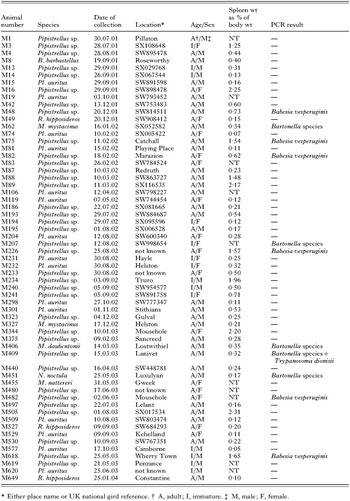
Table 1. Details of provenance of bats surveyed and the laboratory results obtained

Fig. 1. Unrooted phylogenetic tree inferred using a maximum likelihood approach from an alignment of 543 bp 18S rRNA-encoding gene fragments obtained from the pipistrelle-associated piroplasm and representatives of previously defined piroplasm lineages and other partially characterized Babesia taxa. Significant bootstrap values are indicated at relevant nodes, with numbers representing the percentage of replicates yielding the branching order depicted in ML derived trees, and * and [dagger] indicating well-supported (>50%) branching orders in parsimony and distance-matrix derived trees respectively. The number given in parentheses refers to the Piroplasmida lineage to which the taxon was assigned by Schnittger and colleagures (2003).

Fig. 2. Unrooted cladogram inferred using a maximum likelihood (ML) approach from an alignment of 298 bp citrate synthase gene fragments obtained from bat-associated bartonellae and representatives of the established Bartonella taxa. Nodes lacking significant bootstrap support (<50%) in ML, parsimony or distance-matrix derived inferences, have been collapsed. At remaining nodes, the numbers represent the percentage of ML-examined bootstrap replicates in which the node appeared, whereas * and [dagger] indicate well-supported (>50%) branching orders in parsimony and distance-matrix derived trees respectively.
 You have
Access
- 79
- Cited by