Archer argues that sex differences in within-sex aggression are better explained by sexual selection than by the alternative biosocial version of social role theory. Although Archer presents solid theoretical and empirical evidence against the social role account of sex differences in aggression, he unnecessarily pulls his punches.
Social role theorists have positioned their account of sex differences as antithetical to evolutionary psychologists' accounts. For example, in a recent exposition of their theory, Wood and Eagly (Reference Wood, Eagly, Gangestad and Simpson2007) claim: “Evolutionary psychologists have observed sex differences in modern, patriarchal societies and inappropriately concluded that humans evolved sex-typed psychological dispositions in ancestral times” (p. 389). Wood and Eagly predict a “demise of many sex differences with increasing gender equality” (p. 390). To argue that biological sex differences originate below the neck (in women's child-bearing capacities and men's greater muscular strength), and to suggest those differences would simply disappear if society treated men and women alike, is to argue for a Blank Slate.
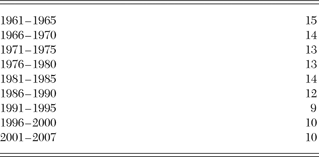
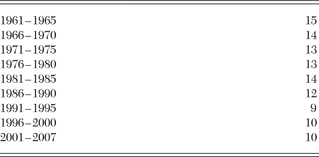
After presenting solid evidence against the social role account of sex differences in aggression, Archer concedes that: “the similarity between the sexes that is found in post-feminist Western societies is likely to be attributable to historically recent changes in the position of women” (sect. 4.6, para. 1). But with regard to the target topic of aggression, the hardest evidence – statistics on violent crime since the liberalization of sex roles in the 1970s – do not show the changes expected by sex-role theories (see our Table 1).
Percentage of homicides committed by women. [Statistics based on FBI Uniform Crime Reports.]
Cultural variations are not arbitrary. The social roles accounts debated by Archer have repeatedly taken cultural variations as evidence against an evolutionary perspective, perpetuating the misconception that universal predispositions produce phenotypic invariance in behavior across societies and across time-periods. However, numerous evolution-inspired research programs indicate that such variations can be ecologically triggered by biologically meaningful factors (e.g., Gangestad et al. Reference Gangestad, Haselton and Buss2006a; Schaller & Murray Reference Schaller and Murray2008).
Consider cultural variations in age preferences (Kenrick & Keefe Reference Kenrick and Keefe1992). Eagly and Wood (Reference Eagly and Wood1999) argued that these stem from sex differences in social power, citing cross-cultural correlations between female power and magnitude of age preferences. Yet they fail to note that “sex differences in modern, patriarchal societies” do not disappear in non-Western societies, but instead get larger. Why are these larger sex differences in non-Western societies? One possible explanation is linked to the fact that women in those societies have more children and therefore increase in apparent age more rapidly than women in European and North American countries. Thus, what appear to be “cultural variations” may instead be products of biologically meaningful variations in fertility cues, and not arbitrary role assignments (Kenrick & Keefe Reference Kenrick and Keefe1992).
Young men's preferences provide one way to distinguish the two explanations. Developmental studies reveal teenage boys to be highly sex-typed. Hence, they should manifest the role-typical desire for younger, less powerful, partners. But instead, teenage boys are attracted to college-age women (Kenrick et al. Reference Kenrick, Gabrielidis, Keefe and Cornelius1996). This and many other findings are consistent with an attraction to fertility cues.
Tiwi society, in which young men marry older widows, seems at first glance to contradict evolutionary explanations. Is this Eagly and Wood's imagined egalitarian society, in which women have more power and patriarchy is reversed? Hardly: Tiwi society is highly patriarchal and polygynous, and Tiwi women have little say in who they marry. Instead, Tiwi patriarchs enforce a rule that all females (but not all males) must be married. The elder patriarchs marry all the young females, and are not interested in older widows. By marrying an elder widow, a young man acquires rights to determine who her young daughters remarry, and establishes himself as a potential recipient of a younger wife (Hart & Pillig Reference Hart and Pillig1960). So, even in a society where one aspect of typical sex-specific behavior is reversed by socially enforced caveat, evolved mating preferences do not reverse at all (Kenrick et al., Reference Kenrick, Nieuweboer, Buunk, Schaller, Norenzayan, Heine, Yamagishi and Kameda2010).
Evolutionary hypotheses are based on a comparative nomological network. A misconception advanced by Eagly and Wood and other critics is that evolutionary models depend on hard-to-observe behaviors among ancestral humans. In reality, sexual selection models, as Archer makes clear, are derived not from observations of Western patriarchal societies alone but from an immense comparative literature on still-living species. This poses a problem for sex-roles explanations, since many sex differences found among humans in Western societies are shared not only with people in other societies, but with all other mammals, and most other vertebrates. As Archer notes, when sex-role reversals are found in some species, they further support the clear link between parental investment and sexual selection.
Evolutionary psychology examines functional responses to adaptive contexts. As Archer notes, an evolutionary approach to human behavior derives hypotheses from comparative and cross-cultural data, not from observations of Western patriarchal society. From this powerful nomological network of research and theory, evolutionary psychologists derive hypotheses about how behavior varies flexibly – and functionally – in response to adaptively relevant environmental triggers. Consistent with Archer's analysis of sexual selection and aggression, activating status motives leads men but not women to desire to aggress in a direct manner (face-to-face confrontation). And consistent with other domain-sensitive evolutionary accounts, resource threat leads women to respond in a manner more similar to men (Griskevicius et al. Reference Griskevicius, Tybur, Gangestad, Perea, Shapiro and Kenrick2009). Ultimately, aggression for both men and women appears to function as a tactic for enhancing reproductive success.
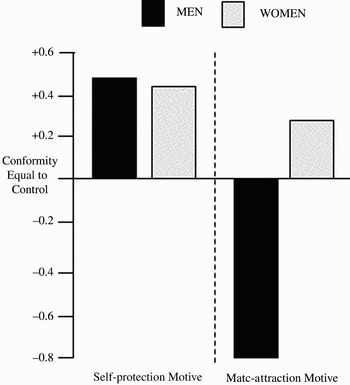
Men and women also show sex-specific and functionally strategic differences and similarities when different goals are activated. For example, consistent with theories of sexual selection and differential parental investment, mating motives lead men – but not women – to engage in conspicuous, attention-attracting, displays, including conspicuous consumption and creative flair (Griskevicius et al. Reference Griskevicius, Cialdini and Kenrick2006a; Reference Griskevicius, Tybur, Sundie, Cialdini, Miller and Kenrick2007). Such findings are not merely demonstrations of arousal enhancing sex-role typical behavior. For instance, activating mating motives leads men to go against group opinion, whereas mating motives lead women to conform more (Griskevicius et al. Reference Griskevicius, Goldstein, Mortensen, Cialdini and Kenrick2006b). However, activating self-protective motives eliciting similar levels of arousal do not lead men to act in “macho” ways as might be expected. Instead, self-protective motives lead both men and women to become more conforming and group-oriented (see our Fig. 1).
Self-protection and mating motives have distinct consequences for conformity behaviors of men and women. Both men and women tend to be more conforming when feeling threat. Activating mating motives leads men to become less conforming and, as discussed in the text, more creative and showy in other ways. (Adapted from Griskevicius et al. Reference Griskevicius, Goldstein, Mortensen, Cialdini and Kenrick2006b)

Research generated from an evolutionary-psychological perspective is not designed to test hypotheses about historical evolution (a persistent misconception), but to consider proximate causes of human behavior in ways consistent with functional analyses. This approach has generated abundant evidence showing that men and women do not randomly remember and then forget their sex-roles, but instead respond in adaptively flexible ways to functionally relevant environmental cues (Griskevicius et al. Reference Griskevicius, Tybur, Gangestad, Perea, Shapiro and Kenrick2009; Kenrick & Sheets Reference Kenrick and Sheets1993). Archer's target article does an excellent job dispelling some of these misconceptions, pointing to strong theoretical and empirical evidence supporting a sexual selection account of sex differences in within-sex aggression.