





Impact statement
This research advances Biodesign praxis through the use of digital fabrication techniques in creating a scalable and functional architectural module, facilitating both standardization and reproducibility of the biomaterial system. It further contributes to the social dimensions of biodesign with a novel approach to low-energy, climate-responsive construction that fosters human engagement alongside environmental performance.
Introduction
Recent developments in building envelopes have embraced biomimetic systems as models for climate-responsive technologies, particularly through the use of hygroscopic materials for passive regulation of temperature, light and humidity (McDonald et al. Reference McDonald, Engel, Fang and Correa2025). Biomimetic approaches to kinetic architectures offer several inherent advantages; for example, many plants exhibit reversible motions, enabling repeated deformation without permanent structural change (Li and Wang Reference Li and Wang2016). There is a spectrum of plant physiologies associated with varying strategies for deformation, but the properties of anisotropic hygroscopic materials are particularly scalable, making them widely applicable in cross-disciplinary engineering (Imani et al. Reference Imani, Le Guen, Bedggood, Betteridge, Gauss and Barbier2025). Plant structures use passive and active swelling within their tissue for various functional purposes such as seed dispersal, light orientation, to catch prey or in response to touch (Forterre Reference Forterre2013). In an anisotropic material, varying properties across each dimension can be used to control the direction and magnitude of the hygroscopic response. This process occurs in living plants but also in the dead cells of biomaterials, including wood. When exposed to a dry environment, cells lose moisture and shrink; in wet conditions, they absorb water and expand (Dinwoodie Reference Dinwoodie2000). While this process can repeat indefinitely, hygroscopic deformation tends to be slow, governed by the speed of water diffusion (Forterre Reference Forterre2013). To improve the speed of hygroscopic actuators in engineering applications, previous research has focused on the improvement of moisture diffusion (Vailati et al. Reference Vailati, Hass, Burgert and Rüggeberg2017) or mechanical coupling (Vailati et al. Reference Vailati, Bachtiar, Hass, Burgert and Rüggeberg2018), while only a few studies have sought to understand the potential for explosive movement through bistable or multistable kinematic actuators (Schmied et al. Reference Schmied, Le Ferrand, Ermanni, Studart and Arrieta2017). Investigations into rapid actuation, involving the storage of mechanical potential energy and subsequent instantaneous release, remain limited, primarily due to concerns over material fatigue and architectural scalability (Vazquez et al. Reference Vazquez, Correa and Poppinga2024).
The principles of biodesign encourage us to return to the physiological capacity of plants as a guide, which use techniques of fracture or dehiscence in conjunction with hygroscopic shrinking and swelling to drive rapid, repeatable and substantial movements.
This pictorial presents a biomimetic façade system inspired by the ballistic seed release mechanism of Impatiens glandulifera (Himalayan balsam), translating its ability to accumulate and release elastic potential energy into a bio-inspired building façade module capable of rapid actuation. The new module demonstrates the unique capacity to undergo sudden deformation at a particular humidity threshold. This is a distinct function that exhibits a much greater actuation response compared to previous wood bilayer actuators. The research abstracts and integrates geometric and material principles borrowed from the biological role model to develop an elastic energy storage mechanism using a wood composite bilayer with a controlled magnetic trigger, which combined provides an effective strategy to achieve repeatable energy storage and release.
Drawing on initial study of Impatiens glandulifera and accompanying biological role models, this work was conducted as a series of formal, material and kinetic experiments followed by the fabrication and iteration of functional prototypes. The successive prototypes culminated in the design and construction of a 1:1 scale module for a potential façade application. The resulting system demonstrates how fast-acting hygroscopic actuation can expand the design space of climate-adaptive façades, offering new strategies for responsive envelopes that integrate biomimetic principles and material intelligence within low-energy approaches to architectural practice.
Insights from biological role models
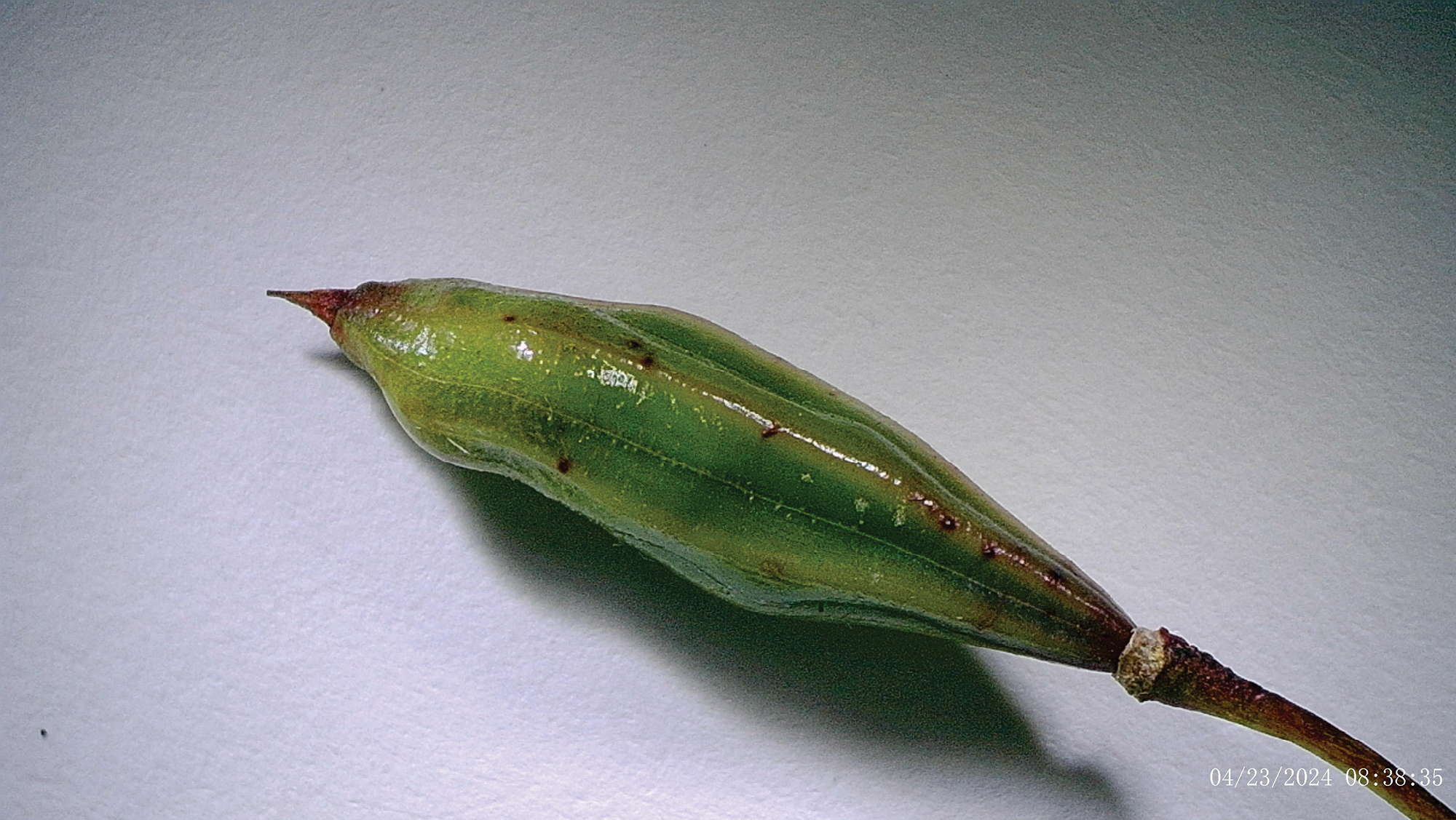
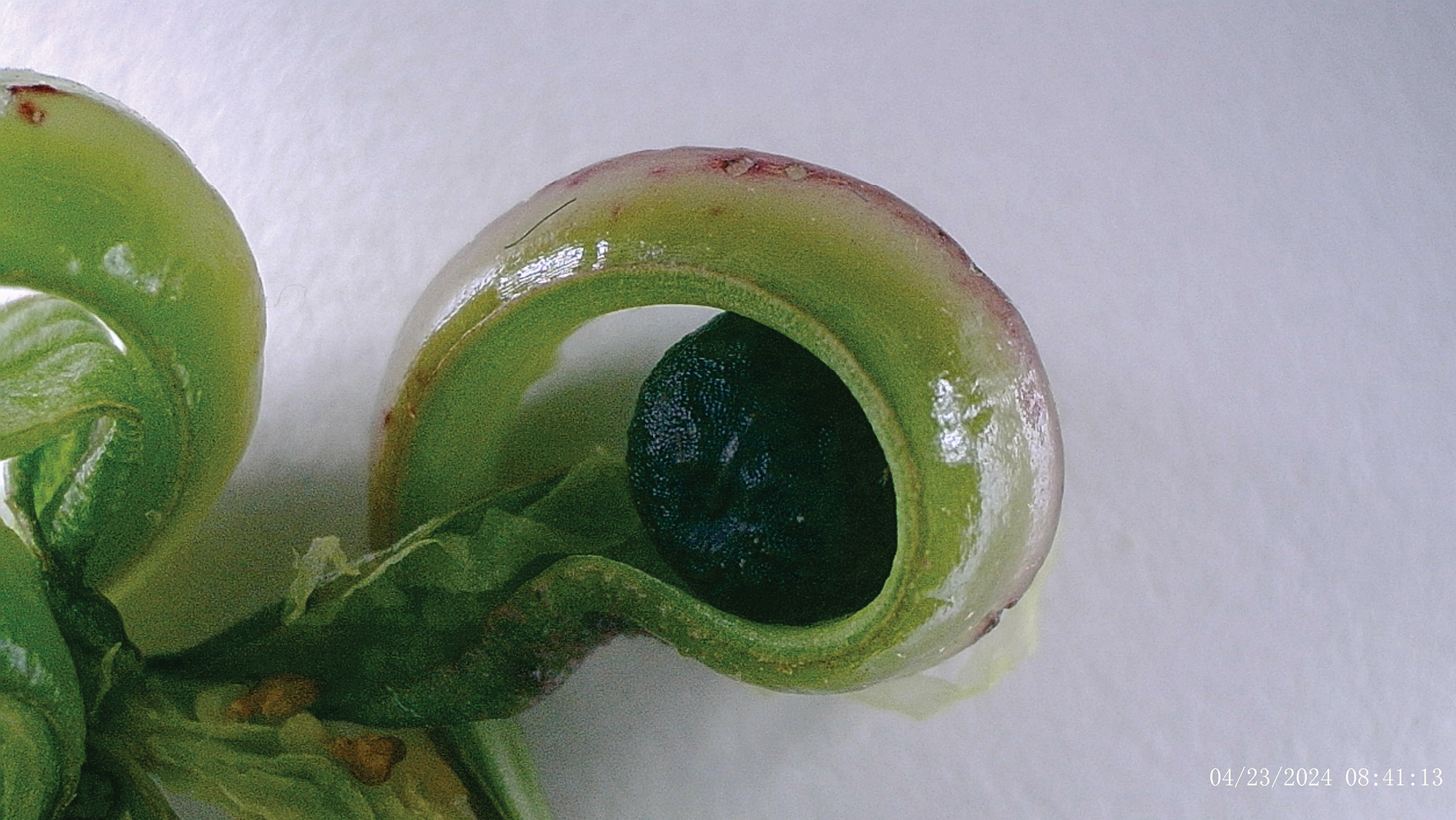
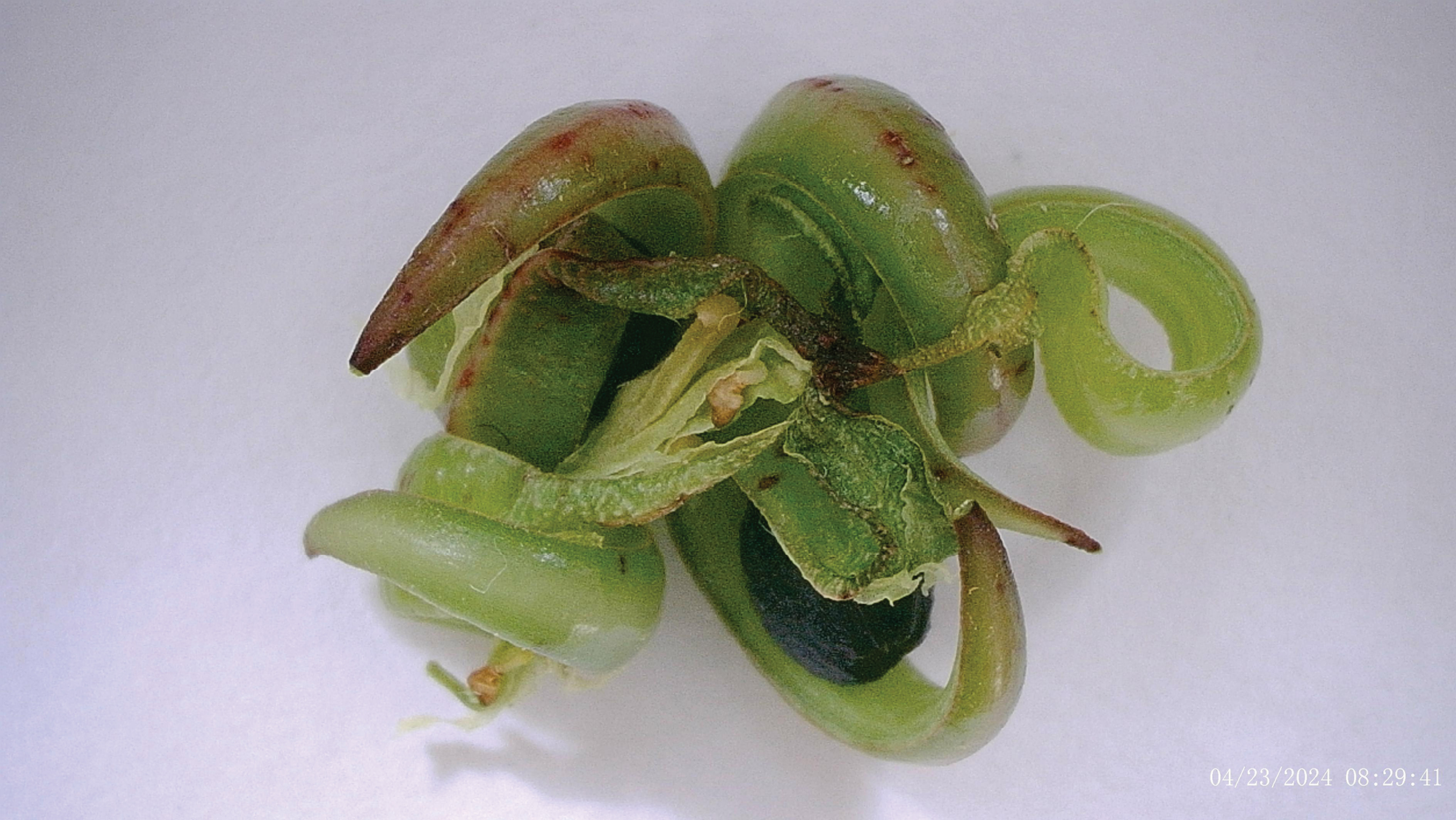
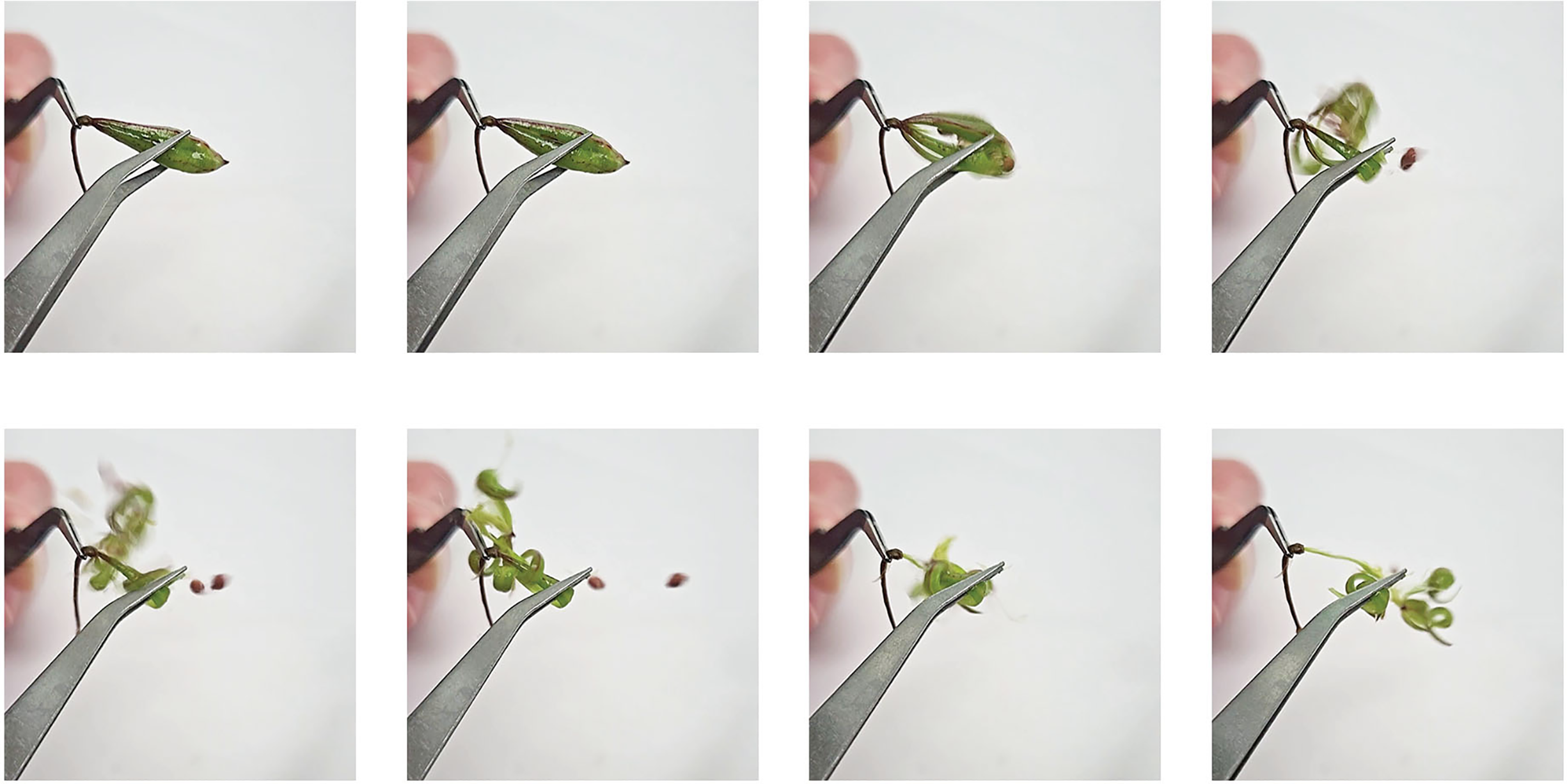
Impatiens glandulifera (Himalayan balsam) exhibits an exemplar explosive dehiscence mechanism, wherein stored elastic energy is released via fracture, expelling seed pods away from the plant for the organism to proliferate. Robert Deegan (Reference Deegan2012) describes the anatomy of the seed pod (Figure 1), composed of individual valves (Figure 2) that, upon dehiscence, curl backwards in unison to catapult the seeds outwards (Figure 3 and Figure 4) . The geometry of the valve controls the overall release of elastic energy: the relaxed state is curled, and its unrolled cross-section exhibits double curvature influenced by its tapered form.
Impatiens glandulifera seed pod under microscope, closed.

Impatiens glandulifera seed pod under microscope, valve.

Impatiens glandulifera seed pod under microscope, unfurled.

Mechanically actuated ballistic dispersal of the Impatiens glandulifera seed pod.

Figure 4 Long description
A sequence of eight frames taken during the mechanically-triggered release of the Impatiens glandulifera seed pod. One pair of tweezers holds the pod by the stem at one end, while another pair of tweezers exerts pressure on the center of the pod. By the third frame, the valves of the pod separate in the center where pressed, remaining attached on both ends. In the fourth frame, the center of the valves pull towards the stem, beginning to catapult the seeds outwards. In frames five and six, the force of the launch detaches the valves on the end closest to the stem, and they continue to curl backwards. In frames seven and eight the seeds launch out of frame and the valves recoil in the direction of launch.
The pod resists energy release until a crack at morphological fracture zone with a threshold length extends between two valves. Conversely, the entire pod maintains its structural integrity with a split seam along 70 percent of the valve length. Consequently, the pod is highly resistant to cracks, with only 30 percent seam length needed to keep the pod closed (Deegan Reference Deegan2012). This resistance arises from the tapered cross-section of the valve, which presses against its neighboring valves to limit its curvature. It is advantageous for I. glandulifera to keep the pod intact until fully mature, because a broken bond between one seam will progressively force the other unbroken seams apart, releasing all the valves near-instantaneously (Deegan Reference Deegan2012).
The distinction between the relaxed and pre-stressed states, the spatial distribution of rigidity and flexibility along the valve and the double curvature shape of the valve are critical in enabling maximal deformation during energy release. These characteristics collectively facilitate efficient elastic energy storage and controlled fracture, providing a transferable framework for material and geometric abstraction. Unlike the plant movements that have informed the recent kinetic architectural paradigm, such as the snap-buckling behavior of the Venus flytrap (Farmani et al. Reference Farmani, Hosseini, Assadi and Hassanzadeh2025), the I. glandulifera pod can only expel its seeds once, typically upon mechanical disturbance after maturation (Hayashi et al. Reference Hayashi, Feilich and Ellerby2009). The biological system is optimized for a single irreversible actuation rather than the recurrent performance desired in adaptive envelopes. This irreversibility presents a challenge in translating dehiscence into an architectural context. To address this, we analyzed the opening sequence of the pod to identify its potential abstraction into a mechanism capable of returning to a stressed or stored-energy configuration after deployment. In this context, other biological models offer valuable strategies for achieving repeatable deformation, allowing us to design a reversible analog of the irreversible dehiscence mechanism. We therefore returned to broader biodesign principles, examining plant systems with reversible hygroscopic movements, including the pinecone, which has been an early inspiration for hygroscopic actuation in architectural systems (Correa et al. Reference Correa, Poppinga, Mylo, Westermeier, Bruchmann, Menges and Speck2020; Poppinga et al. Reference Poppinga, Correa, Bruchmann, Menges and Speck2020). The pinecone scale bilayer model containing a veneer and fiberglass composite can be used to build the elastic potential energy in response to relative humidity changes. A magnetic latch is used for the controlled release. Unlike the I. glandulifera, which relies primarily on mechanical triggers for dehiscence, we leverage the bilayer material strategy to initiate the energy release in a passive, humidity-responsive manner.
Design process and prototyping
The development of the mechanism was done through physical prototyping of a series of material models at building component scale. Changes in geometry, bilayer structure and magnetic latch mechanism were tested with the aim of achieving maximum speed during kinematic actuation.
Formal system
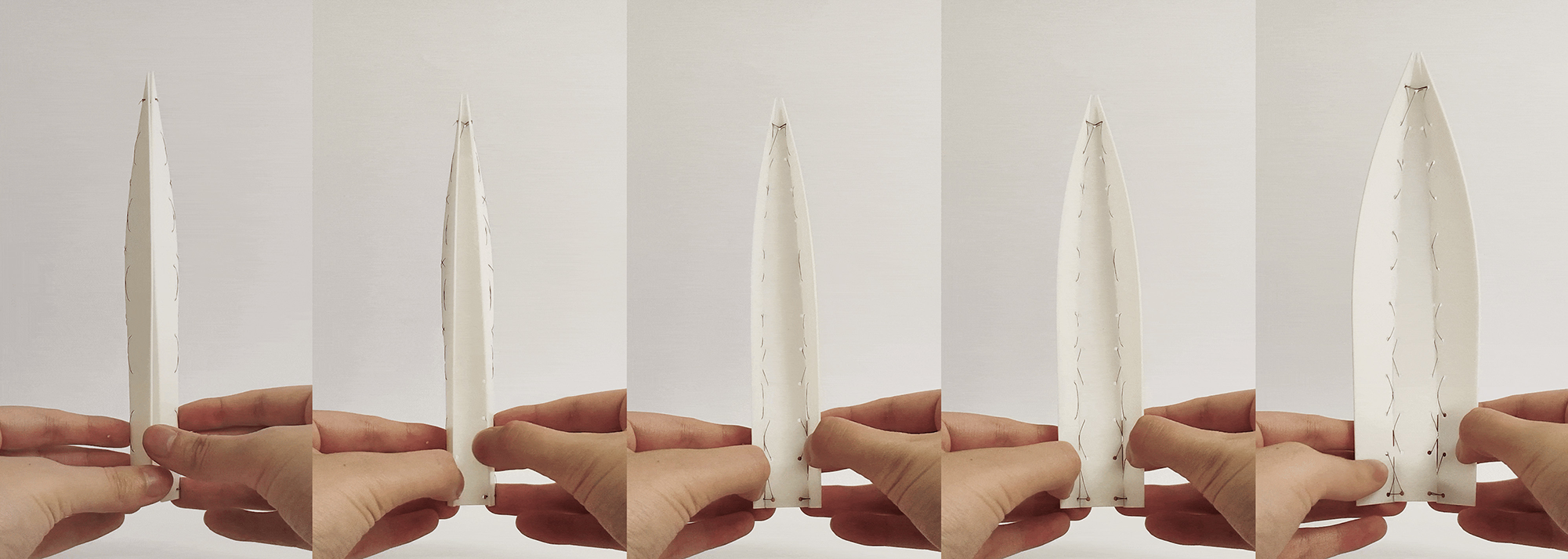
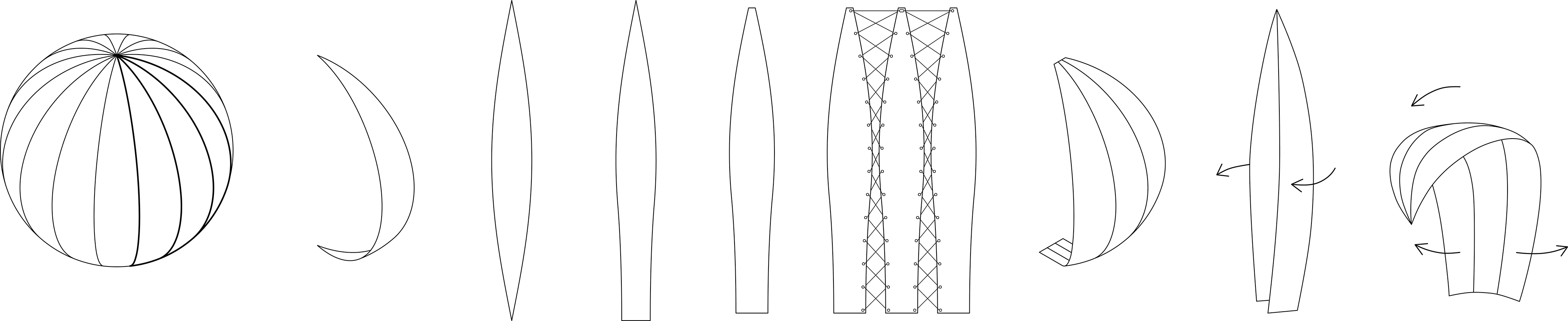
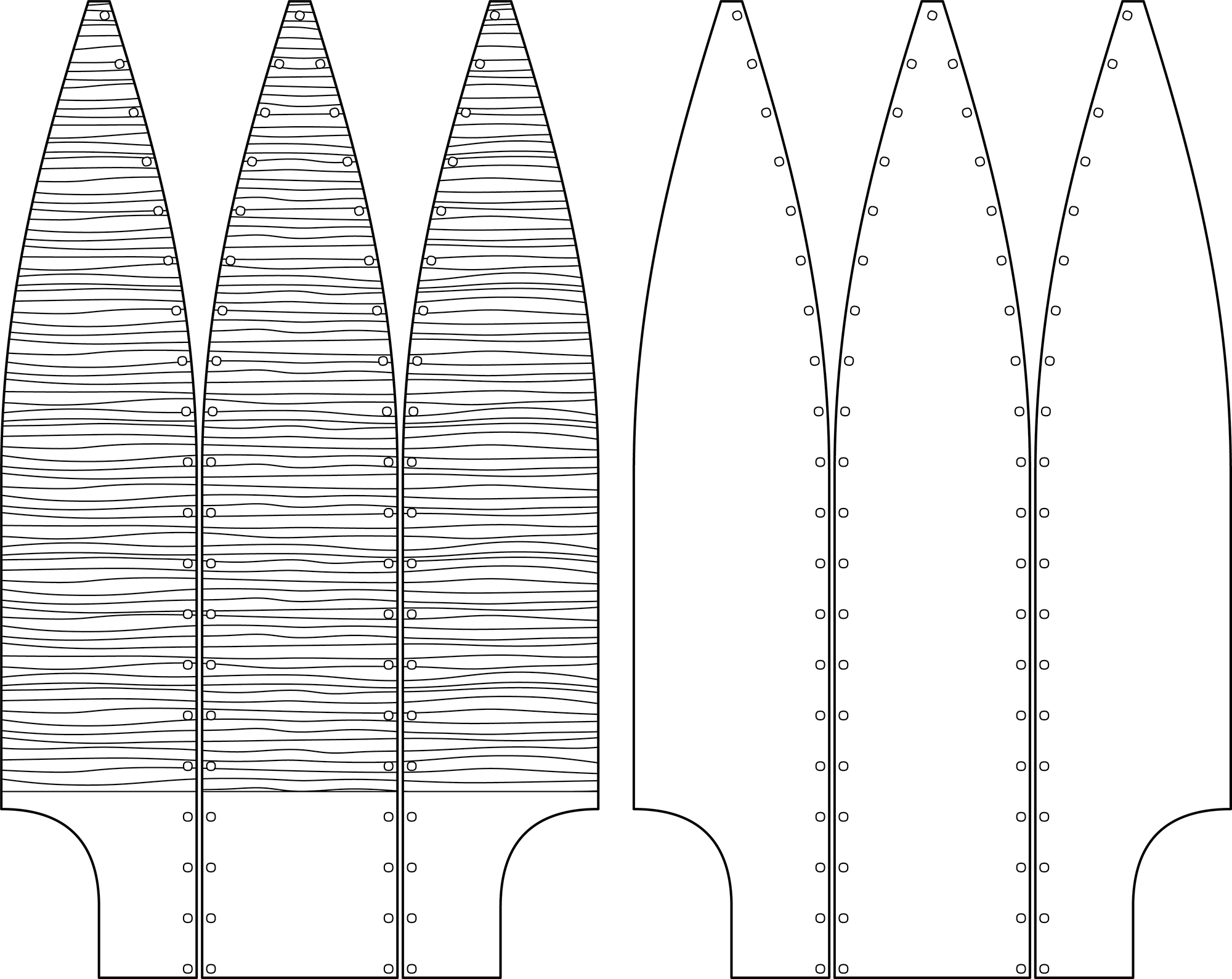
The abstraction of I. glandulifera begins with the primary formal drivers of its kinetic function: its double-curvature profile and the rigidity at the base of the valve. Taking a note from the evolved efficiency of our biological role models, the basis of the form is the most rudimentary double-curvature shape: a spherical slice or spherical gore. Anticipating the fabrication process and material constraints, curved shapes are projected and flattened into two-dimensional profiles. Seams and folding are key to replicating the complex geometries of biological role models with sheet material. Mimicking the profile of the I. glandulifera valve, the addition of a flat, rigid segment at the end of the gore forces the shape to curl in one direction. When three of these two-dimensional surfaces are fixed together at their edges, the shape is bent back into three-dimensional space (Figure 5).
Manual formal behavior demonstration.

Figure 5 Long description
A line drawing depicting the design process for the basic geometric principles of the prototypal module. The basis of the form is a spherical gore, which is unrolled and flattened into a two-dimensional profile. When three of these profiles are stitched together at the edges, they are bent inwards into a curved shape resembling a semi-sphere. This shape can be deformed through pulling/pushing into a rigid folded state or a shape that curls upon itself.
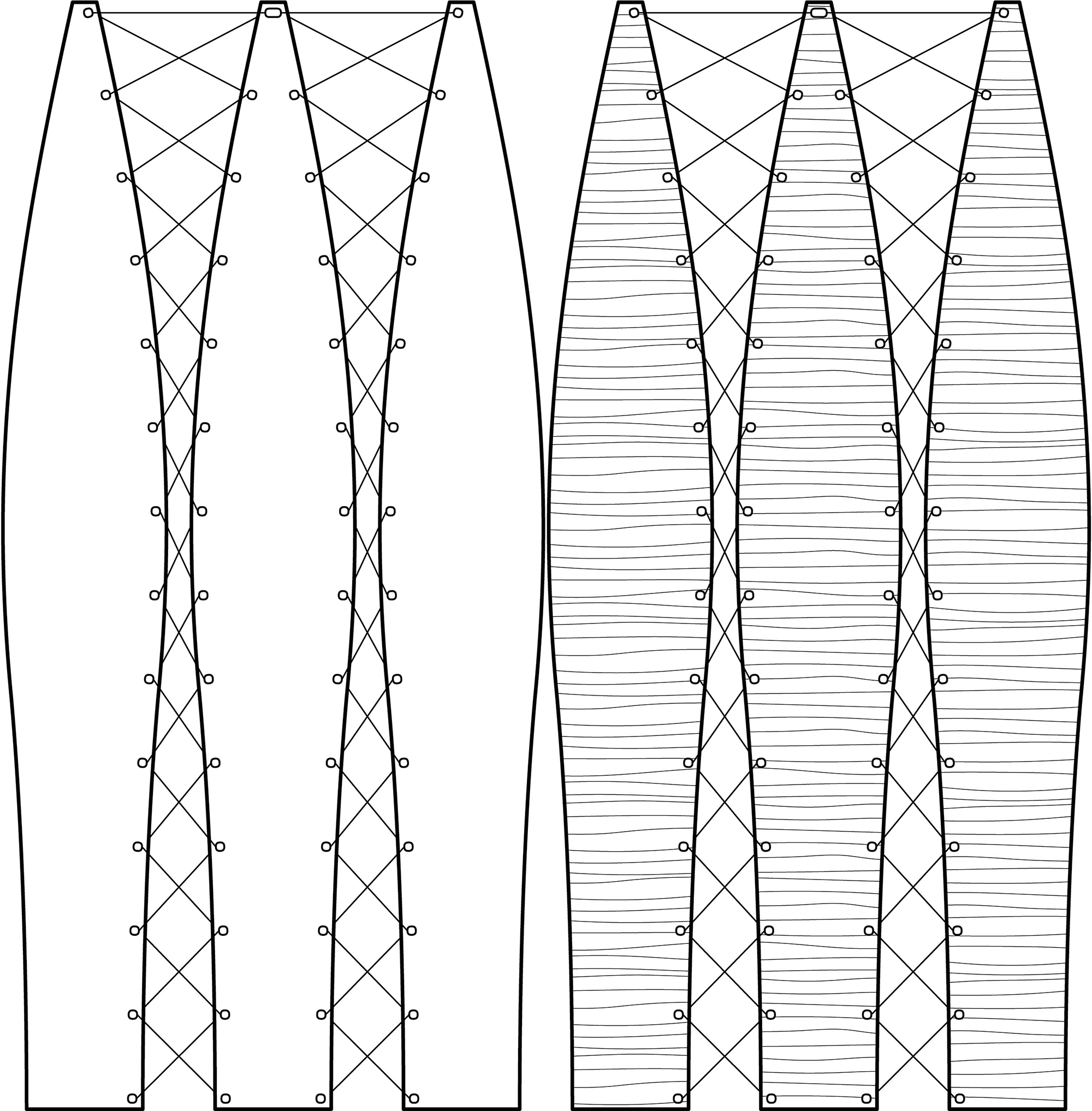
Recalling the segmented form of the I. glandulifera seed pod, the introduction of the flexible stitched seam between surfaces is a bio-inspired solution to the fabrication of double-curved form with flat material. This (Figure 6) is the basis for the formal module in the prototypes that follow. When the three flat surfaces are fixed at the seams, the module’s stable state is where the lateral surfaces fold inward, releasing tension and providing rigidity: this is the “closed” state. When the lateral surfaces are pressed outwards or when the base and tip are pressed inward, the module is deformed into a tense “open” state, holding the module in its double-curved form. Though bistable mechanisms leverage a similar logic of tension within a double-curvature form (Andrade et al. Reference Andrade, Beirão, Arruda and Vinagre2024), this module has only one relaxed state while material stress is constant. The objective is to encourage a preference for either of these states through anisotropic hygroscopic material, effectively producing a “dry” and “wet” state respective the open and closed state. At a particular moisture level, the material will remain flat, folding the module into its rigid state; with a calibrated moisture change, the material will bend, curling into a new relaxed state under different material pressures.
Form finding.

Material system
Based on previous work by Correa et al. (Reference Correa, Poppinga, Mylo, Westermeier, Bruchmann, Menges and Speck2020), a maple veneer composite bilayer was selected as the actuator due to its predictable and reversible range of motion. By aligning the grain direction perpendicular to desired movement, we can induce the module’s open state. However, unlike conventional hygroscopic panels that need only accommodate a gradual bend, this system required sufficient stiffness to accumulate elastic strain. The rigidity of the base in both dry and wet state was also imperative to the release function. In the I. glandulifera, a rigid segment by the base of each valve gives structure for the rest of the valve to curl. In the architectural module, hygroscopic swelling in the rigid areas was limited by lamination to prevent humidity diffusion on either side of the surface (Figure 7).
Laminated bilayer composition, front and back.

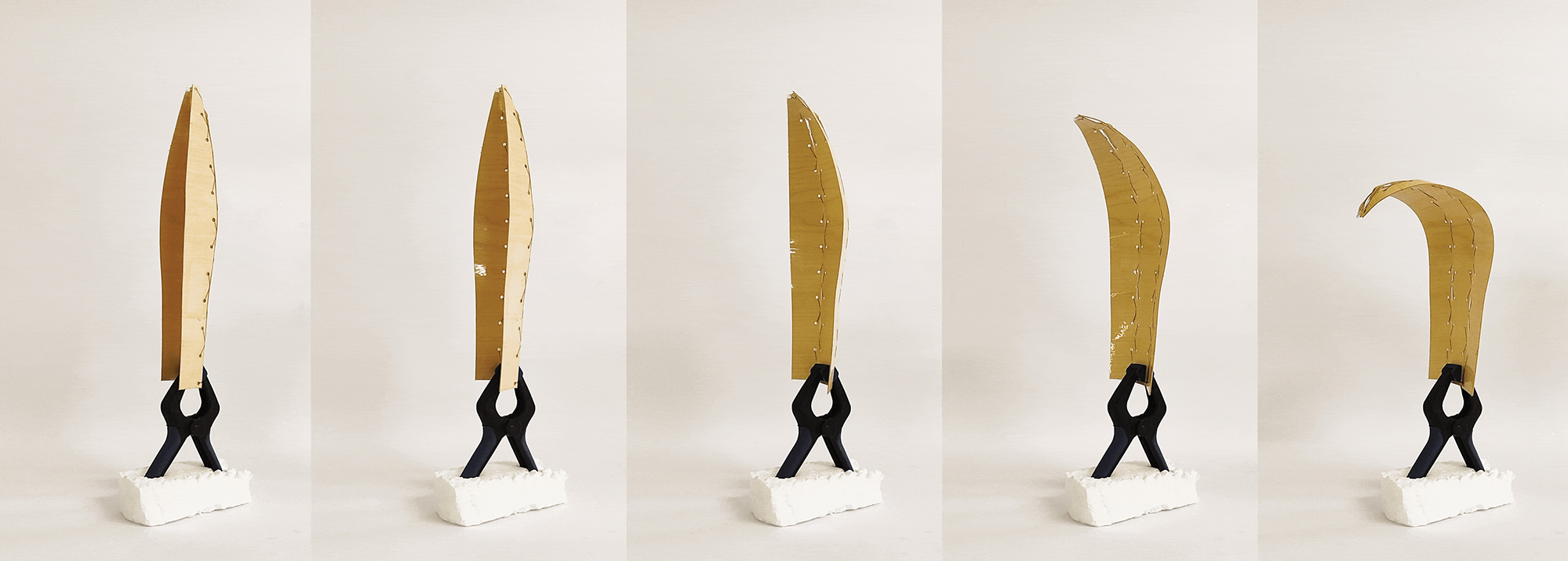
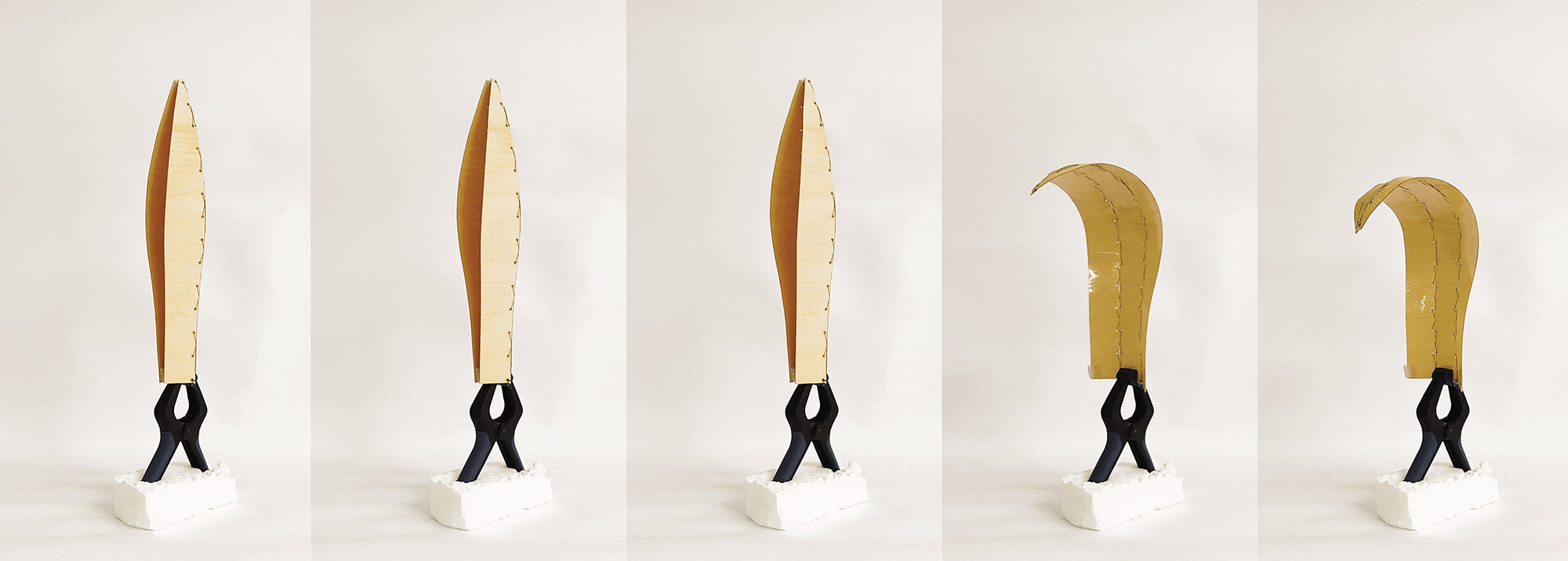
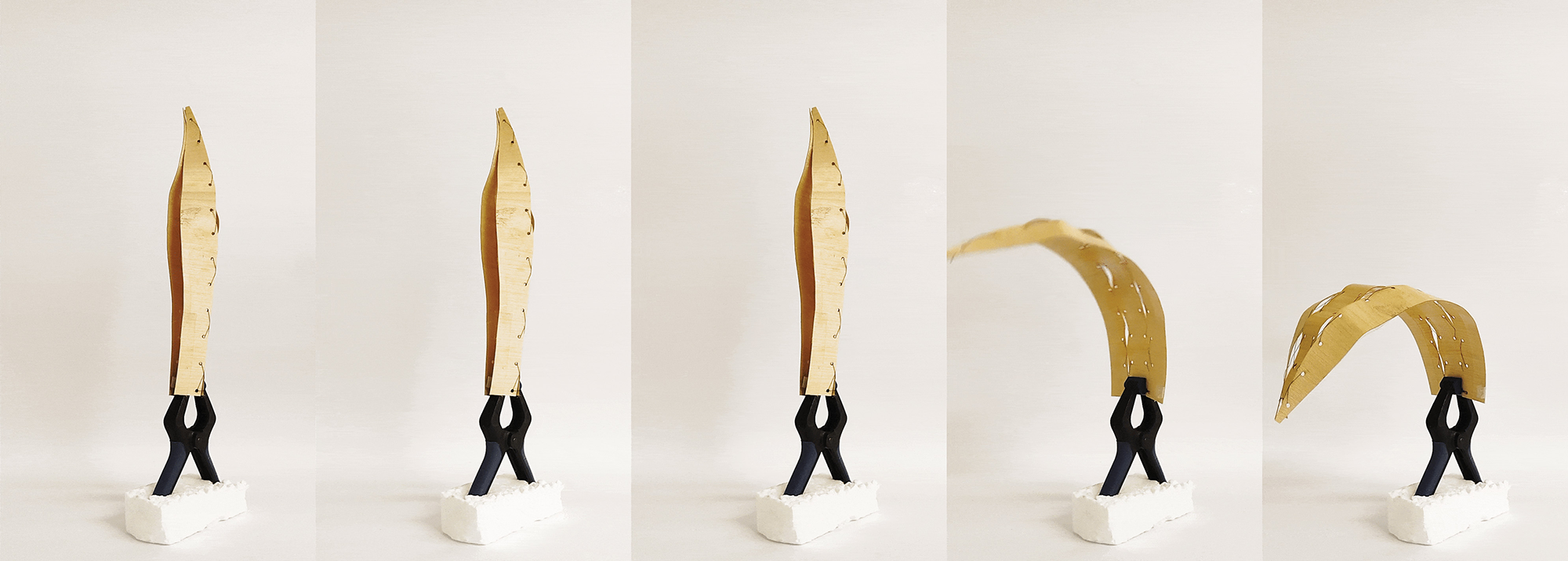
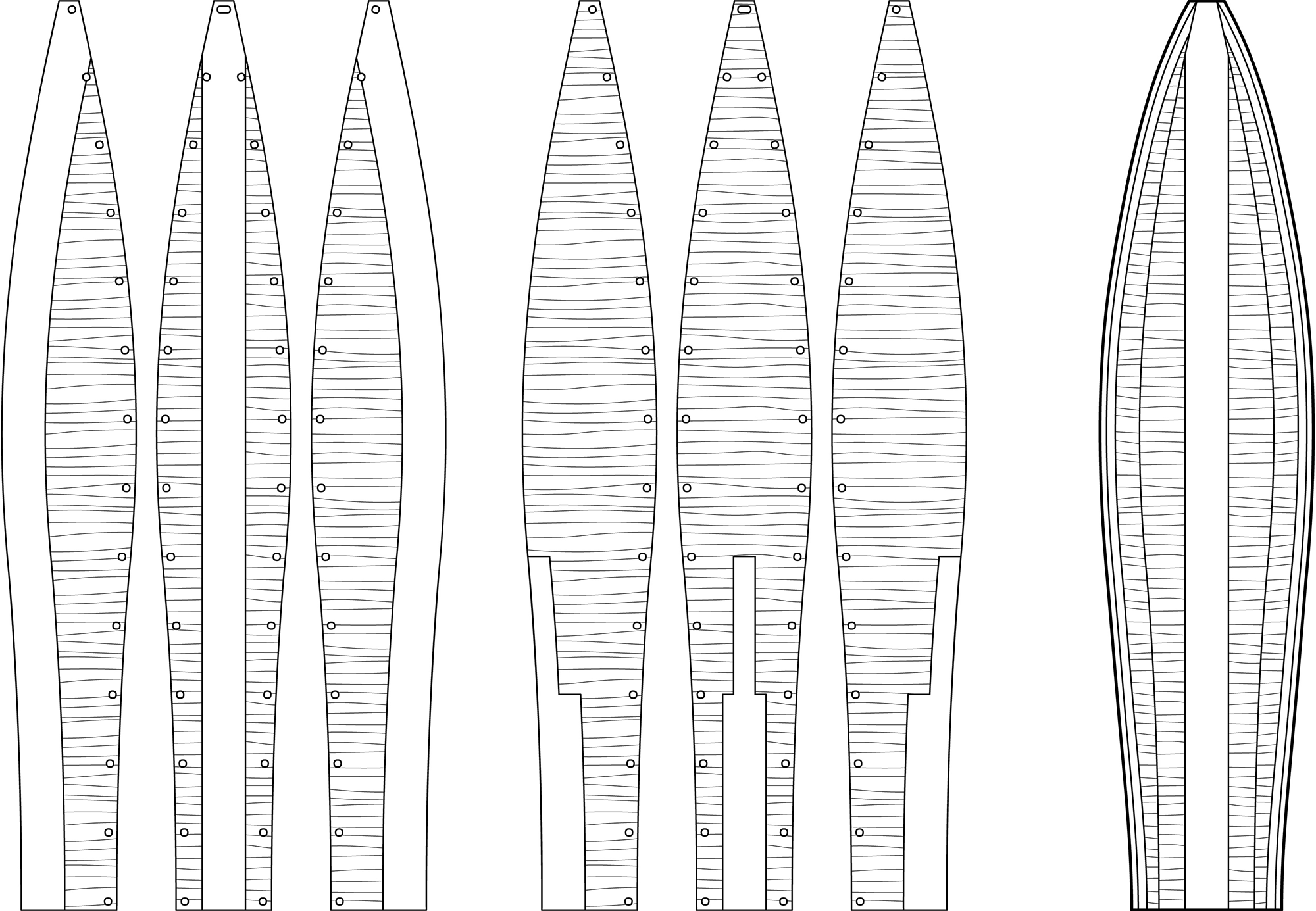
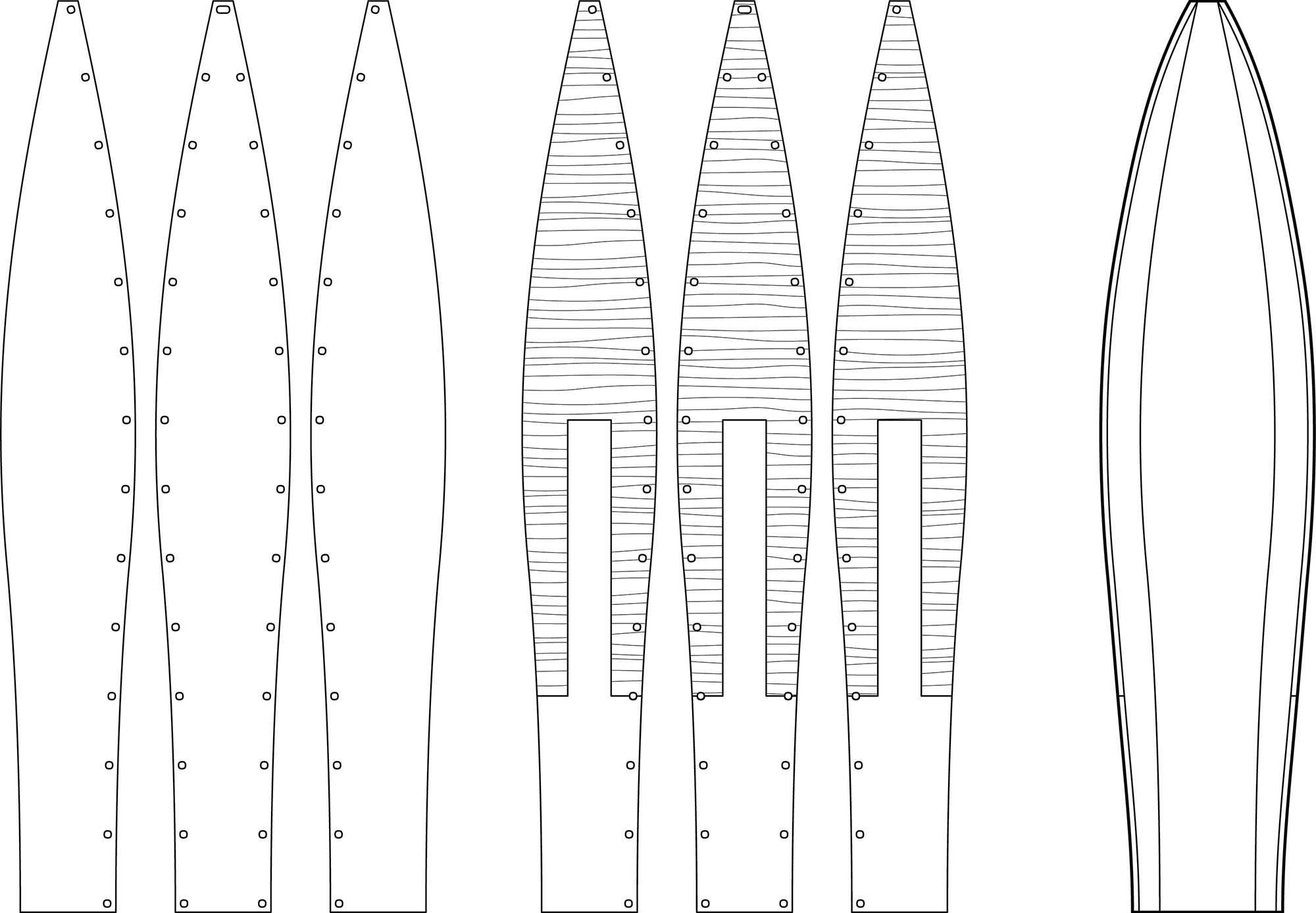
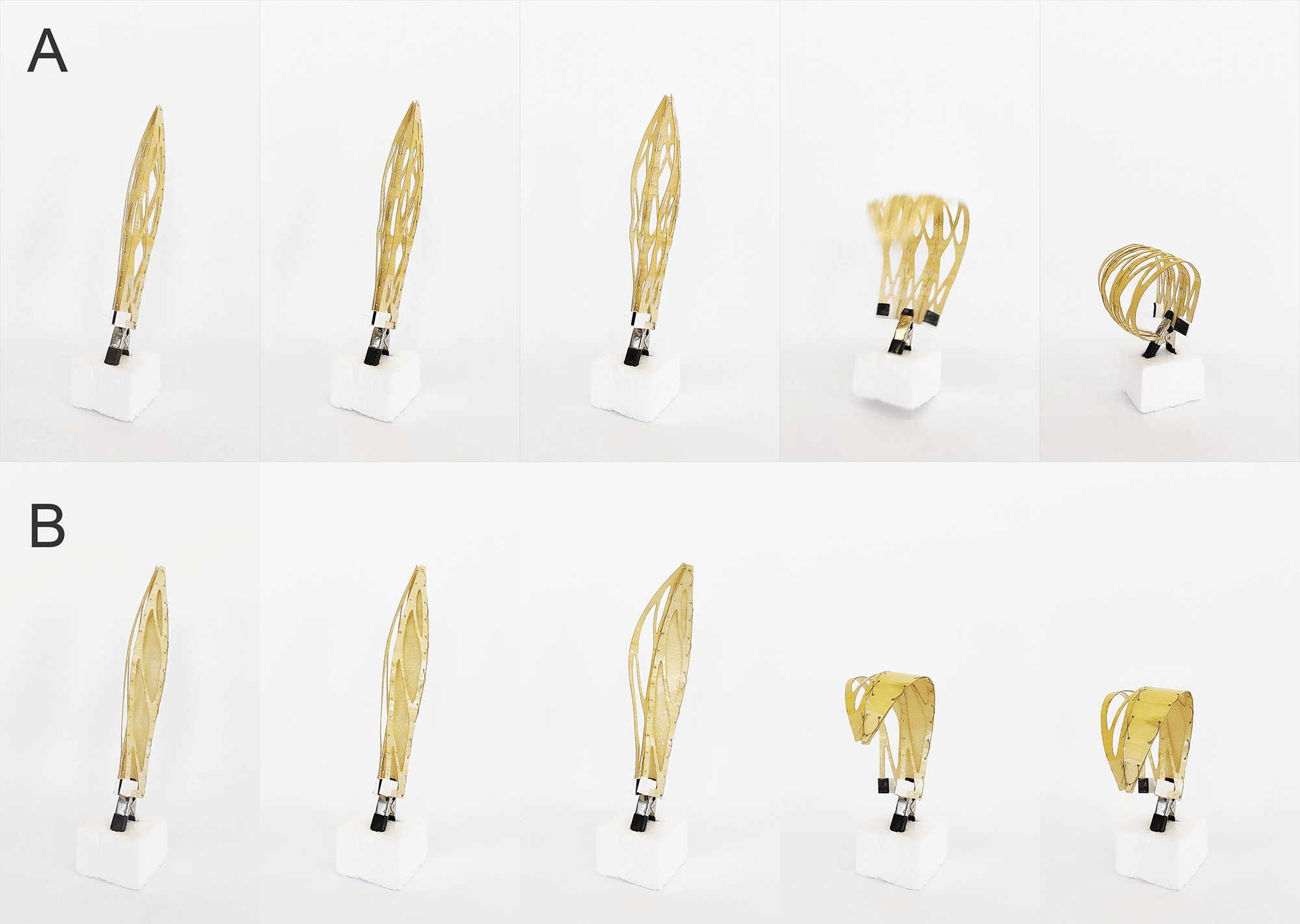
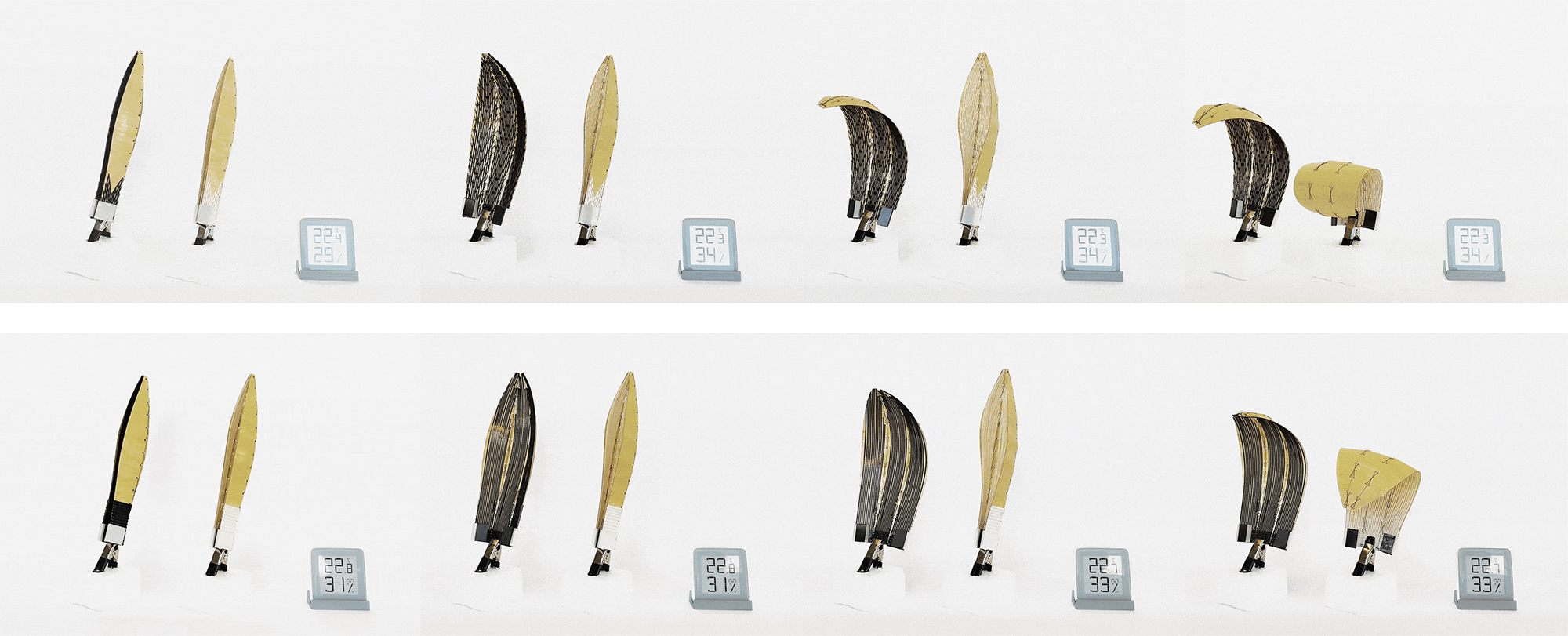
Early prototypes used polyethylene adhesive sheets laminated to maple veneer (Figures 8–12). While lightweight and flexible, repeated deformation left unwanted peeling and moisture retention, warping the module (Figure 13) and preventing repeatability. Later iterations explored reinforcement with 3D-printed venation patterns in polylactic acid (PLA) and thermoplastic polyurethane (TPU) (Figure 14). These explorations were driven by the desire to create “stems” of rigidity, but the requirement for additional lamination to improve hygroscopic performance rendered the method redundant. The final material strategy replaced polyethylene with epoxy-fiberglass lamination (Figure 15).
Hygroscopic deformation prototype A.

Figure 8 Long description
A sequence of five frames taken during the hygroscopic opening of a laminated veneer prototype. The wood veneer on the outside surfaces of the module is unlaminated, while the wood veneer on the inside is laminated with a layer of waterproof polyethylene. The base of the module is unconstrained to allow its gradual progression from the rigid closed state to the curled state.
Hygroscopic deformation prototype B.

Figure 9 Long description
A sequence of five frames taken during the hygroscopic opening of a laminated veneer prototype. The wood veneer on the outside surfaces of the module is unlaminated, while the wood veneer on the inside is laminated with a layer of waterproof polyethylene. In the first three frames, the module is in the rigid closed state, with the base folded inwards. In the last two frames, the base of the module has dehisced, allowing the top to curl down slightly.
Hygroscopic deformation prototype C.

Figure 10 Long description
A sequence of five frames taken during the hygroscopic opening of a laminated veneer prototype. The wood veneer on the outside surfaces of the module is unlaminated, while the wood veneer on the inside is laminated with a layer of waterproof polyethylene. In the first three frames, the module is in the rigid closed state, with the base folded inwards. In the last two frames, the base of the module has dehisced, allowing the top to curl down rapidly and dramatically.
Preliminary lamination strategy 1, polyethylene.

Preliminary lamination strategy 2, polyethylene.

Cutout geometry prototypes testing early material approach.

3D-printed venation prototypes.

Figure 14 Long description
Two sets of four frames sequences depicting the opening of various 3D-printed venation prototypes. Each of the two trials has a pair of prototypes: one with black PLA reinforcement, and one with white TPU. The first pair of prototypes is laminated with veins that stretch upwards from the center. The second pair is laminated with veins that run vertically. In both trials, the PLA-laminated prototype opens first, while TPU is delayed but curls more dramatically. Response time does not appear to change significantly between vein directions.
Final lamination strategy, epoxy-fiberglass.

Figure 15 Long description
Two sets of five frame sequences depicting the opening of two laminated veneer prototypes. The first prototype has symmetrical geometries removed from each of the three surfaces, allowing the module to curl as typical. The second prototype has asymmetrical cutouts radiating from the central surface, and buckles as it opens, with one surface failing to fold outward.
The fiberglass increased tensile stiffness while maintaining a thin profile, enabling high pre-stress accumulation before release. This composite strategy is adapted from early research into programmable wood composites (Reichert et al. Reference Reichert, Menges and Correa2015), wherein hygroscopic bilayer strategies precisely constrain magnitude and direction of movement. An additional benefit of the dehiscent model for energy release is its scalability. While other studies for the adaptation of kinetic organisms have referenced snap buckling (Vazquez et al. Reference Vazquez, Correa and Poppinga2024), it is more strenuous on brittle materials, making bistable buckling mechanisms better suited towards resilient material applications with greater elastic deformation (Andrade et al. Reference Andrade, Beirão, Arruda and Vinagre2024). As such, design for both dehiscent and hygroscopic function worked in conjunction to direct an effective material strategy.
Actuation
Formal strategy alone does not generate the desired ballistic motion; it is one component of a broader system to build an effective module. The allowance for stored energy and dehiscent release produces the rapid movement characteristic of I. glandulifera. The latch is a reversible analog to the balsam seam that can delay release from the closed to open state, allowing energy to accumulate up to a threshold before triggering. When released, the stored elastic energy will exaggerate the deformation in the same way I. glandulifera releases its seeds.
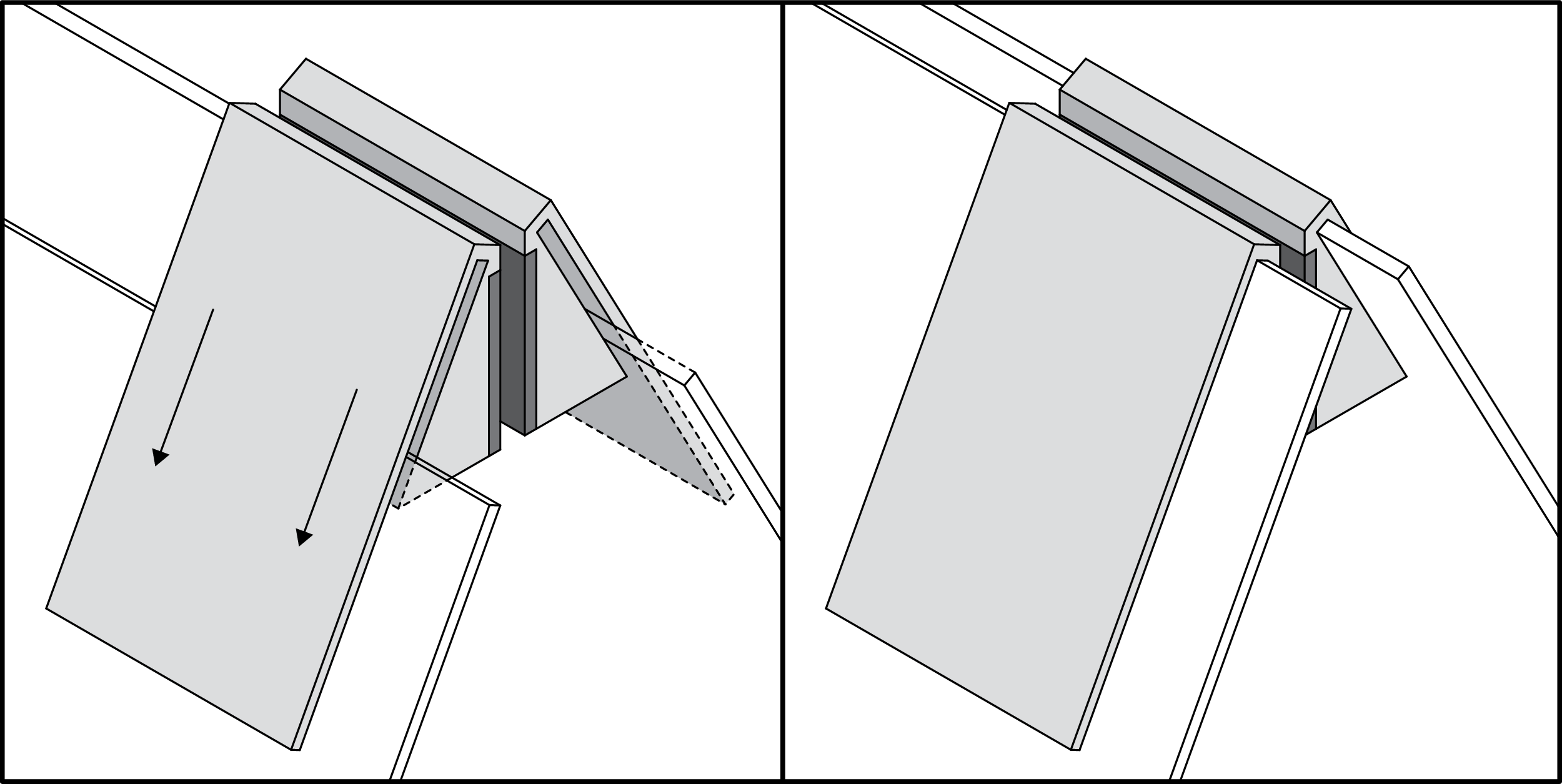
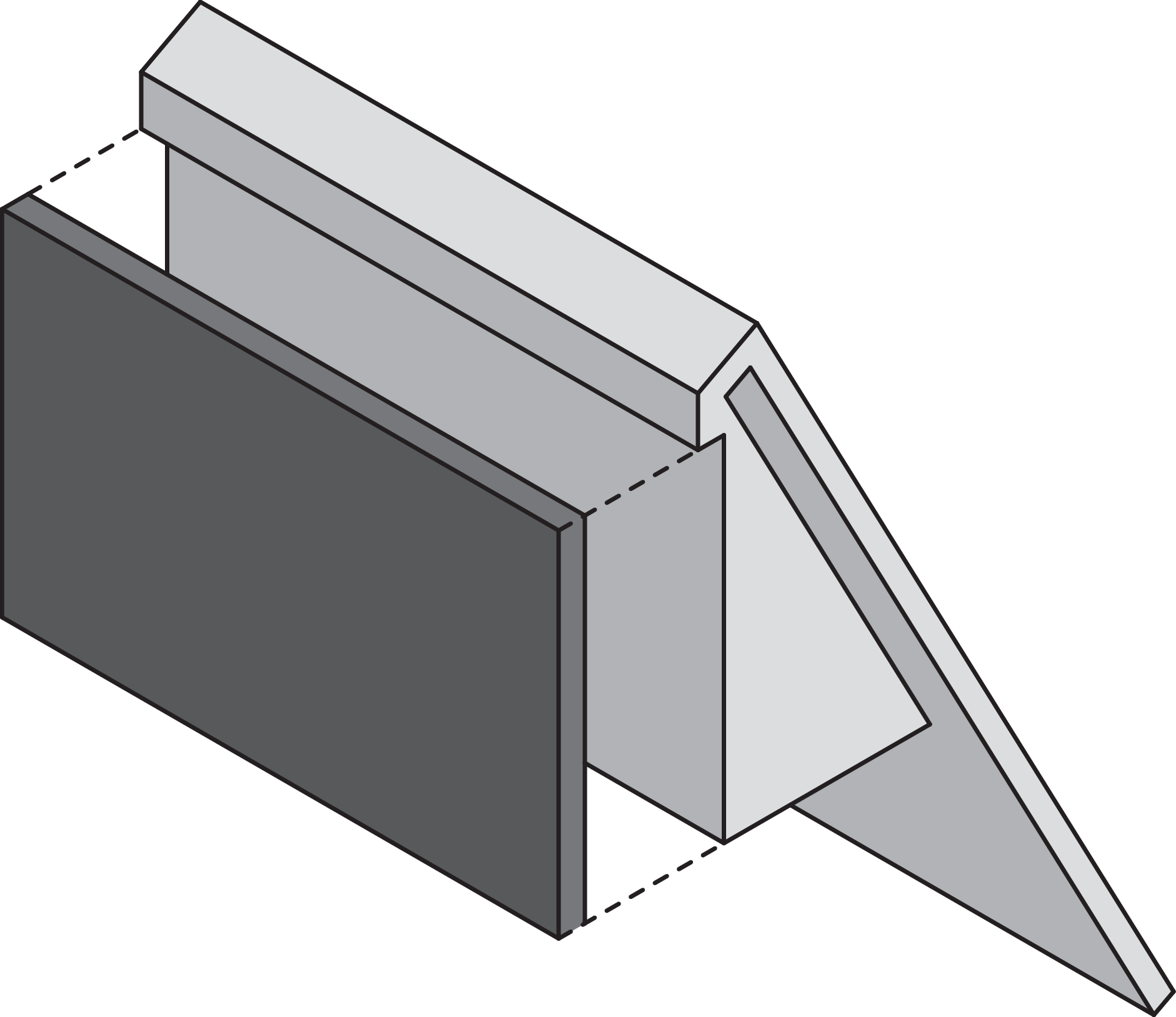
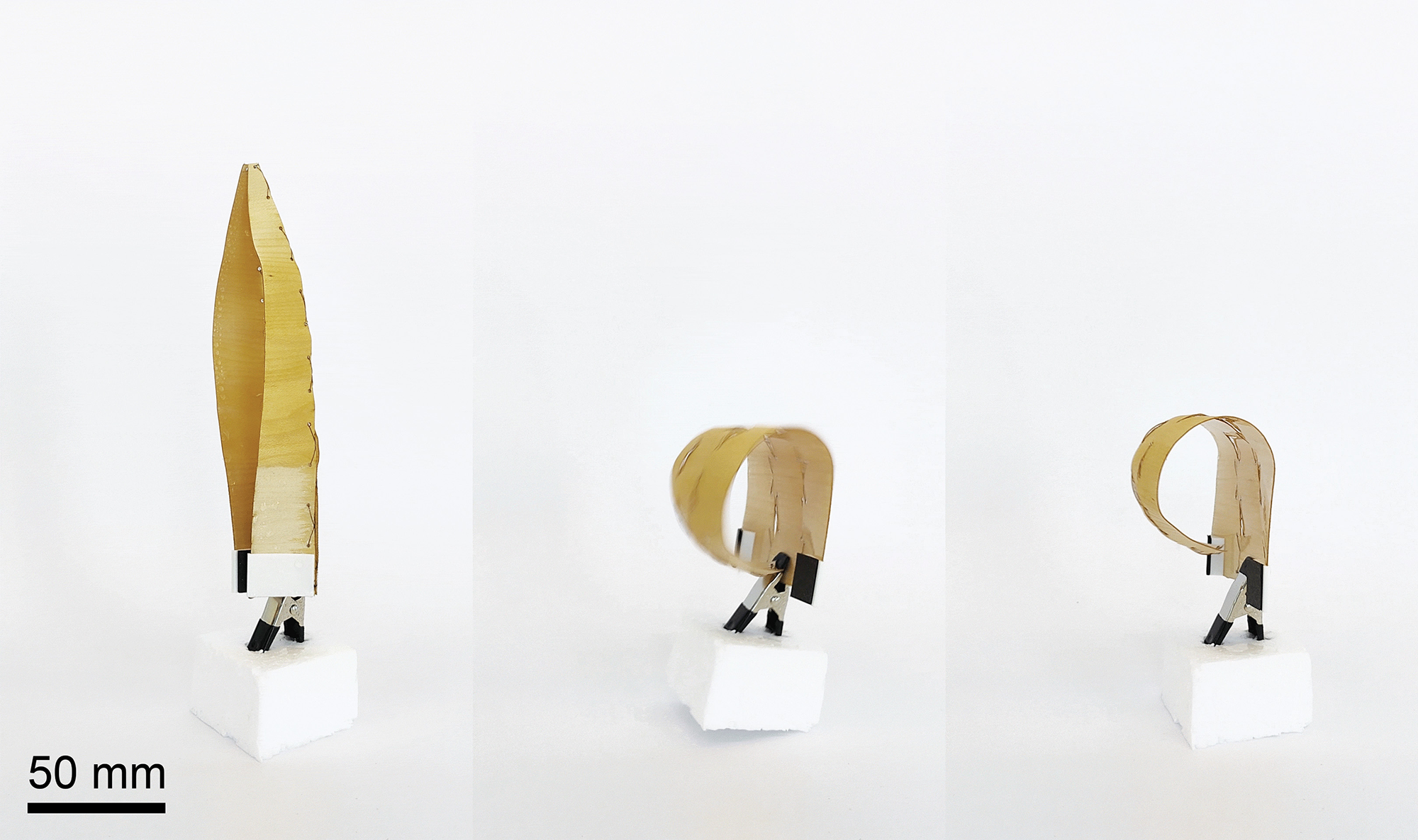
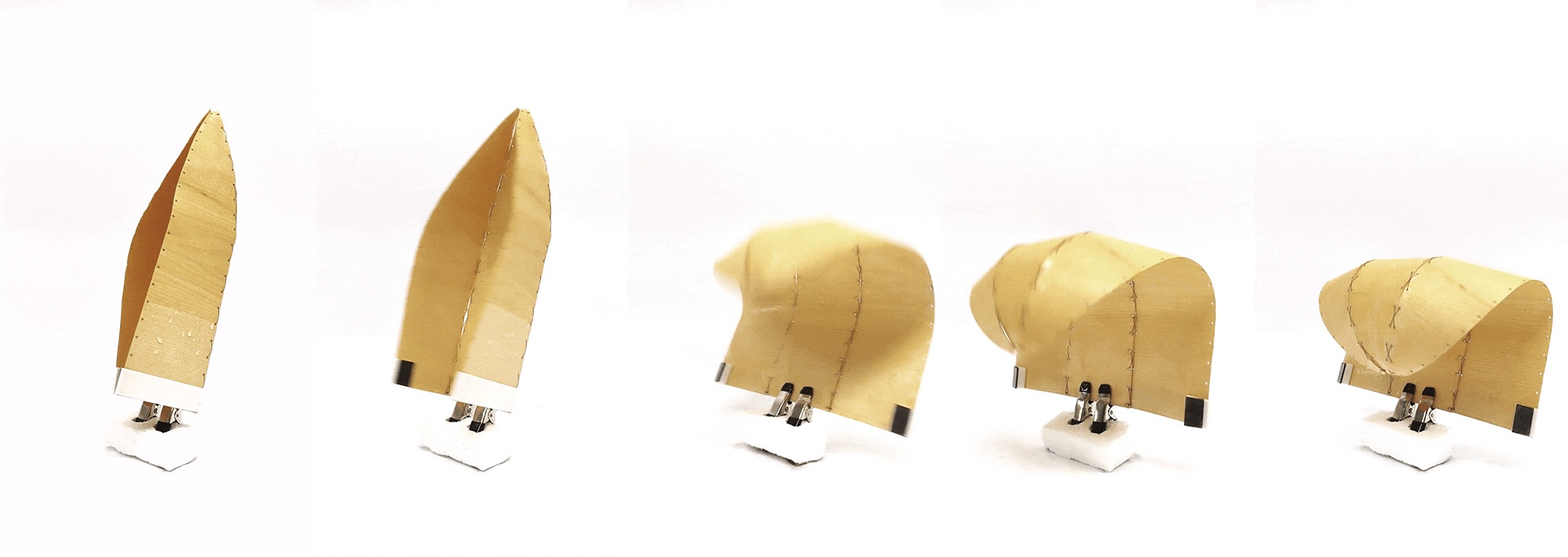
The actuation of each prototype does not require motors or electric sensors; the motion is driven solely through hygroscopic swelling and shrinking. The latch merely acts as a breakage point for the sides of the module to open. The first iteration of the latch mechanism used a simple polyethylene adhesive that would delaminate from one surface of the module when hygroscopic bending was sufficient. Though functional, this method was imprecise, and degradation after repeated use limited longevity. For maximal repeatability and threshold control, we designed and implemented a magnetic release system (Figures 16 and 17). Magnetic strength is predictable and allows for precise calibration of opening. With magnetic attraction acting as the fracture barrier, when hygroscopic-induced tension exceeds the force, separation occurs near-instantaneously (Figures 18 and 19). Variable humidity will influence the hygroscopic behavior at a range of speeds, but the stored kinetic energy must always reach the threshold magnet strength for the module to dehisce. This hybrid actuation strategy combines slow hygroscopic movement with rapid release, demonstrating a unique kinetic behavior capable of passively responding to precise change in environmental conditions.
Magnetic latch attachment.

Figure 16 Long description
A sequence of three frames taken during the hygroscopic opening of a epoxy-fiberglass laminated veneer prototype with a magnetic latch at the base. A 50mm scale bar indicates that the entire prototype is approximately 150mm tall. In the first frame, the outside of the module is visibly saturated with moisture above the laminated base, and beginning to pull apart. In the second frame, the magnetic latch has unsealed and motion blur indicates a rapid curl downwards. In the third frame, the module is still and fully curled.
Magnetic latch assembly.

Figure 17 Long description
A sequence of five frames taken during the hygroscopic opening of a epoxy-fiberglass laminated veneer prototype with a magnetic latch at the base. In the first frame the center of the module is beginning to pull apart. In the second frame, the magnetic latch has unsealed and the sides begin to fold outward. In the third frame, motion blur indicates the rapid curl of the top downwards. In the fourth and fifth frame, the module relaxes into the curled state.
Functional prototype with magnetic latch.

Functional prototype with magnetic latch, opening sequence.

Functional architectural installation
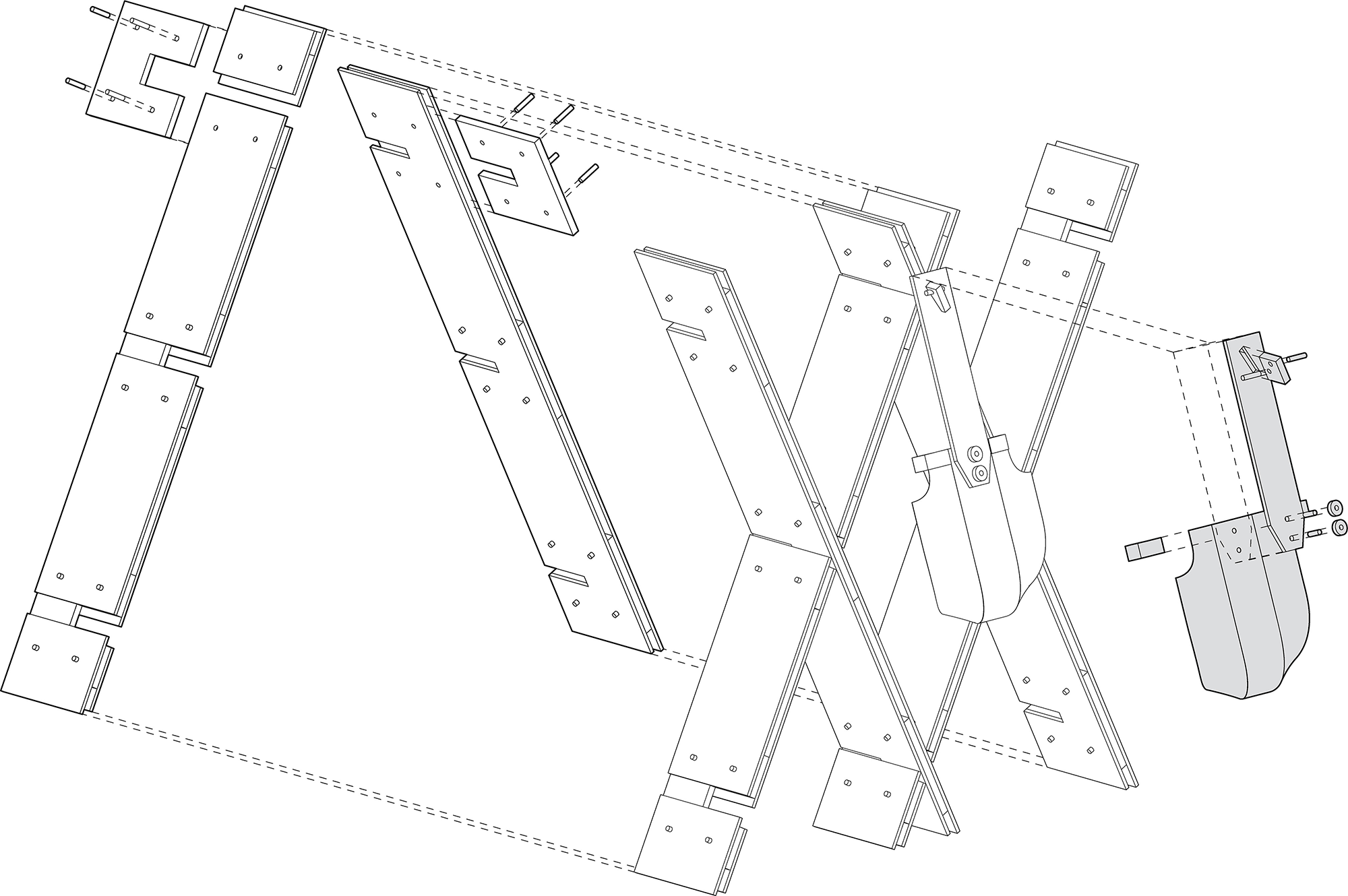
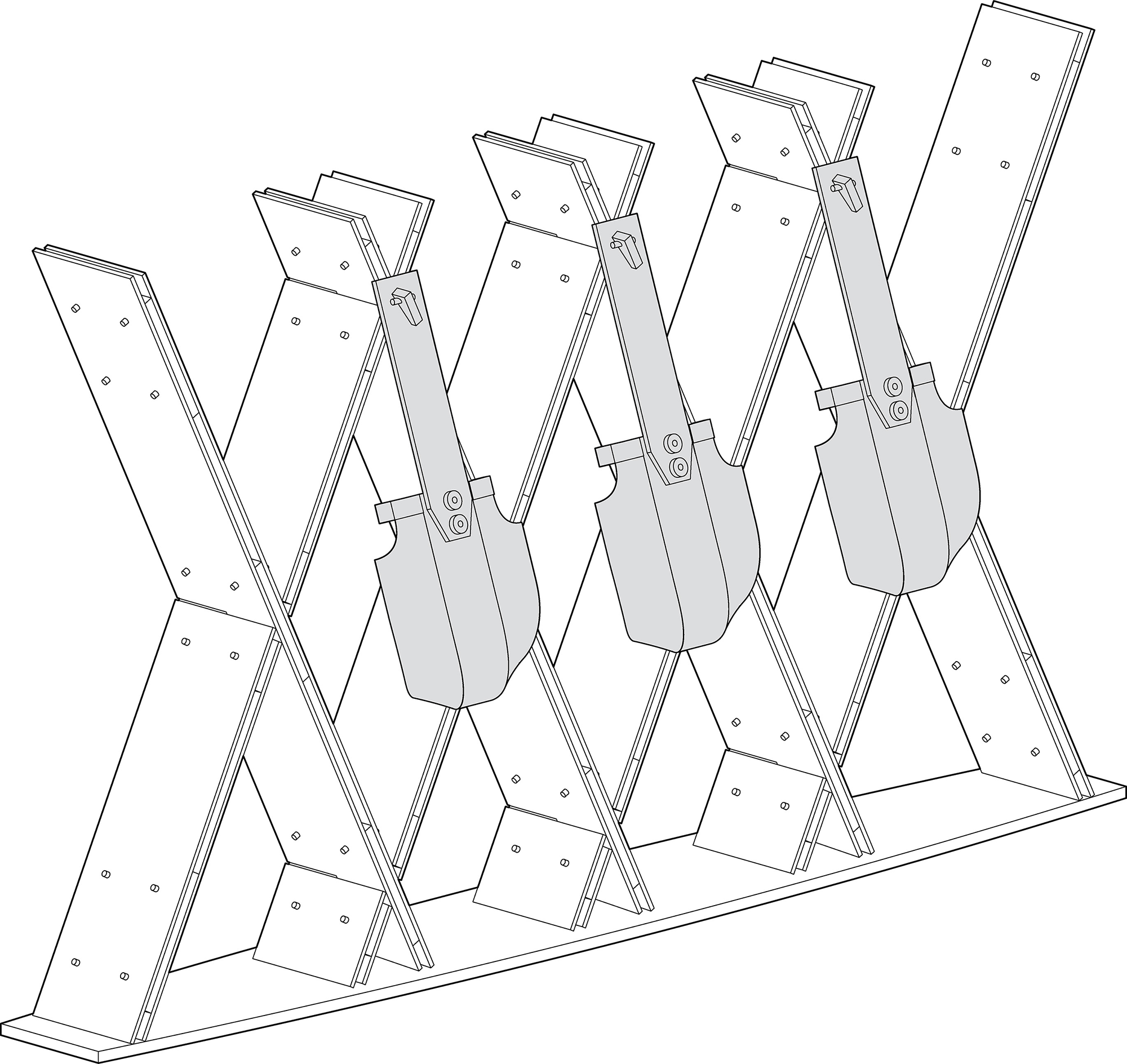
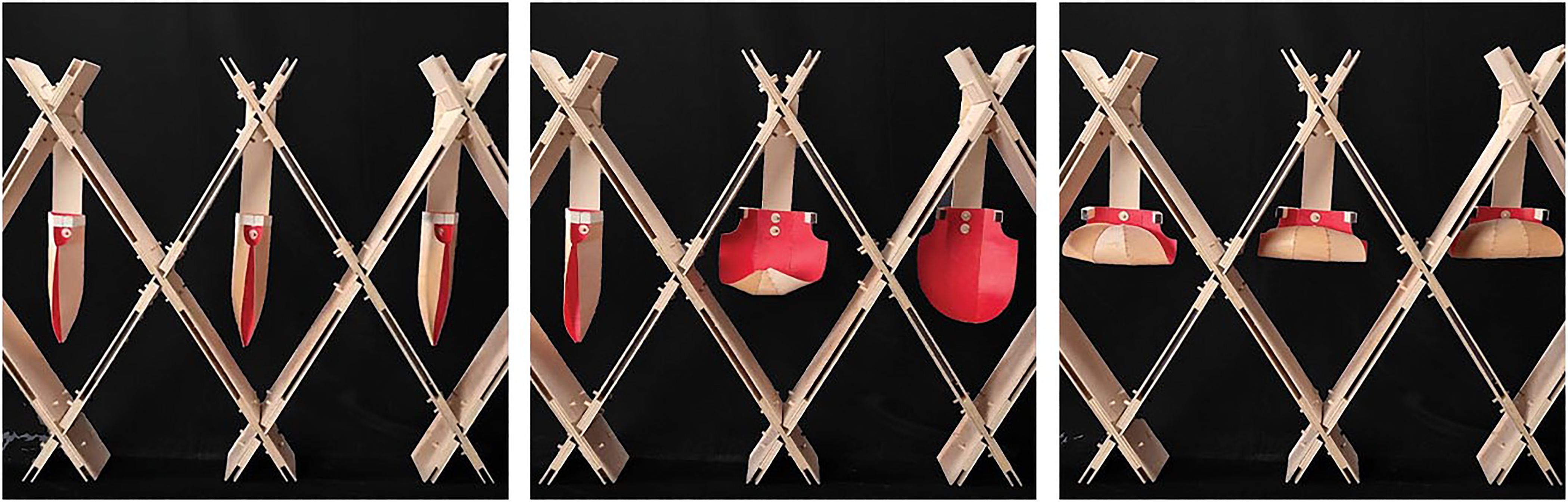
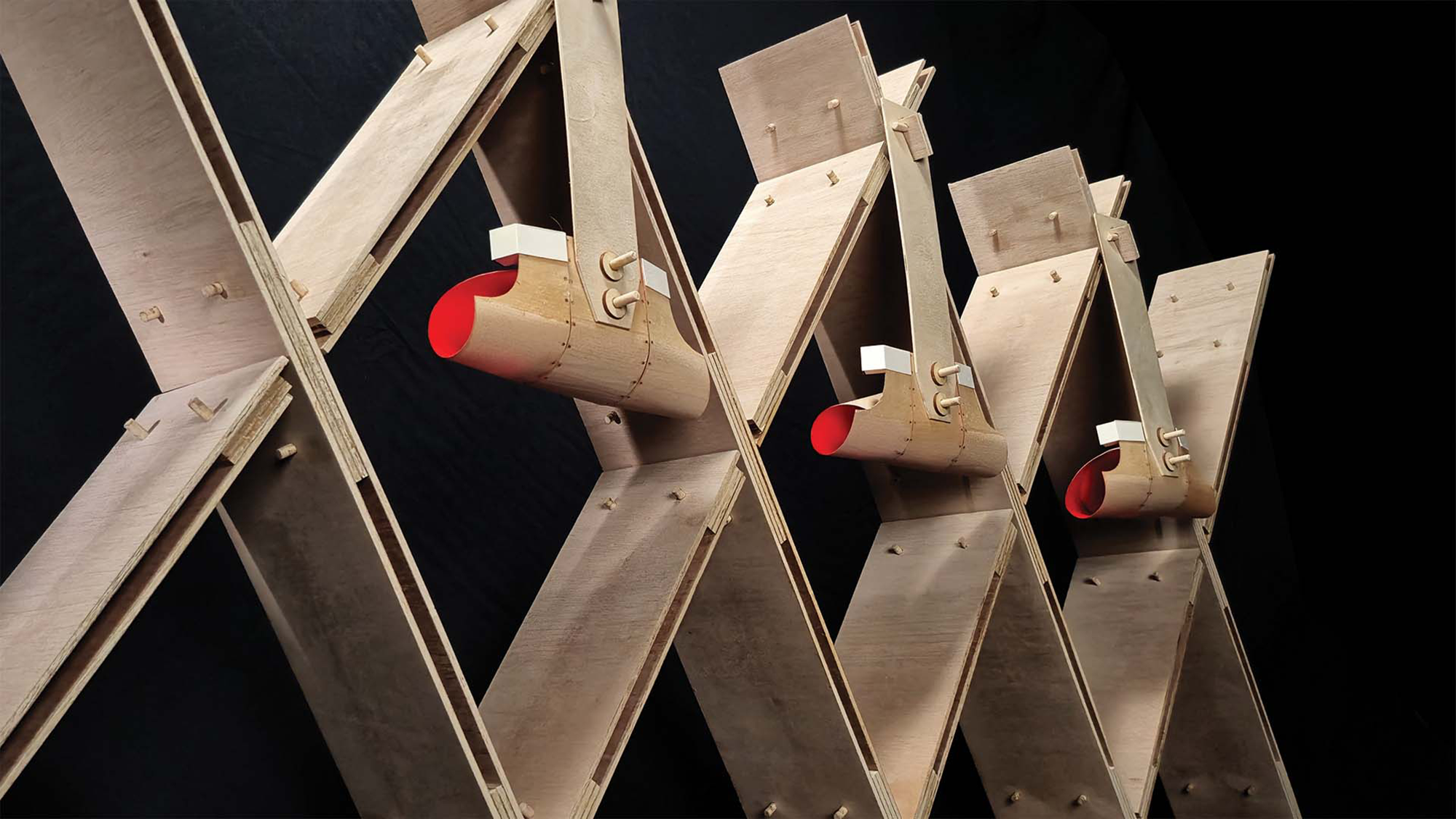
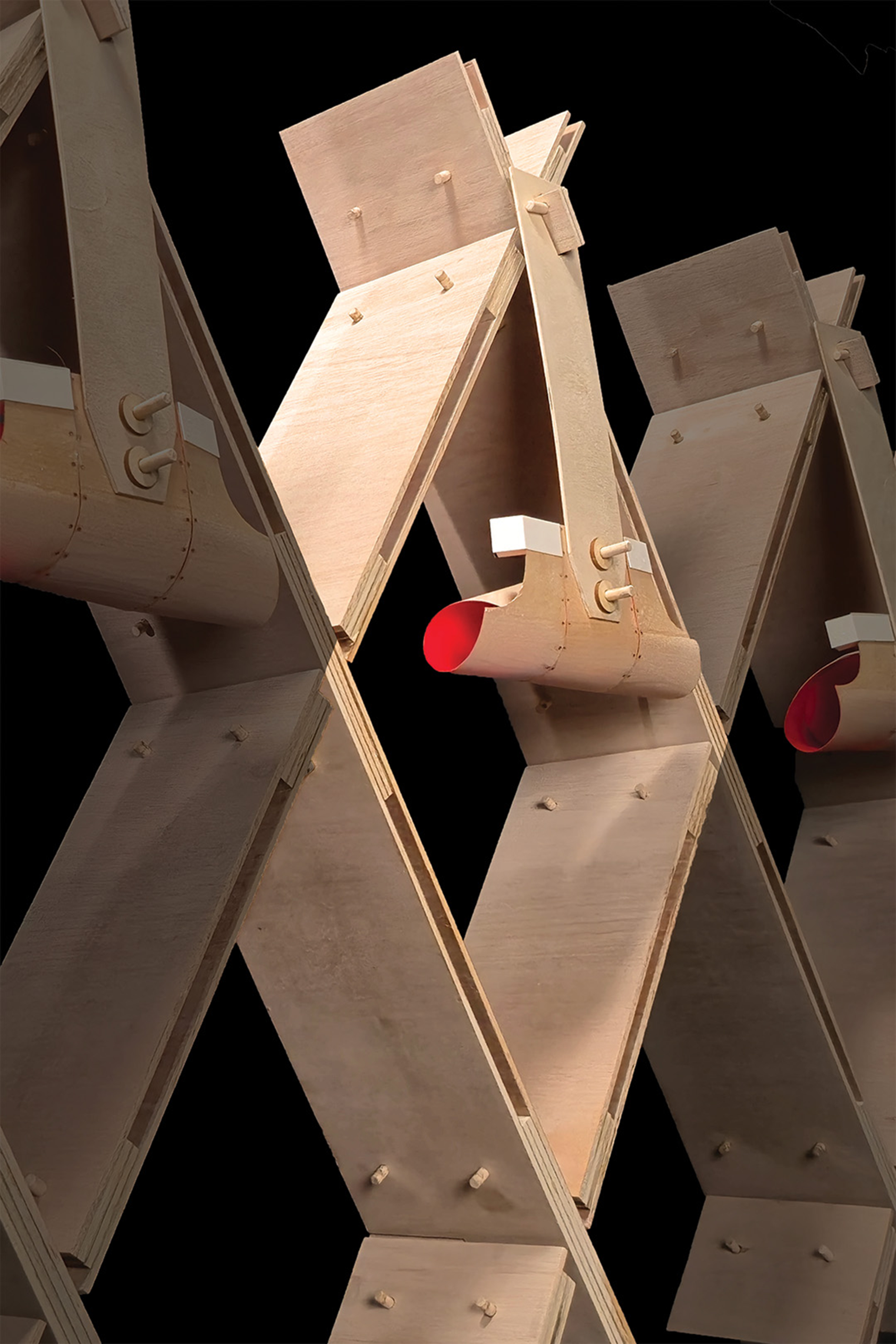
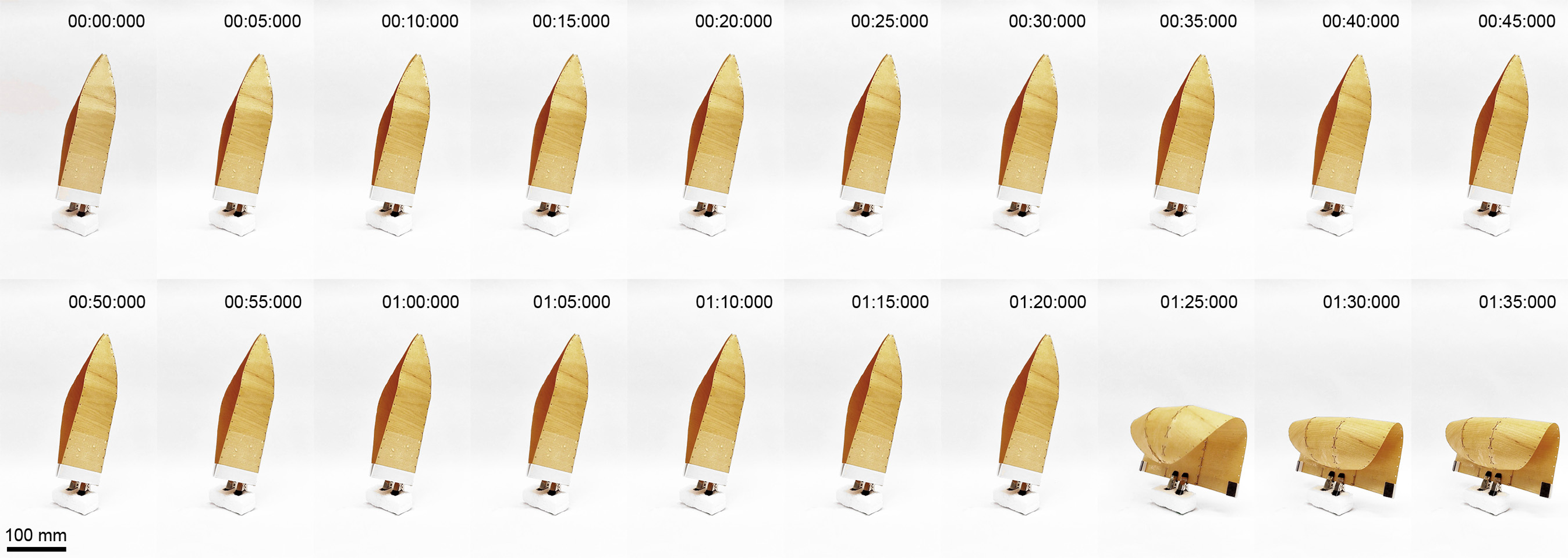
The culmination of earlier experiments in form, material system and release was a 1:1 functional prototype, designed and fabricated as a module of a larger architectural façade (Figures 20 and 21). The full-scale fabrication enabled the observation of the module function under real humidity shifts as well as assessment of fatigue after repeated actuation. The installation included three functional prototypes mounted on a diagrid (Figures 22 and 23). Opening in high moisture (Figure 24), the modules would provide shading and allow rain shedding, regulating temperature and humidity. The modules shown were calibrated with identical magnets to test the accuracy of the actuation threshold, triggering within seconds of their counterparts under similar environmental conditions.
Architectural module assembly, exploded.

Figure 20 Long description
An exploded axonometric line drawing of a segment of an architectural façade. This segment of the façade assembly comprises a single functional hygroscopic module mounted on the connection points of a diagrid. The elements of the assembly are 'exploded' with dotted lines to demonstrate how the parts will come together. The modules face away from the viewer to illustrate the connection detail on the back. Each module is attached by a flat rectangular hanger resembling a stem. All joints are friction-fit pegs, and the diagrid slots together.
Architectural module assembly.

Figure 21 Long description
An exploded axonometric line drawing of a segment of an architectural façade. This segment of the façade assembly comprises three functional hygroscopic modules mounted on the connection points of a diagrid. A flat base runs underneath the diagrid to support it. Each module is attached by a flat rectangular hanger resembling a stem. The modules face away from the viewer on the side they are mounted, curling in towards the diagrid. They are visible through the rhombus-shaped gaps on the other side.
Three-stage opening sequence in dry conditions (left), during dehiscence (center) and following dehiscence in humid conditions (right).

Figure 22 Long description
A sequence of three photos taken during the explosive dehiscence process of the final functional prototypes on a wooden diagrid. Three prototypes are visible through the gaps of the diagrid, hanging from the intersections where they are mounted via "stems". The inside of the prototypes is painted a vibrant red, which is revealed as each one opens. In the first photo, the three prototypes are held closed by the magnets at the base. In the second photo, two prototypes have sprung open. In the third photo, the prototypes have fully curled upon themselves.
Architectural module in humid conditions.

Functional prototype on diagrid.

Figure 24 Long description
A sequence of 20 timestamped images showing the full opening deformation of a single functional prototype. Each frame is taken 5 seconds apart. A 100mm scale bar indicates that the entire prototype is approximately 200mm tall. The prototype is laminated on the inside and exposed veneer on the outside, apart from a laminated strip above the base. For the first minute and 20 seconds, the outer surfaces of the prototype gradually swell apart. At the 1:25 mark, the prototype rapidly transitions to the curled state. In the remaining 10 seconds, it curls fully until the tip meets the base.
Discussion
Over the past decade, hygroscopic architectural research has demonstrated that the anisotropic swelling of wood can be harnessed to produce self-actuating apertures and shading systems without embedded electronics (Cheng et al. Reference Cheng, Tahouni, Sahin, Ulrich, Lajewski, Bonten, Wood, Rühe, Speck and Menges2024; Reichert et al. Reference Reichert, Menges and Correa2015). While these projects are pivotal in the realms of biomimetic and façade design, our presented research diverges from this lineage by introducing combined modes of actuation. This approach conceptually aligns with studies in plant biomechanics that distinguish between continuous hygroscopic motion and fracture-mediated rapid movements (Li and Wang Reference Li and Wang2016).
Most notably, the presented system separates the comparatively slow process of hygroscopic energy accumulation from the kinetic event itself. Once accumulated elastic strain exceeds the magnetic threshold (calibrated, in this case, to 90 seconds at approximately 90 percent relative humidity), release occurs near-instantaneously, producing a rapid transition between stable geometric states. Experimental observations of the 1:1 prototypes demonstrated that while humidity-driven deformation occurred gradually over extended environmental exposure at a rate dependent on relative humidity (Figure 25), the final opening event consistently occurred within 200 milliseconds (Figure 26). The slower process of drying back to the original state took several hours at ambient temperature and ambient relative humidity (approximately 21°C and 40% relative humidity. In contrast, conventional wood bilayer systems generally operate through continuous change governed directly by moisture diffusion, requiring equally long to reach and return a fully transformed state depending on thickness and ambient humidity (Correa et al. Reference Correa, Poppinga, Mylo, Westermeier, Bruchmann, Menges and Speck2020; Reichert et al. Reference Reichert, Menges and Correa2015). This distinction between gradual deformation and sudden release is critical to the behavioral novelty of the presented system.
Full opening sequence.

Figure 25 Long description
A sequence of 10 timestamped images showing the deformation at the moment of release for a single functional prototype. Each frame is taken 100 milliseconds apart. A 100mm scale bar indicates that the entire prototype is approximately 200mm tall. The prototype is laminated on the inside and exposed veneer on the outside, apart from a laminated strip above the base. The prototype springs fully open within the first 200 milliseconds, recoiling slightly from the force before settling into a fully curled state after 1 second.
Opening sequence at moment of release.

Figure 26 Long description
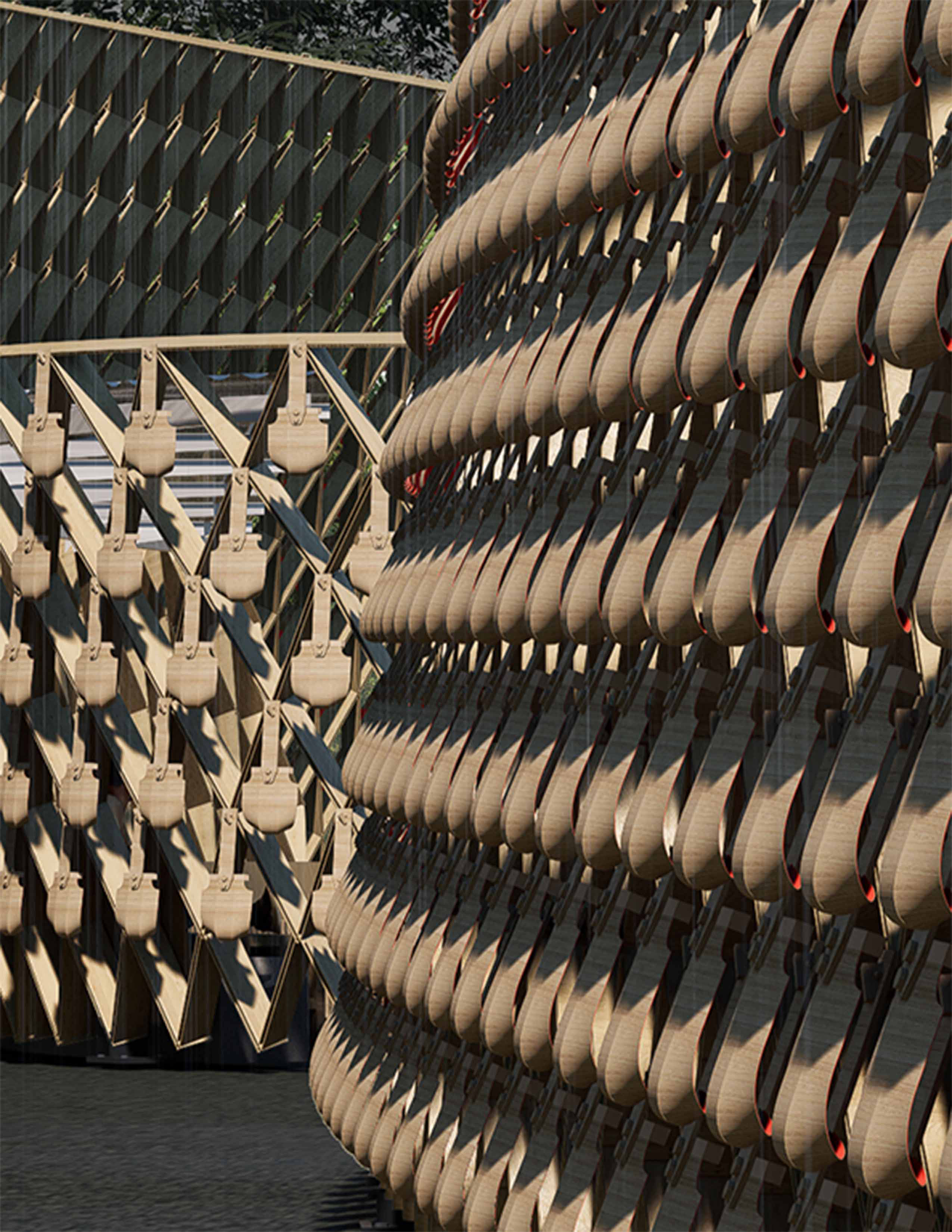
A rendering of the architectural application cropped in to three tiers of modules mounted on wooden diagrids. The closest diagrid curves away from the viewer, with the red interior of the modules visible at an angle. The diagrid in the midground faces away, showing the connection detail at the "stems" of the modules. The farthest diagrid sits at an angle where the modules are not visible through the grid.
This distinction parallels the biological role model of I. glandulifera, where energy is slowly accumulated during maturation but released explosively once the threshold strength is overcome. In I. glandulifera, the rapid response is necessary to create enough force to propel the seeds far from the stalk. While force, in our scenario, is only a byproduct of the kinetic release, we anticipate that there might be technical applications that can benefit from this rapid actuation in a dual-state system. Consider the example of the Venus flytrap’s kinetic response, wherein sufficient stimuli prompt rapid closure, followed by a lower-energy reset to the plant’s original state (Farmani et al. Reference Farmani, Hosseini, Assadi and Hassanzadeh2025). This process completes the necessary transformation but minimizes energy expenditure during reset. An architectural analog using the presented system could act as a rainscreen, which must only deploy itself abruptly when there is enough moisture for precipitation and may gradually reset to its dry state after rainfall.
From an architectural perspective, the gradual movement of typical hygroscopic systems can limit responsiveness to climatic events such as sudden rainfall or humidity spikes. It also necessitates functionality at every stage of its transformation, which may pose challenges for optimization. In the proposed dual-state system, humidity response can be fine-tuned to occupant comfort by addressing solar orientation, where locally adaptive, decentralized control strategies are an asset (Farmani et al. Reference Farmani, Hosseini, Assadi and Hassanzadeh2025). Additionally, rapid movement is much more perceptible to occupants, making environmental change visually and kinetically legible at the scale of the building envelope. Rather than functioning solely as a climatic apparatus, the façade module operates as an environmental interface, communicating atmospheric conditions to users of the space through movement.
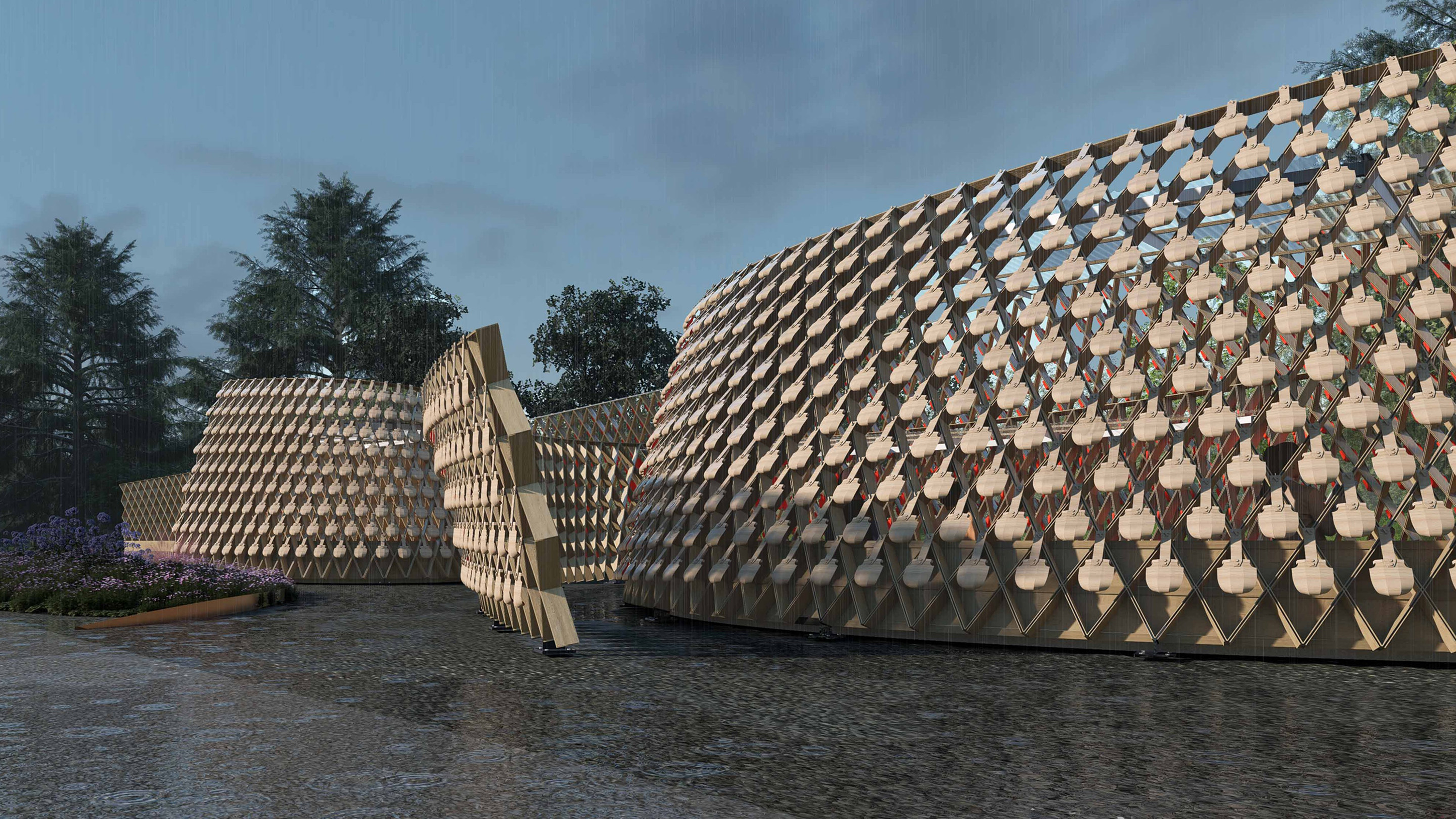
To further evaluate the architectural applications of the prototypal module, a speculative pavilion was designed as part of the research exercise (Figures 27 and 28) . The pavilion, conceived as a temporary construction in the Loki Schmidt Gardens of Hamburg, employed the same strategy as the 1:1 installation, arranging modules as a diagrid skin in an overlapping array to facilitate rain shedding. The façade would remain closed under stable dry conditions, maintaining envelope integrity.
Rendering of architectural application.

Figure 27 Long description
A rendering of the architectural pavilion within a botanic garden. The pavilion is made of curving, ribbon-like wooden diagrids with the hygroscopic modules mounted at each intersection. The ground is wet, the sky is overcast, and the modules are open to indicate a humid day. The closest diagrids curve away from the viewer, obscuring the red interior of the modules. The gaps in the reveal further areas partially enclosed by the ribbon-like pavilion where the modules face inwards, showing their colours to the viewers.
Rendering of architectural pavilion.

During periods of increasing humidity, including the onset of rainfall, modules would accumulate elastic energy and open in rapid succession once local thresholds were exceeded. The resulting transformation would be functional and aesthetic, regulating ventilation while rendering environmental change legible to occupants and onlookers. A drawback of the application within this context is that the module and diagrid are ultimately permeable to the elements. While creating a screen from climatic conditions, this module does little to provide an airtight or watertight envelope. This is in part due to the geometry of the prototypes and in part due to their diagrid arrangement. Future applications might optimize the form to reduce permeability for greater human comfort and environmental performance. In this example, the ability for rapid, threshold-based opening theoretically allows for more precise temperature and humidity management than typical passive façades. The “explosive” functional component increases the visibility of biodesign, encouraging visitors to participate in both the interactive exhibit and the tribute to its biological inspirations. The durability and flexibility of the module itself allow them to be mechanically triggered to open prematurely without impacting future repeatability. This engages a social dimension of biodesign unforeseen at the onset of this project; that bio-inspired passive technologies may prove to be more intuitively engaging than their high-tech counterparts.
Conclusion
This prototypal research presents a reversible architectural analog of botanical dehiscence, translating the explosive seed dispersal of I. glandulifera into a threshold-based hygroscopic façade module. This analog is one of many potential interpretations and applications of the underused dehiscent mechanism. By combining the passive technology of anisotropic hygroscopic bilayers with calibrated magnetic release, the system produces precise, rapid and repeatable motion. The resulting 1:1 prototype demonstrates how “explosive” actuation can extend the vocabulary of biomimetic architecture beyond gradual adaptation, introducing discrete states that are climatically responsive and experientially engaging. While questions and challenges remain in long-term durability and environmental calibration, the presented work contributes towards the future development of adaptive envelopes, illustrating how biodesign promotes greater and more intentional connection between form, material and environmental function.
Data availability statement
The authors confirm that the data pertaining to this project are available within the article and its supplementary materials.
Acknowledgements
This research was done as part of the Biomimetic Design Studio for undergraduate students in the University of Waterloo School of Architecture. It would not be possible without the advisory and expertise of David Correa, Linnea Hesse, Elena Vazquez and many other reviewers. An additional thank you to Siobhán Allman for their review and to all our friends and colleagues at the University of Waterloo for their support.
Author contributions
Conceptualization: B.R; T.C; J.M. Investigation: B.R; T.C; J.M. Methodology: B.R; T.C; J.M. Resources: D.C. Supervision: D.C; E.V; L.H. Visualization: B.R; T.C; J.M. Writing original draft: B.R. Writing review & editing: T.C; J.M; D.C; E.V; L.H. All authors approved the final submitted draft.
Financial support
This research was supported by the University of Waterloo with no specific grants from any funding agency in the public, commercial or not-for-profit sectors.
Competing interests
The authors declare none.
Ethical standards
The research meets all ethical guidelines, including adherence to the legal requirements of the study country.


 Open access

