Implications
Protein fermentation, as a result of excessive supply of dietary protein to piglets’ intestinal microbiota, could be regarded as one factor for the development of enteric diseases. Although some results are inconsistent, it appears that a lower amount of protein reaching the lower gastrointestinal tract (GIT) may reduce the incidence of diarrhea and inhibit proliferation of pathogenic bacteria especially in stress situations, such as a high pressure of infections. Furthermore, dietary inclusion of fermentable carbohydrates shows the potential to reduce detrimental protein fermentation and growth of potential pathogens.
Introduction
The GIT of mature pigs harbors a quite stable microbiota, mainly consisting of beneficial members such as lactobacilli but also potential pathogenic bacteria, for example, Escherichia coli (Gaskins, Reference Gaskins2001). However, there is a critical period around weaning because of the transition from liquid (sow milk) to solid feed, accompanied by morphological, histological, physiological and microbial changes in the GIT of young mammals (Pluske et al., Reference Pluske, Hampson and Williams1997), often in addition to environmental and social stress on the animal (Etheridge et al., Reference Etheridge, Seerley and Wyatt1984). This period is often associated with a high incidence of post-weaning diarrhea (PWD) caused by potential pathogens such as E. coli (Hampson, Reference Hampson1994). Until 2006, in-feed antibiotics have been frequently used in pig production to suppress gastrointestinal proliferation of pathogenic bacterial strains, thereby reducing the incidence of enteric diseases during the weaning period. Nowadays, it is increasingly being realized that GIT health is largely influenced by the composition of the microbial community and diverse end-products of bacterial metabolism (Klose et al., Reference Klose, Bayer, Bruckbeck, Schatzmayr and Loibner2010). In this context, diet composition has been identified as a major factor being responsible for differences in composition and function of the microbiota harboring the GIT of pigs (Mosenthin et al., Reference Mosenthin, Hambrecht and Sauer1999). Thus, nutritional strategies to modulate the intestinal microbial ecosystem appear to be a useful tool to improve GIT health. For example, enhancing growth and metabolic activity of beneficial members of the gastrointestinal microbiota and therefore promoting a stable GIT ecosystem by specific dietary ingredients provides one major option (Bauer et al., Reference Bauer, Williams, Smidt, Mosenthin and Verstegen2006). Accordingly, fermentable carbohydrates such as different types of resistant starch, non-starch polysaccharides (NSP) and nondigestible oligosaccharides have been shown to enhance proliferation of beneficial bacteria in the small intestine (Bikker et al., Reference Bikker, Dirkzwager, Fledderus, Trevis, le Huërou-Luron, Lallès and Awati2007). As a result, there was an increased production of straight-chain short-chain fatty acids (SCFA) that may be used as energy source by the host (Gaskins, Reference Gaskins2001), but which are also known to exert selective antimicrobial effects against certain pathogens (Dongowski et al., Reference Dongowski, Huth, Gebhardt and Flamme2002). On the other hand, excessive fermentation of dietary protein should be avoided because of the production of detrimental substances, including ammonia, amines and phenols (Jensen, Reference Jensen2001). These substances have been associated with various detrimental effects in the GIT of the host animal, such as cytopathic effects on epithelial cells (e.g. Gaskins, Reference Gaskins2001). In addition, fermentation of protein often coincides with the growth of potential pathogens, such as Bacteroides and Clostridium species, thereby increasing the risk for infectious diseases (Macfarlane and Macfarlane, Reference Macfarlane and Macfarlane1995). Depending on the source of protein in the diet but also the total amount of dietary protein fed to the animal, the availability of fermentable protein for the gastrointestinal microbiota may vary, thereby furnishing different amounts of substrate for bacterial proliferation and metabolic activity (Etheridge et al., Reference Etheridge, Seerley and Wyatt1984). Thus, by selecting feed ingredients containing protein of rather high ileal digestibility, a surplus of protein reaching the large intestine and serving there as substrate for protein-fermenting bacteria, could be avoided (Pluske et al., Reference Pluske, Pethick, Hopwood and Hampson2002). In that way, both the proliferation of protein-fermenting potential pathogens and the production of detrimental metabolites of protein fermentation can be suppressed. On the other hand, reducing the amount of dietary protein reaching the large intestine by lowering the total supply of dietary protein to the pig has also been described as an alternative option to avoid excessive protein fermentation (Heo et al., Reference Heo, Kim, Hansen, Mullan, Hampson and Pluske2008). It is acknowledged that this approach potentially contributes to improvements in pigs’ health conditions and growth performance (Williams et al., Reference Williams, Bosch, Awati, Konstantinov, Smidt, Akkermans, Verstegen and Tamminga2005); however, the implementation of this strategy is limited by the animals’ minimum requirement for protein and amino acids (AA; Nyachoti et al., Reference Nyachoti, Omogbenigun, Rademacher and Blank2006).
There is currently considerable interest in scrutinizing the potentials and limitations of different strategies to minimize detrimental protein fermentation and the number of protein-fermenting bacteria in the GIT of pigs (e.g. Heo et al., Reference Heo, Kim, Hansen, Mullan, Hampson and Pluske2008; de Lange et al., Reference De Lange, Pluske, Gong and Nyachoti2010). The main focus of the present review is directed to the discussion and comparative evaluation of these strategies.
The microbial ecosystem of the GIT: composition and interactions with the host
The GIT of monogastric animals including humans and pigs harbors a complex, numerically dense and metabolically active community of microbes (Macfarlane and Macfarlane, Reference Macfarlane and Macfarlane2007). In pigs, the gastrointestinal microbiota is primarily composed of not only Gram-positive bacteria, such as aerotolerant Streptococcus, microaerobe or obligate anaerobe Lactobacillus, Bifidobacterium, obligate anaerobe Peptostreptococcus, Clostridium and Ruminococcus, facultative anaerobe Escherichia, but also obligate anaerobe Gram-negative bacteria such as Fusobacterium, Bacteroides, Selenomonas, Butyrivibrio and Prevotella. Detailed reports on the composition of the pigs’ gastrointestinal microbiota have been published elsewhere (e.g. Gaskins, Reference Gaskins2001). Both, the relative proportion of species and the absolute quantity of bacteria, vary considerably along the digestive tract (Savage, Reference Savage1977), with bacterial densities generally increasing from the proximal to the distal parts of the GIT (Gaskins Reference Gaskins2001; Jensen, Reference Jensen2001). In contrast to the human GIT, the pigs’ GIT also harbors a substantial number of indigenous bacteria, mainly lactobacilli, in proximal sections, that is, in the stomach (Conway, Reference Conway1994) and small intestine (Jensen and Jørgensen, Reference Jensen and Jørgensen1994). In addition to a proximal to distal gradient in bacterial density within the GIT of pigs, there is also a radial distribution of microbes within each segment of the gut. In total, there are four microhabitats colonized by the commensal microbiota, which include the gastrointestinal lumen, the unstirred mucus layer, the deep mucus in the crypts and the surface of the intestinal epithelial cells (Pluske et al., Reference Pluske, Pethick, Hopwood and Hampson2002). Consequently, the microbiota present in digesta and feces is not fully representative for the entire GIT microbiota, even though digesta will likely contain microbes from mucosa that have been shed into the digesta as a result of mucosal sloughing or release of attached microbes (Richards et al., Reference Richards, Gong and de Lange2005).
There exist mutual interactions between host organism and gastrointestinal microbiota. This has been shown for different species, for example, men, rats (Collinder et al., Reference Collinder, Björnhag, Cardona, Norin, Rehbinder and Midtvedt2003) and pigs (Hopwood and Hampson, Reference Hopwood and Hampson2003). For example, the composition and activity of the gastrointestinal microbiota is influenced by immune and stress status of the host, pathogen pressure originating from the environment and competition for substrates of endogenous and exogenous origin, such as carbohydrates, AA or minerals (Stewart et al., Reference Stewart, Hillman, Maxwell, Kelly and King1993). Moreover, the presence of local defense systems such as specific immune response, as well as gut receptors to which certain bacteria may attach, will also affect the prevailing microbial community (Stewart et al., Reference Stewart, Hillman, Maxwell, Kelly and King1993). On the other hand, the gastrointestinal microbiota supports the host animal through immune modulation (Fanning et al., Reference Fanning, Hall, Cronin, Zomer, MacSharry, Goulding, O'Connell Motherway, Shanahan, Nally, Dougan and van Sinderen2012), colonization resistance against pathogens via competition for nutrients and adhesion sites or production of antimicrobial substances (Rolfe, Reference Rolfe1997). According to an in vitro study by Roselli et al. (Reference Roselli, Finamore, Britti, Konstantinov, Smidt, de Vos and Mengheri2007) using porcine intestinal epithelial cells, some lactobacilli strains are able to exert protective effects against damages of the epithelial barrier induced by enterotoxigenic E. coli. Furthermore, the gastrointestinal microbiota provides nutrients to the host, for example, by production of straight-chain SCFA, which are rapidly absorbed from the large intestine as energy source (Gaskins, Reference Gaskins2001). There are also metabolic costs to the host because of bacterial degradation of dietary or endogenous protein resulting in lower availability of AA and energy for maintenance and protein synthesis (Columbus et al., Reference Columbus, Cant and de Lange2010). Furthermore, bacteria can have a direct impact on the genetic programming of the GIT (Kelly and King, Reference Kelly and King2001) such as gene expression of epithelial cells, for example, of genes coding for brush border digestive enzymes (Willing and van Kessel, Reference Willing and Van Kessel2009).
Carbohydrate fermentation
Fermentable carbohydrates reaching the GIT are the major source of energy for the gastrointestinal microbiota. They consist of different types of resistant starch, NSP, nondigestible oligosaccharides, such as fructo- or galactooligosaccharides, but also inulin (Houdijk et al., Reference Houdijk, Hartemink, Verstegen and Bosch2002). Fermentation of carbohydrates is considered to be most pronounced in the proximal colon where higher concentrations of SCFA and a more acidic pH have been determined (Williams et al., Reference Williams, Bosch, Awati, Konstantinov, Smidt, Akkermans, Verstegen and Tamminga2005). However, certain carbohydrates including starch, some soluble β-glucans, oligosaccharides and short-chain inulin may also be fermented in the small intestine. The saccharolytic activity of the gastrointestinal microbiota is considered to be beneficial for the host (Geboes et al., Reference Geboes, de Hertogh, de Preter, Luypaerts, Bammens, Evenepoel, Ghoos, Geboes, Rutgeerts and Verbeke2006) because of the formation of various straight-chain SCFA including acetic, propionic and butyric acid. In addition, different fermentation gases (H2, CO2 and methane) are being produced (Varel and Yen, Reference Varel and Yen1997). The trophic effect of SCFA on the intestinal epithelium has been reviewed elsewhere (e.g. Bauer et al., Reference Bauer, Williams, Smidt, Mosenthin and Verstegen2006). Moreover, SCFA create a slightly acidic environment (Unger and Viernstein, Reference Unger and Viernstein2004), thereby preventing the growth of acid-sensitive detrimental bacteria, including pathogenic Salmonella and E. coli (Wells et al., Reference Wells, Yen and Miller2005). SCFA are rapidly absorbed from the hindgut and may provide up to 30% of the maintenance energy requirements for growing pigs (Morita et al., Reference Morita, Kasaoka and Kiriyama2004). The promotion of specific bacterial groups or strains with beneficial properties for the host is mainly directed to the proliferation of Lactobacillus and Bifidobacterium, also referred to as probiotic bacteria. These genera are known for playing an important role in inhibiting the establishment of pathogenic bacteria via a mechanism known as competitive exclusion, also described as colonization resistance, for example, by better competing for nutrients or adhesion sites (Van der Waaij et al., Reference Van der Waaij1991). However, it has to be considered that the microbiota of the porcine GIT appears to be highly individual (Loh et al., Reference Loh, Eberhard, Brunner, Hennig, Kuhla, Kleessen and Metges2006), and that in the intestinal contents of about 60% of the assessed pigs no bifidobacteria were detectable (e.g. Loh et al., Reference Loh, Eberhard, Brunner, Hennig, Kuhla, Kleessen and Metges2006). However, according to Loh et al. (Reference Loh, Eberhard, Brunner, Hennig, Kuhla, Kleessen and Metges2006), the role of bifidobacteria in the GIT of pigs is underestimated, maybe because of the analytical detection methods, such as fluorescent in situ hybridization, where the detection limit is comparably high, which may partly explain the low number of bifidobacteria.
Furthermore, lactic acid, as produced during carbohydrate fermentation by many intestinal bacteria, such as lactobacilli, bifidobacteria or enterococci, is utilized in the GIT of pigs by Megasphera, Selenomonas and Veillonella, resulting in the formation of acetate, propionate but also butyrate (Duncan et al., Reference Duncan, Louis and Flint2004), the preferred energy source of colonocytes (Loh et al., Reference Loh, Eberhard, Brunner, Hennig, Kuhla, Kleessen and Metges2006). Eubacterium spp. and Clostridium spp. also seem to be able to utilize lactate, but need extracellular acetate to produce butyrate (Ushida et al., Reference Ushida, Hoshi and Ajisaka2002). This cross-feeding between intestinal bacteria plays an important role in preventing intestinal diseases, otherwise lactate may assimilate in the large intestine and cause diarrhea because of dyspepsia (Ushida et al., Reference Ushida, Hoshi and Ajisaka2002).
Protein fermentation
In addition to carbohydrates, protein both from exogenous and endogenous sources can be used as a fermentable substrate by the gastrointestinal microbiota (Macfarlane and Macfarlane, Reference Macfarlane and Macfarlane1995). Although for the pig, a considerable part of the carbohydrate fraction is fermented in the proximal parts of the GIT, protein fermentation takes place more distally, in particular, when there are less fermentable carbohydrates available (Williams et al., Reference Williams, Bosch, Awati, Konstantinov, Smidt, Akkermans, Verstegen and Tamminga2005). However, as protein is present throughout the whole GIT in the form of nondegradable and endogenous sources (Williams et al., Reference Williams, Bosch, Awati, Konstantinov, Smidt, Akkermans, Verstegen and Tamminga2005), some fermentation may also occur in the small intestine, mainly of AA and peptides. The degradation of protein results – unlike the fermentation of carbohydrates – in a number of additional metabolites such as branched-chain fatty acids (BCFA), but also potentially toxic products including ammonia, amines, phenols and indoles are being formed (Williams et al., Reference Williams, Bosch, Awati, Konstantinov, Smidt, Akkermans, Verstegen and Tamminga2005; Bikker et al., Reference Bikker, Dirkzwager, Fledderus, Trevis, le Huërou-Luron, Lallès and Awati2007). The BCFA originate from the deamination of branched-chain AA such as valine, isoleucine and leucine, and include iso-butyrate, 2-methyl-butyrate and iso-valerate (Macfarlane and Macfarlane, Reference Macfarlane and Macfarlane1995). These substances are formed by many bacteria such as Bacteroides spp., Propionibacterium spp., Streptococcus and Clostridium species. For example, BCFA are produced in large amounts by clostridia via the Stickland reaction (Macfarlane and Macfarlane, Reference Macfarlane and Macfarlane1995). This chemical reaction involves the coupled oxidation and reduction of AA to organic acids. Thus, intestinal concentrations of BCFA may be used as indicator for the extent of protein fermentation (Macfarlane et al., Reference Macfarlane, Gibson, Beatty and Cummings1992).
Ammonia
Ammonia present in the GIT of pigs is a toxic catabolite of microbial AA deamination, or it originates from urea hydrolysis due to the action of bacterial urease (Mosenthin et al., Reference Mosenthin, Sauer, Henkel, Ahrens and de Lange1992). Ammonia is rapidly absorbed into the portal blood, converted to urea in the liver and subsequently excreted in the urine. A second pathway is that ammonia is assimilated by bacteria to synthesize bacterial protein, provided that fermentable carbohydrates are available to be used as energy source. Such a shift of urinary to fecal nitrogen excretion may help to reduce ammonia emission (Mosenthin et al., Reference Mosenthin, Sauer, Henkel, Ahrens and de Lange1992). Ammonia is one of the major odor components of pig manure contributing to environmental pollution (Otto et al., Reference Otto, Yokoyama, Hengemuehle, von Bermuth, van Kempen and Trottier2003). The concentration of ammonia in the large intestine depends on the balance between AA deamination and bacterial protein synthesis (Mosenthin et al., Reference Mosenthin, Sauer, Henkel, Ahrens and de Lange1992; Hughes et al., Reference Hughes, Magee and Bingham2000). Therefore, a reduction of ammonia emission from pig manure seems to be possible by lowering dietary protein (Otto et al., Reference Otto, Yokoyama, Hengemuehle, von Bermuth, van Kempen and Trottier2003).
Amines
A number of gastrointestinal bacteria such as Bacteroides, clostridia and bifidobacteria but also enterobacteria, lactobacilli and streptococci are capable of producing amines through decarboxylation of AA. Therefore, high levels of amines in pigs’ digesta and feces eventually indicate an increased activity of these bacteria in the GIT (Gaskins, Reference Gaskins2001). Amines include monoamines such as tyramine, dimethylamine but also polyamines including cadaverine, agmatine, histamine, spermidine, putrescine and spermine (Pietrzak et al., Reference Pietrzak, Schad, Zentek and Mosenthin2002). As was reviewed by Pietrzak et al. (Reference Pietrzak, Schad, Zentek and Mosenthin2002), they may exert varying physiological effects on the host. For example, some polyamines, such as spermidine and spermine, have been shown to be essential for somatic cell growth. On the other hand, above certain threshold levels, amines present in the GIT may produce detrimental effects such as increasing the incidence of diarrhea (Pietrzak et al., Reference Pietrzak, Schad, Zentek and Mosenthin2002). In humans, amines are rapidly absorbed from the colon, and are either detoxified by mono- and diamine oxidases in the gut mucosa or liver, or excreted via urine (Hughes et al., Reference Hughes, Magee and Bingham2000). These findings have been confirmed for histamine in pig's colon by Aschenbach et al. (Reference Aschenbach, Schwelberger, Ahrens, Fürll and Gäbel2006).
Phenolic compounds
Phenolic and indolic compounds are microbially produced from the aromatic AA phenylalanine, tyrosine and tryptophan. Major genera that have been identified to break down aromatic AA are Bacteroides, clostridia and bifidobacteria (Macfarlane and Macfarlane, Reference Macfarlane and Macfarlane1995). In the healthy GIT of humans, phenolic compounds are absorbed in the colon. Thereafter, they are detoxified by means of glucuronide and sulfate conjugation in colonic mucosa or liver and excreted via urine, principally as p-cresols (Hughes et al., Reference Hughes, Magee and Bingham2000). A positive correlation between dietary protein intake and urinary phenol excretion has been reported in pigs (Otto et al., Reference Otto, Yokoyama, Hengemuehle, von Bermuth, van Kempen and Trottier2003).
Impact of dietary protein on the incidence of PWD
Abrupt weaning of young piglets is characterized by a sudden transit from a milk-based to a solid feed-based diet (Kluess et al., Reference Kluess, Schoenhusen, Souffrant, Jones and Miller2010). As a result, a marked decrease in voluntary feed intake may occur before the piglets adapt to solid feed (e.g. Hopwood and Hampson, Reference Hopwood and Hampson2003). Changes in feeding behavior and diet composition are also reflected in considerable alterations in the composition of the gastrointestinal microbiota adapting to the new environment (Kluess et al., Reference Kluess, Schoenhusen, Souffrant, Jones and Miller2010). This period is often associated with a growth check because of a high incidence of gastrointestinal disorders such as PWD (Aherne et al., Reference Aherne, Hogberg, Kornegay, Shurson, Brocksmith, Brocksmith, Hollis and Pettigrew1992). Commonly, PWD is characterized by an increase in microbial fermentation of undigested protein, resulting in the formation of watery feces in combination with growth impairment, morbidity and even mortality (Wellock et al., Reference Wellock, Fortomaris, Houdijk and Kyriazakis2008a). Some studies have been conducted to assess the detrimental effect of protein fermentation on piglets’ GIT health. For example, Heo et al. (Reference Heo, Kim, Hansen, Mullan, Hampson and Pluske2008) reported elevated plasma urea levels, together with a higher incidence of PWD when feeding a high- (243 g/kg) compared with a low- (173 g/kg) CP diet to weaned piglets. Similarly, Bikker et al. (Reference Bikker, Dirkzwager, Fleddrus, Trevis, le Huërou-Luron, Lallès and Awati2006) determined higher ammonia concentrations in the small intestine of weaned piglets fed a high- (216 g/kg) compared with a low- (152 g/kg) CP diet. They concluded that protein fermentation was reduced because of the lower supply of dietary protein; however, there was no effect on intestinal morphology, such as villus height and crypt depth. In general, an increase of ammonia concentration is assumed to exert detrimental effects on the health of the GIT, as ammonia can negatively affect growth and differentiation of intestinal epithelial cells (Gaskins, Reference Gaskins2001), and may cause disturbances of the intestinal microbial balance during weaning (Bertschinger et al., Reference Bertschinger, Eggenberger, Jucker and Pfirter1979).
It appears that fermentation of protein is often linked to the growth of potential pathogenic bacteria (Ball and Aherne, Reference Ball and Aherne1987), such as β-hemolytic enterotoxigenic strains of E. coli (ETEC; Heo et al., Reference Heo, Kim, Hansen, Mullan, Hampson and Pluske2008), but rather indirect. They may proliferate in the small intestine and release enterotoxins (Hampson, Reference Hampson1994). However, during weaning, the initially predominant lactobacilli are decreasing; therefore, their beneficial metabolic activities such as the stimulation of GIT immunity and the formation of SCFA are suppressed (Jensen, Reference Jensen1998). As a consequence of these cascading effects, proliferation of E. coli is more facilitated. In addition, diets with a high-CP content have a high buffering capacity (Partanen and Mroz, Reference Partanen and Mroz1999) and will increase small intestinal pH, thereby favoring the proliferation of pathogenic bacteria (Htoo et al., Reference Htoo, Araiza, Sauer, Rademacher, Zhang, Cervantes and Zijlstra2007). Therefore, E. coli has been suggested to be an opportunist rather than a primary pathogen (Li et al., Reference Li, Nelssen, Reddy, Blecha, Hancock, Allee, Goodband and Klemm1990).
Strategies to reduce protein fermentation and potential pathogenic proteolytic bacteria in the GIT
Principally, dietary protein becomes available for bacterial fermentation when it escapes digestion by host enzymes (Libao-Mercado et al., Reference Libao-Mercado, Zhu, Cant, Lapierre, Thibault, Sève, Fuller and de Lange2009). Consequently, with decreasing protein digestibility and/or increasing supply of dietary protein to the pig, more protein will become available to the microbiota in the large intestine. This may lead to an increase in protein fermentation, possibly associated with an enhanced proliferation of protein-fermenting bacteria (Libao-Mercado et al., Reference Libao-Mercado, Zhu, Cant, Lapierre, Thibault, Sève, Fuller and de Lange2009). The source of protein, its quality and level in the diet may have an influence on the site of fermentation within the GIT. It is generally accepted that highly digestible protein sources such as casein are digested by host enzymes in the proximal GIT. As a result, they are not available for microbial fermentation (Pluske et al., Reference Pluske, Pethick, Hopwood and Hampson2002). On the other hand, plant protein sources are usually not completely digested by host enzymes, which make them available for microbial fermentation more distally, especially at higher dietary protein levels. According to Rist et al. (unpublished data), no effects of protein source (i.e. soybean meal (SBM) v. casein) on bifidobacteria, lactobacilli and clostridia could be observed in ileal digesta of weaned piglets, whereas in feces these bacterial groups were increased for piglets fed the SBM-based diet. This effect was even more pronounced when piglets were fed diets with elevated protein levels, suggesting increased availability of nutrients to the large intestinal microbiota. It has to be acknowledged that plant protein sources such as SBM also contain relatively high amounts of fermentable carbohydrates. As a result, with any increase in dietary inclusion level of plant proteins, a greater part of these carbohydrates will pass into the distal parts of the GIT. In addition, protein quality may have an influence on the site of fermentation. As determined in humans by Scott et al. (Reference Scott, Gratz, Sheridan, Flint and Duncan2012), heat-damaged pea protein is less digestible by host enzymes in the small intestine and is therefore reaching the more distal parts of the GIT where protein fermentation dominates. In conclusion, the amount and composition of fermentation metabolites in the different sites of the GIT, mainly in the large intestine, depend on the digestibility of the dietary proteins, which in turn is influenced by the quality, source and level of dietary protein (Windey et al., Reference Windey, de Preter and Verbeke2012). Thus, in the following, dietary strategies will be described, aiming to reduce protein fermentation through reduction of growth and metabolic activities of potential protein-fermenting pathogens.
Source of dietary protein
In piglets fed highly digestible protein, for example, casein, the protein is almost completely digested and absorbed before reaching the large intestine (Morita et al., Reference Morita, Kasaoka and Kiriyama2004). Therefore, it has been suggested that diets formulated to contain highly digestible protein ingredients would be appropriate to reduce the amount of substrate available for protein fermentation, thereby reducing the frequency of PWD in piglets (Pluske et al., Reference Pluske, Pethick, Hopwood and Hampson2002). In several studies on pigs, the effect of different dietary protein sources on intestinal protein fermentation including formation of detrimental metabolites, such as ammonia or phenols, has been described (e.g. Blasco et al., Reference Blasco, Fondevila and Guada2005). In addition, the effect of source of dietary protein on the incidence of protein fermentation-induced diarrhea has been investigated, however, with controversial results. For example, in a challenge study by Owusu-Asiedu et al. (Reference Owusu-Asiedu, Nyachoti, Baidoo, Marquardt and Yang2003), piglets were orally infected with ETEC K88 and either fed a diet based on plant protein (pea protein) or animal protein (spray-dried porcine plasma). Piglets fed the pea protein diet had a higher incidence of diarrhea, and mortality was increased compared with piglets fed the plasma diet. In contrast, Wellock et al. (Reference Wellock, Fortomaris, Houdijk and Kyriazakis2006) observed no different effects of a plant protein source (SBM) in comparison with an animal protein source (dried skim milk powder) on fecal scores of piglets. It can be speculated whether these differences in response to plant and animal protein have been biased by the challenge situation in the aforementioned study by Owusu-Asiedu et al. (Reference Owusu-Asiedu, Nyachoti, Baidoo, Marquardt and Yang2003). Another factor that affects fecal consistency, but not mentioned in the study by Owusu-Asiedu et al. (Reference Owusu-Asiedu, Nyachoti, Baidoo, Marquardt and Yang2003), may be the temporal hypersensitivity against soy proteins as determined by Li et al. (Reference Li, Nelssen, Reddy, Blecha, Hancock, Allee, Goodband and Klemm1990). In the study of Li et al. (Reference Li, Nelssen, Reddy, Blecha, Hancock, Allee, Goodband and Klemm1990), piglets fed a SBM-based diet had shorter villi and a higher immunoglobulin level than piglets fed a dried skim milk-based diet, indicating the antigenic property of SBM. According to Li et al. (Reference Li, Nelssen, Reddy, Blecha, Hancock, Allee, Goodband and Klemm1990), the formation of complexes between antigens present in the SBM such as glycinin and β-conglycinin and immunoglobulin antibodies may be responsible for the damage to villi. Furthermore, plant protein sources often contain anti-nutritive factors including elevated levels of soluble NSP present in SBM that may increase the incidence of diarrhea in weaned piglets (Choct et al., Reference Choct, Dersjant-Li, McLeish and Peisker2010).
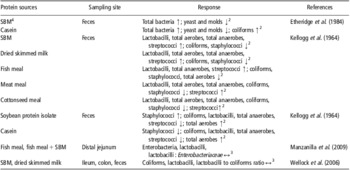
As increased intestinal protein fermentation suggests proliferation of potential pathogens (Hughes et al., Reference Hughes, Magee and Bingham2000), several studies were designed to examine the effect of dietary protein source on composition (Table 1) of the intestinal microbiota. For example, in a study by Etheridge et al. (Reference Etheridge, Seerley and Wyatt1984), piglets at 7 days of age were fed either a corn–SBM starter diet or an oat–casein diet or they remained with the sow (control treatment). The control animals were weaned at 21 days of age. At this time, piglets fed the corn–SBM diet showed a lower growth performance associated with a higher incidence of diarrhea than the other treatments. According to the authors, the microbial breakdown of undigested proteins in the lower digestive tract might have been responsible for the observed growth check. In addition, although this was not within the scope of these studies, the occurrence of immune reactions against dietary antigens such as soy protein has to be considered as a possible factor that may negatively affect fecal consistency (Li et al., Reference Li, Nelssen, Reddy, Blecha, Hancock, Allee, Goodband and Klemm1990). However, the observed lower growth performance and higher incidence of diarrhea for the corn–SBM group did not correspond to fecal coliform counts, which did not differ from those of the control treatment, but were highest for the oat–casein treatment. In addition, in this study, the counts of total bacteria were higher in piglets fed the corn–SBM or oat–casein diet between days 23 and 27 of age, compared with the control treatment (Etheridge et al., Reference Etheridge, Seerley and Wyatt1984). Higher fecal counts of total bacteria might reflect an increase in microbial diversity, which would rather be associated with enhanced stability of the microbial community and therefore an increased resistance to diseases (Konstantinov et al., Reference Konstantinov, Favier, Zhu, Williams, Klüß, Souffrant, de Vos, Akkermans and Smidt2004). Kellogg et al. (Reference Kellogg, Hays, Catron, Quinn and Speer1964) also observed differences in fecal microbial counts in newly weaned piglets as influenced by the protein source in the diet (SBM, dried skim milk, fish meal, meat meal or cottonseed meal). In this study, the plant protein sources resulted in a marked reduction in fecal counts of potential pathogenic coliforms and also of staphylococci. This observation suggests a reduced activity of the proteolytic microbiota upon feeding plant protein sources to newly weaned piglets. In the study by Kellogg et al. (Reference Kellogg, Hays, Catron, Quinn and Speer1964), SBM and dried skimmed milk increased total anaerobes and total aerobes, whereas the other protein sources resulted in lower fecal counts of these bacteria. Wellock et al. (Reference Wellock, Fortomaris, Houdijk and Kyriazakis2006) could show that newly weaned piglets fed a diet based on dried skimmed milk powder consumed more feed, resulting in higher BW gain and improved feed conversion ratio than those offered a SBM-based diet. Although all piglets remained clinically healthy, in piglets fed the SBM-based diet, the lactobacilli to coliform ratio in fecal samples was decreased, and there was an increase in gastrointestinal pH, obviously because of the buffering effect of protein (Partanen and Mroz, Reference Partanen and Mroz1999). An elevated lactobacilli to coliform ratio indicates a more advantageous proportion of beneficial lactobacilli to coliforms, including coliform pathogens (Reid and Hillman, Reference Reid and Hillman1999). However, Manzanilla et al. (Reference Manzanilla, Pérez, Martín, Blandón, Baucells, Kamel and Gasa2009) observed no differences in the counts of lactobacilli and enterobacteria in the distal jejunum when feeding newly weaned piglets either a corn–fish meal or a corn–fish meal SBM-based diet. Total counts of both enterobacteria and the lactobacilli to enterobacteria ratio were not influenced by the different protein sources.
Effect of dietary protein source on the composition of the intestinal and fecal microbiota of weaned pigletsFootnote 1

↑increase, ↓decrease, ↔no effect, SBM = soybean meal.
1 Microbial plate counts.
2 Compared with sow milk.
3 Compared each with the other.
4 Piglets showed clinical signs of diarrhea.
Overall, results of currently available studies on the effect of dietary protein source on the composition of the intestinal microbiota are inconsistent and do not allow for recommending ultimate feeding strategies. Nevertheless, under conditions of increased stress such as suboptimal hygienic and housing conditions or exposure to infections (Owusu-Asiedu et al., Reference Owusu-Asiedu, Nyachoti, Baidoo, Marquardt and Yang2003), plant protein sources of lower CP digestibility might increase the risk for the development of PWD.
Dietary protein intake
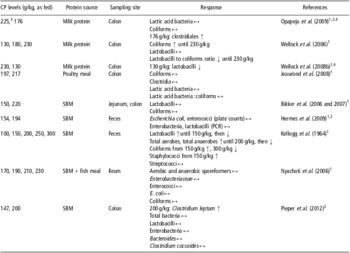
In rats, the total protein intake rather than the source of dietary protein has been identified as a major factor eventually affecting the extent of protein fermentation in the GIT, and also intestinal bacterial composition (Le Leu et al., Reference Le Leu, Brown, Hu, Morita, Esterman and Young2006). In addition, experiments in which weaned piglets were fed a low-protein diet resulted in a reduction of protein fermentation activity as indicated by lower ammonia concentrations in the small intestine (Bikker et al., Reference Bikker, Dirkzwager, Fleddrus, Trevis, le Huërou-Luron, Lallès and Awati2006), lower plasma urea levels and reduced contents of SCFA in ileal digesta (Nyachoti et al., Reference Nyachoti, Omogbenigun, Rademacher and Blank2006) compared with high-protein diets. However, studies in piglets revealed inconsistent results on the effect of protein level in the diet on composition of the gastrointestinal microbiota (Table 2).
Effect of dietary protein level on the composition of the intestinal and fecal microbiota of weaned piglets

↑increase, ↓decrease, ↔no effect, SBM = soybean meal.
1Microbial plate counts.
2PCR.
3Piglets showed clinical signs of diarrhea.
4Piglets were challenged with E. coli.
Kellogg et al. (Reference Kellogg, Hays, Catron, Quinn and Speer1964) obtained higher counts of total aerobes and total anaerobes in fecal samples of newly weaned piglets as protein level in a corn–SBM-based diet was raised from 100 to 200 g/kg, and counts of lactobacilli increased when the protein level of the diets was increased from 100 to 150 g/kg. Beyond these levels, total counts of aerobes, anaerobes and lactobacilli decreased. In the same study, changes in fecal coliforms and staphylococci counts were inversely related to those of lactobacilli. Obviously, there was a shift of the microbial community toward potential pathogenic bacteria, such as coliforms, when the CP content of the diet increased beyond a level of 200 g/kg (Kellogg et al., Reference Kellogg, Hays, Catron, Quinn and Speer1964). In more recent studies with newly weaned piglets (Wellock et al., Reference Wellock, Fortomaris, Houdijk and Kyriazakis2006), a reduction of the dietary CP content in a SBM-based diet from 230 to 130 g/kg was associated with lower fecal water content. In addition, fecal samples contained lower counts of pathogenic bacteria, such as coliforms, and a higher ratio of lactobacilli to coliforms, indicating a decreased risk for the development of PWD.
In several studies with newly weaned piglets, protein-reduced diets were formulated and supplemented with graded levels of crystalline AA to meet piglets’ AA requirements (e.g. Heo et al., Reference Heo, Kim, Hansen, Mullan, Hampson and Pluske2008). Although the supplementation of essential AA to pig diets is becoming increasingly common in commercial practice, some restrictions may apply in their use in protein-reduced starter diets. There is evidence that a decrease in dietary CP content may create serious deficiencies of nonessential AA, resulting in reduced growth performance (Opapeju et al., Reference Opapeju, Rademacher, Blank and Nyachoti2008). For example, Nyachoti et al. (Reference Nyachoti, Omogbenigun, Rademacher and Blank2006) observed a decline in weaned piglets’ growth performance if the dietary CP content was 190 g/kg or less. At the same time, the authors reported no effect on ileal digesta counts of total coliforms, anaerobic sporeformers, aerobic sporeformers, Enterobacteriaceae, enterococci and E. coli when weaned piglets were fed diets with graded levels of CP ranging from 170 to 230 g/kg. However, feeding protein-reduced diets was associated with lower contents of ammonia in ileal digesta, indicating reduced fermentation activity of protein in the small intestine but without affecting the composition of the bacterial community. These findings were confirmed by Pieper et al. (Reference Pieper, Kröger, Richter, Wang, Martin, Bindelle, Htoo, von Smolinski, Vahjen, Zentek and Van Kessel2012) who measured lower ammonia concentrations in piglets’ colon when feeding 147 g/kg CP compared with 200 g/kg diets. However, in this study, the high-CP diet increased counts of the Clostridium leptum group in the proximal colon of weaned piglets, but had no effect on total bacteria, lactobacilli, enterobacteria, Bacteroides and the Clostridium coccoides group in the proximal colon. According to a study of Bikker et al. (Reference Bikker, Dirkzwager, Fledderus, Trevis, le Huërou-Luron, Lallès and Awati2007), no effect on counts of lactobacilli and coliform bacteria were found in jejunum and colon of newly weaned piglets fed a potato protein-based diet supplemented with wheat and maize gluten meal with 220 g/kg CP in comparison with piglets fed the basal diet with 150 g/kg CP. However, the authors observed a decrease in ammonia concentration in jejunal and colonic digesta samples of piglets fed the low-protein diet, suggesting reduced protein fermentation. Obviously, a reduction in dietary protein content may result in a lower intestinal ammonia concentration, but not necessarily in changes of the intestinal bacterial community, maybe because of the ability of the microbiota to adapt to a certain extent to changes in the availability of nutrients (Heo et al., Reference Heo, Opapeju, Pluske, Kim, Hampson and Nyachoti2012). In contrast, in studies with weaned piglets experimentally infected with pathogens, dietary CP supply had more pronounced effects on the composition of the intestinal microbiota. For example, in a study by Opapeju et al. (Reference Opapeju, Krause, Payne, Rademacher and Nyachoti2009), newly weaned piglets were fed corn–SBM–fish meal diets, containing either 225 or 176 g/kg CP. They were supplemented with crystalline AA to meet the animals’ AA requirement. Eight days post weaning, piglets were challenged with ETEC K88. Thereafter, they were slaughtered on days 1, 3 and 7 post challenge. Three days after being challenged, ETEC was not present in ileal digesta of piglets fed the 176 g/kg CP diet, but could be found in ileal digesta of 80% of piglets fed the 225 g/kg CP diet. Moreover, piglets fed the 225 g/kg CP diet had a higher ammonia-N concentration in colonic digesta on days 1 and 7 post challenge, indicating a higher protein fermentation activity. On the other hand, in piglets fed the 176 rather than the 225 g/kg CP diet, counts of carbohydrate-fermenting, butyrate-producing Roseburia were higher in colonic digesta on day 7. According to the authors, a reduction of dietary protein supply may inhibit the proliferation of those pathogens (e.g. ETEC), which preferentially ferment protein. As a result, there is a shift in intestinal microbial composition toward higher counts of beneficial bacteria, which preferentially ferment carbohydrates (Opapeju et al., Reference Opapeju, Krause, Payne, Rademacher and Nyachoti2009). In addition, in another challenge study with newly weaned piglets, which were orally infected with ETEC, a reduction of dietary protein content from 230 to 130 g/kg in SBM-based or dried skimmed milk powder-based diets was associated with lower fecal excretion of ETEC (Wellock et al., Reference Wellock, Fortomaris, Houdijk and Kyriazakis2008a and Reference Wellock, Fortomaris, Houdijk and Kyriazakis2008b).
In a study by Hermes et al. (Reference Hermes, Molist, Ywazaki, Nofrarias, Gomez de Segura, Gasa and Pérez2009) on 35-day-old piglets, the effects of diets with either 190 or 150 g/kg CP on bacterial composition in feces were assessed. In this study, no differences in fecal samples were found between treatments, on counts of coliforms, enterococci, enterobacteria and lactobacilli. When using finisher boars, O'Shea et al. (Reference O'Shea, Lynch, Callan and O'Doherty2010) also observed no differences in total counts of Lactobacillus spp. and enterobacteria both at the ileal and fecal level, when the protein content of a wheat–SBM-based diet was decreased from 200 to 150 g/kg CP. Given the stable intestinal microbiota of an adult mammal, one might assume that it would be rather difficult to influence microbial composition by dietary means when compared with a weaner piglet harboring an instable microbiota (Konstantinov et al., Reference Konstantinov, Favier, Zhu, Williams, Klüß, Souffrant, de Vos, Akkermans and Smidt2004).
Altogether, results in studies with piglets are rather inconsistent, though it appears that feeding diets with high levels of protein is in favor of increasing the number of protein-hydrolyzing bacteria (e.g. Wellock et al., Reference Wellock, Fortomaris, Houdijk and Kyriazakis2006). Furthermore, it appears that, although this must not necessarily be reflected in the intestinal bacterial composition, a reduction in dietary protein content may lower detrimental protein fermentation as indicated, for example, by decreased intestinal ammonia concentrations (Bikker et al., Reference Bikker, Dirkzwager, Fledderus, Trevis, le Huërou-Luron, Lallès and Awati2007; Pieper et al., Reference Pieper, Kröger, Richter, Wang, Martin, Bindelle, Htoo, von Smolinski, Vahjen, Zentek and Van Kessel2012). Furthermore, in piglets challenged with pathogens, changes in dietary protein content are reflected in the composition of the intestinal microbiota, with reduced counts of pathogens for lower protein content. Thus, a reduction of dietary CP in diets for weaned piglets is suggested, in particular in stress situations such as increased pressure of pathogens and increased risk of infections.
Dietary supplementation of fermentable carbohydrates
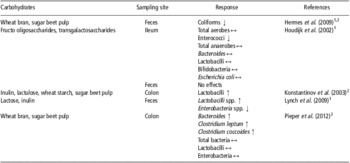
As was reviewed by de Lange et al. (Reference De Lange, Pluske, Gong and Nyachoti2010), the use of fermentable carbohydrates in pigs’ diet seems to be the most promising approach to beneficially affect the composition and activity of the intestinal microbiota. Therefore, in an effort to possibly reduce protein fermentation in the GIT, some authors suggested to add fermentable carbohydrates to the diet (Awati et al., Reference Awati, Williams, Bosch, Gerrits and Verstegen2006; Jeaurond et al., Reference Jeaurond, Rademacher, Pluske, Zhu and de Lange2008), thereby shifting fermentation processes toward carbohydrate rather than protein fermentation (Kim et al., Reference Kim, Mullan, Hampson and Pluske2008). Such a shift in fermentation activity is reflected in lower levels of ammonia and BCFA as indicators of reduced protein fermentation (e.g. Williams et al., Reference Williams, Bosch, Awati, Konstantinov, Smidt, Akkermans, Verstegen and Tamminga2005). To stimulate beneficial bacteria, fermentable carbohydrates must be neither hydrolyzed nor absorbed in the upper GIT of the animal (Branner et al., Reference Branner, Böhmer, Erhardt, Henke and Roth-Maier2004). Fermentable carbohydrates that have been frequently used in pig diets include NSP, such as cellulose, hemicellulose or pectin, resistant starches and nondigestible oligosaccharides (Bauer et al., Reference Bauer, Williams, Smidt, Mosenthin and Verstegen2006). For example, after inclusion of sugar beet pulp, inulin, lactulose and wheat starch in diets for newly weaned piglets, Awati et al. (Reference Awati, Williams, Bosch, Gerrits and Verstegen2006) determined lower fecal concentrations of ammonia and BCFA. Obviously, owing to the preferential fermentation of these carbohydrates, the formation of potentially harmful metabolites originating from protein fermentation was reduced. In addition, in some studies designed to limit protein fermentation in the GIT of pigs, the effect of fermentable carbohydrates on composition of the intestinal microbiota was examined (Table 3).
Selected studies on the effect of fermentable carbohydrates supplemented to the diet of weaned piglets on the intestinal and fecal microbiota

↑increase, ↓decrease, ↔no effect.
1Microbial plate counts.
2PCR.
According to Konstantinov et al. (Reference Konstantinov, Favier, Zhu, Williams, Klüß, Souffrant, de Vos, Akkermans and Smidt2004), the addition of nondigestible, fermentable carbohydrates (sugar beet pulp and fructooligosaccharides) to the diet of weaned piglets increased the number of lactobacilli in the small intestine, and enhanced stability and diversity of the bacterial community in the porcine colon, thereby eventually suppressing potential pathogenic proteolytic bacteria. The authors suggest that the inclusion of fermentable carbohydrates improved gut health during weaning because of a shift from protein to carbohydrate fermentation. According to Houdijk et al. (Reference Houdijk, Hartemink, Verstegen and Bosch2002), the supplementation of nondigestible oligosaccharides to the diet of newly weaned piglets affected the microbial population at the ileal, but not at the fecal level. In this study, total aerobes and enterococci were lower upon dietary inclusion of fructo- and transgalactooligosaccharides compared with piglets fed the control diet. Moreover, lactobacilli and Bacteroides spp. were not affected, but supplemental oligosaccharides had a reducing effect on potential harmful proteolytic E. coli (Houdijk et al., Reference Houdijk, Hartemink, Verstegen and Bosch2002). Furthermore, Lynch et al. (Reference Lynch, Callan and O'Doherty2009) reported that the inclusion of inulin (15 g/kg) and lactose (230 g/kg) to a low- (160 g/kg) and a high- (200 g/kg) CP diet for piglets increased Lactobacillus spp. and decreased Enterobacteria spp. in feces of weaned piglets. In addition, supplementation of inulin together with high lactose (230 g/kg) decreased BCFA, compared with piglets offered inulin-supplemented diets containing only 50 g/kg lactose. Obviously, a combination of inulin and high lactose was able to beneficially affect microbial composition and reduce harmful protein fermentation. However, different concentrations of inulin in the diets, the degree of polymerization of inulin and other factors affect microbial degradation, which may explain varying effects on the fermentative activity of the intestinal microbiota (Paßlack et al., Reference Paßlack, Al-samman, Vahjen, Männer and Zentek2012).
Hermes et al. (Reference Hermes, Molist, Ywazaki, Nofrarias, Gomez de Segura, Gasa and Pérez2009) added two native sources of NSP, wheat bran and sugar beet pulp to a low- (160 g/kg) and a high- (200 g/kg) protein diet fed to piglets. The counts of coliforms and enterobacteria in feces were lower, whereas the lactobacilli to enterobacteria ratio tended to be higher upon supplementing the diets with NSP. There was a lower incidence of diarrhea when NSP was supplemented to the high-protein diet but a higher incidence of diarrhea when NSP was supplemented to the low-protein diet. According to the authors, the higher-dietary CP content was associated with enhanced protein fermentation in the colon, whereas the simultaneous addition of NSP to the high-CP diet increased carbohydrate fermentation (i.e. increased SCFA production) and reduced protein fermentation (i.e. reduced BCFA) in colon. These findings were confirmed in a study conducted by Pieper et al. (Reference Pieper, Kröger, Richter, Wang, Martin, Bindelle, Htoo, von Smolinski, Vahjen, Zentek and Van Kessel2012) in which a combination of wheat bran and sugar beet pulp was added to a low- (147 g/kg) and a high- (200 g/kg) protein diet fed to piglets. The authors also determined the lowest incidence of diarrhea for the low-protein diet without supplemental NSP, whereas cell counts of lactobacilli in the proximal colon were lowest for the low-protein diet supplemented with NSP. Moreover, they observed increased numbers of potential proteolytic Bacteroides and Clostridium. However, despite this increase putrescine and ammonia levels in the proximal colon were lower in piglets fed the NSP supplemented diet, likely due to a reduced protein fermentation activity. Obviously, shifts in microbial composition as observed are not always reflected in changes of metabolic activity as anticipated; however, overall there is growing evidence that supplementation of piglets’ diets with fermentable carbohydrates seems to be a promising approach to reduce both intestinal protein fermentation and potential pathogenic bacteria.
Conclusion
Diet appears to be an important factor controlling the composition and metabolic activities of the gastrointestinal microbiota of single-stomached animals. Thus, it is essential to understand the interactions between the host, diet and intestinal microbiota. Although results were not always consistent, it appears that avoiding excessive amounts of protein reaching the lower GIT may reduce the incidence of PWD and inhibit proliferation of pathogenic bacteria, especially in piglets reared under nutritional and environmental stress conditions. In addition, although not always associated with changes in bacterial composition, a moderate reduction of dietary protein level may reduce formation of detrimental fermentation products, for example, ammonia. Moreover, there is evidence that the inclusion of fermentable carbohydrates seems to be promising in reducing detrimental protein fermentation and proliferation of potential pathogenic proteolytic bacteria. However, studies designed to assess the effect of protein level, protein source or fermentable carbohydrates on occurrence of proteolytic bacteria in the GIT are rather limited. Furthermore, owing to the wide variety of methods used, the results of these studies are sometimes difficult to compare. For example, most of the studies used culture-based bacterial count techniques, whereas only few studies were based on molecular methods for quantitative assessment of bacteria. By using more sensitive and culture-independent methods, at least some of the variation between results of different studies could be reduced. Furthermore, results between studies pertaining to assess the effect of different levels or sources of dietary protein on microbial composition and metabolic activity are often confounded by the use of varying ingredients in the basal diet. For example, supplementation of fermentable carbohydrates to a basal diet, already rich in contents of fermentable carbohydrates (e.g. cereal-based diet), may mask any potential effects of varying protein levels or sources on bacterial composition and activity. Thus, for a better comparability between studies, further research should take into consideration the use of standardized basal diets containing well-defined feed ingredients. Finally, it has to be emphasized that some studies have rather limited practical implications. For example, some experimental designs are based on the use of casein or dried skimmed milk as dietary protein sources. Although these feed proteins are almost completely digested in the small intestine and therefore hardly available for protein fermentation in the large intestine, their use in pigs’ diets is rather limited because of their low cost-efficiency.
Acknowledgments
The authors are grateful to AHRHOFF GmbH, Bönen, Germany for the financial support of Vanessa T. S. Rist. They thank Silke Hörner for her technical assistance.