Introduction
The World Health Organization (WHO) has predicted that road traffic injuries will be the third leading cause of global disease burden by 2030, in term of deaths and disability, after depression and ischemic heart disease (World Health Organization, 2008). In many jurisdictions, injury compensation schemes have been established to support the recovery of persons injured in motor vehicle crashes (Collie et al., Reference Collie, Newnam, Keleher, Petersen, Kosny, Vogel and Thompson2019; Grant & Studdert, Reference Grant and Studdert2009; Thompson, Reference Thompson2014). Depending on country regulations, people sustaining a traffic injury are entitled to lodge a compensation claim for their injuries to insurers or Government agencies that can include financial support for treatments, lost wages and return to work assistance. However, the available evidence suggests seeking compensation is associated with poor post-injury health, psychological distress (Duckworth & Iezzi, Reference Duckworth and Iezzi2018; Elbers, Hulst, Cuijpers, Akkermans, & Bruinvels, Reference Elbers, Hulst, Cuijpers, Akkermans and Bruinvels2013; Giummarra et al., Reference Giummarra, Ioannou, Ponsford, Cameron, Jennings, Gibson and Georgiou-Karistianis2016, Reference Giummarra, Baker, Ioannou, Gwini, Gibson, Arnold and Cameron2017a; Grant, O'Donnell, Spittal, Creamer, & Studdert, Reference Grant, O'Donnell, Spittal, Creamer and Studdert2014; Harris, Mulford, Solomon, van Gelder, & Young, Reference Harris, Mulford, Solomon, van Gelder and Young2005; Harris, Young, Jalaludin, & Solomon, Reference Harris, Young, Jalaludin and Solomon2008; Murgatroyd, Casey, Cameron, & Harris, Reference Murgatroyd, Casey, Cameron and Harris2015b) and increased disability (Craig et al., Reference Craig, Tran, Guest, Gopinath, Jagnoor, Bryant and Middleton2016; Gabbe et al., Reference Gabbe, Cameron, Williamson, Edwards, Graves and Richardson2007; Giummarra et al., Reference Giummarra, Ioannou, Gibson, Ponsford, Fielding, Cameron and Georgiou-Karistianis2013, Reference Giummarra, Baker, Ioannou, Gwini, Gibson, Arnold and Cameron2017a, Reference Giummarra, Cameron, Ponsford, Ioannou, Gibson, Jennings and Georgiou-Karistianis2017b; MacEachen, Kosny, Ferrier, & Chambers, Reference MacEachen, Kosny, Ferrier and Chambers2010; O'Donnell, Creamer, McFarlane, Silove, & Bryant, Reference O'Donnell, Creamer, McFarlane, Silove and Bryant2010; O'Donnell et al., Reference O'Donnell, Grant, Alkemade, Spittal, Creamer, Silove and Studdert2015; Schaafsma, Middleton, De Wolf, Tate, & Cameron, Reference Schaafsma, Middleton, De Wolf, Tate and Cameron2013). Psychological health appears to be the most adversely affected (Collie, Reference Collie2018; Elbers et al., Reference Elbers, Hulst, Cuijpers, Akkermans and Bruinvels2013; Murgatroyd et al., Reference Murgatroyd, Casey, Cameron and Harris2015b; Murgatroyd, Harris, Tran, & Cameron, Reference Murgatroyd, Harris, Tran and Cameron2016), as shown in a meta-analysis of 29 studies (Murgatroyd et al., Reference Murgatroyd, Casey, Cameron and Harris2015b), resulting in serious clinical and financial concern as psychological distress means delayed recovery and higher costs (Gopinath et al., Reference Gopinath, Jagnoor, Kifley, Nicholas, Blyth, Kenardy and Cameron2019; Guest, Tran, Gopinath, Cameron, & Craig, Reference Guest, Tran, Gopinath, Cameron and Craig2017; Kenardy, Heron-Delaney, Warren, & Brown, Reference Kenardy, Heron-Delaney, Warren and Brown2015). Some have argued that secondary gain such as financial incentives (Cameron et al., Reference Cameron, Rebbeck, Sindhusake, Rubin, Feyer, Walsh and Schofield2008; Cassidy et al., Reference Cassidy, Carroll, Cote, Lemstra, Berglund and Nygren2000; Elbers et al., Reference Elbers, Hulst, Cuijpers, Akkermans and Bruinvels2013; Hadler, Reference Hadler1996; Harris et al., Reference Harris, Mulford, Solomon, van Gelder and Young2005), or stressful claim processes or secondary victimization (Elbers et al., Reference Elbers, Hulst, Cuijpers, Akkermans and Bruinvels2013; Grant et al., Reference Grant, O'Donnell, Spittal, Creamer and Studdert2014; O'Donnell et al., Reference O'Donnell, Grant, Alkemade, Spittal, Creamer, Silove and Studdert2015; Samoborec, Ayton, Ruseckaite, Winbolt, & Evans, Reference Samoborec, Ayton, Ruseckaite, Winbolt and Evans2019; Thompson, Elbers, Cameron, Craig, & Guest, Reference Thompson, Elbers, Cameron, Craig and Guest2018) may be responsible for poor outcomes among those seeking compensation. Nonetheless, the commonly held view that compensation is more harmful than helpful to health when engaged in compensation continues to have profound implications in terms of barriers to healthcare and stigmatization of compensation seekers (Grant & Studdert, Reference Grant and Studdert2009; Varker, Creamer, Khatri, Fredrickson, & O’Donnell, Reference Varker, Creamer, Khatri, Fredrickson and O’Donnell2018).
The available evidence that supports compensation having a harmful influence on psychological health, however, has limitations (O'Donnell et al., Reference O'Donnell, Creamer, McFarlane, Silove and Bryant2010; Spearing & Connelly, Reference Spearing and Connelly2011; Spearing, Connelly, Gargett, & Sterling, Reference Spearing, Connelly, Gargett and Sterling2012a; Spearing, Connelly, Nghiem, & Pobereskin, Reference Spearing, Connelly, Nghiem and Pobereskin2012b; Varker et al., Reference Varker, Creamer, Khatri, Fredrickson and O’Donnell2018). Limitations (Elbers et al., Reference Elbers, Hulst, Cuijpers, Akkermans and Bruinvels2013; Grant & Studdert, Reference Grant and Studdert2009; Grant et al., Reference Grant, O'Donnell, Spittal, Creamer and Studdert2014; Harris et al., Reference Harris, Mulford, Solomon, van Gelder and Young2005; Spearing & Connelly, Reference Spearing and Connelly2011; Spearing et al., Reference Spearing, Connelly, Gargett and Sterling2012a) include heterogeneity in compensation and health measures, potential design bias (qualitative, cross-sectional or small cohort study data), a lack of compensation/non-compensation comparison and limited adjustment for other potential health contributors that can confound the effect of compensation on post-injury health, also known as reverse causality bias (Rochon et al., Reference Rochon, Gurwitz, Sykora, Mamdani, Streiner, Garfinkel and Geoffrey2005). The most comprehensive analyses of this effect, indeed, revealed a person's vulnerability to stress (Grant et al., Reference Grant, O'Donnell, Spittal, Creamer and Studdert2014; Reid, Cooper, Lu, Iverson, & Kennedy, Reference Reid, Cooper, Lu, Iverson and Kennedy2018) and acute psychological reactions to the injury (Elbers et al., Reference Elbers, Hulst, Cuijpers, Akkermans and Bruinvels2013; Giummarra et al., Reference Giummarra, Baker, Ioannou, Gwini, Gibson, Arnold and Cameron2017a, Reference Giummarra, Cameron, Ponsford, Ioannou, Gibson, Jennings and Georgiou-Karistianis2017b; Murgatroyd, Lockwood, Garth, & Cameron, Reference Murgatroyd, Lockwood, Garth and Cameron2015a) are important confounding variables, suggesting a complex, potentially circular, interplay between a person's contextual factors, compensation factors and psychological and functional post-injury outcomes, may be occurring (Collie et al., Reference Collie, Newnam, Keleher, Petersen, Kosny, Vogel and Thompson2019; Samoborec et al., Reference Samoborec, Ayton, Ruseckaite, Winbolt and Evans2019).
The objective of this paper was to clarify the influence of compensation on psychological health and recovery following a road traffic injury. We first used adjusted linear mixed models to examine differences by claim status in (i) psychological distress [post-traumatic distress (PTS) and depression symptoms] and (ii) health-related functioning (HrF) [quality of life (EQ-5D-3L) and disability (WHODAS)] over time, after adjusting for individual vulnerability to stress (preinjury and injury contextual factors). Furthermore, we used path analyses to test (iii) plausible dynamic pathways for the relationships between stress vulnerability, engagement in compensation, acute and long-term post-injury psychological and functional outcomes over 12-months following a traffic injury. Hypotheses included: (i) compensation would be associated with increased psychological distress, that is increased risk of depressive mood and post-traumatic stress, as well as diminished HrF. (ii) Stress vulnerability and baseline functional outcomes will be associated with long-term psychological distress and poor HrF irrespective of involvement in compensation.
Methods
Design and study population
This is an inception cohort study of 2019 participants recruited between August 2013 and December 2016 (42 months), from emergency departments, general practitioner clinics, physiotherapy clinics, and a government claim database. Participants were first screened and their details were entered on a secure online platform (Research electronic data capture- REDCap). Harris et al. (Reference Harris, Taylor, Thielke, Payne, Gonzalez and Conde2009) provide detail on this platform. Baseline (1-month), 6-and 12-month follow-up data were collected via a structured telephone interview conducted using Computer Aided Telephone Interview by trained interviewers. Details of study methodology have been published (Jagnoor et al., Reference Jagnoor, Blyth, Gabbe, Derrett, Boufous, Dinh and Joseph2014). Participants (age ⩾17) were eligible if they sustained a minor-to-moderate traffic injury requiring medical attention within 28 days of a traffic injury. Exclusion criteria were: (a) catastrophic injuries (severe traumatic brain injury, acute spinal cord injury), (b) isolated minor soft tissue injuries (bruises, abrasions or cuts), (c) self-harm, (e) family member died in the crash, or (d) pre-existing cognitive impairment impacting on the capacity for consent.
Measures
Health outcomes
Primary and secondary outcomes were psychological health (Kenardy et al., Reference Kenardy, Heron-Delaney, Warren and Brown2015) and recovery/functional outcomes (Salvador-Carulla et al., Reference Salvador-Carulla and Garcia-Gutierrez2011). For psychological health, two common psychological distress measures in injury populations were used (Elbers et al., Reference Elbers, Hulst, Cuijpers, Akkermans and Bruinvels2013; Giummarra et al., Reference Giummarra, Cameron, Ponsford, Ioannou, Gibson, Jennings and Georgiou-Karistianis2017b; O'Donnell et al., Reference O'Donnell, Grant, Alkemade, Spittal, Creamer, Silove and Studdert2015). To assess post-traumatic distress (PTS) symptoms, we used the 22-item Impact of Events Scale-Revised (IES-R), which is composed of three subscales (8-item intrusion, 8-item avoidance, 6-item hyperarousal) (Weiss & Marmar, Reference Weiss and Marmar1997). Only the total mean score (i.e. the sum of the means of the three subscale scores) was used in analyses, ranging from 0 to 12 given 4 is the maximum mean score on each subscale. A cut-off of ⩾4.5/12 (equivalent to total scores of ⩾33/88) indicates clinically elevated PTS symptoms, corresponding to a probable diagnosis of post-traumatic stress disorder (Guest, Tran, Gopinath, Cameron, & Craig, Reference Guest, Tran, Gopinath, Cameron and Craig2018). To assess symptoms of depression, we used the 7-item Depression subscale of the Depression Anxiety Stress Scale-21 (DASS-21) (Henry & Crawford, Reference Henry and Crawford2005; Lovibond & Lovibond, Reference Lovibond and Lovibond1995). According to the original DASS-42, total scores are calculated by summing the 7 items’ scores and multiplying by two, thus scores range between 0 and 42. Scores of ⩾10/42 represent clinically elevated levels of depressive mood (Guest et al., Reference Guest, Tran, Gopinath, Cameron and Craig2018), corresponding to a probable diagnosis of major depressive disorder.
For recovery or functional outcomes, two measures of HrF were considered. First, we assessed pre-injury, baseline, 6- and 12-month HrF using the European Quality of Life-5 Dimensions (EQ-5D-3L) scale that includes five dimensions: mobility, self-care, usual activities, pain/discomfort and anxiety/depression, from which a summary score ranging between −1 and 1 is derived (The EuroQol Group, 1990). Another HrF measure used in our sensitivity analyses consisted of the 12-item WHO Disability Assessment Schedule 2.0 (WHODAS short version) (Üstün, Kostanjsek, Chatterji, & Rehm, Reference Üstün, Kostanjsek, Chatterji and Rehm2010), including six domains: cognition, mobility, self-care, getting along, life activities and participation. A summary score ranging from 0 (‘no disability’) to 100 (‘full disability’) was obtained. The WHODAS was assessed at 6- and 12-months post-injury to reflect injury-related disability.
Compensation exposure
At the time of the present study in New South Wales (NSW), Australia, a fault-based road traffic crash compensation scheme, known as the Compulsory Third Party (CTP) insurance scheme, was operating allowing full access to compensation for people sustaining traffic injuries due to the fault of another (full claims). Minor claims of up to $5000, including treatment expenses and lost earning, known as the Accident Notification Form (ANF) claims, were also available to those who were at fault or did not want to lodge a full claim. We used compensation-related data extracted from the NSW government claim database, including claim status, claim type (i.e. minor and/or full claim) and dates of claim lodgement and finalization. In this analysis, any type of claim (i.e. minor or full claim) was considered a positive claim status.
Stress vulnerability
Stress vulnerability was determined for each participant from pre-injury and injury-related contextual (personal and environmental) factors hypothesized to influence the claim experience and recovery outcomes (Grant et al., Reference Grant, O'Donnell, Spittal, Creamer and Studdert2014). Covariates included prior physical and mental health (self-reported comorbidity index), socio-demographic (age, sex, education, employment and satisfaction with social relationships) and injury severity (time in the hospital, number of injuries, road user type, pain intensity as assessed by a numeric rating scale). The acute psychological reaction to the injury included perceived danger of death in the crash and pain catastrophizing from the 13-item Pain Catastrophizing Scale (score range 0–52) shown to be a reliable and valid measure (Sullivan, Bishop, & Pivik, Reference Sullivan, Bishop and Pivik1995).
Statistical analysis
Analyses were guided by the WHO biopsychosocial understanding of health (World Health Organization, 2001) and whole-systems thinking, both supporting dynamic interrelations between components of a complex system (McDougall, Wright, & Rosenbaum, Reference McDougall, Wright and Rosenbaum2010; Meadows, Reference Meadows2008). We used descriptive statistics (t-test, χ2 test) to summarize between-group differences in sociodemographic and injury-related factors between completers and non-completers (i.e. those who did not complete 6- or 12-month assessment), and in vulnerability to stress and psychological and functional outcomes over time between compensation and non-compensation groups. To address previous concerns about the clinical significance (Murgatroyd et al., Reference Murgatroyd, Harris, Tran and Cameron2016), differences in psychological distress rates were based on clinical cutoffs.
To evaluate model estimates (beta coefficients and 95% confidence interval) and statistical significance of differences between compensation and non-compensation groups in changes in psychological distress (IES-R and DASS-21 depression) and HrF (EQ-5D-3L only) from baseline to 12 months, we used linear mixed models for repeated measures with the unstructured serial correlation between time points within individuals. We adjusted for other pre-injury and baseline factors, with and without tests of interaction between claim status and time point. Covariate adjustment factors for each outcome were primarily selected based on stepwise selection (p < 0.1). Clinical judgment was further applied to determine whether adding or retaining significant inter-related variables in the same model would be clinically reasonable/relevant in relation to each outcome investigated. A further multivariate linear regression model was used to examine the association between claim status and 12-month disability (WHODAS), given the absence of baseline measurements.
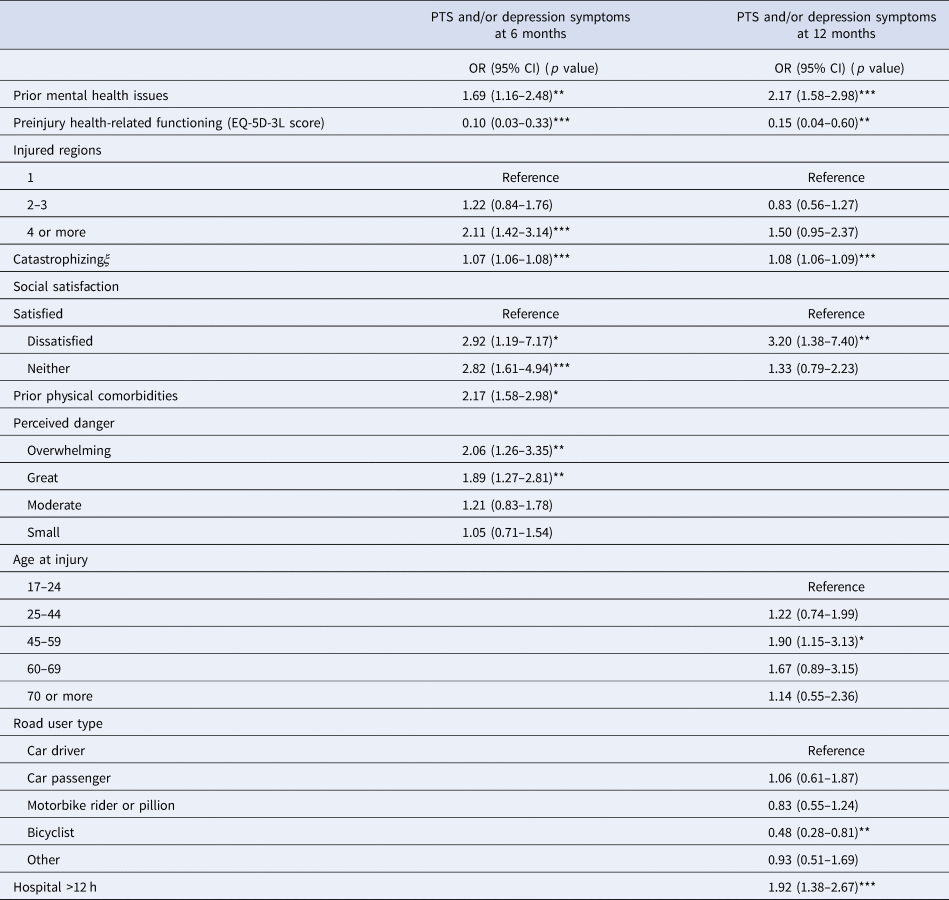
To clarify the significance and magnitude of hypothesized relationships between variables in a temporal model for the whole system, we used path analysis, a special case of structural equation modelling that incorporated a cross-lagged panel design for the two investigated outcomes (psychological distress and HrF), and included compensation claim status in the model as an endogenous variable. Final outcomes included in the model analyses were selected based on findings of the linear mixed models. We also included a stress vulnerability index ranging from 0 to 1 for each participant, computed as the predicted probability of psychological distress derived from logistic regression models that used pre-injury and injury contextual explanatory factors which significantly predicted (p < 0.05) whether an individual met either PTS and/or depression clinical cut-offs at 6 and 12-months respectively (Table 1). The predicted probability of psychological distress at 6 or 12 months is computed for each participant directly from their linear predictor (LP) value for the respective logistic regression model, as exp(LP)/[1 + exp(LP)].
Stress vulnerability indices for psychological distress at 6 and 12-month post-injury, including probable PTSD (IES-R) and probable depression (DASS21 depression), using logistic regression modelling

*p < 0.05; **p < 0.01; ***p < 0.001.
ξ For this analysis, individuals who reported no pain were assigned a 0 for pain catastrophizing because the pain catastrophizing scale was only measured among participants who reported some pain.
Note: Potentially predictive baseline data considered were all sociodemographic, preinjury health, injury-related factors and immediate psychological response to injury. A separate composite index was developed for the 6 months and 12 time points, using all baseline data.
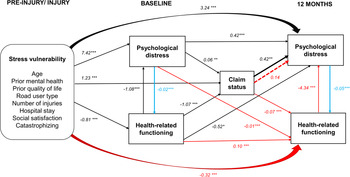
The path analyses then comprised three steps. (1) By first considering 12-month psychological distress (PTS) as the main model outcome, we tested sequential pathways from stress vulnerability and baseline outcomes to claim status, and then to 12-month psychological distress (PTS) (black arrows in Fig. 1). (2) We then added the participant's 12-month HrF (EQ-5D-3L) as a possible predictor of 12-month psychological distress (PTS) in the same model (red arrows in Fig. 1), on the assumption of interrelations (McDougall et al., Reference McDougall, Wright and Rosenbaum2010; Meadows, Reference Meadows2008), rather than unidirectional relationships (Bickenbach, Chatterji, Badley, & Üstün, Reference Bickenbach, Chatterji, Badley and Üstün1999) between health components over time. (3) We also evaluated a third model using 12-month HrF (EQ-5D-3L) as the main outcome, to investigate pathways illustrated by previous studies (blue arrows in Fig. 1) (Giummarra et al., Reference Giummarra, Baker, Ioannou, Gwini, Gibson, Arnold and Cameron2017a, Reference Giummarra, Cameron, Ponsford, Ioannou, Gibson, Jennings and Georgiou-Karistianis2017b; Grant et al., Reference Grant, O'Donnell, Spittal, Creamer and Studdert2014; O'Donnell et al., Reference O'Donnell, Grant, Alkemade, Spittal, Creamer, Silove and Studdert2015).
Pathways between individual stress vulnerability, claim status, baseline and 12-month outcomes, including psychological distress and health-related functioning, using path analyses.
*p < 0.05; **p < 0.01; ***p < 0.001.
Note: Post-traumatic stress (PTS) symptoms was used as a psychological health outcome. EQ-5D-3L was used as measured of health-related functioning (HrF). For each arrow, the head of the arrow represents the dependent variable in the regression, the tail of the arrow the independent variable. A separate composite stress vulnerability index was used for the 6 month and 12-month outcome points.
The final model is composed by the following model approaches: (a) solid black lines indicate significant pathways obtained using 12-month PTS as the main outcome of the model, but excluding 12-month HrF; (b) solid red lines indicate significant pathways obtained using 12-month PTS as the main outcome of the model, after including 12-month HrF; (c) dashed red lines indicate nonsignificant pathways obtained using 12-month PTS as the main outcome of the model, after including 12-month HrF; (d) solid blue lines indicate additional significant pathways obtained using 12-month HrF as the main outcome when everything else is in the model.

To examine the robustness of our findings, sensitivity analyses were performed: (i) we repeated the linear mixed model analysis after excluding the minor claims; (ii) we repeated path analyses using 6-month psychological distress (PTS) as final outcomes and using disability measure (WHODAS) instead of EQ-5D-3L (excluding baseline disability); (iii) we repeated steps (2) and (3) of the path analyses using a lagged rather concurrent longer-term relationship between the 6 and 12-month psychological and functional outcomes, in order to model their longer-term relationships prospectively. (iv) We added a latent variable capturing the correlation between psychological distress (PTS using IESR) and HrF outcomes to the path model, as a structural equation modelling approach to tackling reverse causation. While there is no dimension of evaluating ‘fit’ for latent measures in all our path models using observed variables, except one aspect of our sensitivity analyses, fit indices (e.g. AIC, BIC, and adjusted BIC) were examined during the course of the modelling, but not reported since it did not enhance understanding of any of the key implications of this analysis.
We used Mplus version 7.3 (Muthén & Muthén, Reference Muthén and Muthén2017) for the path analyses and SAS (version 9.4) for all the remaining analyses. Both the linear mixed models conducted in SAS and the path analyses conducted in M-PLUS use all available data in such a way that estimates would be appropriate under a missing at random assumption for the outcomes in the models.
Results
Among the 6717 people screened, 2019 completed the baseline interview, 1484 (73.5%) the 6-month and 1201 (59.5%) the 12-month follow-up (Supplementary material, Figure S1). Compared to non-completers, study participants were more likely (p < 0.001) to be older and born in Australia, have tertiary education, report lower perceived danger of death in the crash, and less likely (p = 0.0004) to be in paid work.
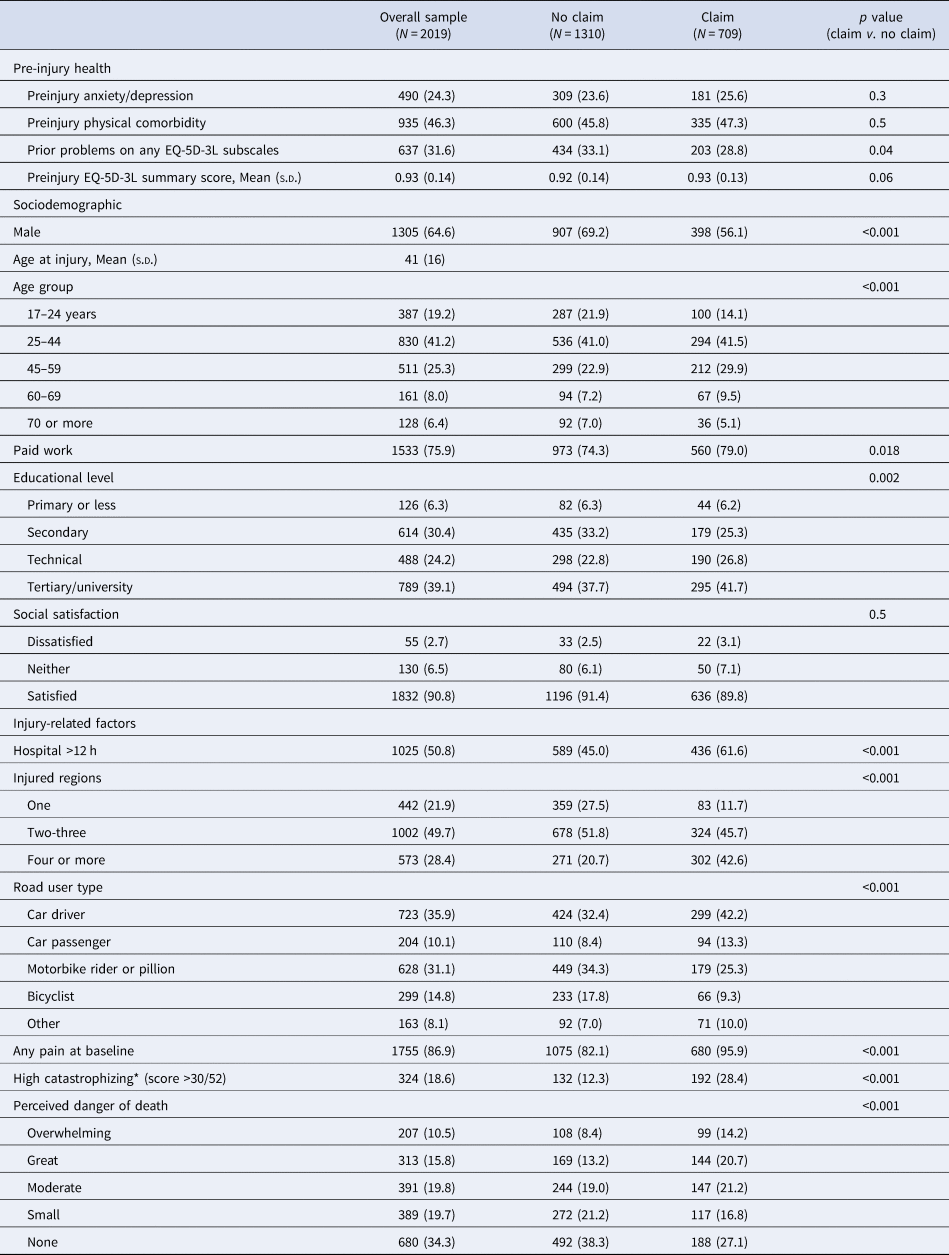
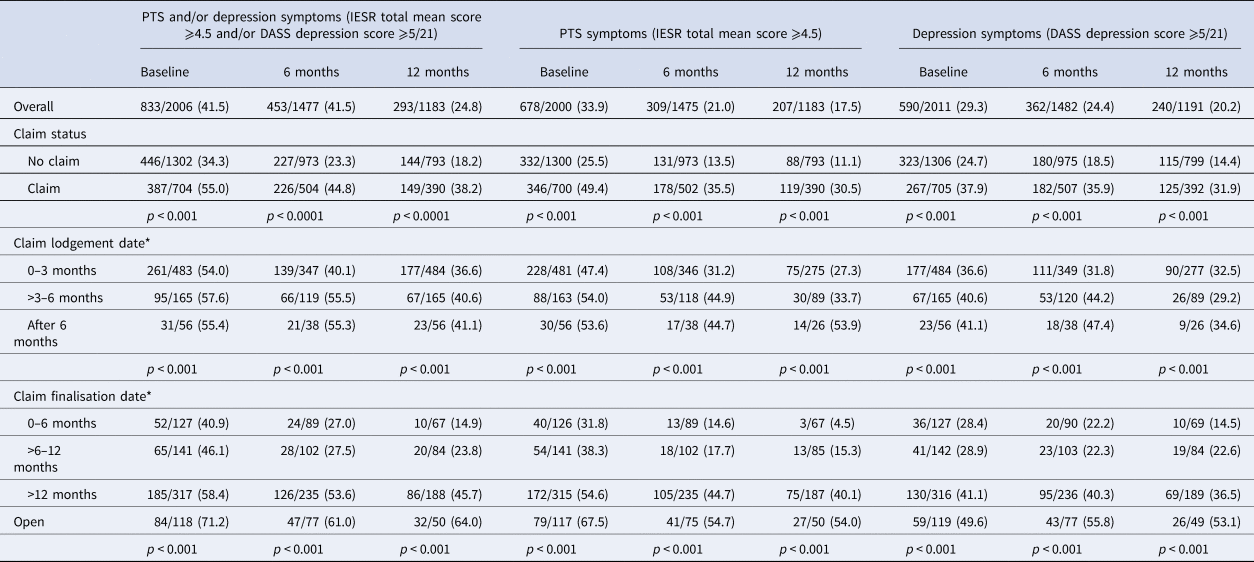
Table 2 summarizes cohort characteristics and stress vulnerability by claim status. Of the 2019 participants, 709 (35.1%) lodged an injury compensation claim (minor and full claim). Median time of claim lodgement was 1.4 (0.7–4.1) months after injury. Compared to those without a claim, participants with a claim did not differ in most pre-injury health factors (comorbidities, EQ-5D-3L summary score) but clearly differed in some socio-demographic factors, with more severe injuries (higher number of injuries, longer duration of hospitalization) and a stronger negative reaction to the injury (higher perceived risk of dying and pain catastrophizing). A significantly higher proportion of participants ‘with’ v. ‘without’ a claim reported psychological distress at baseline (55% v. 34.3%, difference 20.7% (95% CI 16.2–25.1, p < 0.001) and 12-months (38.2% v. 18.2%, difference 20% (95% CI 14.5–25.5), p < 0.001), but demonstrated similar psychological improvements over time (Table 3). Those with minor claims, accounting for 29.2% of the total, or shorter claims (finalized within 6-months of injury) improved more in their psychological health than those with no claim (respectively 25.4% v. 16.1%, CI 0–20.7, p = 0.07; 26% v. 16.1%, CI 0.6–18, p = 0.036).
Sample characteristics and stress vulnerability by compensation status (n = 2019)

Values are numbers (%) unless stated otherwise.
*Of those with any pain at baseline.
Unadjusted rates of posttraumatic stress (PTS) and depression symptoms over time, by claim status and claim characteristics

Values are numbers (%) unless stated otherwise.
*Of those who lodged a compensation claim.
Effect of compensation status on psychological health and recovery over time
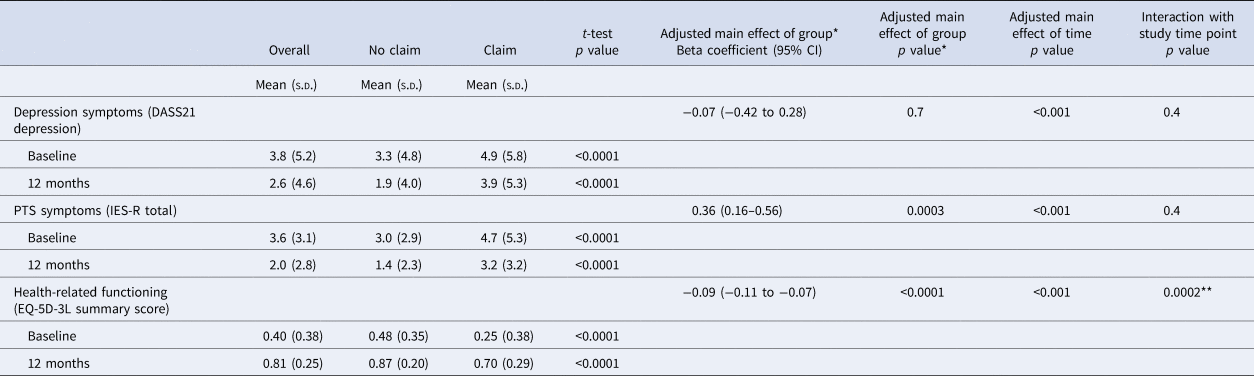
Table 4 shows mean differences over time in psychological health and recovery between the compensation and non-compensation groups. The compensation group scored significantly worse than the non-compensation group across all psychological and functional outcome measures at all time points. After controlling for possible confounders, there was a significant main effect of claim status on PTS symptoms [β = 0.36 (0.16–0.56), p = 0.0003] and HrF [EQ-5D-3L, β = −0.09 (−0.11 to −0.07), <0.0001], but not depressive symptoms [β = −0.07 (−0.42 to 0.28), p = 0.7], and significant differences in injury-related disability at 12 months [WHODAS, β = 5.0 (2.9–7.0), <0.0001]. A significant group–time interaction was found only for HrF (EQ-5D-3L, p = 0.0002), indicating slightly better functional recovery in the compensation group, while the two groups had similar psychological recovery (p = 0.4).
Adjusted effect of compensation status on psychological and functional outcomes over time, using from linear mixed models for baseline to 12 months

*Adjusted linear mixed models for repeated measures from baseline used for all outcomes except WHODAS. For WHODAS, linear regression at 12 months only.
**For EQ5D summary score there is a significant interaction between claim status and timepoint whereby claimants improved slightly more with time, but from lower baseline scores (p = 0.0002).
Note: Adjustment factors used above include preinjury health, sociodemographic, injury-related factors, and baseline health as specified in Supplementary material (Table S1).
The sensitivity analysis excluding the minor claims confirmed our previous findings for PTS symptoms [β = 0.75 (0.54–0.96), <0.0001] and HrF [EQ-5D-3L, β = −0.12 (−0.15 to −0.10), <0.0001; WHODAS, β = 8.4 (6.3–10.4), <0.0001], however, a significant effect of claim status on depression was found (β = 0.51 (0.13–0.90), p = 0.007). After minor claims were removed, there was a significant claim status–time interaction for all psychological health measures (PTS, <0.0001; depression, p = 0.007) but no interaction for HrF, indicating a less psychological recovery in the compensation group but similar functional recovery between groups.
Path analyses
Figure 1 illustrates multifactorial pathways for the development of 12-month psychological and functional outcomes after a traffic injury. As we found stronger evidence of differences by claim status in PTS symptoms than depression and baseline HrF measures were only available for EQ-5D-3L, these outcomes were used as measures of psychological distress and HrF, respectively, in the main model analyses. In the first model (black arrows), independent contributors of chronic PTS symptoms were stress vulnerability (β = 3.241, p = <0.0001), claim status (β = 0.424, p = 0.004), baseline PTS symptoms (β = 0.415, p = <0.0001) and baseline HrF (β = −0.519, p = 0.014). Interestingly, stress vulnerability (β = 1.233, p = <0.0001), baseline PTS symptoms (β = 0.064, p = 0.002) and baseline HrF (β = −1.069, p = <0.0001) were all independent predictors of claim status.
After including the concurrent HrF in this model (red arrows), we found similar pathways from stress vulnerability, baseline psychological and functional outcomes and claim status to 12-month HrF. However, concurrent HrF fully accounted for the effect of claim status on 12-month PTS which became non-significant (β = 0.14, p = 0.274). By contrast, when 12-month HrF was used as the main model outcome (blue arrows), findings were similar except that concurrent 12-month PTS did not account for the effect of claim status on 12-month HrF (β = −0.05, p < 0.001).
Similar relationship patterns between these factors were replicated in all the sensitivity analyses using different time points (6 v. 12 months) and HrF measures (WHODAS v EQ-5D-3L). For instance, the effect of claim on 6-month PTS was fully accounted by 6-month HrF (β = 0.16, p = 0.16), but not vice versa (β = −0.07, p = <0.0001). The lagged model which included the prospective rather than concurrent relationship between 6-month HrF and 12-month psychological distress (not considering the 12-month HrF in the model) also showed similar findings. That is, there was no effect of claim on 12-month PTS when 6-month PTS and 6-month HrF were concurrently included (β = 0.08, p = 0.493), while an effect was present when 6-month HrF was not in the model (β = 0.26, p = 0.033). Furthermore, when WHODAS at 12 months was used in place of EQ5D summary score as the measure of long-term HrF outcome, concurrent HrF still accounted for the effect of claim on 12-month psychological distress (β = 0.13, p = 0.27), while concurrent psychological distress still did not account for the effect of claim on 12-month HrF (β = 1.83, p = 0.04). Findings were again confirmed after adding a latent variable capturing correlation between PTS and HrF outcomes to the path model (data not shown).
Discussion
This longitudinal study of injured people provides the first robust evidence that seeking compensation does not inevitably lead to poor psychological health after a road traffic injury, as it has long been believed. In support of this conclusion, there are four key findings. First, although we found that seeking compensation was associated with poorer psychological and functional outcomes, a significant reverse association was also found, endorsing the possible circular nature of this relationship. Second, claiming compensation was not the only contributor to long-term post-injury outcomes. Individual stress vulnerability and baseline post-injury health contributed strongly. Third, there was some suggestion of possible lower psychological distress (a non-significant effect of compensation on depression) and some beneficial compensation effects on HrF (an improvement over time in the compensation group shown by a positive group–time interaction) when minor and shorter claims were considered in the analysis. Fourth, when concurrent functioning and disability status was included in the model, this fully accounted for the association between compensation and psychological distress. That is, compensation was not found to be associated with increased psychological distress when disability was accounted for. This finding was confirmed in the lagged models using functional outcomes at an earlier time point (6 months) to explore long-term psychological outcomes (12 months), which are not subject to the reciprocal effect. Together, these findings suggest that functioning and level of disability may influence a person's psychological health more so than the compensation process, and further, that making compensation systems accessible and resolving claims quickly may be a highly beneficial public health approach to improve long-term psychological health and recovery.
Strengths and limitations of the study
Strengths of this study include relatively large sample size, a longitudinal design accounting for the effect of time, recruitment from multiple sources, a compensation/non-compensation comparison, and the use of temporal cross-lagged structural equation models to elucidate the evolving interplay between stress vulnerability, psychological and functional post-injury outcomes, and compensation factors. These strategies are crucial in observational studies to minimize bias, particularly reverse causality bias (Rochon et al., Reference Rochon, Gurwitz, Sykora, Mamdani, Streiner, Garfinkel and Geoffrey2005). Our study is unique in employing the WHO biopsychosocial health paradigm (World Health Organization, 2001) to guide a comprehensive examination of confounding and clarify pathways between variables (Spearing & Connelly, Reference Spearing and Connelly2011). While best evidence of the effect of compensation on (psychological) health may come from randomized controlled trial design, it has been argued that mounting such a trial would prove scientifically impractical (Grant & Studdert, Reference Grant and Studdert2009; Spearing et al., Reference Spearing, Connelly, Nghiem and Pobereskin2012b). We believe this study substantially advances our public health understanding about compensation and its effects on the psychological and functional health of inured patients.
Other key strengths are the use of standardized and validated health measures (Spearing & Connelly, Reference Spearing and Connelly2011), a single State-based compensation scheme and a defined population, to reduce heterogeneity (Spearing & Connelly, Reference Spearing and Connelly2011) and objective compensation data (Spearing & Connelly, Reference Spearing and Connelly2011), allowing accurate ascertainment of exposure timing and other compensation details (Grant & Studdert, Reference Grant and Studdert2009). The use of sensitivity analyses leading to consistent results confirms the robustness of our conclusions.
This study has limitations. First, the considerable loss to follow-up could have resulted in selection bias, reducing the generalisability of our findings. Second, this study employed shorter follow-up, at 12 months post-injury, than previous studies (Grant et al., Reference Grant, O'Donnell, Spittal, Creamer and Studdert2014; O'Donnell et al., Reference O'Donnell, Grant, Alkemade, Spittal, Creamer, Silove and Studdert2015), but only 12.9% of claims were still open at that time. Third, as in any observational design, bias introduced by unmeasured confounding and measurement errors from the use of self-reported health were possible. For instance, lawyer involvement and litigation that are known risk factors for poor recovery were not explored. Finally, our finding in the final model that long-term poor HrF fully explained the link between psychological distress and compensation could be attributable to HrF being an overarching concept of health lived experience (McDougall et al., Reference McDougall, Wright and Rosenbaum2010) that also includes psychological health. However, if this was entirely true, we might expect to see the same pattern at baseline, but these factors were instead independent predictors of seeking compensation.
Comparison with other studies
The overwhelming and perhaps not unexpected findings from prior studies and systematic reviews have concluded that claiming compensation is associated with diminished health (Duckworth & Iezzi, Reference Duckworth and Iezzi2018; Gabbe et al., Reference Gabbe, Cameron, Williamson, Edwards, Graves and Richardson2007; Giummarra et al., Reference Giummarra, Ioannou, Ponsford, Cameron, Jennings, Gibson and Georgiou-Karistianis2016, Reference Giummarra, Baker, Ioannou, Gwini, Gibson, Arnold and Cameron2017a, Reference Giummarra, Cameron, Ponsford, Ioannou, Gibson, Jennings and Georgiou-Karistianis2017b; Grant et al., Reference Grant, O'Donnell, Spittal, Creamer and Studdert2014; Harris et al., Reference Harris, Mulford, Solomon, van Gelder and Young2005, Reference Harris, Young, Jalaludin and Solomon2008; MacEachen et al., Reference MacEachen, Kosny, Ferrier and Chambers2010; O'Donnell et al., Reference O'Donnell, Creamer, McFarlane, Silove and Bryant2010, Reference O'Donnell, Grant, Alkemade, Spittal, Creamer, Silove and Studdert2015), especially psychological health (Elbers et al., Reference Elbers, Hulst, Cuijpers, Akkermans and Bruinvels2013; Murgatroyd et al., Reference Murgatroyd, Casey, Cameron and Harris2015b, Reference Murgatroyd, Harris, Tran and Cameron2016). More recently, traffic injury studies based only on compensation samples (Guest et al., Reference Guest, Tran, Gopinath, Cameron and Craig2018; Kenardy et al., Reference Kenardy, Edmed, Shourie, Warren, Crothers, Brown and Heron-Delaney2018) found substantially higher psychological morbidity than mixed cohorts (Mayou & Bryant, Reference Mayou and Bryant2002). The above conclusion, however, was questioned (Spearing & Connelly, Reference Spearing and Connelly2011; Spearing et al., Reference Spearing, Connelly, Gargett and Sterling2012a) given it could be attributable to poorer pre-existing psychological health. Those few studies that have addressed reverse causality suggested a circular, possibly cumulative, relationship exists between compensation and health, prior to and post-claim (Elbers et al., Reference Elbers, Hulst, Cuijpers, Akkermans and Bruinvels2013; Grant et al., Reference Grant, O'Donnell, Spittal, Creamer and Studdert2014; Twiddy, Brown, & Waheed, Reference Twiddy, Brown and Waheed2018), but failed to provide convincing evidence. We believe our study provides this evidence and addresses previous gaps in knowledge in this area.
Multiple studies have found significant differences exist between injured people with and without a claim (Elbers et al., Reference Elbers, Hulst, Cuijpers, Akkermans and Bruinvels2013; Giummarra et al., Reference Giummarra, Ioannou, Gibson, Ponsford, Fielding, Cameron and Georgiou-Karistianis2013, Reference Giummarra, Ioannou, Ponsford, Cameron, Jennings, Gibson and Georgiou-Karistianis2016; Murgatroyd et al., Reference Murgatroyd, Casey, Cameron and Harris2015b, Reference Murgatroyd, Harris, Tran and Cameron2016; Twiddy et al., Reference Twiddy, Brown and Waheed2018). Similar to our findings, most studies consistently found poorer health, mainly psychological health, in compensation groups at all time points (Elbers et al., Reference Elbers, Hulst, Cuijpers, Akkermans and Bruinvels2013; Murgatroyd et al., Reference Murgatroyd, Harris, Tran and Cameron2016; Twiddy et al., Reference Twiddy, Brown and Waheed2018), while some recovery does occur over time (Elbers et al., Reference Elbers, Hulst, Cuijpers, Akkermans and Bruinvels2013; Murgatroyd et al., Reference Murgatroyd, Harris, Tran and Cameron2016; Twiddy et al., Reference Twiddy, Brown and Waheed2018). Rates of recovery, however, varied across studies, being lower (Elbers et al., Reference Elbers, Hulst, Cuijpers, Akkermans and Bruinvels2013), or similar to non-compensation groups (Twiddy et al., Reference Twiddy, Brown and Waheed2018). These inconsistencies could reflect selection biases, that is, differences in pre-injury and injury characteristics and other sources of heterogeneity (Elbers et al., Reference Elbers, Hulst, Cuijpers, Akkermans and Bruinvels2013; Spearing et al., Reference Spearing, Connelly, Nghiem and Pobereskin2012b; Twiddy et al., Reference Twiddy, Brown and Waheed2018).
Nevertheless, compensation groups have been shown to have higher stress vulnerability (Grant et al., Reference Grant, O'Donnell, Spittal, Creamer and Studdert2014; O'Donnell et al., Reference O'Donnell, Grant, Alkemade, Spittal, Creamer, Silove and Studdert2015), as indicated by greater injury severity and negative psychological reactions to the injury (Elbers et al., Reference Elbers, Hulst, Cuijpers, Akkermans and Bruinvels2013; Giummarra et al., Reference Giummarra, Baker, Ioannou, Gwini, Gibson, Arnold and Cameron2017a, Reference Giummarra, Cameron, Ponsford, Ioannou, Gibson, Jennings and Georgiou-Karistianis2017b; O'Donnell et al., Reference O'Donnell, Grant, Alkemade, Spittal, Creamer, Silove and Studdert2015; Spearing & Connelly, Reference Spearing and Connelly2011). Our analyses support and strengthen these findings. Unlike past studies that found psychological factors to partially (Giummarra et al., Reference Giummarra, Baker, Ioannou, Gwini, Gibson, Arnold and Cameron2017a; Grant et al., Reference Grant, O'Donnell, Spittal, Creamer and Studdert2014; O'Donnell et al., Reference O'Donnell, Grant, Alkemade, Spittal, Creamer, Silove and Studdert2015; Twiddy et al., Reference Twiddy, Brown and Waheed2018) or fully (Giummarra et al., Reference Giummarra, Cameron, Ponsford, Ioannou, Gibson, Jennings and Georgiou-Karistianis2017b) mediate long-term psychological and recovery outcomes in compensation groups, our analyses indicate that long-term psychological distress associated with compensation is better explained by the concurrent level of functioning and disability. In other words, it is the injury-related disability and vulnerability that best explains any detrimental effect to psychological health, and not the compensation process itself.
Meaning of the study and further research
Our data suggest that seeking compensation does not necessarily have a significant negative effect on the psychological health of injured patients. The personal and social context prior to and after the injury, particularly the immediate psychological reaction to the traffic accident and any disability arising from the injury, will substantially influence long-term psychological health as well as recovery among those who claim compensation. This finding should be disseminated to patients, families, clinicians, policy makers, insurers, employers, as our data suggest that it requires the coordination of multiple professionals to improve people's psychological and functional status after an injury (Meadows, Reference Meadows2008).
General medical practitioners and first-line clinicians are usually the gatekeepers of this complex system. Treatment emphasis should be on addressing acute distress and injury-related disability earlier, irrespective of involvement in compensation, via routine screening and early access to psychiatric/psychological care and rehabilitation for those most vulnerable to prevent chronicity. Hence, our data strongly indicate that chronic disability/poor recovery will likely worsen a person's level of distress, in the same way, chronic distress can diminish recovery.
Given compensation scheme policy and process have well-known issues that can delay access to treatment and be a source of further distress, it is equally important that current practices and policies are amended to create a psychologically and disability safe compensation environment, with the single most important focus of minimising disability. Our findings strongly suggest that screening of individuals who are potentially at risk of poor health-related functioning should also be implemented at the time of claim lodgement. Future research should conduct stratified compensation analyses and focus on compensation subgroups that report more favourable outcomes to identify protective factors and beneficial circumstances for compensation to function (Bradbury, Golec, & Steen, Reference Bradbury, Golec and Steen2001; Giummarra et al., Reference Giummarra, Ioannou, Gibson, Ponsford, Fielding, Cameron and Georgiou-Karistianis2013; Lippel, Reference Lippel2007; Murgatroyd et al., Reference Murgatroyd, Casey, Cameron and Harris2015b).
Conclusions
Our findings challenge the common belief that engagement in compensation is necessarily harmful to the psychological health of injured patients, in contrast, supporting the existence of dynamic and complex factor interplay, rather than a simple loop (compensation v. health or health v. compensation). The person's vulnerability to stress and level of injury-related disability are important risk factors of long-term psychological and functional outcomes that warrant early referral and treatment. Only coordinated actions involving multiple health, compensation and social systems, can improve the person's lived experience after a traffic injury, urgently calling for a whole-systems approach to address the problem.
Supplementary material
The supplementary material for this article can be found at https://doi.org/10.1017/S003329172000166X.
Author contributions
IDC conceived the study. All authors – IP, AC, BG, AK, YT, JJ, IDC – provided inputs in study design. JJ facilitated data collection. AK analysed the data with input from IP, AC, IDC. IP and AC were especially responsible for publication writing with input from all authors. The corresponding author attests that all listed authors meet authorship criteria and that no others meeting the criteria have been omitted.
Acknowledgements
This research was funded by a competitive grant from the State Insurance Regulatory Authority Grant No. 12/327 (formerly the Motor Accident Authority NSW). IP is supported by a scholarship from the Australian Rotary Health and State Insurance Regulatory Authority. The salary of IDC is supported by an Australian National Health and Medical Research Council Senior Practitioner Fellowship. The salaries of AC, BM, JJ and IDC have been supported by the NSW State Insurance Regulatory Authority.
Conflict of interests
The study was funded by the State Insurance Regulatory Authority which is the government regulator of compulsory third party insurance companies in the state of New South Wales. Funding was awarded after a competitive tender process. The funder monitored the progress of the study but had no direct input into the analyses. There were no other relationships or activities that could appear to have influenced the submitted work.
Ethical standards
The relevant Ethics approvals were obtained (HREC/13/CRGH/67). The authors assert that all procedures contributing to this work comply with the ethical standards of the relevant national and institutional committees on human experimentation and with the Helsinki Declaration of 1975, as revised in 2008.