Introduction
The burgeoning global increase in the number of people with dementia from around 26 million in 2005 to over 80 million by 2040 (Ferri et al., Reference Ferri2005) presents a public health challenge of unprecedented magnitude. However, disease modifying treatments with the potential to delay the onset of the clinical symptoms of Alzheimer's disease (AD) (the commonest cause of dementia) are in development. It is quite possible that one or more of these potential treatments will be found to have the capacity to delay the age at onset of AD in susceptible individuals (Ritchie et al., Reference Ritchie, Ames, Masters and Cummings2007). In Australia, where the number of people affected by dementia is expected to triple from the current 234,000 (1% of the population) in 2009 to 731,000 (2.8% of the projected total population) by 2050, delaying the onset of AD by 5 years could nearly halve the total cost of dementia to society (Access Economics, 2005).
If safe and effective disease modifying therapies for AD emerge within the next decade (Ritchie et al., Reference Ritchie, Ames, Masters and Cummings2007), it will be necessary to test whether these therapies are efficacious in preventing or delaying symptom emergence in those at high risk of developing AD. Although some risk factors, such as carrying an apolipoprotein E ε4 (ApoE ε4) allele, have been found to raise an individual's chance of developing AD, current knowledge does not permit us accurately to calculate the risk of an individual (as opposed to a population) developing AD at a particular time in the future. To identify an appropriate population in which preventative AD therapies could be trialed, we need to identify biomarkers that can predict reliably which individuals are likely to develop AD and over what time period this may occur.
Putative biomarkers for the future development of AD include the presence of brain amyloid in asymptomatic individuals detected by Positron Emission Tomography with Pittsburgh Compound B (PiB PET imaging) (Rowe et al., Reference Rowe2007), levels of Aβ42 amyloid and its precursors and metabolites in plasma, and the ratio of tau and Aβ42 in the cerebrospinal fluid (CSF) (Takeda et al., Reference Takeda, Okochi, Tagami, Tanaka and Kudo2007). In order to determine how well these and other potential biomarkers may predict the risk and timing of AD incidence, it is necessary to examine cohorts of individuals who possess varying levels of AD risk. Furthermore, such groups need to be investigated and re-assessed prospectively over long periods of time in order to establish who will develop AD and when their symptoms will appear. It also would be of significant benefit to ascertain, in greater detail than is currently known, which health and lifestyle factors protect against or contribute to the development of AD. The extent to which these factors confer an increased or decreased risk requires further investigation in order to clarify how much variance in the incidence of AD can be attributed to genetic endowment and how much to other factors, and how different causative and protective factors interact. Identification of such factors might permit early treatment and modification of risk factors to delay or defer the onset of irreversible disease.
To this end, the Australian Commonwealth Scientific Industrial and Research Organisation (CSIRO) formed a partnership in late 2005 with a number of leading researchers and research organizations located in the Australian cities of Melbourne and Perth (see Appendix 2). The aim was to assemble a cohort of individuals who could be assessed and followed at regular intervals and whose tissues, amyloid brain load, and lifestyle factors could be compared in relation to their cognitive function (especially with respect to the presence or absence of AD symptoms) and risk factors. Our initial objective was to develop a cohort of over 1000 individuals, at least 200 of whom would have a current diagnosis of AD, and to assess them at baseline and again after 18 months. We intended to look for biological differences between those with and without AD and then to follow the cohort for many years to determine which putative biomarkers, cognitive characteristics and health and lifestyle factors determine subsequent development of symptomatic AD. Further, we considered it was important to dichotomize apparently healthy individuals on the basis of whether they expressed concern about their subjective memory function, as there is disagreement in the literature as to whether such subjective memory complaints are, or are not, predictive of future cognitive decline (Jonker et al., Reference Jonker, Geerlings and Schmand2000; Glodzik-Sobanska et al., Reference Glodzik-Sobanska2007; Reisberg, Reference Reisberg2007; Reisberg and Gauthier, Reference Reisberg and Gauthier2008).
We hypothesized that retrospectively cross-referencing putative blood biomarkers with both longitudinal cognitive measures and the presence or absence of brain amyloid detected by PiB PET scanning would enable the identification of blood biomarkers which detect the Alzheimer's disease process prior to the emergence of clear cognitive symptoms. Further, we hypothesized that lifestyle factors, such as exercise and diet (Lautenschlager et al., Reference Lautenschlager2008), would be associated to some degree with cognitive outcome. The collaboration was launched at a media event in November 2006, which was used to appeal to volunteers aged 60 and over to assist with the research project. This paper describes the study methodology, including the assembly of the cohort, and reports the baseline characteristics of the participants in the Australian Imaging, Biomarkers and Lifestyle flagship study of aging (AIBL study), including demography, medical history, neuropsychology and mood measures.
Methods
We sought to recruit and characterize 1000 individuals from the following groups:
1. At least 200 individuals with AD as defined by NINCDS-ADRDA criteria (McKhann et al., Reference McKhann, Drachman, Folstein, Katzman, Price and Stadlan1984).
2. At least 100 individuals with mild cognitive impairment (MCI) – MCI is a clinical syndrome characterized by reduced cognitive performance (often involving memory), which represents a high risk state for the development of frank AD (Petersen et al., Reference Petersen, Smith, Waring, Ivnik, Tangalos and Kokmen1999; Winblad et al., Reference Winblad2004).
3. At least 700 healthy individuals without cognitive impairment. This group included:
a. volunteers with at least one copy of the ApoE ε4 allele,
b. volunteers without a copy of the ApoE ε4 allele,
c. volunteers who expressed subjective concern about their memory function (“memory complainers”; these individuals may belong to either group a or b above). Memory complaints were elicited by the response to the question: “Do you have difficulties with your memory?”
Allocation of individuals to one of the three diagnostic groups and exclusion of ineligible individuals was undertaken by a clinical review panel chaired by DA, details of which are outlined below. When individuals presented with a diagnosis of AD or MCI that had already been made by a treating clinician, this diagnosis was reviewed by the clinical review panel, in order to ensure that diagnoses were made in a consistent manner according to internationally agreed criteria.
The numbers to be recruited were in line with other similar international cohorts and were largely determined by available funding. It was agreed that recruitment would cease once each of the specific targets for each of the three diagnostic groups had been attained.
The AIBL study was approved by the institutional ethics committees of Austin Health, St Vincent's Health, Hollywood Private Hospital and Edith Cowan University, and all volunteers gave written informed consent before participating in the study.
Telephone screening
Over 4000 individuals responded to a media appeal for volunteers, while others volunteered after their treating physician had informed them about the AIBL study. All AIBL volunteers underwent initial screening. The majority were screened by telephone between December 2006 and February 2007, while a small number of volunteers completed screening on the day of their AIBL assessment. Questions included basic demographic data (age, sex, contact details), information about certain aspects of medical history (diagnosed dementia, schizophrenia, bipolar disorder, depression, Parkinson's disease, cancer, cardiovascular disease including stroke, diabetes, alcohol intake), and whether they perceived any difficulty with their current memory function. The 15-item Geriatric Depression Scale (GDS-15) (Brink et al., Reference Brink, Yesavage, Lum, Heersema, Adey and Rose1982; Yesavage et al., Reference Yesavage1982; Sheikh and Yesavage, Reference Sheikh, Yesavage and Brink1986) was also completed. Individuals who volunteered to take part were excluded if they had a history of non-AD dementia, schizophrenia, bipolar disorder, significant current (but not past) depression (GDS score above 5/15), Parkinson's disease, cancer (other than basal cell skin carcinoma) within the last two years, symptomatic stroke, uncontrolled diabetes, or current regular alcohol use exceeding two standard drinks per day for women or four per day for men.
Based on the screening interview, individuals who were suitable for participation were invited to attend for assessment. Assessments took place between late 2006 and August 2008. Individuals with diagnosed AD or MCI, and healthy individuals who were aged over 75 years, were the first participants invited for assessments. Baseline testing continued until the target of assessing 200 AD participants was reached, which took the total cohort size to 1166 participants.
Attendance for AIBL assessment
Assessments took place at three locations in Melbourne and at two locations in Perth, depending on whether the participants were to undergo brain imaging and where they lived. For a small number of participants (especially for some of those affected by AD), AIBL staff assessed them at home. Prior to assessment, detailed information about the study was sent to participants. Upon arrival, volunteers discussed the study in detail with a senior member of the research team before signing informed consent.
All assessments were conducted in the mornings, after an overnight fast. Weight, height, abdominal girth, sitting blood pressure and pulse were measured, followed by the drawing of 80 ml of blood. Participants were then provided with breakfast, followed by cognitive and mood assessments, as described below.
Cognitive and mood assessment
Cognitive and mood tests were performed by trained staff, most of whom were qualified neuropsychologists. Some tests were selected on the basis of their internationally acknowledged utility and their ubiquity in the research literature (e.g. the Mini-mental State Examination (MMSE) and GDS). The tests comprising the neuropsychological battery were selected on the basis that together they covered the main domains of cognition that are affected by AD and other dementias. These tests were chosen so that results from our participants were comparable with those from other similar large studies, and all are internationally recognized as having good evidence of their reliability and validity. Readers who would like more information about our test battery are invited to contact the corresponding author by email.
The full battery comprised the MMSE (Folstein et al., Reference Folstein, Folstein and McHugh1975), California Verbal Learning Test – Second edition (CVLT-II) (Delis et al., Reference Delis, Kramer, Kaplan and Ober2000), Logical Memory I and II (WMS; Story A only) (Wechsler, Reference Wechsler1945), D-KEFS verbal fluency (Delis et al., Reference Delis, Kaplan and Kramer2001), 30-item Boston Naming Test (BNT) (Saxton et al., Reference Saxton2000), Wechsler Test of Adult Reading (WTAR) (Wechsler, Reference Wechsler2001), Digit Span and Digit Symbol-Coding subtests of the Wechsler Adult Intelligence Scale – Third edition (WAIS–III) (Wechsler, Reference Wechsler1997), the Stroop task (Victoria version) (Strauss et al., Reference Strauss, Sherman and Spreen2006), and the Rey Complex Figure Test (RCFT) (Meyers and Meyers, Reference Meyers and Meyers1995). The length of the assessment typically ranged between one and two hours. Participants also completed the computerized CogState battery (www.cogstate.com) which took approximately 30 minutes to complete. The CogState battery consists of five initial tasks displaying playing-card stimuli. These include the Detection Task (reaction time task measuring psychomotor function), the Identification Task (choice reaction time task measuring visual attention), the One Card Learning Task (assessing visual recognition memory and attention), and the One-Back Task (assessing working memory and attention). For all tasks speed (reaction time in milliseconds) and accuracy (number of correct responses made) of each performance were recorded. The final task was the Continuous Paired Associate Learning Task (assessing associate learning and memory); accuracy of performance was calculated by totaling the number of errors made in each round of the task.
In addition to GDS scores obtained at screening, the Hospital Anxiety and Depression Scale (HADS) (Snaith and Zigmond, Reference Snaith and Zigmond1986; Zigmond and Snaith, Reference Zigmond and Snaith1983) was completed. For participants with a diagnosis of AD or MCI, an informant was asked to provide additional information about the functional performance of the research participant and to complete the Informant Questionnaire on Cognitive Decline (IQCODE) (Jorm and Jacomb, Reference Jorm and Jacomb1989).
Dementia severity was rated for all participants using the Clinical Dementia Rating scale (CDR) (Morris, Reference Morris1993), on the basis of information obtained from cognitive testing, direct questioning of the participant, and information from an informant and/or from the participants' treating clinician (for those diagnosed with AD or MCI). This scale, which assesses six domains of function (memory, orientation, problem solving, home and hobbies, community affairs, self care) is scored according to a specific algorithm to indicate whether dementia is absent (CDR = 0), questionable (CDR = 0.5), mild (1), moderate (2) or severe (3). Moreover, because six domain scores ranging from 0 to 3 are generated on the CDR, it is possible to calculate a “sum of the boxes” score (ranging from 0 to 18).
Blood samples
Of the 80 ml of blood sample taken on arrival, 27 ml was forwarded to a clinical pathology laboratory (Melbourne Health in Melbourne, and PathWest Laboratory Medicine WA in Perth) for baseline testing, which included full blood examination, erythrocyte sedimentation rate, urea and electrolytes, creatinine, androgen levels, globulin levels, sex hormone binding globulin (SHBG), glomerular filtration rate, calcium, liver function tests, serum lipids, homocysteine, serum and red cell folate, B12, glucose, insulin, ceruloplasmin, ferritin/transferrin/iron, estradiol, luteinizing hormone, thyroid function (thyroid stimulating hormone, free thyroxine, free triiodothyronine), and prostate specific antigen (males only). One 0.5 ml tube of whole blood was forwarded for apolipoprotein E genotyping. Another 0.5 ml of whole blood was stored in liquid nitrogen. The remaining blood was fractionated into the following components: serum, plasma, platelets, red blood cell, white blood cell (in dH20) and white blood cell (in RNAlater, Ambion). These components were stored in liquid nitrogen in 92 aliquots (NUNC cryo-vials) which ranged in size from 0.25 ml to 1 ml. Stored blood samples were sourced from three different tube types: lithium-heparin tubes, EDTA tubes with added prostaglandin E1 (Sapphire Biosciences, 33.3 ng/ml), and serum tubes.
Medical history and medication use
All participants completed a detailed questionnaire regarding family medical history (including family history of psychiatric disorders, dementia, and other neurological illnesses), personal medical history, medication use and smoking, and questions about current and past alcohol and illicit drug use.
Brain imaging
Funding was available for 250 participants to undergo Magnetic Resonance Imaging (MRI) and PET imaging with Pittsburgh Compound B (PiB), an in vivo amyloid imaging agent. PiB imaging methodology has been described previously (Pike et al., Reference Pike2007). 3D T1 MPRAGE and a T2 turbospin echo and FLAIR sequence MRI was acquired for screening and co-registration with the PET images. PET standardized uptake value (SUV) data acquired 40–70 minutes post-PiB injection were summed and normalized to the cerebellar cortex SUV, resulting in a region to cerebellar ratio termed the SUV ratio (SUVR).
Health and lifestyle
All participants were asked to complete the International Physical Activity Questionnaire (IPAQ) (Craig et al., Reference Craig2003) and the Food Frequency Questionnaire (FFQ) (Hodge et al., Reference Hodge, Patterson, Brown, Ireland and Giles2000). A subset of the Perth cohort had their physical activity recorded for seven days by a computerized ActiGraph monitor. A subgroup from Perth also underwent low dose radioactive (DEXA) scans to assess body composition (including fluid, bone, and adipose tissue).
Clinical review and the diagnosis of AD or MCI
Monthly clinical review panel meetings were conducted to discuss the baseline diagnostic classification for all participants with a diagnosis of AD or MCI, and for those who participated as healthy controls who required further investigation. This latter group included healthy participants who demonstrated any of the following: MMSE score <28/30, failure on the Logical Memory test (as per ADNI criteria), other evidence of possibly significant cognitive difficulty on neuropsychological testing, a CDR score of 0.5 or greater, a medical history suggestive of the presence of illnesses likely to impair cognitive function, an informant or personal history suggestive of impaired cognitive function, or who were consuming medications or other substances that could affect cognition. A consensus diagnosis was assigned for each such participant, which included consideration of diagnostic criteria (DSM-IV diagnosis (American Psychiatric Association, 1994) and ICD-10 diagnosis (World Health Organization, 1992)) and whether the subject violated any exclusion criterion. Where appropriate, ICD-10 dementia severity rating (World Health Organization, 1992), NINCDS-ADRDA AD diagnosis (probable or possible) and MCI classifications were applied. The clinical review panel comprised old age psychiatrists (DA, NL), a neurologist (DD), a geriatrician (MW) and neuropsychologists (JF, KE, GS, KP, DDF). A quorum was formed by three members including at least one medically qualified and at least one psychologist member. The panel conferred monthly via telephone conference and most meetings were attended by five or more participants. All but two of these conferences were chaired by DA.
MCI diagnoses were made according to a protocol based on the criteria of Winblad et al. (Reference Winblad2004) which are informed by the criteria of Petersen et al. (Reference Petersen, Smith, Waring, Ivnik, Tangalos and Kokmen1999). Consistent with Winblad criteria, all participants classified with MCI had either personally, or through an informant, reported memory difficulties. Participants presenting with a clinical diagnosis of MCI (i.e. previously diagnosed by a clinician) were further required to demonstrate a score 1.5 SD or more below the age-adjusted mean on at least one neuropsychological task applied at the time of the AIBL assessment in order to be retained in the MCI category. Individuals who volunteered to take part as healthy controls had to fulfill the more stringent criterion of impairment on two or more cognitive tests at a level at least 1.5 SD below the age-adjusted mean, in addition to having reported memory difficulties, to be classified as MCI. The greater stringency applied to allocating individuals presenting as healthy controls (HCs) to the MCI category was decided upon after extensive discussion, and is justified by the acknowledged mutability of MCI diagnoses. Individuals were then characterized as amnestic or non-amnestic, and single or multi-domain sub-types of MCI, on the basis of the specific tests on which they had shown impaired performance. All participants with MCI manifested substantially intact activities of daily living and exhibited no clear evidence of significant impairment in their social or occupational functioning.
Statistical analyses
Statistical techniques to be used for analyzing data generated by this cohort at follow-ups will be described at a future date. Data reported here were analyzed using the statistical package for the social sciences (SPSS Inc., Chicago, IL) and R version 2.8.1 (RDevelopmentCoreTeam, 2005). Statistical measures included analyses of variance (ANOVA), Kruskal-Wallis tests and other non-parametric statistical tests, employed according to the characteristics of specific data elements, the normality or otherwise of their distribution and their suitability for comparison by statistical means. A strength of the AIBL study is its collaboration with the large and respected mathematical and statistical division of CSIRO for future data analyses.
Results
This section gives an overview of our initial results across a range of measures and indicators, but it should be noted that much more detail will be included in subsequent, more specialized publications, which will focus on specific aspects of this cohort.
Composition of the AIBL cohort
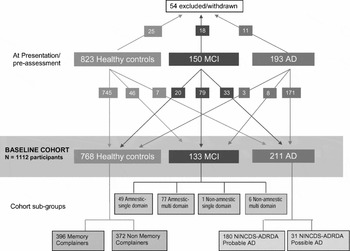
Figure 1 shows the total numbers of volunteers screened and assessed, the initial category to which each volunteer or referred participant was assigned prior to assessment, and the final category of allocation after assessment and clinical review.
Composition of the AIBL cohort: screening, assessment and cohort sub-groups.

In all, 1166 individuals presented for AIBL assessment. Fifty-four individuals were excluded, resulting in a baseline cohort of 1112 participants. These included 211 with NINCDS-ADRDA AD (180 probable and 31 possible) and 133 who met Winblad criteria for MCI (77 amnestic multi-domain, 49 amnestic single-domain, 6 non-amnestic multi-domain, 1 non-amnestic single-domain). There were 768 “healthy control” (HC) participants, of whom 396 complained about their memory and 372 did not. Thirty-nine HC individuals (3.5%) both reported and manifested consistent slight forgetfulness or partial recollection of events on testing and yet did not fulfill criteria for MCI or dementia; these individuals were classed as healthy controls with a CDR of 0.5.
Of the 54 individuals (11 putative AD participants, 18 presenting as diagnosed MCI patients and 25 reporting to be healthy controls) who presented for assessment but were unsuitable for inclusion in the cohort, the most common reasons for exclusion were excessive alcohol consumption, past serious head injury, current clinical depression, withdrawal of consent and history of stroke(s). Specifically, volunteers were excluded as follows: 16 volunteers had a history of stroke(s), 6 had history of past serious head injury, 6 had excessive alcohol intake, 2 had epilepsy, 2 had an existing diagnosis of frontotemporal dementia, 2 had Parkinson's disease, 2 were taking morphine at the time of assessment, 1 had a previous episode of amnesia, 1 had previously been admitted to hospital for hypoxia, 1 had insufficient English to complete the assessment, 1 had depression not apparent at screening, 5 volunteers did not have enough information gathered at assessment (e.g. due to advanced dementia), and 9 withdrew consent.
Within the inception cohort, 31 of the AD participants were classified as having possible (rather than probable) AD according to NINCDS-ADRDA criteria, due to the following reasons: 15 had a history or neuroimaging evidence of asymptomatic minor stroke, TIA or recovered head injury; 4 had current atrial fibrillation and/or history of aortic aneurysm; 1 had Parkinsonian symptoms and recently treated depression; 1 had a previous (now revised) diagnosis of progressive aphasia; 1 had epilepsy; 6 had abnormal blood pathology results (i.e. anemia, low folate, etc.); 1 reported previous excessive alcohol intake many years prior to the development of AD; and 2 had atypical clinical presentations of AD. For those AD participants who reported excessive alcohol intake, history of head injury, or past depression, the clinical panel reviewed the cases in detail to ensure that the dementing process occurred after, and in isolation from, the possible confounding history. For each of these 31 cases, the clinical review panel determined that the dementia had clinical AD features and that the potentially confounding diagnosis or history did not appear to account for the progressive dementing illness exhibited by the study participants.
Following detailed review by the clinical panel, a small proportion of AD and MCI cases did not meet the relevant diagnostic criteria (NINCDS-ADRDA criteria for probable or possible AD, or Winblad criteria for MCI), and therefore were reallocated to a different category. Specifically, eight putative AD participants did not have significant impairment of social or occupational functioning, and instead fulfilled Winblad criteria for MCI. Three apparent AD cases were reclassified as healthy control participants; two of these people had been diagnosed with AD by clinicians relatively inexperienced in the diagnosis and management of dementia, and one had been incorrectly classified at presentation.
Consistent with previous research (Larrieu et al., Reference Larrieu2002; Solfrizzi et al., Reference Solfrizzi2004; Kryscio et al., Reference Kryscio, Schmitt, Salazar, Mendiondo and Markesbery2006), MCI proved to be the most mutable diagnosis. Thirty-three participants presenting with a diagnosis of MCI previously made by a clinician now had significant impairment of social or occupational functioning confirmed by informant history, and a neuropsychological profile consistent with AD, and therefore were reallocated to the AD category. Twenty participants with an MCI diagnosis made by the referral source did not demonstrate cognitive functioning at least 1.5 SD below age-adjusted norms on any cognitive tests, and were thus reallocated at baseline to the healthy control group.
Seven participants who volunteered to take part as healthy controls were found on testing to have both cognitive deficits and an informant history indicating significant impairment of social or occupational functioning that met DSM-IV and NINCDS-ADRDA criteria for AD. Forty-six participants who volunteered to take part as healthy controls scored 1.5 SD below the age-adjusted mean on at least two cognitive assessment measures, and either personally, or through an informant, reported subjective memory difficulties, but had substantially intact social and occupational functioning. These 46 individuals were reallocated to the MCI group.
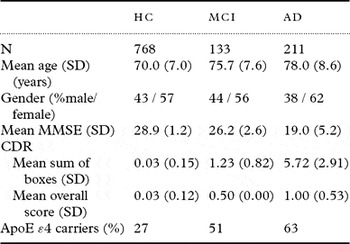
Table 1 presents information about the 1112 individuals who formed the baseline AIBL cohort. There was a greater percentage of females than males in each group (HC = 57%, MCI = 56%, AD = 62%). The AD participants had MMSE scores ranging from 0 to 28 (median 20) and CDR ratings consistent with “questionable” (CDR = 0.5; 68 AD participants), mild (CDR = 1; 114 AD), moderate (CDR = 2; 25 AD) or severe (CDR = 3; 4 AD) dementia. All MCI participants had a CDR of 0.5 and their MMSE scores ranged from 17 to 30 (median 26). Only two MCI volunteers had a MMSE of less than 20, and these cases were thoroughly reviewed by the clinical review panel. The consensus decision for these cases was that there were no significant difficulties with activities of daily living. Both of these subjects had received only limited schooling. The MMSE scores of healthy controls ranged from 24 to 30 (median 29), and all but 39 had a CDR of 0.
Baseline confirmed classification and demographic characteristics for each group

HC = healthy controls
MCI = participants with Mild Cognitive Impairment
AD = participants with Alzheimer's disease
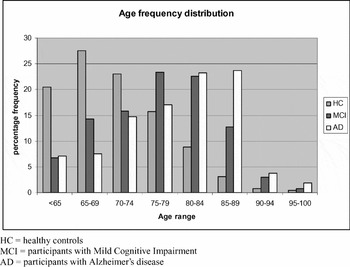
Figure 2 shows the age distribution of the cohort. The healthy control participants were significantly younger than the MCI and AD participants (p<0.01). However the HC group was much larger than the MCI and AD groups combined and contained a substantial number of very elderly healthy participants, which is sufficient to compare AD and MCI participants with aged-matched controls if and when necessary.
Age distribution for each group.

Demography
The majority of participants in the cohort were either married (70% of HC, 57% of MCI, 60% of AD) or widowed (11% of HC, 21% of MCI, 24% of AD), and most participants primarily spoke English at home (98% of HC, 92% of MCI, 91% of AD). Those who spoke a language other than English at home were nevertheless fluent in English, as lack of fluency in English was an exclusion criterion. Involvement in organized community activities, such as membership of Probus or senior citizen clubs, Returned Servicemen's League clubs and/or sporting clubs was highest in the HC and MCI groups, as was expected (68% of HC, 67% of MCI); however, nearly half (47%) of AD patients remained involved in community organizations at some level. Approximately one third of the cohort reported having at least one pet (33% HC, 28% of MCI, 33% AD). The cohort was well educated, with 47% of HC, 58% of MCI and 42% of AD participants reporting 13 or more years of education. Results of the Wechsler Test of Adult Reading (WTAR) revealed estimated mean premorbid IQ scores of 101 for AD patients, 105 for MCI participants and 108 for HCs, with significant differences between each of the groups (HCs demonstrated significantly higher mean IQ than MCIs, with ADs scoring significantly lower than MCIs). The majority of participants were right handed (88% of HC, 86% of MCI, 87% of AD), in line with the world population proportion of right-handedness (Corballis, Reference Corballis2009).
Neuropsychology
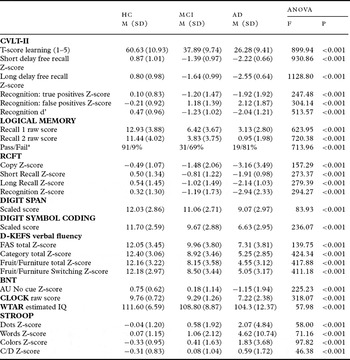
Table 2 presents the mean and standard deviation of normed and age-adjusted measures for the neuropsychological tasks, and the results of between-groups one-way analysis of variance (ANOVA) for each measure. These groups differed significantly on all measures (p<0.01). Furthermore, planned comparisons demonstrated that the HC group performed significantly better than MCI participants, and MCI participants significantly out-performed those with AD on all measures (all p<0.01).
Baseline cognitive performance measures for each group

*Based on education corrected cut-off scores for delayed recall of the first paragraph of the WMS Logical Memory subtest, as defined by the Alzheimer's Disease Neuroimaging Initiative (ADNI).
CVLT-II = California Verbal Learning Test (second edition).
RCFT = Rey Complex Figure Test.
D-KEFS = Delis-Kaplan Executive Function System.
BNT = Boston Naming Test.
WTAR = Wechsler Test of Adult Reading (based on U.S. norms).
HC = healthy controls; MCI = participants with Mild Cognitive Impairment; AD = participants with Alzheimer's disease.
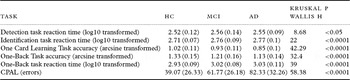
Table 3 presents the mean and standard deviation of all measures of the CogState battery, and the results of the Kruskal-Wallis significance test for each measure. These findings demonstrate significant differences between the three groups on all measures (p<0.05). Further, Wilcoxon ranked-sums tests showed that HC participants performed significantly better than the MCI participants on all measures of the CogState battery (p<0.0001). The MCI participants performed significantly better than the AD participants on the One Card Learning task and the Continuous Paired Associate Learning Task (p<0.05). There were no other significant differences between the MCI and AD participants.
Baseline CogState scores for each group – mean (SD)

HC = healthy controls
MCI = participants with Mild Cognitive Impairment
AD = participants with Alzheimer's disease
Overall, these cognitive findings were highly consistent with those expected in participants classified as HC, MCI and AD and support the accuracy of participant assignment in this cohort.
Baseline medical characteristics and medication use
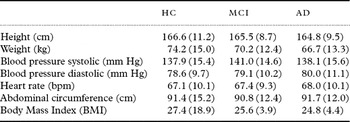
Table 4 presents vital signs (heart rate, blood pressure, weight, height and abdominal circumference and body mass index) for the three groups. The only difference between groups was observed in the weight measures (p<0.05), with AD patients weighing less than both HCs and MCIs. However, this difference was mediated by age, with older volunteers observed to weigh less than younger volunteers (p<0.05).
Mean (SD) vital sign measures for each group

HC = healthy controls
MCI = participants with Mild Cognitive Impairment
AD = participants with Alzheimer's disease
With regard to family history of dementia, 28% of AD participants reported that they had a first degree relative with dementia. The mother was the most common family member reported to have had dementia (33 of 58; 57%). Of those AD participants who reported a family history, 11 (19%) reported multiple first degree family members to have had dementia. In the MCI group, 37% (49 participants) reported that they had a first degree relative with dementia. Again, the most common family member to have had dementia was the participant's mother (32; 65%). Of the MCI participants who reported a family history, three (6%) reported multiple first degree family members to have had dementia. Family history of dementia in the HC group was also common. Three-hundred-and-twenty-eight (43%) HC participants reported that they had a first degree relative with dementia; 175 (53%) were memory complainers, 153 (47%) were not memory complainers. Forty-two (13%) HC participants reported that they had multiple first degree relatives with dementia. As with the AD and MCI participants, the most common family member reported by the HC participants to have had dementia was their mother (228; 70%).
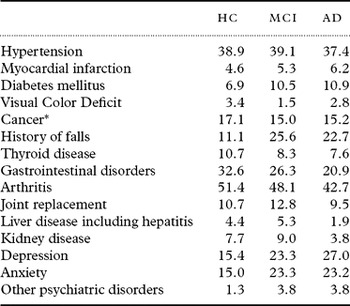
Table 5 presents self-reported current and past medical history. Participants from all three groups had a range of comorbid medical conditions, including current or past history of hypertension (297 HC, 52 MCI, 48 AD), diabetes mellitus (53 HC, 14 MCI, 23 AD), treated thyroid disease (82 HC, 11 MCI, 16 AD) and gastrointestinal system complaints (250 HC, 35 MCI, 44 AD).
Percentage of participants in each group who reported current or past history of specific medical conditions

*Most were skin cancers. Those that were not (e.g. bowel cancer) had been cured or had been in remission for more than 2 years.
#Most often gastro-esophageal reflux or diverticular disease.
HC = healthy controls; MCI = participants with Mild Cognitive Impairment; AD = participants with Alzheimer's disease.
Prescription and “over the counter” medication
Most participants, regardless of classification, reported taking medications. Overall, 79% of HC, 87% of MCI and 97% of AD participants were taking at least one prescription or over the counter medication. The proportion of participants taking medications was significantly greater in the AD group than the MCI group, with the HC group having the significantly lowest proportion of participants taking medications.
Participants took between 0 and 13 medications per day (average intake: HC = 2.4 + 2.2, MCI = 3.2 + 2.6, AD = 3.8 + 1.2), and again there were significant differences between the groups, with AD participants taking more medications daily than MCI participants, and HCs taking the least number of medications.
Consistent with the high levels of cholesterol in this age-group, the most commonly prescribed medication for all participants was the cholesterol-lowering agent atorvastatin calcium (107 HC, 19 MCI, 30 AD). Occasional paracetamol and/or aspirin were also within the top ten medications listed by all three groups (166 HC, 38 MCI, 63 AD).
Of the 211 confirmed AD participants, 134 (64%) were prescribed AD medication at the time of assessment. The most common AD medication was donepezil (74 AD patients), followed by galantamine (43 patients), and rivastigmine (5 patients). An additional six patients were taking a combined donepezil/memantine treatment, and six were taking combined galantamine/memantine treatment.
Although there were 77 AD volunteers who were not taking AD medications at baseline, it should be noted that this group includes 33 participants who presented as MCI and six participants who presented as HC (and were subsequently reallocated to the confirmed AD group after clinical panel review). Of the 33 volunteers who presented as MCI and were subsequently classified as AD, four were taking donepezil and nine were taking galantamine at the time of assessment. In addition, several of the AD participants who presented as AD and who were not on AD therapy had been recently diagnosed and had not yet started their treatment.
One subject who presented having been diagnosed with AD by a practitioner inexperienced in its diagnosis and management was taking donepezil, despite the clinical review panel observing no evidence of impairment in either their past or current social and occupational functioning, or in their cognitive profile, and this participant was reallocated to the HC group. Finally, one AD patient who was misclassified as HC at presentation was taking donepezil.
The AD group had a significantly higher proportion of antidepressant use (6% HC, 15% MCI, 25% AD). The reported intake of benzodiazepines was low in all groups (2% HC, 6% MCI and 6% AD), with most using them on an “as required” basis.
Nutraceuticals
A large proportion of the cohort was taking nutraceuticals (i.e. vitamins, minerals, herbs and other supplements). The number of nutraceuticals taken daily ranged from 0 to 13 (HC = 1.7 + 2.0, MCI = 1.3 + 1.8, AD = 1.1 + 1.6), and the proportion of HCs taking nutraceuticals was significantly higher than in the AD group. Vitamin supplements were the most commonly reported item taken by all participants, with over half the cohort (HC = 60%, MCI = 52%, AD = 53%) taking a vitamin supplement.
Symptoms of depression and anxiety
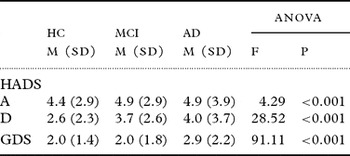
Table 6 shows GDS and HADS measures for the three groups. While the mean scores for each group were low (suggesting low levels of anxiety and depression) due to exclusion of high GDS scorers in the HC group at screening, analysis of variance demonstrated that MCI and AD participants tended to be have significantly more symptoms of anxiety and depression than HC participants (all p < 0.05).
Baseline anxiety and depression scores on the HADS and GDS measures for each group.

HADS scores can range from 0 – 18. GDS scores can range from 0 – 15.
HADS = Hospital Anxiety and Depression Scale (A = anxiety subscale score, D = depression subscale score).
GDS = Geriatric Depression Scale.
HC = healthy controls; MCI = participants with Mild Cognitive Impairment; AD = participants with Alzheimer's disease.
Forty (5.3%) HC participants scored within the clinically significant range on the anxiety subscale of the HADS (i.e. ≥10/18) and a further 121 (15.9%) had scores within the probably clinically significant range (i.e.7–9). Ten (1.3%) HC participants scored within the clinically significant range on the depression subscale (i.e. ≥10/18) and a further 37 (4.9%) had scores within the probably clinically significant range (i.e. 7–9).
Consistent with many previous research publications (Jost and Grossberg, Reference Jost and Grossberg1996; Mega et al., Reference Mega, Cummings, Fiorello and Gornbein1996; Lyketsos et al., Reference Lyketsos and Olin2002; Rozzini et al., Reference Rozzini, Gozzoli, Indelicato, Lonati and Trabucchi2008), current and past history of depression and anxiety rates were higher in the AD and MCI groups, compared to HCs (15% of HC, 23% of MCI and 27% of AD participants reported current or past depression; 14% of HC, 23% of MCI and 23% of AD participants reported current or past history of anxiety).
Blood samples
A summary of ApoE genotyping results is presented in Table 1. As expected, the number of ApoE ε4 carriers was highest in the AD group (HC = 27%, MCI = 51%, AD = 63%), with significant differences between the groups.
PiB imaging
Two-hundred-and-eighty-seven participants (53 AD, 57 MCI, 177 HC) had a 11C-PiB-PET scan, as previously described (Pike et al., Reference Pike2007) and a 3D T1-weighted MPRAGE, T2 FSE, and FLAIR sequence MRI for screening and co-registration with the PET images.
Health and lifestyle
A total of 100 AIBL participants (16 AD, 20 MCI and 64 HC) underwent DEXA scans. In addition, 91 participants participated in the ActiGraph monitoring component (6 AD, 8 MCI and 77 HC). There were 31 participants who completed both DEXA and ActiGraph components (2 AD, 1 MCI and 29 HC).
Discussion
The AIBL study has assembled a large cohort of individuals who can be assessed, compared and then followed over a long period of time in order to facilitate prospective research into AD. This is the largest cohort study of its kind in Australia (and one of the largest worldwide) to have thoroughly assessed individuals with and without AD, and with varying levels of risk for developing AD. The participants represent a group of highly motivated and well-characterized individuals whose cognitive data, blood samples, imaging results, and lifestyle information will be examined longitudinally at regular intervals.
Classifications of AD and MCI within the cohort were made according to established, internationally recognized criteria after thorough review by a multi-disciplinary group of academic clinicians experienced in the assessment, diagnosis and management of late-life cognitive disorders, particularly AD and MCI. Most participants who presented with diagnoses of AD from their treating clinician had these diagnoses confirmed by the clinical review panel, demonstrating the relatively robust nature of this clinical diagnosis and the expertise of the referring clinicians. In contrast, MCI cases were by far the most difficult group to characterize. A significant percentage of those who presented with an MCI diagnosis from their treating clinician proved not to fulfill internationally-agreed MCI criteria (Winblad et al., Reference Winblad2004). However, it is possible that the referring clinicians were using different diagnostic criteria from Winblad and colleagues, as these have changed with time and are evolving more rapidly than AD diagnostic criteria. Also, it is known that some individuals classified as having MCI will progress to exhibiting clear symptoms of AD within months, while some others will show cognitive improvement over time (Petersen et al., Reference Petersen, Smith, Waring, Ivnik, Tangalos and Kokmen1999). The reliability of the current MCI diagnostic classifications needs to be tested over time. The AIBL cohort represents an opportunity to examine the biological, imaging or lifestyle markers which may be of use in clinical classification. Using the standard criteria (as employed in this study), we would expect to see progression to AD from MCI in 10–20% of this group annually, with approximately one-third of MCI cases never progressing to AD. Both the rate of ApoE ε4 allele frequency in the MCI group compared to our AD and HC groups, and the neuropsychological testing results of the MCI group, suggest that we have identified a group of individuals whose characteristics are, in many respects, intermediate between HC and AD participants.
In this study the term HC referred predominantly to the absence of cognitive difficulties. As expected in a group of over 700 individuals aged between 60 and 96, most were affected by one or more chronic but controlled medical conditions, and a past history of some degree of depression or anxiety was common. Our HC participants were taking a range of medications and had medical histories which indicated the presence of a range of medical conditions typical of this age group. Where HC participants had evidence of illnesses or medication use that could have affected cognitive function, their cases were reviewed in detail. For example, we were careful to ensure that individuals with a history of hypothyroidism were taking thyroxine and had normal TSH levels. Most antidepressants taken were types that do not usually affect cognition. For the small proportion of individuals who were taking benzodiazepines, dosage was typically low, often taken only occasionally, and cognition was nevertheless within normal limits on testing. HC participants who were assessed as performing poorly on cognitive tests due to current medical illness, medical history or medication use were excluded from the cohort as noted in the study methodology. It would have been possible to exclude all HC individuals who had recovered from previous depression, or were affected by hypertension (or any other illness associated with an increased risk of current cognitive impairment or future decline), or to have denied participation to all who took any psychotropic drugs. However, this would have resulted in the selection of a “super-normal” cohort of individuals chosen for extreme health, whose parameters would not have been comparable with those of our AD and MCI groups. The characteristics of the current cohort of HCs therefore allow for a better comparison between groups based on their similar medical histories.
The term HC may be a misnomer when applied to this large group of individuals with a range of risk factor profiles for AD. This point notwithstanding, the neuropsychology results obtained from our HC participants give an excellent baseline against which to detect even subtle future changes. Tracking change in this group over time should provide valuable information regarding the profiles (biological, psychological, medical, social and genetic) of individuals aged over 60 who are most likely to develop AD, in addition to offering an important insight into rates of change in cognition and other measures over time in healthy elderly people. Of specific interest will be the differences (if any) seen between those HCs who are “subjective memory complainers” and those HCs who do not report memory concerns. To date there is conflicting evidence as to whether subjective memory impairment is associated with an increased risk for developing cognitive impairment (for a review, see Jonker et al., Reference Jonker, Geerlings and Schmand2000). Fifty-two percent of the HCs in this cohort were subjective memory complainers, which is in line with prevalence of memory complaint assessed in other community-based studies, with rates ranging from a quarter to over a half of healthy volunteers (Jonker et al., Reference Jonker, Geerlings and Schmand2000).
It should be noted that this cohort was recruited through advertisements seeking volunteers for a study into memory and aging, and there is likely to have been some inherent self-selection bias towards those with a family history of dementia who might be expected to exhibit more interest in such research than individuals with no exposure to dementia in their family members. However, proportions of ApoE ε4 carriers in this cohort were consistent with previous estimates of the Australian population (Corbo and Scacchi, Reference Corbo and Scacchi1999; Martins et al., Reference Martins1995) and do not suggest a significant over-selection of ε4 carriers.
Subsequent detailed analysis of the baseline cross-sectional data presented here will provide valuable information on links between cognition, brain amyloid burden, structural brain changes, biomarkers, and lifestyle. The future research yield from the AIBL cohort should add much to our knowledge about AD. Currently, 18-month follow-up assessments are taking place, and, in addition to repeating baseline assessments participants are being asked to give consent to future post mortem brain donation and autopsy so that plaque and tangle counts as well as total brain amyloid burden can be determined in due course for at least one quarter of the cohort. The existence of a well-established Australian brain donation network will facilitate this goal. At 18-month follow-up at least 100 participants will donate CSF obtained at lumbar puncture to permit determination of Aβ/tau ratios in CSF and to cross-validate PiB PET findings and Aβ blood amyloid levels. Dependent on continued funding, all consenting members of this cohort will be followed at 18-month intervals until death, with the primary aim of determining which baseline characteristics are predictive of future cognitive decline. The cluster collaboration demonstrates the increased capacity for recruitment with multicenter collaboration necessary to achieve large sample size with in-depth clinical examination. In addition, the cluster strategy with specialized researchers within broad themes allows the benefit of a combination of skills from clinical expertise to basic science and bioinformatics.
The AIBL dataset is a unique Australian resource with international significance, which will assist development of important and robust techniques for early detection of AD, identify lifestyle targets which may delay onset of AD, and provide a valuable cohort suitable for further study of AD.
Conflict of interest declaration
David Ames is the editor and Nicola Lautenschlager is a deputy editor of International Psychogeriatrics. This paper was therefore reviewed at arm's length through the office of deputy-editor Professor John O'Brien.
David Darby and Paul Maruff are shareholders in CogState Ltd. and are paid employees of that company.
Description of authors' roles
Kathryn Ellis helped plan the study, coordinated the study, chaired the clinical and cognitive stream, assisted with design and implementation of assessment procedures, served on the study management committee and the clinical panel, and helped to write the paper. Ashley Bush, Colin Masters, Peter Hudson and Ralph Martins helped plan the study and co-led the biomarkers stream. All four had input into the writing of the paper. Ralph Martins led the Western Australia component of the study. CM, PH and RM served on the study management committee. David Darby, Michael Woodward and Nicola Lautenschlager helped to plan the study, participated in clinical panel meetings and referred AD and MCI participants to the study. DD and NL helped plan the clinical and cognitive stream, while MW referred more subjects to the study than any other clinician. All three reviewed drafts of the paper. Daniela De Fazio participated in the clinical review panel, assessed many of the participants, assisted with data management and reviewed drafts of the paper. Jonathan Foster, Paul Maruff and Greg Savage co-led the clinical and cognitive stream, and (with KE) helped plan the study, devised the neuropsychological test battery (with KE, KP, NL and DD) and reviewed drafts of the paper. Andrew Milner served on the AIBL management committee and worked on drafts of the paper. Kerryn Pike helped plan the clinical and cognitive stream, participated in the clinical review panel, helped coordinate the Melbourne neuroimaging site, assessed participants at Austin Health, and reviewed drafts of the paper. Christopher Rowe and Nat Lenzo led the neuroimaging stream. CR serves on the study management committee and helped plan the study. Both reviewed drafts of the paper. Cassandra Szoeke is CSIRO theme leader responsible for the AIBL study and worked on drafts of the paper. She is the CSIRO representative on the study management committee. Kevin Taddei helped design the blood protocols, coordinated procedures in Perth and reviewed drafts of the paper. Victor Villemagne coordinated the neuroimaging stream, analyzed all PiB images and reviewed drafts of the paper. David Ames helped to plan the study, led the study, chaired the management group and clinical review panel, referred many of the AD and MCI participants and helped write the paper. The AIBL research group was responsible for the collection and interpretation of the data.
Acknowledgments
Core funding for the study was provided by CSIRO, which was supplemented by “in kind” contributions from the study partners (see Appendix 2). The AIBL investigators thank Richard Head of CSIRO for initiating and facilitating the AIBL collaboration. The study also received support from the National Health and Medical Research Council via the Dementia Collaborative Research Centres program (DCRC2). Pfizer International has contributed financial support to assist with analysis of blood samples and to further the AIBL research program. Ashley Bush is supported by a Federation Fellowship from the Australian Research Council. Cassandra Szoeke is partially supported by a research fellowship funded by Alzheimer's Australia. Alzheimer's Australia (Victoria and Western Australia) assisted with promotion of the study and the screening of telephone calls from volunteers. The AIBL team wishes to thank the following clinicians who referred patients with AD and/or MCI to the study: Professor David Ames, Associate Professor Brian Chambers, Professor Edmond Chiu, Dr Roger Clarnette, Associate Professor David Darby, Dr Mary Davison, Dr John Drago, Dr Peter Drysdale, Dr Jacqui Gilbert, Dr Kwang Lim, Professor Nicola Lautenschlager, Dr Dina LoGiudice, Dr Peter McCardle, Dr Steve McFarlane, Dr Alastair Mander, Dr John Merory, Professor Daniel O'Connor, Professor Christopher Rowe, Dr Ron Scholes, Dr Mathew Samuel, Dr Darshan Trivedi, and Associate Professor Michael Woodward. We thank all those who participated in the study for their commitment and dedication to helping advance research into the early detection and causation of AD.
Appendix 1 – AIBL Study Group

Appendix 2 – AIBL research partner organizations
Australian Commonwealth Scientific Industrial and
Research Organisation (CSIRO)Footnote *
University of MelbourneFootnote *
Neurosciences Australia Ltd (NSA)Footnote *
Edith Cowan University (ECU)Footnote *
Mental Health Research Institute (MHRI)Footnote *
Alzheimer's Australia (AA)
National Ageing Research Institute (NARI)
Austin Health
University of WA (UWA)
CogState Ltd.
Macquarie University
Hollywood Private Hospital
Sir Charles Gairdner Hospital