Introduction
The global Covid-19 pandemic has created many changes in human behavior around the world. To eradicate this pandemic, many governments imposed restrictions that included lockdowns, reduction of community and social activities, and restrictions on social closeness. As a result, many changes were observed during this period in the conduct patterns of organizations around the world, corresponding with the consequences of the Covid-19 pandemic on the global labor market (Arquisola, Liswandi, Hutabarat, & Fauzi, Reference Arquisola, Liswandi, Hutabarat and Fauzi2021; Latorre, Pérez-Nebra, Queiroga, & Alcover, Reference Latorre, Pérez-Nebra, Queiroga and Alcover2021). Following the outbreak of the pandemic, many organizations and employers have adopted new work practices, such as working from home and virtual teamwork. This has often involved incorporating technological aids, which was sometimes done quickly and not satisfactorily, impairing the quality of the work. Also, along with changes among employers, many changes also occurred among employees. They include social distancing in the workplace, the necessity to work from home, and the increasing need to adapt to new work realities and work environments, economic and existential pressure, and even increased unemployment (Kniffin et al., Reference Kniffin, Narayanan, Anseel, Antonakis, Ashford, Bakker and Vugt2021; Latorre et al., Reference Latorre, Pérez-Nebra, Queiroga and Alcover2021; Rigotti et al., Reference Rigotti, Yang, Jiang, Newman, De Cuyper and Sekiguchi2021).
One of the consequences of the Covid-19 pandemic on the global market, which may have long-term effects on the global economy, is the pandemic’s significant effect on young people’s employment globally. The economic impact of Covid-19 restrictions resulted in an increase in unemployment and a decrease in income worldwide, especially for young adults (Churchill, Reference Churchill2021; Lambovska, Sardinha, & Belas, Reference Lambovska, Sardinha and Belas2021; Li et al., Reference Li, Serido, Vosylis, Sorgente, Lep, Zhang and Lanz2023) – a situation that led to a decrease in various areas of life for young employees. This was due to young adults’ vulnerability to employment disruptions as job loss and income loss, because their lack of resources, alongside young adulthood’s (18–30 years old) crucial developmental tasks, such as career establishment and financial independence. Therefore, young employees during and after Covid-19 pandemic may suffer from both immediate and long-term effects on their financial well-being and mental health (Achdut & Refaeli, Reference Achdut and Refaeli2020; Churchill, Reference Churchill2021; Li et al., Reference Li, Serido, Vosylis, Sorgente, Lep, Zhang and Lanz2023). For example, in Israel, unemployment among young adults aged 20–35 years during the pandemic was linked to increased psychological distress, exacerbated by financial strain and loneliness (Achdut & Refaeli, Reference Achdut and Refaeli2020). Another study that was conducted across six countries found that job and income loss during the pandemic negatively impacted young adults’ financial and psychological well-being, through the mediation of their negative perceptions of lockdown restrictions (Li et al., Reference Li, Serido, Vosylis, Sorgente, Lep, Zhang and Lanz2023).
Following the sweeping impact of Covid-19 on the world and the global employment market, some have argued that these effects will persist even after the pandemic (Arquisola et al., Reference Arquisola, Liswandi, Hutabarat and Fauzi2021). For example, in a study during and after the pandemic involving 14 organizations, mostly in the fields of customer service and sales, an increase in searches for work-from-home jobs was observed. In fact, some scholars argued that the pandemic, as a large-scale macro event, has the ability to continuously influence the perceptions of job seekers, in the form of strengthening the extent to which they emphasize obtaining optimal workplace conditions (McFarland, Reeves, Porr, & Ployhart, Reference McFarland, Reeves, Porr and Ployhart2020). Moreover, in another study that examined how organizations perceive the implementation of flexible work arrangements after Covid-19, it emerged that organizations perceived this work method as positive. According to them, this arrangement can lead to an increase in home–work balance, comfort for employees, and efficiency for both employees and organizations in the use of the organization’s facilities (Arquisola et al., Reference Arquisola, Liswandi, Hutabarat and Fauzi2021).
Also, it seems that both during and after Covid-19, employees have placed growing importance on personal working conditions agreed upon with their employers that increase their mental and professional well-being. This, in addition to the growing importance of employees during these periods, to be in employment environments that fit their values and culture. Accordingly, it appears that employees’ satisfaction, involvement, performance, and happiness can increase, if they are able to achieve their preferred working conditions while being in an employment environment suited to them. Therefore, we assume that during the post-Covid-19 period, employees demonstrate greater affinity than in the past to achieve the abovementioned employment characteristics and acts accordingly while looking for working places (Arquisola et al., Reference Arquisola, Liswandi, Hutabarat and Fauzi2021; Carnevale & Hatak, Reference Carnevale and Hatak2020; Latorre et al., Reference Latorre, Pérez-Nebra, Queiroga and Alcover2021).
Therefore, because the Covid-19 period created many consequences in various fields that have permeated the post-Covid-19 era, particularly in the field of employment in the sense of a reduction in the occupational compromise (OC) of employees, it is worth examining factors that explain the OC of young people (aged 20–30 years) during the period after Covid-19. This population group represents the new generation of the employment market, that was not only deeply affected by the pandemic but also enters a different and new employment market created as a result of the coronavirus, about which not enough knowledge has yet been gathered. Consequently, this research can add new insights, apart for what known today about the economic impact of Covid-19, on this new employment generation that form the future of the global economy, regarding the young workers characteristics and preferences at the post-Covid-19 era. While also adding possible reasons for these qualities, considering the context of both Covid-19 and post-Covid-19 periods in which they were formed.
Thus, this study focused on investigating the correlations among optimism, self-efficacy, OC, and the degree of happiness among young workers (aged 20–30 years) in the post-Covid-19 period. This study also investigated the crucial role of optimism as a mediator in the correlations of self-efficacy and OC with happiness. The participants were young workers ranging in the age from 20 to 30 years, who were randomly sampled using convenience sampling through social networks. They were asked to fill a series of online computerized questionnaires which measured each of the variables. Despite known issues with convenience sampling and questionnaires’ biases, we believe this methodology helped us reaching a wide variety of participants in an easy and cost-effective way, with less biases during data analysis. The data were statistically analyzed using Pearson tests and regression analysis.
The remainder of this paper is structured as follows: First, we present a comprehensive literature review exploring the impacts of the COVID-19 pandemic on young workers’ employment patterns and psychological well-being. Next, we detail our methodology, including participant selection, data collection procedures, and analytical approaches. We then present our findings, focusing on the correlations among optimism, self-efficacy, OC, and happiness in young workers post-COVID-19. Following this, we discuss these findings in the context of existing literature and their implications for both theory and practice in the fields of sociology and labor studies. Finally, we conclude by summarizing key insights, acknowledging limitations, and suggesting directions for future research in this critical area of post-pandemic sociological inquiry.
Theoretical background
Happiness
Happiness is often defined as a state of mental well-being, associated with having pleasant experiences and feeling good. It is an emotional state characterized by feelings of pleasure and satisfaction (Wani & Dar, Reference Wani and Dar2017). Other definitions outline two main components of happiness. One component is the pursuit of pleasure, pleasant experiences, and a happy emotional state and a reduction in negative emotions. The second component is the aspiration to achieve meaning and satisfaction by doing moral actions, listening to the dictates of conscience, and fulfilling personal desires (Fisher, Reference Fisher2010; Veenhoven, Reference Veenhoven, Bruni and Porta2016). Accordingly, to evaluate the degree of happiness in a person’s life, two aspects must be evaluated. The first is how good they feel. The second is the degree of satisfaction they feel, which is measured by the degree to which their life conforms to the standards they define as describing an ideal life (Veenhoven, Reference Veenhoven, Bruni and Porta2016).
Happiness, as a significant element in a person’s life, can occur in many areas. Thus, happiness can exist in the workplace. Individuals often spend a lot of time at their workplace and accordingly, a sense of happiness there can contribute to general happiness (Calitz, Cullen, & Midgley, Reference Calitz, Cullen and Midgley2022). Similar to the general definition of happiness, happiness in the workplace also has two components. One component is emotional, referring to the experience of positive emotions and pleasant experiences in the workplace, positive beliefs about job satisfaction, commitment to the workplace, and the ability to experience positive emotions at work. The second component is the employees’ perception of their ability to learn, develop, and be autonomous in their workplace (Fisher, Reference Fisher2010; Shamir-Balderman, Tzafrir, & Enosh, Reference Shamir-Balderman, Tzafrir and Enosh2023).
Feeling happiness in the workplace can have many benefits for employees. A feeling of happiness among employees can lead to increased motivation and productivity, satisfaction and meaning, and sense of commitment to the organization. Also, employees’ happiness in the workplace has effects not only on them but also on the organizations in which they work. When the degree of happiness of employees increases, the business activity of the organizations that employ them improves as well (Fisher, Reference Fisher2010). Also, studies have indicated that when employees are not happy, there may be harmful consequences for them and their organization, such as increased feelings of pressure and burnout, wrong decisions, and damage to the organization’s business activities (Calitz et al., Reference Calitz, Cullen and Midgley2022; Fisher, Reference Fisher2010; Wani & Dar, Reference Wani and Dar2017).
Many factors affect the degree of happiness that employees experience in their workplace. Among these factors, it is important to mention both personal and workplace-related factors. For example, it is possible to specify the degree of influence that employees have at their workplace. The more influence they have, the more they tend to be involved in the workplace, able to manage more demanding tasks, and be more productive. In turn, this enhances their feeling of control over their environment, which can enhance their feeling of happiness. Another factor that affects employees’ happiness that is affected by workplaces is the degree of satisfaction with work–home balance. In organizations that encourage a work–life balance policy, employees tend to feel a higher degree of happiness and well-being (Shamir-Balderman, Reference Shamir-Balderman2018). Among personal factors that affect employees’ happiness are the quantity and quality of relationships that employees maintain with their colleagues and managers; the sense of purpose, meaning, and satisfaction that employees gain from their work role; the degree of pressure that employees experience while performing their work; and the degree of their self-confidence at work (Calitz et al., Reference Calitz, Cullen and Midgley2022; Wani & Dar, Reference Wani and Dar2017).
Another personality factor found to have a positive relationship with happiness in the workplace is optimism. Optimism and happiness are positive feelings that often occur together. It also appears that an optimistic worldview about work and the organization can encourage enjoyment in the workplace, creativity, and flexibility in dealing with changes, which can lead to a greater degree of happiness (Calitz et al., Reference Calitz, Cullen and Midgley2022; Shawaqfeh & Almahaireh, Reference Shawaqfeh and Almahaireh2019; Wani & Dar, Reference Wani and Dar2017). Furthermore, optimism was found to mediate the occupational demands of employees and their level of happiness. It was found that when employees felt that their desired balance between home and work contexts had been realized, their level of optimism increased, leading to a greater degree of satisfaction with life, which is a main component of happiness (Bouzari & Karatepe, Reference Bouzari and Karatepe2020).
Optimism
Optimism is a personality trait that reflects the extent to which individuals hold generally positive expectations regarding their future. Optimism is defined as a cognitive process that produces thoughts and feelings of satisfaction, perseverance, hope, and self-confidence, which are barriers to thoughts and feelings of despair, defeat, and incompetence. This naturally makes holding an optimistic view of life, a possible factor in having a greater sense of well-being and happiness. Many factors can influence the degree of optimism, including family, society, culture, and media (Bazargan-Hejazi et al., Reference Bazargan-Hejazi, Dehghan, Chou, Bailey, Baron, Assari and Bazargan2023; Calitz et al., Reference Calitz, Cullen and Midgley2022; Shawaqfeh & Almahaireh, Reference Shawaqfeh and Almahaireh2019). Studies have shown that a higher tendency toward optimism is linked to positive results in many dimensions. For instance, optimistic people are less likely to use avoidance as a coping strategy to deal with difficulties, instead adopting a strategy of active involvement (Carver & Scheier, Reference Carver and Scheier2014; Carver, Scheier, & Segerstrom, Reference Carver, Scheier and Segerstrom2010; Türküm, Reference Türküm2010).
An optimistic tendency is also related to positive aspects in the workplace. For example, an optimistic attitude at work can lead to better performance, achievement and appreciation, greater mental openness that enables better problem solving, better relationships with colleagues, and increased enjoyment, creativity, and ability to deal with changes in the workplace. Moreover, an optimistic tendency has been linked to a goal-oriented achievement approach, which can lead to positive results in the business world, increase in wages, and general improvement in socioeconomic status. Hence, due to optimism’s various implications in the workplace and the employment market in general, it seems that it can also have an influence on reducing workers’ OC (Calitz et al., Reference Calitz, Cullen and Midgley2022; Carver & Scheier, Reference Carver and Scheier2014; Carver et al., Reference Carver, Scheier and Segerstrom2010; Chatterjee, Afshan, & Chhetri, Reference Chatterjee, Afshan and Chhetri2015; Görgens-Ekermans, & Steyn, Reference Görgens-Ekermans and Steyn2016; Lester et al., Reference Lester, Stewart, Vie, Bonett, Seligman and Diener2022; Türküm, Reference Türküm2010).
Accordingly, another personality characteristic that studies have revealed to be connected with optimism is self-efficacy. Both optimism and self-efficacy are not only essential elements in the ability of individuals to adapt to changes but also traits with identical personality roots, characterized by the ability to evoke positive emotions and establish and maintain long-term mental well-being (Daniel-González, Moral-de la Rubia, Martinez-Marti, L., & Garcia-Cadena, Reference Daniel-González, Moral-de la Rubia, Martinez-Marti, L. and Garcia-Cadena2023; Görgens-Ekermans & Steyn, Reference Görgens-Ekermans and Steyn2016; Wojcieszek et al., Reference Wojcieszek, Kurowska, Majda, Kołodziej, Liszka and Gądek2023). In addition to the fact that the two traits have a similar basis and role, an optimistic tendency can even predict self-efficacy. For example, a study among teachers in Turkey indicated that feelings of hope, optimism, and attachment to work among teachers predicted their sense of success, which in turn predicted a sense of self-efficacy (Sezgin & Erdogan, Reference Sezgin and Erdogan2015). A possible explanation for the predictive link between optimism and sense of self-efficacy is that optimism contains a feeling of confidence about achieving a desired result in the face of difficulty. Therefore, the same sense of security can form the basis of a great sense of self-efficacy (Carver et al., Reference Carver, Scheier and Segerstrom2010).
Self-efficacy
A sense of self-efficacy is defined as an individual’s belief in their ability to successfully manage their behaviors to achieve desired goals. Similarly, another definition indicates that a sense of self-efficacy is the degree to which a person judges their abilities to successfully deal with different situations and perform different tasks. A sense of self-efficacy is a significant element in the success and behaviors of people, including emotional, social, and performance dimensions. In a study among teachers, a higher degree of self-efficacy not only increased motivation but also was associated with greater success among their students, which reflected good performance in their work (Bandura & Wessels, Reference Bandura and Wessels1997; Matheka, Jansen, & Hofman, Reference Matheka, Jansen and Hofman2020; Schunk & Meece, Reference Schunk, Meece, Pajares and Urdan2006; Sezgin & Erdogan, Reference Sezgin and Erdogan2015; Zhou & Nanakida, Reference Zhou and Nanakida2023). Studies have shown a correlation between a sense of self-efficacy and a sense of motivation and performance at work. Perhaps the explanation for this lies in how a sense of self-efficacy can lead to investment in efforts to achieve goals and great persistence, which lead to increased motivation and better performance at work (Tims, Bakker, & Derks, Reference Tims, Bakker and Derks2014). Furthermore, a sense of self-efficacy has been related to other aspects of the organizational space, such as job satisfaction, less OC in deciding on a career, career success, commitment, and happiness in the workplace (Daniel-González et al., Reference Daniel-González, Moral-de la Rubia, Martinez-Marti, L. and Garcia-Cadena2023; Hirschi, Reference Hirschi2011).
Studies have shown a correlation between self-efficacy and happiness in the workplace (Görgens-Ekermans & Steyn, Reference Görgens-Ekermans and Steyn2016; Hirschi, Reference Hirschi2011; Tims et al., Reference Tims, Bakker and Derks2014). A high level of self-efficacy can lead individuals to prefer challenging tasks at work, motivating them to invest effort and persist in performing these tasks to the best of their abilities. Engaging in such tasks and experiencing a sense of achievement from attempting to complete them are associated with better regulation of stress and increased happiness and mental well-being. Moreover, a study that tracked self-efficacy among employees across various fields found that on days when employees felt a stronger sense of self-efficacy, they were more likely to make use of their available resources during the workday, leading to increased happiness and improved performance (Tims et al., Reference Tims, Bakker and Derks2014). This finding corresponds with other findings of positive relationships between self-efficacy, happiness, optimism, and career satisfaction (Wani & Dar, Reference Wani and Dar2017).
Another occupational aspect related to self-efficacy is OC. For example, it appears that people who have higher feelings of self-worth and self-efficacy feel less afraid of finding a job in the job market and therefore also compromise less when looking for a job. This is due to their self-belief in their skills and ability to deal with difficulties. On the other hand, those with a low sense of self-efficacy tend to show less confidence in their professional future and employment possibilities, and therefore tend to compromise more in their workplace. Moreover, in the face of failures and rejections when looking for a job, differences exist between those with a high or low sense of self-efficacy in terms of their OC. Those with a high sense of self-efficacy often maintain a high sense of self-worth in the face of failures, tend to learn from these experiences, and compromise less regarding their future. On the other hand, among those with a low sense of self-efficacy, failure when trying to secure a job can provoke feelings of frustration and even cause withdrawal from the employment market (Creed & Gagliardi, Reference Creed and Gagliardi2015; Yang et al., Reference Yang, Yang, Yue, Xu, Liu, Li and He2022).
Occupational compromise
OC is defined as a change in an individual’s occupational goals to adapt them to circumstances outside of their control. According to theories dealing with the importance of the fit between a person and their environment, it appears that individuals are looking for workplaces that match their values and needs. If these are not provided by an organization or workplace, they often will leave with the intention of not compromising on these aspects. This is because when employees feel that their workplace is adapted to their needs, in terms of the content of the job and their identity, they feel a greater sense of commitment to their workplace and greater satisfaction, produce better results and performance, and therefore, have a lower tendency to leave (Creed & Blume, Reference Creed and Blume2013; Creed & Gagliardi, Reference Creed and Gagliardi2015; Krumm, Grube, & Hertel, Reference Krumm, Grube and Hertel2013).
Other theories (Hsu et al., Reference Hsu, Burmeister-Lamp, Simmons, Foo, Hong and Pipes2019) suggest that career choice is first and foremost influenced by an individual’s sense of their ability to perform the required work, and if they have a low sense of self-efficacy in this context, they will consider the options before them and compromise on an occupational path that is adapted to their perception of their abilities. Other theories indicate that young people choose a career path that corresponds to their self-perceptions, abilities, and interests, but when they encounter the demands of reality, they often give up the most desirable employment options and compromise on more accessible and attainable employment options (Creed & Blume, Reference Creed and Blume2013; Creed & Gagliardi, Reference Creed and Gagliardi2015; Krumm et al., Reference Krumm, Grube and Hertel2013), which may harm their level of happiness.
Indeed, studies have indicated that there is a connection between OC in the workplace and happiness. Evidence suggests that when employees perceived their work as a compromise, they felt less satisfaction, more negative feelings toward their career paths, and a poorer sense of happiness in general (Creed & Gagliardi, Reference Creed and Gagliardi2015; Tsaousides & Jome, Reference Tsaousides and Jome2008). Moreover, other findings indicate that OC may even have consequences for mental health, including the development of depression, sadness, and frustration (Creed & Blume, Reference Creed and Blume2013; Tsaousides & Jome, Reference Tsaousides and Jome2008). For example, in a study participated by women in the middle of their career in which they were asked to reflect on their past occupational goals, those who felt dissatisfaction with their current career in light of those past goals showed more symptoms of depression and reported a poor sense of meaning in life (Creed & Blume, Reference Creed and Blume2013).
The post-Covid-19 period and young workers
The global economic effects of Covid-19 restrictions led to higher unemployment rates and decreased income levels worldwide, especially affecting young adults (Churchill, Reference Churchill2021; Lambovska et al., Reference Lambovska, Sardinha and Belas2021; Li et al., Reference Li, Serido, Vosylis, Sorgente, Lep, Zhang and Lanz2023). Consequently, young workers have experienced declines in several aspects of their lives, including their overall well-being and happiness. Therefore, it is believed that in the post-Covid-19 era, young employees could encounter lasting effects from the pandemic’s impact on the job market (Achdut & Refaeli, Reference Achdut and Refaeli2020; Churchill, Reference Churchill2021; Kauhanen et al., Reference Kauhanen, Wan Mohd Yunus, Lempinen, Peltonen, Gyllenberg, Mishina and Sourander2023; Lehmann et al., Reference Lehmann, Haug, Bjørknes, Mjeldheim Sandal, Fadnes and Skogen2023; Li et al., Reference Li, Serido, Vosylis, Sorgente, Lep, Zhang and Lanz2023). However, due to limited research on the subject, there remains much uncertainty regarding the long-term effects of the Covid-19 period on young people in the employment sector during the post-Covid-19 era. This knowledge gap underscores the importance of the current research efforts. Nevertheless, insights gained from numerous studies conducted during the pandemic about its impact on young workers may provide valuable understanding of their characteristics and the challenges they continue to face in the post-pandemic era (Achdut & Refaeli, Reference Achdut and Refaeli2020; Bada, Salaudeen, Alli, & Oyekola, Reference Bada, Salaudeen, Alli and Oyekola2020; Churchill, Reference Churchill2021; Fida, Paciello, Watson, & Nayani, Reference Fida, Paciello, Watson and Nayani2022; Genç & Arslan, Reference Genç and Arslan2021; Katim, Satiadarma, & Wati, Reference Katim, Satiadarma and Wati2023; Lambovska et al., Reference Lambovska, Sardinha and Belas2021; Li et al., Reference Li, Serido, Vosylis, Sorgente, Lep, Zhang and Lanz2023; Maheshwari & Jutta, Reference Maheshwari and Jutta2020; Micheletto et al., Reference Micheletto, Zito, Bustreo, Gabrielli, Circi and Russo2022; Yoon & Hahn, Reference Yoon and Hahn2021).
Accordingly, several studies have explored how optimism and self-efficacy contributed to young people’s ability to manage the effects of the epidemic on the job market (Achdut & Refaeli, Reference Achdut and Refaeli2020; Bada et al., Reference Bada, Salaudeen, Alli and Oyekola2020; Fida et al., Reference Fida, Paciello, Watson and Nayani2022; Genç & Arslan, Reference Genç and Arslan2021; Katim et al., Reference Katim, Satiadarma and Wati2023; Li et al., Reference Li, Serido, Vosylis, Sorgente, Lep, Zhang and Lanz2023; Maheshwari & Jutta, Reference Maheshwari and Jutta2020; Micheletto et al., Reference Micheletto, Zito, Bustreo, Gabrielli, Circi and Russo2022; Sabouripour, Roslan, Ghiami, & Memon, Reference Sabouripour, Roslan, Ghiami and Memon2021). First, it was found that during Covid-19, optimism and self-efficacy reduced psychological distress and increased happiness, subjective well-being and feeling of personal growth, not only among workers overall but particularly among young adults. Additionally, self-efficacy was found to be positively associated with optimism. Therefore, these two attributes can influence each other and potentially be mutually reinforced, leading to heightened feelings of happiness and well-being. Hence, it is highlighted that being optimistic and having a sense of self-believe was a vital resource for young workers in navigating stress and job insecurity stemming from the pandemic’s impact on the employment market. Consequently, young workers characterized by optimism and self-efficacy in the post-pandemic period may also experience greater happiness and better resilience in facing employment challenges.
As mentioned earlier, a significant consequence in the employment sector resulting from the Covid-19 period’s restrictions was the increase in unemployment, particularly affecting young adults due to the typically transient nature of their early career roles. This scenario has resulted in various outcomes, one of which is dissatisfaction among young workers with their career accomplishments (Achdut & Refaeli, Reference Achdut and Refaeli2020; Churchill, Reference Churchill2021; Lambovska et al., Reference Lambovska, Sardinha and Belas2021; Li et al., Reference Li, Serido, Vosylis, Sorgente, Lep, Zhang and Lanz2023). For example, Churchill (Reference Churchill2021) demonstrated in his research that the widespread increase in youth unemployment during Covid-19 left many young workers, especially women, feeling frustrated by their inability to work as much as they desired. Consequently, they have expressed concerns about whether the progress they have made in the employment field over recent decades will be undermined and set back significantly. Moreover, according to Yoon and Hahn (Reference Yoon and Hahn2021), perceived socioeconomic constraints among young job seekers during the Covid-19 pandemic, had a negative effect on the meaning they attributed to their work. This suggests that the subjective aspect of job selection, where young workers choose their workplaces based on the personal significance of the work, was compromised during the epidemic due to their financial perceptions. Consequently, young individuals experiencing financial strain may have needed to compromise on their career choices in order to ease economic pressure. Therefore, it is possible that during the post-epidemic period, young workers continue to be influenced by the career compromises they were forced to make during Covid-19. However, it remains to be studied in what way. Whether they still feel the need to compromise occupationally, or conversely, whether they now choose not to compromise again.
The current study
The purpose of the present study was to examine whether and to what extent there is a correlation among optimism, self-efficacy, OC, and the degree of happiness among young workers (aged 20–30 years) in the post-Covid-19 period. This period brought about many consequences in various fields, particularly employment. Of note, workers in the current employment market compromise less on their demands and prioritize their personal desires in the workplace. It remains unclear whether these characteristics apply to young workers, who constitute the generation entering the new employment market created by Covid-19 and about whom not enough knowledge has yet been gathered. Therefore, this study focused on this population, including how their personal characteristics of optimism, self-efficacy, and OC relate to their sense of happiness in the employment market. The entrance of this population group into an employment market characterized by little compromise might increase their feelings of optimism and self-efficacy and accordingly, their happiness.
The following hypotheses emerged from the research question:
Hypothesis 1: Optimism and self-efficacy are negatively related to OC.
Hypothesis 2: OC is negatively related to happiness.
Hypothesis 3: Optimism and self-efficacy are positively related to happiness.
Hypothesis 4: Optimism is positively related to self-efficacy.
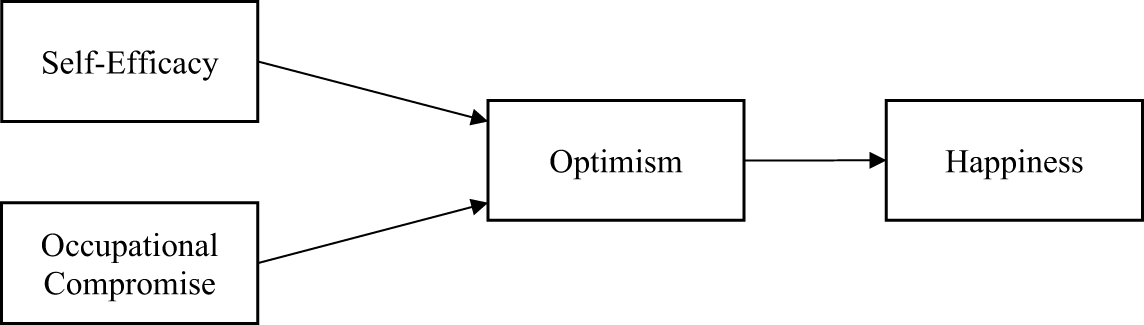
Hypothesis 5: The correlation of self-efficacy and OC with happiness is mediated by the degree of optimism.
Regarding Hypothesis 5, according to the literature review, it seems that optimism is a very important personality variable in determining the ability of people to conduct themselves in situations of stress and uncertainty while realizing their personal abilities and the potential inherent in them. This can reduce their OC and increase their feelings of happiness(see Figure 1).
Mediation model: Happiness as a function of self-efficacy and occupational compromise mediated by optimism.

Method
Sample
The sample consisted of 211 participants ranging in age from 20 to 30 years who were currently or formerly employed. The participants were randomly sampled using convenience sampling; 82% of the participants were women (n = 174) and 18% were men (n = 37). The average age was 25.25 (SD = 2.93) years. As for religion, 87% were Jewish (n = 183), 8% were Muslim (n = 17), 2% were Christian (n = 4), and 3% defined themselves as ‘other’ (n = 7). Regarding marital status, 81% were single (n = 171) and 17% were married (n = 37). In terms of education, 47% of the sample had a bachelor’s degree (n = 100), 7% had a master’s degree (n = 15), 1% had a PhD degree (n = 2), 36% had completed secondary education (n = 76), and 9% had a professional certificate (n = 18). Regarding occupation, 16% were in teaching or training (n = 33), 14% were in sales (n = 29), 14% were in food service (n = 29), and 6% were in a clerical position (n = 13; see Table 1).
Descriptive statistics of demographic variables (N = 211)

Measurements
Optimism: Life orientation test
This scale consists of 12 items assessing level of optimism (Scheier & Carver, Reference Scheier and Carver1985). This questionnaire was validated by Scheier and Carver (Reference Scheier and Carver1985). Six items are positively worded (e.g., ‘In times of uncertainty, I usually expect the best’), four items are negatively worded (e.g. ‘Things never turn out the way I want them to’), and two items are neutral in meaning (e.g., ‘It is important for me to always be busy’). The participants were asked to indicate their agreement on a 5-point scale (1 = strongly disagree to 5 = strongly agree). Scores were averaged, with higher values indicating a greater degree of optimism. Negatively worded statements were reversed. Cronbach’s alpha in the original article was .76; in the current study, an internal consistency of .77 was found.
Self-efficacy at work
This scale consists of 19 items assessing self-efficacy at work. Scores were averaged across the 19 statements (e.g., ‘When I make plans regarding my professional future, I succeed in them’ and ‘I feel insecure about my professional abilities’). A higher average indicated a greater sense of self-efficacy. Negatively worded statements were reversed. The participants were asked to indicate their agreement on a 5-point scale (1 = strongly disagree to 5 = strongly agree). This questionnaire was validated by Schyns and von Collani (Reference Schyns and von Collani2002). Cronbach’s alpha in the original article was .92. In the present study, an internal consistency of .89 was found.
Occupational compromise
This questionnaire assesses employees’ commitment to the workplace, and in this study, it was used to examine the degree of OC. The questionnaire was compiled and validated by Meyer, Allen and Smith (Reference Meyer, Allen and Smith1993) and consists of 28 statements that test the three components of commitment according to Meyer and Allen (Reference Meyer and Allen1991), which are affective, continuance, and normative commitment. The statements that make up each factor are scattered throughout the questionnaire. Also, some statements are positively worded (e.g., ‘I would be happy to stay in the company where I work until the end of my professional career’) and some are negatively worded (e.g., ‘What keeps me going and makes me continue to work in the company is the lack of other options’). The positively worded statements were reversed. Thus, a higher average score indicated a higher degree of OC. The participants were asked to indicate their agreement on a 5-point scale (1 = strongly disagree to 5 = strongly agree). The reliabilities of the three components of commitment, as reported in the original article, were .79, .72, and .83, respectively. In the present article, an internal consistency of .92 was found for overall commitment.
Happiness
A common tool for examining this variable is the Oxford Happiness Inventory (Argyle, Martin, & Lu, Reference Argyle, Martin, Lu, Spielberger and Sarason1995; Hills & Argyle, Reference Hills and Argyle2002). The inventory includes 29 items, each offering four options. This study used the scale of Hills and Argyle (Reference Hills and Argyle2002), a valid and reliable abbreviated measure (Oxford Happiness Questionnaire), which includes eight items (e.g., ‘I am satisfied with the way my life is conducted’). The questionnaire was translated into Hebrew, and two other evaluators translated it back into English (Shamir-Balderman, Reference Shamir-Balderman2018). Participants rated their answers on a 7-point Likert scale (1 = strongly disagree; 7 = strongly agree). Negatively worded statements were reversed. A higher score indicated a higher level of happiness (in the original article, Cronbach’s α = .91; in the present study, Cronbach’s α = .82).
Demographics
These variables included personal characteristics such as gender, age, religion, family status, education, occupation, position rank, and seniority.
Research process
To sample the participants, the researchers used social networks (Facebook, dedicated forums, and WhatsApp groups) and asked potential participants to click a link that directed them to the computerized questionnaires using Google Forms software. In addition, the online questionnaire required respondents to answer a mandatory item before proceeding with the survey: ‘I express my informed consent to participate in the study and am aware of my right to leave at any time without explaining’. The study received ethics approval from [blinded for review], and no ethical issues arose during the data collection.
Data analysis
In this study, we employed two statistical procedures to analyze the collected data. First, to examine the correlation between optimism, self-efficacy, OC, and happiness, Pearson tests were conducted. This allowed us to assess the strength and direction of the linear relationships between these quantitative variables.
Next, a statistical regression analysis (stepwise) was performed to examine the predictive ability of each variable regarding happiness. In the first step of the regression, we examined the prediction of happiness by self-efficacy and OC. In the subsequent step, we examined the prediction of happiness by self-efficacy, OC, and optimism. This enabled us to examine how each set of variables contributed to the variance in the dependent variable, i.e., happiness, and to further explore the importance of the optimism variable in these relationships.
All statistical analyses were conducted using SPSS version 26.0. The significance level was set at p < 0.05.
Results
The descriptive findings are presented first and reflect the characteristics of this new generation of workers, the 20- to 30-year-olds who took part in the study, in the context of the study variables. The participants presented a medium-high level of optimism (M = 3.57, SD = 0.55), relatively high self-efficacy (M = 4.74, SD = 0.66), and a medium level of OC (M = 4.41, SD = 1.05), Finally, participants reported a medium-high level of happiness (M = 4.93, SD = 1.07; Table 2).
Correlations and descriptive statistics for research variables

* p < .05. **p < .01. ***p < .001.
Correlation between personal characteristics, OC, and happiness
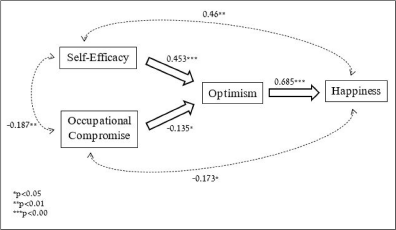
Table 2 presents the correlations between self-efficacy, optimism, OC, and happiness. To examine the correlation between personal characteristics, OC, and happiness, Pearson tests were conducted. In accordance with Hypothesis 1, weak but significant negative correlations were found between optimism and OC (r = − .14, p = .05) and between self-efficacy and OC (r = − .19, p = .006). Thus, as the degree of optimism and self-efficacy increased, the degree of OC decreased.
Regarding Hypothesis 2, as expected, a weak significant negative correlation was found between OC and happiness (r = − .17, p = .012). Thus, the smaller the degree of OC, the greater the degree of happiness.
Hypothesis 3 posited that a positive relationship would be found from optimism and self-efficacy to happiness. As expected, a strong positive significant correlation was found between optimism and happiness (r = .69, p < .001) and a moderate positive correlation occurred between self-efficacy and happiness (r = .46, p < .001). Thus, the greater the feelings of optimism and self-efficacy, the greater the feeling of happiness.
Hypothesis 4 dealt with the correlation between optimism and self-efficacy. As hypothesized, the findings suggest there is a moderately positive correlation between optimism and self-efficacy (r = .45, p < .001). Thus, as the degree of optimism increased, so did the degree of self-efficacy.
Correlation between self-efficacy, OC, and happiness as mediated by optimism
Finally, we hypothesized a correlation between self-efficacy and OC to happiness, mediated by optimism. This is due to the appearance of optimism in the literature as a central variable of great importance, including its substantial contributions to the positioning of people’s self-efficacy, reduced OC, and increased happiness. A statistical regression analysis (stepwise) was performed to examine the predictive ability of each variable regarding happiness.
The first model, which examined the prediction of happiness by self-efficacy and OC, was found to be significant, F(2, 208) = 29.23, p < .001, and explained approximately 21% of the variance in the degree of happiness. The only regression coefficient found to be significant was self-efficacy (β = .44, p < .001). The regression coefficient of OC was not significant (β = − .09, p = .148). The second model, which examined the prediction of happiness by self-efficacy, OC and optimism, was also found to be significant, F(3, 207) = 69.09, p < .001, and explained 50% of the variance in the degree of happiness. Regression coefficients were found to be significant were optimism (β = .60, p < .001) and self-efficacy (β = .18, p < .001). The regression coefficient for OC was not significant (β = − .06, p = .238; Table 3).
Hierarchical regression analysis of happiness and the research variables

* p < .001.
Thus, the hierarchical regression model showed that optimism was a significant predictor of happiness. Optimism, self-efficacy and OC were found to explain 50% of the variance in the degree of happiness, in comparison to self-efficacy and OC which explained only 21% of the same variance. Therefore, as hypothesized and in accordance with the previous findings in this study, the proposed model was supported, as indicated by the relationship between happiness and self-efficacy and OC, as mediated by optimism (see Figure 2).
Results of the mediation model: Happiness as a function of self-efficacy and occupational compromise mediated by optimism.

Discussion
The current study examined factors that explain OC among young workers (aged 20–30 years) in the post-Covid-19 period. This is due to changes in the employment market that emerged during the Covid-19 period and persisted into the post-Covid-19 era, including the way workers in the current job market are less willing to compromise on their demands and increasingly prioritize their personal preferences in the workplace Accordingly, this study focused on examining the correlations between optimism, self-efficacy, OC, and happiness among young workers in the post-Covid-19 period.
Correlation between personal characteristics, OC, and happiness
Hypothesis 1, which addresses the correlation between young workers’ personal characteristics and OC, was confirmed. High levels of optimism and self-efficacy were associated with a lower tendency toward OC. Therefore, it appears that young workers in the post-Covid-19 employment market who possess qualities of optimism and self-efficacy are less likely to make OC. Although further research is required, this relationship may have been emerged in response to their negative occupational experience during the epidemic. As many experienced psychological distress and poor well-being due to unemployment and a reduced income, which in many cases has led them to compromise occupationally while being frustrated with their work conditions (Achdut & Refaeli, Reference Achdut and Refaeli2020; Churchill, Reference Churchill2021; Kauhanen et al., Reference Kauhanen, Wan Mohd Yunus, Lempinen, Peltonen, Gyllenberg, Mishina and Sourander2023; Lambovska et al., Reference Lambovska, Sardinha and Belas2021; Li et al., Reference Li, Serido, Vosylis, Sorgente, Lep, Zhang and Lanz2023; Yoon & Hahn, Reference Yoon and Hahn2021). Hence, it is possible that in the post-pandemic era, young workers wish to improve their occupational situation caused by the pandemic and seek different approaches to do so. When one such approach might stem from the reduced psychological distress and increased happiness and personal growth, they experienced during Covid-19, while they were feeling optimistic and self-efficacious (Bada et al., Reference Bada, Salaudeen, Alli and Oyekola2020; Fida et al., Reference Fida, Paciello, Watson and Nayani2022; Katim et al., Reference Katim, Satiadarma and Wati2023; Micheletto et al., Reference Micheletto, Zito, Bustreo, Gabrielli, Circi and Russo2022). Thus, given the positive outcomes associated with these feelings during the pandemic, young workers may seek to continue utilizing them in the post-pandemic period as well. Even more so, as studies show that these feelings have various positive implications in the workplace that can help reduce the young workers’ OC (Calitz et al., Reference Calitz, Cullen and Midgley2022; Carver & Scheier, Reference Carver and Scheier2014; Carver et al., Reference Carver, Scheier and Segerstrom2010; Chatterjee et al., Reference Chatterjee, Afshan and Chhetri2015; Creed & Gagliardi, Reference Creed and Gagliardi2015; Görgens-Ekermans, & Steyn, Reference Görgens-Ekermans and Steyn2016; Lester et al., Reference Lester, Stewart, Vie, Bonett, Seligman and Diener2022; Türküm, Reference Türküm2010; Yang et al., Reference Yang, Yang, Yue, Xu, Liu, Li and He2022).
Accordingly, previous studies (Creed & Gagliardi, Reference Creed and Gagliardi2015; Yang et al., Reference Yang, Yang, Yue, Xu, Liu, Li and He2022) have found that those with a high sense of self-efficacy tend to believe in their abilities to a greater extent, in terms of their ability to perform tasks and deal with difficulties. This belief often leads them to compromise less when looking for a job, because it is a platform for establishing their self-esteem and their perception as being of value. Additionally, studies indicate that the more people exhibit feelings of optimism, the more they engage in behaviors aimed at achieving their goals (Lester et al., Reference Lester, Stewart, Vie, Bonett, Seligman and Diener2022; Sezgin & Erdogan, Reference Sezgin and Erdogan2015). Therefore, employees with a high sense of optimism will be more likely to achieve their occupational goals as well and reduce their compromising attitude toward them.
Moreover, the correlation found between the young workers’ personal characteristics and their OC, might have arisen not only due to the young workers’ wish to change their occupational situation but also to enhance their adaptation to the new employment market in the post-Covid-19 period which is characterized by lower OC. Due to numerous changes in the employment market during the pandemic, employees started to place greater emphasis on their desired working conditions, a trend that has persisted into the post-pandemic era as well (Arquisola et al., Reference Arquisola, Liswandi, Hutabarat and Fauzi2021; Carnevale & Hatak, Reference Carnevale and Hatak2020; Kniffin et al., Reference Kniffin, Narayanan, Anseel, Antonakis, Ashford, Bakker and Vugt2021; Latorre et al., Reference Latorre, Pérez-Nebra, Queiroga and Alcover2021; Rigotti et al., Reference Rigotti, Yang, Jiang, Newman, De Cuyper and Sekiguchi2021). Therefore, it is possible that young workers, who constitute the new generation of workers in the post-Covid-19 period, strive to utilize high levels of optimism and self-efficacy to reduce their OC, and help them adapt to a labor market where experienced older workers, who serve as role models, demonstrate lower OC. This in particular due to the relative success of older workers, compared to young workers, in maintaining their occupational status during the pandemic (Churchill, Reference Churchill2021; Lambovska et al., Reference Lambovska, Sardinha and Belas2021; Li et al., Reference Li, Serido, Vosylis, Sorgente, Lep, Zhang and Lanz2023).
Hypotheses 2 and 3, which explore the relationships between OC and happiness, and between personal characteristics (optimism and self-efficacy) and happiness, were confirmed. Higher levels of optimism and self-efficacy were associated with greater happiness, while lower levels of OC were also linked to higher levels of happiness. Similar to the previous findings, these correlations might have also been generated as a counterresponse to the young workers’ negative occupational experience during Covid-19 orpossibly, from an even more significant reason. As previously mentioned, during Covid-19, many individuals from this population suffered from declined happiness, as a result of experiencing psychological distress and poor well-being caused by high unemployment rates and pay cuts (Achdut & Refaeli, Reference Achdut and Refaeli2020; Calitz et al., Reference Calitz, Cullen and Midgley2022; Churchill, Reference Churchill2021; Lambovska et al., Reference Lambovska, Sardinha and Belas2021; Li et al., Reference Li, Serido, Vosylis, Sorgente, Lep, Zhang and Lanz2023; Wani & Dar, Reference Wani and Dar2017). Therefore, there is a possibility, that due to the importance of happiness in most aspects of life, including the labor market, and specifically its role in reducing OC, young workers, either consciously or not, have aimed to increase their happiness in the post-pandemic period (Calitz et al., Reference Calitz, Cullen and Midgley2022; Fisher, Reference Fisher2010; Martínez-Martí & Ruch, Reference Martínez-Martí and Ruch2017; Shamir-Balderman et al., Reference Shamir-Balderman, Tzafrir and Enosh2023; Veenhoven, Reference Veenhoven, Bruni and Porta2016; Wani & Dar, Reference Wani and Dar2017). This consequently resulted in a heightened sense of optimism and self-efficacy among them, helping them to not only reduce their OC, which in itself contributes to increased happiness, but also achieving a greater sense of happiness in the post-Covid-19 era, in a similar way to what they have experienced during the pandemic while having these feelings (Bada et al., Reference Bada, Salaudeen, Alli and Oyekola2020; Calitz et al., Reference Calitz, Cullen and Midgley2022; Carver & Scheier, Reference Carver and Scheier2014; Carver et al., Reference Carver, Scheier and Segerstrom2010; Chatterjee et al., Reference Chatterjee, Afshan and Chhetri2015; Creed & Gagliardi, Reference Creed and Gagliardi2015; Fida et al., Reference Fida, Paciello, Watson and Nayani2022; Fisher, Reference Fisher2010; Görgens-Ekermans & Steyn, Reference Görgens-Ekermans and Steyn2016; Katim et al., Reference Katim, Satiadarma and Wati2023; Lester et al., Reference Lester, Stewart, Vie, Bonett, Seligman and Diener2022; Micheletto et al., Reference Micheletto, Zito, Bustreo, Gabrielli, Circi and Russo2022; Shawaqfeh & Almahaireh, Reference Shawaqfeh and Almahaireh2019; Türküm, Reference Türküm2010; Wani & Dar, Reference Wani and Dar2017; Yang et al., Reference Yang, Yang, Yue, Xu, Liu, Li and He2022).
For instance, the literature has indicated a connection between optimism and happiness. Studies have shown that an optimistic worldview among employees is associated with factors such as enjoyment, creativity, improved work performance, healthier relationships, increased wages, better physical health, and other positive outcomes, which can influence the level of happiness among employees (Calitz et al., Reference Calitz, Cullen and Midgley2022; Görgens-Ekermans & Steyn, Reference Görgens-Ekermans and Steyn2016; Shawaqfeh & Almahaireh, Reference Shawaqfeh and Almahaireh2019; Wani & Dar, Reference Wani and Dar2017). Similarly, evidence suggests that a high degree of self-efficacy among employees can lead to better performance in the workplace, resulting in positive feelings of motivation and satisfaction, which can form the basis for a greater sense of happiness (Hirschi, Reference Hirschi2011; Sezgin & Erdogan, Reference Sezgin and Erdogan2015; Tims et al., Reference Tims, Bakker and Derks2014). In addition, it was found that employees who compromise occupationally, in contrast to those who less inclined doing so, have lower satisfaction with work and accordingly, due to a lack of goal realization and fulfillment, experience less happiness (Creed & Gagliardi, Reference Creed and Gagliardi2015; Tsaousides & Jome, Reference Tsaousides and Jome2008).
The hypothesis concerning the relationship between optimism and self-efficacy was also confirmed. As the level of optimism increased among young workers, their level of self-efficacy increased as well. This finding aligns with previous research indicating that during Covid-19, self-efficacy was positively associated with optimism, while both qualities helped young workers to manage the pandemic’s implications by reducing psychological distress and increasing happiness, subjective well-being, and feeling of personal growth (Bada et al., Reference Bada, Salaudeen, Alli and Oyekola2020; Katim et al., Reference Katim, Satiadarma and Wati2023; Maheshwari & Jutta, Reference Maheshwari and Jutta2020; Micheletto et al., Reference Micheletto, Zito, Bustreo, Gabrielli, Circi and Russo2022; Sabouripour et al., Reference Sabouripour, Roslan, Ghiami and Memon2021). Therefore, it is reasonable to assume that in the post-Covid-19 era, young workers will continue to leverage these attributes to occupationally cope in the new post-pandemic job market, while these two feelings reinforce each other in a mutually beneficial way.
A potential explanation for this mutual reinforcement is that when employees have a greater sense of optimism, they also demonstrate better performance and abilities in the workplace. These factors, in turn, eventually increase their sense of self-efficacy. This was due to the increase in their feelings of success and self-worth as a result of their occupational success (Carver et al., Reference Carver, Scheier and Segerstrom2010; Görgens-Ekermans & Steyn, Reference Görgens-Ekermans and Steyn2016). Alongside this, another possible explanation is that when employees have a higher sense of self-efficacy, they take on more challenging tasks that require more effort. Both the feeling of confronting a challenging goal and successfully meeting a challenge lead to more feelings of mental well-being and happiness, which are often deeply connected with the emergence of a sense of optimism (Wani & Dar, Reference Wani and Dar2017).
Mediation model: Optimism as a mediating variable between self-efficacy and OC to happiness
Our last hypothesis (Hypothesis 5) dealt with correlations between young employees’ levels of self-efficacy and OC to their level of happiness, as mediated by optimism. The findings of the study confirm the existence of a mediation model in which optimism mediates the relationships of self-efficacy and OC with happiness, among young workers in the post-pandemic era. This finding enhances the existing knowledge on factors that influence OC and happiness among employees, specifically, within the new generation of workers in the post-Covid-19 employment market.
Accordingly, it was found that the OC of young workers in the post-Covid-19 period is associated with happiness, through the mediation of optimism. It appears that less OC is not enough on its own to increase young workers’ happiness, but being with an optimistic nature is also required. This might be due to the central role of optimism in general and specifically during the coronavirus pandemic, in managing young people’s well-being and happiness (Genç & Arslan, Reference Genç and Arslan2021; Karim, Malik, & Ayub, Reference Karim, Malik and Ayub2023; Katim et al., Reference Katim, Satiadarma and Wati2023; Micheletto et al., Reference Micheletto, Zito, Bustreo, Gabrielli, Circi and Russo2022) As optimism defined as a cognitive process that produces thoughts and feelings of satisfaction, hope, and self-confidence, this feelings are a necessity to the translation of reduced OC to happiness. This, because without these positive feelings, achievements from any sort, and specifically occupational, may be overshadowed by maladaptive thoughts and feelings, resulting in a state where fears and concerns dominate over happiness. This is particularly relevant, after the prolonged and exacerbated psychological distress young workers experienced during Covid-19, has made some of them more susceptible to depressive symptoms in the post-Covid-19 period (Calitz et al., Reference Calitz, Cullen and Midgley2022; Carver & Scheier, Reference Carver and Scheier2014; Joshanloo, Park & Park, Reference Joshanloo, Park and Park2017; Lester et al., Reference Lester, Stewart, Vie, Bonett, Seligman and Diener2022; Sezgin & Erdogan, Reference Sezgin and Erdogan2015; Shawaqfeh & Almahaireh, Reference Shawaqfeh and Almahaireh2019; Wang & Zou, Reference Wang and Zou2022).
Additionally, according to the mediation model we found, the self-efficacy of young workers in the post-Covid-19 period is also associated with happiness, through the mediation of optimism. As the previous finding, this correlation as well, can be explained in the context of the post-pandemic period. Self-efficacy is an individual’s belief in their ability to successfully manage their behaviors to achieve desired goals. Therefore, optimism is an integral part of this belief, when both feelings can eventually lead to increased happiness (Bandura & Wessels, Reference Bandura and Wessels1997; Görgens-Ekermans & Steyn, Reference Görgens-Ekermans and Steyn2016; Hirschi, Reference Hirschi2011; Tims et al., Reference Tims, Bakker and Derks2014; Wani & Dar, Reference Wani and Dar2017). However, young workers in the post-Covid-19 period possibly struggle more to transform their sense of self-efficacy into happiness. This because, not only that some of them are more inclined to depressive symptoms, as mentioned above, which makes it harder for them to positively evaluate their self-abilities, leading to decreased happiness (Görgens-Ekermans & Steyn, Reference Görgens-Ekermans and Steyn2016; Hirschi, Reference Hirschi2011; Kavanagh, Reference Kavanagh and Schwarzer1992; Wang & Zou, Reference Wang and Zou2022), but also it might be generally hard for them to positively assess their self-abilities. This due to two related factors. First, their negative occupational experiences during Covid-19, including unemployment and decreased income, may have harmed their self-esteem and self-belief, potentially carrying over into the post-pandemic period (Dahling, Melloy, & Thompson, Reference Dahling, Melloy and Thompson2013; Viegas, Lima, & Costa, Reference Viegas, Lima and Costa2023). Second, young workers in the post-epidemic era enter a new employment market characterized by lower OC. Thus, if in fact their sense of self-efficacy is lower due to Covid-19 impacts, it might be hard for them to enter this job market in the first place, as they lack the basic self-belief needed in order to not compromise, further diminishing their self-belief (Arquisola et al., Reference Arquisola, Liswandi, Hutabarat and Fauzi2021; Carnevale & Hatak, Reference Carnevale and Hatak2020; Creed & Gagliardi, Reference Creed and Gagliardi2015; Latorre et al., Reference Latorre, Pérez-Nebra, Queiroga and Alcover2021; Yang et al., Reference Yang, Yang, Yue, Xu, Liu, Li and He2022). Consequently, it is possible that for young workers in the post-pandemic era to be able to use their self-belief to eventually increase their happiness, they need to have an optimistic approach as well, that will highlight their strengths and advantages in the work field (Lester et al., Reference Lester, Stewart, Vie, Bonett, Seligman and Diener2022; Sezgin & Erdogan, Reference Sezgin and Erdogan2015).
In conclusion, according to the proposed model, it appears that optimism has a central role in enhancing happiness among young workers in the post-Covid-19 era. As it is a vital component in the way OC and self-efficacy can affect happiness. Therefore, it seems that increasing optimism among young workers has a unique potential to shape the future job market. By boosting optimism, young employees’ happiness at the start of their careers can improve, possibly resulting in more satisfactory job decisions, reduced OC, and enhanced self-efficacy. This can lead to a future workforce of content employees, which can, in turn, improve their employers’ economic output (Calitz et al., Reference Calitz, Cullen and Midgley2022; Creed & Gagliardi, Reference Creed and Gagliardi2015; Fisher, Reference Fisher2010; Görgens-Ekermans & Steyn, Reference Görgens-Ekermans and Steyn2016; Hirschi, Reference Hirschi2011; Lester et al., Reference Lester, Stewart, Vie, Bonett, Seligman and Diener2022; Sezgin & Erdogan, Reference Sezgin and Erdogan2015; Tsaousides & Jome, Reference Tsaousides and Jome2008).
Limitations and further research
Despite the importance of the present study, it is not without limitations. As previously mentioned, the first limitation of this study lies in its methodology, which uses convenience sampling through social networks and questionnaires as its main research tool. We recognize that individuals who chose to participate may possess specific characteristics or motivations that do not represent the broader population, and that some population segments may have been excluded due to unequal internet access or discomfort with online platforms. Nonetheless, despite questionnaires’ known biases, they are still widely used as a valid research tool in many scientific fields. Moreover, we believe this methodology allowed us to reach a diverse group of participants who might otherwise be inaccessible. However, considering this methodology’s shortcomings, we suggest conducting a study of similar purpose that would use a different sampling method that would ensure better representation of the population, and that would combine quantitative and qualitative research tools in its methodology, in order to achieve a more holistic and full understanding of the phenomenon being studied.
A second limitation is that the sample featured a significant female majority. As a result, the generalizability of the research findings might be restricted, because of the gender inequality that many women in the Israeli employment market experience. This inequality, created by discriminatory social and occupational norms, applies to many diverse fields of employment in both the public and private sectors. One major factor is social gender roles assigned in Israeli society to women and men, such that women are more responsible for the household and raising children. As a result, in a broad range of roles and employment fields, men are often preferred over women and women receive significantly lower financial compensation compared to men, despite holding similar jobs. These factors might lead women to compromise occupationally more than men. Furthermore, it is possible that during the Covid-19 period, the tendency toward OC among women has intensified. Furthermore, it is possible that during the Covid-19 period, the tendency toward OC among women has intensified, due to the multiple social restrictions in the educational due to themultiple social restrictions in the educational system, which required a full-time parental presence in many households with young children, due to the transition to online learning. Therefore, because of those restrictions, in many cases, women were the ones to leave their workplace in order to take care of their children (Herzberg-Druker, Yaish, & Kristal, Reference Herzberg-Druker, Yaish and Kristal2021). Therefore, it is possible that in this study, the research findings regarding OC and its relationship to the other variables are due to the predominantly female sample. Therefore, we would recommend conducting a similar study with a more equal distribution of women and men to examine the generalizability of the research findings to men.
Another limitation is that it is difficult to conclude from these findings whether the connections found among personal characteristics, OC, and happiness in this group of young workers will persist, in light of the ongoing development of these workers in the employment market and the possibility of further future market changes in the post-Covid-19 period. That is, it remains unclear whether the factors that influence the OC of young workers in the employment market today, as revealed in this study, will also affect their OC in later adulthood, after they move to a different status in their professional and personal lives and if further changes occur in the employment market. Since the study used a cross-sectional design, which limits our ability to establish causal relationships between variables. A longitudinal design would allow for a more robust examination of how optimism, self-efficacy, OC, and happiness evolve over time in the post-pandemic context. Therefore, we propose conducting a longitudinal study to examine the relationships among optimism, self-efficacy, happiness, and OC among the same participants over several years at predefined points. This could explain the durability of the relationships found in this study over a long period in the employment market and highlight changes in the employment market in the post-Covid-19 period over time. Finally, a limitation in the cultural and personal aspect can also be noted. From the cultural aspect, the study seems to focus on the Israeli employment market. It would be beneficial to acknowledge that cultural factors specific to Israel might influence the findings, potentially limiting their generalizability to other cultural contexts. From the personal aspect, the study does not appear to account for the socioeconomic status of participants. This factor could significantly influence both OC and happiness, and its omission may skew the results.
Contributions
Despite these research limitations, the current research made significant contributions. First, this research made theoretical contributions. The study added much knowledge on the occupational consequences of Covid-19 on the new generation of workers, in the post-Covid-19 period. Accordingly, it adds new insights about the new employment generation entering the job market in the post-Covid-19 era that forms the future of the global economy, regarding their characteristics, OC and happiness. Thus, it offers a possible explanation for the future labor market way of conduct and its employees’ preferences and traits. In that manner, the current research points out that it is possible that the post-pandemic young workers, enhance and utilize their optimism and self-efficacy, to better cope with the pandemic’s impact on their well-being and occupational situation, as well as its effects on the job market, so that their happiness will increase while their OC decreases. When these two parallel, yet interconnected processes, can mold the future job market as filled with content employees that can also improve their organizations’ economic output. Moreover, the insights gathered in this research, can form a basis for follow-up studies on these subjects.
Furthermore, the current study outlined a theoretical mediation model, expanding on existing models, that indicates how optimism mediates between the occupational demands and self-efficacy of young employees to their level of happiness, in the post-pandemic period. The main contribution of this model is its focus on young employees in the context of the post-pandemic era, while adding a new personality component not mentioned in previous models. Accordingly, previous research indicated that optimism is a mediator in the relationship between employees’ OC and happiness (Bouzari & Karatepe, Reference Bouzari and Karatepe2020). However, the theoretical model proposed in this study posits that optimism mediates not only the relationship between employees’ OC and their happiness but also between their self-efficacy and happiness, as it focuses specifically on young workers during the post-pandemic period. By that, this model further deepens our understanding of the profound personality strengths young people in this time context need in the start of their careers, to successfully join the new employment market characterized in lower OC and achieve their occupational goals and aspirations. All while especially emphasizing the importance of optimism in post-Covid-19 period, for enhancing young people abilities to overcome negative feelings and utilize their successes and advantages to achieve happiness. Accordingly, the mediation model proposed in this study can be used to explain various phenomena in the field of employment, especially in the post-Covid-19 period, and as a basis for follow-up studies.
Additionally, this research also has implications for practice. Our findings can be used as guidelines for employers and organizations to set goals for the recruitment and preservation of young workers, who constitute the future workforce. For instance, employers can focus on creating job roles and career paths that align better with employees’ skills, interests, career aspirations, and work–life balance preferences. By reducing the need for employees to compromise on their occupational roles and personal preferences, organizations can foster higher job satisfaction and well-being that could eventually be translated into profitability. For example, organizations can create a supportive work environment that encourages positive feedback, recognition, and opportunities for growth, alongside flexible working arrangements, adequate time off, and support for employees’ personal needs. All in the sake of contributing to a more positive work environment that will not only enhance employees’ well-being but also improve overall organizational performance and productivity. Specifically, these recommendations should be particularly considered by employers offering roles typically filled by young people for short durations, such as those in restaurants or security companies, in order to be more appealing to young workers in the new employment market characterized by lower OC.
Moreover, the mediation model that was found in the research, which posits optimism as a mediator of the relationships of self-efficacy and OC with happiness, can be used to design a more specific line of actions by organizations and employers, that places enhancing employees’ sense of optimism as one of its main goals. This was due to optimism essential position which allows it to raise employees’ sense of self-efficacy and happiness while reducing their OC. Thus, employers can gain employees who are productive, enterprising, self-sufficient and happy in the workplace, and that want to be there. Those employees could provide not only positive contributions in terms of increasing the positive reputation of the business but also financial contributions. As to which actions can employers and organizations take in that context, we suggest a few that should be studied more comprehensively in follow-up studies. First, organizations can implement training programs for employees, aimed at enhancing their sense of optimism. A possible program could include workshops on positive thinking, resilience, and personal development that can help employees build an optimistic view. Second, organizations can implement training programs for managers as well, aimed at teaching them positive leadership style characterized in providing support, encouragement, and constructive feedback to employees. This can have meaningful role in fostering optimism among employees. Third, organizations can invest in mental health programs for employees and managers alike that promote optimism, such as mindfulness training, counseling services, and stress management workshops.
Summary and conclusions
The current study generated essential conclusions and groundwork for follow-up studies, regarding the occupational implications of the Covid-19 period on the new generation of young workers, in the post-Covid-19 period. Following Covid-19, the employment market has changed in various aspects. In particular, employees now prioritize the conditions they desire in their places of employment and tend to show less OC. In line with this, the current study revealed that even among young workers, who constitute the new generation of workers in the post-Covid-19 period, there is a reduction in the degree of OC in order to achieve happiness. But this depends on several personality elements, such as their feelings of optimism and self-efficacy. In addition to that, there is a possibility that these young workers are seeking to raise their feelings of optimism and self-efficacy to lower their level of OC, to both enhance their adjustment in the new employment market, which is characterized by lower OC, and to raise their happiness in the post-pandemic era.
A mediation model with extensive theoretical and applied implications also emerged from this study, adding knowledge about factors that influence OC and happiness among young workers in the post-Covid-19 period. The degree of optimism among young workers mediated the relationship of their sense of self-efficacy and OC with happiness. The meanings attached to this model have the power to influence both the personal lives of the employees, in the form of improving their sense of happiness at the beginning of their career, and the organizations in which they are employed, in the form of improving their economic output.
Finally, the present study made two important contributions. On the one hand, it contributed to the ability to characterize the new employment market that has taken shape and is still evolving in view of the Covid-19 period. In particular, the study provided valuable knowledge about the population of young workers in this market. On the other hand, this study laid the foundations for the design of a new employment market in which employees can feel a greater sense of happiness and a lower sense of OC, producing positive contributions to both the employees and their places of employment.
Data availability statement
Data will be made available on request. Additional information No additional information is available for this paper.
Author Contributions
All authors listed have significantly contributed to the conceived and designed the experiments, performed the experiments, analyzed and interpreted the data, contributed reagents, materials, analysis tools or data, and wrote the paper.
Conflict(s) of Interest
The authors declare that they have no known competing financial interests or personal relationships that could have appeared to influence the work reported in this paper.
Ethical Standards
The authors confirm that all research was performed in accordance with relevant guidelines/regulations applicable when human participants are involved (e.g. Declaration of Helsinki, or similar). The research was not granted exemption from requiring ethics approval.
Informed consent
The survey was conducted online, so no informed consent document was sent. However, the survey begins with a mandatory question that is a substitute for this statement. Please see the quote that appears in the manuscript – in the Research Process section: “In addition, the online questionnaire required respondents to answer a mandatory item before proceeding with the survey: “I express my informed consent to participate in the study and am aware of my right to leave at any time without explaining.