1. Introduction
Female labour force participation has increased sharply in most OECD countries over the past few decades as participation rates have climbed steadily from an average of 54% in 1980 to 71% in 2010. However, the timing and pace of that rise have varied across countries and, despite the overall increase, differences in the levels of female labour force participation are still considerable. For instance, cross-national differences are still wide: female employment rates have been persistently high (over 75%) since the early 1980s in Denmark and Iceland while they remain at around 60% in Italy, Greece and Spain.
Multiple factors contribute to the increase in both the demand and supply sides (Pissarides et al., Reference Pissarides, Garibaldi, Olivetti, Petrongolo and Wasmer2005). Changes in labour demand – such as the emergence of new production activities and different working conditions – have been important drivers of expanding female labour force participation (Pissarides, Reference Pissarides, Garibaldi, Olivetti, Petrongolo and Wasmer2003). The switch from manufacturing and agriculture to services accounts for the growing demand for female workers. As a result, the tertiary (service) sector now employs an average four-fifths of the female working population. At the same time, the growth of part-time work has also attracted more women into the formal labour force by often helping them to balance paid work with family life, as demonstrated by their large overrepresentation among part-time workers (Buddelmeyer et al., Reference Buddelmeyer, Mourre and Ward2004; OECD, 2011). Thus, part-time work often offers the premium of control over working hours, stress and health; but it may also be a penalty in the long run because this can lead to general reductions in hourly earnings, training promotion opportunities, and job security. For this reason, the relative importance of part-time work in total female employment rates varies greatly across countries (O’Reilly and Fagan, Reference O’Reilly and Fagan1998; OECD, 2010 and 2012a).
The development of public sector employment has also attracted more female than male workers, for a variety of reasons (Anghel et al., Reference Anghel, de la Rica and Dolado2011). Women may face less discrimination in the public than in the private sector and, in some countries, may earn higher wages if they belong to certain categories of employees. They may also prefer greater employment protection and/or opportunities for combining work and family formation (Gornick and Jacobs, Reference Gornick and Jacobs1998). Variations over time in the development of public employment are quite weak, while there remain large cross-country differences in the share of female public sector employees. For instance, Germany has the lowest proportion of women (less than 10%) working in the public sector, while the highest proportion (around 30%) is observed consistently throughout Scandinavian countries.
There have also been changes on the labour supply side. One key driver of a woman's aspiration to pursue a labour market career is the sharp increase in girls’ education over recent decades. It has boosted female earnings potential, although in turn it has also increased the opportunity cost of having children. That being said, greater access to contraception has allowed women to adjust their fertility behaviour to their new role in the labour market. At the same time, social attitudes and lifestyles have evolved towards childbearing later in life, which have contributed to falls in fertility rates (Goldstein et al., Reference Goldstein, Sobotka and Jasilioniene2009; OECD, 2011). Yet, society's attitudes toward women's work remain equivocal, and the clash between family values and egalitarian perspectives are an obstacle to greater gender equality in the labour market (Fortin, Reference Fortin2005).
A large portion of cross-national variations in female employment rates can also be explained by the differences regarding household composition, fertility behaviours and the influence of children on the female labour supply (Anxo et al., Reference Anxo, Fagan, Cebrian and Moreno2007; Michaud and Tatsiramos, 2011; Thévenon, Reference Thévenon2009). In this regard, policies helping parents to cope with family and work constraints are then key to reducing the employment gap between childless women and mothers. Thus, childcare policies (i.e., on combining leave entitlements and providing services for children) seems to contribute, although modestly, to reducing the employment gap between mothers and childless women (Erhel and Guergoat-Larivière, Reference Erhel and Guergoat-Larivière2013). But these policies also play a role in fostering the development of female labour force participation over time, as shown by studies that use pooled cross-sectional data to examine factors influencing trends in female employment over time (Blau and Kahn, Reference Blau and Kahn2013; Jaumotte, Reference Jaumotte2003; Thévenon, 2013). However, the effect of policies on female labour force participation is estimated to be quite small on average, indicating that the effect of policies is contingent on their contexts and might therefore be larger in some environments as compared to others. A key point in this respect is that governments use different policy instruments to boost female employment and/or help women balance their work with family responsibilities. Such instruments may complement each other to a certain degree, and their efficiency is likely to depend on this interaction. Thus, we might expect that a particular policy measure's effect depends on the presence of other institutions that may or may not strive for the same goals. In particular, one might expect ‘complementarities’ between institutions to produce a greater or lesser response in female labour force participation, depending on the context. Although it is important to understand the role of policies, the literature has overlooked this aspect (i.e., the extent to which the influence of policies depends on the overall institutional context). One reason for such a literature gap is that an empirical assessment of this issue is highly demanding in terms of data. Thus, we take advantage here of a quite recent development in family policy data to investigate this issue for a sample of OECD countries.
Against that background, the main contribution of this paper as compared to earlier works lies in our provided analysis of the influence that policy measures have on (1) female labour market participation and (2) how these measure interact, either with each other or with the overall national institutional context. Greater attention to these issues is of high importance for several reasons. The first one is that labour market outcomes are likely to respond more to a set of policy measures than to a single and isolated institution that may help parents partially reconcile work and family (i.e., for a limited period of time or with regards to only one aspect of their needs in terms of time, money and/or services). For instance, if the supply of childcare services is large enough and/or affordable once women resume work, the provision of leave entitlements is likely to gain efficiency in promoting a durable attachment of women to the labour market. Alternatively, we may expect the labour supply to be more responsive to financial incentives (such as those given by tax rates) in countries where the overall institutional setting does not offer strong support for balancing work and family.
A second reason for paying more attention to this issue is that the influence of institutions is shaped by environments that vary according to labour market characteristics, infrastructures and culture. These differences determine how institutions are perceived and used by women and their families. For this reason, the influence of each policy device is likely to vary not only quantitatively but also qualitatively across countries. For instance, the same extension of the duration of parental leave can have a positive impact on female labour market outcomes in a context that highly supports resuming work; but the impact can be negative where low support exists upon the expiry of leave and/or where the idea of working women with young children is less accepted. The continuity of support covering years of childhood is thus certainly important for understanding the role of each single measure. Yet, all these reasons lead us to assume that the influence of a given institution or policy measure might be context-dependent, i.e., that its interaction with another institution and/or with the overall institutional setting is very much conditional to the context.
This ‘context dependence’ of the influence of policies on female labour force participation is assessed in different ways. First, we investigate the extent to which the influence of each policy measure depends or not on the overall context created by the addition of all institutional characteristics. This allows us to assess the presence of ‘systemic complementarity’ between institutions, in which case the efficiency of one policy measure in raising female employment is increased by the effect of all the kinds of support combined. Our research along these lines follows the empirical approach suggested by Bassanini and Duval (Reference Bassanini and Duval2009).
Once ‘systemic complementarities’ are identified, one key question remains regarding whether or not interactions between specific policy measures and/or institutions matter. Answering this question is not trivial, and one option for doing so is to look at the possible interactions between pairs of institutions and then identify gains in efficiency when two measures are combined. Yet, properly assessing the interactions between institutions requires a large and long set of pooled time series if we want to gain a degree of freedom that is large enough to consider several pairs of institutions. The results we obtained with this approach find that statistical significance is lacking for most of the pairs of interaction terms, which may be either due to the limited degree of freedom or because policy instruments interact with the set of institutions as a whole more than with any of them separately. For this reason, we will not present the results of this approach in detail. Instead, we will mention only the main conclusions and refer to the detailed results listed in the appendix.
One limit of the two approaches above is that we assume policy instruments have the same influence in all contexts, which is of course debatable. For this reason, the last approach we take stock of the qualitative differences in ‘Family Policy Regimes’ (FPR), particularly in regard to the types of support available for women to balance work and childrearing. FPR variations reflect differences in the extent to which dual-earner families with young children receive support from the state, this support being more or less universal or targeted to particular groups, and more or less continuous over childhood. They also reflect differences in attitudes regarding a mother's labour market participation, which may affect the role of policies in supporting female employment. Therefore, one original addition this paper makes to earlier works is its focus on possible variations in the influence of policy instruments due to overall national characteristics. To do so, we take advantage of recent developments in the OECD data set, which now describes family policies using a large set of characteristics. These data make it possible to distinguish between broad regimes of family policies by contrasting the contexts in which the development of female employment has taken place.
The paper comprises four sections. Section 2 presents the data and key trends regarding female employment and government policies helping women to balance work and family life. We also present the classification of ‘female employment family policy regimes’, which is used later to assess the different effects that a policy may have across various contexts. We then present policy instruments and explain how we measure them empirically before looking at the main evolutions observed for the period under consideration, which begins in the early 1980s. These evolutions suggest that countries in the same group develop in different directions, such that treating countries in fixed categories can be misleading – although these categories capture common features regarding the historical background of developing female employment. We have strived for a careful use of country categorisation and look at how sensitive the results are to changes in country grouping.
Section 3 considers how government policy instruments and institutional competencies may interact and complement each other in order to increase female employment rates. Variations in the influence of policy measures across countries are also tested on the basis of a distinction between ‘regimes’, which have been elaborated to differentiate the various patterns of balancing work and family.
2. Female employment and family policy regimes
Differences in female labour force participation and employment patterns strongly relates to production systems and welfare regimes that shape how the labour market integrates women. These systems not only influence employment rates, but also frame the types of jobs and occupations women can get. They are therefore key in understanding gender inequalities in market outcomes (Estevez-Abe et al., Reference Estevez-Abe, Iversen, Soskice, Soskice and Hall2001; Mandel and Semyonov, Reference Mandel and Semyonov2005; Soskice, Reference Soskice2005; Thévenon, Reference Thévenon2006).
The ‘standard’ regimes of female employment
Traditionally, the basic distinction between two groups of economies is made by the ‘Varieties of Capitalism’ approach. In ‘liberal market economies’ (primarily the Anglo-Saxon economies), the institutional framework consists of an educational and training system that emphasises: general competences and skills; a high degree of labour market flexibility; a corporate governance system that is geared toward short-term profitability; and a market that competitively transfers technology. The institutional framework of the labour market and industrial relations is weakly regulated by comparison, which conveys different advantages (Soskice, Reference Soskice2005): it enables companies to reposition themselves rapidly, take bigger risks in new technological areas, and produce standardised commodities and services at low prices (and salaries). The welfare state is also liberal in the sense that both the labour market and the family are the main entities that produce, share and mediate welfare (Esping-Andersen, Reference Esping-Andersen1999). The welfare state's primary goal then is to guarantee that labour market mechanisms are ‘efficient’ in matching demand with the labour supply while providing safety nets for those individuals who are excluded from the labour market without family support. In this context, family policies are very much targeted to supporting poor families and/or single-parent families (with some overlap between the two) (Thévenon, Reference Thévenon2011).
By and large, English-speaking countries (Ireland and the United Kingdom in Europe, together with Australia, Canada, New Zealand, and the United States) provide much less in-time and in-kind support to working parents with very young children. Their cash benefits are more generous, although they primarily target low-income families and preschool children. Levels of public support in English-speaking countries vary, with Canada and the United States lagging behind. On average, per child spending on paid leave, birth grants and childcare services for under-3s is lower in English-speaking countries than in other country groupings.
In addition, one expects the labour market to be flexible enough to offer the widest range of opportunities for women to adjust their labour supply to family constraints (Thévenon, Reference Thévenon2006). As a result, labour force participation is pretty high in these countries, but it heavily depends on a woman's possibilities to leave and return quickly to the labour market, as well as to find a job with working hours that suit family constraints. The consequence is that female labour market status and working hours are highly stratified by family composition, which is determined strongly by the number and age of children, along with their partners’ working status (Thévenon, Reference Thévenon2009). Many women switch to part-time work upon childbirth and often return to full-time work only when the youngest child enters high school.
By contrast, the group of coordinated market economies is quite heterogeneous, but they have similar institutionalised systems of labour relations, and they set wages in a way that primarily supports the position of well-trained, experienced workers whose skills are specific to particular companies or industries and occupations. This has proven to be an important asset for high-quality production sectors, but it also generates a strong divide between long-term company employees (the insiders) and the outsiders. As a result, the labour market is highly segmented between insiders (who benefit from internal labour markets) and the outsiders, and such segmentation makes it difficult to re-enter and pursue a career once employees have left the labour market. This organisation is not gender-neutral, since companies who invest heavily in company-specific skills are reluctant to hire women, who may leave the company to raise children or conform to their husbands’ career paths if they move or are moved by their companies (Estevez-Abe et al., Reference Estevez-Abe, Iversen, Soskice, Soskice and Hall2001). The higher the job is in the hierarchy, the greater is the cost of losing an employee with company-specific skills, and the greater the male domination. For this reason, women are much less likely to occupy management positions in coordinated economies than they are in liberal ones.
However, the various welfare state approaches do not allow coordinated economies to be grouped into one block of countries. Nordic countries are characterised by a ‘social democratic’ welfare state, one of whose primary roles is to promote equal access to the labour market for men and women. To do so, it recognises the need to ‘de-familialise’ care activities by providing affordable and high quality care services (Ellingsaeter and Leira, 2006).
Nordic countries (Denmark, Finland, Iceland, Norway, and Sweden) provide comprehensive support to working parents with very young children (under three years of age). They are far ahead of other OECD countries in this respect. Support takes the form of generous leave conditions for working parents after childbirth, combined with a widely available provision for childcare and out-of-school-hours services. The average amount per child spent by the government is thus higher than in other country groups, but the difference is especially large for spending on childcare services and earnings-related parental leave benefits. The counterpart to this comprehensive support is the comparatively high level of effective tax rates paid by dual-earner familiesFootnote 2.
In contrast, the welfare state in Continental and Southern European countries is conservative, in the sense that it is the male breadwinner household model that persistently shapes eligibility for social rights and how social policies are oriented. The system is thus established to ensure the stability of men's employment and to protect families’ income during periods of unemployment (with unemployment insurance), or when the breadwinner retires (with pension systems). Complementary to men's roles, women are assumed to be the primary caregiver; the welfare state does not view investing in childcare services as a priority. In this context, families receive relatively high in-cash support (to help cope with the cost of children) but rather low support in care services, for care work is considered to be mainly the responsibility of women (Thévenon, Reference Thévenon2011). France stands out from the other Continental countries because of its relatively high public spending on families with children and stronger support for working women to combine work and family.
In this context, women are not completely deterred from being in paid work, since it provides more security for the family in an environment of increasing family instability and labour market insecurity, and as long as their labour supply adjusts to their overarching obligations of caring for the children. As a consequence, female labour force participation is maintained at lower levels than in the former two cases; women are also more likely to stop their labour market participation at childbirth, and their potential return to employment may occur only after a rather long break. The development of ‘short’ part-time provides some possibilities for women to accelerate their return to employment, but this is accompanied by the increasing polarisation between their labour market status and fertility choices (Thévenon, Reference Thévenon2009).
Countries in Southern Europe are distinct from the typical Continental countries in that their combination of a highly dualised labour market and a ‘fragmented’ welfare state implies families receive comparatively low in-cash and in-kind support (Esping-Andersen, Reference Esping-Andersen1999; Thévenon, Reference Thévenon2011). Part-time work is also much less developed in these countries. This combination of characteristics makes it more difficult for women to combine work and family, and the choice between work and care is quite radical: exits from the labour market are frequent once family formation starts, and returns to work are less frequent than in other countries where part-time work and part-time care is more developed.
These structural differences in economies, labour markets and welfare states are important to remember, as they shape not only women's integration in the labour market but also the role of family policies that can possibly help mothers enter and stay in the labour market. Yet, one needs to present the indicators we can use to assess the influence that family policies have on female labour force participation at the national level.
Policy support to combine work and family
Government policies that help parents achieve a work-life balance include three main policy instruments: parental entitlements to take leave from work after childbirth; the provision of childcare services for working parents with children of pre-school age; transfers through tax and benefits systems, which affect the financial advantages of paid employment for women and their families.
Working parents’ entitlements to take leave from work in order to care for a young or newborn child exist in all OECD countries. One purpose of this provision is to let women improve female labour force attachment. Family-related leave policies also have yet to cope with other concerns (health, demographic or child-related) that lead to various lengths and payment conditions (Kamerman and Moss, 2009; Thévenon, 2014). A widespread expansion of leave entitlements has taken place over the past decades, with parental leave complementing the basic rights set initially for mothers only. This considerably extended the time period covered by parental leave entitlements, of which mothers remain the main users. As a consequence, cross-national differences in leave duration increased until the late 1990s, but they have decreased slightly since the early 2000s without radically changing the picture. The maximum period for which women can take paid leave varies much across countries: between a few weeks and three or more years in three countries that are among the 18 covered here (Austria, Finland, and France on the birth of a second child), while the United States is the only country with no statutory paid leave.
The other main policy support for female employment stems from the provision of childcare services for children under school. However, here again cross-national variations are wide in terms of the public money invested in providing education and childcare services, despite substantial increases in expenditures across countries since 1980. Denmark, Finland, France, Iceland, and Sweden are the biggest service providers, with in-kind expenditure exceeding 2% of GDP – more than twice the OECD average. These differences echo those regarding the number of children under preschool age in formal day care, with about two-thirds of all children below three having a place in day care facilities in Denmark, but less than 15% in Austria, Greece, and Eastern European countries. The low coverage of childcare services in these countries is related to the long periods of paid employment-protected leave.
The design of tax and benefits systems is also a key dimension of the incentives women may have for entering or staying in employment. Women are often the ‘second earner’ in households, i.e., they earn less than their partner. Their labour supply seems to be highly responsive to variations in tax rates, especially when they can easily substitute their market activities with home production (Garibaldi and Wasmer, Reference Garibaldi and Wasmer2004). Cash transfers and tax-related support that families with children receive may increase household income in such a way that they weaken women's financial incentives to work, and thus their labour market participation.
Generally speaking, public expenditure on financial support to families comes in two forms: child-related cash transfers and tax breaks. The principal kinds of cash benefits are family allowance, child benefit, and working family income support. A number of OECD countries also provide one-off benefits, such as back-to-school-supplements or social grants (e.g., for housing). Overall, cash transfers are the largest category of expenditure, accounting for 1.25% of GDP on average, and over 2% in Austria, New Zealand, and the United Kingdom. Once we divide the amounts spent on cash by the number of children under age 20, the United Kingdom appears to spend the highest cash expenditure per child, and the United States is the lowest of the 18 countries covered here.
Tax and other benefits are of importance when considering a household's allocation of time for care, paid work and the division of labour between partners. In particular, the participation of women in paid work could depend on the relative gain in disposable income of two-earner families as compared to one-earner households with the same initial earnings. Also for this reason, the proportion of women working part-time is likely to respond to the differences in effective tax rates that apply to households where one spouse earns the income rather than those rates where both do.
To measure the financial incentives for having two earners against one earner in the household, we use information about the differences in the net transfer paid to governments. Specifically, we look at households with an income equal to 133% of average earnings and two children (before childcare costs), then we compare single-earner and dual-earner families (where spouses have equal earnings or one spouse earns three times as much as the partner)Footnote 3.
As said previously, family policies are designed quite differently across countries. A major reason for this is that they constitute the establishment of a welfare state, the orientations of which can vary across countries due to varying cultural attitudes. The distinction between different regimes mentioned above provides a background which is useful for understanding the key differences in the settings that shape the development of female employment. Needless to say, none of these groups include countries with all the same characteristics. Our sample comprises six English-speaking countries: Australia, Canada, Ireland, New Zealand, the United Kingdom and the United States. All these countries had comparatively high rates of female employment at the beginning of the 1980s (except Ireland), and they experienced an important increase over the period being studied. The increase has been especially sharp in Ireland, where the female employment rate is now quite close to that of other English-speaking countries. This exceptional increase has been associated with a huge increase in part-time work, which represents a 40% share of female employees, as in Australia, New Zealand and in the United Kingdom. Regarding policies, all English-speaking countries (except the United States) were characterised by a steep increase in the coverage of services for children under age 3 when compared to other groups. The steep increase in part-time work in Ireland was also accompanied by increasing financial returns to a household with average earnings that has a second earner working part-time. However, the way that a second earner is taxed relative to single-earner families seems to have evolved differently in these countries. It has increased quite drastically since the late 1990s in Australia, the United Kingdom and the US; but it has decreased in Canada and New Zealand. The most striking feature pertains to the United States, where female employment rates are as high as in other English-speaking countries but have stopped increasing since the mid-1990s (and have even slightly decreased since). The low proportion of women working part-time in the US is also quite specific in this group. Public policies for working parents are also less developed in the sense that there is no statutory paid leave, and the provision of childcare services for children under age 3 seems to have remained at a comparatively low level (15% of children covered) during the whole period.
The Nordic countries (Denmark, Finland, Norway and Sweden) all show high employment rates (above 70%) since the early 1980s, but rates decreased significantly in Sweden and Finland during the economic recession that occurred in the early 1990s. The incidence of part-time work varies across these countries and is much higher in Norway, but a particular feature is that the frequency of part-time work decreased in these countries – except in Finland, where the proportion of women in part-time jobs conversely increased slightly. However, it still remains lower than in other Nordic countries. Another distinctive trait in all these countries, without exception, is the comparatively high proportion of women employed in the public sector. Paths toward the development of family policies are also very close in this group, which is first and foremost characterised by a steep increase in the coverage of childcare services for children under age three while the period of parental leave is no longer than one year. Finland stands out, however, with the provision of a much longer paid leave and a lower and flatter increase in the provision of childcare services. The pay-off of a second earner working part-time also increased slightly and is higher in Finland than in other Nordic countries.
Continental countries (Austria, Belgium, France, Germany, Netherlands) all experienced a steep increase in female employment from comparatively low rates in 1980 to levels that can now be compared to those in English-speaking countries. The steeper increase took place in the Netherlands, where the share of women working part-time coincidently increased and is much higher than in all other countries. The incidence of part-time employment also steadily increased in the other countries of this group, except in France, where the proportion of women holding a part-time job remained stable over time. The steep increase in employment rates and part-time work in the Netherlands was accompanied by a strong increase in the provision of childcare services and an increase in the income gain generated by a second earner working part-time in the household. A steep increase in the coverage of services for children under age 3 is also observed in France, where the proportion of women in public employment is also higher than in most other Continental countries.
Last, a steep increase in female employment rates occurred also in Mediterranean countries; but rates are consistently much higher in Portugal than in Spain and Italy. The increase in female employment accelerated in Spain after the mid-1990s, congruently with a very steep increase in the enrolment of children below age 3 in childcare services. A similar increase in childcare services was also experienced in Portugal, and to a lesser extent in Italy. By contrast, the incidence of part-time work increased slightly in Italy and Spain (while it decreased weakly in Portugal), together with an increase in the relative financial returns of a second earners’ part-time work in households with average earnings.
In all, the representation by groups of countries helps us to differentiate countries according to their relative proximities or distances from each other, specifically regarding their levels of female employment, part-time work, policy characteristics and trends over the past decades. Grouping countries is then useful for taking into account the fact that countries’ trajectories are rooted in settings which vary strongly between groups. However, they also vary to a lesser extent within groups of countries that share common characteristics. Grouping countries inevitably requires making arbitrary decisions about which countries should be included or not in a group, since some countries are more distant from the group average than the others. For instance, we observed that the US differs significantly from other English-speaking countries with high levels of female employment, despite a much lower share of part-time work and less developed childcare services. The trajectory of Finland differs from other Nordic countries in that it has a lower share of part-time work and a policy mix that is marked by a longer period of leave and lower provision of childcare services. In this respect, France is closer to Finland than to other Continental countries, all of which experienced a significant increase in female employment and in part-time work. The Netherlands are an extreme case in this regards because, even though female employment developed quite recently, it caught up with the level of female employment in other Continental countries, thanks to a very abrupt surge in part-time jobs held by the vast majority (more than 60%) of working women. Last, Portugal also stands out from other Southern European countries, with its much higher rate of female employment and a strong aversion to part-time work.
One can see from this brief overview that female employment is embedded in national settings that shape their further development. Few countries have followed a path that is distinct from countries that share a number of similar characteristics. This alerts us to the risk of assuming some countries belong to a group without testing whether the chosen categories are somehow arbitrary. Let's now turn to the presentation of our empirical strategy for assessing the effects of policy complementarities.
3. Policy interactions
Expected effects of policy interactions
As already mentioned in the introduction, some institutions may work together on influencing employment levels. Institutional interplay may thus create complementarities between policies, which suggests that the marginal efficiency of one institution's particular kind of support is likely to depend on whether other institutions also provide support and to what degree (Aoki, Reference Aoki1994; Bassanini and Duval, Reference Bassanini and Duval2006; Hall and Soskice, Reference Hall and Soskice2001). Two reasons for this can be considered: policy measures may interact with each other in such a way that their relative efficiency (or inefficiency) may depend on the overall context; or responses to policy may also vary according to their environment, as in the case of the distinct ‘regimes’ discussed above.
Institutions or policies may first interact in pairs if, for example, parental leave policies are found to have a greater impact when childcare services are well developed. This kind of complementarity points to policy instruments that exert effects which are not linear but dependent on the properties of other institutions. Such a scenario may be tested by including interacting pairs of policy instruments in the model specification.
Policy efficiency may also depend on the interplay between institutions acting as a whole, shaping the overall policy context. Positive interactions could happen, for instance, if governments were willing to design policies in such a way that all instruments for boosting female employment complemented each other. In such an event, it is very likely that the effect of the overall set of institutions will be larger than the effect of each institution taken separately, because of a ‘systemic’ complementarity created by the development and interplay of all these institutions at the same time. One way to test this would be to assume that the efficiency of each instrument is dependent on the cumulative effects on labour market outcomes of all institutions togetherFootnote 4. A relevant key policy challenge is therefore to identify the most powerful interactions. However, this is not straightforward when we consider data constraints, as discussed below.
A standard approach towards measuring the interplay between policy variables involves augmenting the baseline model with all possible interactions between each individual pair of policy characteristics. However, the results we obtained with this approach provide little evidence that policies complement each other. Yet, few interactions among policy components were found to be robust across the different estimation procedures, the most significant being a positive interaction between the coverage of childcare services for under-3s and two other variablesFootnote 5: (paid) leave duration and the strictness of employment protection. Not surprisingly, this suggests that the provision of formal childcare services is a particularly important incentive for mothers with young children to resume work in countries where longer periods of leave are available; in other words, mothers are more likely to return to work if they can access affordable childcare services immediately after their period of paid leave. It also suggests that policies providing parents with more time to care for a newborn child (as parental leave policies do) and those encouraging the development of childcare services should be undertaken together in order to maximise their impact.
The effect of childcare services was also found to be slightly larger when employment protection legislation is more stringent. More stringent employment protection legislation seems to increase the effect of family policy measures. This suggests that the efficiency of work-life balance policies is affected by the institutional settings in which they play out. By contrast, the effect of childcare services coverage seems to diminish with higher spending on leave. This latter may reflect a greater use of leave entitlements by women with very young children, in which case it is no surprise that service coverage slightly loses importance for supporting female labour force participation.
That being said, the lack of statistical significance regarding many of the ‘paired interaction terms’ does not necessarily mean that institutions do not interact. Small sample sizes might prevent the emergence of significant terms. However, it is important to remember that the above approach may be too narrowly focused on specific policy interactions, as it is very likely that policy instruments interact with the set of institutions as a whole more than with any of them separately, as already ascertained. In this case, the combined changes in policy will have a greater effect on female employment than the sum of the marginal effects of isolated changes in policy characteristics. In other words, the more (or less) female employment-friendly the overall institutional framework, the greater (or smaller) the effect of a given change is likely to be.
Testing systemic complementarity between institutions
One way to test for systemic interaction is to assume that the efficiency of each policy instrument is linked in a non-linear manner with the sum of the direct effects of all institutions, as done by Bassanini and Duval (Reference Bassanini and Duval2009). This can be expressed by the following equation:
 $$\begin{eqnarray}
LFP_{{\rm it}} &=& \sum\limits_j {\beta _j P_{{\rm it}}^j + } \sum\limits_k {\left\{ {\gamma _k \left( {P_{{\rm it}}^k - \bar P^k } \right).\left( {\sum\limits_j {\beta _j \left( {P_{{\rm it}}^j - \bar P^j } \right)} } \right)} \right\}}\nonumber\\
&& +\, \alpha LM_{{\rm it}} + \emptyset X_{{\rm it}} + \alpha _i + \lambda _t + \varepsilon _{{\rm it}}\end{eqnarray}$$
where parameters βj and γk are estimated simultaneously by non-linear least squares. βj denotes the direct effect of institution Pj at the sample average – i.e., for a country with an average mix of institutions – while γk indicates the strength of the interaction between Pk and the overall institutional framework. The latter is captured by the sum of the direct effects of policy characteristics, ∑j βj (P itj - Pj), expressed in deviation form in the interaction. In fact, additional interactions involving country-fixed effects are also included in the specification in order to avoid potential bias from the correlation between certain institutions and the unobserved (and time-invariant) determinants of employment rates.Footnote 6 For any Pk that increases the female employment rate, a positive and significant coefficient γk provides evidence of institutional complementarity, in the sense that the more employment-friendly the overall institutional context is, the larger the impact of an incremental augmentation of Pj will be.
The analysis considers the aggregate labour force participation rates of prime-age women (25–54 years old) in 18 countries from 1980 to 2007. Changes in the composition of the female population through age cohorts are to some extent captured by the length of time women spend in education and other socio-cultural markers, such as the number of children and the proportion of married women.
The influence of labour market and policy characteristics on female labour force participation is captured by regressing the following. The econometric analysis considers different model specifications for female labour force participation as a whole, and for being employed full-time or part-time.
Two broad groups of indicators relating to the labour market and family-friendly policies are considered as explanatory variables. The first group describes: jobs and labour market characteristics, with information on the share of employment in the services and the public sector; the share of women among part-time workers and employed in the public sector; the OECD indicator on the strictness of employment protection legislation; and, total unemployment rates as an indicator of labour market equilibrium. Information on the number of years spent by women in education is also included in order to account for changes in the composition of the female workforce. The second group of indicators includes information on policies that help parents reconcile work and family commitments, such as: paid leave variables (public spending and duration); childcare services for children under the age of 3 (public spending and enrolment rates); public spending on other family benefits (which is calculated per child in order to reduce the bias caused by the expenditure's endogeneity to the number of births); and financial incentives to work (including tax incentives for couple families to have two earners instead of one, are defined earlier).
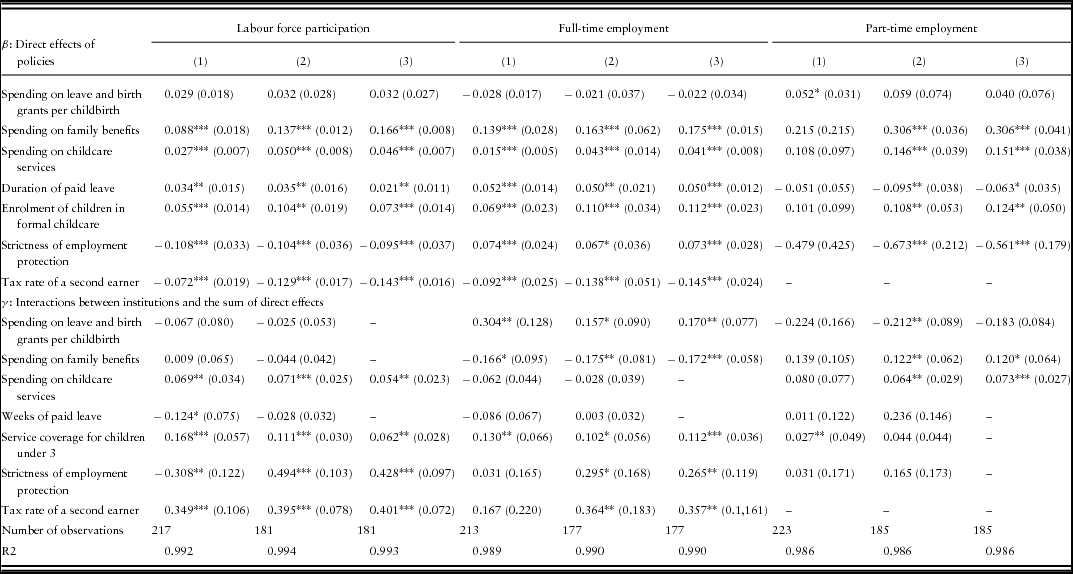
Table 1 shows the estimation results obtained when allowing for systemic interactions: Column 1 presents the general model specification; Column 2 includes controls for labour market characteristics; and Column 3 provides the final estimates obtained after eliminating insignificant interactions.
Systemic interactions across institutions Effects on labour force participation, full- and part-time employment

Non-linear least squares. Standard errors in brackets.*, **, *** statistically significant at the 10%, 5%, and 1% levels, respectively.
The results can be compared to those obtained from a baseline estimation where no interaction between policy measures and their context is taken into account – detailed results are available in the online Annex (Table A2). Most significantly, the baseline model shows an unambiguous positive correlation between the provision of childcare services for under-3s and full-time/part-time female participation in the labour market. The estimated effect is then quite large since, when taking sample means as references, the elasticity at 0.044 implies that an increase of 0.2% points (1% in relative terms) in childcare service coverage has produced a 2.8% increase in female labour force participation rates. The effect is higher in relative terms for part-time work. This makes sense, since formal care in many countries is provided on a weekly basis, which is compatible only with part-time work. Full-time employment is also affected positively by the amount spent per child on childcare services. Interpreting the role of spending is not straightforward, though, since the level of spending can be increased for different reasons that the data cannot disentangle. Thus, for a given service coverage, higher spending can be due either to longer daily hours of childcare provision or to greater quality of services (for instance, spending is affected by the recruitment of better qualified staff or by imposing stricter child-to-staff ratios). These two factors are nevertheless likely to encourage women working full-time. By contrast, spending on childcare is observed to exert a negative influence on part-time work, which suggests that women move from part-time to full-time work if longer and/or better care is provided, all other things being equal. Part-time work appears to be more likely when there are constraints in the provision of affordable, high-quality childcare services.
Compared with the baseline model reported in Table A2 in the Appendix, taking systemic interactions into account now affects the direct effects of policies that are estimated for the ‘average’ country (as reported in the top half of Table 1). First, some of the coefficients that were not significant in the baseline model are now found to have a significant influence on female labour force participation. This, for example, is the case of the following coefficients:
(1) Coefficients for spending on family benefits in equations for full and part-time employment;
(2) Coefficients for public spending on childcare services in equations for labour force participation;
(3) Coefficients for the duration of paid leave in equations for full-time employment.
Direct effects with significant coefficients are also often slightly stronger than in the baseline model, which is not surprising because it assumes that the effect of the other variables is equal to zero (Braumoeller, Reference Braumoeller2004). More striking, however, is the change in the sign of the coefficient for the effect that the duration of paid leave has on the equation for female labour force participation: it now turns positive when all other variables are hypothetically set at zero. However, the significant interactions with the sum of direct effects indicate that the influence of leave duration is closely tied to the overall institutional setting. The negative sign of this interaction suggests – in particular and not surprisingly – that the more employment-friendly the overall setting is, the more the influence of leave duration wanes. The effect of government spending on childcare services is now also unambiguously positive in all employment equations, which includes part-time employment equations where the baseline model had estimated it as insignificant.
The bottom half of Table 1 shows that the effects of other key variables on female labour force participation are also highly dependent on the overall institutional context. In particular, the effect of childcare services coverage for under-3s can be seen to interact positively with the sum of the direct effects of other policy characteristics, which suggests that its influence increases in a context that is more favourable to women's employment. Conversely, taxing second earners has a negative effect on female labour force participation and full-time employment. However, the positive interaction with the overall institutional context suggests that the influence of taxation weakens as the policy setting becomes more employment-friendly. By contrast, there is a positive effect in the way that employment protection legislation interacts with other measures for reconciling work and family life, and these complement each other in creating a positive effect on female employment and labour force participation.Footnote 7
Testing variations across welfare types
One limit of the approaches adopted so far is that the effects of variables (including policy instruments) are assumed to be the same across countries. However, the actual use of policy devices, as well as their consequences on labour market outcomes, may vary greatly across countries, because they depend on how institutions are framed together and tied to cultural attitudes shaping household and employer behaviour. However, there is no data available for differentiating countries on the basis of a careful and historical comparison regarding the practical use of policies. It is nevertheless possible to compare the influence of policies across groups of countries which share characteristics that shape the development of female employment.
The aforementioned ‘regimes’ help to identify such groups from the characteristics of policies supporting work-life balance. The identified groups actually reflect qualitative differences regarding the expected roles of men, women, markets and policies that provide welfare. We then anticipate that the influence of policy instruments will vary across those policy regimes. Differences may not lie only in the magnitude of the policy effects, but it may also be the case that one policy measure can have a positive influence on female labour force participation in one given context but not in another. Therefore, one might especially expect the extension of leave periods to be a powerful means of keeping women employed only in countries with a strong divide between insiders and outsiders (such as in Continental and/or Southern Europe).
Another expectation is that female labour force participation might be particularly affected by tax rates and by leave duration in environments such as English-speaking countries where labour market flexibility is first and foremost assumed to provide enough opportunities for women to combine work and family. This could also be the case where it is expensive for families to access childcare services despite financial assistance that primarily targets ‘poor families’. Conversely, labour market behaviour may be less responsive to financial incentives in countries (such as the Nordic ones) where broad access to affordable, high-quality childcare services is associated with high tax rates.
One way to look at these possible variations in the influence of social welfare settings is to characterise each country according to its type of welfare state and to identify regime-specific policy effects. As a practical matter, country-dummies in our baseline specification are replaced by dummies for four different country-groupings, which are identified from by combining a range of key dimensions in family policies (English-speaking, Southern European, Nordic and Continental welfare states, as explained in the previous section). These dummies are then interacted with each of the policy variables. The model is then re-written so as to take into account the multiplicative interaction between family policy variables and their implementation context.
Labour force participation is now modelled as follows:
 $$\begin{equation}
LFP_{{\rm it}} = WS_i + \alpha LM_{{\rm it}} + \varphi X_{{\rm it}} + \beta _i
.P_{{\rm it}} WS_i + T_t + \varepsilon _{{\rm it}}\end{equation}$$
where the marginal effect (β) of policy variables P it is now assu med to be conditional on countries’ welfare state context.
In order to facilitate interpreting the terms of interaction, all policy variables in equation (2) are centred beforehand by subtracting the mean score across all observations in the sample (Brambor et al., Reference Brambor, Clark and Golder2006).
Of course, one key factor in implementing this approach lies in the choices we make for country categorisation. There is no straightforward way to categorise countries, since countries can have a more or less close match to the ‘typical’ characteristics of each regime, as discussed in Section 2. Moreover, few countries have evolved differently from the others in the same group, which suggests that the relevance of a categorisation may vary over time. For this reason, we test the sensitivity of our results to marginal changes in country groups where the outliers have been removedFootnote 8.
The categorisation we use for the eighteen countries in our scope follows the distinction made in the four categories of female employment and family policy regimes, which was reported earlier. A key difference between groups lies in the extent and form of support provided to working parents with children under age three (Thévenon, Reference Thévenon2011). We also run an estimation that excludes the US, as it is distant from the other English-speaking countries. France is also removed from the Continental countries and joins the Nordic countries (since, as argued above, the policies in France share many characteristics with them and even appears to be rather close to Finland). The other group of ‘Southern European’ countries remains unchanged in order to keep enough observations in this cluster. The results have not dramatically changed, so we will comment here on only our main results. The estimation results from the amended classification are included in the online appendix.
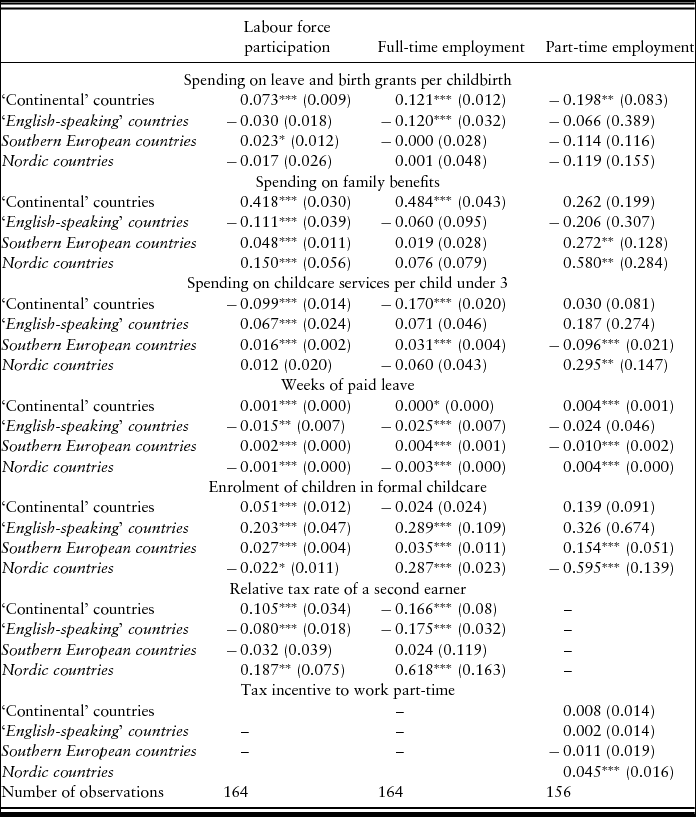
Table 2 reports the results of estimations where labour force and employment equations include:
Variations in the influence of policy instruments across welfare state regimes
All models include time and welfare state dummies but their single effects are not reported. Panel-corrected standard errors in parentheses allowing heteroskedasticity and autocorrelation of standard errors. Categorisation of countries as follows: ‘English speaking’: Australia, Canada, Ireland, New Zealand, United Kingdom, United States; ‘Southern European’: Italy, Spain, Portugal; ‘Nordic countries: Denmark, Finland, Norway, Sweden; ‘Continental’: Austria, Belgium, France, Germany, the Netherlands.
(1) The policy and control variables used in former model specifications.
(2) A variable indicating the welfare state categories (with the group of Continental European countries taken as the reference category) and the terms of interaction between policy variables.
Regression results show remarkable differences in the effects generated by different policies in different groups of welfare states, specifically in terms of how they affect female labour force participation and particularly full-time employment. For instance, in ‘Continental’ Europe, public expenditure on leave and birth grants is found to have a strong positive effect on women's participation in full-time employment, but it has a negative effect on full-time in ‘English-speaking’ countries. Also, associating per child spending in family cash benefits, with labour force participation and full-time employment is strongly positive in ‘Continental’ European countries, but negative in ‘English-speaking’ countries. It also has a much weaker influence in other welfare state environments. It might be the case that in-cash benefits are especially large for covering the fixed cost of mothers’ full-time labour force participation in Continental countries, where formal childcare services are relatively scarce (except in France). Family cash benefits also have a positive influence on female labour force participation and on part-time work, especially in Nordic countries. This is the case even though the proportion of women working part-time (15%) is much lower than the average for other country-groupings (28% of women aged 25–54).
Leave duration also has a strong negative impact on female labour force participation and full-time employment in Anglophone countries. The impact is much less negative in Nordic countries, where a prolongation of paid leave somewhat increases the likelihood of women working part-time rather than full-time. This weak effect exists in the Nordic region despite there being much longer periods of paid leave (65 weeks on average against 10 in the English-speaking group); but one explanation might be that earnings-related payments and greater availability (and affordability) of childcare services upon the expiry of leave tend to keep women in the labour market more so than in the English-speaking contextFootnote 9.
By contrast, the effect of an increased duration of paid leave on female employment is weak but positive in Continental and Southern European countries, where leave entitlements seem to offer valuable employment protection for mothers who often care for their children on a full-time basis during their early years. This makes sense in countries where dual labour markets produce high rewards in terms of career path and social protection for those who remain in employment over the life course (Häusermand and Schwander, Reference Häusermann, Schwander, Emmenegger, Häusermann, Palier and Seeleib-Kaiser2011). Differences in the magnitude of the coefficients for these two groups turn out to not be statistically significantFootnote 10.
In all regions, greater childcare coverage for under-3s helps to raise full and/or part-time female labour force participation. Yet, enrolment rates in childcare services have a particularly strong effect on female full-time employment in both ‘English-speaking’ and ‘Nordic’ groups. There is also a negative association between the enrolment of children under age 3 and part-time employment in the Nordic countries, which suggests that the provision of such childcare services facilitates the transition from part-time to full-time employment. In contrast, increases in childcare coverage have an unambiguously positive effect on part-time work in the other regions, but this is statistically significant only for Southern Europe. Yet, this finding of a positive association reflects the fact that formal childcare is generally provided for a number of hours, which does not cover the working hours of a full day in these countries.
When considered separately from coverage rates, the effect that per-child expenditure for childcare has on female labour market behaviour varies considerably across country-groupings. For instance, there is a very negative association in Continental countries, where the money invested does not actually seem to increase female employment; instead, it merely generates a substitution from informal to formal childcare. By contrast, there seems to be a positive association between spending in childcare services and female labour force participation in Southern European countries, where it adds to the direct positive effect of an increase in service coverage. As discussed earlier, this positive association might reflect the fact that higher spending in childcare services is linked to increases in the number of child care hours that are provided, which makes it possible to work full-time.
Thus, as expected, women's participation in the labour force also appears to be negatively affected by how second earners in couple families are treated unfavourably by tax policies in English-speaking regions more so than in the others. However, increased tax rates on second earners seem to have a surprisingly positive effect on female employment rates in Nordic countries (and to some extent in Continental Europe, although the opposite signs for labour force participation and full-time employment make the results less clear). This finding might be related to ‘income effects’ that dominate ‘substitution effects’ in such a way that a tax increase reduces disposable income to such an extent that second earners must increase their employment participation in order to make up for the loss in income. The high living costs in Nordic countries might be one reason why it remains advantageous to have two earners in families, despite the comparatively high tax rates (Kurkowiak, Reference Kurkowiak2012). This positive association here also suggests that high tax rates are less likely to discourage female employment when they are accompanied by the comprehensive provision of leave entitlements and childcare services.
4. Conclusions
Overall, the main contribution of this paper lies in the detailed analysis of how policies and their complementarities influence trends in female employment rates. Interactions between policy measures and their context are important to consider, since they can, for instance, either foster the positive impact of one measure or lessen the adverse effect of another.
Policies that encourage two-earner families and that help working parents cope with their family commitments are identified as important factors in boosting female labour force participation. Both in-cash and in-kind support have been found to play a significant role; and it appears that when policies that provide parents with more time to care for a newborn child (as parental leave policies do) are combined with policies that encourage the development of childcare services, their impact is maximised if implemented together.
The analysis suggests that policies for fostering greater enrolment in formal childcare have a significant effect on full-time and part-time labour force participation – and these effects are much more robust than the effects of paid leave or other family benefits. Not surprisingly, variations in enrolment of children under 3 in childcare services are found to have a larger positive influence on female labour force participation than variations in the weeks of paid leave. Moreover, the provision of childcare services is found to increase women's participation in the labour market to a greater extent in countries with comparatively long paid leave and/or a high degree of employment protection. By contrast, higher public spending on childcare does not necessarily lead to more part-time employment, as it may facilitate moves into full-time work or improve the quality of childcare without affecting the hours worked per week.
Conversely, higher tax rates on second earners discourage women's participation in the labour market, and that effect is tempered in an institutional environment that is friendly to a work-life balance (as captured by systemic complementarity).
Finally, the analysis provides evidence of variations in how policy characteristics influence female labour force participation in different types of welfare states. This analysis remains ‘exploratory’, because more information on countries and the use of longer time series would be needed to provide more precise estimates. Nevertheless, the results shown here suggest that female labour force participation reacts differently to different policy measures, depending on the institutional environment in which they play out. The provision of childcare services for the under-3s is a key to increase full-time employment among women in all countries, but its effect was different across regimes over the past decades. Thus, the effect of service coverage was weaker in Continental and Southern European countries, where the expansion of childcare services may have merely converted the informal into a formal provision, thus making it somewhat more likely that women will work part-time.
Female employment appears also to be particularly responsive to financial incentives to work in English-speaking countries, where female employment rates appear to be reduced by increases in the duration of paid leave and/or the relative tax rates affecting second earners in couple families. This finding makes sense in countries where labour markets are flexible in terms of moving in and out of the labour force, and where working hours can be adjusted to better fit family needs and constraints such as high childcare costs. In the absence of affordable formal childcare services upon the expiry of parental leave, mothers adjust their working hours in response to the cost of available informal or formal childcare and their earnings profile. In these circumstances, increases in leave duration merely postpone the decision to adjust working hours for a few weeks or months. They could also reduce female employment rates, because increased leave durations may make employers reluctant to hire many women of childbearing age.
By contrast, an increase in the duration of paid leave and in spending on cash benefits appears to have raised female labour force participation slightly over the past decades in Continental and Southern European countries. In these countries, formal childcare constraints are considerable, and labour market opportunities are less flexible than in English-speaking countries. In this context, an increase in the duration of paid leave will encourage more women to continue working until childbirth, and the reward of qualifying for paid leave is strongest for low-income workers with relatively high replacement rates. Highly qualified women are especially likely to also take advantage of the continuity in employment that extended leave provides, as the dualised non-flexible labour markets make it more difficult than elsewhere to return to work when there is no employment-protected leave. In Nordic countries, the provision of childcare services for under-3s is compatible with a mother's full-time employment. In such a context, additional weeks of paid leave appear to weaken labour force attachment and to raise the propensity to work part-time rather than full-time.
Overall, policies influence trends in female employment but their effects are highly context-dependent. However, the effects are weaker than those of structural changes which affect women's educational achievement and the job market. Variations in those contexts are largely reflected by ‘family policy patterns’, which are shown to end up with differentiated influences of policies. Future work will help in gaining a more complete understanding of the associations we have presented so far. The first reason for these variations is that the potential endogeneity of policies to female employment cannot be completely ruled out with the data constraints we face here. Second, competing assumptions can be made in order to explain the differences we have identified across country groups. It remains an open question as to whether these differences are due to different degrees of policy advancement, threshold effects, or to persistent differences in cultures and behaviours.