Sarin and other chemical warfare nerve agents were primarily developed as weapons. As such, much of the efficacy data and testing relating to these agents remain confidential and undisclosed. The bulk of published scientific knowledge regarding clinical manifestations of sarin exposure has been learned from Japanese terror group attacks in the 1990s.Reference Yanagisawa, Morita and Nakajima 1 - Reference Okudera, Morita and Iwashita 3 More recently in 2013, a number of gas attacks in Syria have provided additional insight with regard to the mechanism of action of sarin once dispersed and associated injuries. 4 Various aspects of the management, disaster response, and demographics relating to the Japanese attacks were well reported on in the literature. In contrast, the Syrian attacks were largely reported by news media and humanitarian relief organizations.Reference Yanagisawa, Morita and Nakajima 1 , 4 - Reference Nozaki, Hori and Shinozawa 8
Sarin gas is a potently neurotoxic organophosphate compound that was originally developed in Germany in 1938 as a pesticide. It is classified as a schedule 1 substance by the Organization for the Prohibition of Chemical Weapons, indicating that it has no legitimate civilian application. It is, however, stockpiled by several countries and has been used in previous terrorist and wartime attacks. 9 - Reference Laub 11 Owing to its indiscriminate nature in gas form, it has been responsible for widespread poisoning and death upon exposure.Reference Croddy 12 It creates a number of challenges from a triage and medical relief perspective and requires careful planning and execution of a tailored disaster relief operation. While the literature predominantly reflects military equipment and procedures, the most recently reported sarin incidents have primarily involved treatment by nonmilitary medical organizations with limited equipment and resources.Reference Okudera, Morita and Iwashita 3 , 9 , Reference Domres, Rashid and Grundgeiger 13 - 16
CLINICAL RELEVANCE OF TOXICITY
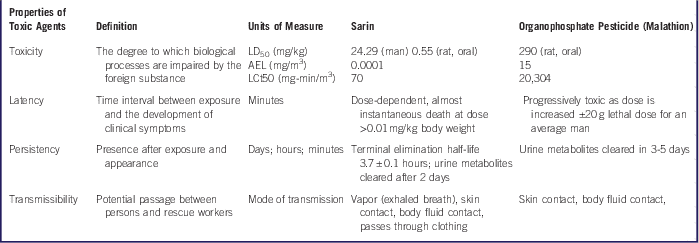
By convention, toxic agents have 4 distinct properties relevant in the clinical setting: toxicity, latency, persistency, and transmissibility.Reference Tokuda, Kikuchi and Takahashi 2 , Reference Croddy 12 , Reference Baker 17 , Reference Crawford, Mackway-Jones and Russell 18 These properties provide important information regarding the immediate and long-term risks associated with exposure to that particular substance. The spectrum of toxicity is broad, ranging from minor irritation to almost instant death and is graded on the degree to which biological processes are impaired. An agent’s toxicity is expressed as a median lethal dose (LD50) value, which is calculated as the dose required to kill half of the test population within a specific time (2 minutes for organophosphorus compounds). 19 - 21 A further measure of toxicity is expressed as the lethal concentration (LCt50) which indicates the quantity of toxin per cubic meter of air per minute which killed half of the tested population. Smaller LD50 and LCt50 numbers indicate higher lethality. 9 , Reference Arduini, Amine and Moscone 22 A toxin’s acute exposure limit is defined as the maximum quantity of toxin per cubic meter of air within which a person can safely function without protective equipment. 19 , 23 , Reference Thiermann, Worek and Kehe 24 Table 1 provides an overview of these properties by relating sarin with the common organophosphate pesticide malathion.
Comparison of Properties of Sarin With the Common Organophosphate Pesticide MalathionFootnote a

a Abbreviations: AEL, acute exposure limit; LCt50, lethal concentration; LD50, lethal dose.
CHEMICAL PROPERTIES, CLASSIFICATION, AND DELIVERY
Sarin, or O-isopropyl methylphosphonofluoridate, is a volatile organophosphorus nerve agent chemical weapon that along with other G class agents is extremely toxic. It is considered to be over 500 times more lethal than cyanide, and its fatal percutaneous dose is 24.29 mg/kg of body weight, whereas exposure to vapors at a concentration of more than 0.1 mg/m3 is likely to result in death. 9 Sarin is usually found in an odorless, colorless, and tasteless liquid form that easily evaporates into an aerosol vapor when exposed to heat. It is synthesized artificially from dual-use commercially available precursor chemicals, namely, methylphosphonyl difluoride and isopropyl alcohol, through an alcoholysis combination method. In its weaponized form, it comprises a racemic mixture of enantiomers. Owing to the relatively simple reaction of its 2 precursor chemical agents, it can be synthesized “on-site” or “en route” to the intended target and released in a gaseous or liquid form. When released in the environment, it is not very persistent but has a high rate of dispersion compared with other nerve agents and organophosphate pesticides, particularly when aided by wind. 9 , 10 , 25 , Reference Okudera 26
MECHANISM OF ACTION AND CLINICAL FINDINGS
Sarin enters the human body via the skin, mucus membranes, eyes, and respiratory tract. It is most rapidly absorbed into the body via the respiratory tract and mucous membranes, which are highly vascularised.Reference Yanagisawa, Morita and Nakajima 1 , Reference Okumura, Takasu and Ishimatsu 7 , 9 , Reference Woodard 27 The toxin then inhibits the enzyme acetyl cholinesterase, preventing it from degrading the neurotransmitter acetylcholine, causing hyperstimulation at the nicotinic neuromuscular junction and the muscarinic parasympathetic junction, resulting in muscle fasciculations and cholinergic hyperstimulation.Reference Yanagisawa, Morita and Nakajima 1 , 25 , Reference Woodard 27 , Reference Ohbu, Yamashina and Takasu 28
Toxicity is largely dependent on the degree and method of exposure. The method of delivery dictates the spread of the agent, as well as the nature of injuries.Reference Yanagisawa, Morita and Nakajima 1 , Reference Okudera, Morita and Iwashita 3 , Reference Ohbu, Yamashina and Takasu 28 For those closest to the release point of the agent, death may occur almost instantaneously when the vapor is inhaled as a result of asphyxiation secondary to overwhelming respiratory muscle spasm.Reference Okumura, Takasu and Ishimatsu 7 , 9 , 25 , Reference Okudera 26
Individuals exposed to total doses less than 0.01 mg/kg body weight may present with severe symptoms that may lead to fatality, although not immediately. 19 Sarin exposure causes cholinergic and nicotinic toxicity, resulting in specific symptoms, including paralysis, respiratory failure, severe hypotension or hypertension, and seizures (usually secondary to hypoxia and/or hypotension).Reference Okumura, Takasu and Ishimatsu 7 , 9 , 10 , 25 , Reference Yamasaki, Sakamoto and Watada 29
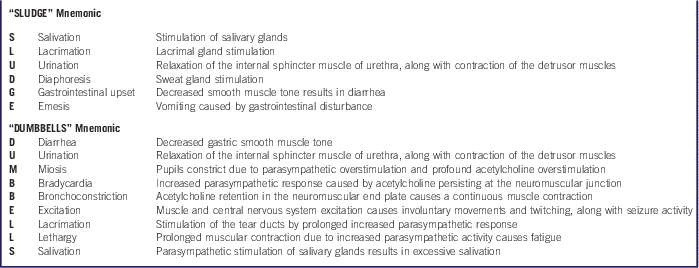
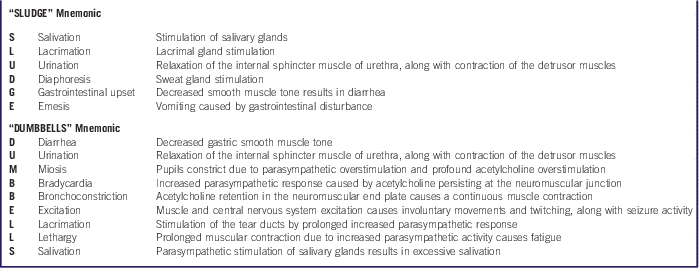
Exposure and contact with contaminated surfaces, food, and water are responsible for a delayed presentation. Victims who are further away from the release point of sarin exhibit a broader range of symptoms, which although less serious, may be fatal. Nicotinic toxicity symptoms include muscle fasciculations, diaphragmatic paralysis and failure, cramping, and weakness. There are 2 useful mnemonics called “SLUDGE” and “DUMBBELLS” that list the cholinergic toxicity symptoms of acute organophosphate toxin poisoning. Table 2 describes these elements.Reference Yanagisawa, Morita and Nakajima 1 , Reference Thiermann, Worek and Kehe 24 , Reference Yanagisawa 30 , Reference Vučemilović 31
Two Useful Mnemonics That List the Symptoms of Acute Organophosphate-Based Toxin Poisoning
ACUTE EXPOSURE GUIDELINES
The US National Advisory Committee for Acute Exposure Guideline Levels (AEGLs) for Hazardous Substances released a report on sarin in 2007, which included toxicity levels for aerosol sarin gas and the exposure duration related to the severity of injury. These AEGLs provide an indication to rescuers of the timeline associated with sarin exposure and suggest that a sustained exposure may be just as lethal as a shorter exposure, depending on the concentration of sarin gas.Reference Watson, Opresko and Young 15
For the initial phase of response, a Self-Contained Breathing Apparatus (SCBA) with a Level A enclosed airtight and chemically impervious suit (referred to as level A protection) is required until the exact contamination location and concentration of toxin is known. 32 Once the toxin is identified and its concentration known, the protection level may be stepped down according to the guidelines from the Centers for Disease Control and Prevention (CDC). 9 For sarin, the initial team should step down their equipment protection level once the staging is complete. The team triaging in the hot zone should remain in Level A personal protective equipment and rotate through teams for the first 8 hours after the initial access. Teams involved with treatment in the warm zone should remain in impervious coveralls and a National institute for Occupational Safety and Health (NIOSH)-certified powered, air-purifying respirator (PAPR) designed to protect emergency responders against chemical, biological, radiological, and nuclear (CBRN) agents. The respirator should have a loose-fitting face-piece, hood, or helmet and a filter or a combination organic vapor, acid gas, and particulate cartridge/filter combination or a continuous flow respirator for air levels greater than AEGL-1, owing to the high risk of secondary contamination from patients body fluids and expired respiratory gas. 19 , 33 , 34
DECONTAMINATION
The removal of sarin from the body surface and clothing is the initial step in the decontamination process. This process includes cutting off clothes to ensure that they are not moved across the patient’s head and face, which creates a further exposure risk. Sodium hypochlorite (bleach) is the ideal agent for the removal of sarin from exposed skin. Note, however, that because of the relatively thin skin in pediatric patients, a bleach solution is not recommended. 35 Soap and water for pediatric patients, or a mild bleach solution (10 mL bleach to 1 L water) for adult patients, may be used to gently wash off the exposed victims skin.Reference Tokuda, Kikuchi and Takahashi 2 , Reference Dolgin 14 , 16
Whereas level A protection is recommended when decontaminating patients exposed to sarin, this level of protective equipment is often not available within a resource-constrained environment.Reference Domres, Rashid and Grundgeiger 13 , Reference Crawford, Mackway-Jones and Russell 18 , Reference Thiermann, Worek and Kehe 24 Isolation of victims of high-level exposure, limiting contact between exposed victims and health care providers, triaging more aggressively, and withholding medical care from victims whose exposure risk outweighs the potential treatment efficacy or available resources, may be the only realistic approach for health care providers in austere environments without level A protection.Reference Crawford, Mackway-Jones and Russell 18 , 36 - Reference Comfort, Ko and Zagorecki 38 In extreme cases, where the patient exposure level increases the risk to health care providers beyond the potential treatment efficacy or available resources, a facility may need to “quarantine” itself and not allow patients to access it.Reference Okudera, Morita and Iwashita 3 , Reference Thiermann, Worek and Kehe 24 , 36 - Reference Comfort, Ko and Zagorecki 38 For most patients requiring sarin decontamination, the greatest risk for health care providers and first responders is direct contact with sarin on skin and clothing surfaces.Reference Yanagisawa, Morita and Nakajima 1 , Reference Thiermann, Worek and Kehe 24 This risk can be limited by health care providers and first responders wearing heavy latex gloves, heavy fabric long-sleeved surgical gowns, plastic aprons, and closed footwear.Reference Thiermann, Worek and Kehe 24 During the course of the decontamination process, exposed patients may exhale sarin, and clothing removal may atomize sarin into the ambient air.Reference Clarke, Chilcott and Wilson 37 All decontamination efforts should ideally be conducted outside, in a well ventilated area, downwind of the medical treatment location. Health care workers should wear N95 masks or higher-specification safety equipment as a minimum requirement and monitor themselves and each other for any early signs of sarin poisoning, including a runny nose, watery eyes, blurred vision, excessive sweating and saliva production, and coughing. 9 , Reference Clarke, Chilcott and Wilson 37 , Reference Balasubramanian, Massaguer, Mehrotra and Venkatasubramanian 39
TREATMENT
Atropine, which is the mainstay of therapy, blocks postganglionic muscarinic acetylcholine receptor sites by competitive antagonism, thereby limiting stimulation of the parasympathetic nervous system.Reference Baker 17 , 21 , Reference Yanagisawa 30 , Reference Vučemilović 31 , 36 , Reference Jokanović 40 , Reference Mercey, Verdelet and Renou 41 Atropine can be administered as an initial intravenous or intramuscular bolus of 1-2 mg and thereafter doubled and repeated every 5 minutes until relief of toxicity symptoms occurs. Autoinjectors are available with 2-mg doses for intramuscular administration. There is no maximum dose in the emergency treatment of sarin or other organophosphate compounds, but doses of 20 to 30 mg were recorded as being required in the Japanese subway attacks.Reference Yanagisawa, Morita and Nakajima 1 , Reference Tokuda, Kikuchi and Takahashi 2 , Reference Okumura, Suzuki and Fukuda 6 , Reference Okumura, Takasu and Ishimatsu 7 , Reference Dolgin 14 , Reference Watson, Opresko and Young 15 , Reference Okudera 26 - Reference Ohbu, Yamashina and Takasu 28 Atropine crosses the blood-brain barrier, and may cause central nervous system toxicity in high doses or after prolonged periods of administration. Central nervous system toxicity symptoms from atropine administration include dilated and nonreactive pupils, hallucinations, restlessness, delirium, and coma.Reference Thiermann, Worek and Kehe 24 , 42 Glycopyrrolate binds competitively to the muscarinic acetylcholine receptor, inhibiting the action of acetylcholine on postganglionic cholinergic nerves, which in turn decreases pharyngeal and bronchial secretions. Glycopyrrolate does not cross the blood-brain barrier and has been found to be effective in the management of acute organophosphate poisoning, especially in patients who remain symptomatic, after high-dose atropine administration.Reference Choi, Quinonez and Cook 43 , Reference Bardin and Van Eeden 44 An intravenous infusion starting at 0.5-1 mg/min glycopyrrolate titrated to effect (heart rate >60 beats/min, improved secretions, absent muscle fasciculations) has been shown to be an effective treatment for acute organophosphate poisoning.Reference Jokanović 40 , Reference Choi, Quinonez and Cook 43 - Reference Piplani, Handa and Aggrawal 45
Although atropine rapidly reverses cholinergic hyperactivity at muscarinic receptor sites, it has little or no effect at nicotinic receptor sites. 2-Pyridine aldoxime methyl chloride (2-PAM) reactivates the enzyme acetyl cholinesterase by binding to the anionic site on the enzyme molecule and then binding to the organophosphate molecule bound to the esteric site of the acetyl cholinesterase molecule. This changes the molecular structure of the organophosphate molecule and both pralidoxime and sarin molecules are released from the acetyl cholinesterase bonding sites, allowing it to return to its normal function of cleaving acetylcholine. Although 2-PAM is an effective acetyl cholinesterase reactivator, it is limited by its inability in crossing the blood-brain-barrier and is not effective on acetyl cholinesterase that has “aged” or permanently bonded with the sarin molecule.Reference Mercey, Verdelet and Renou 41 2-PAM is typically administered in doses of 20 to 50 mg/kg, and is available in an adult autoinjector with a 600-mg dose that can be administered intramuscularly.Reference Tokuda, Kikuchi and Takahashi 2 , Reference Thiermann, Worek and Kehe 24 , Reference Jokanović 40 , Reference Mercey, Verdelet and Renou 41 , Reference Jokanović and Prostran 46 Despite its proven efficacy within a military environment when administered promptly, 2-PAM and other oximes are not readily available in most countries and tend to be prohibitively expensive.Reference Corvino, Nahata and Angelos 47 There are, however, stockpiles of 2-PAM and atropine autoinjectors in some countries that could be accessible by first responders and nonmilitary medical providers. The CDC has a program called CHEMPAK that has EMS and hospital containers with the capacity to treat 454 and 1000 patients, respectively. These containers are kept at locations across the United States and contain atropine, 2-PAM, and diazepam autoinjectors and multi-dose vials. 48 In other countries, Information regarding these medication stockpiles is not freely available and may well be confidential due to the inherent secrecy required in military capability information.Reference Tokuda, Kikuchi and Takahashi 2 , Reference Thiermann, Worek and Kehe 24 France has recently started stockpiling atropine in preparation for a possible nerve agent attack, and it is believed that countries with nerve agent stockpiles, including Russia, Syria, and North Korea, have stockpiles of antidotes.Reference Deacon 49
Diazepam provides additional therapeutic benefits in acute sarin poisoning in terms of its anticonvulsant, antispasmodic, and anxiolytic properties. Its primary site of action is at the GABA (A) receptor site where, like other benzodiazepine drugs, it potentiates the neural inhibition mediated by the GABA complex. It has been suggested that diazepam is particularly beneficial in nerve agent poisonings, although the mechanism of action is poorly understood. A large quantity of experimental evidence supports the hypothesis that benzodiazepines may prevent structural damage and alterations to the central nervous system.Reference Yanagisawa, Morita and Nakajima 1 , Reference Tokuda, Kikuchi and Takahashi 2 , Reference Okumura, Suzuki and Fukuda 6 , Reference Watson, Opresko and Young 15 , Reference Thiermann, Worek and Kehe 24 , Reference Okudera 26 , Reference Jokanović 40 , Reference Marrs 50 , 51 Diazepam is the only benzodiazepine that has actually been tested in sarin exposure; other benzodiazepines may well be useful in the treatment of central nervous symptoms from sarin poisoning. Diazepam can be administered by intravenous or intramuscular injection and should be administered to any patient having severe central nervous effects from nerve agent exposure, including seizures or muscle fasciculations, or where its anxiolytic properties are required. It is available as an autoinjector that can be administered intramuscularly. More recent evidence suggests that midazolam may be the preferred agent in sarin-induced convulsions because it has the quickest onset of action of all the benzodiazepine agents and is widely available.Reference Thiermann, Worek and Kehe 24 , Reference Reddy and Reddy 52 , Reference Brigo, Nardone and Tezzon 53
TESTING AIR, SOIL, SURFACES, AND WATER FOR SARIN
Sarin has a relatively short half-life of 5 hours, and its rate of decomposition depends largely on the purity of precursors used in its production. In the 1994 Japanese Matsumoto religious cult organization attack, a small quantity of impure sarin was dispersed by using a heater and a fan. Approximately one-third of rescuers reported suffering symptoms within 5 hours of patient contact.Reference Tokuda, Kikuchi and Takahashi 2 , Reference Ohbu, Yamashina and Takasu 28 During the Cold War it was calculated that 6 tons of pure sarin released on a cold, dry summer day with no wind would affect a 12 km×100 km area.Reference Thiermann, Worek and Kehe 24
Because sarin’s volatility increases exponentially with an increase in temperature and wind speed, its dispersal pattern is highly variable and difficult to predict. It therefore becomes a complex disaster to manage in terms of secondary exposure risk to rescuers and defining danger areas at a disaster site. Owing to the nature of sarin’s dispersal, toxicity, and exposure concentration, a higher number of fatalities are expected closer to the point of release, with the fatality rate and severity of injury decreasing further from the point of release. The identification of the release point and hazard areas is difficult to predict in the initial hours as a result of intermingling and movement of exposed victims.Reference Tokuda, Kikuchi and Takahashi 2 , Reference Okudera, Morita and Iwashita 3 , Reference Okumura, Suzuki and Fukuda 6 , Reference Okumura, Takasu and Ishimatsu 7 , Reference Crawford, Mackway-Jones and Russell 18 , Reference Thiermann, Worek and Kehe 24 , Reference Okudera 26
Due to its volatility, sarin rapidly disperses as well as degrades, quickly removing any trace of its presence within 36 hours of delivery. 9 , Reference Thiermann, Worek and Kehe 24 , Reference Tan, Loke and Nguyen 54 , Reference Sekiguchi, Matsushita and Yamashiro 55 Accurate testing of sarin levels in the field remains the domain of bulky gas chromatograph military equipment, which is not currently commercially available. Although a number of methods are available to accurately test for the presence of sarin in fingernail and hair samples, real-time field testing remains elusive.Reference Yan, Qi and Li 56 , Reference Appel and Logue 57 There are, however, a number of current scientific projects aimed at using nanotechnology and lab-on-a-chip technology to test fingerprick blood samples for the presence of organophosphate compounds in the bloodstream.Reference Thiermann, Worek and Kehe 24 , Reference Tan, Loke and Nguyen 54 - Reference Climent, Biyikal and Gawlitza 63 Portable handheld devices that can quickly detect and accurately measure various chemical warfare agents, even in the gaseous form, are currently under development. These devices will be able to test and display a chemical warfare agent’s concentration in µg/m3 within a few seconds.Reference Climent, Biyikal and Gawlitza 63 In the Syrian attacks, field testing for sarin was predominantly based on a high index of suspicion, with limited testing available at hospital and university laboratories. 4 , Reference Charbonneau and Nichols 5 , 10 , Reference Laub 11 , 16 , 20 , 21 , Reference Tan, Loke and Nguyen 54
SARIN DELIVERY
Sarin military delivery systems exist in 2 forms: canisters of liquid sarin and binary chemical weapon shells. Binary chemical weapon shells are artillery shells in which both precursors are kept in separate canisters separated by a partition. The primary difference between single-canister nerve agent delivery weapons and binary chemical weapons is the quantity of agent delivered to the target and the safety of transporting the devices or firing the weapon.
Single canisters deliver a large quantity of agent, such as the “Weteye” Mk 116 bomb of the US Navy, which was designed to deliver 160 kg of sarin to a target. The M687 artillery shell, which began production in 1987, was a binary chemical weapon designed for the delivery of sarin to a smaller target area. The shell contained separate precursor canisters within, which when ruptured and combined during the shell’s acceleration or collision with the target, formed sarin. Although these weapons have been discontinued and destroyed by signatory countries of the Organisation for the Prohibition of Chemical Weapons (OPCW), 64 a number of countries still produce and stockpile sarin and other chemical weapons. 9 - Reference Croddy 12 , Reference Dolgin 14 , 16 , Reference Yanagisawa 30 , 64 , 65
The Japanese terror attacks of the 1990s broke the conventional notion of chemical warfare as being a military delivered attack with a large quantity of agent and showed not only that nerve agents can be produced effectively on a small scale but also that their delivery can be widespread and lethal from a single point of origin. During the 1980s there were reports of a single intercontinental ballistic missile delivering 400 kg of sarin on the Iraqi town of Halabja, which resulted in 500 deaths and 10,000 injured. The recent 2013 sarin attack in DamascusReference Charbonneau and Nichols 5 along with the lack of atropine in the area surrounding the attack further underlined the need for early identification and long-term preparation. 4 , Reference Charbonneau and Nichols 5 , Reference Laub 11 The UN Chemical Weapons Watchdogs that investigated reports on 11 incidents of suspected sarin use in Syria 4 underlined the necessity for greater understanding of weapons of mass destruction and the need for adequate planning and preparation for an attack by disaster relief groups.Reference Tokuda, Kikuchi and Takahashi 2 , Reference Okudera, Morita and Iwashita 3 , Reference Okumura, Suzuki and Fukuda 6 , Reference Laub 11 , Reference Thiermann, Worek and Kehe 24 , Reference Comfort, Ko and Zagorecki 38 , Reference Gulland 66
MASS CASUALTY AND DISASTER RESPONSE
Whereas the bulk of the published literature utilizes a military perspective planned response when referencing treatment modalities for mass nerve agent exposure scenarios, there is very little evidence from which to formulate a planned response from a civilian aid or disaster relief perspective. Recent escalations in terror activity, along with ongoing civil wars, have included a number of mass casualty incidents, some of which have included mass exposure to toxic elements believed to be sarin. 4 , 32
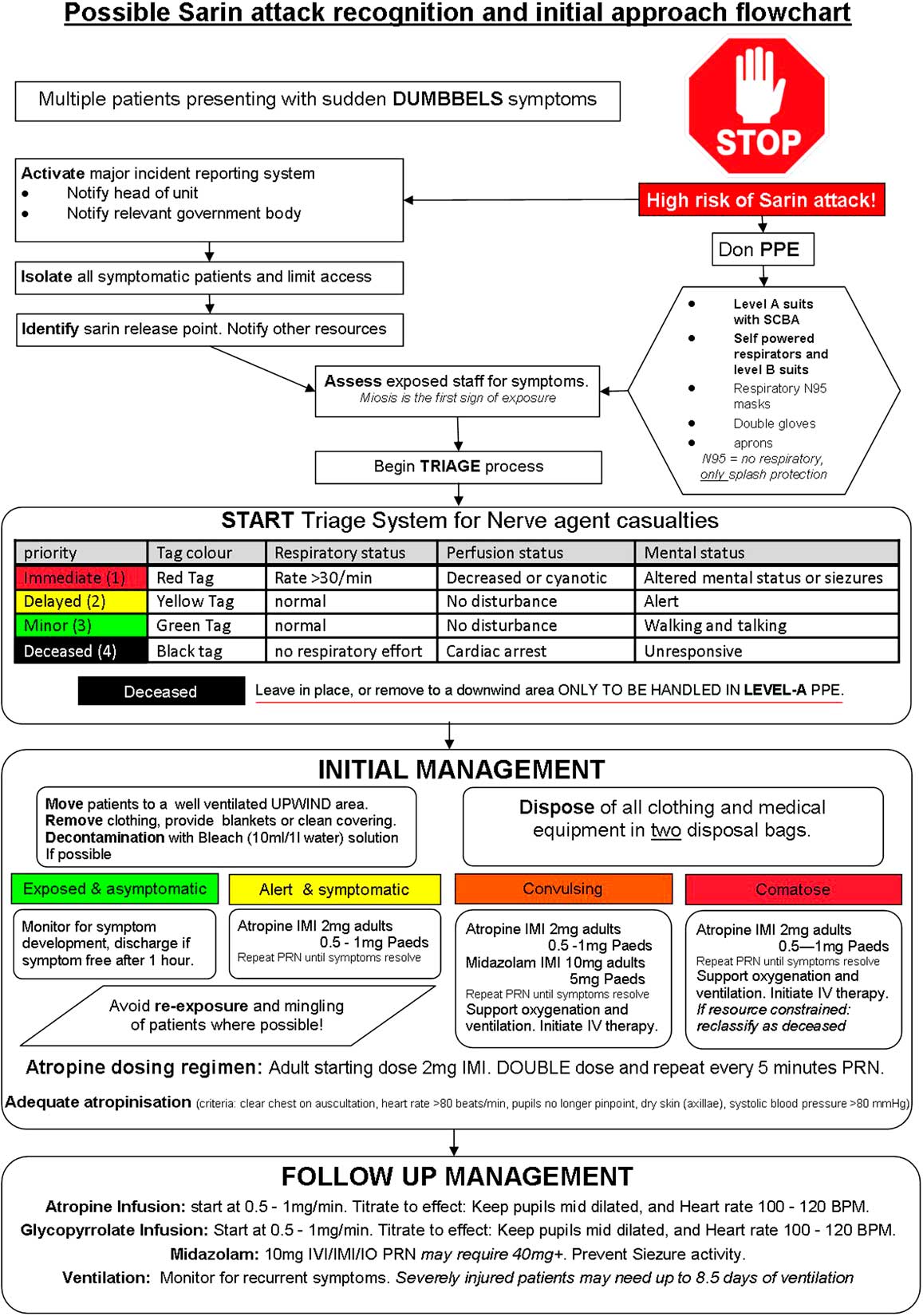
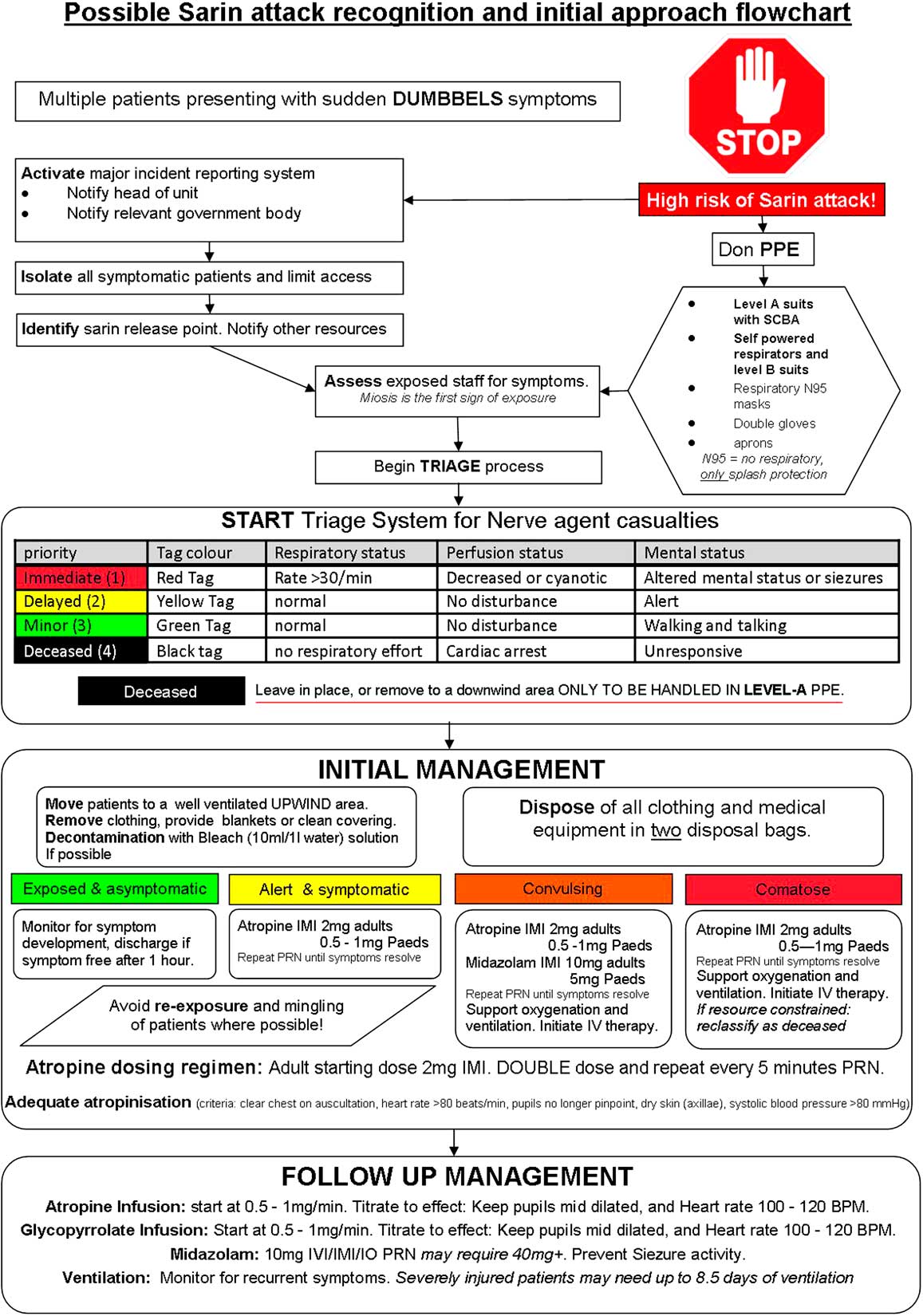
Simulated disaster events with assessment of a multidisciplinary disaster response effort are considered to be the gold standard in disaster response planning.Reference Comfort, Ko and Zagorecki 38 , Reference Jain and McLean 67 Although these events provide a real-time model from which all aspects of planning and troubleshooting for a scenario can be assessed, they are expensive exercises, with much of the data being retained by the agencies involved and consequently withheld from the public domain.Reference Comfort, Ko and Zagorecki 38 , Reference Chick 68 Some progress has been made in generating virtual simulations of disaster response exercises, but these systems remain far beyond the financial grasp of many Third World health care systems and humanitarian programs. A simple scenario-based assignment was provided to a group of Master of Science (medicine) in Emergency Medicine students and was collated as a means of extracting valid and pertinent information regarding a possible sarin attack.Reference Jain and McLean 67 Based on the available literature, a flowchart was compiled highlighting the recognition, basic safety, and initial management of a mass casualty incident involving a sarin attack (Figure 1).Reference Baker 17 , Reference Thiermann, Worek and Kehe 24 , 32 , Reference Reddy and Reddy 52 , 69
Flowchart for the Recognition, Basic Safety, and Initial Management of a Mass Casualty Incident Involving a Sarin Attack.
CONCLUSION
Rapid and effective recognition of victims exposed to sarin, along with effective decontamination techniques and emergency medical care, will ensure the safety of medical and disaster relief personnel and decrease the loss of life precipitated by a sarin attack. The provision of emergency care by any organization in a mass casualty or disaster response scenario requires a combination of preparation and on-site adaption and ingenuity. The use of chemical warfare agents in terrorist attacks is intended to overwhelm the available medical resources and hamper any relief efforts, resulting in increased injuries and death. In the case of sarin, an adequate understanding of the toxin, how to recognize it, and a basic approach to disaster readiness and clinical management may well improve organizational readiness and limit the loss of life from such an incident.