Introduction
The Aphrophoridae (Hemiptera) is a relatively poorly diversified family, with about 900 described species worldwide, most of them inhabiting tropical regions (Richards and Davies, Reference Richards, Davies, Richards and Davies1977; Shih and Yang, Reference Shih and Yang2002). In Europe, this family is represented by about 29 species (Jach, Reference Jach2013), of which only six are present in Corsica (Chauvel et al., Reference Chauvel, Cruaud, Legendre, Germain and Rasplus2015; Albre and Gibernau, Reference Albre and Gibernau2019). The meadow spittlebug, Philaenus spumarius (L.), is the most widespread species and can be found in the whole Palearctic region from Western Europe to Russia. The ecological plasticity of P. spumarius has enabled the spittlebug to be successful in various non-native regions such as Japan, North America (USA, Canada), Hawaii and New Zealand (Yurtsever, Reference Yurtsever2000b). It harbours such extremely variable dorsal colours and patterns that up to 16 phenotypes have been described. The genetic basis of this phenotypic diversity was thus intensively studied and relationships with several ecological constraints (climatic conditions, predation or habitat composition) were found (Halkka et al., Reference Halkka, Halkka, Raatikainen and Hovinen1973; Stewart and Lees, Reference Stewart and Lees1988; Yurtsever, Reference Yurtsever2000a; Rodrigues et al., Reference Rodrigues, Silva, Pina-Martins, Loureiro, Castro, Gharbi, Johnson, Dietrich, Borges, Quartau, Jiggins, Paulo and Seabra2016; Borges et al., Reference Borges, Rodrigues, Silva, Seabra, Paulo and Quartau2018). In Europe, P. spumarius is actually studied mainly for hosting the Latin American bacterium Xylella fastidiosa Wells et al., which was detected for the first time in Southern Italy (Salento, Puglia region) in 2013 (EPPO, 2013). Since then, this bacterial phytopathogen has been responsible for the death of thousands of olive and almond trees in the western Mediterranean region. In Italy, olive growers have already lost between 0.2 and 0.6 billion Euros in investments and, according to the different economic models, the premature death of the olive trees could cost between 1.9 and 5.2 billion Euros over the next 50 years if no resistant trees are developed (Schneider et al., Reference Schneider, van der Werf, Cendoya, Mourits, Navas-Cortés, Vicent and Oude Lansink2020). With hundreds of host plants recorded worldwide, X. fastidiosa is considered as a major threat for European flora (EFSA, 2018). While initially introduced via infected ornamental trees (e.g. coffee trees), it has been demonstrated that P. spumarius was the main vector of the bacterium in Europe, propagating efficiently the bacterium to a wide diversity of native, ornamental and cultivated plant species (Saponari et al., Reference Saponari, Loconsole, Cornara, Yokomi, De Stradis, Boscia, Bosco, Martelli, Krugner and Porcelli2014; Cornara et al., Reference Cornara, Saponari, Zeilinger, de Stradis, Boscia, Loconsole, Bosco, Martelli, Almeida and Porcelli2017). The ecology of P. spumarius has thus been intensively studied in this epidemiological context, particularly in European continental populations developing in cultivated areas. The adults can be observed from the end of spring, after the last molt, to the end of autumn (Yurtsever, Reference Yurtsever2000b). However, in some populations, adults find refuge in cool habitats, usually in the shady and humid foliage of the surrounding shrubs and trees. This behaviour mainly concerns populations subjected to (extreme) drought and warm conditions, most often in the southernmost parts of the distribution area (Drosopoulos and Asche, Reference Drosopoulos and Asche1991; Drosopoulos et al., Reference Drosopoulos, Maryańska-Nadachowska and Kuznetsova2010). This sheltering phase, where it exists, ends at the end of summer – early autumn. Egg laying, induced by the daylight shortening and lower temperatures (Stewart and Lees, Reference Stewart and Lees1988), occurs in autumn on plants of the lower vegetation layers (herbaceous and small shrubs). Females can produce between 350 and 400 eggs, in clutches of up to 20 eggs aggregated in a cement-like secretion. Eggs are laid either directly on suitable host plants, or on dead plant tissues (Yurtsever, Reference Yurtsever2000b). The eggs of P. spumarius hatch in early spring after an overwintering period (Nickel and Remane, Reference Nickel and Remane2002). Nymphs produce a characteristic spittle mass on the leaves or on the twigs of the plants inside which they are protected against predators and desiccation. Highly polyphagous, nymphs consume xylem sap and can develop on almost any available plant, with a preference for the youngest tissues of herbaceous plants and small shrubs. When mature at the end of spring, they set up a cavity in the spittle mass in which they molt into imagoes. As with the nymphs, adults are highly polyphagous, with hundreds of host plants recorded worldwide, belonging to a wide diversity of families from grasses to trees, including conifers (Yurtsever, Reference Yurtsever2000b; EFSA, 2018).
While P. spumarius is present in the whole Mediterranean region including the islands, such as Corsica, Sicily, Sardinia, the Balearic Islands and Crete, defined ecological parameters are almost exclusively based on continental populations developing in agricultural landscapes (Yurtsever, Reference Yurtsever2000b; Cornara et al., Reference Cornara, Bosco and Fereres2018; Morente et al., Reference Morente, Cornara, Plaza, Durán, Capiscol, Trillo, Ruiz, Ruz, Sanjuan, Pereira, Moreno and Fereres2018; Bodino et al., Reference Bodino, Cavalieri, Dongiovanni, Plazio, Saladini, Volani, Simonetto, Fumarola, Carolo, Porcelli, Gilioli and Bosco2019; Dongiovanni et al., Reference Dongiovanni, Cavalieri, Bodino, Tauro, Di Carolo, Fumarola, Altamura, Lasorella and Bosco2019). However, field surveys in Corsica highlighted that the adults of P. spumarius collected were found almost exclusively on a single plant species – Cistus monspeliensis L. – which is an unusual observation for this highly polyphagous species (Chauvel et al., Reference Chauvel, Cruaud, Legendre, Germain and Rasplus2015; Cruaud et al., Reference Cruaud, Gonzalez, Godefroid, Nidelet, Streito, Thuillier, Rossi, Santoni and Rasplus2018). In order to contribute to the knowledge of the epidemiology of X. fastidiosa, we studied the ecology and biology of the meadow spittlebug in a non-agricultural maquis habitat with weak anthropogenic perturbations. We present original data on one insular population of P. spumarius from South-West of Corsica near Ajaccio. The abundance and temporal variation of this spittlebug species were studied as well as the host plant diversity and palatability for the nymphs during their ontogenesis. Finally, the mobility of the adults among vegetation strata was studied during emergence, using different trapping experiments. Our specific questions were: (1) is P. spumarius specialized on C. monspeliensis as suggested by previous field surveys (Chauvel et al., Reference Chauvel, Cruaud, Legendre, Germain and Rasplus2015; Cruaud et al., Reference Cruaud, Gonzalez, Godefroid, Nidelet, Streito, Thuillier, Rossi, Santoni and Rasplus2018)?; (2) does the plant–host specialization, if any, concern adults and/or nymphs?; and (3) does P. spumarius find refuge in a sheltered habitat during summer since Corsica, beside been an island, belongs to the southern range of its distribution?
Materials and methods
Survey
The studied site is located near the University campus outside of Ajaccio (GPS coordinates: 41.913492N, 8.655433E). The habitat is a typical thermomediterranean shrubby vegetation (i.e. maquis) dominated by Pistacia lentiscus L. (Anacardiaceae), Cytisus laniger (Desf.) DC. (Fabaceae) and C. monspeliensis with sparse trees Olea europaea L. (Oleaceae) and Arbutus unedo L. (Ericaceae) and weak anthropogenic perturbations during the past 35 years. A 34-month-long survey (from March 2017 to December 2019) was conducted in ~1100 m2 maquis habitat to record the temporal population pattern of adults of P. spumarius. Simultaneously, the Auchenorrhyncha fauna present in the locality, belonging mainly to the Cicadellidae and Issidae families, were collected. Every 2–3 weeks, insects present in the low (under 120 cm) and high (above 120 cm) vegetation strata were separately collected using a sweep-net; a 20 min sampling was conducted in both strata. In total, 54 insect samples were collected for each vegetation stratum. At our studied site, the low vegetation stratum corresponded to the herbaceous and shrub species such as C. monspeliensis, C. creticus L. (Cistaceae) and Myrtus communis L. (Myrtaceae). The high vegetation stratum corresponded to trees mainly O. europaea, A. unedo, P. lentiscus and Phillyrea L. spp. (Oleaceae). All the insects were identified and sexed by examining their genitalia under dissecting microscope (Albre and Gibernau, Reference Albre and Gibernau2019).
The abundances of P. spumarius in the vegetation strata were studied by comparing the number of individuals captured in low or high plants (χ2 test). Temporal variations of the number of adults (male or female) or the sample sex ratios were tested by fitting linear regressions. The mean proportion of adult males was also compared among seasons with a non-parametric test (Kruskal–Wallis). Statistical analyses were performed with the statistical software Past 4.02 (Hammer et al., Reference Hammer, Harper and Ryan2001).
Adult ecology and behaviour
Different experiments were performed soon after the emergence of P. spumarius adults, during the period when extremely few specimens were collected using the sweet-net approach. In order to verify whether the adults of P. spumarius took refuge in the tree foliage, intensive sweep-net captures were thus performed up to 6 m high in ten trees for each main species of the studied area, O. europaea, A. unedo and P. lentiscus.
Interception traps were also used in order to passively capture the adults during the same period (soon after their emergence) and to study their mobility. We thus placed 54 yellow sticky traps (25 × 11 cm) in the low vegetation stratum, including grasses, C. laniger, C. monspeliensis and M. communis and in the high vegetation stratum, including A. unedo, olive trees, P. lentiscus and Phillyrea sp., close by or in the foliage of each species. The experiment was performed from 25 May to 28 June 2018, i.e. soon after adults emerged in our study site, when adult movements were more likely. Traps were checked every 3 days, and the insects identified and counted, using stereomicroscope when necessary.
In order to verify whether adults were looking for shady and humid habitats to survive the summer conditions, we constructed shelters consisting of two green overlaid sticky plates of cardboard separated by 2 cm; a recipient filled with water was placed between the plates. This artificial system was supposed to represent a shaded and relatively humid (micro-)habitat as the natural reported shelter required for the survival of P. spumarius in summer.
The nymphs of P. spumarius produce conspicuous self-generated white foam nests in which they obligatorily develop, from early February to the end of April. As neonate nymphs are relatively immobile, it has been considered that these foams could constitute a proxy to identify the females' choice for egg laying. We thus recorded the presence or absence of foams on all the plants of the studied area in early spring. In order to understand the progression of the foam distribution in the habitat throughout the season, foam presence or absence and the number of foams per plant were recorded along a 100 m long transect from 9 March, when most of the foams were visible, through 24 April, before the emergence of the adults. The range of movement exhibited by medium- to full-sized nymphs was estimated by placing nymphs on a flat surface covered with paper. Fully exposed and deprived of food, nymphs searched for a plant and released some humidity on the paper, allowing us to follow their (sinuous) tracks. This experiment was repeated with 73 nymphs (body size range: 2.86–5.98 mm) and movement was tracked for 20 min trials.
Nymph behaviour and survival
Once per week from 15 March to 3 May 2017, which was near the end of the season during which foams were present in our studied site, 13 foams from the same area were sampled randomly. All the nymphs contained within the foams were counted and their body length measured using a stereo microscope.
In order to verify the polyphagy of the nymphs of P. spumarius, development experiments were performed by bagging the foliage of different plant species in the presence of natural foams or by transferring single neonate nymphs (all collected on C. monspeliensis) on a suite of the aforementioned plant species. Success was considered when the nymph completed its developmental cycle into an adult.
The temporal variations of nymph number or size per foam in natural conditions were tested with linear regressions. The nymph-travelled distance in laboratory conditions was also tested for linear relationship with their size using Past 4.02 (Hammer et al., Reference Hammer, Harper and Ryan2001).
Results
Survey
Relative abundances
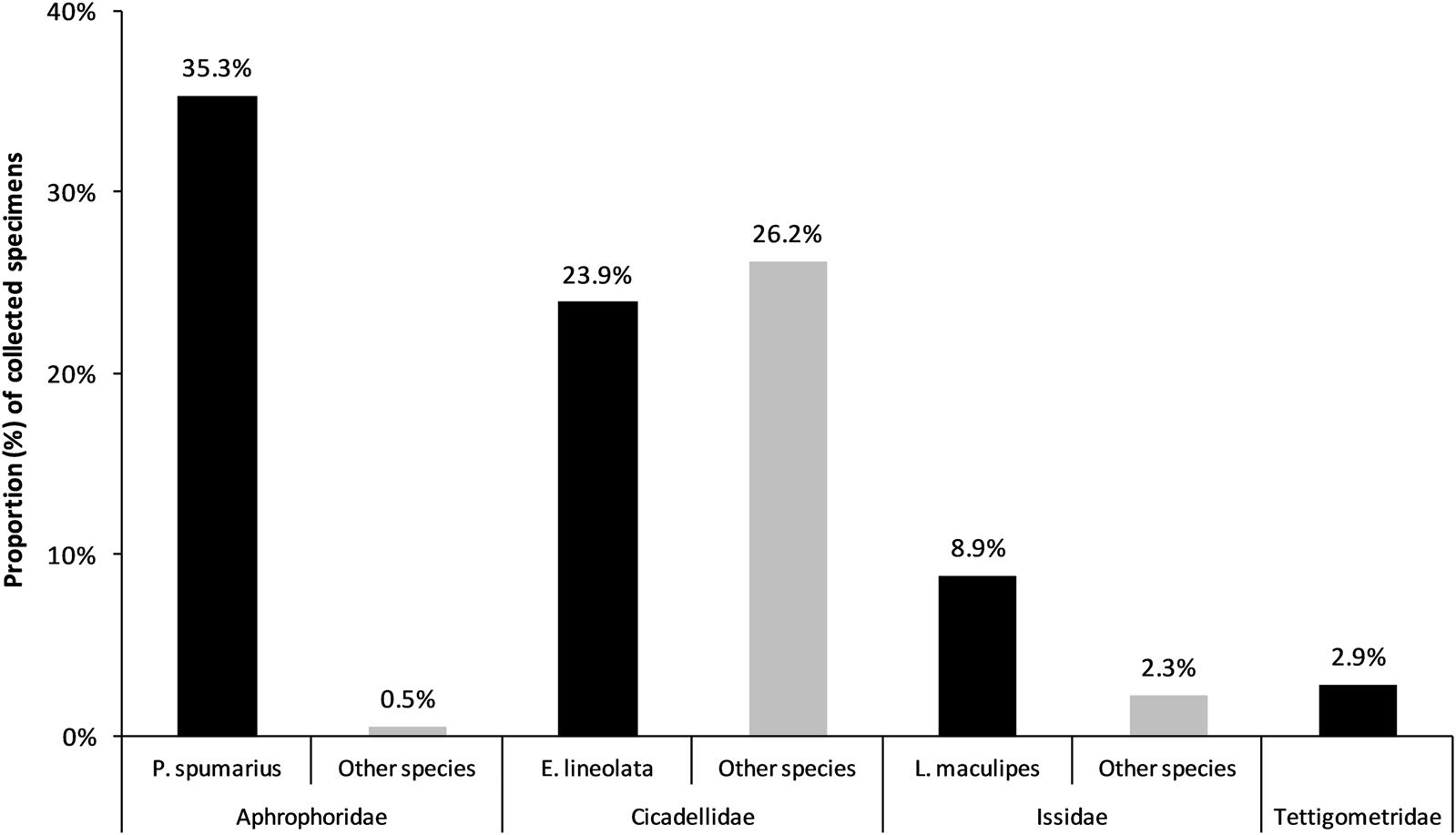
Among the 1848 Auchenorrhyncha specimens collected during the survey (fig. 1), the Aphrophoridae P. spumarius was the most abundant species (n = 653; 35%), followed by the Cicadellidae Euscelis lineolata Brullé (n = 442; 24%) and the Issidae Latilica maculipes Melichar (n = 164; 9%). The only other known potential vector of the bacterium X. fastidiosa in the studied area was the species Neophilaenus campestris Fallén (Aphrophoridae), which accounted for only 1% (n = 10) of the total collected specimens. The total diversity list of Auchenorrhyncha present in the studied site represented 37 species including three alien species for Europe (Albre and Gibernau, Reference Albre and Gibernau2019).
Cumulative abundance (%) of Auchenorrhyncha at the studied site near Ajaccio, from March 2017 to December 2019.

Temporal pattern of P. spumarius population
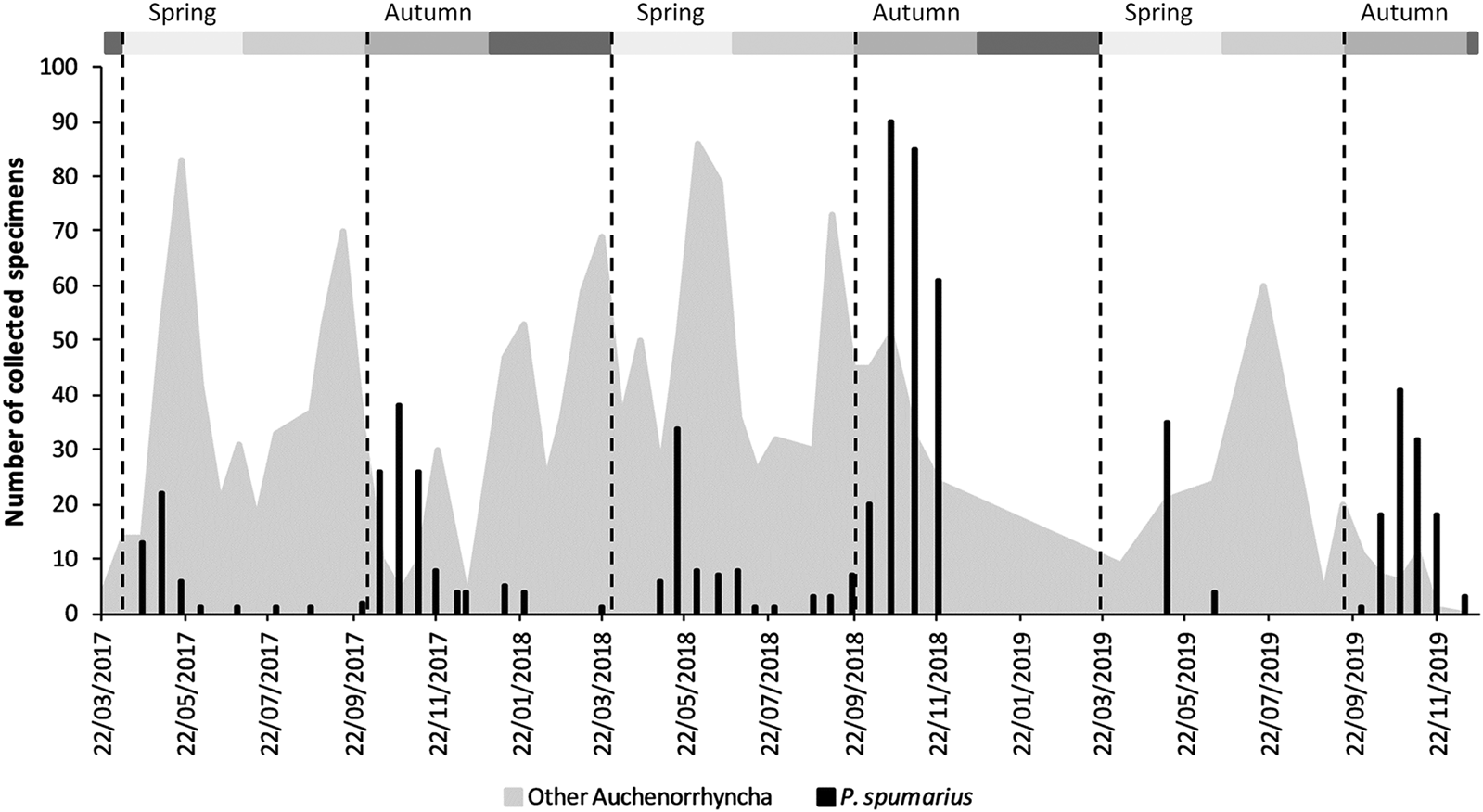
An annual pattern was observed, with two main peaks of adult abundances: in spring, from late April to the end of June, and in autumn, from early October to the end of November (fig. 2, vertical dashed lines). The second peak abundance was the most important one in terms of number of insects collected, representing 72, 79 and 75% of the specimens collected in 2017, 2018 and 2019, respectively. Thereafter, the number of adults reduced during the survey (range: 0–3 individual (s) captured) in summer and increased massively only in autumn.
Temporal abundance of P. spumarius (black bars) and the other Auchenorrhyncha species (grey shaded curve) at the studied site near Ajaccio, between March 2017 and December 2019 collected twice a month.

The annual temporal pattern of P. spumarius appeared to be different from the mean Auchenorrhyncha pattern (fig. 2, grey shaded curve). In spring, P. spumarius and the other Auchenorrhyncha species presented a peak of abundance. On the contrary in autumn, P. spumarius presented its maximum abundance, while the Auchenorrhyncha community is strongly decreasing or at its minimum abundance.
Vegetation strata
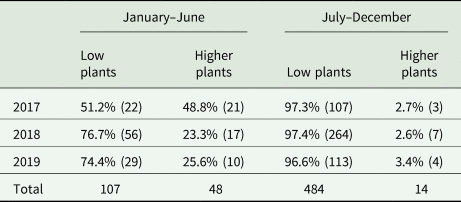
Overall, the adults of P. spumarius were far more abundant in the low vegetation stratum than in the high one, as up to 90.5% (n = 591) of specimens were collected from low-level vegetation (table 1). This habitat preference was even more important between July and December, with more than 96.6% of the insects being collected on low plants (<120 cm) during all 3 years of the survey. Interestingly, the insect's low vegetation tendency was less pronounced between January and June when 76.7 and 74.4% of the adults of P. spumarius were collected on low plants in 2018 and 2019, respectively. No significant difference was found in the number of adults of P. spumarius captured between January and June 2017 on low and high plants ( ${\rm \chi }_1^2 $ = 0.05, P = 0.83). It is also important to note that in the low vegetation stratum of the studied area, the insects were almost exclusively collected on plants of C. monspeliensis.
Relative abundance of adults of P. spumarius collected in the two sampled vegetation strata: low plants (under 120 cm) and higher plants (above 120 cm) per semester during the 3 years of survey

Sex ratio
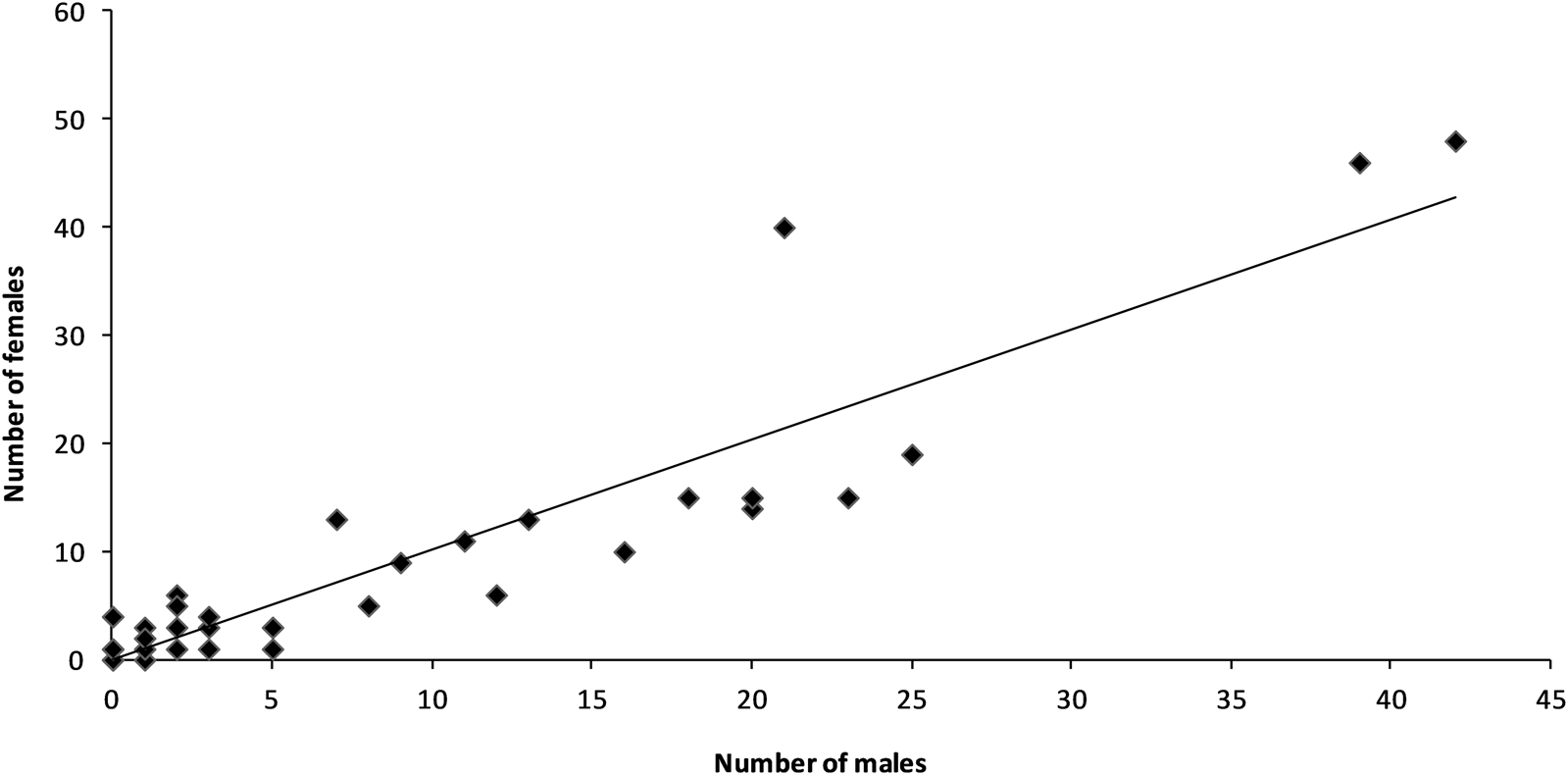
The number of males and females was strongly positively related (fig. 3; R 2 = 0.86, P = 3.7 × 10⁻⁴), and there was no major sex ratio bias (line slope not different from one, F 1,105 = 0.11, P = 0.74). The only sample with a significant biased sex ratio was on 22 November 2018 with 21 males and 40 females ( ${\rm \chi }_1^2 $ = 6.03, P = 0.014).
Relationship between the number of males and female of P. spumarius for the 54 sampled dates between March 2017 and December 2019. The Line represents the linear regression (y = 1.1085x + 0.0189, R2 = 0.86).

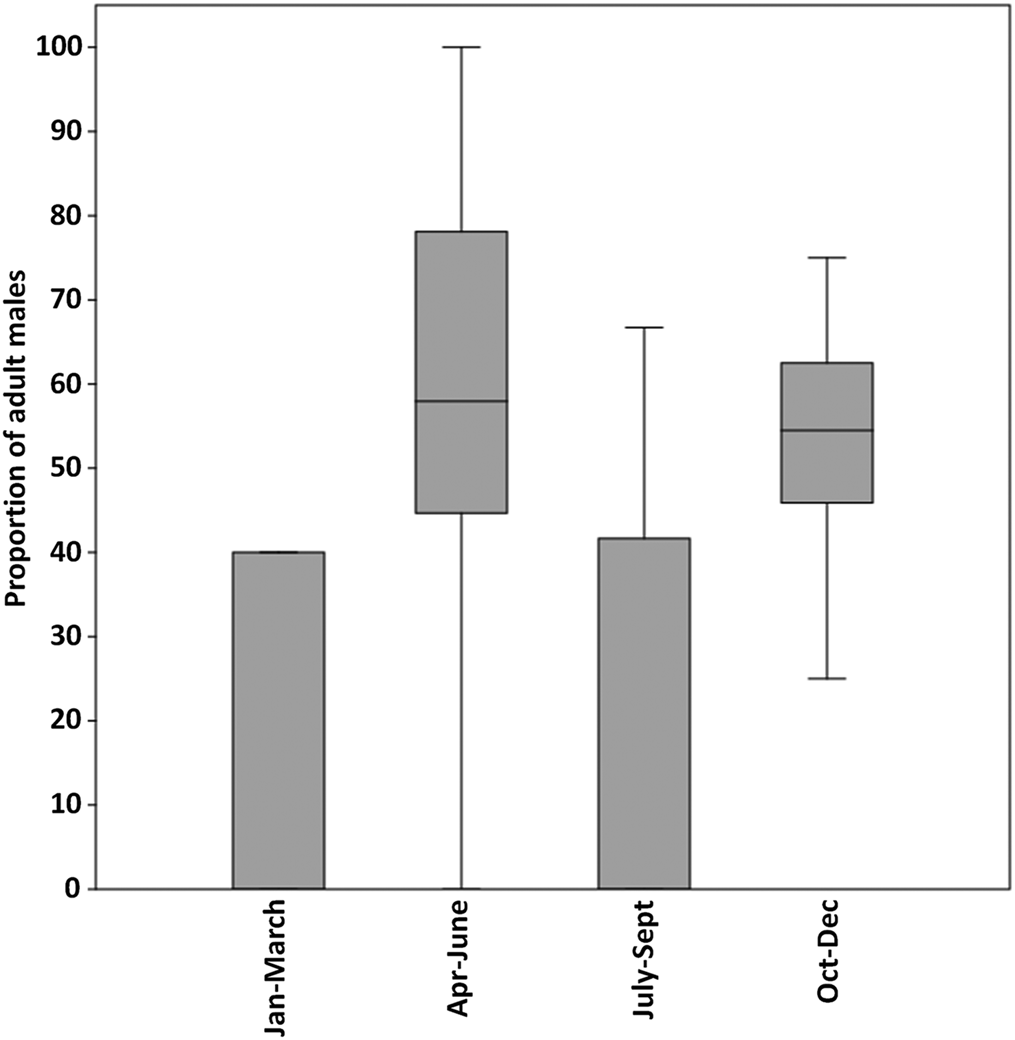
There was a strong seasonal effect on sex ratio (fig. 4) independent of sample sizes and despite large variation (Kruskal–Wallis: H (χ2) = 12.6, P = 0.005) with winter and summer periods presenting significantly lower male proportions (13.3 ± 23.1 and 19.8 ± 28.6%, respectively) than during the spring and autumn periods (57.6 ± 25.8 and 52.7 ± 13.8%, respectively).
Proportion of adult males of P. spumarius captured during different seasons.

Adults ecology
Summer adult habitat
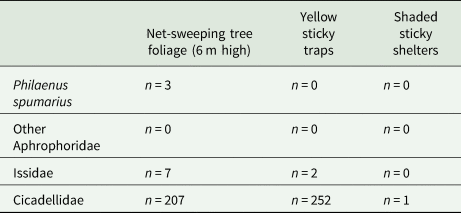
Sweep-net captures at about 6 m high in the foliage of the 30 trees present in the vicinity of the surveyed area resulted in 217 insects, most of them (95.4%) belonging to the Cicadellidae family. Only three adult specimens of P. spumarius were collected on A. unedo (n = 2) and olive tree (n = 1) (table 2). Similarly, the yellow sticky traps placed in the surveyed site, both in the trees and in the low vegetation, trapped mainly Cicadellidae specimens (n = 252; 99.2%); no P. spumarius was trapped. Finally, only one insect (Cicadellidae) was collected in the shaded sticky shelters, suggesting the latter were not well-adapted to attract Auchenorrhyncha.
Abundances of the collected Auchenorrhyncha in the various trapping experimental designs soon after the emergence of the adults of P. spumarius (end of May–end of June)

Host plants diversity for foams
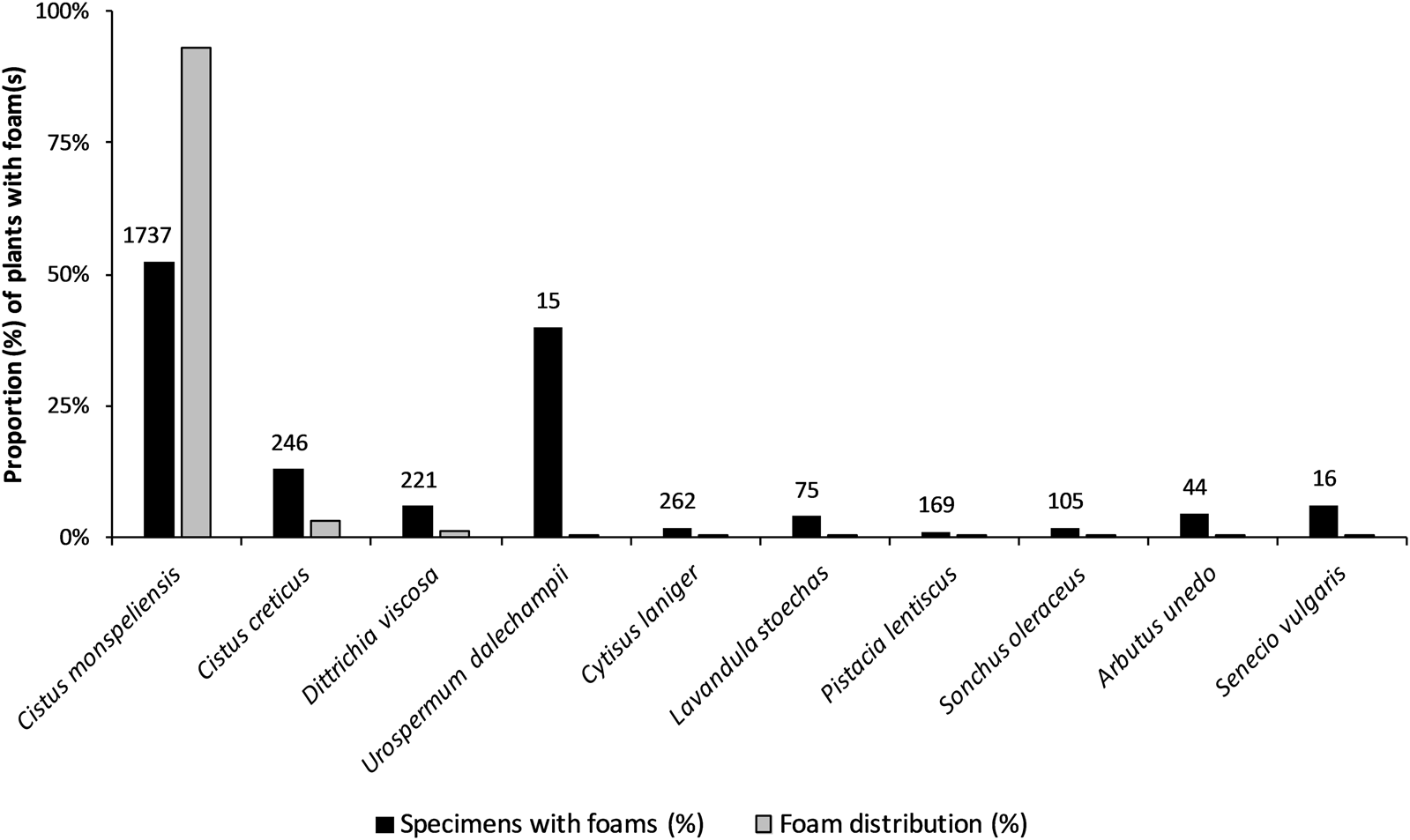
Our survey was performed during the early ontogenesis of P. spumarius (e.g. small-sized foams) when neonate nymphs were hardly mobile. Hence, we hypothesized that the foam distribution reflected female host choice for oviposition. Among the 3672 plants included in our survey that belonged to 37 species, we recorded foams in 977 individual plants and ten different plant species (fig. 5). However, most of the foams were observed on two Cistaceae species, namely C. monspeliensis (93.2%) and C. creticus (3.3%). A few foams were also observed on Asteraceae (Dittrichia viscosa (L.) Greuter, Urospermum dalechampii (L.) Scop. ex F.W.Schmidt, Senecio vulgaris L. and Sonchus oleraceus L.), Fabaceae (C. laniger), Lamiaceae (Lavandula stoechas L.), Anacardiaceae (P. lentiscus) and Ericaceae (A. unedo). It is worth noting that foams were only present on P. lentiscus and A. unedo when their foliage contacted with the leaves of C. monspeliensis harbouring foams.
Frequency distributions of the plants with foams observed in the studied area. Black histograms: proportion of specimens per species with foams (total number of specimens observed indicated on the top). Grey histograms: distribution of the foams among all the recorded plant species.

Moreover, up to 52% of the C. monspeliensis (1737 plants observed) and 13% of the C. creticus (246 plants observed) specimens were observed to harbour at least one foam (fig. 5). Foams were also recorded on 40% of the U. dalechampii (Asteraceae) specimens, but only 15 individuals were observed in the studied area.
Nymphs
Foam density
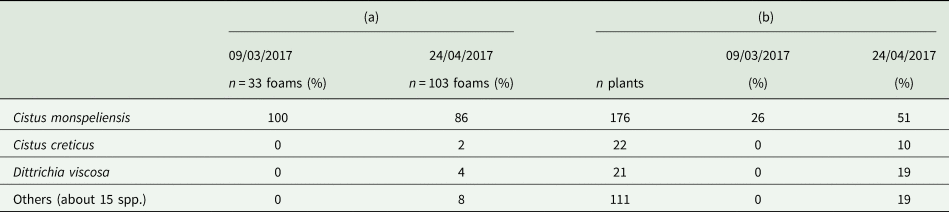
While in early March all of the observed foams were exclusively found on C. monspeliensis, this proportion decreased at the end of April (86%), with foams also appearing on C. creticus, D. viscosa and on other plant species (table 3a). Interestingly, this decrease of the proportion of foams on C. monspeliensis was accompanied by an increase of the proportion of C. monspeliensis plants (51%) hosting at least one foam (table 3b).
Evolution of the foam distribution along a 100 m survey between 9 March and 24 April

(a) Host plant distribution; (b) proportion of observed plants for each species with at least one foam.
Nymphal development
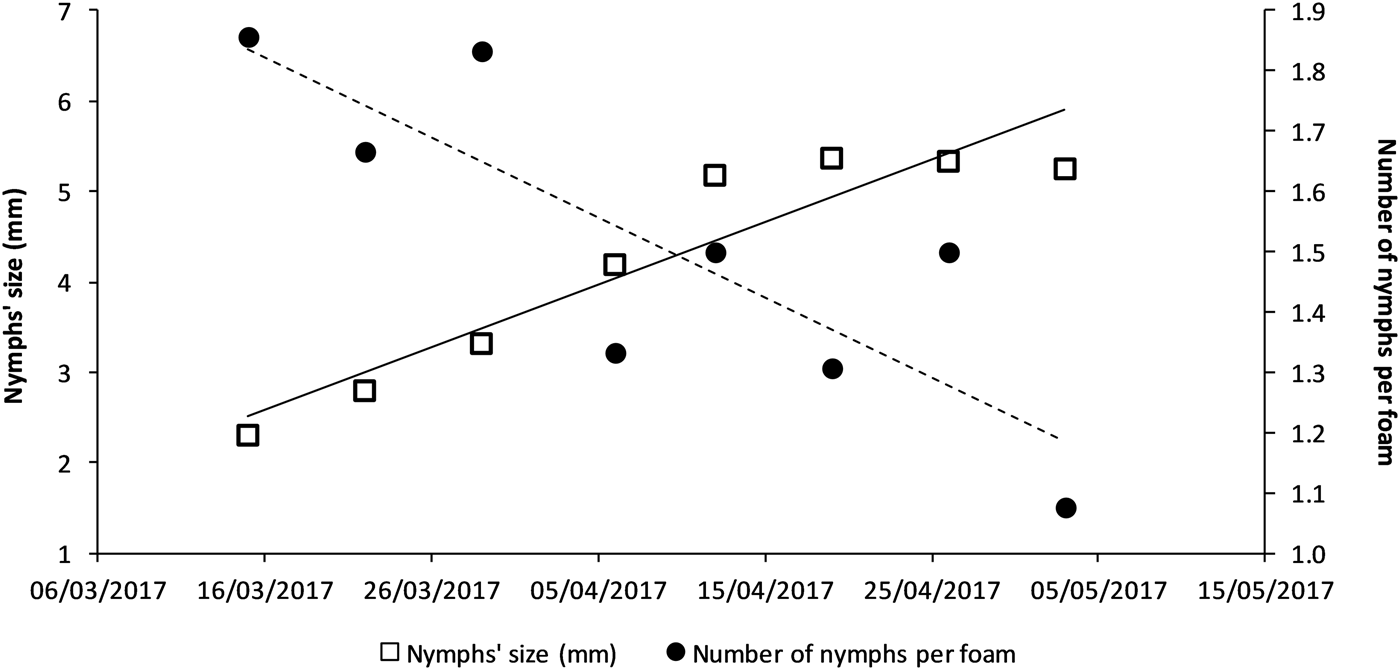
During the first month of spring, the body size of the nymphs increased regularly from 2.3 to about 5.3 mm, but then remained relatively constant over the last month of development (fig. 6 – plain curve). We were not able to correlate body size differences with the different known nymphal instars of P. spumarius.
Spring temporal variations of the nymphs of P. spumarius during their growing season. Empty squares and plain curve: average size of the nymphs' body length (in mm). Black dots and dashed curve: average number of nymphs per foam.

The number of nymphs per foam appeared to be significantly negatively correlated with the size of the nymphs (R 2 = 0.62, P = 0.020; fig. 6 – dashed curve), with 1.86 ± 1.35 neonate nymphs per foam in mid-March and 1.08 ± 0.86 nymphs per foam in early May. Up to six nymphs were found in the same foam in one occasion.
Nymphs capacity movement
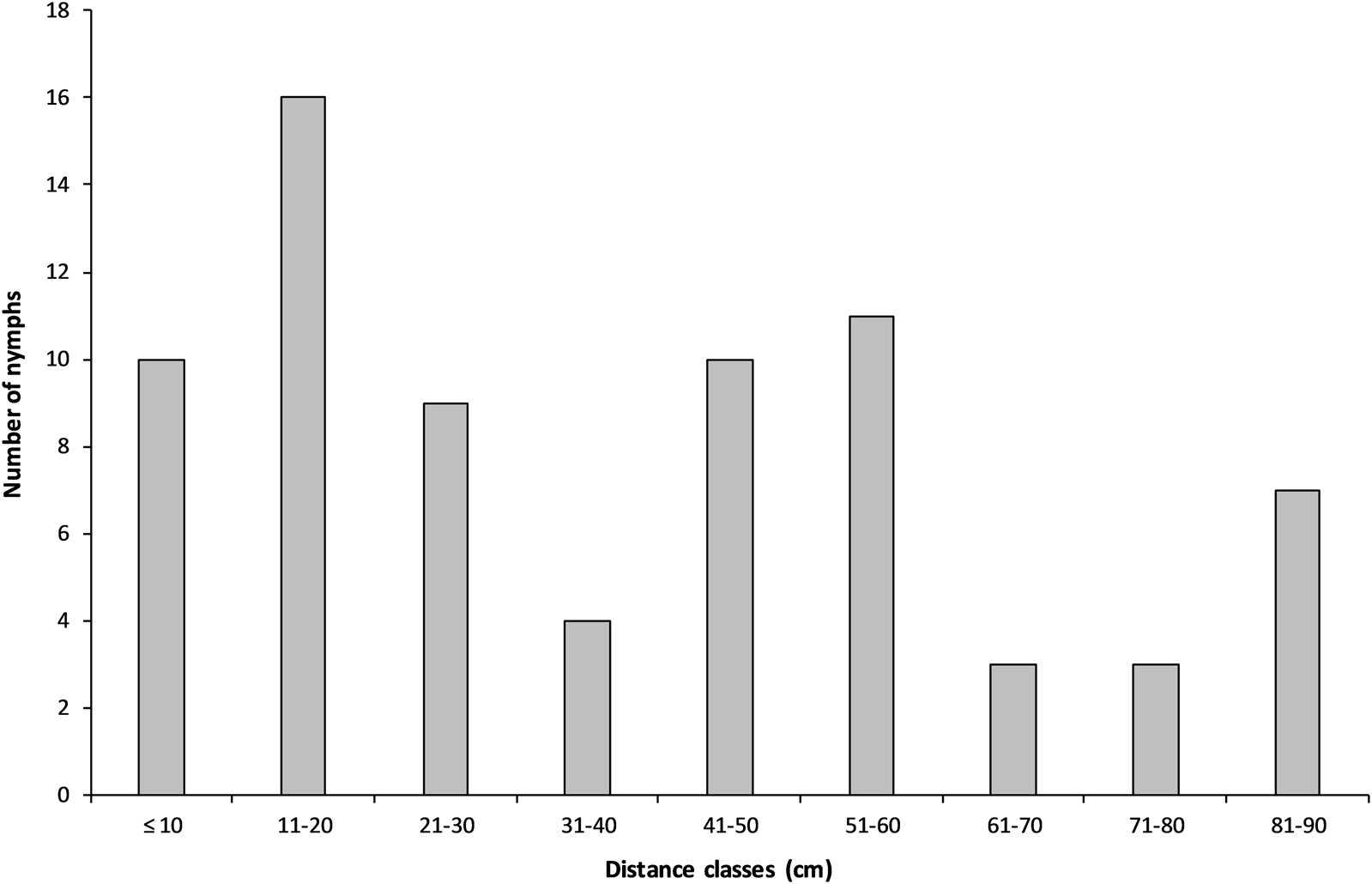
When removed from their foam and deposited on a flat paper surface, nymphs walked an average of 38.5 cm in 20 min; the maximum distance travelled was 89 cm (fig. 7). No relationship was found between the nymph size and the distance travelled (R 2 = 0.022). The distribution of distances travelled is clearly not unimodal, but instead seems multimodal, with many spittlebugs travelling either short or relatively longer distances (fig. 7).
Distribution of the distances travelled by nymphs of P. spumarius (n = 73 specimens) on a flat paper surface in 20 min.

Host plants of the nymphs
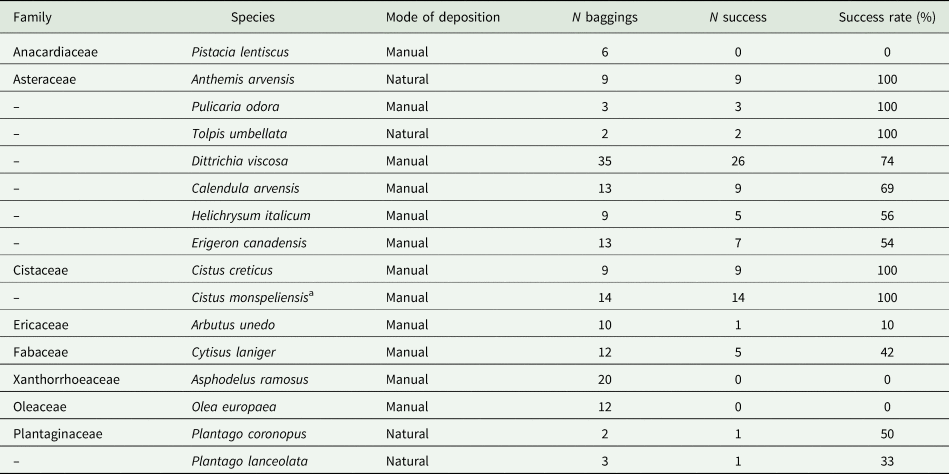
In total, 158 neonate nymphs were individually collected from C. monspeliensis and manually transferred to and bagged on one of 15 common plant species at the studied site (table 4). The manual depositions of nymphs on the Cistaceae C. monspeliensis, the main natural host plant of P. spumarius in Corsica, but also on C. creticus resulted in 100% full development into adults. Asteraceae species also appeared to be average to excellent host species for nymphs of P. spumarius, with success rates ranging from 54 to 100% according to the species (table 4). On the other hand, Plantago L. species (Plantaginaceae) and C. laniger appeared not to be very suitable host species with only 33–50% of the nymphs completing their development. Similarly, the strawberry tree, A. unedo (Ericaceae), was also not a good host plant with only 10% of nymphal developmental success. At last, it was not possible to obtain any adult from nymphs on the other tested trees P. lentiscus and O. europaea or the perennial herb Asphodelus ramosus L. (Xanthorrhoeaceae).
Developmental success rate of P. spumarius nymphs on different host plant species (listed by alphabetical order)

The success rate corresponds to the proportion of nymphs achieving their full development on a bagged leaf (N success) out of the initial number of nymphs tested (N baggings).
a Cistus monspeliensis can be considered as a control experimental for the nymph deposition.
Discussion
Survey
A survey of the Auchenorrhyncha fauna was performed over 3 consecutive years in a maquis landscape of the Ajaccio region of Corsica. Our main focus was on the Cicadellidae, Aphrophoridae, Issidae and Tettigometridae families. A total of 1848 adult specimens belonging to 32 species was recorded (Albre and Gibernau, Reference Albre and Gibernau2019). The Cicadellidae was the most diversified family (27 species) and accounted for 50.1% of the Auchenorrhyncha fauna, with E. lineolata the most represented Cicadellidae species (47.7% of the specimens). While poorly diversified (three species), it appeared that the Aphrophoridae represented 35.9% of the collected insects and was almost exclusively represented by one species, P. spumarius (98.5% of the Aphrophoridae). The Issidae (four species and 11.1% of the collected insects) was mainly represented by L. maculipes (79.6% of the Issidae). Finally, with only 2.9% of the collected insects and three species, the Tettigometridae was the least represented family in the Ajaccio region (Albre and Gibernau, Reference Albre and Gibernau2019).
A cyclic pattern of abundances was observed over the 3 years of survey, with general peak of abundances from early April to the end of May, corresponding to the general plant blooming in spring, leaving few active insects into summer (July and August), which are the warmest and driest weeks of the year. In autumn, from early October to the end of November, P. spumarius ‘reappeared’ in high abundances in the surveys and created a second peak, much more important than the first one and accounting for 61–81% of the total Auchenorrhyncha community in the habitat. However, the vertical distribution of P. spumarius in the vegetation differed according to the season. While 51.2–76.7% of the individuals were collected in the lower stratum in the spring, low vegetation contained 96.6–97.3% of all P. spumarius throughout the autumn peak. This habitat preference suggests that at the end of May/early June, the young adults left their nymphal habitat, corresponding to the lower stratum of the vegetation (<120 cm, cf later), and disappeared from the vegetation till the end of September. Then, adults reappeared in the lower vegetation and could be observed in high numbers till the end of November. The transitional phases, i.e. the disappearance from and the return to the lower stratum, were rapid phenomena (<2 weeks), making it difficult to determine in what type of habitat the adults spend the summer period. A similar pattern of abundances has already been recorded for P. spumarius in different parts of its distribution range, particularly in the southernmost areas. In summer, adults were often captured in shrubs and trees in Italy, Greece, Spain or Turkey, but most often in low numbers (Yurtsever, Reference Yurtsever2001; Drosopoulos, Reference Drosopoulos2003; Cornara et al., Reference Cornara, Saponari, Zeilinger, de Stradis, Boscia, Loconsole, Bosco, Martelli, Almeida and Porcelli2017; Morente et al., Reference Morente, Cornara, Plaza, Durán, Capiscol, Trillo, Ruiz, Ruz, Sanjuan, Pereira, Moreno and Fereres2018).
The sex ratio with even males:females remained relatively constant in all samples throughout the year (fig. 3), which is consistent with the literature (Bodino et al., Reference Bodino, Cavalieri, Dongiovanni, Plazio, Saladini, Volani, Simonetto, Fumarola, Carolo, Porcelli, Gilioli and Bosco2019). Only one sample had a significantly biased sex ratio, 40 females to 21 males, on November 22nd; interestingly, this date corresponded to the period when the annual adult cycle of P. spumarius ended (fig. 2). When pooling the capture samples per season, a significant sex ratio difference was observed (fig. 4). In winter (January–March) and summer (July–September), four times more females were captured than males, suggesting a phenological and/or survival difference based on gender. On the contrary, in spring (April–June) and autumn (October–December), the sex ratio was balanced.
Summer adult habitat
Despite intensive surveys and experiments, it was almost impossible to find any adult in Corsica in the summer, where both nymphs and freshly-emerged adults were present in high densities the previous spring. The drastic diminution of the adults from the ground vegetation in summer, common in the Mediterranean region, is considered to be a consequence of the extreme dry and warm conditions of the region (Cornara et al., Reference Cornara, Saponari, Zeilinger, de Stradis, Boscia, Loconsole, Bosco, Martelli, Almeida and Porcelli2017; Morente et al., Reference Morente, Cornara, Plaza, Durán, Capiscol, Trillo, Ruiz, Ruz, Sanjuan, Pereira, Moreno and Fereres2018; Bodino et al., Reference Bodino, Cavalieri, Dongiovanni, Plazio, Saladini, Volani, Simonetto, Fumarola, Carolo, Porcelli, Gilioli and Bosco2019; Santoiemma et al., Reference Santoiemma, Tamburini, Sanna, Mori and Marini2019). As the summer goes on, the spring host plants of P. spumarius (both nymphs and young adults) dry out or are severely water-stressed. It is possible that these plants are no longer suitable for consumption. In the continental USA, where conditions in summer are less extreme, it has been shown that the turgor decrease of the host plants, or their disappearance, leads to a migration of adults to more turgid plants present in the close vicinity (Weaver and King, Reference Weaver and King1954). In the Mediterranean region, and particularly in Corsica, most of the plants from the low stratum are dried out in summer and probably not enough turgid for an easy xylem sap consumption, and thus adults need to move farther and/or to exploit new habitats. In some parts of the Iberian Peninsula (Morente et al., Reference Morente, Cornara, Plaza, Durán, Capiscol, Trillo, Ruiz, Ruz, Sanjuan, Pereira, Moreno and Fereres2018) or in the Liguria region (Bodino et al., Reference Bodino, Cavalieri, Dongiovanni, Plazio, Saladini, Volani, Simonetto, Fumarola, Carolo, Porcelli, Gilioli and Bosco2019), insects can migrate vertically towards the neighbouring trees during the summer season. Several Philaenus species are also known to find refuge in the neighbouring trees (Quercus ilex L., Q. suber L.) and shrubs in the Mediterranean part of their distribution area (Drosopoulos, Reference Drosopoulos2003; Drosopoulos et al., Reference Drosopoulos, Maryańska-Nadachowska and Kuznetsova2010). However, in our surveys, it was not possible to find adults on trees present in the vicinity, suggesting migrations out of the studied zone over relatively longer distances. One possibility is that adults could migrate to some water streams present in the neighbouring valleys, as observed in Central Spain (Morente et al., Reference Morente, Cornara, Plaza, Durán, Capiscol, Trillo, Ruiz, Ruz, Sanjuan, Pereira, Moreno and Fereres2018), or towards the sheltered northern slopes of the relief. In such relatively humid habitats, plants, including low stratum species, remain turgid throughout the summer and thus could be used as food plants by adults. Populations could also migrate to higher altitudes or far to the north, where turgid species can be found even in summer (Drosopoulos, Reference Drosopoulos2003). However, P. spumarius are not good flyers and, unless carried by the wind, cannot fly over long distances by themselves (Weaver and King, Reference Weaver and King1954), suggesting long northward migrations improbable. For our study, we were not able to find the summer habitat of P. spumarius in the maquis vegetation near Ajaccio.
For some authors, the meadow spittlebug survives the extreme summer conditions by aestivating in a sheltered habitat (Drosopoulos, Reference Drosopoulos2003; Drosopoulos et al., Reference Drosopoulos, Maryańska-Nadachowska and Kuznetsova2010; Chauvel et al., Reference Chauvel, Cruaud, Legendre, Germain and Rasplus2015). However, by definition, aestivation, or summer dormancy, is a survival strategy to sustain lack of food or any extreme conditions (such as temperatures, desiccation) during which the animal is inactive and stops feeding (Masaki, Reference Masaki, Resh and Cardé2009; Richard, Reference Richard, Resh and Cardé2009; Wang et al., Reference Wang, Sun, Chen, Yang, Hamel and Mercier2015). From our observations, adults did not survive more than 24 h without feeding (Albre, per. obsv.) suggesting that P. spumarius might not be able to aestivate as mentioned in several works (Drosopoulos, Reference Drosopoulos2003; Drosopoulos et al., Reference Drosopoulos, Maryańska-Nadachowska and Kuznetsova2010; Chauvel et al., Reference Chauvel, Cruaud, Legendre, Germain and Rasplus2015). Further studies on the summer adult strategy to survive the dry season are needed to assess whether P. spumarius aestivates or not in Corsica.
In the Ajaccio region, most of the foams were observed on C. monspeliensis (93.2%); foams were also recorded on C. creticus (3.3%) and D. viscosa (1.3%). Moreover, 52% of the 1737 C. monspeliensis, 13% of the 246 C. creticus and 6% of the 221 D. Viscosa plants hosted at least one foam. Up to 40% of the Asteraceae U. dalechampii also hosted foam; however, only 15 individuals were found in the studied area. The predominance of foams on C. monspeliensis confirms previous observations recorded in recent years for the Corsican populations of P. spumarius (Cruaud et al., Reference Cruaud, Gonzalez, Godefroid, Nidelet, Streito, Thuillier, Rossi, Santoni and Rasplus2018; Albre and Gibernau, Reference Albre and Gibernau2019). However, such a strong host plant bias is in total contradiction with the literature. Philaenus spumarius is described as highly polyphagous, with nymphs developing mainly on Asteraceae species. The species' polyphagy is considered as a key factor explaining the large distribution range of the species, native from the Palaearctic region, and its success when introduced in foreign territories, such as New Zealand, Hawaii or Japan. Comparatively, the nymphs of numerous Philaenus species are oligophagous on arid vegetation (P. arslani Abdul-Nour & Lahoud and P. loukasi Drosopoulos & Asche) or monophagous on Asphodelus microcarpus (P. signatus Melichar, P. italosignus Drosopoulos & Remane, P. tarifa Remane & Drosopoulos and P. maghresignus Drosopoulos & Remane), and present more reduced distribution areas (Drosopoulos et al., Reference Drosopoulos, Maryańska-Nadachowska and Kuznetsova2010). The manual transfer of neonate nymphs collected on field C. monspeliensis resulted in 100% full development into adults when deposited on the plant of the same species, suggesting such handling had an insignificant effect on the survival and development of the nymphs. The manual deposition experiments clearly demonstrated that they could achieve their development on most of the Asteraceae tested (54–100%), on C. creticus (100%), on C. laniger (Fabaceae; 54%) and on Plantago spp. (Plantaginaceae; 33–50%). Some mold had been observed during the experiment on the leaves of some Plantago spp. and Erigeron canadensis L. (Asteraceae) suggesting the reduced success rates observed for these species (the lowest ones, 33–54%) could be attributed to the decay of the tested plants rather than to a rejection of the plants by the nymphs. Only one nymph (10%) became adult on the strawberry trees (A. unedo) and no adult had been obtained on other shrubs (P. lentiscus) or trees (olive trees). These results confirm that, despite their apparent monophagy on C. monspeliensis, the nymphs of the Corsican populations of P. spumarius still have the capability of developing on diverse herbaceous species, thus confirming their polyphagy as described in the literature. In Corsica, the specificity of the nymphs and, in spring and autumn, of the adults, can thus not be attributed to a physiological constraint of insular populations. During our field experiments in the Ajaccio region, we noticed that in autumn, when the adults reappeared in the habitat, vegetation of the lowest stratum had not yet been restored. The diversity of turgid plant species was thus limited to a few Mediterranean species, particularly well adapted to the long summer dryness. In the studied area, turgid plants mainly corresponded to C. monspeliensis, by far the most represented species, D. viscosa and some sparse individuals of C. creticus. Most of the foams encountered in early spring were also observed almost exclusively on these three species. So it could be argued that when adults came back from their unknown summer shelter to the low vegetation in autumn, there was a limited choice of plant species to feed on; and as these plants appeared to be suitable for the full development of the nymphs, the females did not need to find other species on which to lay their eggs. We do not know if this observed behaviour is mainly due to climatic constraints on the vegetation or local insect ecological adaptation. Such statement needs complementary studies to be assessed. According to the literature, eggs are often observed on the anfractuosities of dead plant tissues (Weaver and King, Reference Weaver and King1954; Cornara et al., Reference Cornara, Bosco and Fereres2018). However, such observations took place in cultivated areas such as olive groves or cereal crops, where the vegetation of the lower stratum is not fully restored at the end of summer because of the agricultural practices (labour, pesticides, etc.) and/or the summer conditions. Consequently, no palatable plant is available for the adults when they got back from their summer site, and thus females lay eggs on any suitable substrate in the absence of a suitable host plant.
In recent papers dealing with Philaenus species, the host plant, A. microcarpus, has been synonymized with A. aestivus Brotero, 1804 (Maryańska-Nadachowska et al., Reference Maryańska-Nadachowska, Drosopoulos, Lachowska, Kajtoch and Kuznetsova2010, Reference Maryańska-Nadachowska, Kuznetsova, Lachowska and Drosopoulos2012). However, A. aestivus Brot. is restricted to the Central and South-Western parts of the Iberian Peninsula (http://powo.science.kew.org/taxon/531446-1), while some of the monophagous Philaenus species (P. signatus and P. italosignus) are not present in this region, suggesting some incoherence in the plant synonymies. A possibility could be that these Philaenus species develop on a different Asphodelus species, whose identification has yet to be determined. Moreover, the microcarpus taxon has been used several times, at different taxonomic levels and associated to several Asphodelus species; incorrect synonymies are thus probable. However, most of the taxa refer to microcarpus Viviani, which is an established synonym of A. ramosus L. (https://wcsp.science.kew.org/synonomy.do?name_id=312417), a species represented in the whole distribution area of the Philaenus species. In this case, A. ramosus L. should be considered as the nymphs host plant of the monophagous Philaenus species. Interestingly, none of the 20 neonate nymphs of Corsican P. spumarius achieves its development on this plant. According to phylogenetic, karyotype and morphological studies, P. spumarius belongs to the polyphagous or oligophagous ‘spumarius’ group, also including P. tesselatus, P. loukasi and P. arslani; the other Philaenus species belong to the monophagous ‘signatus’ group, including P. signatus, P. italosignus, P. maghresignus and P. tarifa. The shift in the nymph host plant appears to be an important trait closely related to the diversification of the genus Philaenus in Europe. However, it should be interesting to test whether the nymphs of monophagous species could develop on other plant species and reciprocally, but also whether the nymphs of the polyphagous and oligophagous species could accept A. ramosus as host plant.
In early spring, foams contained about 1.86 ± 1.35 neonate nymphs; this number progressively decreased to 1.08 ± 0.86 in early May at the end of the last immature stage, when nymphs were the biggest. Different factors could explain this clutch size decrease, such as the death of the nymphs by predation, parasitism or desiccation. However, such deaths are unlikely because of the presence of the foam within which the nymphs develop and whose role is to protect them against such dangers (Yurtsever, Reference Yurtsever2000b). Nymphs could also be killed by herbivorous mammals during their food intake, although this scenario is unlikely as Cistus ssp. herbivory has never been observed on the studied site. This observation may result from a behavioural change with neonate nymphs, likely siblings, living together within the same foam and becoming solitary towards the end of their development. It could also be supposed that some nymphs sharing a foam move to create a new one, farther on the same plant or onto a neighbouring plant. This split could be conceivable, as an increase in the proportion of C. monspeliensis plants hosting foams (26 vs. 51%) and in the diversity of plant species with foams (1 vs. 8 species) was observed between the early March and the end of April in the surveyed transect. Moreover, our experiments demonstrated that despite the nymphs' vulnerability outside the foam, nymphs were able to walk up to 89 cm in 20 min on a flat surface. A similar capability has been observed in greenhouse conditions, with nymphs moving up to 76 cm in the vegetation (Weaver and King, Reference Weaver and King1954). Finally, a displacement of foams from place to place on the same plant was often observed overnight (Albre, pers. obs.) or even during the day (Weaver and King, Reference Weaver and King1954). Different factors could be implicated in these movements, such as conflicts with congeners within the foam, better access to xylem sap, a decrease in the food quantity/quality or the research for more sheltered sites for the establishment of the foam. Also, the aggregation of some neonate nymphs within the same foam could be an advantage, allowing for the formation of bigger foams, more resistant to drying and providing better protection. These advantages could be reduced or counterbalanced by increased difficulty to access to the xylem sap for bigger nymphs, inducing a behaviour change with their departure/separation and the production of their own new foam.
Conclusions
We highlighted a strong insect–plant relationship between the nymphs of the meadow spittlebug, P. spumarius, and C. monspeliensis in the Ajaccio region of Corsica, probably because this species was the most abundant turgid plant species available in early autumn. In the epidemiological context of the plant pathogen bacterium X. fastidiosa, it might be tempting to destroy the central plant host of P. spumarius populations, which are the main vector for the bacterium. However, our experiments confirmed that spittlebug nymphs were highly polyphagous on low-growing plant species, as also indicated in the literature. Hence, destroying C. monspeliensis in spring, i.e. when nymphs are developing, could result in a spread of the nymphs towards the neighbouring plants of the low vegetation, as we had observed in several occasions in spring after road banks mowing. Similarly, in the absence of C. monspeliensis in autumn, it is likely that females of P. spumarius may lay their eggs in any dead plant tissues, as described in the literature, resulting in nymphs climbing and developing on any neighbouring turgid low plant species during the next spring. Instead, the strong relationship between P. spumarius and C. monspeliensis could be used to monitor spittlebug populations, to limit/concentrate the means of insect control, or in an agronomic context, C. monspeliensis could be planted to lure insects away from crops. Unfortunately, the location of adult summer habitat remains unknown for the studied population. However, P. spumarius likely move to humid habitats (e.g. riverine vegetation) and/or areas with high densities of turgid trees, making well-watered cultivated groves an ideal habitat for this pathogen vector to seek refuge in Mediterranean climates. Maintaining natural arboreal vegetation around agronomic systems could help decrease insect abundance – and potentially, pathogen load – on cultivated species. Such hypotheses need to be further studied by landscape experiments.
Acknowledgements
Financial supports were provided to JA by the University of Corsica through its post-doctoral programme and the Research Program ‘Eco-epidemiology of Xylella fastidiosa in Corsica’ (Collectivité de Corse – Office de l'Environnement). JMGC is thankful to the Erasmus + programme of the University of Malaga for his stay in Corsica. We are also very grateful to Adrienne Godschalx for her constructive suggestions and the proofreading of the manuscript.