Background
Anxiety is one of the most common psychological disorders affecting older adults (Gonçalves et al., Reference Gonçalves, Pachana and Byrne2011). Residents of aged care facilities (also known as nursing homes, hostels, assisted living facilities, or long-term care/residential homes) are at a particularly high risk of anxiety; with prevalence rates for anxiety disorders and symptoms estimated to be between 3.2% and 20% and 6.5% and 58.4%, respectively (see Creighton et al., Reference Creighton, Davison and Kissane2015 for a review). Given the high occurrence of this condition and its strong association with factors such as increased pain, greater functional impairment, and lower quality of life (Creighton et al., Reference Creighton, Davison and Kissane2016), accurate assessment of anxiety within this population is vital to ensure appropriate and timely diagnosis and treatment.
However, the psychological assessment of older adults in residential aged care facilities (RACFs) is challenging. Sensory deficits, medical comorbidities, and cognitive impairment, which are common in this population, can affect the presentation of anxiety, and it is difficult to distinguish between medical and psychological causes (Edelstein et al., Reference Edelstein, Woodhead, Segal, Bower, Lowery and Stoner2007; Therrien and Hunsley, Reference Therrien and Hunsley2012). For instance, behaviors such as pacing, restlessness, and avoidance, may potentially indicate anxiety or agitation related to dementia (Kogan et al., Reference Kogan, Edelstein and McKee2000), which is common in RACF settings. Similarly, physiological signs of anxiety in this population (e.g. shortness of breath, palpitations) are also common symptoms of many physical health conditions (e.g. cardiovascular disease, hyperthyroidism) that increase with advancing age (Kogan et al., Reference Kogan, Edelstein and McKee2000) or can be a side-effect of medications prescribed to older adults. Given these challenges, the need for accurate and reliable measures of anxiety for use in the RACF setting is critical.
To date, reviews have been conducted identifying the most commonly used anxiety measures for the older adult (i.e. aged 65 years and over) population as a whole (Kogan et al., Reference Kogan, Edelstein and McKee2000; Edelstein et al., Reference Edelstein, Woodhead, Segal, Bower, Lowery and Stoner2007; Therrien and Hunsley, Reference Therrien and Hunsley2012), but none specifically examined the use of anxiety measures in RACFs. As aged care residents are typically older and more cognitively and functionally impaired (Australian Institute of Health and Welfare (AIHW), 2015), it cannot be assumed that anxiety measures that are valid and reliable within the community are also appropriate for the RACF setting. Thus, using a similar methodology as Therrien and Hunsley (Reference Therrien and Hunsley2012), this review aimed to examine current research to identify which anxiety measures are most commonly used, and determine the extent to which there is psychometric data to support their use in RACFs, to provide further insight into their accuracy, validity and reliability.
Method
Identification of relevant literature
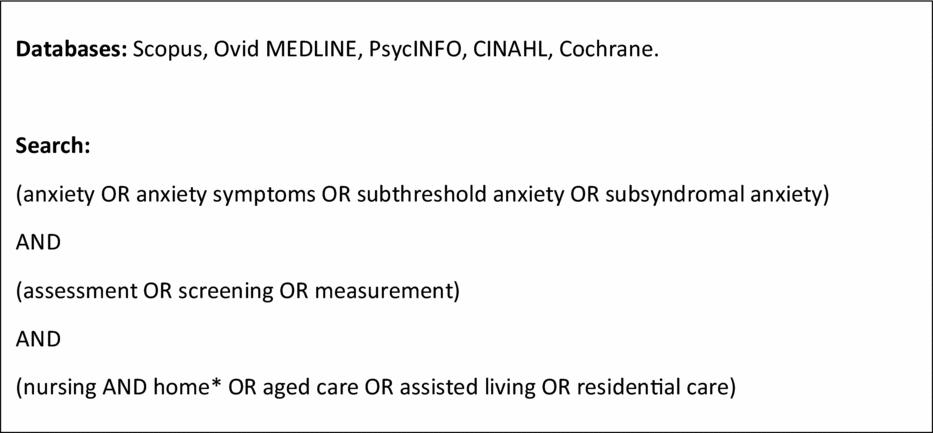
Guided by the Preferred Reporting Items for Systematic Reviews and Meta-analyses (PRISMA; Moher et al., Reference Moher, Liberati, Tetzlaff and Altman2009), five databases (Scopus, Ovid MEDLINE, PsycINFO, CINAHL, and Cochrane) were searched on 21 February 2017 using the search terms and limiters outlined in Figure 1. Reference lists of included articles were also manually screened to identify papers that had not yet been included.
Search terms and strategy.

Eligibility criteria
To the authors’ knowledge, no review has been conducted on the literature with the aim of identifying the most commonly used measures of anxiety among older adults in RACFs. Thus, all studies published from inception to February 2017 were considered if they met the following inclusion criteria:
1. the study was empirical and used an anxiety measure to assess anxiety symptoms;
2. included data on RACF residents aged 50 years or older; and
3. published in English, in a peer-reviewed journal.
Study selection and data extraction
Using the systematic review software Covidence, all references returned by electronic searches were examined for duplicates and screened by title and abstract. The full text for potential studies was then sourced and examined to determine suitability for inclusion.
For each included study, information was collected on the country where it was conducted, year of publication, anxiety measure used, and the purpose for which it was utilized. The authors also noted whether the researchers commented on the suitability of the selected measure for older adults, or the RACF population in particular.
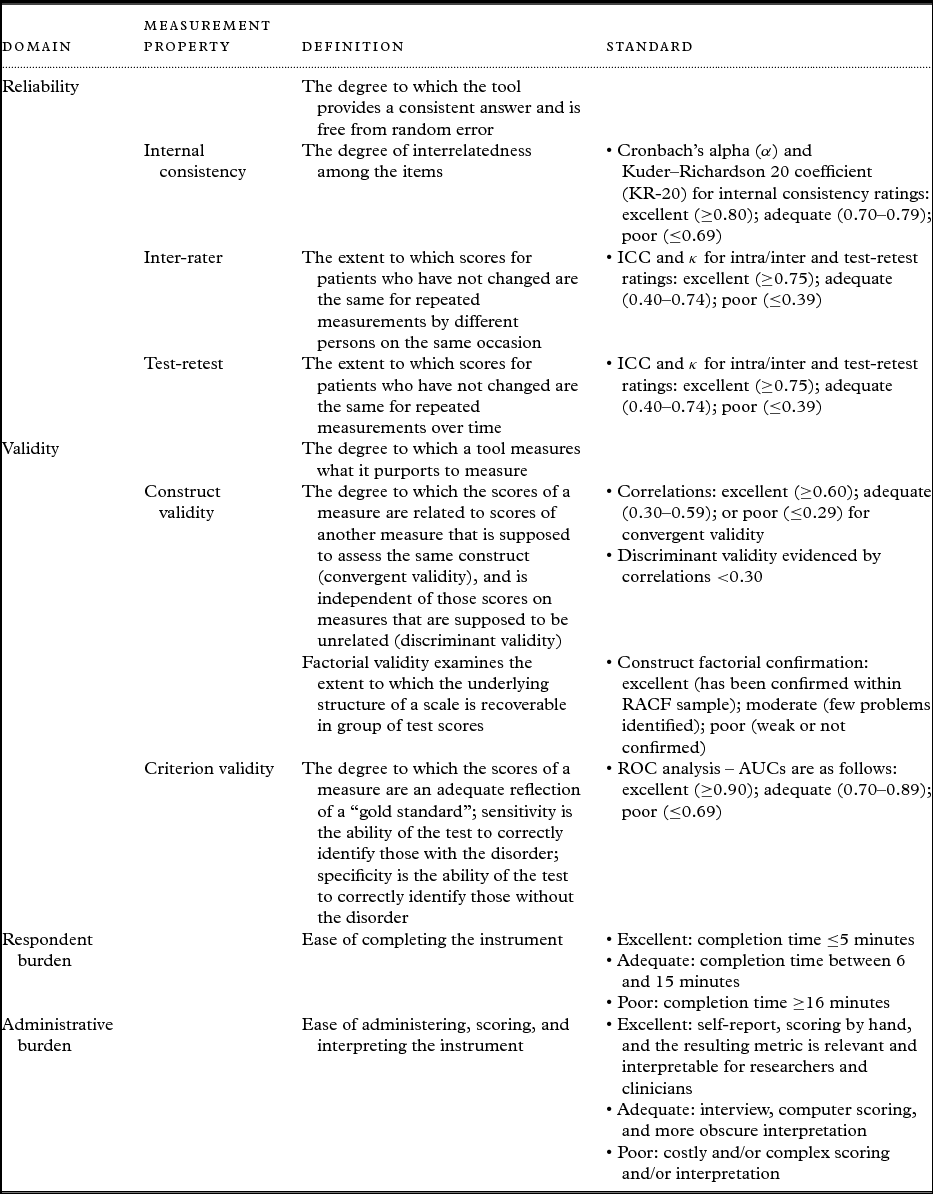
Similar to Therrien and Hunsley (Reference Therrien and Hunsley2012), due to the large number of measures used in the literature, this review focused on those instruments that were used in four or more studies. As the majority of measures were used by only one to two studies each, including studies of measures used so infrequently would likely have been of little relevance for both research and clinical settings. By limiting the focus on tools described in at least four studies allowed for a more detailed assessment of the psychometric properties of measures that were frequently used with older adults. For each measure, information on its reliability, validity, acceptability in terms of respondent burden, and feasibility in terms of administrative burden was extracted from the included studies and instrument manuals. Evidence of treatment sensitivity was derived from studies that utilized the measure to examine the effects of mental health treatments in RACF residents. The standards for summarizing the quality of assessment measures were adapted from Andresen's (Reference Andresen2000) overview of criteria for assessing instruments (see Table 1).
Criteria for rating psychometric properties and clinical utility of assessment measures (Andresen, Reference Andresen2000)

Note. ICC, Intra-class correlations; ROC, Receiver operating characteristics; AUCs, Area under the Curves.
Results
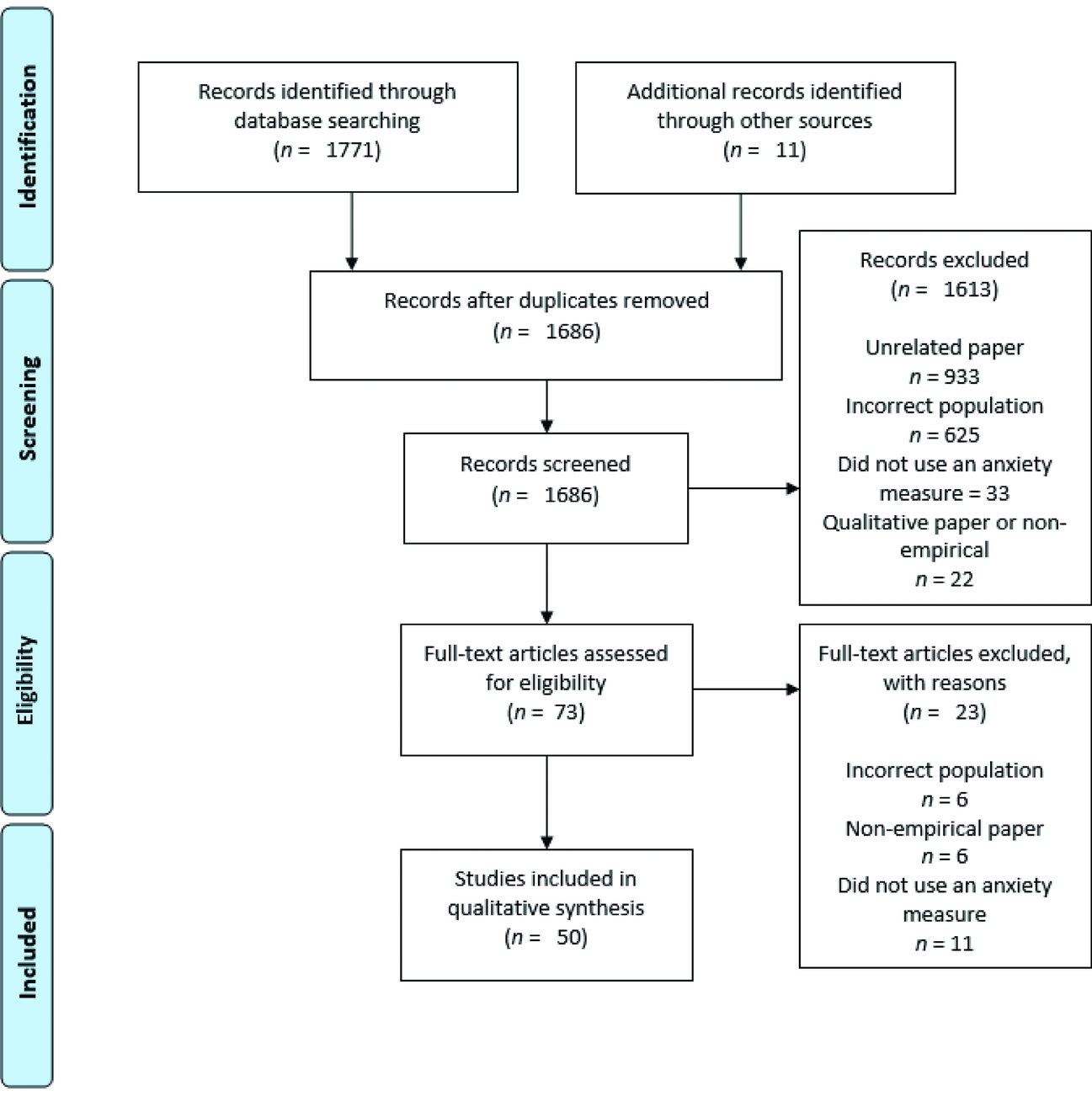
The search returned 1,771 articles (Figure 2). After removal of duplicates and addition of 11 papers identified through other sources, 1,686 studies remained. These were screened by title and abstract, after which 73 articles were retained for further examination. The full texts of these papers were then assessed for eligibility, with 50 studies included in this review. Figure 2 outlines the process of study selection and reasons for exclusion.
Flowchart depicting study selection.
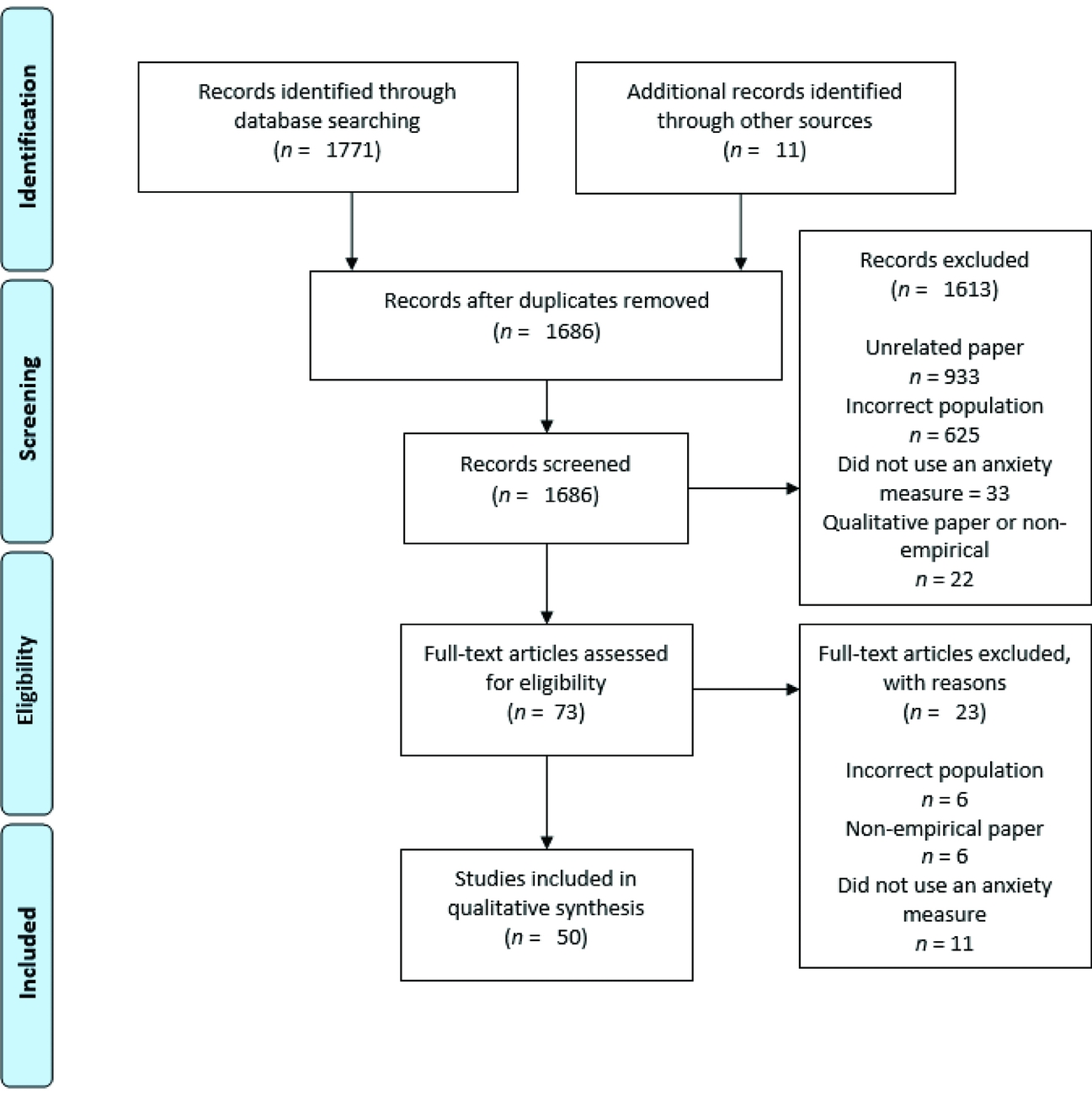
Participant and study characteristics
The review yielded studies conducted between 1992 and 2016, from 19 countries (United States of America (n = 9); Netherlands (n = 8); Norway (n = 8); United Kingdom (n = 7); Australia (n = 6); Sweden (n = 3); Germany, France, Taiwan, Japan (n = 2); and Spain, Singapore, Estonia, Belgium, Portugal, Italy, Finland, Malta, and Argentina (n = 1)). Forty-two studies (84.0%) recruited their sample from RACFs only, while eight (16.0%) recruited from RACFs and community and/or medical settings. Sample sizes ranged from 17 (Smith et al., Reference Smith, Buckwalter, Kang, Ellingrod and Schultz2008) to 1,322 RACF residents (Zuidema et al., Reference Zuidema, Derksen, Verhey and Koopmans2007). One study (Selwood et al., Reference Selwood, Thorgrimsen and Orrell2005) did not report the number of RACF residents included.
Commonly used measures of anxiety in RACFs
Overall, 22 measures were used in the 50 studies, with 15 (68.2%) used in only one or two studies. Seven measures were specific to anxiety, nine assessed anxiety using a subscale, five used a single-item, and one was originally developed to assess depression only. Overall, seven instruments employed clinician-administered interviews (31.8%), while two (4.5%) measures consisted of an observational scale completed by the clinician. Six (27.3%) measures were completed by the residents themselves (i.e. self-report), while three (13.6%) were completed by a staff member. While over half of included studies suggested that the measure used to assess anxiety was appropriate for older adults (30 studies; 60.0%), only 10 (20.0%) reported whether age-relevant norms were available. Moreover, only six studies (12.0%) proposed that the measure was appropriate for RACF residents in particular. Further information on the specific measures used across studies can be obtained from the authors upon request.
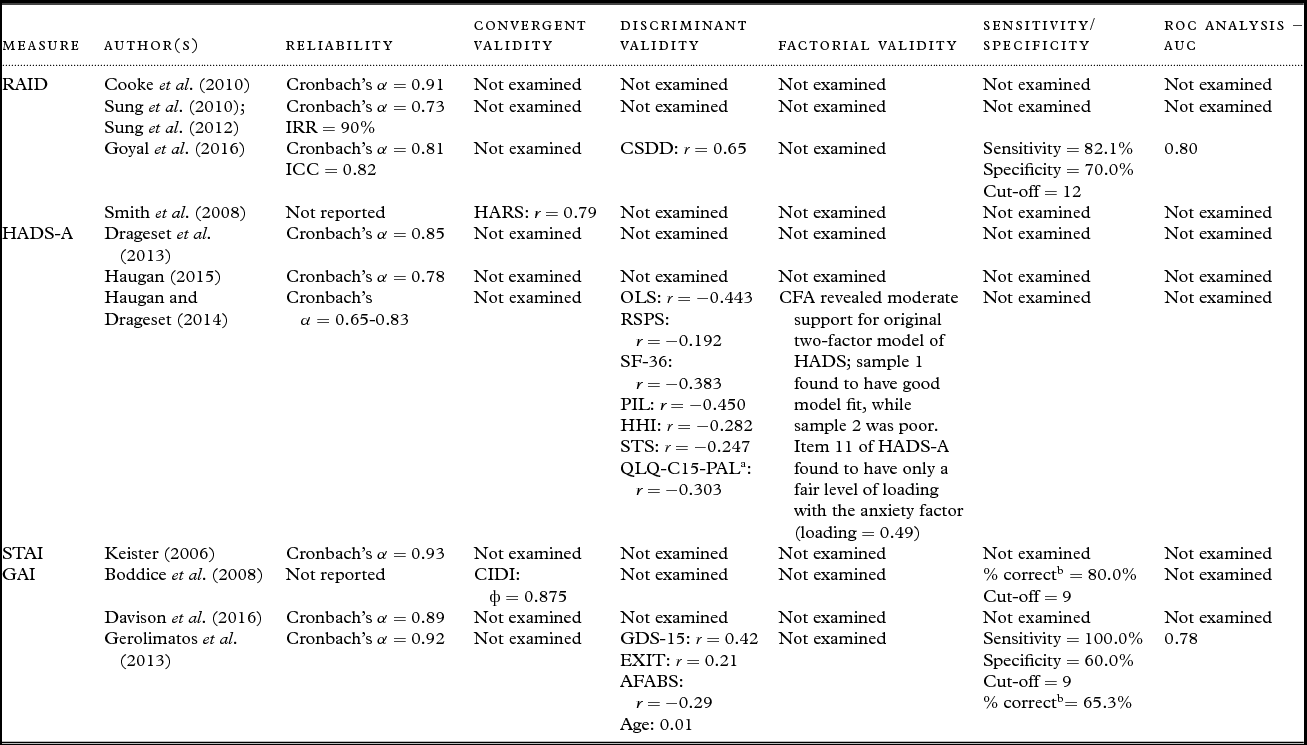
Based on the findings of this systematic search, only four measures were found to be used in at least four studies within aged care settings: the Rating Anxiety in Dementia scale (RAID; Shankar et al., Reference Shankar, Walker, Frost and Orrell1999; 10 studies); anxiety subscale of the Hospital Anxiety and Depression Scale (HADS-A; ZigmondandSnaith, Reference Zigmond and Snaith1983; nine studies); State-Trait Anxiety Inventory (STAI; Spielberger et al., Reference Spielberger, Gorush, Lushene, Vagg and Jacobs1983; four studies); and the Geriatric Anxiety Inventory (GAI; Pachana et al., Reference Pachana, Byrne, Siddle, Koloski, Harley and Arnold2007; four studies). The remainder of this review focuses on these measures, with details about the characteristics of each instrument, as well as their psychometric properties and utility in detecting anxiety in the RACF population, being provided (see Table 2).
Psychometric properties of the RAID, HADS-A, STAI, and GAI in RACF samples

Note. ROC, Receiver Operating Curve; AUC, Area under the Curve; RAID, Rating Anxiety in Dementia Scale; IRR = Inter-rater reliability; ICC, Intra-class coefficient; HARS, Hamilton Anxiety Rating Scale; HADS-A, Hospital Anxiety and Depression Scale – Anxiety Subscale; CSDD, Cornell Scale for Depression in Dementia; OLS, Orientation to Life Scale; RSPS, Revised Social Provisions Scale; SF-36, Short-Form Health Survey; PIL, Purpose in Life Test; HHI, Herth Hope Index; STS, Self-Transcendence Scale; QLQ-C15-PAL, Cancer Quality of Life Questionnaire Core 15 Palliative Tool; CFA, Confirmatory factor analysis; STAI, State-Trait Anxiety Inventory; GAI, Geriatric Anxiety Inventory; CIDI, Composite International Diagnostic Interview; GDS-15, Geriatric Depression Scale-15 item; EXIT, Executive Interview; AFABS, Adult Functional Adaptive Behavior Scale.
a Global quality-of-life assessed by one-item from the QOL-C15-PAL.
b % correct = is the percentage of all participants in the study who met diagnostic criteria for an anxiety disorder and were correctly classified as having an anxiety disorder based on the cut-off score.
Psychometric evaluation of measures
Rating anxiety in dementia scale
The RAID (Shankar et al., Reference Shankar, Walker, Frost and Orrell1999) is an 18-item clinical rating scale specifically developed to assess anxiety symptoms over the last two weeks in people with dementia. The measure is completed by the clinician using information from interviews conducted with the patient and an informant, and consists of four subscales: worry, apprehension and vigilance, motor tension, and autonomic hypersensitivity. Scores range from 0 to 54, with each item rated on a scale of 0 (absent) to 3 (severe). Higher scores indicate higher levels of anxiety. The RAID takes approximately 20 minutes to complete (10-minute interview with the informant, and 10-minute interview with the patient), and so rates poor on administrative burden and adequate on respondent burden. In previous research, the RAID has been used and validated with dementia patients in inpatient wards, day centers, hospitals, and geriatric clinics (Shankar et al., Reference Shankar, Walker, Frost and Orrell1999; Twelftree and Qazi, Reference Twelftree and Qazi2006; Snow et al., Reference Snow2012).
Within RACFs, the RAID was the most commonly used anxiety measure (10 studies; Selwood et al., Reference Selwood, Thorgrimsen and Orrell2005; Hancock et al., Reference Hancock, Woods, Challis and Orrell2006; Smith et al., Reference Smith, Buckwalter, Kang, Ellingrod and Schultz2008; Cooke et al., Reference Cooke, Moyle, Shum, Harrison and Murfield2010; Sung et al., Reference Sung, Chang and Lee2010; Neville and Teri, Reference Neville and Teri2011; Azcurra, Reference Azcurra2012; Sung et al., Reference Sung, Lee, Li and Watson2012; Wenborn et al., Reference Wenborn2013; Goyal et al., Reference Goyal, Bergh, Engedal, Kirkevold and Kirkevold2016). However, only one study (Goyal et al., Reference Goyal, Bergh, Engedal, Kirkevold and Kirkevold2016) was conducted with the specific purpose of assessing its psychometric properties (Table 2). In 101 Norwegian RACF residents (28 of whom met DSM-5 criteria for GAD), the RAID was found to have strong internal consistency (α = 0.81) and inter-rater reliability (n = 53, ICC = 0.82), with a total score of ≥11 and ≥12 resulting in agreement between the two raters 79.2% of the time (Cohen's κ = 0.58). Participants with GAD had significantly higher mean RAID scores than those without, and while a strong correlation with the Cornell Scale for Depression in Dementia (CSDD; Alexopoulos et al., Reference Alexopoulos, Abrams, Young and Shamoian1988) was found, less than half the variance in the RAID was explained by the CSDD (r = 0.65, r2 = 0.42). This suggests the RAID is measuring symptoms of anxiety that are separate to those that often overlap with depression. Finally, a ROC analysis found the AUC to be adequate (0.80) in diagnosing GAD in residents with dementia, with cut-offs of ≥11 and ≥12 giving good sensitivity (85.7%, 82.1%) and adequate specificity (67.1%, 70.0%).
All studies using the RAID within RACFs utilized a cut-off of ≥11 to indicate significant anxiety, with four studies reporting the RAID's internal consistency; which ranged from adequate to excellent (Table 2). Evidence of inter-rater reliability was provided by Sung et al. (Reference Sung, Chang and Lee2010), who found an agreement of 90% when using the cut-off score of ≥11. Smith et al. (Reference Smith, Buckwalter, Kang, Ellingrod and Schultz2008) found the RAID significantly correlated with the Hamilton Anxiety Rating Scale (Hamilton, Reference Hamilton1959) (r = 0.79), which provides some indication of excellent convergent validity within RACFs. Four studies utilized the RAID to assess the effects of psychological interventions on anxiety in RACF residents (Cooke et al., Reference Cooke, Moyle, Shum, Harrison and Murfield2010; Sung et al., Reference Sung, Chang and Lee2010; Sung et al., Reference Sung, Lee, Li and Watson2012; Wenborn et al., Reference Wenborn2013), with two finding significant decreases in anxiety post-participation in a music intervention and when compared to a control group. Thus, there is some evidence that the RAID can be sensitive to treatment effects in RACFs.
Hospital anxiety and depression scale – anxiety subscale
The HADS-A (Zigmond and Snaith, Reference Zigmond and Snaith1983) is a seven-item subscale that measures the presence and severity of anxiety over the last week. It is a self-report measure that was originally developed to detect clinically significant anxiety in adults attending medical outpatient clinics, and so excludes somatic symptoms. Each item is rated from 0 to 3, with scores on the subscale ranging from 0 to 21. In the original study by Zigmond and Snaith (Reference Zigmond and Snaith1983), recommended cut-off scores were 7/8 for possible anxiety and 10/11 for probable anxiety, with higher scores indicating higher levels of anxiety. Given the HADS-A comprises a small number of items, administrative and respondent burden is considered excellent. However, due to the prevalence of medical/cognitive impairments in the older adult population, studies have found that many participants require assistance completing the measure (e.g. Davies et al., Reference Davies, Burn, McKenzie, Brothwell and Wattis1993).
Within RACF-based research, the HADS-A was found to be the second most commonly used measure of anxiety (nine studies; Haslam et al., Reference Haslam, Haslam, Jetten, Bevins, Ravenscroft and Tonks2010; Richmond et al., Reference Richmond, Law and Kay-Lambkin2011; Dozeman et al., Reference Dozeman2012; Baldacchino and Bonello, Reference Baldacchino and Bonello2013; Drageset et al., Reference Drageset, Eide and Ranhoff2013; Bosmans et al., Reference Bosmans2014; Haugan and Drageset, Reference Haugan and Drageset2014; Drageset et al., Reference Drageset, Dysvik, Espehaug, Natvig and Furnes2015; Haugan, Reference Haugan2015). Despite its popularity, only one study examined its psychometric properties in RACFs (Haugan and Drageset, Reference Haugan and Drageset2014) (Table 2). Specifically, among 429 cognitively intact Dutch RACF residents (sample 1 had n = 227; sample 2 had n = 202), the internal consistency of the HADS-A ranged from poor to excellent (α = 0.65–0.83), while composite reliability was reported to be good (ρc = 0.78–0.83). In terms of discriminant validity of the subscale, the authors reported moderate correlations with sense of coherence (r = −0.44), health-related quality of life (r = −0.38), quality of life (r = 0.30), and meaning in life (r = −0.45), but low negative correlations with measures of social support (r = −0.19), hope (r = −0.28) and self-transcendence (r = −0.25). Finally, Haugan and Drageset (Reference Haugan and Drageset2014) reported moderate evidence for the factorial validity of the HADS. Specifically, while the original 2-factor model of the HADS was found to be a good fit in sample 1, in sample 2, this model was found to be a poor fit. Moreover, one item of the HADS-A subscale (I feel restless as if I have to be on the move) was also reported to have a relatively low factor loading (0.45) with the construct of anxiety.
Only two other studies included in this review reported the internal consistency of the HADS-A, which ranged from adequate to excellent (α = 0.78–0.85; Drageset et al., Reference Drageset, Eide and Ranhoff2013; Haugan, Reference Haugan2015). To the authors’ knowledge, no research has been conducted into the sensitivity and specificity of the HADS-A in RACF residents, and the lack of a known clinical cut-score was evidenced by variable cut-offs used across studies to determine anxiety cases. Specifically, Dozeman et al. (Reference Dozeman2012) used a score of ≥8 as a cut-off for an anxiety disorder, while Drageset et al. (Reference Drageset, Dysvik, Espehaug, Natvig and Furnes2015) and Drageset et al. (Reference Drageset, Eide and Ranhoff2013) used a score of 8–10 to indicate possible cases of anxiety, and ≥11 to indicate cases that require further investigation and possible treatment. This lack of consistency replicates the findings of non-RACF studies, where the utilization of the HADS-A subscale as a case-finding instrument is concerning, as demonstrated by variable sensitivity, specificity, and optimal cut-off scores (Spinhoven et al., Reference Spinhoven, Ormel, Sloekers, Kempen, Speckens and Van Hemert1997; Bryant et al., Reference Bryant, Jackson and Ames2009; Roberts et al., Reference Roberts, Fletcher and Merrick2014). Moreover, the treatment sensitivity of the HADS-A in RACF residents is also unknown, with none of the studies assessing mental health interventions finding significant results.
State-trait anxiety inventory
The STAI (Spielberger et al., Reference Spielberger, Gorush, Lushene, Vagg and Jacobs1983) is a 40-item self-report measure originally designed to assess general anxiety in young and middle-aged adults. It contains two 20-item subscales measuring state (transient) and trait (enduring) anxiety using a four-point Likert scale. Scores range from 20 to 80, with higher scores indicating higher levels of anxiety.
To the authors’ knowledge, no research has been conducted with the specific aim of examining the psychometric properties of the STAI in RACFs. To date, it appears that only Keister (Reference Keister2006) has reported psychometric information on the STAI within an aged care setting, with the author finding the measure to have excellent internal consistency within their sample. Research into its use with other older adult populations has produced mixed results. Internal consistency has been reported to range from adequate to excellent among community-dwelling older adults (Stanley et al., Reference Stanley, Beck and Zebb1996; Stanley et al., Reference Stanley, Novy, Bourland, Beck and Averill2001; Twelftree and Qazi, Reference Twelftree and Qazi2006; Bergua et al., Reference Bergua2012; Bergua et al., Reference Bergua2016) and geriatric mental health patients (Ward et al., Reference Ward, Wadsworth and Peterson1994; Kabacoff et al., Reference Kabacoff, Segal, Hersen and Van Hasselt1997; Twelftree and Qazi, Reference Twelftree and Qazi2006). Overall test-retest reliability has ranged from adequate to excellent for the trait subscale (r = 0.58–0.84) and adequate for the state subscale (r = 0.51–0.62; Stanley et al., Reference Stanley, Beck and Zebb1996; Stanley et al., Reference Stanley, Novy, Bourland, Beck and Averill2001). Evidence of convergent validity for the STAI-state and trait subscales is mixed, with some studies reporting it to be adequate for both subscales (Kabacoff et al., Reference Kabacoff, Segal, Hersen and Van Hasselt1997; Stanley et al., Reference Stanley, Novy, Bourland, Beck and Averill2001), while Stanley et al. (Reference Stanley, Beck and Zebb1996) found the state subscale did not correlate with other anxiety measures among older adults with GAD. Discriminant validity is also questionable, with both subscales found to correlate with depression measures (Stanley et al., Reference Stanley, Novy, Bourland, Beck and Averill2001; Potvin et al., Reference Potvin2011), and Kabacoff et al. (Reference Kabacoff, Segal, Hersen and Van Hasselt1997) finding the state subscale failed to differentiate between older adults with and without a diagnosed anxiety disorder. Finally, several cut-off scores have been proposed, with no real consensus reached (Kvaal et al., Reference Kvaal, Ulstein, Nordhus and Engedal2005; Dennis et al., Reference Dennis, Boddington and Funnell2007).
Despite the absence of research into the STAI's psychometric properties in RACF residents, the measure was used in four aged care studies (Nagatomo et al., Reference Nagatomo, Nomaguchi and Takigawa1995; Lin and Taylor, Reference Lin and Taylor1998; Keister, Reference Keister2006; Leong and Nuo, Reference Leong and Nuo2007). Various cut-offs to determine significant levels of anxiety were used across studies. For example, Leong and Nuo (Reference Leong and Nuo2007) used a cut-off of ≥38 for female RACF residents and ≥40 for male residents, while Nagatomo et al. (Reference Nagatomo, Nomaguchi and Takigawa1995) used a cut-off of ≥45 for females and ≥44 for males.
Some evidence that the STAI may be sensitive to treatment effects in RACF residents was provided by Lin and Taylor (Reference Lin and Taylor1998), who found a significant decrease in STAI-state scores post-intervention (when compared to pre-intervention scores) in 21 RACF residents with chronic pain after a therapeutic touch intervention. However, the authors reported respondent burden, with 75% of participants finding completion of the STAI stressful. In contrast, administrative burden in the RACF setting is likely to be excellent, given the self-report format (with no staff involvement necessary) and ability to be hand-scored by the clinician.
Geriatric anxiety inventory
The GAI (Pachana et al., Reference Pachana, Byrne, Siddle, Koloski, Harley and Arnold2007) is a 20-item self-report screening tool which, using language commonly utilized by older adults to describe anxiety (e.g. “nerves”, “butterflies in my stomach”), assesses the presence of generalized anxiety symptoms over the past week. Each item uses a dichotomous agree/disagree format to facilitate its use with individuals with mild cognitive impairment and lower levels of education. Scores range from 0 to 20, with higher scores indicating higher levels of anxiety (Pachana et al., Reference Pachana, Byrne, Siddle, Koloski, Harley and Arnold2007).
Only two studies were found to specifically examine the GAI's psychometric properties with RACF residents, with one examining reliability, discriminant validity, sensitivity, and specificity (Gerolimatos et al., Reference Gerolimatos, Gregg and Edelstein2013), and one examining the GAI's predictive validity (Boddice et al., Reference Boddice, Pachana and Byrne2008) (Table 2). Gerolimatos et al. (Reference Gerolimatos, Gregg and Edelstein2013) found excellent internal consistency (α = 0.92), with Davison et al. (Reference Davison, Eppingstall, Runci and O'Connor2016) also finding high internal reliability in their sample of 41 residents (α = 0.89). To the authors’ knowledge, the GAI's test-retest and inter-rater reliability in RACFs is unknown, but research in non-RACF samples have reported it to be excellent (test-retest after one week: r = 0.86–0.91; inter-rater reliability: r = 0.89–0.99; Pachana et al., Reference Pachana, Byrne, Siddle, Koloski, Harley and Arnold2007; Rozzini et al., Reference Rozzini2009). Boddice et al. (Reference Boddice, Pachana and Byrne2008) reported excellent discriminant validity in RACFs, with weak correlations between the GAI and measures of executive function (r = 0.21) and functional behaviors (r = −0.29). A moderate significant correlation with the Geriatric Depression Scale was found (r = 0.42) but was reported to be expected given the conceptual overlap of anxiety and depression. A ROC analysis by Gerolimatos et al. (Reference Gerolimatos, Gregg and Edelstein2013) found the AUC for the GAI to be adequate (AUC = 0.79), with a cut-off of ≥9 being found to provide optimal sensitivity and specificity to discriminate between individuals who met criteria for at least one anxiety diagnosis. Moreover, the measure's predictive validity has also been reported to be good within RACFs, with Boddice et al. (Reference Boddice, Pachana and Byrne2008) finding a cut-off of ≥9 correctly identifying 80.0% (four out of five) of residents who met criteria for a DSM-IV anxiety disorder. This is similar to more recent findings in non-RACF samples, with studies reporting a score of 8/9 to have the highest sensitivity and specificity (AUC = 0.90–0.98; Diefenbach et al., Reference Diefenbach, Tolin, Meunier and Gilliam2009; Byrne et al., Reference Byrne, Pachana, Goncalves, Arnold, King and KeatKhoo2010; Johnco et al., Reference Johnco, Knight, Tadic, Wuthrich, Pachana and Oude Voshaar2015) in identifying individuals with an anxiety disorder. Finally, evidence of the GAI's treatment sensitivity in RACFs is demonstrated by Davison et al. (Reference Davison, Eppingstall, Runci and O'Connor2016) and Lopes et al. (Reference Lopes, Afonso and Ribeiro2016), with the studies using the GAI to assess the effect of acceptance and commitment therapy and reminiscence therapy on anxiety symptoms, respectively. Both studies reported a decline in scores on the GAI post-treatment, with Lopes et al. (Reference Lopes, Afonso and Ribeiro2016) finding a significant difference between the experimental and control group post-treatment.
Discussion
This review aimed to identify the most commonly used measures of anxiety in RACF residents, and determine their appropriateness for use with this population by examining their psychometric properties, and respondent and administrative burden. Overall, a lack of consistency in the assessment of anxiety is evident, with 22 different tools used across 50 studies.
While most authors reported that the anxiety measure they selected was appropriate for older adults, only six articles explicitly referred to its suitability for RACF residents, in particular. Surprisingly, of the four most commonly used measures in the literature, only two (RAID and GAI) were specifically developed for older adults, with many researchers relying instead on measures developed for younger populations. Some measures are heavily weighted with somatic items (e.g. Beck Anxiety Inventory, STAI, Goldberg Anxiety Scale), and so may be problematic for use with the RACF population. While there is some research supporting the use of these measures with older adults in community and primary care settings, there are significant differences between community and aged care-dwelling older adults, with RACF residents being substantially older, and more cognitively and functionally impaired (AIHW, 2015). Thus, the assessment of anxiety in RACFs using these measures is likely to be challenging and further complicated by age-related differences in anxiety presentation and high rates of medical comorbidities (Kogan et al., Reference Kogan, Edelstein and McKee2000). Further research is therefore urgently needed to gather evidence to support the use of existing measures or else to develop new measures to accurately assess anxiety in this growing population.
A key finding of this review is the overall lack of research into the psychometric properties of the anxiety measures currently used within RACFs. Among the three most commonly used measures, the RAID and HADS-A had only one study each investigating their psychometric appropriateness within RACFs, while the STAI had none. In contrast, the GAI had two studies conducted with the primary aim of examining its psychometrics within an aged care population, and was only used in two additional studies. Thus, when considering the evidence for the reliability, validity, sensitivity, and specificity of these measures within RACFs (as discussed below), it must be noted that existing data come from only one to two published studies. This limits the generalizability and reliability of both psychometric findings and the findings from other empirical studies that used the measure within this population. With regards to reliability, internal consistency was found to range from adequate to excellent across all measures, with the GAI having the strongest internal reliability within RACF samples. Inter-rater reliability in RACFs was reported for the RAID only (and found to be excellent), while no aged care studies had examined the test-retest reliability of any of the four measures. Although research on community-based samples of older adults suggests the RAID, STAI, and GAI all have adequate inter-rater and test-retest reliability, the lack of aged care research into these domains means researchers and clinicians must be cautious when these measures are administered multiple times to RACF residents and/or by more than one clinician. Overall, the GAI appeared to be the most reliable measure for use within RACFs populations and the HADS-A and STAI appear to be less reliable, despite being widely used.
Within RACFs, there appeared to be a significant lack of evidence for discriminant, convergent, and factorial validity for all four measures. Specifically, no research was found to examine the validity of the STAI in RACFs, while two studies reported on the GAI and only one study had been conducted on the HADS-A and RAID. Excellent convergent validity was reported for both the GAI and RAID, with the GAI demonstrating the strongest correlation with another measure of anxiety. However, it is important to note that both the GAI and RAID were been compared with only one anxiety measure each in the included studies, thereby limiting our ability to confidently establish their validity within this population. Evidence of discriminant validity in RACF residents was found for the HADS-A and GAI only. Again, the GAI had the strongest support for discriminant validity; however, both measures were found to moderately correlate with a measure of depression (r = >0.40). While some correlation is expected given the conceptual overlap between anxiety and depression in older adults (Beekman et al., Reference Beekman, De Beurs, Van Balkom, Deeg, Van Dyck and Van Tilburg2000), the ability to distinguish between the two conditions is vital to ensure accurate diagnosis and effective treatment. Finally, only the HADS’ factorial validity had been assessed within RACFs, with the single available study reporting mixed findings regarding the relevance of the original 2-factor model.
Limited research examined the degree to which anxiety measures accurately detected anxiety disorders in RACFs, with only the RAID and GAI being found to have such research conducted within an aged care context. The RAID had strong sensitivity and specificity in detecting GAD, while the GAI appeared to be able to discriminate between those with and without an anxiety disorder. This suggests both measures are likely to be effective in detecting anxiety in RACFs; however, further research is needed as current evidence is based on one to two studies only.
Finally, with regards to administrative and respondent burden, the GAI appeared to outperform other measures, being the easiest to administer, complete, and score. This is likely due to the GAI being specifically developed for older adults (e.g. through the wording of items and short response sets), thereby enhancing respondent comprehension of items and minimizing fatigue. While the HADS-A and STAI both appeared to have low administrative burden, respondent burden for use with older adults was high due to difficulty comprehending items and response sets. Finally, while specifically developed for older adults, the RAID had high administrative burden due to the long administration time, as well as the requirement for information from both the older adult and a caregiver. Although the inclusion of an informant interview may be appropriate for residents with higher levels of cognitive deficits, the additional administration time is likely to be an additional burden on aged care staff, who are already impacted by rigid routines and time constraints (McCabe et al., Reference McCabe, Mellor, Karantzas, Von Treuer, Davison and O'Connor2017).
Limitations
Limitations of this review should be acknowledged. Included studies were limited to peer-reviewed papers published in English. While this may impact on the comprehensiveness of the review, there is no evidence it causes systematic bias (Morrison et al., Reference Morrison2012). In addition, as most included measures had only one to two studies examining their psychometrics in RACFs, the generalizability and reliability of the findings of this review are likely to be limited.
Conclusions
Overall, this review highlights the lack of consensus among researchers with regards to which anxiety measure is most appropriate for an aged care population and suggests the most commonly used measures of anxiety within RACFs are currently not well validated for this complex and growing subsample of older adults. The GAI appears to be the best validated available measure of anxiety for aged care residents that can be easily administered in the RACF setting, with a cut-off of 9 optimal in detecting clinically significant anxiety. Further research aimed at validating these measures in RACF residents is needed. (Luppa et al., Reference Luppa, Luck, Weyerer, König, Brähler and Riedel-Heller2010).
Conflict of interest
None.
Description of authors’ roles
With the assistance of TED and DWK, ASC conducted the systematic review, undertook the interpretation, and wrote the first draft of the manuscript. TED and DWK read and provided comments and suggestions for all further drafts. All authors have contributed to and approved the final manuscript.
Acknowledgments
ASC would like to acknowledge the financial support received through an Australian Government Research Training Program Scholarship. This funding had no involvement in the design, collection, analysis, or interpretation of data, writing of the report, or decision to submit the article for publication.