Some aggressive children show dampened physiological arousal and reduced responsivity to distress cues. These irregularities in emotional arousal are thought to play a role in perpetuating aggression from an early age (DeLisi, Umphress, & Vaughn, Reference DeLisi, Umphress and Vaughn2009; Portnoy & Farrington, Reference Portnoy and Farrington2015; Raine, Reference Raine2013) but the nature of their role is still debated and poorly understood (Portnoy & Farrington, Reference Portnoy and Farrington2015). One possibility is that emotional underarousal disrupts social-emotional capacities, such as the ability to feel guilt or remorse after harming others, en route to influencing aggression. Prior studies have linked dampened physiological reactivity and impaired fear processing to various guilt-related capacities (Blair, Budhani, Colledge, & Scott, Reference Blair, Budhani, Colledge and Scott2005; Colasante, Zuffianò, Haley, & Malti, Reference Colasante, Zuffianò, Haley and Malti2018; Malti, Colasante, Zuffianò, & de Bruine, Reference Malti, Colasante, Zuffianò and de Bruine2016), and a lack of guilt over wrongdoing is a robust predictor of aggressive and antisocial tendencies (for a meta-analysis, see Malti & Krettenauer, Reference Malti and Krettenauer2013). However, these relations have yet to be tested simultaneously with a model that links emotional underarousal to aggression through experiences of guilt. In the present study, we adopted this integrative, process-oriented approach to better understand the roots of childhood aggression.
Emotional Arousal and Aggression in Childhood
Given the severity and chronicity of the risks that stem from aggression, developmental psychologists argue that early intervention is critical (Lochman, Boxmeyer, Andrade, & Muratori, Reference Lochman, Boxmeyer, Andrade, Muratori, Malti and Rubin2018). Biological factors have a significant heritable component and coincide with aggression from toddlerhood to late childhood, with negligible drops in effect size over time (Ortiz & Raine, Reference Ortiz and Raine2004; Raine, Reference Raine2013). Therefore, incorporating biological indicators of emotional underarousal into intervention efforts may facilitate the early identification of children who are more likely to follow a long-term aggressive trajectory.
Researchers have proposed differential developmental pathways to chronic and severe aggressive behavior (Frick, Reference Frick2012; Olson & Ip, Reference Olson, Ip and Sturmy2017; Provençal, Booij, & Tremblay, Reference Provençal, Booij and Tremblay2015). One core pathway is marked by dysregulation, while the other is characterized by callous-unemotional (CU) traits (Frick, Reference Frick2012). The dysregulated pathway involves heightened impulsivity, hostile attribution biases, and sensitivity to provocation, whereas the CU pathway involves broad deficits in affect/engagement, fear processing, and care for others. With respect to emotional arousal, the dysregulated and CU pathways roughly translate into overarousal and underarousal, respectively. For the present study, we focused on the underaroused pathway because it has been conceptually and empirically rooted in biological deficits (Frick, Reference Frick2012) and children on this path are often the most aggressive (Frick & White, Reference Frick and White2008). Specifically, we focused on the roles of physiological underarousal and blunted fear recognition rooted in neurobiological deficits.
Physiological underarousal and aggression in childhood
The affective deficits that characterize the underaroused pathway are often reflected physiologically as dampened autonomic nervous system activity (de Wied, van Boxtel, Matthys, & Meeus, Reference de Wied, van Boxtel, Matthys and Meeus2012). The branches of the autonomic nervous system—the sympathetic and parasympathetic nervous systems—selectively and jointly innervate the body's tissues and organs, rapidly preparing it for challenging situations (Kreibig, Reference Kreibig2010). In general, the sympathetic branch prepares the body for activity, whereas the parasympathetic branch is implicated in restorative actions such as attentional and emotional control. Skin conductance (SC)—the electrical conductivity of skin moisture exuded from the sweat glands—is a reliable indicator of sympathetic activity, with lower SC reflecting lower sympathetic arousal (Dawson, Schell, & Filion, Reference Dawson, Schell, Filion, Cacioppo, Tassinary and Berntson2007). Respiratory sinus arrhythmia (RSA)—which represents the influence of the vagus nerve on the coupling of the respiratory cycle and heart rate—is a common measure of parasympathetic activity. The vagus nerve typically serves as a brake that maintains or slows heart rate. Therefore, higher RSA reflects greater parasympathetic regulation (Porges, Reference Porges2011).
Physiology is often measured at rest in the absence of stimuli, which is thought to reflect individual differences in dispositional physiological arousal (Taylor, Eisenberg, & Spinrad, Reference Taylor, Eisenberg and Spinrad2015). Children and adolescents with lower resting physiological arousal—specifically in the sympathetic branch measured via SC and heart rate—are more prone to aggression and antisocial behaviors (although the heart is dually innervated and can also reflect parasympathetic influence; Lorber, Reference Lorber2004; Ortiz & Raine, Reference Ortiz and Raine2004; Portnoy & Farrington, Reference Portnoy and Farrington2015). Children's autonomic activity is also measured in reaction to discrete tasks or stressors to gain a nuanced understanding of their reactive, moment-to-moment physiology in different contexts. Studies that have examined the link between physiological reactivity and aggression have yielded mixed results (El-Sheikh et al., Reference El-Sheikh, Kouros, Erath, Cummings, Keller and Staton2009; Hubbard et al., Reference Hubbard, Smithmyer, Ramsden, Parker, Flanagan, Dearing and Simons2002; Lorber, Reference Lorber2004). This may be because the joint effects of sympathetic and parasympathetic reactivity (e.g., SC × RSA interactions) are rarely considered and the type of task that is used to elicit a physiological reaction from children varies considerably across studies.
The sympathetic and parasympathetic branches operate in tandem (El-Sheikh & Erath, Reference El-Sheikh and Erath2011). However, studies rarely account for interactions between SC and RSA reactivity, which may partially explain the discrepant results between studies investigating SC or RSA in isolation. Polyvagal theory suggests that RSA (i.e., the brake) modulates sympathetic activity (i.e., the gas); lower RSA permits heightened sympathetic arousal to support mobilization, whereas greater RSA constrains sympathetic arousal to produce a calming effect (Porges, Reference Porges2011). This interactive approach is also captured by the four reactivity profiles of the autonomic space model (Berntson, Cacioppo, & Quigley, Reference Berntson, Cacioppo and Quigley1991): (a) reciprocal sympathetic activation (increases in SC, decreases in RSA), which produces a net increase in physiological arousal/“fight or flight” response; (b) reciprocal parasympathetic activation (increases in RSA, decreases in SC), which produces a net decrease in physiological arousal/“rest and digest” response; (c) coactivation (increases in SC and RSA), and (d) coinhibition (decreases in SC and RSA). The net arousal outcomes of the latter two profiles are comparatively ambiguous because the sympathetic and parasympathetic branches are not working in concert towards the same physiological outcome (i.e., upregulation or downregulation). The second profile, reciprocal parasympathetic activation, captures the downregulated physiology that is characteristic of aggressive children on the underaroused pathway (Frick, Reference Frick2012).
Autonomic reactivity studies of childhood aggression have also been mired in the struggle of balancing experimental control with external validity. As a result, the tasks in such studies range from nonsocial (e.g., tracing a star while only looking at the reflection of one's hand in a mirror; El-Sheikh, Hinnant, & Erath, Reference El-Sheikh, Hinnant and Erath2011) to social (e.g., interactions with peers or parents; Hastings et al., Reference Hastings, Nuselovici, Utendale, Coutya, McShane and Sullivan2008; Keller & El-Sheikh, Reference Keller and El-Sheikh2009). Because aggression often arises from social conflicts (Eisner & Malti, Reference Eisner, Malti, Lamb and Lerner2015), there has been a recent push to assess children's physiological reactivity in contexts that explicitly involve social conflicts, either real or hypothetical (Moore et al., Reference Moore, Hubbard, Morrow, Barhight, Lines, Sallee and Hyde2018; Murray-Close, Holterman, Breslend, & Sullivan Reference Murray-Close, Holterman, Breslend and Sullivan2017). Such assessments may reduce the explanatory gap between children's physiological reactivity and aggression by mitigating task-specific effects.
Fear recognition and aggression in childhood
The underaroused aggressive pathway is also characterized by impaired emotion processing (particularly fear processing), which is rooted in the amygdala (Frick, Reference Frick2012). The amygdala has been conceptually and empirically tied to fear-specific functions in both nonhuman and human samples (DeLisi et al., Reference DeLisi, Umphress and Vaughn2009; LeDoux, Reference LeDoux2003). Amygdala hypofunction is thought to be an underlying neurobiological mechanism of fear-specific processing deficits (van Goozen, Reference van Goozen2015) and impaired fear processing is regarded as a core emotional deviation characteristic of psychopathy (Patrick, Reference Patrick1994).
Numerous studies have linked poor fear processing to underaroused aggressive symptomology in children and adolescents. For example, youth that were high in psychopathic tendencies showed reduced SC reactivity to fear-inducing stimuli (ages 8–17; Blair, Reference Blair1999), were less able to recognize fearful vocal affect (ages 11–15; Blair et al., Reference Blair, Budhani, Colledge and Scott2005), and were more likely to mistake fearful emotional expressions for other emotions (ages 9–17; Blair, Colledge, Murray, & Mitchell, Reference Blair, Colledge, Murray and Mitchell2001). One study found that 12-year-olds who had difficulty recognizing fearful faces focused less on the eyes of such faces. Amygdala damage has been linked to the attentional neglect of others’ eyes (Adolphs et al., Reference Adolphs, Gosselin, Buchanan, Tranel, Schyns and Damasio2005), so the authors concluded that children with amygdala hypofunction fail to attend to emotional cues in their environment that would otherwise deter them from harming others (Dadds, El Masry, Wimalaweera, & Guastella, Reference Dadds, El Masry, Wimalaweera and Guastella2008). Furthermore, 19-year-old violent offenders with CU traits showed a subconscious neural processing disadvantage for fearful—but not other—facial expressions, suggesting that fear processing disadvantages are deeply rooted in an amygdala-mediated mechanism that affects the earliest stages of attention (Jusyte, Mayer, Künzel, Hautzinger, & Schönenberg, Reference Jusyte, Mayer, Künzel, Hautzinger and Schönenberg2015). Even in early childhood (i.e., 3- to 5-year-olds), CU traits have been linked to contracted neural responses to fearful faces (Hoyniak et al., Reference Hoyniak, Bates, Petersen, Yang, Darcy and Fontaine2019). Despite this promising evidence, psychopathy and CU traits are multidimensional constructs with characteristics that are beyond the behavioral domain (Marsh, Reference Marsh2013), and whether deficits in fear processing contribute to aggression per se is less clear, especially in community samples.
Overall, emotional underarousal has been implicated in aggressive or related behaviors, but evidence for direct associations between underarousal and aggression is either mixed or lacking. Approaches that test direct links between biological or lower-level factors and aggression typically neglect the complex social-emotional experiences that children navigate en route to behaving aggressively. Accounting for these experiences may provide a more cohesive picture of how underarousal contributes to aggression in childhood. One possibility is that blunted physiology and fear recognition disrupt children's ability to arrive at adaptive emotional responses to social conflicts. Without a strong emotional compass to guide them, such children might be less likely to avoid and more likely to repeat aggressive acts.
Emotional Underarousal, Guilt, and Aggression in Childhood
Guilt is broadly defined as a self-conscious, negative feeling over wrongdoing (Malti, Reference Malti2016). It requires recognizing and understanding potential or actual harm to others, anticipating or taking responsibility for such harm (Tangney, Stuewig, & Mashek, Reference Tangney, Stuewig and Mashek2007), and coordinating one's own and others’ perspectives (Malti, Reference Malti2016). A meta-analysis of over 8,000 participants aged 4 through 20 found that guilt feelings were negatively associated with aggressive and antisocial outcomes (Malti & Krettenauer, Reference Malti and Krettenauer2013). Critically evaluating an aggressive act as a violation of one's standards may spur enough inner turmoil to deter children from that act and/or similar transgressions in the future.
Although guilt is frequently operationalized as a feeling of remorse over misbehavior (Tangney et al., Reference Tangney, Stuewig and Mashek2007), accounting for different types of guilt may be especially important for understanding links to aggression. As early as the preschool years, children differentiate between ethical transgressions entailing the violation of others’ rights and well-being and nonethical misbehaviors, such as disobeying an authority figure or violating a conventional norm (e.g., social etiquette). Children consider both types of misbehavior to be unacceptable, but they evaluate ethical violations as being more wrong than nonethical violations are, based on concerns about the negative consequences of harm for others. In contrast, children's reasoning about nonethical violations typically revolves around the existence of rules, prohibitions, and the potential for sanctions over misbehavior (see Smetana, Jambon, & Ball, Reference Smetana, Jambon, Ball, Killen and Smetana2014 for an overview). Therefore, after harming others, experiencing guilt for ethical reasons pertaining to fairness and/or concern for others’ welfare is hypothesized to facilitate reparation and decrease the likelihood of future aggression (Hoffman, Reference Hoffman2000; Malti, Reference Malti2016; Malti, Dys, Colasante, & Peplak, Reference Malti, Dys, Colasante, Peplak and Helwig2018; Colasante, Zuffianò, Bae, & Malti, Reference Colasante, Zuffianò, Bae and Malti2014). Guilt that is experienced in nonethical contexts, however, likely has less relevance for understanding aggression because it is less rooted in the welfare of others.
In support of this view, research that has been conducted with preschoolers in community samples (e.g., Jambon & Smetana, Reference Jambon and Smetana2018a) as well as adolescent and adult offenders (e.g., Blair, Reference Blair1997; Blair, Monson, & Frederickson, Reference Blair, Monson and Frederickson2001) has demonstrated that an inability to differentiate the wrongness of ethical versus nonethical norms is associated with higher levels of aggression. These findings appear to generalize to guilt-related emotions as well. Jambon and Smetana (Reference Jambon and Smetana2018b) found that 4- to 7-year-olds who expected to feel more intense negative emotions after ethical versus nonethical transgressions showed faster declines in aggression over time. Focusing on differences in children's responses to ethical and nonethical transgressions may also reduce the potential for response biases and social desirability concerns (e.g., expressing strong negative emotions regardless of context). In the current study, we assessed the degree to which children expected to feel more intense guilt after an ethical violation involving harm than after a nonethical violation that merely threatened punishment.
Because guilt plays a significant proximal role in aggressive acts, the extent to which biological or lower-level perceptual factors shape experiences of guilt may explain why such distal factors coincide with aggression. Indeed, developmental studies have linked physiological underarousal to lower levels of guilt. Five- and 8-year-olds whose heart rates accelerated less after hypothetically transgressing went on to anticipate less intense guilt (Malti et al., Reference Malti, Colasante, Zuffianò and de Bruine2016). Similarly, 8-year-olds who showed greater parasympathetic regulation while engaging in hypothetical transgressions were less likely to report feeling guilt after them (Colasante et al., Reference Colasante, Zuffianò, Haley and Malti2018).
As noted, deficits in fear processing and/or associated amygdala hypofunction have been linked to CU traits in childhood and adolescence (which include a lack of guilt). Numerous studies with adults have also linked impaired fear processing or related deficits to lower levels of morality in general. Psychopathic individuals—who tend to exhibit fear-processing deficits—showed reduced SC reactivity to others’ distress cues (Blair, Jones, Clark, & Smith, Reference Blair, Jones, Clark and Smith1997), which are critical for informing ethical guilt (Hoffman, Reference Hoffman2000). Individuals with uncaring traits were less vigilant to fearful but not other faces (White & Delk, Reference White and Delk2017). Similarly, caring for others’ welfare is part and parcel of ethical guilt (Malti, Reference Malti2016). Finally, those with higher psychopathic tendencies showed reduced amygdala activity while judging fear-evoking statements (e.g., “I could easily hurt you” or “You can't protect yourself from me”) and were more likely to judge causing fear in others as being acceptable (Marsh & Cardinale, Reference Marsh and Cardinale2014). Nonetheless, few if any developmental studies have linked fear- or amygdala-related deficits to guilt specifically.
The Present Study
Evidence for the underarousal–aggression link in childhood is mixed in the case of physiological arousal and lacking in the case of fear processing. Limited evidence suggests that physiological underarousal and poor fear processing are linked to blunted guilt, but the question remains: Do lapses in guilt serve as a translational mechanism that links biological underarousal to aggression in childhood? This question is particularly relevant for middle childhood because children reliably express guilt by 7 or 8 years of age (Arsenio, Reference Arsenio, Killen and Smetana2014). Overt aggression is also less likely to be normative in middle childhood (Eisner & Malti, Reference Eisner, Malti, Lamb and Lerner2015), so it is more likely to be indicative of the underaroused aggressive pathway of interest (Frick, Reference Frick2012).
To answer this question, we assessed the following in a large and ethnically diverse sample of 8-year-olds: SC and RSA reactivity while transgressing ethical norms, thresholds for detecting fearful facial expressions, feelings of guilt after transgressing ethical versus nonethical norms, and dispositional aggression. We hypothesized that physiological underarousal (i.e., decreases in SC and increases in RSA) while transgressing and poor fear processing (i.e., a higher threshold for detecting fearful facial expressions) would be uniquely associated with higher levels of aggression through lower guilt (i.e., reporting lower levels of ethical versus nonethical guilt). We also controlled for gender in light of previous studies that have reported gender differences in physiological activity (Eisenberg, Fabes, Schaller, Carlo, & Miller, Reference Eisenberg, Fabes, Schaller, Carlo and Miller1991), fear processing (Lawrence, Campbell, & Skuse, Reference Lawrence, Campbell and Skuse2015), guilt (Malti & Ongley, Reference Malti, Ongley, Killen and Smetana2014), and aggression (Nivette, Eisner, Malti, & Ribeaud, Reference Nivette, Eisner, Malti and Ribeaud2014).
Method
Participants
A community sample of 150 8-year-olds (M age = 8.53, SD = .29, 50% female) participated with their primary caregivers. They resided in a major Canadian city and were recruited from local community centers, events, and summer camps. The sole exclusion criterion was the presence of an autism spectrum disorder. All children were fluent in English (speaking and comprehension), as were their caregivers (speaking, comprehension, and writing). The caregivers reported their highest level of education with the following breakdown: 44% bachelor's degree, 23% master's degree, 19% college, 5% high school diploma, 3% doctoral degree, 2% apprenticeship/trade level, and 1% no diploma (3% chose not to report). The sample included 17% American, 17% multiethnic, 17% South/Southeast Asian, 12% Western European, 10% East Asian, 5% Central/South American, 4% African, 3% Eastern European, 2% West/Central Asian, and 1% Middle Eastern origins (12% missing/chose not to report). Overall, these distributions were representative of the diverse region from which the sample was drawn (Statistics Canada, Reference Statistics Canada2018).
Procedure
The researchers’ institution granted ethical approval for the study. Children and their caregivers attended the laboratory for a 60- to 90-min session that was conducted by trained research assistants. Oral assent was obtained from children and written informed consent was obtained from the caregivers. Children were outfitted with physiological equipment, and child assessments took place in a designated room while their caregivers remained in a waiting area and completed a questionnaire. At study end, the caregivers were debriefed and children were awarded an age-appropriate book.
Measures
Physiological arousal
Electrodermal activity and electrocardiogram data were recorded from children at a sampling rate of 2 kHz by using a Biopac MP150 data acquisition system and BioNomadix modules (Biopac Systems, Goleta, CA, USA). Electrodermal monitoring electrodes were secured to the tips of the index and ring fingers of each child's nondominant hand. Electrocardiogram monitoring electrodes were secured slightly below their right clavicle and below their ribs. Leads from the electrodes were connected to modules that were fastened around their wrist and midsection, respectively, which communicated wirelessly via the MP150 with a computer in an adjacent room running AcqKnowledge 4.2 data acquisition software (Biopac Systems, Goleta, CA, USA). The data were imported to EDA 3.0.25 and HRV 3.0.25 software (Mindware Technologies, Gahanna, OH, USA) for visual inspection, cleaning, and calculations of SC and RSA. The Observer XT (Noldus Information Technology, Leesburg, VA, USA) was used to synchronize the physiological recordings with the stories that directed children to imagine that they were transgressing various norms (see the section on guilt below). This allowed us to extract each child's average SC and RSA values for the following standardized intervals: (a) the pretransgression portion of each story and (b) the transgression portion of each story. If more than 20% of an interval required cleaning, it was excluded from the analyses (the overall rejection rates were 10.6% and 5.3% for SC and RSA, respectively).
Fear recognition
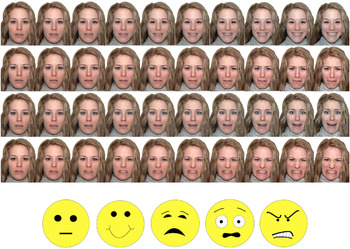
Photographs of a female model posing neutral, happy, sad, fearful, and angry facial expressions were selected from the NimStim Set of Facial Expressions (Tottenham et al., Reference Tottenham, Tanaka, Leon, McCarry, Nurse, Hare and Nelson2009).Footnote 1 For each emotion, 10 levels of intensity were depicted in 10% increments from 10% to 100% (see the top of Figure 1). These standardized increments were created by morphing emotional faces with a neutral face, resulting in 40 emotional faces in total (4 emotions × 10 intensities; Gao & Maurer, Reference Gao and Mauer2009). In line with previous studies (Gao & Maurer, Reference Gao and Mauer2009, Reference Gao and Maurer2010), the experimenter introduced a sorting game in which the child helped the people in the photographs by putting them into appropriate houses, which were labeled with corresponding emotion icons (including a neutral icon; see bottom of Figure 1). Children were instructed as follows: “In one of these houses, people are telling a happy [sad, scary, or angry] story. Can you tell me which one it is?” After the child pointed to the appropriate house for each emotion, the experimenter said, “In one house, people are not telling a story and they are not feeling anything. Can you point it out?” After the child identified the neutral house, the experimenter showed them the preshuffled stack of 41 (40 emotional + 1 neutral) faces and said, “Now we have more people here. Your job is to help them find the right house. They can only go to one house if they have the same feeling as people inside of that house.” The experimenter emphasized the possibility of different intensities within the same emotion by saying, “You may notice that many people feel happy, but some feel just a little happy, while others feel very happy. In this game, they all go together. Do the same for the sad, scared, angry, and neutral [or nothing] people.” The experimenter then handed the photographs to the child one by one, allowing them ample time to place each one through a slot in the roof of what they deemed the correct house. The slots were intentionally narrow so the child could not see the photographs that they had already placed in each house. We assessed children's threshold for correctly recognizing each target emotion (defined as the intensity level at which they achieved 50% accuracy for recognizing the target emotion). Specifically, we fit a cumulative Gaussian function to the data, resulting in an accuracy score at each intensity level of each emotion, from which we established the respective threshold value (Gao & Maurer, Reference Gao and Mauer2009, Reference Gao and Maurer2010).
Visuals for emotion recognition task.

Guilt
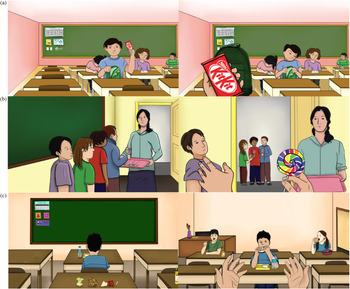
Children were presented two stories that depicted ethical transgressions to obtain desirable objects (i.e., stealing a chocolate bar from another child and pushing another child out of line to get the only remaining lollipop) and a third story that depicted a nonethical transgression (i.e., standing up and talking to other students despite all students being required to remain seated during lunch) from the Social-Emotional Responding Task (Malti, Reference Malti2018; Malti, Gummerum, Keller, & Buchmann, Reference Malti, Gummerum, Keller and Buchmann2009). Each story was presented on a computer with prerecorded audio clips and visuals that depicted a pretransgression portion in which the story context was introduced and a transgression portion in which the transgression was committed. The stories were presented from a first-person perspective to capture children's real-time physiological responding while transgressing. Children were instructed to sit still and face the computer screen while the audio and visuals directed them to imagine themselves engaging with the pretransgression content and committing the transgressions (Figure 2). Audio and visuals were matched to children's respective gender and skin tone as applicable. The stories were randomly presented, delivered at a developmentally appropriate pace, and of roughly equal length. Four questions followed each story. First, children were asked, “How would you feel if you did this?” to assess open-ended anticipated emotions. Children who could not verbalize a codable emotion (e.g., “I don't know”) were prompted with the forced choice question, “If you had [committed the transgression], would you feel good, bad, or good and bad?” After stating an emotion, children were prompted to explain the reason for the emotion (“Why would you feel [emotion]?”). Emotion intensity ratings were then assessed by asking children to rate how strongly they would feel the emotion on a 3-point scale that depicted squares of increasing size (1 = not strong to 3 = very strong). Finally, to account for potential differences in preferences, children were asked how much they liked the desirable objects/outcomes that were depicted (i.e., chocolate bars, lollipops, and talking to classmates) using the same 3-point scale. The preference scores were aggregated across the ethical transgressions (r = .26, p = .001) and controlled for in all of the analyses (see Colasante et al., Reference Colasante, Zuffianò, Haley and Malti2018).
Visuals for the pretransgression (left) and transgression (right) portions of the (a) chocolate bar, (b) lollipop (i.e., ethical transgressions), and (c) lunch (i.e., nonethical transgression) stories. All rights reserved © Tina Malti.

Guilt Coding
Two raters independently coded all of the emotion and reasoning responses. Disagreements were discussed until a consensus was reached. Anticipated emotions were assigned to one of 11 discrete emotion categories; noncodable responses were assigned to an “other” category. Bad, sad, sorry, guilty, and other guilt-related negative emotions were then assigned a score of 1 (guilt-related), whereas neutral, happy, and other positive emotions were coded 0 (not guilt-related). We included simplified negative feelings like bad and sad to account for children who did not verbalize guilt but were able to name its basic emotional correlates and provide consonant reasoning (Ongley & Malti, Reference Ongley and Malti2014). Children's reasoning for each emotion was coded into one of four categories. Ethical reasons reflected principles of fairness, justice, or harm, or references to the welfare of others (e.g., “It's not fair to steal” or “He'll be sad”). Sanction-oriented/conventional reasons reflected censure from authority figures or peers, concerns over anticipated rule violations, or disruptions to group functioning (e.g., “I'll get in trouble by the teacher” or “It's against the rules”). Hedonistic/justifying responses reflected self-centered benefits or excuses for the behavior (e.g., “I love chocolate” or “He didn't want it anyway”). An unelaborated/other category was used for all other responses that could not be classified into the main categories (e.g., “Because” or “It's bad”). For the ethical transgressions, guilt-related emotions with ethical reasons were assigned a score of 1 (ethical guilt). For the nonethical transgression, guilt-related emotions with sanction-oriented/conventional reasons were assigned a score of 1 (nonethical guilt; 70% reported ethical guilt in response to the ethical transgressions and 57% reported nonethical guilt in response to the nonethical transgression). All other response combinations for each story were coded 0 (no guilt), although responses referencing other emotions and/or unelaborated/other reasoning (~7%) were coded as missing because it was impossible to determine the presence/absence of guilt from them. We then used intensity ratings from 1 (not strong ethical/nonethical guilt) to 3 (very strong ethical/nonethical guilt) to add further gradation to the guilt responses. Continuous scores were aggregated across the ethical transgressions (r = .38, p < .001). A recent study with a sample of 1,179 6- to 13-year-olds documented sufficient internal consistency and a one-factor structure for children's emotional responding to ethical transgressions that were similar to those depicted in the current study (Jansma, Malti, Opdenakker, & van der Werf, Reference Jansma, Malti, Opdenakker and van der Werf2018). With respect to validity, previous studies that have used the same stories and same or similar coding systems as the current study have documented links to an array of antisocial and prosocial behaviors in middle childhood (both concurrently and over time; Malti & Krettenauer, Reference Malti and Krettenauer2013; Malti et al., Reference Malti, Ongley, Peplak, Chaparro, Buchmann, Zuffiano and Cui2016).
Aggression
The caregivers rated 12 items on a 7-point scale from 0 (never) to 6 (always) that were adapted from Little, Jones, Henrich, and Hawley's (Reference Little, Jones, Henrich and Hawley2003) self-report aggression measure. The items described overt acts of verbal and physical aggression that are indicative of reactive (e.g., “puts others down if upset or hurt by them/fights back when hurt by someone”) and proactive aggression (e.g., “says mean things to others/starts fights to get what he wants”). We constructed a latent variable from all 12 items to represent generalized overt aggression (see Analysis Plan and Online Supplemental Material).
Analysis Plan
We used a latent structural equation modeling approach in Mplus 8.1 (Muthén & Muthén, Reference Muthén and Muthén1998–2017). First, we created latent difference scores (LDS; McArdle, Reference McArdle2009) for physiological arousal and guilt in line with how we conceptualized them at study outset. For physiological arousal, we modeled children's mean-level changes in SC and RSA (ΔSC and ΔRSA) across the ethical transgressionsFootnote 2 from pretransgression to transgression (i.e., from before they stole and pushed to while they stole and pushed). Positive and negative scores represented increases and decreases in SC and RSA, respectively, while transgressing. For guilt, we modeled differences between the intensity of children's ethical and nonethical guilt (Δguilt), with higher and lower scores representing more and less intense ethical than nonethical guilt, respectively (i.e., feeling more or less guilt after stealing from or pushing another child than after breaking a classroom rule). For aggression, we created three parcels—each containing four similarly worded items—and used them as manifest indicators to estimate a latent variable representing generalized, overt aggression (see Online Supplemental Material).
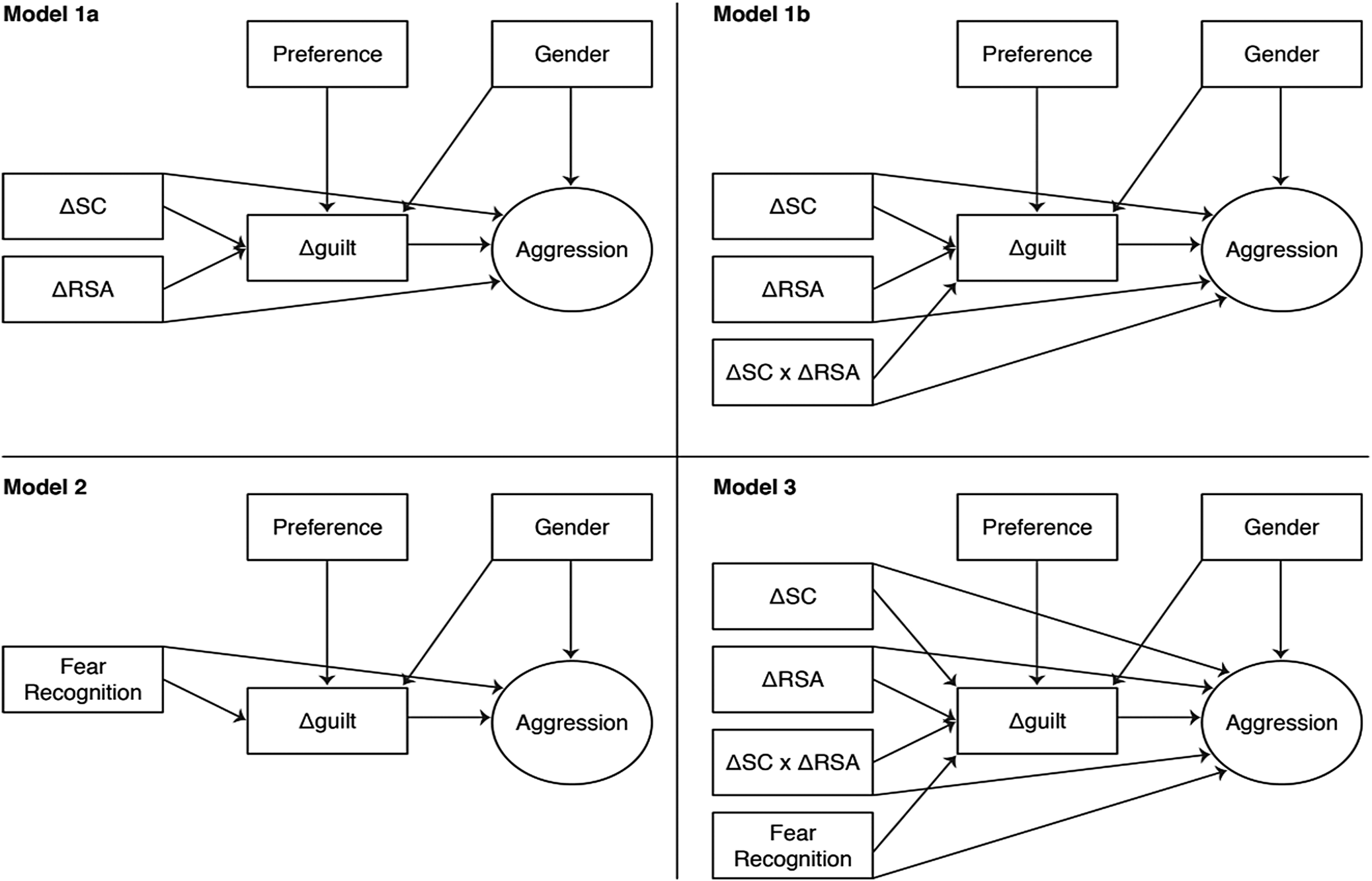
We then proceeded to build our final structural equation model in stages. All of the models are depicted in Figure 3. Model 1 accounted for the relationships between children's physiological arousal, guilt, and aggression. In Model 1a, we tested for direct effects between ΔSC/ΔRSA and Δguilt, ΔSC/ΔRSA and aggression, and Δguilt and aggression. We also tested for indirect effects from ΔSC/ΔRSA to aggression via Δguilt to determine whether physiological arousal predicted aggression through its association with guilt. In Model 1b, we added the ΔSC × ΔRSA interaction term to represent the interplay of the sympathetic and parasympathetic branches. We also tested for moderated mediation to determine whether the interaction of these branches further predicted aggression through its association with guilt. Model 2 accounted for relationships between children's fear recognition, guilt, and aggression. Similar to Model 1, we tested for all combinations of direct effects as well as for the indirect effect from fear recognition to aggression via guilt to determine whether children's threshold for detecting fearful facial expressions predicted their aggression through their guilt. Finally, we merged Models 1 and 2 to ensure that all of the effects held in an omnibus model (Model 3). For all of the models, we relied on χ2 values, root mean square errors of approximation (RMSEA), comparative fit indices (CFI), and standardized root mean square residuals (SRMR) as indicators of model fit. We used maximum likelihood with standard errors robust to nonnormality as a method of estimation to account for missing data and the skew of our aggression variable (skewness = 1.27, kurtosis = 1.33). We estimated the significance of indirect effects with bias-corrected 95% confidence intervals (CIs) based on 5,000 bootstrapped draws. A CI not containing zero reflected a statistically significant effect (MacKinnon, Reference MacKinnon2008). We controlled for children's gender and preferences for the desirable objects that were depicted in the ethical transgressions. To facilitate interpretation, we z-transformed all of the variables. We also ran supplementary analyses accounting for differences in children's pretransgression physiological arousal during the ethical transgressions and nonethical guilt (i.e., the baselines of the LDS models), pretransgression and reactive physiology during the nonethical transgression, and recognition of emotions other than fear (see Online Supplemental Material).
Models linking physiological arousal, fear recognition, guilt, and aggression.

Results
One univariate outlier on ΔSC was detected and coded as missing (see Online Supplemental Material). Four children were removed because they were missing both physiological and guilt data, resulting in a final sample size of 146. As is common for community samples, aggression levels were low on aggregate (Table 1).
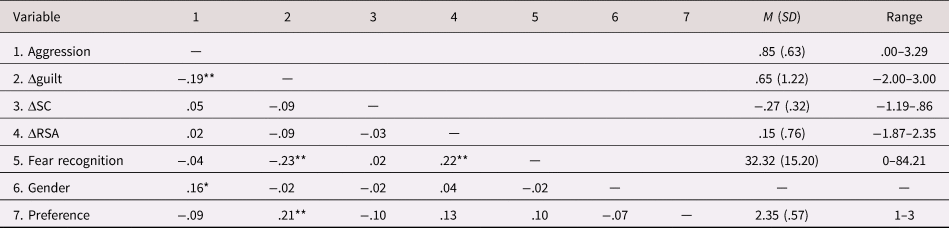
Descriptive statistics and zero-order correlations

Note: Gender (female = 1, male = 2). **p < .01. *p < .05.
LDS Models
We autoregressed children's transgression SC and RSA scores on their respective pretransgression scores, fixed the paths to 1, and fixed the intercepts and variances of the transgression scores to 0. The resulting latent difference scores represented the amount of mean-level change in SC/RSA from pretransgression to transgression (ΔSC/ΔRSA). Most children (84%) decreased in SC from pretransgression to transgression, whereas 16% remained stable or increased. For the same period, approximately 43% of children decreased in RSA, whereas 57% remained stable or increased. We estimated differences in ethical versus nonethical guilt (Δguilt) in a similar manner. On average, children reported more intense ethical guilt than nonethical guilt (Table 1). For all three LDS models (ΔSC, ΔRSA, and Δguilt), we allowed the constructs to covary, included remaining study variables as auxiliaries to aid in the estimation of missing data, and saved the factor scores for use as predictors in subsequent models. Mean-level change and variability in that change were also significant for all of the scores (ps < .016).
Descriptive Statistics and Zero-Order Correlations
Table 1 displays the means, standard deviations, and ranges of the study variables as well as the correlations between them. Notably, children who reported less intense ethical guilt than nonethical guilt were rated as being more aggressive by their caregivers and had worse fear recognition.
Model 1: Predicting Aggression From Physiological Arousal and Guilt
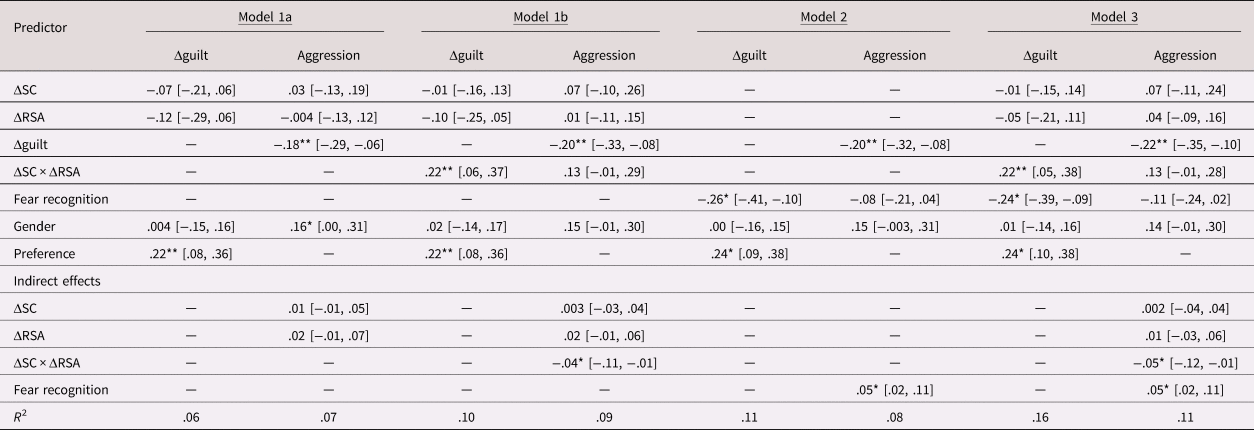
The fit statistics for all of the models are reported in Table A6 of the online supplemental material. The parameter estimates for all of the models are reported in Table 2. As reported in Table 2 (Model 1a), changes in SC/RSA were not directly associated with guilt or aggression. Lower ethical versus nonethical guilt was associated with higher aggression, and ΔSC/ΔRSA were not indirectly linked to aggression through guilt. The ΔSC × ΔRSA interaction in Model 1b was significant, and adding it did not significantly alter the main effects that were observed in Model 1a. We used simple slopes analyses to explore how ΔSC related to guilt at low and high levels (±1 SD) of ΔRSA (Cohen, Cohen, West, & Aiken, Reference Cohen, Cohen, West and Aiken2003). Sharper declines in SC while transgressing were associated with lower ethical versus nonethical guilt for children who increased (β = .24) but not decreased (β = −.03) in RSA while transgressing. As expected, this finding suggests that physiological underarousal—operationalized as simultaneous decreases in SC and increases in RSA—while transgressing is associated with lower guilt. Changes in RSA did not significantly moderate the null association between ΔSC and aggression. Given the significant ΔSC × ΔRSA interaction on guilt, we tested for moderated mediation to determine whether it further predicted differences in children's aggression through its link to guilt. The indirect effect of ΔSC on aggression via guilt was significantly moderated by ΔRSA. For children who increased in RSA while transgressing, steeper declines in SC while transgressing were associated with elevated aggression via their dampening effect on Δguilt (β = −.04). As expected, this suggests that the link between physiological underarousal and heightened aggression is facilitated by lower guilt. For those who decreased in RSA, steeper declines in SC were associated with less aggression via guilt (β = .05).
Structural relations of physiological arousal, fear recognition, guilt, and aggression

Note: Standardized coefficients with bias-corrected 95% CIs based on 5,000 bootstrapped draws. **p < .01. *p < .05.
To rule out the possibility that these effects reflected general patterns of physiological reactivity rather than physiological reactions to ethical transgressions specifically, we reran each of the above models controlling for the effects of physiology during the nonethical story. The results were virtually identical to those reported above. Moreover, changes in physiological arousal during the nonethical story were not significantly associated with Δguilt or aggression. Full details are provided in the online Supplemental Material
Model 2: Predicting Aggression From Fear Recognition and Guilt
As reported in Table 2 (Model 2), a higher threshold for detecting fear (i.e., blunted fear recognition) was associated with lower ethical guilt than nonethical guilt. Fear recognition was not directly associated with aggression. However, in line with our expectations, poorer fear recognition was associated with elevated aggression through its relation to lower Δguilt.
To rule out the possibility that these effects reflected general emotion recognition deficits as opposed to recognition deficits that were specific to fear, we reran Model 2 with happiness, sadness, and anger recognition included as predictors. This model returned significant effects for fear recognition that were virtually identical to those noted above, whereas no significant effects for the other emotion recognition variables emerged (see the Online Supplemental Material).
Model 3: Predicting Aggression From Physiological Arousal, Fear Recognition, and Guilt
As reported in Table 2, all of the successive findings held in the omnibus model. Notably, the core hypothesized indirect effects of the ΔSC × ΔRSA interaction and fear recognition on aggression through Δguilt remained significant, suggesting that physiological and lower-level perceptual processes are uniquely implicated in aggression via guilt.
Discussion
Researchers have theorized that the aggravating effects of emotional underarousal on aggression start early in development (Raine, Reference Raine2013). However, studies that have investigated direct associations between underarousal and aggression in childhood have yielded mixed results. Developmental psychopathologists argue that multiple levels of analysis are necessary to fully understand developmental processes (Cicchetti, Reference Cicchetti1993). We adopted a multimethod, multi-informant approach to test whether children's social-emotional capacities linked their emotional arousal and aggressive behavior as a process. Furthermore, we focused on middle childhood—a sensitive time when most (but not all) children begin to reliably anticipate guilt (Arsenio, Reference Arsenio, Killen and Smetana2014; Malti, Reference Malti2016).
Children's physiology was not directly associated with their aggression—only indirectly through their guilt. Those who exhibited physiological underarousal (i.e., decreases in SC and increases in RSA) while transgressing expressed less guilt, in turn engaging in more aggression. Children with physiological underarousal may not have engaged with the ethically salient aspects of the transgressions and considered how they had violated ethical principles and/or compromised the welfare of the victims (see Colasante et al., Reference Colasante, Zuffianò, Haley and Malti2018; Malti et al., Reference Malti, Colasante, Zuffianò and de Bruine2016), which are critical steps for mounting a guilt response and avoiding aggression (Malti, Reference Malti2016). This indirect effect and lack of a direct effect also suggest that accounting for children's physiological arousal in isolation may not sufficiently explain their aggressive tendencies. Social emotions are multifaceted experiences that involve both lower- and higher-order elements including physiological changes, facial and vocal expressions, cognitive appraisals, and subjective feelings, and the coordination of these elements is thought to increase the likelihood of a corresponding behavior (Scherer, Reference Scherer2009). In line with this argument, it was only when we accounted for how children's physiological arousal factored into their broader affective and cognitive experiences of guilt that we found a significant (indirect) link to aggression.
Similarly, children's fear recognition and aggression were not directly related, although they were indirectly associated via guilt. Those with blunted fear recognition had lower guilt and, in turn, higher aggression. As in previous related studies (Jusyte et al., Reference Jusyte, Mayer, Künzel, Hautzinger and Schönenberg2015; Marsh & Cardinale, Reference Marsh and Cardinale2014; White & Delk, Reference White and Delk2017), these effects were exclusive to fear recognition (no effects were found for happiness, sadness, and anger recognition). Children with fear-specific impairments may be less likely to pick up on their victims’ distress cues, yet this alone may not necessarily result in them carrying their intent through to harming others. The extent to which children's deficits in fear recognition factor into them caring less about harming others and expressing less guilt may be an important intermediary process. Although this is the first study to our knowledge to link fear recognition to guilt in children, there is similar evidence suggesting that emotion identification underpins children's tendencies to sympathize with others and behave prosocially towards them (Sette, Colasante, Zava, Baumgartner, & Malti, Reference Sette, Colasante, Zava, Baumgartner and Malti2018). Therefore, social emotions may serve as translational mechanisms that link biologically based, lower-level emotion recognition abilities to aggression and prosociality—everyday behaviors that are central to healthy social functioning (Crick, Reference Crick1996). Nonetheless, it is important to note that fear processing is not a one-to-one reflection of amygdala functioning; there may be other nonbiological factors that contribute to it (see Dujardin, Bosmans, De Raedt, & Braet, Reference Dujardin, Bosmans, De Raedt and Braet2015). Future process-oriented studies should consider using electroencephalography or imaging techniques to assess children's amygdala-related activity while they navigate social conflict situations and anticipate guilt.
Direct links between reduced fear processing and heightened psychopathic or CU tendencies in children and adolescents are well established (e.g., Blair et al., Reference Blair, Colledge, Murray and Mitchell2001; Blair et al., Reference Blair, Budhani, Colledge and Scott2005). Callous-unemotional traits and psychopathy involve aggression, but they are also characterized by a lack of guilt after transgressing and low sympathy for needy others (Frick, Reference Frick2012). Our findings suggest that fear-processing deficits may be primarily associated with social-emotional (rather than aggressive) CU/psychopathic traits. Similar evidence in adults suggests that amygdala dysfunction is more characteristic of CU/psychopathic traits than aggression per se (Blair et al., Reference Blair, Jones, Clark and Smith1997). This suggests that impaired fear processing may be a defining characteristic of individuals with psychopathic or CU tendencies, and the process by which it disrupts the ability to feel guilt (and perhaps other social emotions) may represent a key mechanism that drives aggression in such individuals. Although our goal was to parse aggression from CU/psychopathic traits, going one step further to assess differential links between underarousal and aggressive subtypes (e.g., reactive and proactive aggression; see Moore et al., Reference Moore, Hubbard, Morrow, Barhight, Lines, Sallee and Hyde2018) would be an interesting future avenue, as underarousal may be particularly implicated in “cold-blooded” proactive aggression (Frick, Reference Frick2012). Reactive and proactive aggression were very highly correlated in our study (r = .82 at the latent level), but there may be greater separation and higher proactive aggression in clinical samples to allow for a more stringent test of this hypothesis.
Skin conductance and RSA were not independently associated with guilt and aggression. This corroborates the idea that past discrepant or null relations between children's physiological reactivity and aggression were due, at least in part, to the select assessment of single autonomic branches. As expected, we found a significant interaction between SC and RSA reactivity on aggression, which highlights the importance of investigating the conjoint roles of sympathetic and parasympathetic indicators and aligns with theorizing on the moderating effect of RSA on SC (Porges, Reference Porges2011). In the current case, increases in RSA (i.e., more brake) may have acted in conjunction with or facilitated decreases in SC (i.e., less gas; collectively referred to as reciprocal parasympathetic activation; Berntson et al., Reference Berntson, Cacioppo and Quigley1991) to produce a net decrease in arousal, thus hampering expressions of guilt and coinciding with higher aggression scores. In contrast, children who showed decreases in SC and RSA were rated lower in aggression via higher guilt. Autonomic coinhibition is thought to reflect passive vigilance (El-Sheikh & Erath, Reference El-Sheikh and Erath2011). This type of response may have helped such children optimally engage in the hypothetical transgressions (as opposed to being completely disengaged or fully/anxiously engaged).
Most investigations of physiology–aggression links fail to consider physiological reactivity in contexts with explicit relevance to children's aggressive behavior (see Moore et al., Reference Moore, Hubbard, Morrow, Barhight, Lines, Sallee and Hyde2018; Murray-Close et al., Reference Murray-Close, Holterman, Breslend and Sullivan2017). We considered children's physiology while they imagined themselves engaging in acts that involved intentional ethical transgressions, which may have increased our likelihood of finding a link to their actual aggressive tendencies. Indeed, further analyses showed that only physiology while stealing from and pushing others was significantly linked to guilt and aggression—physiology while breaking a classroom rule (a nonethical transgression) had no significant bearing on our outcomes of interest.
In a recent study of 11-year-olds, the same pattern of physiological underarousal that was detected in our study (i.e., decreases in SC and increases in RSA) during an opportunity to aggress predicted an increased likelihood of actually aggressing (Moore et al., Reference Moore, Hubbard, Morrow, Barhight, Lines, Sallee and Hyde2018). The consistency of results between this study and ours, each of which considered physiological activity in (a) both autonomic branches and (b) aggression-centric contexts, suggests that future studies in this area should abide by these criteria to increase the clarity and consistency of findings. Since the current study was limited to two ethical transgressions and one nonethical transgression, future studies should also assess the extent to which our findings generalize with a more thorough assessment of guilt that includes other social conflicts, such as peer exclusion.
To ensure a thorough account of children's guilt-related capacities, we assessed their guilt in ethical versus nonethical contexts. Ethical guilt primarily revolves around the welfare of others, whereas nonethical guilt often revolves around punishment and conventional concerns (Malti, Reference Malti2016). We provided children with identical three-point scales to rate the intensity of their ethical and nonethical guilt and expected less aggressive (i.e., more ethically sensitive) children to rate their ethical guilt feelings as being more intense than their nonethical guilt feelings. This distinction proved to be fruitful, as emotional underarousal was associated with less intense ethical versus nonethical guilt and, in turn, more aggression. Interestingly, children who reported less guilt over stealing/pushing than over breaking the classroom rule did not necessarily lack guilt on aggregate—some deemed both types of transgressions as being similarly worthy of intense guilt. One possibility is that such children were talking the talk and reporting what they thought others expected them to feel—all the while struggling to distinguish one wrong from another and thus reporting negative feelings after harming others that were similar in intensity and scope to their feelings after simply breaking a classroom rule. Indeed, children with underaroused symptomology typically lack the affective ability to feel and care about what other people feel, but they are fully capable of cognitively understanding and describing others’ feelings (Dadds et al., Reference Dadds, Hawes, Frost, Vassallo, Bunn, Hunter and Merz2009). Future studies should attempt to analyze such children separately instead of lumping them into the same “nondifferentiating” category as those who lacked guilt on aggregate.
Most of the 8-year-olds in our sample reported ethical guilt in response to the ethical transgressions (which is less common at younger ages when guilt is still in flux; Colasante et al., Reference Colasante, Zuffianò, Haley and Malti2018). Assessing nonethical guilt as a baseline for ethical guilt may represent a more developmentally appropriate and fine-grained method for identifying those who lack ethical sensitivity beyond middle childhood. Indeed, in line with recent findings indicating that differences between children's emotion ratings after ethical versus nonethical transgressions were more predictive of aggression than their emotion ratings in either context alone were (Jambon & Smetana, Reference Jambon and Smetana2018b), the supplemental analyses indicated that our difference score was a more precise correlate of aggression (r = −.19, p < .01) than ethical guilt alone was (r = −.13, p = .08). Future studies should account for cognitive factors (e.g., social intelligence) that may influence children's ability to discern ethical from nonethical wrongdoing.
Although we focused on normative development in a community sample, our findings suggest some degree of community–clinical continuity in the relations of underarousal, guilt, and aggression. We drew from both normative and clinical literature that links these constructs (e.g., Blair et al., Reference Blair, Jones, Clark and Smith1997; Malti et al., Reference Malti, Colasante, Zuffianò and de Bruine2016) and largely clinical theorizing about how they might be related as a process (e.g., Frick, Reference Frick2012; Malti, Reference Malti2016). That we have documented this process in a typical community sample aligns with the developmental psychopathological perspective that certain developmental processes and mechanisms exist across the normative–clinical continuum, with quantitative rather than qualitative differences separating the two extremes (Cicchetti, Reference Cicchetti1993). Indeed, a number of studies use person-centered approaches to show that clinical groups of children exhibit exacerbated levels of CU traits that are otherwise present—but not as extreme—in typically developing children (Frick & White, Reference Frick and White2008). From this perspective, our findings highlight some promising clinical opportunities.
Physiological tendencies may represent a less viable point of intervention because of their significant heritability (Raine, Reference Raine2013). Guilt may serve as a more viable point of intervention because of its translational role between lower-level processes and aggression (as our findings suggest) and relative susceptibility to socialization factors (Grusec, Chaparro, Johnston, & Sherman, Reference Grusec, Chaparro, Johnston, Sherman, Killen and Smetana2013). Practitioners, educators, and caregivers could facilitate guilt in children with underarousal by intervening in conflict situations, highlighting others’ perspectives, pointing out others’ distress, and making it clear that the transgressing child is responsible for such distress (Hoffman, Reference Hoffman2000). Although fear recognition deficits are also deeply rooted in biology (Jusyte et al., Reference Jusyte, Mayer, Künzel, Hautzinger and Schönenberg2015), research with adults suggests that fear recognition can improve with training. Adult violent offenders who underwent training to direct attention to salient regions of facial expressions with varying intensities showed significant pre-post improvements in recognizing such expressions on a separate facial morph task (Schönenberg et al., Reference Schönenberg, Christian, Gaußer, Mayer, Hautzinger and Jusyte2014). On a related—and perhaps more speculative—note, intranasally administered oxytocin significantly improved fear recognition among adolescents who had been diagnosed with antisocial personality disorder relative to healthy controls (Timmermann et al., Reference Timmermann, Jeung, Schmitt, Boll, Freitag, Bertsch and Herpertz2017). Nonetheless, underarousal and fearlessness can also interfere with socialization goals, as children with these characteristics tend to be disproportionately less receptive to limit setting (Pasalich, Dadds, Hawes, & Brennan, Reference Pasalich, Dadds, Hawes and Brennan2011) and harsh parenting (Frick, Ray, Thornton, & Kahn, Reference Frick, Ray, Thornton and Kahn2014). Socializing guilt and fear recognition should likely be done with warmth, sensitivity, cooperation, and respect (Kochanska & Murray, Reference Kochanska and Murray2000). All of these practical implications should still be heeded carefully—we cannot be sure that the findings and implications of this study are applicable to clinical populations.
In summary, both components of emotional underarousal under study—one rooted in autonomic deficits and the other in amygdala hypofunction—were uniquely implicated in difficulties with guilt and aggression. This highlights the importance of taking a holistic biological approach and aligns with recent pushes to account for the roles of brain and body in the development of social emotions and behavior (Kahle & Hastings, Reference Kahle, Hastings, Scott and Kosslyn2015). Our findings also underscore the viability of eclectic treatment approaches in clinical child psychology and suggest that extending them to the domain of biology is a promising future direction.
Supplementary Material
The supplementary material for this article can be found at https://doi.org/10.1017/S0954579419001627.
Acknowledgments
The authors thank the children and caregivers who participated and the members of the Laboratory for Social-Emotional Development and Intervention (SEDI) who helped with data collection and cleaning.
Financial Support
This research was supported by a Canadian Institutes of Health Research (CIHR) Foundation Scheme grant (FDN-148389) that was awarded to Tina Malti.