INTRODUCTION
It came as a surprise, even to those who follow cultural and political events in Cuba: On November 20, 2019, the Council of Ministers approved a “National Program” against racism and racial discrimination. According to the official press release, the plan’s goal is to “fight against and definitively eliminate the vestiges of racism, racial prejudice, and racial discrimination that subsist in Cuba” (Díaz-Canel Reference Díaz-Canel2019). To implement this plan, authorities promised to create a government commission headed by the President of the Republic. The Program is surprising because government authorities have been generally reluctant to accept publicly that racism or discrimination constitutes a social problem in Cuba. For example, a high-ranking Cuban official, Rodolfo Reyes Rodríguez, testifying recently before the United Nations Committee Against Racial Discrimination (CERD) asserted that “In Cuba, there is no institutionalized or structural racial discrimination.” The official attributed his conclusion to the “mestizo nature” of the Cuban people and the fact that the principle of equality is incorporated in all legal instruments and social policies of the revolution (Reyes Rodríguez Reference Rodríguez and Rodolfo2018; see also Castro Reference Fidel2003).
Government authorities may recognize now more than ever some of racism’s adverse effects on people’s lives and opportunities in contemporary Cuba. Nonetheless, official discourse often locates what it labels “vestiges” in the realm of isolated racial missteps and attitudes anchored in a distant past. As expressed by that same official, “Even though our country eliminated structural and institutional racial discrimination… racial prejudice subsists in the behavior and expressions of a limited number of people” (Reyes Rodríguez Reference Rodríguez and Rodolfo2018). Furthermore, they sometimes suggest that racial conflicts are an import, an American fabrication to “divide Cuban society, imposing on it, or magnifying, conflicts that do not exist here, such as those related to race” (Allard et al., Reference Allard, Menéndez and Mexidor2011). These various discourses have unequivocal implications. They assume that racism is an archaic holdout, i.e., not compatible with or produced by the current organization of Cuban society. Moreover, they suggest that these historical remnants could be overcome through some limited state action—as the National Program now suggests—targeting prejudiced individuals and attitudes instead of structures and institutions grounded in White supremacy.
Afro-Cuban activists, intellectuals, and organizations contest these characterizations and offer a radically different assessment of racial prejudice, discrimination, and inequality in contemporary Cuba. They argue that racism continues to be recreated in important institutional dimensions in everyday Cuban life, and they point to a variety of supporting evidentiary sources. For example, they assert, “large sectors of the Afro-Cuban population live under conditions of marginality due to the racialized structures of society and the economy” (Comité Ciudadanos por la Integración Racial [CIR] 2018). Some prominent activists described the official report to the CERD as “lamentable” and “shameful.” The Cofradía de la Negritud (CONEG), one of Cuba’s oldest Afro-Cuban organizations, asked the President: “If there is no discrimination or structural inequality that could merit specific state policies, why does the President need to give explicit attention to this issue?” (CONEG 2019; see also Morales Reference Morales2018).
Herein lies a critical dilemma. Antiracist organizations argue that Afro-Cubans are at a disadvantage in many socioeconomic factors associated with upward mobility, but their critique appears incompatible with census data that undergird the official equalitarian narrative. A national census is a go-to data resource designed worldwide to uniquely capture national dynamics and consequently configure public policy and the official portrait of a country (Loveman Reference Loveman2014). Indeed, Cuba’s official statistics bureau issued a report on racial inequality in the 2012 Census that concluded, “Even though there may be vestiges of racism and racial discrimination, the general results of the Census do not show differentials between people according to skin color that would confirm that this problem has a critical quantitative dimension in Cuban society” (Oficina Nacional de Estadísticas e Información [ONEI] 2016, p. 62). Social movement actors and organizations, by contrast, denounce growing inequalities in key sectors of the economy, the labor market, and in residential patterns. In the face of official reports and census data, they urge the need to think about those “who suffer inequality and poverty beyond [official] statistics” (Abreu Reference Abreu2019a).
How is it possible to assess these disparate visions on racism and inequality in contemporary Cuba? We engage this dilemma through the analysis of several windows on racial inequality from the 1980s to the 2010s from both census and non-census evidentiary sources. Regarding the former, for the first time, we draw on an original analysis using data from the 2002 Census (Minnesota Population Center 2020), the only publicly available Cuban census sample. In addition, we reconstruct key estimates of racial stratification from tables of raw data and analyses of the 1981 and 2012 Censuses (INSIE 1985; ONEI 2016). This research strategy enables a comparison of indicators from 1981 and 2012 to our 2002 estimates to proxy a longitudinal perspective on possibly changing racial stratification dynamics in contemporary Cuba. Our paper is the first to measure how racial inequality has evolved in Cuba during the last four decades using these three census data points. Regarding non-census evidentiary sources, we follow the lead of social movement actors and look to additional data and analyses to engage processes of social stratification by skin color that may not be readily measurable with census data. These sources include findings from published research and various non-census data sources, both quantitative and qualitative. We also include the very voices and reports of social movement actors and organizations, which have long been considered vital sources of evidence-based data in scholarly research.
Hence, we use census data but also look “beyond” it. Overall, our census-based findings support many of the equalitarian tenets that populate official discourse. Nonetheless, the findings we present using additional data provide unmistakable support for a radically alternative discourse: There are social and economic structures producing and increasingly exacerbating racial inequality in contemporary Cuba. The strategic engagement of additional data sources alongside of and in explicit contraposition to census data is a distinct contribution of our research. This approach enables us to intervene in scholarly debates concerning the complex impact of the 1959 Cuban Revolution on racial stratification, now across a substantial period of time. Specifically, we leverage our approach to critique and move beyond previous analysis that relied heavily on the 1981 Census to gauge that impact (de la Fuente Reference de la Fuente2001). More broadly, our analysis sheds light on how different data can convey profoundly different pictures concerning racial inequality in a given context, as well as on the need and the way to bring them into scholarly dialogue. Some of these indicators illustrate what sociologist Edward Telles (Reference Telles2004) has described as horizontal and vertical dimensions of race relations. Moreover, we highlight that significant contradictions can and do co-exist in the lived experiences of racial inequality within a single country context, all the way from those reflecting laudable gains to others revealing unsustainable failures.
RACE AND REVOLUTION IN CUBA
For decades, scholars, activists, and public intellectuals of various persuasions have studied and debated the impact that the Cuban revolution had on indicators of wellbeing and inequality as structured by skin color or race. In the 1960s and 1970s this debate frequently centered on whether racism, inequality, and discrimination had actually declined or disappeared from Cuban society, as government authorities frequently claimed, or whether Cuba was, as some observers argued, a racist and racially polarized society. The absence of reliable statistics and indicators placed many of these arguments on shaky and utterly ideological grounds, although some scholars tried to produce serious scholarship about this question.Footnote 1
A growing body of scholarship has put many of these questions to rest, producing new and detailed information about the contradictory impact of revolutionary policies on patterns of racial inequality and on educational, occupational, and cultural opportunities for the poor and the disadvantaged in Cuban post-revolutionary society. This scholarship has demonstrated that between the 1960s and the 1980s, measurable inequality by race declined significantly in a number of key indicators related to health, nutrition, access to education, occupational mobility, and even participation in positions of leadership (Benson Reference Benson2016; Casal Reference Casal1979; de la Fuente Reference de la Fuente2001). Cuban authorities and sympathetic observers, including a large number of African American scholars, politicians, and activists who visited the island during those years, could reasonably claim that the Cuban revolution had taken fundamental and transformational steps towards the elimination of racism and racial discrimination from the country (Cannon and Cole, Reference Terry and Cole1978). A longtime Afro-Cuban activist and scholar, Pedro Serviat (Reference Serviat1986), went so far as to claim that Cuban socialism offered the “definitive solution” to the “black problem” in the island.
Although most scholars agree that the revolution created significant opportunities for Afro-Cubans and for the working poor, the most recent scholarship emphasizes that the universalist, class-based policies of the revolution had a limited impact on structural racism and may have normalized racial stratification behind a façade of socialist equality (Benson Reference Benson2016; Clealand 2017; Perry Reference Perry2016; Sawyer Reference Sawyer2006). Writing after the collapse of the Cuban welfare state in the 1990s, this scholarship is considerably more critical about the long-term impact of Cuban socialism on racism and inequality.
The so-called “Special Period” of the 1990s was, in this sense, a watershed. As the economic situation deteriorated, many White Cubans began to deploy racist images in order to allocate scarce resources in a grossly differential manner. Racist arguments were used to provide justification for the exclusion of Afro-Cubans from the most desirable and dynamic sectors of the economy, such as tourism and the joint venture companies that, financed with global private capital, began to emerge, especially in Havana. These arguments depict Afro-Cubans as lazy and prone to criminality, as naturally incapable to participate in and contribute to the “new” globalized and dollarized economy. Aesthetic arguments concerning personal beauty are also used to deny Afro-Cubans access to positions that, as openly racist job advertisements state, require buena presencia (a good appearance), or that explicitly target individuals of “the White race” (Clealand 2017; de la Fuente and Glasco, Reference de la Fuente, Glasco, Centeno and Font1997; Duharte and Santos, Reference Duharte and Santos1997; Fernandez Reference Fernandez1996; Pérez-Sarduy and Stubbs, Reference Pérez-Sarduy and Stubbs2000; Perry Reference Perry2016; Sawyer Reference Sawyer2006).
The racialization of growing inequality since the 1990s raises serious questions about the nature, depth, and enduring power of the social transformations ushered in by Cuban socialism since the 1960s. At the very least, it is now impossible to sustain the assertion, as authorities and sympathetic observers did for decades, that racism and discrimination disappeared from the island, or that only the “vestiges” or “remnants” of past racism continue to affect Cuban society. Furthermore, although Afro-Cuban mobilization is nothing new (Benson Reference Benson2016, Reference Benson2018; de la Fuente Reference de la Fuente2001, Reference de la Fuente2013; Fernández Robaina Reference Tomás1990; Guerra Reference Guerra2019; Guridy Reference Guridy2010; Helg Reference Helg1995; Moore Reference Moore1988; Pappademos Reference Pappademos2011), the 1990s witnessed the emergence of voices, initiatives, projects, cultural producers, and organizations that eventually consolidated into a diverse and potent Afro-Cuban movement. The participants in this Black civil society were forced to develop a new language to address what had previously been a non-topic in public discourse and to articulate demands about a problem that allegedly did not exist. Cultural producers—musicians, visual artists, writers, filmmakers—led these efforts, which later in the decade resulted in organizations that spoke of civil rights and racial equality in their programs and documents (Benson Reference Benson2016; Berry Reference Berry2019; Casamayor Cisneros Reference Odette2019; Clealand 2017; de la Fuente Reference de la Fuente2008, Reference de la Fuente2012; Fernandes Reference Fernandes2006; Perry Reference Perry2016; Saunders Reference Saunders2015).
The Afro-Cuban movement has grown significantly in the last two decades, becoming much more diverse in terms of topics, strategies, programs, and reach. It now includes community-based initiatives such as the Red Barrial Afrodescendiente; organizations that offer specialized services, such as the Alianza Unidad Racial, which specializes in legal matters; organizations such as Alianza Racial that highlight intersectionality and the rights of LGTBQ people, particularly of African descent; cultural projects and initiatives such as Trance, mirArte diaDia, Afropalabra, and many others; self-help organizations such as El Club del Espendrú; civil and human rights organizations such as the CONEG and the Comité Ciudadanos por la Integración Racial (CIR); women’s organizations such as Afrocubanas, now inactive; and regional chapters of transnational organizations such as the Cuban chapter of Alianza Regional Afrodescendiente de América Latina y el Caribe. And this list does not even mention the numerous religious houses that also function as community cultural and self-help centers across the island.Footnote 2
These are the activists who, during the last thirty years, have been raising poignant questions about the continuing incidence of racism and racially discriminatory practices in Cuban society. As mentioned before, they contest the official view that characterizes racism as a “vestige” of a distant past, as if discrimination and exclusion were produced by unintended actions, not by structural conditions embedded in contemporary Cuban society. Scholars have noted that although there is agreement that racism exists in Cuba, it “remains difficult to quantify” (Clealand 2017, p. 4). We turn now to quantitative analysis to assess the relationship between Cuba’s racial demography and social stratification. After a brief discussion of the racial composition of the population, we use census data from 1981, 2002, and 2012 to discuss how measurable inequality has evolved in Cuba. In a third section, we offer an alternative lens on contemporary racial dynamics and stratification that draws mostly on other data, including smaller social surveys and qualitative sources. We conclude by highlighting how different sets of data can be used to sustain disparate narratives on racism and inequality in contemporary Cuba.
RACIAL INEQUALITY: THE CENSUS DATA
Cuba is the only country in Latin America to have consistently included a question on racial composition in the national census, and it has done so since 1774 (Loveman Reference Loveman2014). In this way, it is similar to the United States. Unlike the United States’ use of the term “race” in its census, the Cuban census uses “skin color” (color de la piel). Though the country conducted a census for roughly every decade of the twentieth century, the largest information gap on skin color corresponds to the period between the censuses of 1953 and 1981. The 1970 Census, the first one conducted after the revolution, collected information on skin color, but the results were never published (Chávez Alvarez and Villarroel Sandoval, Reference Ernesto and Sandova1975). Figure 1 presents the skin color composition of the Cuban population from 1889 to 2012 using the categories “White” (blanco), mestizo or mulato, and negro. Footnote 3
Percent Distribution of Cuban Population by Skin Color, 1899–2012.
Source: Cuban census data (ONEI 2016).

As shown in Figure 1, the largest population segment during the twentieth and into the twenty-first century is blanco. In the latest available census (2012), 64% of the Cuban population self-classifies in that category, whereas 26.6% self-classify as mulato or mestizo and 9.3% as negro. Footnote 4 The blanco proportion of population declined significantly between 1953 and 1981. This decline is a function of higher White emigration rates, of higher fertility rates among non-Whites, and perhaps also of dominant discourses of mixture that made the mestizo label, used in 1981, more socially acceptable (for a discussion, see de la Fuente Reference de la Fuente1995). The blanco percentage declined further between 1981 (66.1%) and 2012 (64.1%), but the proportion of the negro population declined even further (from 12% to 9.3%). Only the mestizo segment of the population increased proportionally during this same period (from 21.9% to 26.6%).Footnote 5 It should be noted that these trends have persisted across time despite changes in the methodology of collecting data about skin color by the censuses.
The 1981 Census
When the results of the 1981 Census were released, they showed that Cuba had made remarkable progress in the elimination of racial and other forms of social inequality. The class-based, universal (non-racially specific) policies implemented by the revolutionary government in the 1960s and 1970s, in areas such as healthcare, housing, education, employment, and nutrition, offered unprecedented and disproportionate advantages to the urban and rural poor, a group in which Afro-Cubans were very well represented (de la Fuente Reference de la Fuente2001). Although formulated in the name of the humble and the dispossessed, some of these policies specifically targeted spaces of traditional Afro-Cuban poverty, such as the elimination of urban shantytowns (Guerra Reference Guerra2012; Horst Reference Horst2016) or plans for the vocational training of former domestic employees and sex workers, activities that frequently represented the only employment opportunities available to Afro-Cuban women in republican Cuba (Hicks Reference Hicks2017).
In terms of measurable inequality, some of these policies produced results that were nothing short of astonishing. By the early 1980s, for instance, life expectancy among Whites and non-Whites (those described by the census as negros [12% of the total] and mestizos [22%]) was close to identical, with only a one-year gap favorable to Whites. Comparable figures for other multiracial societies in the Americas, like Brazil and the United States, were considerably larger (between 6- and 7-year gaps in both cases) (Andrews Reference Andrews1992; de la Fuente Reference de la Fuente2001). Life expectancy depends largely on infant mortality rates, so these calculations assume that Cuban infant mortality figures were reasonably accurate, a belief that is widely shared, though not universal (Cooper et al., Reference Cooper, Kennelly and Orduñez-Garcia2006; González Reference González2015).Footnote 6 But they also depend on access to healthcare services, adequate nutrition, and education, areas where the social distribution of goods and services in Cuba was highly egalitarian.
Indeed, when it comes to education, the Cuban figures also displayed levels of equality without parallel in other countries. Cuba’s capacious public educational system, which covered the entire country, had basically eliminated racial differences in school attendance and in educational achievement, from basic literacy and elementary schooling, all the way to the university level.Footnote 7 The proportion of Whites with university degrees in 1981 was higher than the proportion of non-Whites, but the difference was significantly lower in Cuba (1%) than in Brazil (7-8%) or the United States (10%). The reduction of the educational gap also had an impact on the distribution of jobs, resulting in an occupational structure that, while not egalitarian, was considerably less unequal than those of Brazil and the United States.
The proportion of non-Whites in technical and professional positions in Cuba was identical to the proportion of Whites, whereas in Brazil Whites were three times as numerous in those occupations as non-Whites. The distribution of administrative positions favored Whites in all three countries, but the racial gap in Cuba (5% difference between Whites and non-Whites) was again much lower than in Brazil (12% difference) and slightly lower than in the United States (6%). Conversely, negros were more numerous than blancos and mestizos in the manual, non-agricultural occupations. Overall, however, the Cuban occupational structure of the early 1980s was remarkably egalitarian according to race.
Furthermore, since most of these jobs were part of the massive public sector, most salaries in Cuba were regulated by law across the island in a uniform manner, regardless of personal circumstances. That is, unlike other countries, the Cuban occupational structure functioned as an important engine for income equality. This was true not only in terms of skin color, but also gender and territory. Cuba’s public sector, which employed over 90% of the labor force in the 1980s, was a major pillar of social equality on the island. Today, the percent of the Cuban population in the state sector may be below 70% (Fuentes Puebla Reference Thalía2019).
Another major contributing factor to the reduction in racial inequality was migration. The earlier waves of exiles were overwhelmingly White (87% in the 1960s, compared to 73% in the total population, according to the 1953 Census). Ninety-six percent of Cubans living in the United States in 1970 self-identified as White. These early exiles came from privileged backgrounds in educational and occupational terms. Professional and managerial personnel represented 9% of the employed population in the census of 1953. They amounted to 31% among the first wave of exiles, between 1959 and 1962. At the other end of the occupational spectrum, those working in agriculture and fishing (42% in 1953) amounted to only 4% among early (1959–1962) exiles. Although the number of ordinary Cubans migrating to the United States increased in the late 1960s and 1970s, the emigration of the White middle and upper-middle classes had an automatic (and unintended) impact on indicators of inequality, which declined artificially as a result. The emigration of large sectors of the professional and managerial class also created a vacuum that produced significant opportunities for social mobility without the social and racial tensions that such transformations typically produce (Aguirre Reference Aguirre1976; Pedraza Reference Pedraza, Pedraza and Rumbaut1996).
These changes affected the racial composition of at least some of the power structures, which were considerably less unequal in Cuba than in the United States and Brazil. By the mid-1980s Afro-Cubans represented about 28% of members in Cuba’s legislative body, the National Assembly of Popular Power, and in the Central Committee of the Cuban Communist Party. This percentage was below their proportion in the total population (34%), but not by much (Casal Reference Casal1979; de la Fuente Reference de la Fuente2001). By contrast, less than 1% of the members of the Chamber of Deputies in Brazil (1983–1987) were not White, even though they represented about 45% of the country’s population at the time (Johnson Reference Johnson1998). In the United States, the 97th Congress (1981–1983) included nineteen African American Representatives in the House (4 % of the total) and not a single African American senator.Footnote 8
Although most scholars accept these measurements, it is less clear if they capture how racialized dynamics affected the lives of ordinary Cubans during these years. The deep structural changes implemented by the social policies of the revolution affected key areas of national life, but racialized institutional spaces and practices continued to exist. Young Afro-Cuban males, for instance, were criminalized at much higher rates than Whites. Residential patterns continued to be grossly unequal according to race, reproducing the racially-tinged layout of prerevolutionary urban centers. Interracial couples enjoyed limited social approval. The state endorsed a gradualist approach to integrating Cuban society in order to avoid White backlash, thereby allowing for the reproduction of White supremacist practices and beliefs (Benson Reference Benson2016; de la Fuente Reference de la Fuente2001; Fernandez Reference Fernandez1996).
Furthermore, the association between socialist egalitarianism and the end of racism resulted in the discouragement, if not outright repression, of various Afro-Cuban cultural expressions and, especially, of any form of Black pride movement similar to those found in other Latin American countries or the United States (Alberto Reference Alberto2009; Clealand 2017; Hanchard Reference Hanchard1994). By the late 1960s and early 1970s, official culture described Afro-Cuban popular practices, forms of sociability, and beliefs, in openly derogatory terms, characterizing them as obstacles in the creation of a modern socialist society. Practitioners of Santería and other Afro-Cuban religions were deemed socially dangerous and openly discriminated against, which contributed to the reproduction of traditional Eurocentric cultural attitudes and values that fed notions of White supremacy and Black inferiority (Ayorinde Reference Ayorinde2004; Benson Reference Benson2018; de la Fuente Reference de la Fuente2013; Guerra Reference Guerra2019; Moore Reference Moore1988; Pérez-Sarduy and Stubbs, Reference Pérez-Sarduy and Stubbs2000).
Although the socialist egalitarian policies of the 1960s–1980s did transform many metrics of inequality, racism continued to be part of the Cuban social fabric by the time the Cuban welfare state collapsed in the 1990s. Cubans of all colors and backgrounds were forced to compete for scarce resources and dwindling opportunities but, as we will discuss below, they faced the crisis under unequal circumstances, particularly in terms of access to key resources. Moreover, ordinary Cubans were familiar enough with racist idioms and epithets to readily use them as soon as they felt the need to compete for the most desirable and competitive jobs in the new service economy.
The 2002 and 2012 Censuses
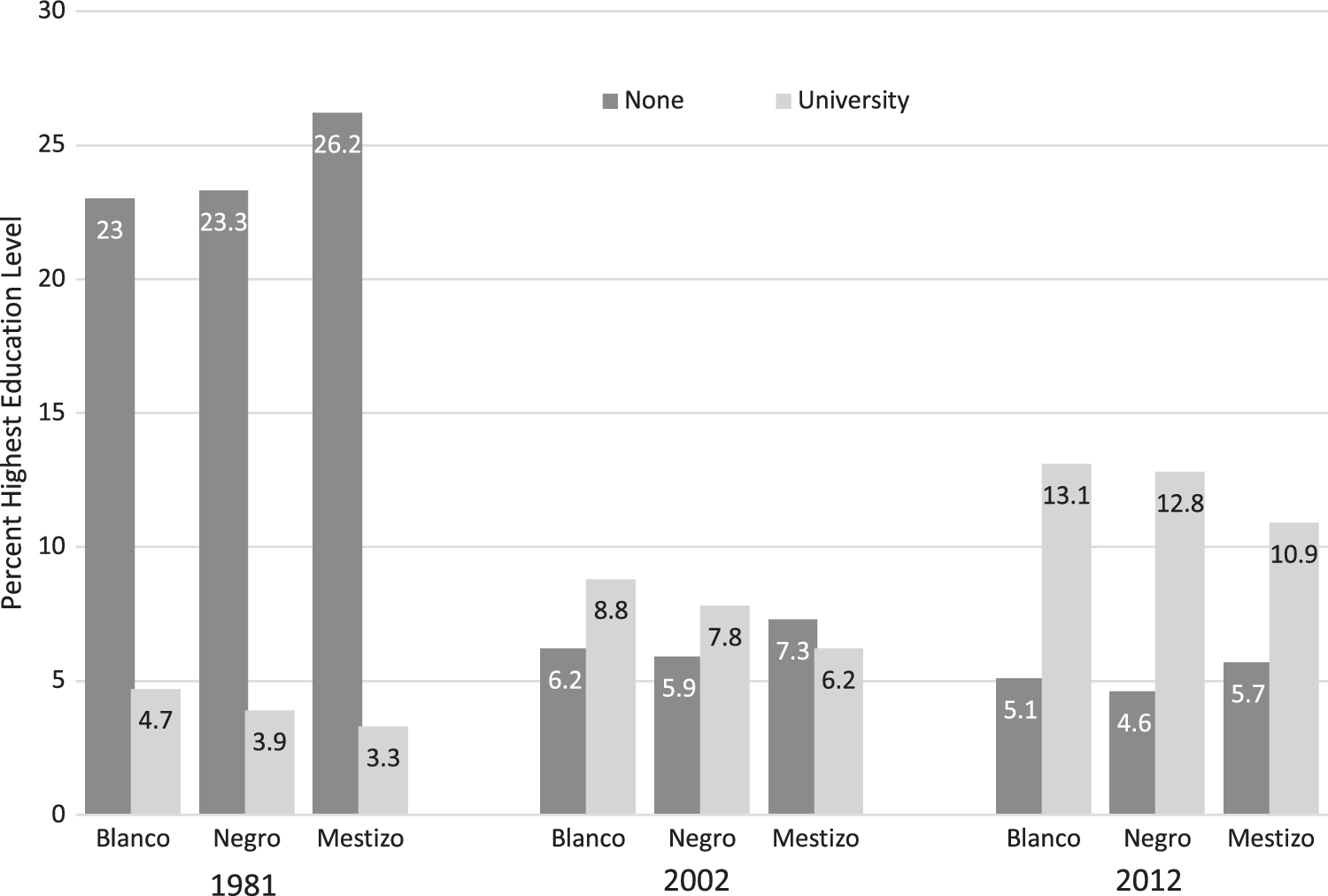
We were surprised to find that, according to census data, Cuba continued to be remarkably egalitarian in the early decades of the 21st century, even after the devastating impact of the Special Period of the 1990s. Before we try to make sense of these results, we examine the available evidence, comparing data from the censuses of 1981, 2002, and 2012. We start with education, one of the paradigmatic areas of success for the Cuban revolution. Figure 2 provides an initial and striking window on the depth of the transformation in Cuban’s education structure. Between 1981 and 2012, the proportion of people ten to forty-nine years old who had not completed elementary education declined drastically. Between one-fourth and one-fifth of the total were in this category in 1981, people who reached adulthood before the expansion of educational opportunities in the 1960s and 1970s. By 2002 their proportion was much lower (6% to 7%), but most important for our purposes is the fact that this decline happened for all racial categories in roughly similar ways. This is one area in which the Special Period does not appear to have produced racially differentiated effects.

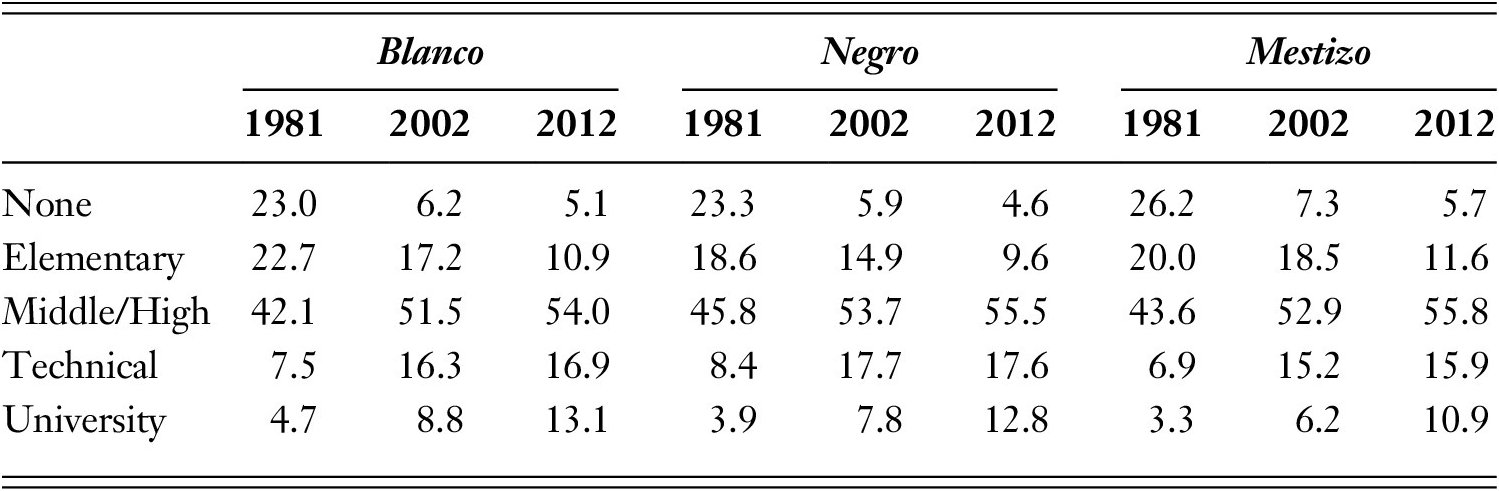
In fact, the results of the censuses of 2002 and 2012 indicate that racial inequality in educational attainment remained very low between 1981 and 2012. This was true at all levels, including the university, as presented in Table 1. In 1981 Whites were somewhat overrepresented among those with a university degree. By 2012 the proportion of university degree holders was almost identical for those described as negros (12.8%) and blancos (13.1%) by the census, although the proportion was lower among mestizos, at 10.9%. “The difference between Whites and non-Whites is of 0.7%, a figure which is too low to convey that there are inequities or discrimination in access to university education according to skin color,” noted the census report (ONEI 2016, p. 27).
Percent Highest Educational Level Completed by Skin Color, Population 10–49 years old, 1981, 2002, 2012

Those described as negros and mestizos by the 2012 Census also fared very well in advanced, postgraduate education. About one-third of all university graduates had pursued some postgraduate studies, the proportion being very similar across all racial categories (33% blancos; 32% negros; 30% mestizos). About 12% completed a master’s degree with minimal differences again between categories (12% for both blancos and mestizos, 13% for negros). Among those with doctoral degrees, the proportion of blancos (2.7%) was only slightly higher than among negros (2.1%) and mestizos (1.9%) (ONEI 2016, Table 9).
Racial inequality appears to be minimal at all levels of schooling. It should be noted, however, that from 1981 to 2012, negros were slightly overrepresented in two sectors of the educational system that are not particularly prestigious and that do not typically lead to good employment opportunities: the teachers’ schools and technical education (Table 1). Technical education is frequently pursued by those who do not or cannot enter the university. Negros and mestizos are also overrepresented among “obreros calificados” (roughly, skilled manual workers), that is, among people who pursue some sort of vocational education at the secondary level. In 2012, among those above six years old, 1.1% of blancos were “obreros calificados,” compared to 1.8% for negros and 1.6% for mestizos, i.e., very similar representation (ONEI 2016, Table 8).
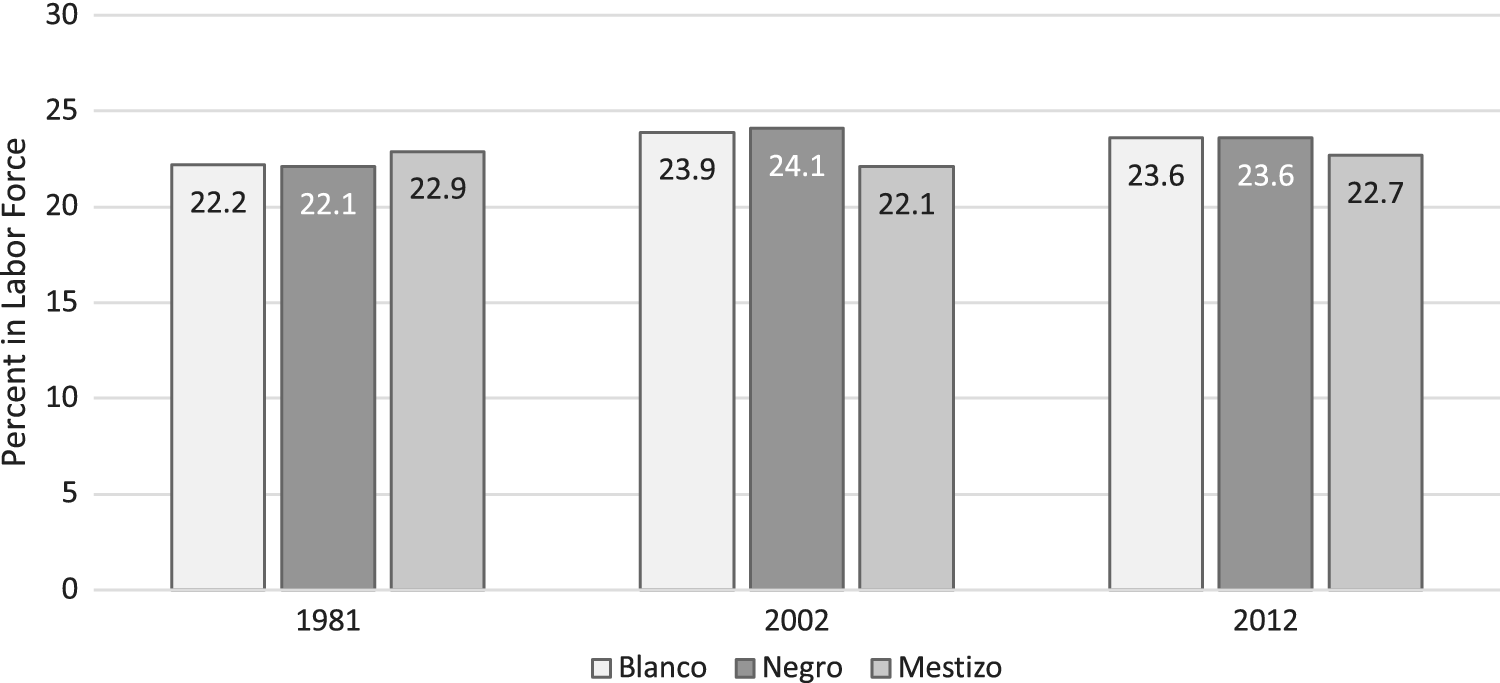
Egalitarian access to the public educational system probably helps explain why the occupational structure continues to display very low levels of inequality according to skin color. As Figure 3 shows, top occupations remained remarkably egalitarian during the three decades analyzed here. In 1981 the proportion of blancos working as professionals, scientists, and technicians (22%) was identical to that of negros and slightly lower than that of mestizos (23%). In 2002 and 2012 differences continued to be lower than one percent, although in this case the mixed category appeared at the bottom. Not only had the proportion of individuals in these occupations remained stable across time, but the distribution by skin color barely changed.

Among those described as dirigentes y gerentes (administrative and managerial personnel) in the censuses, inequality by skin color declined between 1981 and 2012. In the former date, 13% of blancos occupied such positions, compared to 7% of negros and 9% of mestizos. The racial gap in these occupations had declined significantly by 2002, as the proportion of non-Whites (9%) was closer to blancos (11%). It had basically disappeared in 2012, when the White/non-White gap had declined to just one percentage point. It is possible that more or less systematic state efforts are behind these trends. Starting in 1986, when the Third Congress of the Communist Party acknowledged the need to promote non-Whites, youth, and women to positions of leadership in greater numbers, Cuban officials have occasionally mentioned the need to be vigilant about this. Raúl Castro (Reference Castro2009, Reference Castro2011) has referred to the need to promote Afro-Cubans and described their underrepresentation in leadership positions as “shameful.” He mentioned the issue again in his report to the Seventh Congress of the Communist Party in 2016, calling to eliminate any “vestige of racism that prevents negros and mestizos from accessing positions of leadership” (Castro Reference Castro2016).
As in 1981, non-Whites were slightly overrepresented in some of the least prestigious manual occupations, but differences continued to be relatively minor and seem to have also declined over time. In 1981, 23% of blancos, 29% of negros, and 24% of mestizos worked in manual occupations outside agriculture. In 2002 those proportions were 21%, 24%, and 21% respectively. Differences had declined significantly by 2012, when 17% of blancos, 19% of negros, and 17% of mestizos performed these occupations. Non-White participation in some of the least rewarding economic sectors, such as construction, remained roughly similar: it was 41% in 1981 compared to 44% in 2012.
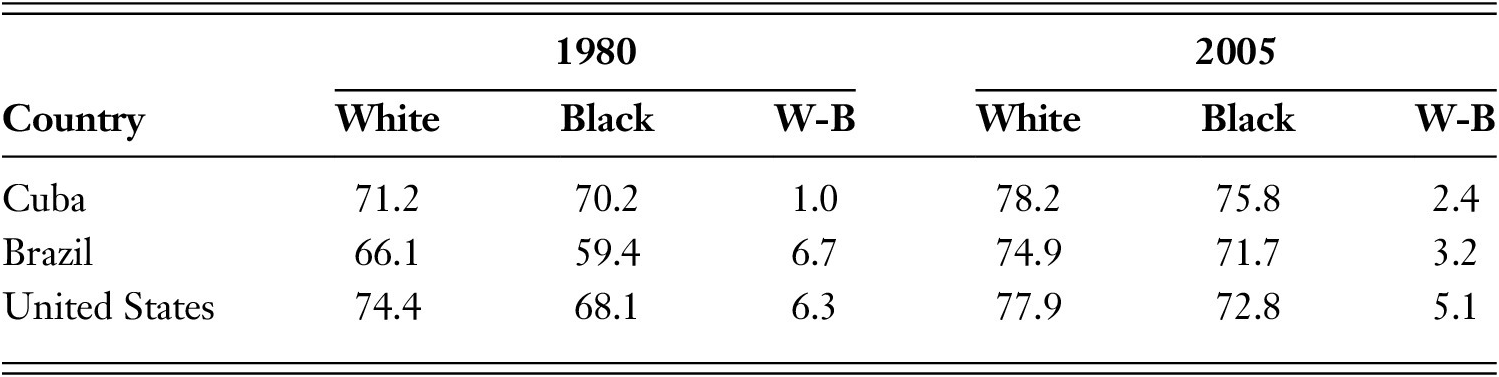
Cuba also continued to display minimal levels of racial inequality in another important indicator: life expectancy. Although the White-Black gap increased between 1981 and 2005 (see Table 2), it was still the lowest compared to Brazil (which declined considerably during this period, by about half) and the United States (which by 2005 had the largest racial gap at 5.1 years). Furthermore, according to these estimates, non-White Cubans had a life expectancy higher than White Brazilians and close to that of American Whites.
Life Expectancy by Skin Color/Race in Cuba, Brazil, and the United States, 1980 and 2005

Source: de la Fuente (Reference de la Fuente1995), Andrews (Reference Andrews2014), and Albizu-Campos (Reference Albizu-Campos2008)
Note: For Cuba and Brazil, “Black” includes mestizos, mulatos, or pardos.
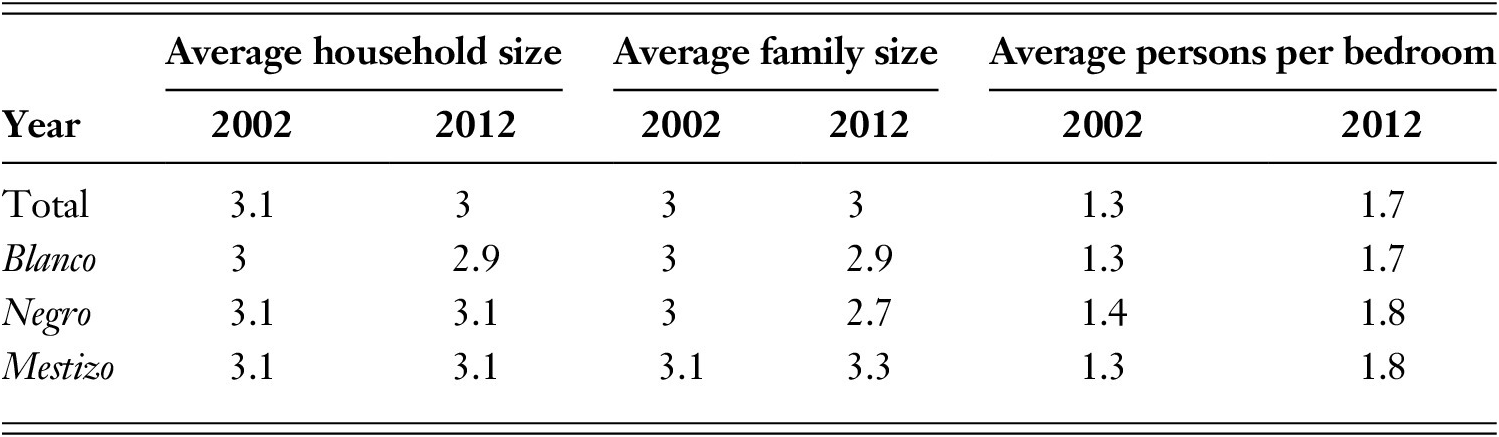
Even more surprising is the fact that, according to census data for 2002 and 2012, the overall housing situation of Whites and non-Whites was very similar. As Table 3 shows, inequality according to skin color was minimal in terms of family size, household size, and perhaps more importantly, the average number of persons per bedroom, a crucial indicator of crowding. This average grew by about 30% between 2002 and 2012, which, given the lack of population growth during these years, probably points to the growing deterioration of the island’s housing stock and to insufficient new construction. But for our purposes, the important point to highlight is that these increases were experienced by all groups in similar ways. They are not racially specific.

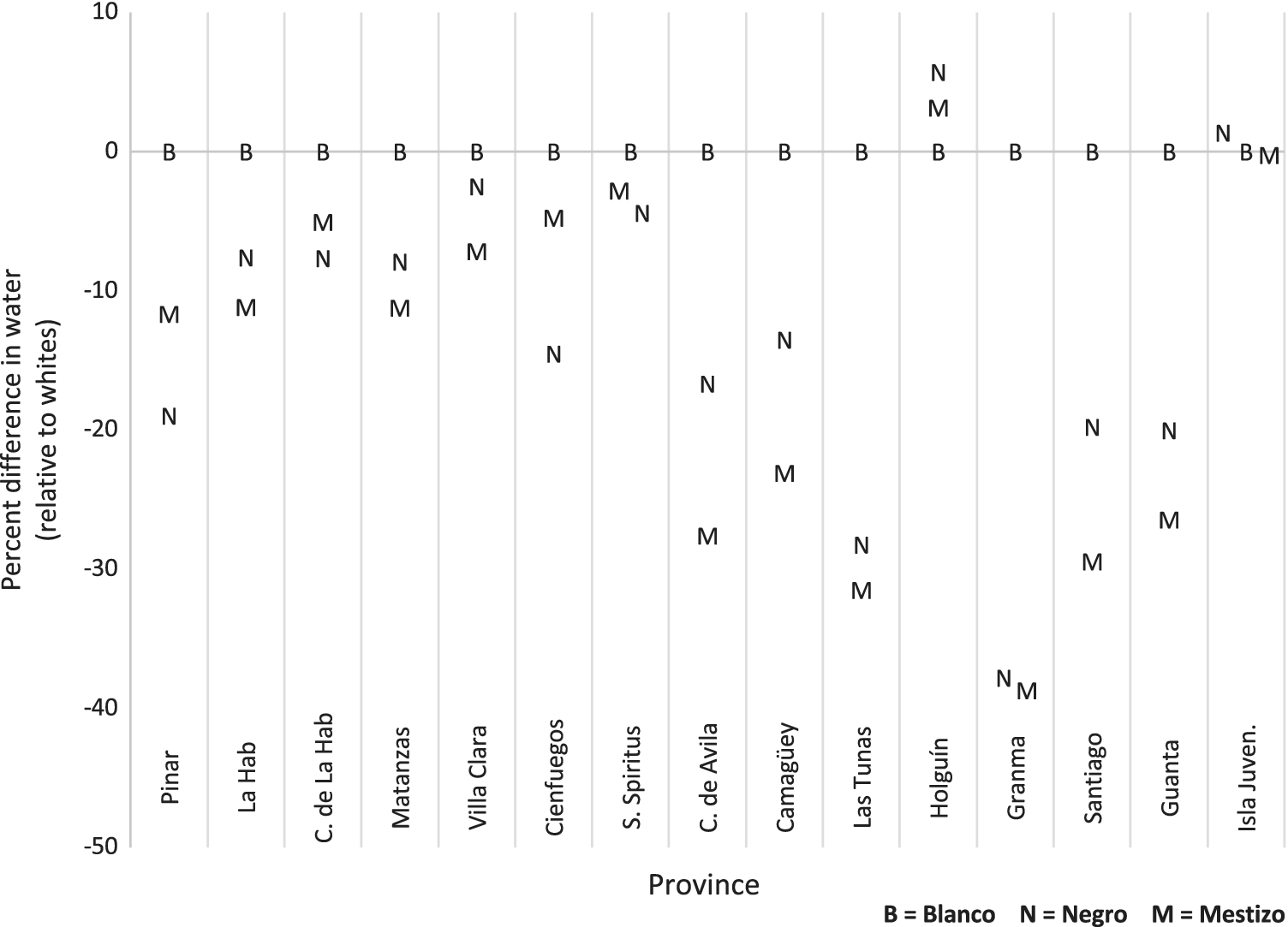
In some housing-quality indicators, however, racial differences are considerably greater. If one considers household access to piped water (2012 Census), for instance, it becomes evident that there is a gap between blancos and mestizos, who constitute the majority of non-Whites. Eighty-five percent of White-headed households have access to piped water compared to 80% among mestizos. (The percentage among negros was surprisingly high at 88%.) A closer look into the quality of this service reveals even greater differences. Sixty-two percent of White-headed households got piped water inside the dwelling compared to 53% among mestizos. The figure for negros was 63%. Conversely, a higher proportion of households headed by non-Whites obtained their piped water outside the dwelling. These results were roughly similar in 2002, when 62% of White-headed households received piped water inside the dwelling compared to 59% for negros and 47% for mestizos. The gap was particularly noticeable in some of the provinces, including the city of Havana, where close to 20% of the nation’s population lives. But as Figure 4 shows, the racial gap was generally consistent across the island, suggesting that non-Whites inhabit poorer quality housing than Whites. Access to piped water inside the dwelling impacts other services, such as the availability of bathing facilities of exclusive use within the household, which was greater among White-headed households in 2012 (75%, identical to negros) than among mestizos (62%). Figure 4 also points to the importance of regional differences in measurements of racial inequality, an interesting dimension that goes beyond the scope of this paper.
Percent Difference Piped Water inside Dwelling by Skin Color and Province, 2002.
Source: Cuban Census 2002 (MPC 2020).

Overall, the picture that our analysis of census data conveys is that of a country that continues to be racially egalitarian across several prime socioeconomic status measurements. There are indicators, in fact, that now display levels of equality greater than those observed in 1981, when Cuba’s welfare socialist state was fully capable, well financed as it was by generous Soviet subsidies. Racial inequality has remained extremely low or declined in education, in access to healthcare services and nutrition, as illustrated by life expectancy estimates, in the occupational structure, and in indicators of house crowding. Furthermore, between 1981 and 2012 the proportion of non-Whites in managerial positions increased, becoming virtually identical to that of Whites. Afro-Cubans are also well represented in the top echelons of the government, including the National Assembly and the Council of Ministers (Guerrero Reference Guerrero2018; Robles and Ahmed, Reference Robles and Ahmed2018). A 2001 study that sought to assess “racial differences in life chances and conditions” in Cuba among 1023 recent immigrants (i.e., who had been in the United States three months or less in 1998–1999) put it best: the authors found no “statistically significant differences among the races on the dimensions of economic well-being and life chances” (Aguirre and Bonilla Silva, Reference Aguirre and Silva2002, p. 320). The immigrants, that is, came from a racially egalitarian society.
RACIAL INEQUALIY: BEYOND OFFICIAL STATISTICS
Our results from the analysis of census data defy much of what we know about the evolution of racial inequality in Cuba since the 1990s from other sources. By the early 2000s, it was widely believed that racial inequality had increased in Cuba and that different forms of racial discrimination in employment, particularly in the so-called emergent economy (tourism and joint-venture firms), proliferated during the same period and are partly responsible for the widening racial income gap that has come to characterize Cuban society (de la Fuente Reference de la Fuente2011).
Supporting that assessment, activists have repeatedly contended that Whites and non-Whites today experience grossly unequal opportunities in terms of income, consumption, mobility, and access to capital resources. Following the lead of these organizations and activists, we use additional evidentiary sources in order to engage processes of social stratification by skin color that are not readily perceptible and/or measurable using census data. These sources include findings from published research using various non-census data sources, both quantitative and qualitative, as well as the voices and reports of social movement leaders and organizations. We posit that these data reflect social relations and realities that coexist in tension with some of the egalitarian tenets of official discourse in Cuba and that find echo in our analyses of census data presented above.
We start, again, with education. In October 2019, the Chancellor (Rectora) of the University of Havana, Miriam Nicado, a woman of African descent, created something of a scandal in social media after she publicly denounced the low percentage of “negros y mestizos” attending that institution of higher learning, which she placed at just 4.8% (Cabrera Pérez Reference Carlos2019). Studies using state education data reveal that at the University of Havana during the last decade the proportion of non-Whites among university students has declined. According to one such study, blancos represented 57.5% of all students in 2010 and 73% in the academic year 2013–2014. In the admissions exams for the following academic year (2014–2015), 56% of blancos passed compared to 46% of mestizos and 36% of negros (Almeida Junco Reference Yulexis2019). This has been one of the complaints of antiracist activists in Cuba who argue that the admission exams limit the opportunities of non-White and poor students who cannot afford to hire private tutors for preparation. The CONEG denounced the unequal access of Afro-Cubans to “university careers of the ‘first level’” in a letter to the President of the National Assembly in 2006 and demanded “the proportional access of members of poor families to educational centers of excellence” a year later (CONEG 2009).
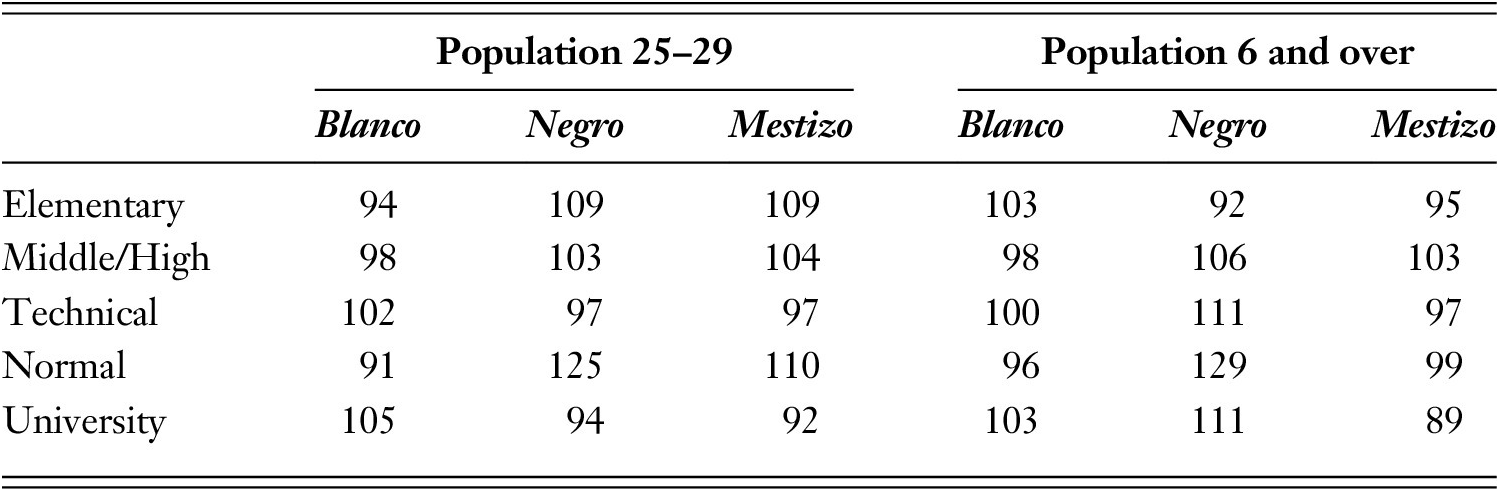
Notwithstanding the equalitarian trends we note above, we find some evidence in the latest census suggesting growing inequities by comparing educational achievement levels for twenty-five to twenty-nine-year-olds to that of the general population (six and over). Individuals in this age cohort were born in the years before the Special Period (ca. 1983–1987) and entered the public school system in the 1990s and 2000s. Results in Table 4 show that in the general population negros are overrepresented at the university level in 2012, outperforming both blancos and mestizos, the latter suffering distinct underrepresentation. However, when we focus on the twenty-five to twenty-nine age cohort, we detect a very different dynamic: overrepresentation of negros at the university level disappears and becomes underrepresentation (i.e., Black disadvantage). These results suggest that Afro-Cubans have been losing access to higher learning, just as activists, researchers, and Chancellor Nicado have claimed.
Representation Index, Educational Level Completed by Skin Color, 2012

Source: Cuban Census: ONEI (2016).
Note: Index of representation: percentage in each category divided by percentage in the population.
We can leverage some further insight into racial inequalities in education by engaging the question of the racially disparate effects of changes in education policy that may have more directly affected this cohort’s access to higher education than that of the general population. Specifically, Cuba experimented with flexible and expanded mechanisms for university admission called “municipalization,” or the “municipal university system,” from 2000 to 2010. The goal of the “municipalization” education policy was to increase university enrollment of less favored sectors of society by removing enrollment tests. This plan multiplied opportunities for higher learning, generating a significant increase in university enrollment, but it did so at the expense of quality. For example, there is fragmentary but telling evidence suggesting that the proportion of non-Whites who accessed the university through the low-quality municipal university system was almost double those who managed to obtain a position through the regular admissions exam. Moreover, the increased admissions it produced probably masks greater inequities in access to standard institutions, particularly to the top and most prestigious schools, such as the University of Havana. The system was abandoned in 2010, resulting in a rapid decline in university admission rates (Almeida Junco Reference Yulexis2019), and it was probably at this point that non-Whites began to fall behind in admissions, as Chancellor Nicado noted in her intervention.
Activists have also denounced, repeatedly, the “scandalous absence of black people [personas negras] in important sectors of society, from the media through the splendid tourist spaces and hard currency markets to the high levels of the state” (Zurbano Reference Zurbano2011). The lack of access to hard currency is related to three important factors: 1) access to remittances, which have grown exponentially during the last twenty-five years; 2) access to jobs that pay salaries in hard currency or make it possible to collect tips, as in tourist-related occupations and businesses; and 3) access to self-employment in the private sector, particularly since the reforms introduced by Raúl Castro in 2010. In general, the non-state sector, including the fast-growing private sector, pays higher salaries and provides greater opportunities for capital accumulation than jobs in the state sector, where salaries continue to be regulated by law and are in consequence more egalitarian but lower than the non-state sector.
All the available evidence points to lower representation of non-Whites in this privileged and growing non-state sector of the Cuban economy. A social survey conducted in Havana in the year 2000 found that 70% of Whites work in the low-paying state sector compared to 81% of Mulattos and 84% of Blacks (Blue Reference Blue2007). According to the census of 2012, 76% of blancos work in the state sector, compared to 83% of negros and 78% of mestizos. Non-Whites are also overrepresented in Cuban-owned companies, as opposed to companies financed by joint venture capital. They represent 50% of the employees in “Cuban Mercantile Societies,” compared to 28% in the joint ventures and 29% in foreign companies, where salaries and benefits are significantly better (ONEI 2016, pp. 38-39).
Afro-Cubans have also encountered significant barriers to access the growing private sector, which includes self-employment in tourist-related services such as housing rentals, restaurants, and transportation. Many of these activities are financed by remittances sent by family members abroad and are used to finance consumption, creating what CONEG described in 1998 as massive “differences in the purchasing power and living standards in the Cuban population” by skin color (CONEG 2009). However, in the last decade the remittances have also begun to finance investments, thereby becoming engines of further social stratification. Given the racially differentiated nature of these flows, a function of the sociodemographic composition of Cuban émigré populations, particularly in South Florida, stratification happens along racial lines.
The recipients of most remittances are White. According to various estimates, between 60% and 90% of White households have relatives abroad, compared to 30% to 40% among non-Whites. A field study conducted in Cuba in 1996–2002 concluded that blancos were 2.5 times more likely than negros and 2.2 times more likely than mestizos to be recipients of remittances (Espina Prieto and Rodríguez Ruiz, Reference Rodrigo and Ruiz2006). Based on the data produced by a more recent study (Hansing and Hoffmann, Reference Hansing and Hoffmann2019), we estimate that the ratio of remittance reception is 76% among Whites, compared to 29% among non-Whites.
Compounding the racially differentiated effects of these capital and monetary flows are two additional factors, both of which have been also highlighted by Afro-Cuban activists and organizations. Because of historical disadvantages that did not disappear or decline significantly during the early decades of the revolution, Afro-Cubans were poorly positioned to take advantage of new opportunities in self-employment and the private sector. As reported by the CIR (2018), “the ‘new opportunities’ are based on assets that Afro-Cubans lack, like capital to start new ventures that deal with the uncertainties and challenges of the economy. More specifically, they do not have the real estate and other goods (houses, automobiles) needed to carry out the economic activities that are now allowed by the government.”
The CIR’s assessment is likely correct. About 5% of the more than 600,000 people who are now registered as self-employed rent their own houses in the hard currency sector. Another 8% own businesses devoted to making and selling food, most likely the so-called paladares, or family-owned restaurants (Silva Correa Reference Correa and Yenia2019).Footnote 9 Both activities require access to adequate housing, or the capital resources needed to buy and refurbish a property.
In addition, because of their concentration in low quality housing, a concentration that, as mentioned above, is hinted at in some census indicators, such as access to piped water inside the dwelling, non-Whites are at a great disadvantage to participate in these activities, especially as owners and entrepreneurs. They live in significant or disproportionate numbers in some of the municipalities that attract the largest numbers of tourists in Havana, such as Habana Vieja and Centro Habana; but, these municipalities are also characterized by substandard and decaying housing, as illustrated by the regional distribution of tenement houses in the city. In 1981, 13% of all houses in Havana were described as solares or tenement houses. The proportion was three times higher in Centro Habana and almost four times higher in Habana Vieja. The proportion of houses with collective sanitary services in these municipalities was also three to four times higher than in the city as a whole.Footnote 10 A 2005 study concerning race and housing in Havana, Santiago de Cuba, and Santa Clara found that 96% of negros and 69% of mestizos lived in crowded “popular” neighborhoods compared to 58% of blancos. Only 4% of negros lived in “residential” neighborhoods, those characterized by separate housing units with their own land. The study also found that the proportion of blancos living in tenement houses (solar, cuartería and pasaje) was substantially lower than the proportion of mestizos and particularly negros living in those conditions (Núñez González Reference González and Niurka2007).
Adding considerably to the disadvantage of Afro-Cubans is the fact that openly racist and discriminatory practices appear to be not only tolerated but common in the growing private sector and also in the dollarized public sector (Clealand 2017; de la Fuente Reference de la Fuente2001; Duharte and Santos, Reference Duharte and Santos1997; Sawyer Reference Sawyer2006). Activists have repeatedly denounced the circulation of employment advertisements that specify racial and gendered preferences, in addition to age, for positions in these sectors. Sometimes the ads simply make reference to veiled but racialized notions of pleasant appearance—presencia adecuada, buen porte y aspecto—as the state-owned Tiendas Caribe did in a 2017 announcement that also specified age (younger than thirty-five) and height (1.55 meters for women, 1.6 for men) requirements. Oftentimes, however, the employment ads, particularly in the private sector, make explicit reference to race and gender: “looking for a young woman (muchacha) to work in the restaurant… The muchacha must be blanca, know a bit of English, and have a pleasant appearance” (IPS 2017). The advertisement website Revolico.com, where many Cubans list or solicit all sorts of goods and services, frequently posts announcements that include similarly explicit racial preferences, as did one posted by “Omar” on September 21, 2019, for a cleaning person: “reliable lady, with experience, and of the White race.”Footnote 11 When a new Havana nightclub catering to tourists and affluent Cubans looked for personnel in 2017, it posted the following public sign: “Seeking qualified experienced personnel: wait staff (good looking blonde or brunette women who speak foreign languages) and security and protection (strong men of color)” (Jiménez Enoa Reference Enoa and Abraham2017).
In sum, the combined effects of the following factors have resulted in growing levels of income inequality according to race: 1) historically-based disadvantages in housing and other resources; 2) major racial disparities in monetary and capital flows through remittances; 3) the retreat of a public sector that no longer offers opportunities for material rewards and social advancement, as in the past; and 4) racist practices in employments and promotion in the private sector and in the hard currency segments of the public sector.
Detailed data on income in Cuba is notoriously difficult to obtain. Individuals receive monetary resources from a variety of sources, including remittances and, depending on occupation, tips. Moreover, monetary earnings come in a variety of currencies, including the devalued Cuban peso, the so-called Cuban Convertible Peso or CUC, and hard (i.e., foreign) currency, most of which travels through private, non-official channels. Cubans also continue to receive state-subsidized goods and services, and these resources represent an important source of support for the most vulnerable sectors of the population. Nonetheless, it is well known that the value of these subsidies has eroded significantly during the last few decades.
Regardless of these qualifications, all available studies concur on one key finding: Afro-Cubans are overrepresented in the lowest income deciles and severely underrepresented at the top of the income structure (Añé Aguiloche Reference Lia2005; Blue Reference Blue2007; de la Fuente Reference de la Fuente2011; Ferriol et al., Reference Ferriol, Ramos and Ane2004). In one of the most recent (and best executed) field studies, Katrin Hansing and Bert Hoffmann (Reference Hansing and Hoffmann2019) found that whereas 95% of Afro-Cubans make less than $3,000 (U.S. dollars) per year, only 58% of Whites are in that income category. Conversely, while 10% of Whites make $20,000 or more per year, none of the Afro-Cuban respondents in their study belonged to this income bracket. The authors also documented that type of business and hence income was racially stratified among those engaged in self-employment and private sector activities. Whereas White Cubans dominated the lucrative tourist accommodation sector (i.e., renting rooms in private homes), Afro-Cubans were overrepresented in much less lucrative types of self-employment, such as services (crafts), and vending. As a result, the authors report that 77% of Afro-Cuban entrepreneurs had monthly sales under 250 CUC, compared to 30% among Whites. At the other end of the spectrum, the authors reveal that 31% of Whites in their study reported monthly sales of 1000 CUC or more, whereas no Afro-Cuban respondents belonged to this income bracket. These income differences are public, well known, and openly debated, particularly among Afro-Cubans, who are forced to cope with these racialized barriers.
Other practices contribute to the sense among antiracism activists and scholars that racism and discrimination are rampant in Cuban society, even though they may be even more difficult to document with accessible quantitative data. These include systematic police profiling, which targets young Afro-Cuban males as criminals in a variety of social situations, particularly when tourists are involved; the public circulation of racist epithets, and of racially loaded images, jokes, and comments, including in the state media; and the implementation of openly racist practices in the growing private sector, not just in terms of employment, but also in terms of access and admission to such spaces (Abreu Reference Abreu2019b; Clealand 2017; DDC 2018; Fowler Calzada Reference Víctor2015; Jiménez Enoa Reference Enoa and Abraham2017; Perry Reference Perry2016; Saunders Reference Saunders2015). These practices, epithets, and exclusions are grounded on the widespread belief, even among highly educated Cubans, that different human races do exist in the biological sense, and that they can be identified through a variety of phenotypical features such as skin color, hair texture, and so on (Martínez Fuentes and Fernández Díaz, Reference Fuentes, Antonio and Fernández Díaz2006).Footnote 12
CONCLUSION
Our assessment of racial inequality in Cuba since the 1980s suggests that it is possible to sustain radically different narratives concerning racism, inequality, and discrimination in Cuban society. On the one hand, according to census data, Cuba continues to be a remarkably egalitarian country in several important metrics of racial stratification in distinct contrast, for example, to the United States and Brazil. These areas of noted racial equality include access to education, health care, white collar jobs, and positions of leadership within the government. As a result, the authors of the 2012 census report write that the term afrodescendiente, which has been promoted by civil rights organizations in Latin America since the early 2000s, was not “applicable” in Cuba. That term, the authors argued, is “linked to marginality and open discrimination,” something that does not happen in Cuba (ONEI 2016, p. 9). Nonetheless, the fact that many antiracist activists and organizations on the island, such as the Red Barrial Afrodescendiente, invoke and claim this very term highlights the existence and power of an alternative narrative concerning racial discrimination in Cuban society. These activists speak, precisely, of the sort of marginalization and exclusion that many of their peers denounce across Latin America. As one of these activists (Cuesta Morúa Reference Manuel2020) states, in Cuba “racism is structural.” Moreover, as we presented above, there is ample evidence to support this claim.
How can these contrasting perspectives—racial equality and racial discrimination—coexist? Cuba’s social egalitarianism is linked to its public sector, which was overwhelmingly dominant through the 1980s. As in the United States, where public employment became an important engine for African Americans’ social mobility (Wilson Reference Wilson2011), in Cuba this sector was an important source of social benefits, including salaries, that were channeled through universal policies that functioned as engines of racial (and other forms of social) equality. Professional and managerial jobs in the state sector conferred prestige, opportunities, and some degree of material well-being. The public sector, however, has been in retreat in Cuba during the last three decades, eroding some of the bases of Cuban egalitarian socialism. According to the 2012 Census, about one-fifth of the working population belonged to the non-state sector; that proportion had risen to 32% by mid-2019 (Fuentes Puebla Reference Thalía2019). Non-Whites are overrepresented in the state sector, where salaries are considerably lower.
Earnings, a core metric of inequality and a key determinant of social mobility, are considerably higher in the non-state sector of the economy. However, non-Whites are seriously underrepresented in this sector due in part to their lack of access to capital goods (housing stock) and credit markets (e.g., via remittances). But even those non-Whites who manage to obtain a job in this sector are frequently at a disadvantage because they encounter racialized barriers that limit their opportunities due to widespread racist notions of adequacy and desirability. About half of workers in the non-state sector are self-employed or labor in the growing private sector, but racial discrimination appears to be especially rife there. In this fastest growing and best remunerated sector of the Cuban economy, overtly racist practices in recruitment, promotion, and distribution of employment are generating vast income inequality by skin color.
We have no evidence to suggest that census data have been falsified. Yet, these data convey a picture of equality that can be misleading, or, at the very least, partial. Indicators of educational attainment are a case in point. The censuses of 2002 and 2012 suggest that non-White Cubans were able to access university education in proportions roughly similar to their percentage in the total population. However, these figures are distorted by the dramatic expansion of educational opportunities through the so-called municipalization of university education that masks differences in access to the country’s more rigorous and competitive university centers. As we argued above, a careful look at the age twenty-five to twenty-nine cohort in the census of 2012 suggests that negros are falling behind also in this area.
In addition, regarding education in relation to earnings, we have to consider that this association is very complex and growing more contradictory in Cuba. In general, the centrality of education to upward social mobility rests in the notion of returns to education in the form of income, as stipulated in human capital theories (Borjas Reference Borjas2004). Hence, increase in access to education is key to upward income mobility for the individual, and increased racial equality in educational achievement should mitigate racial stratification in income over time. In contemporary Cuba, however, higher earnings increasingly rest on success in non-state sectors of the economy and especially in the private sector. But it is in this key sector that skin-color stratification is particularly salient. Racial discrimination in non-state employment converts Whiteness into an asset for upward income mobility and by implication erodes the earnings value of educational attainment that was so key to promoting racial income equality during earlier periods in post-1959 Cuba.
The Cuban example suggests, then, that racial equality in key areas and indicators, such as educational achievement, can coexist with racist ideologies and practices such as those generating racial stratification in earnings though private sector employment. The dynamics of racial structuring, then, are complex; racism and its attenuation can be coterminous in a single space or occupy different dimensions. Livio Sansone (Reference Sansone2003) typologized the coexistence of “hard” and “soft” “areas” of racial experience in Brazil where skin color was either lived as decisive or was considered irrelevant, respectively. The former “areas” were of exclusion, such as the labor market, and the latter of inclusion, such as leisure activities. Edward Telles (Reference Telles2004) similarly focused on the multidimensionality of racial dynamics in Brazil where he juxtaposed horizontal sociability to vertical hierarchization; a focus on the former (i.e., interpersonal relations) produced conclusions different from a focus on the later (i.e., power relations and income distribution). Our findings and argument find some echo in that earlier work as well as in recent and telling research by Edward Telles and Albert Esteve (Reference Telles and Esteve2019). In this comparative study of intermarriage in Brazil, the United States, and Cuba, the authors found that Black-White intermarriage is considerably lower in Cuba than Brazil, even though the latter is a much more unequal country on various other measures. Racial equality in Cuba, in other words, does not translate into expected higher levels of racial sociability as proxied by rates of interracial marriage. In Sansone’s terminology, the marriage market remains a “hard” space in Cuba (i.e., one of high degree of racial closure); in Telles’s earlier framing, the horizontal or interpersonal dimension of racial sociability in Cuba is strained.
Additional empirical research is badly needed in this and other areas in order to better assess the multidimensionality and even contradictory experience of skin color in Cuba and how, beyond political inclinations and ideological disputes, levels and locations of racial inequality may be shifting in the nation. It is also important to note that, as activists have repeatedly stated, there are key areas of Cuban life where racial inequality is fast increasing and where racist practices are widespread and becoming normalized. Census figures tell an important story, but do not tell the whole story. As we noted at the beginning of this paper, Cuban authorities announced in 2019 a national program against racism. No such program can succeed in the absence of data and of serious research using multiple analytic strategies and data sources, and we hope that this paper will contribute to those efforts.