Younger-onset dementia (YOD), also referred to as early-onset dementia (Jefferies and Agrawal, Reference Jeffries and Agrawal2009), is generally defined as the onset of dementia symptoms before the age of 65 years (WHO, 2012). There is growing recognition of the unique clinical and social implications posed by YOD (Sampson et al., Reference Sampson, Warren and Rossor2004). Younger people with dementia are more likely to have significant financial responsibilities (Beattie et al. Reference Beattie, Daker-White, Gilliard and Means2004; Harris, Reference Harris2004), be in paid employment (Flynn and Mulcahy, Reference Flynn and Mulcahy2013), caring for children (Flynn and Mulcahy, Reference Flynn and Mulcahy2013; Kimura et al., Reference Kimura, Maffioletti, Santos, Baptista and Dourado2015; Roach et al., Reference Roach, Drummond and Keady2016), and be physically fitter and healthier at the time of onset (Sansoni et al., Reference Sansoni, Duncan, Grootemaat, Samsa, Capell and Westera2014; Withall et al., Reference Withall, Draper, Seeher and Brodaty2014). These factors result in divergent care and support needs compared to older people living with dementia. The prevalence of YOD is unknown but estimates suggest that it may account for between 6–9% of all dementia cases (WHO, 2012).
The causes of dementia in the younger population are typically more varied compared to the older population (Harris, Reference Harris2004; McMurtray et al., Reference McMurtray, Clark, Christine and Mendez2006; Mendez, Reference Mendez2006; Jefferies and Agrawal, Reference Jeffries and Agrawal2009). This often results in a broad range of symptoms including neurological, cognitive, behavioral, and psychiatric symptoms frequently resulting in diagnostic challenges for health professionals (Sampson et al., Reference Sampson, Warren and Rossor2004; Mendez, Reference Mendez2006). Research conducted by Novek et al. (Reference Novek, Shooshtari and Menec2015) showed the average time from symptom onset to diagnosis for people with YOD was 4.4 years compared to 1.3 years for people with later onset dementia (LOD). The delay in receiving a diagnosis often results in considerable anxiety for the person living with dementia and their spouse, as they contemplate alternative explanations for behavioral changes such as marital problems, depression, brain tumor, or midlife crisis (Sampson et al., Reference Sampson, Warren and Rossor2004; Lockeridge and Simpson, Reference Lockeridge and Simpson2012). Many people with YOD and their families report considerable difficulties in accessing services and supports with most services designed for older populations (Alzheimer's Australia, 2007; Werner et al., Reference Werner, Stein-Shvachman and Korczyn2009; Lockeridge and Simpson, Reference Lockeridge and Simpson2012). This often results in people with YOD living in the community longer (Kimura et al., Reference Kimura, Maffioletti, Santos, Baptista and Dourado2015) and, in many cases, being cared for by a spouse, resulting in significant changes in the spouse relationship (Alzheimer's Australia, 2007; Harris and Keady, Reference Harris and Keady2009).
The impact of dementia on spousal relationships has been documented in older populations (Hayes et al., Reference Hayes, Boylstein and Zimmerman2009; Davies et al., Reference Davies2010; Dourado et al., Reference Dourado, Finamore, Barroso, Santos and Laks2010; Quinn et al., Reference Quinn, Clare and Woods2015). However, little is known regarding the YOD population (Sansoni et al., Reference Sansoni, Duncan, Grootemaat, Samsa, Capell and Westera2014). For those with LOD, reduced marital cohesion (Davies et al., Reference Davies2010) and increased feelings of “separateness” from the person with dementia are common (O'Shaughnessy et al., Reference O'Shaughnessy, Lee and Lintern2010). The loss of equal relations (Eloniemi-Sulkava et al., 2002; O'Shaughnessy et al., Reference O'Shaughnessy, Lee and Lintern2010), changes in household roles and responsibilities (Daniels et al., Reference Daniels, Lamson and Hodgson2007; Merrick et al., Reference Merrick, Camic and O'Shaughnessy2016), declines in emotional intimacy (Wright, Reference Wright1998; Hayes et al., Reference Hayes, Boylstein and Zimmerman2009; Quinn et al., Reference Quinn, Clare and Woods2015), and sexual activity (Davies et al., Reference Davies2010; Dourado et al., Reference Dourado, Finamore, Barroso, Santos and Laks2010) are also frequently reported. The impact of YOD on the spouse relationship will likely be different compared to those with LOD due to their phase of life (Bookwala, Reference Bookwala, Reis and Spechner2009). As such, it is envisaged that the information, service, and supports designed to assist couples with LOD would be inappropriate for the YOD population.
This systematic review reported on published literature describing the impact of YOD on relationships, intimacy, and sexuality from the perspective of the spouse, the person with dementia or both members of the dyad. The gaps in knowledge, methodological issues, and areas for future research will be discussed. The current review will assist in informing service providers and clinicians on the information, service, and support needs of people with YOD and their spouse regarding relationships, intimacy, and sexuality.
Method
Search and selection
A systematic literature search was conducted to identify relevant research studies in July 2016. The following databases were searched as a part of the review: Web of Science, PsycINFO, MedLine, Scopus, and CINAHL. The reference lists of articles included in the review were also screened. Search terms relating to key concepts included for the condition (young* OR early OR presenile) and (dementia or alzheimer*); for the sample (marital OR spouse* OR couple); and (sexual* OR intimacy OR relationship). The full list of the combination of search terms used in the review are detailed in Appendix 1.
Studies were included in the review if they met the following inclusion criteria: (1) used a qualitative or quantitative approach; (2) one spouse had a diagnosis of dementia; (3) research participants were aged under 65 years at the time of onset of dementia; (4) spouses/partners were in a heterosexual relationship; (6) the research explored relationships, intimacy, or sexuality between spouses from the perspective of the spouse, the person with dementia, or both members of the dyad; and (7) studies were published in peer-reviewed journals.
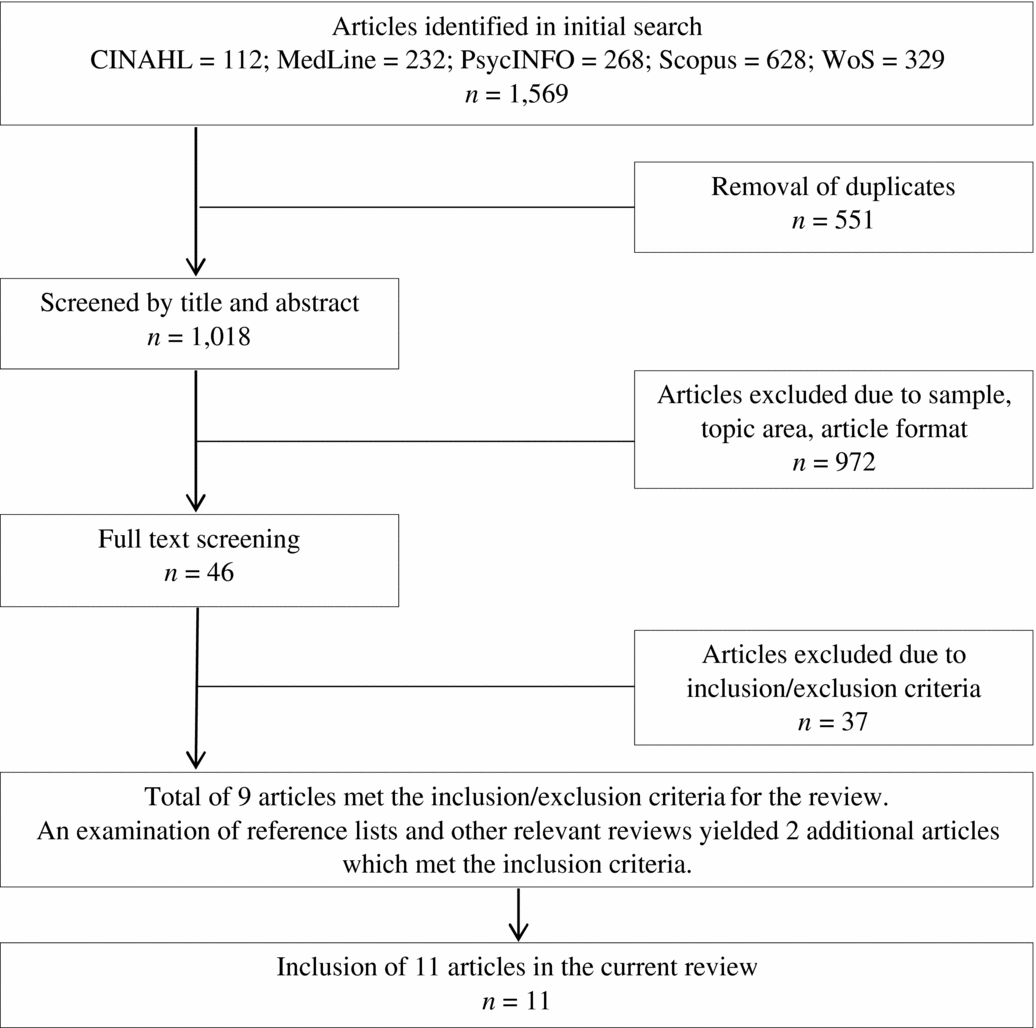
Studies were excluded if: (1) research participants were 65 years or over at the time of onset of dementia; (2) the participant's diagnosis of dementia was not explicitly stipulated in the publication; and (3) the research paper was not available in English. The selection process is shown in Figure 1. The search resulted in 1,018 papers after the removal of duplicates. Title and abstracts were screened and 972 articles were rejected because they did not meet the inclusion/exclusion criteria. A total of 46 articles were subject to full text review with 37 of the articles excluded. Two additional articles were identified from the reference lists of included studies bringing the total number of articles included in the review to 11.
Flow chart of search process.

Results
Study characteristics
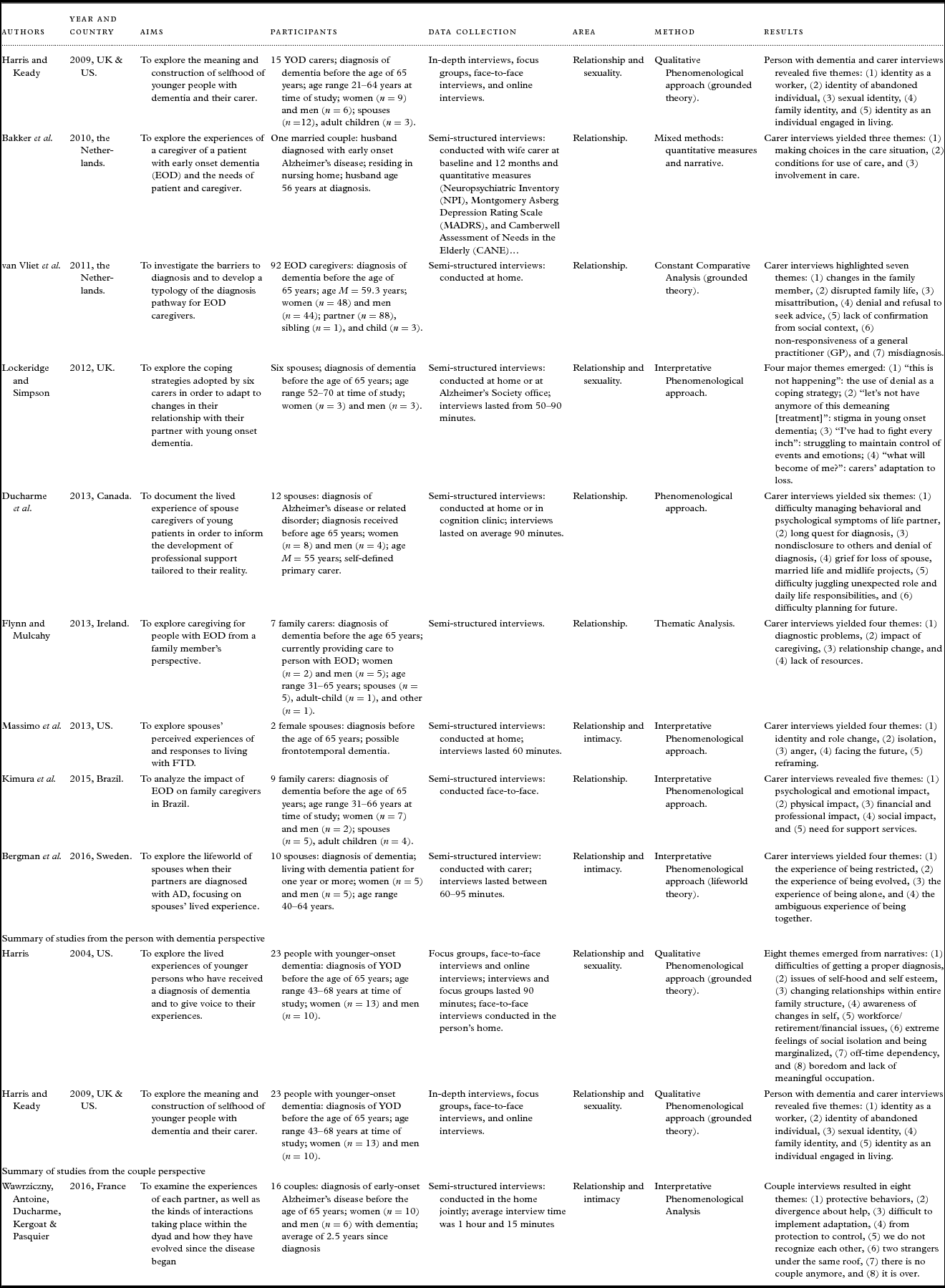
The selected articles for review are outlined in Table 1. The reviewed studies were heterogeneous in terms of study design, methods, and sample sizes. Four of the reviewed studies included other dyads (adult child or sibling carer) as well as spouse dyads in their sample (Harris and Keady, Reference Harris and Keady2009; van Vliet et al., Reference van Vliet2011; Flynn and Mulcahy, Reference Flynn and Mulcahy2013; Kimura et al., Reference Kimura, Maffioletti, Santos, Baptista and Dourado2015). Nine studies included the view of the spouse or other carer dyad, two studies were from the perspective of the person with dementia, and one study looked at the perspective of the couple. The study by Harris and Keady (Reference Harris and Keady2009) included both the perspective of the person with dementia and carers separately. This was due to data collection for the study being conducted in two countries; US data incorporated interviews with 23 people diagnosed with YOD while the UK data included 15 carers (in many cases a spouse) of people with YOD. Eight of the reviewed studies used semi-structured, in-depth interviews as the primary method for data collection (van Vliet et al., Reference van Vliet2011; Lockeridge and Simpson, Reference Lockeridge and Simpson2012; Ducharme et al., 2013; Flynn and Mulcahy, Reference Flynn and Mulcahy2013; Massimo et al., Reference Massimo, Evans and Benner2013; Kimura et al., Reference Kimura, Maffioletti, Santos, Baptista and Dourado2015; Bergman et al., Reference Bergman, Graff, Eriksdotter, Fugl-Meyer and Schuster2016; Wawrziczny et al., Reference Wawrziczny, Antoine, Ducharme, Kergoat and Pasquier2016), two studies used a combination of in-depth interviews, online interviews, and focus groups (Harris, Reference Harris2004; Harris and Keady, Reference Harris and Keady2009), and one study used both semi-structured interviews and quantitative measures to collect data (Bakker et al., Reference Bakker, de Vugt, Vernooij-Dassen, van Vliet, Verhey and Koopmans2010).
Summary of studies from the spouse/partner perspective

The reviewed studies included people living with dementia who were residing in the community or had recently moved into full-time care. There was considerable variation in the amount of information provided regarding the dementia diagnosis. Alzheimer's disease was the most common type of dementia diagnosed followed by frontotemporal dementia (Harris, Reference Harris2004; Harris and Keady, Reference Harris and Keady2009; Bakker et al., Reference Bakker, de Vugt, Vernooij-Dassen, van Vliet, Verhey and Koopmans2010; van Vliet et al., Reference van Vliet2011; Ducharme et al., 2013; Massimo et al., Reference Massimo, Evans and Benner2013; Kimura et al., Reference Kimura, Maffioletti, Santos, Baptista and Dourado2015; Bergman et al., Reference Bergman, Graff, Eriksdotter, Fugl-Meyer and Schuster2016; Wawrziczny et al., Reference Wawrziczny, Antoine, Ducharme, Kergoat and Pasquier2016); however, in some studies the type of dementia was unclear (Lockeridge and Simpson, Reference Lockeridge and Simpson2012; Flynn and Mulcahy, Reference Flynn and Mulcahy2013). There were also disparities in the provision of information regarding interview questions. Only four studies provided detailed information regarding the specific questions asked of participants during the course of interviews (van Vliet et al., Reference van Vliet2011; Ducharme et al., 2013; Massimo et al., Reference Massimo, Evans and Benner2013; Bergman et al., Reference Bergman, Graff, Eriksdotter, Fugl-Meyer and Schuster2016) with the majority either providing no information regarding interview questions (Harris and Keady, Reference Harris and Keady2009; Lockeridge and Simpson, Reference Lockeridge and Simpson2012; Flynn and Mulcahy, Reference Flynn and Mulcahy2013) or only providing information regarding the topic areas discussed during interviews (Harris, Reference Harris2004; Bakker et al., Reference Bakker, de Vugt, Vernooij-Dassen, van Vliet, Verhey and Koopmans2010; Kimura et al., Reference Kimura, Maffioletti, Santos, Baptista and Dourado2015; Wawrziczny et al., Reference Wawrziczny, Antoine, Ducharme, Kergoat and Pasquier2016).
Quality assessment
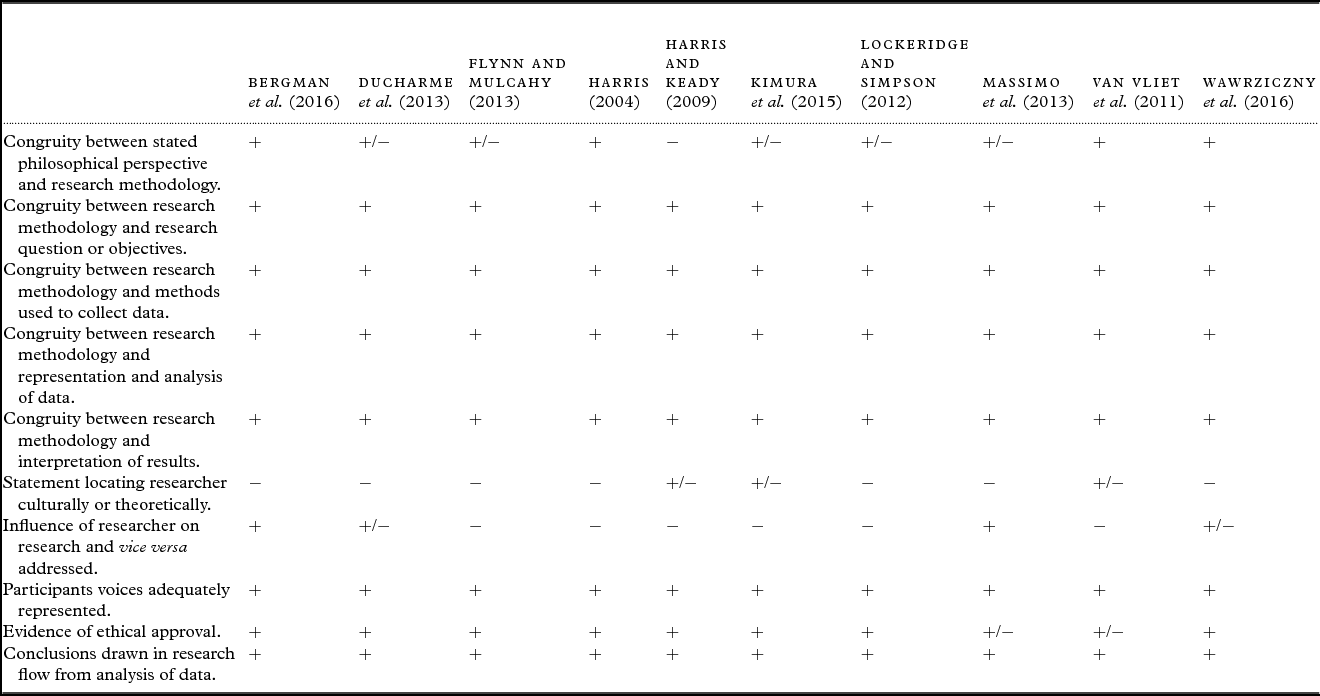
The studies included in the review were appraised using the Joanna Briggs Institute (JBI) Critical Appraisal Checklist for Qualitative Research (Joanna Briggs Institute, 2016) with ten criteria. The quality appraisal of included studies is shown in Table 2. Studies were appraised by the first author; however, a further credibility check was performed on a selection of papers by the second author who has experience with the quality assessment tools. The JBI Checklist for Case Reports (Joanna Briggs Institute, 2016) with eight criteria was used to appraise one of the studies (Bakker et al., Reference Bakker, de Vugt, Vernooij-Dassen, van Vliet, Verhey and Koopmans2010). If the criterion was met, it was rated yes or no if criterion was unmet. If the criterion was not applicable it was rated NA. This study was not included in Table 2; however, the study met five of the criteria, and three criteria were rated not applicable. No papers were excluded based on quality; however, the quality of studies varied. Several methodological issues were identified. First, in several studies, it was unknown how the dementia diagnosis was established or the stage of the dementia. Many of the participants in the reviewed studies were recruited via memory clinics, hospitals, local Alzheimer's associations, or universities impacting the generalizability of the results. All the studies included in the review were subject to small sample sizes. In all of the reviewed studies, data was collected from participants at one time point only.
Quality assessment of qualitative studies

Note: + = yes; − = no; +/− = unclear; NA = not applicable.
Themes
The analysis revealed a total of six sub-themes under the three key areas. For the relationship, the themes were: (1) relationship quality; (2) shifting roles and responsibilities, and (3) identity and self-esteem; for intimacy, they were: (4) social isolation and loneliness, (5) aspects of intimacy; and for sexual relationships they were: (6) changes in sexual activity. Where relevant, these themes will be discussed from the perspective of the spouse, the person with dementia, and the dyad jointly.
Relationship
Relationship Quality
A key theme to emerge from the literature was a decline in the perceived quality of the relationship since the onset of dementia. Spouses reported noticing changes in the person with dementia including mood, behavior, and daily functioning (Bakker et al., Reference Bakker, de Vugt, Vernooij-Dassen, van Vliet, Verhey and Koopmans2010; van Vliet et al., Reference van Vliet2011; Ducharme et al., 2013) which often resulted in feelings of anger and resentment. This was a source of considerable conflict for some couples: “The memory problems caused friction and impatience. From my side of course, especially at the beginning there was a lot of impatience. . .” (spouse) (van Vliet et al., Reference van Vliet2011, p. 1397). Several spouses reported being on the cusp of leaving the person with dementia (Bakker et al., Reference Bakker, de Vugt, Vernooij-Dassen, van Vliet, Verhey and Koopmans2010; van Vliet et al., Reference van Vliet2011); however, the diagnosis served to put the behavioral changes into perspective, resulting in the decision to remain in the relationship. The diagnosis allowed spouses to grieve for the relationship, the loss of their spouse, and their future together: “What it means deep down is that he's no longer your spouse and you become more like his mother or his guardian!” (spouse) (Ducharme et al., 2013, p. 637). Some partners attempted to shield the person with dementia from the diagnosis by telling “white lies.” However, this approach in some instances resulted in conflict within the dyad, as the person with dementia challenged or rejected assistance (Lockeridge and Simpson, Reference Lockeridge and Simpson2012). The changes in the relationship dynamic were experienced differently by spouses: “It's not tender and loving any more, that's all gone” (spouse) (Flynn and Mulcahy, 2013, p. 603). For some; however, these changes were viewed more positively: “There is satisfaction providing care, looking after her, but we have a totally different relationship now, and yes, it gets frustrating at times” (spouse) (Flynn and Mulcahy, 2013, p. 603).
For couples, the decline in relationship quality was also attributed to the increasingly rigid and protective behaviors of the spouse towards the person with dementia (Wawrziczny et al., Reference Wawrziczny, Antoine, Ducharme, Kergoat and Pasquier2016). This left spouses feeling that the person with dementia viewed them as watchful and controlling: “Hey, I want to protect him. . . and instead he actually gets the impression that I'm treating him like a child. . . If I don't do it, I'm the bad wife. . . if I ward off incidents too carefully, I'm also the bad wife. . .” (spouse) (Wawrziczny et al., Reference Wawrziczny, Antoine, Ducharme, Kergoat and Pasquier2016, p. 9). For the person with dementia, the assistance provided by the spouse resulted in frustration and increasing tensions: “Me, I want to do it. [Talking to husband] I told you there are things I can do, and I don't want anyone else to take over” (person with dementia) (Wawrziczny et al., Reference Wawrziczny, Antoine, Ducharme, Kergoat and Pasquier2016, p. 8). As the dementia progresses, communication declines, which results in the couple feeling like they are alone: “It's the house of silence here. Even when it comes to our relationship communication, conversation, it's shared loneliness that's setting in. . .” (spouse) (Wawrziczny et al., Reference Wawrziczny, Antoine, Ducharme, Kergoat and Pasquier2016, p. 10).
Shifting roles and responsibilities
The onset and progression of dementia resulted in a shift in roles and responsibilities within the dyad. Many spouses elucidated being faced with increasing responsibilities and obligations as they were expected to undertake activities of daily living for the person with dementia, provide emotional support, perform housework, and provide care to other members of the family (Bakker et al., Reference Bakker, de Vugt, Vernooij-Dassen, van Vliet, Verhey and Koopmans2010; Ducharme et al., 2013; Massimo et al., Reference Massimo, Evans and Benner2013; Kimura et al., Reference Kimura, Maffioletti, Santos, Baptista and Dourado2015; Bergman et al., Reference Bergman, Graff, Eriksdotter, Fugl-Meyer and Schuster2016). This was often described as both overwhelming and exhausting for spouses: “I don't feel like an expert, just overwhelmed. I don't feel young any more, I feel like an old lady. Being a family caregiver isn't where I was at in my life” (spouse) (Ducharme et al., 2013, p. 638). This additional responsibility left some spouses feeling “imprisoned” and “tied” to the person with dementia and their home together (Bergman et al., Reference Bergman, Graff, Eriksdotter, Fugl-Meyer and Schuster2016). Nearly, all spouses noted the considerable financial pressures they now faced as the person with dementia no longer worked “Financially, it has become even more difficult because we both worked. Then, he stopped working and I had to deal with our business all by myself. . .” (spouse) (Kimura et al., Reference Kimura, Maffioletti, Santos, Baptista and Dourado2015, p. 217). For some spouses, the progression of dementia meant they had to retire whilst others scaled back their careers to provide care, resulting in reduced income (Lockeridge and Simpson, Reference Lockeridge and Simpson2012; Kimura et al., Reference Kimura, Maffioletti, Santos, Baptista and Dourado2015). This was in the face of multiple financial responsibilities, such as paying mortgages, education expenses for children, household bills, and now also costs associated with care (Flynn and Mulcahy, Reference Flynn and Mulcahy2013). Some spouses struggled considerably with the shifts in roles and responsibilities: “All of a sudden I went from wife to caregiver. . . And then I accepted it for a little while and then I realized that, “I don't want to be your caregiver.” I really don't want to do that” (spouse) (Massimo et al., Reference Massimo, Evans and Benner2013, p. 303).
This shift in roles and responsibilities was also problematic for the person with dementia as they too were responsible for occupying multiple roles in the family, including being a parent, being a spouse, being the breadwinner, and also being a child to their own aging parents prior to the onset of dementia: “My wife of 31 years has to become the sole breadwinner in the family. And knowing that I may never be able to see my grandson grow up, hurts a tremendous amount” (person with dementia) (Harris, Reference Harris2004, p. 26). The progression of dementia meant the person relinquished more responsibilities to their spouse and this combined with retiring from the workforce often resulted in boredom and a lack of meaningful activities (Harris, Reference Harris2004).
There were some discrepancies within dyads regarding the level of help required by the person with dementia. Spouses reported the person with dementia refused assistance as they viewed themselves as either still having autonomy or having the ability to carry out tasks independently (Wawrziczny et al., Reference Wawrziczny, Antoine, Ducharme, Kergoat and Pasquier2016). This was further complicated by the fluid nature of dementia and the abilities of the person fluctuating on a daily basis. This necessitated flexibility on behalf of the spouse, which at times was lacking, causing tensions between the couples (Wawrziczny et al., Reference Wawrziczny, Antoine, Ducharme, Kergoat and Pasquier2016). For the person with dementia, receiving help was at times embarrassing and hard to take: “I don't recognize myself anymore. . . I was working, I was doing the shopping, everything, I did everything. . . and then between one day and the next, nothing left” (person with dementia) (Wawrziczny et al., Reference Wawrziczny, Antoine, Ducharme, Kergoat and Pasquier2016 p. 6).
Identity and self-esteem
The onset of dementia significantly impacted the identity of both spouses in the relationship. This incorporated a range of areas, including work, family, and sexuality (Harris and Keady, Reference Harris and Keady2009). Some spouses indicated that their identity had changed from being a worker in a respected profession to a lower status position of caregiver: “My day? It's all I can do to stay awake by the end of it. All I do is wash, clean and feed her and make sure she has some clean clothes to put on and the house is OK” (spouse) (Harris and Keady, Reference Harris and Keady2009, p. 438). The shift in identity from spouse to carer and the shift in roles and responsibilities also impacted how the spouse viewed the person with dementia and their relationship (Massimo et al., Reference Massimo, Evans and Benner2013).
For the person with dementia, multiple aspects of their identity were effected. This included their identity in the community, in their family, and in the workforce. For many participants with dementia, it was in the workplace where symptoms first became apparent: “I lost everything that defined me as a productive and meaningful man when I had to stop working because of my symptoms” (person with dementia) (Harris and Keady, Reference Harris and Keady2009, p. 438). The changes in identity were also due to the person with dementia feeling that they could no longer effectively co-parent and the cessation of driving (Harris, Reference Harris2004; Harris and Keady, Reference Harris and Keady2009).
Intimacy
Loneliness and social isolation
Most spouses reported experiencing increasing levels of social isolation throughout the dementia journey. This was often raised in relation to decreased social activities and a shrinking social circle (Harris and Keady, Reference Harris and Keady2009; Flynn and Mulcahy, Reference Flynn and Mulcahy2013; Kimura et al., Reference Kimura, Maffioletti, Santos, Baptista and Dourado2015) as friends drifted away after the diagnosis. The provision of care and increasing responsibilities of the spouse also restricted social activities, effectively binding them to the person with dementia (Kimura et al., Reference Kimura, Maffioletti, Santos, Baptista and Dourado2015). This could be particularly distressing for spouses as they experienced increasing isolation from their peers, but also as they began to lose their connection and felt increasing separation from the person with dementia: “I never expected to be by myself. . . not having someone to talk to. . . not having someone to talk things over with. That is the hardest part” (spouse) (Massimo et al., Reference Massimo, Evans and Benner2013, p. 304). Spouses also cited concerns regarding behavioral and cognitive changes as the reason for no longer socializing (Lockeridge and Simpson, Reference Lockeridge and Simpson2012; Flynn and Mulcahy, Reference Flynn and Mulcahy2013). Some spouses experienced conflict in relation to feeling alone; on the one hand, they felt abandoned and lonely due to the dementia but at times sought solitude and the desire to take a break from providing care (Bergman et al., Reference Bergman, Graff, Eriksdotter, Fugl-Meyer and Schuster2016).
The loss of friendships also had a significant impact on the person with dementia: “When I was first diagnosed I told them about me having Alzheimer's. They all said, “Oh, what can I do?” I just asked them to remain being my friend. I don't know why they left. It hurts so badly” (person with dementia) (Harris and Keady, Reference Harris and Keady2009, p. 440). This left many people with dementia feeling abandoned. Social isolation was often exacerbated due to early retirement and the loss of meaningful activities. These feelings may be compounded when spouses ascribe the loss of social networks to the person with dementia: “You would have to be a saint not to blame him [referring to her husband] for what he's reduced us to” (spouse) (Harris and Keady, Reference Harris and Keady2009, p. 440).
For the couple, the progression of dementia led to feelings of vulnerability, shock, and embarrassment (Wawrziczny et al., Reference Wawrziczny, Antoine, Ducharme, Kergoat and Pasquier2016). Spouses therefore worked hard to try and protect the person living with dementia with some couples reporting withdrawing or distancing themselves from others: “I don't feel like going out [. . .] I'd rather stay home, in my house [. . .] I'm always afraid, I'm afraid of everything” (person with dementia) (Wawrziczny et al., Reference Wawrziczny, Antoine, Ducharme, Kergoat and Pasquier2016, p. 9).
Aspects of intimacy
Many spouses reported declines in areas of intimacy. This often went hand in hand with changes in roles as the spouse became responsible for all decisions regarding the household, finances, and care: “I really felt abandoned. At that time, I really thought: I am going to take care of things myself. . .” (spouse) (Bakker et al., Reference Bakker, de Vugt, Vernooij-Dassen, van Vliet, Verhey and Koopmans2010, p. 636). The cognitive changes experienced by the person with dementia often impacted their ability to express feelings of love and empathy (Massimo et al., Reference Massimo, Evans and Benner2013). The emotional responsiveness of the person with dementia was often blunted, leaving some spouses to perceive the individual as either selfish or uncaring (Massimo et al., Reference Massimo, Evans and Benner2013). This lack of responsiveness left the spouse feeling unsupported: “The behavior of my husband changed. He just did not respond when I needed help or when I needed an arm around my shoulder” (spouse) (van Vliet et al., Reference van Vliet2011, p. 1396). Spouses also reported losses in relation to closeness and intimacy; feeling “cut-off” from the person with dementia (Bergman et al., Reference Bergman, Graff, Eriksdotter, Fugl-Meyer and Schuster2016). This was not the case for all spouses: “Every evening, we take a walk around the neighborhood. . .this is our most important moment, when we just walk without talking so much” (spouse) (Bergman et al., Reference Bergman, Graff, Eriksdotter, Fugl-Meyer and Schuster2016, p. 6). Despite the loss of reciprocity in the relationship, many spouses were still committed to their relationship (Lockeridge and Simpson, Reference Lockeridge and Simpson2012).
For the person with dementia, there was acknowledgement of the changes in reciprocity: “I have lost my ability to be a co-parent to my children and a decision-making partner. It's almost like I have become the third child.” (person with dementia) (Harris, Reference Harris2004, p. 30). The changes in intimacy were again experienced differently, with some reporting that the dementia had brought them closer: “I think it [having AD] has brought us closer together. Maybe closer than ever before because of what we have gone through” (person with dementia) (Harris, Reference Harris2004, p. 27). In contrast, other people with dementia were acutely aware of the negative impact of dementia on their family, which resulted in considerable feelings of distress (Harris, Reference Harris2004).
The changes in closeness were experienced by couples as both positive and negative. The dementia had provided an opportunity to spend more time together than in the past, even by engaging in simple activities together: “Now there are always two of us, we go everywhere together” (spouse) (Wawrziczny et al., Reference Wawrziczny, Antoine, Ducharme, Kergoat and Pasquier2016, p. 10). For others; however, the significant stress as a result of mounting daily activities and increasing cognitive impairment eroded the couple relationship, leading to a deterioration of intimacy and sexuality which now occupied a lower priority: “We've lost all intimacy. At one point, there we were, side by side” (person with dementia) (Wawrziczny et al., Reference Wawrziczny, Antoine, Ducharme, Kergoat and Pasquier2016, p. 11). Couples gradually no longer saw themselves as husband and wife, but instead as caregiver and the person with dementia (Wawrziczny et al., Reference Wawrziczny, Antoine, Ducharme, Kergoat and Pasquier2016).
Sexuality
Changes in sexual activity
Many spouses reported changes in sexual activity and frequency because of the dementia: “The physical side of our marriage is over; I'm only 56 for God's sake. What am I supposed to do now?” (spouse) (Harris and Keady, Reference Harris and Keady2009, p. 441). The changes in sexual activity were not limited to the decline or cessation of sexual activity. For some spouses, there were considerable difficulties in managing their partner's sexuality and behavior and, in particular, sexual aggression (Lockeridge and Simpson, Reference Lockeridge and Simpson2012). This served to increase isolation, as spouses felt they had no one to discuss such issues with. In the study conducted by Lockeridge and Simpson (Reference Lockeridge and Simpson2012, p. 646), one spouse reported continuing sexual activity to maintain her partner's sense of self-esteem and sustain a sense of normalcy in the relationship, despite being emotionally detached in the relationship: “. . .So, you just have to go with the flow, because if you don't [have sexual relations], it can be quite threatening and so therefore I don't go there. If push comes to shove, then I submit. . . .”
For the person with dementia, there were reported changes in sexual identity as a result of the cognitive decline: “My life has changed in marriage. It is hard to feel attractive, or appealing when you have struggled all day just to make it through the day. . .” (person with dementia) (Harris and Keady, Reference Harris and Keady2009).
Discussion
The purpose of this review was to examine studies investigating the impact of YOD on relationships, intimacy, and sexuality. The studies included in the review underscore the considerable changes that occur in the relationship with the onset and progression of dementia. The participants in the reviewed studies raised a number of concerns regarding their experience with YOD, including declines in the perceived quality of the relationship, shifts in roles and responsibilities, changes in identity and self-esteem, increasing social isolation and loneliness, and declines in intimacy and sexual activity. There was limited research on intimacy and sexuality, particularly from the perspective of the person with dementia or both members of the dyad.
The studies demonstrate the significant impact the onset and progression of YOD has on the relationship (Bakker et al., Reference Bakker, de Vugt, Vernooij-Dassen, van Vliet, Verhey and Koopmans2010; Ducharme et al., 2013; Flynn and Mulcahy, Reference Flynn and Mulcahy2013; Kimura et al., Reference Kimura, Maffioletti, Santos, Baptista and Dourado2015). Participants consistently raised the significant shift in roles and responsibilities due to the onset of dementia (Bakker et al., Reference Bakker, de Vugt, Vernooij-Dassen, van Vliet, Verhey and Koopmans2010; Ducharme et al., 2013; Massimo et al., Reference Massimo, Evans and Benner2013; Kimura et al., Reference Kimura, Maffioletti, Santos, Baptista and Dourado2015; Bergman et al., Reference Bergman, Graff, Eriksdotter, Fugl-Meyer and Schuster2016). This was often discussed in relation to household chores and providing support and assistance with activities of daily living. This often left spouses feeling increasingly overwhelmed and fatigued as they attempted to assume multiple roles. These findings are consistent with research undertaken in the LOD population, with spouses also undertaking additional responsibilities previously assumed by the person with dementia (Robinson et al., Reference Robinson, Clare and Evans2005; Daniels et al., Reference Daniels, Lamson and Hodgson2007; Davies et al., Reference Davies2010; Merrick et al., Reference Merrick, Camic and O'Shaughnessy2016). Unlike the LOD population; however, YOD participants were often also responsible for the provision of care for other dependents, such as children (Ducharme et al., 2013; Massimo et al., Reference Massimo, Evans and Benner2013; Kimura et al., Reference Kimura, Maffioletti, Santos, Baptista and Dourado2015; Bergman et al., Reference Bergman, Graff, Eriksdotter, Fugl-Meyer and Schuster2016). These results suggest that the person with dementia and their spouse may benefit from practical information regarding in-home supports and respite as they manage shifts in responsibilities due to the onset of dementia.
A topic consistently raised by participants was the significant financial pressures facing couples due to the onset of YOD. The cessation of paid employment by the person with dementia and either retirement or decreased work hours of the spouse left many feeling anxious and overwhelmed regarding the additional financial pressures they now face. Financial difficulties; however, infrequently emerge as an issue in research conducted with the LOD population, underscoring the differing needs of the YOD population. These findings highlight the additional stressors that often accompany a diagnosis of YOD which should be taken into consideration in the development of information, services, and supports for this population.
The impact of YOD on the relationship was experienced differently by the person with dementia and their spouse. For example, spouses often reported feeling overwhelmed due to their increased responsibilities, leaving them feeling anxious, and exhausted (Ducharme et al., 2013). This differed for the person with dementia, who in some instances felt their spouse was “taking over”, believing they still possessed the ability to manage certain responsibilities (Wawrziczny et al., Reference Wawrziczny, Antoine, Ducharme, Kergoat and Pasquier2016). The differing perspectives regarding what responsibilities the person with YOD could still assume was often a source of frustration and tension between couples (Wawrziczny et al., Reference Wawrziczny, Antoine, Ducharme, Kergoat and Pasquier2016). Some similarities in the experiences of the dyad did emerge. For the spouse and the person with dementia, identity was closely tied to their occupation, which suffered after the decrease or cessation of employment (Harris and Keady, Reference Harris and Keady2009). The reliance on the perspective of one member of the dyad in many the reviewed studies makes it difficult to compare and contrast the experiences of the person with YOD and their spouse. Future research should involve both members of the dyad to gain a clearer picture of how couples experience dementia.
The growing social isolation and loneliness experienced by people living with YOD and their spouses was a theme prevalent in many of the studies. The loss of friends, diminished social activities, and growing responsibilities (Harris and Keady, Reference Harris and Keady2009; Flynn and Mulcahy, Reference Flynn and Mulcahy2013; Kimura et al., Reference Kimura, Maffioletti, Santos, Baptista and Dourado2015) resulted in considerable distress and feelings of abandonment among both members of the dyad. Although similar findings have been reported in the LOD population (Hain et al., Reference Hain, Thouhy, Compton Sparks and Engstrom2014), this theme was particularly pronounced in YOD participants. This may be due to their stage of life and being actively involved and engaged in the workforce, their community, and social activities which are negatively impacted by the onset and progression of dementia. As Harris and Keady (Reference Harris and Keady2009, p. 29) contend, feeling “marginalized” and the common misconception that dementia is an “old person's disease” also likely contributes to the depth of isolation experienced in the YOD population. This is an area that merits further consideration by health professionals and services providers in the development of information and services to ensure that the social and psychological needs of people living with YOD and their spouse are addressed (Beattie et al., Reference Beattie, Daker-White, Gilliard and Means2002; Beattie et al., Reference Beattie, Daker-White, Gilliard and Means2004).
The heterogenous causes of YOD may shape the experiences of couples. Alzheimer's disease was the most common type of dementia reported in the reviewed studies followed by frontotemporal dementia (Harris and Keady, Reference Harris and Keady2009; Bakker et al., Reference Bakker, de Vugt, Vernooij-Dassen, van Vliet, Verhey and Koopmans2010; van Vliet et al., Reference van Vliet2011; Massimo et al., Reference Massimo, Evans and Benner2013; Kimura et al., Reference Kimura, Maffioletti, Santos, Baptista and Dourado2015). The presence of other causes of dementia, such as vascular dementia and Lewy body dementia, are also commonly reported in the younger population (Jeffries and Agrawal, Reference Jeffries and Agrawal2009; Werner et al., Reference Werner, Stein-Shvachman and Korczyn2009). How the characteristic symptoms of the different types of dementia impact on relationships, intimacy, and sexuality is difficult to ascertain from the reviewed studies. For instance, the experiences of couples living with Alzheimer's disease where episodic memory loss and visuospatial deficits occur, may be quite different to couples living with Lewy body dementia where parkinsonian symptoms and visual hallucinations may be present (Jefferies and Agrawal, Reference Jeffries and Agrawal2009). This has been supported in previous research indicating that the type of dementia diagnosed may impact on marital satisfaction in couples (Ascher et al., Reference Ascher, Sturm, Seider, Holley, Miller and Levenson2010). The research exploring the impact of the different types of YOD on relationships is still in its infancy and more research is necessary to ascertain the experiences of couples.
The availability and efficacy of services, supports, and information for people with YOD and their spouses about relationships, intimacy, and sexuality is unknown. However, participants did express a need for specific information regarding the psychosocial problems experienced due to dementia as well as practical information to address the personal or instrumental needs of the person with dementia (Bakket et al., Reference Bakker, de Vugt, Vernooij-Dassen, van Vliet, Verhey and Koopmans2010). Further research into the service and information needs of YOD couples regarding relationships, intimacy, and sexuality is required. This research can potentially have a significant positive impact on the quality of life of the person with dementia and their spouse.
The impact of dementia on intimacy and sexuality was noted in some of the studies reviewed; however, considerable gaps in knowledge for the YOD population remain. The participants in the studies indicated changes in reciprocity and emotional responsiveness by the person with dementia (Bakker et al., Reference Bakker, de Vugt, Vernooij-Dassen, van Vliet, Verhey and Koopmans2010; van Vliet et al., Reference van Vliet2011; Bergman et al., Reference Bergman, Graff, Eriksdotter, Fugl-Meyer and Schuster2016) as well as changes in feelings of attractiveness, declines in sexual activity, and problems managing sexual behaviors (Harris and Keady, Reference Harris and Keady2009; Lockeridge and Simpson, Reference Lockeridge and Simpson2012). Similar findings have been reported in the LOD population (Hayes et al., Reference Hayes, Boylstein and Zimmerman2009; Merrick et al., Reference Merrick, Camic and O'Shaughnessy2016). However, for the older population, declines in sexual activity often coincide with advancing age and declines in physical health (Taylor and Gosney, Reference Taylor and Gosney2011) and a shift towards other modes of giving and receiving affection (Davies et al., Reference Davies2010). For the younger population, sexual activity remains important, with declines in such domains potentially resulting in feelings of self-blame and emotional difficulties for the individual and the couple (Lodge and Umberson, Reference Lodge and Umberson2012). The unique needs and experiences of those living with YOD in relation to sexuality and intimacy require additional research to ensure that appropriate information and support is offered to couples throughout their dementia journey.
Methodological issues and directions for future research
Several methodological issues merit further consideration in the current review. First, all the reviewed studies collected data from participants at one point only making it difficult to determine how the needs of couples evolve over time as the severity of dementia progresses. Future studies could follow participants longitudinally to develop an understanding of the impact of YOD on relationships, intimacy, and sexuality across time. Many of the reviewed studies had a small sample size making it difficult to generalize research findings to the general YOD population. Other limitations of the current review were the exclusion of research papers not available in English and studies focusing only on heterosexual relationships.
The studies included in the review varied in relation to the information provided regarding the questions or prompts utilized in interviews. Many of the studies attempted to capture the general experiences of living with YOD such as “what were your experiences of obtaining a diagnosis,” “what changes have there been as a result of YOD,” or “when did you first notice something was wrong.” To gain a clearer picture of the impact of YOD on relationships, intimacy, and sexuality, future research should target these specific variables using interviews and quantitative measures with people with YOD and their spouse.
Conclusions
The aim of this paper was to review the published literature describing the impact of YOD on relationships, intimacy, and sexuality from the perspective of the spouse, the person with dementia, or both members of the dyad. Eleven studies were included in the review. Several important themes were identified including declines in the perceived quality of the relationship, shifts in roles and responsibilities, changes in identity, and self-esteem, increasing social isolation and loneliness, and declines in intimacy and sexual activity. These changes were compounded by considerable delays in obtaining a diagnosis and the lack of age appropriate information and services for people living with YOD and their families. The results of the review highlight a range of methodological issues including small sample sizes, small number of studies in the area of relationships, and a reliance on the perspective of one member of the dyad. To ensure the development of appropriate information and services for couples, future research could explore the impact of YOD on relationships, intimacy, and sexuality longitudinally to ascertain the needs of couples throughout the dementia journey. The inclusion of both the person with dementia and the spouse in research will assist in gaining a clearer picture of the support needs of the individual and couple as they navigate the changes in their relationship after the onset of dementia.
Conflict of interest
None.
Description of authors’ roles
K. Holdsworth conducted the review and wrote the paper. M. McCabe supervised the review and assisted with writing the paper.
Appendix 1.