Introduction
The sugarcane giant borer, Telchin licus licus, Drury 1770 (Lepidoptera: Castiniidae), is one of the most destructive insect pests affecting sugarcane (Saccharum officinarum) crops and the sugar-alcohol sector. In northeastern Brazil, this insect pest is responsible for losing about 10–70% of production (Brisceno, Reference Brisceno2008). During larval development, which can take up to 110 days, galleries are opened in the sugarcane stalk. This injury reduces the biomass and destroys the meristems of the plants, leading to their death. Furthermore, the infection allows the proliferation of microorganisms that causes sucrose inversion, thereby reducing sugarcane yield. Chemical control of this insect pest is ineffective due to the endophytic behavior of the larvae and pupae (Mendonça et al., Reference Mendonça, Viveiros, Sampaio and Mendonça1996). On the other hand, manual control is very limited due to the long time needed to cover wide areas and remove the biological forms. Moreover, in the absence of an effective control method, the insect can spread to noninfested stalks, which significantly increases operating costs (Pinto et al., Reference Pinto, Garcia, Oliveira and Segato2006; Silva-Brandão et al., Reference Silva-Brandão, Almeida, Moraes and Cônsoli2013).
Bacillus thuringiensis (Bt) is a Gram-positive bacterium that produces crystals during the sporulation phase, which contain proteins that are toxic to many insect pests and harmless to plants and vertebrates (Peña et al., Reference Peña, Miranda-Rios, de La Riva, Pardo-López, Soberón and Bravo2006). Bt toxins act primarily in the insect larval stage of different orders, including Lepidoptera, Coleoptera, and Diptera, by troubling their intestinal epithelium, disrupting the cellular osmotic balance, and leading to insect death by starvation and septicemia (Vachon et al., Reference Vachon, Laprade and Schwartz2012). Genes encoding active Bt Cry toxins have been introduced into transgenic plants, thereby providing a more effective means of controlling insect pests in agriculture and contributing considerably to reducing the use of synthetic insecticide and, consequently, lowering production costs (Christou et al., Reference Christou, Capell, Kohli, Gatehouse and Gatehouse2006; Oliveira et al., Reference Oliveira, Oliveira-Neto, Moura, de Macedo, Arraes, Lucena, Lourenço-Tessutti, Barbosa, da Silva and Grossi-de-Sa2016; Ribeiro et al., Reference Ribeiro, Arraes, Lourenço-Tessutti, Silva, Lisei-de-Sá, Lucena, Macedo, Lima, Santos Amorim, Artico, Alves-Ferreira, Mattar Silva and Grossi-de-Sa2017; Reference Ribeiro, Basso, de Carvalho, de Macedo, da Silva, Lourenço-Tessutti, de Oliveira-Neto, de Campos-Pinto, Lucena, da Silva, Tripode, Abreu-Jardim, Miranda, Alves-Ferreira, Morgante and Grossi-de-Sa2019; ISAAA, 2020). Over 800 cry genes have been sequenced and grouped into 78 families of proteins based on amino acid identity (Crickmore, Reference Crickmore2022). Among these families, Cry1, Cry2, and Cry9 were found to be highly toxic to lepidopterans (Baranek et al., Reference Baranek, Pogodziński, Szipluk and Zielezinski2020). In previous research, a Cry1Ia12 mutant tested against neonate larvae of T. licus licus showed that the use of Cry toxins could be an efficient method to sugarcane giant borer control (Craveiro et al., Reference Craveiro, Júnior, Silva, Macedo, Lucena, Silva, Júnior, Oliveira, de Magalhães, Santiago and Grossi-de-Sa2010). However, a crucial aspect of developing such a technology is screening for the most active toxins against the target pests. Although the Cry1Ia12 mutant exhibited a significant mortality rate against the sugarcane giant borer, there was no information on the activity of other toxins (Craveiro et al., Reference Craveiro, Júnior, Silva, Macedo, Lucena, Silva, Júnior, Oliveira, de Magalhães, Santiago and Grossi-de-Sa2010).
Given the paucity of reports detailing receptor-binding sites, research on this topic could facilitate in vitro modification of cry genes and enable the development of new toxins with higher activity against specific targets. Protein modeling and docking have been used to study changes in toxin–receptor binding of DNA shuffling variants (Craveiro et al., Reference Craveiro, Júnior, Silva, Macedo, Lucena, Silva, Júnior, Oliveira, de Magalhães, Santiago and Grossi-de-Sa2010; Lucena et al., Reference Lucena, Pelegrini, Martins-de-Sa, Fonseca, Gomes, de Macedo, da Silva, Sampaio and Grossi-de-Sa2014; Florez et al., Reference Florez, Suarez-Barrera, Morales, Rivera, Orduz, Ochoa, Guerra and Muskus2018). Knowledge of toxin structure and receptor interaction was used in silico to develop a modified Cry1Ac (DI-DII)-ASAL toxin against the Manduca sexta aminopeptidase N (APN) protein (MsAPN1) (Tajne et al., Reference Tajne, Sanam, Gundla, Gandhi, Mancera, Boddupally, Vudem and Khareedu2012). Later, the same toxin was expressed in Escherichia coli and tested against other lepidopteran pests, conferring its enhanced activity (Tajne et al., Reference Tajne, Boddupally, Sadumpati, Vudem and Khareedu2013). Two transcriptomes of the sugarcane giant borer have been published, making an important contribution to expanding the genetic information about this insect pest (Fonseca et al., Reference Fonseca, Firmino, de Macedo, Coelho, de Sousa Júnior, Silva-Junior, Togawa, Pappas, de Góis, da Silva and Grossi-de-Sá2015; Noriega et al., Reference Noriega, Arraes, Antonino, Macedo, Fonseca, Togawa, Grynberg, Silva, Negrisoli and Grossi-de-Sa2020). Sequencing data revealed APN genes with high expression in T. licus licus midgut tissues (Fonseca et al., Reference Fonseca, Firmino, de Macedo, Coelho, de Sousa Júnior, Silva-Junior, Togawa, Pappas, de Góis, da Silva and Grossi-de-Sá2015), which could act as potential Cry toxin receptors. Investigation of these genes could help develop a biotechnological alternative for pest control, e.g., by modifying specific domains of Cry toxins (Lucena et al., Reference Lucena, Pelegrini, Martins-de-Sa, Fonseca, Gomes, de Macedo, da Silva, Sampaio and Grossi-de-Sa2014).
Considering the negative impact of the sugarcane giant borer and the scarcity of effective control methods, the search for potential entomotoxic molecules that can be used as biological control agents or the development of sugarcane plants expressing the Cry toxin is essential. In this study, we optimized a bioassay system to test the effects of different recombinant toxins of Cry1 (Cry1Aa, Cry1Ab, and Cry1Ac) and Cry 2 (Cry2Aa) families against T. licus licus to contribute to future studies on the effect of Cry toxins in controlling sugarcane giant borer. Furthermore, we applied bioinformatic tools to predict the interactions of the Cry1AC toxin with putative T. licus licus receptors to understand and modify specific amino acids to obtain toxins with improved activity.
Materials and methods
Insect rearing
Sugarcane giant borer females were collected from sugarcane fields and placed in boxes for oviposition. Eggs were collected, individually distributed in 96-well plates, and maintained in the laboratory at 26 ± 2°C, 70 ± 10% relative humidity (RH), and a photoperiod of 12:12 (L:D). After hatching, larvae were fed with a liquid artificial diet soaked in previously washed and sterilized absorbent cleaning cloth discs, measuring 0.4 cm2 (Craveiro et al., Reference Craveiro, Júnior, Silva, Macedo, Lucena, Silva, Júnior, Oliveira, de Magalhães, Santiago and Grossi-de-Sa2010). The artificial diet contained: 1% yeast extract, 6% sucrose, 0.2% ascorbic acid, 1.1% vitamin mixture, 0.4% Wesson salt mixture, 0.03% cholesterol, 0.3% choline chloride, and water. Larvae were maintained on this diet until its use. The method for insect rearing developed in this work resulted in a national patent (Grossi-de-Sá et al., Reference Grossi-de-Sa, Silva, Fonseca, Macedo, Lourenço and Freire2013).
Protein analyses and toxicity bioassay
The acrystalliferous Bt strain 407 cry −, transformed with pHT315 plasmid harboring cry1Aa, cry1Ab, and cry2Aa genes separately (generously provided by Dr Colin Berry of Cardiff University – UK), was used for Cry toxin expression. Cry1Ac was produced from wild-type Bt strain HD73. Spore–crystal complexes were suspended in ultrapure water and quantified by the Bradford method (Bradford, Reference Bradford1976). All the transformants were grown for 3 days at 29°C in a nutrient broth sporulation medium (Monnerat et al., Reference Monnerat, Batista, de Medeiros, Martins, Melatti, Praça, Dumas, Morinaga, Demo, Gomes, Falcão, Siqueira, Silva-Werneck and Berry2007). The culture medium was centrifuged at 9000 × g for 20 min at 4°C, and the pellet containing crystals and spores was subsequently recovered and lyophilized. One hundred micrograms of protein were solubilized in loading buffer, incubated at 100°C for 10 min, and subjected to 12% SDS-PAGE.
The T. licus licus neonate larvae were exposed to toxins expressed in the acrystalliferous Bt, as previously described. For the spore–crystal bioassay, a diagnostic dose of 250 μg cm−2 of suspension was eluted in a liquid artificial diet and employed against the target insect pest. The suspension was diluted in the liquid artificial diet for the expressed toxins to final concentrations of 15.62, 31.25, 62.50, 125, 250, and 500 ng cm−2. A 50 μl of suspension was soaked into 0.4 cm2 absorbent cleaning cloth discs (80% viscose, 20% polyester). The experimental unit consisted of 12 larvae individually placed in 96-well plates. Six replicates were used for each treatment. An artificial diet without spores or crystal toxins was used in the LC50 bioassays as a negative control, while an artificial diet containing Cry8Ka5 protein, a specific coleopteran toxin (Oliveira et al., Reference Oliveira, Silva, Lucena, Nakasu, Firmino, Beneventi, Souza, Gomes, da De Souza, Rigden, Ramos, Soccol and Grossi-De-Sa2011), was used in the spore–crystal bioassay. The insects were maintained at 26 ± 2°C, 70 ± 10% RH with a photoperiod of 12:12 (L:D). The mortality rate was calculated according to Abbot's formula (Abbott, Reference Abbott1925). LC50 was calculated by Probit analysis using SPSS package. Percentages of mortality obtained in the bioassays were analyzed using a one-way analysis of variance (ANOVA). Tukey's test (P < 0.05) was used to analyze significant differences between treatments.
Solubilization/activation of Cry proteins and osmotic swelling assay
The expressed recombinant toxins were harvested and washed with buffer containing 0.01% Triton X-100, 50 mM NaCl, and 50 mM Tris-HCl, pH 8.5. Crystals were purified by sucrose gradients as reported by Gómez et al. (Reference Gómez, Oltean, Gill, Bravo and Soberón2001, Reference Gómez, Sánchez, Miranda, Bravo and Soberón2002), solubilized at 37°C for 2 h in extraction buffer (50 mM Na2CO3, pH 10.5), and then activated with trypsin (1:20 w/w) for 2 h at 37°C. The toxins were also activated for 2 h at 37°C with intestinal homogenate extracted from the insect midgut. PMSF (phenylmethylsulfonyl fluoride) was added at a final concentration of 1 mM to stop proteolysis. For the osmotic swelling assay, brush border membrane vesicles (BBMVs) were purified from midguts isolated from fifth-instar T. licus licus larvae using modified magnesium precipitation and differential centrifugation procedures (Wolfersberger et al., Reference Wolfersberger, Luethy, Maurer, Parenti, Sacchi, Giordana B and Hanozett1987). The midguts were solubilized in MET buffer (250 mM mannitol, 5 mM EDTA and 17 mM Tris–HCl; pH 7.5) and 1 mM PMSF, according to a 1/10 (w/v) ratio. An equal volume of 24 mM MgCl2 was added to the intestinal homogenate before further steps of the standard protocol were undertaken. Enzymatic assays evaluated the quality of BBMV for alkaline phosphatase and aminopeptidase activity (Rodrigo-Simón et al., Reference Rodrigo-Simón, Caccia and Ferré2008).
The membrane permeabilization effects of trypsin-activated Cry toxins were analyzed by an osmotic swelling assay, based on the methodology described by Carroll and Ellar (Reference Carroll and Ellar1993), with some modifications. Vesicles (0.4 mg membrane protein per ml) equilibrated in 10 mM glycine/KOH (pH 9.5) and 1 mg ml−1 BSA (bovine serum albumin) were incubated at 25°C for 60 min with 75 pmol mg−1 membrane protein of each toxin. The solution was mixed directly in a cuvette with an equal volume of 0.6 M KCl hypertonic solution. Vesicles rapidly shrink in response to this hypertonic shock, causing a sharp rise in scattered light intensity. Depending on their permeability to solutes, the vesicles subsequently recovered some of their original volumes. Scattered light intensity was monitored at 450 nm at an angle of 90° and in an F-7000 FL Spectrophotometer (Hitachi, Chyoda, Tokyo, Japan). The normalized data and percentage volume recovery were analyzed as described by Fortier et al. (Reference Fortier, Vachon, Kirouac, Schwartz and Laprade2005). The final percentage volume recovery was calculated after 5 min. Control values obtained in the absence of toxin were subtracted from those measured in the presence of the toxin. Osmotic swelling experiments were carried out in triplicate. The osmotic swelling assay was performed to analyze the activity of Cry1Aa, Cry1Ab, Cry1Ac, and Cry2Aa toxins. The coleopteran-specific Cry8Ka5 was used as a negative control (Oliveira et al., Reference Oliveira, Silva, Lucena, Nakasu, Firmino, Beneventi, Souza, Gomes, da De Souza, Rigden, Ramos, Soccol and Grossi-De-Sa2011).
Homology modeling
The amino acid sequence data were submitted to the M4T v.3.0 server (http://manaslu.fiserlab.org/M4T/) to search for the best crystallographic structures to use as templates for modeling and to provide the protein structure alignment file. Next, the amino acid sequences were submitted to three different servers, PSIPRED (http://bioinf.cs.ucl.ac.uk/psipred/), SWISS-MODEL (http://swissmodel.expasy.org/), and PHYRE2 (http://www.sbg.bio.ic.ac.uk/phyre2), to predict the secondary structure of the proteins. This information improved the alignment between the target sequence and the template. After manual curation was performed, the alignment files were used to build 100 model structures using the MODELLER v.9.10 program (Fiser and Sali, Reference Fiser and Sali2003). For every structure generated, the program calculated a statistical potential known as DOPE (Discrete Optimized Protein Energy). Models with the lowest DOPE scores represented the most stable protein structures (Shen and Sali, Reference Shen and Sali2006) and were selected for further analysis.
The stereochemical quality of each selected model was analyzed by the PROCHECK program, which is available at the PDBsum database (https://www.ebi.ac.uk/thornton-srv/databases/pdbsum/Generate.html) (Laskowski et al., Reference Laskowski, Hutchinson, Michie, Wallace, Jones and Thornton1997). The unfavorable regions, if identified in the Ramachandran plot, were realigned and resubmitted to the MODELLER program to generate new models. Only the active forms of the proteins were submitted to homology modeling, as the signal peptide sequences were removed from the APN sequence receptors, and the region corresponding to the processed protoxin of the Cry proteins was used. The resulting models were validated using a Ramachandran plot.
Molecular dynamics
Molecular dynamics (MD) simulations were performed by the GROMACS v.4.5.3 suite (Berendsen et al., Reference Berendsen, van der Spoel and van Drunen1995) using the GROMOS 43a1 force field (Van Gunsteren, Reference van Gunsteren1996). The simulation protocol was conducted as specified by de Groot and Grubmüller (Reference de Groot and Grubmüller2001). For system assembly, the proteins were solvated with SPC (statistical process control) water (Berendsen et al., Reference Berendsen, Grigera and Straatsma1987) in the center of a cubic periodic box. A minimum 1.0 Å-distance simulation box was created such that the protein could be fully immersed in water and rotated freely. Sodium counter ions were added to neutralize the net charge of the system. After a minimization protocol was undertaken using steepest descent and conjugate gradient to eliminate possible clashes and bad contacts, an NVT ensemble (N: fixed number of atoms, V: fixed volume, T: fixed temperature) with restraint forces of 1000 kJ mol−1 was performed for 4 ns at 300 K. Moreover, five subsequent equilibration steps in the NPT ensemble (number of particles, pressure, and temperature are constant) were performed at 1 bar with restraint forces of 800 kJ mol−1 on heavy atoms, 600 kJ mol−1 and 400 kJ mol−1 on the main chain, 200 kJ mol−1 on the backbone, and 100 kJ mol−1 on alpha-carbons totaling 13 ns. Finally, unconstrained runs were performed for 50 ns using an integration step of 2 fs and the LINCS algorithm (Hess et al., Reference Hess, Bekker, Berendsen and Fraaije1997). Also, the Particle Mesh Ewald method (Essmann et al., Reference Essmann, Perera, Berkowitz, Darden, Lee and Pedersen1995) was applied for Coulombic and Lennard-Jones interactions longer than 1 nm.
Protein docking
Molecular docking was used to identify a way to mimic the formation of heterodimers between Cry toxins and APN receptors from M. sexta and T. licus licus and to simulate the interaction of the proteins during the first step of the mechanism of action, i.e., the binding of the toxin in its monomeric form to the receptor (Pardo-López et al., Reference Pardo-López, Soberón and Bravo2013). Atomistic coordinates of the models at 50 ns, which were obtained after molecular docking, were submitted to the ClusPro program (Comeau et al., Reference Comeau, Gatchell, Vajda and Camacho2004). Models proposed in the literature provide insight into the participation of domain II, loops 2 and 3 of the Cry1A family of toxins in the binding process with APN receptors (Gómez et al., Reference Gómez, Arenas, Benitez, Miranda-Ríos, Becerril, Grande, Almagro, Bravo and Soberón2006; Pacheco et al., Reference Pacheco, Gómez, Arenas, Saab-Rincon, Rodríguez-Almazán, Gill, Bravo and Soberón2009; Arenas et al., Reference Arenas, Bravo, Soberón and Gómez2010). For Cry1Aa, the amino acids that comprise loop 2 are located between positions R367 and E379, while loop 3 consists of amino acids S438–T446. For Cry1Ab and Cry1Ac, loop 2 is represented by residues R368–Q379, and loop 3 consists of the region between R437 and I447 (Herrero et al., Reference Herrero, González-Cabrera, Tabashnik and Ferré2001). These amino acids were chosen as ligand regions for the toxin models, while no constraints were imposed on the receptor models. Models with the best energetic results that coincide with interaction data described in the literature were selected.
Results
Insect bioassays
Bioassays were conducted to determine the activity of the four recombinant protoxins (Cry1Aa, Cry1Ab, Cry1Ac, and Cry2Aa) against T. licus licus neonate larvae and to determine the 50% insect mortality (LC50) values (fig. 1). Notably, the Cry1A family toxins were the most effective and had the lowest LC50 values (table 1). Cry1Ac had the best toxicity, which exhibited 2.1-fold higher activity compared with Cry1Aa, 1.7-fold activity compared with Cry1Ab, and 9.7-fold activity compared with Cry2Aa. The second most active toxin was Cry1Ab, followed by Cry1Aa. The Cry2Aa toxin had a very high LC50 (169.2 ng cm−2) compared with the other proteins, with a LC50 sixfold higher than the average for the Cry1A family (table 1).
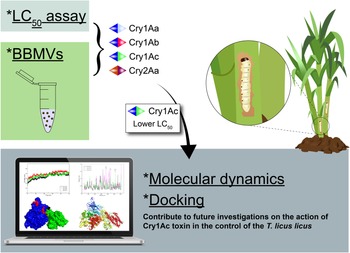
Summary of the experiments performed in this manuscript. In vivo analyses determined that Cry1Ac has the lowest LC50 against the sugarcane giant borer (T. licus licus) and a new in silico computational simulation of toxin/receptor interactions is described.

Median lethal concentration (LC50) of recombinant Cry protoxins against neonate T. licus licus larvae

CI, confidence interval.
Pore-forming activity analyzes
To evaluate the pore-forming activity of these Cry toxins, osmotic swelling and BBMV assays were performed. Electrophoretic analyses of the suspended spore–crystal complex showed that Cry1Aa, Cry1Ab, and Cry1Ac toxins exhibited a similar protein profile with a distinct band at about 130 kDa, while Cry2Aa exhibited a distinct band at about 60 kDa (fig. S1a). After trypsin activation, all toxins, including those of the Cry1A family and Cry2A, were cleaved into two fragments of approximately 60 and 65 kDa (fig. S1b). However, some differences were evident between the protein profiles in the intestinal homogenate. For instance, activation of Cry1Aa toxin resulted primarily in a fragment of 55 kDa, whereas Cry1Ab and Cry1Ac were more frequently cleaved into fragments of 60 kDa. In the case of Cry2Aa activation, SDS-PAGE clearly showed that the toxin was overdigested to a fragment of about 50 kDa (fig. S1c).
As a measure of the quality and purity of the BBMV preparation, the leucine APN and alkaline phosphatase enzymatic activities were evaluated in the initial gut homogenate and the last four vesicle suspensions, showing a 7- and 13.5-fold increase in apical membrane enzyme activity, respectively (fig. S2). In the analyses of membrane binding and disruption capacity for these toxins, after treatment of BBMVs with hypertonic solution, a strong turgor followed by a recovery aspect after the addition of trypsin-activated toxins was observed (fig. 2). Notably, the Cry1Ab, Cry1Ac, and Cry2Aa toxins caused significant membrane disruption in T. licus licus, with high intensity compared with the effect of a coleopteran-specific Cry8Ka5 toxin (used as a negative control) and also with the lepidopteran-specific Cry1Ia12 toxin (used as a positive control) (fig. 2).
Osmotic swelling assay of trypsin-activated Cry toxins against T. licus licus BBMVs. Vesicle permeability was tested in a hyperosmotic solution that keeps them constricted. Membrane disruption is indicated by a reduction in the scattered-light intensity, reflected by the absorbance of the light. Lower absorbance indicates increased membrane disruption. KCl 0.6 M, hypertonic solution; Cry8Ka5 was used as a coleopteran-specific control (used as a negative control); Cry1Ia12 was used as a lepidopteran-specific control (used as a positive control). Bars indicate standard deviation of technical replicates. Letters above bars indicate significant differences at P < 0.05 (one-way ANOVA, followed by Tukey's test).

Homology modeling and the molecular dynamics of protein models of toxins and putative receptors
Since the Cry1A family toxins were the most promising, as they presented the lowest LC50 values (table 1), we performed in silico simulations to predict amino acids that might be involved in the interaction of Cry1A toxins and their putative receptors in T. licus licus. To this end, we employed MD and docking for three putative APN receptors (TlAPN1, TlAPN3, and TlAPN4) whose sequences were previously detected in the T. licus licus transcriptome (Fonseca et al., Reference Fonseca, Firmino, de Macedo, Coelho, de Sousa Júnior, Silva-Junior, Togawa, Pappas, de Góis, da Silva and Grossi-de-Sá2015; Noriega et al., Reference Noriega, Arraes, Antonino, Macedo, Fonseca, Togawa, Grynberg, Silva, Negrisoli and Grossi-de-Sa2020).
The Cry1Aa structure (PDB:1CIY) was used to model Cry1Ab and Cry1Ac proteins. The human APN structure (PDB:2YD0) was employed to model the three putative APN receptors (TlAPN1, TlAPN3, and TlAPN4) (GenBank: MW353178–MW353180) analyzed (Fonseca et al., Reference Fonseca, Firmino, de Macedo, Coelho, de Sousa Júnior, Silva-Junior, Togawa, Pappas, de Góis, da Silva and Grossi-de-Sá2015). In addition, the MsAPN1 was also used for the modeling analyses since it was previously characterized as the Cry1A receptor of M. sexta (Masson et al., Reference Masson, Lu, Masza, Brousseauj and Adan1995) (GenBank: Q11001). On average, more than 98% of amino acid residues were located within the favored and allowed regions for all proteins. The resulting protein models were subjected to MD analysis to allow the structures to achieve a low energy state and better conformation.
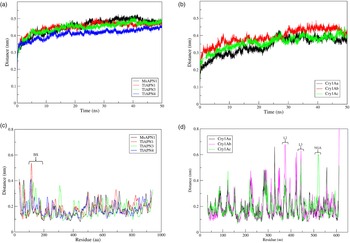
Systems containing the toxins MsAPN1, TlAPN1, TlAPN3, and TlAPN4, as well as Cry1Aa, Cry1Ab, and Cry1Ac were simulated for 50 ns (fig. 3). This time interval was necessary since, as observed, the root mean square deviation determined by the GROMACS suite showed that a final conformation without profound topological changes occurred after 50 ns (fig. 3a and b). The root means square fluctuation (RMSF) calculated for the APN proteins showed that T. licus licus models exhibited similar flexibility compared with MsAPN1. Moreover, the predicted binding site motif (RXXFPXXDEP) (Nakanishi et al., Reference Nakanishi, Yaoi, Nagino, Hara, Kitami, Atsumi, Miura and Sato2002) of all APNs was flanked by highly flexible regions (fig. 3c). For Cry toxins, the RMSF showed that flexibility was higher for domain II, loops 2 and 3 of Cry1Ab, whereas Cry1Ac showed greater flexibility in the N-acetylgalactosamine (GalNAc) binding region (fig. 3d).
Molecular dynamics simulations of the APNs and Cry1A toxin family submitted to 50 ns. (a) Root mean square deviation (RMSD) of the topological changes of APN receptors after heating at 310 K. (b) RMSD of Cry1A toxin topological changes after heating at 310 K. (c) Root mean square fluctuation (RMSF) of APN receptor flexibility changes after heating at 310 K. (d) RMSF of Cry1A toxin flexibility changes of after heating at 310 K. BS, toxin-binding site; L2, toxin loop 2; L3, toxin loop 3; NGA, N-acetylgalactosamine-binding region.

After calculating the solvent accessibility surface for all models, it was found that the binding sites of the toxins were more exposed to the solvent over time, especially the Cry1Ac domain III GalNAc-binding region (fig. S3). For the APNs, the binding region between amino acids (MsAPN1: 133–175, TlAPN1: 135–177, TlAPN3: 142–182, TlAPN4: 127–170) increased their surface area to the solvent, while the conserved RXXFPXXDEP motif (MsAPN1: 175–196, TlAPN1: 178–198, TlAPN3: 183–203, TlAPN4: 171–191) exhibited no significant changes (fig. S3). Based on these analyses, the properties of Cry1Ac toxin suggest an interaction site that increases the toxin's affinity for the receptor and potentiates toxicity.
Docking of Cry1A toxins family with APNs
The protein docking studies were performed considering the APN models as the receptor protein and Cry1A family models as the ligand proteins. MsAPN1 was experimentally described as a Cry1Aa (Nair and Dean, Reference Nair and Dean2008), Cry1Ab (Pacheco et al., Reference Pacheco, Gómez, Arenas, Saab-Rincon, Rodríguez-Almazán, Gill, Bravo and Soberón2009), and Cry1Ac (Cooper et al., Reference Cooper, Carroll, Travis, Williams and Ellar1998) receptor and served here as a reference for the in silico study of Cry toxin binding to TlAPN1, TlAPN3, and TlAPN4 proteins (Fonseca et al., Reference Fonseca, Firmino, de Macedo, Coelho, de Sousa Júnior, Silva-Junior, Togawa, Pappas, de Góis, da Silva and Grossi-de-Sá2015). Multiple sequence alignment of the APN-binding regions allowed mapping of amino acid residues involved in docking to the Cry1A toxins family. This analysis revealed that the interaction occurs at a common site preceding the RXXFPXXDEP region. In MsAPN1, the binding site was located in the region between Arg164 and Trp175, in TlAPN1 between Lys154 and Trp177, in TlAPN3 between Thr162 and Trp182, and in TlAPN4 in the region between Arg147 and Tyr170 (fig. S4).
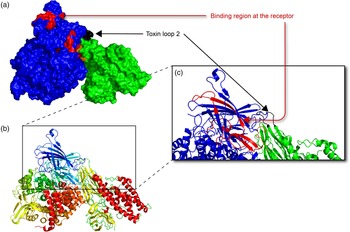
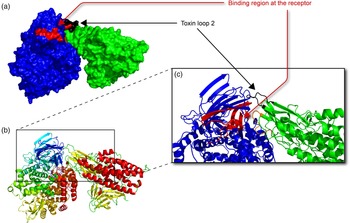
Prior to protein docking, the MsAPN1-binding site was analyzed to determine which amino acid residues would be exposed at the surface (fig. S5). Using this information as a reference, we selected models in which the docking occurred with residues in regions accessible to the solvent: MsAPN1: Ile133–Pro196, TlAPN1: Ile135–Pro198, TlAPN3: Tyr142–Pro203, and TlAPN4: Ile127–Pro191. Considering the number of hydrogen bonds between the receptor-binding region and toxin domain II, loop 3, the Cry1Ac × MsAPN1 simulation revealed six likely interactions, followed by Cry1Ac × MsAPN1 with four interactions (table 2, fig. 4). The Cry1Aa × MsAPN1 simulation showed no hydrogen bonds with amino acids in domain II, loop 3 (table S1). The model with the most similar results for T. licus licus receptors and Cry toxins was the Cry1Ac × TlAPN4 combination with seven hydrogen bonds (table 2, fig. 5). The Cry1Ab × TlAPN4 simulation resulted in four hydrogen bonds between the receptor-binding site and toxin domain II, loop 3, whereas only one hydrogen bond was observed in the Cry1Aa × TlAPN4 simulation. The complete list of docking combinations and hydrogen bonds is shown in table S1. In summary, these in silico analyses allowed us to predict the putative interaction profile between Cry1A toxins and likely T. licus licus APN receptors.
Schematic molecular docking representation of Cry1Ac binding to MsAPN1. (a) Surface representation of the interaction (MsAPN1 in blue and Cry1Ac in green). (b) Ribbon representation of the interaction (MsAPN1 on the left and Cry1Ac on the right). (c) Approximate view of the interaction (MsAPN1 in blue and Cry1Ac in green). In (a) and (c), red indicates the receptor-binding region, black indicates toxin loop 2, and orange indicates toxin loop.

Schematic molecular docking representation of the Cry1Ac binding to TlAPN4. (a) Surface representation of the interaction (TlAPN4 in blue and Cry1Ac in green). (b) Ribbon representation of the interaction (Cry1Ac on the left and TlAPN4 on the right). (c) Approximate view of the interaction (TlAPN4 in blue and Cry1Ac in green). In (a) and (c), red indicates the receptor-binding region, black indicates toxin loop 2, and orange indicates toxin loop 3.

Amino acid interactions observed between Cry1Ac toxins and APNs from T. licus licus (T1APN4) and M. sexta (MsAPN1)

In bold underlined and orange, the amino acids in loops 2 and 3 of the toxin, respectively. In red and magenta, the amino acid region of the APN-binding site.
Discussion
Cry protoxins are naturally proteolytically activated by the action of enzymes present in the alkaline gut homogenate. Proper activation limits the range of toxicity to insects with appropriate gut proteases (Aronson et al., Reference Aronson, Beckman and Dunn1986; Talaei-Hassanloui et al., Reference Talaei-Hassanloui, Bakhshaei, Hosseininaveh and Khorramnezhad2014). Crystal solubilization and in vitro activation with commercial trypsin released two protein fragments for all the toxins. Upon incubation of these proteins with the intestinal homogenate of T. licus licus, the protoxins for all Cry1A toxins were cleaved into distinct fragments, whereas the Cry2Aa protein was almost completely digested. Lower mortality rates due to Cry2Aa could be occurred due to the lack of proper proteolytic activation or overdigestion of the toxin in the gut (Deist et al., Reference Deist, Rausch, Fernandez-Luna, Adang and Bonning2014). The same effect was observed following reduced trypsin activity, which resulted in increased resistance of Plutella xylostella larvae to Cry1Ac toxin (Gong et al., Reference Gong, Kang, Zhou, Sun, Guo, Qin, Zhu, Bai, Ye, Akami, Wu, Wang, Xu, Yang, Bravo, Soberón, Guo, Wen and Zhang2020). Notably, screening tests with recombinant toxins applied to newborn T. licus licus larvae revealed that the Cry toxins evaluated in this study, Cry1A family and Cry2Aa, caused high mortality rates; however, Cry1Ac was the most active with the lowest median lethal concentration (LC50), followed by Cry1Ab and Cry1Aa, whereas Cry2Aa required a higher concentration to produce the same effect.
An osmotic swelling assay was performed to determine the membrane disturbance ability of each recombinant toxin. The addition of trypsin-activated toxin increased the BBMVs turgor, as indicated by reduced light scattered, resulting in increased vesicle volume. The Cry1Ac, Cry1Ab, and Cry2Aa toxins caused more membrane disruption, followed by Cry1Aa, Cry1Ia12, and Cry8Ka5. Similar effects have been observed previously (Soberón et al., Reference Soberón, Pérez, Nuñez-Valdéz, Lorence, Gómez, Sánchez and Bravo2000; Kirouac et al., Reference Kirouac, Vachon, Quievy, Schwartz and Laprade2006; Muñoz-Garay et al., Reference Muñoz-Garay, Sánchez, Darszon, de Maagd, Bakker, Soberón and Bravo2006; Groulx et al., Reference Groulx, McGuire, Laprade, Schwartz and Blunck2011), indicating that toxins from the Cry1A and Cry2A families are more effective against lepidopterans than the coleopteran-specific Cry8Ka5 (Oliveira et al., Reference Oliveira, Silva, Lucena, Nakasu, Firmino, Beneventi, Souza, Gomes, da De Souza, Rigden, Ramos, Soccol and Grossi-De-Sa2011). Taking both analyses together, the observed differences in membrane disturbance and lethal activity between Cry1Aa and Cry2Aa could be due to crystal dissolution and activation in the insect midgut.
As a strategy to understand potential interactions between Cry toxins and T. licus licus, we employed bioinformatics tools and built structural models to identify Cry1A and TlAPN receptors. Using the in silico data, we were able to predict which proteins might act as the best Cry toxin receptors and suggest the amino acid residues that might interact between potential T. licus licus receptors and the toxins.
According to the pore formation mechanism, the first step is the interaction of domain II, loop 3 of a monomeric Cry1A toxin with an APN or an alkaline phosphatase located in the midgut epithelial cells. Domain II, loop 2 of the toxin, is usually related with binding to APN in the oligomeric structure (Gómez et al., Reference Gómez, Arenas, Benitez, Miranda-Ríos, Becerril, Grande, Almagro, Bravo and Soberón2006; Pacheco et al., Reference Pacheco, Gómez, Arenas, Saab-Rincon, Rodríguez-Almazán, Gill, Bravo and Soberón2009; Arenas et al., Reference Arenas, Bravo, Soberón and Gómez2010). In addition, Cry1Ac also binds through the β-16 strand region of domain III, which resembles a lectin, a protein that binds to carbohydrates such as GalNAc (de Maagd et al., Reference de Maagd, Bakker, Masson, Adang, Sangadala, Stiekema and Bosch1999). The binding site of Cry1A toxins in the APN receptor has been identified as a region in domain I. As proposed by Nakanishi et al. (Reference Nakanishi, Yaoi, Nagino, Hara, Kitami, Atsumi, Miura and Sato2002), for Bombyx mori APN1 (GenBank: AF084257), the region between residues Ile135–Pro198 has several conserved amino acids among different insect species; therefore, the authors suggested the RXXFPXXDEP motif as the most likely binding region. By analyzing the proposed region in the three-dimensional structure of APNs, we found that most RXXFPXXDEP residues are protected within the molecule and that a large conformational change would be required to allow access to the toxins, which was not observed in any structure after simulation and molecular docking. Sequence alignment of lepidopteran APNs demonstrated that the Cry1A toxin interaction region precedes the RXXFPXXDEP site and corresponds to the region observed in modeling with high flexibility. Here in the three-dimensional model of APNs, this region is formed by a loop and does not appear to depend on amino acid sequence conservation, as TlAPN3 and TlAPN4 have highly variable residue composition.
In this study, comparing the median lethal concentration (LC50) data with the profile of the interactions formed between the monomeric toxins and the putative receptor in the molecular docking assays, a direct correlation was observed between toxicity and the total number of hydrogen bonds formed between the receptor-binding region and the toxin domain II, loop 3. The Cry1Ac × MsAPN1 interaction was the combination with the highest number of hydrogen bonds, followed by Cry1Ab × MsAPN1 and the Cry1Aa × MsAPN1 combination, which had no hydrogen bonds with domain II, loop3, but exhibited nine hydrogen bonds with domain II, loop 2. Different research groups have calculated the LC50 of Cry1A toxins against M. sexta larvae, and in general there are no significant differences between them. According to Carmona et al. (Reference Carmona, Rodríguez-Almazán, Muñoz-Garay, Portugal, Pérez, de Maagd, Bakker, Soberón and Bravo2011), the LC50 of Cry1Aa was 3.7 ng cm−2 (with a confidence interval (CI) of 2.8–4.7 ng cm−2). For Cry1Ab, an LC50 of 2.9 ng cm−2 was observed (with a CI of 1.8–4.8 ng cm−2). The calculated LC50 for Cry1Ac was 1.8 ng cm−2 (with a CI of 2.0–3.6 ng cm−2). Although there was no significant difference in toxicity against M. sexta, Cry1Ac generally has lower LC50 values, followed by Cry1Ab and Cry1Aa. Taken together, these data suggest that the number of hydrogen bonds may increase the strength of the interaction, resulting in MsAPN1 preferentially binding to Cry1Ac.
Since the number of hydrogen bonds is known to play an important role in binding affinity in protein–protein interactions (Chen et al., Reference Chen, Liu, Xiao, Zhang, Zhang, Li, Tabashnik and Wu2015; Javaid et al., Reference Javaid, Naz, Amin, Jander, Ul-Haq and Mansoor2018), including for Cry toxins and their receptors (Tajne et al., Reference Tajne, Boddupally, Sadumpati, Vudem and Khareedu2013; Florez et al., Reference Florez, Suarez-Barrera, Morales, Rivera, Orduz, Ochoa, Guerra and Muskus2018), we investigated the number of hydrogen bonds formed between Cry1A toxin and TlAPN receptors. Notably, Cry1Ac × TlAPN4 was identified as the protein combination that showed a similar pattern to that observed by the Cry1Ac × MsAPN1 assay. A total of 52 hydrogen bonds were formed, including seven interactions between receptor binding site residues and the toxin loop 3. Considering the number of hydrogen bonds formed between the toxins and TlAPN4, a direct correlation can be assumed with the toxicity observed in the bioassays. For instance, the LC50 calculated in the T. licus licus bioassay shows that although there were no significant differences between the activities of the Cry1A toxins, Cry1Ac tended to have lower LC50 values, followed by Cry1Ab and Cry1Aa. Although Cry1Ac toxicity depends on the number of hydrogen bonds formed with APN receptors, this toxin is known to interact with APN receptors through two distinct sites (Masson et al., Reference Masson, Lu, Masza, Brousseauj and Adan1995; de Maagd et al., Reference de Maagd, Bakker, Masson, Adang, Sangadala, Stiekema and Bosch1999) and that domain III binding to GalNAc determines specificity and toxicity (de Maagd et al., Reference de Maagd, Bakker, Masson, Adang, Sangadala, Stiekema and Bosch1999). Additionally, Cry1Ac has been shown to interact with APN through the C-terminal region of the receptor (Yaoi et al., Reference Yaoi, Nakanishi, Kadotani, Imamura, Koizumi, Iwahana and Sato1999), which interrupts the pore formation process when removed from the protein sequence (Zhang et al., Reference Zhang, Cheng, Gao, Wang, Liang and Wu2009). The APN C-terminal region is thought to be filled with numerous O-glycosylations, mainly GalNAc, and it is suggested that the Cry1Ac domain III binds to one of these sugars (Stephens et al., Reference Stephens, Sugars, Maslen, Williams, Packman and Ellar2004). Examination of the likely O-glycosylated MsAPN1 residues reveals that at least two are located near the Ile135–Pro198 region, one of which is present in the C-terminal region. It was previously shown that glycosylations of T. licus licus APNs have a similar pattern to MsAPN1 and likely exert the same influence on Cry1Ac activity. Although weaker, loop 3 of Cry1Ac domain II can drive the interaction into a conformation in which it binds to APN domain I, and Cry1Ac domain III binds to GalNAcs present in APN domain IV. In this way, the interacting amino acid residues predicted for Cry1Ac in this work are likely those shared by the other Cry1A toxins and occur in the same region of APNs.
However, it should be noted that these data do not exclude the possibility that TlAPN1 and TlAPN3 may act as potential receptors of Cry toxins, which would need to be confirmed by further studies. The Cry1Ab × TlAPN1 interaction model suggests a very similar profile to that which occurred in M. sexta, with more hydrogen bonding than Cry1Ac × TlAPN4. The same pattern was observed for the interaction between Cry1Ab and TlAPN3, but with fewer hydrogen bonds. Most studies show that Cry1A toxins preferentially bind to APN1 (Zhang et al., Reference Zhang, Cheng, Gao, Wang, Liang and Wu2009; Yang et al., Reference Yang, Zhu, Ottea, Husseneder, Rogers Leonard, Abel and Huang2010; Tiewsiri and Wang, Reference Tiewsiri and Wang2011; Coates et al., Reference Coates, Sumerford, Siegfried, Hellmich and Abel2013; Qiu et al., Reference Qiu, Zhang, Liu, Ma, Wang, Lei and Chen2017), but it has also been shown that other APNs could act as toxin receptors. Although Cry1Aa and Cry1Ab could not bind to BBMVs of B. mori and P. xylostella, these toxins were able to bind to recombinant APN1–4 proteins (Nakanishi et al., Reference Nakanishi, Yaoi, Nagino, Hara, Kitami, Atsumi, Miura and Sato2002). Furthermore, Diatraea saccharalis APN1–3 RNA silencing was found to be involved in reducing insect susceptibility to Cry1Ab (Yang et al., Reference Yang, Zhu, Ottea, Husseneder, Rogers Leonard, Abel and Huang2010), while Cry1Ac interacted with Helicoverpa armigera APN2 (Rajagopal et al., Reference Rajagopal, Agrawal, Selvapandiyan, Sivakumar, Ahmad and Bhatnagar2003). Thus, immediately after examining the expression level of each gene in conjunction with in vitro binding assays and identifying receptors other than APNs, the actual participation of each element in the mechanism of action will be known.
This study reported the noteworthy efficacy of four Bt Cry toxins toward sugarcane giant borer. We highlighted that the tested toxins caused high mortality of T. licus licus larvae, emphasizing the efficacy of Cry1Ac toxin. Furthermore, the T. licus licus transcripts database was used to gain insight into the binding interaction between Cry toxins and putative APN receptor combinations. In silico analyses allow us to suggest toxin receptors without resorting to labor-intensive protein–protein interaction screening and provide a novel, in-depth application of transcriptome data. Indeed, the new data highlighted here should be considered for prospecting suitable Cry toxin-based formulations with high toxicity against T. licus licus, as well as in the further development of transgenic crops resistant to this very serious insect pest of sugarcane fields.
Supplementary material
The supplementary material for this article can be found at https://doi.org/10.1017/S000748532200061X
Data
All data generated for this study are included in the manuscript and Supplementary Materials.
Acknowledgements
The authors are grateful to EMBRAPA, UCB, CNPq, CAPES, FAPDF, and INCT Plant Stress Biotech for the scientific research and financial support. The authors are very grateful to Dr Stephan Nielen for kindly proofreading the manuscript.
Author contributions
Conceptualization: F.C.A.F., J.D.A., L.L.P.M., J.E.G.J., M.C.M.S., and M.F.G.-S.; methodology: F.C.A.F., J.D.A., L.L.P.M., J.E.G.J., R.G.M., and W.A.L.; validation: F.C.A.F., J.D.A., S.M.M., P.L.R.-S., C.V.M., J.E.G.J., I.T.L.-T., and T.P.R.; formal analysis: F.C.A.F., J.D.A., S.M.M., P.L.R.-S., L.L.P.M., J.E.G.J., I.T.L.-T., W.A.L., T.P.R., and M.C.M.S.; investigation: F.C.A.F., J.D.A., S.M.M., P.L.R.-S., L.L.P.M., and M.C.M.S.; resources: M.F.G.-S.; data curation: F.C.A.F., J.D.A., S.M.M., P.L.R.-S., L.L.P.M., J.E.G.J., I.T.L.-T., R.G.M., W.A.L., M.A.R., and I.M.C.; writing – original draft preparation: F.C.A.F., S.M.M. and P.L.R.-S.; writing – review and editing: S.M.M., P.L.R.-S., and M.F.G.-S. and visualization: L.L.P.M., C.V.M., M.A.R., I.M.C., M.C.M.S., and M.F.G.-S.; supervision: M.F.G.-S.; project administration: M.F.G.-S.; funding acquisition: M.F.G.-S. All authors have read and agreed to the published version of the manuscript.
Financial support
This research was funded by EMBRAPA, CNPq, CAPES, FAPDF, and the National Institute of Science and Technology (INCT Plant Stress Biotech). S.M.M. is grateful to CNPq for her postdoctoral research fellowship (PDJ: 150549/2021-0).
Conflict of interest
The authors declare that the research was conducted in the absence of any commercial or financial relationships that could be construed as a potential conflict of interest.