Introduction
The association between the rise in prevalence of cardiometabolic risk factors such as hypertension and internal migration, particularly from rural to urban areas, in low- and middle-income countries (LMICs) is a component of the health and demographic transitions linked to economic development processes (Omran, Reference Omran1971; Frenck et al., Reference Frenk, Bobadilla, Stern, Frejka and Lozano1991; Caldwell, Reference Caldwell1993; Collinson et al., Reference Collinson, White, Bocquier, McGarvey, Afolabi and Clark2014). Available data indicate that hypertension in LMICs has increased, but with significant national and subnational variation in blood pressure (BP) levels and hypertension prevalence (Addo et al., Reference Addo, Smeeth and Leon2007; Tollman et al., Reference Tollman, Kahn, Sartorius, Collinson, Clark and Garenne2008; Day et al., Reference Day, Groenewald, Laubscher, Chaudhry, Van Schaik and Bradshaw2014; Gómez-Olivé, Reference Gómez-Olivé, Ali, Made, Kyobutungi, Nonterah and Micklesfield2017). Sub-Saharan Africa has moderately high levels of elevated BP and has experienced no reduction in BP levels from 1975 to 2015 (NCD Risk Factor Collaboration, 2017). South Africa has comparatively high hypertension and adult age-specific BP levels. Despite key historical and political economic differences between South Africa, the sub-Saharan Africa region and other LMICs, they all share substantial underestimation of, and recent temporal increases in, hypertension (Addo et al., Reference Addo, Smeeth and Leon2007; Kayima, Reference Kayima, Wanyenze, Katamba, Leontsini and Nuwaha2013). Hypertension poses an increasingly important public health challenge in South Africa and other LMICs.
The World Health Organization (WHO) Study on Global Ageing and Adult Health (SAGE) found the hypertension (systolic BP ≥140 mmHg, or diastolic BP ≤90mmHg or the use of antihypertensive medication) prevalence among older adults (50+) to range from 32.3% in India to a staggering 77.9% in South Africa (Lloyd-Sherlock et al., Reference Lloyd-Sherlock, Beard, Minicuci, Ebrahim and Chatterji2014; Gómez-Olivé et al., Reference Gómez-Olivé, Ali, Made, Kyobutungi, Nonterah and Micklesfield2017). Hypertension prevalences in other nationally representative samples have been found to be lower, but are still striking: the South African National Income Dynamics Study (NIDS) conducted in 2008 found it to be 33.9% among individuals aged 15+, 43.6% among those aged 25+ and 69.8% among those aged 45+ (Day et al., Reference Day, Groenewald, Laubscher, Chaudhry, Van Schaik and Bradshaw2014). Thorogood et al. (Reference Thorogood, Connor, Tollman, Hundt, Fowkes and Marsh2007) reported hypertension prevalence in 2002–03 to be 43% in a random stratified sample of residents (non-migrants) aged 35 or older in Agincourt, South Africa, with no difference between men and women. Only 37% of those with hypertension regularly used medication. Clark et al. (Reference Clark, Gómez-Olivé, Houle, Thorogood, Klipstein-Grobusch and Angotti2015), using data collected in Agincourt between 2010 and 2011 from individuals aged 18 years and older, found the age-adjusted hypertension prevalence to be 37% and 39% in men and women, respectively.
In South Africa, circular labour migration was a key consequence of the Apartheid system of residential social re-engineering that has left a legacy of continued temporary migration from rural and peri-urban parts of the country (Murray, Reference Murray1981; Posel & Casale, Reference Posel and Casale2003; Hosegood et al., Reference Hosegood, Benzler and Solarsh2005). Historically, for political and economic reasons, a ‘Bantustan’ system was developed by the national government, and sanitized by the term ‘homelands’, to restructure the settlement patterns and livelihood strategies of the Black African population. This system provided necessary labour to urban areas while forcing unemployed family members to remain in densely settled, rural and peri-urban areas or ‘homelands’ (Hosegood et al., Reference Hosegood, Benzler and Solarsh2005; Collinson et al., Reference Collinson, Tollman and Kahn2007). Temporary migration played a key role in the success of the national economy, but also placed a heavy burden on rural households (Reed, Reference Reed2013). Nowadays, temporary labour migration remains a primary strategy used by rural households to access employment and fight poverty (Hosegood et al., Reference Hosegood, Benzler and Solarsh2005; Collinson, Reference Collinson2010) in a context of extreme spatial inequality.
The influence of migration and associated political economic forces on HIV in South Africa have been studied previously (Lurie et al., Reference Lurie, Williams, Zuma, Mkaya-Mwamburi, Garnett and Sturm2003; Lurie & Williams, Reference Lurie and Williams2014; Dobra et al., Reference Dobra, Bärnighausen, Vandormael and Tanser2017), but only limited data are available on, and little understanding about, how population processes like migration and urbanization affect BP and non-communicable cardiometabolic conditions, despite an awareness that they are pervasive and important upstream risk factors. Previous findings on the relationship between migration and health in general, and migration and BP in particular, are mixed. While studies in LMICs have often shown higher hypertension prevalence in urban populations compared with rural residents (Ibrahim & Damasceno, Reference Ibrahim and Damasceno2012), this finding is not universal across contexts. For instance, Ebrahim et al. (Reference Ebrahim, Kinra, Bowen, Andersen, Ben-Shlomo and Lyngdoh2010), using data from the Indian Migration Study, established that the odds of hypertension in urban and migrant men were almost twice those of rural men. Increased odds of hypertension were also evident for rural women, but migration-associated differences in BP, lipids, glucose and insulin were most prominent among men. Unwin et al. (Reference Unwin, James, McLarty, Machybia, Nkulila and Tamin2010) in Tanzania, on the other hand, reported that some cardiovascular risk factors – such as high cholesterol and high triglycerides – increase with migration while BP decreased. In this same study, migrants reported lower physical activity, increased weight, more meat consumption but also more fruit and vegetable consumption. High-density lipoprotein (HDL) cholesterol and total cholesterol increased, and systolic BP fell by 5.4 mmHg for men and 8.6 mmHg for women. Examining diet and caloric intake in the Indian Migration Study, Bowen et al. (Reference Bowen, Ebrahim, De Stavola, Ness, Kinra and Bharathi2011) also found migration and urban life to be associated with both positive (more fruit) and negative (more fat and saturated fat) dietary changes.
Hendricks et al. (Reference Hendriks, Wit, Roos, Brewster, Akande and de Beer2012) compared hypertension among four study populations in Nigeria (rural), Kenya (rural), Tanzania (urban) and Namibia (urban) and found somewhat higher levels of hypertension in urban than in rural areas (age-adjusted prevalences were 19.3% in Nigeria, 21.4% in Kenya, 23.7% in Tanzania and 38% in Namibia) but a major limitation of that study was that it did not make the rural/urban comparison within each country. In Namibia, Ekezie et al. (Reference Ekezie, Anyanwu, Danborno and Anthony2011) found that, when stratified by sex, the urban Igbo population had a significantly higher BP among both men and women. Similar urban and rural differences in hypertension have been reported for Burkina Faso and Cameroon (Fezeu et al., Reference Fezeu, Kengne, Balkau, Awah and Mbanya2010; Soubeiga et al., Reference Soubeiga, Millogo, Bicaba, Doulougou and Kouanda2017).
Across LMICs, increased hypertension prevalence has been associated with urbanization and migration (Ibrahim & Damasceno, Reference Ibrahim and Damasceno2012). However, much of the existing literature on migration and non-communicable disease risk compares risk factors such as hypertension and its determinants between rural and urban populations to make conclusions about the relationship between migration and health. Study designs that do not identify migrants and their migratory behaviour over time cannot shed light on the dynamic social and bio-behavioural processes that may lead to BP elevations in this population.
The purpose of this study was to examine the association of migration with BP among migrants in South Africa by taking advantage of a pilot study that tracked migrants as they moved. Migration was operationalized directly in both time and space as a measure of how many months individuals spent away from their home village and how far away they moved. The first part of the analysis considered initial cross-sectional associations with BP and the second examined the consistency of the results across two dimensions of migration: distance and time away. While this study does not resolve particular mechanisms, it does suggest informed hypotheses about mechanisms through which migration is plausibly affecting BP among movers.
Methods
The study used data from the pilot of the Migrant Health Follow Up Study (MHFUS). Undertaken in 2012, the pilot was based on a sample of 390 individuals drawn from the Agincourt Health and Socio-Demographic Surveillance System (HDSS) in South Africa. The Agincourt HDSS is a rural surveillance site in north-east South Africa located near the Mozambican border. The site covered an area of 420 km2 and comprised 27 villages at the time of the survey (Kahn et al., Reference Kahn, Collinson, Gomez-Olive, Mokoena, Twine and Mee2012). The HDSS method, based on annual visits to every household in the surveillance area, registers and updates all births, deaths and in- and out-migrations taking place within the surveillance area. Permanent migration, where an individual relocates to an alternative place of residence with a permanent intention, is distinguished from temporary or circular migration, where an individual is absent for a period of more than 6 months but retains links with the origin household within the surveillance area. The pilot study sample included individuals who had migrated out of the HDSS site after 2011 (312 temporary migrants and 31 permanent migrants) and individuals who were lost to follow-up in the Agincourt-based Ha Nakakela study – an HIV/non-communicable disease study undertaken in 2010 (58 temporary migrants, and 88 non-migrants) (Gómez-Olivé et al., Reference Gómez-Olivé, Angotti, Houle, Klipstein-Grobusch, Kabudula and Menken2013). The MHFUS pilot sample was randomly split in half: one half was assigned to an in-person survey while the other half was surveyed over the phone. Fieldworkers collected anthropometric and biometric measures including BP, height and weight from the 201 individuals who were surveyed in-person. Of the 201 individuals, the final analytical sample comprised 194 individuals – 113 women and 81 men – with anthropometric and biometric measures and non-missing values on covariates.
The outcome variables of interest were systolic and diastolic BP, measured following the WHO SAGE protocol (WHO, 2006; Lloyd-Sherlock et al., Reference Lloyd-Sherlock, Beard, Minicuci, Ebrahim and Chatterji2014). Blood pressure was measured with a Boso blood pressure instrument (BOSCH+SOHN, Jungingen, Germany), taken on the left wrist with participants in sitting position, at rest and with the wrist resting against their chest at the level of their heart and the left elbow held by the free hand. Blood pressure measurements were taken three times at intervals of 3 minutes, and the reported BP values were based on the mean of the 2nd and 3rd measurements. This method is consistent with prior Agincourt HDSS studies (Clark et al., Reference Clark, Gómez-Olivé, Houle, Thorogood, Klipstein-Grobusch and Angotti2015). Excluding the first measurement in estimates of BP minimizes the ‘white coat effect’, albeit at the expense of some information about the individual’s initial physiological response to having his/her blood pressure taken. Hypertension was defined using the WHO cut-off of systolic BP≥140 mmHg, or diastolic BP≥90 mmHg, or the use of anti-hypertensive medication (WHO, 2013).
Migration was operationalized in two ways. First it was defined in terms of the distance relative to to the individual’s home village (classified as near, middle or far). Participants who lived within or near the closest major town to the field site (but not within the HDSS site itself) and those who lived in a nearby game farm, were classified as ‘near’ migrants. Those who lived 1–2 hours drive from the field site were classified as ‘mid’, and those beyond a 2 hour drive (many in the major metropolitan destination) were classified as ‘far’ migrants. Given the small cell sizes, individuals were dichotomized based on whether they were classified as living in or near their home village (0) or as living at an intermediate or far distance from the home village (1).
Second, migration was measured as the number of months spent away from the home village in the past 12 months (continuous variable from 0 to 12). For missing cases (n=23), a value was imputed for the number of months away by assigning individuals the mean number of months away for the distance stratum into which they were originally classified by the HDSS. All missing cases were in the first (near) stratum and were assigned a value of 2.735 months away. A dummy variable indicated whether months away had been imputed (1), or not (0). The imputed dummy was included in all regressions where the number of months away was the key independent variable of interest.
Age (centred on its mean) and age-squared were included in the regression models since increasing cross-sectional age is associated with increased systolic BP. Blood pressure levels were slightly lower in older individuals over 60 years of age, due to cohort effects, selective mortality, or both. Other indicators included sex, the standard measure of body mass index (BMI, kg/m2), employment status, high school completion and a three-category variable that captured whether an individual typically consumed three meals per day (0=reference category), fewer than three meals per day (1) or more than three meals per day (2). These covariates were included as measures or proxies for risk factors for high BP since these mechanisms have been posited in the literature as determinants of increased BP through biology, social position, work stress or diet. Finally, an interaction between sex and the dummy variable set for meal consumption was included because meals consumed was the only covariate that operated in a different direction for men compared with women in an analysis stratified by sex (not shown); consuming more than three meals per day is associated with higher BP for women, but lower BP for men.
The relationship between BP and migration was estimated with robust OLS regression using STATA 14.0 and the rreg command. The analysis began with a reduced model containing only migration (distance or time away), age, age squared and sex and progressed with sequential additions of controls for socioeconomic status (employment status, education), adiposity (BMI) and food consumption behaviour (dummies for meals consumed per day). With the introduction of each new set of covariates, the improvement in model fit, as well as the sensitivity of the migration variable coefficients to the addition of controls, were presented. The variance explained increased noticeably (and usually statistically significantly) as the models became progressively more inclusive. Although Akaike Information Criterion (AIC) values, which penalize model complexity, could be seen as favouring models with fewer parameters, the more inclusive models were still opted for, since they represent the range of the most substantive meaningful covariates.
Both unstandardized coefficients for direct interpretation with respect to original units, as well as standardized coefficients for continuous variables for ease of coefficient-size comparison, are presented. Graphs furthermore show predicted values of BP from estimates of robust regressions with age, age squared, employment status, high school completion status, BMI, number of meals consumed per day and an interaction between meals per day and sex; all covariates were held at their means unless otherwise specified. A robust regression approach was chosen to deal with the potential influence of outliers in the data rather than applying probability weights, because weighting has the consequence of significantly up-weighting very few individuals given the sampling strategy and small sample size. The results are therefore not generalizable to the rural population of South Africa, but the findings do suggest additional hypotheses for further inquiry as data become available from the scaled-up study.
Results
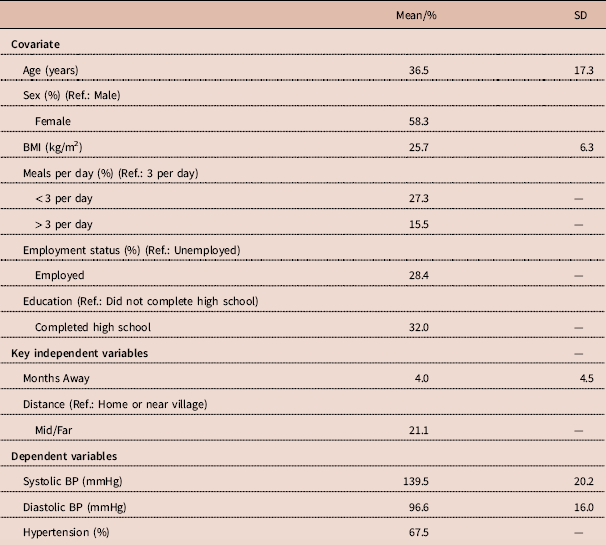
Table 1 shows the descriptive characteristics of the study sample (N=194). The mean age of the sample individuals was 36.5 years; 58.3% were female and the mean BMI of the sample was 25.7 kg/m2 (slightly overweight). Most consumed three meals a day; 27.3% consumed fewer than three meals a day. In the sample, 28.4% of individuals were employed and 28.4% had completed high school. Mean systolic BP was 139.5 mmHg and mean diastolic BP was 96.6 mmHg, with a hypertension prevalence of 67.5%. The majority (78.9%) lived near or at home, while 21.1% migrated to a location at an intermediate or far distance from their home village; 44.3% of the sample were non-migrants (spent 0 months away from their home village). The rest of the sample had spent at least 1 month away from home in the past 12 months with an overall mean of 4 months absence. About half (50.52%) were temporary migrants (spent between 1 and 11 months away) and 5.15% were permanent migrants (spent all 12 months away) (not shown). The definition of permanent migrants used here is different from the ‘permanent migrant’ classification used in the Agincourt HDSS, in which permanent migrants were defined as individuals who had permanently moved out of the study site and who therefore were not followed.
Descriptive statistics of the study sample of adult men and women, South Africa, 2012 (N=194)

Source: Migrant Health Follow Up Pilot Study.
Not all individuals who reported having migrated in this study moved to an urban place, but both historically, and in these data, the pursuit of employment has driven many migrants – particularly those who travel longer distances – towards urban destinations. In the study sample, 72.7% of far-migrants for whom rural–urban locational information was available moved to urban places while only 42.9% of near-migrants migrated to urban locations (not shown). Further-away moves thus generally correspond with urbanization, while closer moves often do not.
Table 2 shows the results of the regression analysis of the effect of ‘months away’ on the systolic and diastolic BP of the study individuals. The number of months an individual has spent away from the home village was significantly and positively associated with both adjusted higher systolic (Models 1–5) and diastolic BPs (Models 6–10). In the reduced systolic BP model (Model 1), each standard deviation increase in time spent away from the home village (4.5 months) was associated with a 0.175 standard deviation difference – equivalent to a 3.50 mmHg higher systolic BP (p<0.05). This association remained robust and statistically significant with adjustments for measures of socioeconomic condition, as well as other health and behaviour covariates (Models 2–4). In Model 5, which included the sex×meals/day interaction, the same 4.5-month duration of absence predicted a 3.35 mmHg elevation in BP – slightly smaller than in Models 1–4, but still statistically significant at the p<0.05 level. The model fit improved with each additional set of covariates, with BMI (Model 3) and the consumption×sex interactions (Model 5) especially enhancing the models; the final full model (Model 5) explained 18.8% of the variation in systolic BP – more than twice that of the reduced model (Model 1).
Determinants of systolic and diastolic BP from robust OLS regressions of ‘months away’ and covariates

Standard errors are in parentheses; normalized β coefficients for continuous variables are in brackets.
***p<0.01; **p<0.05; *p<0.1.
a The age variable is centred on the mean.
The relationship between time away from home and diastolic BP was similar to that of systolic BP: an additional 4.5 months away was associated with a 0.178 standard deviation change, or 2.84 mmHg higher, in diastolic BP in the reduced model (Model 6) and a 0.187 standard deviation change – equivalent to a 2.99 mmHg increase – in the full model (Model 10). Older age (at time of survey) was significantly associated with both higher diastolic and systolic BPs, but the further association with age-squared indicates a decreasing increment to BP with each additional year among older individuals (Table 2). Women and employed individuals had appreciably lower systolic and diastolic BPs compared with men and those who were unemployed, respectively (Table 2). BMI was positively and significantly associated with systolic BP. A one standard deviation increase in BMI, i.e. 6.29 kg/m2, was associated with a 4.8 mmHg higher systolic BP (Model 5). While the relationship between BMI and diastolic BP was positive, it was not statistically significant in Models 8 and 9, and only marginally significant in the full model. Finally, consuming more than three meals per day, compared with three meals per day, was marginally associated with lower systolic BP, but the interactions in the full models suggested that this relationship was in fact positive for women (Model 5).
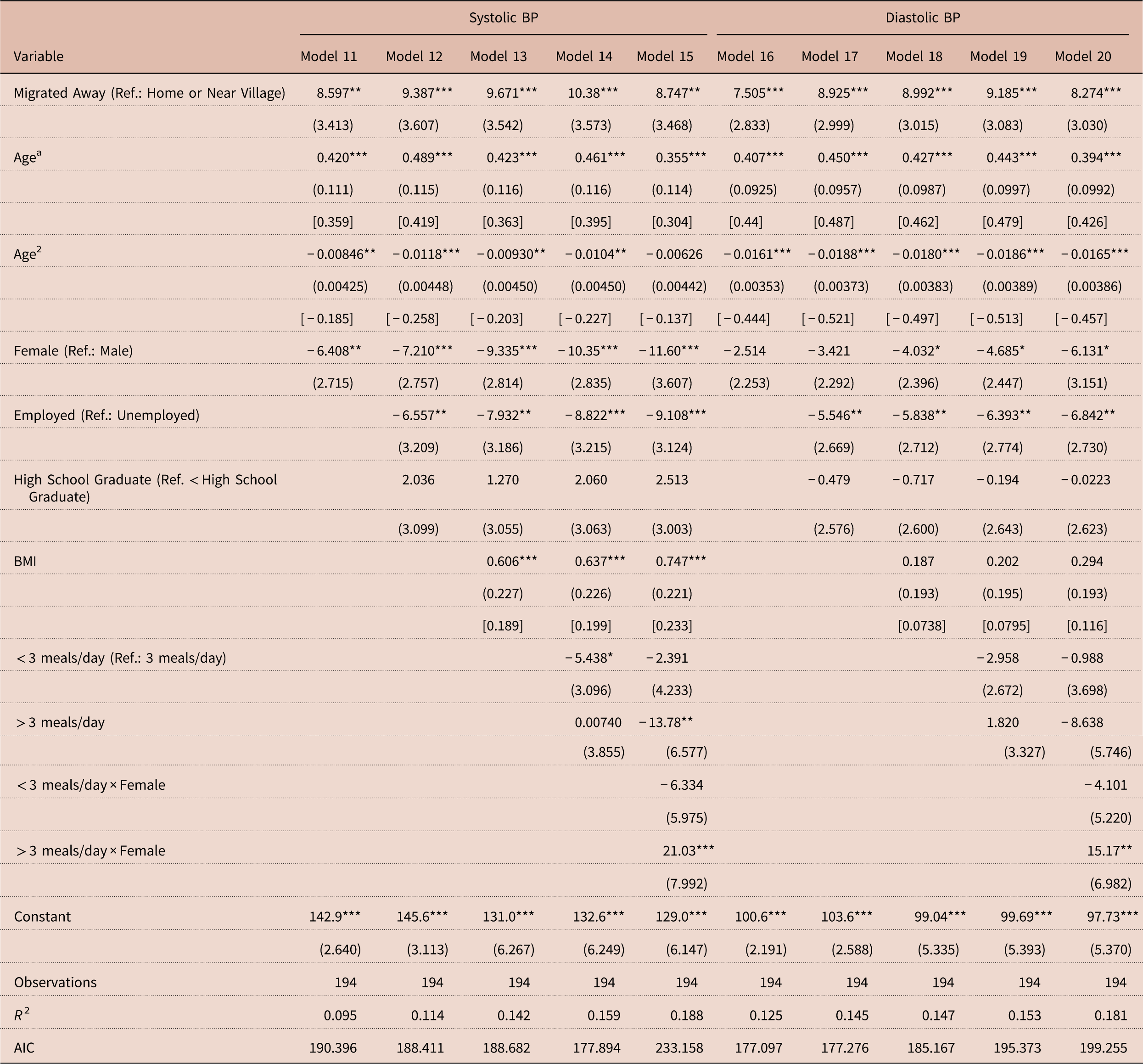
Table 3 reports the results using migration as a distance measure in association with BP. These were largely similar to those shown above for time away from home. Individuals who migrated away from the home village to either intermediate or far-away places had significantly higher systolic and diastolic BPs compared with individuals who did not migrate or did so only locally. Moving away was associated with higher systolic BP (ranging from 8.6 mmHg to 10.38 mmHg in Models 11–15) compared with those who stayed close by or in their home village (p<0.05). Similarly, far-migrants had a diastolic BP 8.27 mmHg higher than near- and non-migrants, controlling for the full set of covariates in Model 20 (p<0.001). In these alternative models using a distance measure for migration, the covariates age, sex and BMI were positive and statistically significant, as was the sex-conditioned meal consumption interaction for women who consumed more than three meals per day. As with prior Models 8–10 in Table 2, BMI was positively but not statistically significantly associated with diastolic BP in Models 18–20. Being employed was inversely and highly significantly associated with both systolic and diastolic BP. One notable difference between the months-away and distance migration models was that sex was not significantly associated with diastolic BP at the conventional 5 per cent significance level in the distance models, while it was in the months-away models.
Determinants of systolic and diastolic BP from robust OLS regressions of ‘distance away’ and covariates

Standard errors are in parentheses; normalized β coefficients for continuous variables are in brackets.
***p<0.01; **p<0.05; *p<0.1.
a The age variable is centred on the mean.
The sensitivity of the results to the inclusion of permanent migrants in the sample was examined. The analyses were repeated without the 5% of migrants who were away from home all 12 months in the past year, and the results were found to be consistent and robust. In the most inclusive systolic BP model, the coefficient on the ‘months away’ variable without the permanent migrants was 0.772 vs 0.753 with them included (coefficient in each specification significant at p<0.05), and was 9.44 vs 8.75 on the ‘migrate away’ variable with and without the permanent migrants (both significant at p<0.05). In the most inclusive diastolic BP model, the coefficient on the ‘months away’ variable without the permanent migrants was 0.811 vs 0.669 with them included (both significant at p<0.05), and 9.12 vs 8.274 on the ‘migrate away’ variable with and without the permanent migrants (both significant p<0.05).
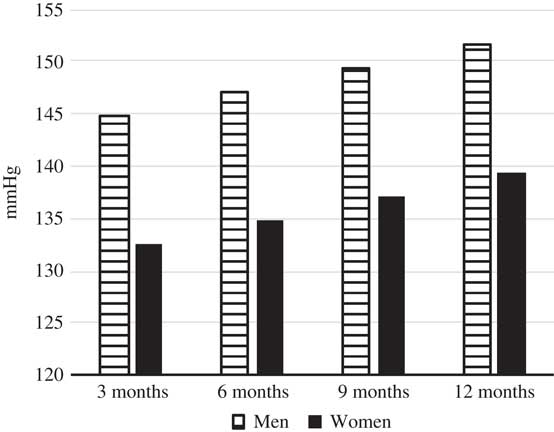
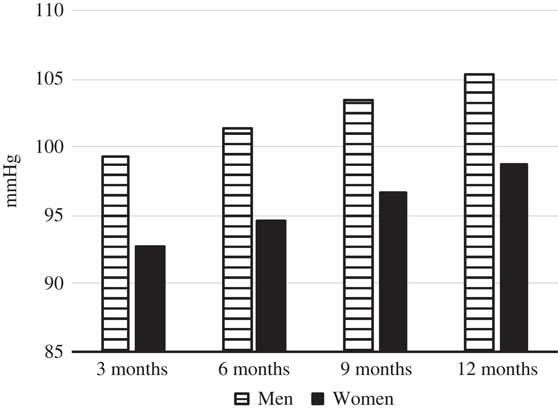
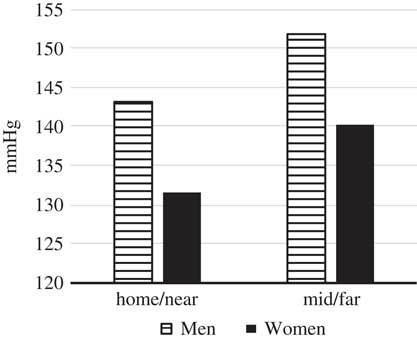
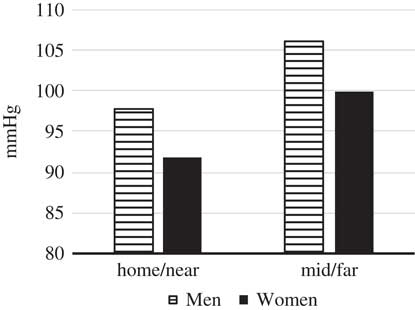
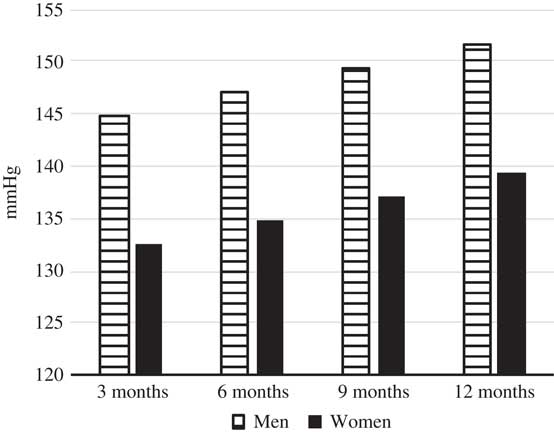
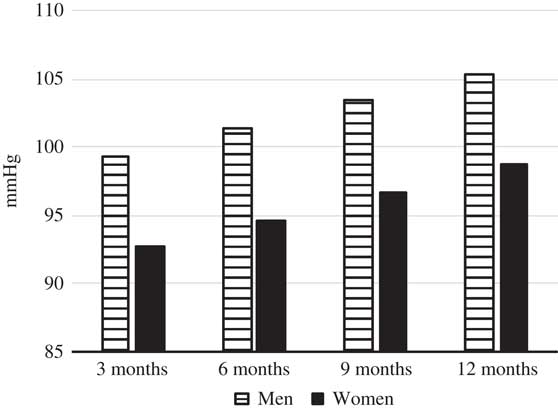
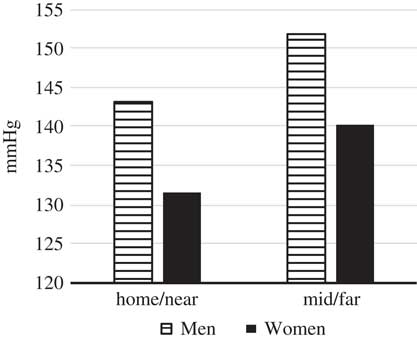
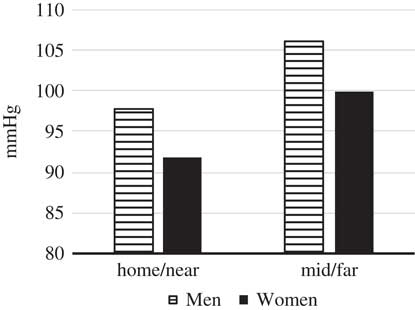
Figures 1–4 present predicted systolic and diastolic BP values generated from the most inclusive regression models. They illustrate a prediction of higher systolic and diastolic BP with more months away, as well as further distance, for both men and women – although BP levels were higher for men in all instances. In this simulation, women who spent 3 months away from home had a systolic/diastolic BP of 132.4/92.6 mmHg compared with 139.3/98.6 mmHg if they spent 12 months away from the home village in the past year. For men, the corresponding values were 144.8/99.3 mmHg if a migrant was away for 3 months compared with 151.6/105.4 mmHg if he was away for 12 months. For distance moves (Figs 3–4) the simulated differences in systolic and diastolic BPs were similarly striking: a man who migrated further away, and who had average characteristics on covariates, was expected to have systolic and diastolic BPs of 151.9/106.2 mmHg compared with 143.2/97.8 mmHg for a man who stayed nearby. A female far-migrant had a predicted BP of 140.3/100.0 mmHg compared with 131.5/91.8 mmHg if she stayed in the home village or migrated only locally.
Predicted systolic BP, by months away and sex (N=194).
Predicted diastolic BP, by months away and sex (N=194).
Predicted systolic BP, by distance and sex (N=194).
Predicted diastolic BP, by distance and sex (N=194).
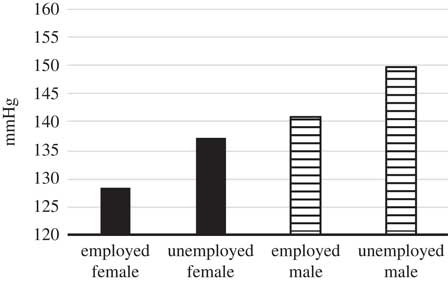
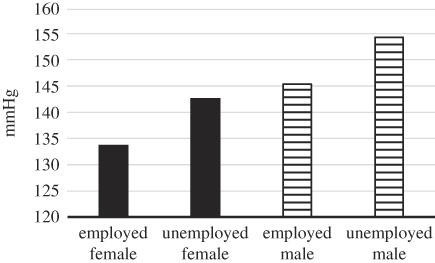
Predicted values of systolic BP by employment status, but holding absence at 6 months (Fig. 5), showed that employed men and women had lower systolic BPs than those who were unemployed. The same pattern was evident when keeping distance constant (Fig. 6): among men and women who migrated further distances, those who were unemployed had a higher systolic BP by about 9 mmHg.
Predicted systolic BP of migrants 6 months away, by sex and employment status (N=194).
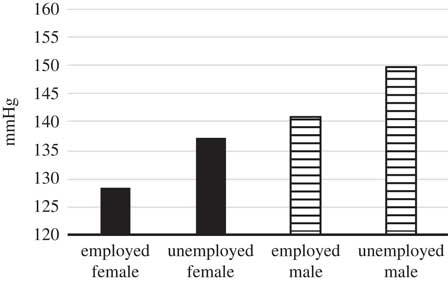
Predicted systolic BP of mid/far migrants by sex and employment status (N=194).

Discussion
The results indicate that circular migration reported in the past 12 months was significantly and positively associated with higher BP levels among persons from the Agincourt HDSS of north-east South Africa. Individuals who moved further away and for longer periods had significantly higher BPs than those who stayed close to home or migrated for shorter periods. Other studies of the Agincourt HDSS have revealed that migration is most commonly temporary, and involves moves to urban destinations that are driven by a search for employment that consequently exposes individuals to new and additional health risk factors (Collinson et al., Reference Collinson, Tollman and Kahn2007; Collinson, Reference Collinson2010; Reed, Reference Reed2013). The findings raise several compelling questions: What is it about longer durations and greater distance from origin locations that affects BP among migrants for the worse? What is the role of destination place in BP? Does the relationship between migration and BP depend on the type of employment or employment status, social networks at destinations, living conditions at destinations, the health selectivity of those who undertake migration in the first place or the ease or frequency of return to the home village? Because of the cross-sectional design and study sample size these questions remain largely unanswered here. A potential explanation, though, may be that social and psycho-social factors alongside, and in combination with, nutritional and other environmental changes, may affect BP (Strogat et al., Reference Strogat, Croft, James, Keenan, Browning, Garret and Curtis1997; Gorman & Sivaganesan, Reference Gorman and Sivaganesan2007).
Migrants might experience more stress as they move further away for longer periods as a result of greater dislocation from exiting social networks and support, be less able or willing to engage in familiar social practices and behaviours, and may be more likely to experience physical and social environments more varied and dissimilar from those closer to home (Uchino, Reference Uchino2006; Lu, Reference Lu2009). The interrupted social support due to migration may also disrupt prioritizing health care for hypertension, as a recent study in Nigeria showed (Osamor, Reference Osamor2015). The ability to secure employment, rely on friends and relatives for support, and return home periodically are potentially important mechanisms through which migration can influence BP negatively.
The lower BP among employed migrant men and women may reflect their higher incomes, purchasing power and social integration, which could counteract anticipated psycho-social and material stressors for South African Black migrants to urban areas (Turok, Reference Turok2012). It may also reflect greater awareness of the health risks from elevated BP and/or opportunities for recognition and treatment of high BP in the context of more health care access or job-related health insurance. These scenarios affecting BP levels remain speculative but will be studied in full in the larger population-based MHFUS research on migration, urbanization and health. This study will follow a cohort of migrants and non-migrants recruited from the Agincourt HDSS study area for a period of 5 years from 2018 to 2022 (Ginsburg et al., Reference Ginsburg, Collinson, Iturralde, van Tonder, Gómez-Olivé, Kahn and Tollman2016; Collinson et al., Reference Collinson, White, Ginsburg, Gómez-Olivé, Kahn and Tollman2016). The fine-grained individual longitudinal approach should help further understanding of how the economic and social conditions experienced during migration from rural to urban areas (such as employment) may affect BP.
The study provided no consistent evidence for the association between number of meals consumed per day and blood pressure. Models (not shown) that included a measure of micronutrients (e.g. potassium-rich foods) showed no statistically significant association with BP. The measures of meal consumption and diet used are probably too crude to capture any true underlying association between diet and BP, which is difficult to detect in all but the largest studies that also collect dietary biomarkers (Farquhar et al., Reference Farquhar, Edwards, Jurkovitz and Weintraub2015).
This study has important limitations. The pilot sample was not representative of the rural South African population in general, or the Agincourt study site in particular. It was designed to locate migrants who had been lost to follow-up in previous surveys (in part to demonstrate the feasibility of follow-up and hence the ability to maintain cohort integrity); migrants who could not be found in their rural houses of origin in 2011–2012 were, therefore, intentionally oversampled and over-represented in the sample.
While the selective nature of the sample adds to the understanding of the relationship between migration and health and is useful in generating hypotheses, the higher BP levels and hypertension prevalence in the MHFUS pilot sample compared with others in rural South Africa and Agincourt (Lloyd-Sherlock et al., Reference Lloyd-Sherlock, Beard, Minicuci, Ebrahim and Chatterji2014; Clark et al., Reference Clark, Gómez-Olivé, Houle, Thorogood, Klipstein-Grobusch and Angotti2015; Ntuli et al., Reference Ntuli, Maimela, Alberts, Choma and Dikotope2015) may be partially attributable to differences in study timing, design and adult age sampling. Thorogood et al.’s (Reference Thorogood, Connor, Tollman, Hundt, Fowkes and Marsh2007) study of those aged 35 years and over occurred a full decade prior to the MFHUS pilot study (in 2002–03), and did not include migrants. Clark et al.’s (Reference Clark, Gómez-Olivé, Houle, Thorogood, Klipstein-Grobusch and Angotti2015) sample from 2010–11 was younger (adults aged 18 and over) and suffered significant non-response. These data, with a mean age of 36.5 years, were consistent with reports that hypertension prevalence rates have been increasing throughout rural and urban Africa. Use of the wrist BP monitor can lead to falsely elevated BP values if arm and hand positioning is not performed as described above and in the WHO SAGE study (Thorogood et al., Reference Thorogood, Connor, Tollman, Hundt, Fowkes and Marsh2007; Lloyd-Sherlock et al., Reference Lloyd-Sherlock, Beard, Minicuci, Ebrahim and Chatterji2014). But proper arm position was consistently checked, with the participant’s wrist held at the level of the heart to avoid higher BPs due to greater hydraulic pressure when the wrist is lower than the heart (Topouchian et al., Reference Topouchian, El Assaad, Orobinskaia, El Feghali and Asmar2006). This was the technique used in previous studies by the Agincourt research team (Clark et al., Reference Clark, Gómez-Olivé, Houle, Thorogood, Klipstein-Grobusch and Angotti2015). Thus, the high BP levels recorded appear not to be affected by measurement technique errors. The very high BPs among these South African migrants are consistent with those from the SAGE and NIDS 2008 studies (Tollman et al., Reference Tollman, Kahn, Sartorius, Collinson, Clark and Garenne2008). Furthermore, confidence in these data and statistical findings are bolstered by their broad consistency with the findings of others in the field: migration is associated with significantly higher systolic and diastolic BP (Ebrahim et al., Reference Ebrahim, Kinra, Bowen, Andersen, Ben-Shlomo and Lyngdoh2010; Bowen et al., Reference Bowen, Ebrahim, De Stavola, Ness, Kinra and Bharathi2011).
Going beyond the prior studies, this research suggests the need for further inquiry by carefully examining and recording migration directly and in detail as a process that occurs both in space and time; an HDSS platform can facilitate such enquiry. Psycho-social stressors such as social dislocation and stress that are associated with migration distance and time away might be understudied but important dimensions of migrant health in LMICs like South Africa (WHO, 2010). The present findings will guide future research to pay attention to these additional dimensions of the migration process in relation to place of origin and its influence on BP and related risk factors. Since migration and urbanization are occurring rapidly throughout sub-Saharan Africa, a goal of this study has been to stimulate other research on the multifactorial drivers of elevated BP and hypertension in LMICs.
Ethical Approval
The authors assert that all procedures contributing to this work comply with the ethical standards of the relevant national and institutional committees on human experimentation and with the Helsinki Declaration of 1975, as revised in 2008.
Conflicts of Interest
The authors have no conflicts of interest to declare.
Funding
The authors acknowledge support from NIH P30AI042853 to the Providence/Boston Center for AIDS Research (CFAR) and 1R01HD083374-01A1 Migration, Urbanization and Health in a Transition Setting to the Population Studies and Training Center, Brown University. The MRC/Wits Rural Public Health and Health Transitions Research Unit (Agincourt) gratefully acknowledges funding from the Wellcome Trust, UK (grants 058893/Z/99/A; 069683/Z/02/Z; 085477/Z/08/Z; 085477/B/08/Z) and the Medical Research Council, South Africa. The authors further gratefully acknowledge the South African Medical Research Council for funding Carren Ginsburg with a Career Development Award.