In September 1926, Smychka, a Bolshevik party newspaper in Orenburg, published an article that waxed rhapsodic about a new nature reserve (zapovednik) in the steppes to the north of the city. “The covil (feathergrass), the bright, multicolored tapestry of flowers exude a rich fragrance—the vast open spaces of the steppes are filled with honey, especially in ravines and gullies, where the aroma of flowers, covil, and earth makes the head spin.” In the Uranbash reserve, “the only place of its kind in the world,” Smychka's readers learned, “soon there will be ten colonies—ten health centers (zdravnits) for the rehabilitation (remont) of people. Here many hundreds will undergo treatment. The remarkable air, the forest-mountain-steppe (leso-gorno-step΄), the kumys (fermented mare's milk), regimen, and diet will work miracles.”Footnote 1
The steppes had not always occupied such a salubrious place in the Russian imagination. On the contrary, the vast steppe zone, with its lack of natural barriers, had traditionally symbolized danger to the settled peoples occupying the forests of eastern Europe. Nineteenth-century historians such as Sergei Solov΄ev and his protegé Vasilii Kliuchevskii theorized, as Frederick Jackson Turner would for the American frontier, about the effects of geography and the steppe environment on Russia's historical trajectory and national character. For such thinkers, expansive grasslands provided the corridor by which the “predatory steppe Asiatic” had historically penetrated the vulnerable heart of the Russian state. In a section of his three-volume Course of Russian History describing the influence of the steppe, Kliuchevskii wrote: “The struggle against the steppe nomadis the most difficult historical recollection of the Russian people, especially deeply incised in its memory.”Footnote 2 By the turn of the twentieth century, however, the steppe nomads, like the indigenous peoples inhabiting western North America, had largely been subjugated, and Russian peasant settlers flooded eastward in search of land. Russians who traveled through the steppes, like Americans who traveled westward across the Great Plains, believed that the peoples who inhabited these vast “empty” spaces were inferior, in part due to the inhospitable environments in which they lived. In the minds of both Russians and Americans, as Steven Sabol has argued, “the barren land created barren peoples—peoples who lacked civilization, modernity, and culture.”Footnote 3
Russians also viewed the steppes as the means by which another “Asiatic” threat, epidemic disease, reached European Russia. In the nineteenth century, outbreaks of cholera followed trade routes through Orenburg in the Kazakh Steppe, and Astrakhan, at the mouth of the Volga between the Kazakh and Kalmyk steppes. In the years between 1899 and 1910, the Kazakh Steppe was the site of numerous outbreaks of Bubonic plague.Footnote 4 Yet by this time, somewhat paradoxically, the Eurasian steppes had also become renowned in Russia and around the world as the “homeland” (rodina) of kumys, a preparation of fermented mare's milk traditionally produced by indigenous steppe pastoralists, which in the late nineteenth century had become a popular therapeutic substance. The virtues of kumys were touted to sufferers of tuberculosis, a disease that killed an estimated one in seven Russians in 1912 and for which there was as yet no cure.Footnote 5 Kumys thus partially redeemed the nomadic peoples of Eurasia and the seemingly barren grasslands in which they lived.
Kumys enthusiasts believed not only that authentic kumys was a product of the steppes, but also that it required the unique steppe climate to be most effective. Zemstvo officials played a key role in recognizing kumys-producing regions as “curative places” of national significance, but understandings of the steppe climate advanced by proponents of the “climate-kumys cure” also harmonized with Soviet medical professionals’ ideas about training workers’ bodies and restoring their minds through cultured leisure. An understanding of the steppes as healthy, however, did not stop the spread of disease, nor did it lead to preservation. Even as the climate-kumys cure gave rise to new understandings of the steppes as a curative place—an imaginary that persists to this day—the steppes where kumys originated were vanishing.
Kumys: Nomadic Origins and the Rise of the Kumys Cure
For centuries, travelers to the Eurasian steppes observed the fondness of nomadic peoples for fermented mare's milk. Herodotus described what appears to be kumys in the fifth century BCE, while in the thirteenth century Marco Polo observed the sacred role played by kumys in rituals at the court of the Mongol khans.Footnote 6 Kumys was also a foodstuff in which these nomads took great pleasure. Another European traveler to the court of the Mongols, the Franciscan monk William of Rubruck, noted that in summer, “so long as lasts their cosmos (kumys)they care not for any other food.”Footnote 7
Subsequent foreign travelers to the steppes continued to remark on the pleasure indigenous pastoralists seemed to find in drinking the slightly alcoholic beverage. In the late eighteenth century, for instance, the German naturalist Johann Gottlieb Georgi recorded that Bashkirs “in summerscarcely ever quit their bag of koumiss,” while Kazakhs “in summereat scarcely any thing but koumiss” and Yakuts “in the summer seasondrink so much koumissthat they are frequently drunk.”Footnote 8 As late as 1903, the Russian geographer Aleksandr Sedel΄nikov maintained that “In summertime, the majority of Kazakhs mainly live off of kumys, drinking it in large quantities.[I]t is as holy to them as bread to the peasant.”Footnote 9 These travelers noted the effect of kumys on the mood of nomadic pastoralists and its ability to restore color to their cheeks after a long winter. According to Georgi, kumys made Bashkirs “healthy and gay, and gives them a round belly and a ruddy complexion.”Footnote 10 It was this latter observation, along with the observation that the indigenous inhabitants of the steppes did not seem to suffer from tuberculosis, that gave rise to the first establishments for drinking kumys in the steppes.Footnote 11
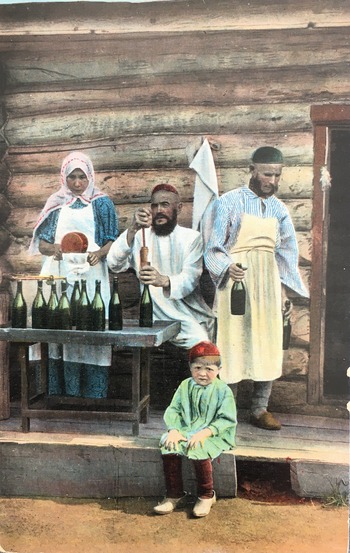
Establishments for undergoing a so-called “kumys cure” (kumysolechenie), such as the one founded in 1858 by Dr. Nestor Postnikov near Samara on the Volga River, quickly gained a worldwide reputation for the seemingly miraculous effects that a stay on the steppes could have on those suffering from conditions of the lungs and other urban afflictions (Figure 1).Footnote 12 In 1881, the Scottish doctor George Carrick, who had visited the steppes no fewer than six times in the 1870s to learn about kumys, published an account detailing many of these miraculous effects. There are stories of consumptives who had spent months taking sea baths and engaging in the latest fashionable cures at Russia's famous Crimean health resorts, who had undergone stints at Davos in the Alps, considered one of the best places in the world for tubercular patients, and who had been treated by doctors in St. Petersburg, Berlin, and Vienna, but were not cured until they drank kumys in the steppes. There the patients’ appetites and energy increased, while their symptoms disappeared; most notably, like Georgi's Bashkirs, they all put on astonishing amounts of weight.Footnote 13
Unknown photographer. In einer Pferdemilch-Kumys-Kuranstalt Russlands (In a Russian mare's milk kumys cure establishment), place and date unknown. Postcard from the author's personal collection.

The Steppe Climate's Role in the Kumys Cure
Even without clear understanding of fermented mare's milk's seemingly curative properties, medical professionals were quick to promote kumys as a potential remedy for such conditions as tuberculosis, anemia, and digestive problems. Yet they questioned whether effective kumys could be produced from milk other than that elicited from the hardy horses of the steppes in the summer months, when the rich covil feathergrasses of the Eurasian steppes were in bloom.Footnote 14 According to Carrick, who built his own resort, Janetovka, in the steppes near Orenburg in 1889, the true benefits of kumys could be experienced only by traveling to the steppes, where in summer patients benefitted from a climate “superiorto that of any part of France” with air both “stimulating” and “soothing.”Footnote 15 Because kumys was a seasonal product, the kumys cure could take full advantage of long, sunny summer days on the steppes, as well as warm daytime temperatures, which especially attracted the attention of visitors from northern climes.Footnote 16 Carrick quoted an “eminent physician” of St. Petersburg who apparently “once said to a consumptive patient,‘Two years of Italyor two months of koumiss.’”Footnote 17 To ensure that their kumys was as authentic as possible, resorts such as those run by Carrick and Postnikov hired nomadic Tatars and Bashkirs to produce the kumys on site or in the steppes nearby, no doubt adding to the resorts’ exotic allure.Footnote 18
The kumys cure removed suffering bodies from the many unpleasant aspects of city life—including noise, dust, filth, and stench—to the steppe climate, a notion that in the nineteenth century included many aspects of what we might now call “environment,” such as soil, vegetation, and proximity to water or mountains. The body was thought to benefit from this change alone.Footnote 19 Historian Charles Rosenberg has pointed out that in early nineteenth-century America, “the body was seen metaphorically as a system of dynamic interactions with its environment. Health or disease resulted from a cumulative interaction between constitutional endowment and environmental circumstance.”Footnote 20 So-called medical climatologists recommended that every doctor have an understanding of climate, in order “to locate his patients, geographically and therapeutically, to their best advantage, so as to prevent the development of threatened diseases and facilitate the cure or alleviation of those already existing.”Footnote 21 Removal to the steppe climate had the additional benefit of providing access to kumys. Although steppe kumys could be consumed at home, thanks to enterprising Tatar and Kazakh purveyors who brought kumys to the cities of the Russian Empire, it could have different effects if consumed in the steppe climate.Footnote 22 According to Rosenberg, “even with the rise in prescription over the nineteenth century of new kinds of drugs, these “drugs were still assumed to reflect the influence of climate in their action.”Footnote 23
Steppe climate affected the production of kumys itself in several ways. As the renowned climatologist Aleksandr Voeikov put it: “what is healthy for the person taking the kumys cure is also necessary for the quality of the kumys.”Footnote 24 Many proponents of kumys believed that the best kumys came from horses bred over many centuries to withstand harsh steppe winters and the vagaries of nomadic life. “These steppe horses, whether of Khirgiz (Kazakh) or Bashkir breed,” wrote Carrick, “are small, hardy, plump animals, possessing powers of endurance—whether of fatigue, cold, hunger, or thirst—unequalled in all probability by any other race of horses in the world.[T]heir udderssecrete, so far as is known, a larger quantity of milk, and a milk richer in sugar, than the udders of any other race of mares in the world.”Footnote 25 According to St. Petersburg doctor Vladimir Shtange, the steppe breeds were shaped by climate through their consumption of steppe flora, which also influenced the quality of their milk.Footnote 26 These notions did not stop kumys proponents, however, from removing steppe horses from their native environments for experiments with producing kumys outside of the steppes, or attempting to make effective kumys in the laboratory or home from cow, goat, or even donkey milk.Footnote 27 One Philadelphia enthusiast settled for importing “an expensive ferment which we obtain directly from the Russian Steppe.”Footnote 28 Like proponents of the kumys cure in the Russian Empire, he linked the idea of authentic kumys to the steppes themselves.
The Steppes as a Curative Place
In the late nineteenth century, one could consume kumys in cities across much of the Russian Empire, at dozens of specialized resorts in the steppe regions, and alongside mineral waters in fashionable spa towns in Poland, the Baltics, and the Caucasus.Footnote 29 Russian health resorts, however, suffered from poor hygiene and sanitation, particularly when compared with their counterparts in Europe. By the early twentieth century, the “primitive” conditions at Russian establishments ensured that thousands of Russian health tourists went abroad each year, spending millions of rubles at foreign health establishments. Spurred by concerns over this outflow, in 1911, the recently created Directorate of the Chief Medical Inspector of the Ministry of Internal Affairs proposed a new law to provide oversight over kurorty (a Russian borrowing of the German Kurort, which denotes a “curative place,” usually in reference to a spa or health resort). An existing law already protected sources of healing mineral waters and muds from pollution. The proposed law, which recognized coastal regions and so-called climate stations, such as favored spots in the Caucasus Mountains, as also possessing natural resources in need of protection, was intended to improve the sanitary conditions of Russian health resorts.Footnote 30 When the draft reached the State Council, the upper house of the Russian parliament, in 1913, the Council proposed three important changes, all of which were adopted in the final version, enacted the following year: 1) amending the title of the law from “Regulation of kurorty” to “On the sanitary and geological (gornye) protection of curative places”; 2) replacing the foreign-sounding kurorty with its Russian equivalent, lechebnye mesta; and 3) including “places organized for taking the kumys cure” as places in need of protection.Footnote 31
Because kumys could be consumed anywhere it was readily available, this law implied that places existed which were particularly suitable for the kumys cure. Members of the State Duma (the lower house of Russia's parliament) tasked with discussing the State Council's amendments admitted that “in some districtskumys cure places quite closely resemble climate stations.” However, following the State Council's reasoning, the Duma committee argued that the term “climate stations” could not apply to all places where people underwent the kumys cure, since “the vast majority of kumys healing places do not possess proper establishments[P]atients taking the kumys cure usually move to small villageswhere mare's milk is delivered from the surrounding steppes.” The circulation of tubercular patients through villages without any kind of sanitary oversight could lead to an undesirable spread of the disease. It was thus clear that the law should be applied, “to the extent that it seems attainable in practice,” to all places “designated and adapted for kumys healing,” rather than just officially recognized resorts.Footnote 32
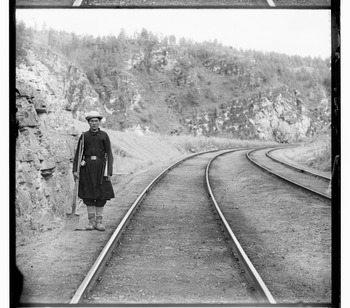
These concerns directly reflected the concerns of zemstvo officials in the Bashkir region about the regulation of an entire industry that had rapidly sprung up around the kumys cure. While the first kumys resorts to gain fame, such as Postnikov's, had been built in the steppes along the Volga River, easily accessible by steamship, and Carrick had chosen a remote spot in the Kazakh Steppe near Orenburg for his kumys establishment, which catered to a wealthy clientele, the completion of the Samara-Ufa railway line in 1888 had made it possible even for Russians of little means to travel beyond the Volga as far as the Urals.Footnote 33 By the first decade of the twentieth century, doctors were sending thousands of patients to the steppe regions in the Ural foothills in search of kumys and better health. Between 1897 and 1907, Bashkir villages along the river Dëma southwest of Ufa mushroomed, some expanding from fewer than a dozen households to over five hundred.Footnote 34 This growth was due to two simultaneous waves of newcomers: the “onslaught” of “kumysniki” who descended on the Dëma Valley each summer, and the more insidious wave of permanent settlers who flocked to the region in search of cheap land. With the loss of their traditional pasturelands, even semi-nomadic pastoralism was no longer sustainable for many Bashkirs; still, many chose to rent out their remaining land to newly arrived settlers, rather than take up a new way of life by learning agricultural practices (Figure 2). These processes led to the economic deterioration of many Bashkir communities in the last decades of the Russian empire.Footnote 35
Sergei Mikhailovich Prokudin-Gorskii, photographer. Strelochnik Bashkir (Bashkir Switchman), Ural Mountains Region, Russia, 1910. Photograph. https://www.loc.gov/item/2018681336/.
Note on permissions: There are no known restrictions on reproducing images from the Prokudin-Gorskii collection in the Library of Congress.

It is no wonder, then, that Bashkirs capitalized on the growing popularity of the kumys cure and the inability of many lower-class Russians to afford the rising prices at official kumys establishments, which often required large down-payments and charged separate fees for essentials, such as laundry services and individual bottles of kumys, even when patients were required to consume six bottles a day (thought to be the correct dosage for tuberculosis patients) over stays of six to eight weeks, in order to fully experience the benefits of the cure.Footnote 36 Alarmed Russian reports revealed that only a small percentage of kumys-seeking tourists paid for room and board at established resorts.Footnote 37 In 1912 more than ten thousand patients visited the steppes of Samara, Orenburg, and Ufa provinces; of those, thousands went not to officially designated resorts, but to any one of seventy-five villages, primarily in Belebei and Ufa counties, through which the Samara-Ufa railway line ran along the Dëma River.Footnote 38 At railway stations in the Dëma Valley, Bashkir coachmen greeted patients with trial bottles of kumys and competed for fares. Some villages acted in coalition with one another, while others established monopolies over one aspect of the industry. Some villages built new accommodations for “kumysniki,” while individual families moved into outbuildings or partitioned their homes to rent them to health tourists.Footnote 39 Doctors and guidebooks, such as the Kumysnik's Companion, published by the Society of Doctors in Ufa starting in 1910, warned against the hygienic conditions in such villages. Bashkir families neither disinfected between patients nor took particular precautions at the end of the season before moving back into their homes, with the result that tuberculosis spread rapidly through the villages.Footnote 40 Far from possessing some kind of magical immunity to tuberculosis, conferred by consuming large quantities of kumys, the nomadic peoples of the steppes, it turned out, were equally susceptible.Footnote 41
Starting in the early twentieth century, concerned members of Bashkiriia's educated society took measures to improve the situation. Zemstvo officials sent sanitary and veterinary inspectors into villages and discussed hiring a permanent doctor to treat kumysniks in summer and educate locals about tuberculosis in winter. On the recommendation of the Russian League for the Fight against Tuberculosis, information kiosks were established at the most popular railway stations in the Dëma Valley, part of an attempt to maintain control over health and the spread of disease in the region and prevent kumys-seekers from falling prey to disingenuous Bashkirs lurking at railway stations.Footnote 42 To pay for such measures, zemstvo officials hoped to establish a kurort tax, but this could only be done if the kumys cure regions were recognized at the national level. It was Ufa zemstvo official Aleksandr Petrovich Tolstoi who seems to have brought these issues to the attention of the State Council, where he served as a member of the committee designated to discuss what became the law “On the Sanitary and Geological Protection of Curative Places” in 1914.Footnote 43
Nationalizing the Climate-Kumys-Cure
Following the introduction of the new law, a Congress for the Improvement of Domestic Curative Places was held in Petrograd. At the congress, Russian doctors leveraged the notion of curative places of national importance—using the designation lechebnye mesta, rather than the German-sounding kurorty—to argue that the existing network of health resorts could be developed and democratized to make it more accessible; in short, it could become a matter of national pride, rather than shame.Footnote 44 Within such discussions, the steppes emerged as a uniquely Russian therapeutic agent, whose health giving properties were bolstered by that “national, powerful curative agent of Russia: the steppe kumys cure.”Footnote 45
While the Bolshevik Revolution put an end to the hopeful visions of prerevolutionary doctors, in many ways the Bolsheviks picked up where these discussions left off. In March of 1919, Vladimir Lenin signed a decree of the Council of People's Commissars recognizing “curative places (lechebnye mesta) of national (obshchegosudarstvennogo) importance” in newly Soviet Russia: places with sources of curative waters or muds; places with saline lake, coastal (limannye), and sea baths; climate and mountain stations; and places for taking the kumys cure.Footnote 46 A sub-commission of the Academy of Sciences’ Commission for the Study of the Natural Productive Forces of Russia (KEPS) was tasked with looking into kumys as “one of our national riches (bogatstv),” while the newly created People's Commissariat of Health was charged with enfolding existing kumys establishments into a new national network of Soviet kurorty.Footnote 47 Areas of the steppes in the Dëma Valley, southern Samara Province, around Orenburg and parts of the northern Kazakh steppe were designated official kumys cure regions of “all-union importance” for possessing good-quality kumys, the right breeds of mares, sufficient pasturage, and existing accommodations for patients.Footnote 48
The idea of making Russian health resorts more accessible to the common people, as championed by prerevolutionary doctors, was ideologically compatible with the new regime. As a state established in the name of the working class, the Soviet health care system pledged to cater to workers. The Soviet labor code of 1922 was the first in the world to guarantee that all workers who worked for at least five and a half months were entitled to a two-week vacation on an annual basis.Footnote 49 Formerly bourgeois health resorts now formed attractive places for Soviet workers to restore their health and spend their vacations.
Between 1921 and 1925, nearly one-quarter of patients in sanatoria operated by the People's Commissariat of Health were treated for tuberculosis.Footnote 50 Dr. Nikolai Teziakov, head of the commissariat's Division of Curative Places (Otdel Lechebnykh Mest), called on the newly established Main Administration of Health Resorts (Glavnoe Kurortnoe Upravlenie) to “pay the most serious attention to the expansion of kumys healing and its accessibility to workers” because of its potential to fight this so-called “social disease.”Footnote 51 Outside of the official kumys regions, kumys resorts of regional or local significance served hundreds of workers from the surrounding areas.Footnote 52
Soviet health resorts, and the kumys resorts in particular, faced massive obstacles in the early 1920s. The creation of new state farms (sovkhozy) to provide kurorty with fresh, healthy foods, did not guarantee their success, particularly when famine enveloped the kumys cure regions in 1921–22.Footnote 53 Moreover, after 1917 the kumys cure regions had become front lines in the contestation between the Bolsheviks and “counterrevolutionary” forces. As late as 1921, when the civil war had subsided elsewhere, in the steppes near Orenburg “sanitary” trains carrying doctors and important supplies were attacked, livestock stolen, and personnel killed.Footnote 54 Here, as well as farther to the northwest, in southern Samara province, deserters squatted in former kumys establishments, tearing out window frames and doors for fuel, and stripping the roofs of iron, while peasants took advantage of the chaos to seize the lands of former landowners, putting formerly “virgin” covil steppe under the plow. Water pipes and other infrastructure lay in ruins; recovery from this destruction took years.Footnote 55 Although resorts offered beds already in the 1921 summer season, hundreds of patients had to endure unsanitary conditions and a lack of kumys or even trained medical oversight.Footnote 56
The lack of kumys was largely due to the fact that many horses had been mobilized, first for the war in Europe, then for the civil war. Drawing on prerevolutionary practices, the newly Soviet kumys establishments calculated one milking mare per patient, meaning that at least two thousand were needed for the kumys cure regions, where horses were almost impossible to find. Since nomads traditionally used non-working horses for kumys, several hundred additional horses were needed for transportation and other labor.Footnote 57 Drought in 1921 and the resultant lack of fodder led in places to massive die-offs of livestock; the remaining horses were spread over many miles of steppe.Footnote 58 Even when a special expedition was sent to procure horses from Siberia, it failed to produce a single mare for the 1921 season.Footnote 59 Where horses were available, their Kazakh owners demanded to be paid in cloth, rather than what might quickly become worthless currency.Footnote 60 The practice of buying new mares at the beginning of each season, then trying to sell them off locally, rather than care for them over the winter, proved to be a supremely inefficient and costly task. The 1925 operations costs of one resort in the Volga region, for instance, included salaries and daily allowances for the horse-purchasing commission, which began its search in Siberia in March of that year yet did not manage to procure mares by the time patients arrived, translators for negotiating horse purchases from the Kazakhs, transportation costs for the commission and horses, and lawyers to both collect money from the local peasants, who had bought the previous season's horses on credit, as well as to prosecute a case against the horse-purchasing commission.Footnote 61
Revitalizing Workers’ Bodies and Minds
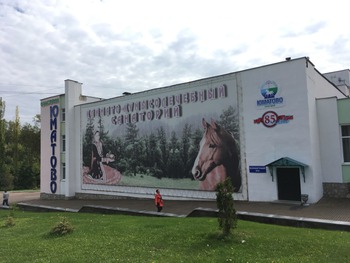
In spite of such obstacles, Soviet scientists and doctors worked together to promote the kumys resorts and establish a scientific basis for what was increasingly known as the “climate-kumys cure” (klimatokumysolechenie), reflecting the prevailing wisdom that climate and kumys worked together to produce healthful effects on patients (Figure 3).Footnote 62 While some doctors continued to experiment with “whether it is possible to take kumys outside of its homeland (rodina; the steppes)”—emphasizing the importance of kumys itself over the steppe environment—it seemed clear to many that the steppe climate (or at least the climate of the steppes where the kumys cure could be found) did, in fact, occupy its own space among the different curative climates of the Soviet Union.Footnote 63 Some, indeed, attributed the recovery of patients in kumys resorts largely to climate, assigning only a small role to kumys itself.Footnote 64 But many still believed, as Dr. I.D. Iakhnin did, that the success of the kumys cure depended on both kumys and “the extraordinarily felicitous combination of climatic peculiarities of the steppe region.” He drew on the popular words of Dr. Nikolai Mikhailov, who in 1897 had written that one could drink kumys at home, but “one can only be cured in the steppes.No art, no laboratory gives kumys that therapeutic power which the steppe gives it, with its pure, dry air, with its blistering (paliashchii) sun, luxurious vegetation, its quiet and calm, with all of its unique life.”Footnote 65
View of the main building of the Yumatovo Climate-Kumys Cure Sanatorium, Ufa raion, Bashkortostan, Russian Federation, September 2019. Photograph by the author.

Mikhailov's emphasis on the peaceful steppe environment harmonized with Soviet doctors’ emphasis on revitalizing workers’ bodies and minds by leaving behind the stresses of working life.Footnote 66 Teziakov's Division of Curative Places explained climate therapy as the removal of a sick person to be “closer to nature” and its “healing powers.”Footnote 67 Even more than treatment, Soviet medicine emphasized prophylaxis; holidays were to be used for “cultured leisure,” using such natural factors as air, sun, and water to both renew the strength of workers’ bodies and cultivate their minds. This was especially important for urban dwellers, “who are usually deprived of these priceless gifts of nature.”Footnote 68 In an article in the newspaper Krasnaia Bashkiriia (Red Bashkiriia) entitled “To sun, to the village! Let's undertake cultured summer leisure,” a Dr. Kochurov stressed the importance of clean air and summer sunlight for the restoration of body and mind, having “spent [their] energies on production, initiative, creation” in the fall and winter months.Footnote 69
Though the steppes could not offer an “air cure” on par with the Alps, steppe air was praised for being free from dust and bacteria, as well as for its dryness, all factors that were important for patients suffering from diseases of the lungs such as tuberculosis.Footnote 70 Many Soviet kumys resorts, like their prerevolutionary counterparts, featured terraces and verandas where patients could read, play “cultured” games such as chess, and take an after-lunch nap in the fresh air; they might even sleep there at night.Footnote 71 The aroma of the steppes was also thought to enhance the qualities of the air.Footnote 72 The physiotherapist and climatologist Polien Grigor΄evich Mezernitskii argued that aromas could have a beneficial effect on breathing; he described a particular kind of steppe aroma distinct from those given off by forests or bodies of water.Footnote 73 As botanist Nikolai Adol΄fovich Bush described it, “The fragrance of many steppe plants stems from the presence in them of special glands, exuding essential oils. These essential oils volatilize especially intensely in sunlight, and the plant seems surrounded by a dense atmosphere of vapors.”Footnote 74
Sunlight was beneficial to people, as well as plants. Following European medical practitioners, Russians had touted the therapeutic values of sunlight before the revolution; by the mid-1920s, what historian Johanna Conterio has described as a “rage for sun therapy” had taken hold of Soviet Russia.Footnote 75 Proponents of the kumys cure claimed that Russia's steppes got more sun than Crimea, Davos—home of the original air cure—and even Leysin, the center of heliotherapy in the 1920s.Footnote 76 The sunny steppe cure, it was thought, would have particular appeal to patients from the gloomy Baltic region, including Leningrad.Footnote 77 Kumys resorts in the steppes, like their counterparts on the seashore, constructed aeraria and solaria to take full advantage of all the natural riches the steppes had to offer, even improving upon the climate by creating their own microclimates.Footnote 78 As a Dr. N. Podd΄iakov put it, “sun baths” were important in increasing the “vital qualities of the skin, [and] strengthening the heart, blood vessels, and nervous system.”Footnote 79 In 1929, Krasnaia Bashkiriia published instructions on how to take sun and air baths, as well as how to comport oneself at a place of healing.Footnote 80
The steppe thus offered what could be found in many places deemed to have a healthy climate (and steppe sunshine and air were freely available to help restore the worker's frazzled nerves, as Smychka reminded its Orenburg readers).Footnote 81 Yet the steppe also possessed unique therapeutic qualities, the most important of which was kumys. To emphasize the effects of the climate-kumys cure on both body and mind, Dr. Podd΄iakov spoke of “a whole series of psychological moments and curative actions of natural forces on a person;drinking kumys is merely an additive to the sum of these actions.”Footnote 82 In the 1920s Soviet medical professionals worked to determine just how kumys interacted with individual aspects of the steppe climate. In 1923, specialists invited by Nikolai Darkshevich, head of the Orenburg kumys region, conducted a series of studies on the workings of kumys both alone and in concert with heliotherapy.Footnote 83 According to Darkshevich, climate and kumys worked together to provide a more robust cure than could either factor alone. The aridity of the air and temperate winds allowed the patient to sweat easily, making it possible to withstand greater exposure to sunlight. It was only in the steppe climate, through increased perspiration, he maintained, that patients could absorb “tremendous quantities of kumys” over a long period of time; therefore, the steppe climate was “nothing short of a necessary and indispensableelement of rational kumys healing.”Footnote 84 Recalling the words of earlier European travelers to the steppes, and drawing on kumys expert Professor Arkadii Rubel΄'s conclusions that the climate-kumys cure provided a uniquely “successful complex of curative effects not found in any of the other well-known systems of physiotherapeutic or dietetic healing,” Darkshevich claimed that kumys and climate worked together not only to physically strengthen the organism, but also to produce “especial zest for life and vigor.”Footnote 85
Theories behind the importance of the steppe climate in the kumys cure were in direct opposition to one strain of traditional thought, which posited the sanatorium as a place of rest (the German idea of the Liegekur). The kumys cure instead encouraged patients to be active and take advantage of the fresh steppe air as a means of “training” the organism (trenirovka or zakal organizma).Footnote 86 Further training was provided by the “purely continental” nature of the steppe climate, with sharp swings in temperature between the heat of summer days and cool temperatures at night. Though the “Russian prairie” might have a climate too capricious for agriculture, its value for health was rarely questioned; nor did temperature swings suggest unsuitability for a health resort.Footnote 87 Rather, Soviet doctors believed that large shifts in temperature could have a beneficial effect on the human body: zakalivanie, or tempering, in which the body, exposed to rapid changes, trains itself to become less influenced by cold and is better able to protect itself.Footnote 88 Zakalivanie followed a line of thinking that stretched back to John Locke's writings in the eighteenth century on the importance of “hardening” the body in childhood through exposure to the elements.Footnote 89 In the wake of the famine of 1891–92, Georgian physiologist Ivan Tarkhanov (Tarkhnishvili) had lectured on the importance for Russians of zakalivanie. Influenced by German practitioners of the “cold water cure” such as Sebastian Kneipp, who emphasized the importance of walking barefoot and the benefits of exposure to cold, Tarkhanov posited the twin threats of hunger and cold as a call for nationwide hardening and a strengthening of constitutions in order to survive in Russia's northern climate.Footnote 90
In the Soviet Union, a state that pledged to transform its citizens into a new kind of people through such measures as social hygiene and improved labor conditions, zakalivanie took on new resonances.Footnote 91 As Tarkhanov had pointed out, unlike the German word Abhärtung (hardening), the Russian term zakalivanie was used in metallurgy to describe the process of increasing the toughness and resilience of iron and steel, thus suggesting resistance to many different kinds of conditions.Footnote 92 Industrial metaphors neatly reflected the ethos of the modernizing Soviet state, as in Nikolai Ostrovskii's early 1930s socialist realist novel How the Steel Was Tempered (Kak zakalialas΄ stal΄) about how the Russian Civil War helped to forge Pavel Korchagin into a “New Soviet Man.”Footnote 93 Ostrovskii's choice of title reflects the idea that the process of tempering strengthens not only metal, but the human body and spirit as well.
Ostrovskii's inspiration may in part have come from his own time spent in a Soviet sanatorium in Crimea in the 1920s; the novel and its terminally-ill writer seem to have struck a chord among tuberculosis patients, as evidenced in letters sent to Ostrovskii following the publication of an edited version of the novel in 1935. After a “literary evening,” a group of sanatorium patients wrote to Ostrovskii, suggesting that the novel itself could perform the tasks of strengthening the body and hardening the character, those very processes alluded to by the metaphor in the title.Footnote 94 Soviet doctors, for their part, saw the steppe climate as particularly beneficial for such tuberculosis patients, “a powerful agent in the tempering of the organism, forcing it to become more hardy in relation to shifts in warmth and cold,” though they also warned that because the steppe climate was not “forgiving,” it might not be suitable for all tuberculosis patients.Footnote 95 Rubel΄ warned that kumys consumed in large quantities outside of the steppes, with their “tempering (zakalivaiushchee) action,” could “even have a harmful effect on the organism.”Footnote 96
Steppe Landscape Imaginaries
In spite of kumys proponents’ best efforts, the mineral water spas on the Black Sea and in southern Russia continued to hold more appeal than a cure on the steppes. While the health resorts of Crimea and the Caucasus beckoned patients with the promise of the beauty of their natural surroundings, the steppes to the east, far from the mountains and the coast, offered a decidedly more “meager” vision, particularly in summer, when the rich steppe grasses faded from green to brown.Footnote 97 In his novella entitled The Steppe, the celebrated writer Anton Chekhov—who had himself tried the kumys cure in 1901 after being diagnosed with tuberculosis—had described “the disillusioned steppe” with its “jaded July aspect. The grass drooped, everything living was hushedthe steppes, where there are no woods or high hills, now seemed endless, petrified with dreariness.How stifling and oppressive it was!”Footnote 98 Yet although steppe landscapes were perhaps not as remarkable as mountains or the seaside, it was nevertheless thought that they could exert a beneficial influence on patients. According to Dr. An. Begak, the Soviet director of the health resort in the Dëma Valley where Chekhov had once stayed, the “soft, sinuous lines of the steppe have a most positive effect on the exhausted (utomlennyi) human organism.”Footnote 99 Since the nineteenth century, however, it had been more common to emphasize the steppe resorts’ proximity to other kinds of natural features, including pine forests or hills, which not only provided a picturesque (zhivopisnyi) backdrop, but also could provide shelter from the wind and a calm atmosphere. Soviet publications on kumys institutions in the steppes tended to describe the surrounding regions using modifiers such as forest-steppe (lesostep΄) or mountain steppe (gornaia step΄). Such terms were not invented by health practitioners, but drew on the works of pedologists, geographers, and botanists attempting to differentiate between various parts of the vast belt of grasslands stretching from Ukraine deep into the heart of Asia. The term lesostep΄, for instance, was coined by Russian scientists trying to describe the regions in which the forest zone encroached onto the steppe (another suggestion was predstep΄, or pre-steppe).Footnote 100
The idea of situating resorts in pine forests was one popularized in central Europe, while references to Switzerland invoked the healthy climates of the Alps.Footnote 101 One resort in Bashkiriia, known as “Russian Switzerland,” was at an elevated location near what were described as “mountains,” surrounded by a pine forest.Footnote 102 Borovoe in Akmolinsk oblast in the northern Kazakh steppe was known as “Siberian Switzerland” for its location in a “mountain-lake forest oasis.”Footnote 103 Shafranovo was in a “hilly steppe location” in the Dëma Valley. The Chekhov sanatorium was located “in a dense forest, surrounded by steppe covered in fragrant wildflowers.”Footnote 104 Aksakovo was set near the estate of the famous literary family in a “high, dry placesheltered from the cold winds,” in the midst of a “picturesque birch grove.”Footnote 105 Another resort, in Stavropol-on-Volga (later Tol΄iatti), was simply called “Lesnoe” (Forested), though there was a brief push to rename it after Lev Trotskii. The resort was said to be “superior for lung disease patients both because of its location (a pine forest) and because of its kumys.”Footnote 106
As Dr. Iakhnin put it, steppe nature might not be “magically beautiful,” but the climate-kumys resorts, in their simplicity, had everything the patient might need.Footnote 107 Even if the kumys resorts remained “primitive” compared to more well-developed resort regions in western Russia or Europe, they were also cheaper, which made them more accessible to the worker.Footnote 108 While the long journey over the steppes could itself be exhausting, the special environmental features of these islands of health, with their hills and forests surrounded by the endless steppes, made them all the more appealing. A professor who observed conditions at Borovoe in the northern Kazakh Steppe over the 1924 and 1925 seasons described it thus: “You somehow stumble upon a forsaken oasis of nature, where there are concentrated all riches, all means for the physical and moral invigoration (ozhivlenie) of the traveler exhausted by the endless steppe and weakened by this or that illness of the organism.” He went on to enumerate natural features, properties of the air—dust-free, low air pressure, infusions of ozone and spirits of turpentine from the nearby pine forest—and, of course, “health-giving (tselebnyi) kumys.”Footnote 109
Steppe vegetation was also an important part of the landscape, from the bright tapestries of wildflowers to the undulating feathergrasses. Kumys resorts continued to tout proximity to “covil steppes,” though Soviet doctors largely continued to rely on the nineteenth-century insights of practitioners such as Carrick and Shtange when it came to the properties bestowed by covil on the milk of the mares who fed on it.Footnote 110 Others invented new ideas about covil's effects on kumys. Though he could not find an analysis of what he perceived to be oat-like “fruitlets” within each blade of feathergrass, for instance, the professor at Borovoe concluded that the transmission of “herculin” into the kumys imbibed by patients, by means of the Kazakh mares who fed on these rich covil feathergrasses, must help to explain the curative properties of the local kumys.Footnote 111 As at least one doctor pointed out, however, the term “covil” itself was a misnomer, as there were various types of feathergrass, all of which were referred to as covil. The botanist Bush distinguished between “meadow-steppes” in the forest-steppe zone and true “covil-steppes” farther to the south, but noted the presence of various types of “covil” from the Stipa genus in each.Footnote 112
At the All-Union Agricultural Exhibit in Moscow in 1923, the pavilion of the Main Kurort Administration reinforced Soviet imaginaries of curative landscapes through exhibitions demonstrating to visitors the restorative effects of the “forces of nature” on working bodies. Within the section on climate resorts, for instance, was an exhibition dedicated to the kumys cure featuring a “typical cottage” for four patients from Krasnaia Poliana (a prerevolutionary resort on the Orenburg railway line), “decorated all around with covil.” Accompanied by a photograph of patients on the terrace, the model cottage “gave a clear impression of life at kumys stations.” Peasants from southern republics were reported to have demonstrated a particular interest in the climate cure in the steppes, as well as techniques for kumys healing.Footnote 113
Steppe Realities
Though doctors like Begak emphasized that “A tuberculosis patient can be healed of his ailment only in the conditions of a CORRECT REGIMEN and the absence of any kind of worries,” many patients continued to stream to the “dirty,” “chaotic” villages surrounding official kumys establishments for a kumys “cure” that involved neither oversight of kumys preparation, nor a strict regimen prescribed by a doctor.Footnote 114 During the years of the New Economic Policy, when private trade was partially legalized in the Soviet Union, Bashkirs, Kazakhs, Russians, and Ukrainians continued to alarm officials by turning their villages into “cure points” and seeking to make a commercial profit from health tourists in the region.Footnote 115 In Bashkiriia in 1926, there were approximately six to seven thousand “kumysniki” staying in peasant huts, mostly in the Belebei kanton, as had been the case before the revolution.Footnote 116 The 181-person village of Shafranovo, for instance, hosted 670 kumysniks, while in the village of Churakaevo, proclaimed by a sanitary commission to be ill-suited for the kumys cure, thirty-three households sold kumys to two hundred registered kumys patients, who ate at three “primitive” cafeterias with dirt floors and no roof.Footnote 117 At the Sixth All-Union Congress on Kurort Affairs in 1927, Dr. Darkshevich called for the organization of some kind of control over this kind of “makeshift” (kustarnyi) kumys cure, noting that the number of kumysniks dispersed across various villages and Kazakh auls of the kumys region was on the rise.Footnote 118
Although kumys itself was a product of the steppes, observers worried that, in their eagerness to make a profit, steppe inhabitants did not always follow “the rules of kumys-making,” often using a “polluted” fermentation starter, which gave the kumys a “somewhat bitter aftertaste.”Footnote 119 According to Professor Liubov΄ Moiseevna Gorovits-Vlasova, who in the 1920s developed a “laboratory method” for producing a “pure” kumys ferment, some of what was passed off as kumys was little more than spoiled horse milk.Footnote 120 Some purveyors added the milk of other animals, such as cows or goats, resulting in strange colors, smells, and tastes. Even if the dilution of kumys with water was a typical indigenous practice, Soviet kumys “experts” deemed themselves the arbiters of what made “good” and “authentic” kumys.Footnote 121 In Bashkiriia, local authorities called for the creation of artels and cooperatives for more oversight over kumys production.Footnote 122 Adulterated kumys was not the only problem, however; the villages themselves were considered hotspots for spreading communicable diseases such as scabies and trachoma, as well as bacteria causing conjunctivitis.Footnote 123
Judging by official Soviet statistics, the kumys regions were at least initially successful in fulfilling the Soviet exhortation to attract more workers. While fewer than one-third of health resort patients in the Caucasus and Crimea in 1923 were workers, the kumys resorts reported 43.1%. The kumys regions also took first place among the curative places of the Soviet Union, in terms of effectiveness in restoring patient health, with over 90% of patients reporting improvements in their conditions, if not outright recovery.Footnote 124 Yet what these statistics do not reveal is that diseases continued to spread. Darkshevich, for instance, reported that during the 1923 season more than one in five patients in the Orenburg kumys region had malaria.Footnote 125 Lesnoe, in spite of its beautiful pine forest, was also in a malarial area; in 1925, two-thirds of the patients were reported to have malaria.Footnote 126 Krasnaia Bashkiriia, moreover, reported that tuberculosis cases in villages continued to rise: 28,000 in 1925, compared to 8400 in 1912.Footnote 127 Authorities in Bashkiriia sent medical practitioners to the most heavily visited kumys regions and publicized legislation on mandatory sanitary and veterinary oversight over any establishment offering kumys for sale to the public.Footnote 128
Oversight over the kumys cure could not, however, change the fact that the climate-kumys cure had led to a reimagining of the steppes as curative places only as those steppes themselves were rapidly changing beyond recognition. As many Russians had realized already in the late nineteenth century, deforestation, plowing, and other agricultural practices had led to irrevocable changes in steppe environments, changes which might alter the climate itself.Footnote 129 By the time “places for taking the kumys cure” were recognized as uniquely beneficial to Soviet workers’ health, many of those places were not what they once were. Although the railroads had made kumys more accessible, they had also led to the disappearance of the “virgin covil steppes” supposedly essential to the production of good kumys.Footnote 130 Throughout the official kumys cure regions, there was said to be only one expanse of “virgin” steppe with “true” covil, located not far from Dr. Carrick's Janetovka. In 1924, heeding prerevolutionary calls for steppe preservation, the Committee for the Protection of Nature Monuments suggested establishing a zapovednik (nature reserve), part of which was to be for the study of soil, botany, and zoology, part to be set aside for model “kumys colonies” with pasture “for the permanent maintenance of mares and foals” and grain and hay “for the kumys herds.”Footnote 131 Though a few references to an Uranbash zapovednik exist—including the enthusiastic report in Smychka in September 1926—it seems to have disappeared quietly along with the covil steppes. (An Orenburg steppe zapovednik consisting of four disconnected sections was finally established only in 1989).Footnote 132 With Stalin's collectivization and sedentarization drives of the late 1920s and early 1930s, the remaining herds of steppe horses shrank drastically, and with them the nomadic way of life that had given rise to kumys in the first place.
In 1929, Dr. M.P. Mikhailov, who had run the Shafranovo sanatorium in the last years of the Russian empire, wrote:
It would be hard to find yet another such curative agent, like kumys, which would have such great fame and along with that such murky accounts of its effects, such an enormous reputation of its curative, almost miraculous, properties, and alongside this an almost complete repudiation of it, not only on the part of laymen or dilettantes, but even those considered to be “priests of science.”Footnote 133
Over subsequent decades, periodic debates arose on the efficacy of the kumys “cure,” and Soviet experts continued to struggle to explain what kumys provided to the patient, besides excellent nourishment.Footnote 134 Those who wished to find a “scientific basis” for the medical benefits of kumys were frustrated that health resorts still employed the descendants of nomads as “kumys masters” supposedly possessing talents that, according to the Party newspaper Pravda, “cannot be grasped by biochemical methods,” leaving kumys-making, as the author regretfully observed, more in the realm of art than of science.Footnote 135
In spite of the fact that there remains no scientific consensus about the effects of kumys on conditions such as tuberculosis, the perception of the steppes as a place whose climate has a particular propensity to heal—especially when combined with the “miraculous” drink made from fermented mare's milk—persists today in the form of climate-kumys health resorts, which now use powdered kumys to offer the popular therapy year-round, alongside other treatments.Footnote 136 (In the 1960s, scientists from the Bashkir Agricultural Scientific Research Institute claimed to have developed a powdered form of mare's milk “which preserved the summer aroma of the Bashkir steppes,” as well as the “miraculous qualities” of “true” kumys.)Footnote 137 In an age in which exotic dairy products and probiotic beverages, not to mention alternative medicines and “traditional” healing methods are experiencing an upswing, some are hoping the kumys cure may undergo a second wind. The steppes of post-Soviet Russia and Central Asia may become a destination for a new generation of health tourists.Footnote 138 Even if many of these resorts are surrounded by agricultural fields and towns, rather than endless grasslands, the kumys cure has always been based on a particular imaginary of the steppes as curative places, and that, perhaps more than anything else, explains its mysterious and miraculous effects.