INTRODUCTION
Cultivation of fruit trees in semi-arid regions such as the Sicilian hinterland is often characterized by increased evapotranspiration (ET0), high soil salinity and limited water availability. Those conditions are expected to spread and intensify, especially throughout the Mediterranean region, due to greater allocation of water resources to municipalities and popular tourist areas. For these reasons, maximization of yields with limited water inputs (i.e. increasing crop water use efficiency (WUE)) becomes critical for tree fruit production.
Stomatal closure is a common response of growing trees to limit turgor loss under water deficit (Parker & Pallardy Reference Parker and Pallardy1985). However, stomatal closure for extended periods may compromise CO2 assimilation and reduce the structural and energetic support to growth (Hsiao Reference Hsiao1973). Water deficit is also known to modify carbon partitioning between vegetative and reproductive sinks, depending on each organ's ability to attract photoassimilates. Fruits and seeds, for example, are generally stronger sinks than shoot apexes (Wardlaw Reference Wardlaw1990), and under water deficit and limited assimilation shoot growth may be preferentially reduced over fruit growth (Higgs & Jones Reference Higgs and Jones1991). In stone fruits, drought mostly affects vegetative growth in spring and during pit hardening, whereas it may affect both shoot and fruit growth during final fruit swelling (Flore & Layne Reference Flore and Layne1999). Reduced shoot growth may directly improve light distribution within the canopy and to fruiting shoots, which in turn increases floral induction and return bloom (flower induction for the following season; Caspari et al. Reference Caspari, Behboudian and Chalmers1994), and indirectly facilitate canopy management (less pruning and fertilizers needed). Mild water stress may also increase partitioning to roots of young cherry (Prunus avium L.) trees (Flore & Layne Reference Flore and Layne1999).
In modern, high-density plantings, trees tend to saturate above- and below-ground available space. While numerous studies have focused on above-ground resources (such as light) by optimizing tree spacing and training forms, little attention has been paid to modifications of root systems and acquisition of water and nutrients imposed by high densities and how those modifications affect the canopy. Water deficit in fact generally reduces root system development in fruit trees such as almond (Prunus dulcis Mill.) (Abrisqueta et al. Reference Abrisqueta, Hernansáez and Franco1994), apricot (Prunus armeniaca L.) (Ruiz-Canales et al. Reference Ruiz-Canales, Franco, Plana and Abrisqueta2006) and peach (Prunus persica (L.) Batsch.) (Abrisqueta et al. Reference Abrisqueta, Mounzer, Álvarez, Conejero, García-Orellana, Tapia, Vera, Abrisqueta and Ruiz-Sánchez2008). However, water deficit may also induce greater root growth (Romero et al. Reference Romero, Botía and García2004), especially into the deeper layers of soil (Burkart et al. Reference Burkart, Manderscheid and Weigel2004), as observed for peach under continuous deficit irrigation (DI) (Abrisqueta et al. Reference Abrisqueta, Mounzer, Álvarez, Conejero, García-Orellana, Tapia, Vera, Abrisqueta and Ruiz-Sánchez2008) or under a dry regime (Layne et al. Reference Layne, Tan and Perry1986). Often, adaptations to changes in biotic or abiotic factors are accompanied by adjustments in root production as related to canopy growth, which results in a modification of root:shoot ratios (Landsberg & Jones Reference Landsberg, Jones and Kozlowski1981), and increased root growth under severe water deficit may positively affect drought tolerance (McCully Reference McCully1999).
In apple (Malus domestica Borkh.), rootstock vigour may also influence assimilate partitioning in favour of root growth (Stutte et al. Reference Stutte, Baugher, Walter, Leach, Glenn and Tworkoski1994), especially in response to drought (Atkinson et al. Reference Atkinson, Policarpo, Webster and Kuden1999). In particular, apple trees on relatively vigorous rootstocks (MM.111 or MM.106) show higher root:shoot ratios in terms of dry matter than trees on M.9 (Stutte et al. Reference Stutte, Baugher, Walter, Leach, Glenn and Tworkoski1994; Lo Bianco et al. Reference Lo Bianco, Policarpo and Scariano2003), suggesting exploration of a greater soil volume and improved ability to acquire water resource under limiting conditions.
Regulated DI has often been unsuccessful in species with concurrent shoot and fruit growth, such as apple (Lötter et al. Reference Lötter, de, Beukes and Weber1985; Ebel et al. Reference Ebel, Proebsting and Patterson1993, Reference Ebel, Proebsting and Evans1995; Mpelasoka et al. Reference Mpelasoka, Behboudian and Green2001), while partial rootzone drying (PRD) has given interesting results in Braeburn, Fuji, Gala, Golden Delicious, Pacific Rose and Pink Lady cultivars of apple (Caspari et al. Reference Caspari, Einhorn, Leib, Redulla, Andrews, Lombardini, Auvil and McFerson2004a, Reference Caspari, Neal and Alspachb; Einhorn & Caspari Reference Einhorn and Caspari2004; Lombardini et al. Reference Lombardini, Caspari, Elfving, Auvil and McFerson2004; Talluto et al. Reference Talluto, Farina and Lo Bianco2007, Reference Talluto, Farina, Volpe and Lo Bianco2008; Zegbe & Behboudian Reference Zegbe and Behboudian2008). PRD, developed initially in Australia for the grape (Vitis vinifera L.) crop, consists of irrigating alternate sides of the rootzone (Dry et al. Reference Dry, Loveys, Botting, Düring, Stockley, Sas, Johnstone and Lee1996; Dry & Loveys Reference Dry and Loveys1998). The principle relies on the production of a non-hydraulic signal [probably abscisic acid (ABA)] in the side of the rootzone were soil water deficit develops and in the translocation of such signal to the foliage, where it should cause partial stomatal closure and increased WUE (Gowing et al. Reference Gowing, Davies and Jones1990; Dry et al. Reference Dry, Loveys, Botting, Düring, Stockley, Sas, Johnstone and Lee1996).
In order to better understand the functioning of apple trees under PRD, a field study was conducted, which measured the partitioning of apple tree dry matter into various above-ground structures and roots in response to PRD irrigation. A continuous deficit treatment was also set up to verify whether partitioning responses could be related to non-hydraulic or hydraulic signals generated by the different irrigation strategies. The main aim of the present study was to verify whether the apple tree responds to different levels and forms of water deficit by modifying dry matter partitioning to various organs and, if so, how tree vigour (induced by the rootstock) may interfere with those modifications and irrigation WUE. In order to explore this objective, apple trees cvar Pink Lady, grown on two rootstocks inducing different vigour, were used. Destructive sampling of several adult trees was also undertaken. For this reason, the study involved two separate field trials and was not replicated in time.
MATERIALS AND METHODS
The study was conducted in a commercial apple orchard located near Caltavuturo (37°49′N and 850 m asl), in Sicily, and split into two separate trials, both conducted in 2005. Six-year-old cvar Pink Lady apple trees were trained to a central leader (fusetto), disposed in single rows oriented North−South, and spaced at 3·5 m between rows and 1 m within the row. The soil was a clay loam (53% (by volume) sand, 18% silt and 29% clay) with pH 7·3 and 18 g/kg active carbonates. At field capacity, soil water content was around 0·26 m3/m3 and soil water potential (SWP) around −17 kPa. With the exception of irrigation, provided by a drip system, all trees received same conventional cultural cares: solid compound fertilizers were applied to the soil once a year in winter, weeds were controlled by regular tilling of inter-rows and rows, and fruits were thinned by hand 40–50 days after full bloom leaving 1–2 fruits per spur.
Due to the number of trees and the amount of work needed for measurements and destructive sampling, the study was divided into two field trials. In the first trial, 18 uniform Pink Lady apple trees, grown on MM.106 rootstock (average trunk diameter 61 mm), were selected and labelled according to a complete randomized block design with three replicates of two trees for each irrigation treatment. Adjacent irrigation treatments on the same row were separated by two buffer trees. At the beginning of June 2005, three irrigation treatments were imposed: (1) conventional irrigation (CI), where all drip emitters (each in between two consecutive trees on the row and delivering 8 l/h) were left open to wet both North and South sides of the rootzone; (2) PRD treatment, where every other drip emitter on the line was closed in order to deliver 0·5 of CI water on one side of the rootzone only, the sides alternating every 2–3 weeks and (3) continuous deficit treatment (DI), where all drip emitters were substituted with 4 l/h emitters to deliver 0·5 of CI water over both sides of the rootzone continually. The PRD layout, with wet and dry rootzones along the tree row and using a single pipeline, was preferred to a layout with two pipelines on each side of the tree row because only a relatively simple modification of the existing irrigation system was required and also because a similar layout seems to perform best in commercial vineyards using PRD (Marsal et al. Reference Marsal, Mata, Del Campo, Arbones, Vallverdú, Girona and Olivo2008). The interval between irrigation events and the duration of each event were adjusted to maintain soil water pressure at or above 0·8 of field capacity (around −50 kPa) in the CI treatment but to avoid spreading of water into the dry side of PRD trees. Wet and dry sides of the PRD treatment were alternated every 2–3 weeks at soil tensions of the dry side ranging from −110 to −150 kPa.
In the second trial, 49 Pink Lady apple trees were selected (22 grown on M.9 rootstock (average trunk diameter 52 mm) and 27 on MM.106 rootstock (average trunk diameter 67 mm). Trees were located in the same field plot as those used in trial 1 and arranged in a complete randomized block design with three replicates of 3–5 trees per rootstock and irrigation combination. Irrigation treatments within each block were positioned contiguously along the same row and separated by two buffer trees, while blocks were separated by at least one buffer row. Only CI and PRD treatments were imposed, as described above (treatments 1 and 2).
Climate parameters were monitored with a Micro-Metos weather station (Pessl, Austria) positioned within the experimental plot. Reference ET0 was determined according to the FAO Penman−Monteith method (Allen et al. Reference Allen, Pereira, Raes and Smith1998). SWP was monitored continuously at a fixed depth of 400 mm with Watermark sensors (Irrometer Co., Riverside, CA, USA) connected directly to the weather station. Soil moisture was assumed to be similar in the two field trials (same plot) and sensors were positioned in each replicate of the three treatments of trial 1.
Stomatal conductance (g s) was monitored weekly from mid-July until the end of August 2005 using an AP4 Delta-T porometer (Delta-T Devices, Cambridge, UK). On each date, the device was calibrated and g s was measured between 10:00 and 12:00 h on two mature, sun-exposed leaves per tree, each from an opposite side (East or West) of the canopy. Sampling dates differed by 1–3 days for the two trials.
On 24 August 2005, two leaves per tree, similar to those used for g s measurements, were wrapped in parafilm and aluminium foil, detached, enclosed in zip-lock bags, and transported in ice to the laboratory for determination of fresh weight (FW). Leaf samples were rehydrated for 24 h in the dark for determination of turgid weight (TW) and subsequently oven dried at 60°C to constant weight for determination of dry weight (DW). Relative water content (RWC) was calculated as RWC=[(FW−DW)/(TW−DW)].
Fruit was harvested on 3 and 7 November 2005 (trials 1 and 2, respectively). Yield and fruit number per tree were recorded in the field, and a sub-sample of 15 fruits per tree was transferred to the laboratory for the determination of dry matter content. One slice of each fruit was weighed, dried at 60°C until constant weight and proportion of dry matter was calculated as the ratio of DW over FW and used to estimate total fruit dry matter per tree.
After harvest, trees were defoliated and all leaves of each tree were weighed. A sub-sample of 15 leaves per tree was transported to the laboratory for the determination of dry matter as described above. Subsequently, the entire above-ground woody structures, or frame (trunk, limbs and shoots), were cut to ground level and photographed from the side with a digital camera against a white background for later acquisition of bi-dimensional measurements. A measuring tape of known length was included in the picture as a reference for subsequent size adjustments. After all images were acquired, sub-samples of wood structures were cut, weighed and oven-dried at 60°C to a constant weight. Digital images were edited as described in Lo Bianco et al. (Reference Lo Bianco, Policarpo and Scariano2003) to determine total shoot length and average diameter. Briefly, the background was manually removed from original JPEG images and clean images were saved as binary TIFF files. ROOTEDGE software (Iowa State University Foundation Inc., Ames, IA, USA) was used to scan TIFF images and determine shoot length and diameter. The erosion function of the software was used to separate the seasonal growth from older wood according to diameter category. The proportions of wood from the current season and older wood were estimated based on relative areas (length×diameter) from TIFF imagesand used to calculate fresh and DWs.
In trial 2 only, the root systems were excavated with the aid of a power shovel and soil was removed, first by pressure washing and afterwards by immersing in water. The portions of root system recovered (mainly coarse) were weighed before and after oven drying at 60°C to constant weight.
Data from trial 1 were analysed by one-way ANOVA with irrigation as main factor and block as replicate factor, while the data from trial 2 were analysed by two-way ANOVA with rootstock and irrigation as main factors, block as replicate factor and rootstock×irrigation as the sole interaction.
RESULTS
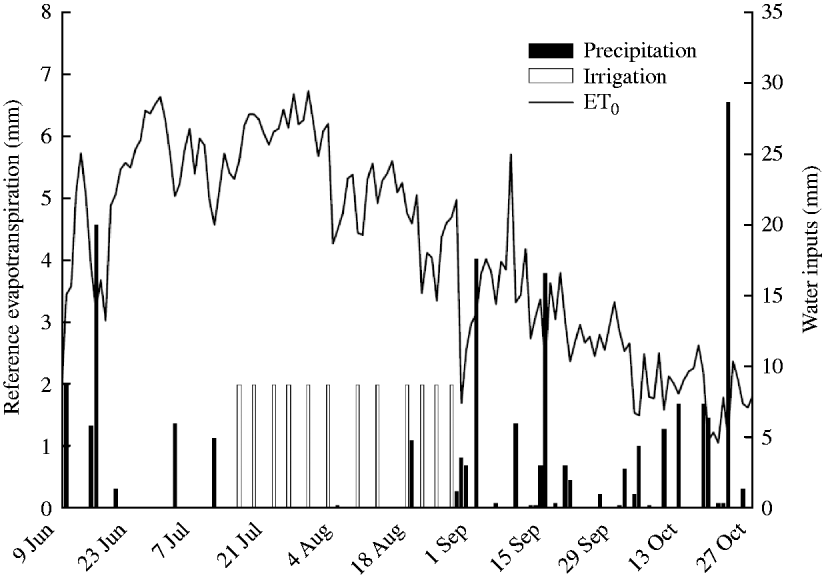
The annual rainfall for 2005 was 789 mm and the dry season fell primarily in the months of July and August (Fig. 1). The irrigation season started on 15 July 2005 (92 days after bloom) and ended on 29 August 2005, delivering 180 mm to CI trees distributed over 12 events (a total of 630 litre/tree) in both trials.
Reference evapotranspiration (ET0), precipitations and conventional irrigation (CI) during the trial period in 2005 near Caltavuturo (37°49′N and 850 m asl), in Sicily.

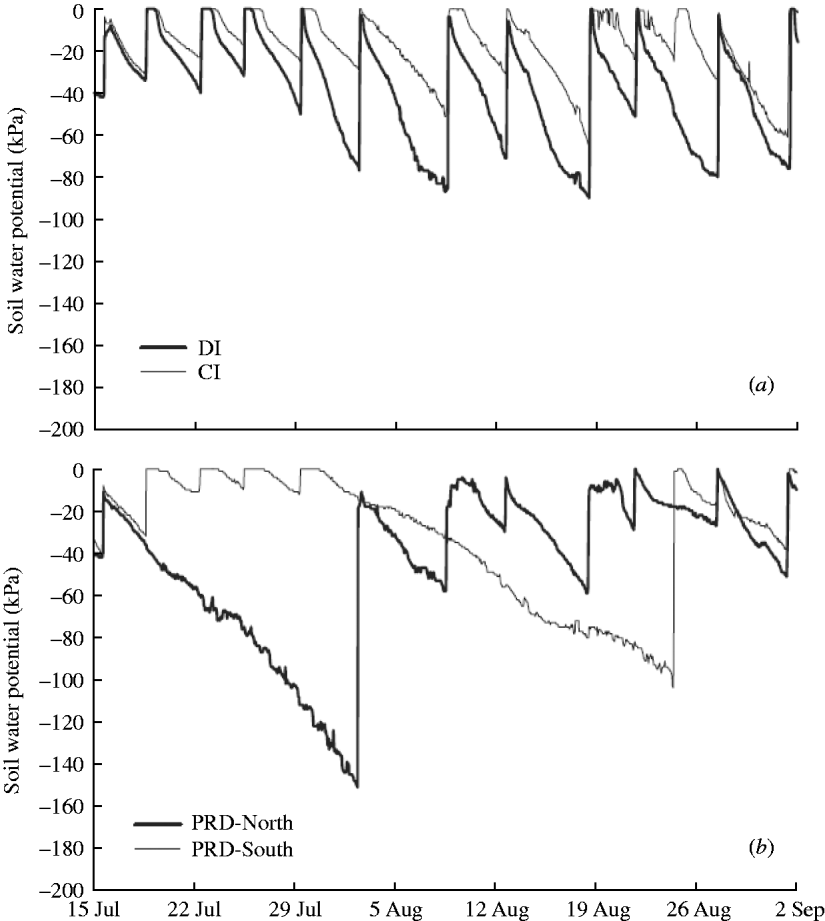
In the CI treatment, SWP generally remained above −50 kPa and exhibited fluctuations due mainly to irrigation cycles (Fig. 2(a)). In the DI treatment, SWP also showed fluctuations in response to irrigation cycles, but with a general tendency to reach more negative values than the SWP in the CI treatment, especially in the second part of the irrigation period when soil water resources were probably most depleted (Fig. 2(a)). In the PRD treatment, SWP provided good evidence of distinct wet and dry sides of the rootzone reaching minimum values of about −150 kPa at the end of July (Fig. 2(b)).
Soil water potential (SWP) in the rootzone of apple trees cvar Pink Lady under (a) CI and continuous deficit irrigation (DI) and (b) in the two sides of the rootzone (North and South) of trees under partial rootzone drying (PRD) during the irrigation period. Data from trial 1.

Trial 1
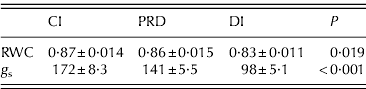
Towards the end of the irrigation period, the RWC of DI leaves was only 5% lower than that of CI leaves (Table 1), indicating a condition of water deficit in DI but not in PRD trees. Both DI treatments induced significant g s reductions compared to CI, but the reduction in DI was higher than PRD (43 v. 18%) (Table 1).
Leaf relative water content (RWC, n=12) and stomatal conductance (g s, mmol/s/m2, n=66) in 6-year-old apple trees cvar Pink Lady under conventional irrigation (CI), PRD, and continuous deficit irrigation (DI). Means±s.e.m. Data from trial 1

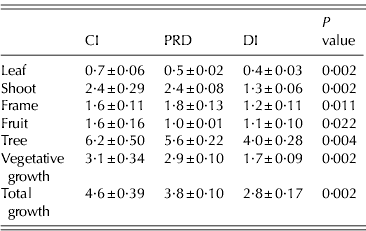
In general, dry matter accumulation was markedly reduced by DI and to a lesser extent by PRD. Specifically, PRD induced a 29% decrease in leaf DW, a 37% decrease in fruit DW and an 18% decrease in total tree growth over CI, whereas shoot and frame DWs were not affected by PRD (Table 2). On the other hand, DI reduced dry matter of all measured components, specifically: leaf by 43%, shoot by 46%, frame by 27%, fruit by 28%, total tree by 36%, vegetative growth by 45% and total growth by 39% (Table 2).
Dry weight (DW) of various organs and current season growth (kg/tree) in 6-year-old apple trees cvar Pink Lady under CI, partial rootzone drying (PRD) and continuous DI. Means±s.e.m. (n=6). Vegetative growth=leaf+shoot; total growth=leaf+shoot+fruit. Data from trial 1

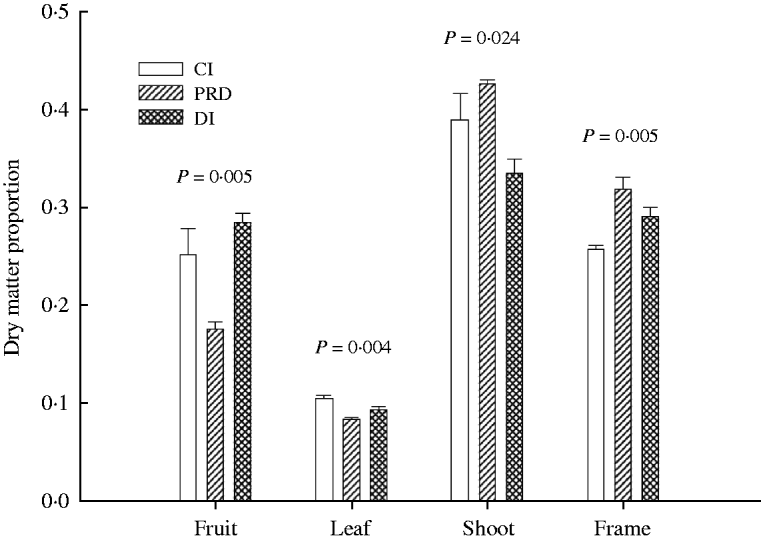
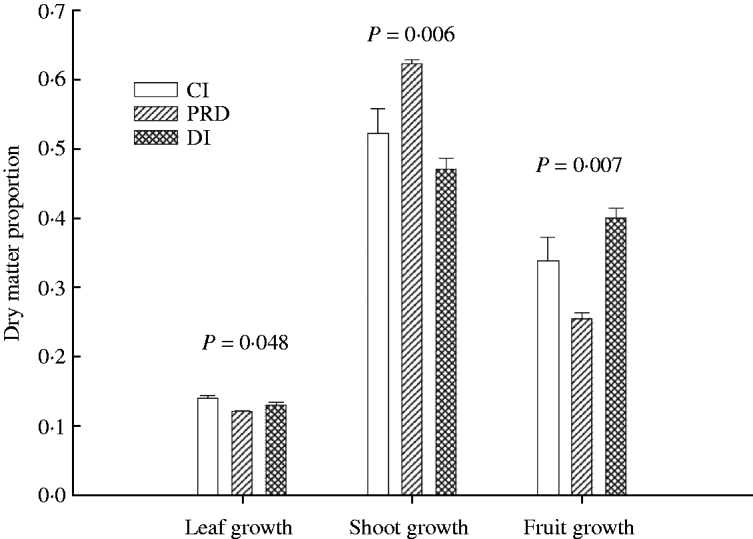
The proportion of total dry matter in above-ground organs ranked as follows: shoots>frame>fruits>leaves. In particular, PRD induced reductions of dry matter partitioning into leaves by 20% and into fruits by 31%, while it increased partitioning to shoots and frame by 9 and 24%, respectively (Fig. 3). In contrast, DI reduced partitioning of dry matter into current shoots by 14%, whereas it increased partitioning into frame by 13% (Fig. 3). In terms of current growth only, PRD trees partitioned 19% more dry matter to shoots, 13% less to leaves and 31% less to fruits than CI trees; whereas DI trees partitioned 18% more dry matter to fruits than CI trees (Fig. 4).
Dry matter partitioning among various above-ground organs of 6-year-old apple trees cvar Pink Lady under CI, PRD and continuous DI. Error bars: s.e.m. (n=6). Data from trial 1.

Dry matter partitioning among organs of current season growth in 6-year-old apple trees cvar Pink Lady under CI, PRD and continuous DI. Error bars: s.e.m. (n=6). Data from trial 1.

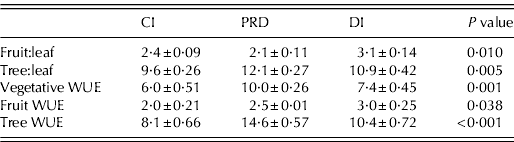
PRD induced a 13% reduction in fruit:leaf ratio and a 20% increase in tree:leaf ratio over CI; DI induced a 21% increase in fruit:leaf ratio and a 12% increase in tree:leaf ratio over CI (Table 3). PRD trees were 39, 20 and 44% more efficient than CI trees in terms of shoot, fruit and total growth, respectively, in current growth per unit of water applied; whereas DI trees were 18, 31 and 22% more efficient than CI trees in terms of shoot, fruit and total growth, respectively (Table 3).
Efficiency of dry matter accumulation per unit leaf (g/g) and water use efficiency (WUE, g/l) related to vegetative, fruit or entire tree growth of 6-year-old apple trees cvar Pink Lady under CI, PRD and DI. Means±s.e.m. (n=6). Data from trial 1

Trial 2
No significant rootstock or irrigation effect was detected on leaf RWC at the end of the irrigation period (Table 4). However, PRD caused a 24% reduction in g s, while the rootstock did not affect g s levels (Table 4).
Leaf RWC (d.f.=42) and stomatal conductance (gs, mmol/s/m2, d.f.=288) in 6-year-old apple trees cvar Pink Lady grown on M.9 or MM.106 rootstock and under CI or PRD. Data from trial 2

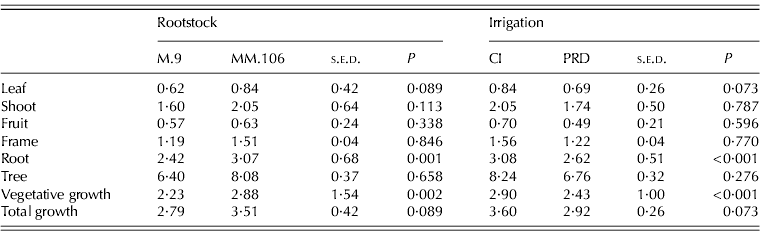
Trees growing on the MM.106 rootstock had greater DWs than those growing on the M.9 rootstock for leaves (35%), shoots (28%), frame (27%) and roots (27%), resulting in 30% more vegetative growth and 26% larger trees (Table 5). In contrast, PRD reduced DWs by 18% in leaves, 15% in shoots, 22% in frame and by 30% in fruit, while root DWs were similar to those of CI trees (Table 5). As a result, PRD trees were 18% smaller than CI trees.
DW of various organs and current season growth (kg/tree) in 6-year-old apple trees cvar Pink Lady grown on M.9 or MM.106 rootstock and under CI or PRD. Vegetative growth=leaf+shoot; total growth=leaf+shoot+fruit. Data from trial 2 (d.f.=21)

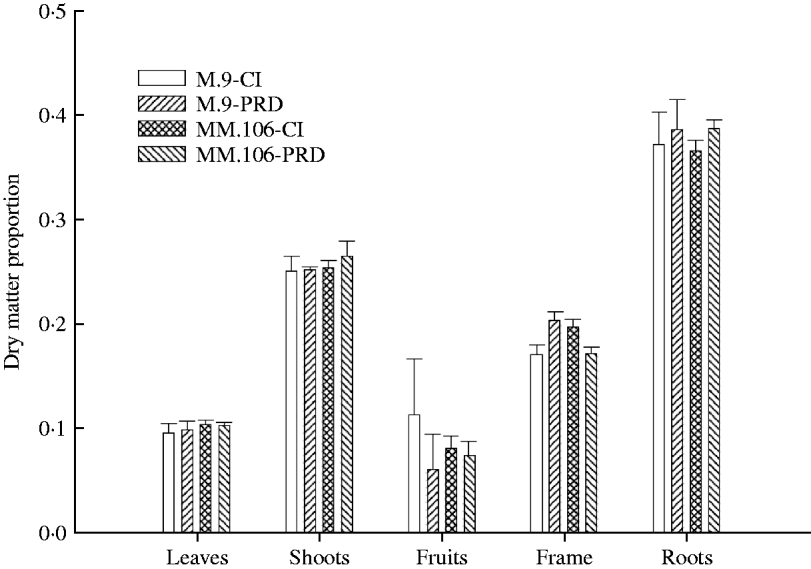
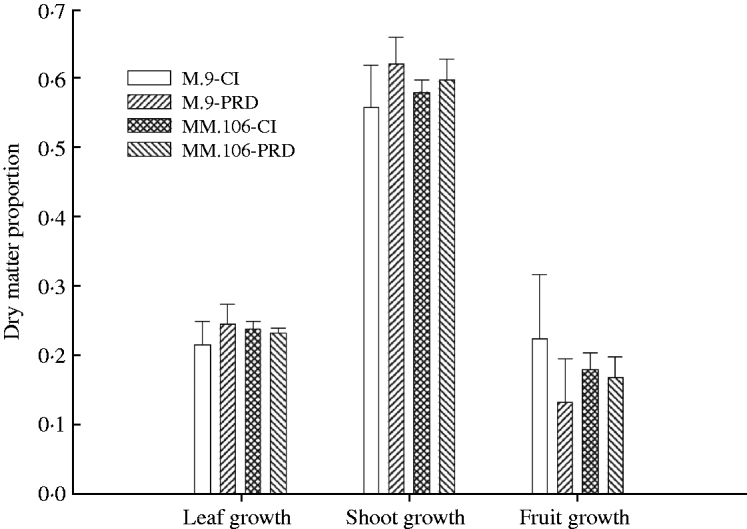
Neither rootstock nor irrigation had a significant effect on the partitioning of dry matter into various organs (Fig. 5) or current growth (Fig. 6). The general ranking of partitioning in this case was roots>shoots>frame>leaves>fruits.
Dry matter partitioning among various organs of 6-year-old apple trees cvar Pink Lady grown on M.9 (n=22) or MM.106 (n=27) rootstock and under CI or PRD. Error bars: s.e.m. Data from trial 2.

Dry matter partitioning among organs of current season growth in 6-year-old apple trees cvar Pink Lady grown on M.9 (n=22) or MM.106 (n=27) rootstock and under CI or PRD. Error bars: s.e.m. Data from trial 2.

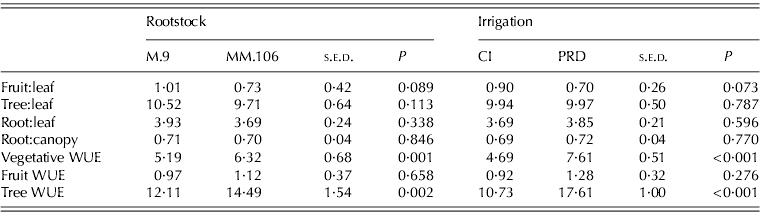
The WUE for vegetative growth (not for reproductive growth), of trees on MM.106 was 22% more efficient than trees on M.9 and PRD trees were 62% more efficient than CI trees (Table 6).
Efficiency of dry matter accumulation per unit leaf and allocation (g/g), and WUE (g/l) related to vegetative, fruit, or entire tree growth of 6-year-old apple trees cvar Pink Lady grown on M.9 or MM.106 rootstock and under CI or PRD. Data from trial 2 (d.f.=21)

DISCUSSION
Trial 1
In the area where the experiment was conducted, irrigation typically starts at the beginning of July and continues to the end of August. Due to late rainfall events in 2005, the irrigation season started a few days later and was somewhat shorter than usual. This may explain the lack of a significant irrigation effect on some parameters measured in the present study.
The greater g s reduction in DI compared to PRD, indicates a more conservative use of water by DI trees. However, soil water deficit induced leaf dehydration only in DI trees and not in PRD trees. This suggests that the way of applying water, rather than just the irrigation volume, affects plant functioning and determines tree water status.
The irrigation treatment significantly affected accumulation of dry matter in various above-ground organs of Pink Lady apple trees (Table 2). In particular, total fruit dry mass of PRD trees was lower than that of CI trees, while DI trees reported intermediate values. Similar decreases in fruit DW, but not FW, were observed in Pacific Rose apple trees under PRD irrigation (Zegbe & Behboudian Reference Zegbe and Behboudian2008). On the other hand, PRD trees partitioned a significant amount of dry matter (similar to CI trees) to woody components and current shoots, while they reduced partitioning to leaves. In contrast, no significant change in dry matter partitioning in response to PRD was observed in young potted seedlings of Swingle citrumelo (Melgar et al. Reference Melgar, Dunlop and Syvertsen2010). Of course, differences in plant material (species, age and type), climate and growing conditions may explain the discrepancies with the present study.
Fruit:leaf dry matter ratio, which may be considered to be an indication of yield efficiency or the ability of the tree to accumulate dry matter into fruits per unit amount of leaf apparatus, was highest in DI and lowest in PRD trees (Table 3). Hence, from a simple dry mass standpoint and not considering fruit size and quality (which may affect crop financial value significantly), DI trees had the highest yield efficiency, the best balance between vegetative and reproductive growth and the greatest reduction in vegetative growth. In grapevine, PRD irrigation causes concomitant increases in root-generated ABA and decreases in cytokinin levels (Stoll et al. Reference Stoll, Loveys and Dry2000). Although hormonal changes were not measured in the present study, the early drop in SWP of the dry side of PRD (Fig. 2(b)) would be expected to induce accumulation of ABA leading to ethylene production, as shown in Citrus (Talon et al. Reference Talon, Tadeo, Ben-Cheikh, Gomez-Cadenas, Mehouachi, Perez-Botella and Primo-Millo1998), or a stress-induced shift towards a greater ratio of growth inhibitor (ABA) to growth promoter (cytokinin), as proposed for avocado and Citrus (Lovatt Reference Lovatt1990). Both mechanisms may have been responsible for early fruit drop in PRD trees and consequent reductions of total fruit dry mass per tree. In DI trees, on the contrary, a more progressive and delayed soil water deficit may have caused higher fruit retention than PRD at the beginning of the irrigation season, generating a strong competition for water by fruits and leading to the observed decrease in leaf hydration at the end of the irrigation period.
If growth per unit of water applied is considered, a WUE related to current growth components, PRD trees were more efficient than CI trees both in terms of shoot and fruit growth; however, DI trees accumulated more dry matter into fruits per unit of water applied, but were less efficient for shoot and total growth than CI trees (Table 3). This may be due to the fact that the DI treatment induced a relatively severe water deficit (lower RWC) but at a later time than PRD, when fruit cell division was mostly completed, and fruits acted as strong sinks and had more time to out-compete shoots.
Trial 2
As expected, the more vigorous MM.106 rootstock induced greater leaf, shoot, frame and root DWs than M.9, resulting in larger trees. The irrigation treatment, on the contrary, affected only above-ground current growth, regardless of rootstock. In particular, PRD reduced leaf, shoot and fruit DWs, producing smaller trees than CI. General reductions in apple dry matter accumulation following drought have been reported previously, whereas the interaction of water deficit with rootstock vigour has yielded contrasting results. For example, in Imperial Gala (Fernandez et al. Reference Fernandez, Perry and Flore1997) and Mutsu apples (Psarras & Merwin Reference Psarras and Merwin2000), water deficit reduced final DWs more in the invigorating rootstock (MM.111) than in the dwarfing rootstock (M.9). On the contrary, in other studies with non-grafted apple rootstocks, drought reduced final DWs more in dwarfing rootstocks than in vigorous ones (Atkinson et al. Reference Atkinson, Policarpo, Webster and Kuden1999; Sakalauskaite et al. Reference Sakalauskaite, Kviklys, Lanauskas and Duchovskis2006). In the present case, PRD irrigation caused very similar reductions in both rootstocks, with a slight tendency to reduce dry matter into current growth more in M.9 than in MM.106. In this case, a longer irrigation season could have clearly expressed this type of response.
It should also be noted that PRD roots tended to be (non-significantly) smaller than CI roots. The lack of a significant difference in this case could be due either to the above-mentioned short irrigation season, or more likely to the fact that apple root growth is reported to occur primarily at bloom and sometimes in autumn (Rom Reference Rom, Maib, Andrews, Lang and Mullinix1996; Eissenstat et al. Reference Eissenstat, Bauerle, Comas, Lakso, Neilsen, Neilsen and Smart2006), when no irrigation treatment was imposed. In peach trees well adapted to PRD irrigation, a significant reduction in total root growth and no ability to stimulate growth into deeper soil layers was in fact observed with non-destructive methods (Abrisqueta et al. Reference Abrisqueta, Mounzer, Álvarez, Conejero, García-Orellana, Tapia, Vera, Abrisqueta and Ruiz-Sánchez2008).
Partitioning of dry matter into various organs was not affected by either rootstock or irrigation, although PRD trees on M.9 tended to allocate less to fruit and more to shoots (Fig. 6), similar to trial 1. This lack of significant differences when data were expressed as a proportion of total dry matter into various organs suggests that rootstock and irrigation effects generate modifications of bulk dry matter accumulation into various organs, maintaining similar partitioning among them. This means that rootstock and water inputs (quantity and method of application) may affect the amount of dry matter accumulated, but the tree is not able to self-regulate and activate compensatory mechanisms reflecting different priorities among organs, at least during the relatively short irrigation period. In other words, under the conditions of the present study, apple trees did not divert assimilate fluxes towards ‘dominant’ organs, but simply modified the amount of dry matter accumulation to each organ.
The latter is also confirmed by the lack of significant rootstock or irrigation effects on the balance between vegetative and reproductive growth or root:shoot ratios (Table 6). If trees were to self-regulate in response to a simple decrease in water availability, a shift towards root growth (i.e. higher root:leaf and root:canopy ratios) would be observed, as well as a greater dry matter partitioning towards fruits compared to shoots and leaves, as fruits are generally stronger sinks than shoots (Wardlaw Reference Wardlaw1990). Higher root:shoot ratios have, in fact, been reported in apple trees under water deficit due to higher numbers of roots, lower root mortality, reduced leaf growth or increased leaf abscission (Landsberg & Jones Reference Landsberg, Jones and Kozlowski1981). The same increase in root:shoot ratios should also lead to a decrease in transpiration per unit root length and to an increase in WUE due to the larger volume of soil explored by trees (Passioura Reference Passioura1972; Taylor Reference Taylor, Taylor, Jordan and Sinclair1983).
The lack of increase in root:shoot ratio in the present study may be explained in part by the fact that the PRD treatment does not consist in a simple reduction of water inputs and cannot be associated with water stress, as indicated by the RWC measured in those trees or by other PRD studies on apple (O'Connell & Goodwin Reference O'Connell and Goodwin2007; Zegbe & Behboudian Reference Zegbe and Behboudian2008). Besides, the physiological basis of PRD suggests that ABA is produced initially in roots (where it could directly inhibit growth) and then translocated to shoots where it may induce partial stomatal closure and shoot growth reductions. Hence, the presence of ABA in roots during most of the irrigation period could by itself explain the lack of increase in root:shoot ratio. In addition, shoot growth reductions in response to PRD have been observed in grapevine and olive (Olea europaea L.) (Dry & Loveys Reference Dry and Loveys1999; Dry et al. Reference Dry, Loveys and Düring2000; dos Santos et al. Reference dos Santos, Lopes, Rodrigues, de Souza, Maroco, Pereira, Silva and Chaves2003), but not consistently in apple (Einhorn & Caspari Reference Einhorn and Caspari2004; Lombardini et al. Reference Lombardini, Caspari, Elfving, Auvil and McFerson2004; O'Connell & Goodwin Reference O'Connell and Goodwin2007; Zegbe & Behboudian Reference Zegbe and Behboudian2008), and in the present study shoot growth was moderately reduced in trial 2 and only in part (leaves) in trial 1. This may be due primarily to the fact that the irrigation treatments were imposed relatively late (due to rainfall continuing later than usual) and soil water deficit occurred even later, when shoot growth had nearly been completed. In contrast, soil water deficit caused by the PRD treatment corresponded for a relevant portion of time with fruit growth resulting in a reduction of fruit dry matter accumulation in both trials.
Generally, the responses of Pink Lady apple trees to the irrigation treatments of the present study were similar for both rootstocks (no interaction between rootstock and irrigation). On the other hand, in terms of WUE for vegetative growth (not for reproductive growth), trees on MM.106 were more efficient than trees on M.9 and, as expected, PRD trees were more efficient than CI trees (Table 6). These results agree with those reported by Sakalauskaite et al. (Reference Sakalauskaite, Kviklys, Lanauskas and Duchovskis2006) and in part with those reported by Atkinson et al. (Reference Atkinson, Policarpo, Webster and Kuden1999), where dry matter partitioning in response to water deficit indicated higher WUE and drought tolerance for invigorating as compared to dwarfing rootstocks.
Considering the relatively short irrigation season associated with the specific climatic conditions of central Sicily, changes in dry matter partitioning among organs of Pink Lady apple trees in response to PRD irrigation did not depend on different vigour induced by M.9 and MM.106 rootstocks. This is clearly shown by the general absence of interaction between rootstock and irrigation. Also, PRD irrigation did not induce drought stress and trees did not actuate drought tolerance strategies in terms of dry matter allocation, which could improve acquisition of water resources, like an increase in root:canopy ratios. At the above-ground level, PRD irrigation induced a shift in dry matter partitioning towards woody components and at the expenses of leaves and fruits. Irrigation of alternate sides of the rootzone may trigger regulatory mechanisms involving early leaf and fruit drop.
This research was financially supported by the Intramural Scientific Research Funding of the University of Palermo for year 2004/05. Sincere thanks go to the group of graduate and undergraduate students for their great help in the field and laboratory.