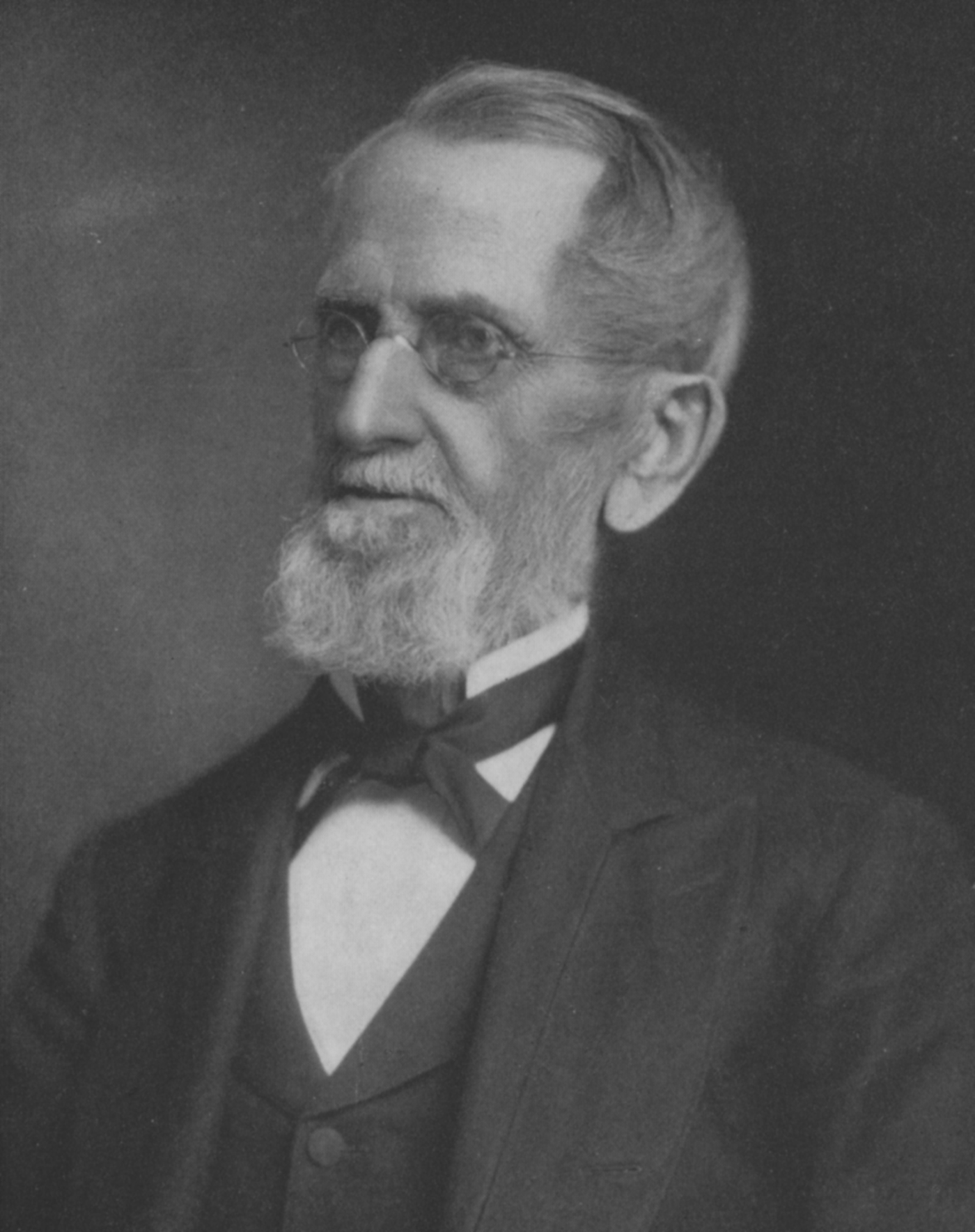
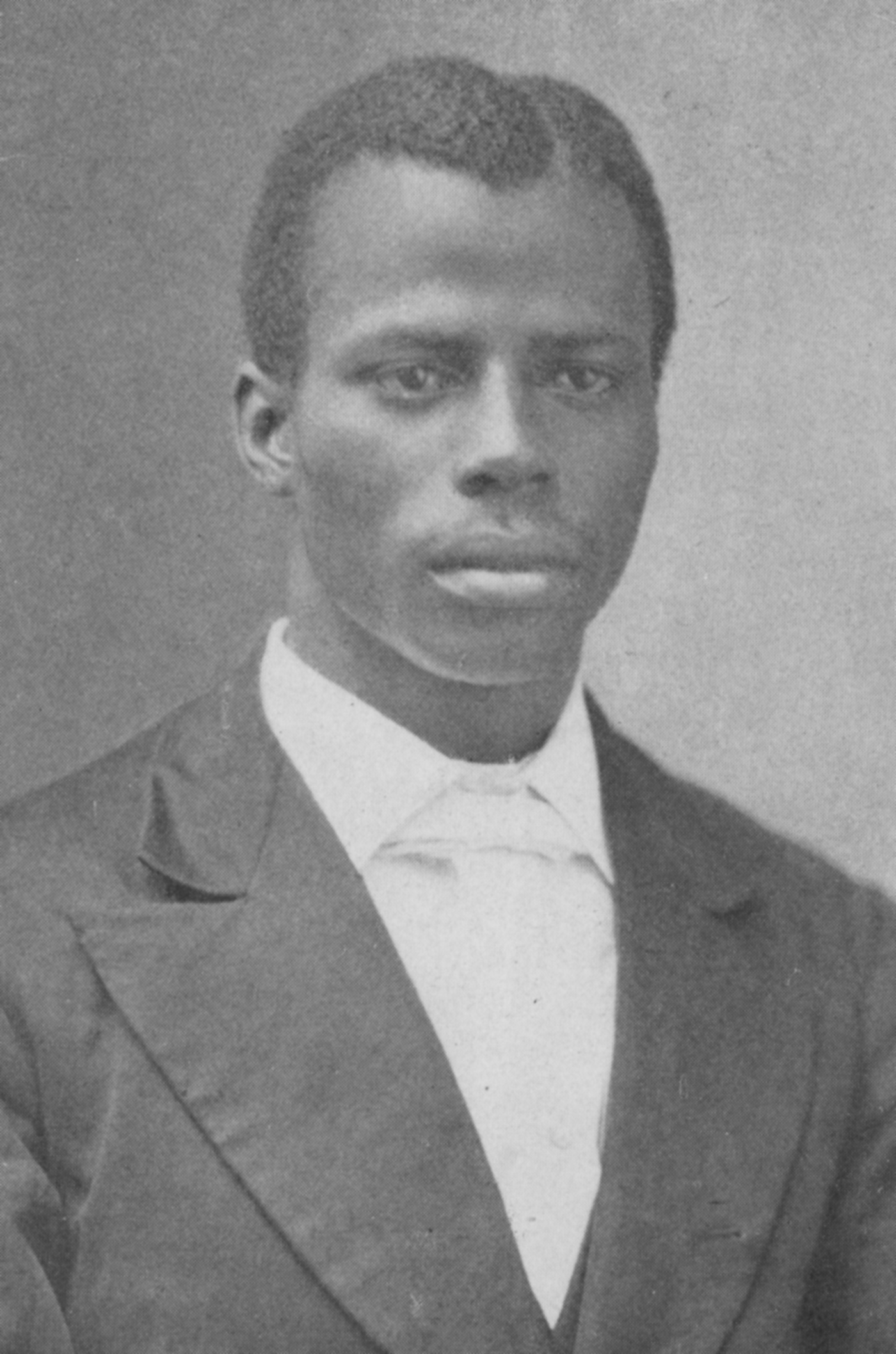
Lecturing on Africa during the 1880s, the United Brethren in Christ missionary and missions promoter Daniel Flickinger (Figure 1) addressed the doubts of those who questioned his denomination's continued work among the people of Sierra Leone. Born in Ohio in 1824, Flickinger would visit West Africa twelve times during a career in church work that stretched from the antebellum period into the twentieth century. From his initial trip in 1855 when he helped found the first United Brethren mission in Sierra Leone, Flickinger was an ardent advocate for missionary activity.Footnote 1 The Sierra Leone mission had finally begun to show promise by the time he wrote his lecture, but many church members still saw it as an expensive failure. Flickinger admitted that he had often been asked, “Will you after all your efforts to educate & christianize the Africans as found in their heathen condition, be able to make anything of them?”Footnote 2 The question revealed widespread doubts about the future of the mission and, even more worryingly, the capacities of unconverted Africans. The question was most striking in its exclusive ascription of agency to Flickinger and his fellow missionaries. Flickinger responded to such doubts by arguing that all human beings shared a common origin and nature, attributing differences between groups to climate and education, and claiming, “About as large a percent of the African race, in their native country, other things being equal, succeed as white people do.”Footnote 3 Among other proofs of African capacity, he noted the intelligence and piety of his African namesake, Daniel Flickinger Wilberforce (Figure 2).Footnote 4
Daniel Flickinger. From Daniel K. Flickinger, Fifty-Five Years of Active Ministerial Life (Dayton, Ohio: United Brethren Publishing, 1907).

Daniel Flickinger Wilberforce. From Daniel K. Flickinger, Fifty-Five Years of Active Ministerial Life (Dayton, Ohio: United Brethren Publishing, 1907).
Many United Brethren would have already heard this remarkable young African man's story. Born to Christian parents in early 1857 on Sherbro Island, off the southwestern coast of Sierra Leone, he was named in honor of Flickinger, who happened to be visiting a nearby mission station run by the American Missionary Association. After gaining an early education in the mission schools, Wilberforce accepted an invitation to visit the United States in 1871 and by coincidence encountered Flickinger.Footnote 5 The missionary, recognizing an opportunity to bolster his work in Sierra Leone, arranged for Wilberforce to travel to United Brethren headquarters in Dayton, Ohio and continue his studies. Converting to Christianity soon after his arrival, Wilberforce was welcomed into the United Brethren church by Bishop Milton Wright, father of boys named Wilbur and Orville who would grow up to become the city's most famous sons.Footnote 6
A gifted student and professing Christian, Daniel Flickinger Wilberforce became the repository of great hopes on the part of United Brethren leaders eager to evangelize West Africa.Footnote 7 Their dreams, and his presence in Dayton, were signs of ongoing transformations within the small denomination, which had been started by revivalistic German Reformed and Mennonites in Pennsylvania, Maryland, and Virginia, and spread among German-speakers in Ohio and Indiana in the early 1800s.Footnote 8 During the antebellum period the church shed aspects of its ethnic distinctiveness, adopting English as its main language and attracting members of English ancestry.Footnote 9 By mid-century it showed signs of existing comfortably within the capacious borders of American evangelicalism, with particular affinities to Methodism. One sign was its involvement in overseas missions. Another was its increasing acceptance of evangelical beliefs about human choice and action, beliefs central to its missionary activity and relationship with Wilberforce.
This article examines the formulation and deployment of those evangelical beliefs about human agency in the context of the campaign to evangelize the world, Wilberforce's formative engagement with them, and their collision with rival notions during the nineteenth and early twentieth centuries. It does so by examining the fraught relationship between Daniel Flickinger Wilberforce and the United Brethren in Christ, who alternately venerated, denigrated, employed, and excommunicated him. Wilberforce, who is almost wholly forgotten today, experienced a brief American celebrity during the late nineteenth and early twentieth centuries, largely because his story could be told, depending on the selection of facts, to promote competing interpretations of African agency and the African self.Footnote 10 The recovery of his story, and of the discussions about agency and capacity that swirled around him and other indigenous converts to Christianity, advances a new way of studying the relationship between agency and Christian missions.
For several decades, agency has been a central concept in the historical study of Christian missions. Scholars have looked beyond the intentions of missionaries to illuminate the motives of the people among whom they labored, focusing on what native peoples did rather than what was done to them and presenting them as “actors and not merely subjects of the encounter with Christianity.”Footnote 11 Others have revealed the opportunities that missionary service afforded women to fashion more independent roles and identities.Footnote 12 Agency has been at the heart of some of the field's major debates, and new work is routinely evaluated for how well it accounts for “all the players in the game.”Footnote 13 We consequently have a far richer understanding of missionary encounters and the inability of most missionaries to realize their ambitions, prompting talk of “unexpected consequences” and the failure of missionary projects on their own terms.Footnote 14
In spite of their often powerful and illuminating work under the sign of agency, historians of Christian missions have largely failed to examine the history of the concept itself. There have been few efforts to supplement the assertion of indigenous agency with the specification of competing subjectivities and constructions of the self, viewed diachronically and with attention to the differences within as well as between sending and receiving cultures in missionary encounters. The same oversight pertains elsewhere in the humanities and social sciences, leading several scholars to warn that uncritical use of the concept of agency may distort our understanding of human experience. Walter Johnson cautioned against truncating our understanding of enslaved people through a restrictive focus on “self-directed action.”Footnote 15 Talal Asad, discussing anthropological writing on religious conversion, noted the tendency to render it “rational” and comprehensible by emphasizing the agency of the converted, contravening their claim that they had been “made into” Christians.Footnote 16 And John Lardas Modern has criticized the longstanding tendency in American religious historiography to explore the outcomes of the agentive intentionality of historical subjects while ignoring the terms of their subjectivization, consequently “delimiting the prospects for understanding how individuals come to know the world and how they organize themselves in light of such knowledge.”Footnote 17
As these critiques suggest, invocations of human agency may obscure as much as they reveal, particularly when individual agency is treated as synonymous with humanity, ignoring, reducing, or misinterpreting human experiences and sensations such as suffering, sadness, humor, love, and fear.Footnote 18 Ironies multiply. Enslaved people are evaluated according to nineteenth-century models of selfhood developed in deliberate opposition to the experience of slavery.Footnote 19 Scholars of missions reproduce the universalizing models of subjectivity central, as discussed below, to the missionary projects they are studying. Work meant to recognize the “full humanity” of the marginalized may reduce the meaning of their lives by inscribing them within categories alien to their self-conceptions and systems of meaning.
Missionary encounters are nevertheless an especially promising place to look in excavating and specifying shifting views of human agency, since human capacity and activity were always implicit and at times focal matters of consideration within missionary ventures. The rewards are clear from the work of anthropologist Webb Keane, whose studies of Dutch Calvinist missionary activity on the Indonesian island of Sumba have pioneered an approach involving the excavation of the “historical construction of the idea of agency itself” and its meanings “across historical and ethnographic contexts.”Footnote 20 Keane's research demonstrates that ideas about agency may be closely tied to notions about subjectivity, language, space, and time. Attending to agency's genealogy, taking as a focal point of investigation what has too often been a “greatly underspecified” abstraction, promises to clarify the aspirations of missionaries and the doubts of their critics, the reception of missionaries abroad, the self-presentation of native converts to Christianity, and the implications of global missions for Euro-American constructions of race.Footnote 21
This article is a modest contribution to that expansive project. Wilberforce adopted and partially reworked antebellum evangelical conceptions of heathenism and human agency, particularly in his 1886 book Sherbro and the Sherbros. The later dramatic end of Wilberforce's relationship with his American supporters reveals how advocates of deterministic understandings of human nature rooted in scientific racism used Wilberforce's story to support their views. The focus here is largely restricted to the competing and shifting notions of human agency on the American side of the missionary encounter with Sierra Leone, though what Wilberforce did with the concept is also central.Footnote 22 The arc of his career was unsettling and strange to his evangelical supporters because it defied their fondest expectations about the path of human progress. His story's broad significance derives in part from what it reveals about the frames of meaning within which contemporaries sought to comprehend him.
I. Antebellum Evangelicalism, Heathenism, and Agency
Within the early United States, the convergence of diverse ideological and social factors propelled an association of human personhood with individual choice and unconstrained action. Free choice and action were core characteristics of republican citizens, defined in distinction to the limited self-determination of slaves and subjects.Footnote 23 They were also key traits of participants in the market economy, the expansion of which multiplied opportunities for self-constitution in areas ranging from consumption to careers to personal identity.Footnote 24 The autonomous, self-willed individual, liberated from the weight of tradition and the past, has also been central in the creation of the modern self.Footnote 25 Closely related but not identical to these developments was the formation of evangelical protestant notions of selfhood, defined in opposition to the alleged formalism of Catholicism, tyranny of Islam, mandates of established religion, and spiritual bondage of the unconverted at home and abroad.Footnote 26 Friction between these views could be intense, but all possessed a mutually reinforcing focus on the individual agent.Footnote 27
The emphasis on the liberated individual within American evangelicalism had itself long been shaped by a range of social forces as well as the internal logic of evangelical theology and practice. Evangelicalism can be defined in part through the deliberate assertion of personal choice in the religious life.Footnote 28 Only religious commitments freely and voluntarily made qualified as authentic. The new birth, the conversion experience at the heart of evangelical theology and practice, generated novel commitments and identities that could prove disruptive of even the most entrenched social and religious hierarchies.Footnote 29 The disestablishment of religion at the federal and state levels following American independence resulted in the extraordinary proliferation of new or previously marginal religious groups, including Methodists, Baptists, Disciples of Christ, and United Brethren in Christ. Pluralism and religious entrepreneurialism in turn fostered more individualistic ways of thinking about religious identity and belonging. Even when a commitment to Reformed teachings about human depravity persisted, as was the case with the United Brethren, the abundance of options pushed religious identity from the arena of communal and familial tradition to the domain of personal choice, an experience that inevitably impressed itself upon doctrine.Footnote 30 Disestablishment thus accelerated the tendency within evangelical protestantism toward what Michael Warner, discussing the nature of conversionist preaching, has called “agentialized belief.”Footnote 31
For nineteenth-century evangelicals, the celebration of self-determination was tempered both by a sense of the substantial threats to its realization and the need to discipline the liberated self lest freedom yield licentiousness. The threats were both internal and external. Sinful human nature might overthrow the restraints of law and self-discipline. Traditional theological concerns about the lures of the world and the flesh were amplified by the influence of faculty psychology, which advocated rational governance of morally and politically disruptive passions.Footnote 32 Snares filled the world as well. Evangelical reform efforts in the years before the Civil War sought to liberate men and women from externally imposed restrictions upon their free moral agency so that they might voluntarily embrace internal self-discipline.Footnote 33 This aim drove campaigns to reform schools, prisons, asylums, gender relations, alcohol abuse, and slavery.Footnote 34 While largely abstaining from activism, the United Brethren in Christ forbade the consumption of alcohol by church members, eyed secret societies such as the Freemasons that required loyalty oaths with deep suspicion, and in 1821 barred all slaveholders from church membership.Footnote 35 Divisions over slavery are a crucial reminder that evangelical Protestants disagreed over the implications of their shared commitment to free personal choice.Footnote 36 But even slaveholding evangelicals who claimed their benevolent guidance was necessary to prepare slaves to freely choose Christ typically permitted their slaves to decide for themselves where and even whether to attend church. Saving faith could not be mandated.Footnote 37
The aim of fleeing fleshly and worldly snares was of course not unconstrained autonomy, but a conformity to the will of God that was more perfect because it was freely chosen. As John Lardas Modern has argued, for antebellum evangelicals “true religion” was a matter of “systematic organization” of the self, an exalted aspiration regularly thwarted by experience.Footnote 38 The struggle to observe, understand, and discipline the self was a fundamental aspect of protestant experience, and many evangelicals saw missionary service as enabling new levels of self-renovation precisely because it demanded so much. One exemplar was the puritan missionary David Brainerd, whose character was mediated to an immense evangelical readership through the personal diary edited by Jonathan Edwards.Footnote 39 Another was Harriet Newell, who along with other missionary women was said to possess greater scope for self-denial than men as a consequence of being more closely bound to home and kin.Footnote 40 Missionaries spoke constantly about the painful struggle to subordinate their natural longings for family, home, and native land to the will of God, freely forsaking their preferences in his service.Footnote 41 In the plaintive words of “Missionary Farewell,” a United Brethren hymn, “That hallowed bond we sever/ Which the hand of Nature joined.”Footnote 42 No area of the heart or will could be permitted to remain bound to external powers or attractions, whether good or evil, when God demanded complete and deliberately chosen submission.
Viewed through this impatience with external restraints on free moral agency, nineteenth-century campaigns to evangelize the world are more easily situated within the Benevolent Empire of evangelical reform. When American missionaries articulated their task, they spoke about awakening those who were slumbering, or removing the chains of heathenism, or, perhaps most frequently, of bringing light and restored vision into the realm of darkness.Footnote 43 According to one United Brethren minister, the spiritual bondage of “heathens” and Muslims in West Africa was evident in their worship of the devil, statues, and greegrees, objects with talismanic powers.Footnote 44 Daniel Flickinger often displayed such objects to American audiences when discussing “the superstitions of the people and how they were imposed on by witch masters and medicine men.”Footnote 45 Heathenism, another missionary claimed, ensnared Africans in a condition resembling childhood in the dominance of emotions and senses over intellect.Footnote 46 United Brethren missionaries mobilized this rhetorically powerful discourse of an incapacitating heathenism well into the twentieth century. They contrasted the ability of even the most wicked resident of “a Christian land” to “change the course of his life” with the profoundly attenuated agency of Africans “controlled by a realm of spiritual darkness inhabited by legions of spirits.”Footnote 47
These metaphors of slumber, captivity, and darkness shared a preoccupation with stunted agency, the giving-over of personal freedom and autonomy to material objects such as greegrees or to illegitimate authorities. Heathenism subjected its helpless victims to sin and Satan's rule.Footnote 48 Making matters even worse, maintained Daniel Flickinger, was the fact that the depredations of slavetraders and other Western profit-seekers had “caused very many to sink depths into the pool of moral pollution to which they never would have gone had they been left to themselves.”Footnote 49 United Brethren missionaries saw themselves as rescuing Sierra Leoneans from spiritual bondage to fetishism and idolatry by inaugurating what historian Ussama Makdisi has termed “evangelical modernity,” the benefits of modern life putatively disentangled from the moral complications of crass colonialism.Footnote 50 Historians of the Sierra Leone mission made a habit of observing that stones from the famous reformed slavetrader John Newton's eighteenth-century slave pen on nearby Plantain Island had been repurposed to build a school for African preachers and teachers.Footnote 51 Physical and spiritual shackles alike were riven. Blindness was turned to sight and the lost were found as the Gospel restored human agency.Footnote 52 That such “human liberation projects” required holy violence was a common belief among United Brethren missionaries.Footnote 53 Joseph Gomer, an African American Union army veteran who with his wife Mary spearheaded United Brethren efforts in Sierra Leone for years after their arrival in 1871, wrote, “Every day I can point sinners to the Lamb of God; every day I can assist in tearing down the strong works of the enemy of my Heavenly Father and my Redeemer.”Footnote 54
When evangelicals denounced heathenism, they invoked a discourse that had long been used to collapse the complexity and diversity of indigenous religions into the putative absence of religion. This alleged absence was in turn associated with an array of negative traits, including laziness.Footnote 55 Heathenism was among the first concepts used in the articulation of racial difference.Footnote 56 As Rebecca Goetz has shown, early Virginians pioneered the influential claim that Africans and Indians were “hereditary heathens,” by nature incapable of conversion to Christianity.Footnote 57 On colonial frontiers ranging from seventeenth-century Virginia to nineteenth-century Southern Africa, Europeans used the concept of heathenism to create the concept of race, and deployed the concept of race to justify political and economic hierarchies. Goetz has also shown how Christianity could be used, particularly by the marginalized, in efforts to destabilize claims about differential essence.Footnote 58 References to heathenism by the United Brethren and other evangelical supporters of overseas missions thus utilized a concept associated with racial difference in order to rally support for the conversion of the world.Footnote 59
Nineteenth-century Protestant critiques of heathenism resonated with contemporary criticisms of Catholicism in scorning material mediations of the spiritual, and, more broadly, with modernist efforts to cast off encumbrances on the autonomous self. Webb Keane, following William Pietz, has observed that missionary, Marxist, and Freudian imputations of fetishism all summoned historical narratives in which the one doing the imputing avoided a surrender of autonomy.Footnote 60 Keane has argued that in the “moral narrative of modernity,” it was those who refused to exercise their agency separately from illegitimate rulers, traditions, and material objects who were said to be backward and premodern.Footnote 61 As much as they might revile one another, evangelical and modernist apostles alike preached the gospel of the emancipated self. The liberation of the individual, moreover, signaled the arrival of a new epoch in world history.Footnote 62
As this suggests, the understandings of human agency embraced by champions of global missions were entangled, in more or less obvious ways, with claims and assumptions about time and space. The connections between temporality and agency ranged from arcane considerations of biblical eschatology to practicalities of timekeeping. History, as read through the biblical narratives, was progressive, advancing inexorably to a magnificent, foreordained conclusion under the direction of God himself. The progressive nature of history was confirmed by popular interpretations of Enlightenment stadial theory, and developed into a secular science by theorists such as Turgot, Condorcet, and Comte, who injected it with immense optimism regarding humanity's ability to fashion its own future.Footnote 63 Some saw history progressing toward the triumph of Christianity and others toward the demise of theistic religion, but central to both religious and secular dreams of modern progress was enhanced control over nature and over the self.Footnote 64
For American evangelicals caught up in the exciting and sometimes bewildering changes of the first half of the nineteenth century, familiarity with French social theory was not required to see that something significant was happening. Remarkable innovations in transportation and communications technologies promised to introduce new and liberating temporalities, speeding travel and the spread of useful information by “overthrowing the tyranny of distance.”Footnote 65 Along with greater reliance on clock and mechanical time would come increasing mastery over nature, including human nature.Footnote 66 American evangelicals believed that God had authored this progress. Daniel Flickinger claimed that the Bible had created American turnpikes, canals, railroads, and telegraph lines by fostering invention and enterprise, crucial attributes of human agency, in Americans.Footnote 67 These shifts were widely seen as both harbingers and catalysts of the approaching millennium, the promised kingdom of God on earth.Footnote 68
Millennial narratives offered inspiration and coherence to programs of reform and world evangelization by fostering great optimism about both the temporal and spatial scope of progress. Evangelicals used such narratives to locate themselves within biblical time in a drama that ended with people from every language and nation worshipping the Christian God.Footnote 69 United Brethren in particular drew upon a tradition of radical pietist millennialism that envisioned a glorious age in which religious unity triumphed over the barriers dividing humanity.Footnote 70 Reformers and missionaries might actually accelerate the arrival of the millennium through acts of “temporal reorganization,” both great and small, that were seen as central to nineteenth-century missionary work.Footnote 71 Among the regularly cited proofs that this culminating drama was at hand was the adoption by native peoples of new ways of marking time. Daniel Flickinger devoted a chapter of an 1885 book on West African missions to systems of counting and timekeeping. He claimed that those he had lived among relied exclusively upon natural cycles such as seasonal changes to mark the flow of time. They had no knowledge of the calendar or clock. As one United Brethren hymn put it, missionaries entered “the land where is heard no sweet Sabbath bell.”Footnote 72 Flickinger rejoiced that the missionary presence had begun to foster rival temporalities, reporting that he had observed a man using an improvised calendar to note the days of the week, and that the man had stated that he could not sell his goods on the Sabbath.Footnote 73 American readers perhaps interpreted both the market activity and awareness of calendrical time as signs of modern progress, noting, as was commonly believed, that native peoples entered historical time—left the stasis of heathenism and became capable of cultural advancement—as they embraced the liberating disciplines of Christian civilization.Footnote 74
Embedded within the reforming quest to reinstate the full moral agency of non-Christians at home and overseas was an anthropological claim derived from Christian tradition and the new moral philosophy of the Scottish Enlightenment. The dominant Christian interpretations of the creation account in Genesis taught the common origins of all human beings, and this reading was augmented by passages in the New Testament, chief among them Acts 17:26, in which Paul declared that God “hath made of one blood all nations of men for to dwell on all the face of the earth.”Footnote 75 Daniel Flickinger referenced this text in the lecture discussed at the beginning of this article as he responded to claims that West Africans were too physically or morally inferior for missionary efforts to succeed. Supplementing these ancient teachings were the writings of Dugald Stewart, Adam Smith, Thomas Reid, and Francis Hutcheson, which were widely read in the early republic, producing an “evangelical Enlightenment” that was far more hopeful about human abilities than the Calvinist orthodoxy of the New England puritans.Footnote 76 As the antebellum revivalist Charles Finney explained in a ringing critique of traditional Calvinism, the duty of repentance for sins stemmed from the fact that people “are moral agents, and have the powers which God requires them to exercise,” while the duty to pray implied they “are bound to see the evidence, and to believe.”Footnote 77
For nineteenth-century American evangelicals reared on these beliefs, all human beings possessed an innate “moral sense” that discerned virtue and vice. This strand of Enlightenment thinking reinforced a belief in the “moral unity of the human race” that fueled evangelical optimism about the possibility of cross-cultural communication and attempts to convert the world.Footnote 78 Social and political radicals at times developed the egalitarian potential of such claims.Footnote 79 More commonly they were obscured or eclipsed by competing beliefs and commitments, including assertions of racial difference grounded in the discourse of heathenism. Their claims about the moral purity of “evangelical modernity” notwithstanding, missionary projects were frequently implicated in colonial schemes, undermined by the bigotry of missionaries, and marred by the unequal treatment of native Christians. Antebellum reformers commonly marginalized and distanced those whom they professed to assist.Footnote 80 While advocates of global evangelization asserted that all people had a common origin, belonged to the human family, and could therefore be Christianized and civilized, missionary rhetoric advanced certain configurations of racial difference even as it denied others.
This combination of beliefs informed the most influential antebellum missionary strategy, which sought to train and deploy a “native agency” to form self-governing, self-propagating, and self-supporting churches.Footnote 81 The approach had precedents in the early modern Atlantic world.Footnote 82 While efforts to “raise a native agency” usually involved working with Christian converts where they lived, young converts were sometimes educated in the United States.Footnote 83 The United Brethren attempted this with at least one Sierra Leonean in addition to Wilberforce, but the plan collapsed when the young man died.Footnote 84 Officials were so hopeful about training Wilberforce that they spent nearly two hundred dollars annually to educate him during one of the worst economic crises in American history.Footnote 85 As Paul William Harris has argued, the “native agency” strategy is best understood as pragmatic rather than progressive, founded upon a quest for efficiency rather than a belief in equality.Footnote 86 The approach nevertheless enabled, in theory and at times in practice, indigenous religious leadership and cross-cultural collaboration and fellowship.
Simultaneously, a competing strand of the Enlightenment birthed theories of ineradicable human difference sharply at odds with the expansive temporal and spatial address of early missionary programs and their notions about human agency. The stadial theory and naturalization of time associated with the Scottish Enlightenment endowed ethnography and later anthropology with an impulse toward what has been called temporal distancing, neatly encapsulated in Johannes Fabian's observation: “The pagan was always already marked for salvation, the savage is not yet ready for civilization.”Footnote 87 The scientific theories of race that rose to prominence in the nineteenth century furthered this tendency by denying coevalness to racial others, depicting them as anachronisms from an ancient past, particularly following the dramatic expansion in ethnological time during the 1860s.Footnote 88 For some proponents of such theories, racial others were locked outside historical time by their innate biological inferiority, lacking agency to make the responsible individual choices required for participation in modern civilization.
Geographical difference often shaped this denial of coevalness, as shown in the claims of many travelers about the stunted cultural development of “the tropics.” In regions of great natural abundance, the theory suggested, industry languished, human activity and agency declined, time slowed, and history stopped.Footnote 89 In this interpretation, places such as West Africa, and the people who inhabited them, were removed from civilization both temporally and geographically. Thus the protagonist of Joseph Conrad's 1899 novel Heart of Darkness described his passage into the African interior as “like traveling back to the earliest beginnings of the world.”Footnote 90 Theorists who believed that physical differences prevented cultural or moral improvement of “races of inferior organization” claimed that “the Negroes in Africa must remain substantially in the same benighted state wherein Nature has placed them,” locked outside modernity.Footnote 91
Nineteenth-century evangelicals who championed the costly and demanding work of global evangelization often found themselves criticized or ignored. Opposition from within the church led Daniel Flickinger to write in 1907 that his “hardest work in behalf of missions was not done in Africa” but in America as he struggled “to convert Christians from the error of their way, and to show them their duty to the heathen.”Footnote 92 Flickinger was repeatedly accused of “attempting the impossible” by traveling to Africa to convert “niggers” and help “the negroes.”Footnote 93 Racially driven pessimism about African agency prompted Flickinger, in the lecture on Africa discussed above, to strenuously dispute the assertions of some that physical characteristics such as skull formation had “anything to do in determining the quantity or quality of brains, or the moral susceptibilities, or spiritual endowments, or anything of that kind.”Footnote 94 Flickinger and his likeminded colleagues advanced historical narratives that used the temporal and racial distancing of their form of stadial theory to undermine the more extreme temporal distancing of racial or geographical determinism. William McKee urged readers who doubted the power of the gospel to help the people of Sierra Leone to consider that within recorded history every Christian nation had been as “ignorant, superstitious, selfish and idolatrous” as the “negroes of West Africa to-day.”Footnote 95 No country could escape idolatry on its own, but the gospel could rescue any group. Flickinger made the same point by projecting forward in time and asking his readers to imagine themselves in an alternative future: “take from us the Bible and its influences, and in a very few centuries our condition would in every respect be as wretched as that of the most degraded race on the face of the globe.”Footnote 96
II. The Rise of Daniel Flickinger Wilberforce
When Daniel Flickinger Wilberforce began his rise to denominational and national notice during the early 1870s, he thus entered—as both subject and object, active participant and closely watched evidence—an ongoing and contentious conversation about agency, race, and Christianity. Wilberforce was attractive to United Brethren supporters precisely because he embodied so fully the autonomous subject aimed at by both the missionizing and modernizing projects.Footnote 97 Admirers celebrated his combination of identities and allegiances—“full-blood African,” native speaker of the Sherbro language, patriotic Sierra Leonean, evangelical Christian, disciplined and intelligent student—both for what they said about his promise as a missionary and what they said about his status as an unconstrained agent.Footnote 98 Wilberforce moved skillfully across geographical and social space—seemingly as comfortable in the obscure religious borderlands of the protestant Atlantic as the heart of the American Midwest. In his mastery of Western cultural forms and, correlatively, himself, supporters also detected an ability to travel across time, leaving behind the imprisoning darkness of heathenism for the glorious liberation of evangelical modernity.
The very name Daniel Flickinger Wilberforce highlighted the emancipatory possibilities of evangelical protestantism. With its message of personal transformation, missionary theology encouraged the formation of new identities. Native peoples often signaled their place within the expansive social worlds created through missionary encounters with the names they selected for themselves and their children. Wilberforce's parents followed a common practice among Sierra Leonean Christian converts by taking the name Wilberforce in honor of the English abolitionist who had played a crucial role in the formation of the colony.Footnote 99 The first and middle names they gave to their son, borrowed from the visiting missionary Daniel Flickinger, showed their desire to take their place within the emerging world of global protestantism. His parents also honored local custom in giving their son a Sherbro name, Sau-Coyah, which marked his place within the family and the generations.Footnote 100 When they came of age, Sherbro children were typically inducted into the secret societies that regulated religious and social life. In recognition of their altered identity and place within the community, they received new names. But the young Daniel Flickinger Wilberforce never joined a secret society, and he received his second name at birth.Footnote 101
In breaking with tradition, Wilberforce's parents registered their new relationship to the past, consolidating their position in a new community of time and identity by grafting their son into a constructed lineage with a different temporal frame, what sociologist Thomas Luckmann calls a “biographical scheme.” According to Luckmann, biographical schemes create meaning, making sense of individual lives in the present by placing them within the temporal framework of longer-lived entities such as family, class, or nation.Footnote 102 The concept is useful in showing that the patrimony Wilberforce received from his parents, expressed in a name that placed their son within a narrative of Atlantic crossings and global Christianity, asserted freely chosen inclusion in the geographies and temporalities of evangelical modernity. Sau-Coyah was recognizable to other Sherbros as the third son of a woman whose family ruled the Imperi chiefdom. Daniel Flickinger Wilberforce was a new creation. The name pointed not to a familiar past but to recent encounters and to the future they might produce. Historian Walter Johnson has noted that naming practices and rival temporal schemes could be used in efforts to maintain ancestral identities and resist domination.Footnote 103 Both could just as readily be used to secure the privileges of association with transnational evangelicalism through the deliberate renovation of identity.Footnote 104
Wilberforce embraced this vision of himself during the early years of his association with the United Brethren. His loyalties were not to the civilized world as such, but to evangelical modernity.Footnote 105 He reserved his warmest expressions of gratitude and camaraderie for those “good people of Dayton and elsewhere,” who by their “kind interposition” had snatched him “from the degradation of heathenism.”Footnote 106 Foremost among them was the man whose name he bore. For decades both men regarded Wilberforce as the vanguard of a gathering army of newly created African agents. Discussing himself in the third person in an 1896 letter to Flickinger, Wilberforce wrote, “Giving that little boy your name, and sending him to Dayton, has not only been a benefit to that boy, but to many in Africa. . . You could not count the results that would grow out of it. The wave of influence is extending and widening.”Footnote 107
For many years Wilberforce fulfilled the fondest expectations of his evangelical sponsors. In 1878 he graduated from Dayton High School, was ordained as an elder in the United Brethren in Christ church, married an African-American woman from Dayton named Elizabeth, and returned to Sierra Leone as a missionary.Footnote 108 He became superintendent of the United Brethren mission schools there, and gradually won fame and popularity in the church as his work prospered during the 1880s and 1890s. Daniel and Elizabeth Wilberforce visited the United States with their young family in 1885, and Daniel proved to be a gifted speaker capable of drawing large crowds. A newspaperman who attended one of his addresses drew attention to what obviously struck him as an unusual mixture of aptitudes and identities: Wilberforce was “highly educated” and “a gentleman in every respect,” yet recited Bible passages and sang songs in his native language, and “sees things from the standpoint of an African.”Footnote 109 Here, in the young missionary's spatially unbounded and self-assembled identity, were the tokens of a modern man. When not lecturing, Wilberforce studied medicine and wrote a study of the Sherbro people.
III. Sherbro and the Sherbros
Published in 1886 by the United Brethren Publishing House, Sherbro and the Sherbros is both an ethnographic overview of the people with whom Wilberforce identified by birth, and an extraordinarily revealing window into how he publicly engaged questions of agency, race, and Christianity. Wilberforce opened his study with an interpretation of the past that clearly signaled his association with evangelical modernity. The evils of the European slave trade, he reported, had been replaced in a “wonderful change” by the increase of legitimate trade, the explorations of Livingstone and Stanley, and the formation of the Congo Free State, changes that opened the way for the glorious triumph of Christianity on the “dark continent.”Footnote 110 With this historical framework, Wilberforce indicated his qualified embrace of Western modernity and his social distance from the Sherbro people described in the book. Long trapped in “labyrinthian darkness” and ensnared by the “superstitious notions” of heathenism, Sherbros sorely needed the spiritual emancipation offered by missionaries that centuries earlier had freed Saxons from heathenism and turned them into “the dominant race in the world.”Footnote 111
Wilberforce thus followed contemporary writers both in discovering race in religious alterity and participating in the temporal distancing of ethnographic writing, by which the coevalness of encounter is transmuted into historical difference, placing its subjects in an earlier era.Footnote 112 But he also destabilized that familiar approach. Readers are never permitted to linger long on some monolithic and static Sherbro past, but are whiplashed from the past to the present and back again. Wilberforce accomplished this through his constantly shifting and unstable cultural identity in the text. There are indications that this was a carefully designed strategy. Evangelical American readers were given many reminders that Wilberforce was one of them, including two first-person plural exhortations to support the spread of Christianity with the words, “The heathen world is open to us,” and the question, “Have we faith to follow in the path pointed to us?”Footnote 113 Wilberforce also revealed his marginality within Sherbro society. As the child of Christian parents, he possessed no firsthand knowledge of the secret societies that dominated many aspects of Sherbro life.Footnote 114 He further emphasized his outsider status by telling readers that some West Africans marked his cultural and linguistic differences by referring to him as “white man.”Footnote 115
This move is perhaps to be expected. What needs more explanation is the striking degree of identification with the Sherbro found in the text. The subtitle, “A Native African's Account of His Country and People,” may reveal one motive in its claim to privileged access to ethnographic information as a cultural insider. But something else appears to lie behind Wilberforce's use of the first-person plural in describing Sherbro ways, including many practices he condemned. “I would not have you infer that we catch all our wives in war,” he cautioned readers.Footnote 116 In another passage he positioned himself among the “heathen without the Gospel,” writing, “We have trusted greegrees, we have appealed to charms, and have worshipped idols and devils. All have failed us; we have no peace, no hope.”Footnote 117 Wilberforce, who wrote the book while living in the United States, even distinguished between his readers, to whom he referred as “you in the land of Gospel light,” and his people and himself, “who are in darkness.”Footnote 118
By placing himself within both the “we” of evangelical modernity and Sherbro heathenism, notwithstanding the reality that he had been raised by Christian parents, Wilberforce offered himself as supporting evidence for the optimism of missionary programs and their conceptions of human agency. Discussion of the heathen past highlighted the temporal distance he had traveled within a few decades. Talk of the darkness that blanketed Africa accentuated his own enlightenment. His facility in textual movements between competing identities drew attention to his intelligence and agency. As Webb Keane has noted, evangelicalism historically required critical distance between an active, choosing subject and his beliefs. Wilberforce advertised precisely this high degree of reflective detachment by authoring an ethnography of his own people, not to mention playing with pronouns in a way that allowed for multiple constructions of the self. He took advantage of the empowerment achieved through authoring narrative, using his movement across time and space to reveal the capabilities of his people.Footnote 119 He was a glimpse of the future of Africa, one who had broken into history through his own choices, and it was his will and activities, and those of his evangelical allies internationally, that would realize this promise. Six years earlier, he had predicted that “we stand upon the threshold of another era in the history of Africa.”Footnote 120
For Wilberforce, as for many of his readers in the United States, the liberation and self-mastery of modernity was attained in part through participation in new temporalities. United Brethren congregations donated clocks to their mission stations in Sierra Leone, and Wilberforce told one group that he hoped to place a clock at every station.Footnote 121 He also viewed the observation of the Sabbath as evidence of progress in his work.Footnote 122 His daughter, Lucy, raised funds for a bell for the mission school, where it could be used to enforce greater time discipline.Footnote 123 These tokens of the Wilberforce family's desire to spread clock and calendrical consciousness were interpreted as one facet of their commitment to the renovation of the self. During a trip to Sierra Leone in 1896, Daniel Flickinger noted in his diary that Wilberforce managed his family and laborers as well as he governed his school.Footnote 124 Skillful management in these areas could be interpreted as proof of self-mastery and agency. African and African-American men were often stereotyped as lazy and sexually promiscuous during the era of colonialism and Jim Crow. Wilberforce's dedication to time discipline and monogamy was highly significant in this context, signs of his ability to master racial inclinations and appetites that might otherwise hold him captive.Footnote 125
Wilberforce defended the universal address of evangelical modernity most explicitly in criticizing those who dismissed missionary work with the saying, “Charity begins at home” and voiced their “doubts of the Christianization of Africa and Africans, as if certain nations have obtained from heaven a patent right to this gospel of Christ.”Footnote 126 Such concerns failed to recognize that Christian lands were Christian because of missionary successes, and not because of any inherent affinity for Christianity. “Religion is not,” Wilberforce informed his readers, “indigenous to any particular country, nor is it especially adapted to any one climate. Wherever found it is exotic.”Footnote 127 He pointed to the flourishing state of West African missions in general and United Brethren missionary efforts in particular, some of it due to his own labors, as evidence that Africa could be improved.Footnote 128 He also mentioned the possibility that even readers living “in the land of Gospel light” could suffer the diminished agency typically associated with heathenism by being “lulled to sleep under the sense of carnal security.”Footnote 129 Geography gave no protection against error and raised no insuperable obstacles to faith. According to Wilberforce, God did not limit himself to “any particular place, people or time,” but wanted the gospel preached “to every individual of the race.”Footnote 130
For all the explicit and implicit cultural criticism contained in Sherbro and the Sherbros, Wilberforce refused to deliver blanket condemnations. The book combined vigorous critiques of Sherbro customs with insights meant to reveal the full humanity of Sherbro people. In a passage describing the harmful effects of polygamy, for example, Wilberforce told his readers that those who practiced polygamy did not see it as a crime or sin, and explained that it played an essential role in determining social status.Footnote 131 Wilberforce also reported that the Sherbro honored customs and laws that protected “the rights of men,” were less violent and equally hospitable to strangers as Americans, and were not, as was often claimed, by nature lazy.Footnote 132 The problem, he explained, was the influence of “climatic effects” and heathenism, which influenced the physical as well as the spiritual and moral condition of those in its thrall.Footnote 133 Wilberforce urged readers to introduce Christianity and industrial education to Africa through missionary work, producing a more “favorable atmosphere” for the development and improvement of African people, and only then “bring your verdict” about African nature and capacities.Footnote 134 This blend of potent critique and affirmation of underlying human unity was precisely the message of the generation of United Brethren missionaries, including Daniel Flickinger, who had most profoundly shaped Wilberforce. Now he reproduced their message and used it to promote his own endeavors.
Written in part to generate support for Wilberforce's missionary projects, Sherbro and the Sherbros concluded with a request to American readers not for more missionaries, but for books, clothing, and money to support the work of young African Christians “who are ready to enter the field” of missionary service.Footnote 135 In advocating indigenous initiative, Wilberforce echoed decades of conventional wisdom among United Brethren missionary leaders. He was also staking out the ground of his future service, for he recommended literary as well as industrial education and requested support for a new project.Footnote 136 Returning to Sierra Leone in 1887 with funding from a Denver potato tycoon, Wilberforce started and served as principal of the Rufus Clark and Wife Theological Training School, an institution designed to cultivate African teachers and preachers by providing the “common branches of study” and advanced theological training.Footnote 137 There were similar institutions in West Africa and around the world, but Wilberforce was bucking the influential views of white educators such as Samuel Chapman Armstrong of the Hampton Institute. Armstrong criticized the earlier policies of evangelical missionaries like his own father who supplemented academic education with industrial education rather than entirely eliminating academic education as unfitted to the limited abilities of colonized peoples.Footnote 138
Even before the publication of his book, word of the gifted young African missionary had spread beyond denominational circles as his story was told to promote particular understandings of African agency and the African self.Footnote 139 In 1883, in the second volume of History of the Negro Race in America, the pioneering African-American historian George Washington Williams wrote a three-page biography that identified Wilberforce as “a striking illustration of the capabilities of the Negro.”Footnote 140 In this book, ancient Africa, particularly Egypt and Ethiopia, was depicted as the cradle of civilization, continuing a prominent theme in anti-slavery writing.Footnote 141 This explanation challenged historians who relegated Africa to a static and undifferentiated past, in the process writing Africans out of any shared experience of the present. The difference between these interpretations was not so much in their view of contemporary Africa, for race historians beginning with Williams tended to present modern Africa as at best backward and at worst deeply degraded, an evaluation that continued until the Harlem Renaissance.Footnote 142
The real difference was in the claim that Africans and people of African descent were not inherently inferior and were thus capable of fashioning advanced and cultivated lives, both in the past and in the present. Williams had opened his first volume by attacking the conclusions of the many writers on “ethnology, anthropology, and slavery” who during the past several decades had “strenuously striven to place the Negro outside of the human family.”Footnote 143 It was in this defense of the unity of the human race and the equality of human capacity that Wilberforce was most useful to Williams. “Marvellous as it may seem,” he wrote, this young man had in less than one decade emerged from the “darkness” of paganism and vaulted up the ladder of civilization, “from a state of savage life up to civilized life.”Footnote 144 In other words, the immense time periods separating racial groups in the developmental schema of contemporary racial science had been traversed, with apparent ease, by this Sierra Leonean man with no obvious advantages. This use of Wilberforce's story aligned closely with the way he and United Brethren supporters cited his story to support the case for human equality. As with the several dozen other race historians active in the late nineteenth and early twentieth centuries, Williams sought to write histories that would forge a collective and positive group identity in the context of worsening racism.Footnote 145
Booker T. Washington may have drawn on Williams when he related Wilberforce's story several decades later as an example of the enterprising nature of “native Africans” serving white denominations as missionaries to Africa.Footnote 146 Though much had occurred in the intervening years, Washington restricted his account to Wilberforce's arrival in the United States and academic accomplishments. By concluding his narrative with the young missionary's return to Sierra Leone, he avoided the more complicated and less obviously inspiring later years of his career. Washington's emphasis reveals that he had interpreted Wilberforce's successes in a way that confirmed his growing interest in the humanitarian elevation of Africans through collaboration with European imperial powers.Footnote 147 As he committed himself and his institution to a colonizing mission to Africa informed by the same narrative of the African past guiding European colonizers, Washington pointed to Wilberforce as proof that it could work.
IV. Tensions Within the Mission
Several developments during the 1890s began to alter the way Wilberforce thought about himself, his native culture, and his relationship with the United Brethren in Christ. After a century of unity, the denomination divided in 1889 in an acrimonious dispute over proposed revisions to its constitution.Footnote 148 When a series of court cases gave control over church and mission properties to their more numerous adversaries, Old Constitution partisans—later joined by Daniel Flickinger—came to rely on Wilberforce to continue their missionary work in Sierra Leone.Footnote 149 He was made superintendent of the Imperi mission. Wilberforce was also building closer ties with his Sherbro kinsmen and British colonial officials during this period, a process facilitated by his familial ties to the ruling elite of the Imperi chiefdom and his multilingualism. Colonial documents from the 1890s show his extensive work as an intermediary and advocate for Sherbro and Mende interests in the Imperi chiefdom.Footnote 150 Within a few years Wilberforce had become an influential adviser to the Paramount Chief of Imperi and an important British ally in the campaign to eradicate secret societies and ritual cannibalism in Sierra Leone.Footnote 151 His ministry was bearing fruit as he brought many converts into the church.Footnote 152 Daniel Flickinger was delighted with how deeply Wilberforce had managed to integrate himself into Imperi society, and told audiences that Wilberforce's skill in protecting his people against traders, speculators, and British colonial officials had made him very popular, increasing the ministry advantages he already enjoyed as a black man.Footnote 153
Though it only became apparent in retrospect, the decisive turning point in Wilberforce's relationship with the United Brethren was the Hut Tax Rebellion of 1898, an uprising provoked by British colonial taxation. Rebel forces intent on uprooting all foreign influences killed seven American missionaries and several hundred African Christians.Footnote 154 Wilberforce had campaigned against those working to undermine the colonial administration.Footnote 155 He and his family were able to flee to safety while a relative bargained for their lives, but their residence and mission station were burned to the ground.Footnote 156 In the aftermath of the rebellion, Wilberforce continued religious services in a makeshift church. He belonged to the ruling family through his mother, and when the Paramount Chief of Imperi died soon afterward, Wilberforce accepted the invitation to take his place, a decision approved by the British Acting Governor.Footnote 157 According to colonial reports, his territory covered 350 square miles and was home to about 24,000 people.Footnote 158 His new duties included accepting the surrender of rebels, holding peace talks, directing reconstruction efforts, and collecting colonial taxes, from which he received a commission.Footnote 159 Supporters in the United States celebrated his elevation to Paramount Chief. One denominational magazine ran a cover photograph of Wilberforce wearing the attire and holding the objects that signaled his power.Footnote 160 Several years later an article told readers that in his work as Paramount Chief, Wilberforce “serves as a mighty factor in the Christianization of his own, and adjacent tribes.”Footnote 161
Beneath the celebratory surface, however, resentments and misunderstandings had begun to take root. United Brethren officials eager to rebuild their war-torn mission were frustrated when Wilberforce's demanding workload as Paramount Chief consumed the majority of his time, causing him to suggest that perhaps he should voluntarily give up his missionary salary.Footnote 162 This did not please Daniel Flickinger, who urged Wilberforce to leave the chieftaincy and resume his missionary duties.Footnote 163 Wilberforce was under pressure from another direction as well. According to a British colonial report, by 1903 a powerful faction within the Imperi district was challenging his leadership. He was separated culturally from his people by his “European dress, his domestic life, his complete severance from fetish customs,” and his political authority rested wholly on British support.Footnote 164 But any chance that Wilberforce would resume full-time missionary work vanished as he came to recognize his disagreements with the white missionaries sent to reinforce the mission following the rebellion. Those disagreements, as Wilberforce understood them, arose from new approaches to missionary activity by a younger generation of United Brethren missionaries far more pessimistic than their predecessors about the agency of African Christians.
Wilberforce complained to Daniel Flickinger in 1902 that white missionary B.O. Hazzard and his newly arrived colleagues had alienated native church members and mission workers with their arrogant manner. They distanced themselves from those around them and refused to “come down to the people as the former missionaries did,” a failure that Wilberforce believed was based on diminished confidence in native abilities and a belief in their own racial superiority. He urged Flickinger to send “missionaries who do not stand aloof from a man and regard him as a different sort of a being, because he has a black skin,” and suggested that the mission turn over more of its work to natives, accelerating implementation of its own long-stated policy.Footnote 165 These tensions made Wilberforce, who had far more experience than any other missionary in the field, increasingly uneasy about exercising leadership over white colleagues.Footnote 166 Assessing the origins of his strained relations, Wilberforce told Flickinger that the turning point had been the rebellion of 1898, after which white missionaries acted less as colleagues and more as overseers, showing a tendency to “condemn what has been done and to find fault.”Footnote 167 This was hard to endure. “I shall not be in their way,” Wilberforce wrote, and resigned from the mission in 1903.Footnote 168
The findings of other historians suggest that the changes in the mission that so deeply alienated Wilberforce were not peculiar to United Brethren efforts in Sierra Leone. By the closing decades of the nineteenth century, during which missionary schemes were often costly but seldom clearly successful, enthusiasm about rapidly creating a “native agency” for the spread of Christianity had in some quarters yielded to approaches based on a belief in the entrenched powers of heathenism. As more missionaries accepted the conception of race as a deeply ingrained set of inclinations and capacities, fashioned over millions of years, it became far less plausible to them than to an earlier generation of missionaries that Africans could be quickly inducted into modern life, and accordingly into equal status as evangelists, pastors, church elders, and teachers. On American mission stations from Liberia to Natal, missionaries had long mixed their potentially egalitarian message with racial prejudice and segregation.Footnote 169 For some, new concepts of race justified an indefinite period of political and ecclesiastical rule by Euro-Americans, a shift that Philip Curtin, describing the British public, summarized as a change from “conversionism” to “trusteeship.”Footnote 170 This change coincided with a lessened need to rely upon indigenous partners as more American resources and missionaries flooded onto the mission field in the early 1900s.Footnote 171 Less sanguine about the possibility of rapid cultural and religious development, they tended to exert greater control than their antebellum forebears and were often reluctant to share ecclesiastical authority.
Matters continued to worsen after Wilberforce's departure from the mission. He was still a member of the United Brethren church, but for several years church leaders had been alarmed by rumors that his morality was suspect. Possibly as early as 1901, his fellow missionaries had begun to investigate Wilberforce on suspicion of polygamy, common among chieftains of his stature.Footnote 172 By 1904, A.F. Stoltz, who had arrived a year earlier to replace Wilberforce as superintendent of the mission, was confident that the rumors were true, reporting to Daniel Flickinger, “We have sufficient proof from many sources as to D.F.W. being a polygamist.”Footnote 173 In early 1905, after Stoltz confronted Wilberforce directly with his allegations and was rebuffed, the missionary officials of the Old Constitution branch of the United Brethren church quickly severed all ties with Wilberforce, declaring that he had failed to deny charges of polygamy and had refused to accept the correction and discipline of church leaders.Footnote 174
V. Wilberforce in American Racial Discourse
More clearly than any other episode in Wilberforce's life, the furor over his alleged polygamy reveals competing conceptions of African agency and the African self. Public and private statements by journalists, missionary officials and missionaries, and Wilberforce himself indicate that understandings of agency were still entangled with ideas about time and space. They also illuminate the widening gap between the anthropologies of antebellum missionaries such as Daniel Flickinger and the generation that succeeded them. The actions of a relatively obscure Sierra Leonean political and religious leader won headlines in newspapers across the United States because they could be exploited as evidence in the process of American race-making.
The story hit American newspapers almost immediately. Some articles were quite brief, others more detailed; some primarily descriptive, others exuberantly polemical; but nearly all, from Buffalo to San Francisco, structured their accounts around a narrative of reversion. Most headlines signaled this interpretation through their use of the word “back,” indicating regressive movement across time, space, culture, or some combination of the three.Footnote 175 In advancing these claims, none of the articles reckoned with the fact of Wilberforce's birth into a Christian family and longstanding marginality within Sherbro society. Rather than returning instinctively to the ancestral beliefs and customs of his childhood or his parents, Wilberforce had begun during his thirties to explore facets of Sherbro society for the first time. American newspapers ignored such details, instead citing the enslaving power of heathenism to explain the young missionary's lapses. Twining religion and culture with biology, they constructed race.
Many of the newspaper accounts pointed to spatial and temporal constraints that they claimed had stripped Wilberforce of his agentive status and drawn him back inexorably into the heathen past. A story in the Washington Post asserted that Wilberforce, swayed by occult influence or something “in the air of his home,” had “lacked in the ability to resist the call of his native savage instincts” and had thus “returned to the wild and mysterious rites of the heathen.” Using a phrase popularized two years earlier by novelist Jack London, the writer noted that the “call of the wild had been greater than all the influences of training.”Footnote 176 This notion received visual support with the same striking image of Wilberforce dressed as Paramount Chief that United Brethren officials had published four years earlier to display his elevated position within Sherbro society and his accompanying advantages as a missionary. Another writer declared that Wilberforce's superficial educational progress was no match for his racial nature: “The little veneer smeared over him by the schools of America was scarce more than a varnish. It gave the appearance of civilization, but it was a mere ambush behind which the savage lurked. You cannot make a silk purse out of a sow's ear and you cannot inflate a savage with civilization and culture with a hand pump. The slow processes of evolution must be patiently waited on.”Footnote 177 A third writer combined determinist arguments from spatial and temporal factors when he noted—in an article that included the racially-freighted, recently coined term “atavism” in its headline—that conceivably “some strange effect of reversion was produced by restoration to primeval environment.”Footnote 178 Wilberforce might have once shown an appearance of rational self-determination, but genetic inheritance imprisoned him in the savage past.
The public embarrassment experienced by supporters of African missions soon worsened, for in late 1905 Wilberforce was charged with cannibalism, punishable by death under British colonial law.Footnote 179 His trial, which became a cause célèbre throughout West Africa, resulted in his acquittal in 1906 but also ended his tenure as Paramount Chief and ruined his reputation with the British. United Brethren leaders believed that Wilberforce's political foes within the Imperi district had deliberately invented the charges in an attempt to turn the British against him.Footnote 180 But this did not prevent American newspapers from using the sensational charges to support their views on racial incapacity. The Washington Post asserted that cannibalism was “bred in the bone. . . and must come out in the flesh.”Footnote 181 This view was shared by Sir Harry Luke, a British colonial official in Sierra Leone who believed that Wilberforce was guilty and claimed years later that while his interest in “the white man's learning and arts” was commendable, “this cultivated man was a relapser, unable or unwilling to resist his atavistic urges.”Footnote 182
American journalistic commentary on Wilberforce repeatedly claimed that he was locked in the inescapable, racialized grip of the savage past, unable to break free through his own moral agency, even though he might have actually preferred to remain a Christian.Footnote 183 In common with many similar claims during the period, this represented a “denial of contemporaneity” to those who persisted in ways deemed anachronistic.Footnote 184 Wilberforce might have once appeared capable of deliberately navigating across time, space, and culture, but his actions had given the lie to his pretensions. It is noteworthy in this regard that the most vituperative of the newspaper accounts opened by mocking his name, which had signaled much that was hopeful to his supporters.Footnote 185 Public notice of the story was driven by the sensational charges and their account of a Christian convert moving in reverse through the temporal narrative of evangelical modernity. Having been liberated from the chains of heathenism to choose Christianity and civilization, no man would willingly return to godless and primitive customs. Wilberforce's desertion was not simple immorality. It threatened the basis of the mission by supporting critics who claimed his agentive status was purely fictive. As one writer rather gleefully noted, Wilberforce “is somewhat of a setback to those who desire to carry civilization and the gospel to the naked savages.”Footnote 186
United Brethren missionaries eschewed the most extreme varieties of racial determinism, but their responses to Wilberforce reveal a spectrum of views on race. All the missionaries were hopeful Wilberforce would repent and change his ways.Footnote 187 But some, including the missionary superintendent A.F. Stoltz, were more likely to view African failings as evidence of innate racial weaknesses. While investigating the reports of polygamy, Stoltz informed Daniel Flickinger that the white governor of Freetown, Sierra Leone, “said that Wilberforce was a civilized man but he came from a weak race. It was not advisable to entrust them with too much unless someone was behind them to make them toe the mark. I think he gave us sensible advice.” Stoltz thought that Wilberforce meant well, and suggested that his shortcomings were “perhaps more attributable to the inherent weaknesses of the race than to deliberate acts.”Footnote 188 Even an expression of respect could reveal Stoltz's doubts about the racial capacity of the people among whom he was working, as in his aside to Flickinger that “Brother Wilberforce has his faults peculiar to his race, and yet I think I would trust him as much as any black man I know in Africa.”Footnote 189
The older generation of United Brethren missionaries and pastors, under whose ministry Wilberforce had joined the denomination and to whom he had protested against the policies and attitudes of Hazzard and Stoltz, was less pessimistic. Daniel Flickinger urged his namesake to follow the example of fallen-but-repentant biblical heroes such as David and Peter, ask God for forgiveness, and allow him to “make you a power for good, in Africa.”Footnote 190 Looking back on the life of the man he had inducted into church membership over forty years earlier, Milton Wright was struck by how quickly he had fallen from a promising missionary to a “dark back-slider for Africa.” But Wright claimed that “a man is the dictator of his own destiny,” and listed similar cases of sin and failure from the Old Testament.Footnote 191 In situating Wilberforce's experiences within a narrative that envisioned him in biblical time rather than prehistoric time, these writers continued to view him as an autonomous moral agent, one who had chosen poorly but retained the ability to act righteously. They articulated his humanity and agency through reference to the ancient past, in opposition to those who appealed to the past to deny his full humanity. In 1907, Daniel Flickinger allowed that Wilberforce had done some “questionable things” but remained hopeful that God “may yet use Mr. Wilberforce to lead thousands from heathenism to Christianity.”Footnote 192
Throughout the crises prompted by the accusations of polygamy and cannibalism, and the swift erosion of his relationship with the Old Constitution faction of the United Brethren church, Wilberforce continued to speak forcefully of his Christian faith and his independence as a moral agent. “I am not amenable to you personally or any Body that you represent,” he wrote to Stoltz. Without denying the charges of polygamy that he had learned Stoltz was investigating for Daniel Flickinger, Wilberforce protested against not being asked directly and wrote, “Whatever your or anybody's construction should be about my lapsing to heathenism, I beg to say, I share with you the belief in ‘God the Father Almighty etc. etc.’ and to Him alone do I look for help in this world, and salvation in the world to come.”Footnote 193 He stated that his problem was not with Christianity, but with his treatment by some Christians. He had not deserted the church; it had moved away from him. As he told Milton Wright, “I love the Church, but certain transactions and events made me feel that I was not a member of the same. I pray that matters will soon be changed, that I may be released from the chieftaincy, and be free to devote myself to the ministry.”Footnote 194 In another letter, Wilberforce mentioned his plans to begin an independent missionary training school, relying on donations from contributors in the United States. “Evidently he has no proper conception of the crime of polygamy, and the abhorrence of it by the Christian people of America,” Wright fumed in a letter to a colleague.Footnote 195 Even in the midst of his trial for cannibalism, an American diplomat observed that Wilberforce was “in no way repudiating the principles of Christianity” and another visitor noted that he wanted “to devote the remainder of his life to Christian work.”Footnote 196
Despite his loss of political power due to British mistrust, neither Wilberforce's ministry nor his trials were over. His relationship with the Old Constitution wing of the United Brethren was irreparable, but he successfully pursued employment as a missionary with the larger faction of the church, and he maintained a relationship with them for decades.Footnote 197 In 1912 Wilberforce was again brought to trial, this time on charges that he had participated in a plot to murder a Sherbro girl and had then received a portion of her corpse.Footnote 198 Again he denied the charges, and again the prosecution failed to establish his guilt.Footnote 199 This time British officials expelled him from Sierra Leone.Footnote 200 He spent time in Liberia but eventually returned to Sierra Leone, where he died and was buried in the Danville Church Cemetery in 1927.Footnote 201
VI. Conclusion
The details of Daniel Flickinger Wilberforce's dramatic rise and fall from favor within the United Brethren in Christ church are buried in denominational archives and obscure books, but the questions of agency, race, and Christianity the story raises are as vital in current historical studies as they were during Wilberforce's day. Tracing the arc of his strange career demands more than the familiar scholarly strategy of revealing indigenous agency by discussing his active engagement in the encounter between evangelical Christianity and Sherbro society. It was, after all, precisely his ability to act according to competing and evolving nineteenth-century understandings of human agency that was often at issue.
Wilberforce, his supporters, and his critics all regularly constructed his identity and narrated his story through reference to conceptions of human agency entangled with ideas about space and time. Specifying these conceptions reveals significant change over time. And those changes, informed by encounters on the mission field, in turn suggest that missionary projects did not simply disseminate Western religion and culture, but participated in their constitution.Footnote 202 United Brethren and other American evangelicals interpreted their faith as the obverse of entrapping heathenism and fashioned millennial dreams with Bibles in one hand and missionary reports in the other. The spread of their Christian faith and the cultivation of native agents for its proclamation confirmed their optimism about its power to liberate and refashion all peoples. But just as certainly, the activities of native peoples who ignored, refused, or modified the civilizing Gospel could generate deep concerns about the lingering power of heathenism and the crippling snares of biological inheritance.
The racially inflected interpretations of Wilberforce's fall published throughout the United States spoke to the belief of many white males that they alone were able to discipline their animal instincts in accordance with the demands of modern life.Footnote 203 While those from other races might acquire a patina of civilization, their true nature would eventually reveal itself, perhaps in their inability to channel sexuality monogamously, perhaps in their inability to exercise power responsibly. These were conclusions with weighty political implications in the age of Jim Crow. Those who were unfit for self-directed religious activity might require political governance as well, through colonial rule or deprivation of the franchise. It is instructive in this regard that one of the colonial magistrates in Wilberforce's second cannibalism trial pointed to Wilberforce's assumption of political power in the Paramount Chieftaincy, a move that had been welcomed at the time by British officials and United Brethren supporters, as inherently troubling and perhaps indicative that Wilberforce was guilty of the cannibalism charges.Footnote 204 Such lessons fueled a global politics of white supremacy.Footnote 205 Though—one might even say because—Daniel Flickinger Wilberforce consistently acted independently and never renounced his Christian faith, his story was used to construct the doctrine that whites alone possessed full and unimpeded agency.
The story recounted here suggests two reasons why the concept of agency as self-directed action, for all its usefulness in spurring historians of Christian missions to generate more complex and complete accounts of missionary encounters, is better utilized as a springboard to further study than a satisfactory stopping place of historical analysis. First, too much of human experience escapes its purview. As the historian Walter Johnson has recently argued, agency is “historically conditioned: it takes specific forms at specific times and places.”Footnote 206 Just as humanity resides in the muck and filth of field labor as surely as the raised fist of a rebelling slave, the experiences of missionaries and those among whom they lived are not exhausted by their self-directed actions. Power differentials frequently inhibit action. Human beings often think of themselves as acted upon, not least in the religious life. Modern understandings of agency sit uneasily with Wilberforce's claim that he had been “snatched from the degradation of heathenism.”Footnote 207 Second, as this article has attempted to show, modern ideas about agency were formed in part through the very missionary encounters they have been used to study. Along with colonial frontiers, mission fields were fertile sites for the articulation of both difference and sameness. Historians of Christian missions, and scholars working in other areas of religious history, have much to add to ongoing discussions about the formation and uses of modern conceptions of human agency.