Introduction
Phylogenetic studies have been used to examine algal selection by lichen-forming fungi within and among populations (Kroken & Taylor Reference Kroken and Taylor2000; Helms et al. Reference Helms, Friedl, Rambold and Mayrhofer2001; Piercey-Normore Reference Piercey-Normore2006), investigating photosymbiodemes (Goffinet & Bayer Reference Goffinet and Bayer1997), and algal adaptation to environmental conditions in wide geographical ranges of lichen distribution (Blaha et al. 2006). Co-dispersal or the coupling of algal and fungal haplotypes has been reported (Wagner et al. Reference Wagner, Holderegger, Werth, Gugerli, Hoebee and Scheidegger2005) and examined further by comparing algal and fungal partners using phylogenetic analysis (Piercey-Normore & DePriest Reference Piercey-Normore and DePriest2001; Ohmura et al. Reference Ohmura, Kawachi, Kasai and Watanabe2006; Yahr et al. Reference Yahr, Vilgalys and DePriest2006; Piercey-Normore Reference Piercey-Normore2006). The co-dispersal or coupling of symbiont partners suggests dispersal through vegetative propagules that contain both partners. On the other hand, after sexual reproduction and spore dispersal of the fungal partner, the fungal ascospore must germinate within the vicinity of a compatible algal partner. The alga may be from a free-living cell (Mukhtar et al. Reference Mukhtar, Garty and Galun1994; Friedl & Büdel Reference Friedl, Büdel and Nash2008) or cells that are already established in a lichen thallus or vegetative propagule (Ohmura et al. Reference Ohmura, Kawachi, Kasai and Watanabe2006; Yahr et al. Reference Yahr, Vilgalys and DePriest2006). Airborne cells of chlorophytes, including species of Trebouxia, have also been reported (Handa et al. Reference Handa, Ohmura, Nakano and Nakahara-Tsubota2007). The union of an ascospore with an alga after a dispersal event will uncouple the previous fungal-algal association of the parent lichen, resulting in a new combination of algal-fungal genotypes. In the absence of sexual reproduction, the parent genotypes remain coupled within the vegetative propagules resulting in the same combinations of genotypes that were present in the parent genotype (Wagner et al. Reference Wagner, Holderegger, Werth, Gugerli, Hoebee and Scheidegger2005), except in Lepraria (Nelsen & Gargas Reference Nelsen and Gargas2008).
Most lichen associations studied show a clustering of algal partners with geographical or ecological conditions (Kroken & Taylor Reference Kroken and Taylor2000; Piercey-Normore Reference Piercey-Normore2004; Ohmura et al. Reference Ohmura, Kawachi, Kasai and Watanabe2006; Werth & Sork Reference Werth and Sork2010). The selection of algae by the fungal partner may reflect selection from a pool of algae available within a habitat. The taxonomic preference of algae by the fungal partner reflects specificity. Further explanations of selectivity and specificity are available (Honegger Reference Honegger and Nash1996). However, some cases of a one-to-one reciprocal specificity have been reported (Summerfield et al. Reference Summerfield, Galloway and Eaton-Rye2002; Otálora et al. Reference Otálora, Martínez, O'Brien, Molina, Aragón and Lutzoni2010). A single, exclusively lichenized lineage of Scytonema photobionts is reported to associate with members of the genus Stereocaulon (Lucking et al. Reference Lücking, Lawrey, Sikaroodi, Gillevet, Chaves, Sipman and Bungartz2009), suggesting algal selection by the fungal partner. Similarly, the cyanobacterial lineages associated with Pseudocyphellaria crocata and P. neglecta were specific to the fungal species (Summerfield et al. Reference Summerfield, Galloway and Eaton-Rye2002). The photobiont variation in R. menziesii, a sexually-reproducing lichen, did not correspond with that of the fungal partner, but it did correspond with the host tree, suggesting ecological specialization of the photobiont (Werth & Sork Reference Werth and Sork2010). Similarly, the algal and fungal combinations for Cladonia subtenuis did not correspond with one another, and ecological specialization was also reported for the photobiont (Yahr et al. Reference Yahr, Vilgalys and DePriest2006). Habitat variation was used as an explanation for uncoupled genotypic combinations of fungal and algal partners in Evernia mesomorpha (Piercey-Normore Reference Piercey-Normore2006). On a broad geographical scale, the algae that associate with Tephromela atra are segregated according to Mediterranean and temperate climates (Muggia et al. Reference Muggia, Zellnig, Rabensteiner and Grube2010). The uncoupling of the symbiont combinations to produce the inferred ecological specializations of these lichens was partially explained by sexual reproduction of the lichen fungus, where each fungal spore may combine with different algal partners at each dispersal event. Diverse symbiont combinations, reflected in diverse allele combinations between alga and fungus, may increase the likelihood of survival of the lichen under changing habitat conditions (Werth & Sork Reference Werth and Sork2010).
Ramalina sinensis Jatta is a widespread species in North America, Europe and Asia (Hermansson & Kudryatseva Reference Hermansson and Kudryatseva1995; Brodo et al. Reference Brodo, Duran Sharnoff and Sharnoff2001; Hedenås et al. Reference Hedenås, Lundin and Ericson2006; Li et al. Reference Li, Guo and Guo2007) but uncommon in the Canadian prairies, being restricted to dry sandy habitats. It has been reported to be present but uncommon in the Kuril Islands (Joneson Reference Joneson2003) and to be locally common in Russia (Hermansson & Kudryatseva Reference Hermansson and Kudryatseva1995). It is a broad, fan-shaped Ramalina that reproduces sexually by apothecia. Since no vegetative propagules are produced, the fungal partner may associate with different algal partners at each dispersal event. Narrow thalli can be confused with R. americana, which overlaps in its distribution extending into southern Manitoba. Since the only known method of reproduction in R. sinensis is sexual, we would expect to see mixed combinations of fungal and algal genotypes within and between geographical locations. However, if the algal partner reflects an ecological specialization, we should see clustering of the algal haplotypes within geographical locations.
The general goal of this study was to investigate the extent of algal selection by the lichen-forming fungus, R. sinensis, and infer its potential for adaptation to changing habitat conditions. The two objectives were: 1) to examine evolution within Ramalina sinensis to determine whether individuals are segregated by geographical location, and 2) to infer the identity and determine the pattern of distribution of the algal partner associated with each fungal partner to investigate ecological specialization.
Materials and Methods
Lichen material
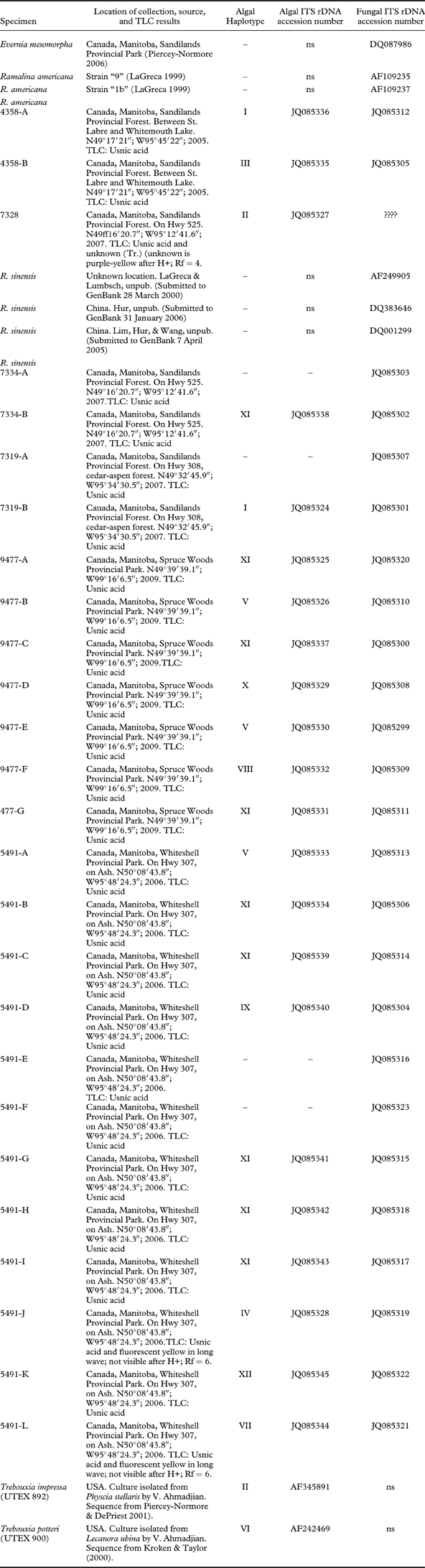
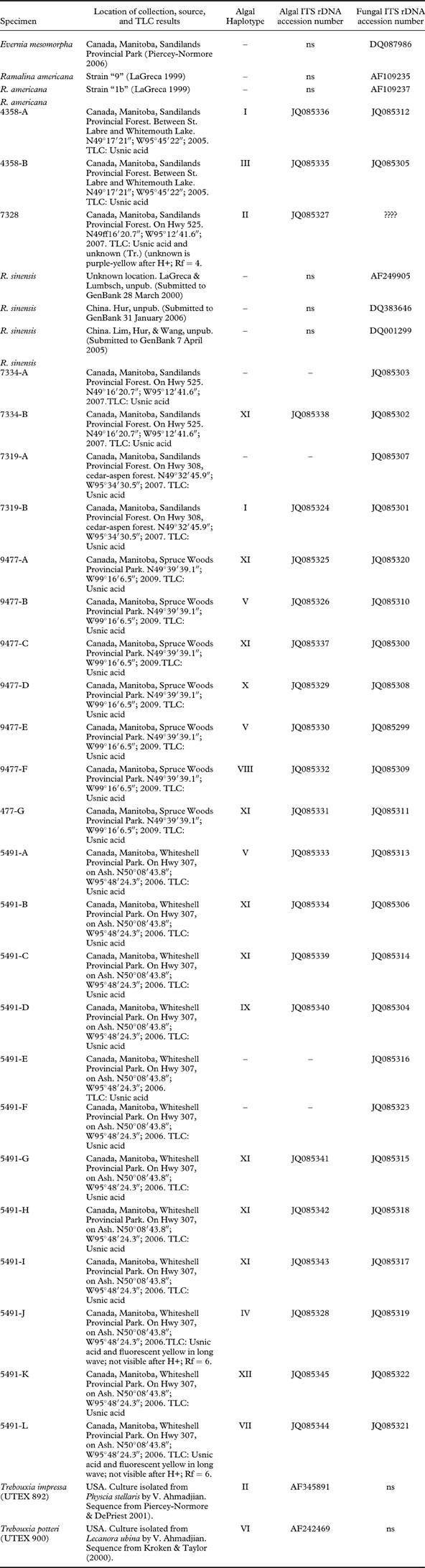
Twenty-three samples of Ramalina sinensis and three samples of R. americana were collected from three geographical regions in southern Manitoba, Canada (Table 1). The vegetation in Spruce Woods Provincial Park (SWPP) is comprised of poplar, oak, and spruce forests, riparian habitats, mixed grass prairie, forested and open sand dunes. The specimens were collected in open spruce and poplar forests. The Sandilands Provincial Forest (SPF) is characterized by underlying sandy soil and open jack pine forest, alternating with low-lying black spruce wetlands. The Whiteshell Provincial Park (WPP) is characterized by open jack pine forest on exposed Precambrian shield and low-lying black spruce bogs, with large numbers of lakes and rivers. The absence of sand and predominance of granite in this area is notable. The thalli of R. sinensis and R. americana were collected from ash, poplar, oak, spruce, and pincherry shrubs. All vouchers are deposited in the cryptogam division of the Herbarium of the University of Manitoba (WIN). Three sequences of R. sinensis and two sequences of R. americana were retrieved from GenBank and added to the alignment.
List of specimens used in this study, location and date of collection, and GenBank accession numbers for algal and fungal ITS rDNA sequences The same collection number refers to the same host tree and different letters after each collection number refer to different individual
Chemistry and DNA analysis
Thin-layer chromatography (TLC) was performed on Merck Silica coated glass plates (Fisher Scientific, Ottawa, Ontario, Canada), placed in 230 ml of toluene/dioxane/glacial acetic acid (180:45:5) solvent, following procedures described in Culberson (Reference Culberson1972) and Orange et al. (Reference Orange, James and White2001).
Total DNA was extracted from 1–2 cm thallus lobes following the cetylmethylammonium bromide (CTAB) extraction protocol modified from Grube et al. (Reference Grube, DePriest, Gargas and Hafellner1995). DNA was resuspended in 50 µl warm sterile distilled water and stored at −20°C. The Internal Transcribed Spacer (ITS) of ribosomal DNA (rDNA) was amplified from each of the fungal and algal partners using taxon-specific primers, 1780A (Piercey-Normore & DePriest Reference Piercey-Normore and DePriest2001) and a universal primer ITS4 (White et al. Reference White, Bruns, Lee, Taylor, Innis, Gelfand, Sninsky and White1990) or Al1700F (Helms et al. Reference Helms, Friedl, Rambold and Mayrhofer2001) to amplify the algal ITS rDNA. Fungal primers were ITS1F (Gardes & Bruns Reference Gardes and Bruns1993) and ITS2 (White et al. Reference White, Bruns, Lee, Taylor, Innis, Gelfand, Sninsky and White1990) for the ITS 1 spacer; and ITS3 (White et al. Reference White, Bruns, Lee, Taylor, Innis, Gelfand, Sninsky and White1990) and LR15 (Vilgalys & Hester Reference Vilgalys and Hester1990) for the ITS2 spacer in the fungal DNA. Amplifications were performed in 20 µl reaction volumes in 1× buffer (200 mM Tris-HCl, 500 mM KCl) with 1·25 units GO Taq (Go Taq® Hot Start polymerase, Promega), 200 µM of each dNTP, 0·5 µM of each primer, and between 10–50 ng of DNA. Amplifications were performed in a thermal cycler (Biometra T-Gradient; Tampa, FL, USA) with the following conditions: initial denaturing at 94°C for 5 min, then denaturing at 94° C for 1 min, annealing at 54°C for 1 min, extension at 72°C for 1 min for 35 cycles.
Four replicates of 50 µl reaction volumes of PCR product were pooled for DNA sequencing. The pooled 200 µl PCR product was precipitated by adding 2·5 volumes of 100% ethanol and 0·2 volumes of 5M NaCl and centrifuged at 13 000 rpm for 10 min. The DNA pellet was resuspended in 20 µl sterile dH2O, the resuspended DNA was gel purified by excising the band from 1·5% agarose gel and purified using the clean up Kit (Wizard® SV Gel and PCR Clean-Up System, Promega) following the manufacturer's instructions. The purified DNA was resuspended in 35 µl of sterile distilled water and stored at −20°C.
Cycle sequencing reaction volumes were 20 µl, containing c. 65 ng of purified DNA, 1 µl BigDye V3.1 (Applied Biosystem, Foster City, CA, USA) and the same PCR primers were used for sequencing. Post-reaction clean up followed the manufacturer's instructions for the EDTA and ethanol precipitation. The dried product was resuspended in 20µl formamide, denatured at 95°C for 5 min and immediately placed on ice and loaded into a 96-well plate for sequencing (3130 Genetic Analyser, Applied Biosystems, Foster City, CA, USA).
Data analysis
Nucleotide sequences were compiled in the program Sequencher 4.6 (Gene Codes Corp.) and manually aligned in Se-Al v 1.0 (Rambaut Reference Rambaut2001). The aligned sequences were used to estimate algal ITS rDNA haplotypes using TCS 1.21 (Clement et al. Reference Clement, Posada and Crandall2000) with 90% connection limit and gaps recorded as missing data. Aligned ITS rDNA regions in each of the algal and fungal partners were also used to generate algal and fungal phylogenetic trees using the program PAUP 4.0 (Swofford Reference Swofford2003). Phylogenetic determinations were based on Maximum Parsimony (MP) and Bayesian Maximum Likelihood (ML) analyses. The option for MP analyses was tree bisection and reconnection (TBR) branch swapping. Heuristic searches were conducted using 1000 random addition replicates and bootstrap searches of 500 resamplings (Felsenstein Reference Felsenstein1985). Bootstrap was carried out using the MP option in PAUP and values ≥70 are reported in the phylogenies. Modeltest version 3.7 (Posada & Crandall Reference Posada and Crandall1998) was performed to determine the best model to use in MrBayes version 3.1.2 (Huelsenbeck et al. Reference Huelsenbeck, Ronquist, Nielsen and Bollback2001; Ronquist & Huelsenbeck Reference Ronquist and Huelsenbeck2003). The six parameter GTR model with a gamma-shaped parameter and proportion of invariable sites uniformly distributed, was chosen for both algal and fungal analyses. Bayesian analyses were performed using 2 000 000 generations with random starting trees. Both runs converged on similar likelihood values. For the fungal partner, 750 burnin trees were discarded; 350 burnin trees were discarded for the algal partner. Posterior probability values ≥95 are reported on the phylogenies.
Results
The fungal ITS rDNA alignment contains 879 characters with 68 parsimony informative sites. The fungal phylogeny contains 303 changes and the topology of the tree is in agreement with the Bayesian tree. The algal ITS rDNA alignment contains 503 total characters with 24 parsimony informative sites. The algal phylogeny contains 67 changes and the topology of the tree is in agreement with the Bayesian tree.
Fungal evolutionary relationships
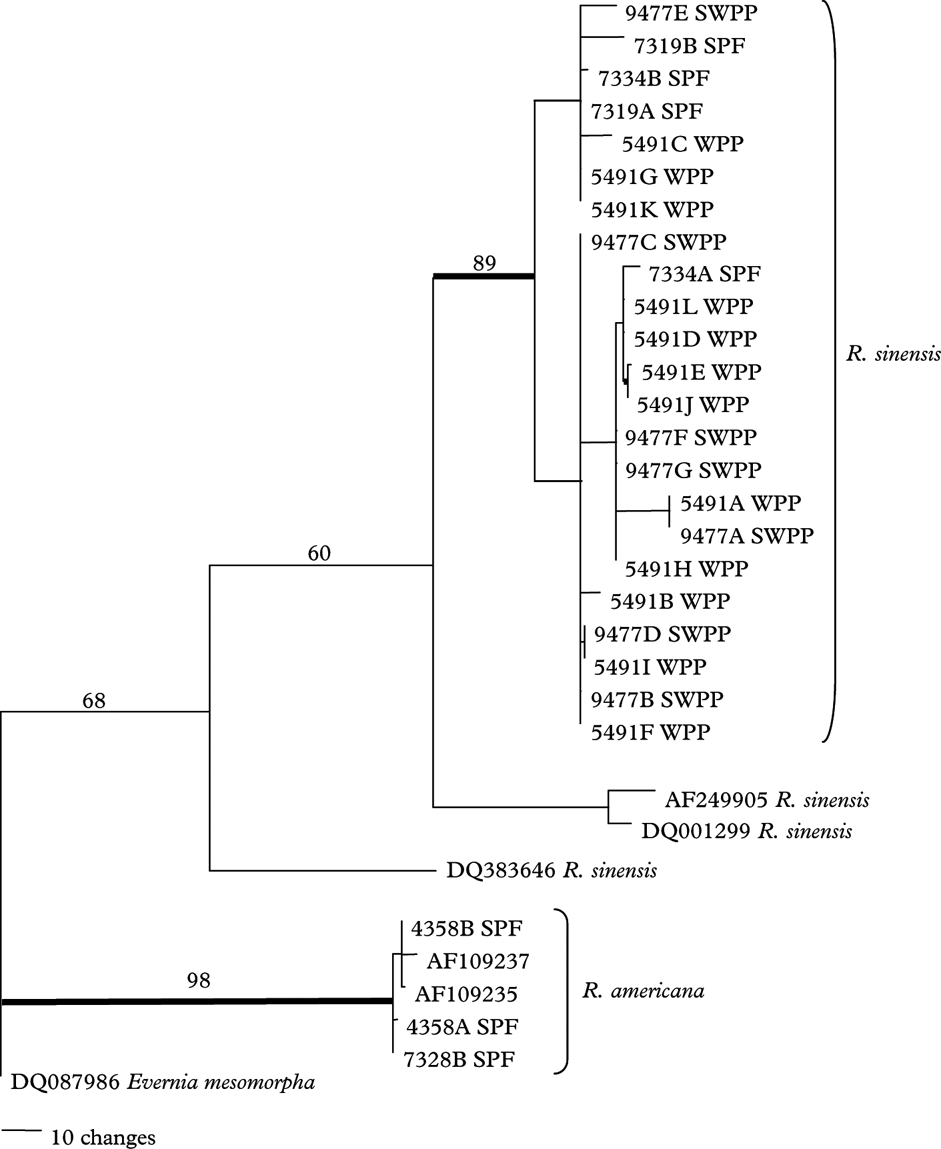
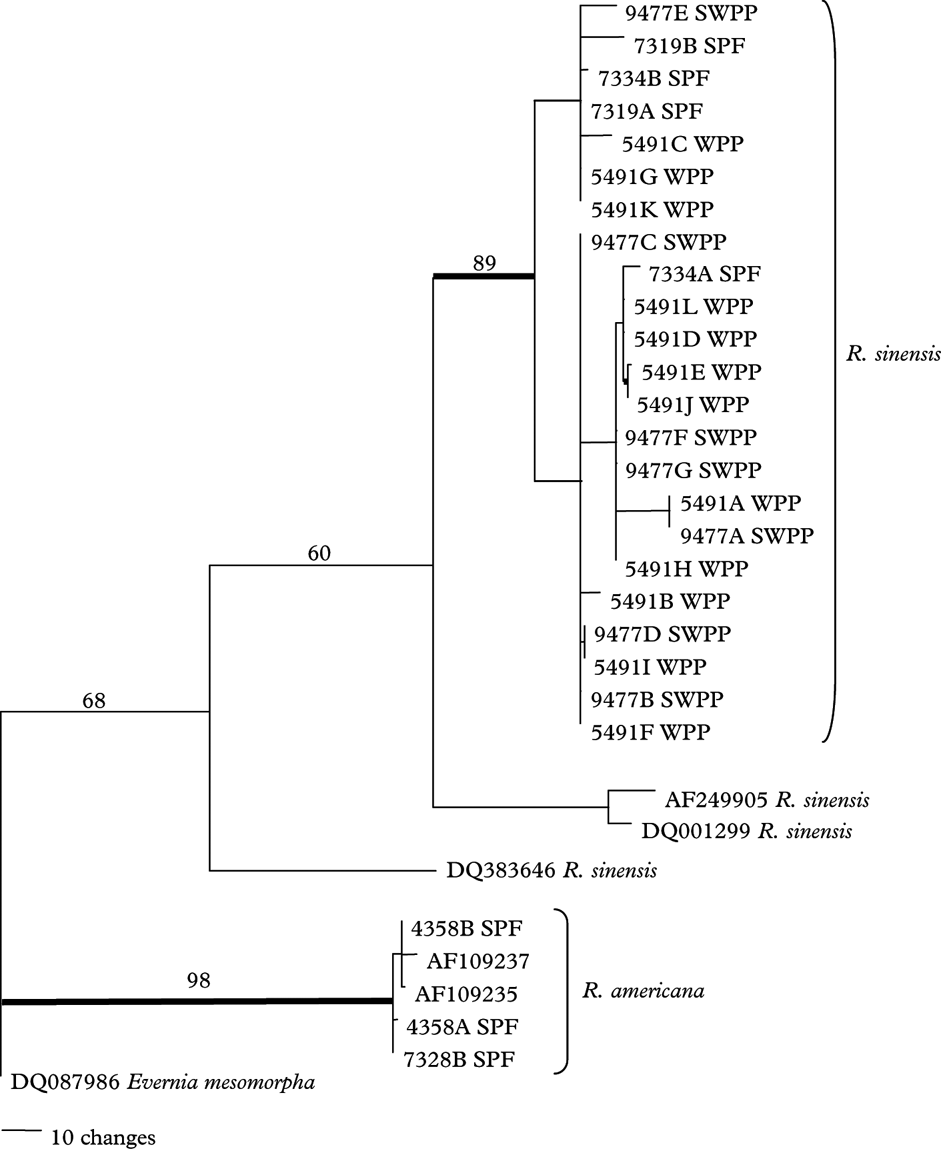
The fungal phylogeny produced two highly supported clades (Fig. 1). Five samples of R. americana Hale formed one highly supported clade A with 98% bootstrap support and ≥95% posterior probability. Three samples of R. americana were collected in Manitoba and the other two samples were collected in New York and North Carolina. Three samples of R. sinensis that were retrieved from GenBank were basal to the second highly supported clade B with 89% bootstrap and ≥95% posterior probability that were all collected in Manitoba in this study within 400 km. The three samples from GenBank were collected in China at an unknown location. The high support but low levels of divergence among samples of R. sinensis from Manitoba suggests they have a recent common ancestor but the three samples of R. sinensis outside the clade are more divergent in nucleotide polymorphism and in geographical origin.
One of 763 most parsimonious trees based on the nuclear ITS rDNA showing an evolutionary hypothesis of Ramalina sinensis collected from three localities in Manitoba with reference to three additional specimens retrieved from GenBank and five sequences amplified from R. americana. Evernia mesomorpha is assigned as the outgroup. Bootstrap proportions ≥70% are shown above the branches, and thickened branches represent posterior probabilities ≥95%. CI 0·9109 and RI 0·8393. The collection number refers to specimens that were collected from the same tree or neighbouring trees. The letter immediately following the number refers to different specimens.
Chemical analysis of R. sinensis showed that two samples of R. sinensis (5491J and 5491L) produced usnic acid in addition to a trace of an unknown compound that appeared fluorescent yellow in long wave ultraviolet light. The unknown compound was not visible after spraying with sulphuric acid and heating, and the Rf class was 6 in the solvent system outlined in the methods. One sample of R. americana (7328) produced usnic acid and a trace of an unknown compound which appeared as purple-yellow after spraying with sulphuric acid and heating, and the Rf class was 4 with the same solvent system. All other samples of R. sinensis and R. americana contained usnic acid only (Table 1).
Algal identity and distribution
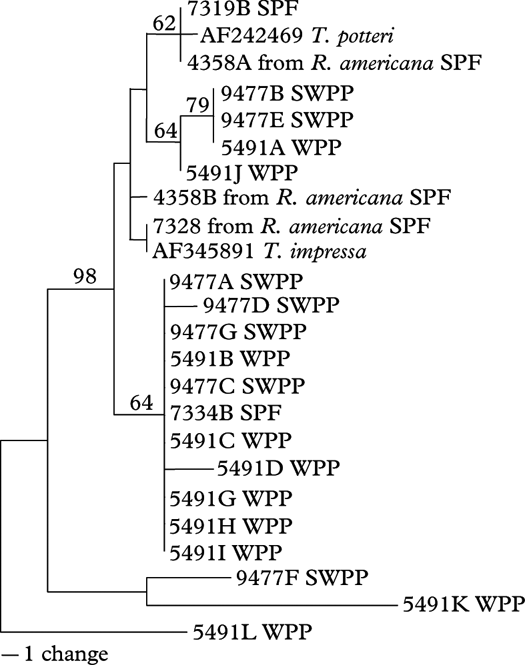
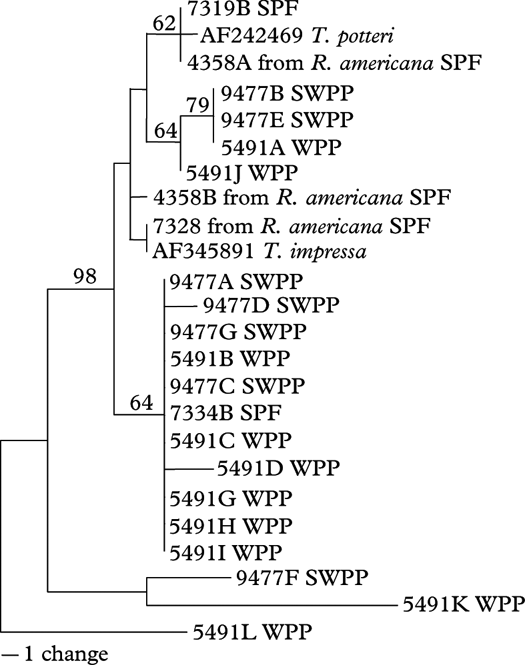
Based on the ITS rDNA sequence comparison in the phylogenetic analysis, the algal partners associated with R. sinensis and R. americana are most similar to those of Trebouxia impressa and T. potteri, but insufficient resolution in the ITS rDNA region prevents separation of the two algal species. The algal phylogeny shows two highly supported clades with bootstrap analysis and five highly supported clades with posterior probability (Fig. 2). None of the clades segregate with host tree, collection location, or fungal species. The algae associated with R. americana are placed in two different clades and one clade also contains an alga from R. sinensis (Fig. 2).
One of 231 most parsimonious trees based on the nuclear ITS rDNA showing an evolutionary hypothesis of the algal partner associated with Ramalina sinensis and R. americana collected from three localities in Manitoba. Two sequences have been retrieved from Genbank that represent known species of Trebouxia for reference. The tree is unrooted. Bootstrap proportions ≥70% are shown above the branches, and thickened branches represent posterior probabilities ≥95%. CI 0·8889 and RI 0·8939.
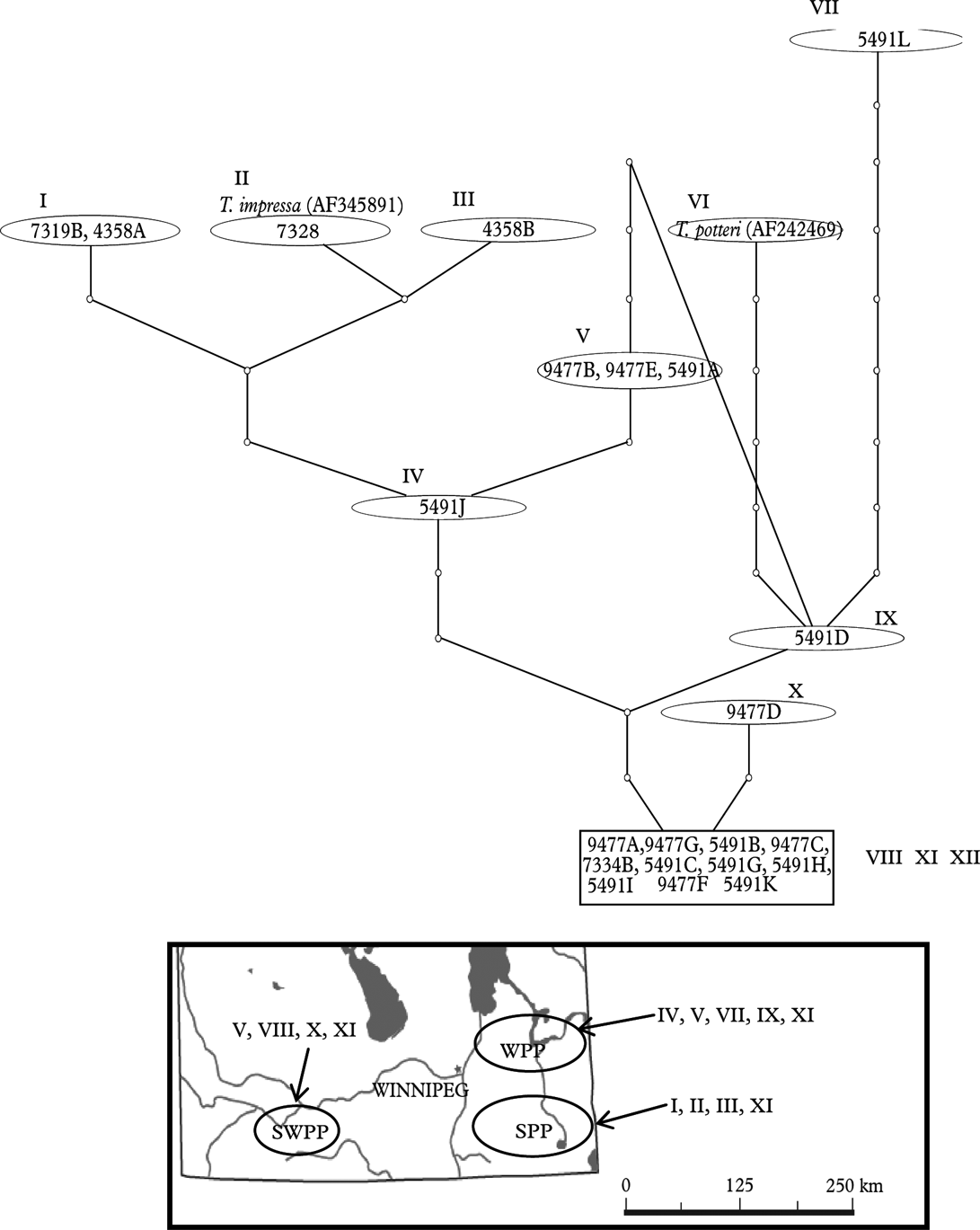
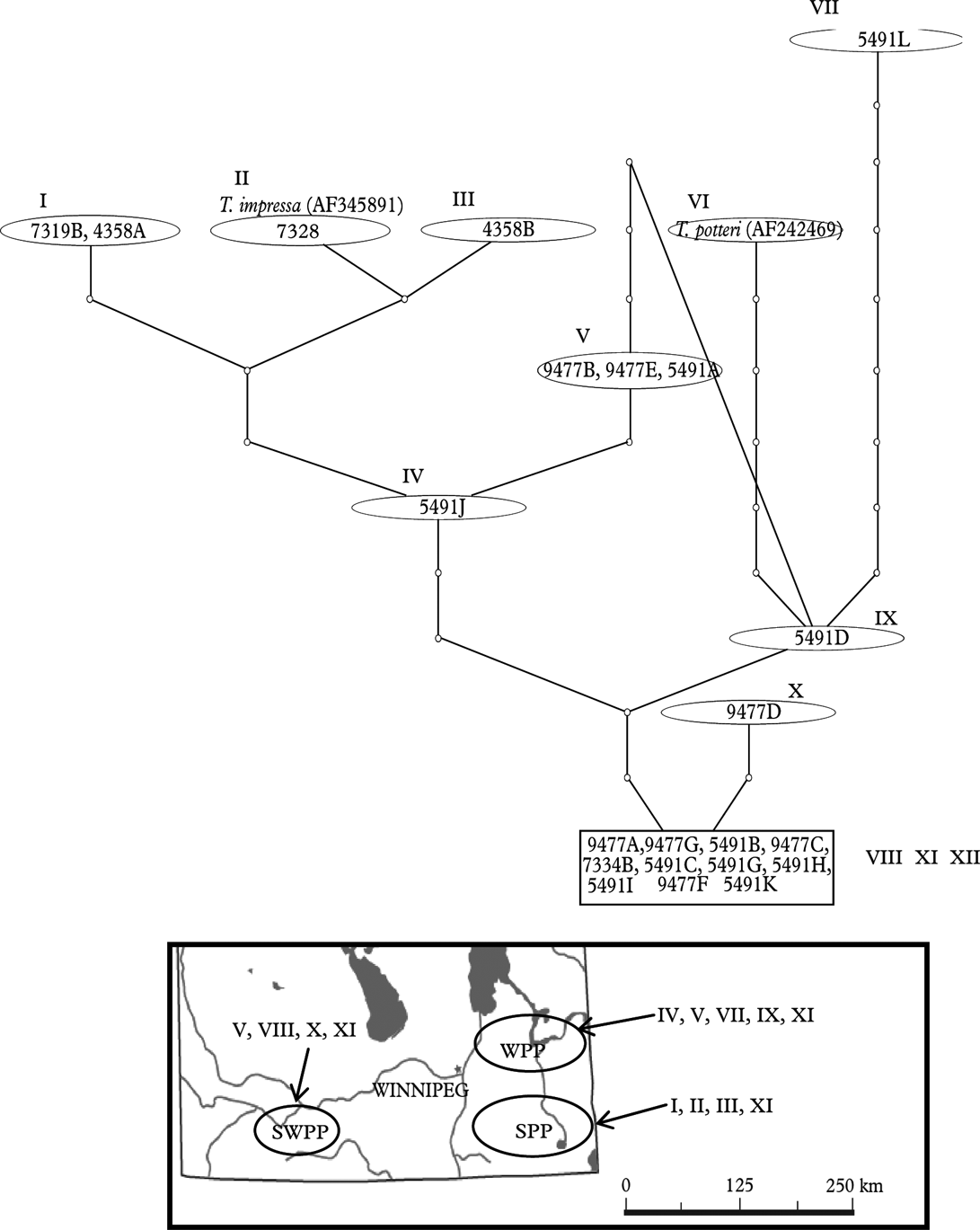
Twelve algal haplotypes are reported from 23 samples (Table 1, Fig. 3) and they do not correspond with geographical location (Fig. 3). The most common haplotype XI comprises nine samples, and the least common, III, IV, VI, VII, VIII, IX, X, and XII are each represented by a single member. The remaining three haplotypes (I, II, and V) are represented by two or three members (Fig. 3).
Map of southern portion of Manitoba, Canada, showing location of collection sites, distance between sites with scale bar, and the algal haplotypes in roman numerals for each collection site. The insert above the map is a haplotype network of the 23 lichen samples, showing the similarity among algal haplotypes.
Discussion
Both partners of R. sinensis show polymorphism in the phylogenetic trees (Figs 1 & 2). The absence of a visual relationship between fungal sequence variation and geographical location of R. sinensis within Manitoba (Fig. 1) is consistent with that reported for R. menziesii (Werth & Sork Reference Werth and Sork2008) and Evernia mesomorpha (Piercey-Normore Reference Piercey-Normore2006). Low resolution of the Manitoba samples might be improved with a more variable gene or more distantly collected specimens. However, the phylogenetic position of three more broadly distributed individuals suggested that there may be a relationship between geographical distance and fungal diversity for individuals in larger geographical regions. Therefore, R. sinensis may undergo widespread dispersal by sexually produced ascospores. The presence of apothecia on all specimens of R. sinensis supports this interpretation. Local dispersal is also possible after gut passage of fragments or spores by mites (Boch et al. Reference Boch, Prati, Werth, Rüetschi and Fischer2011) or snails (Meier et al. Reference Meier, Scherrer and Honegger2002).
The fungal phylogeny does not disagree with that from Stocker-Worgotter et al. (Reference Stocker-Worgotter, Elix and Grube2004) or LaGreca (Reference LaGreca1999). Ramalina americana forms a well-supported clade in this study even though two specimens were collected from distant locations. It was included in this study because of its morphological and chemical similarity with specimens of R. sinensis and is present in the study areas. Ramalina americana produces few secondary metabolites, often only usnic acid (LaGreca Reference LaGreca1999). In this study, R. sinensis produced usnic acid alone and R. americana produced usnic acid with traces of several unknown compounds (Table 1). The production of additional compounds in R. americana was interpreted as a display of classical chemical variation (LaGreca Reference LaGreca1999). The presence of usnic acid alone differentiates these species from other closely related species such as R. culbersoniorum, which has multiple compounds present (LaGreca Reference LaGreca1999). Although the morphological characters of R. americana may overlap with those of R. sinensis, making the two species difficult to separate, they were clearly distinguished by the ITS rDNA sequences in this study.
Photobiont identity: T. potteri and T. impressa
The photobiont ITS sequences of R. sinensis and R. americana are most similar to those of Trebouxia impressa and T. potteri (Fig. 2). Trebouxia impressa and T. potteri are sister species and were shown to form a highly-supported clade in Hauck et al. (Reference Hauck, Helms and Friedl2007) and Guzow-Krzeminska (Reference Guzow-Krzeminska2006), based on nucleotide sequence data. Morphological evidence placed them in two different groups (Takeshita Reference Takeshita2001) based on types of life cycles. Takeshita (Reference Takeshita2001) showed that both species produced zoospores, aplanospores, and autospores, but in T. impressa the three types of reproductive cells were compartmentalized within ‘sporangia complexes’ surrounded by mother cell walls. Trebouxia impressa is known to associate with a large number of lichen fungi in the genera Parmelia, Melanelia (Kroken & Taylor Reference Kroken and Taylor2000), and Physcia (Beck et al. Reference Beck, Kasalicky and Rambold2002). Other species of Ramalina have been shown to associate with divergent species of Trebouxia where those from Brazil are more similar to T. arboricola, T. galapagensis, and T. higginsiae (Cordeiro et al. Reference Cordeiro, Reis, Cruz, Stocker-Wörgötter, Grube and Iacomini2005). The photobiont associated with R. menziesii from California was determined to be T. decolorans (Werth & Sork Reference Werth and Sork2010).
Photobiont diversity
The algae associated with R. sinensis did not cluster with geographical region in this study, suggesting that the photobiont is widely dispersed. The photobiont may disperse by symbiotic propagules from another lichen fungus (Ohmura et al. Reference Ohmura, Kawachi, Kasai and Watanabe2006) or as a free-living alga (Mukhtar et al. Reference Mukhtar, Garty and Galun1994; Friedl & Budel Reference Friedl, Büdel and Nash2008), since R. sinensis does not produce any vegetative propagules. Knowledge of photobiont selection by the fungal partner in different geographical locations and habitats has been growing (Kroken & Taylor Reference Kroken and Taylor2000; Piercey-Normore Reference Piercey-Normore2004; Yahr et al. Reference Yahr, Vilgalys and DePriest2006; Nelsen & Gargas Reference Nelsen and Gargas2008; Muggia et al. Reference Muggia, Zellnig, Rabensteiner and Grube2010; Peksa & Skaloud Reference Peksa and Skaloud2011), but little is known about the photobiont diversity within species of Ramalina. Werth & Sork (Reference Werth and Sork2010) showed that 72 samples of R. menziesii from California associated with the same species of alga, T. decolorans. It is not surprising that most R. sinensis individuals from a larger geographical region in Manitoba also associated with a single or closely related algal species. Additional diversity may be present as suggested by the more divergent samples, 9477F, 5491K, and 5491L (Fig. 2). The photobiont of Tephromela atra (Muggia et al. Reference Muggia, Zellnig, Rabensteiner and Grube2010) was shown to segregate with climatic differences between Mediterranean and temperate climates. A broader geographical investigation of R. sinensis may reveal a similar pattern.
This study covered sample sites approximately 400 km apart, a much larger geographical region than the studies with R. menziesii (2 km; Werth & Sork Reference Werth and Sork2010) and Evernia mesomorpha (Piercey-Normore Reference Piercey-Normore2006), but less than the study of T. atra (Muggia et al. Reference Muggia, Zellnig, Rabensteiner and Grube2010). The study on R. menziesii showed more sequence polymorphism in the algal ITS than was present in this study. Photobionts associated with R. menziesii had 104 polymorphic sites in 72 samples reported (1·4 polymorphisms per site in 2 km) (Werth & Sork Reference Werth and Sork2010). The photobionts associated with R. sinensis had 63 polymorphic sites in 26 samples (2·4 polymorphisms per site in 400 km) in the same gene (ITS rDNA) (Fig. 2). In addition, the number of algal haplotypes reported for R. menziesii was 32 haplotypes in a total of 72 samples (44%) (Werth & Sork Reference Werth and Sork2010), and for R. sinensis it was 12 haplotypes in a total of 23 samples (48%). The level of ITS variation, for polymorphic nucleotide sites and for haplotypes, is lower in the R. menziesii photobiont than in the R. sinensis photobiont, but the geographical distances and sample sizes were very different from one another, making comparison of studies difficult.
In conclusion, this study suggests that the diversity in each of the symbionts of R. sinensis would not be a limiting factor for adaptation to changing environmental conditions, despite the absence of vegetative propagules. The inferred photobiont identity was limited to two species but questions were raised concerning the geographical distribution of algal haptotypes. Sexual reproduction by the fungal partner, inferred from abundance of apothecia, may account for its widespread distribution. However, the absence of vegetative propagules of the lichen may account for small local population sizes and the apparent rarity of the species in local areas of Manitoba.
The authors thank Anete Pereira de Souza for the opportunity provided for the first author to visit Canada, and Manitoba Conservation for collection permits WPB20417 and WPB20429. Financial support was received from Fundação de Amparo a Pesquisa do Estado de São Paulo (FAPESP) Brazil, and the Natural Sciences and Engineering Research Council of Canada (NSERC).