Introduction
Prehospital aspirin (ASA) administration is a well-established and effective treatment for acute myocardial infarction (AMI) that has been demonstrated to have negligible risk for patients. Reference Barbash, Freimark and Gottlieb1-Reference Russo, Wikler, Rahimi and Danaei7 Aspirin treatment has long been a part of standard treatment protocols for Advanced Life Support (ALS) Emergency Medical Services (EMS) field providers, as well as some Basic Life Support (BLS) first responders, in North America. Some evidence also suggests that EMS field providers do not use ASA for all qualifying patients and may use treatments that are less effective. Reference McVaney, Marlow, Colwell and Pons8
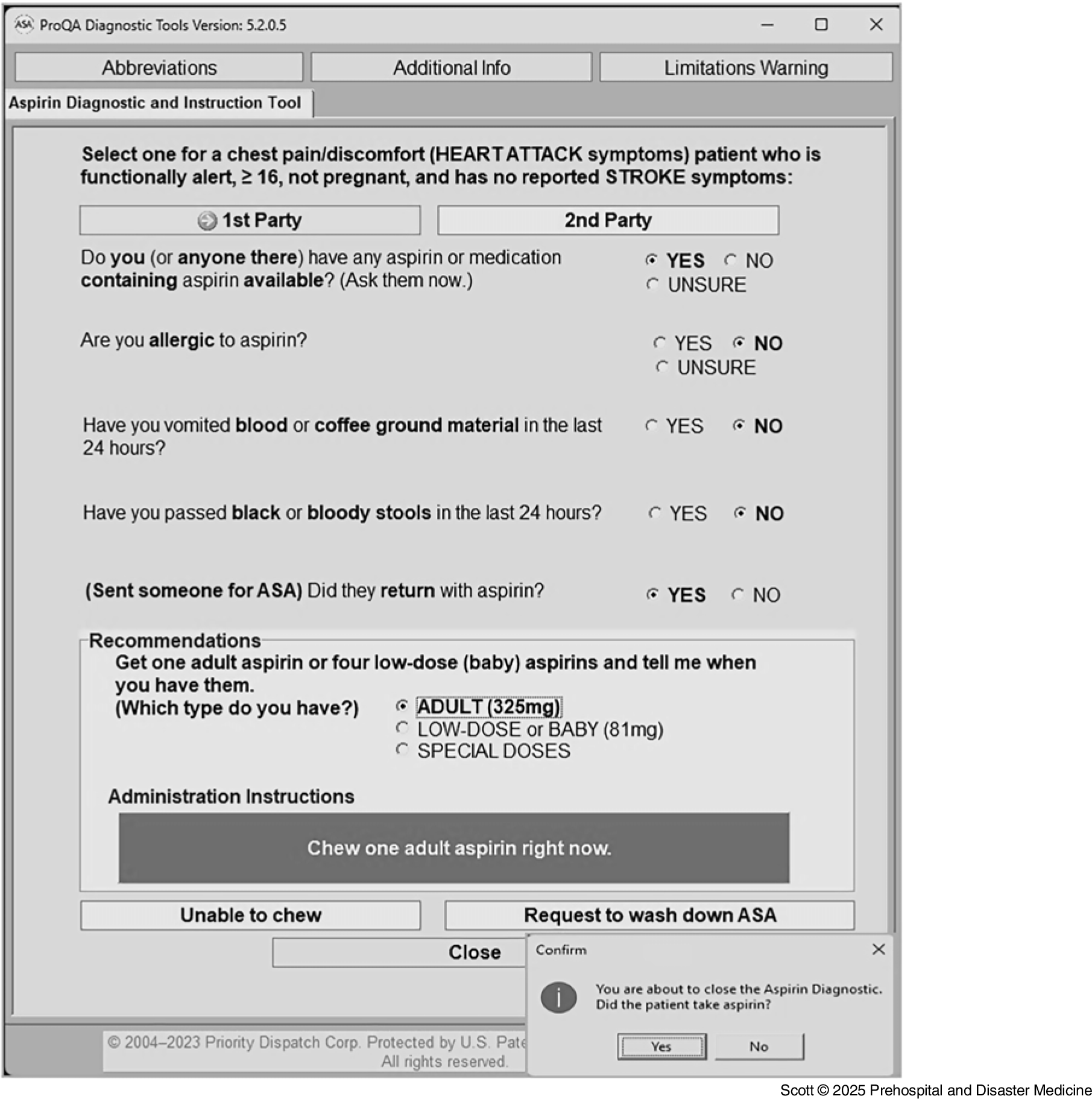
Emergency Medical Dispatchers (EMDs), using the Medical Priority Dispatch System (MPDS; Priority Dispatch Corp. Inc.; Salt Lake City, Utah USA), have been trained to use the MPDS Aspirin Diagnostic & Instruction Tool (ASADxT; Figure 1), first released in July 2008 (MPDS version 12.0), to provide dispatch instructions to take ASA for qualifying, suspected AMI patients, prior to the arrival of EMS field providers. Initially, EMDs use the ASADxT to screen patients for eligibility to take ASA. Before a patient can receive ASA administration instructions, the patient must be 16 years or older, be either first- or second-party caller, have ASA available, and not have any of the three contraindications: (1) not allergic to ASA; (2) has not vomited blood or coffee ground materials in last 24 hours; and (3) has not passed black or bloody stools in last 24 hours. Since its release, EMDs have used the ASADxT for thousands of patients, with no documented reports of patient harm from any of the International Academies of Emergency Dispatch (IAED; Salt Lake City, Utah USA)’s internal reporting systems, including several surveys of user agencies, informal polling of system medical directors, and reviewing the IAED’s several thousand protocol change proposals received since release of the ASADxT. As shown in Figure 1, the ASADxT also provides a popup screen (with this message “Confirm: You’re about to close the Aspirin Diagnostic. Did the patient take aspirin?) to ensure EMDs verify if the patient took ASA. Further, to confirm there are no errors in the patient mistaking a non-ASA medication, such as acetaminophen or ibuprofen, for ASA, the ASADxT provides a list of both ASA containing and non-ASA containing medications that can be accessed within the tool itself as the EMD is speaking to the caller.
Aspirin Diagnostic and Instruction Tool.
©2023 International Academies of Emergency Dispatch – used by permission.
Note: This figure presents the aspirin diagnostic and instruction tool with the dispatcher-directed instructions that were used to deliver aspirin.
Abbreviation: ASA, aspirin.

The MPDS uses six call triaging priority levels (ECHO [most severe/urgent], DELTA, CHARLIE, BRAVO, ALPHA, and OMEGA [least severe/urgent]) to define the relative urgency and response needs of the patient. Each priority level is associated with COLD (includes the OMEGA-, ALPHA-, and CHARLIE-level calls) or HOT (includes the BRAVO-, DELTA-, and ECHO-level calls) EMS response modes. Reference Scott, Clawson and Gardett9 Generally, the response may include ambulance with either ALS or BLS personnel. Commonly, ALS is the typical response type for CHARLIE and DELTA levels, while a BLS-only response is recommended for ALPHA-level cases. The ECHO levels usually require very early identification and immediate sending of the absolute closest response.
The IAED-certified EMDs are directed by the MPDS protocol to use the ASADxT “if authorized by local medical control and the chest pain/chest discomfort (Heart Attack Symptoms) patient is functionally alert, ≥ 16 years old, not pregnant, and has no reported stroke symptoms.” 10
In 2012, a study 10 demonstrated the feasibility of ASA administration by EMDs prior to EMS field provider arrival. However, the study did not compare the Dispatcher-Directed Aspirin Administration (DDAA) using the ASADxT to EMS Field Provider-Directed Aspirin Administration (FPAA) to examine any potential patient benefits of receiving ASA earlier, by EMD direction.
The primary objectives of the study were: (1) to determine the amount of time saved using DDAA, and (2) to describe the frequency of the DDAA and FPAA provided to prehospital patients.
Methods
Design and Setting
The retrospective study involved three Accredited Centers of Excellence (ACE) in the United States. These agencies had demonstrated high MPDS protocol compliance and had shown past interest in doing peer-reviewed research studies with the IAED. In each of these study agencies, use of the ASADxT has been authorized by that agency’s Physician Medical Director.
The study was approved by the IAED’s Institutional Review Board (IORG0005364/IRB #00006450). The investigators identified managers at each of these agencies and secured (verbal) consent to participate in the study. A copy of the Institutional Review Board’s approval was then sent to each agency to initiate the study data collection.
MedStar Mobile Health (MMH; Fort Worth, Texas USA) is an administrative governmental agency that provides emergency and non-emergency ambulance health care in many cities in Texas, USA. Together with other health care partners, MedStar provides Mobile Integrated Healthcare (MIH), re-admission prevention, observational admission reduction, and hospice revocation avoidance.
North Memorial Health started as a single hospital (North Memorial Medical Center [NMMC]) in 1954 in Robbinsdale, Minnesota USA. It continues to offer health care at specialty and primary care clinics and home care offerings, including medical transportation services.
Northwell Health (NH) System is New York’s largest health care provider, servicing New York City, Long Island, and Westchester, caring for over two million people annually at 21 hospitals and over 890 out-patient facilities. The Northwell Center for EMS (CEMS) covers nearly 1,500 square miles with a population of over 11 million people. In addition to participating in the New York City Fire Department 9-1-1 system, CEMS provides critical care, specialty care, community paramedic, and helicopter-based EMS services.
Study Population
All medical dispatch cases collected from the participating agencies using the MPDS ProQA software (Priority Dispatch Corp. Inc.) during the six-month (January 1 through June 30, 2023) study period were included in the study, including their corresponding EMS electronic Patient Care Report (ePCR) cases.
Outcome Measures
The primary outcome measure of the study was the amount of time saved using DDAA. The secondary outcome measures were: (1) frequency of use of the ASADxT by EMDs to deliver ASA administration instructions; (2) frequency of ASA delivery by EMS field providers; and (3) patient’s first set of vital signs, disposition, medications, and primary impression recorded on-scene by EMS field providers.
Data Management
Dispatch (ProQA) Dataset—Study agencies were already participating in sharing their dispatch data via the IAED Data Center project. Therefore, they did not need to submit their ProQA dispatch data. Such data were simply extracted from the data center.
EMS Field Provider (ePCR) Dataset—Each agency extracted de-identified ePCR data every month, based on a study template (in a spreadsheet format), and submitted the same through a secure link to the IAED in Salt Lake City.
ASA Delivery Time—The time to deliver ASA was defined for EMDs as the elapsed time from the time the case was created in Computer-Aided Dispatch (CAD) or in the ProQA system to the time ASA was delivered via the ASADxT. All keystrokes/actions on the ASADxT are automatically timestamped as the EMD selects the various options on the tool – no manual entries. Time to deliver ASA was defined for EMS responders as the elapsed time from the time the case was created in CAD to the time ASA was given by EMS field providers on scene. The agencies reported that their response crews do manual entry of medication delivered times into their ePCR systems when they chart on scene. Additionally, all the agencies indicated that if the crews are made aware of any medications that were administered prior to their arrival on scene, they do document it as prior-to-arrival (PTA).
Data Analysis
STATA for Windows software (STATA Statistical Software, BE—Basic Edition: releases 17.0; StataCorp LLC; College Station, Texas USA) was used for data analysis. Test cases (ie, cases that were entered into the database by EMDs for practice) and medical transfer protocol cases (ie, patients who were transferred between medical facilities) were excluded from the medical cases in ProQA. Additionally, cases in the ProQA database that did not have corresponding ePCR records in the EMS database were also excluded. These were cases that emanated from medical standby, cancellations, or data errors. The remaining cases were linked with their corresponding EMS ePCR records. The frequency of the final primary impression, first and second sets of vital signs, medication given, and disposition recorded by EMS field providers were evaluated to determine the severity (and accuracy) of the illness of the patients.
Also, the frequency of the use of the ASADxT by EMDs and ASA delivery by EMS field providers were also tabulated to qualify the ASA administration by the two groups. The reasons why patients who qualified to take ASA per the ASADxT but did not take it were also assessed. Additionally, situations were assessed where the EMS field providers administered ASA to patients who had already received ASA as assisted by EMDs. It was then determined the mean time taken by the EMD and EMS to deliver ASA to patients. Assessing the mean times spent by the EMD and EMS crew to deliver ASA, it was estimated how much time was saved (ie, the mean of the time differences, including associated 95% confidence interval [CI]) when the EMD gave ASA versus time when the EMS provider gave ASA on scene. Finally, the ePCR data were reviewed to confirm the patient took ASA, and not a non-ASA medication, when the EMD reported a successful completion of the ASADxT.
Results
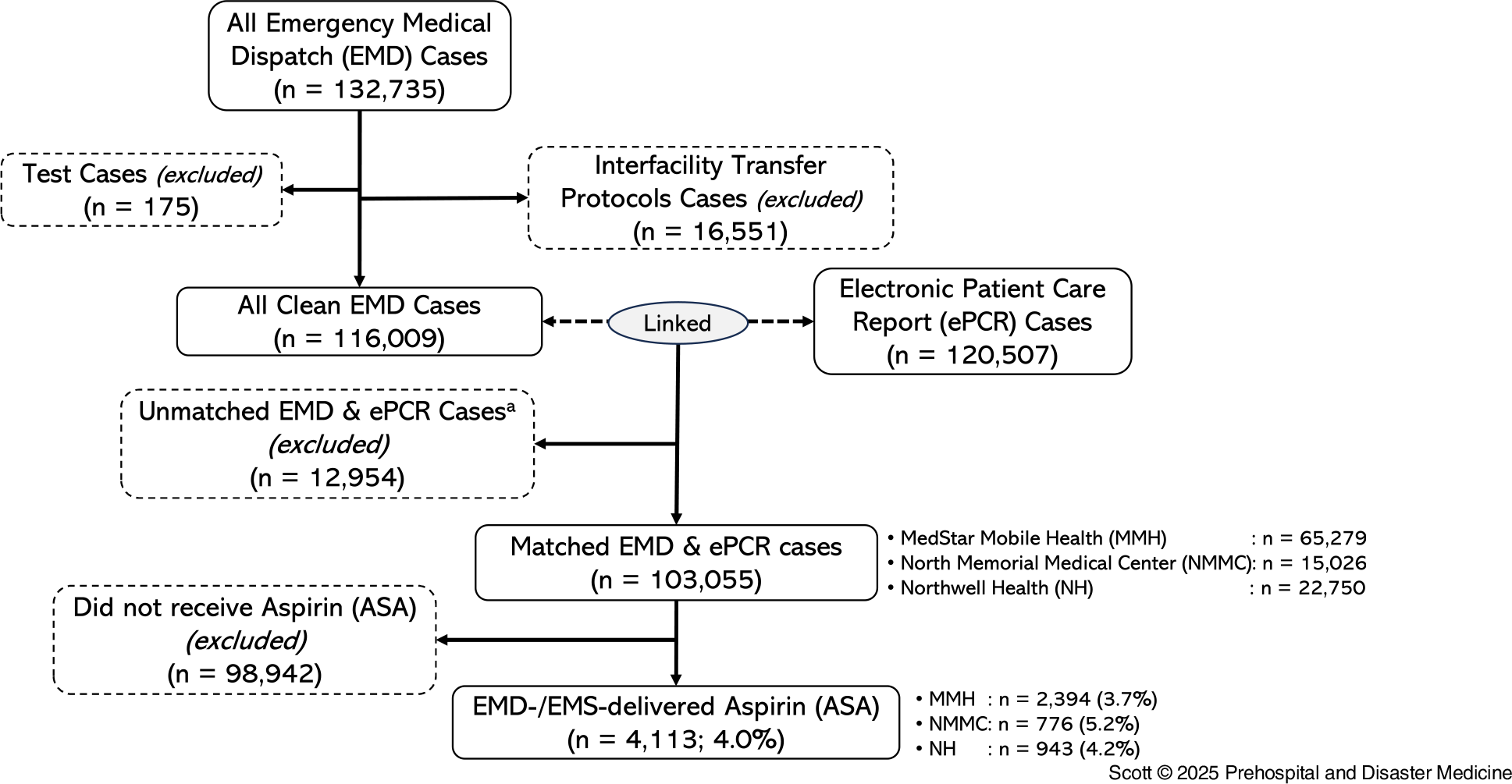
After excluding 16,726 cases (175 test cases and 16,551 medical and interfacility transfer cases), 116,009 medical calls and 120,507 ePCR records were linked (Figure 2). Of a final sample of 103,055 medical cases (excluding 12,954 unmatched cases such as medical standby, cancellations, or errors) analyzed, ASA was delivered to 4,113 (4.0%) of the patients by the EMD and/or EMS.
Linking and Processing of EMD and ePCR Datasets.
Note: This figure describes the processes used to clean up and link the dispatch and EMS datasets.
Abbreviations: EMD, Emergency Medical Dispatcher; ePCR, electronic patient care report; EMS, Emergency Medical Services.
aMedical standby, interfacility transfers, cancellations, errors, etc.

Of all the 4,113 patients who received ASA, five protocols constituted a majority (96.6%) of the call types: Chest Pain – 68.4%, Breathing Problems – 14.2%, Heart Problems – 7.5%, Sick Person – 3.5%, and Unconscious – 2.8% (Supplementary Material [Figure 4]; available online only). Additionally, these 4,113 patient cases were classified as DELTA (54.3%), CHARLIE (38.0%), ALPHA (4.8%), BRAVO (1.7%), ECHO (1.1%), and OMEGA (0.2%); (Supplementary Material [Figure 5]; available online only).
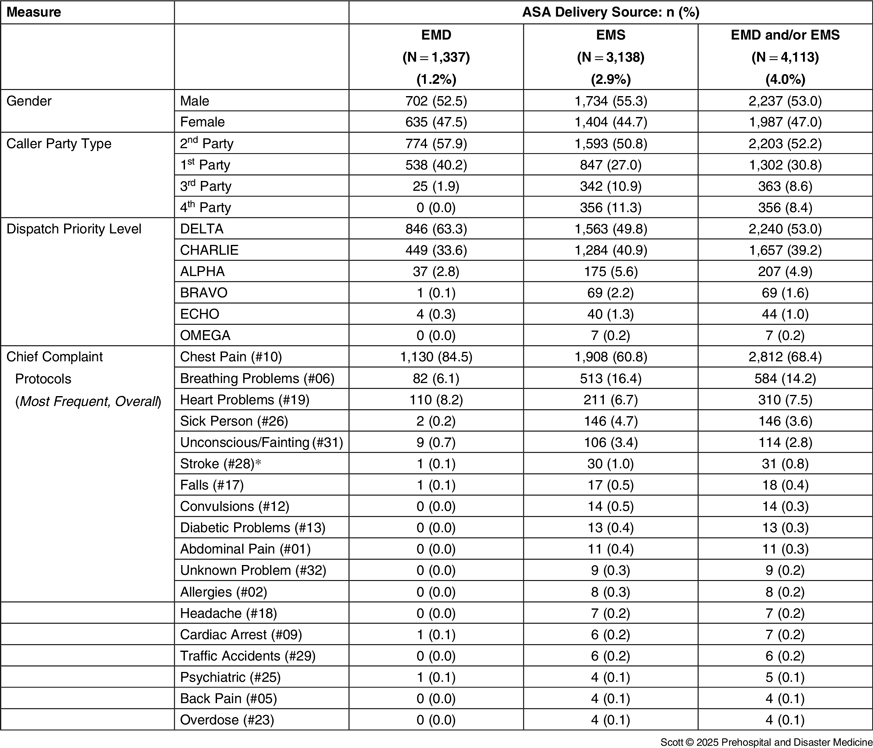
Of the 4,113 patients who received ASA, delivered either by the EMD and/or EMS (4.0%), 53.0% were male, 52.2% of the cases emanated from calls placed by second-party callers, 53.0% were classified as DELTA cases, and 68.4% were handled using the Chest Pain Chief Complaint Protocol (#10); Table 1. According to EMS records, there were no reported cases of a medication error, where the patient mistakenly took a non-ASA containing substance (eg, acetaminophen, ibuprofen) when the EMD directed the patient to take ASA.
ASA Delivery Categorized by Dispatch Measures

Note: *On the one case where EMD delivered ASA, authors did not have access to its audio file to ascertain what influenced the EMD’s decision to deliver ASA. Hence, it was assumed that it was initially coded as stroke, but appeared that the EMD may have attempted to change the condition, yet failed to complete the reconfiguration before paramedic arrival on scene. Based on the paramedic’s impression of the case, it was determined to be an anxiety disorder. Therefore, paramedics treated (by giving ASA) and released the patient. Otherwise, the paramedic impressions for the other 30 cases where EMS gave ASA, it appears that most were chest pain and not stroke. So, it was assumed they were coded as stroke by the EMD, then re-classified as chest pain by the paramedics after a face-to-face assessment.
Abbreviations: EMD, Emergency Medical Dispatcher; EMS, Emergency Medical Services; ASA, aspirin.
Overall, EMS responded lights-and-siren to 74.9% of the cases who had received ASA delivered either by the EMD and/or EMS (Supplementary Material [Table 4]; available online only). Additionally, one-half of the patients who received ASA had a final EMS primary impression of cardiac chest pain (angina), chest pain, cardiovascular (CV)-chest pain (presumed cardiac), ST-segment elevation myocardial infarction (STEMI), and CV-chest pain – acute coronary syndrome (ACS); had a normal Glasgow Coma Scale score (15); had a normal respiratory rate (18 breaths per minute); and had a normal oxygen saturation (98%). In terms of medications, ASA was mostly given by EMS in combination with other medication 59.6% of the time, followed by nitroglycerin with other medications (41.5%), saline with other medications (32.9%), ASA delivered alone (27.6%), and oxygen with other medications (21.2%).
The study showed that of the adult chest pain/chest discomfort patients who were not given ASA instructions by the EMD and therefore did not take ASA, the reason was most often unavailability of ASA (90.1%); (Supplementary Material [Table 5]; available online only). A similar trend was observed in each agency (91.2% for MMH, 85.3% for NMMC, and 85.3% for NH).
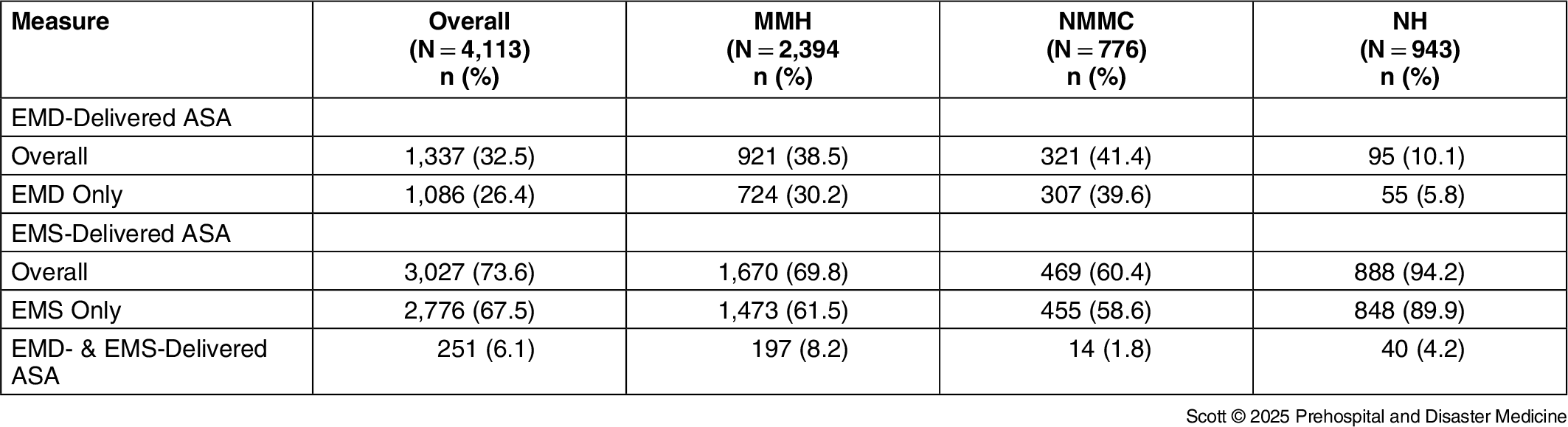
Overall, of the 4,113 patients who received ASA, 32.5% (n = 1,337) of them received it delivered by the EMD and 73.6% (n = 3,027) by EMS (Table 2). Additionally, 4.0% of them received ASA delivered by the EMD and/or EMS (26.4% by only EMD, and 67.5% by only EMS), while 6.1% of the patients received ASA delivered by both EMD and EMS.
Aspirin Delivery by Emergency Medical Dispatchers and Emergency Medical Service Field Providers

Abbreviations: MMH, MedStar Mobile Health; NMMC, North Memorial Medical Center; NH, Northwell Health; ASA, aspirin; EMD, Emergency Medical Dispatcher; EMS, Emergency Medical Services.
Considering only the 1,337 patients who received ASA with assistance from the EMD, 18.8% of them also received ASA with assistance from the EMS responding crew (Supplementary Material [Table 6]; available online only). The percentage of this category of cases was highest in NH (42.1%).
Now, considering only the 3,027 patients who received ASA with assistance from the EMS, 8.3% of them had also received ASA with assistance from the EMDs. The percentage of this category of cases was highest in MMH (11.8%).
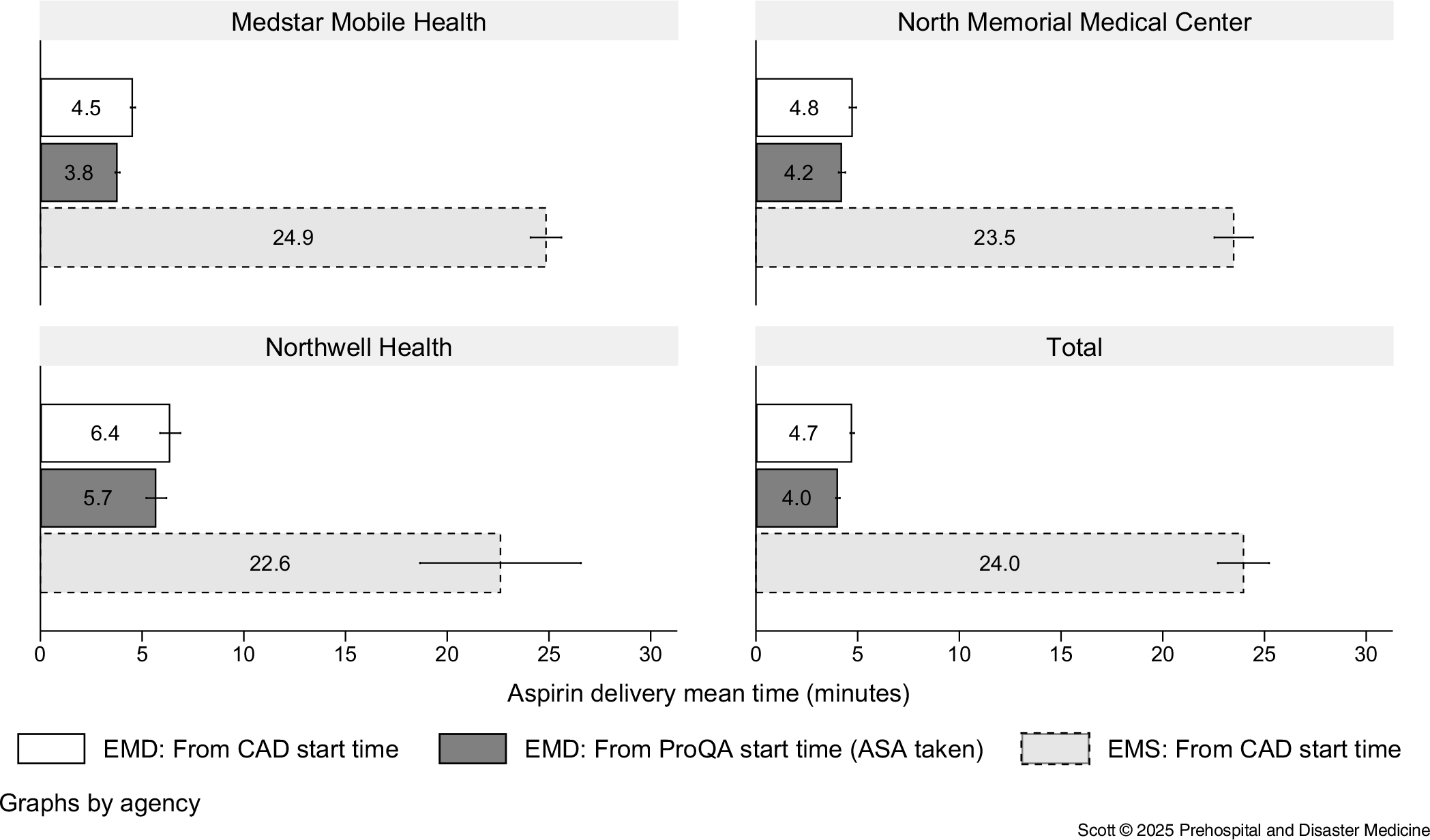
Overall, EMDs assigned a final dispatch code (ie, reached send point) within 2.0 minutes from the time the call was created in CAD and 1.2 minutes from ProQA. Also, overall, patients took ASA with the EMD’s assistance within 4.7 minutes mean time (median: 3.9 minutes) from the time the call was created in CAD and 4.0 minutes mean time (median: 3.2 minutes) from ProQA launch (Figure 3). Additionally, patients took ASA with the EMS field responders’ assistance within 24.0 minutes mean time (median 21.2 minutes) from the time the call was created in CAD.
EMD and EMS Delivery of ASA Mean Time – From Call Creation Time in CAD and from ProQA Launch Time.
Note: This figure presents the elapsed mean times estimates taken by EMDs and field responders to deliver ASA, from the time the case/call was created in CAD and ProQA systems.
Abbreviations: EMD, Emergency Medical Dispatcher; EMS, Emergency Medical Services; ASA, aspirin; CAD, computer-aided dispatch; ProQA, Professional Quality Assurance system.

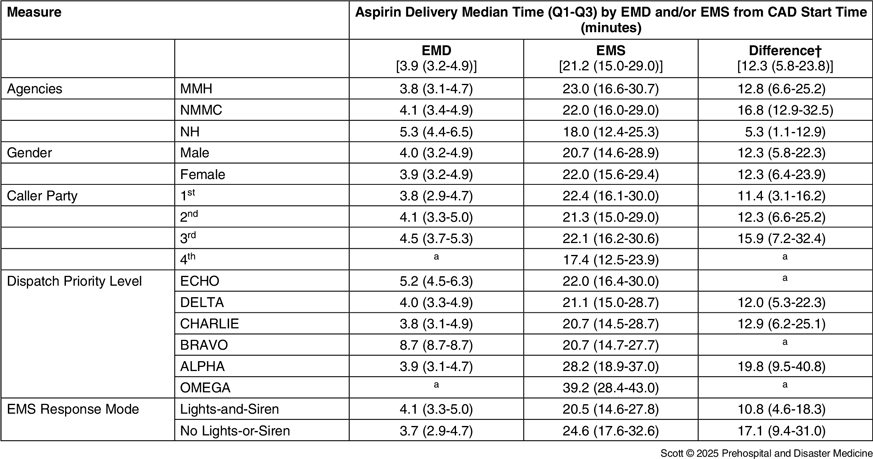
Overall, delivery of ASA by EMDs saved 13.0 minutes mean time (95% CI, 11.4-14.6; P < .001; median: 12.3 minutes) from the time the call/case was created in CAD (Table 3). Also, the differences between EMD-delivered and EMS-delivered ASA time was highest for third-party calls (18.3 minutes mean time; median: 15.9 minutes), ALPHA-level calls (21.8 minutes mean time; median:19.8 minutes), and when EMS responded without lights-or-siren (17.5 minutes mean time; median: 17.1 minutes).
Comparing the Time Taken by EMDs or EMS Field Providers to Deliver

Note: Q1-Q3, 25%-75% interquartile ranges. The estimates are the medians of the time differences (including the quartiles) when the EMD gave aspirin versus time when the EMS provider gave aspirin on scene.
Abbreviations: MMH, MedStar Mobile Health; NMMC, North Memorial Medical Center; NH, Northwell Health; EMD, Emergency Medical Dispatcher; EMS, Emergency Medical Service; CAD, computer-aided dispatch.
a No cases or the sample size was too small.
Discussion
Qualified Patients for ASA
The study findings demonstrated that EMDs and EMS field responders most often gave ASA to patients that really had qualifying conditions to take ASA, given that the three most frequent dispatch chief complaints – chest pain, breathing problems, and heart problems – represented the majority of patients receiving ASA from both EMDs and EMS field responders. Additionally, the vast majority of the patients who received ASA from both EMDs and EMS field responders had appropriately been classified as higher priority (ECHO, DELTA, and CHARLIE) at dispatch, suggesting these are the patients most likely to have an AMI or unstable angina. Finally, the primary EMS impressions further corroborate this agreement between EMDs and EMS.
Availability and Uptake of ASA
Unavailability of ASA for patients who are qualified to take ASA remains a significant problem for EMD-delivered ASA. Reference Barron, Clawson and Scott11 In fact, for patients who were evaluated using the ASADxT but did not take ASA, the primary reason was not a clinical contraindication but rather unavailability of ASA (90.1%). Overall, a sizeable 32.5% (n = 1,337) of the 4,113 patients who received ASA indeed received EMD-delivered ASA. This percentage would most likely increase if ASA was available on scene at the time of call. Also, approximately 19.0% (n = 251) of these 1,337 also received EMS-delivered ASA. This percentage seemed to have even more than doubled (42.1%) at a hospital-based EMS system (NH). This is a surprising outcome which may need further investigation to determine why such a retake of ASA would occur when EMS arrives (eg, could it be due to an ASA administration local policy, did the patient condition persist or worsen, or was readily available dispatch information [in ProQA] not relayed to responders through CAD?).
Otherwise, approximately 41.0% (n = 922) of patients who did not receive EMD-delivered ASA all received ASA from EMS field providers. Conversely, 48.0% (n = 1,086) of patients who did not receive EMS-delivered ASA all had indeed already received EMD-delivered ASA. These favorable outcomes further reiterate the significance of EMS field providers having ASA available (as much as possible) when they respond to cases where ASA may be beneficial to the patient.
EMS Response and Patient Impression, Treatment, and Disposition
The results in this study also showed that 50.0% of the patients that received ASA delivered by EMDs and/or EMS had a final primary impression of cardiac chest pain/angina/presumed cardiac/STEMI/ACS. This percentage of cardiac-related chest pain is consistent with the results of other studies that have determined the percentage of chest pain cases with cardiac origin, presenting to the emergency department and EMS responders. Reference Scott, Clawson and Gardett9,Reference Knockaert, Buntinx, Stoens, Bruyninckx and Delooz12,Reference Frieling, Bergdoldt, Allescher and Riemann13 These patients that received ASA delivered by EMDs and/or EMS also received a combination of ASA and other medications on scene (approximately 60.0%) or ASA alone (approximately 28.0%).
Time Taken to Deliver ASA
Previous clinical studies Reference Barbash, Freimark and Gottlieb1,Reference Freimark, Matetzky and Leor2,Reference Russo, Wikler, Rahimi and Danaei7,14-Reference Lewis, Davis and Archibald17 have suggested that early ASA administration can significantly reduce morbidity and mortality rates among patients with unstable angina and AMI. Therefore, since EMDs have the opportunity to provide ASA administration earlier than EMS (4.7 minutes mean time [median: 3.9 minutes] and 24.0 minutes mean time [median: 21.2 minutes], respectively), the mean of the time differences saved (13.0 minutes) may have the potential to improve overall patient outcome. It’s worth noting that the three EMS systems who participated in this study primarily serve urban and suburban areas in the United States. In rural areas, EMS response times could be much longer, which may provide an opportunity for even greater patient benefits of earlier DDAA.
Limitations
This study had a few limitations that may influence the outcomes and conclusions of this research. It is important to note that this study was conducted with data from only three agencies in the United States. Therefore, generalization of the research findings should be done with caution. Additionally, while all three agencies used electronic devices to enter and timestamp their on-scene delivery of ASA, two agencies used a keyboard to type an entry in the medications field, while one used a drop-down list selection process from the medications field, which could produce slight differences in timestamps between agencies. Finally, no hospital outcomes were collected in this study, hence, actual survival benefits and reduced morbidity of earlier DDAA could not be directly determined here. Future studies may investigate any causal relationship between time saved in ASA administration and the actual patient outcome.
Conclusion
This study demonstrated that emergency medical DDAA using the ASA diagnostic tool in the MPDS provides measurable time savings (approximately 13.0 minutes) in ASA delivery to patients. Further studies will need to assess if the reduction of ASA delivery time by EMDs has the potential to improve overall care and survival for patients suffering from a myocardial infarction. These findings inform EMS agencies of the potential impact of early DDAA on patient care. The study identified beneficial new knowledge for possible future enhancements to medical dispatch protocols and ways of better informing responding EMS providers of previous DDAA provision.
Conflicts of interest
All authors had no financial or non-financial conflict of interest that has arisen from the direct applications of this research. However, JC is the inventor of the MPDS Protocols whose aspirin diagnostic and instruction tool, used by EMDs to deliver aspirin, was studied.
Acknowledgement
The authors would like to specifically thank Bryon Schultz (Academics & Standards Expert-Medical, IAED), Brett Patterson (Chair, Medical Council of Standards), and Ty Wooten (Director of Governmental Affairs, IAED) for their contributions in reviewing the manuscript, and Nathan Johnson (Data Specialist, IAED) and Jared Stillman (Software Development Supervisor, IAED) for extraction of the emergency dispatch datasets. Appreciations also go to Anna Shmynets (Research Assistant, IAED) and Dwayne Howerton (Chief of Staff, MedStar) for study logistics coordination, and to James M. De Bono (Manager-EMS Operations, Northwell Health) for extraction of CAD and ePCR datasets at his agency.