Introduction
Body image is a multifaceted construct that has been defined as how individuals think, feel, and behave in relation to their own bodies (Thompson, Heinberg, Altabe, & Tantleff-Dunn, Reference Thompson, Heinberg, Altabe and Tantleff-Dunn1999). It includes many interrelated constructs (Kling et al., Reference Kling, Kwakkenbos, Diedrichs, Rumsey, Frisén, Brandão and Fitzgerald2019) such as body esteem, a major contributor to global self-esteem (Tiggemann, Reference Tiggemann, Cash and Smolak2011) that encompasses self-evaluations and the degree of satisfaction with one's physical appearance, weight, and shape (Mendelson, Mendelson, & White, Reference Mendelson, Mendelson and White2001); perceived physical attractiveness, the degree to which individuals believe themselves to be generally good looking (Marsh, Richards, Johnson, Roche, & Tremayne, Reference Marsh, Richards, Johnson, Roche and Tremayne1994); and body dissatisfaction, denoting negative evaluations of physical characteristics and a discrepancy between a person's perceived actual and ideal body (Cash & Pruzinsky, Reference Cash and Pruzinsky1990).
Body image is a critical area of wellbeing among adolescents. Unfortunately, negative body image impacts many adolescent girls (Wertheim & Paxton, Reference Wertheim, Paxton, Cash and Smolak2011) and boys (Cohane & Pope, Reference Cohane and Pope2001). Body dissatisfaction prospectively predicts negative outcomes including eating disorders (Beato-Fernandez, Rodriguez-Cano, Belmonte-Llario, & Martinez-Delgado, Reference Beato-Fernandez, Rodriguez-Cano, Belmonte-Llario and Martinez-Delgado2004), depression (Stice & Bearman, Reference Stice and Bearman2001), suicide attempts (Rodriguez-Cano, Beato-Fernandez, & Llario, Reference Rodriguez-Cano, Beato-Fernandez and Llario2006), and risky health behaviors (Bornioli, Lewis-Smith, Smith, Slater, & Bray, Reference Bornioli, Lewis-Smith, Smith, Slater and Bray2019). Conversely, body appreciation (i.e., acceptance, respect, and favorable opinions toward one's body) has been found to predict adaptive eating behaviors and decreases in dieting, alcohol, and cigarette use over time (Andrew, Tiggemann, & Clark, Reference Andrew, Tiggemann and Clark2016). Though substantial progress has been made in the development of programs to improve body image and prevent eating disorders, many programs demonstrate limited effectiveness among adolescents, particularly in the long term (Yager, Diedrichs, Ricciardelli, & Halliwell, Reference Yager, Diedrichs, Ricciardelli and Halliwell2013). Given the relative intractability of negative body image and its wide-ranging adverse outcomes, it is critical to explore the developmental roots of this problem and identify risk and protective factors associated with it.
Longitudinal research on body image development
Most longitudinal studies on body image have examined developmental trends across entire samples, allowing researchers to describe a single average pattern. For example, research suggests that on average, body dissatisfaction shows linear increases from late childhood to young adulthood (e.g., Bucchianeri, Arikian, Hannan, Eisenberg, & Neumark-Sztainer, Reference Bucchianeri, Arikian, Hannan, Eisenberg and Neumark-Sztainer2013). Correspondingly, investigations of the related construct of body esteem have found scores to decrease and subsequently stabilize during this same period (Frisen, Lunde, & Berg, Reference Frisen, Lunde and Berg2015). Describing a single average pattern of development using conventional growth modeling approaches assumes that a single growth trajectory can adequately approximate an entire population, and that covariates (i.e., risk and protective factors, as well as other confounding variables that may predict the outcome) influence each individual in the same way (Jung & Wickrama, Reference Jung and Wickrama2008).
Normative average characterizations of body image development, though they may be accurate at the population level, can fail to capture important individual differences. Recent studies have employed a person-centered approach by examining multiple trajectories of body image development, identifying subgroups of individuals who exhibit distinct patterns of body image development over time. For example, Nelson, Kling, Wangqvist, Frisen, and Syed (Reference Nelson, Kling, Wangqvist, Frisen and Syed2018) identified three trajectories of appearance esteem from age 10 to 24 years: high and relatively stable (53%), moderate early adolescent decline (36%), and steep early adolescent decline (11%). Examining girls' and boys' perceptions of their own physical attractiveness between ages 12 and 16 years, Morin, Maiano, Scalas, Janosz, and Litalien (Reference Morin, Maiano, Scalas, Janosz and Litalien2017) identified three trajectories: high (48.0%), increasing (34.1%), and decreasing (17.9%) perceived attractiveness. Studies that have applied similar analyses to the construct of body dissatisfaction have also found evidence for multiple developmental trajectories between ages 15 and 31 years (Wang et al., Reference Wang, Haynos, Wall, Chen, Eisenberg and Newmark-Sztainer2019), and specifically in girls throughout early adolescence (Rodgers, McLean, Marques, Dunstan, & Paxton, Reference Rodgers, McLean, Marques, Dunstan and Paxton2016). Although these studies examining latent body image trajectories have examined different body image constructs over different developmental periods, all have found sizeable subgroups of adolescents with stable positive body image, as well as subgroups with more concerning trajectories.
Theoretical frameworks and risk factors for body image disturbance
Several theoretical models provide frameworks for understanding the development of negative body image. One such model is the tripartite influence model (Thompson et al., Reference Thompson, Heinberg, Altabe and Tantleff-Dunn1999), which posits that sociocultural appearance pressures transmitted by the media, parents, and peers (including through weight- and appearance-related teasing) promote both internalization of societal appearance ideals and the tendency to engage in appearance comparisons, which ultimately influences the development of later body image and eating disturbances. This model of sociocultural influences has been well supported in longitudinal studies of adolescent girls and boys (Field et al., Reference Field, Camargo, Taylor, Berkey, Roberts and Colditz2001; Paxton, Eisenberg, & Neumark-Sztainer, Reference Paxton, Eisenberg and Neumark-Sztainer2006). Consistent with the tripartite influence model, subgroups who exhibit different body image trajectories have been shown to vary in terms of appearance-related teasing (Rodgers et al., Reference Rodgers, McLean, Marques, Dunstan and Paxton2016; Wang et al., Reference Wang, Haynos, Wall, Chen, Eisenberg and Newmark-Sztainer2019), relationships with peers and parents (Morin et al., Reference Morin, Maiano, Scalas, Janosz and Litalien2017; Wang et al., Reference Wang, Haynos, Wall, Chen, Eisenberg and Newmark-Sztainer2019), internalization of cultural appearance ideals, and engagement in appearance comparisons (Rodgers et al., Reference Rodgers, McLean, Marques, Dunstan and Paxton2016).
An extension of the tripartite influence model is the biopsychosocial model (Rodgers, Paxton, & McLean, Reference Rodgers, Paxton and McLean2014) which posits that, in addition to sociocultural influences, individual psychological and biological factors also play a role in the development of body image and eating disturbances. The primary individual psychological factor included in this model is negative affect, specifically its components of depressive symptoms and low self-esteem. In the biopsychosocial model, the tendency to experience negative affect is proposed to be associated with a preference for, and selective attention to, negative information about oneself and the world, leading to the perception of one's own appearance as being very discrepant from the societal ideal (Rodgers et al., Reference Rodgers, Paxton and McLean2014; Stice & Whitenton, Reference Stice and Whitenton2002). In this way, negative affect is included as a risk factor for, rather than only an outcome of, body image disturbance and disordered eating. The biological factor proposed in the biopsychosocial model is body size as approximated by body mass index (kg/m2; BMI): it is expected that individuals living in larger bodies are likely to perceive themselves as more distant from societal body ideals, increasing the risk for negative body image and disordered eating. The biopsychosocial model has been supported in cross-sectional research with adolescent girls (Rodgers et al., Reference Rodgers, Paxton and McLean2014) and additional longitudinal research provides evidence for the predictive role of negative affect (Bearman, Martinez, Stice, & Presnell, Reference Bearman, Martinez, Stice and Presnell2006). Furthermore, subgroups who exhibit different body image trajectories have been shown to vary in levels of depressive symptoms and self-esteem (Wang et al., Reference Wang, Haynos, Wall, Chen, Eisenberg and Newmark-Sztainer2019). BMI has received mixed support as a risk factor for negative body image and disordered eating and may not always prospectively predict increases in body dissatisfaction once other risk factors have been accounted for (e.g., Bearman et al., Reference Bearman, Martinez, Stice and Presnell2006; Field et al., Reference Field, Camargo, Taylor, Berkey, Roberts and Colditz2001).
Dietary restraint is an additional potential risk factor for body image disturbances, not explicitly accounted for in either the tripartite or biopsychosocial models. Dietary restraint has typically been conceptualized as an outcome of negative body image and there is considerable longitudinal evidence for such a relationship (e.g., Neumark-Sztainer, Paxton, Hannan, Haines, & Story, Reference Neumark-Sztainer, Paxton, Hannan, Haines and Story2006). However, longitudinal studies have also found evidence for a relationship in the reverse direction, whereby self-reported dietary restraint and attempts to achieve particular body goals predict increases in body dissatisfaction (Barker & Galambos, Reference Barker and Galambos2003; Bearman et al., Reference Bearman, Martinez, Stice and Presnell2006). The influence of dietary restraint on subsequent body image development can be conceptualized in terms of biological and psychological aspects: attempts to reduce body weight via self-imposed dietary restraint often result in failure and may predict weight gain (Klesges, Isbell, & Klesges, Reference Klesges, Isbell and Klesges1992), which could lead to frustration and increased dissatisfaction with one's body (Bearman et al., Reference Bearman, Martinez, Stice and Presnell2006). Though dietary restraint has not yet been examined as a predictor of body image trajectories, individuals with more concerning body image trajectories have reported higher rates of peer dieting (Wang et al., Reference Wang, Haynos, Wall, Chen, Eisenberg and Newmark-Sztainer2019).
Gender is another factor that may influence body image development. Although negative body image impacts boys and men, the importance of appearance over body functionality is more strongly emphasized for women, and thus it is not surprising that women have been consistently found to exhibit more negative body image than men (Murnen, Reference Murnen, Cash and Smolak2011). Though longitudinal studies examining average body image development across entire samples have found no gender differences in growth curves of body esteem (Frisen et al., Reference Frisen, Lunde and Berg2015) or body dissatisfaction (Bucchianeri et al., Reference Bucchianeri, Arikian, Hannan, Eisenberg and Neumark-Sztainer2013), studies that have examined multiple trajectories of body image development have found that larger proportions of girls and women demonstrate more concerning trajectories (Morin et al., Reference Morin, Maiano, Scalas, Janosz and Litalien2017; Nelson et al., Reference Nelson, Kling, Wangqvist, Frisen and Syed2018; Wang et al., Reference Wang, Haynos, Wall, Chen, Eisenberg and Newmark-Sztainer2019).
Further research is needed to replicate identified body image trajectories and their predictors, and in particular to increase understanding of stability and change in body image during the early adolescent period. Early adolescence is characterized by profound changes and growth in many life domains. Advances in cognitive abilities, expanding and increasingly important social relationships, the onset of puberty, and increasing pressure to find one's place in society have led researchers to describe early- to mid-adolescence as a critical period in terms of the pathogenesis of mental health problems (Alberga, Sigal, Goldfield, Prud'homme, & Kenny, Reference Alberga, Sigal, Goldfield, Prud'homme and Kenny2012; Oldehinkel, Verhulst, & Ormel, Reference Oldehinkel, Verhulst and Ormel2011). Given the important physical, psychological, cognitive, and social changes that occur during this period, it cannot be assumed that earlier growth trajectories mirror the patterns of change over time observed later in adolescence and adulthood, or that covariates influence these earlier trajectories in the same ways. Longitudinal research with younger samples may examine whether previously identified risk factors remain predictive when measured at earlier ages. This research may also either establish the continuity of previously identified trajectories or capture earlier developmental changes, determining the age range during which body image trajectories stabilize. If body image is found to stabilize by the pre-teen years in higher-risk subgroups, it may be beneficial to intervene earlier, while body image is still developing and perhaps more responsive to preventive initiatives.
In addition to helping identify individuals at highest risk and prevent negative outcomes, examining trajectories of body image development may increase understanding of individuals who exhibit healthier patterns. A recent shift in the field of child and adolescent mental health has emphasized the importance of focusing on resilience and protective factors (Sonuga-Barke, Reference Sonuga-Barke2019) in addition to psychopathology. Studies examining body image development have largely focused on the development of body dissatisfaction, rather than the more global construct of body esteem. Identifying factors that characterize subgroups with consistently high body esteem, or that predict trajectories of improvement among adolescents with initially low body esteem, could yield meaningful prescriptions for strengths-based promotion of positive body image.
The current study
The primary aim of the current study was to identify the most common trajectories of body esteem development in girls and boys between ages 11 and 15. Secondary aims were to examine the extent to which psychological and sociocultural factors, as well as dietary restraint, distinguished and prospectively predicted these trajectories. We hypothesized multiple patterns of body esteem development would emerge; more concerning trajectories would be predicted by greater initial internalization of appearance ideals, perceived sociocultural appearance pressures, appearance comparisons, appearance-related teasing, negative affect, and dietary restraint; whereas healthier trajectories of body image development would be predicted by lower levels of the aforementioned variables, as well as higher levels of self-esteem and positive affect.
Method
Ethical considerations
The trial was approved by the university ethics internal review board and registered (#RCTN16782819). Informed active consent was obtained from school senior management (during recruitment), informed assent from parents (prior to baseline assessment), and informed consent from students (at baseline assessment).
Participants
Our sample comprised 328 girls and 429 boys who were participants from control schools in a body image intervention trial. Participants were recruited from two state-maintained co-educational schools in the South of England. One school had above-average socioeconomic status, and the other school was below the national average, as indicated by the proportion of students receiving free school meals. Participating schools received a £1300 honorarium over the course of three years. Students completed questionnaires under standardized conditions supervised by teachers and trained research staff. Data collected at baseline and one-, two-, and three-year follow-up were analyzed. Notably, 91 Year 8 girls from one control school were excluded from analysis because they inadvertently received another body image intervention during the trial. Retention rates were 86.0% at one-year follow-up, 74.5% at two-year follow-up, and 56.9% at three-year follow-up.Footnote 1
The trial employed a cohort sequential design such that at baseline, 55.4% (n = 419) of participants were in Year 7 and 44.6% (n = 338) were in Year 8. To avoid biases in estimation of developmental change due to this design, we rescaled time codes to have a value of zero at Year 7 for both cohorts. This strategy produced a dataset of 757 participants with five timepoints: Year 7, Year 8, Year 9, Year 10, and Year 11. Data from Year 7 and Year 11 were available only for students who were in Year 7 and Year 8 at baseline, respectively. The mean age was 11.14 (SD = 0.35) in Year 7, 12.15 (SD = 0.37) in Year 8, 13.24 (SD = 0.43) in Year 9, 14.26 (SD = 0.45) in Year 10, and 15.25 (SD = 0.44) in Year 11. The majority of participants indicated they had been born in the UK (94.9%), spoke primarily English at home (92.5%), and identified their ethnic/racial background as White (84.0%).
Measures
Body esteem
A large array of measures exists to assess various components of the multidimensional construct of body image (Kling et al., Reference Kling, Kwakkenbos, Diedrichs, Rumsey, Frisén, Brandão and Fitzgerald2019). The current study focuses on body esteem, reflecting global body appraisals and the degree of satisfaction/dissatisfaction with one's body and appearance. Body esteem was assessed using the appearance and weight subscales of the Body Esteem Scale for Adolescents and Adults (BESAA; Mendelson et al., Reference Mendelson, Mendelson and White2001), a measure with strong evidence of favorable psychometric properties (Kling et al., Reference Kling, Kwakkenbos, Diedrichs, Rumsey, Frisén, Brandão and Fitzgerald2019). On a scale of 1 (never) to 5 (always), participants responded to 18 items, both positively (e.g., “I'm pretty happy about the way I look”) and negatively valenced (“My weight makes me unhappy”). After reverse-scoring negatively valenced items, we derived a total score by averaging all 18 items; higher scores indicated higher body esteem. Cronbach alpha values for the total score ranged from 0.95 to 0.96 (M = 0.95) for girls and 0.89 to 0.95 (M = 0.92) for boys, indicating high internal consistency at every timepoint.
Internalization of appearance ideals
The extent to which participants had cognitively bought into cultural appearance ideals was assessed using the general (9 items) and athletic (5 items) internalization subscales of the Sociocultural Attitudes Towards Appearance Questionnaire-3 (SATAQ-3; Thompson, van den Berg, Roehrig, Guarda, & Heinberg, Reference Thompson, van den Berg, Roehrig, Guarda and Heinberg2004). Items reflect the extent of general media appearance ideal internalization (e.g., “I would like my body to look like the bodies of people who are on TV”); and athletic appearance ideal internalization (e.g., “I wish I looked as athletic as sports stars”). Participants rated each item from 1 (totally disagree) to 5 (totally agree), and items were averaged to yield subscale total scores. Both subscales had high internal consistency at every time point: for the general internalization subscale, Cronbach alpha values ranged from 0.91 to 0.98 (M = 0.96) for girls and 0.89 to 0.98 (M = 0.95) for boys; for the athletic subscale, these values ranged from 0.85 to 0.97 (M = 0.91) for girls, and 0.87 to 0.97 (M = 0.92) for boys.
Perceived sociocultural pressures
Based on questions adapted from the Perceived Sociocultural Pressure Scale (Stice & Agras, Reference Stice and Agras1998), participants rated, on a scale from 1 (none) to 5 (a lot), the amount of pressure they had felt from friends (4 items), family (4 items), and the media (4 items) to change their body shape or build, have bigger muscles, change their appearance, or lose weight (e.g., “I've felt pressure to lose weight from my friends”). Items were averaged to yield three total scores indicating the degree of perceived pressure from each source. Cronbach alpha values at the five timepoints ranged from 0.76 to 0.88 (M = 0.83) for girls, and 0.72 to 0.94 (M = 0.85) for boys.
Appearance comparisons
To assess frequency of engagement in appearance-related social comparisons, we administered the Social Comparison to Models and Peers Scale (Jones, Reference Jones2001). Participants responded to eight questions on a scale from 1 (never) to 5 (always) regarding how frequently they compared themselves to two different targets (“celebrities and people in the media,” or “other people my age”) on the basis of weight, body shape or build, face, and fashion/style. Items were averaged to yield total scores, with higher scores indicating greater tendency to compare oneself to others. Cronbach alpha values at the five timepoints ranged from 0.87 to 0.93 (M = 0.91) for girls, and 0.81 to 0.94 (M = 0.90) for boys.
Appearance- and weight-related teasing
To assess the frequency with which participants experienced appearance- and weight-related teasing, we administered two items adapted from questions used in a previous study (Neumark-Sztainer et al., Reference Neumark-Sztainer, Wall, Haines, Story, Sherwood and van den Berg2007). Participants responded on a scale from 1 (never) to 5 (always) to the questions “How often have you been teased about your weight or body shape?” and “How often have you been teased about the way you look?”. Responses were averaged to yield a total score, with higher scores indicating more frequent experiences of teasing. Cronbach alpha values at the five timepoints ranged from 0.69 to 0.86 (M = 0.77) for girls, 0.58 to 0.86 (M = 0.69) for boys.
Self-esteem
To assess global attitudes about the self, we administered a shortened version (Neumark-Sztainer et al., Reference Neumark-Sztainer, Wall, Haines, Story, Sherwood and van den Berg2007) of the Rosenberg Self-Esteem Scale (Rosenberg, Reference Rosenberg1965). Participants rated their agreement with six items (e.g., “I feel that I have a number of good qualities”) on a scale from 1 (strongly disagree) to 4 (strongly agree). Responses were averaged to yield a total score, with higher scores indicating higher global self-esteem. Cronbach alpha values at the five timepoints ranged from 0.66 to 0.87 (M = 0.81) for girls, and 0.65 to 0.82 (M = 0.77) for boys.
Positive and negative affect
To assess frequency of positive and negative mood states, we administered the Positive and Negative Affect Schedule for Children, Child Shortened Version (PANAS-C; Ebesutani et al., Reference Ebesutani, Regan, Smith, Reise, Higa-McMillan and Chorpita2012). Participants were asked to rate five positive (e.g., cheerful) and five negative (e.g., sad) mood states based on how often they had felt that way on a scale from 1 (very slightly/not at all) to 5 (extremely/very much). Items were averaged to yield total positive affect and negative affect subscale scores, which had high internal consistency at every time point: for the negative affect subscale, Cronbach alpha values ranged from 0.85 to 0.91 (M = 0.88) for girls, and 0.77 to 0.92 (M = 0.86) for boys; for the positive affect subscale, these values ranged from 0.92 to 0.93 (M = 0.93) for girls, and 0.91 to 0.96 (M = 0.94) for boys.
Dietary restraint
To assess restrained eating, we administered the restraint subscale (10 items) of the Dutch Eating Behaviour Questionnaire (van Strien, Frijters, Bergers, & Defares, Reference van Strien, Frijters, Bergers and Defares1986). Participants rated 10 items (e.g., “Do you deliberately eat less in order not to become heavier?”) on a scale from 1 (not at all) to 5 (very much). Items were averaged to yield a total score, with higher scores indicating more restrained eating. Cronbach alpha values ranged from 0.94 to 0.97 (M = 0.96) for girls, and 0.92 to 0.97 (M = 0.94) for boys.
Analyses
To identify trajectories of body esteem development over five time points, we used latent class growth modeling (LCGM). Conventional growth modeling assumes that participants come from a single population, that a single growth trajectory can adequately approximate this population, and that covariates influence everyone in the same way (Jung & Wickrama, Reference Jung and Wickrama2008, p. 302). Conversely, LCGM takes into account population heterogeneity by acknowledging that different subgroups may be characterized by different growth patterns, not all individuals change in the same direction or at the same rate, and covariates may influence subgroups in different ways. LCGM has been described as a person-centered statistical approach, where the goal is to classify individuals into groups so that individuals within a group are more similar than individuals between groups (Jung & Wickrama, Reference Jung and Wickrama2008).
All models were fitted in Mplus software version 8 (Muthén & Muthén, Reference Muthén and Muthén2007), using 500 final iterations and 20 random start values. First, we fitted single average growth models of body esteem development, adding terms to estimate, in a stepwise manner, the intercept (initial levels of body esteem), slope (linear change in body esteem over time), quadratic (an upturn or downturn in body esteem beyond linear change), and cubic parameters (a second inflection in body esteem levels over time). In these growth models, we examined the influence of the time-invariant potential covariates of gender, school, and cohort on the intercept, slope, quadratic, and cubic growth terms, allowing us to determine whether each of these covariates predicted initial levels of body esteem and patterns of change over time. We did not have reason to expect that covariates would impact change in body esteem over time, beyond initial levels; modeling these effects allowed us to rule out such possibilities.
Second, we conducted LCGM to identify the most common trajectories of body image development. In these trajectory analyses, we modeled any effects of time-invariant covariates that were found significant in the previous analyses. Although we did not examine trajectories separately for girls and boys, we examined the proportion of girls and boys who demonstrated each trajectory; the data-driven approach of LCGM allowed for the possibility that, if trajectories were more different than similar between girls and boys, participants would segregate into separate trajectory classes by gender. The variance and covariance estimates for the growth factors within each class were fixed to zero. In line with previous recommendations (Jung & Wickrama, Reference Jung and Wickrama2008; Nylund, Asparoutiov, & Muthen, Reference Nylund, Asparoutiov and Muthen2007), to determine the number of classes of body esteem development, we examined Bayesian information criteria (BIC) values and classification accuracy (i.e., entropy), and employed the Lo, Mendell, and Rubin (Reference Lo, Mendell and Rubin2001) likelihood ratio test (LMR), bootstrap likelihood ratio test (BLRT), and rule of thumb that no class should contain less than 5% of the full sample (Delucchi, Matzger, & Weisner, Reference Delucchi, Matzger and Weisner2004).
Third, we conducted pairwise chi-squared tests comparing Year 8 levels of the psychological and sociocultural predictor variables across the identified trajectories. Fourth, we conducted multinomial logistic regressions to examine the extent to which these variables predicted trajectory membership, controlling for the influence of covariates identified in the first set of analyses.
Results
Little's (Reference Little1988) missing completely at random (MCAR) test indicated that data were missing completely at random for both younger [χ 2 (6871) = 6716.79, p = .907] and older [χ 2 (4905) = 4713.06, p = .975] cohorts, despite known systematic missingness of data at three-year follow-up for one of the cohorts within one of the schools. We used full information maximum likelihood estimation, ensuring individuals with some missing data were included in analyses. We also examined the influence of school when initially fitting models of BES growth and controlled for this variable, along with other covariates, in subsequent analyses.
Global average body esteem development
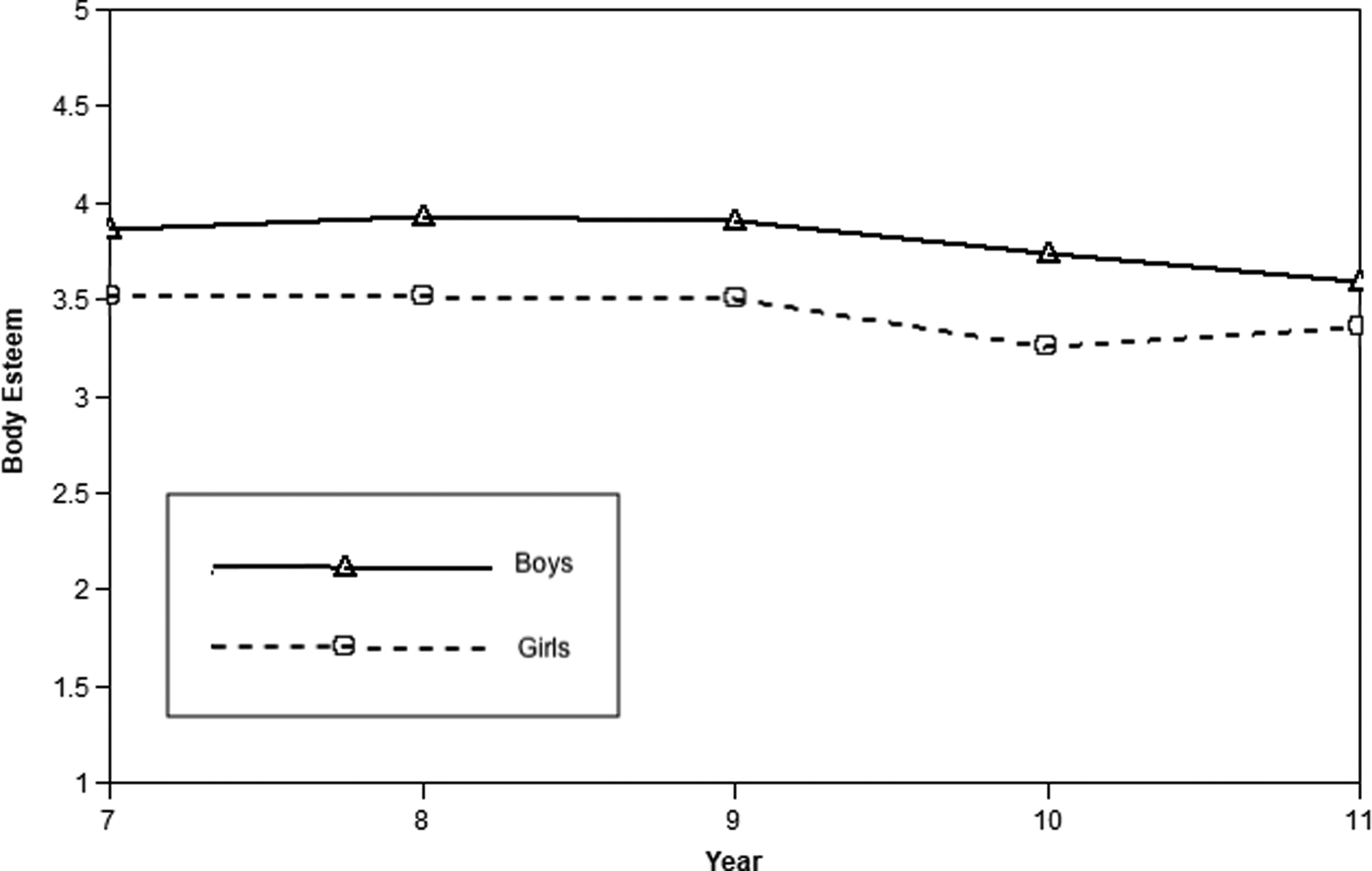
We fitted a series of increasingly complex models of BES growth by first estimating only the intercept of BES, and then adding slope, quadratic, and cubic terms in a stepwise manner. As reported in Table 1, fit was maximized in the most complex model in which all four growth parameters were estimated. Next, we added gender, school, and cohort to the model. There were significant effects of gender (B = −0.34, SE = 0.07, p < .001), school (B = −0.04, SE = 0.01, p = .013), and cohort (B = −0.71, SE = 0.26, p = .007) on the intercept of BES, but not on the slope, quadratic, or cubic terms, p > .05. Boys, individuals who entered the study in Year 7 (i.e., the younger cohort), and individuals in one of the two schools, began with initially higher levels of body esteem. Subsequent models estimated all four growth parameters, controlling for the impact of gender, school, and cohort on BES intercept. Figure 1 depicts body esteem trajectories for girls and boys separately, controlling for school and cohort.
Average body esteem trajectories of girls and boys. Note. On average, participants were 11.14 years old in Year 7, 12.15 years old in Year 8, 13.24 years old in Year 9, 14.26 years old in Year 10, and 15.25 years old in Year 11.

Fit statistics for baseline models depicting a single growth curve of body esteem development

Note. I = intercept; S = slope; Q = quadratic term; C = cubic term; BIC = Bayesian information criteria values; ABIC = adjusted Bayesian information criteria values; RMSEA = root mean squared error of approximation; CFI = comparative fit index; TLI = Tucker–Lewis index; SRMR = standardized root mean squared residual.
a This final baseline model controlled for the impact of gender, school, and cohort on the intercept of body esteem.
Identification of body esteem trajectories
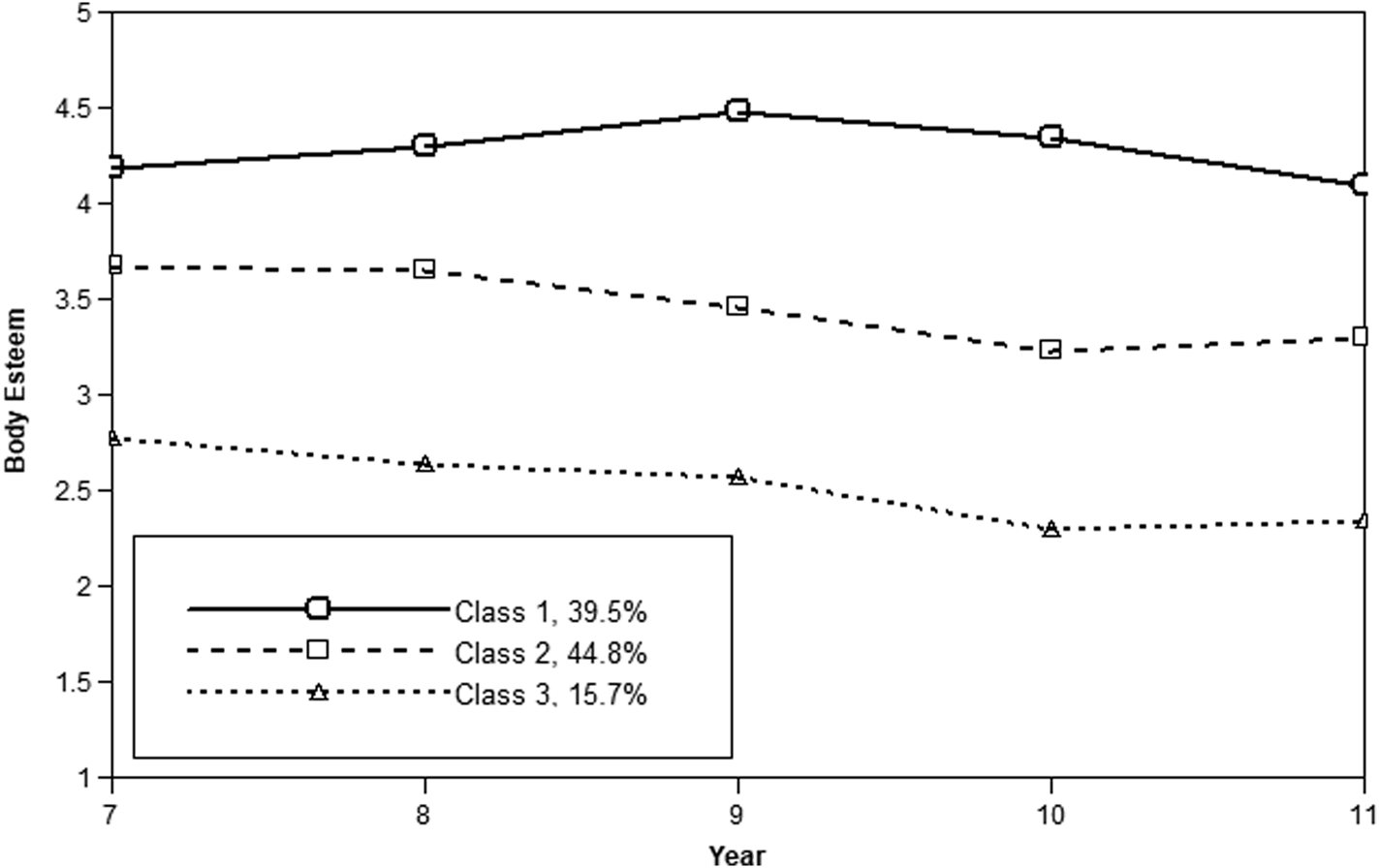
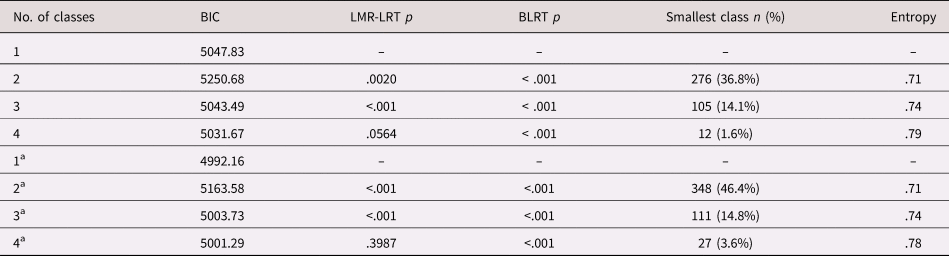
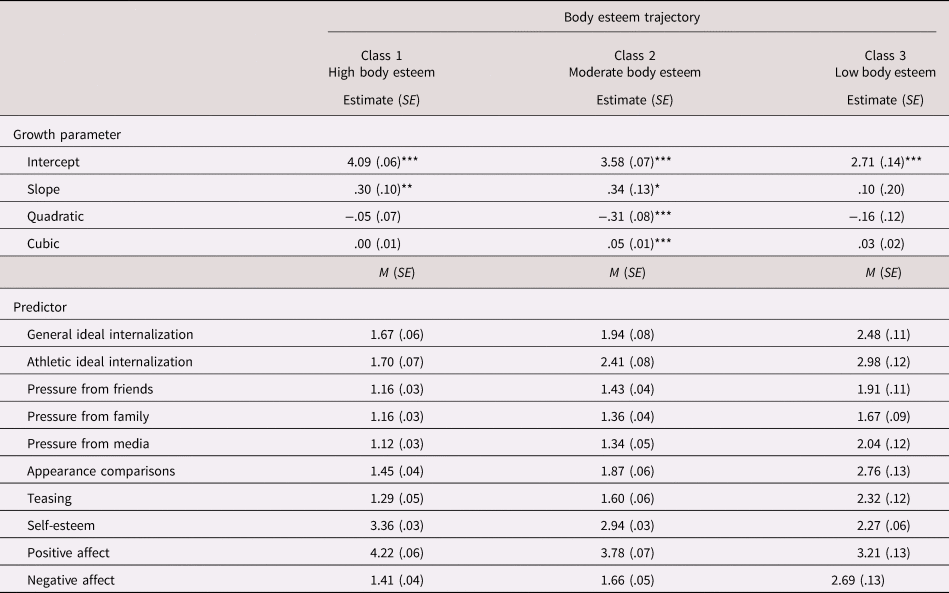
In Table 2, we present fit statistics for the one-, two-, three-, and four-class models of BES growth, with and without controlling for covariates. All models converged on a replicated solution. A three-class solution for body esteem development, controlling for gender, school, and cohort, provided an optimal balance of model fit and entropy, and did not have any underpopulated classes. The first class (n = 293, 39.1%), labelled “high body esteem,” included individuals whose body esteem started out high, increased slightly between Years 7 and 9, and then returned to a level similar to baseline. This class included a slightly larger proportion of boys (n = 194, 66.2%) than girls. The second class (n = 346, 46.1%), labelled “moderate body esteem,” included individuals with moderate levels of body esteem that decreased between Years 7 and 10, and then increased slightly in Year 11. This class also included a slightly larger proportion of boys (n = 211, 61.0%) than girls. The third class (n = 111, 14.8%), labelled “low body esteem,” displayed constant low body esteem across time, and included mostly girls (n = 92, 82.9%). Trajectories are depicted in Figure 2 and estimates of the growth parameters for each of these trajectories are presented in Table 3.
Trajectories of body esteem development. Note. On average, participants were 11.14 years old in Year 7, 12.15 years old in Year 8, 13.24 years old in Year 9, 14.26 years old in Year 10, and 15.25 years old in Year 11.

Fit indices for increasing class solutions of body esteem development
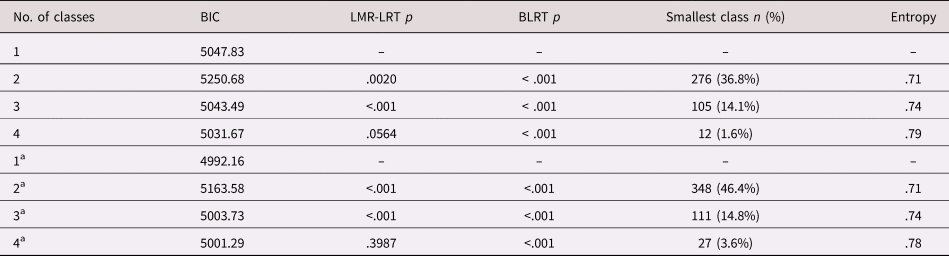
Note. BIC = Bayesian information criteria values; LMR-LRT = Lo–Mendell–Rubin likelihood ratio test; BLRT = Bootstrap likelihood ratio test.
a Models controlling for gender, school, and cohort.
Growth parameters and mean levels of predictor variables within each body esteem trajectory

Note. ***p < .001, **p < .10, *p < .05. Growth parameters refer to the main outcome variable, body esteem, e.g., the intercept refers to mean baseline levels of body esteem within each trajectory. Mean values of predictor variables at Year 8 were significantly different between all pairs of classes (p < .001), with one exception: levels of general ideal internalization differed between the high and moderate classes, but at a lower level of significance (p = .013).
Predictors of body esteem trajectories
Comparison of predictor levels in Year 8 across classes
Table 3 displays the mean scores for each predictor variable in the three body esteem development classes. Pairwise chi-squared comparison tests revealed significant differences among the three body esteem trajectories on all predictor variables. General and athletic appearance ideal internalization, perceived appearance pressure from friends, family, and the media, appearance comparisons, appearance-related teasing, and negative affect were highest in the low body esteem class, followed by the moderate and high body esteem classes, respectively. The reverse was true of self-esteem and positive affect, which were highest in the high body esteem class, followed by the moderate and low body esteem classes.
Prediction of body esteem class membership
Multinomial regression revealed that, together, the predictor variables as measured in Year 8 successfully predicted class membership χ 2 (28) = 387.89, p < .001, Nagelkerke R 2 = 0.58, controlling for gender, cohort, and school. Overall, appearance-related teasing [χ 2 (2) = 10.43, p = .005], self-esteem [χ 2 (2) = 52.36, p < .001], positive affect [χ 2 (2) = 9.34, p = .009], and dietary restraint [χ 2 (2) = 21.41, p < .001] were significant predictors in the model. Higher self-esteem (B = 1.21, SE = .25, p < .001) and lower dietary restraint (B = −0.42, SE = 0.17, p = .015) significantly predicted belonging to the high body esteem class compared to the moderate body esteem class. More frequent perceptions of appearance-related teasing (B = 0.53, SE = 0.21, p = .011), lower self-esteem (B = −2.11, SE = 0.51, p < .001), less positive affect (B = −0.44, SE = 0.19, p = .021), and higher dietary restraint (B = 0.74, SE = 0.21, p < .001) significantly predicted belonging to the low body esteem class compared to the moderate body esteem class. Internalization, appearance-related social pressures and comparisons did not predict class membership.
Discussion
Our results increase understanding of body image trajectories in early adolescence, examining the more global construct of body esteem. We identified three developmental subgroups, characterized by differing levels of relatively stable body esteem: (a) high body esteem (39.1%); (b) moderate body esteem (46.1%); and (c) low body esteem (14.8%). In the current study, the low body esteem trajectory was predicted by greater appearance-related teasing, lower self-esteem, less positive affect, and higher dietary restraint, whereas the high body esteem trajectory was predicted by higher self-esteem and lower dietary restraint. The variables of appearance ideal internalization, appearance-related social pressures, and appearance comparisons did not emerge as significant predictors in the current study.
Our findings extend those of previous studies that have examined change over time in various body image constructs, across various ages. Consistent with prior studies of appearance esteem (Nelson et al., Reference Nelson, Kling, Wangqvist, Frisen and Syed2018) and perceived attractiveness (Morin et al., Reference Morin, Maiano, Scalas, Janosz and Litalien2017), we identified a subgroup of adolescents with stable high body esteem. Studies examining body dissatisfaction have similarly identified subgroups with stable high and low trajectories (Rodgers et al., Reference Rodgers, McLean, Marques, Dunstan and Paxton2016; Wang et al., Reference Wang, Haynos, Wall, Chen, Eisenberg and Newmark-Sztainer2019). It is worth noting, however, that the number of trajectories (three vs. four), the proportions of adolescents in each subgroup, the amount of stability versus change within more concerning body image trajectories, as well as the identified predictors of body image development, have varied across studies. The three trajectories identified by Morin et al. (Reference Morin, Maiano, Scalas, Janosz and Litalien2017) tended to converge over time toward more positive self-perceptions, whereas Nelson et al. (Reference Nelson, Kling, Wangqvist, Frisen and Syed2018) found evidence of declines in appearance and weight esteem. Conversely, our identified trajectories remained relatively stable, which is particularly concerning for our trajectory with stable low body esteem (14.8%). Our results suggest that earlier in adolescence, the more global and transdiagnostic variables of self-esteem and positive affect, as well as the eating- and appearance-related variables of dietary restraint and self-reported teasing better predict subsequent trajectories than do previously identified sociocultural risk factors.
Inconsistencies across studies may result not only from differences in the developmental periods under study, but also from variability in the body image constructs assessed (e.g., global body esteem, vs. perceived attractiveness, or dissatisfaction with appearance, weight, and specific body parts). Due to what has been described as a “plethora of constructs,” experts in body image research have called for consolidation and consensus in relation to constructs and methods used within the field (Atkinson et al., Reference Atkinson, Stock, Alleva, Jankowski, Piran, Riley and Williamson2020). To examine how various body image constructs correspond to each other in terms of change over time, it may be informative for longitudinal studies to administer multiple measures and examine the degree to which changes over time are consistent depending on the measures used.
If there is a critical period for body image development, the lack of meaningful developmental change within each of the identified trajectories indicates this period may occur prior to age 11 years, suggesting a need for earlier intervention. Unfortunately, evidence for interventions for pre-adolescents (Holt & Ricciardelli, Reference Holt and Ricciardelli2008) is less robust than evidence for interventions for adolescents (Yager et al., Reference Yager, Diedrichs, Ricciardelli and Halliwell2013). Though there may exist a critical period prior to age 11 during which low body esteem becomes ingrained, another possibility is that there is a subgroup of individuals who demonstrate low body esteem as early as cognitive abilities and assessment methods permit this experience and its measurement. In any case, it may be beneficial to deviate from universal prevention approaches and specifically target this high-risk subgroup in childhood or early adolescence, before low body esteem becomes entrenched.
Our findings point to factors that predict the development of high body esteem. Though the number of early adolescents (28.2% of girls and 4.4% of boys in our study) who evidenced low levels of body esteem from age 11 years is concerning, the majority of the sample reported moderate (41.2% of girls and 49.2% of boys) or high (30.2% of girls and 45.2% of boys) body esteem, consistent with prior studies (Rodgers et al., Reference Rodgers, McLean, Marques, Dunstan and Paxton2016; Wang et al., Reference Wang, Haynos, Wall, Chen, Eisenberg and Newmark-Sztainer2019). In line with the shift toward focusing on resilience and protective factors in youth mental health (Sonuga-Barke, Reference Sonuga-Barke2019), understanding more about this high body esteem subgroup may assist in the selection of therapeutic targets. In the current study, adolescents with higher self-esteem and lower dietary restraint were more likely to display the high body esteem trajectory. In addition, although research has typically focused on how negative affect confers risk for psychosocial maladjustment (Davis & Suveg, Reference Davis and Suveg2014; Gilbert, Reference Gilbert2012), we found a lack of positive affect, rather than the presence of negative affect, to emerge as a significant predictor of the low body esteem trajectory. These results are consistent with a qualitative study that interviewed adults who had overcome negative body image: participants emphasized social context and discontent with life in general as contributing to negative body image, and noted that experiencing agency and empowerment (conceptually similar to self-esteem) contributed to improvements in body image (Gattario & Frisen, Reference Gattario and Frisen2019). Our results can also be interpreted in line with the Transactional Model of Child Positive Affect (Davis & Suveg, Reference Davis and Suveg2014). According to this model, youth who exhibit more positive affect invite positive reactions from others, resulting in increased opportunities to build social skills. These youth may be less likely to be teased, more likely to develop higher body esteem and self-esteem more generally, and less likely to engage in restrictive eating behaviors. Conversely, youth low in positive affect may miss out on such opportunities, setting the stage for a feedback loop that perpetuates teasing, low self-esteem, and negative body image (Davis & Suveg, Reference Davis and Suveg2014).
Incorporating components to address transdiagnostic risk and protective factors such as positive affect may therefore enhance interventions delivered in late childhood and early adolescence. Although the most effective existing body image interventions tend to focus on specific sociocultural risk factors such as appearance ideal internalization and body talk, incorporating additional transdiagnostic cognitive behavioral skills such as stress management, mindfulness, and cognitive restructuring may further improve body image outcomes (Alleva, Sheeran, Webb, Martijn, & Miles, Reference Alleva, Sheeran, Webb, Martijn and Miles2015). As Yager et al. (Reference Yager, Diedrichs, Ricciardelli and Halliwell2013) aptly stated, “future prevention efforts need to determine which approaches and content are most appropriate for each age level.” As a next step, prevention and health promotion research may examine whether programs delivered in late childhood and early adolescence can be enhanced by targeting children with stable low body esteem and incorporating components to address transdiagnostic risk and protective factors that are most relevant for this subgroup. Finally, our finding that self-reported dietary restraint as early as age 12 years strongly predicted body esteem trajectory membership adds to mounting evidence of the negative physical and psychological sequelae of self-directed dieting in children and adolescents (Canadian Paediatric Society, 2004).
Our findings showed that gender was important to understanding initial levels and developmental trajectories of body esteem. As indicated by a significant effect of gender on body esteem intercept, levels of body esteem at baseline significantly differed between girls (M = 3.51) and boys (M = 3.84). This finding is consistent with prior research demonstrating that girls and women experience higher levels of body dissatisfaction than boys and men (Murnen, Reference Murnen, Cash and Smolak2011). It is worth noting, however, that the difference in mean scores, though statistically significant, was by no means large, with girls' and boys' scores situated within half a standard deviation of each other. The small magnitude of this gender difference in body esteem may reflect a body image gender gap that has begun to narrow: evidence from a cross-temporal meta-analysis across 31 years and 326 unique samples suggests that while boys' and men's body dissatisfaction has been constant over time, girls' and women's body dissatisfaction may be decreasing, reflecting sociocultural shifts in body acceptance and diversity that counter thinness-related pressures for girls and women (Karazsia, Murnen, & Tylka, Reference Karazsia, Murnen and Tylka2017). Regarding the influence of gender on change in body image over time, there was no significant effect of gender on body esteem's slope, quadratic, or cubic growth parameters, but there were differences in the proportion of girls and boys within each trajectory class. Specifically, the low body esteem trajectory was comprised primarily of girls (82.9%), whereas the moderate and high body esteem trajectories demonstrated more even gender distributions (61% and 66.2% boys, respectively). Taken together, our findings indicate that gender is more important in determining initial levels of body esteem and trajectory membership, rather than patterns of change over time within individuals.
Our study has several limitations. First, our sample included primarily White, British adolescents, and our findings may not generalize to populations that do not share these characteristics. Second, we were unable to control for several potentially important covariates, including BMI, which has been shown to impact body image (McCabe & Ricciardelli, Reference McCabe and Ricciardelli2003). Provision of height and weight data was optionally self-reported in the current study and a minority of participants reported this information. Third, there was substantial attrition from baseline to follow-up assessments in our study, similar to other longitudinal studies (e.g., Wang et al., Reference Wang, Haynos, Wall, Chen, Eisenberg and Newmark-Sztainer2019). Fourth, we note that our measures of self-esteem and appearance teasing had internal consistency values somewhat lower than ideal (0.5–0.7 range). This facet of reliability is heavily influenced by the number of items on a scale (Vaske, Beaman, & Sponarski, Reference Vaske, Beaman and Sponarski2017), which may partly explain the low values for these brief measures. Fifth, we relied on a global measure of participants' attitudes and feelings about their appearance and weight, which does not fully capture the construct of body image, particularly the influence of specific societal body ideals. An important task for future research is to examine body image development using measures that better capture gendered body image ideals (i.e., the drive for thinness versus muscularity), as well as other aspects of body image such as body functionality (i.e., the degree of emphasis placed on what one's body can do).
Conclusion
In summary, our results expand understanding of body esteem development in the early adolescent years and suggest this development may follow multiple trajectories, distinct in terms of baseline levels of positive affect, self-esteem, teasing, and dietary restraint. In future, researchers should seek to replicate trajectories of body image development in even younger and more diverse samples while comprehensively assessing this construct and its potential covariates.
Acknowledgements
EL was supported by a Vanier Canada Graduate Scholarship and Michael Smith Foreign Study Supplement (MSFSS). Data collection for this study was funded by a research grant from the Dove Self-Esteem Project, Unilever. We thank Dr. Tunde Ogunfowora, Dr. Yannick Griep, and Timothy Wingate for the valuable statistical instruction and consultation they each provided. The funders had no role in the study design, data collection and analysis, decision to publish, or manuscript preparation. PD is an independent consultant to the Dove Self-Esteem Project. The authors declare no other conflicts of interest in relation to this work.
Supplementary Material
The supplementary material for this article can be found at https://doi.org/10.1017/S0954579420000917