


Many people—and almost certainly most readers of political science journals—feel an intrinsic need to stay informed. While the depth of this need varies, as does the content of the information desired, the experience seems reasonably universal. What we do with this information, however, is another story. Sometimes, we use it to make a decision: what device to buy, what trip to take, and so on. Often, we use it to make conversation, to lubricate our social encounters, to seem au courant with our peers, and to win the dinner party.
Yet most models in political science conceive of media use primarily in decision-oriented terms: as a means of gathering information necessary to make materially and politically meaningful choices. These approaches have helped to explain how people use the news to inform their vote choices, how media can shape political preferences, and how exposure to information sometimes pushes people to act against their own material interests. While the vast majority of this theorization derives from democratic contexts—especially the United States—it also informs research on authoritarianism, where media are increasingly understood as tools through which autocrats manipulate information and perceptions to induce, rather than coerce, compliance.
This starting point, however, raises a puzzle that existing theories do not fully resolve: why do people in autocracies continue to consume news—often from state-aligned or heavily constrained sources—whose informational value for material decision making is limited or openly compromised? If the primary function of news is to support materially rational political choice, persistent and often intensive engagement with biased media under authoritarian conditions is difficult to explain.
This article argues that addressing this puzzle requires expanding our understanding of rational media use beyond material decision making alone. In addition to what I term “decision-rational” motives, I introduce social rationality as a distinct and consequential driver of media consumption. Social rationality refers to the incentive to use media as a means of participating in a shared community of communication and meaning to remain conversationally relevant, socially legible, and symbolically integrated with peers. This logic should be especially salient in authoritarian contexts, where media simultaneously structure political discourse, signal political norms, and provide common reference points for social coordination. I operationalize social rationality through two observable behaviors: how frequently individuals discuss political news with others, and the extent to which they consume the same media outlets as their peers (what I term “co-use”).
This analysis focuses on two highly authoritarian but institutionally distinct cases—Belarus and Russia—whose different approaches to media control provide useful leverage for examining how social and decision-rational motives operate across political environments. I distinguish between two dimensions of news consumption: media breadth, or the number of outlets a respondent uses regularly, and media intensity, or the share of that diet consumed on a daily basis. I then evaluate how social-rational versus decision-rational considerations shape each dimension of consumption.
The argument is developed through three core research questions. First, how do decision-rational and social-rational considerations relate to the breadth of media use in authoritarian contexts? Second, how do these same considerations shape the intensity of media consumption? And third, to what extent are the relationships mediated or conditioned by interpersonal discussion and individual personality traits? Together, these questions allow for a systematic test of whether decision-rational explanations alone can account for observed patterns of authoritarian media consumption, or whether social rationality plays a distinct explanatory role.
Empirically, the analysis shows a consistent division of labor between decision-rational and social-rational logics across both countries. Decision-rational considerations (especially trust in media) are closely tied to the breadth of media diets, while social-rational considerations (especially interpersonal discussion and socially embedded media consumption) play a central role in shaping media intensity. These patterns hold across divergent authoritarian media systems and remain robust to controls for demographic and psychological predispositions.
Positioned this way, the argument does not reject the emerging model of informational autocracy, which emphasizes how authoritarian regimes rely on informational control, persuasion, and selective disclosure rather than overt repression to procure compliance. Instead, I argue that social rationality helps to specify the behavioral bases and microfoundations through which informational autocracy operates. In particular, it helps to explain why citizens continue to consume biased or state-aligned media even when they may recognize its distortions: not necessarily because they believe it, but because engagement with these information streams serves vital social functions.
This article contributes to three bodies of scholarship. For comparative authoritarianism, it refines the informational autocracy framework by elucidating the social mechanisms through which informational control is reproduced in everyday media practice. For political communication, it challenges models that implicitly equate media use with instrumental information seeking by foregrounding its social functions. And for Russian and post-Soviet politics, it provides original, directly comparable evidence on patterns of media consumption in Belarus and Russia at a moment of heightened political contestation.
Theorizing News Consumption
Decision-Rational Approaches
The idea that the media are an important part of politics is uncontroversial. Aside from considerations of the direct power of the media—including owners, publishers, editors, journalists and other gatekeepers (see, prominently, Curran Reference Curran2002; Herman and Chomsky [1988] Reference Herman and Chomsky2011)—it is broadly agreed that the consumption of news plays an important role in shaping the way citizens think and act. Thus, the news media help to shape citizens’ perceptions of the economy (Hetherington Reference Hetherington1996), the blame and/or credit assigned to politicians for economic performance (Garz and Martin Reference Garz and Martin2021), and, thus, vote choice (Chan and Suen Reference Chan and Suen2008; Dewenter, Linder, and Thomas Reference Dewenter, Linder and Thomas2019). Importantly, all of these studies and many others find that core political behaviors—such as voting—are powerfully shaped by the content and character of news coverage, as separate from the objective facts of that coverage. In other words, it is not simply the news that has been shown to matter, but the news media itself.
This classic sequence—from exposure, to belief updating, to political action—has long exemplified the dominant logic in political science treatments of media use. Anthony Downs’s (Reference Downs1957) An Economic Theory of Democracy famously cast political information seeking as a rational, utility-maximizing activity: citizens weigh the costs of acquiring information against the expected benefits for achieving their preferred policy or political outcomes. While Downs recognized that perfect information is unattainable and often unnecessary, his core assumption that news consumption is a purposive means toward material ends set the stage for decades of work.
Building on Downs, Samuel Popkin’s (Reference Popkin1991) The Reasoning Voter added the idea of “low-information rationality,” arguing that citizens economize on information costs by relying on cues and heuristics, but still with the aim of making better political decisions. Zaller’s (Reference Zaller1992) canonical The Nature and Origins of Mass Opinion gave this logic a more formal structure in the “receive–accept–sample” model: citizens are exposed to streams of political messages, selectively accept them based on predispositions, and sample from accepted considerations when forming opinions. Lupia and McCubbins (Reference Lupia and McCubbins1998) further reinforced this decision-rational frame, showing how “democratic competence” could be maintained if voters used trustworthy cues to make reasoned choices.
The ensuing decades have seen refinements of this paradigm, rather than fundamental reconsideration. Prior (Reference Prior2007) demonstrated how media choice—enabled by cable and the internet—alters who becomes informed, but still within a decision-rational framework: citizens who prefer entertainment over news simply choose differently, leading to gaps in political knowledge. Baum and Groeling (Reference Baum and Groeling2008) showed that partisans selectively share and attend to news stories, again assuming purposive acquisition of politically relevant information. Hill’s (Reference Hill2017) work distills this tradition into a Bayesian learning framework, explicitly asking “how well citizens update politically relevant beliefs” and treating deviations from perfect Bayesian updating as “bias” or “caution”—that is, inefficiencies in an otherwise purposive process.
Taken as a whole, this tradition rests on two core assumptions: individuality—that news consumption is undertaken by autonomous and more or less atomized decision makers; and purposiveness—that it is undertaken with the aim of achieving material ends in the political realm. These assumptions are so embedded in the decision-rational paradigm that they often structure research questions, operational definitions, and even the “bugs” identified in empirical studies. The argument here retains their empirical insights but treats those assumptions as contingent rather than foundational.
Challenges to Decision Rationality
Challenges to these assumptions emerge from multiple quarters, however. Within political science, research on “motivated reasoning” shows that people often interpret news through affective filters, rather than utility-maximizing logic. This violates the assumption of purposiveness, as information is not gathered and processed solely or even primarily with reference to an objective utility function, but retains the assumption of individuality by locating the bias squarely within the character of the individual (Epley and Gilovich Reference Epley and Gilovich2016; Peterson and Iyengar Reference Peterson and Iyengar2021; Redlawsk Reference Redlawsk2002). A related challenge is posed by the stickiness—or what Piketty (Reference Piketty1995) calls the “dynasty”—of political ideologies. Here, too, the source of distortion is located within the individual, as ideological commitments shape causal beliefs rather than facts, but purposiveness is preserved: citizens still seek to achieve their desired ends, even if those ends are pursued through a doctrinal lens.
The assumptions of purposiveness and individuality that dominate in political science stand in sharper contrast to the perspectives of communication studies and sociology. From these vantage points, media consumption is an inherently social process, the purpose of which is participation in a communicative community (Livingstone Reference Livingstone2008; McLuhan Reference McLuhan1964; Stroud Reference Stroud2011). Classical approaches, such as the “two-step flow” hypothesis, place social mediation at the heart of media effects, with messages from the media refracted through interpersonal networks before they influence behavior (Robinson Reference Robinson1976; Zuckerman Reference Zuckerman and Zuckerman2005; see also Katz and Lazarsfeld Reference Katz and Lazarsfeld1955). This perspective introduces social rationality as a second source of motivation: an intrinsically valuable preference for inclusion in a communicative community, not merely an instrumental means to some other end. Economists have given this insight formal expression in “social learning” models, in which information uptake is shaped not by isolated Bayesian updating but by the structure of interpersonal exchange (Molavi, Tahbaz-Salehi, and Jadbabaie Reference Molavi, Tahbaz-Salehi and Jadbabaie2018), providing a systematic alternative to purely individual decision-rational frameworks.
The rise of online social media has forced these approaches into closer contact. On one hand, some have posited a “one-step flow,” in which direct targeting of media consumers via online platforms reduces the role of opinion leaders in shaping how information spreads (Bennett and Manheim Reference Bennett and Manheim2006). On the other, research has emphasized the fragmentation of political communication online and its potential to create self-reinforcing communities of opinion (Benkler, Faris, and Roberts Reference Benkler, Faris and Roberts2018; Persily and Tucker Reference Persily and Tucker2020). Yet the empirical record complicates fears of online “echo chambers.” Flaxman, Goel, and Rao (Reference Flaxman, Goel and Rao2016) find that people are more likely to encounter opposing views online than offline, while Gentzkow and Shapiro (Reference Gentzkow and Shapiro2011) show that ideological segregation is lower in online news consumption than in face-to-face interactions with neighbors, coworkers, and family members. This suggests that the causal arrow in creating “bubbles” often runs from offline socialization to media choice, rather than the reverse.
In sum, after decades in which political science and media studies alike emphasized the media’s power to shape political behavior, both fields are showing signs of convergence toward a revival of the “minimal effects” thesis (Bennett and Iyengar Reference Bennett and Iyengar2008). For media scholars, this shift reflects a growing recognition that social factors often take causal priority, as citizens choose media not only for the information they provide but also for the ways they situate the consumer in a social milieu. For political scientists, by contrast, the shift has tended to center on affective and other “irrational” sources of bias. A central implication of this paper is that political science could make better sense of these minimal effects by recognizing socialization not as a distortion of decision-rational processes but as a core purpose of media consumption in its own right. Incorporating social-rational motivations into models of media choice offers a potentially valuable “update” to Bayesian conceptions of political behavior.
Taken together, then, these various challenges point to the need for a “social-rational” model of media consumption. Where decision-rational models emphasize purposive information gathering in a context of individual utility maximization, social rationality refers to a logic of action in which media use is oriented toward sustaining membership in and maintaining valued social relationships and groups, rather than toward achieving instrumental, material goals. This is not to say that decision rationality has no role to play in shaping news consumption. Rather, a logic of news consumption driven by participation in a shared flow of meaning that reinforces belonging and mutual recognition ought to stand alongside a model of news consumption driven by the acquisition of information for decision making, instead of being seen as a source of distortion.
Media Consumption as Socially Embedded Behavior
Communication research has long emphasized the social organization of political meaning. Gamson’s (Reference Gamson1992) work on political talk demonstrates that citizens rarely encounter news as isolated informational inputs; rather, they interpret public events through interaction, discussion, and shared frames constructed in everyday conversation. News, in this view, does not simply transmit facts but supplies material for collective sense making, a finding that informs Neuman, Just, and Crigler’s (Reference Neuman, Just and Crigler1992) research on “common knowledge.” Here, media are seen to shape politics not by delivering private information to atomized individuals, but by structuring a shared discursive environment and creating shared awareness of what issues are salient, how they are framed, and which interpretations circulate publicly (Neuman, Just, and Crigler Reference Neuman, Just and Crigler1992). Just and colleagues (Reference Just, Crigler, Alger, Cook, Kern and West1996) further develop this perspective by tracing the reciprocal feedback loop between media and interpersonal discussion: news shapes the topics and frames of political talk, while talk, in turn, reshapes how citizens attend to, interpret, and evaluate subsequent media coverage. Graber’s ([2001] Reference Graber2012) foundational work on attention and information processing similarly underscores that political understanding is filtered through socially conditioned schemas that guide what citizens notice, remember, and consider relevant. Together, these works construct media consumption as an inherently relational process, embedded in networks of discussion, shared interpretation, and socially structured attention.
Social rationality also finds grounding in social psychology. Social identity theory and social categorization theory show that individuals orient their perceptions, judgments, and behaviors around salient group affiliations, seeking information and cues that sustain positive social identities (Tajfel and Turner [1979] Reference Tajfel, Turner, Hogg and Abrams2001; Turner et al. Reference Turner, Hogg, Oakes, Reicher and Wetherell1987). From this perspective, media choices are not driven solely by instrumental accuracy but also by the demands of belonging, boundary maintenance, and identity affirmation. Fiske and Taylor’s ([1984] Reference Fiske and Taylor2020) synthesis of social cognition further demonstrates that people rely on socially learned heuristics to navigate complex informational environments, leading them to process political information in ways that are patterned rather than purely individual. Dual-process models of persuasion, such as the elaboration likelihood model and the heuristic-systematic model, likewise underline the centrality of social cues under conditions of low motivation or constrained cognitive resources: when individuals are unwilling or unable to engage in effortful processing, they lean on source credibility, consensus signals, and identity-consistent shortcuts rather than substantive message content (Chaiken Reference Chaiken1980; Petty and Cacioppo [1986] Reference Petty and Cacioppo2012). These psychological traditions reinforce the premise that news use is deeply entangled with social positioning and identity performance, not only with the pursuit of material or political payoffs.
This social embedding of media choice intersects directly with contemporary debates over selective exposure and bounded rationality. A large literature now treats selective exposure as a purposive strategy for managing cognitive dissonance or emotional discomfort, rather than as simple irrationality. Mullainathan and Shleifer (Reference Mullainathan and Shleifer2005), Simonov and Rao (Reference Simonov and Rao2022), and Xiang and Sarvary (Reference Xiang and Sarvary2007) all model media demand as shaped by a trade-off between informational accuracy and the psychological utility of confirmatory content. Nunnari and Montanari (Reference Nunnari and Montanari2025) similarly frame selective exposure as boundedly rational: citizens choose what to consume under constraints of attention, motivation, identity, and social context. The contribution of social rationality is not to deny purposiveness but to expand the utility function itself. Social motives—such as the desire to belong, to avoid conflict, or to sustain shared interpretive frameworks—operate alongside, and sometimes independently of, instrumental material utility. In this sense, social and decision rationality are better understood as complements rather than strict substitutes.
Consuming what “people like us” consume, participating in shared news rituals, and engaging in socially recognized topics of discussion all generate nonmaterial payoffs that conventional decision-rational models struggle to incorporate. Media use becomes a domain in which individuals enact group membership, signal alignment, and negotiate social standing—often under conditions where political information is abundant but actionable choice is limited. This does not displace bounded rational updating; rather, it situates updating within a social environment that shapes both the incentives to attend to news and the meaning extracted from it.
Social learning theory (Bandura Reference Bandura1977) provides a behavioral underpinning for this perspective, emphasizing how people adopt behaviors, including media habits, through observation, imitation, and reinforcement within social contexts. Stroud’s (Reference Stroud2011) synthesis of selective-exposure research highlights the self-maintenance functions of news choice in the US, protecting attitudes and self-concept. Stroud gives comparatively less attention to “relationship-maintenance” motives—that is, choosing, interpreting, and sharing news in ways that sustain valued relationships. Recent formal modeling captures part of this dynamic, showing how beliefs evolve through peer-to-peer exchanges, with network structures and interpersonal heuristics shaping both the persistence of engagement and the filtering of content, even when political payoffs are absent (Molavi, Tahbaz-Salehi, and Jadbabaie Reference Molavi, Tahbaz-Salehi and Jadbabaie2018).
Taken together, these strands of political communication, social psychology, and behavioral economics converge on a common conclusion: media consumption is irreducibly social. Individuals do not seek information simply to optimize private decisions; they also seek participation in shared interpretive worlds that stabilize identity, relationships, and mutual recognition. Social rationality thus names a systematic logic of media use oriented toward social belonging rather than instrumental decision making alone. In practical terms, this means that news consumption can function as a form of social alignment—signaling normalcy, shared orientation, and relational safety—without requiring either political persuasion or instrumental belief updating.
News Consumption in Autocracies
The challenge to the decision-rational model becomes particularly acute when we depart the context of democracies—where most theory on media consumption has been developed—and explore the autocratic experience. Autocracies provide a particularly demanding test of these assumptions, and a revealing laboratory for seeing when social rationality may dominate. While humans are humans regardless of regime type, the informational environment in which they consume news differs markedly. All media systems are shaped by political, economic, and social power, but autocracies make deliberate, far-reaching choices about what media citizens can access and what those media will communicate. In the most restrictive systems (e.g., North Korea, Turkmenistan), control is near total. In most contemporary autocracies, however, some diversity is tolerated, and the internet creates space for oppositional or independent communication.
Evidence from a range of authoritarian contexts suggests, however, that this decision-rational framing is incomplete. In Russia, for example, Robertson (Reference Robertson2017) finds that regime opponents preferentially seek and credit critical or foreign sources, while regime supporters avoid or disbelieve them—confirming the operation of motivated reasoning, but also underscoring the way offline political and social institutions shape online communities. In Belarus, media consumption patterns were among the strongest predictors of participation in the 2020 uprising (Greene Reference Greene2022), again suggesting that social environments structure information communities, especially where public institutions delegitimize dissent. These cases point to social identities, political loyalties, interpersonal networks, and other relational processes as important factors shaping media consumption, without which purely decision-rational accounts may be incomplete.
Guriev and Treisman’s (Reference Guriev and Treisman2019) “informational autocracy” model captures this middle ground: rulers avoid overt coercion or crude indoctrination, instead fostering the rational but mistaken belief that they are competent and public spirited. This model rests squarely on decision-rational assumptions: citizens update beliefs based on perceived performance and adjust political behavior accordingly; the media’s role is to present evidence in the leader’s favor, while maintaining a veneer of objectivity. Yet for this logic to hold, the illusion of choice is as important as the illusion of competence. Without perceived choice at the newsstand or on the ballot, preferences lose utility and “updating” makes little sense. Autocrats thus walk a fine line, sustaining a sense of limited agency while projecting the inevitability of their own rule.
Other work complicates the purposiveness assumption still further. Lu, Aldrich, and Shi (Reference Lu, Aldrich and Shi2014) show that in China, media consumption can indirectly challenge regime objectives not by altering explicitly political attitudes but by disrupting state-cultivated collectivist norms. Letsa (Reference Letsa2025) demonstrates that in Cameroon—an electoral autocracy—partisan homogeneity in one’s social network is a powerful predictor of ruling-party or opposition allegiance, and that partisanship itself can be socially contagious. Alyukov’s (Reference Alyukov2022) focus-group research in Russia finds that viewers often respond to regime-aligned television with a mixture of supportive and critical reactions without integrating them into a coherent worldview, sustaining authoritarian stability less through calculated updating than through conversational ambivalence. Mickiewicz (Reference Mickiewicz2014) similarly observes that young Russians’ media habits are embedded in peer contexts that help to structure political perceptions before those perceptions are tied to any explicit policy preferences.
These findings suggest that, in autocracies, both the assumptions of purposiveness and of individuality are systematically undermined. Political news consumption often persists even when the fiction of political choice is threadbare, but its drivers are bound up with the maintenance of social ties, the reproduction of identity, and the navigation of state-structured information environments. If decision-rational updating occurs at all, it does so within—and often subordinate to—these socially embedded processes. In this sense, media consumption under autocracy often works less as a tool for belief optimization than as a low-risk practice of social coordination: staying aligned with what others watch, reference, and discuss.
Meanwhile, the research that underpins social rationality in democratic settings is no less relevant in authoritarian contexts. Psychological predispositions toward social harmony strongly predict support for authoritarian leaders and their policies in both Russia and China (Greene and Robertson Reference Greene and Robertson2017; Truex Reference Truex2022). In Russia, meanwhile, a wartime rally-‘round-the-flag prompted an increase in social engagement with news, which in turn supported the detachment of political sentiment from underlying material regime performance (Greene and Robertson Reference Greene and Robertson2022). In both cases, the effect of media is mediated through its role in fostering horizontal social engagement, rather than simply persuading citizens as individuals of the leadership’s competence. This, then, presents a partial complication of Guriev and Treisman’s (Reference Guriev and Treisman2019) informational autocracy model.
Personality, Social Engagement, and Media Use
While social rationality emphasizes the relational and identity-based motivations that structure media consumption, individuals clearly vary in the degree to which they are oriented toward novelty, social interaction, conflict avoidance, and sensitivity to uncertainty. To capture these stable predispositions, this study incorporates the “Big Five” personality traits, which have been shown to shape a wide range of social preferences, orientations, behaviors, and political outcomes (John and Srivastava Reference John, Srivastava, Pervin and John1999; Mondak Reference Mondak2010). These traits—openness to experience, conscientiousness, extraversion, agreeableness, and neuroticism—provide a parsimonious framework for examining durable psychological dispositions that are plausibly linked to both social engagement and patterns of media use.
From the standpoint of social rationality, these traits should condition how individuals experience and enact the social incentives embedded in news consumption. Openness, which measures curiosity and receptiveness to novelty, should be associated with broader media diets and greater exposure to diverse sources. Extraversion, which captures enthusiasm for social interaction, should facilitate higher levels of interpersonal discussion and socially embedded media use. Agreeableness, which reflects a preference for harmony and cooperation, may increase the appeal of shared media consumption and conversational alignment, particularly where political disagreement carries social risk. Neuroticism, associated with sensitivity to threat and uncertainty, may intensify attention to news under conditions of perceived risk, while conscientiousness may structure regularity and routine in consumption practices rather than social engagement per se. In this way, personality traits are not treated as competitors to social rationality, but as part of its microfoundations: they govern who is most likely to experience social payoffs from shared media use in the first place.
The inclusion of personality further helps to address a key inferential concern raised by social-rational accounts: whether socially embedded media behaviors merely reflect situational adaptation to particular political environments, or whether they are rooted in stable predispositions that travel across contexts. By incorporating the Big Five into the analysis, this study is able to test whether social-rational mechanisms operate net of these underlying orientations, and whether the effects of co-use and discussion are amplified or constrained by traits linked to sociability, conflict avoidance, and uncertainty sensitivity.
Finally, personality provides a bridge between individual psychology and broader theories of media effects in politicized environments. Prior work has shown, for example, that agreeableness shapes Russian citizens’ opinions of Vladimir Putin and the Kremlin’s core narratives in part by structuring attention to state media (Greene and Robertson Reference Greene and Robertson2017). This reinforces the idea that personality does not simply influence abstract preferences, but operates concretely through habits of media exposure and social engagement. Incorporating the Big Five therefore allows this analysis to connect social-rational incentives to durable psychological foundations, strengthening both the explanatory leverage and the scope of the argument.
Expectations and Hypotheses
The preceding discussion suggests that media consumption in contemporary autocracies is structured by two analytically distinct but empirically intertwined logics. Decision-rational considerations emphasize purposive information seeking oriented toward material and political outcomes, while social-rational considerations emphasize participation in shared communicative environments and the maintenance of social relationships. These logics imply different expectations for the breadth of citizens’ media diets—the number of outlets they use—and for the intensity with which they consume those outlets.
From a decision-rational perspective, trust in the media should expand the perceived payoff to acquiring information, thereby encouraging citizens to draw on a wider range of sources. Individuals who view the media as generally credible should experience lower expected costs to information acquisition and greater expected benefits from exposure. This implies the following:
H1 (decision-rational hypothesis): higher trust in the media is associated with greater media breadth.
By contrast, social-rational logics suggest a different pattern for intensity of use. Consuming the same outlets as one’s peers and discussing political news in everyday interaction generate direct social payoffs—shared reference points, conversational ease, and symbolic affiliation—that need not require expanding one’s media repertoire. If media use is socially embedded in this way, then co-use and interpersonal discussion should primarily intensify engagement with existing outlets rather than broaden the overall media diet. This yields two related expectations:
H2a (social-rational intensity hypothesis): greater co-use and more frequent interpersonal discussion are associated with higher media intensity.
H2b (weak social-rational breadth hypothesis): co-use and interpersonal discussion have weaker or null effects on media breadth.
Personality traits serve as stable predispositions that condition how strongly individuals experience and respond to both decision-rational and social-rational incentives. Traits associated with novelty seeking (openness), sociability and conflict avoidance (extraversion and agreeableness), and uncertainty sensitivity (neuroticism) should shape both baseline levels of media use and the strength of social embedding in media behavior. Accordingly, I hypothesize the following:
H3 (personality conditioning hypothesis): the relationships between trust, co-use, discussion, and media consumption are conditioned by personality traits, particularly openness and agreeableness.
Finally, the theory implies not merely additive effects of social mechanisms, but a sequential process: co-use structures the informational environment in which discussion occurs, while discussion provides the direct social interaction through which intensity of consumption is reinforced. At the same time, the strength of this pathway may itself depend on dispositional orientations toward social harmony. This leads to a mediated and potentially moderated expectation:
H4 (mediated social-rational hypothesis): the effect of co-use on media intensity is expected to operate partly through interpersonal discussion, with the strength of this pathway conditioned by agreeableness.
Together, these hypotheses yield a set of clear empirical contrasts between decision-rational and social-rational accounts of news consumption and provide leverage for assessing how stable psychological dispositions shape socially embedded media behavior across authoritarian contexts.
News Consumption in Belarus and Russia
In seeking to study the role of social rationality in news consumption in autocracies, Guriev and Treisman’s (Reference Guriev and Treisman2022) informational autocracy model again provides a useful entry point. The model distinguishes between two ideal types of autocracies: “fear dictatorships,” which rule through outright coercion and censorship, and “spin dictatorships,” which rule by maintaining an illusion of media choice and avoid overt repression where possible. At the time the field research in this study was conducted, in 2019–20, Belarus occupied a position between these ideal types. While retaining formidable coercive capacity and legal control over media, the regime also relied on a decades-long strategy of authoritarian co-optation of civil society, selectively tolerating apolitical collective action while suppressing overt opposition (Astapova et al. Reference Astapova, Navumau, Nizhnikau and Polishchuk2022). This configuration placed Belarus closer to the “fear” end of the spectrum, but with important caveats regarding the structure of social organization and the media environment. Russia at the time exemplified the “spin” variant of informational autocracy. Since the full-scale invasion of Ukraine in 2022, however, the regime has moved sharply toward fear-based rule, closing nearly all remaining genuinely independent outlets and criminalizing even minimal dissent.
Comparing these cases enables us to examine whether the social-rational logic of news consumption operates differently under these distinct styles of autocratic media control. By juxtaposing a “spin” and a “fear” dictatorship that are otherwise broadly comparable, we can probe whether the role of social rationality in news consumption varies in line with the regime’s mode of media control. Although Russia is considerably wealthier than Belarus and the two countries differ markedly in economic structure and geography, they remain substantially similar on factors likely to shape media consumption, including culture, urbanization, demographic structure, levels of literacy and education, and political and media histories, as well as the language in which the research was conducted.
The Russian and Belarusian media systems are generally understood to be subject to draconian restrictions from the state—but in different ways, and with different outcomes. Freedom House, a widely cited comparative monitor of civil liberties, assigns both countries the lowest possible score on its media freedom indicator, reflecting pervasive legal, political, and economic constraints on independent journalism (Freedom House 2021a; 2021b). In Russia, these constraints are enforced through a broad and flexible legal architecture—including extremism legislation, “foreign agent” laws, and criminal penalties for “discrediting the army”—which gives authorities wide discretion to suppress unwanted speech; attacks, arrests, office raids, and threats against journalists are common (Freedom House 2021b). In Belarus, repressive control is exercised more directly through a highly restrictive media law, widespread criminal prosecution of journalists, and the systematic designation of independent outlets as “extremist organizations,” with journalists subject to fines, detention, and imprisonment for their work (Freedom House 2021a). While the technical legal instruments differ, they serve similar repressive ends. In both cases, the analysis here focuses on the overall level of constraint imposed on media rather than on the specific statutory mechanisms through which repression is implemented. Nonetheless, independent and opposition-minded media outlets and journalists persist in both countries.
After a period of increased pluralism in the 1990s, Vladimir Putin presided over the gradual reestablishment of the Russian state’s influence—and eventually more or less direct control—over the country’s media (Becker Reference Becker2004). Directly or through proxies, the Kremlin controls virtually all of the country’s terrestrial broadcast media, most of the print media, and an increasing share of online media, as well as the core of the advertising market. By the time of Russia’s initial invasion of Ukraine in 2014, Russia’s media system was adapted to an authoritarianism that operated primarily via tacit power, rather than through command and control (Gehlbach Reference Gehlbach2010).
There was a clear relationship between the relative dominance of state television in Russia and electoral outcomes, as both individuals and communities exposed to more state messaging (and less independent messaging) were more likely to vote for Putin and the ruling United Russia party (Enikolopov, Petrova, and Zhuravskaya Reference Enikolopov, Petrova and Zhuravskaya2011). But such state-controlled media were understood to extend the Kremlin’s power not through the monomaniacal exposition of the party line, but by a more careful engagement, designed at once to maintain audience attention, implant convenient interpretations of current events, and prevent the emergence of inconvenient interpretations (Lankina, Watanabe, and Netesova Reference Lankina, Watanabe, Netesova, Bunce, Koesel and Weiss2020; Oates Reference Oates2016; Schimpfossl and Yablokov Reference Schimpfossl and Yablokov2014). Indeed, the Russian case was the archetype on which the “spin dictatorship” model was developed. Since the invasion of Ukraine in February 2022, however, the Kremlin has shifted toward fear-based control—closing nearly all remaining independent outlets, criminalizing “discrediting the army”—even as state television retains elements of its prewar audience-engagement strategies.
Unlike in Russia, state control of the media in Belarus never truly subsided in the post-Soviet period, and the state under Alexander Lukashenko has consistently sought to maintain direct control not only of the messengers, but also of the messaging. With the advent of media that the regime could not directly control, however, the government has expanded its legal authority to hem in independent journalists as well (Herasimenka Reference Herasimenka2016). Yet this pattern of tight media control coexisted, until 2020, with a distinctive form of authoritarian co-optation of civil society. As Astapova and colleagues (Reference Astapova, Navumau, Nizhnikau and Polishchuk2022) show, the Lukashenko regime redirected social energy into formally apolitical associational life, from welfare provision to cultural preservation, thereby sustaining dense horizontal networks under conditions of political demobilization. Following the mass protests of 2020, Belarus further intensified its reliance on coercion, designating major independent outlets as “extremist organizations,” imprisoning or exiling most leading independent journalists, and prosecuting even minor acts of online dissent by ordinary citizens.
The result of this focus on control rather than engagement has been the disengagement of many Belarusians from official media and the emergence, even earlier than in Russia, of a highly polarized media landscape—with state and nonstate media representing not two parts of an interpretive spectrum, but operating in two substantively disparate informational ecosystems with distinct audience structures and mobilizing capacities (Manaev Reference Manaev2014). In both Russia and Belarus, substantial shares of citizens report mixed media diets that cut across state and nonstate outlets. The critical difference lies instead in asymmetric dominance. In Belarus, independent online media became the most trusted and mobilizing outlets by 2020, despite continued state control over broadcast media and print periodicals, while the two media camps covered broadly disparate informational agendas. In Russia, by contrast, state television retained overwhelming audience dominance even as a broader range of alternatives remained accessible, and many media gravitated toward a “gray zone” of interpretation.
Moscow and Minsk, then, pursued divergent approaches to managing the news media—both highly restrictive, but with different degrees of rigidity, and with subtly different outcomes. While opposition media in both countries have largely been limited to the internet, and thus marginalized at least from a technological perspective, independent media seem to have been more effectively marginalized in Russia, where restrictions are more flexible, and where there is somewhat more fluidity in messaging between online and offline media (Smyth and Oates Reference Smyth and Oates2015). Indeed, by the time Belarus erupted into protest in August 2020, online independent media were in some respects more influential than the state-controlled television, radio, and print media (Greene Reference Greene2022). The comparison of Belarus and Russia, then, provides an opportunity to test the importance of social-rational factors in shaping media consumption. While remarkably similar in terms of their political regime as well as their culture and language, Belarus and Russia nonetheless have differently structured authoritarian media systems and patterns of media consumption.
News-savvy readers will have noted that the field research for this study was conducted at moments of significant political mobilization—in August 2019 in Russia, and September 2020 in Belarus. Both countries were in the midst of large-scale political protest waves at the time the data were collected. The implications of this context will be explored in more detail later. For now, however, it is important to provide a brief review of the circumstances.
Events in Russia began to heat up in the summer of 2019, as preparations began for local and regional elections across the country. After election officials blocked opposition leader Alexei Navalny from running against Putin in the 2018 presidential election, the opposition turned its attention to contesting smaller-scale elections, including through a new “smart voting” system devised to provide support to a coalition of candidates in disparate races. The biggest prize, however, was Moscow city council, the legislature of the richest—and most liberal—constituents of the federation. Navalny and his allies thus focused their attention on selecting the most viable candidates and mobilizing nationwide support (Dollbaum Reference Dollbaum2020).
In July of 2019, however, local electoral officials blocked two of the most prominent opposition candidates—Dmitry Gudkov and Lyubov Sobol—from running, through tactics that incensed opposition supporters in the city and elsewhere (Mukhametshina Reference Mukhametshina2019). The opposition responded by organizing a series of protests, which were banned by the authorities but nonetheless garnered significant turnout and attention from independent and international media. These culminated on August 3, 2019, and the police met the protesters with a level of force not previously seen at Moscow protests, arresting more than a thousand and sending dozens to the hospital (Dozhd 2019; Meduza 2019; Roth Reference Roth2019).
The protests that erupted in Belarus in August of 2020 were, at least ostensibly, sparked by similar grounds to the Russian protests of 2019: an attempt by the state to skew the electoral field. Officials banned leading opposition candidates—including Sergei Tikhanovsky and Viktar Babaryka—from running to challenge Lukashenko, and went as far as to arrest Tikhanovsky, Babaryka, and Babaryka’s son, among others. This deepened a sense of public resentment, fueled in large measure by corruption, economic malaise, and the government’s mishandling of the COVID-19 pandemic (Krawatzek and Rohava Reference Krawatzek and Rohava2020). As the election approached, momentum built behind the candidacy of Svetlana Tikhanovskaya, Sergei Tikhanovsky’s spouse.
While the August 2020 election served as the immediate trigger for mass mobilization, the protest wave reflected a far longer accumulation of grievances and organizational capacity. Recent work emphasizes the gradual crystallization of a new civic and national identity, the expansion of horizontally networked civil society, and the erosion of regime legitimacy well before the election campaign began. Onuch and Sasse (Reference Onuch and Sasse2022) show that protest participation was closely associated with durable value orientations and geopolitical self-positioning rather than short-term economic or epidemiological shocks alone. The regime’s co-optation of civil society had also unintentionally generated an associational infrastructure that could be rapidly repurposed for political action once repression escalated. As Astapova and colleagues (Reference Astapova, Navumau, Nizhnikau and Polishchuk2022) argue, this “exit into civil society” during the 2010s created precisely the organizational capacities that enabled the scale and persistence of mobilization after August 2020.
As a result, when the votes were counted and Lukashenko claimed victory with an alleged 80% of the vote, opposition supporters rejected the result and pointed to independent monitoring reports that suggested Tikhanovskaya had in fact won in a landslide. Tens and then hundreds of thousands of Belarusians—representing a remarkably broad demographic and socioeconomic spectrum—took to the streets in Minsk and other cities across the country. Mass street mobilization peaked in August–September 2020 and declined sharply by late autumn as repression intensified. Smaller-scale resistance persisted into 2021 primarily in dispersed, clandestine, and digital forms, aided by a combination of online reporting and mobilization and offline networks of mutual assistance, despite a violently repressive response from the state (Buzgalin and Kolganov Reference Buzgalin and Kolganov2021; Herasimenka et al. Reference Herasimenka, Lokot, Onuch and Wijermars2020).
Analytical Strategy
To test the core proposition advanced in this study—namely, that media consumption is driven powerfully by social-rational considerations—I draw on two original surveys, conducted in Belarus and Russia. The Russian survey was conducted in August 2019, involving 1,206 respondents. The Belarusian survey was conducted in September 2020, involving 1,276 respondents. Both surveys were administered online, and samples were stratified to approximate national representativeness. While neither sample is fully representative in a strict probabilistic sense, the analysis does not rest on point estimates of population parameters. Instead, the focus is on the structure of relationships among key variables and their interactions, which are less sensitive to modest deviations from representativeness.
The surveys—which used largely identical instruments, save for some country-specific questions asked after the questions discussed here—included batteries designed to capture media consumption at a higher level of granularity than is typical in political surveys. Respondents selected the media outlets they use regularly from closed lists of prominent state-linked and independent outlets—15 in Russia and 11 in Belarus—and reported their frequency of use. These responses allow for two distinct dimensions of media consumption.
Media breadth is operationalized as the count of outlets that a respondent uses on a regular basis. Media intensity is operationalized as the proportion of those regularly used outlets that the respondent reports consuming on a daily basis. Together, these measures distinguish between the extensiveness of a person’s media diet and the depth of their engagement with that diet.
To operationalize decision-rational considerations, the surveys include a composite measure of trust in formal media. Respondents were asked to indicate, on a five-point scale, the degree to which they agreed that different classes of media—print, television, radio, and online—are reliable sources of information when making a range of decisions in personal, professional, material, and political domains. These items were compiled into an index of generalized media trust. Rather than asking directly about “trust,” which is subjective and prone to misinterpretation, this approach allows for a utility-related measure of respondents’ orientation toward the media. These answers were compiled into an index of “media trust.”
This medium-level, rather than outlet-specific, trust measure is used for two reasons. First, it aligns with the decision-rational literature, which conceptualizes trust in the media as a general informational resource that lowers the perceived costs and raises the expected benefits of information acquisition. Second, it ensures comparability across Russia and Belarus, where the structure and brand ecology of media outlets differ substantially. A strict “horse race” between outlet-specific trust and socially embedded co-use is therefore not feasible within a fully comparable design. This represents a limitation of the present study and an important avenue for future work.
Social-rational considerations are operationalized through two measures capturing the social embedding of media use. First, respondents were asked to reflect on the frequency with which they converse about the news with friends, family, and colleagues, across a range of topics, including work, economics and finance, politics, pop culture, sports, food, and so on. This produces a measure of interpersonal discussion, capturing the conversational context of media consumption.
Second, the surveys include a novel measure of “co-use,” defined as the proportion of a respondent’s regular media outlets that the respondent believes are also consumed by members of their social circle. Respondents separately assessed the media use of friends, family members, colleagues, neighbors and online contacts. Co-use is calculated as the following:

where C denotes “co-use,” MR is the set of outlets the respondent reports using, and MS is the set of outlets the respondent attributes to their social circle.Footnote 1
Importantly, this measure is based on perceived rather than objectively verified patterns of others’ media use. This is not a measurement flaw for present purposes. The theoretical claim concerns what respondents believe about their social environment, since it is perceived shared consumption that structures conversational incentives and reinforces social alignment. Misperceptions about others’ media diets, to the extent that they exist, are therefore part of the substantive mechanism under study.
The survey also included standard questions on age, gender, levels of education, income, and geographical location.
In addition to these core measures, the surveys measured the Big Five personality traits. These traits have been shown to shape a wide range of social preferences, orientations, behaviors, and political outcomes (John and Srivastava Reference John, Srivastava, Pervin and John1999; Mondak Reference Mondak2010).
From the standpoint of social rationality, personality traits provide a way to assess whether socially embedded media behaviors reflect stable psychological predispositions rather than purely situational adaptation to the surrounding political environment. Prior work shows that openness and neuroticism correlate with media breadth (Gerber et al. Reference Gerber, Huber, Doherty and Dowling2011), while extraversion, neuroticism, openness, and agreeableness condition individuals’ propensity to discuss news, depending on the level of conflict associated with the subject matter (Gerber et al. Reference Gerber, Huber, Doherty and Dowling2012). Agreeableness has also been shown to shape attention to state media and evaluations of regime leadership and policies in Russia (Greene and Robertson Reference Greene and Robertson2017).
Relationships between the core independent variables (media trust, discussion, and co-use), the dependent variables (media breadth and media intensity), covariates (age, gender, education, and the Big Five traits) are evaluated through ordinary least squares regressions. Alternative analyses are presented in online appendix B.
In addition to direct effects, the theory also implies a sequential mechanism linking co-use, interpersonal discussion, and media intensity. Specifically, higher co-use is expected to increase opportunities and incentives for interpersonal discussion, which in turn should intensify daily engagement with existing media outlets. This implies a mediation structure: co-use → interpersonal discussion → media intensity. In addition, the theory anticipates that this indirect pathway may be conditioned by personality—particularly agreeableness, which is associated with conflict avoidance and sensitivity to social harmony. In Russia, where media environments are more interpretively fluid but still socially polarized, agreeable individuals may translate shared media environments into discussion more readily than less agreeable individuals. This yields a moderated mediation expectation.
To evaluate these indirect pathways, the analysis employs Hayes’s PROCESS framework with nonparametric bootstrap standard errors. While the data are cross-sectional, this approach is appropriate for assessing whether observed associations are consistent with theoretically specified indirect mechanisms, without making strong causal claims about temporal sequencing (full mediation analyses are presented in online appendix C).
Belarus and Russia are selected as critical cases of high-control autocracies with dense media ecosystems. Both regimes impose extensive formal and informal constraints on journalism and public communication, while nonetheless sustaining complex, multiplatform media environments. This makes them a hard test of social rationality: if socially embedded incentives for media consumption operate even where institutional control is extensive and political choice is constrained, they should operate at least as strongly in more pluralistic or hybrid settings.
At the same time, these cases define the scope conditions of the analysis. The data capture Russia prior to the full-scale invasion of Ukraine and the subsequent shift to overtly fear-based media control, and Belarus during the peak of postelection mobilization and repression. Implications for wartime Russia, China, and backsliding democracies are therefore addressed in the conclusion rather than generalized directly from the findings.
Results
Table 1 reports the media usage rates across the two surveys. Table 2 reports the mean values and standard deviations for the key variables discussed above.Footnote 2
Media Audiences (Percentage of Survey Respondents Who Report Using Each Outlet for News at Least Monthly)

Table 1 Long description
The table lists media outlets and the percentage of survey respondents using them at least monthly.
Russia Data:
* Pervyi Kanal (state-linked): 73.1
* Rossiia 24 (state-linked): 66.7
* Lenta dot ru (state-linked): 49.3
* Komsomolskaya Pravda (state-linked): 34.7
* R B K (state-linked): 33.5
* LifeNews (state-linked): 28.9
* Izvestiia (state-linked): 26.5
* Ekho Moskvy (independent): 26.4
* Vedomosti (independent): 25.5
* Novaya Gazeta (independent): 22.1
* T V Rain (independent): 20.3
* Meduza (independent): 19.7
* Radio Svoboda (independent): 18.4
* Mediazona (independent): 12.9
* Republic (independent): 11.7
Belarus Data:
* Tut dot by (independent): 74.0
* Onliner dot by (independent): 52.7
* O N T (state-linked): 43.3
* Belsat (independent): 40.2
* Bel 1 or Bel 2 (state-linked): 39.1
* S T V (state-linked): 34.4
* Naviny dot by (independent): 25.9
* Nasha Niva (independent): 20.1
* Euroradio (independent): 20.1
* Sov dot Belarus or Belarus Segodnia (state-linked): 12.1
* Respublika (state-linked): 9.1
Note: † State-linked media; ‡ independent media. Outlets are classified as state linked if they are directly owned, controlled, or editorially aligned with the state; as independent if they are privately owned and not formally or informally aligned with the regime, including if they are foreign.
Key Variables, Mean Values, and Standard Deviations

Table 2 Long description
The table consists of five columns. The first column lists the variables, followed by two columns for Belarus (Mean and Standard deviation) and two columns for Russia (Mean and Standard deviation).
* Media breadth: Belarus Mean 3.710, SD 2.592; Russia Mean 4.695, SD 3.893.
* Media intensity: Belarus Mean 0.312, SD 0.349; Russia Mean 0.234, SD 0.293.
* Trust: Belarus Mean 2.495, SD 0.814; Russia Mean 2.873, SD 0.852.
* Interpersonal: Belarus Mean 3.739, SD 1.191; Russia Mean 3.454, SD 1.090.
* Co-use: Belarus Mean 0.722, SD 0.338; Russia Mean 0.665, SD 0.369.
Media breadth ranges from zero to 15 in Russia and from zero to 11 in Belarus, with a mean of 4.70 in Russia and 3.71 in Belarus. As mentioned earlier, the survey samples are not sufficiently representative to allow judgments about the exact sizes and proportions of media audiences in Russia and Belarus. Nevertheless, the general patterns are indicative, and they confirm the findings of other researchers in the field: specifically, the dominance of state-linked media in Russia and of independent media in Belarus, despite the Belarusian state’s effective monopoly on traditional media. Thus, it is unsurprising both that 73% of Russian respondents reported using the state-controlled Pervyi Kanal television station for news at least monthly, and that 74% of Belarusian respondents reported using the independent news website Tut.by.
While the surveys did not ask respondents to indicate a preference for state-linked or independent media as such, since such terms are both normatively loaded and subject to interpretation, it is possible to calculate implicit preferences by adding up and comparing the number of pro- and antiregime media in each respondent’s reported news diet. To operationalize these distinctions at the respondent level, I code a media diet as “predominantly state linked” if more than half of the outlets in an individual’s media breadth are classified as state aligned, “predominantly independent” if more than half are independent, and “mixed” otherwise. Under this coding scheme, a respondent classified as having a prominently state-linked media diet may still consume independent outlets, and vice versa; the classification reflects the dominant rather than the exclusive orientation of the media diet. Thus, 61.9% of Russian respondents consumed predominantly state-linked media, while 20.0% consumed primarily independent media, and 18.1% consumed an equal measure of each. In Belarus, by contrast, only 29.4% of respondents consumed primarily state-linked media, 54.3% consumed primarily independent media, and 16.3% consumed an equal measure of each.
As the idea of socially motivated media consumption would predict, both Russian and Belarusian respondents reported consuming—or at least believing that they consume—predominantly the same media outlets as members of their social circle. The “co-use” variable is distributed almost identically in the two countries and skews to the upper end of the scale, with a mean of 0.67 in Russia and 0.72 in Belarus. In other words, roughly 70% of the average respondent’s media diet is understood by that respondent to overlap with the media diets of her friends, family, neighbors, and coworkers. Despite what might appear to be reasonably high levels of media consumption, however, trust in media is middling. Again, the distributions in both Russia and Belarus are remarkably similar, but responses this time skew toward the lower end of the scale, indicating less trust, with a mean of 2.87 in Russia and 2.50 in Belarus. Levels of discussion (the “interpersonal” variable) of political news, by contrast, were reasonably high in both countries.
To assess whether social-rational considerations are systematically associated with media consumption alongside decision-rational considerations, I estimate a series of ordinary least squares regressions for each country. Media consumption is measured along two dimensions: media breadth (the number of outlets used regularly) and media intensity (the share of those outlets consumed daily). The core predictors are interpersonal political discussion and co-use, representing social-rational considerations, and trust in formal media, representing decision-rational considerations. All models include controls for age, gender, and education.
Figure 1 presents results for these baseline specifications. Across both countries, the results reveal a clear functional differentiation between the predictors of media breadth and media intensity. Trust in media is consistently associated with broader media repertoires, while co-use is consistently associated with more intensive daily consumption. Interpersonal discussion is positively associated with breadth in both Belarus (β = 0.198, p < 0.001) and Russia (β = 0.276, p < 0.001), as well as with intensity in both (β = 0.220, p < 0.001 in Belarus; β = 0.126, p < 0.001 in Russia). By contrast, co-use shows no association with breadth in either country but is a strong predictor of intensity in both Belarus (β = 0.108, p < 0.001) and Russia (β = 0.145, p < 0.001). Trust, meanwhile, is robustly associated with breadth in both Belarus (β = 0.201, p < 0.001) and Russia (β = 0.195, p < 0.001), but it has no significant relationship with intensity in either country (for the full regression results, see online appendix A).
Predictors of Media Consumption in Belarus and Russia

Figure 1 Long description
The figure consists of four panels arranged in a two-by-two grid. Each panel features a vertical zero-line with horizontal bars representing confidence intervals and dots representing point estimates for various predictors.
Top-left panel, Belarus Media Intensity. Interpersonal discussion and Co-use show positive correlations. Trust and younger age groups (18-24 and 25-34) show negative correlations. Older age groups (45-54 and 55-65) and Female gender show slight positive correlations.
Top-right panel, Russia Media Intensity. Interpersonal discussion, Co-use, and older age groups (45-54 and 55-65) show positive correlations. Age 18-24 and Higher education show negative correlations. Trust and Female gender are near zero.
Bottom-left panel, Belarus Media Breadth. Interpersonal discussion and Trust show strong positive correlations. Age 45-54 and 55-65 show moderate positive correlations. Co-use and Female gender show negative correlations.
Bottom-right panel, Russia Media Breadth. Interpersonal discussion, Trust, and Higher education show positive correlations. Age groups 35-44, 45-54, 55-65, and Female gender show negative correlations. Co-use and Age 25-34 are centered on zero.
Demographic controls display more mixed and context-specific associations. Age is more consistently related to intensity than breadth, with older cohorts—especially those aged 55 and above—more likely to consume a larger share of their media diet daily in both countries. Gender is negatively associated with breadth in both Belarus and Russia, while education is positively associated with breadth in Russia (β = 0.137, p < 0.001) but not in Belarus. Overall model fit is modest but nontrivial, while varying across cases. In Belarus, the breadth and intensity models explained similar shares of variance (R² ≈ 0.09–0.10), whereas in Russia the breadth models explained more variance than the intensity models (R² ≈ 0.16–0.17 versus 0.07–0.08).
Importantly, these results establish systematic correlations, not causal effects. Reverse causation and unobserved confounding—including political interest, ideological homophily, and generalized social engagement—remain viable alternative explanations. The consistent separation between predictors of breadth and intensity across two distinct media systems nonetheless suggests that social coordination and informational confidence structure different dimensions of media consumption in stable and replicable ways, providing a foundation for future causal research designs.
Figure 2 extends the analysis by incorporating the Big Five personality traits to assess whether the associations between social-rational considerations and media consumption can be attributed to deeper dispositional orientations. The inclusion of personality measures leaves the core pattern intact in both countries: trust remains a predictor of breadth, co-use remains a predictor of intensity, and interpersonal discussion remains associated with both breadth and intensity. In this sense, the central social-rational and decision-rational relationships are not artifacts of personality structure.
Predictors of Media Consumption in Belarus and Russia, with Big Five Personality Factors
Note: TIPI stands for 10-item personality inventory.

Figure 2 Long description
A multi-panel figure containing four horizontal coefficient plots. Each plot shares a common Y-axis with 15 variables: Openness, Conscientiousness, Extraversion, Agreeableness, Neuroticism, Interpersonal (discussion), Trust, Co-use, Age 18–24, Age 25–34, Age 35–44, Age 45–54, Age 55–65, Female, and Higher education. Data points are represented by dots with horizontal error bars indicating confidence intervals.
* Top-Left Panel: Belarus: Media Intensity (with T I P I). Interpersonal (discussion) and Co-use show the strongest positive correlations, positioned well to the right of the zero line. Age 18–24 and Age 25–34 show negative correlations.
* Top-Right Panel: Russia: Media Intensity (with T I P I). Interpersonal (discussion), Co-use, and Age 55–65 show significant positive correlations. Higher education shows a negative correlation.
* Bottom-Left Panel: Belarus: Media Breadth (with T I P I). Interpersonal (discussion) and Trust show the strongest positive correlations. Female and Age 25–34 show negative correlations.
* Bottom-Right Panel: Russia: Media Breadth (with T I P I). Interpersonal (discussion), Trust, and Higher education show strong positive correlations. Age 55–65 and Female show negative correlations.
Across all panels, Interpersonal (discussion) consistently shows the highest positive coefficient, while personality factors (Openness through Neuroticism) generally hover near the zero line with wide error bars.
Personality contributes modest, context-specific nuance rather than displacing the core mechanisms. In Russia, openness (β = 0.100, p < 0.001) and neuroticism (β = 0.081, p < 0.05) are positively associated with broader media repertoires, consistent with the idea that sensitivity to novelty and uncertainty is linked to more expansive information seeking. In Belarus, no personality trait is associated with breadth, while agreeableness exhibits a weak, marginal association with intensity that does not meet conventional thresholds of statistical significance (for the full regression results, see online appendix A).
These effects are modest but behaviorally meaningful in substantive magnitude and do not alter the basic structure of media consumption revealed in figure 1. Social coordination through co-use continues to organize intensity, while trust organizes breadth. The fact that different personality traits matter in different national contexts—and that they matter for different dimensions of media use—suggests that personality dispositions may condition how individuals respond to media environments without constituting a primary driver of media choice. This reinforces the argument that social-rational considerations operate at the level of situated interaction and coordination, rather than simply reflecting stable psychological traits.
Substantively, these effects translate into meaningful differences in everyday media behavior. In Russia, moving from the 25th to the 75th percentile of trust in formal media (2.33 to 3.50 on the trust scale) is associated with an increase of just over one additional regularly used news outlet (≈ +1.0 outlets) in a respondent’s media diet. A comparable interquartile increase in interpersonal political discussion (from three to four on the discussion scale) is associated with nearly the same magnitude of expansion in media breadth (≈ +1.0 outlets). By contrast, a shift from low to high co-use (from 0.40 to 1.00) is associated not with broader repertoires but with a six-to-seven percentage-point increase in the share of one’s existing media diet consumed daily. This pattern underscores the distinct functional roles of trust and discussion in expanding media repertoires, versus co-use in intensifying consumption of already-used outlets.
In Belarus, the same basic division of labor is evident, though with somewhat smaller magnitudes. Moving from the 25th to the 75th percentile of trust (from two to three) is associated with an increase of roughly 0.6 additional regularly used outlets. The distribution of interpersonal discussion is compressed at the interquartile range (both the 25th and 75th percentiles equal three), implying little expected change in media breadth across this range despite its positive and statistically significant regression coefficient. Meanwhile, moving from low to high co-use (from 0.50 to 1.00) increases the proportion of regularly used outlets consumed daily by roughly five to six percentage points. Across both countries, then, trust and discussion primarily structure the extensive margin of media use—how many outlets people include in their diets—while co-use shapes the intensive margin, or how deeply respondents engage with the outlets they already use. In this sense, decision-rational considerations primarily shape how many outlets enter one’s media diet, while social-rational considerations are primarily associated with how deeply respondents engage with the outlets they already use.
Robustness checks (detailed in online appendix B) confirm that the results for both Belarus and Russia are not driven by multicollinearity (all variance inflation factors < 1.10) or heteroskedasticity (residual plots show no systematic patterns). Alternative model specifications for media breadth using Poisson and negative binomial regressions yield substantively identical conclusions. Because media intensity is a bounded proportion rather than a count variable, Poisson and negative binomial models are not appropriate. However, reestimating the models using a logit transformation of intensity yields substantively identical conclusions. In both countries, trust in formal media remained a significant predictor of media breadth, co-use consistently predicted media intensity, and the frequency of interpersonal discussion consistently predicted both breadth and intensity. These patterns held regardless of distributional assumptions.
To assess whether interpersonal discussion mediates the relationship between co-use and media intensity, I estimated mediation models for Belarus and Russia separately. In both countries, co-use significantly predicted interpersonal discussion, which in turn predicted higher media consumption intensity. The direct effects of co-use on intensity remained significant after accounting for discussion, indicating partial mediation. Bootstrap estimates confirmed that the indirect effects via discussion were positively and statistically significant in both countries (see table 3). These results suggest that co-use influences media intensity not only directly—perhaps by making content more salient or accessible—but also indirectly, by stimulating conversations that further encourage regular media engagement.
Mediation Models

Table 3 Long description
The table compares statistical paths and effects for Belarus and Russia across seven columns. The columns are Path and effects, followed by B, S E, and p for Belarus, and B, S E, and p for Russia.
* Path to M (interpersonal discussion): For Co-use (x), Belarus has B = 0.3597, S E = 0.1000, p = 0.0003. Russia has B = 0.5444, S E = 0.0932, p < 0.001.
* Path to y (media intensity): For Co-use (x), Belarus has B = 0.1243, S E = 0.0315, p = 0.0001. Russia has B = 0.1096, S E = 0.0262, p < 0.001. For Interpersonal (M), Belarus has B = 0.0414, S E = 0.0115, p = 0.0003. Russia has B = 0.0349, S E = 0.0089, p = 0.0001.
* Direct effect of x on y: Belarus has B = 0.1243, S E = 0.0315, p = 0.0001. Russia has B = 0.1096, S E = 0.0262, p < 0.001.
* Indirect effect: Belarus has B = 0.0149, S E = 0.0060, with a confidence interval of [0.0048, 0.0278]. Russia has B = 0.0190, S E = 0.0056, with a confidence interval of [0.0087, 0.0308].
Note: B represents the unstandardized coefficient, S E is the standard error, and p values indicate statistical significance with triple asterisks denoting p < 0.001.
Note: B = unstandardized coefficient; SE = standard error; CI = 95% bootstrap confidence interval. Effects in brackets are lower and upper bounds of the CI. * p < 0.05; ** p < 0.01; *** p < 0.001.
To test whether this indirect pathway varied by disposition—specifically, the trait of agreeableness, which privileges harmonious social interactions and has been shown to support proregime political engagement in Russia—I additionally estimated moderated mediation models (see table 4). In Belarus, the mediation of co-use’s effect on media intensity through discussion is positive and statistically significant across all levels of agreeableness, with no evidence of moderation. This suggests that, within Belarus’s polarized dual-media environment—where independent and state systems are sharply separated—social coordination intensifies media use regardless of dispositional orientation toward harmony. In Russia, however, agreeableness significantly moderates this pathway: the indirect effect of co-use through discussion is strongest among those low in agreeableness, weaker at the median, and nonsignificant at high agreeableness. Substantively, this implies that in Russia’s more fluid, state-dominated “spin” media environment, individuals less oriented toward social harmony rely more heavily on social cues to structure intensive media use, while highly agreeable citizens already internalize dominant informational cues and thus gain little additional activation from co-use.
Moderated Mediation Models

Table 4 Long description
The table is divided into two main geographic columns, Belarus and Russia, each with sub-columns for B (unstandardized coefficient), S E (standard error), and p (p-value or confidence interval).
Path to M (interpersonal discussion):
- Co-use (x): Belarus B = 0.3584, p = 0.0004; Russia B = 0.4573, p < 0.001.
- Agreeableness (w): Belarus B = 0.0254, p = 0.3753; Russia B = 0.0777, p = 0.0058.
- Interaction (x times w): Belarus B = 0.0223, p = 0.8191; Russia B = -0.2112, p = 0.0158.
- R-squared change: Belarus 0.0001; Russia 0.0067.
Path to y (media intensity):
- Co-use (x): Belarus B = 0.1243, p = 0.0001; Russia B = 0.1096, p < 0.001.
- Interpersonal (M): Belarus B = 0.0414, p = 0.0003; Russia B = 0.0349, p = 0.0001.
Direct effect of x on y:
- Belarus B = 0.1243, p = 0.0001; Russia B = 0.1096, p < 0.001.
Conditional indirect effects (with 95 percent bootstrap confidence intervals):
- Low agreeableness: Belarus B = 0.0140 [0.0026, 0.0296]; Russia B = 0.0217 [0.0103, 0.0355].
- Mean agreeableness: Belarus B = 0.0149 [0.0051, 0.0281]; Russia B = 0.0180 [0.0086, 0.0295].
- High agreeableness: Belarus B = 0.0158 [0.0036, 0.0328]; Russia B = 0.0070 [-0.0033, 0.0189].
Index of moderated mediation:
- Belarus B = 0.0009, S E = 0.0042, CI [-0.0071, 0.0096].
- Russia B = -0.0074, S E = 0.0037, CI [-0.0156, -0.0011].
Note: B = unstandardized coefficient; SE = standard error; CI = 95% bootstrap confidence interval. Effects in brackets are lower and upper bounds of the CI. * p < 0.05; ** p < 0.01; *** p < 0.001.
Taken together, the findings provide strong support for the expectation that decision-rational considerations matter primarily for the breadth of media consumption (H1): in both countries, higher trust in formal media is consistently associated with broader news diets. They also strongly support the core social-rational claim that socially embedded media use is associated with more intensive news consumption (H2a): both co-use and interpersonal discussion are positively associated with higher media intensity. Support is more mixed for the expectation that social-rational factors would have weak or null effects on breadth (H2b). While co-use shows no meaningful relationship with breadth, interpersonal discussion is positively associated with broader media diets in both countries. Evidence for personality conditioning (H3) is limited rather than general: most traits show null or modest direct effects, although agreeableness significantly conditions the pathway from co-use to interpersonal discussion in Russia. Finally, the expectation that co-use would partly operate through interpersonal discussion (H4) is supported in both countries, while moderation of this indirect effect by agreeableness appears only in Russia.
Discussion and Conclusions
At the outset, this article advanced a theory of social rationality in media consumption, in which individuals are seen to choose media that facilitate social connection, rather than in service of material utility. The aim was not to displace “decision-rational” explanations of media consumption, but to widen the aperture to make room for a more encompassing set of media-related choices. Moreover, it was proposed that the need for a wider aperture was particularly acute in the study of autocracy, where the assumptions of purposiveness and individuality that underpin classical models of media consumption are at their most tenuous.
The data from Belarus and Russia strongly support this theoretical claim, albeit with an important distinction between the breadth and intensity of media use. Breadth is linked to both decision-rational and social-rational factors, with trust emerging as a robust predictor in both countries. Intensity has no significant relationship to trust. Instead, the strongest predictors are measures of social rationality: co-use in both countries and, indirectly, interpersonal discussion. These results suggest that while decision-rational factors help to expand the range of outlets people include in their media diets, social-rational factors drive the depth of engagement with those outlets.
If media consumption is measured as the number of media outlets an individual turns to for news with at least some regularity, decision-rational logic remains salient, but it coexists with the demands of socialization. The belief that formal media—of whatever technology or political stripe—are reliable sources of information is a significant predictor of the number of outlets in respondents’ media diets, but it does not overshadow a person’s propensity to discuss the news with social interlocutors. If, however, we switch the focus from breadth to depth—measuring media consumption as the intensiveness with which the news is consumed—measures of social rationality come to the fore, while the role of trust recedes. The strongest predictor of daily engagement is the respondent’s tendency to consume the same news outlets as her social circle. In other words, the biggest news junkies in the surveys were those whose news consumption was most closely linked to their social lives.
Whether one prefers breadth or depth as the relevant indicator, the implication is clear: socialization features powerfully in the constellation of factors shaping media choice. This is not the same as saying that socialization causes media choice; the relationship is likely reciprocal, ongoing, and mutually reinforcing. Media and socialization choices are not a one-shot game. While one’s social circle may be more stable than one’s media diet, neither is fixed. If an important part of my social life revolves around talking about the news, I am likely to spend more time consuming news that supports enjoyable conversation with my usual interlocutors than news that puts me at odds with them (unless I am particularly disagreeable). Likewise, I may gravitate toward social ties who share my media habits to avoid disrupting existing conversational routines. Over time, such reciprocal causation can lock in both social networks and media repertoires, with decision-rational utility playing little role in sustaining high-intensity use. What matters, instead, is sustaining the flow of mutually reinforcing conversation and consumption.
The mediation models sharpen this picture. In both Belarus and Russia, co-use significantly predicts interpersonal discussion, which in turn predicts higher media intensity. The direct effect of co-use remains significant after accounting for discussion, indicating partial mediation. This suggests that co-use influences intensity not only by making content more socially salient, but also by stimulating the interactions in which that relevance is generated.
The moderated mediation results reveal sharply different dynamics in the two authoritarian contexts. In Belarus, the mediated effect of co-use on intensity through discussion is positive and significant across all levels of agreeableness, suggesting that the incentive to form and maintain communities of shared media consumption overrides intrinsic differences in prosocial orientation (cf. Greene Reference Greene2022). In Russia, however, agreeableness significantly moderates this pathway. Among highly agreeable citizens—those most oriented toward social harmony—intensive media engagement seems to be already sustained by their embeddedness in regime-aligned social networks (Greene and Robertson Reference Greene and Robertson2017), leaving co-use to have little additional effect. By contrast, for less agreeable Russians, co-use provides an extra impulse, integrating them into relevant conversations and driving more intensive media engagement.
These personality effects suggest that dispositions toward sociability, harmony, and sensitivity to uncertainty—shaped by factors deeper than, and thus causally prior to, political orientations—nonetheless play out in context-specific ways. In Russia, openness and neuroticism are both associated with broader media diets, while agreeableness predicts narrower repertoires; in Belarus, none of these traits significantly predict breadth, and agreeableness instead shows a weak positive association with intensity. The moderated mediation results further imply that in Russia, agreeableness dampens the role of co-use in stimulating news discussion, while in Belarus this damping effect disappears under conditions of mass mobilization. In both countries, however, the link between social interaction and intensive news use remains robust, underscoring that media engagement serves a social purpose even when the psychological routes to that engagement differ.
These findings do not overturn the logic of informational autocracy as developed by Guriev and Treisman (Reference Guriev and Treisman2019; Reference Guriev and Treisman2022). Instead, they suggest that informational autocracy operates through a social-rational microfoundation that remains undertheorized in existing formulations. Decision-rational accounts correctly emphasize how biased media can shape beliefs about regime competence and performance. The evidence presented here refines this account by showing how citizens enter, remain within, and intensify their engagement with the information stream in the first place. Social rationality helps to explain why citizens continue to consume biased or distrusted media even when its instrumental informational value is limited: doing so sustains shared conversational worlds, preserves social belonging, and maintains routine participation in collective meaning making. In this sense, social rationality specifies the mechanism through which informational autocracy gains traction and explains why regime propaganda often produces ambivalent, inconsistent, or “minimal” attitudinal effects rather than straightforward persuasion.
The findings reported here are consistent with a social-rational interpretation of media consumption, but the research design does not permit strong causal claims. Four major causal threats warrant explicit acknowledgment. First, reverse causation may run from high media use to higher perceived co-use: individuals who consume a great deal of news may infer that others do so as well. Second, intensive media use may itself generate more frequent interpersonal discussion rather than the reverse. Third, unobserved political interest may confound all three processes—media use, co-use, and discussion—simultaneously. Fourth, ideology and homophily may jointly structure media choice and social networks, producing the appearance of social coordination where ideological sorting is the deeper driver. The cross-sectional nature of the data precludes full adjudication among these possibilities. Accordingly, the results are best interpreted as documenting stable and theoretically coherent associations that are consistent with social-rational mechanisms, rather than as definitive causal proof of those mechanisms.
Future research can move beyond these limitations in several ways. First, survey experiments could exogenously manipulate information about friends’ or peers’ media choices and observe whether such cues alter respondents’ own consumption and political interest. Second, panel designs tracking the same individuals over time could directly test reciprocal causation between co-use, discussion, and media intensity. Third, field experiments embedded in digital platforms or messaging networks could introduce experimentally controlled variation in socially visible news exposure, allowing researchers to measure how changes in the social informational environment propagate through discussion and engagement. Together, these designs would provide the leverage needed to more cleanly identify the causal pathways implied by social-rational theory.
Several scope conditions bear on the interpretation of these findings. First, the data were collected during periods of heightened political mobilization in both countries. Under such conditions, socially embedded mechanisms of media use are likely to be especially visible. In calmer periods, the social payoffs to news consumption may be less intense, though there is little reason to expect them to disappear altogether. Second, while Belarus and Russia represent tightly controlled media environments, the logic of social rationality is unlikely to be confined to such contexts. In China, in newer autocracies, and in backsliding democracies where formal media pluralism coexists with intense social pressure, socially embedded media use may be at least as important in structuring engagement. Third, in wartime Russia, the regime’s shift toward overt fear-based control likely intensifies outright censorship while also pushing some citizens toward underground, diaspora, or encrypted networks of socially coordinated information exchange. These dynamics highlight the durability, rather than the fragility, of social-rational mechanisms under conditions of extreme coercion.
The findings carry clear implications for policy and practice. If media consumption is socially embedded, then interventions that focus narrowly on breaking censorship, expanding outlet access, or correcting factual misinformation will often fall short. What matters is not only what information is available, but also whether it can be integrated safely and meaningfully into existing social relationships. For independent journalists, international broadcasters, and digital platforms, this implies that content strategies should prioritize shareability within trusted social networks rather than simply maximizing reach. Information that can be circulated without imposing high social or political risk—and supports everyday conversational use—may travel farther than content that demands overt political signaling. Similarly, reaching new audiences is likely to be enabled more by building social embeddedness within untapped communities than by projecting greater factual accuracy.
More broadly, external efforts to promote pluralism in authoritarian settings may be more effective if they help to foster alternative communicative communities, rather than only alternative media outlets. Nongovernmental organizations, diasporic media producers, and digital intermediaries can play a role in cultivating socially safe spaces for shared interpretation, humor, cultural content, and soft political discussion that gradually expand the scope of permissible collective meaning making. In this sense, the most effective challenges to authoritarian media control may come not from frontal attacks on censorship alone, but from the slow construction of parallel social infrastructures of information sharing.
For scholars of Russia and Belarus, these findings reinforce the “coconstruction” model of authoritarian power (Greene and Robertson Reference Greene and Robertson2019) and broader accounts of the social foundations of post-Soviet authoritarianism (Forrat Reference Forrat2018; Morris Reference Morris2016; Sharafutdinova Reference Sharafutdinova2020). The fact that similar behavioral patterns yield divergent political outcomes—including different structures of media consumption and different scales of opposition—suggests that these outcomes are not products of contrasting political cultures. They also imply that political change will not come from simply breaking censorship: if citizens choose media for the socialization it enables, shifts in informational content must also sustain, rather than disrupt, those social relationships.
For authoritarianism studies more broadly, the results suggest that citizens’ support for regimes in “informational autocracies” may hinge less on the informational content of the media than on the tenor and structure of interpersonal conversations. Because such conversations are harder to monitor or censor than formal media channels, they represent a potential point of vulnerability for regimes—as Belarus’s 2020–21 protest cycle demonstrated. In Russia, however, the moderated mediation findings indicate that among highly agreeable citizens this conversational pathway is muted, potentially buffering the regime against socially driven dissent.
Finally, while the analysis here is confined to two authoritarian contexts, the argument carries implications for comparative media research. Models of political behavior in democracies have increasingly incorporated social influence, contagion, and pressure (Bond et al. Reference Bond, Fariss, Jones, Adam, Marlow, Settle and Fowler2012; Gerber, Green, and Larimer Reference Gerber, Green and Larimer2008; Nickerson Reference Nickerson2008). Media consumption models should follow suit—treating social rationality not as a distortion of decision-making rationality, but as an independent causal force. Authoritarian contexts offer a particularly demanding stress test for such models: if social rationality organizes media use even where informational returns are thin, models of media and politics that omit social incentives risk systematic misattribution by treating community maintenance as noise rather than as the signal.
Supplementary material
To view supplementary material for this article, please visit http://doi.org/10.1017/S1537592726105866.
Data Replication
Data replication sets are available in Harvard Dataverse at: https://doi.org/10.7910/DVN/IKU0P2.
Acknowledgments
The author would like to thank three anonymous reviewers for their highly productive critiques of this paper. In addition, gratitude is owed to Paul Goode, Sarah Oates, Ora John Reuter, Graeme Robertson, Maria Snegovaya, Margarita Zavadskaya, and the participants of seminars at the University of Maryland and the University of Wisconsin for their feedback on earlier drafts.
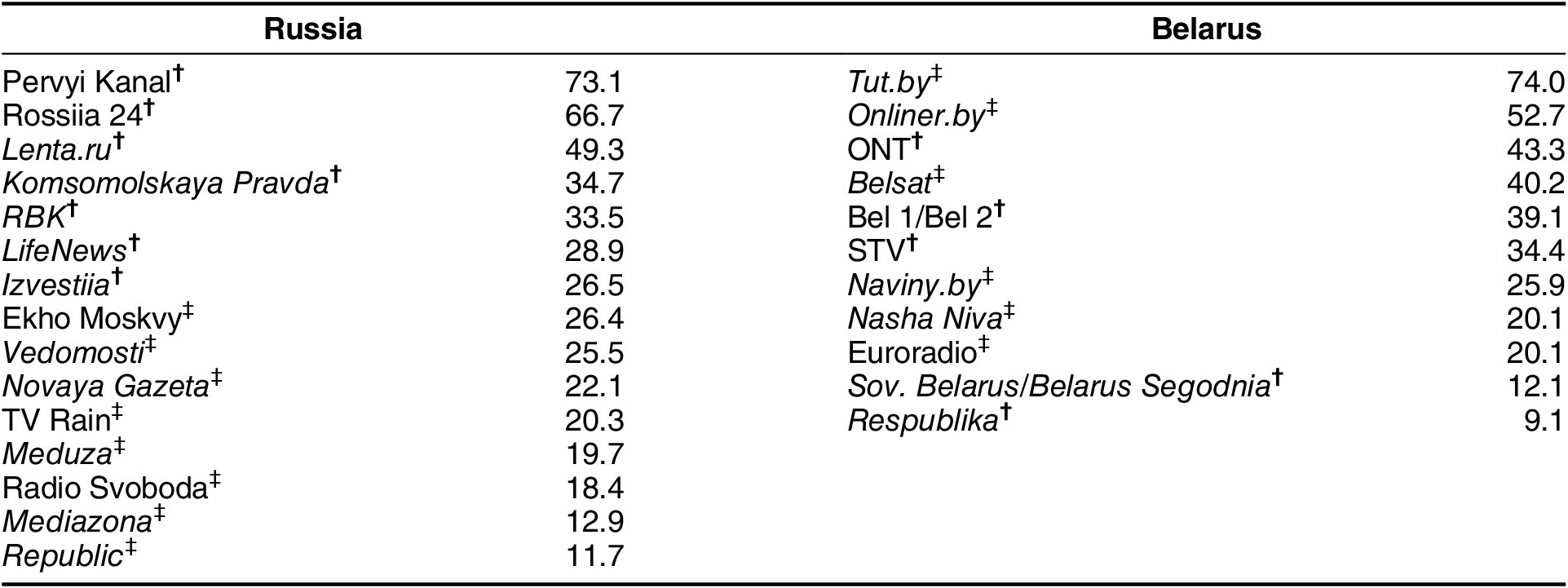
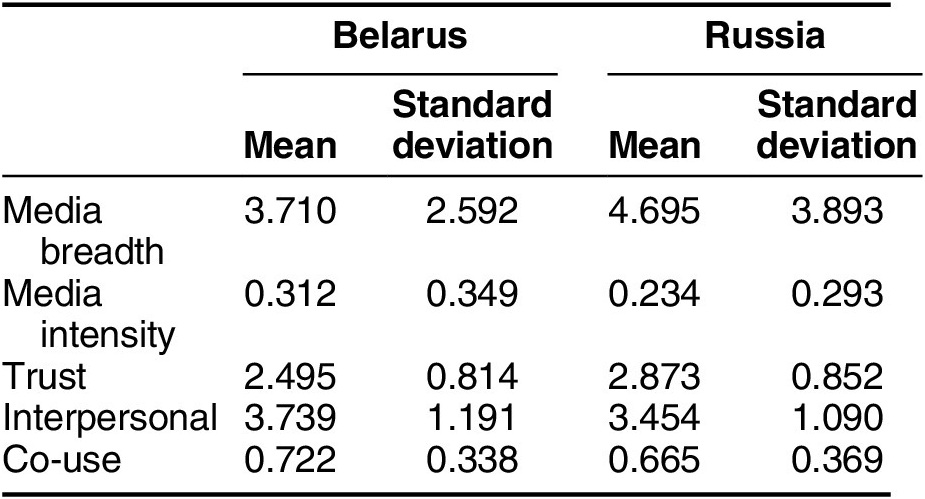


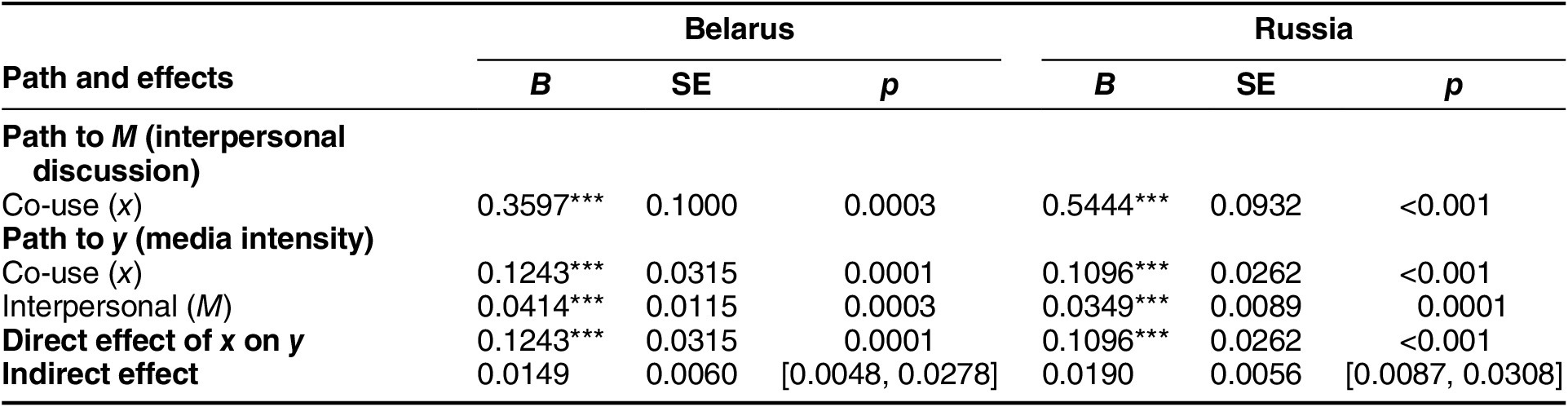


 Open access

