Introduction
Species of Neoechinorhynchus Stiles & Hassall are mainly endoparasites of freshwater fishes, brackish water fishes, and freshwater turtles, with approximately 117 described species divided into two subgenera (Neoechinorhynchus and Hebesoma Van Cleave, 1928), both of which are distributed worldwide (Amin, Reference Amin2013; Smales, Reference Smales2013). In the Americas, a total of 49 species have been described: 33 from North America and 16 from Central and South America (Amin, Reference Amin2002; Barger et al., Reference Barger, Thatcher and Nickol2004; Amin and Heckmann, Reference Amin and Heckmann2009; Pinacho-Pinacho et al., Reference Pinacho-Pinacho, Pérez-Ponce de León and García-Varela2012, Reference Pinacho-Pinacho2015). More recently, Pinacho-Pinacho et al. (Reference Pinacho-Pinacho2018) analysed three molecular markers (two nuclear genes and one mitochondrial gene) in 420 specimens of Neoechinorhynchus spp. from several countries across Middle America. These authors validated nine nominal species (seven associated with freshwater and brackish water fishes and two associated with freshwater turtles) and detected 10 candidate species. Although neoechinorhynchid species are highly diverse in the Americas (Amin, Reference Amin2013), particularly in North America, a few species of this genus have been typified using molecular data, including Neoechinorhynchus (Neoechinorhynchus) pseudemydis Cable & Hopp, 1954; Neoechinorhynchus (Neoechinorhynchus) crassus Van Cleave, 1919; Neoechinorhynchus (Neoechinorhynchus) saginatus Van Cleave & Bangham, 1949; and Neoechinorhynchus (Neoechinorhynchus) cylindratus Van Cleave, 1913 (Near et al. Reference Near, Garey and Nadler1998; García-Varela and Nadler, Reference García-Varela and Nadler2005; Pinacho-Pinacho et al., Reference Pinacho-Pinacho2017).
Neoechinorhynchus (N) cylindratus was described in largemouth bass (Micropterus salmoides Lacepède, 1802) from Pelican Lake in Minnesota, USA (Van Cleave, Reference Van Cleave1919). This species has been recorded in some areas in the eastern United States and Canada parasitizing centrarchids, and has also been found in catostomid, percid, esocid and amiid fishes (Ward, Reference Ward1940; Muzzall and Gillilland, Reference Muzzall and Gillilland2004). Neoechinorhynchus (N) cylindratus exhibits an unusual life cycle in which the definitive host can also act as the paratenic host. For example, if a fish feeds off an infected ostracod in which the cystacanth is not fully developed (infective), the parasite can migrate to the liver or the mesentery, where it completes its development to the infective cystacanth stage. The fish then acts as a paratenic host, carrying the infected cystacanth to other piscivorous fishes that serve as definitive hosts (Ward, Reference Ward1940; Richardson and Abdo, Reference Richardson and Abdo2011).
In the current research, adult specimens of Neoechinorhynchus (N) cylindratus were collected from hosts in northern Mexico, allowing us to characterize the morphology and molecular characteristics of this species of parasite and test the systematic position within the genus Neoechinorhynchus using three molecular markers.
Materials and methods
Specimen collection
During a recent helminthological survey of the Purificación River, Tamaulipas (24°05'21”N, 99°09'54”W; February 2016) in northern Mexico, specimens of Neoechinorhynchus were collected from the intestines of largemouth bass, Micropterus salmoides Lacepède (n = 10), Rio Grande cichlids, Herichthys cyanoguttatus Baird & Girard (n = 5) and yellow-bellied slider turtles, Trachemys scripta Schoepff (n = 2). Fishes and turtles were captured with seine nets and by electrofishing, kept alive during transport to the laboratory, and examined immediately. The acanthocephalans that were recovered were placed in distilled water to relax the specimens for 10–12 h at 4°C. Specimens were subsequently preserved in 100% ethanol and stored at 4°C.
Morphological analyses
For taxonomic identification, some specimens were stained with Mayer's paracarmine, dehydrated using a graded ethanol series, cleared in methyl salicylate, and mounted as permanent slides using Canada balsam. All specimens were examined using a bright-field Leica DM 1000 LED microscope (Leica, Wetzlar, Germany). Measurements were taken using the Leica Application Suite software, and are presented in micrometres as a range, with the mean in parentheses. Drawings were made with the aid of a drawing tube. Some individual samples were dehydrated through a graded series of ethyl alcohol and then critical-point dried with carbon dioxide. These specimens were mounted onto metal stubs with silver paste, coated with gold, and examined on a Hitachi Stereoscan model SU1510 (Hitachi High-Technologies Mexico S.A. de C.V., Mexico) at 15 kV. The specimens recovered from the Rio Grande cichlid fishes were identified as Neoechinorhynchus (Neoechinorhynchu) panucensis Salgado-Maldonado, 2013, whereas the acanthocephalans collected from the yellow-bellied slider turtles were identified as Neoechinorhynchus (Neoechinorhynchu) emyditoides Fisher, 1960, following original descriptions. These two species were recently typified using morphological and molecular characteristics (García-Varela et al., Reference García-Varela, García-Prieto and Pérez Rodríguez2011; Salgado-Maldonado, Reference Salgado-Maldonado2013; Pinacho-Pinacho et al., Reference Pinacho-Pinacho2015). Finally, the specimens from largemouth bass were identified as N. (N) cylindratus and deposited in the Colección Nacional de Helmintos (CNHE No. 10780), Instituto de Biología, Universidad Nacional Autónoma de México, Mexico City.
DNA extraction, PCR amplification, sequencing and phylogenetic analyses
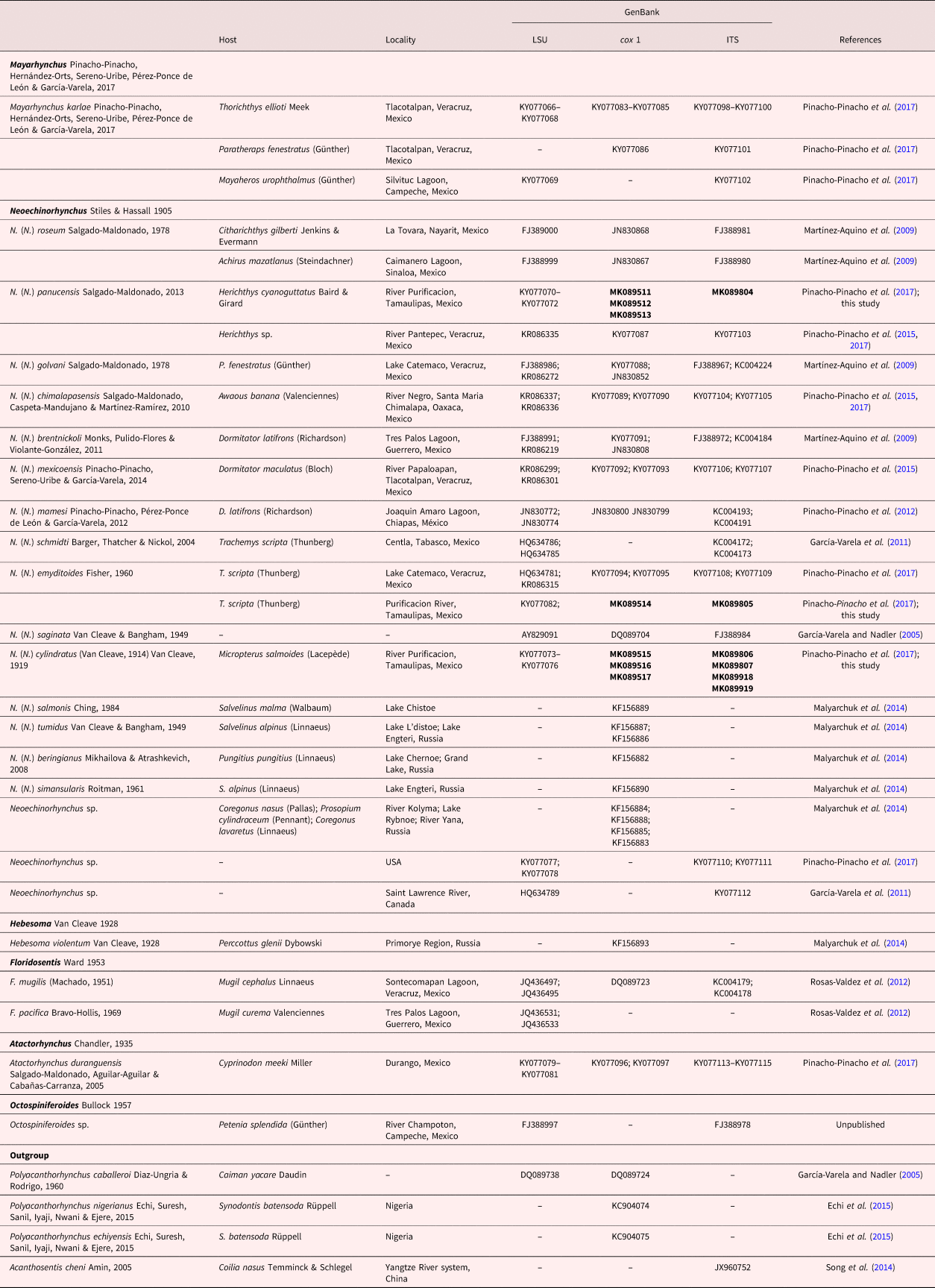
Eight specimens (one of N. (N) emyditoides, three of N. (N) panucensis and four of N. (N) cylindratus) were placed individually in tubes and digested overnight at 56°C in a solution containing 10 mm Tris-HCl (pH 7.6), 20 mm NaCl, 100 mm Na2-EDTA (pH 8.0), 1% sarkosyl, and 0.1 mg/ml proteinase K. Following digestion, DNA was extracted using DNAzol reagent (Molecular Research Center, Cincinnati, Ohio, USA) according to the manufacturer's instructions. Two regions of nuclear ribosomal DNA (rDNA) were amplified by polymerase chain reaction (PCR). The forward and reverse primers for the ITS1, 5.8S and ITS2 regions (ITS) were BD1, 5′-GTCGTAACAAGGTTTCCGTA-3′ and BD2, 5′-ATCTAGACCGGACTAGGCTGTG-3′ (Bowles and McManus, Reference Bowles and McManus1993), respectively. The D2 and D3 domains of the large subunit (LSU) from ribosomal DNA (rDNA) were amplified using the forward primer 5′-CAAGTACCGTGAGGGAAAGTTGC-3′ and the reverse primer 5′-GTCGATAGGACTCCCTTTG-3′ (García-Varela and Nadler, Reference García-Varela and Nadler2005). The cytochrome c oxidase subunit 1 (cox 1) of the mitochondrial DNA was amplified using modified primers designed by Folmer (Pinacho-Pinacho et al., Reference Pinacho-Pinacho, Pérez-Ponce de León and García-Varela2012). PCR reactions (25 μl) consisted of 10 μm of each primer, 2.5 μl of 10 X buffer, 1.5 μl of 2 mm MgCl2, 0.5 μl of dNTPs (10 mm), 1 U of Taq DNA polymerase (Platinum Taq, Invitrogen Corporation, São Paulo, Brazil) with 2 μl of the genomic DNA and 16.7 μl of distilled water. The PCR cycling parameters for rDNA amplifications were as follows: denaturation at 94°C for 5 minutes; 35 cycles of 94°C for 1 minute; annealing at 50°C for 1 minute and 40°C for 1 minute for the mitochondrial gene; extension at 72°C for 1 minute; and post-amplification incubation at 72°C for 10 minutes. Sequencing reactions were performed using an ABI BigDye Terminator Kit (Applied Biosystems, Boston, Massachusetts, USA) and reaction products were separated and detected using an ABI 3730 capillary DNA Sequencer. Contigs were assembled and base-calling differences were resolved using Codoncode Aligner, version 5.1.2 (Codoncode Corporation, Dedham, Massachusetts, USA). Sequences obtained for LSU, ITS and cox 1 were aligned with sequences from other congeneric species downloaded from GenBank (table 1). In addition, sequences of other genera, such as Polyacanthorhynchu Travassos, 1926 and Acanthosentis Verma & Datta, 1929, were used as the outgroup. Sequences for each molecular marker were aligned separately using the software Clustal W with default parameters implemented in MEGA version 7.0 (Kumar et al., Reference Kumar, Stecher and Tamura2016). The best-fitting nucleotide substitution models (LSU: GTR + G + I; ITS: GTR + G and cox 1: GTR + G + I) were estimated using the Akaike Information Criterion (AIC) implemented in MEGA version 7.0 (Kumar et al., Reference Kumar, Stecher and Tamura2016). The phylogenetic analyses were run on the three datasets individually under Bayesian inference (BI) criteria, employing the nucleotide substitution model identified for the AIC. BI trees were generated using MrBayes v3.2 (Ronquist et al., Reference Ronquist2012) by running two independent MC3 runs of four chains each for 5 million generations and sampling tree topologies every 1000 generations. ‘Burn-in’ periods were set to 1 million generations according to the standard deviation of split frequency values (< 0.01). Posterior probabilities of clades were obtained from a 50% majority-rule consensus of sample trees after excluding the initial 20% as ‘burn-in’. The genetic divergence among taxa was estimated using uncorrected ‘p’ distances in MEGA version 7.0 (Kumar et al., Reference Kumar, Stecher and Tamura2016).
Specimen information, including collection sites, with GenBank accession numbers of LSU, cox 1 and ITS. Sequences in bold were generated in the current study.

Results and discussion
Systematics
Class: Eoacanthocephala Van Cleave, 1936
Order: Neoechinorhynchida Southwell & Macfie, 1925
Family: Neoechinorhynchidae Ward, 1917
Neoechinorhynchus (Neoechinorhynchus) cylindratus Van Cleave, 1913
Morphological description
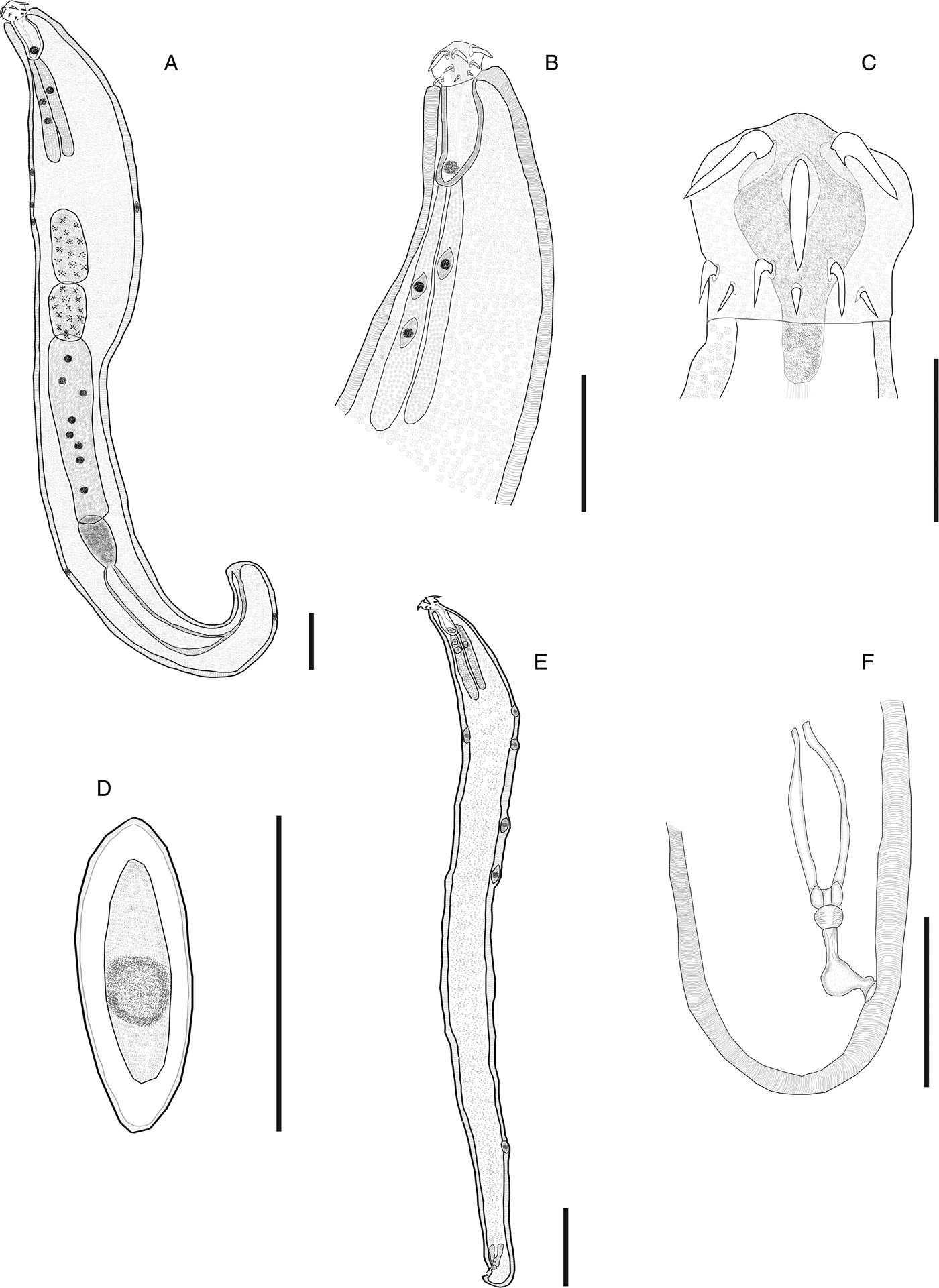
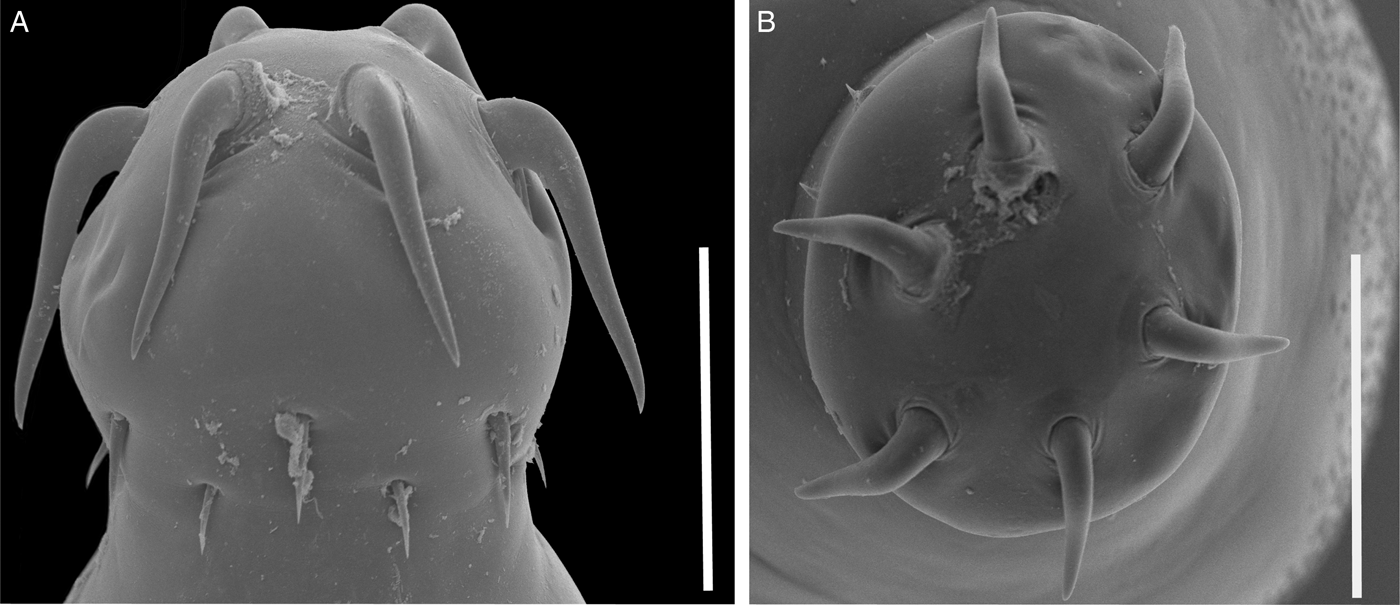
General. Neoechinorhynchidae, with characteristics similar to those of Neoechinorhynchus, subgenus Neoechinorhynchus. Trunk cylindrical, swollen in anterior region, slender in posterior region. Trunk with five dorsal giant subcuticular nuclei and one ventral nucleus (fig. 1A, E). Proboscis small and globular with three circles with six hooks each. Apical, middle, and posterior hooks of different sizes. Apical hooks longer than other hooks and extend to the same level as the middle hooks; posterior hooks are the shortest (figs 1C, 2A–B). Neck wider than long. Proboscis receptacle attached to the base of the proboscis. Cerebral ganglion, oval, at base of receptacle (fig. 1A). Lemnisci extend beyond the proboscis receptacle; uninucleate lemniscus is shorter than binucleate lemniscus (fig. 1B).
Neoechinorhynchus (N) cylindratus from Micropterus salmoides. (A) Adult male, total view; (B) anterior region; (C) proboscis; (D) egg; (E) adult female, total view; (F) female reproductive system. Scale bars: A, B: 0.5 mm; C: 100 μm; D: 50 μm; E: 1.0 mm; F: 200 μm.

Scanning electron micrographs of the proboscis of an adult male of Neoechinorhynchus (N) cylindratus from Micropterus salmoides. Scale bars: 100 μm.

Male (based on 14 mature specimens with sperm). Trunk 4857–7329 (5680) long by 262–558 (386) wide. Proboscis 100–155 (120) long by 99–193 (141) wide. Apical hooks 70–96 (80) long; middle hooks 23–44 (33) long; posterior hooks 14–26 (19) long. Neck 20–41 (28) long by 100–148 (118) wide. Proboscis receptacle 243–426 (352) long by 72–170 (130) wide. Uninucleate lemniscus 498–1024 (746) long and binucleate lemniscus 506–1041 (800) long. Reproductive system occupies 3/4 of body length. Testes oval, tandem, overlapping cement gland (fig. 1A). Anterior testis 456–946 (655) long by 167–341 (239) wide. Posterior testis 469–869 (587) long by 198–363 (270) wide. Cement gland 798–1570 (1142) long by 130–364 (244) wide with eight giant nuclei. Cement gland reservoir 195–408 (306) long, located immediately posterior to cement gland.
Female (based on eight gravid specimens). Trunk 6837–11,519 (9228) long by 380–546 (446) wide. Proboscis 115–153 (136) long by 133–202 (166) wide. Apical hooks 74–98 (86) long; middle hooks 27–34 (30) long; posterior hooks 19–31 (21) long. Proboscis receptacle 240–469 (383) long by 101–169 (143) wide. Uninucleate lemniscus 641–1055 (854) long and binucleate lemniscus 764–1145 (976) long. Total length of reproductive system from anterior margin of the uterine bell to subterminal genital pore 351–467 (410) (fig. 1E–F). Uterine bell, 48–59 (52) long. Vagina 51–60 (56) long. Uterus 104–263 (182) long. Eggs mature, elliptical, lacking polar prolongations of the fertilization membrane, 40–53 (44) long by 13–16 (14) wide (fig. 1D).
Remarks
Neoechinorhynchus (N) cylindratus is an acanthocephalan that is widely distributed across North America. It was originally described in largemouth bass from Pelican Lake, Minnesota (Van Cleave, Reference Van Cleave1919). However, the first description of this species was partial and was later completed by Ward (Reference Ward1940), who also described the life cycle. Currently, N. (N) cylindratus is considered a common species that occurs primarily in centrarchid fishes from the eastern United States and Canada (Ward, Reference Ward1940; McDonald and Margolis, Reference McDonald and Margolis1995; Muzzall and Gillilland, Reference Muzzall and Gillilland2004). In Mexico, N. (N) cylindratus was recorded for the first time by Galaviz et al. (Reference Galaviz2016) in largemouth bass in the state of Nuevo Leon. However, these authors did not provide a morphological description, and therefore the record could not be verified. The present study revealed slight morphological variations in some features of the male N. (N) cylindratus population in comparison to features described by Ward (Reference Ward1940). Variations were seen in the following dimensions: trunk (4857–7329 X 262–558 in this study vs 4700–6300 X 360–630 by Ward, Reference Ward1940); proboscis (100–155 X 99–193 vs 100–140 X 150–170); apical hooks (70–96 vs 58–82); middle hooks (23–44 vs 24–34); posterior hooks (14–26 vs 17–24); uninucleate lemniscus (498–1024 vs 740–1050); binucleate lemniscus (506–1041 vs 840–1200); anterior testis (456–946 X 167–341 vs 400–700 X 180–225); posterior testis (469–869 X 198–363 vs 210–550 X 170–270); cement gland (798–1570 X 130–364 vs 670–1200 X 130–280); and cement gland reservoir (195–408 vs 220–420). The female population of N. (N) cylindratus collected in the current study also revealed morphological variations in the dimensions of some features, such as trunk (6837–11,519 X 380–546 in this study vs 7000–11,200 X 350–700 by Ward (Reference Ward1940); proboscis (115–153 X 133–202 vs 100–140 X 160–190); apical hooks (74–98 vs 61–88); middle hooks (27–34 vs 24–40); posterior hooks (19–31 vs 17–27); proboscis receptacle (240–469 X 101–169 vs 280–350 X 110–150); uninucleate lemniscus (641–1055 vs 850–1340); binucleate lemniscus (764–1145 vs 950–1400); reproductive system (351–467 vs 490–730); and eggs (40–53 X 13–16 vs 51–61 X 17–28).
Phylogenetic analyses
Nuclear genes
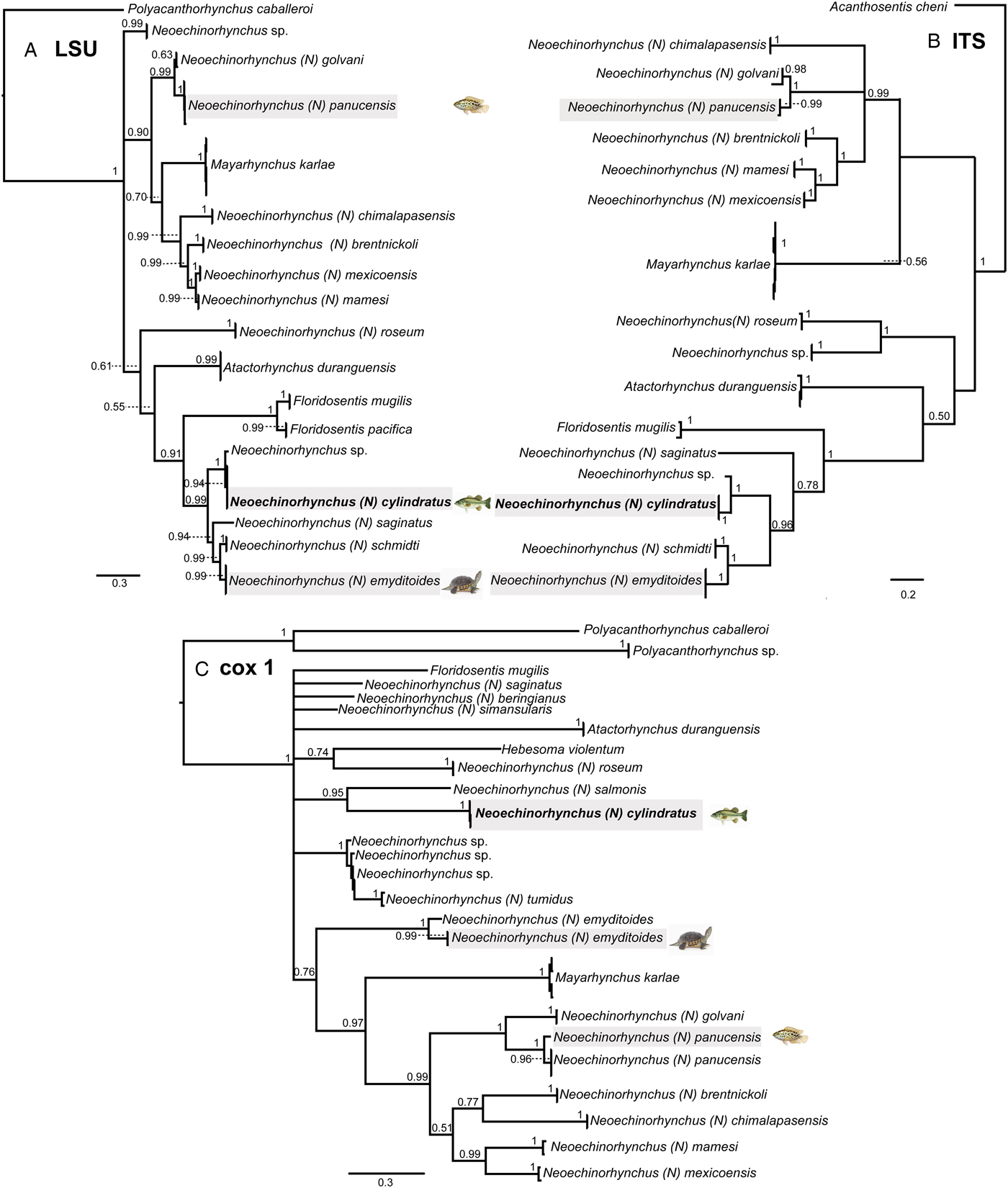
The LSU dataset included 834 characters, and the best evolution model was GTR + G + I. The alignment includes 28 sequences representing 11 species of the genus Neoechinorhynchus, nine associated with freshwater and brackish water fishes and two associated with freshwater turtles (table 1). The phylogenetic tree inferred from ML and BI analyses shows that the sequences obtained in the current study of N. (N) panucensis, N. (N) emyditoides and N. (N) cylindratus are nested within several independent clades with relatively high bootstrap and posterior probability support values. The four isolates of N. (N) cylindratus are sister to another isolate of Neoechinorhynchus sp. (HQ634789) from the Saint Lawrence River, Canada (fig. 3A). The genetic divergence among the four isolates of N. (N) cylindratus was 0.7%, and with respect to Neoechinorhynchus sp. (HQ634789) was 1.7%. The ITS dataset included 960 characters, and the best evolution model obtained was GTR + G. This alignment includes 24 sequences representing 11 species of the genus Neoechinorhynchus. The topologies inferred from the ITS dataset are similar to the phylogenetic trees inferred with LSU, i.e. the isolate of N. (N) panucensis obtained in this study is sister to another isolate of N. (N) panucensis (KY077103) from Herichthys sp., in Pantepec, Veracruz. Both isolates are sister to Neoechinorhynchus (Neoechinorhynchus) golvani Salgado-Maldonado, 1978, a common parasite of cichlid fishes in the Neotropical region (Pinacho-Pinacho et al., Reference Pinacho-Pinacho2018). The isolate of N. (N) emyditoides obtained in this study is nested with two other isolates of N. (N) emyditoides (KY077108–109) from Catemaco Lake in the Gulf of Mexico, and both isolates are sister to two isolates (KC004172–173) of Neoechinorhynchus (Neoechinorhynchus) schmidti Barger, Thatcher and Nickol, 2004. Both clades are parasites exclusive to freshwater turtles. Finally, the four isolates of N. (N) cylindratus are sister to another isolate of Neoechinorhynchus sp. (KY077112) from the Saint Lawrence River, Canada (fig. 3B). The genetic divergence among the four isolates of N. (N) cylindratus was 0.1%, and with respect to Neoechinorhynchus sp. (KY077112) was 6%.
Maximum likelihood (ML) tree and consensus Bayesian inference (BI) trees inferred with (A) large subunit (LSU) dataset, (B) ITS1, 5.8S and ITS2 dataset, and (C) cox 1 dataset. Numbers near internal nodes show ML bootstrap clade frequencies and posterior probabilities (BI).

Mitochondrial gene
The cox 1 dataset included 546 characters, and the best model was GTR + I + G. The alignment includes 32 sequences representing 14 species of the genus Neoechinorhynchus. The phylogenetic tree inferred from ML and BI analyses shows a basal polytomy (fig. 3C). The sequences obtained in the current study of N. (N) panucensis, N. (N) emyditoides and N. (N) cylindratus are nested within several independent clades with relatively high bootstrap and posterior probability support values, as are the trees obtained using the nuclear molecular markers (fig. 3A, B). The three isolates of N. (N) panucensis obtained in this study are sister to another isolate of N. (N) panucensis (KY077087) recovered from Herichthys sp., in Pantepec, Veracruz. This clade is sister to N. (N) golvani, and both clades are parasites of cichlid fishes. The isolate of N. (N) emyditoides obtained in this study is nested with two other isolates of N. (N) emyditoides (KY077094–095) from Catemaco Lake in the Gulf of Mexico. Finally, the three isolates of N. (N) cylindratus are sister to Neoechinorhynchus (Neoechinorhynchus) salmonis Ching, 1984 (KF156889) from Lake Chistone. The genetic divergence among the three isolates of N. (N) cylindratus was 0.3%, and with respect to N. (N) salmonis was 27%.
In summary, the ML and Bayesian trees inferred with LSU, ITS and cox 1 datasets consistently indicate that the genus Neoechinorhynchus, as currently constituted, is not monophyletic. The species analysed in the current study as N. (N) panucensis, N. (N) emyditoides and N. (N) cylindratus that occur in sympatry in the Purificación River, Tamaulipas were nested within several clades, indicating that these species do not share a common ancestor. The genetic divergences between N. (N) cylindratus and N. (N) panucensis were relatively high, at 20% for LSU, 38% for ITS and 33% for cox 1, and between N. (N) cylindratus and N. (N) emyditoides were 7.8% for LSU, 20% for ITS and 36% for cox 1. Finally, between N. (N) panucensis and N. (N) emyditoides, genetic divergences were 21% for LSU, 35% for ITS and 27% for cox 1. These high levels of genetic divergence among species are similar to those exhibited within Neoechinorhynchus, ranging between 2.3 and 46.8% for LSU, 4.7 and 61.9% for ITS and 9.7 and 59.2% for cox 1 (Pinacho-Pinacho et al., Reference Pinacho-Pinacho, Sereno-Uribe and García-Varela2014, Reference Pinacho-Pinacho2015, Reference Pinacho-Pinacho2017, Reference Pinacho-Pinacho2018).
Neoechinorhynchus is the most diverse genus within acanthocephalans, with 117 described species distributed worldwide (Amin, Reference Amin2013; Smales, Reference Smales2013; Pinacho-Pinacho et al., Reference Pinacho-Pinacho, Sereno-Uribe and García-Varela2014). A few species of the genus Neoechinorhynchus have been analysed using molecular data, suggesting that the genus is paraphyletic (Pinacho-Pinacho et al., Reference Pinacho-Pinacho2017), which is consistent with our phylogenetic trees inferred with three molecular markers. Therefore, the genus Neoechinorhynchus requires a taxonomic revision. The addition of other congeneric species distributed worldwide, including the species Neoechinorhynchus (Neoechinorhynchus) rutili (Muller, 1780), Hamann, 1892, a parasite of freshwater fishes in the Holarctic region, is essential to understand the evolution and taxonomy of this group of acanthocephalans.
Acknowledgements
We are grateful to Alejandra López, Eduardo Hernández and Leopoldo Andrade for their help during field work. We also thank Berenit Mendoza for her help with the use of the SEM unit, and Luis García Prieto for providing material from the CNHE.
Author ORCIDs
M. García Varela 0000-0002-7050-8825.
Financial support
This research was supported by grants from the Programa de Apoyo a Proyectos de Investigación e Inovación Tecnológica (PAPIIT-UNAM) IN206716.
Conflict of interest
None.
Ethical standards
Specimens were collected under the Cartilla Nacional de Colector Científico (FAUT 0202) issued by the Secretaría del Medio Ambiente y Recursos Naturales (SEMARNAT), to MGV.