Introduction
Global demand for livestock products is characterised by rising demand for high-value protein, an increase in average income and an increase in population. Hence, rising demand stimulates an increase of meat production worldwide. The world's total meat production was about 320 million tons in 2017 (pork and poultry about 74%, beef and veal about 22% of total production) (Statista, 2018). Therefore, poultry meat production, along with the production of pork meat, is the most important source of animal protein, and, in developed countries, has the most significant share of total meat consumption. Reasons for the high competitiveness of poultry meat include the cost of production, use of technology, nutrition trends and faster turnover of capital in relation to other livestock sectors (Janječić, Reference JANJEČIĆ2005).
The European Union (EU) is one of the world's top producers of poultry meat and a net exporter of poultry products. Poultry meat production in the EU accounts for about 12% of the world's production. Over the years, the organisation of the poultry market sector has been improved to ensure the development of the sector, the quality of the products and the consumers’ protection, while harmonising the entire market. Leading countries in poultry meat production, which includes Poland (23%), the UK (18%), France (16%), Germany (15%), Spain (15%) and Italy (13%), ensure 70% of the poultry meat production in the EU (European Commission, 2018).
The production of poultry meat in the EU-28 in 2016 was about 14.5 million tons, with an average per capita consumption of 24.2 kg. Old Member States (EU-15) generated 73.8% and New Member States (EU-13) generated 26.2% of total poultry meat production in the EU.
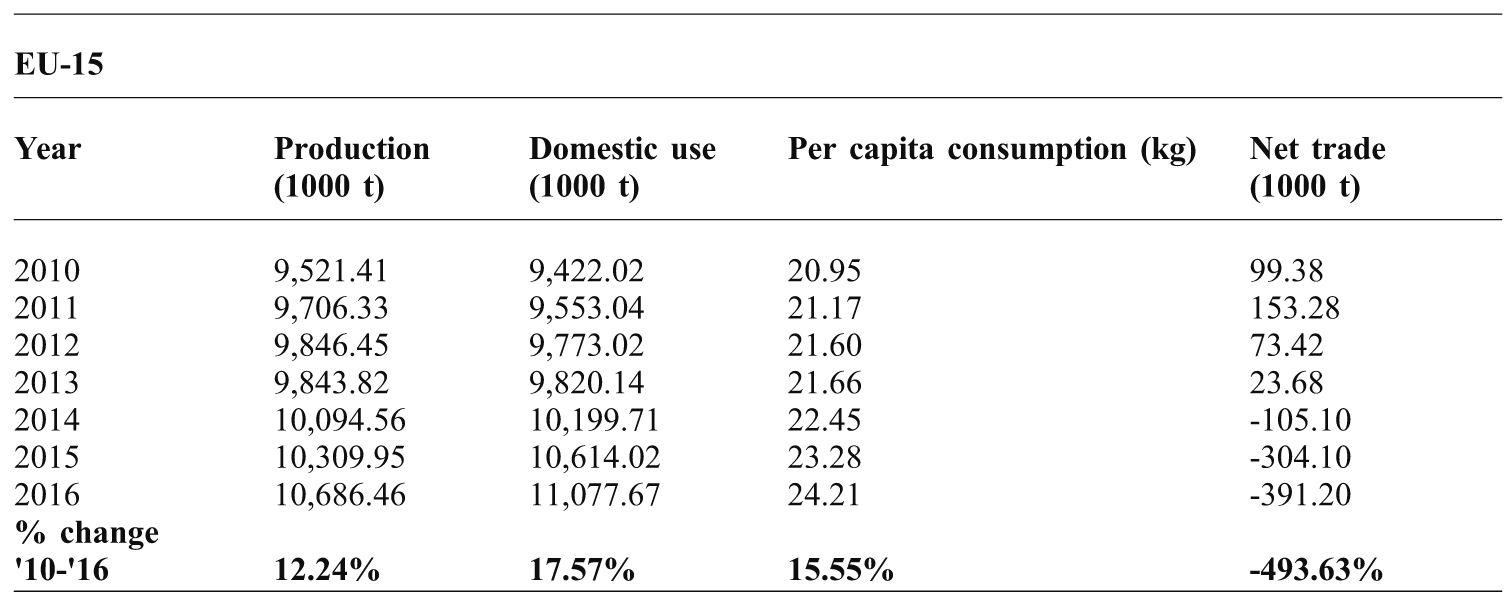
From 2010 to 2016, production of poultry meat in the EU-15 increased by more than 12%, while domestic consumption and per capita consumption increased significantly (Table 1). By 2013, the EU-15 poultry meat production met the demand from domestic consumption; therefore, in 2014 the EU-15 group became a net importer.
Poultry meat production, consumption and trade in the EU-15 2010 - 2016.

Source: elaborated by the authors according to the data available in the EUROSTAT (EUROSTAT, 2018).
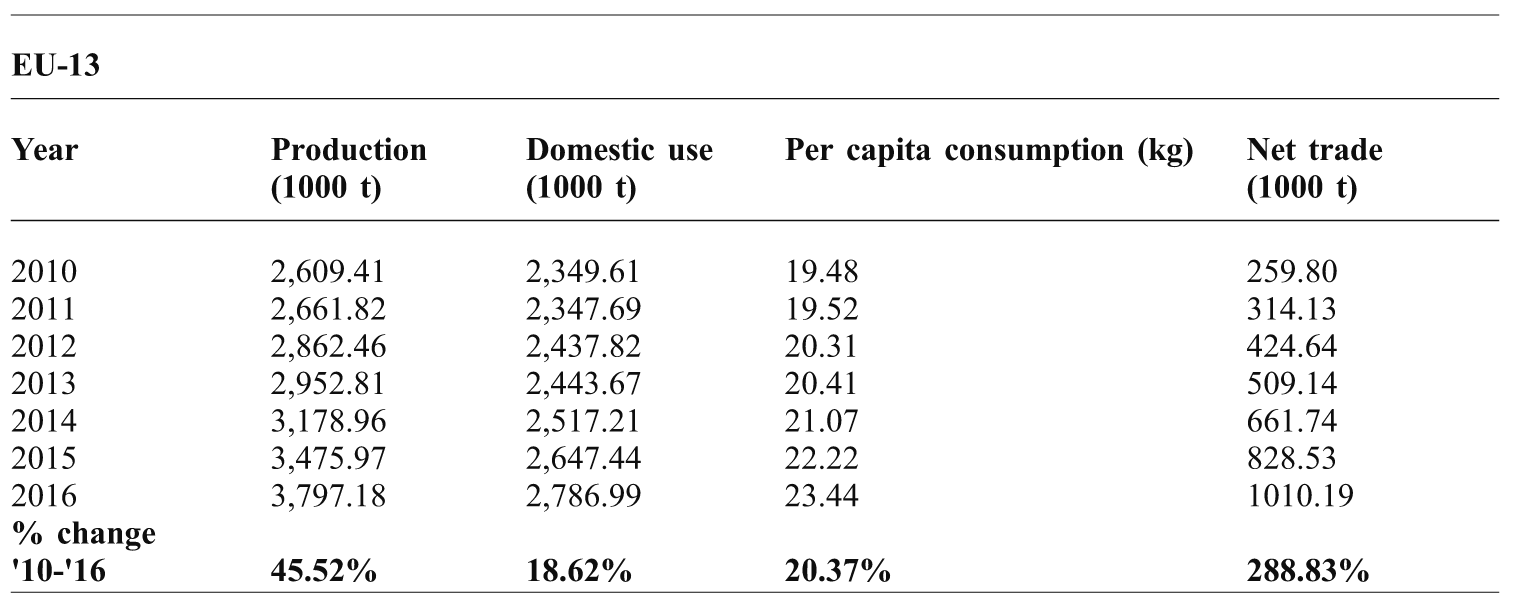
In recent years, the EU-15's requirements for poultry meat were settled compared to the EU-13 markets. In the EU-13, production of poultry meat from 2010 to 2016 increased significantly (Table 2). Reasons for production growth included EU accession (i.e. business conditions in the single market), availability and introduction of new technologies, and lower-cost inputs. Overall, the EU-13 Member States became the net exporter of poultry meat from 2010, and the value of net exports during the observed period significantly increased.
Poultry meat production, consumption and trade in the EU-13 2010 - 2016.

Source: elaborated by the authors according to the data available in the EUROSTAT (EUROSTAT, 2018).
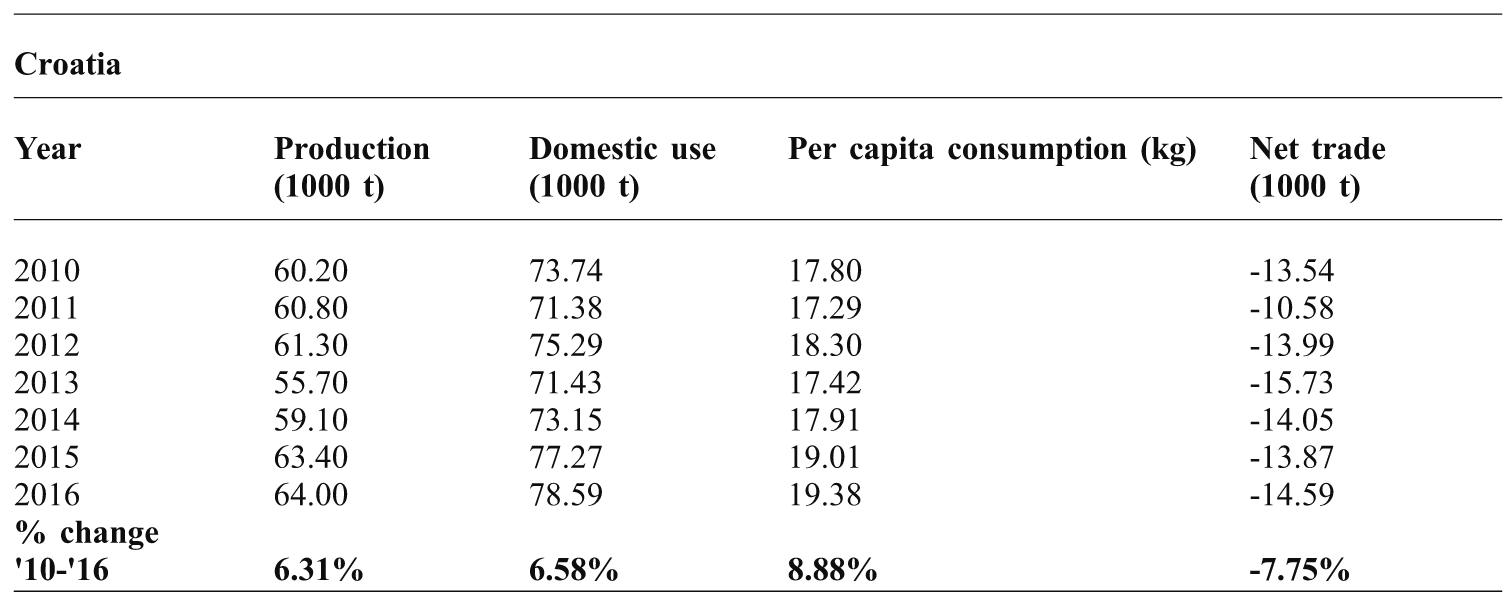
In Croatia there has been a trend for increasing production and consumption of poultry meat during the last ten years, as well as in most EU Member States. The Croatian poultry meat market has been part of the common market for five years and contributes 0.44% of the total poultry meat production in the EU. Between 2010 and 2016, the volume of poultry meat production was around 60,000 tons with an upward trend. On average, total consumption amounted to 74.4 thousand tons, and the difference in demand was imported from the EU market, with a significant amount from Poland (Table 3).
Poultry meat production, consumption and trade in Croatia 2010 - 2016.

Source: elaborated by the authors according to the data available in the Croatian Bureau of Statistics (CBS, 2017).
As with other types of meat, experts estimate that Croatia has sufficient capacities for poultry production, but they are not efficiently used. In the pre-accession period, due to the lack of complete market infrastructure and an inadequate business linkage of economies (Raguž-Đurić et al., 2006), structure was one of the causes of a less competitive domestic production of poultry.
After Croatia's accession to the EU the volume of total agricultural production increased, but at the same time there were structural changes similar to that of the CEECs (Central and Eastern European Countries) that had previously joined the EU (Csáki and Jámbor, Reference CSÁKI and JÁMBOR2013). The degree of self-sufficiency in the production of poultry meat in Croatia became higher than in other types of meat (Grgić et al., Reference GRGIĆ, ZRAKIĆ, HADELAN and SALPUTRA2015), and in the observed period it was about 80% with a moderate growth trend.
The future development of the poultry meat market can be projected using various economic models that have been applied since the 1970s, with special emphasis on the specific characteristics in the observed sector. Partial Equilibrium Models (PE) and General Equilibrium Models (GE) are the most common approaches to the quantitative estimates of market developments (Domínguez et al., Reference DOMÍNGUEZ, GAY and M'BAREK2008).
Partial equilibrium models analyse the observed agricultural sector using more details of the market itself (Salvatici et al., Reference SALVATICI, ANANIA, ARFINI, CONFORTI, DE MURO, LONDERO and SCKOKAI2001). This paper presents the results of the partial equilibrium model, which represents the mid-term projection of the development of the poultry meat market in the EU-15, the EU-13 and Croatia by 2030.
The AGMEMOD (PE) model in function of poultry market projections
The AGMEMOD (AGricultural MEmber State MODelling) model is an integral part of the Integrated Modelling Platform for Agro-economic Commodity and Policy Analysis (iMAP) hosted by the Joint Research Centre (JRC-Seville) (M'Barek et al., Reference M'BAREK, BRITZ, BURRELL and DELINCÉ2012; M'Barek and Delincé, Reference M'BAREK and DELINCÉ2015). Every year the European Commission provides mid-term projections for agricultural markets (outlooks). The Member State outlook calculated by AGMEMOD is embedded in the EU Agricultural Outlook (European Commission, 2017). These projections are reported for the EU-28 aggregate and split into EU-15 and EU-13 to reflect the diversity between the pre- and post-2004 Member States (Salamon et al., Reference SALAMON, BANSE, BARREIRO-HURLÉ, CHALOUPKA, DONNELLAN, ERJAVEC, FELLMANN, HANRAHAN, HASS, JONGENEEL, LAQUAI, VAN LEEUWEN, MOLNÁR, PECHROVÁ, SALPUTRA, BALTUSSEN, EFKEN, HÉLAINE, JUNGEHÜLSING, VON LEDEBUR, RAC and SANTINI2017).
The applied model is built using a common country model template, which is based on the AGMEMOD Partnership's approach known as bottom-up, and the subsequent combination in a composite EU-28 model. This is a unique approach, as other agricultural sector models are maintained within one or a few institutions (Chantreuil et al., Reference CHANTREUIL, HANRAHAN and VAN LEEUWEN2012). The AGMEMOD model is an econometric, dynamic, multi-product, multi-country, partial equilibrium model. Country-specific models (based on a set of commodity-specific model templates) are developed to both reflect the details of agriculture at Member State level, and allow their combination in an EU model (Salamon et al., Reference SALAMON, BANSE, BARREIRO-HURLÉ, CHALOUPKA, DONNELLAN, ERJAVEC, FELLMANN, HANRAHAN, HASS, JONGENEEL, LAQUAI, VAN LEEUWEN, MOLNÁR, PECHROVÁ, SALPUTRA, BALTUSSEN, EFKEN, HÉLAINE, JUNGEHÜLSING, VON LEDEBUR, RAC and SANTINI2017).
The models comprise equations for crop sectors, including cereals, oilseeds and their processed products (oil and meal), sugar beets and sugar, protein crops and potatoes. There are equations for animal sectors, live animals (cattle, pigs, sheep and goats) and meat (beef, pig meat, poultry, sheep and goat) is covered separately, while the dairy sector covers raw and processed milk products. Animal products cover projections on stocks of live animals, slaughter and trade in live animals (Salamon et al., Reference SALAMON, BANSE, BARREIRO-HURLÉ, CHALOUPKA, DONNELLAN, ERJAVEC, FELLMANN, HANRAHAN, HASS, JONGENEEL, LAQUAI, VAN LEEUWEN, MOLNÁR, PECHROVÁ, SALPUTRA, BALTUSSEN, EFKEN, HÉLAINE, JUNGEHÜLSING, VON LEDEBUR, RAC and SANTINI2017). The country models contain the behavioural responses of economic agents (e.g. farmers, consumers) to changes in prices and in policy instruments, and to other exogenous variables in the agricultural market.
The AGMEMOD's database for poultry is partly made up of supply and use balance sheets, which covers data on production, imports, human food consumption and exports up to 2016. These commodity balance variables, together with production data and commodity prices, are determined inside the model and belong to the set of endogenous variables of the AGMEMOD model (Salamon et al., Reference SALAMON, CHANTREUIL, DONNELLAN, ERJAVEC, ESPOSTI, HANRAHAN, VAN LEEUWEN, BOUMA, DOL and SALPUTRA2008). For each commodity (e.g. poultry), sets of behavioural equations describe the supply side (production and imports) and demand sides (domestic use, exports) of the market. Supply and demand equations define how, in any given year, equilibrium (i.e. supply equals demand) is found within the single commodity market (Chantreuil et al., Reference CHANTREUIL, HANRAHAN and VAN LEEUWEN2012).
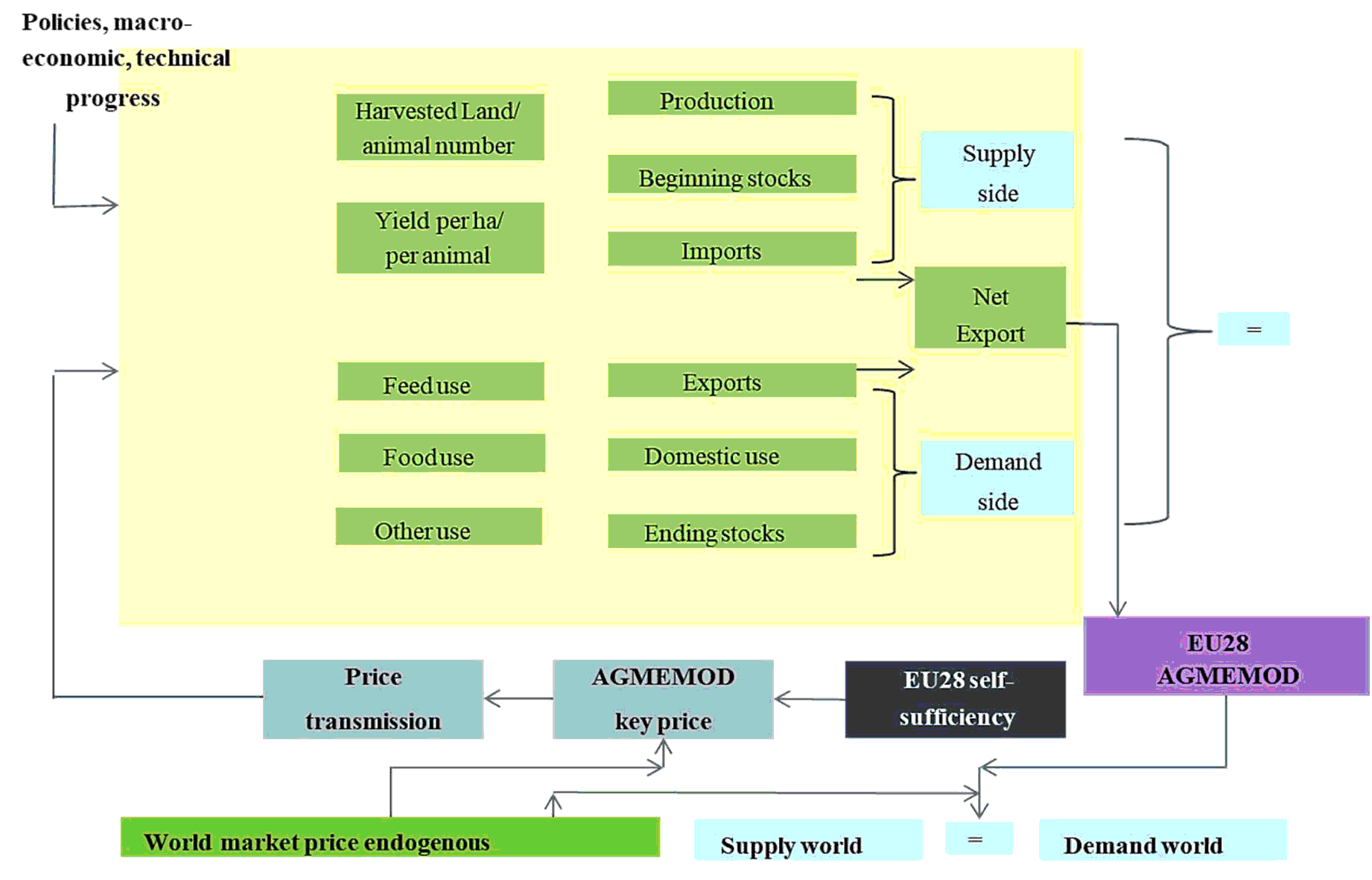
Prices in AGMEMOD are essentially formed in three ways: for most Member States and commodities, they are defined by a price transmission equation, whereas a domestic price in a given country is driven by an external price in the so-called key-price country. In principle, the national price (e.g. Croatia) of a commodity is explained by the key price of that commodity and a vector of exogenous variables, including the self-sufficiency rate in the relevant country and the self-sufficiency rate for the same commodity in the key-price market (Chantreuil et al., Reference CHANTREUIL, HANRAHAN and VAN LEEUWEN2012). For the EU poultry meat market, the key price is the price of poultry meat in Germany. Detailed information on the general structure (Figure 1) of the AGMEMOD country model equations can be found in Hanrahan (Reference HANRAHAN2001), Esposti and Camaioni (Reference ESPOSTI and CAMAIONI2007) and Chantreuil et al. (Reference CHANTREUIL, HANRAHAN and VAN LEEUWEN2012).
The basic structure of the AGMEMOD national model and its connection to the EU-28 model.
Source: Chantreuil et al., Reference CHANTREUIL, SALPUTRA and ERJAVEC2010.

When using a model, stable conditions on the poultry meat market (ceteris paribus) without market shocks (e.g. a sudden drop of prices) and the occurrence of diseases (e.g. Avian influenza outbreaks) are generally assumed. The results represent the outlook of the meat poultry market by 2030 in the EU with special reference to Croatia as a new member state. The aggregated results for the EU-15 and EU-13 member states, as well as separately for Croatia will be presented to indicate ongoing trends in the production, consumption and net trade of poultry meat market.
EU-15 poultry meat market state and perspectives
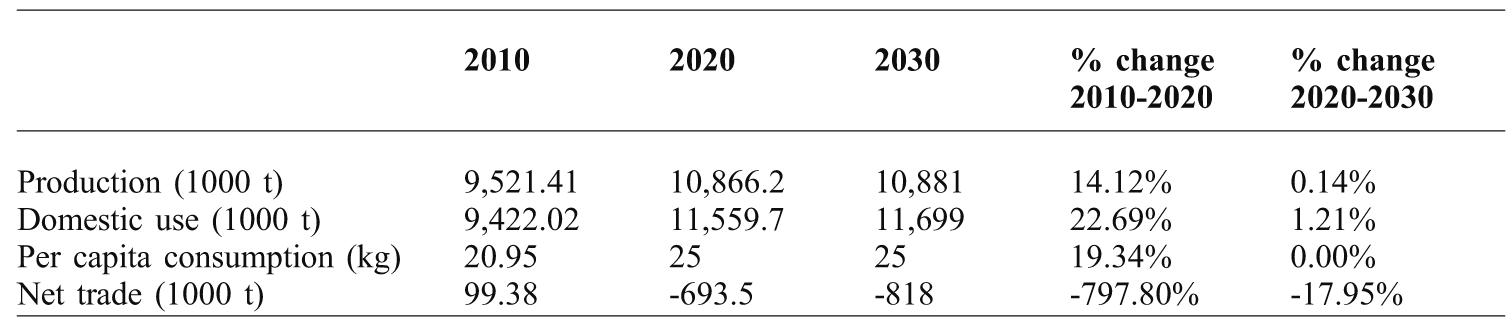
Generally, livestock and poultry meat sectors have grown in the EU over the past decade, but in the future the growth rate of meat and poultry meat production is expected to slow significantly in the EU-15 (Table 4).
EU-15 Poultry meat market prospects.

Source: elaborated by the authors according to the Agmemod v8.0 model results.
This is due to societal concerns regarding increasing pressure on environmental constraints (Salamon et al., Reference SALAMON, BANSE, BARREIRO-HURLÉ, CHALOUPKA, DONNELLAN, ERJAVEC, FELLMANN, HANRAHAN, HASS, JONGENEEL, LAQUAI, VAN LEEUWEN, MOLNÁR, PECHROVÁ, SALPUTRA, BALTUSSEN, EFKEN, HÉLAINE, JUNGEHÜLSING, VON LEDEBUR, RAC and SANTINI2017), along with focus on producers to meet the requirements of health and welfare regulations. In recent years most EU Member States have had numerous changes in poultry production associated with increased animal welfare, environmental protection, and biological safety in food production and distribution (Crnčan, Reference CRNČAN2016; Elson, Reference ELSON2008; Van Horne, Reference VAN HORNE2007). These are implemented in the legislation of individual countries, which has resulted in changes in the earlier mode of production, and thereby, increased production costs.
Changes in consumer habits have a significant impact on the poultry meat sector, where growing concerns about animal welfare has reduced the number of meat consumers in general. The proportion of consumers who either do not consume meat or who restrict meat consumption is increasing, especially among the younger population in the EU-15 (Salamon et al., Reference SALAMON, BANSE, BARREIRO-HURLÉ, CHALOUPKA, DONNELLAN, ERJAVEC, FELLMANN, HANRAHAN, HASS, JONGENEEL, LAQUAI, VAN LEEUWEN, MOLNÁR, PECHROVÁ, SALPUTRA, BALTUSSEN, EFKEN, HÉLAINE, JUNGEHÜLSING, VON LEDEBUR, RAC and SANTINI2017). Therefore, the per capita consumption of poultry meat in Old Member States is not expected to rise in the next decade. Domestic consumption will grow slightly, but this is solely the result of the projected increase in the number of inhabitants in the EU-15, due to migration.
As for net exports, the EU-15 countries were net exporters a few years ago, but since 2014 they have become net importers of poultry meat. By the end of the projected period, it is expected that the import of poultry meat will continue to strengthen, and EU-15 countries will meet their domestic needs for poultry meat by importing from the EU-13 Member States.
EU-13 poultry meat market state and perspectives
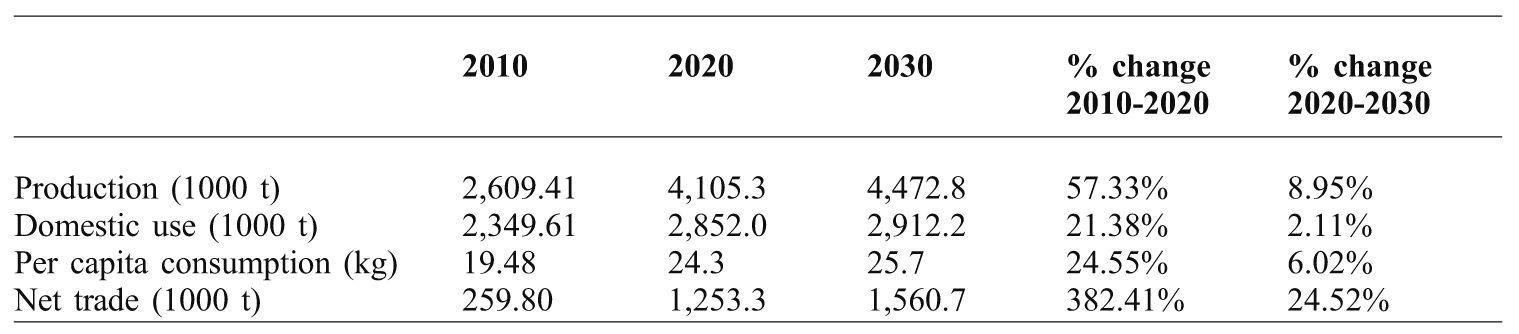
Member States that joined the EU after 2004 have given impetus to overall EU total factor productivity (TFP) growth, including agricultural productivity. Remarkably, the high growth rate in the EU-13 was offset by the low growth rate in the EU-15. Although EU-13 growth rates were relatively high between 2005-2015 (over 1.6%/year), the portion of EU-13 in overall EU agricultural output was still limited (European Commission, 2016). The situation regarding the poultry meat sector looks better in the EU-13 Member States (Table 5). Production of poultry meat in the New Member States is constantly increasing (for 57.3% between 2010-2020), and production is expected to increase during the next period (2020-2030), albeit not so intensively (8.95%).
EU-13 Poultry meat market prospects.

Source: elaborated by the authors according to the AGMEMOD v8.0 model results.
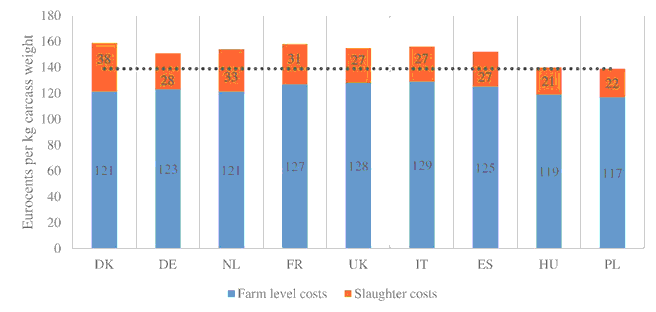
Significant investments in poultry production in the EU-13 have occurred in recent years, not only from the Rural Development Program (RDP), but also from other sources of funding (Spicka, Reference SPICKA2016). In addition to direct investments in production capacities, favourable market conditions in the EU-13 have been associated with a lower cost structure of poultry production, which are related to cheaper feed, lower labour prices and reduced slaughtering costs (Van Horne, Reference VAN HORNE2017). New legislation increased the production costs of poultry meat: the additional costs due to the EU legislation are estimated to be 4.8 eurocents per kg of live weight, which is 5.1% of the total production costs in 2011 (Van Horne and Bondt, Reference VAN HORNE and BONDT2013).
As shown in Figure 2, lower production costs are generated by the EU-13 producer countries (e.g. Hungary and Poland). In contrast, the main countries within the EU-15 producing poultry meat have on average above 140 eurocents/kg of poultry carcass weight. Domestic and per capita consumption in the EU-13 Member States meet and surpass the EU-15 levels, where poultry is still perceived as an inexpensive and healthy source of animal protein (Kralik et al., Reference KRALIK, TOLUŠIĆ and BOŠNJAKOVIĆ2017) with far less concern for animal keeping and welfare issues. The export growth trend of poultry meat in the EU-13 is expected to last until the end of the projected period.
Production costs of broilers and slaughterings (ct/kg c.w.), 2015.
Source: Van Horne, Reference VAN HORNE2017.

Croatian poultry meat market state and perspectives
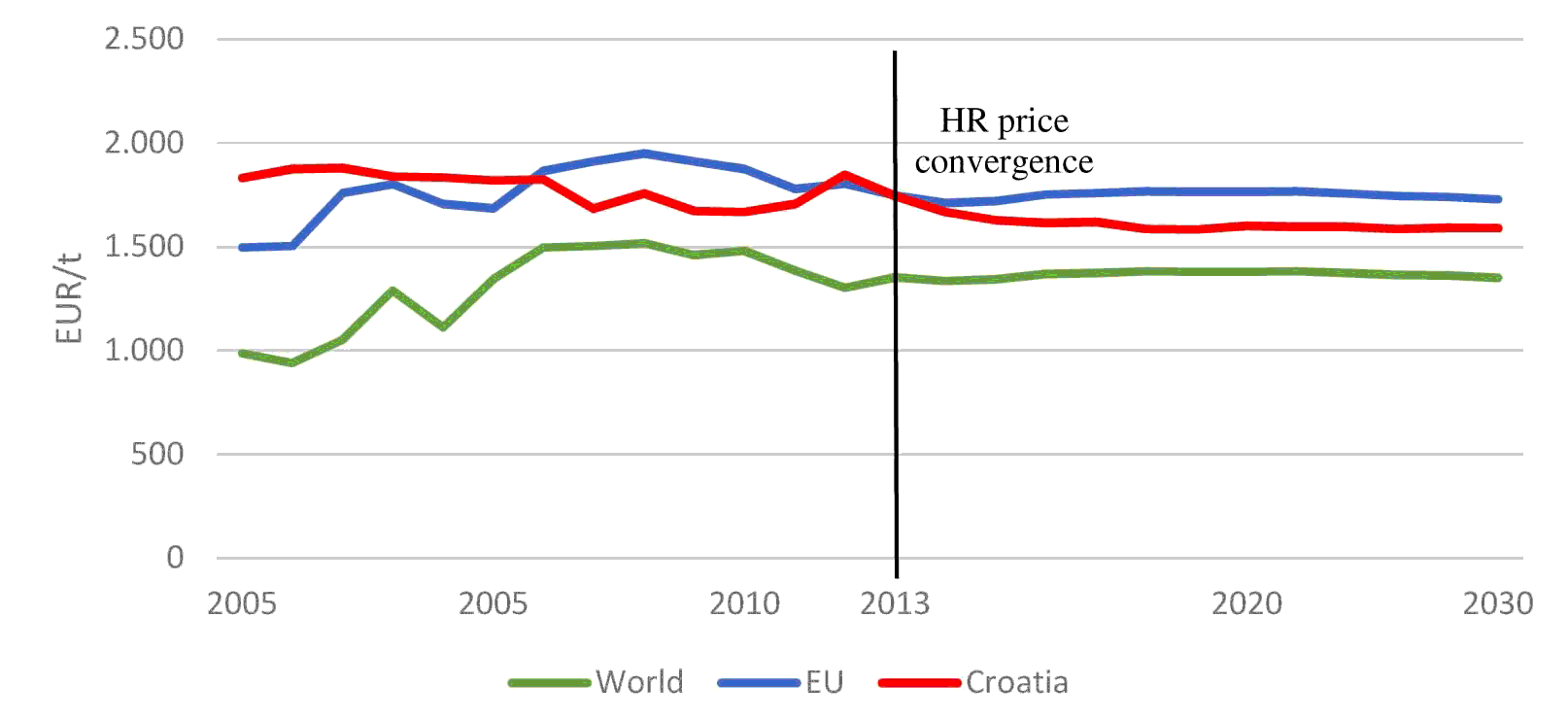
Since the accession of the New Members State in the EU, significant changes have taken place in the economic environment of the agricultural sector (Erjavec et al., Reference ERJAVEC, DONNELLAN and KAVČIČ2006; Kotevska et al., Reference KOTEVSKA, DIMITRIEVSKI and ERJAVEC2013; Chantreuil et al., Reference CHANTREUIL, SALPUTRA and ERJAVEC2013). As the youngest member state, and with almost the same transitional past as other CEECs, Croatia follows similar trends in the production of poultry meat as those of other EU-13 countries within a ten-year time-span. When Croatia joined the EU in 2013, the domestic market had to adjust to the conditions of single market operation, and balance and converge domestic prices to the EU price (Figure 3).
Projected prices of poultry meat in the EU, World and Croatia.
Source: elaborated by the authors according to the AGMEMOD v8.0 model results.

Prior to joining the EU, the price of poultry meat in Croatia was slightly higher than in the EU. However, after the convergence, the price of Croatian poultry meat was lower than the average EU-28 price, and the price in Croatia is expected to sink below the EU-28 price by the end of the projected period. Croatia's lower production costs (including fodder and labour costs) compared to the EU-15 will keep the price of poultry meat below the EU-28 price, making the Croatian poultry meat market price competitive. At the same time, the Croatian price is expected remain higher than the average world price of poultry meat, due to relatively higher production costs compared to rest of the world.
During the first year after accession, there was a slight drop in production due to a fall in domestic prices and adjustments to business conditions in the single market. Since then, the poultry meat market in Croatia has continued to recover and follow a positive trend that was similar to that observed in the EU-13 poultry meat market.
Croatian Poultry meat market prospects.

Source: elaborated by the authors according to the AGMEMOD v8.0 model results.
A strong growth period is expected within Croatia's poultry meat production between 2020-2030 due to the country's full adjustment to single market conditions and the high probability of more investment in the poultry sector (Table 6). Similar to other EU-13 Member States, domestic and per capita consumption of poultry meat in Croatia is expected to increase, yet the reasons for the increase are somewhat different from that of the EU-13. Increases are caused by factors other than an increase in income, such as the strong influence of an increased demand for a food product in the tourism sector. In the projected period, Croatia remains a net importer of poultry meat (Crnčan et al., Reference CRNČAN, JELIĆ, KRANJAC and KRISTIĆ2018), but with significant trade deficit reduction.
Conclusions
The poultry meat market in the EU plays an important role in achieving food security, producer income and creating part of the value of agriculture in the gross domestic production. Within the last 15 years, poultry meat production in the EU has experienced structural changes, thanks to expansion, changes in consumer demands, environmental pressures, and concerns about animal welfare and public health, along with higher producer costs in EU-15 countries. In more recent times, structural changes have included the strengthening of poultry meat production in the EU-13 compared to the EU-15; in other words, poultry meat production is migrating from west (EU-15) to east (EU-13).
Given these changes in the EU-15 Member States, stagnation is expected in poultry meat production from 2020 until 2030, with projected growth of only 0.14%. Domestic and per capita consumption in the same period will also stagnate, since consumers’ attitude towards meat consumption is changing in EU-15 countries. Until the end of the projected period, the EU-15 will remain a net importer of poultry meat with a strong growth trend of imports, particularly from the EU-13 Member States.
In the observed period (2010-2030), the poultry meat production in the EU-13 countries is expected to grow by 71.41%, with production growth slowing to 8.95% between 2020-2030. Domestic consumption of poultry meat will grow by 23.94%, and per capita consumption in the EU-13 (25.7 kg) is expected to be higher than in the EU-15 countries by 2030. The most significant increase is expected in net exports of poultry meat (500.72%), which is the result of higher competitiveness of poultry meat production, resulting in a surplus of poultry meat products in EU-13 member states.
Similar to other EU-13 countries, Croatia follows positive trends in the poultry meat market. The developmental lag of the domestic poultry meat market compared to other EU-13 countries can be explained by the subsequent accession of Croatia to the EU, 10 years after other CEECs. Advantages of poultry meat production in Croatia are the result of lower feed and labour costs compared to EU-15 countries, and the possibility to realise substantial amounts of investment from rural development funds and other sources of funding in the sector. Production growth of 43.02% is expected, while domestic consumption growth of 29.37% and per capita consumption growth of 39.89% of poultry meat is projected for Croatia from 2010-2030. Although Croatia will remain a poultry meat net importer by 2030, net exports are expected to increase by 31.31%. The domestic price of poultry meat converged with the EU price due to Croatia's accession into the EU. After a short-term adjustment, the domestic price remains stable. On average, the price is 9% below the EU price level and 17% above the world poultry meat price level, which positively influences trends in the development of poultry meat production in Croatia.