


%20--%3e%3c!DOCTYPE%20svg%20PUBLIC%20'-//W3C//DTD%20SVG%201.0//EN'%20'http://www.w3.org/TR/2001/REC-SVG-20010904/DTD/svg10.dtd'%3e%3csvg%20version='1.0'%20id='Layer_1'%20xmlns='http://www.w3.org/2000/svg'%20xmlns:xlink='http://www.w3.org/1999/xlink'%20x='0px'%20y='0px'%20width='64px'%20height='64px'%20viewBox='5.5%20-3.5%2064%2064'%20enable-background='new%205.5%20-3.5%2064%2064'%20xml:space='preserve'%3e%3cg%3e%3ccircle%20fill='%23FFFFFF'%20fill-opacity='0'%20cx='37.785'%20cy='28.501'%20r='28.836'/%3e%3cpath%20fill='%23595959'%20d='M37.441-3.5c8.951,0,16.572,3.125,22.857,9.372c3.008,3.009,5.295,6.448,6.857,10.314%20c1.561,3.867,2.344,7.971,2.344,12.314c0,4.381-0.773,8.486-2.314,12.313c-1.543,3.828-3.82,7.21-6.828,10.143%20c-3.123,3.085-6.666,5.448-10.629,7.086c-3.961,1.638-8.057,2.457-12.285,2.457s-8.276-0.808-12.143-2.429%20c-3.866-1.618-7.333-3.961-10.4-7.027c-3.067-3.066-5.4-6.524-7-10.372S5.5,32.767,5.5,28.5c0-4.229,0.809-8.295,2.428-12.2%20c1.619-3.905,3.972-7.4,7.057-10.486C21.08-0.394,28.565-3.5,37.441-3.5z%20M37.557,2.272c-7.314,0-13.467,2.553-18.458,7.657%20c-2.515,2.553-4.448,5.419-5.8,8.6c-1.354,3.181-2.029,6.505-2.029,9.972c0,3.429,0.675,6.734,2.029,9.913%20c1.353,3.183,3.285,6.021,5.8,8.516c2.514,2.496,5.351,4.399,8.515,5.715c3.161,1.314,6.476,1.971,9.943,1.971%20c3.428,0,6.75-0.665,9.973-1.999c3.219-1.335,6.121-3.257,8.713-5.771c4.99-4.876,7.484-10.99,7.484-18.344%20c0-3.543-0.648-6.895-1.943-10.057c-1.293-3.162-3.18-5.98-5.654-8.458C50.984,4.844,44.795,2.272,37.557,2.272z%20M37.156,23.187%20l-4.287,2.229c-0.458-0.951-1.019-1.619-1.685-2c-0.667-0.38-1.286-0.571-1.858-0.571c-2.856,0-4.286,1.885-4.286,5.657%20c0,1.714,0.362,3.084,1.085,4.113c0.724,1.029,1.791,1.544,3.201,1.544c1.867,0,3.181-0.915,3.944-2.743l3.942,2%20c-0.838,1.563-2,2.791-3.486,3.686c-1.484,0.896-3.123,1.343-4.914,1.343c-2.857,0-5.163-0.875-6.915-2.629%20c-1.752-1.752-2.628-4.19-2.628-7.313c0-3.048,0.886-5.466,2.657-7.257c1.771-1.79,4.009-2.686,6.715-2.686%20C32.604,18.558,35.441,20.101,37.156,23.187z%20M55.613,23.187l-4.229,2.229c-0.457-0.951-1.02-1.619-1.686-2%20c-0.668-0.38-1.307-0.571-1.914-0.571c-2.857,0-4.287,1.885-4.287,5.657c0,1.714,0.363,3.084,1.086,4.113%20c0.723,1.029,1.789,1.544,3.201,1.544c1.865,0,3.18-0.915,3.941-2.743l4,2c-0.875,1.563-2.057,2.791-3.541,3.686%20c-1.486,0.896-3.105,1.343-4.857,1.343c-2.896,0-5.209-0.875-6.941-2.629c-1.736-1.752-2.602-4.19-2.602-7.313%20c0-3.048,0.885-5.466,2.658-7.257c1.77-1.79,4.008-2.686,6.713-2.686C51.117,18.558,53.938,20.101,55.613,23.187z'/%3e%3c/g%3e%3c/svg%3e)
%20--%3e%3c!DOCTYPE%20svg%20PUBLIC%20'-//W3C//DTD%20SVG%201.0//EN'%20'http://www.w3.org/TR/2001/REC-SVG-20010904/DTD/svg10.dtd'%3e%3csvg%20version='1.0'%20id='Layer_1'%20xmlns='http://www.w3.org/2000/svg'%20xmlns:xlink='http://www.w3.org/1999/xlink'%20x='0px'%20y='0px'%20width='64px'%20height='64px'%20viewBox='5.5%20-3.5%2064%2064'%20enable-background='new%205.5%20-3.5%2064%2064'%20xml:space='preserve'%3e%3cg%3e%3ccircle%20fill='%23FFFFFF'%20fill-opacity='0'%20cx='37.637'%20cy='28.806'%20r='28.276'/%3e%3cg%3e%3cpath%20fill='%23595959'%20d='M37.443-3.5c8.988,0,16.57,3.085,22.742,9.257C66.393,11.967,69.5,19.548,69.5,28.5c0,8.991-3.049,16.476-9.145,22.456%20C53.879,57.319,46.242,60.5,37.443,60.5c-8.649,0-16.153-3.144-22.514-9.43C8.644,44.784,5.5,37.262,5.5,28.5%20c0-8.761,3.144-16.342,9.429-22.742C21.101-0.415,28.604-3.5,37.443-3.5z%20M37.557,2.272c-7.276,0-13.428,2.553-18.457,7.657%20c-5.22,5.334-7.829,11.525-7.829,18.572c0,7.086,2.59,13.22,7.77,18.398c5.181,5.182,11.352,7.771,18.514,7.771%20c7.123,0,13.334-2.607,18.629-7.828c5.029-4.838,7.543-10.952,7.543-18.343c0-7.276-2.553-13.465-7.656-18.571%20C50.967,4.824,44.795,2.272,37.557,2.272z%20M46.129,20.557v13.085h-3.656v15.542h-9.944V33.643h-3.656V20.557%20c0-0.572,0.2-1.057,0.599-1.457c0.401-0.399,0.887-0.6,1.457-0.6h13.144c0.533,0,1.01,0.2,1.428,0.6%20C45.918,19.5,46.129,19.986,46.129,20.557z%20M33.042,12.329c0-3.008,1.485-4.514,4.458-4.514s4.457,1.504,4.457,4.514%20c0,2.971-1.486,4.457-4.457,4.457S33.042,15.3,33.042,12.329z'/%3e%3c/g%3e%3c/g%3e%3c/svg%3e)
Introduction
The use of antibiotics, once known as a wonder drug, has been of rising concern over the last decade. Reference Sharma, Bowman, Alladin-Karan and Singh1 Antimicrobial resistance (AMR) is a major global public health challenge. Inappropriate antibiotic use resulting in the emergence of resistant organisms threatens the effectiveness of the existing therapies for which the World Health Organization (WHO) devised the Global Antimicrobial Resistance and use surveillance system. 2 India is among the largest consumers of antibiotics worldwide, making optimization of antimicrobial use a healthcare priority. Reference Ranjalkar and Chandy3,Reference Laxminarayan and Chaudhury4
Pediatric intensive care units (PICUs) are environments with high antimicrobial exposure. Prompt empirical antibiotic treatment may be lifesaving; however, unnecessary or prolonged use contributes to AMR, adverse effects, and increased healthcare costs. Antibiotic stewardship initiatives have expanded globally, but data describing determinants of antibiotic prescribing in Indian PICUs remain limited. Reference Joshi, Sujatha and Purushothaman5–Reference Ding, Yang, Chen, Wang, Fan and Shen8
The present study aimed at describing the factors influencing antibiotic initiation, modification, and discontinuation among children admitted to a tertiary-care PICU and to identify potential stewardship opportunities.
Methods
A single-center prospective observational study was conducted in the PICU of a tertiary-care teaching hospital in South India. All children admitted from 1 January 2024 to 31 May 2024 (5 mo) to the PICU between the ages of 1 month and 18 years were included in the study. Children admitted under other departments, such as Pediatric Surgery, Pediatric Orthopaedic, and Neurosurgery, were excluded.
Data were collected prospectively using a structured proforma. Demographic characteristics, presenting symptoms and signs, laboratory investigations, radiological findings, microbiological investigations, antibiotic prescriptions, and antibiotic-review decisions were recorded.
Cases were classified as infective or non-infective using a combination of clinical presentation, laboratory parameters, radiological findings, microbiological investigations when available, and final diagnosis documented by the treating physician’s team. Antibiotic initiation, escalation, de-escalation, discontinuation, and addition of new drugs were determined by the treating physician. Body fluid cultures obtained before antibiotic administration were documented, and culture-guided modifications were recorded.
The institute has an established antimicrobial stewardship program; however, antibiotic prescribing decisions during the study period were made by the treating physician’s team according to routine clinical practice.
Ethical issues: Study approval was obtained from the Institution’s Ethics Committee (IEC2:363/2022). All guidelines according to the Declaration of Helsinki and good clinical practice guidelines were followed.
Statistical analysis: Data analysis was performed using Jamovi 2.4.8. Descriptive statistics are presented as frequencies and percentages. Fisher’s exact test and χ2 testing were used where appropriate, with P < .05 considered statistically significant.
Results
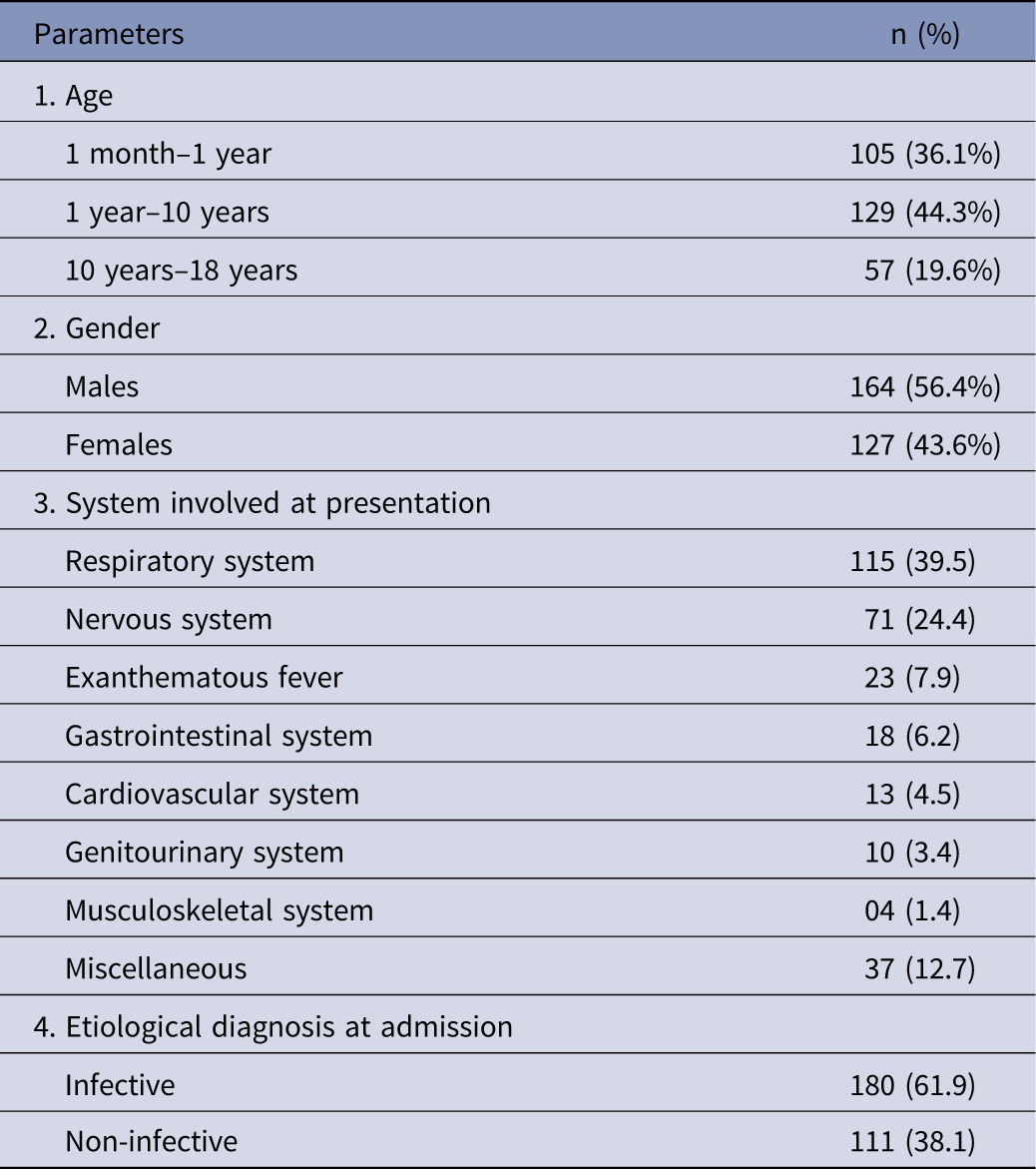
During the study period, 308 children were admitted to the PICU, of which 291 fulfilled the eligibility criteria and were included in the final analysis. Children between 1 year and 10 years accounted for majority of the cases (44.3%). Males constituted 56.4% of the study population. Respiratory system involvement was the most common presentation (39.5%), followed by nervous system involvement (24.4%). Infective etiologies accounted for 180 (61.9%) admissions and non-infective etiologies for 111(38.1%). (Table 1).
Clinico-demographic details of children included in the study (n = 291)

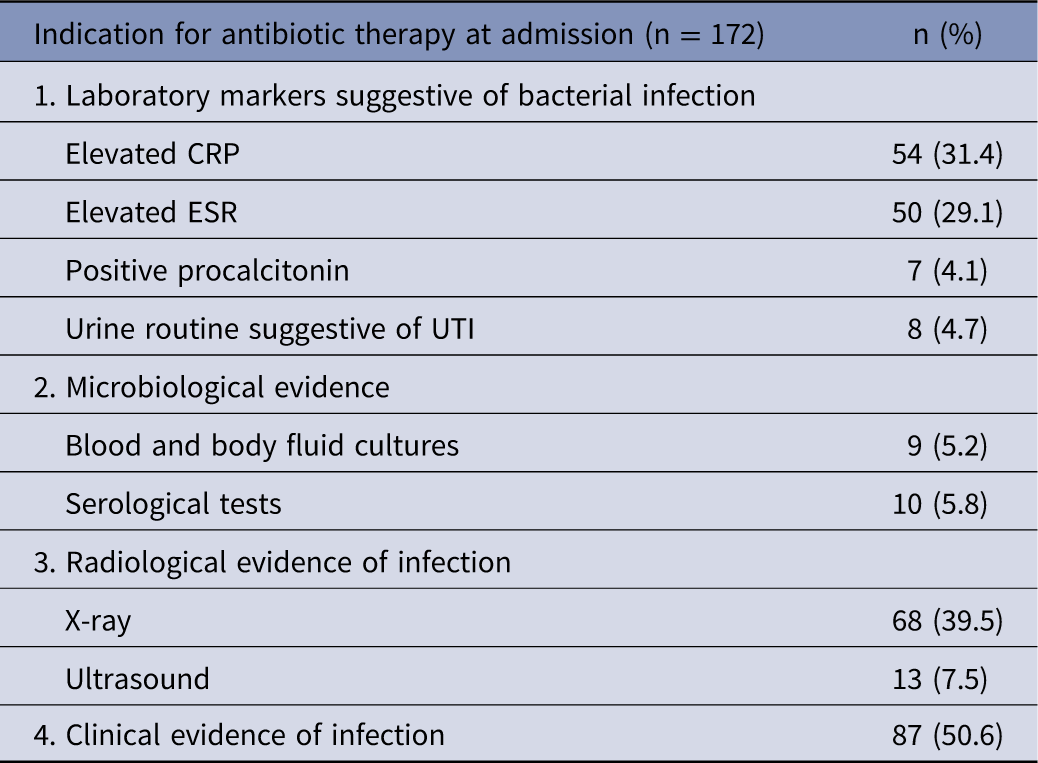
Antibiotics were prescribed in 172 children, accounting for an overall utilization rate of 59.1%. Antibiotic prescribing decision was multifactorial and integrated clinical assessment with laboratory, radiological, and microbiological information when available. Elevated C-reactive protein (CRP) was seen in 31.4%, elevated erythrocyte sedimentation rate (ESR) in 29.1%, a positive procalcitonin in 4.1%, and pyuria suggestive of urinary tract infection in 4.7%, accounting for the laboratory parameters considered for antibiotic initiation. Radiological evidence in the form of chest radiography suggestive of pneumonia in 39.5% and ultrasonography suggestive of urinary tract infection/pyelonephritis in 7.5% were considered. Microbiological culture studies of blood and body fluids were sent in 126 (43.2%) of the cases. Blood cultures were positive in 2/83 (2.4%) children, yielding Staphylococcus aureus and methicillin-resistant Staphylococcus aureus (MRSA). Urine cultures demonstrated significant growth in 7/14 (50%) children, Escherichia coli (n = 5), and Klebsiella species (n = 2) were isolated. Cerebrospinal fluid (CSF), pleural fluid, ascitic fluid, sputum, and endotracheal aspirate cultures showed no significant growth. Serological tests (Dengue IgM, Measles IgM) were positive in 10/23 (43.5%) cases. (Table 2).
Indication for antibiotic use in children included in the study

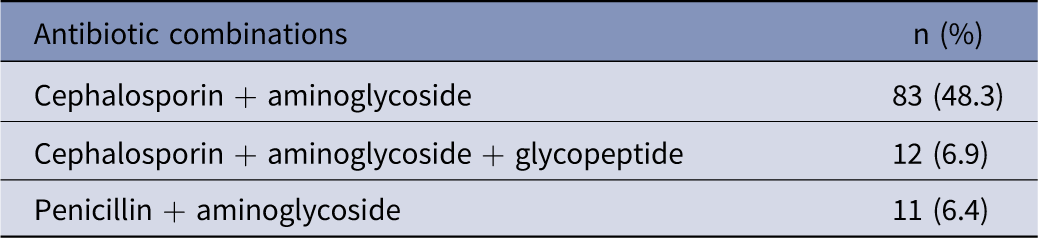
In the study, the most prescribed antibiotic combinations were cephalosporin and aminoglycoside, accounting for 48.3%, followed by a combination of cephalosporin with aminoglycoside and glycopeptide, which constituted 6.9% and Penicillin and aminoglycosides with 6.4% of the prescriptions. The other less commonly used groups of antibiotics were Tetracycline, Macrolides, Sulphonamides, and Nitroimidazoles. (Table 3).
Pattern of antibiotic combinations prescribed during the study (n = 172)

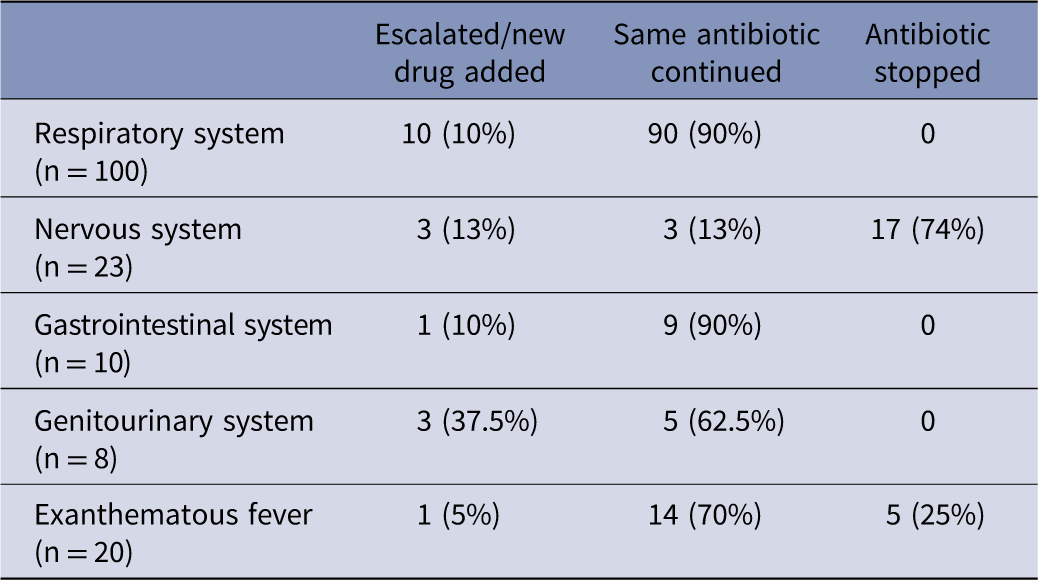
Antibiotic prescribing review identified escalation in 10% of respiratory infections due to clinical deterioration, worsening radiology, increasing oxygen requirement, or rising inflammatory markers. In nervous system presentations, antibiotics were discontinued in 73.9% of the treated children after CSF findings suggested viral disease and cultures remained sterile. In genitourinary infections, antibiotic modification occurred in 37.5% of cases according to urine culture sensitivity reports. Exanthematous fever demonstrated substantial opportunities for discontinuation following confirmation of viral etiology (Table 4).
Optimization of antibiotics at review in children included in the study

Overall, antibiotic review resulted in escalation, modification, or discontinuation in a substantial proportion of treated patients, indicating that prescribing decisions evolved with the availability of clinical and diagnostic information.
Discussion
This study provides a detailed description of antibiotic prescribing decisions in a tertiary-care PICU and contributes data from a low- and middle-income country setting where stewardship literature remains limited. The overall antibiotic utilization rate in this study was 59.1%, which is consistent with several studies that have reported high rates of antibiotic use in PICUs, ranging from 60% to 80% of admitted children. Reference Weiss, Fitzgerald and Pappachan9,Reference Versporten, Bielicki and Drapier10 Systematic evaluation of antibacterial use provides insight into prescribing trends and supports the development of targeted antimicrobial stewardship strategies in this high-risk environment. Reference Schuts, Hulscher and Mouton11–Reference Gandra, Alvarez-Uria and Turner13
The predominance of respiratory illnesses as the principal indication of antibiotic use is consistent with findings from pediatric critical-care studies worldwide. Reference Weiss, Fitzgerald and Pappachan9,Reference Versporten, Bielicki and Drapier10 Respiratory presentations often pose a diagnostic challenge as infective and inflammatory conditions of the lung can present with similar clinical and radiological findings. Hence, clinicians frequently initiate empirical antimicrobial therapy while awaiting further diagnostic clarification. Reference Vu, Vu and Hoang14
An important finding of the present study is the influence of clinical assessment on prescribing decisions. Approximately half of antibiotic initiations were based on clinical evaluation, emphasizing the realities of critical-care practice where immediate treatment decisions must often be made before definitive diagnostic information becomes available. Reference Hersh, Jackson and Hicks15,Reference Phillip, Levy Mitchell and Rhodes Andrew16 This approach is appropriate in unstable patients; however, it reinforces the need for structured reassessment strategies to minimize the use of empirical therapy. Reference Hyun, Hersh and Namtu17
Inflammatory markers such as CRP, ESR, and procalcitonin contributed to the prescribing decisions but were rarely used in isolation. These biomarkers may help decision-making, but their diagnostic accuracy remains imperfect. Reference Stocker, van Herk, El Helou and Dutta18 The findings support the current stewardship recommendations that advocate interpretation of inflammatory markers with the clinical and microbiological context rather than a standalone indicator for antibiotic therapy. Reference De Waele, Akova and Antonelli19
The blood culture positivity rate (2.4%) observed in this study is consistent with previous reports from ICUs, where the diagnostic yield of blood cultures is often low despite a high burden of suspected infection. Several factors may contribute to the low yield, including prior antimicrobial exposure and insufficient blood volumes obtained from pediatric patients. Reference Woods-Hill, Koontz and Xie20 In contrast to blood cultures, urine cultures demonstrated a higher diagnostic yield and directly influenced antibiotic modification in genitourinary infections. Culture-guided treatment remains a cornerstone of antibiotic stewardship. Antibiotics were discontinued in a substantial number of children with neurological presentations once CSF culture was sterile, and exanthematous febrile illnesses after serological testing were suggestive of viral etiology. Diagnostic clarity facilitated cessation of unnecessary antimicrobial therapy, highlighting the value of review of antimicrobial prescriptions in response to evolving clinical and microbiological information. Reference Hyun, Hersh and Namtu17–Reference De Waele, Akova and Antonelli19
Cephalosporin plus aminoglycoside was the most commonly prescribed antibiotic combination (48.3%) among pediatric critical-care patients, reflecting its role as a preferred empirical regimen for severe infections due to its broad-spectrum coverage and synergistic activity. The combination of cephalosporin, aminoglycoside, and glycopeptide (6.9%) was used in patients requiring broader coverage, particularly against resistant gram-positive pathogens, while penicillin plus aminoglycoside (6.4%) was prescribed less frequently. The predominance of β-lactam–based combinations is consistent with evidence supporting the early use of broad-spectrum antibiotics in critically ill children, where prompt and appropriate antimicrobial therapy is crucial for improving clinical outcomes. Reference Hersh, Jackson and Hicks15
From a stewardship perspective, several practical opportunities emerge from this study. First, implementation of mandatory antibiotic review at 48–72 hours could facilitate earlier de-escalation and discontinuation. Second, strengthening diagnostic stewardship through timely specimen collection before antibiotic administration may improve microbiologic yield. Third, development of system-specific treatment pathways for common PICU conditions, particularly respiratory infections, could reduce variation in prescribing practices and support judicious antimicrobial use. 21,Reference Dellit, Owens and McGowan22
This study adds to the growing international evidence that antimicrobial stewardship in PICUs should move beyond uniform prescribing frameworks toward context-sensitive strategies that integrate clinical assessment with laboratory evidence, radiological data, and microbiological reports when available. Reference Schuts, Hulscher and Mouton11,Reference De Waele, Akova and Antonelli19
Limitations of the study: Microbiological confirmation was not available for all patients, and culture positivity rates were low. The analysis was descriptive and did not evaluate appropriateness of therapy, guideline concordance, duration of therapy, resistance patterns, mortality, length of stay, or clinical outcomes. It was a single-center study; future multicentre studies incorporating these measures would provide a more comprehensive assessment of antimicrobial stewardship performance in pediatric critical-care settings.
Conclusion
Antibiotic use remains common in pediatric intensive care practice. Antibiotic prescribing decisions are influenced by clinical assessment, laboratory markers, radiological findings, and microbiological investigations when available. Structured review processes, diagnostic stewardship, and timely de-escalation can improve antimicrobial use and reduce unnecessary antibiotic exposure in critically ill children.
Data availability statement
Due to the nature of the research and ethical requirements, supporting data is not available.
Author contributions
Dr Rochelle A Pereira—Conceptualization, Data curation, Formal Analysis, Investigation, Methodology, Supervision, Validation, and Writing—original draft. Dr Suneel C Mundkur—Conceptualization, Methodology, Supervision, and Writing—original draft. Dr Asma Javed—Data curation and Investigation. Dr Shrikiran Aroor, Dr Ramesh Bhat Y, Dr Leslie Lewis, and Dr Pushpa Kini—Supervision and Writing—review and editing.
Financial support
This research did not receive any specific grant from funding agencies in the public, commercial, or not-for-profit sector.
Competing interests
The authors declare that they have no known competing financial interests or personal relationships that could have appeared to influence the work reported in this study.

 Open access

