Introduction
Acetylsalicylic acid (ASA) is the active part of aspirin and well known as an antipyretic drug (Weissmann, Reference WEISSMANN1991; Wu et al., Reference WU, ZHANG, LU, TANG, KEMPER, HARTUNG and BAO2016a; Reference WU, ZHANG, XU, SONG, LV, TANG, ZHANG, KEMPER, HARTUNG and BAO2016b). Aspirin inhibits the biosynthesis of prostaglandins; consequently, may reset the hypothalamic thermostat (Truong et al., Reference TRUONG, SAYAGO, KUTTEH and KE2016). Supplementation of acetylsalicylic acid in poultry diets has been shown to improve productive performance and physiological traits under heat stress conditions (Abdel-Fattah, Reference ABDEL-FATTAH2006; Abou El-Soud et al., 2006; Wu et al., Reference WU, XU, SONG, TANG, ZHANG, KEMPER, HARTUNG and BAO2015), though reports have been inconsistent (McDaniel et al., Reference MCDANIEL, BALOG, FREED, ELKIN, WELLENREITER, KUCZEK and HESTER1993a; McDaniel and Parker, Reference MCDANIEL and PARKER2004).
Heat stress and the harmful impacts of high environmental temperatures on poultry production can be managed through housing design, cooling systems, manipulation of feed formulations to account for altered feed consumption, nutrient requirements, and digestible nutrients. Acetylsalicylic acid (Aspirin) has been investigated as one of the various therapeutic agents that could be used to alleviate the negative impacts of high temperatures and heat stress (Stilborn et al., Reference STILBORN, HARRIS, BOTTJE and WALDROUP1988; Roussan et al., Reference ROUSSAN, KHWALDEH, HADDAD, SHAHEEN, SALAMEH and AL RIFAI2008). The uses of feed additives, such as ASA, have been studied when included in both feed and water (Brake et al., Reference BRAKE, FERKET, GRIMES, BALNAVE, GORMAN and DIBNER1994; Naseem et al., Reference NASEEM, YOUNUS, BILAL, AAMIR, ASIM and AKHTER2005). Numerous studies have focused on the pharmacokinetics of ASA and SS in birds (Baert and De Backer, Reference BAERT and DE BACKER2003; Wang et al., Reference WANG, HUANG, CHEN, IHSAN and YUAN2010; Poźniak et al., Reference POŹNIAK, SWITALA, BOBREK, GRACZYK and DZIMIRA2012; Reference POŹNIAK, GRABOWSKI, MOTYKIEWICZ-PERS, BOBREK, RAK and BOBUSIA2015) and their ability in treating inflammation in domestic fowl (Hocking et al., Reference HOCKING, ROBERTSON and GENTLE2005). However, the data and information on the tolerance and side effects of salicylates in poultry are lacking. A study of Poźniak et al. (Reference POŹNIAK, YUAN, YI, GUO, DENG, ZHU, YANG and S´WITALA2010) reported that broiler chickens did not show side effects when fed diets containing 100 and 200 mg/kg of ASA or sodium salicylate (SS). The measurement of plasma salicylate is useful for predicting pharmacological, toxic and adverse impacts (Dargan et al., Reference DARGAN, WALLACE and JONES2002). In chickens, Mohammad et al. (Reference MOHAMMAD, MANSOOR and AL-ZUBAIDY2012) studied the salicylate pharmacokinetics after single intraperitoneal injection of ASA. Moreover, Poźniak et al. (Reference POŹNIAK, ŚWITAŁA, JAWORSKI, OKONIEWSKI and NIEWIŃSKI2013) compared the pharmacokinetics of SS and ASA after oral administration and single intravenous injection in turkeys and chickens.
Aspirin has impacts on most elements in the bone, independent of prostaglandin metabolism. Therefore, some studies have reported that perosis induced by deficiency of zinc can be reduced and corrected by aspirin supplementation to broiler chicken diets (Riddell, Reference RIDDELL1975; Derakhshanfar et al., Reference DERAKHSHANFAR, KHEIRANDISH, ALIDADI and BIDADKOSH2013). Zhang et al. (Reference ZHANG, QIAN, ZHU, TANG, WU, ZHANG, KEMPER, HARTUNG and BAO2016) reported that ASA played a crucial function in preventing myocardial cells against heat stress damage in vitro. The current review discusses the important aspects of using ASA, including chemical and physical properties and its practical uses in the nutrition and production of poultry.
Chemical and physical properties
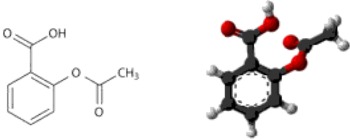
Aspirin is an acetyl derivative of salicylic acid and dissolves rapidly in solutions of acetates, citrates, carbonates, plus hydroxides of alkali metals. The stability of aspirin is good in dry air, but when exposed to moisture it gradually breaks down into salicylic acid and acetate (Reynolds, Reference REYNOLDS1982). The molar mass and density of ASA are 180.157 g/mol and 1.40 g/cm3, respectively and its acid dissociation constant (pKa) is 3.5 at 25°C (Richard, Reference RICHARD2007). The systematic (IUPAC) name of ASA is 2-(acetyloxy) benzoic acid and its chemical structure is shown in Figure 1 .
Chemical structure of acetylsalicylic acid (C9H8O4).

Beneficial applications of acetylsalicylic acid
growth performance
Results on growth performance vary depending on the dose of ASA used in feed, and are somewhat conflicting. Glick (Reference GLICK1963) reared broiler chickens (New Hampshire breed) at 40.6°C and compared diets supplemented with ASA at different levels of 0.07, 0.15, 0.30 or 0.58%. Weight gain and feed conversion were not significantly affected until ASA levels reached 0.30%, at which point body weights were higher and feed conversion was improved relative to the control treatment. There were no improvements on growth performance and feed conversion of broiler chickens fed ASA with range from 0.005% to 0.08% in the diet (Reid et al., Reference REID, KURNICK, THOMAS and HULETT1964). Nakaue et al. (Reference NAKAUE, WEBER and REED1967) noted a significant decrease in live body weights of broiler chickens fed at a level of 0.60% and 0.90% ASA for four weeks. That same study also found that ASA fed at a level of 0.30% had no effect on chick body weight.
Using 0.05% ASA in diets for Heisdorf and Nelson Leghorn chicks or White Mountain broiler chicks reared under heat stress conditions had no significant impact on growth performance or feed conversion (Adams and Rogler, Reference ADAMS and ROGLER1968). Moreover, Stilborn et al. (Reference STILBORN, HARRIS, BOTTJE and WALDROUP1988) pointed out that dietary ASA supplementation (0.0125, 0.025 or 0.05%) fed for two weeks did not significantly affect feed efficiency, body weight, or weight gain of male broilers reared under thermoneutral or heat stress conditions. However, Oluyemi and Adebanjo (Reference OLUYEMI and ADEBANJO1979) observed a significant increase in body weight of broilers when fed 0.20% dietary ASA, compared with chicks fed the control. Similarly, Al-Mashhadani et al. (Reference AL-MASHHADANI, PITAN and AHMED1988) found that the body weight of chicks was increased by supplementation of ASA at 0.05 and 0.10% levels during the fourth week of age. In that same study, dietary ASA at 0.15% significantly decreased the body weights when compared with the control group.
McDaniel and Parker (Reference MCDANIEL and PARKER2004) observed that heat-stressed Arbor Acres roosters receiving ASA at 0.15% dose level consumed less feed than those fed the control diet. While, Roussan et al. (Reference ROUSSAN, KHWALDEH, HADDAD, SHAHEEN, SALAMEH and AL RIFAI2008) suggested that ASA offered a potential protective effect against heat stress on growth performance and feed utilisation of broiler chickens. Sharma and Bhatti (Reference SHARMA and BHATTI1998) showed that FCR can be improved by ASA supplementation in growing White Leghorn pullets. Al-Obaidi and Al-Shadeedi (Reference AL-OBAIDI and AL-SHADEEDI2010) reported that using of 0.2% ASA in broiler diets improved live body weight. Al-Mashhadani et al. (Reference AL-MASHHADANI, PITAN and AHMED1988) observed a significant increase in live body weight of broiler chickens received 1000 mg/kg of aspirin.
egg production
Early data showed that egg production can increase by 4-6% when laying hens are fed 0.05% ASA for ten months during both hot and cool weather months (Reid et al., Reference REID, KURNICK, THOMAS and HULETT1964). Hen-day egg production was improved up to 6% when layers fed diets contained ASA at concentrations of 0.05%, 0.1% or 0.2%. However egg weights were lowered by these same inclusion levels in other trials, as compared with layers fed a control diet (Thomas et al., Reference THOMAS, NAKAUE and REID1966). Furthermore, Oluyemi and Adebanjo (Reference OLUYEMI and ADEBANJO1979) observed significant increases in egg production and egg weight of laying hens (Rhode Island Red×Barred Plymouth Rock) fed ASA at 0.05 or 0.1% during the period of 30-60 weeks of age, as compared with birds fed control diet.
The daily ingestion of 750 mg aspirin for two weeks or 400 mg aspirin for three weeks had no significant impact on eggs laid (Gilbert et al., Reference GILBERT, MITCHELL, DAVIDSON, LAUGHLIN and HUGHES1982). Similarly, Balog and Hester (Reference BALOG and HESTER1991) reported that supplementation of 0.05% aspirin to laying hen diets for four weeks had no significant impacts on egg weights or egg production. On the other hand, egg weight and production were statistically decreased during the first 13 months of egg production stage when hens were fed 0.4% ASA in comparison with an unsupplemented control. Egg weight and production was reduced in hens fed 0.1 and 0.2% dietary ASA (McDaniel et al., Reference MCDANIEL, BALOG, FREED, ELKIN, WELLENREITER, KUCZEK and HESTER1993a). Hassan et al. (Reference HASSAN, MADY, CARTWRIGHT, SABRI and MOBARAK2003) noted a significant improvement in hen-day egg production of laying Japanese quail with ASA at levels of 0.5, 1 and 1.5 g/l in the drinking water, while egg weight was not affected by ASA inclusions at any levels under heat stress conditions.
Abou El-Soud et al. (2006) found a significant improvement in egg production from laying Japanese quail fed diets containing 0.025, 0.05 or 0.1% ASA under hot climates, however, egg weights were not affected. However, egg weights and production were improved for laying hens watered 0.5, 1.0 and 1.5 g/l ASA (Mohammed, Reference MOHAMMED2010). In layer breeders, Balog and Hester (Reference BALOG and HESTER1991) speculated that the production of shell-less eggs and broken eggs were significantly reduced with 0.05% ASA supplementation. However, hen-day egg production and feed to egg mass ratio were not significantly affected by aspirin (0.3 mg/l in the water) supplementation under hot climates (Dei, Reference DEI2014).
egg quality criteria
Hens fed ASA at levels of 0.025, 0.05, 0.1, 0.2 or 0.4% showed significant reductions in shell thickness and egg specific gravity when compared with birds fed the control diet (McDaniel et al., Reference MCDANIEL, BALOG, FREED, ELKIN, WELLENREITER, KUCZEK and HESTER1993b). Balog and Hester (Reference BALOG and HESTER1991) reported that feeding aged layer breeders on a diet supplemented with 0.05% ASA significantly decreased the incidence of soft-shelled eggs. Egg specific gravity was increased by supplemental ASA in drinking water at levels of 0.05, 0.1, and 1.5 g/l in laying Japanese quail reared under heat stress conditions (Hassan et al., Reference HASSAN, MADY, CARTWRIGHT, SABRI and MOBARAK2003).
Abou El-Soud et al. (2006) observed a significant improvement in the shell thickness of eggs from quail fed diets containing 0.025, 0.05 or 0.1% ASA under hot climates, as well as significant decreases in Haugh units and albumen height, while finding no significant impacts on albumen, yolk, or shell percentage. In laying hens, shell percentage and shell thickness were increased with increasing ASA doses in water from 0.5 to 1.0 to 1.5 g/l (Mohammed, Reference MOHAMMED2010). However, egg quality was not significantly affected by supplementation, except percentage shell, which was decreased by dietary ASA supplementation at a level of 0.05% (El-Kholy, Reference EL-KHOLY2013).
fertility and hatchability percentages
Hatchability from total settable eggs was significantly improved when laying hens received diets containing 0.05% ASA (Balog and Hester, Reference BALOG and HESTER1991). On the other hand, Thomas et al. (Reference THOMAS, NAKAUE and REID1966) found no significant impact on hatchability from fertile eggs when laying hens were fed diets containing the same amount of ASA. McDaniel et al. (Reference MCDANIEL, BALOG, FREED, ELKIN, WELLENREITER, KUCZEK and HESTER1993b) fed laying hens on diets containing a range of ASA concentrations (0.025, 0.05, 0.1, 0.2 or 0.4%) during the production period and found that 0.4% ASA reduced fertility and hatchability percentages from fertile eggs and from total eggs set. Dietary ASA at levels of 0.05, 0.1 and 0.2% did not affect fertility and hatchability percentages from total egg set and from fertile eggs, as compared with the control group.
Hassan et al. (Reference HASSAN, MADY, CARTWRIGHT, SABRI and MOBARAK2003) suggested that the administration of 0.5, 0.1 or 1.5 g/l ASA in drinking water of Japanese quail can improve fertility and hatchability, especially in the group supplemented with 1.5 g/l ASA under heat stress conditions. McDaniel and Parker (Reference MCDANIEL and PARKER2004) found that dietary supplementation of 0.15% ASA could have detrimental effects on fertility of Arbor Acres roosters under heat stress conditions. In addition, neither fertility nor hatchability from fertile eggs was affected by dietary ASA supplementation in laying Japanese quail (El-Kholy, Reference EL-KHOLY2013).
carcass traits and meat quality
Poźniak et al. (Reference POŹNIAK, SWITALA, BOBREK, GRACZYK and DZIMIRA2012) found that body weight gain was decreased with 400 mg/kg of either ASA or SS. The ratio of kidney to pre-slaughter weight was increased at the same level. All feed additives including ASA had no significant impacts on any of the studied carcass traits (carcass, dressing, giblets, liver, gizzard and heart) for growing Japanese quails as compared with a control group (El-Kholy, Reference EL-KHOLY2013).
However, the supplementation of allostatic modulators (either ascorbic acid or ASA) in drinking water significantly improved the microbiological quality of carcasses, lowered crop pH, and reduced the defects of carcass-processing in broilers. Therefore, the use of allostatic modulator is a suitable and cheap alternative to mitigate the allostatic load in broiler chickens (Rohleder, Reference ROHLEDER2008; Rubio-Garcia et al., Reference RUBIO-GARCIA, RUBIO-LOZANO, PONCE-ALQUICIRA, ROSARIO-CORTES, NAVA and CASTANEDA-SERRANO2015).
rectal temperature and respiration rate
Acetylsalicylic acid plays a major role in protecting the body from risks and problems caused by many stressors such as high environmental temperature and humidity, feed restriction, caging, vaccinations, live bird capture, pre-slaughter time and handling, plus the slaughter process itself. The mere presence of one or more of these stressors is known as allostasis and has a negative effect on the health of poultry (McNeal et al., Reference MCNEAL, FLETCHER and BUHR2003; Vecerek et al., Reference VECEREK, GRBALOVA, VOSLAROVA, JANACKOVA and MALENA2006; Whiting et al., Reference WHITING, DRAIN and RASALI2007; Wu et al., Reference WU, XU, SONG, TANG, ZHANG, KEMPER, HARTUNG and BAO2015). Glick (Reference GLICK1963) demonstrated that heat-stressed birds (40.6°C) fed diets containing 0.15, 0.3 or 0.6% ASA showed a decreased body temperature by 0.4, 1.2 and 0.6°C, respectively. However, McDaniel and Parker (Reference MCDANIEL and PARKER2004) reported that dietary supplementation of ASA at level of 0.15% failed to reduce the rectal temperatures of Arbor Acres roosters reared at 29 and 35°C ambient temperature.
Adams and Rogler (Reference ADAMS and ROGLER1968) reported that feeding White Mountain broiler chicks or Heisdorf and Nelson Leghorn chicks reared at 29°C on a diet containing 0.05% ASA resulted in a significant decrease in body temperature by 0.3°C, as compared with the control group. Similarly, Abou El-Soud et al. (2006) noted a significant decrease in the body temperature of laying Japanese quail fed diets containing 0.05 and 0.1% ASA by 0.33 and 0.35°C, respectively. Abdel-Fattah (Reference ABDEL-FATTAH2006) reported a significant decrease in the rectal temperature and respiration rate of Japanese quail fed diets containing 500 mg/kg feed ASA under heat stress conditions, as compared with the control group.
The rectal temperature of growing Japanese quail was not affected by ASA supplementation during 2-4 weeks of age, but during 4-6 weeks of age, dietary ASA supplementation at a level of 0.1% significantly (P≤0.05) decreased rectal temperature, as compared with an unsupplemented group (El-Kholy, Reference EL-KHOLY2013). This author also reported that ASA had no significant impact on the respiration rate of growing Japanese quail during the aforementioned periods. The reduction in rectal temperature in the ASA group may be due to its known action as an antipyretic drug. It may inhibit prostaglandin synthesis and reset the hypothalamic thermostat (Abou El-Soud et al., 2006). In laying Japanese quail, El-Kholy (Reference EL-KHOLY2013) found that respiration rate and rectal temperature were reduced due to the effect of dietary ASA throughout the production stage, as compared with the un-treated group.
haematological and biochemical blood parameters
No significant impacts of dietary ASA were reported for haematological parameters including haemoglobin value, haematocrit, corpuscular volume and corpuscular haemoglobin concentration, as well as red blood cells in broiler chickens (Traş et al., Reference TRAŞ, INAL, BAŞ, ALTUNOK, ELMAS and YAZAR2000). On the other hand, Abou El-Soud et al. (2006) noted a significant decrease in the H/L ratio in Japanese quail fed a diet supplemented with 0.1% ASA under heat stress conditions, with no effect in birds fed diets supplemented with 0.025 or 0.05% ASA. The same authors observed significant decreases in serum cholesterol levels of Japanese quail fed diets containing 0.025, 0.05 or 0.1% ASA. Moreover, Abou El-Soud et al. (2006) noted a significant decrease in serum T3 concentration and saw no impact on serum T4 concentration for Japanese quail fed a diet containing 0.1% ASA under heat stress conditions, however, neither T3 nor T4 were affected significantly in Japanese quail fed the diets containing 0.025 or 0.05% ASA.
Supplementation of ASA during heat stress conditions has been shown to exert a positive impact on the immune response plus the ratio of thymus, spleen, and bursa to body weight. Under heat stress, the thymus, spleen and bursa are typically atrophied, but when ASA is fed, it has been found that these organs are not affected (Anwar et al., Reference ANWAR, KHAN, ASLAM, MAQBOOL and KHAN2004).
A study of Abdel-Fattah (Reference ABDEL-FATTAH2006) confirmed that supplementation of 500 mg/kg ASA to Japanese quail significantly decreased plasma concentrations of albumin, total proteins, cholesterol, glucose and A/G ratio, as compared with the control group under heat stress conditions, while plasma globulin was not affected. Under heat stress conditions, supplementation of 500 ppm ASA in feed for Japanese quail significantly decreased and increased plasma levels of the liver enzyme AST and T3, respectively, as compared with the control group. While, plasma contents of ALT enzyme and T4 were not significantly affected by dietary ASA supplementation.
May and McNaughton (Reference MAY and MCNAUGHTON1980) reported that chicks fed diets containing 0.3% aspirin had a significant decrease in serum T3 level. However, serum T4 level was not significantly affected by aspirin addition. The same authors added that, after 11 days of the dietary treatment, thyroid weight was not significantly affected in chickens fed aspirin.
In trials by Poźniak et al. (Reference POŹNIAK, SWITALA, BOBREK, GRACZYK and DZIMIRA2012) there was a positive correlation between the level of ASA (P<0.05) and concentration of total protein in serum. However, there was a negative correlation between levels of ASA (P<0.05) or SS (P<0.001) and the activity of ALT. Concentrations of uric acid and creatinine were not affected by the different levels (200 and 400 mg/kg) of ASA or SS. Other trials showed that the concentration of plasma salicylate was significantly decreased in birds treated with 200 and 400 mg/kg ASA, and the minimal level of plasma salicylate sharply decreased after only five days of treatment (De Boever et al., Reference DE BOEVER, NEIRINCKX, MEYER, DE BAERE, BEYAERT and DE BACKER2010).
Red blood cell, haemoglobin, white blood cell and packed cell volume were not affected by ASA supplementation, but serum concentrations of cholesterol and glucose were significantly (p<0.05) lowered with treated groups, while adding 0.5, 1.0 and 1.5 g/l ASA increased the levels of serum salicylate by 18.70, 25.12 and 31.29 µg/ml, respectively (Mohammed, Reference MOHAMMED2010). Traş et al. (Reference TRAŞ, INAL, BAŞ, ALTUNOK, ELMAS and YAZAR2000) studied the effect of supplementing vitamin C, vitamin E, aspirin, selenium and their combinations on serum superoxide dismutase and haematological parameters (haemoglobin, red blood cell, haematocrit, mean corpuscular haemoglobin concentration, mean corpuscular haemoglobin, mean corpuscular volume) of broiler chickens. They reported no significant impacts due to the combinations among the tested feed additives on the haematological indices and serum superoxide dismutase except white blood cell counts were decreased with these additives.
Uhrikova et al. (Reference UHRIKOVA, SCHEER, HLOZKOVA, SUCHY and SEPSI2016) reported significantly elevated prothrombin times and activated thromboplastin times in ASA treatment when compared to the control. They also noted a significant decrease in the platelet counts in the ASA group, when compared to the control group. No significant differences in haptoglobin levels and total leukocyte counts were observed.
Conclusions
This review highlights the available data showing the potential of dietary supplementation of ASA as a feed additive, allostatic modulator, growth and production enhancer. It may also have beneficial effects on feed efficiency, nutrient absorption, body weight, carcasses, quality of egg and meat, fertility and hatchability, immunity, blood constituents, and antioxidant indices. Moreover, ASA can play an important role in lowering blood cholesterol and triglyceride, reducing meat and egg cholesterol and improving immune function and antioxidant enzyme activity. Based on the benefits of ASA, it may be beneficial to widen the use of this compound in poultry nutrition to improve performance, production and better health under heat stress conditions however, due to the inconsistencies between studies, more research is warranted.
Acknowledgments
The authors thank and acknowledge their respective Universities and Institutes.
Conflict of interest
The authors do not have conflict of interest in this work.