INTRODUCTION
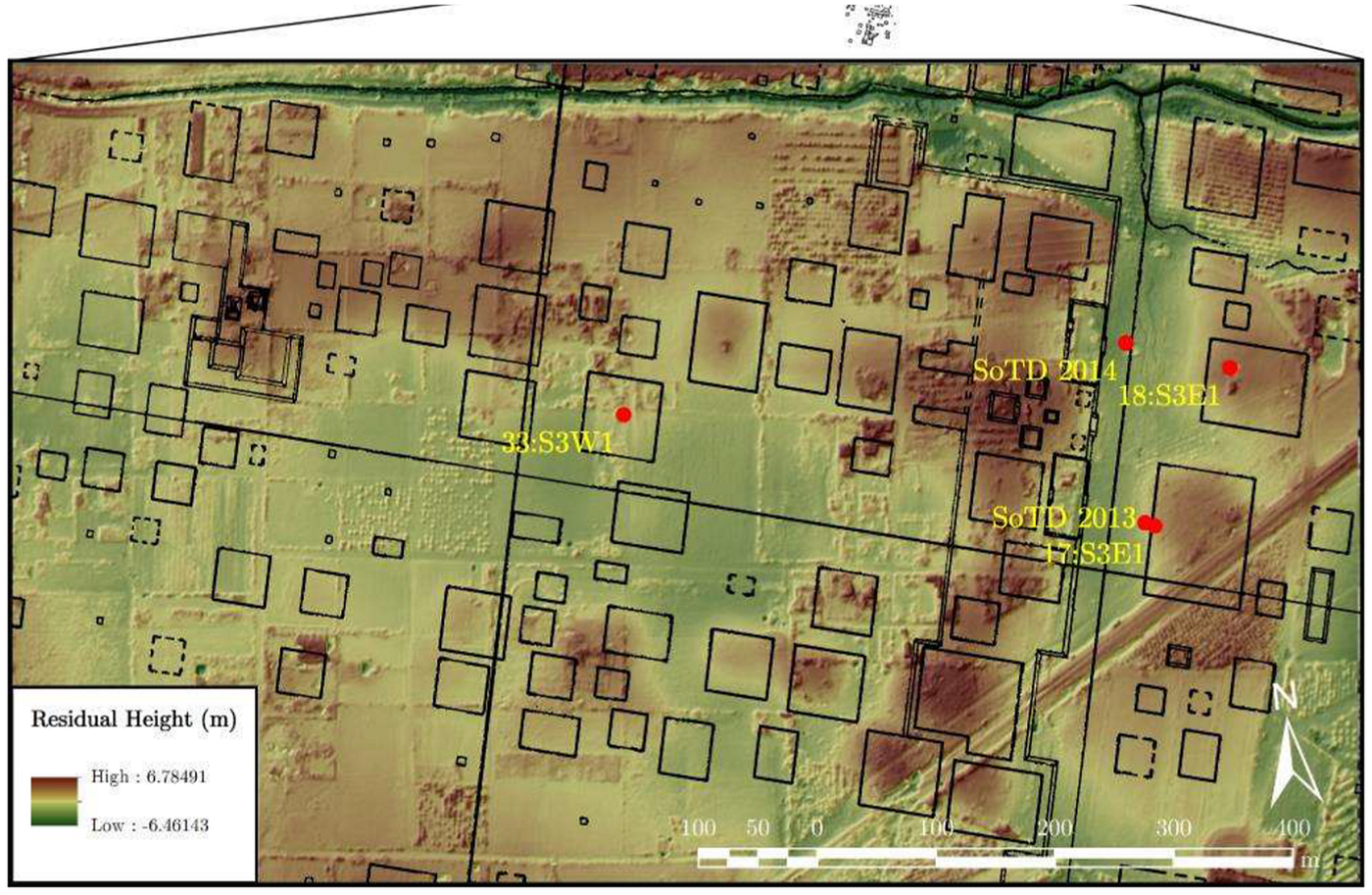
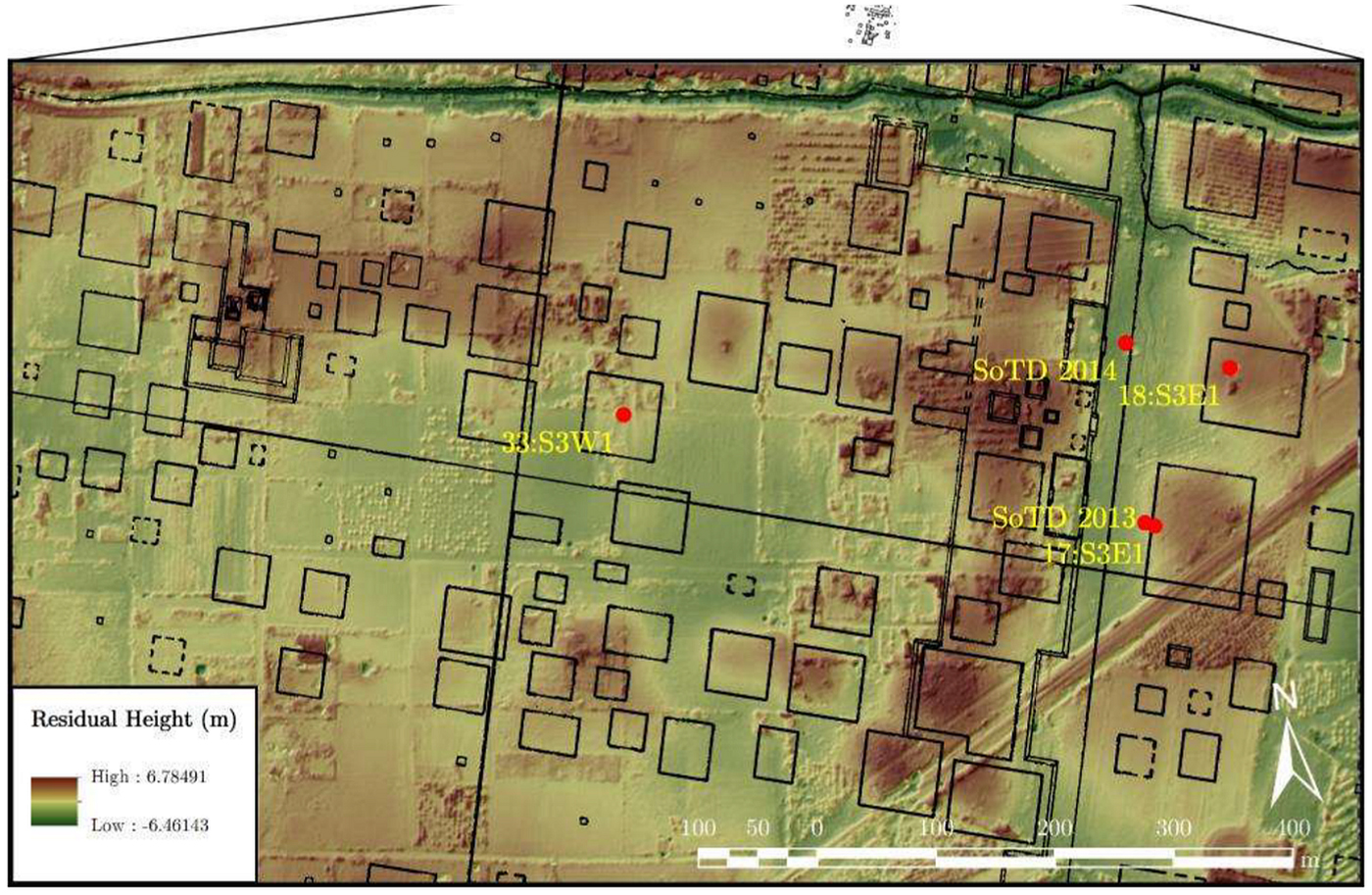
The ancient city of Teotihuacan obviously had diverse and varied economic specializations. Crafting of lapidary items was one of those specialties (Cowgill Reference Cowgill2008, Reference Cowgill2015a; Widmer Reference Widmer1991). Much of what we know about the ancient city comes from the analysis of surface collections from the Teotihuacan Mapping Project (Millon Reference Millon1973; Millon et al. Reference Millon, Drewitt and Cowgill1973). A number of economic activities, some of which may be specialties, have been either identified or proposed for Teotihuacan, including lapidary crafts (Cowgill Reference Cowgill2015a:178–180). I was interested in trying to identify lapidary activities at the two compounds being excavated in the Proyecto Arqueológico Tlajinga Teotihuacan (PATT) project 17:S3E1 (Compound 17) and 18:S3E1 (Compound 18) and the excavation along the Street of the Dead (SOTD.) My previous research identified lapidary production at 33:S3W1 (Tlajinga 33; Widmer Reference Widmer1991), as well as the more extensive and archaeologically visible ceramic production (Sheehy Reference Sheehy1992), reinforcing the idea that compounds did not engage in a single craft activity but, instead, were characterized by multicrafting (Hirth Reference Hirth2009). The three compounds are located in the Tlajinga district on the southern periphery of Teotihuacan. All three of these compounds would be considered non-elite, lower status compounds, with their relative order of status being Compound 17, near the SOTD, as the highest status based on size and location, followed by Compound 17, and then Tlajinga 33 being the lowest status compound of the three, based on size and architecture. The locations of these excavations are presented in Figure 1.
Locations of excavations discussed in this analysis. Map from Carballo et al. (Reference Carballo, Hirth, Sariñana, Buckley, Mejilla Ramón and Kennett2019).
Methodology
The methodology employed was identical to that undertaken at the nearby site of Tlajinga 33, where a lapidary crafting activity was revealed in spite of the identification of intensive ceramic production. This analysis focused on the analysis of microdebitage sorted from the heavy fractions of soil sifted through 1-mm mesh screens. Microdebitage analysis has been shown to be extremely valuable in the identification of chipped stone lithic production where larger debitage is not present in sufficient quantities to indicate production (Fladmark Reference Fladmark1982; Moholy-Nagy Reference Moholy-Nagy1990). Interestingly, the surface survey of the Teotihuacan Mapping Project failed to identify lapidary activity at Tlajinga 33 (Cowgill Reference Cowgill2015b:155) and this appears to be the case for Compounds 17 and 18, as well. There are two issues that impact the identification of lapidary economic crafting. The first of these is that the production of lapidary items involves the exclusive use of non-recursive manufacturing techniques unlike the recursive chipped stone production, where debitage can be refitted (e.g., Fladmark Reference Fladmark1982; Moholy-Nagy Reference Moholy-Nagy1990). This means that the debitage from this reduction activity cannot yield any information on what types of artifacts were produced. Only broken artifacts well along in the manufacturing process can be utilized to determine what types and styles of artifacts are being crafted. In addition, the valuable nature of the raw material being worked would suggest that even small pieces of debitage would be recycled and used to fashion smaller artifacts, such as inlays. The second problem is that the ultimate debitage will also be very small and not amenable to collection by traditional archaeological means. During the excavation of Tlajinga 33, I developed a methodology to resolve the above issues associated with lapidary craft production. Soil samples of 8 L were collected from in situ (non-fill) contexts at the site. Non-fill contexts are those that include soil directly resting on floors, workshop areas, middens, and features, including ceramic vessel contents and soil from pits. These were floated for the extraction of seeds, wood, and other carbonized materials. The heavier sediments that sank to the bottom were retained and wet-sifted through 1-mm mesh screens to recover microartifacts. These are referred to as the Heavy Fraction of the Flotation (HFF). These were then manually sorted to remove tiny artifacts from the natural non-artifactual sediments. The results of this sorting were statistically analyzed to see if any lapidary craft activity was taking place and identify what raw materials were being worked.
Two categories of proveniences were analyzed from the PATT materials. One set was the heavy fraction, screened through 1-mm mesh from soil samples collected for this purpose, as well as flotation of the light fraction, which was separated for botanical analysis to be conducted by Emily McClung Tapia. The other sample type is samples collected from 6-mm screened general proveniences during regular excavation. This analysis follows the protocol that I developed in 1981 for fine-screened samples obtained from Tlajinga 33 (Widmer Reference Widmer1991). The strategy is that the small fragments of debitage from lapidary production cannot be captured utilizing 6-mm mesh screens that are typically employed in excavation. The sediments that are larger than 1 millimeter will, however, be captured utilizing this fine-screening and the presence and intensity of lapidary crafting can be characterized along with the media that is crafted. All of the debitage was sorted through a single size mesh of 1 mm. There was no further sorting into smaller nested sizes. The reason for this is that this would result in multiple samples to sort instead of a single size. Soil sample size was a uniform volume of 2 L, with the exception of a few samples that were recovered from the interior of ceramic vessels. Forty-three soil samples were processed for Compound 17, 42 soil samples from Compound 18, and one soil sample was processed from the SOTD excavation.
The HFF samples from the PATT excavations were uniformly 2 L in volume, unless they were derived from feature fill. Samples were processed, wet-screened, and bagged for sorting. Obsidian artifacts, however, were sorted and removed from the HFF soil samples, although I found numerous obsidian artifacts that were separated and given to Hirth along with the counts and weights of the obsidian types. The samples were visually sorted by pouring a small (approximately 100 grams) sample of the wet-screened HHF matrix onto a white sheet that was inside of a rimmed fiberglass cafeteria tray. The various artifacts were sorted and placed into 50 dram plastic tumblers for each of the various artifact types. Larger artifacts, such as ceramics and obsidian blades, were instead separated onto 5 × 8 inch white stock card. After each pass through the smaller, 100 gram sediment batches, finished sediments were placed into a graduated beaker and weighed. Each artifact class was then counted and weighed and a small sample label was filled in with the provenience information, artifact type, count, weight, and date. The information was then entered into a computer spreadsheet. The artifacts were then organized onto a white sheet and photographed for each lot. Each group of lapidary debitage or tool fragments was also photographed. The artifacts were then place into 3 × 5 inch Ziplock bags together with their labels. This was done for each provenience.
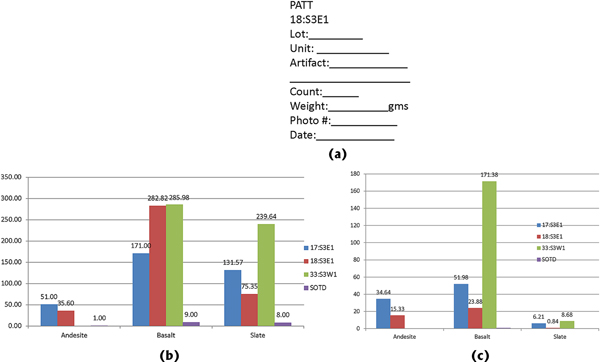
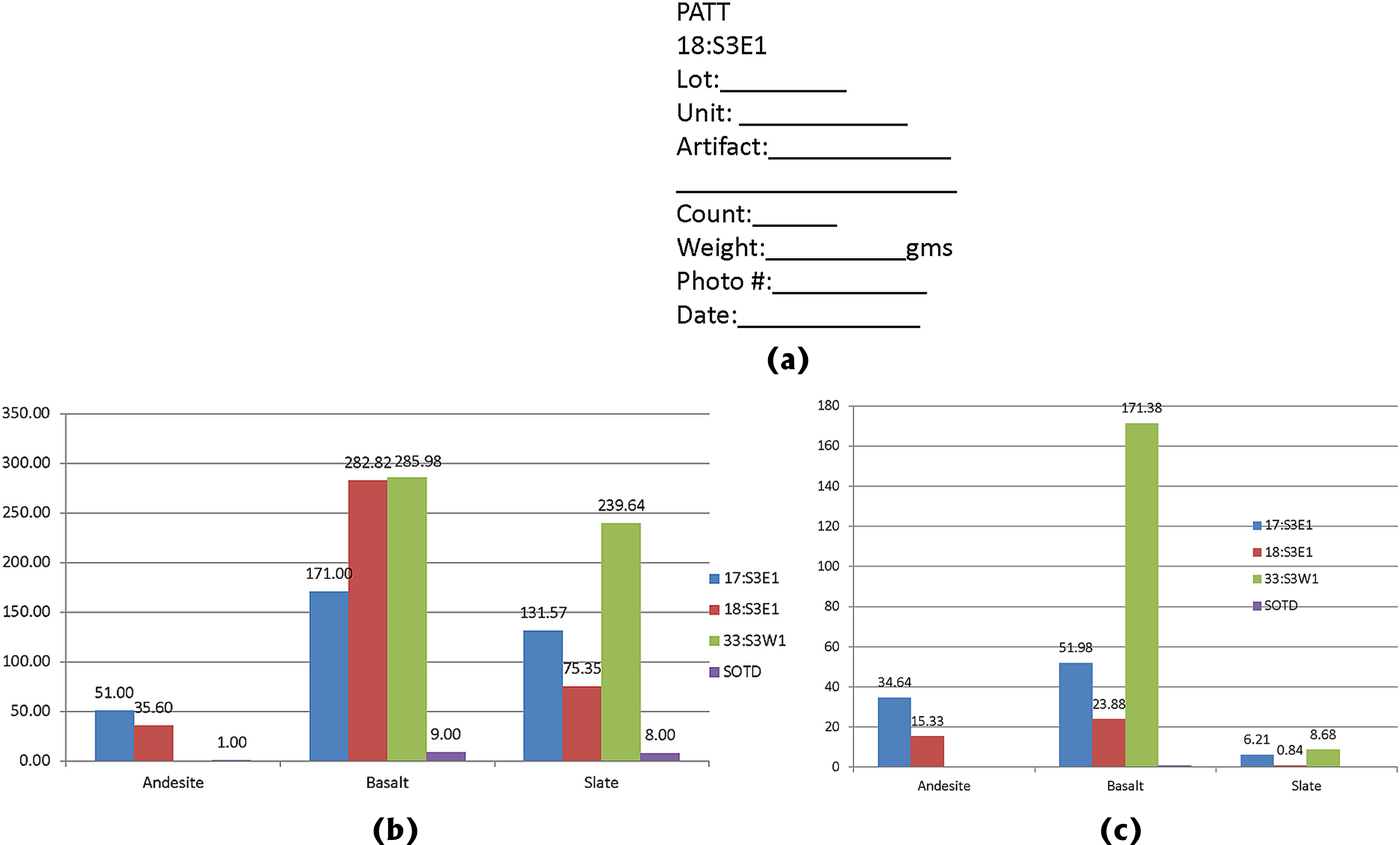
The HFF soil samples had already been fine-screened and were bagged and ready for analysis. These samples had already been sorted to recover obsidian artifacts, but this sorting was cursory and did not result in the collection of all of the obsidian artifacts. The first step in the processing the soil samples was determining the volume of the sediments recovered by the fine, 1-mm mesh screening. This was done by weighing the sediments and entering the information into a spreadsheet field labeled natural gravel. The samples were visually sorted by pouring a small (approximately 100 gram) sample of the wet-screened HHF matrix onto a white sheet that was inside of a rimmed fiberglass cafeteria tray. The various artifacts were sorted and placed into 50-dram plastic tumblers for each of the various artifact types. Larger artifacts, such as ceramics and obsidian blades, were instead separated onto 5 × 8 inch white stock card. After each pass through the smaller, 100 gram sediment batches, finished sediments were placed into a graduated beaker and then weighed Next, small amounts of the recovered sediments were spread onto a 5 x 8 inch white card so that the particles of sediments were clearly visible against the white background due to the high contrast of the sediment matrix. The sediments consisted mostly of grit and gravel-sized gray volcanic material. The small microartifacts were retrieved from the sediments using forceps and placed into small 50 mL plastic cups according to material type. Artifacts were removed and classified by material type and the type of fragment, counted, weighed to 0.01 grams, and placed into small plastic bags with a label with the provenience and artifact information, as shown in Figure 2a.
(a) Label used to record data and place with bag for each artifact category. (b) Heavy Fraction of the Flotation (HFF) counts and (c) weights per liter of andesite, basalt, and slate from Compound 17 (17:S3E1), Compound 18 (18:S3E1), Tlajinga 33 (33:S3W1), and Street of the Dead (SOTD). Graphs by the author.
Information regarding the artifacts was then entered into spreadsheet fields based on a number of observations. First, the raw material category of the artifact was recorded. This could be lithic material such as obsidian, andesite, slate, hematite, or basalt, ceramic, shell, faunal bone, bone tools, eggshell, plaster, or marine shell. Another field was the artifact type. For obsidian, this was blade, flake, or microdebitage. For ceramics, it was rim sherd, body sherd, basal sherd, or spall, which was defined as a small fragment of ceramic with only a single finished surface. For faunal bone, marine shell, and eggshells, the type was either burned or unburned. Non-obsidian lithic artifacts were either debitage, worked, or the actual artifact type, such as bead. A field was created indicating whether the artifact was complete or fragmentary. The count and weight of each artifact raw material category was entered into the spreadsheet and the count and weight per liter were calculated for comparative purposes. If a lapidary artifact was complete, measurements of its size and thickness were recorded and a description of the artifact was made. Charcoal was also recovered from the HFF. It was weighed and separated for identification.
Once the artifacts were sorted, counted, weighed, and entered into the database, they were all placed on an 8 × 5 inch white paper sheet and photographed as a group. Any worked materials such as greenstone, shell, or slate were also photographed separately, along with a scale to indicate size. A total of 15,752 artifacts weighing 5774.09 grams were recovered from the HFF sediments.
The same procedure was utilized for analysis of the lapidary materials recovered from the general excavations, with the exception that the soil volume information was not included. A total of 9,301 lapidary artifacts weighing 3762.77 grams (average = 0.40 grams per artifact) were analyzed. There are many more recognizable lapidary artifacts in the general proveniences that in the HFF samples. This is obvious because of the much greater volume of sediments of the general provenience. Soil volume of the general proveniences ranged from 22–1,100 L. This is 11 to 550 times the volume of the HFF soil samples. Preliminary analysis of the data indicate an active and relatively intense lapidary industry focused primarily on the manufacture of small perforated slate disks and thin, red-painted slate sheets and hafted/stemmed trapezoids, with minor production of greenstone artifacts and fine gray metamorphic stone artifacts. One specific form of artifact, besides the perforated slate disks, is the trapezoidal, hafted pendant. These were produced in a number of media, mostly slate, but also greenstone, and even mica. The entire production sequence is revealed in the fragments and in the debitage of these artifacts, indicating that they were clearly produced here from unmodified raw material.
Also revealed in the HFF samples is the incredibly dense concentration of obsidian artifacts in Compound 17. This is very different than what is seen in Compound 18, where only a few flakes and microdebitage are found in each soil sample. One of the more interesting patterns is the complete absence of mica in the HFF samples, in spite of the fact that worked mica and debitage is found in the general proveniences. This is very different than what was seen at Tlajinga 33, where mica was ubiquitous in the HFF samples. This situation indicates that there was no manufacturing or modification of mica in the PATT excavations and even the worked mica was being brought into the sites as finished artifacts.
RESULTS OF THE ANALYSIS
The HFF lapidary samples from Tlajinga 33 and PATT are not directly comparable. This is because the PATT samples were uniformly 2 L in size, while those from Tlajinga 33 were much larger and varied in volume. This means that the count per liter and weight per liter, rather than raw artifact counts and weights, must be used for comparative purposes.
Initially, andesite, slate, and basalt were separated from other lapidary raw material categories for the HFF samples because the scale of these materials is so much greater than the other raw material categories. No andesite was sorted from the Tlajinga 33 samples, so these are not included. One other distinction between the Tlajinga 33 and PATT HFF samples is that there was no differentiation of debitage size in the Tlajinga 33 samples, so there is no microdebitage category. The additional microdebitage category in the PATT HFF samples reflects the large amount of obsidian debitage and the desire to differentiate debitage smaller than that which would be retrieved by a 6-mm mesh screen; these small fragments were classified as microdebitage and larger fragments were classified as debitage.
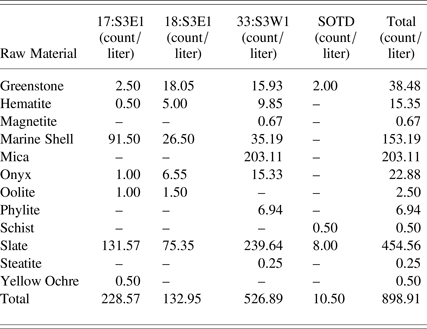
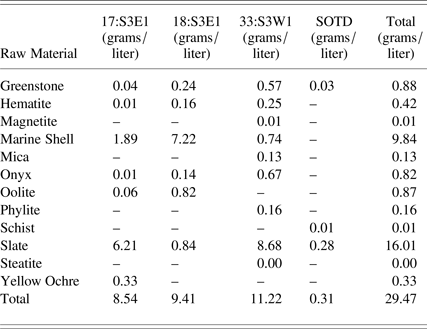
Basalt artifact frequency in count per liter is similar at Compound 17 and Tlajinga 33, but the grams per liter values are much higher at Tlajinga 33 (Table 1 and Figure 2b). Just the opposite pattern is observed for slate, for which the grams per liter are similar at Compound 17 and Tlajinga 33, but the count per liter is much higher at Compound 17 than at Tlajinga 33 (Table 2 and Figure 2c). The importance of these patterns will be discussed more fully when slate is specifically discussed.
Heavy Fraction of the Flotation (HFF) counts per liter of lapidary raw material from Compound 17 (17:S3E1), Compound 18 (18:S3E1), Tlajinga 33 (33:S3W1), and Street of the Dead (SOTD) excavations.

Heavy Fraction of the Flotation (HFF) weight in grams per liter of lapidary raw materials from Compound 17 (17:S3E1), Compound 18 (18:S3E1), Tlajinga 33 (33:S3W1), and Street of the Dead (SOTD) excavations.

One interesting finding is that the lapidary crafting output at Compound 17 and Compound 18 appears to be much greater than at nearby Tlajinga 33. This might be due to the additional ceramic production at the later site, which may have reduced the necessity for a more intense lapidary production. What is interesting is the high level of lapidary production in Compound 17 compared to Compound 18, despite the existence of very pronounced and intense obsidian manufacturing in Compound 17.
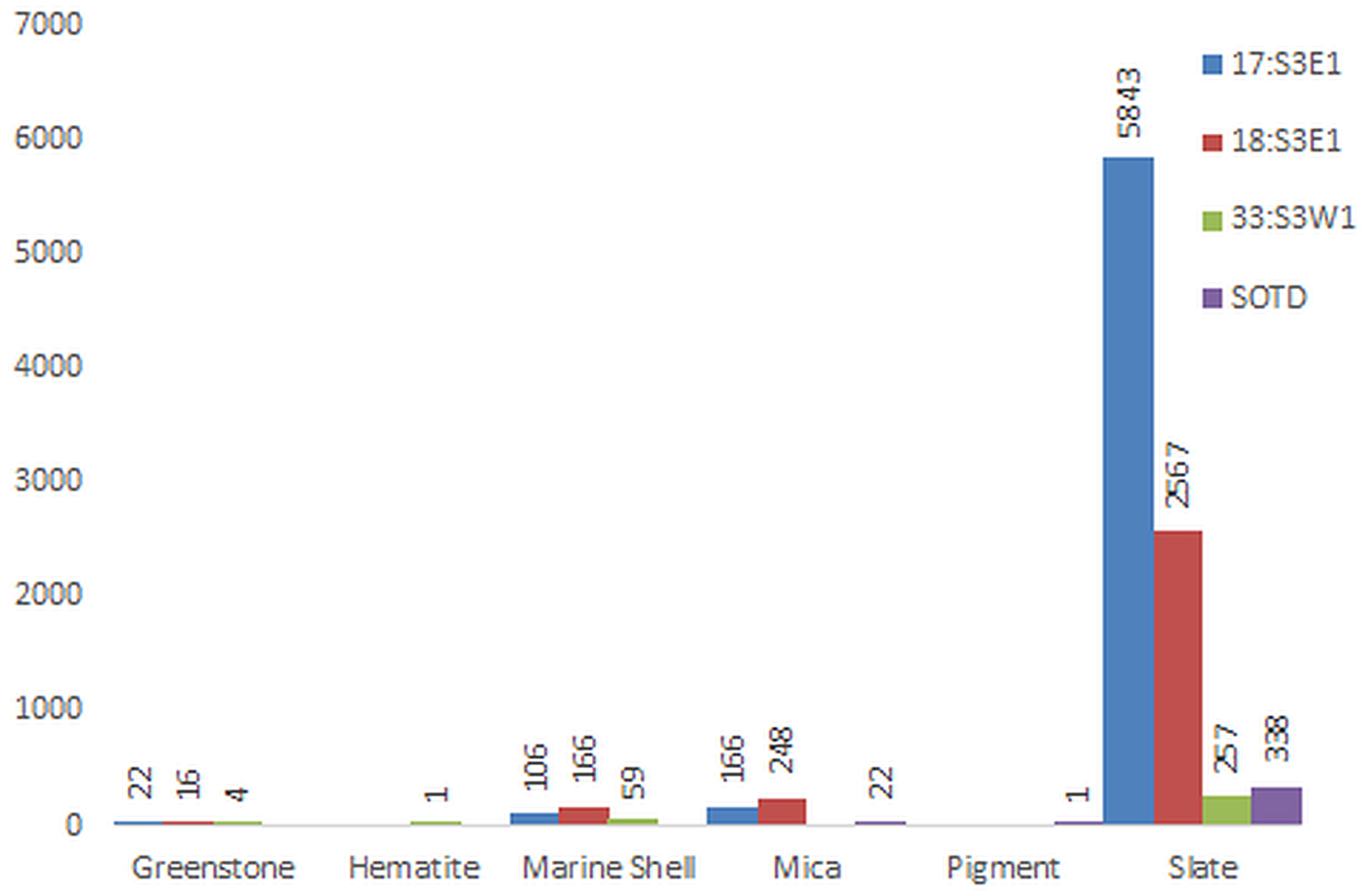
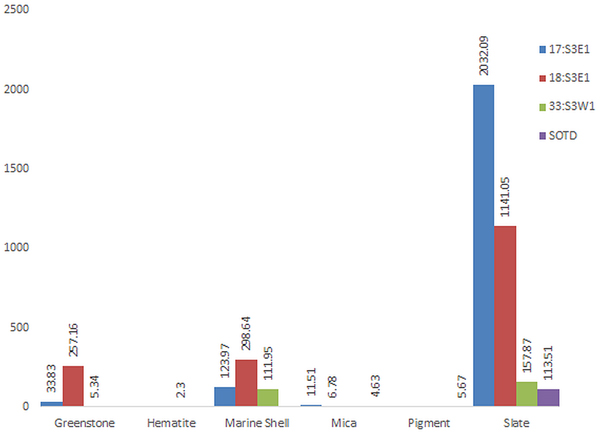
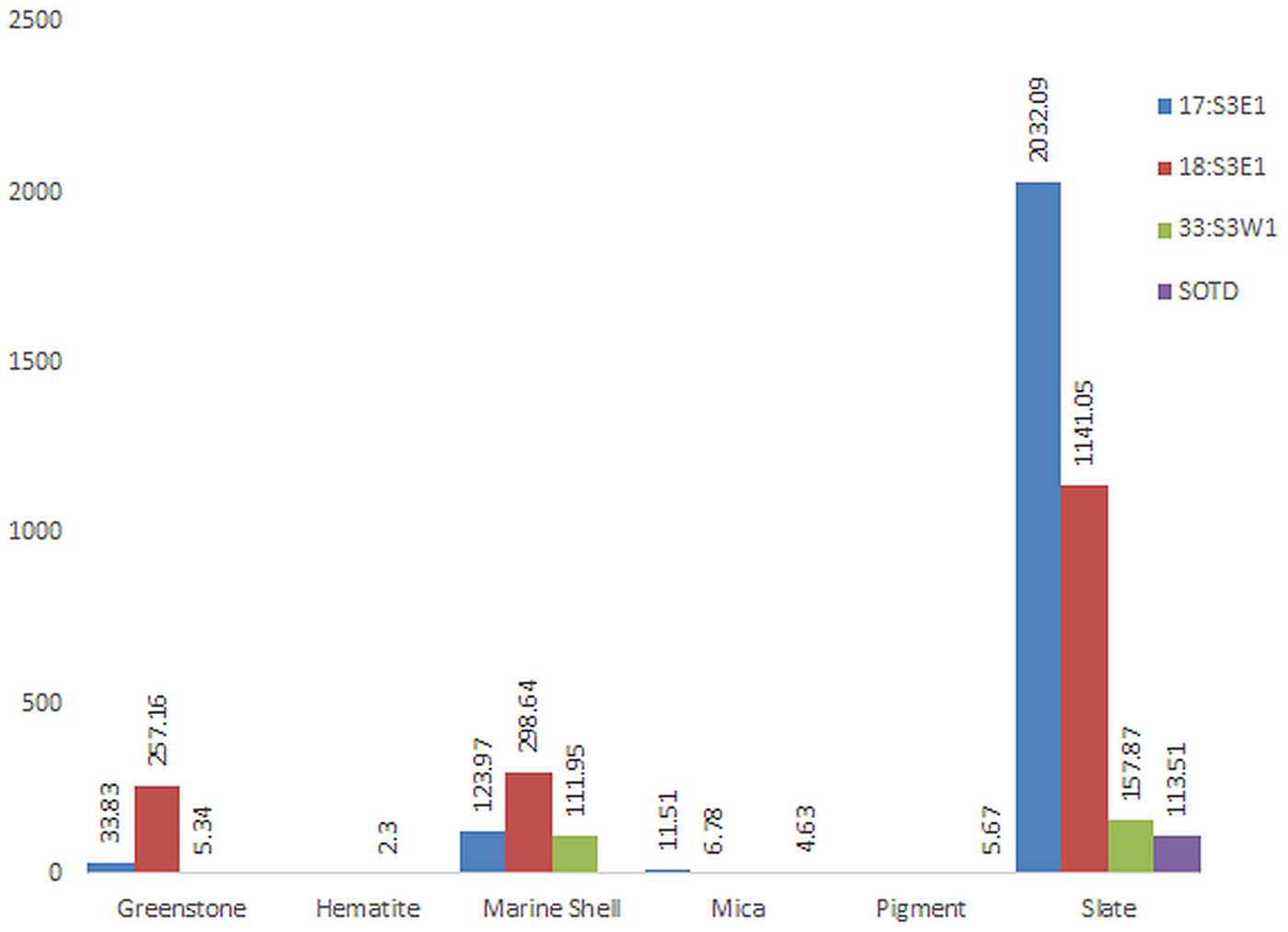
Next, the less frequent lapidary raw material was analyzed. This was done because andesite and basalt would skew the bar charts, making less frequent raw material classes almost invisible because of the differences in scale. Furthermore, these material classes are probably more associated with architectural activities than lapidary production (Cowgill Reference Cowgill2015a:178). The results are presented in Tables 1 and 2 for media from the HFF samples and in Figures 3 and 4 for five categories of raw material from the general provenience artifacts: greenstone, marine shell, mica, pigment, and slate. Only these four categories were charted because of the low frequency of raw material types in the general proveniences. Slate is the most frequent raw material being worked, followed by marine shell, greenstone, and, finally, mica. This pattern is seen both in the HFF samples and the general provenience samples.
Counts of general provenience lapidary raw materials: greenstone, marine shell, mica, pigment, and slate from Compound 17 (17:S3E1), Compound 18 (18:S3E1), Tlajinga 33 (33:S3W1), and the Street of the Dead (SOTD). Graph by the author.
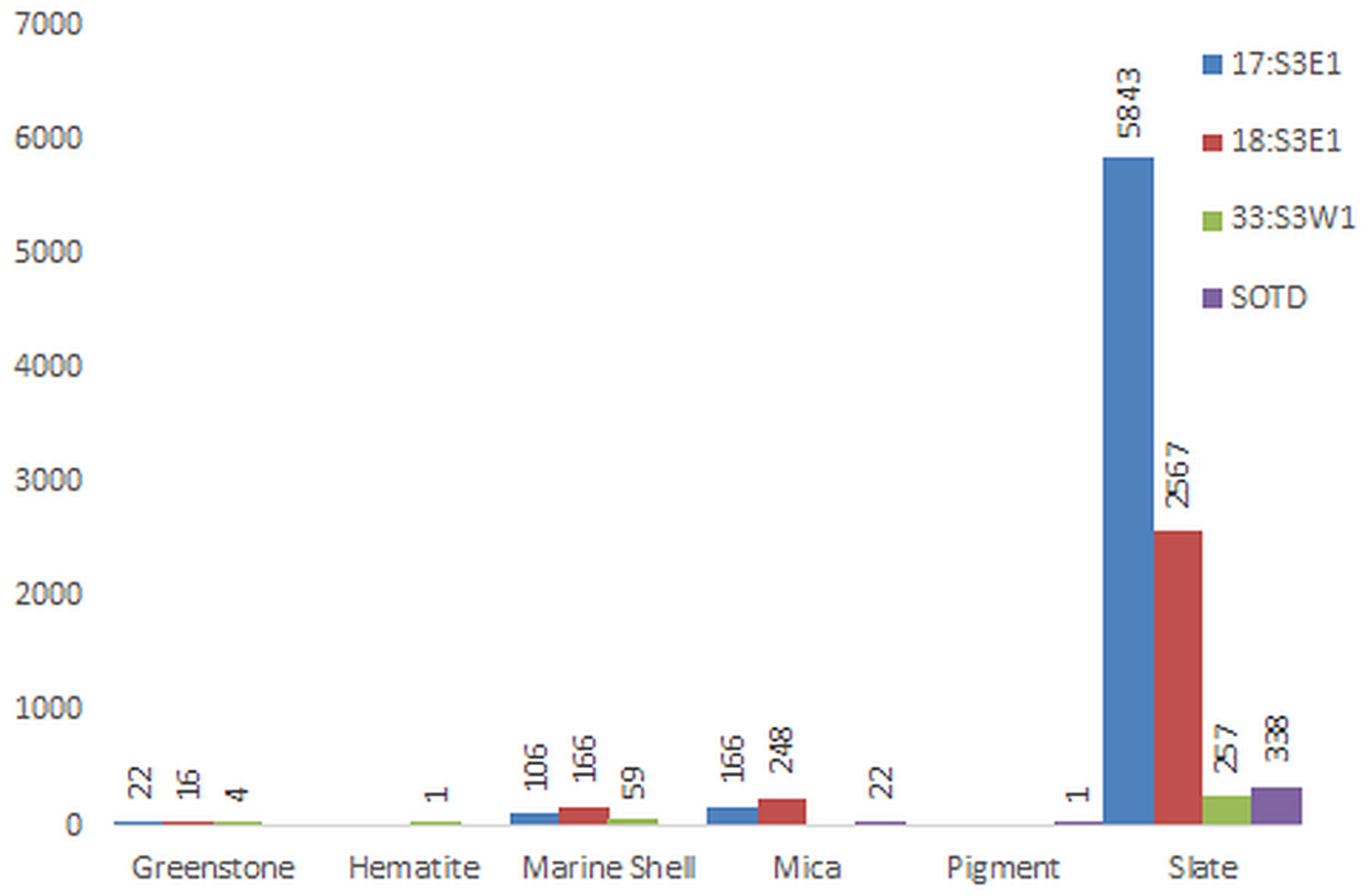
Weight in grams of general provenience lapidary raw materials: greenstone, marine shell, mica, pigment, and slate from Compound 17 (17:S3E1), Compound 18 (18:S3E1), Tlajinga 33 (33:S3W1), and the Street of the Dead (SOTD). Graph by the author.
Slate Manufacturing
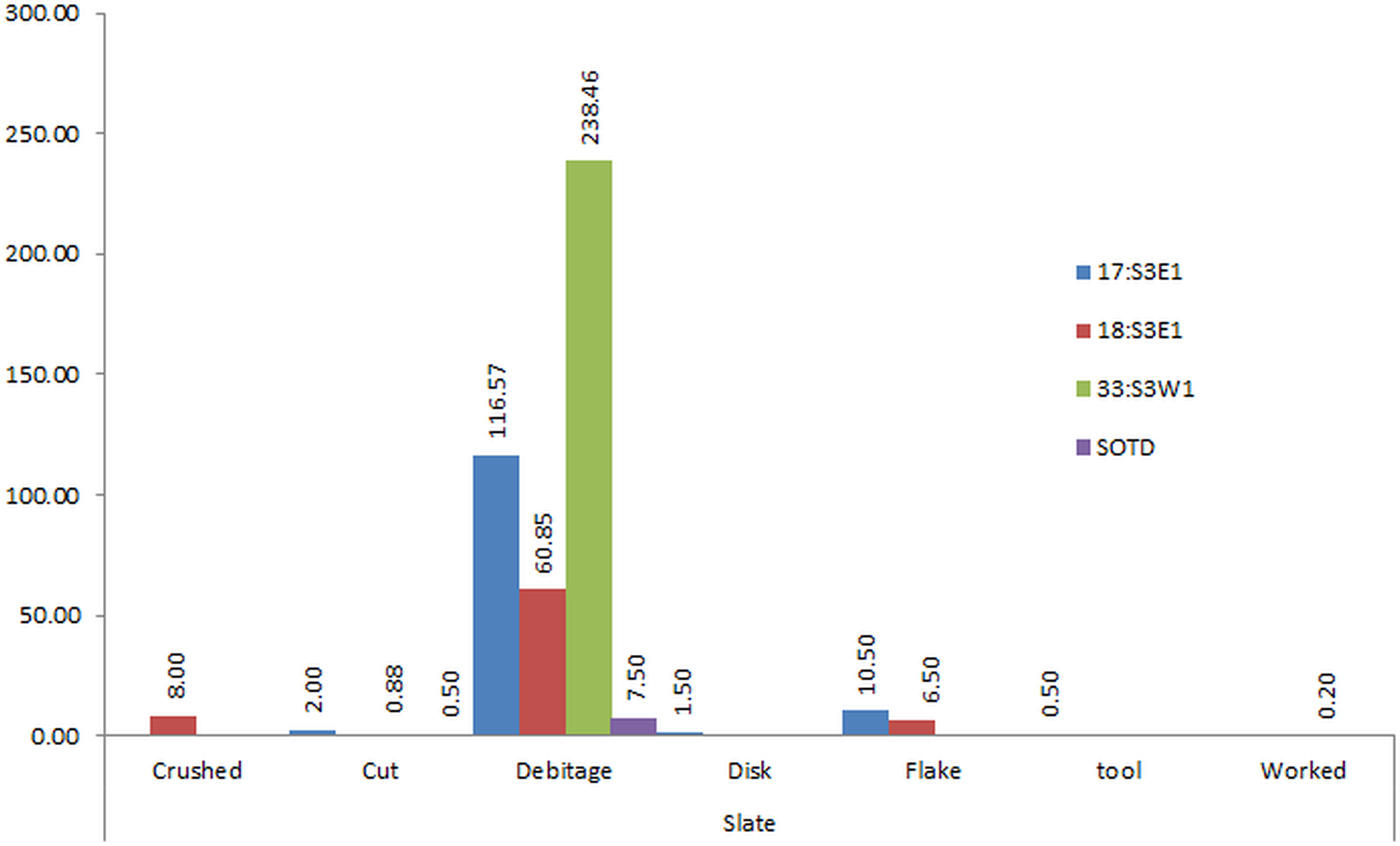
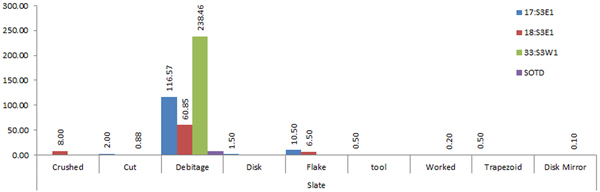
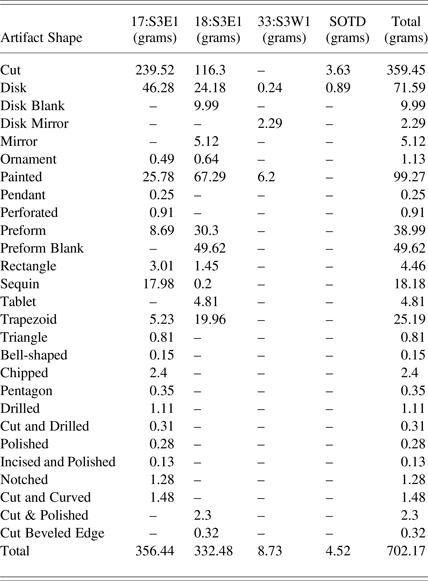
One clearly identified craft activity in the PATT excavations was the production of slate artifacts. Ironically, the types of slate artifacts that were produced are evidenced in the general provenience artifacts (Tables 3 and 4) rather than in the HFF materials, although the intensity and rate of production can best be understood from the HFF data which are presented in Figures 5 and 6. It is also interesting to note that the greatest frequency of slate manufacturing is in Compound 17, rather than Compound 18. This is surprising because Compound 17 also has obsidian craft production activity. Both involve the working of stone, however, and so some production techniques could be shared. There is also possibly a sampling bias, since excavations in Compound 17 were in the workshop area, while excavation in Compound 18 was around the central courtyards where there might have been less crafting.
Heavy Fraction of the Flotation (HFF) of slate artifacts (counts per liter) from Compound 17 (17:S3E1), Compound 18 (18:S3E1), Tlajinga 33 (33:S3W1), and the Street of the Dead (SOTD). Graph by the author.
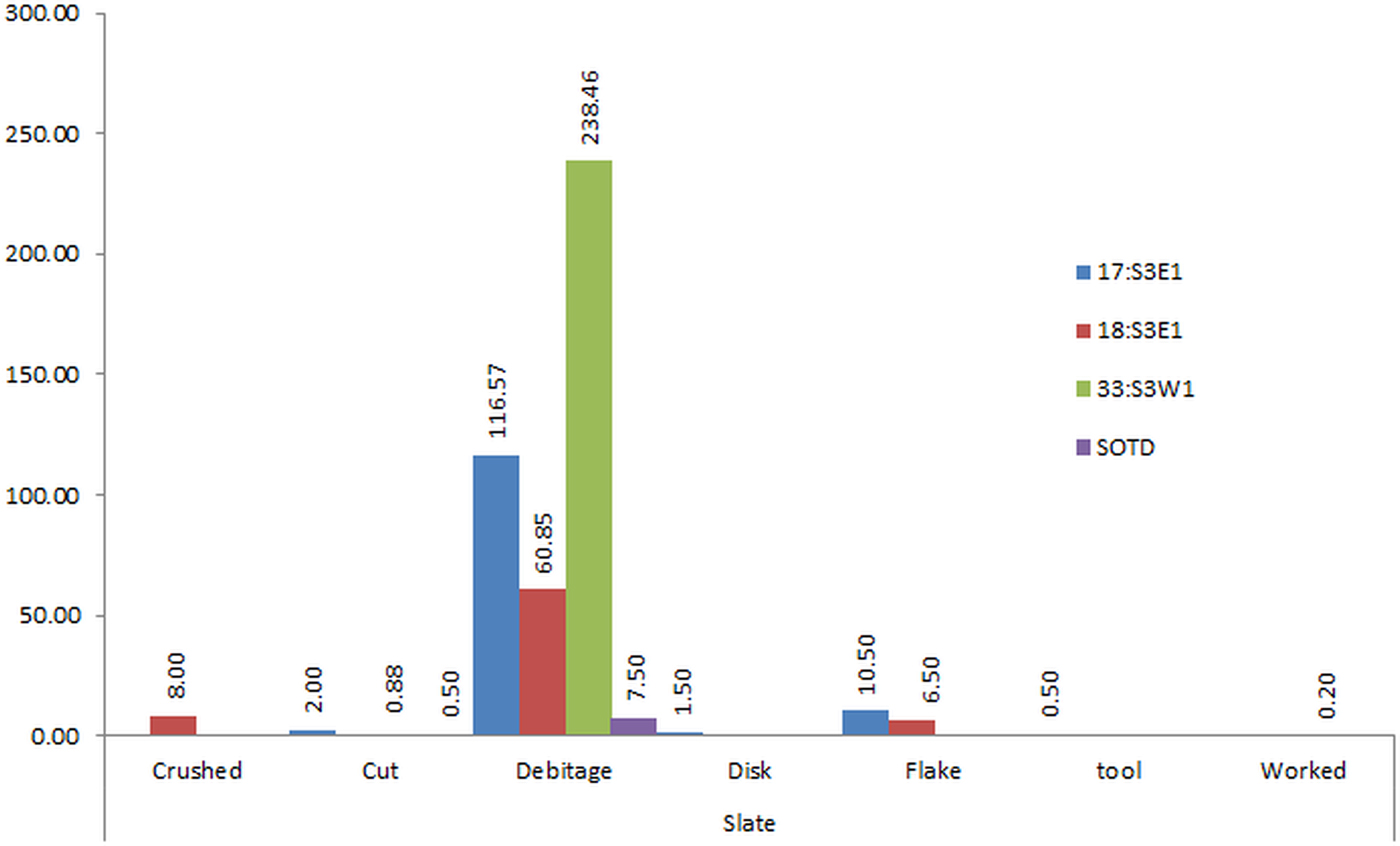
Heavy Fraction of the Flotation (HFF) of weights (grams per liter) of slate artifacts from Compound 17 (17:S3E1), Compound 18 (18:S3E1), Tlajinga 33 (33:S3W1), and the Street of the Dead (SOTD). Graph by the author.
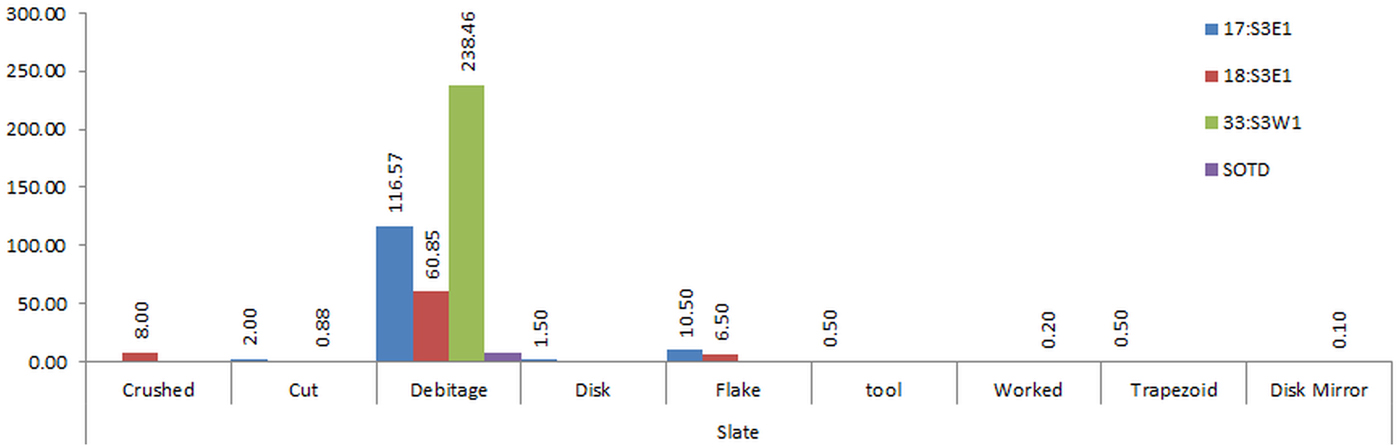
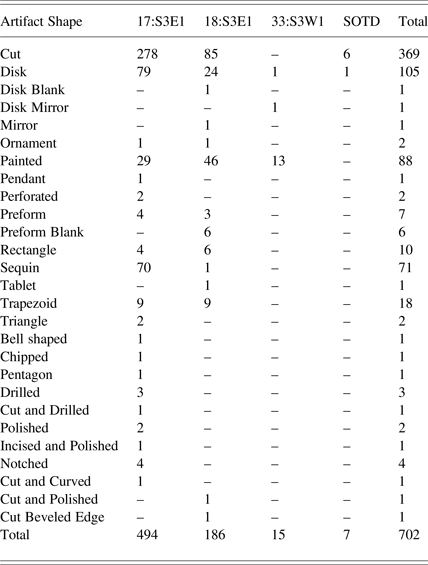
Counts of slate artifacts by shape from general provenience from Compound 17 (17:S3E1), Compound 18 (18:S3E1), Tlajinga 33 (33:S3W1), and Street of the Dead (SOTD) excavations.

Weight in grams of slate artifacts by shape from general provenience from Compound 17 (17:S3E1), Compound 18 (18:S3E1), Tlajinga 33 (33:S3W1), and Street of the Dead (SOTD) excavations.

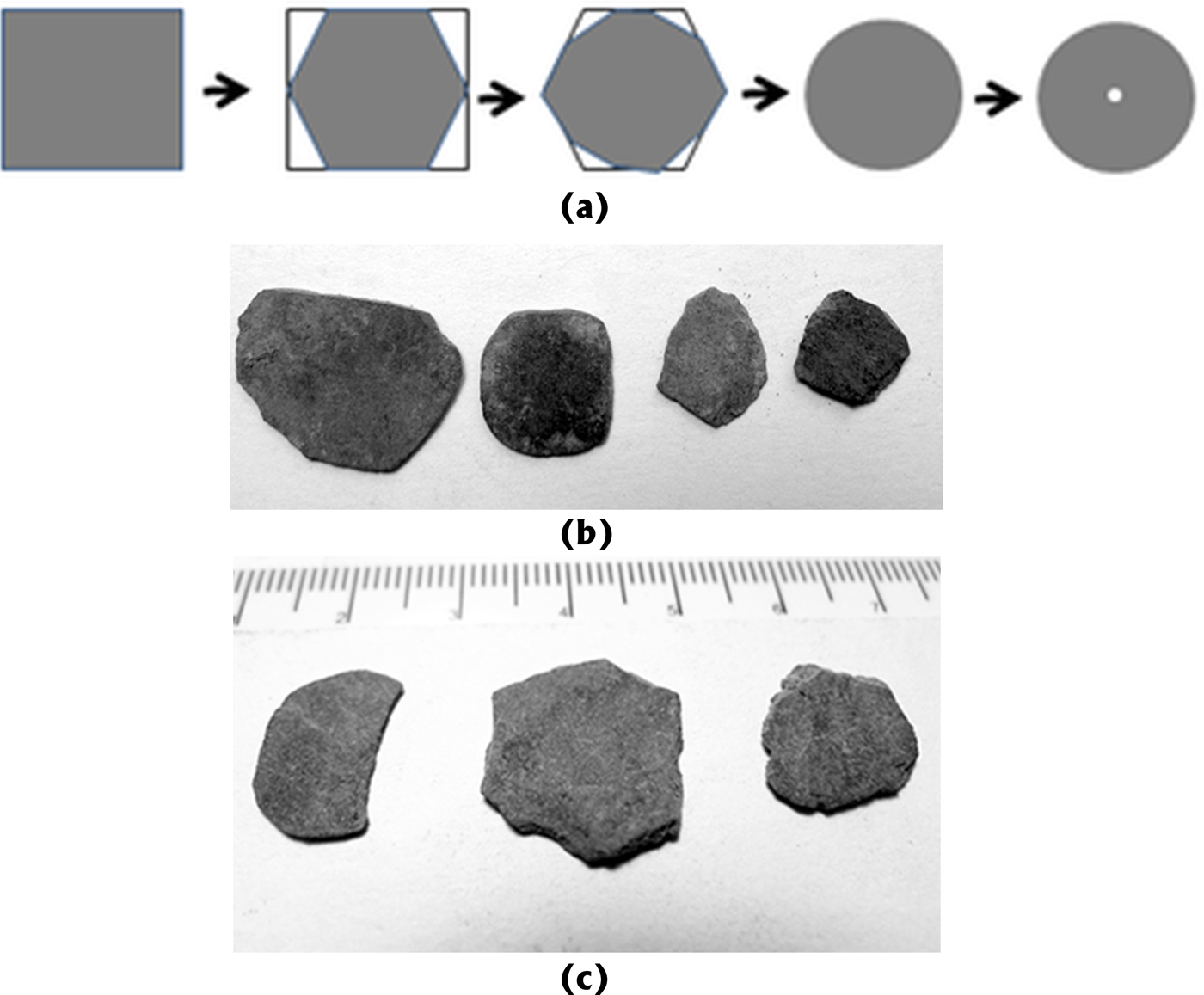
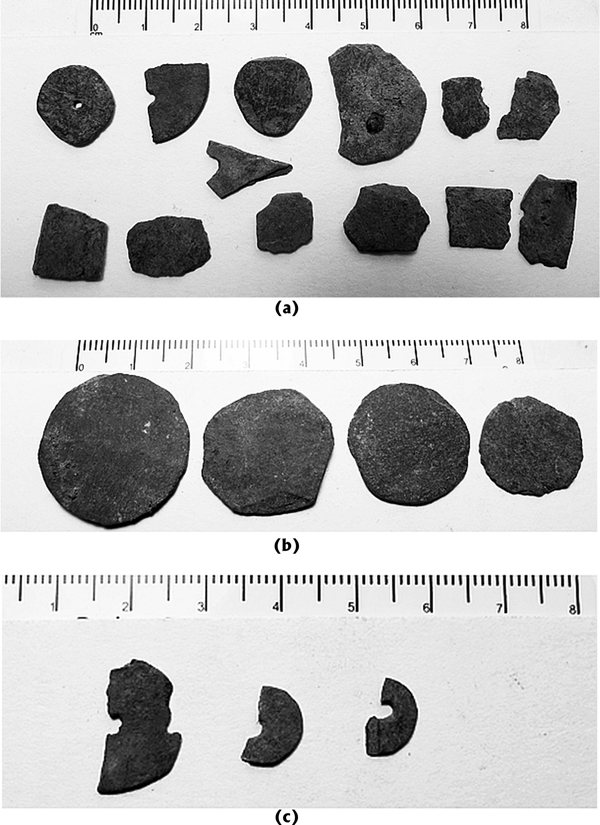
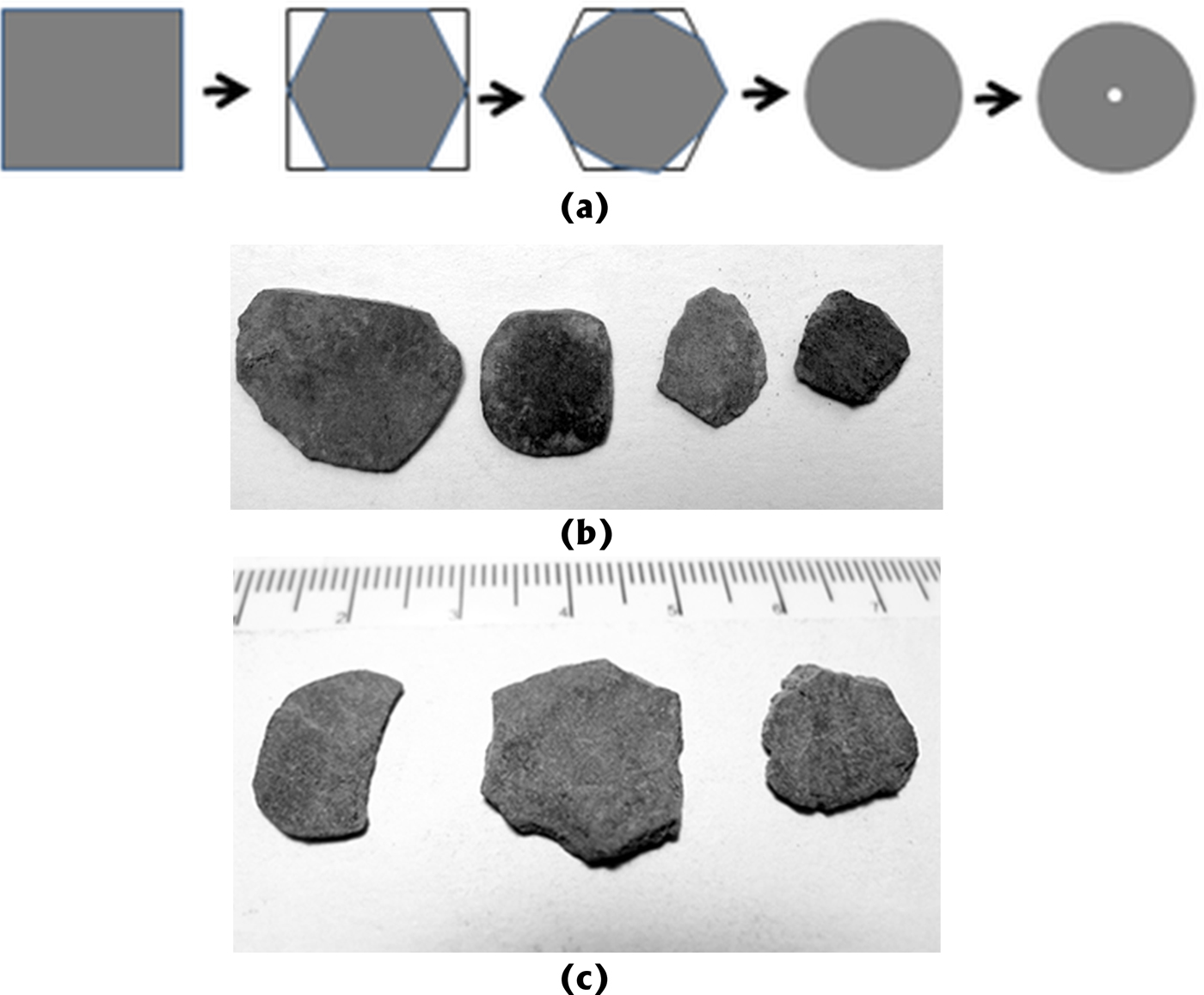
The suggested reduction sequence for slate sequins is presented in Figure 7a. The first step is to create a quadrilateral, preferably square flat preform. This done by cutting with string and abrasive technique on thinned sheets of slate. The mean thickness of the slate is 1.52 mm, with a deviation of 2.90 mm. Once the fragment has been cut into a quadrilateral preform, its corners are cut off, again by chipping as well as the string and abrasive technique, creating a hexagonal piece. The corners are once again cut off to create a decagonal fragment. The edges of this fragment are then ground to form a circular disk, which is then perforated to form a circular sequin. Obsidian sequins were also being produced at Compound 17 (Hirth et al. Reference Hirth, Carballo, Dennison, Carr, Imfeld and Dyrdahl2019) and this could relate to lower status adornment production, once again reinforcing the multicrafting nature of Teotihuacano crafting (Hirth Reference Hirth2009). The perforation is often off-center, suggesting that the sequins were designed to overlap one another, covering the perforation. The evidence for this can be seen in the photographs of worked pieces that were either broken or abandoned in the production process (Figures 7b and 7c). It is clear that perforation is the last step in the manufacturing process, since no perforations are noted on non-circular pieces (Figure 8a). This doesn't mean that all circular fragments were intended to be perforated, however. The nearly complete disk in Figure 8b is not perforated and is somewhat larger than the other perforated disks. It seems that perforating the disks caused them to break. Only a single example (Figure 8a) is perforated and unbroken, while three perforated disks are all broken (Figure 8c). The mean diameter of all disks is 23.43 mm, with a standard deviation of 20.57 mm. The large standard deviation is a result of disks having multiple types. Sequins have a mean diameter of 13.4 mm, with a standard deviation of 8.05 mm.
(a) Slate sequin reduction sequence. (b) Slate disk reduction artifacts sequence in Compound 17, Unit I7 and (c) in Compound 17, Unit J19s. Photographs and illustration by the author.
(a) Various slate artifact shapes from general provenience for Compound 17, Unit J17. (b) Circular slate disks in varying stages of completion in Site Compound 18, Unit J2A. (c) Broken perforated slate sequins in Compound 17, Unit I7. Photographs by the author.

The Location of Slate Production
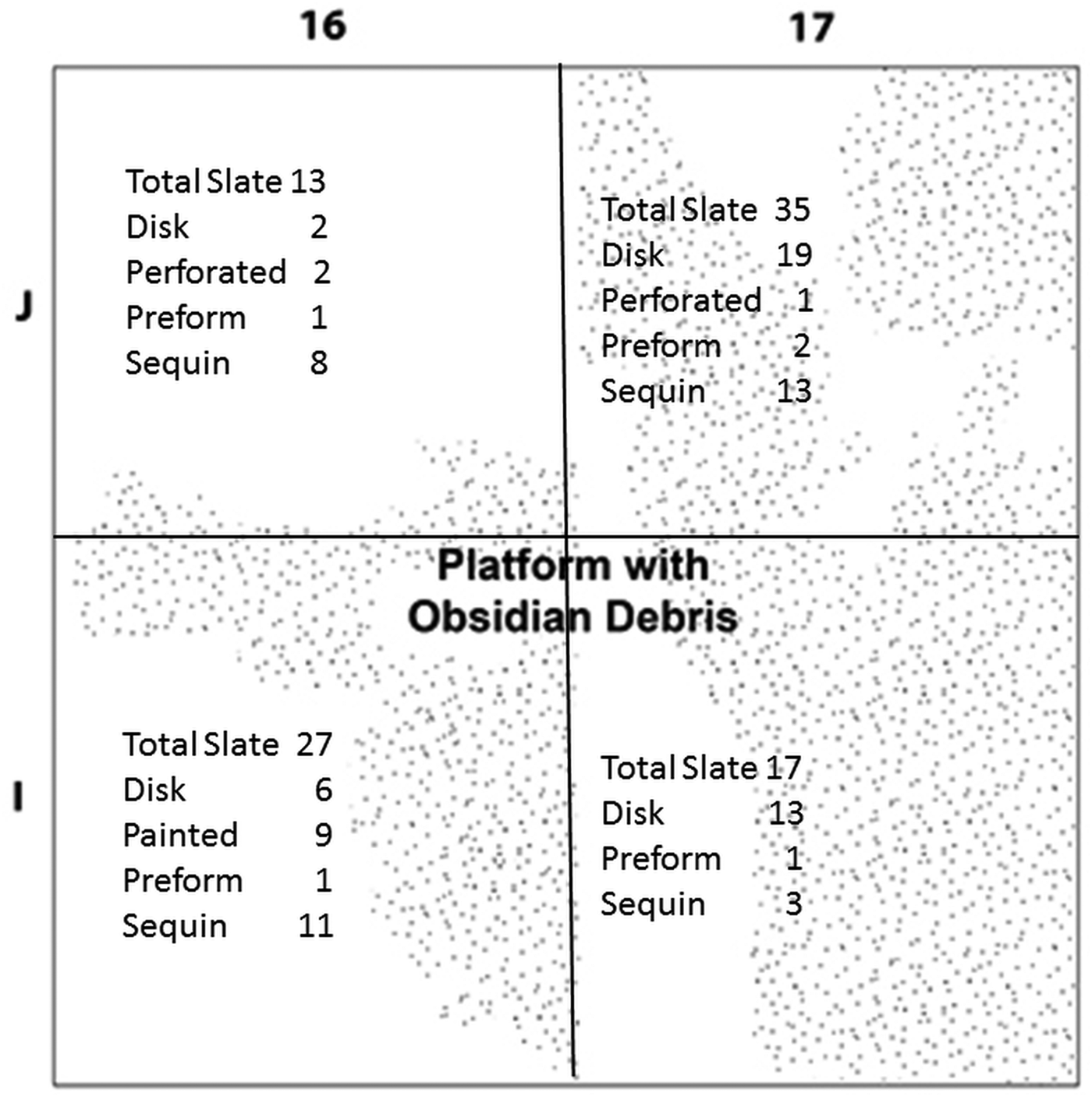
Even more interesting is the location of slate artifacts within Compound 17. Slate production is concentrated on the platform that also contains the obsidian debris concentration (Figure 9). This platform contains the highest concentration of slate disks and sequins in Compound 17. There are 40 disks, comprising half of the total of 79 for Compound 17, and 35 sequins, also comprising half of the total of 70 sequins in Compound 17. This clearly supports the notion that this platform is a dedicated crafting area for the production of slate and obsidian artifacts.
Location of slate workshop area in platform in Compound 17. I and J are the vertical grid coordinates while 16 and 17 are the horizontal grid coordinates. Image by the author.

Painted Slate
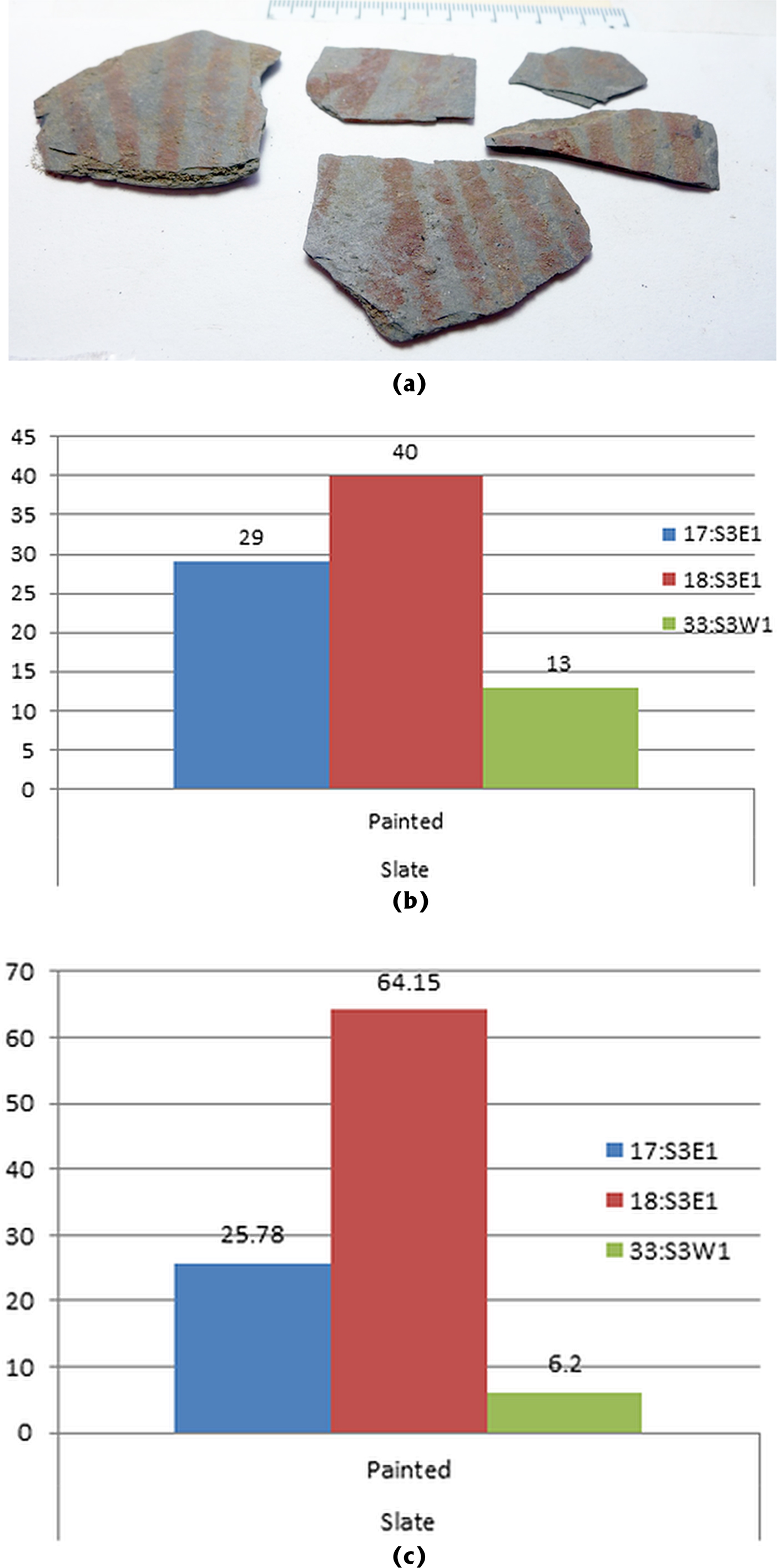
Sixty-five fragments of slate that had red paint on them were recovered from the general proveniences of the PATT excavations. The designs on them are a series of parallel red lines that extend from the edge of the fragment. The lines range in thickness from 1.3 to 2.8 millimeters and the unpainted spaces between the lines is around 1.3 millimeters. The artifacts are fragmentary and it is not possible to determine their intended size, shape, or function, but they appear to be quadrilateral rather than circular in shape (Figure 10a).
(a) Painted slate artifacts from Compound 18, Unit I20b. (b) Counts and (c) weights of general provenience painted slate artifacts. Photograph and graphs by the author.

As can be seen in Figures 10b and 10c, these painted slate artifacts were being produced in both Compound 17 and Compound 18, but the production rate and size of the fragments is greater in Compound 18. Thirteen similar fragments of painted slate were found associated with floor contexts in nearby Tlajinga 33. Their low frequency suggests that they might not have been produced there, and it may be that, even though fragmentary, they may be finished artifacts that were broken through use since they were not found associated with known workshop areas. Their small size indicated by their extremely low mean, over four times less than the lowest value for PATT samples, however, might indicate the opposite, that they are more likely debitage from production and were actually produced at Tlajinga 33. In any case, the production of painted slate artifacts is extremely low. Recently, large numbers of painted slate artifacts have been uncovered at the Plaza of the Columns (David Carballo, personal communication 2015). Other than this report, no thin, red-painted slate artifacts have been reported for other excavations at Teotihuacan. It seems likely that this is a distinct type of artifact and that this painting is not associated with other slate artifacts such as mirrors, sequins, or stemmed trapezoids. One complete slate disk, however, had red paint on both of its surfaces, with one surface being completely painted and the other, more finished side having a single red dot. The disk is 58.5 mm in diameter and 3.4 mm thick.
Stemmed Trapezoid Pendants
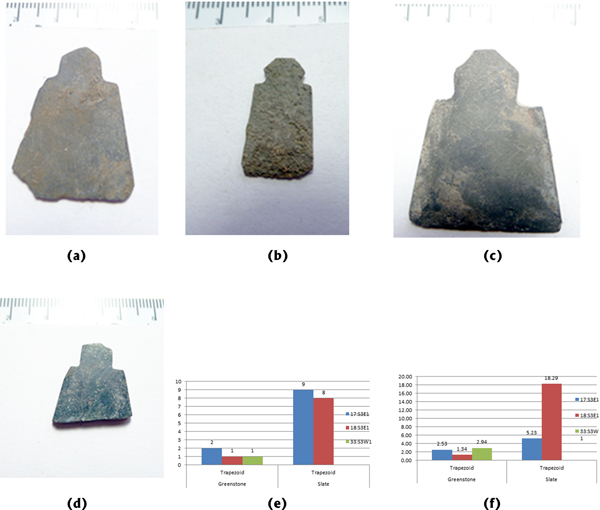
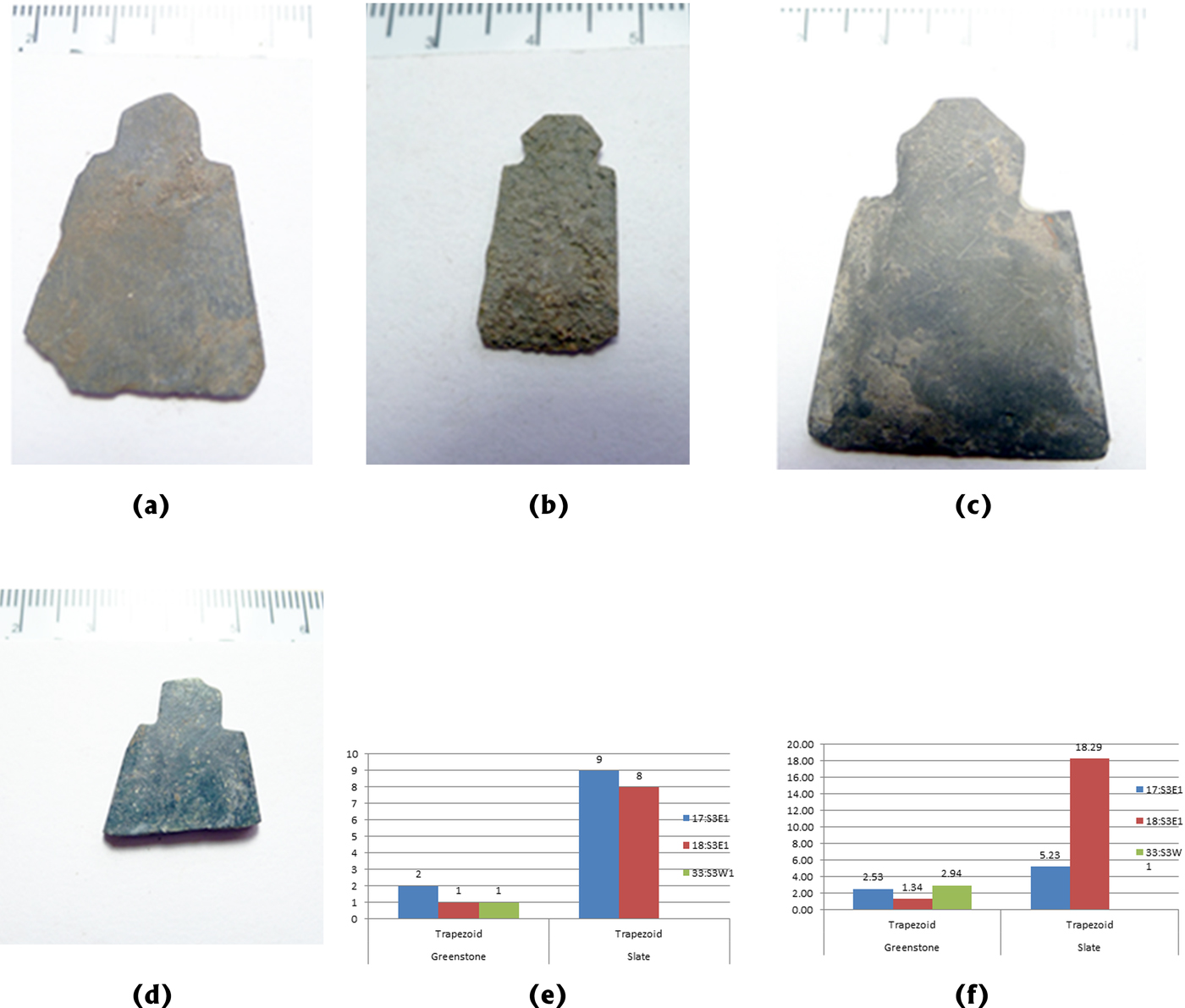
Stemmed trapezoids were fabricated from a number of media in the Tlajinga district including slate, greenstone, and marine shell. A total of eight stemmed trapezoid pendants were recovered from the PATT general provenience excavations. Nine of these were from Compound 17 and eight were from the Compound 18 general provenience excavations (see Figures 11a–11d). Interestingly, no slate stemmed trapezoids were recovered from Tlajinga 33, even though slate was the most frequent medium being worked (Figures 11e and 11f). This indicates the multimedia crafting of similar artifact types from different raw material, as was seen for slate and obsidian sequins.
(a) Slate trapezoidal pendant from Compound 18, Unit I23 and (b) Compound 18, Unit I22, (c) greenstone trapezoidal pendant from Compound 18, I23 and (d) Street of the Dead, Unit P61. (e) Counts and (f) weights of general provenience slate and greenstone trapezoidal artifacts. Photographs and graphs by the author.
Marine Shell
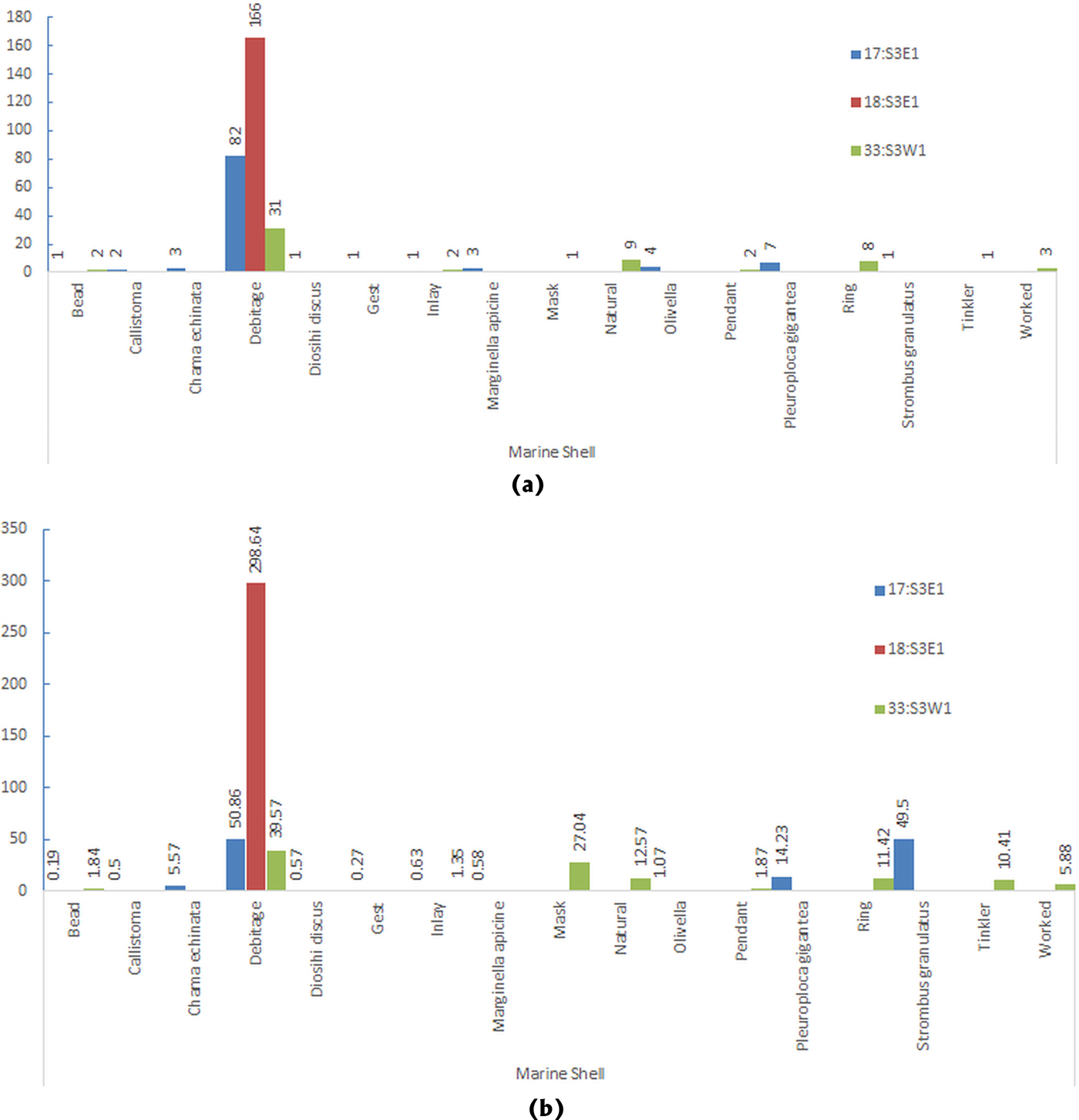
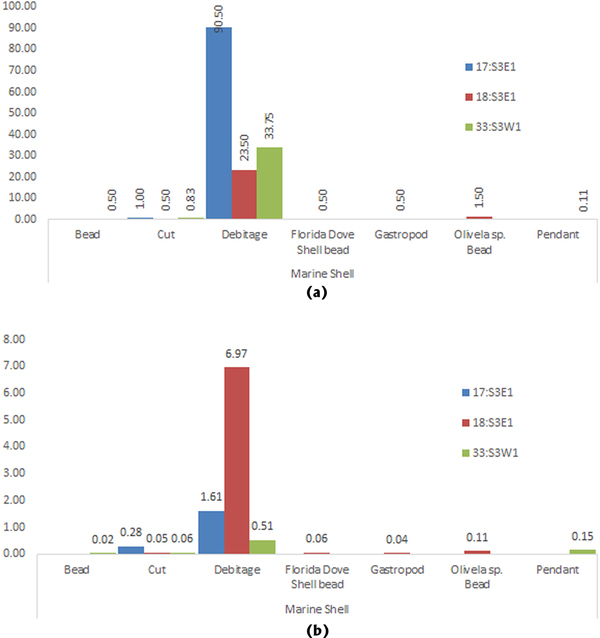
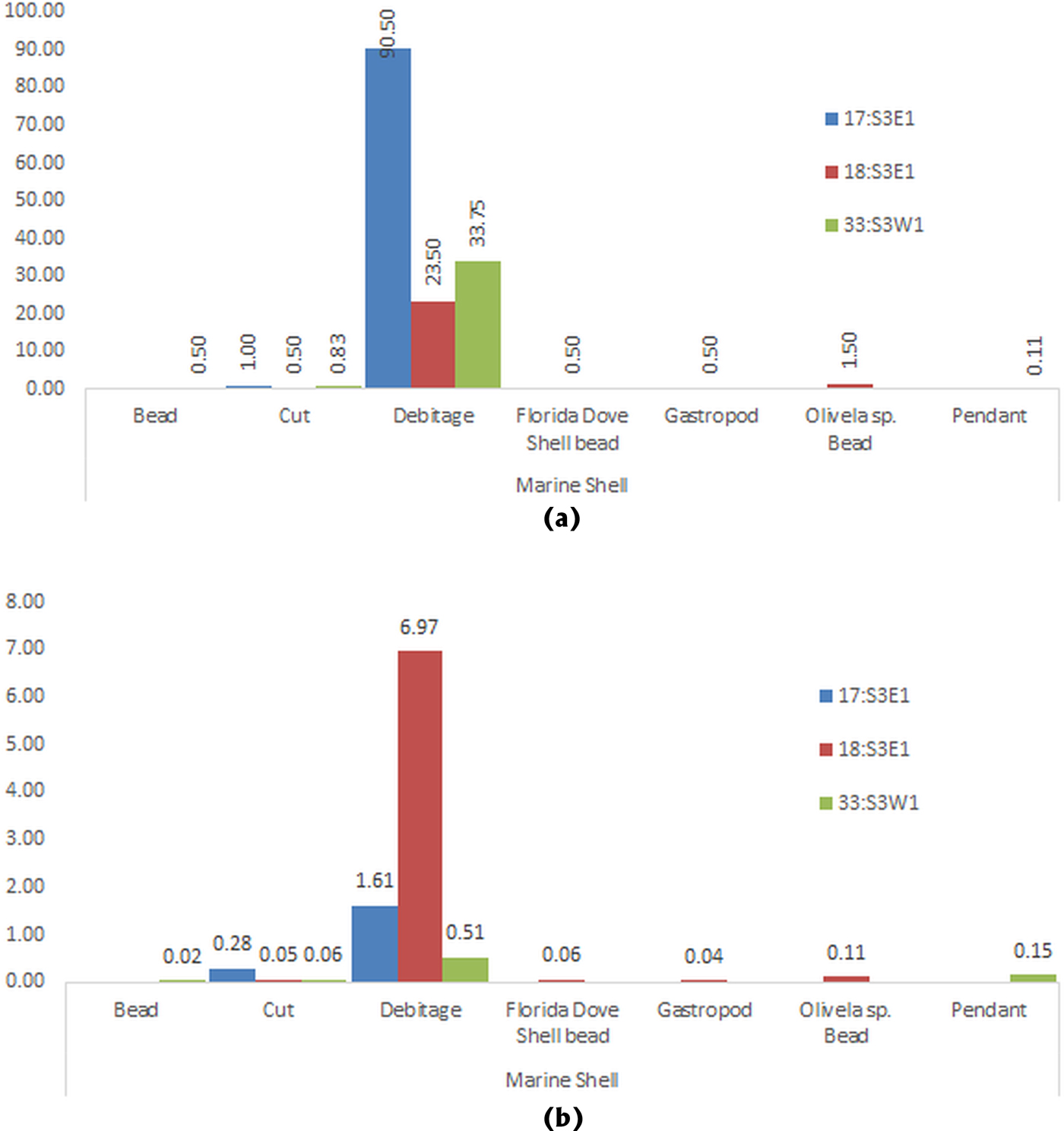
One of the more surprising results of the study concerns marine shell crafting. A total of 100 complete gastropods were found in Feature 14 in Compound 17 and it is suggested that this is a symbolic cache, rather than economic storage, because the shells are complete and unworked (Carballo et al. Reference Carballo, Hirth, Sariñana, Buckley, Mejilla Ramón and Kennett2019). These shells are not included in the analysis for this reason. Crafting of marine shell occurred in both Compound 17 and Compound 18. General provenience marine shell debitage is more common in Compound 18 both by count and weight (Figures 12a and 12b). Analysis of the HFF samples, however, indicates a different pattern, with marine shell debitage more frequent in count per liter (Figure 13a) and also smaller in size (Figure 13b). This would suggest greater rate of crafting of marine shell in Compound 18 than in Compound 17. In any case, the use of marine shell for lapidary production is still greater than was seen in Tlajinga 33. Due to the distance to the raw material source and its value resultant value, it appears that the PATT compounds are wealthier than Tlajinga 33. The rate of product in Compound 17 also brings into question the nature of the gastropod cache in Feature 14, which may actually be a storage cache rather than a symbolic one. Because of the high value of marine shells and artifact fabricated from that medium, it may be the case that shell artifacts were only infrequently made and so the raw material was not always utilized and was therefore cached for future use. Marine shell could also be used to barter for other lapidary raw material. Furthermore, there is more understanding of what marine shell artifacts were being fashioned at Compound 17, including an inlay and a bead. There are no identifiable artifact types in the marine shell artifacts from Compound 18 in the general provenience sample. This pattern is reversed in the HFF samples, where an Olivella bead and a Florida Dove shell bead were found in Compound 18 but no artifacts were found in samples from Compound 17. Small traces of oolite, fossilized marine algae, were found in both Compound 17 and Compound 18 in the HFF samples.
(a) Counts and (b) weights in grams of general provenience marine shell artifacts from Compound 17 (17:S3E1), Compound 18 (18:S3E1), and Tlajinga 33 (33:S3W1). Graphs by the author.

(a) Heavy Fraction of the Flotation (HFF) counts and (b) weights in grams per liter for marine shell artifacts from Compound 17 (17:S3E1), Compound 18 (18:S3E1), and Tlajinga 33 (33:S3W1). Graphs by the author.
Greenstone
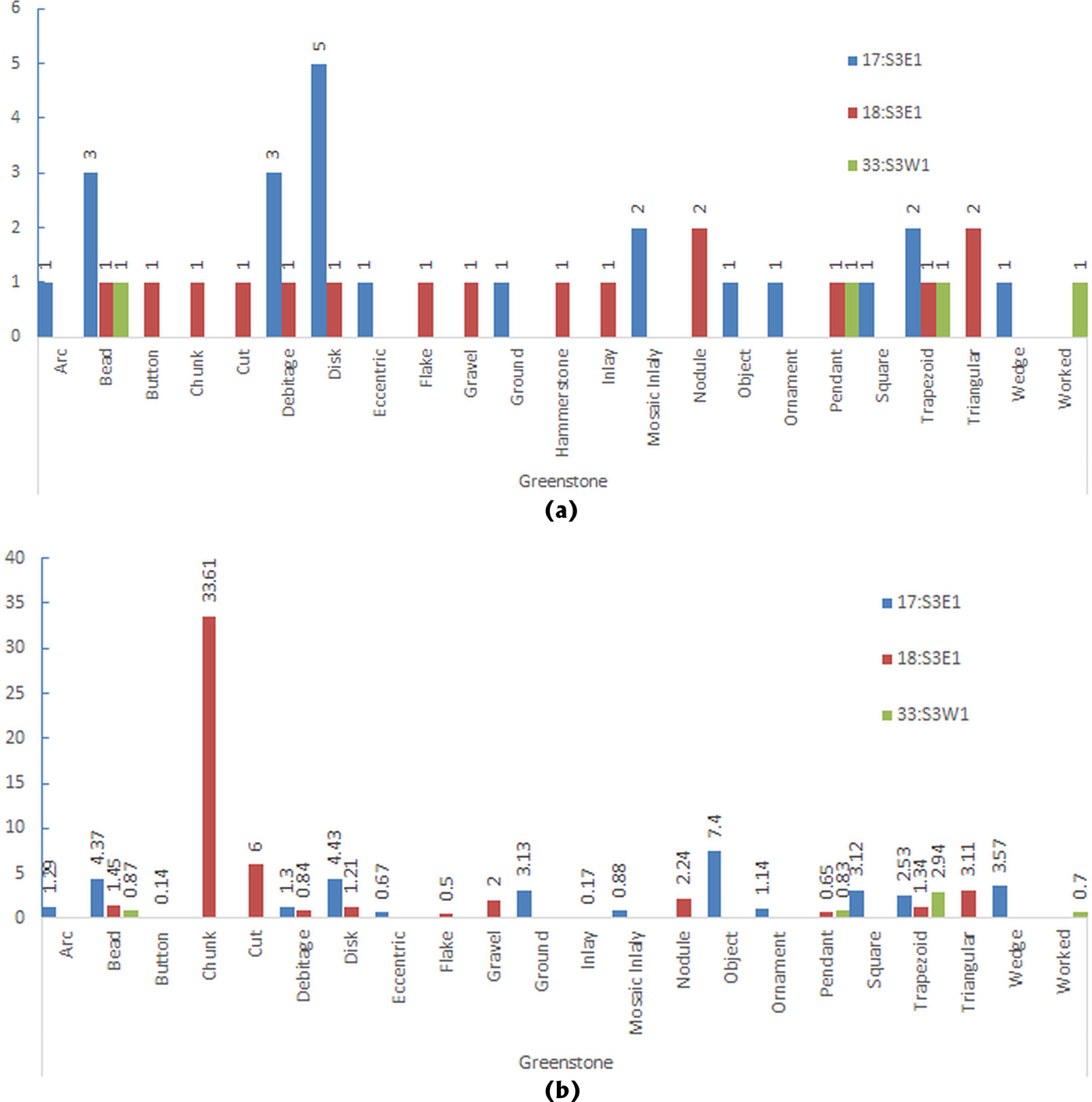
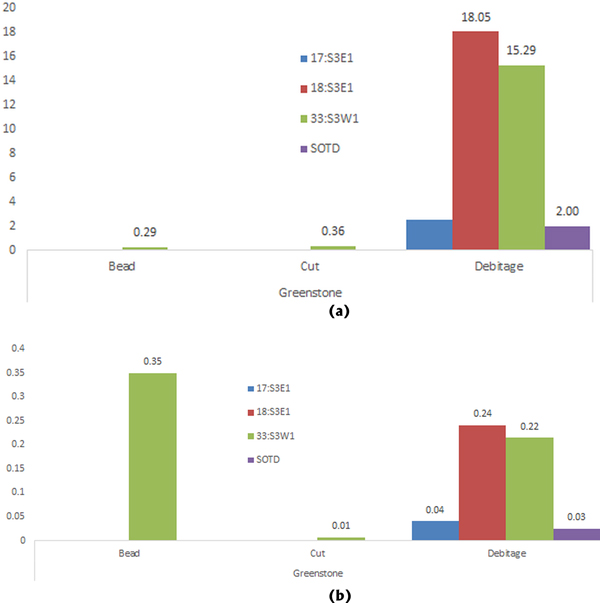
There is evidence of greenstone crafting and production at both Compound 17 and Compound 18, with a large array of artifact types in the general proveniences (Figures 14a and 14b) and the rate of production based on general provenience being higher in Compound 17 than in Compound 18. The pattern is reversed, however, when the HFF samples are considered (Figures 15a and 15b). The values for debitage are much higher, almost reaching those at Tlajinga 33. It seems that the HFF values are a better indication of crafting than general provenience data because of the high social and economic value of the raw material, which would result in almost complete usage of the greenstone. Therefore, greenstone production took place at Compound 18, as well as at Compound 17 and Tlajinga 33.
(a) Counts and (b) weights of general provenience greenstone artifacts from Compound 17 (17:S3E1), Compound 18 (18:S3E1), and Tlajinga 33 (33:S3W1). Graphs by the author.

(a) Heavy Fraction of the Flotation (HFF) greenstone artifacts counts and (b) weights per liter from Compound 17 (17:S3E1), Compound 18 (18:S3E1), Tlajinga 33 (33:S3W1), and the Street of the Dead (SOTD). Graphs by the author.

Mica
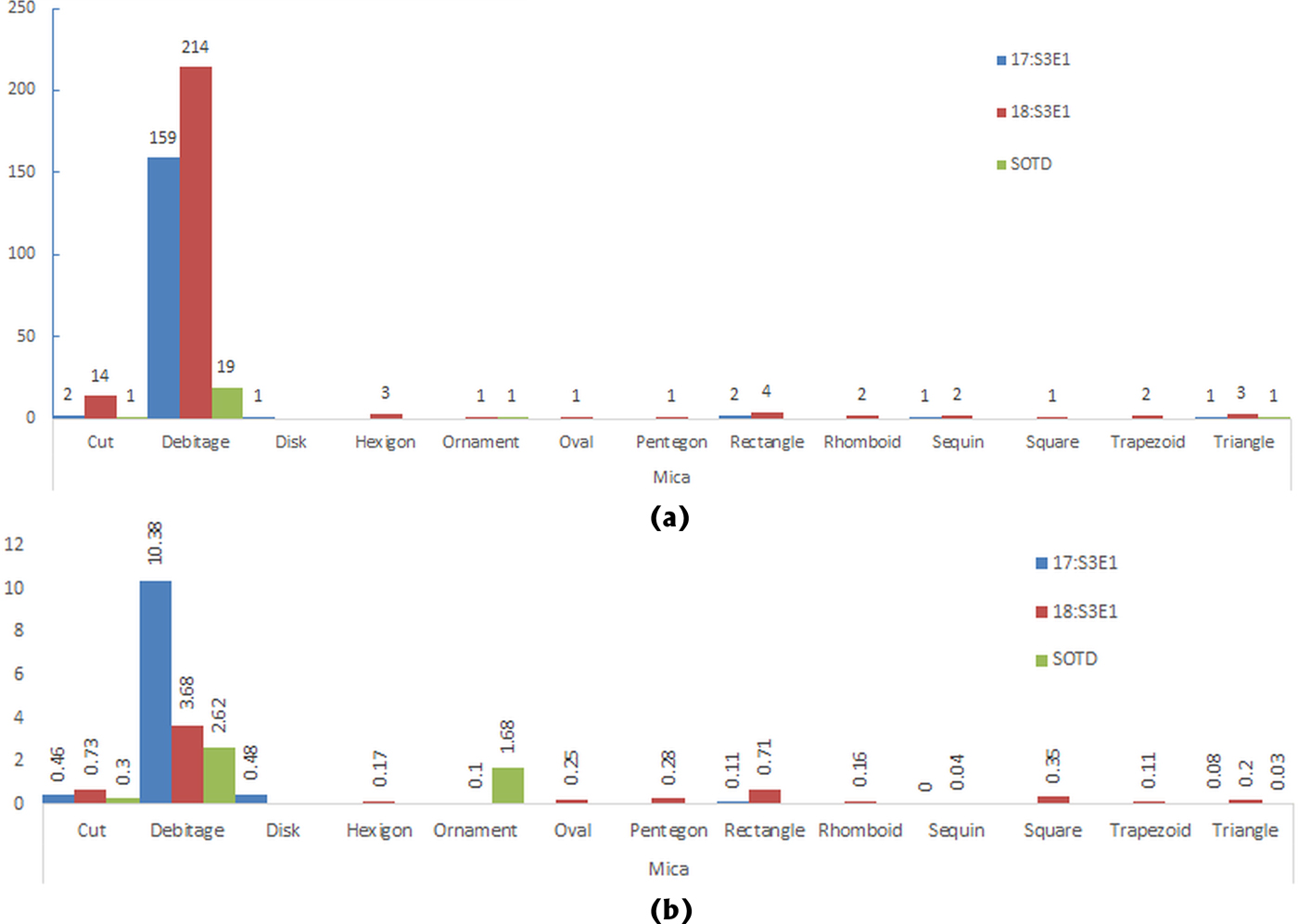
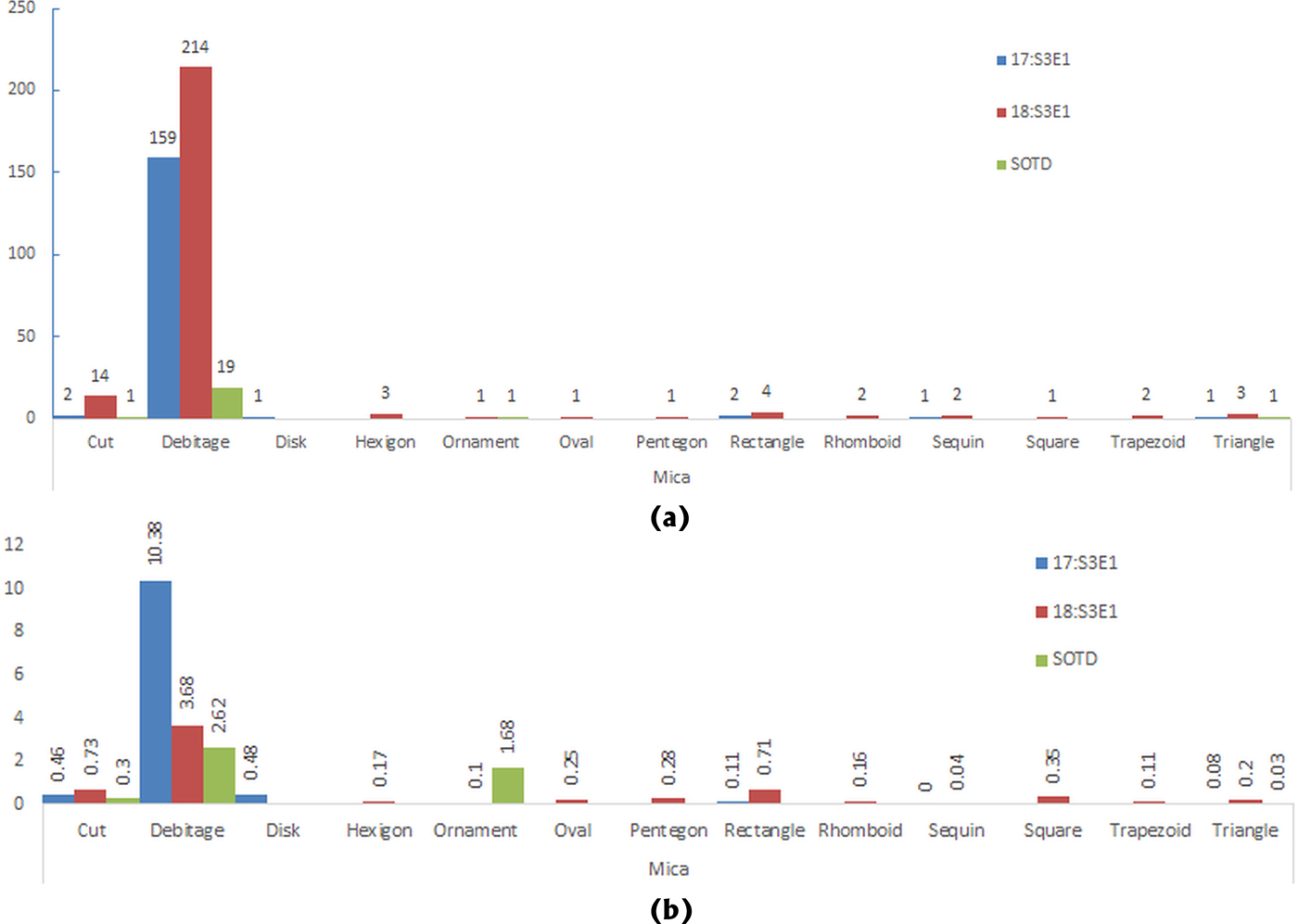
Mica is one of the most baffling raw material classes encountered in the PATT lapidary data. Not one single fleck of mica was observed in the PATT HFF samples. In spite of this, 436 mica fragments weighing 22.62 grams were recovered from the general provenience sample. A total of 390 of these fragments were classified as debitage, resulting in a mean artifact weight of 0.035 grams per mica fragment (Figures 16a and 16b). This compares to 1,315 fragments of mica classified as debitage (weighing 0.70 grams; mean weight of 0.0005 grams per artifact) that were found in the HFF samples at Tlajinga 33, which did not yield a single mica artifact from the non-feature general provenience context. There are numerous artifact types found in the PATT general provenience samples, including two sequins, one each from Compounds 17 and 18, and two trapezoids from Compound 18. There are also cut fragments in geometric shapes, including a disk and two rectangles from Compound 17 and an oval, two rhomboids, one square, four rectangles, one pentagon, three hexagons, and a triangle from Compound 18 (Figures 17a and 17b). The squares, hexagons, and disks clearly represent reduction sequence stages for sequin production similar to that of slate, while the hexagon might indicate reduction for trapezoid production. The rectangles could be used for either trapezoid or sequin production. There is also debitage in the PATT samples. These shapes and the debitage suggest production of mica artifacts.
(a) Counts and (b) weights of general provenience mica artifacts by shape from Compound 17 (17:S3E1), Compound 18 (18:S3E1), and the Street of the Dead (SOTD). Graphs by the author.
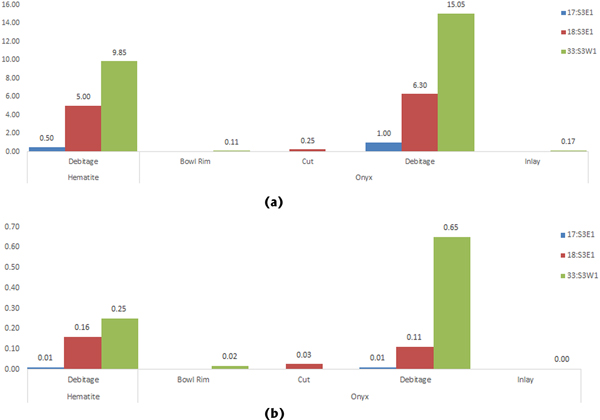
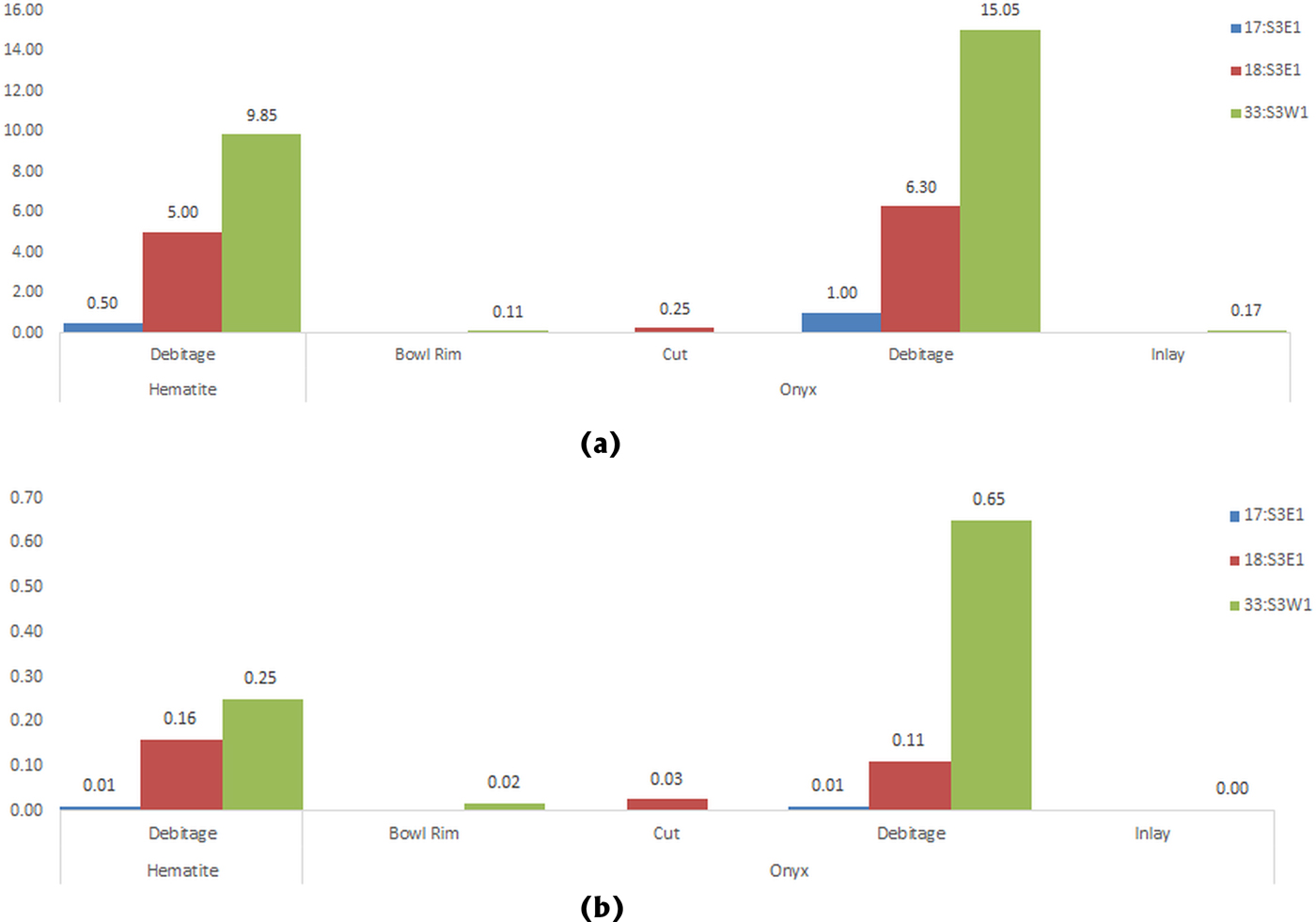
(a) Heavy Fraction of the Flotation (HFF) hematite and onyx artifacts counts and (b) weights per liter from Compound 17 (17:S3E1), Compound 18 (18:S3E1), and Tlajinga 33 (33:S3W1). Graphs by the author.
The question, then, is: where are all of the tiny flecks of mica that would be inevitable in the production of mica artifacts, which is clearly indicated in the general provenience PATT samples? One suggestion is that crafting mica would take place over cloth mats that could collect the tiniest debitage, which was then recycled for some other purpose like being glued to inlays, cloth, or other media. If this is the case, then why didn't the larger general provenience mica debitage suffer the same fate? The only other alternative, that all of the mica from the general proveniences, including those classified as debitage, are actually finished artifacts and were brought into the site without further modification can be ruled out because of the clear indication of a reduction sequence for sequin and trapezoid production. It could also be the case that the mica worked in PATT was more robust and did not exfoliate into tiny fragments, as was the case at Tlajinga 33. Clearly, the rate of mica artifact production is much greater at Compound 18 than at Compound 17, both in greater frequency of finished artifact types and quantity and in the amount of debitage. Mica debitage was also found in the SOTD excavation but no finished artifacts were recovered there. Interestingly, mica raw material was made into sequins and trapezoids.
Onyx
There is some evidence of onyx production at the PATT excavations, but primarily in the form of debitage and a few fragments of worked onyx from the HFF Samples. These worked fragments could not be identified to artifact type. No artifacts were recovered from the general proveniences of the PATT excavations, suggesting that finished artifacts were leaving the compound and not being consumed locally. An inlay and a fragment of a bowl rim, however, were recovered from the Tlajinga 33 HFF samples. Analysis of the count and weight per liter of soil from the HFF samples indicates that Tlajinga 33 had a higher rate of onyx production than any of the PATT sites (Figures 17a and 17b). There does appear to be modest onyx production at Compound 18, however, with minimal production, if any, at Compound 17, which has six times less onyx debitage by count per liter and 10 times less onyx debitage by grams per liter than Compound 18. A similar pattern is observed for hematite, which follows the same frequencies both in count and weight as onyx. This indicates that both of these media were worked similarly.
Hematite
Small fragments of debitage of hematite were also recovered from the HFF samples for Compounds 17 and 18 (Figures 17a and 17b). These are problematic with respect to whether they are residues of lapidary crafting or were used as pigments for painting slate artifacts and coloring slips for ceramics. The hematite is an angular grit size larger than 1 mm, with no fragments being captured in 6-mm screening or having a recognizable artifact shape. The lack of any artifact type other than debitage and their small size would suggest that hematite was primarily used for pigment, rather than lapidary production.e
DISCUSSION
There can be little doubt that there was lapidary production of fine metamorphic stone and marine shell at Compound 17 and Compound 18. Fortunately, there exists comparable evidence and data from nearby Tlajinga 33, which is also in the Tlajinga district. Similar to the situation seen at Tlajinga 33, where there was a relatively intense lapidary production in spite of the existence of a high rate of specialized ceramic production (Sheehy Reference Sheehy1992), lapidary production can be seen at Compound 17, which also has a specialized obsidian blade workshop, and production of other obsidian artifacts that might have been used for tools to fashion other kinds of artifacts. Furthermore, there are certain craft activities that are seen at Compound 17 that are not seen at Compound 18. These are not specific to the raw material but, instead, to the type of artifact being produced. The most distinctive of these is the slate sequin.
Another issue that needs addressing is how these lapidary items were manufactured. No chert tools, such as drills that would be utilized in lapidary production, were found at Tlajinga 33 (Widmer Reference Widmer1991), but the chert tools from PATT were not yet analyzed at the time of writing so I had no knowledge of their existence. It appears that the string-and-grit cutting technique and drilling utilizing bone or wood were the manufacturing techniques for all three compounds. A total of 70 slate sequins or sequin fragments were recovered form Compound 17, while only a single example was recovered from Compound 18. The raw material media being worked at the PATT excavations does not seem to be as extensive as those for Tlajinga 33, but this is probably a function of the larger soil sample volumes that resulted in the absence of rarer, less frequently worked material classes. One area of craft activity was identified for slate sequin production in Compound 17 and, importantly, the platform that contains the obsidian debris indicated a strong argument for multicrafting of both slate and obsidian in the same location and, more broadly, for simpler adornment production. There is also a distinction in artifact production type that crosscuts media production, most notably sequins, that is absent in Compound 18 and also Tlajinga 33, even though there is ample evidence of slate production there, as well. Thus, the nature of lapidary craft production focuses on the production of a number of artifact types such as trapezoidal pendants, which can be made from slate, marine shell, greenstone, and mica. Sequins, however, seem to have been made only from slate and mica.
CONCLUSIONS
The important outcome of this analysis is that it appears that multi-crafting is probably the typical economic activity at Teotihuacan. The true nature of this multicrafting activity cannot be completely recognized without HFF collection and sorting. It is also possible to rank the relative value of the raw material being utilized to produce the same artifact type by the amount of debitage left behind. Even small debitage size fragments of marine shell, greenstone, and onyx can be fabricated into inlays, perhaps for mosaics, and these artifacts have been found in all three compounds (Compounds 17, 18, and Tlajinga 33). Excluding obsidian, which I did not analyze, the most frequent class of raw material is slate, followed by marine shell, greenstone, and mica. The residents of Compound 17 and 18 were engaged in multimedia crafting of lapidary items, primarily sequins and stemmed trapezoidal pendants. Production was targeted to the entire economic spectrum of Teotihuacano society and reflected the demographic patterning of this socioeconomic hierarchy. In other words, the Tlajinga compounds are producing the same artifact types in different quantities that reflect the value of the media to expand the potential customer base of their products. Recognizing that there are more poor residents in the city than there are rich residents, the greatest production involves the use of less valuable slate that would be within the economic grasp of lower socioeconomic sectors, with less frequent use of more expensive and valuable media to craft artifacts from marine shell, greenstone, and mica that would be economically accessible to a much smaller market sector. In other words, there are more artifacts being produced from slate than there are from greenstone and marine shell. This is reflected in the quantities of the debitage recovered in the samples. It is only possible to quantify this differential production rate of artifacts by the microdebitage, since finished products would leave the compound. Compounds 17 and 18 do not have the diversity of raw material types as seen at Tlajinga 33, but this is more than likely because the volume of HFF samples was much greater than those from the PATT excavations, which were limited to 2 L in volume each.
Another important finding is that small, culturally patterned artifacts have been identified being produced at the PATT compounds. These included slate artifacts painted with parallel red stripes, stemmed trapezoids, and sequins. As previously mentioned, two of these artifact types, stemmed trapezoids and sequins, are fashioned from different media. The sequins were made from obsidian, mica, and slate; stemmed trapezoids were made from slate, marine shell, mica, and greenstone. This latter artifact type crosscuts all socioeconomic sectors of Teotihuacano society, indicating its cultural importance as a symbolic artifact. What we do not know is the function of this artifact type. None of these artifacts have been found in mortuary contexts at Teotihuacan and appear to be an artifact exclusively associate with the living.
Multicrafting lapidary production was an important economic activity in the Tlajinga district and was incorporated or utilized with other more archaeologically obvious economic activities, such as obsidian production at Compound 17 and ceramic production at Tlajinga 33. More importantly, it represents the only economic activity that has been identified at Compound 18. Of course, this does not mean that this was the only economic activity practiced there, but merely there is no obvious activity that is archaeologically visible with larger-scaled, 6-mm mesh recovery techniques. The important conclusion is that many types of economic activities, particularly crafting, can only be recognized and fully understood via fine-grained recovery techniques utilizing 1-mm mesh screening. Of even greater concern is that the identification of a single craft production, such as obsidian or ceramic, can mask or conceal multicrafting activities such as lapidary production, which can only be identified by microartifact analysis.
RESUMEN
Un total de 84 muestras de suelo de dos litros de los sitios PATT 17:S3E1, 18:S3E1 y las excavaciones de la Calzada de los Muertos fueron detalladamente tamizadas a través de una malla de 1 mm con el objetivo de recuperar artefactos diminutos. A continuación se analizó la piedra lapidaria y la materia prima de la concha marina para evaluar la presencia y la intensidad. Estos también se compararon con el material lapidario recuperado cerca de 33:S3W1. Se reveló una robusta producción lapidaria multiartesanal. Las lentejuelas y los dijes trapezoidales espigados se fabricaron a partir de pizarra, piedra verde, cáscara marina y mica, siendo la pizarra la materia prima predominante que se estaba trabajando. Se desarrolló una secuencia de reducción para las lentejuelas de pizarra basándose en las diversas formas de materiales de pizarra que indicaban las etapas de producción. Es importante destacar que esta producción de artesanía lapidaria no fue reconocida de las colecciones de la superficie antes de la excavación.
ACKNOWLEDGMENTS
I would like to thank Dr. David M. Carballo for the opportunity to participate in the PATT research project and the National Science Foundation for funding my participation in this project. I would also like to thank David for his valuable input on my draft of this paper. I would also like to thank Dr. Rebecca Storey for her help in the production of the manuscript. Thanks are also in order for the staff of the research laboratory in San Juan Teotihuacan.