Implications
In dairy farming practices, milk yields, milk fat content and its composition are important indicators for estimating economic benefits and milk quality. Dietary supplementation of branched-chain volatile fatty acids (BCVFA) could increase lactation performance and milk quality by improving ruminal fermentation and milk fatty acid synthesis. It is suggested that dietary BCVFA supplements have the potential ability to promote the lactation performance and milk fatty acid synthesis of dairy cows.
Introduction
Milk fat content and its fatty acids composition are important indicators for estimating milk quality (Bernard et al., Reference Bernard, Leroux and Chilliard2008). Fatty acids in milk fat come from either of these two sources, the de novo synthesis from acetate and β-hydroxybutyrate in the mammary gland or fatty acids absorbed by the mammary gland from circulation that were absorbed from the diet or body fat reserves mobilization (Mansson, Reference Ma and Corl2008; Sheng et al., 2015). The β-hydroxybutyrate can be derived from butyrate by ketogenesis in ruminal epithelium cell (Liu et al., Reference Liu, Wang, Zhang, Pei, Zhang, Li, Guo, Huo, Yang and Wang2016). Moreover, Maxin et al. (Reference Mansson2011) found that milk fat content and the percentage of C4:0 and C16:0 increased with ruminal acetate infusion. Jacobs et al. (Reference Hara and Radin2013) also reported that acetate stimulated the lipogenesis in bovine mammary gland cells by a transcriptional regulatory mechanism. Similarly, Sheng et al. (2015) observed a positive effect of acetate and β-hydroxybutyrate on milk fat and protein synthesis in vitro. Therefore, it was hypothesized that milk fat yields and fat composition might be increased or altered with increasing ruminal acetate and butyrate concentration.
Branched-chain volatile fatty acids (a mixture of isobutyrate, isovalerate and 2-methylbutyrate) is derived from feed protein degradation in the rumen, and can be used for cellulolytic bacteria growth (Cummins and Papas, Reference Cummins and Papas1985; Liu et al., Reference Liu, Wang, Pei, Li, Wang, Zhang, Zhang, He, Wang, Yang, Bai, Shi and Liu2014). Previous studies demonstrated that concentrations of ruminal total volatile fatty acids (VFA), acetate and butyrate, nutrient digestibility, microbial protein synthesis, cellulolytic bacteria population and enzyme activity increased with isovalerate, isobutyrate or 2-methylbutyrate supplementation in steers (Liu et al., Reference Liu, Wang, Pei, Li, Wang, Zhang, Zhang, He, Wang, Yang, Bai, Shi and Liu2014; Wang et al., Reference Wang, Liu, Zhang, Pei, Zhang, Wang, Yang, Bai, Shi and Liu2015; Zhang et al., Reference Zhang, Liu, Wang, Pei, Li, Wang, Yang, Bai, Shi and Liu2015). Formigoni et al. (Reference Formigoni, Martelli and Parisini1995) also found yields of 4% fat corrected milk (FCM), milk fat and protein increased with isoacids supplementation in early lactation dairy cows. Liu et al. (Reference Liu, Wang, Huang, Dong, Yang and Wang2009) reported that milk yields and BW changes increased, but milk component yields decreased with isobutyrate supplementation in mid-lactation dairy cows.
Based on these studies, it was hypothesized that the supplementation of BCVFA could increase yields of milk, milk fat and protein, and alter milk fatty acids composition by promoting ruminal fermentation and nutrient digestibility. Moreover, the mechanism of effects of BCVFA supplementation on milk performance would be revealed by determining the mRNA expressions of peroxisome proliferator-activated receptor γ (PPARγ), sterol regulatory element-binding factor 1 (SREBPF1), acetyl-coenzyme A carboxylase-α (ACACA), fatty acid synthase (FASN), stearoyl-CoA desaturase (SCD), fatty acid-binding protein 3 (FABP3) and lipoprotein lipase (LPL) in mammary gland. Therefore, the objective of the study was to evaluate the effects of increasing dietary BCVFA supplementation on lactation performance, ruminal fermentation, nutrient digestibility and the expression of genes related to milk fatty acids synthesis in mammary gland of lactating dairy cows.
Material and methods
Animals and experimental design
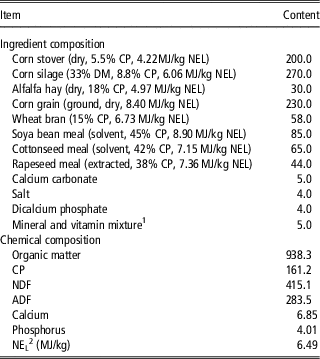
The experimental protocol was approved by the Animal Care and Use Committee of the Shanxi Agriculture University (Taigu City, Shanxi Province, China). A total of 36 multiparous Chinese Holstein cows averaging 606±4.7 kg of BW, 65±5.2 day in milk (DIM) with daily milk production of 30.6±0.72 kg were assigned to one of four groups blocked by lactation number, daily milk production, and DIM. The treatments were control, low-BCVFA (LBCVFA), medium-BCVFA (MBCVFA) and high-BCVFA (HBCVFA) with 0, 30, 60 and 90 g BCVFA per cow per day, respectively. The supplement of BCVFA was a combination of isobutyrate, isovalerate and 2-methylbutyrate (analytical grade, 0.985 g/g isobutyrate, isovalerate and 2-methylbutyrate; Yangxi Spice Factory, Guangdong, China) according to the ratio of 1 : 1 : 1 and hand-mixed into the top third of the daily ration of about 5 kg. Experimental periods were 105 days with 15 days of adaptation and 90 days of data collection. Cows were housed in a naturally ventilated tie-stall barn and allowed to exercise for 2 h in an open dry lot before each milking. Cows were milked at 0600, 1400 and 2100 h daily and were fed ad libitum a total mixed ration (TMR; Table 1) after each milking. The diet was formulated based on NRC (Reference Maxin, Glasser, Hurtaud, Peyraud and Rulquin2001) recommendations for a 600 kg cow producing 30 kg/day of milk containing 40 g/kg of milk fat and 30 g/kg CP. The amount of BCVFA fed was determined from recent work (Liu et al., Reference Lehner and Kuksis2008), who found that BCVFA (16.8 or 25.2 g/steer per day) supplemented to the ration improved ruminal fermentation and digestion in beef cattle.
Ingredient and chemical composition of the basal diet (in g/kg dry matter)

1 Contained 20 mg Co, 1600 mg Cu, 10 000 mg Fe, 8000 mg Mn, 7000 mg Zn, 1200 mg I, 600 mg Se, 600 000 IU vitamin A, 100 000 IU vitamin D, and 3000 mg vitamin E per kg premix.
2 Estimated based on NRC (2001).
Data collection and sampling of feed and milk
Feed offered and refusals were recorded daily through the experimental period to calculate DM intake. Samples of TMR and refusals were sampled daily during the collection period, composited by cow and stored at −20°C. Samples of TMR and refusals were thawed and composited by cow in proportion to amounts of feed offered and refusals. Composite samples of TMR and refusals were dried at 55°C for 48 h, and ground to pass a 1 mm sieve with a cutter mill (110, Qingdao Ruixintai Instrument Co., Ltd., Qingdao, China) for chemical analyses. Milk yields were recorded during the collection period from each milking and calculated by cow. Milk samples from each cow were collected at every milking for 90 days. Samples of milk were preserved with 2-bromo-2-nitropropane-1, 3-diol and pooled by every 5 days (weighed to milk yield of each milking) for each cow before chemical analysis. Body weights were recorded on 2 consecutive days before and at the end of the collection period after the 1400 h milking.
Ruminal fermentation
Ruminal fluid was sampled 3 h after the morning feeding on day 105 via the oesophagus using a stomach tube (outside diameter 1 cm, inside diameter 0.8 cm, length 300 cm) connected to a vacuum pump (Speedivac 2; Edwards High Vacuum, Crawley, UK). Ruminal pH was immediately measured using an electric pH meter (PHS-3C; Shanghai Leijun Experimental Instrument Co., Ltd., Shanghai, China). Samples were then strained through four layers of cheesecloth. Filtrate of 5 ml was preserved by adding 1 ml of 250 g/l meta-phosphoric acid to determine VFA, and 5 ml of filtrate was preserved by adding 1 ml of 20 g/L (w/v) H2SO4 to determine NH3–N. Samples were subsequently stored frozen at –20°C until analyses.
Total tract apparent nutrient digestibilities
During days 87 to 103 of the experimental period, cows were dosed orally twice daily with 10 g of chromic oxide in gelatin capsule per day per cow in two equal proportions at 0700 and 1900 h for use as a digesta marker. Faecal samples (~200 g wet weight) were collected from the rectum three times daily at various times (3 h intervals) during days 94 to 104 of the period. At the end of the experiment, samples were thawed, composited by cow on an equal wet weight basis. After being dried at 55oC for 48 h, samples were ground to pass a 1 mm sieve in a cutter mill (110, Qingdao Ruixintai Instrument Co., Ltd.) for chemical analyses. Dry matter excreted in faeces was calculated by dividing chromium input (grams of chromium per day) by chromium concentration (grams of chromium per kilogram of DM) in the faeces (Ferret et al., Reference Ferret, Plaixats, Caja, Gasa and Prió1999). Excretion of other nutrient in the faeces was calculated by multiplying DM flow by their concentration in faecal DM.
Sampling of mammary gland tissue
On the last day of the collection period, biopsies were carried out before the afternoon milking. A core of secretory tissue (750 to 1000 mg) of mammary tissue from each cow was obtained by surgical biopsy from the midpoint section of a rear quarter according to the method of Farr et al. (Reference Farr, Stelwagen, Cate, Molenaar, McFadden and Davis1996). The capsular end of the core was deleted to reduce the gene expression heterogeneity as a result of its greater amount of connective tissue (Farr et al., Reference Farr, Stelwagen, Cate, Molenaar, McFadden and Davis1996). Tissue biopsies were snap-frozen in liquid nitrogen and stored at −80°C until RNA extraction.
Chemical analyses
Analytical DM content of oven-dried samples was determined by drying at 135°C for 3 h (AOAC, 1997; method 930.15). Organic matter (OM) content was calculated as the difference between DM and ash contents, with ash determined by combustion at 550°C for 5 h. Content of NDF and ADF were determined using methods described by Van Soest et al. (Reference Van Soest, Robertson and Lewis1991) with heat stable alpha amylase and sodium sulphite used in the NDF procedure, and expressed inclusive of residual ash. Content of N in the samples was determined by a Kjeldahl method (AOAC, 1997; method 976.05). Ether extract (EE) in the samples was determined by the Soxhlet method (AOAC, 1997; method 920.39). Milk samples were analysed for fat, true protein and lactose using infrared spectrophotometry (Foss 120 Milko-Scan; Foss Electric, Hillerød, Denmark) according to AOAC (1997, method 975.16) procedures. An aliquot of milk was centrifuged to obtain the milk fat cake. The milk fat was then extracted using the procedure of (Hara and Radin, Reference Gylswyk1978), and transmethylation of the esterified FA was performed according to the method of Chouinard et al. (Reference Chouinard, Corneau, Barbano, Metzger and Bauman1999). Fatty acid methyl esters (FAMEs) were used for gas chromatographic analysis of total fatty acids. Fatty acid composition was determined using gas chromatography (GC) on a CP SIL 88, 100 m×0.25 mm×0.25 μm capillary column (Agilent J&W Advanced Capillary GC Columns, the Netherlands) in an Agilent 7890 A (Agilent Technologies, Santa Clara, CA, USA) with an auto sampler, flame ionization detector and split injection. The initial oven temperature was 150°C, which was held for 5 min then increased to 200°C at a rate of 2°C/min and held for 10 min, then increased to 220°C at 5°C/min and held for 35 min. Helium was used as a carrier gas at a flow rate of 1 ml/min. The injector was set at 260°C, and the detector was set at 280°C. Fatty acid methyl esters were identified by comparisons with the retention times of the standards. The standards were FAME Mix C4-C24 Unsatures (Sigma 18919, Germany), Methyl trans-11 C18:1 (Sigma 46905, Germany) and Methyl cis-9, trans-11 CLA (Matreya1255, USA). Ruminal VFA were separated and quantified by gas chromatography (GC102AF; Shanghai Specialties Ltd., Shanghai, China) using a 2-m (ф4-mm) fused PEG2000, Chromsob WAW DMCS column (GC102AF; Shanghai Specialties Ltd.) with 2-ethylbutyric acid as the internal standard. Ruminal ammonia N concentration was determined by a colorimetric spectrophotometer (UV2100; Shanghai Younike Instrument Co., Ltd., Shanghai, China). Chromium content of faecal samples was determined by atomic absorption spectrophotometry (TAS-990; Beijing Purkinje General Instrument Co., Ltd., Beijing, China) based on the method of Williams et al. (Reference Williams, David and Iismaa1962).
Extraction of RNA and quantitative real-time polymerase chain reaction
Total RNA was extracted from 100 mg mammary gland tissues by using a total RNA isolation kit (Invitrogen, Carlsbad, CA, USA) according to the manufacturer’s protocol. The quality and concentration of the isolated RNA were determined by using a NanoDrop ND-1000 Spectrophotometer (NanoDrop Technologies, Rockland, DE, USA). The ratios of absorbance at 260 and 280 nm of all preparations were ~2.0. The integrity of RNA was checked by denaturing agarose gel electrophoresis and ethidium bromide staining. The iScriptTM cDNA Synthesis Kit (Bio-Rad Laboratories GmbH, Munich, Germany) was used to synthesize cDNA from 500 ng total RNA from each sample per 10 μl sample reaction according to the manufacturer’s instructions. Reaction conditions were 15 min at 37°C and 5 min at 85°C. Negative control reactions without reverse transcriptase, were performed on each sample to detect possible contamination of genomic DNA or environmental DNA (Kuzinski et al., Reference Kolver and DeVeth2011).
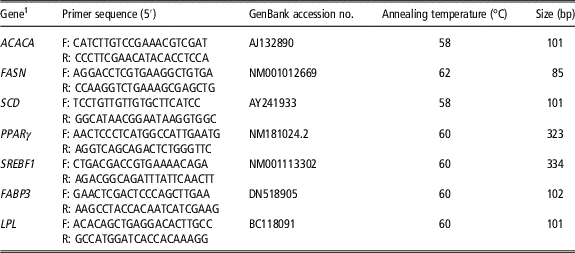
The abundance of mRNA for ACACA, FASN, SCD, PPARγ, SREBF1, FABP3 and LPL was quantified by qRT-PCR using the iCycler and the iQ-SYBR green detection (Bio-Rad Laboratories, Hercules, CA, USA). The primer sets used for real-time PCR were shown in Table 2. Subsequent qPCR was performed on a MxPro- Mx3000P multiplex quantitative PCR systems (Stratagene, La Jolla, CA, USA) at a minimum in triplicate. A reaction mixture (20 μl) consisted of 2 μl cDNA, 10 µl SYBR Premix TaqTM II (TaKaRa Biotechnology Co., Ltd., Dalian, China), 0.8 µl PCR Forward Primer (10 μM), 0.8 µl PCR Reverse Primer (10 μM), 0.4 µl ROX Reference Dye II (TaKaRa Biotechnology Co., Ltd.), and 6.0 µl dH2O. The PCR was performed under the following cycle conditions: 1 cycle of 95°C for 20 s, 45 cycles of 95°C for 20 s, and annealing temperature for 30 s, and 62°C for 20 s, followed by a melting curve analysis (Denman and McSweeney, Reference Denman and McSweeney2006). Fluorescence detection was performed at the end of each denaturation and extension step. Relative quantity of mRNA for ACACA, FASN, SCD, PPARγ, SREBF1, FABP3 and LPL were done as a proportion of 18S rRNA according to the equation: Relative quantification=2−(Ct target genes−Ct total reference genes), where Ct represents threshold cycle.
PCR primers for real-time PCR assay

1 ACACA=acetyl-coenzyme A carboxylase-α; FASN=fatty acid synthase; SCD=stearoyl-CoA desaturase; PPARγ=peroxisome proliferator-activated receptor γ; SREBF1=sterol regulatory element-binding factor 1; FABP3=fatty acid-binding protein 3; LPL=lipoprotein lipase.
Statistical analyses
Net energy (NE, MJ/kg) of the diet was calculated by multiplying the NEL−3× density of the ingredient by its percentage in the diet (NRC, Reference Maxin, Glasser, Hurtaud, Peyraud and Rulquin2001). Data were summarized by cow and then analysed using the mixed model procedure of SAS (Proc Mixed; SAS, Reference Ramachandran and Das2002) as a randomized block experiment with treatment as a fixed effect, cows within treatment and block as random effects. Linear and quadratic orthogonal contrasts were tested using the CONTRAST statement of SAS with coefficients estimated based on the BCVFA application rates. Effects of the factors were declared significant at P<0.05 unless otherwise noted and trends are discussed at P<0.10.
Results
Dry matter intake, lactation performance and feed conversion ratio
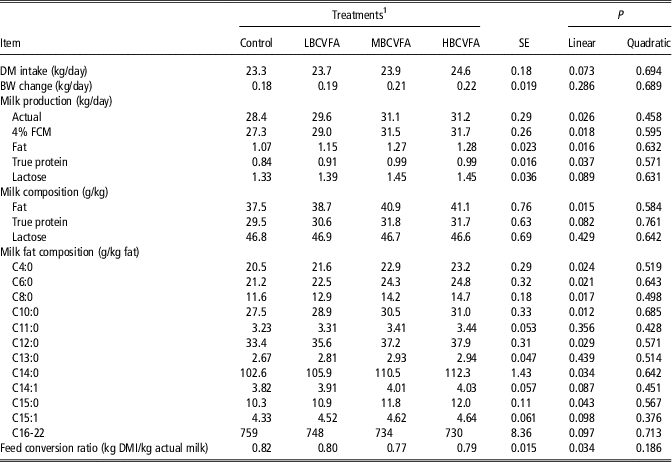
An increased tendency for DM intake (P=0.073) was observed, but changes of BW were not affected with increasing BCVFA supplementation (Table 3). Yields of actual milk (P=0.026) and 4.0% FCM (P=0.018) linearly increased with increasing BCVFA supplementation. Milk fat content linearly increased (P=0.015), milk true protein content tended to increase (P=0.082) with increasing BCVFA supplementation, while milk lactose content did not differ among treatments. Consequently, yields of milk fat (P=0.016) and true protein (P=0.037) linearly increased, and only an increased tendency was observed for milk lactose yield (P=0.089) with increasing BCVFA supplementation. Contents of C4:0, C6:0, C8:0, C10:0, C12:0, C14:0 and C15:0 fatty acids in milk fat linearly increased (P<0.05), and contents of C14:1, C15:1 and C16-22 tended to increase (P<0.10) with increasing BCVFA supplementation, whereas contents of C11:0 and C13:0 were not affected by BCVFA supplementation. Feed conversion ratio linearly decreased (P=0.034) with increasing BCVFA supplementation.
Effects of branched-chain volatile fatty acids (BCVFA) supplementation on dry matter intake, milk production, milk components and feed conversion ratio in dairy cows

FCM=fat corrected milk.
1 Control, low BCVFA (LBCVFA), medium BCVFA (MBCVFA) and high BCVFA (HBCVFA) with 0, 30, 60 and 90 g BCVFA per cow per day, respectively.
Ruminal fermentation and nutrient digestibility
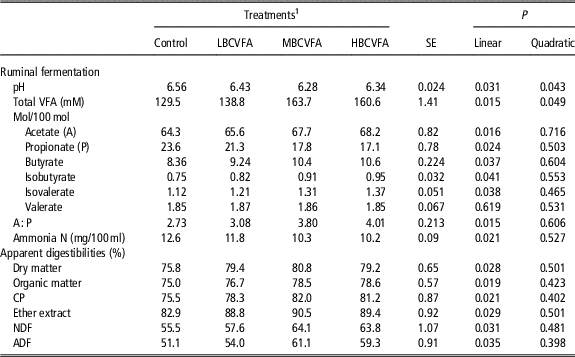
Ruminal pH linearly decreased (P=0.031) with increasing BCVFA supplementation (Table 4), and the linearly increased ruminal total VFA concentration (P=0.015) was detected with increasing BCVFA supplementation. Molar proportion of acetate linearly increased (P=0.016), whereas propionate molar proportion linearly decreased (P=0.024) with increasing BCVFA supplementation. As a result, the ratio of acetate to propionate linearly increased (P=0.015). Similarly, the linearly increased pattern was also observed for molar proportions of butyrate (P=0.037), isobutyrate (P=0.041) and isovalerate (P=0.038). However, no effect was observed for valerate molar proportion with BCVFA supplementation. Ruminal ammonia N concentration (P=0.021) decreased linearly with increasing BCVFA supplementation. Digestibilities of DM, OM, CP, EE, NDF and ADF in the total tract increased linearly (P<0.05) with increasing BCVFA supplementation.
Effects of branched-chain volatile fatty acids (BCVFA) supplementation on ruminal fermentation and apparent total tract nutrient digestibilities in dairy cows

1 Control, low BCVFA (LBCVFA), medium BCVFA (MBCVFA) and high BCVFA (HBCVFA) with 0, 30, 60 and 90 g BCVFA per cow per day, respectively.
The mRNA expression of genes related to fatty acids synthesis
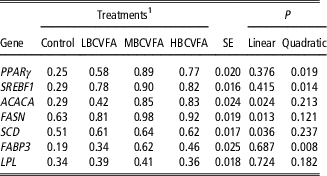
The relative mRNA expressions of PPARγ, SREBPF1 and FABP3 increased quadratically (P<0.02) with increasing BCVFA supplementation (Table 5). Moreover, the linearly increased relative mRNA expressions of ACACA, FASN and SCD were observed with increasing BCVFA supplementation. Nevertheless, the relative mRNA expression of LPL did not differ among the treatments.
Effects of branched-chain volatile fatty acids (BCVFA) supplementation on the mRNA expression of genes related to fatty acid synthesis in mammary gland of lactating dairy cows (proportion of 18S rRNA)

PPARγ=peroxisome proliferator-activated receptor γ; SREBF1=sterol regulatory element-binding factor 1; ACACA=acetyl-coenzyme A carboxylase-α; FASN=fatty acid synthase; SCD=stearoyl-CoA desaturase; FABP3=fatty acid-binding protein 3; LPL=lipoprotein lipase.
1 Control, low BCVFA (LBCVFA), medium BCVFA (MBCVFA) and high BCVFA (HBCVFA) with 0, 30, 60 and 90 g BCVFA per cow per day, respectively.
Discussion
Dry matter intake, lactation performance and feed conversion ratio
The increased fibre digestibility was due to an increased ruminal cellulolytic bacteria population and enzyme activity with BCVFA supplementation (Liu et al., Reference Liu, Wang, Pei, Li, Wang, Zhang, Zhang, He, Wang, Yang, Bai, Shi and Liu2014; Wang et al., Reference Wang, Liu, Zhang, Pei, Zhang, Wang, Yang, Bai, Shi and Liu2015; Zhang et al., Reference Zhang, Liu, Wang, Pei, Li, Wang, Yang, Bai, Shi and Liu2015), which increased ruminal feed passage rate and decreased ruminal distension. Allen (Reference Allen2000) found that feed intake was negatively related to ruminal distension. Thus, the tendency towards increased DM intake was attributed to the improved NDF and ADF digestibility with BCVFA supplementation. Early study also found that feed intake and ruminal passage rate increased with BCVFA supplementation in sheep (Gylswyk, Reference Sheng, Yan, Qi, Zhao, Jin and Guo1970). Moreover, an increased ruminal flow rate of liquid digesta was observed with sodium isobutyrate supplementation in cattle (Kamble and Thakur, Reference Jacobs, Dijkstra, Liesman, Vandehaar, Lock, van Vuuren, Hendriks and van Baal2004). In view of the insignificant BW changes during the trial, the increased yields of milk, milk fat and protein were mainly due to the improved nutrient digestibility and the tendency towards increased DM intake. Furthermore, the linearly decreased FCR indicated that nutrient utilization increased with increasing BCVFA supplementation, which further supported the improved lactation performance. In addition, Ramachandran and Das (2000) reported that DM intake increased and FCR was improved with isobutyrate supplementation in sheep. Formigoni et al. (Reference Formigoni, Martelli and Parisini1995) also observed that yields of 4% FCM, milk fat and protein increased with isoacids (a mixture of isobutyrate, 2-methylbutyrate and isovalerate) supplementation in early lactation dairy cows. However, Liu et al. (Reference Liu, Wang, Huang, Dong, Yang and Wang2009) reported that DM intake was not affected, milk yield and BW changes increased with isobutyrate supplementation in mid-lactation dairy cows, but milk component yields decreased. Considering the similar dietary composition, the reason for the inconsistent increased magnitude of milk component yields was the different supplements composition and lactation stage of dairy cows in the two studies.
The linearly increased contents of C4:0, C6:0, C8:0, C10:0, C12:0, C14:0 and C15:0 fatty acids in milk fat were attributed to the linearly increased concentrations of ruminal acetate and butyrate with increasing BCVFA supplementation. Fatty acids of C4-15 in milk fat arise mainly from the de novo synthesis from acetate and β-hydroxybutyrate in the mammary gland (Mansson, Reference Ma and Corl2008; Sheng et al., 2015), and β-hydroxybutyrate is mainly derived from butyrate by ketogenesis in ruminal epithelium cell (Liu et al., Reference Liu, Wang, Zhang, Pei, Zhang, Li, Guo, Huo, Yang and Wang2016). Therefore, the increased concentrations of ruminal acetate and butyrate with BCVFA supplementation provided sufficient precursors for milk fat synthesis and increased milk fat yield in dairy cows. Moreover, ruminal infusion of acetate increased milk fat content and the percentage of C4:0 and C16:0 in the study of Maxin et al. (Reference Mansson2011). In addition, Sheng et al. (2015) observed a positive effect of acetate and β-hydroxybutyrate on milk fat and protein synthesis in vitro.
Ruminal fermentation and nutrient digestibility
The linearly decreased ruminal pH was associated with the linearly increased total VFA concentration with increasing BCVFA supplementation as observed by others (Kolver and DeVeth, Reference Kamble and Thakur2002). Literature had demonstrated that BCVFA was a growth factor for most ruminal cellulolytic bacteria (Cummins and Papas, Reference Cummins and Papas1985; Liu et al., Reference Liu, Wang, Pei, Li, Wang, Zhang, Zhang, He, Wang, Yang, Bai, Shi and Liu2014). Moreover, previous studies found that populations of Ruminococcus albus, Ruminococcus flavefaciens, Butyrivibrio fibrisolvens and Fibrobacter succinogenes as well as activities of caboxymethyl-cellulase, cellobiase, xylanase and pectinase in the rumen increased with isovalerate, isobutyrate or 2-methylbutyrate supplementation in steers (Liu et al., Reference Liu, Wang, Pei, Li, Wang, Zhang, Zhang, He, Wang, Yang, Bai, Shi and Liu2014; Wang et al., Reference Wang, Liu, Zhang, Pei, Zhang, Wang, Yang, Bai, Shi and Liu2015; Zhang et al., Reference Zhang, Liu, Wang, Pei, Li, Wang, Yang, Bai, Shi and Liu2015). Therefore, the increased concentrations of ruminal total VFA, acetate and butyrate were consistent with the increased digestibilities of NDF and ADF, and indicated that ruminal cellulolytic bacteria population and enzyme activity increased with BCVFA supplementation in dairy cows. Furthermore, the linearly increased ratio of acetate to propionate suggested that ruminal fermentation pattern altered from propionate to acetate production with increasing BCVFA supplementation. Ruminal BCVFA and ammonia N are mainly derived from feed protein degradation, and are used for bacteria growth and microbial protein synthesis, respectively (Cummins and Papas, Reference Cummins and Papas1985; Firkins et al., Reference Firkins, Yu and Morrison2007). However, ruminal protease activity decreased with BCVFA supplementation (Liu et al., Reference Liu, Wang, Pei, Li, Wang, Zhang, Zhang, He, Wang, Yang, Bai, Shi and Liu2014; Wang et al., Reference Wang, Liu, Zhang, Pei, Zhang, Wang, Yang, Bai, Shi and Liu2015; Zhang et al., Reference Zhang, Liu, Wang, Pei, Li, Wang, Yang, Bai, Shi and Liu2015). Therefore, the increased concentrations of isobutyrate and isovalerate should be attributed to the exogenous supplementation of BCVFA as previously observed (Kamble and Thakur, Reference Jacobs, Dijkstra, Liesman, Vandehaar, Lock, van Vuuren, Hendriks and van Baal2004; Liu et al., Reference Liu, Wang, Huang, Dong, Yang and Wang2009). In addition, considering the increased milk protein yield in the current study and the increased cellulolytic bacterial populations in other studies (Liu et al., Reference Liu, Wang, Pei, Li, Wang, Zhang, Zhang, He, Wang, Yang, Bai, Shi and Liu2014; Wang et al., Reference Wang, Liu, Zhang, Pei, Zhang, Wang, Yang, Bai, Shi and Liu2015; Zhang et al., Reference Zhang, Liu, Wang, Pei, Li, Wang, Yang, Bai, Shi and Liu2015), the linearly decreased ruminal ammonia N concentration should be mainly due to an increased microbial protein synthesis with increasing BCVFA supplementation. Moreover, Cummins and Papas (Reference Cummins and Papas1985) found an increased microbial protein synthesis with isocarbon-4 and isocarbon-5 salts addition in vitro. Similarly, the linearly decreased ruminal pH and propionate molar proportion, as well as the linearly increased total VFA concentration, acetate molar proportion and microbial protein synthesis were also observed with increasing isobutyrate, isovalerate or 2-methylbutyrate supplementation in diet (Liu et al., Reference Liu, Wang, Huang, Dong, Yang and Wang2009; Wang et al., Reference Wang, Liu, Pei, Li, Wang, Wang, Bai, Shi, Liu and Li2012).
The positive responses of digestibilities of DM, OM, CP, EE, NDF and ADF to BCVFA supplementation further supported the improved lactation performance and ruminal fermentation. The results were consistent with the findings in previous studies with isobutyrate, isovalerate or 2-methylbutyrate supplementation in steers (Liu et al., Reference Lehner and Kuksis2008; Wang et al., Reference Wang, Liu, Pei, Li, Wang, Wang, Bai, Shi, Liu and Li2012). Similarly, an increased DM digestion was reported with ammonium salts of isocarbon-4 and isocarbon-5 supplementation in vitro (Cummins and Papas, Reference Cummins and Papas1985). Nevertheless, Kamble and Thakur (Reference Jacobs, Dijkstra, Liesman, Vandehaar, Lock, van Vuuren, Hendriks and van Baal2004) found that the digestibility of CP increased, but other nutrient were not affected by 0.075 g BCVFA per kg DM supplementation in diet based on urea-impregnated wheat straw. In addition, Gunter et al. (Reference Gunter, Krysl, Judkins, Broesder and Barton1990) reported that DM intake, ruminal pH, concentrations of total VFA, acetate and propionate, microbial protein synthesis and nutrient digestibility were not affected by the supplementation of 20, 40, 60 g BCVFA per head per day in beef cattle consumed only grass hay. Therefore, the inconsistent results were due to the different dietary composition and the dose of BCVFA supplementation. The TMR was used in the current study while only forage was used in above two studies. The dose of BCVFA supplementation in the current study was higher than that of Kamble and Thakur (Reference Jacobs, Dijkstra, Liesman, Vandehaar, Lock, van Vuuren, Hendriks and van Baal2004) and Gunter et al. (Reference Gunter, Krysl, Judkins, Broesder and Barton1990).
The mRNA expression of genes related to milk fatty acid synthesis
The mRNA levels of ACACA, FASN, SCD, FABP3 and LPL were regulated by PPARγ and SREBPF1 in bovine mammary gland (Bionaz and Loor, Reference Bionaz and Loor2008; Ma and Corl, Reference Liu, Wang, Yang, Zhang, Yang, He, Zhang, Dong and Huang2012). The ACACA and FASN participate in the de novo synthesis of milk fatty acids in bovine mammary gland (Bionaz and Loor, Reference Bionaz and Loor2008), and a positive relationship between the abundance of ACACA and FASN mRNA and the secretion of C4-16 fatty acids was observed in the study of Bernard et al. (Reference Bernard, Leroux and Chilliard2008). Moreover, some studies reported that the mRNA expressions of ACACA, FASN, SCD, PPARγ, SREBPF1, FABP3 and LPL increased in bovine mammary epithelial cells with acetate and β-hydroxybutyrate supplementation in vitro (Jacobs et al., Reference Hara and Radin2013; Sheng et al., 2015). Therefore, the increased relative expressions of PPARγ, SREBPF1, ACACA and FASN might be associated with the increased ruminal production of acetate and butyrate, and could partly support the increased milk fat yield and C4-15 fatty acids content with BCVFA supplementation. The SCD is responsible for catalyzing monounsaturated fatty acids synthesis from saturated fatty acids (Sheng et al., 2015), and the ratio of C14:1 to C14:0 in milk can be used to estimate SCD activity in the mammary gland (Bernard et al., Reference Bernard, Leroux and Chilliard2008). Although SCD mRNA expression was upregulated, the ratios of C14:1 to C14:0 were unaltered (0.037, 0.037, 0.036, 0.036 for control, LBCVFA, MBCVFA and HBCVFA, respectively) with increasing BCVFA supplementation. In addition, the unchanged contents of C14:1 and C15:1 in milk fat further suggested that SCD activity was not affected with increasing dietary BCVFA supplementation. The FABP3 and LPL were associated with the uptake and intracellular transport of long-chain fatty acids in bovine mammary epithelial cells (Lehner and Kuksis, Reference Kuzinski, Zitnan, Viergutz, Legath and Schweige1996; Sheng et al., 2015). However, LPL mRNA expression was not affected with BCVFA supplementation. Therefore, the genes related to the synthesis of short- and medium-chain fatty acids was upregulated, but the genes related to the synthesis, uptake and transport of long-chain fatty acids in mammary gland of dairy cows were not affected with increasing BCVFA supplementation.
Conclusion
The supplementation of BCVFA increased yields of milk, milk fat and milk protein, and content of short- and medium-chain fatty acids. Concentrations of ruminal total VFA, acetate and butyrate, as well as digestibilities of DM, OM, CP, EE, NDF and ADF in the total tract linearly increased with increasing BCVFA supplementation. The mRNA expressions of PPARγ, SREBPF1, ACACA, FASN, SCD and FABP3 in mammary gland also increased with increasing BCVFA supplementation. It is suggested that lactation performance improved and the genes related to milk fat synthesis upregulated by BCVFA supplementation in a dose-dependent manner. The optimum supplemental dose was about 60 g BCVFA per cow per day.
Acknowledgements
This work was supported by a grant from Natural Science Funding projects of National Natural Science Fundation of China (31272471), Innovation and Demonstration Projects of the Local Development Fundation of China (2017GA630002-1) and Agriculture Research and Development projects of Jinzhong Science and Technology Department (Y172007-1). The authors thank the staff of Shanxi Agriculture University dairy unit for care of the animals. The authors acknowledge Shanxi Hetan dairy cow breeding Co. Ltd, for providing data and for valuable information regarding the production performance.
Declaration of interest
None.
Ethics statement
None.
Software and data repository resources
None.