




No CrossRef data available.
Article contents
Sequence variation of the Cytochrome b gene of various human infecting members of the genus Leishmania and their phylogeny
Published online by Cambridge University Press: 06 May 2004
Abstract
The Cytochrome b (Cyt b) gene has proved to be useful for identification and classification of many mammals and plants. In order to evaluate the utility of this gene for discrimination of Leishmania parasites as well as for exploring their phylogenetic relationships, we determined the nucleotide sequences of the Cyt b gene from 13 human-infecting Leishmania species (14 strains) from the New and Old Worlds. The Cyt b genes, approximately 1080 base pairs, were found to be A/T rich, and their 5′ terminal-editing regions were highly conserved. The nucleotide sequence variation among them was enough to discriminate parasite species; 245 nucleotide positions were polymorphic and 190 positions were parsimony informative. The phylogenetic relationships based on this gene, showed good agreement with the classification of Lainson & Shaw (1987) except for the inclusion of L. (L.) major in the L. (L.) tropica complex and the placement of L. tarentolae in another genus. These data show that the Cyt b gene is useful for phylogenetic study of Leishmania parasites.
Keywords
Information
- Type
- Research Article
- Information
- Copyright
- 2004 Cambridge University Press
INTRODUCTION
The genus Leishmania comprises 30 members of which 21 species are pathogenic to mammals including humans, causing a variety of diseases called leishmaniasis, which affect 88 countries worldwide, mostly developing countries (WHO, 2000).
Although biochemical (isoenzyme electrophoresis) and immunological (monoclonal antibodies) techniques have been utilized to identify species and subspecies of Leishmania parasites, these methods are time consuming (Kreutzer & Christensen, 1980; Grimaldi, David & McMahon-Pratt, 1987).
Since analysis of DNA gives the most specific and stable identification criteria, molecular approaches have also been used. In order to increase the sensitivity of their methodologies, most researchers have targeted genes and regions of genes that are present in high copy number (Uliana et al. 1991; Van Eys et al. 1992; Meredith et al. 1993; Fernandes et al. 1994; Cupolillo et al. 1995). However, the discriminatory power of these targets depends on the level of inter- and intra-species variability of their sequences (Van Eys et al. 1992; Van Eys & Meredith, 1996).
In kinetoplastid protozoa, the maxicircle component of the kinetoplast is homologous to the mitochondrial genome of other organisms and has about 50 copies (Stuart, 1983). The cytochrome b (Cyt b) gene is contained in the mitochondrial genome of a wide variety of living forms and encodes the central catalytic subunit of an enzyme present in the respiratory chain of mitochondria. The gene has been widely used for phylogenetic studies and identification of animals and plants (Irwin, Kocher & Wilson, 1991; Degli Esposti et al. 1993).
The Cyt b gene of L. tarentolae consists of two regions, the edited region (the most 5′ region of 23 bp) that undergoes RNA editing, and the non-edited region (the 3′ region of 1056 bp). The RNA editing process has been described in mitochondrial genes of kinetoplastid protozoa (Benne, 1994). In the RNA editing process, uridylate (U) residues are inserted or deleted to repair a frameshift present in the genomic sequence and to create the AUG codon for translation initiation. In L. tarentolae, the transcript of the Cyt b gene undergoes insertion of 39 U residues in 15 sites within the edited region. Consequently, (1) a total of 20 codons are created including the AUG codon (Met) for translation initiation by insertion of one U residue between positions 2 and 3 in the edited region, and (2) the ATT codon (Leu) becomes the first amino acid in the non-edited region (Feagin et al. 1988).
In the present study, in an attempt to evaluate the utility of the Cyt b gene for discriminating Leishmania species and for reconstructing their phylogenetic relationships, we determined the coding sequence of this gene from 13 human-pathogenic species (14 strains). These species represent the most common causative agents of leishmaniasis in the New and Old Worlds.
MATERIALS AND METHODS
Parasites
The Leishmania strains used in this study are listed in Table 1. L. (L.) chagasi PP75 was kindly provided by Dr M. Hide (IRD de Montpellier, Laboratory CEPM UMR CNRS/IRD 9926, Cedex 5, France).
Table 1. Leishmania strains used in this study, gene size, A+T, G+C content and frequencies of the cytochrome b gene (E. R., edited region; Non-E. R., non-edited region; F, frequency.)

Cell culture and DNA extraction
Promastigotes were grown at 26 °C in RPMI 1640 medium (Sigma, USA) supplemented with 10% heat-inactivated foetal bovine serum (Bio Whittaker, USA), 50 U/ml penicillin and 50 μg/ml streptomycin. Promastigotes were harvested at the stationary phase of growth by centrifugation at 2000 g for 10 min. Genomic DNA was extracted from the promastigote pellets by using GenomicPrepTM Cell and Tissue DNA Isolation Kit (Amersham Pharmacia Biotech, USA) following the manufacturer's instructions.
Design of PCR primers and PCR conditions
For PCR amplification of the whole Cyt b gene from Leishmania parasites, oligonucleotide primers were designed on the basis of consensus sequences found in Cyt b and adjacent genes: COIII and MURF4 of parasites belonging to the order kinetoplastida (Table 2). Positions and directions of the primers are indicated in Fig. 1. PCR reactions were done in a total volume of 50 μl. Each reaction mixture contained 400 ng of DNA template, 100 pM of each primer, 0·2 mM of each dNTP, 1·25 units of Ex Taq polymerase, 10 mM Tris–HCl, pH 8·3, 50 mM KCl and 1·5 mM MgCl2 (TaKaRa, Japan). PCR conditions were as follows: initial denaturation at 94 °C for 1 min followed by 40 cycles of denaturation at 94 °C for 1 min, annealing at 50 °C for 1 min and extension at 72 °C for 1 min and a final extension step at 74 °C for 5 min.
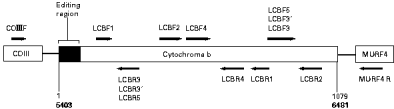
Fig. 1. Schematic representation of the Cyt b gene in the maxicircle component of kinetoplastid parasites, indicating the positions of the oligonucleotide primers. COIII and MURF4 represent the genes cytochrome c oxidase subunit III and maxicircle unidentified reading frame 4 respectively. LCBF and LCBR represent forward and reverse primers. Bold numbers, 5403 and 6481, indicate the first and the last nucleotide positions of the pre-edited Cyt b gene of L. tarentolae (Accession no. M10126) corresponding to the nucleotide positions 1 and 1079 in our analysis. ([squf ]) Editing region (23 bp). (—) Intergenic region. (□) Non-edited region of Cyt b gene.

Subcloning and DNA sequencing
The PCR products were separated by electrophoresis on agarose gels, purified by using the GFX PCR DNA and Gel Band purification kit (Amersham Pharmacia Biotech, USA) and ligated to pT7 blue T-vector (Novagen, USA) by using TaKaRa DNA ligation solution version 1 (TaKaRa, Japan). At least 3 clones for each PCR product were sequenced on both strands. DNA sequencing was carried out on an ABI PRISM 310 automated sequencer (Applied Biosystem, USA) by using the Big Dye terminator cycle sequencing ready reaction kit (Applied Biosystem, USA). DNA sequencing was performed by using the 2 vector-specific primers, the 4 gene-specific primers for subcloning and 10 internal primers (Table 3). The composite sequences containing the Cyt b genes flanked by the 5′ and 3′ intergenic sequences were assembled.

Phylogenetic analysis and trees
Sequences were assembled and edited with the program Genetyx Mac 11.0.0 (Software Development Co. Ltd, Japan). Phylogenetic analysis and trees: neighbour joining (NJ) and maximum parsimony (MP) were performed by using the MEGA 2.1 program (Kumar et al. 2001) available online at http://www.megasoftware.net. The nucleotide sequence data reported in this paper have been submitted to the DDBJ/EMBL/GenBank nucleotide sequence databases with the Accession numbers AB095957–AB095970.
RESULTS
Structure of the Cyt b genes of Leishmania species
The first and the last nucleotide positions of the Cyt b gene of each tested species/strains were determined based on comparison with the Cyt b gene sequence of L. tarentolae.
For each species/strain, the first nucleotide position of the edited region was designated as the first nucleotide position of the Cyt b gene (position 1), and the third nucleotide of the translation termination codon within the non-edited region was designated as the last nucleotide position of the Cyt b gene (positions 1078, 1079 or 1080). Table 1 shows the length, total nucleotide content as well as percentage of A+T and G+C contents of the Cyt b gene in each species. The Cyt b genes of Leishmania parasites were revealed to be A+T rich.
Nucleotide sequence comparison of the Cyt b gene among Leishmania species
The nucleotide sequences of the Cyt b gene obtained in this study together with the sequence from L. tarentolae were compared to each other. The pairwise nucleotide sequence comparison revealed that the inter-species degree of identity ranged from 88·7% to 99·5%. When we compared 2 strains of L. (V.) braziliensis: M2904 and INH-03, their sequences showed 99·8% identity. We also observed that sequences of L. major-like isolated in Ecuador and the WHO reference strain L. (L.) major isolated in Turkestan (former USSR) had 99·9% identity as shown in Table 4.
Table 4. Amino acid and nucleotide sequences percentage identity between different species/strains of Leishmania (The numbers above the diagonal are amino acid sequence identity excluding the 5′ end edited region of L. tarentolae and the numbers below the diagonal are nucleotide sequence percentage identity. Underlined numbers represent amino acid and nucleotide sequence percentage identity of species belonging to the same complex.)

Amino acid sequence comparison of the Cyt b gene product among Leishmania species
Amino acid sequences of the Cyt b gene products, downstream of the edited region, were compared. The pairwise amino acid sequence comparison revealed no variation within species belonging to L. (L.) donovani and L. (L.) mexicana complexes. However, amino acid variation was observed within species belonging to L. (L.) tropica (99·1–99·7%) and L. (V.) braziliensis complexes (99·4–100%) as seen in Table 4.
Multiple alignments of nucleotide and amino acid sequences of the Cyt b gene
All Cyt b gene sequences were aligned. The multiple alignments revealed that 245 nucleotide positions were polymorphic, of which 55 positions were singletons and 190 positions were informative under parsimony criteria, 2 nucleotide positions involved insertion or deletions. These insertions or deletions were observed in the boundaries between the edited (22–24 bp) and the non-edited regions (1056 bp) of the Cyt b gene coding sequence (Fig. 2). Alignment of the amino acid sequence corresponding to the non-edited region revealed amino acid substitutions at 19 positions, of which 17 sites were parsimony informative: 3 Leu–Ile substitutions, 11 Val–Ile substitutions (1 singleton), 1 Cys–Ser substitution (singleton), 1 Phe–Tyr substitution, 1 Phe–Leu substitution, 1 Thr–Val substitution and 1 Ala–Val–Ile amino acid substitution. Most of these substitutions (17) were located within 6 out of the 8 transmembrane α helices, helices B, C, D, E, G and H, of the Cyt b protein structural model (Howell, 1989).

Fig. 2. Alignment of the 5′ edited region of the Cyt b gene of all Leishmania species/strains analysed in this study compared to L. tarentolae. Identical bases are marked as dots (.) and gaps as dashes (-). Numbers and positions of U residues inserted to the L. tarentolae edited region are shown. The boundary between the edited and non-edited regions is indicated by an arrowhead. The created initiation codon in the edited region and the first two codons of the non-edited region are underlined.
Comparison of nucleotide frequency and nucleotide substitution with other trypanosomatids
The nucleotide frequencies of all 4 bases were determined. Frequency of base T ranged from 0·49 to 0·52, base A ranged from 0·25 to 0·27, base G ranged from 0·15 to 0·17 and base C ranged from 0·06 to 0·08. Similar nucleotide frequencies for bases T and C have been observed in the partial non-edited coding region of the Cyt b gene (516 bp) of trypanosome species belonging to the subgenus Schizotrypanum (Barnabe, Brisse & Tibayrenc, 2003).
All kinds of nucleotide substitutions were found in the Cyt b gene. It was revealed that the overall transitions (5226) representing 56% were higher than the overall transversions (4074) representing 44%. While transition A

G was the most frequent substitution (3135) representing 60% of all transitions, transversion A
T was the most frequent (3090) representing 76% of all transversions. An excess of transition A
G was also observed by Barnabe et al. (2003).
Phylogenetic trees inferred from Cyt b gene sequences
All Leishmania species analysed in this study were monophyletic. In the NJ and MP trees, the mammalian Leishmania clustered into 5 clades. Clade I was represented by L. (L.) aethiopica/L. (L.) tropica and clade II was represented by L. (L.) major (Fig. 3A and B). Clades III, IV and V corresponded to L. (L.) donovani, L. (L.) mexicana and L. (V.) braziliensis complexes respectively, as described by Lainson & Shaw (1987).

Fig. 3. Phylogenetic relationships of various members of the genus Leishmania based on the nucleotide non-edited coding sequences of the Cyt b gene. The numbers in the branches correspond to the bootstrap values based on 1000 replicates.([bull ]) Circle indicates the position of Sauroleishmania (L. tarentolae) species in their respective phylogenetic tree. Bar indicates a clade formed based on the Cyt b gene. Bracket indicates Leishmania complexes as described by Lainson & Shaw (1987). (A) NJ tree constructed with the Tamura and Nei distance (1993), outgroup=Trypanosoma cruzi (U43567), Trypanosoma brucei (M17998) and Trypanoplasma borreli (U11684). (B) consensus MP tree constructed by using the complete deletion and branch and bound options.
DISCUSSION
Taking as a model the Cyt b gene of L. tarentolae and its RNA editing process, each tested species/strains had a 22–24 bp region very similar to the edited region of L. tarentolae, suggesting that similar RNA editing to that of L. tarentolae may take place in these Leishmania parasites. These edited regions were followed by non-edited regions of 1056 bp starting with the TTA (Leu) codon as in L. tarentolae. At their 3′ ends, the edited regions of 22 bp had a deletion of one T residue, while those of 24 bp had an insertion of one T residue, relative to that of L. tarentolae (23 bp). We assume that these deletions or insertions may be corrected by the RNA editing process, possibly by adding zero, one, or two U residues just downstream of the position 22 bp in the edited region. This assumption is supported by the observations that (1) non-edited regions of all tested species/strains encoded a highly homologous stretch of 351 amino acids, (2) most amino acid substitutions are biochemically conservative, and (3) conserved amino acids in a wide variety of species (Degli Esposti et al. 1993) were also conserved in all the species/strains analysed in this study. The fact that most of the amino acid substitutions were found in the transmembrane regions is congruent with previous studies of the Cyt b gene of different species. (Degli Esposti et al. 1993; Farias et al. 2001).
The DNA sequence variation of the Cyt b gene from each of the human-infecting Leishmania species/subspecies determined in this study was enough to distinguish each one of them, and allowed us to explore their phylogenetic relationships. In contrast, not all parasites could be distinguished at the amino acid level, and the amino acid-based phylogenetic trees showed low bootstrap values (data not shown), probably due to the lack of informative sites.
The phylogenetic relationships, based on Cyt b gene nucleotide sequences, appear to agree with the classification of Leishmania proposed by Lainson & Shaw (1987) with two exceptions: (1) the inclusion of L. (L.) major within the L. (L.) tropica complex, because of its notable earlier divergence from the L. (L.) tropica/L. (L.) aethiopica clade and (2) the placement of L. tarentolae. Their proposed classification places L. tarentolae in another genera (Sauroleishmania) on the basis that L. tarentolae infects lizards, not mammals. However, the phylogenetic trees reported in this study showed that Sauroleishmania and mammalian Leishmania formed a well-supported monophyletic group. Our result is consistent with previous studies, using nuclear and mitochondrial molecular markers, that place Sauroleishmania within the genus Leishmania (Croan, Morrison & Ellis, 1997; Brewster & Barker, 1999).
The NJ and MP trees had similar topologies with a small difference. In the NJ tree L. tarentolae and the L. (V.) braziliensis clade formed a monophyletic group that was not highly supported (69% bootstrap value), while in the MP tree they appeared to be paraphyletic. The ambiguous position of L. tarentolae in this study may reflect the discrepancy existing in the literature on its position. L. tarentolae clustered together with species belonging to subgenus Viannia when minicircle conserved regions were used for phylogenetic analysis (Yurchenko, Kolesnikov & Lukes, 2000). In contrast, this species clustered together with species belonging to subgenus Leishmania, when the ATPase 6 gene was used (Brewster & Barker, 1999). One explanation for this discrepancy is the possibility of horizontal transfer of maxicircle genes among Leishmania species as described in Trypanosoma cruzi (Machado & Ayala, 2001). This explanation is not inconsistent with the clonal population structure of Leishmania proposed by Tibayrenc, Kjellberg & Ayala (1990), since this theory accepts rare genetic exchange events.
Evolution of RNA editing has been described at inter-genus level in the order kinetoplastida (Landweber & Gilbert, 1994; Maslov et al. 1994). In the present study, we observed that the edited region of the Cyt b gene was highly conserved among Leishmania species. Although the edited regions were too short to draw any conclusion, our observation is consistent with a previous report regarding the first edited region of the ATPase 6 gene (Brewster et al. 1999), suggesting that the RNA editing process within the genus Leishmania may be evolving at a very slow rate.
We sincerely thank Dr Mallorie Hide for providing the L. (L.) chagasi WHO reference strain, Dr Carlos Machado for his helpful comments on the phylogenetics analyses and Dr Masato Umikawa for his support during the initial phases of this study. This study was supported by grants No. 14256002 from the Japanese Ministry of Education, Culture, Sports, Science and Technology and No. 15590371 from the Japanese Society for the Promotion of Science.
References
REFERENCES
BARNABE, C.,
BRISSE, S. &
TIBAYRENC, M.
(2003).
Phylogenetic diversity of bat trypanosomes of subgenus Schizotrypanum based on multilocus enzyme electrophoresis, random amplified polymorphic DNA, and cytochrome b nucleotide sequences analyses.
Infection, Genetics and Evolution 2, 201–208.CrossRefGoogle Scholar
BENNE, R.
(1994).
RNA editing in trypanosomes.
European Journal of Biochemistry 221, 9–23.CrossRefGoogle Scholar
BREWSTER, S. &
BARKER, D. C.
(1999).
The ATPase subunit 6 gene sequence predicts that RNA editing is conserved between lizard- and human-infecting Leishmania.
Gene 235, 77–84.CrossRefGoogle Scholar
CROAN, D. G.,
MORRISON, D. A. &
ELLIS, J. T.
(1997).
Evolution of the genus Leishmania revealed by comparison of DNA and RNA polymerase gene sequences.
Molecular and Biochemical Parasitology 89, 149–159.CrossRefGoogle Scholar
CUPOLILLO, E.,
GRIMALDI, G. Jr.,
MOMEN, H. &
BEVERLEY, S. M.
(1995).
Intergenic region typing (IRT): A rapid molecular approach to the characterization and evolution of Leishmania.
Molecular and Biochemical Parasitology 73, 145–155.CrossRefGoogle Scholar
DEGLI ESPOSTI, M.,
DE VRIES, S.,
CRIMI, M.,
GHELLY, A.,
PATARNELLO, T. &
MEYER, A.
(1993).
Mitochondrial cytochrome b: evolution and structure of the protein.
Biochimica et Biophysica Acta 1143, 243–271.CrossRefGoogle Scholar
FARIAS, I. P.,
ORTI, G.,
SAMPAIO, I.,
SCHNEIDER, H. &
MEYER, A.
(2001).
The cytochrome b gene as a phylogenetic marker: The limits of resolution for analyzing relationships among cichlid fishes.
Journal of Molecular Evolution 53, 89–103.CrossRefGoogle Scholar
FEAGIN, J. E.,
SHAW, J. M.,
SIMPSON, L. &
STUART, K.
(1988).
Creation of AUG initiation codons by addition of uridines within cytochrome b transcripts of kinetoplastids.
Proceedings of the National Academy of Sciences, USA 85, 539–543.CrossRefGoogle Scholar
FERNANDES, O.,
MURTHY, V. K.,
KURATH, U.,
DEGRAVE, W. M. &
CAMPBELL, D. A.
(1994).
Mini-exon gene variation in human pathogenic Leishmania species.
Molecular and Biochemical Parasitology 66, 261–271.CrossRefGoogle Scholar
GRIMALDI, G. Jr.,
DAVID, J. R. &
McMAHON-PRATT, D.
(1987).
Identification and distribution of new world Leishmania species characterized by serodeme analysis using monoclonal antibodies.
American Journal of Tropical Medicine and Hygiene 36, 270–287.CrossRefGoogle Scholar
HOWELL, N.
(1989).
Evolutionary conservation of protein regions in the proton-motive cytochrome b and their possible roles in redox catalysis.
Journal of Molecular Evolution 29, 157–169.CrossRefGoogle Scholar
IRWIN, D. M.,
KOCHER, T. D. &
WILSON, A. C.
(1991).
Evolution of the cytochrome b gene of mammals.
Journal of Molecular Evolution 32, 128–144.CrossRefGoogle Scholar
KREUTZER, R. D. &
CHRISTENSEN, H. A.
(1980).
Characterization of Leishmania spp. by isozyme electrophoresis.
American Journal of Tropical Medicine and Hygiene 29, 199–208.CrossRefGoogle Scholar
KUMAR, S.,
TAMURA, K.,
JAKOBSEN, I. B. &
NEI, M.
(2001).
MEGA2: Molecular evolutionary genetics analyfsis software.
Bioinformatics 17, 1244–1245.CrossRefGoogle Scholar
LAINSON, R. &
SHAW, J. J.
(1987).
Evolution, classification and geographical distribution. In
Leishmaniasis in Biology and Medicine
(ed. Peters, W. &
Killick-Kendrik, R.
), pp. 1–120.
Academic Press,
London.
LANDWEBER, L. F. &
GILBERT, W.
(1994).
Phylogenetic analysis of RNA editing: A primitive genetic phenomenon.
Proceedings of the National Academy of Sciences, USA 91, 918–921.CrossRefGoogle Scholar
MACHADO, C. A. &
AYALA, F. J.
(2001).
Nucleotide sequences provide evidence of genetic exchange among distantly related lineages of Trypanosoma cruzi.
Proceedings of the National Academy of Sciences, USA 98, 7396–7401.CrossRefGoogle Scholar
MASLOV, D. A.,
AVILA, H. A.,
LAKE, J. A. &
SIMPSON, L.
(1994).
Evolution of RNA editing in kinetoplastid protozoa.
Nature, London 368, 345–347.CrossRefGoogle Scholar
MEREDITH, S. E. O.,
ZIJLSTRA, E. E.,
SCHOONE, G. J.,
KROON, C. C. M.,
VAN EYS, G. J. J. M.,
SCHAEFFER, K. U.,
EL-HASSAN, A. M. &
LAWYER, P. G.
(1993).
Development and application of the polymerase chain reaction for the detection and identification of Leishmania parasites in clinical material.
Archives de l'Institut Pasteur de Tunis 70, 419–431.Google Scholar
STUART, K.
(1983).
Kinetoplast DNA, mitochondrial DNA with a difference.
Molecular and Biochemical Parasitology 9, 93–110.CrossRefGoogle Scholar
TAMURA, K. &
NEI, M.
(1993).
Estimation of the number of nucleotide substitutions in the control region of mitochondrial DNA in humans and chimpanzees.
Molecular Biology and Evolution 10, 512–526.Google Scholar
TIBAYRENC, M.,
KJELLBERG, F. &
AYALA, F.
(1990).
A clonal theory of parasitic protozoa: The population structures of Entamoeba, Giardia, Leishmania, Nigeria, Plasmodium, Trichomonas and Trypanosoma and their medical and taxonomical consequences.
Proceedings of the National Academy of Sciences, USA 87, 2414–2418.CrossRefGoogle Scholar
ULIANA, S. R. B.,
AFFONSO, M. H. T.,
CAMARGO, E. P. &
FLOETER-WINTER, L. M.
(1991).
Leishmania: Genus identification based on a specific sequence of the 18S ribosomal RNA sequence.
Experimental Parasitology 72, 157–163.CrossRefGoogle Scholar
VAN EYS, G. J. J. M. &
MEREDITH, S. E. O.
(1996).
Detection and characterization of Leishmania parasites by DNA-based methods. In
Methods in Molecular Biology (ed. Clapp, J. P.), pp. 227–242.
Humana Press Inc,
NJ.
VAN EYS, G. J. J. M.,
SCHOONE, G. J.,
KROON, N. C. M. &
EBELING, S. B.
(1992).
Sequence analysis of small subunit ribosomal RNA genes and its use for detection and identification of Leishmania parasites.
Molecular and Biochemical Parasitology 51, 133–142.Google Scholar
WORLD HEALTH ORGANIZATION (2000).
WHO Information Fact Sheet N-116.
Available from URL: http://www.who.int//inf-fs/en/fact116.html.
YURCHENKO, V.,
KOLESNIKOV, A. &
LUKES J.
(2000).
Phylogenetic analysis of Trypanosomatina (Protozoa: Kinetoplastida) based on minicircle conserved regions.
Folia Parasitologica 47, 1–5.CrossRefGoogle Scholar
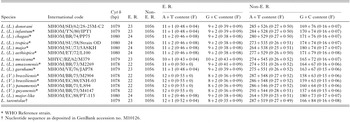
Table 1. Leishmania strains used in this study, gene size, A+T, G+C content and frequencies of the cytochrome b gene

Fig. 1. Schematic representation of the Cyt b gene in the maxicircle component of kinetoplastid parasites, indicating the positions of the oligonucleotide primers. COIII and MURF4 represent the genes cytochrome c oxidase subunit III and maxicircle unidentified reading frame 4 respectively. LCBF and LCBR represent forward and reverse primers. Bold numbers, 5403 and 6481, indicate the first and the last nucleotide positions of the pre-edited Cyt b gene of L. tarentolae (Accession no. M10126) corresponding to the nucleotide positions 1 and 1079 in our analysis. ([squf ]) Editing region (23 bp). (—) Intergenic region. (□) Non-edited region of Cyt b gene.
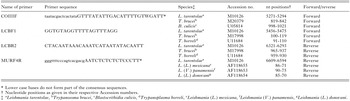
Table 2. Primer designation and consensus sequences designed from species belonging to the order Kinetoplastida
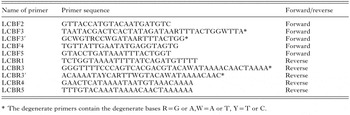
Table 3. Leishmania cytochrome b gene internal primers used for sequencing
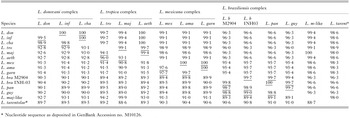
Table 4. Amino acid and nucleotide sequences percentage identity between different species/strains of Leishmania
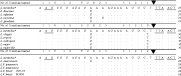
Fig. 2. Alignment of the 5′ edited region of the Cyt b gene of all Leishmania species/strains analysed in this study compared to L. tarentolae. Identical bases are marked as dots (.) and gaps as dashes (-). Numbers and positions of U residues inserted to the L. tarentolae edited region are shown. The boundary between the edited and non-edited regions is indicated by an arrowhead. The created initiation codon in the edited region and the first two codons of the non-edited region are underlined.
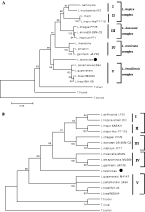
Fig. 3. Phylogenetic relationships of various members of the genus Leishmania based on the nucleotide non-edited coding sequences of the Cyt b gene. The numbers in the branches correspond to the bootstrap values based on 1000 replicates.([bull ]) Circle indicates the position of Sauroleishmania (L. tarentolae) species in their respective phylogenetic tree. Bar indicates a clade formed based on the Cyt b gene. Bracket indicates Leishmania complexes as described by Lainson & Shaw (1987). (A) NJ tree constructed with the Tamura and Nei distance (1993), outgroup=Trypanosoma cruzi (U43567), Trypanosoma brucei (M17998) and Trypanoplasma borreli (U11684). (B) consensus MP tree constructed by using the complete deletion and branch and bound options.
 You have
Access
- 72
- Cited by