Introduction
There has been a shift in the management of the inflammatory and infective changes associated with chronic rhinosinusitis to a local or topical route.Reference Chin and Harvey1 This has resulted in a range of topical solutions being proposed as therapeutic agents.Reference Rudmik, Hoy, Schlosser, Harvey, Welch and Lund2, Reference Harvey, Psaltis, Schlosser and Witterick3 There is an overriding opinion that the solution applied must penetrate or actually be delivered to the sinus cavity and not simply the nasal cavity.Reference Thomas, Harvey, Rudmik, Hwang and Schlosser4 However, little is known about mucosal responses to many agents. In particular, topical antiseptics such as Betadine, chlorhexidine and sodium hypochlorite have been proposed to help manage the bacterial colonisation that occurs in chronic rhinosinusitis.Reference Raza, Elsherif, Zulianello, Plouin-Gaudon, Landis and Lacroix5
Betadine is an antiseptic solution containing the active ingredient povidone-iodine. It has been utilised as a topical antibacterial agent to treat the sinus cavities of patients with rhinosinusitis.Reference Rombaux, Collet, Hamoir, Eloy, Bertrand and Jamart6 Betadine acts as an antiseptic by releasing the iodine molecule, which exerts its toxicity by irreversibly binding and reacting with various proteins and lipids within micro-organisms.Reference Gottardi and Block7 Betadine has been reported as being a potential ciliotoxic agent that could decrease and eventually stop the ciliary beat after a certain period of exposure,Reference Gosepath, Grebneva, Mossikhin and Mann8 although the exact mechanism is unknown.
The current study utilised an air–liquid interface culture model. This is a specifically designed model for respiratory epithelium that mimics in vivo conditions by exposing apical cell surfaces to air whilst keeping basolateral surfaces in contact with the feeding culture medium (Figure 1). An air–liquid interface allows for complete differentiation of columnar, pseudostratified mucociliary epithelium,Reference LeSimple, van Seuningen, Buisine, Copin, Hinz and Hoffmann9 with co-ordinated ciliary beating.Reference Dimova, Brewster, Noppe, Jorissen and Augustijns10 Fully differentiated respiratory epithelial cell models enable the study of ciliary beat pattern, in which the measurement of ciliary beat frequency acts as a basic functional parameter for assessing ciliary function.Reference Dimova, Brewster, Noppe, Jorissen and Augustijns10
Air–liquid interface culture model. The left image represents the cells in a submerged condition, not exposed to air. The right image represents an air–liquid interface model, in which cells are exposed to air and fed only via its basolateral surface.

This study aimed to evaluate the effect of topical Betadine solution, applied at clinical concentrations, on the ciliary beat of the established upper respiratory epithelial cell model.
Materials and methods
All procedures contributing to this work complied with the ethical standards of the St. Vincent's Hospital Human Research Ethics Committee (SVH 13/056). Informed consent was obtained under a tissue bank programme approved by the St. Vincent's Hospital Human Research Ethics Committee (SVH 10/087).
Air–liquid interface cultures
Human sinonasal epithelia were obtained from the healthy mucosa of individuals undergoing endoscopic sinus or skull base surgery. The patients were recruited from an ENT clinic. Neither patient population had received any oral steroid treatment.
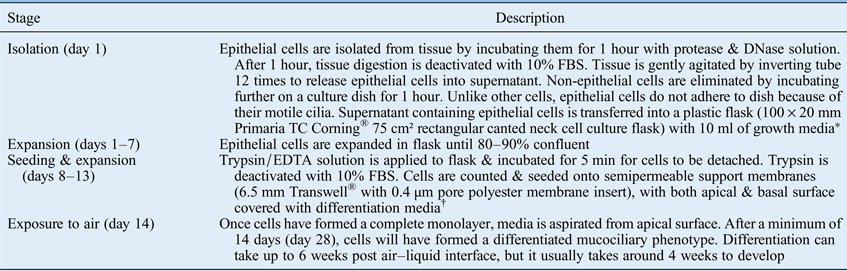
The human primary air–liquid interface culturing technique was adapted from previously published methods.Reference Antunes, Woodworth, Bhargave, Xiong, Aguilar and Ratner11 Culture media were changed three times a week. Cultures were maintained at 37°C in 5 per cent carbon dioxide (in an air incubator) at all stages of culturing. The detailed protocol is described in Appendix 1.
Initial ciliary beat assessment
The cultures were allowed to equilibrate on a microscope stage at room temperature (21–22°C) for 1 hour prior to the experiment. During this hour, ciliary beat frequency was measured at 15-minute and 60-minute time points to detect any change. Mean ciliary beat frequency was derived from the mean of the different cell cultures from four different areas of each cell layer. For each sample, the reported frequencies represent the means of these values, followed by the standard error. The microscope light was turned off between recordings to prevent temperature elevations and dehydration of the apical surface.
Controls
As a control, Hanks' balanced salt solution containing 10 mM of HEPES (N-2-hydroxyethylpiperazine-N-2-ethanesulfonic acid) was tested on selected cultures to determine whether it would alter ciliary beat frequency. Positive controls were tested with ATP (adenosine 5′-triphosphate disodium salt; Sigma Aldrich, St. Louis, Missouri, USA (catalogue number A2383)); this was dissolved in sterile 0.9 per cent saline solution at a concentration of 100 µM.
Betadine
Both 5 and 10 per cent concentrations of Betadine were used in this experiment. Ten per cent Betadine was used in a commercially available form (Betadine® antiseptic liquid); this contained 10 per cent mass concentration of povidone-iodine, equivalent to 1 per cent mass concentration of iodine. Five per cent Betadine was made by diluting the 10 per cent Betadine in 0.9 per cent saline solution.
Testing of the agents
To examine the effects of these agents, one region from the culture (that with the most ciliary activity) was selected, from which at least five basal recordings were made just before the application of each solution. After adding 25 µl of solution on the apical surface of the air–liquid interface, five consecutive recordings were taken at 1-minute, 3-minute and 5-minute time points.
Testing with ATP solution started at the 60-minute time point after equilibration was completed. After testing with ATP solution, the apical surface of the selected culture was washed with Hanks' balanced salt solution twice. Baseline ciliary beat frequency was re-measured. The culture was tested to observe the effect of Betadine in the same manner.
Ciliary beat frequency analysis
The epithelial cell cultures were imaged using a high-speed camera (Basler 602f; 100 frames per second) attached to an inverted Leica microscope (×20, 0.8 numerical aperture objective) on a 600 × 600 mm vibration isolation table (ProSciTech, Townsville City, Queensland, Australia). The video images were analysed using the Sisson-Ammons video analysis system, as described previously.Reference Woodworth, Zhang, Tamashiro, Bhargave, Palmer and Cohen12, Reference Shen, Cope, Chen, Leid and Cohen13 Active area was defined as the number of active points measured as a percentage of total points of the analysed video image.
All experiments were performed at room temperature (21–22°C). The basal media of the cultures were replaced with 600 µl Hanks' balanced salt solution buffered with 10 mM HEPES. This solution contained MEM amino acids, MEM non-essential amino acids and MEM vitamins (all supplied by Life Technologies, Grand Island, New York, USA). The solution was pre-warmed in a 37°C water bath prior to use.
Statistical analysis
Parametric data are presented as means and standard errors. Statistical analysis was performed using the Student's t-test. One-way analysis of variance was used to compare means across three or more independent groups when scale data were normally distributed. The chi-square test was used to assess the proportional relationships of nominal variables. Parametric distribution was confirmed with a histogram.
Results
Air–liquid interface culture data
Seven patients (mean age ± standard error of 47.4 ± 7.66 years; 40 per cent females) were recruited for the harvesting of sinonasal mucosa. This included normal mucosa from six tumour patients undergoing skull base surgery and from one chronic rhinosinusitis patient with nasal polyps.
Once seeded on the membrane inserts, the cells reached confluence in 5 to 7 days. A number of ciliated cells, which were recognised by the beating of cilia detected under a high-speed camera, appeared as early as 11 days (up to 24 days) after the lifting of apical medium. Fifty-one culture wells were utilised for analysis.
Cilial testing
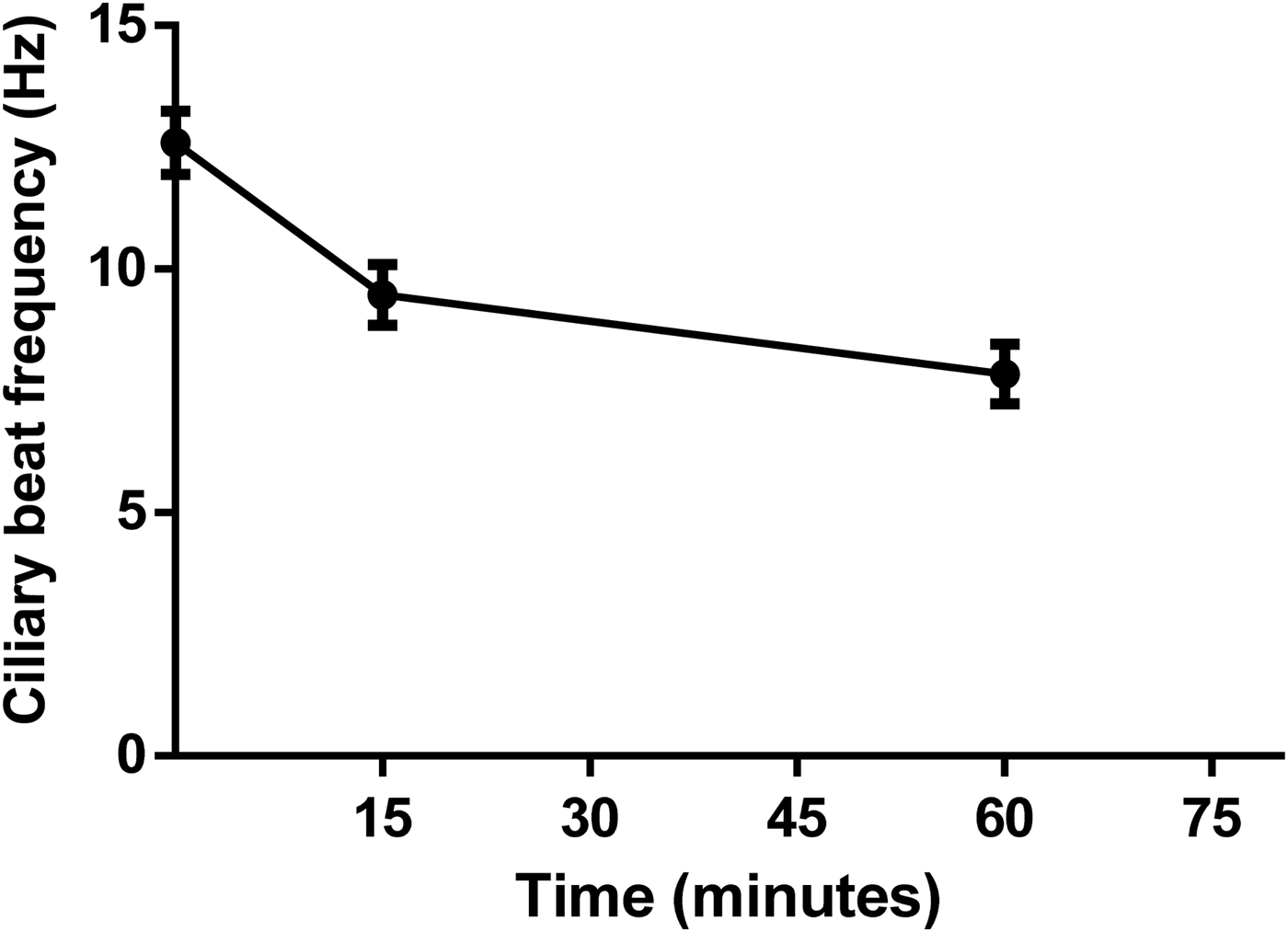
Fifty-one cultures were taken out from the incubator and equilibrated at room temperature (21–22°C) for 60 minutes prior to stimulation or inhibition. Basal ciliary beat frequency was initially measured at 0 minutes when the basolateral compartment was still filled with differentiation media. The basolateral chamber medium was replaced with warm (37°C) Hanks' balanced salt solution for 60 minutes (immediately after the initial measurement), to stabilise ciliary beat frequency. The baseline ciliary beat frequency (12.59 ± 0.65 Hz) decreased over the first 15 minutes (to 9.47 ± 0.63 Hz) (p < 0.005) and then plateaued over the next 45 minutes (to 7.84 ± 0.61 Hz) (Figure 2).
Change in ciliary beat frequency for epithelial cell cultures in Hanks' balanced salt solution over 60 minutes. (Each data point represents mean ± standard error.)
Controls
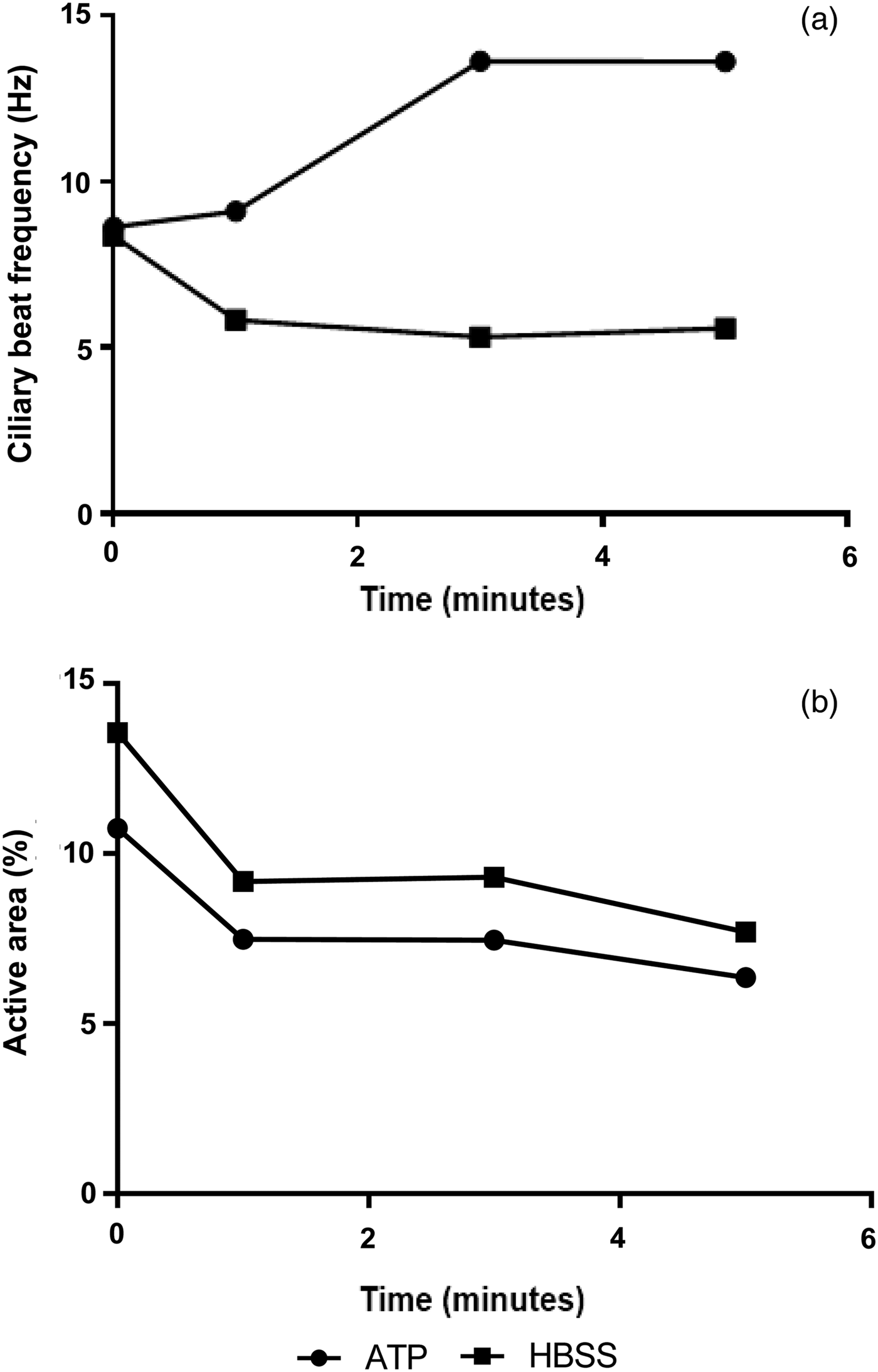
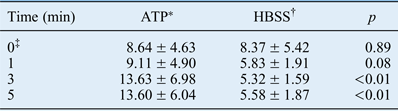
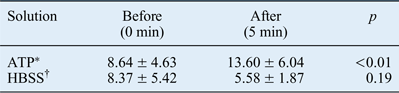
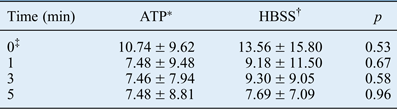
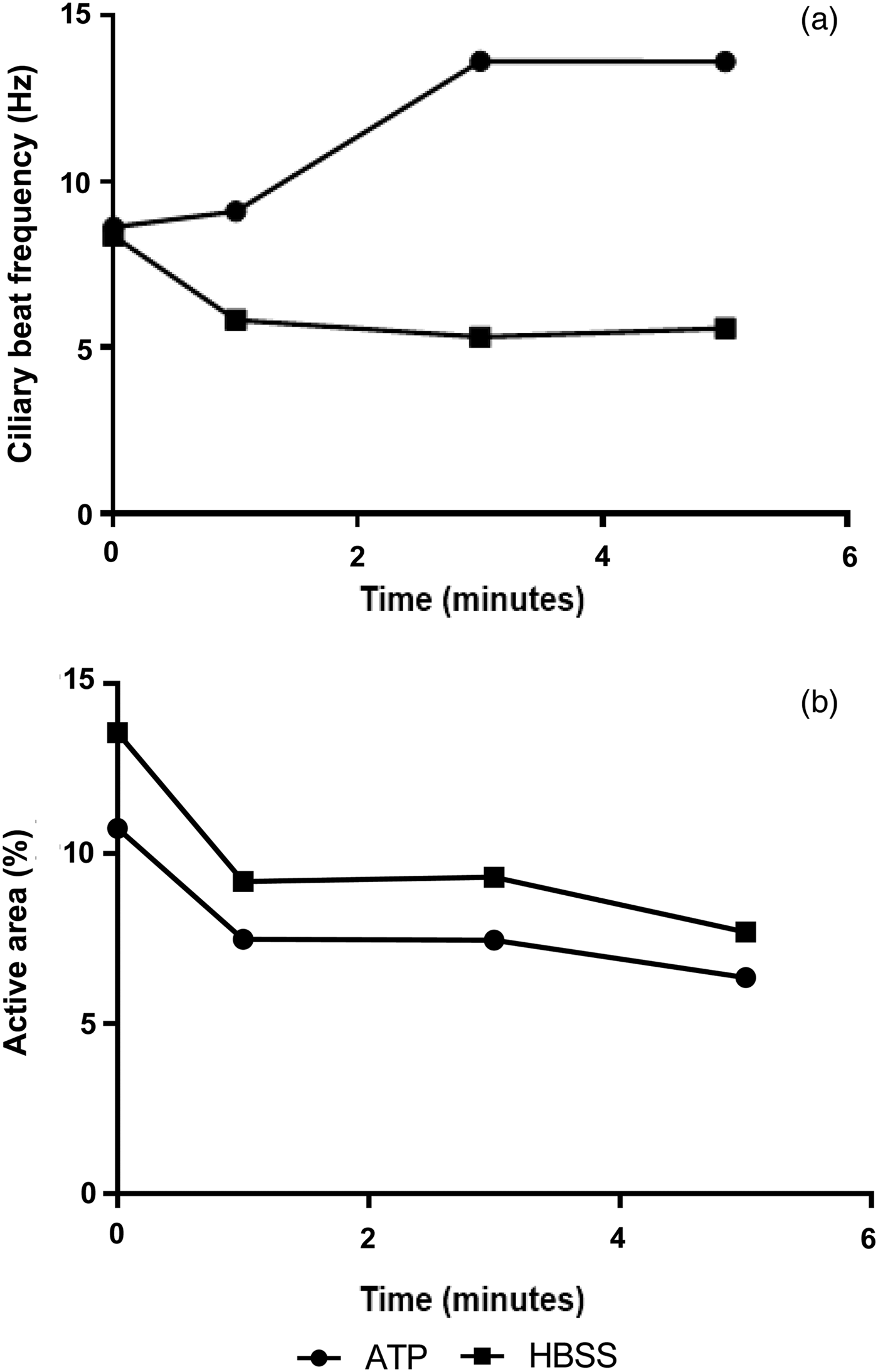
Administration of 25 µl 100 µM ATP to the apical surface of the cell monolayer (n = 29) resulted in a significant increase in ciliary beat frequency compared with baseline readings (p < 0.005) (Figure 3a). Ciliary beat frequency increased from the baseline (8.64 ± 4.63 Hz) to its maximum (13.63 ± 6.98 Hz) at 3 minutes (Table I). Application of ATP resulted in a sustained 1.5 fold increase in ciliary beat frequency when compared with the Hanks' balanced salt solution control. In comparison, the administration of Hanks' balanced salt and 10 mM HEPES solution (n = 8) resulted in an initial decrease from baseline ciliary beat frequency, but this change was not significant (p = 0.19) (Table II). The application of 100 µM ATP initiated an insignificant (p = 0.28) decrease in the percentage of active area (Figure 3b). This was similar to the finding for Hanks' balanced salt solution (p = 0.76).
The effect of 100 µM ATP on cultured epithelial cells, shown in terms of (a) ciliary beat frequency and (b) percentage of active area. (Cultures had been removed from the incubator and equilibrated at room temperature (21–22°C) for 60 minutes prior to stimulation.) HBSS = Hanks' balanced salt solution
Ciliary beat frequency at each time point for cultures exposed to ATP or HBSS
Data represent mean ciliary beat frequency ± standard error (Hz) unless indicated otherwise. *n = 29; †n = 8. ‡Before application. HBSS = Hanks' balanced salt solution; min = minutes
Ciliary beat frequency before and after application of ATP or HBSS
Data represent mean ciliary beat frequency ± standard error (Hz) unless indicated otherwise. *n = 29; †n = 8. HBSS = Hanks' balanced salt solution; min = minutes
Betadine
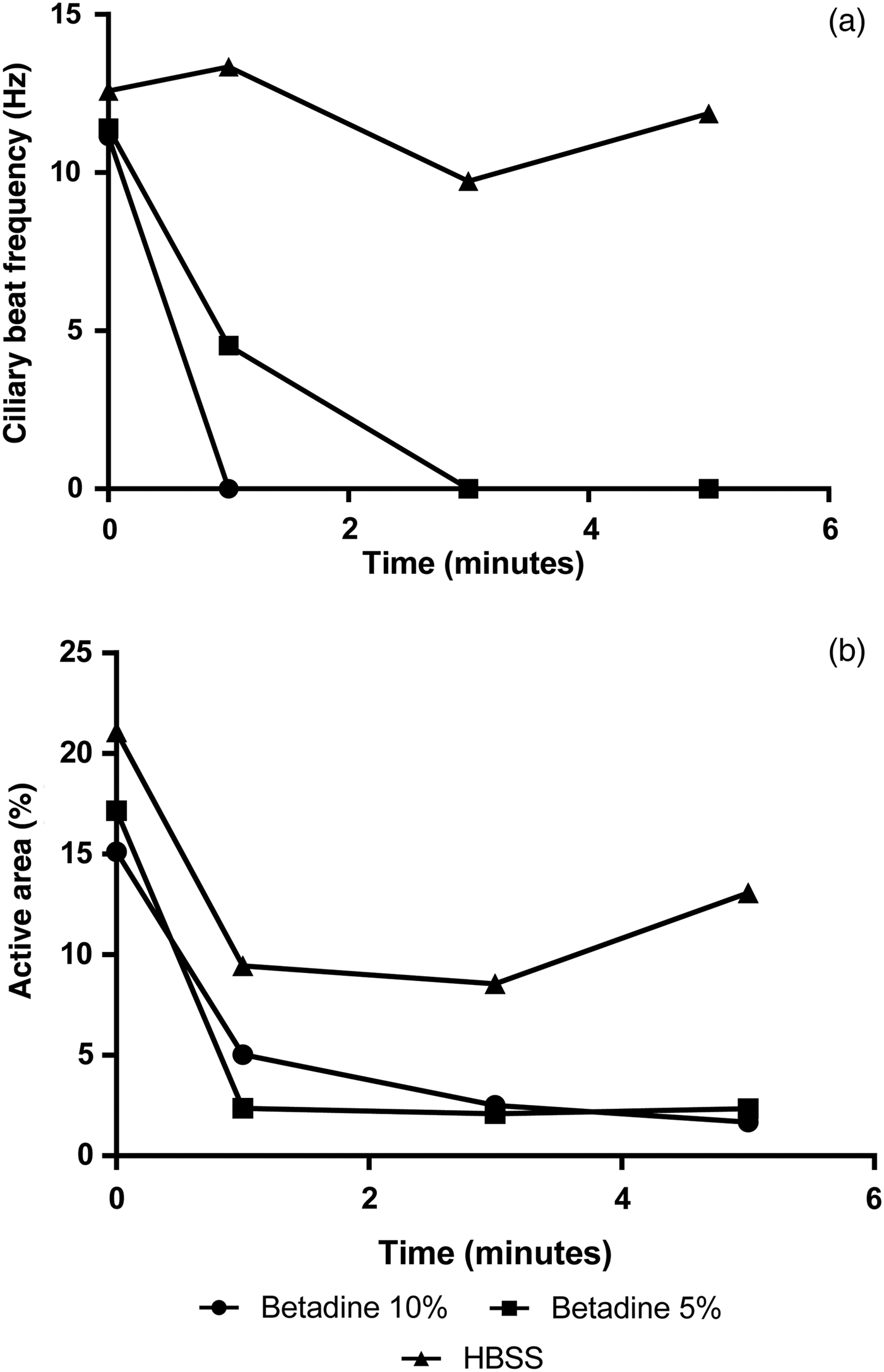
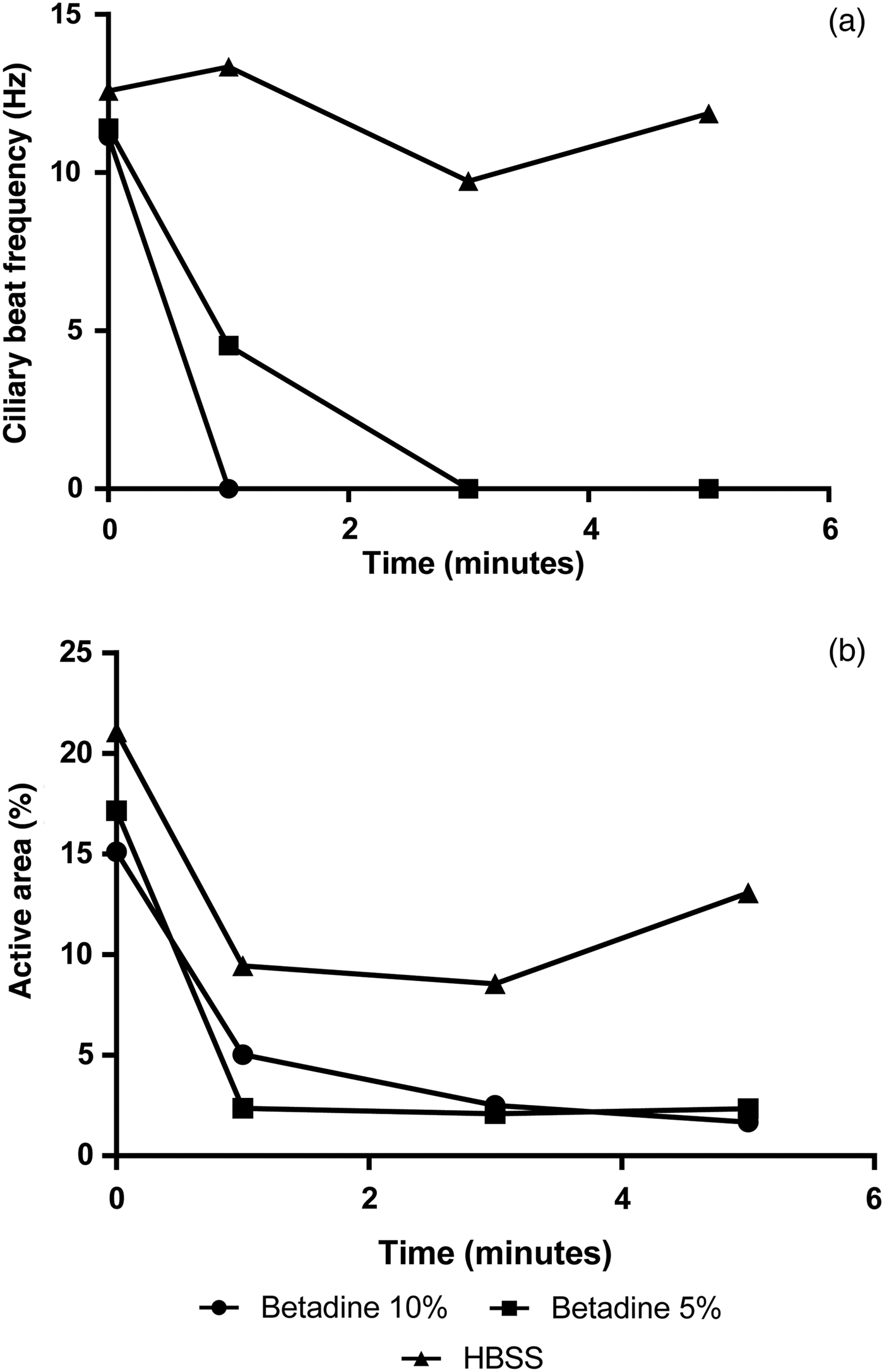
Ten per cent Betadine applied to the apical surface of the culture monolayer (n = 6) rapidly decreased the proportion of actively beating cilia over a duration of 1 minute; this is represented by the drop in the active area from 15.1 ± 8.48 per cent to 1.67 ± 2.29 per cent, and the drop in ciliary beat frequency from 11.15 ± 4.64 Hz to no activity (Figure 4a, 4b). The result was similar when 25 µl of 5 per cent Betadine was applied (n = 7). There were no significant differences in the measured outcomes at any of the time points (p > 0.3) when 5 per cent Betadine was used, as compared with 10 per cent Betadine. This trend was comparable to the active area change for both ATP and Hanks' balanced salt solution (Figure 3b, Table III), where the percentage of active area slightly decreased and then plateaued during the 5 minutes. The fact that Hanks' balanced salt solution control solution also caused a decrease in active area, which started to increase at 5 minutes, could be an error related to the small sample size of the controls (n = 3).
The effect of Betadine on cultured epithelial cells, shown in terms of (a) ciliary beat frequency and (b) percentage of active area. (Cultures had been removed from the incubator and equilibrated at room temperature (21–22°C) for 60 minutes prior to inhibition.) HBSS = Hanks' balanced salt solution
Change in active area for cultures exposed to ATP or HBSS
Data represent mean active area change ± standard error (per cent) unless indicated otherwise. *n = 29; †n = 8. ‡Before application. HBSS = Hanks' balanced salt solution; min = minutes
Discussion
When the apical surface of the cell monolayer was exposed to Betadine (5 or 10 per cent concentrations), there were rapid decreases both in the percentage of active area of the culture and in the ciliary beat frequency. This occurred within the first 2 minutes of exposure. These results are comparable to those reported in the literature. For instance, perfusion of 10 per cent Betadine using a Dvorak–Stotler exposure chamber had an irreversible effect on ciliary beat frequency, decreasing it to 4 Hz and stopping all activity after 30 minutes of exposure.Reference Gosepath, Grebneva, Mossikhin and Mann8 The discrepancy in terms of the time required to stop ciliary beat frequency in that study and the current study could have resulted from the use of a considerably different exposure system. When the cells were introduced to Betadine using the Dvorak–Stotler exposure chamber (in the study by Gosepath et al.Reference Gosepath, Grebneva, Mossikhin and Mann8), Betadine had been infused slowly to the cell culture medium at a rate of 2 ml/minute, whereas in the current study Betadine was introduced directly to the cell monolayer.
The model of direct exposure is likely to represent the clinical scenario of Betadine or diluted Betadine irrigation of a sinus cavity. Such Betadine irrigations have been proposed in the management of acute rhinosinusitis complications, as a regular topical therapy in chronic rhinosinusitis, and in preparation of the surgical field for skull base cases. Data from this study suggest that Betadine irrigation of sinonasal mucosa may inhibit ciliary beating of nasal epithelial cells, therefore interfering with mucociliary clearance. The cilial toxicity associated with Betadine may be more deleterious than any antimicrobial activity from Betadine.
Stabilising the air–liquid interface model initially is important; decreases in ciliary beat frequency during the 1 hour of stabilisation may have been a result of the decrease in temperature from approximately 32–35°C (immediately following removal from the 37°C incubator) to 21°C (room temperature). Mean ciliary beat frequency decreased and plateaued as the temperature of culture media decreased to room temperature (21–22°C). The mean ciliary beat frequency values at each temperature point in this study were similar to those reported in the literature at the same temperature points (32–35°C and 21°C) (Table IV).Reference Green, Smallman, Logan and Drake-Lee14
Comparison of ciliary beat frequency in different temperature ranges
Data represent mean ciliary beat frequency ± standard error (Hz) unless indicated otherwise. *Mean baseline ciliary beat frequency, recorded immediately after removal from the 37°C incubator. †Mean ciliary beat frequency was recorded again, after the temperature of culture media had decreased to room temperature (21–22°C). Min = minutes; temp = temperature
• The use of topical antiseptics such as Betadine has been proposed to help manage bacterial colonisation that occurs in chronic rhinosinusitis
• Little is known about the effect of Betadine on ciliated human respiratory epithelial cells
• This study aimed to evaluate the effect of topical Betadine solution on the ciliary beat, using the established upper respiratory epithelial cell model
• Betadine, when applied topically at clinical concentrations of 5 or 10 per cent, was ciliotoxic
• The cilial toxicity of Betadine on the respiratory mucosal surface must be balanced against any therapeutic activity imparted by its use
ATP was chosen as a positive control in order to test the validity of the cell culture model. ATP is known to be one of the most potent agents for increasing ciliary beat frequency. Specifically, ATP raises intracellular calcium levels and stimulates calcium influx from the external milieu.Reference Woodworth, Zhang, Tamashiro, Bhargave, Palmer and Cohen12 It was shown in a previous study that ATP concentrations greater than 50 µM are necessary for ciliary beat frequency stimulation when applied to the apical sides of the cultures, possibly because of the barrier effect of the mucus layer.Reference Lieb, Frei, Frohock, Bookman and Salathe15 The results of that study showed transient increases of ciliary beat frequency by 0.9 ± 0.2 Hz, lasting for 10 minutes following 2 minutes of exposure to ATP. The greater increase in ciliary beat frequency seen in the current study (4.96 ± 0.26 Hz) may have been a result of the washing of mucus with Hanks' balanced salt solution prior to the experiment and the usage of a higher (two-fold) ATP concentration.
Conclusion
The air–liquid interface model using upper airway epithelial tissue is a robust tool for assessing the effects of topical agents applied to ciliated respiratory mucosa. Betadine, when applied topically at clinical concentrations of 5 or 10 per cent, was ciliotoxic. The cilial toxicity of topical Betadine solution on the respiratory mucosal surface must be carefully balanced against any therapeutic activity imparted by its use.
Acknowledgements
We are grateful to Dr Noam Cohen, Associate Professor of Otorhinolaryngology: Head and Neck Surgery, at the Philadelphia Veteran's Administration Medical Center, Pennsylvania, USA, and his laboratory assistant, Dr Bei Chen, for their time spent educating us on the tissue culture protocol and for sharing their knowledge on the air–liquid interface model.
Human primary air–liquid interface culturing protocol