Advancing sustainable urban drainage solutions in India
Sustainable urban drainage solutions (SUDSs; also referred to as ‘green stormwater infrastructure’), are environmentally friendly and cost-effective ways to manage stormwater (Ahammed Reference Ahammed2017, Koiv-Vainik et al. Reference Kõiv-Vainik, Kill, Espenberg, Uuemaa, Teemusk and Maddison2022). Examples include bioretention systems, infiltration systems, vegetated swales, green roofs, stormwater wetlands and permeable pavements (Shafique & Kim Reference Shafique and Kim2017, Bhat et al. Reference Bhat, Mohapatra and Tripathi2024), which mitigate stormwater runoff volume and quality (Moazzem et al. Reference Moazzem, Bhuiyan, Muthukumaran, Fagan and Jegatheesan2024). The USA, China, Sweden and Singapore have successfully developed and implemented SUDSs to a large extent, both on the ground and in policy (Huynh Thi Ngoc et al. Reference Huynh Thi Ngoc, Back, Funke, Hauser and Kleidorfer2024). We aim to highlight the critical deficiencies in India’s current urban stormwater management, to advocate for the urgent adoption of SUDSs and to propose a structured, participatory pathway towards facilitating their implementation for enhanced urban resilience against flooding.
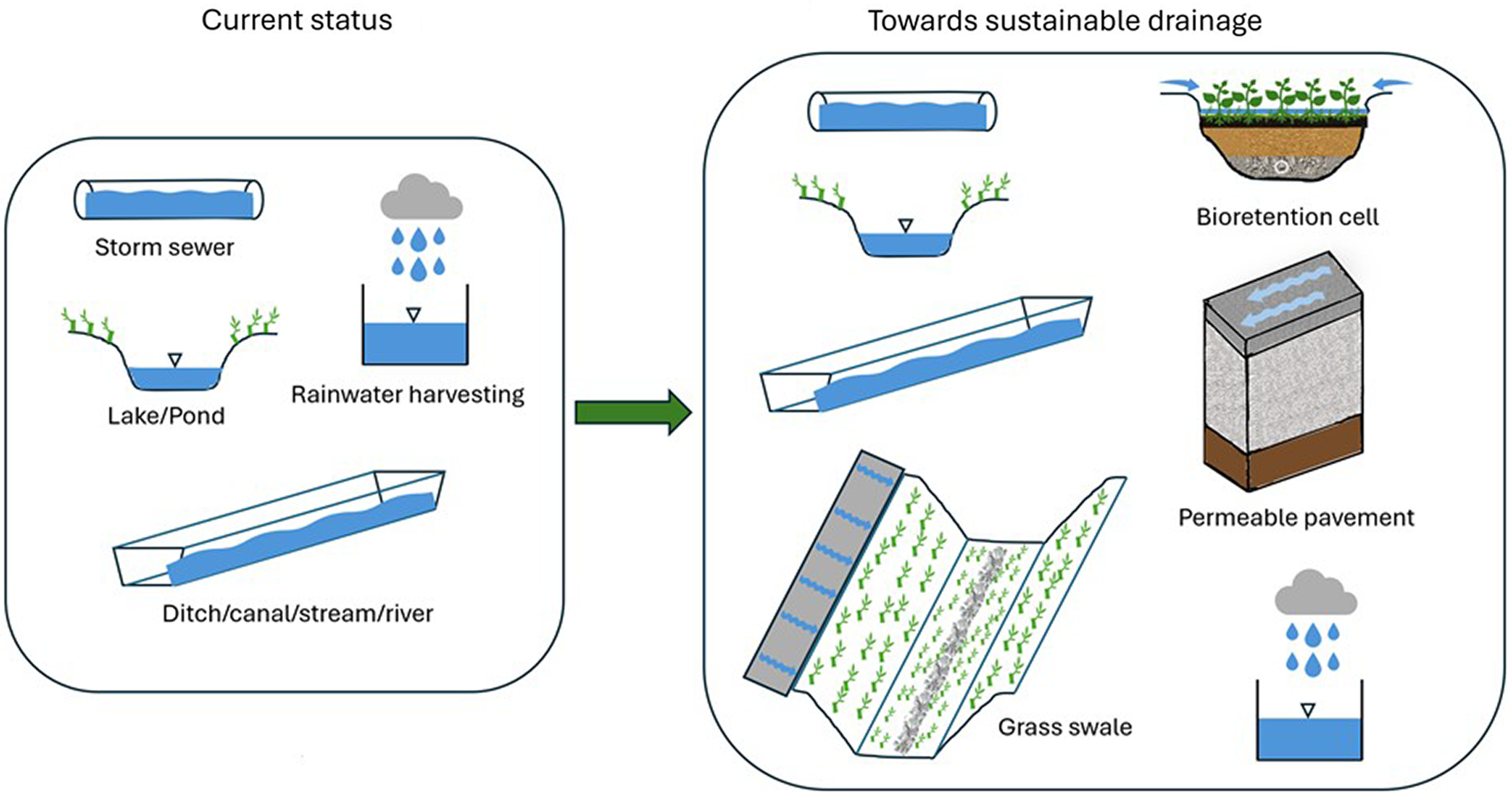
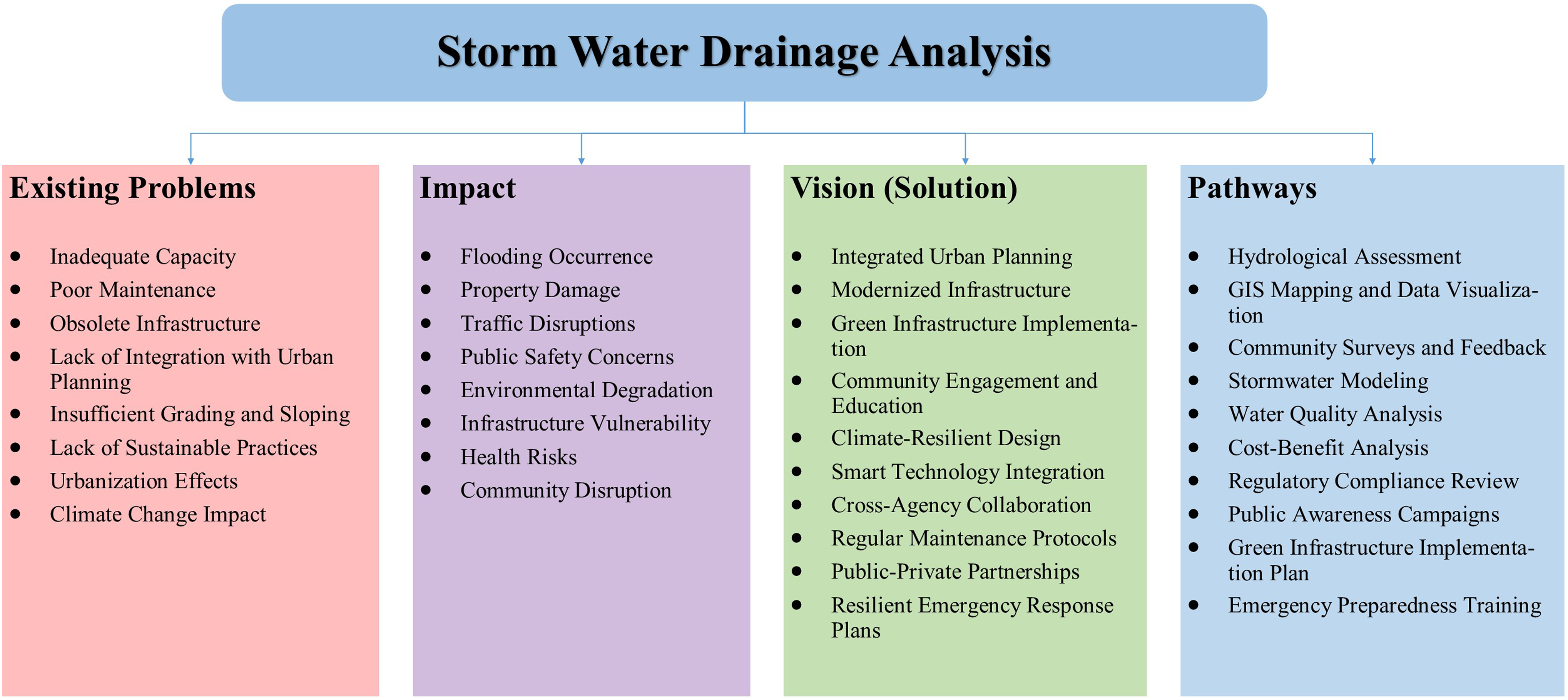
India experiences an extended rainfall season (monsoon) every year between June and September (Madolli et al. Reference Madolli, Himanshu, Patro and De Michele2022, Kasera & Minocha Reference Kasera and Minocha2025). Due to urbanization, major metropolitan cities of India, such as Mumbai, Delhi, Bangalore, Ahmedabad, Chennai and Kolkata, have undergone drastic land-use changes, with impervious surfaces increasing to a considerable extent (Mukherjee & Panda Reference Mukherjee and Panda2024). Climate change has exacerbated pluvial flooding through intense and long-lasting rainfall events coupled with the increasing presence of impervious runoff surfaces. India is among the world’s most densely populated countries, with c. 488 people/km2, but it is far from achieving the implementation of SUDSs (Guptha et al. Reference Guptha, Swain, Al-Ansari, Taloor and Dayal2022, Mishra et al. Reference Mishra, Verma, Kanchan, Dutta and Ghosh2024), despite pluvial flooding becoming a major issue for people. India still relies on grey infrastructure, including pipes, open ditches, channels, road-curb gutters and catch basins, to drain stormwater (Bastia et al. Reference Bastia, Mishra and Kumar2021, Kumar et al. Reference Kumar, Liu, Narayanasamydamodaran and Pandey2021). The existing drainage infrastructure highlights the need for integrating SUDSs alongside grey infrastructure (Fig. 1). Although some research based on hydraulic–hydrologic modelling has been conducted regarding the potential impact of SUDSs on stormwater runoff in some Indian cities (Palanisamy et al. Reference Palanisamy, Shaurabh and Narasimhan2020, Suresh et al. Reference Suresh, Pekkat and Subbiah2023, Arya & Kumar Reference Arya and Kumar2024), their implementation is negligible, and the concept of SUDSs remains new to the general public and governments. In the Hyderabad metropolitan city (India), an InVEST (Integrated Valuation of Ecosystem Services and Trade-offs) model indicated increased built-up areas and reduced green cover led to excessive runoff, with green spaces retaining only 44–50% of rainfall (Kadaverugu et al. Reference Kadaverugu, Nageshwar Rao and Viswanadh2021). A 13% rise in rainfall intensity caused a 21% increase in runoff but just a 5% rise in retention, resulting in economic damage of USD 1.39 million. In Gurugram district (India), runoff during 1985–2021 (estimated using the NRCS-CN (Natural Resources Conservation Service–Curve Number) method) revealed the northern part of the district as the most flood-prone, and this research highlighted the utility of combining hazard mapping with runoff estimation in data-scarce regions (Arya & Kumar Reference Arya and Kumar2023). In Delhi’s Yamuna River National Capital Territory, a 50-year flood-level record and regression model linking precipitation with gauge levels identified vulnerable zones, including key infrastructure, and provided a framework for forecasting, site suitability analysis and flood risk management (Tomar et al. Reference Tomar, Singh, Kanga, Meraj, Kranjčić, Đurin and Pattanaik2021). For the Indian scenario, urban stormwater management systems face critical issues such as inadequate capacity, poor maintenance and climate change impacts, leading to flooding, infrastructure vulnerability and public safety concerns (Fig. 2). The solutions proposed for these problems focus on integrated urban planning, green infrastructure, climate resilience and smart technologies. The key pathways towards achieving these include hydrological assessments, GIS mapping, community engagement, stormwater modelling and public–private partnerships, emphasizing resilience and safety.
Current state of drainage infrastructure in India and possible sustainable drainage solutions for the future.

Urban stormwater drainage analysis for India (https://w4cproject.org/home/).

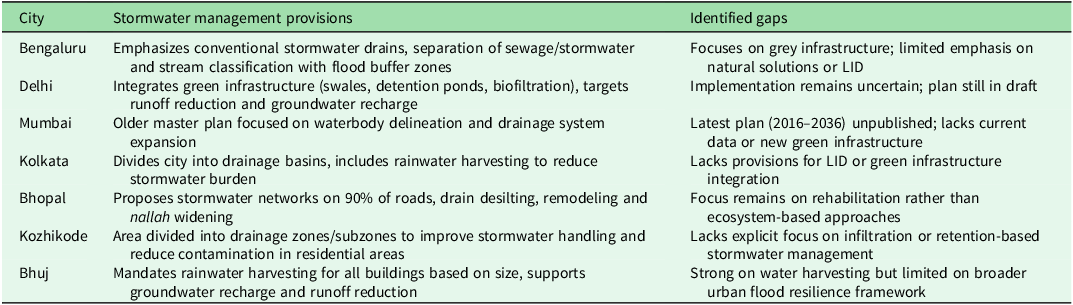
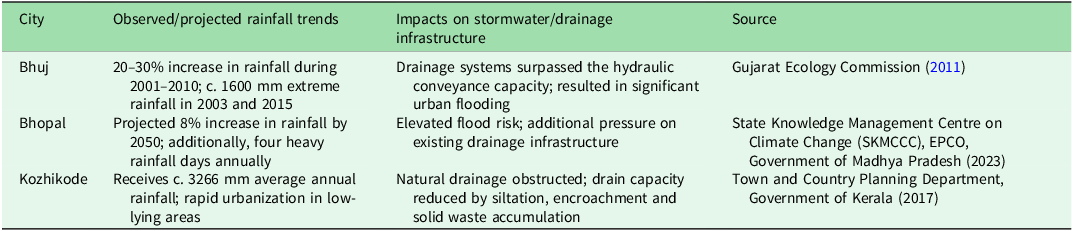
The drafted Master Plan-2031 for Bengaluru (Bengaluru Development Authority 2017) emphasizes conventional stormwater drainage by preventing stormwater and sewage from mixing, constructing efficient drainage networks to mitigate urban flooding and maintaining drains free from clogging, pollution and encroachments. It introduces stream classification with buffer zones based on flood modelling. Delhi’s drafted Master Plan-2041 (Delhi Development Authority 2023) integrates stormwater management with urban heat island mitigation, proposing green infrastructure such as biofiltration beds, swales and detention ponds, and it focuses on reducing runoff while enhancing rainwater storage and recharge. Mumbai’s latest master plan (2016–2036) remains unpublished, but the 1996–2011 Plan (Mumbai Metropolitan Region Development Authority 1999) emphasized stormwater drainage development and waterbody delineation. Kolkata’s Master Plan 2005–2025 (Kolkata Metropolitan Development Authority 2005) divided the metropolitan area into 25 drainage basins based on prior studies, topography and outfall systems, with provisions for rainwater harvesting to reduce stormwater load. Bhopal’s City Development Plan-2031 (Directorate of Town and Country Planning, Government of Madhya Pradesh 2023) aims for stormwater networks on 90% of roads, focusing on desilting, remodelling and strengthening drains under a Drainage Rehabilitation Program while expanding nallahs (artificial drainage channels that carry surface runoff, wastewater or stormwater often originating from rainfall or household discharge) cross-sections to boost capacity. Kozhikode’s drafted Master Plan-2035 (Town and Country Planning Department, Government of Kerala 2017) divided its area into three drainage zones with subzones to improve infrastructure, addressing waterlogging, pollution and stormwater runoff, especially in residential areas where contamination affects natural waterways. Bhuj’s Master Plan-2025 (Bhuj Area Development Authority 2019) mandated rainwater harvesting for buildings, categorized by size, with specific systems to capture and store rainwater, significantly reducing runoff and enhancing groundwater recharge. However, the master plans proposed for various Indian cities (Table 1) do not include SUDSs, which shows a lack of urgency and policymaking regarding sustainable urban stormwater management. Table 2 summarizes observed and projected rainfall patterns along with their impacts on stormwater drainage systems for the cities of Bhuj, Bhopal and Kozhikode, based on past studies and master plan data.
Comparative summary of the master plans of various Indian cities vis-à-vis stormwater management.

LID = low-impact development.
Rainfall trends and stormwater-related vulnerabilities in Indian cities based on past studies and master plans.

The USA should act as a model country for implementing SUDSs. In Philadelphia (PA, USA), for example, the Green City, Clean Waters programme successfully implemented 948 green stormwater infrastructure projects in just 8 years after its implementation in 2011 (Philadelphia Water Department 2011). A key factor behind successful stormwater management in US cities such as Philadelphia has been the integration of policy tools with decentralized infrastructure. For example, stormwater fees based on impervious surface area, rather than water use, have provided a financial incentive to reduce runoff (Fitzgerald & Laufer Reference Fitzgerald and Laufer2017). Additionally, cities such as New York, Seattle and Washington, DC have offered property owners tax credits, utility fee reductions and technical support for installing green infrastructure (Garrison & Hobbs Reference Garrison and Hobbs2011). Adapting these lessons to India would involve designing runoff-linked incentive structures and launching public–private co-financed pilot programmes in high-risk cities. Local governments could also offer financial and technical support to promote the adoption of nature-based systems on private properties. Similarly, China developed the concept of Sponge City in 2015, which focuses on urban planning and is designed to effectively manage urban stormwater flooding and water pollution (Xia et al. Reference Xia, Zhang, Xiong, He, Wang and Yu2017). A deeper look into China’s Sponge City Program (SCP) shows that its success stemmed from strong centralized planning, pilot city implementation, inter-agency collaboration and financial incentives (Kumar et al. Reference Kumar, Liu, Narayanasamydamodaran and Pandey2021). These elements enabled structured execution and adaptive learning. Beijing is among several cities involved in China’s Sponge City initiative, which was launched in 2016 with the aim of capturing and managing up to 85% of the city’s annual stormwater runoff (Lashford et al. Reference Lashford, Rubinato, Cai, Hou, Abolfathi and Coupe2019). For India, similar outcomes could be achieved by initiating state-led pilots under national guidance, promoting coordination among urban agencies and introducing hybrid funding models aligned with local economic development. Such adaptations would help translate SCP lessons into India’s urban governance and resilience planning frameworks.
However, there are some challenges to implementing SUDSs in India, which include lack of public awareness and thus lack of public pressure, meagre research volume from premier research institutes, lack of voice from environmentalists who strive for sustainability, lack of interaction of the intellectual community concerned with urban water management research and engineers involved in municipal drainage with the government and lack of policies at the government level (Fig. 2). Transitioning to sustainable urban drainage is a complex problem, and to achieve this, cities require a long-term vision for improving the existing infrastructure through various adaptation and monitoring techniques. The complexity of changing population dynamics, climate and urbanization creates uncertainty in adapting to a new framework and innovations. Current stormwater management strategies are undermined by a reliance on short-term, project-based interventions that are disconnected from long-term strategic visions. This disconnect is exacerbated by deficits in specialized institutional capacity and the fragmentation of governance, which prevents the integration of goals across different sectors and domains. Existing participatory platforms often lack the authority and resources to facilitate effective stakeholder engagement.
The technological paradigms governing stormwater management are inherently dynamic, which needs continual evolution of system design methodologies, operational protocols and maintenance strategies. Continuous learning will help adapt these new technologies through an iterative process of growing understanding of case-sensitive perspectives. Transitioning to water-sensitive stormwater management using sustainable drainage infrastructure is a complex undertaking. To achieve these goals, cities require a long-term vision for improving their existing stormwater systems through continuous adaptation and monitoring. This complexity is amplified by the dynamic and often uncertain impacts of population growth, climate change (which can alter rainfall intensity and frequency) and urbanization (which increases the presence of impervious surfaces and runoff volumes). These factors create significant challenges when adapting new frameworks and innovative stormwater solutions. Consequently, developing a strategic framework for stormwater management must be founded on continuous learning, performance monitoring and innovation, all while keeping long-term goals such as flood resilience and ecological enhancement in mind. Moreover, it is crucial to integrate such a framework with broader urban planning, governance structures and societal values. Furthermore, the adaptation and implementation of innovative stormwater infrastructure, from local rain gardens to large-scale retention basins, require active public participation to ensure that the solutions are context-appropriate, accepted by the community and achieve optimal performance.
Yet SUDSs have benefits other than the main hydrological ones of runoff volume and peak flow reduction and water quality improvement, such as infiltration (which may lead to groundwater recharge), biodiversity conservation (especially in stormwater wetlands and vegetated swales), development of green infrastructure, reduced greenhouse gas emissions, aesthetic improvements and a clean and healthy environment. Key challenges to incorporating SUDSs include lack of awareness, lack of policies and lack of collaboration between the public, academia and government. Promoting SUDSs through education, research, public participation in governance and hybrid infrastructure (planned and integrated combinations of grey and green infrastructure to manage stormwater) is essential for mitigating flood risks and enhancing urban sustainability.
How to improve the implementation of SUDSs in India?
Traditional stormwater drainage infrastructure that was developed years ago, or even in the recent past, may not sustain the stormwater quantity flowing on large-scale impervious surfaces due to intense and long-duration rainfall storms, particularly in the monsoon season. Replacing the traditional stormwater infrastructure with a significant proportion of SUDSs may not be a cost-effective and viable option. Thus, hybrid grey–green infrastructure (Hendricks & Dowtin Reference Hendricks and Dowtin2023), in which grey and green components complement each other, should be considered. The implementation of SUDSs such as bioretention cells, green roofs, infiltration systems, permeable pavements and vegetated swales enhances the environmental performance of land use by facilitating key hydrological processes. Vegetated components promote evapotranspiration, while engineered porous media and surfaces improve the infiltration and storage of stormwater. This approach makes the entire stormwater management process resilient and sustainable (Rentachintala et al. Reference Rentachintala, Reddy and Mohapatra2022).
Researchers concerned with urban water management, particularly in the premier research institutes of the country, such as the Indian Institutes of Technology and the National Institutes of Technology, should take an active part in highlighting the need for and potential benefits of using SUDSs. High-impact research publications may induce a sense of necessity among the educated public and policymakers.
The urban population constitutes 36% of the entire Indian population. Information and awareness regarding the potential benefits of using SUDSs need to be disseminated to urban residents. Community events, public workshops, workshops in educational institutes and pamphlet distributions are some of the ways to inform these residents. Informed residents would positively impact government drafting policies for sustainable stormwater management, and they can generate significant public support for these initiatives. This grassroots demand creates the political will for governments to draft and prioritize effective policies. Furthermore, an informed public is more likely to accept the implementation of SUDS projects in their communities and can provide valuable, localized feedback during planning stages. This collaborative environment helps ensure that government policies are not only ambitious but also practical, publicly endorsed and, ultimately, more successful.
For planning and decision-making regarding the implementation of SUDSs, approaches such as assessing strengths, weaknesses, opportunities and threats (SWOT analysis), Technique for Order Preference by Similarity to Ideal Solution (TOPSIS) and cost–benefit analysis are available. Besides reducing runoff volumes, SUDSs also have ecological benefits and can remove pollutants from stormwater (Muttil et al. Reference Muttil, Nasrin and Sharma2023, Moazzem et al. Reference Moazzem, Bhuiyan, Muthukumaran, Fagan and Jegatheesan2024, Tota-Maharaj et al. Reference Tota-Maharaj, Karunanayake, Kunwar, Chadee, Azamathulla and Rathnayake2024, Lekuona-Orkaizagirre et al. Reference Lekuona-Orkaizagirre, Meaurio, Madrazo-Uribeetxebarria, Antín and Gredilla2025).
Lessons from case studies: a recommended approach for Indian cities
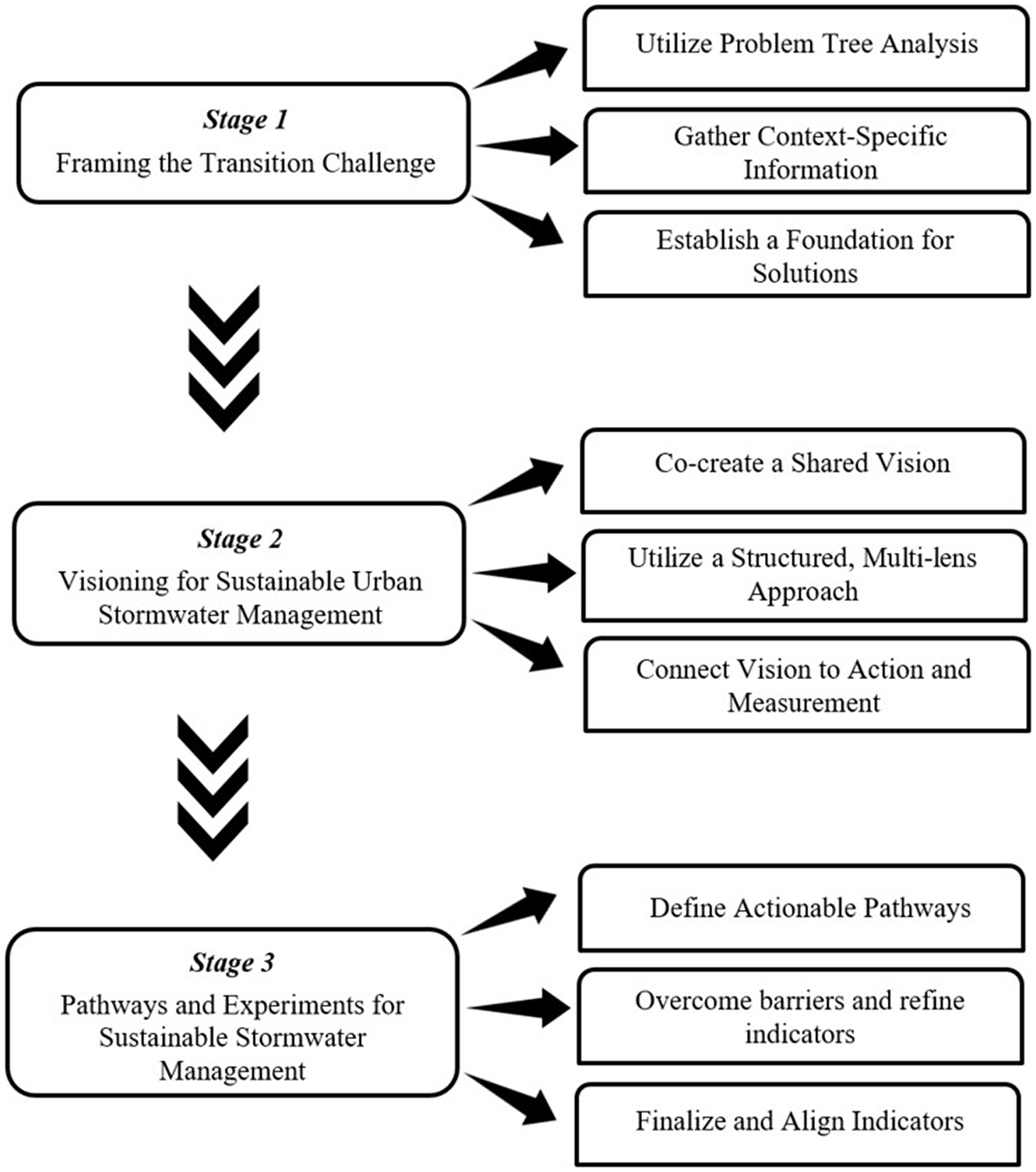
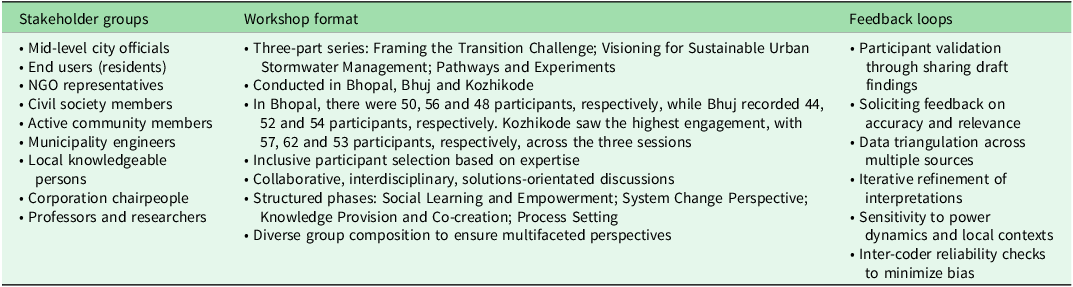
Participatory research and stakeholder engagement (citizens, municipality engineers, local knowledgeable persons, non-governmental organizations, corporation chairpeople, etc.) involving series of workshops in Bhopal, Bhuj and Kozhikode have served as platforms for co-creating knowledge and fostering a shared understanding of water sensitivity within each city’s unique context (Santelmann et al. Reference Santelmann, Hulse, Wright, Enright, Branscomb, Tchintcharauli-Harrison and Bolson2019, Maurya et al. Reference Maurya, Ohri, Singh and Singh2023, Thakur et al. Reference Thakur, Singh and Sharma2024). To build SUDSs in the future, we believe a structured approach comprising three critical stages is needed (Fig. 3). First, the key drainage-related challenges specific to each city need to be identified by analysing their root causes and symptoms. Employing methods such as problem tree analysis will help establish the relationships between issues, uncover underlying problems and identify contributing factors and potential solutions, thereby setting the foundation for developing targeted indicators (Walubengo et al. Reference Walubengo, Kyalo and Mulwa2019). The next stage involves co-creating a shared vision for SUDSs by engaging stakeholders in discussions regarding desired future states, objectives and strategies to enhance water security and resilience (Table 3). This stage should incorporate diverse perspectives on sustainability, inclusivity, management approaches, multidisciplinarity, decision-making levels and types of change (Miles et al. Reference Miles, Huberman and Saldana2014, Creswell & Clark Reference Creswell and Clark2017, Santos et al. Reference Santos, Carvalho and Martins2023, Ali & Kamraju Reference Ali, Kamraju, Yadav, Yadav and Singh2024, Mittal & Bansal Reference Mittal, Bansal, Mittal and Bansal2024). Finally, actionable pathways and experimental approaches could be identified to translate these visions into reality; this stage would focus on implementing specific interventions, overcoming barriers, refining indicators and developing practical metrics aligned with the proposed actions (Fig. 3). By systematically addressing the key focus areas throughout the workshop stages, a robust roadmap towards achieving SUDSs and fostering water-sensitive urban development could be created.
Three-phase approach to achieving sustainable urban drainage solutions.

Stakeholder groups, workshop format and feedback loops.

NGO = non-governmental organization.
Framing the transition challenge
The initial focus in identifying key stormwater-related challenges in the city is to understand root causes and symptoms. Researchers in this area utilize problem tree analysis (Ammani et al. Reference Ammani, Auta and Aliyu2010, Madu et al. Reference Madu, Adesope and Ogueri2018, Laureta et al. Reference Laureta, Baldo, Nunag, Gasga and Ebron2022), a structured approach to exploring the relationships between various stormwater management issues. This process facilitates the identification of underlying problems, contributing factors and potential solutions, laying the groundwork for developing indicators that address these challenges.
Key questions to be addressed during this phase include the following: how are the problem trees rooted and situated in the context of stormwater management? What is essential to know about the cities in order to situate the problem tree? What information is needed to understand the cities’ current stormwater management challenges? What are the essential parameters for analysing stormwater-related issues? How can existing knowledge of these parameters be enhanced? How can data or information about these parameters be obtained?
Visioning for sustainable urban stormwater management
Building on these problem trees, the second workshop series would focus on co-creating a shared vision for sustainable stormwater management in the city. Participants would discuss desired future states, identify key objectives and explore strategies for achieving stormwater resilience and security. This visioning process would refine the understanding of what constitutes ‘sustainable stormwater management’ in each context and inform the selection of relevant indicators to measure progress towards these goals.
The discussions should be structured around five key lenses. The central theme includes consideration of: technology-enabled solutions; integrated systems and stakeholder collaboration; enhanced urban quality of life; long-term ecological balance; adaptation to climate change; engagement of vulnerable groups in decision-making; and local solutions and self-organizing approaches.
The management approach considers: engaging with communities to ensure judicious use of water; enhancing stormwater harvesting and reuse; combining supply and demand measures; and collaboration between the government, private sector and communities.
Degrees of multidisciplinarity could embrace: infrastructure and technology-driven solutions; community empowerment alongside infrastructure improvements; economic feasibility and public involvement; integrating culture, ecology and technical strategies; environmental planning with community participation; and preserving cultural practices alongside ecological and community-driven solutions.
Different levels of decision-making relate to: municipal corporations or special-purpose vehicles; local urban bodies such as Nagar Palikas (also known as Municipal Councils or Municipalities, these are urban local self-government bodies responsible for administering and managing smaller urban areas in India); state-level departments; watershed-level bodies such as waterboards and community-based organizations; and ward, zone and civil society groups.
Types of change can incorporate: radical change in stormwater systems; preserving natural drainage patterns; restorative actions; incremental improvements; catalysing system-wide actions; and small, gradual changes.
Key questions during this visioning phase include the following: what are the visions for cities to achieve sustainable urban stormwater management? How can these visions be evaluated from a sustainability perspective? Do the visions address all aspects of sustainable stormwater management? To what extent do the visions resolve the root causes identified in the problem tree? How do the visions connect to challenges, using ‘from–to’ principles (e.g., from unmanaged runoff to effective stormwater reuse)? What are the potential indicators for measuring sustainable stormwater management?
Pathways and experiments for sustainable stormwater management
The final phase would centre on identifying practical pathways and experimental approaches for the realization of the envisioned sustainable stormwater systems. Participants would explore strategies for implementing specific interventions, identify potential barriers and propose solutions to overcome them. This phase would further refine the indicators, ensuring alignment with the specific actions and interventions necessary for achieving the vision.
Key questions during this phase include the following: what pathways can help achieve the proposed visions for sustainable stormwater management? What obstacles might arise when pursuing these pathways? How can experimental approaches contribute to sustainable stormwater management? Do these pathways provide additional insights into potential indicators for sustainable stormwater management? What are the finalized indicators for measuring the sustainability of urban stormwater management systems?
By addressing these aspects, a comprehensive and actionable framework for transitioning cities towards SUDSs can be developed, integrating innovative technologies, adaptive governance and community participation.
Acknowledgements
We are thankful to various stakeholders and mayors from Bhopal, Bhuj and Kozhikode (three case study cities). In addition, we are thankful to all of the project partners of the ‘Integrative and fit-for-purpose water sensitive design framework for fast-growing livable cities’ project (https://w4cproject.org/home/) and IIT Gandhinagar for their continuous support and help.
Financial support
This work was funded by the Department of Science and Technology (DST), Ministry of Science and Technology, Government of India (sanction no. DST/TM/EWO/WTI/NWO/2K19/02).
Competing interests
The authors declare that they have no known competing financial interests or personal relationships that could have appeared to influence the work reported in this paper.
Ethical standards
Not applicable.