Introduction
Current research has established robust predictors of child disruptive behavior disorder (DBD) symptoms. These include maladaptive, inconsistent, harsh, punitive or abusive parenting, marital conflict among parents, divorce and parental antisocial behavior. Across both clinical and community samples, maladaptive parental disciplinary practices are linked with offspring attention deficit hyperactivity disorder (ADHD), oppositional defiant disorder (ODD) and conduct disorder (CD) symptoms (Loeber & Stouthamer-Loeber, Reference Loeber, Stouthamer-Loeber, Tonry and Morris1986; Stormshak et al. Reference Stormshak, Bierman, McMahon and Lengua2000; Burt et al. Reference Burt, Krueger, McGue and Iacono2003; Caspi et al. Reference Caspi, Moffitt, Morgan, Rutter, Taylor, Arseneault, Tully, Jacobs, Kim-Cohen and Polo-Tomas2004; Stanger et al. Reference Stanger, Dumenci, Kamon and Burstein2004). Divorce and marital discord are also significantly related to DBD symptoms (Gartstein & Fagot, Reference Gartstein and Fagot2003; Burt et al. Reference Burt, Barnes, McGue and Iacono2008). Finally, one of the strongest predictors of child conduct problems is parental antisocial behavior (Herndon & Iacono, Reference Herndon and Iacono2005), which is consistently associated with offspring DBD symptoms, delinquency and criminal acts.
Arguably, these studies suggest familial factors are environmental risk factors contributing directly to child DBD symptoms. Indeed, a meta-analysis of twin studies reported that shared environmental factors (i.e. factors common to both members of a sibling pair that make them similar) accounted for 10–15% of the variance in child DBD symptoms and diagnoses (Burt, Reference Burt2009). Other studies indicate that familial risk factors are associated with child DBD symptoms in large part through shared environmental mechanisms (McGue et al. Reference McGue, Sharma and Benson1996; Pike et al. Reference Pike, McGuire, Hetherington, Reiss and Plomin1996; Burt et al. Reference Burt, Krueger, McGue and Iacono2003, Reference Burt, McGue, Krueger and Iacono2007). However, additional research on the link between familial risk factors and child DBD symptoms suggests alternative explanations that implicate genetic influences. One key finding supporting this is that parental antisociality is highly heritable. In a review of studies of the etiology of child antisociality, Rhee & Waldman (Reference Rhee and Waldman2002) found that genes influenced 32% of the variance in child antisociality, and shared environmental factors influenced 16%. A recent study indicates that parental externalizing psychopathology (including adult antisociality) influences child DBD symptoms by transmitting a common genetic vulnerability (Bornovalova, Reference Bornovalova2010). Numerous studies report genetic influences on marital relationships (Reiss et al. Reference Reiss, Neiderhiser, Hetherington and Plomin2000; Spotts et al. Reference Spotts, Neiderhiser, Towers, Hansson, Lichtenstein, Cederblad, Pederson and Reiss2004, Reference Spotts, Prescott and Kendler2006), divorce (McGue & Lykken, Reference McGue and Lykken1992) and maladaptive parenting (Jaffee & Price, Reference Jaffee and Price2008; see Kendler & Baker, Reference Kendler and Baker2007 for a review). Collectively, this research suggests that patterns of influence generally attributed to the familial environment are in part genetically mediated. Putative environmental factors may be indirectly related to offspring DBD symptoms through the mechanism of passive gene–environment correlation (r GE).
Passive r GE occurs when parents provide both the genes and environment that lead to a certain child outcome. As applied to the current topic, a heritable propensity toward impulsive and disinhibitory behavior may increase the likelihood of exhibiting high antisocial traits, especially while being reared in an environment characterized by marital conflict, divorce and maladaptive parenting. The combination of genetic and environmental risk in turn increases the probable manifestation of child DBD symptoms in the offspring (Bornovalova, Reference Bornovalova2010; Silberg et al. Reference Silberg, Maes and Eaves2012). Unfortunately, studies of biological families and typical twin designs are unable to disentangle environmental sources of influence from passive r GE because the parents provide both genes and environment for their biological children. In addition, in classic twin designs, passive r GE can mimic shared environmental influences when the origins are in fact a function of common parent–child genes.
An elegant method of disentangling environmental influences from passive r GE involves comparing the effects of putative environmental variables in genetically unrelated families (adoptive families) and genetically related families (biological families). The logic of this design is that in families where the biological parents are rearing their own offspring, parents provide both the child's environment and their genes. Thus, any association between parenting and child DBD symptoms could be due to genetically mediated influences, purely environmental influences, or any combination of the two. By contrast, in an adoptive family, the child's adoptive parents provide the environment but the child's birth parents provide their genetic make-up and typically do not provide environmental influences after the child was adopted. Hence, the possibility of passive r GE is eliminated (provided the children are not placed selectively into adoptive homes). If the magnitude of association between familial factors and child DBD symptoms is significantly greater in biological than in adoptive families, then some degree of passive r GE is indicated because the association between family environment and biological offspring outcomes depends on both genetic and shared environmental factors. Conversely, if the magnitude of the familial factors–child DBD symptoms association is comparable in biological and adoptive families, then passive r GE effects are ruled out and environmental risk processes are implicated (Plomin, Reference Plomin1994).
Six studies (Dunn et al. Reference Dunn, Plomin and Nettles1985, Reference Dunn, Plomin and Daniels1986; Dunn & Plomin, Reference Dunn and Plomin1986; Rende et al. Reference Rende, Slomkowski, Stocker, Fulker and Plomin1992; Braungartrieker et al. Reference Braungartrieker, Rende, Plomin, Defries and Fulker1995; O'Connor et al. Reference O'Connor, Caspi, DeFries and Plomin2000) have used this design to examine the contribution of passive r GE to the association between familial risk factors and DBD symptoms. The findings indicate, with the exception of divorce (which consistently shows solely a direct environmental effect), a mix of direct environmental effects and passive r GE effects. A different method, the extended children-of-twins design (ECoT), incorporates children of twins and their cousins, capitalizing on a large range of genetic relatedness in immediate and extended family. Using this design, at least four other studies (Neiderhiser et al. Reference Neiderhiser, Reiss, Pedersen, Lichtenstein, Spotts and Hansson2004, Reference Neiderhiser, Reiss, Lichtenstein, Spotts and Ganiban2007; Harden et al. Reference Harden, Turkheimer, Emery, D'Onofrio, Slutske, Heath and Martin2007; Narusyte et al. Reference Narusyte, Neiderhiser, Andershed, D'Onofrio, Reiss, Spotts, Ganiban and Lichtenstein2011; Silberg et al. Reference Silberg, Maes and Eaves2012) found similar effects. Collectively, these studies suggest that both passive r GE and direct environmental effects account for the relationship between family conflict, parenting behavior and parental antisociality and child DBD symptoms. Although these studies contribute to understanding the relative influence of environmental effects and r GE, each examined one or two selected contextual risk factors, making it difficult to evaluate the relative contribution of each study. Moreover, previous work suggests the importance of examining maternal and paternal parenting factors separately (Rothbaum & Weisz, Reference Rothbaum and Weisz1994; Denham et al. Reference Denham, Workman, Cole, Weissbrod, Kendziora and Zahn-Waxler2000; Johnson et al. Reference Johnson, Cohen, Kasen, Smailes and Brook2001), but only a few studies (Neiderhiser et al. Reference Neiderhiser, Reiss, Pedersen, Lichtenstein, Spotts and Hansson2004, Reference Neiderhiser, Reiss, Lichtenstein, Spotts and Ganiban2007) have investigated possible differences between fathering and mothering in the interplay between genetic and environmental factors. This is important because the effects of maternal versus paternal parenting effects may differ in (a) strength of effect and (b) the underlying mechanism of transmission (Rothbaum & Weisz, Reference Rothbaum and Weisz1994; Denham et al. Reference Denham, Workman, Cole, Weissbrod, Kendziora and Zahn-Waxler2000; Johnson et al. Reference Johnson, Cohen, Kasen, Smailes and Brook2001; Neiderhiser et al. Reference Neiderhiser, Reiss, Pedersen, Lichtenstein, Spotts and Hansson2004, Reference Neiderhiser, Reiss, Lichtenstein, Spotts and Ganiban2007). Additionally, among these studies there is large variability in offspring age (ranging from toddlers to adolescents). It is important to extend these studies by examining the effects of multiple familial risk factors on child DBD symptoms late enough in development to allow manifestation of such symptoms. Finally, it is worthwhile attempting to replicate and extend findings from multiple studies using widely different methods (e.g. adoptive or ECoT designs) because confidence in the veracity of an effect increases if the same results are found using multiple methodological approaches.
Current study
We aimed to examine the relative contribution of passive r GE and direct environmental effects in the relationship between multiple familial risk factors and child DBD symptoms using a large sample of families with biological or adoptive offspring recruited from the community. We selected maladaptive parenting behavior, familial discord, divorce and parental antisociality as our key familial predictors as they are all related to offspring DBD symptoms and have substantial heritability (Kendler & Baker, Reference Kendler and Baker2007); thus, the effect of each selected familial risk factor on offspring DBD symptoms had the potential to be genetically mediated. In extending previous findings, we used several methodological advancements: (a) including both parents in our analyses and examining the relative contributions to DBD symptoms; (b) using multi-reporter indices of child DBDs (ruling out the potential confounding of reporter type); and (c) including multiple indices of maladaptive environment and parenting. Our hypotheses were as follows:
-
• If purely environmental effects are influencing child DBD symptoms, then effects of maladaptive parenting, parental discord and parental antisociality should occur equally in both adoptive and biological adolescents.
-
• If passive r GE played a role in the relationship between familial risk factors and adolescent DBD symptoms, then effects of familial factors would be stronger in biological children than adoptive children, and the effect would fail to reach significance in the adoptive offspring.
-
• If a combination of direct environmental and passive r GE effects occurred, then effects of familial factors would be stronger in biological children than adoptive children; however, the effect of familial factors in adoptees would still reach significance.
Previous work indicates that DBD symptoms load on a common ‘externalizing’ factor that subsumes all shared environmental effects, with no disorder-specific shared environmental effects (Burt et al. Reference Burt, Krueger, McGue and Iacono2003). As the current study focused on variables that broadly fall under the rubric of ‘shared environment’, we tentatively expected the same pattern of results across all categories of DBD symptoms.
Method
Participants
The current study sample included 402 adoptive and 204 biological families participating in the Sibling Interaction and Behavior Study (SIBS) at the University of Minnesota. Each family included two children between the ages of 11 and 21 years who were no more than 5 years apart in age. In the adoptive families, siblings were biologically unrelated, although one sibling could be the biological offspring of the adoptive parents. Previous work found that ‘mixed’ adoptive families do not differ in socio-economic status (SES), adult antisocial behavior, externalizing psychopathology and depression (McGue et al. Reference McGue, Keyes, Sharma, Elkins, Legrand, Johnson and Iacono2007). All adoptees were placed permanently in their adoptive home prior to age 2; no information is available on their birth parents. In the biological families, the siblings were fully biological and selected to have a distribution of sex and age but not other characteristics (e.g. income or ethnicity) comparable to those in adoptive families. Participation rates did not differ significantly between adoptive (63.2%) and biological families (57.3%) invited to participate. For a complete description of the SIBS sample, see McGue et al. (Reference McGue, Keyes, Sharma, Elkins, Legrand, Johnson and Iacono2007). The mean age of the participants was 14.9 (s.d. = 1.9) years; 45% were male; 55.9% were Caucasian, 39% Asian and 5.1% ‘other’.
Measures
Parenting behaviors and attitudes
Problematic parenting was assessed by questions regarding the parent's opinions toward physical punishment. The Parental Environment Questionnaire (PEQ; Elkins et al. Reference Elkins, McGue and Iacono1997) is a 50-item self-report instrument measuring negative interactions between parent and child, and the parent's belief that they have knowledge to benefit the child. Parents respond to each item using a four-point scale yielding the subscales of Conflict, (lack of) Involvement and (lack of) Parent Regard (α ranged from 0.78 to 0.87). Parent's opinions on favoring punishment were also assessed from nine items on a child rearing questionnaire (α = 0.75) tapping favoring of and willingness to use physical punishment. Higher scores indicated higher levels of maladaptive parenting behavior.
Marital discord
Marital discord was assessed by questions regarding marital status quality. First, parental separation/divorce status was reported by mothers. In our sample, 90.4% of the mothers were currently married and 7.9% were divorced/separated from the biological father; the remaining 1.7% either never married or were widowed and were excluded from the ‘marital status’ analyses. Second, we measured marital quality in couples where both spouses were the child's biological parents, using the Marital Relationship Scale (MRS). The MRS is a slightly modified version of the Dyadic Adjustment Scale (Spanier, Reference Spanier1976), with two items added regarding degree of agreement on child-rearing issues. The questionnaire included 34 items querying the respondent on topics such as marital consensus, marital satisfaction, affective expression and marital cohesion (α = 0.93). Each parent rated the relationship separately and their scores were averaged together to form a single estimate for each couple. The MRS score correlated (r = 0.66, p < 0.001) between parent reports. Higher MRS scores equaled higher marital discord.
Parental antisocial behavior
Each parent underwent a structured in-person diagnostic interview and was assessed for DSM-IV adult antisocial behavior (AAB), that is ‘adult’ symptoms of antisocial personality disorder that occur after age 15. The interview included a modified version of the Structured Clinical Interview for DSM-III-R (Spitzer et al. Reference Spitzer, Williams, Gibbons and First1987) that was updated to include DSM-IV diagnostic criteria. Two levels of diagnostic certainty were used: definite (all adult diagnostic criteria satisfied) and probable (one symptom short of a definite diagnosis). To allow for inclusion of affected individuals who may under-report symptoms because of reliance on fallible memory, participants were classified as having AAB if they met probable or definite diagnosis. An additional precedent for our approach derives from reports that individuals with mild forms of psychopathology who fail to meet DSM criteria for a definite diagnosis are nonetheless significantly impaired (Pickles et al. Reference Pickles, Rowe, Simonoff, Foley, Rutter and Silberg2001; Kessler et al. Reference Kessler, Merikangas, Berglund, Eaton, Koretz and Walters2003). The definite cut-off only provides an extreme estimate that tends to underestimate and is often lower than expected (Elkins et al. Reference Elkins, King, McGue and Iacono2006; King et al. Reference King, Keyes, Malone, Elkins, Legrand, Iacono and McGue2009). Using this classification, 8.6% of mothers and 32.8% of fathers were classified as having AAB.
Child measures
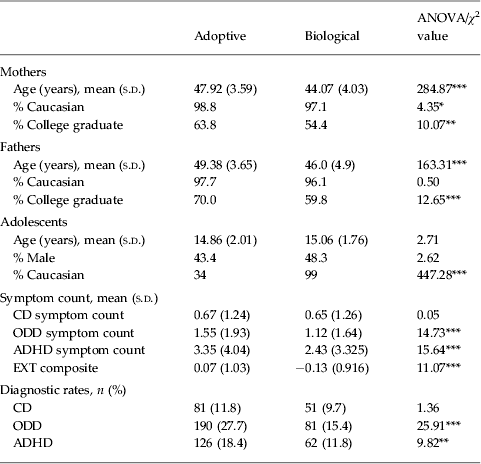
A revised version of the Diagnostic Interview for Children and Adolescents (DICA-R; Welner et al. Reference Welner, Reich, Herjanic, Jung and Amado1987), with additional probes and questions added to assess DSM-IV disorders, was used. Mother and offspring reports were combined using a best-estimate procedure, such that if either the mother or the adolescent endorsed a symptom, it was considered present. Symptom count variables were used to index ADHD, ODD and CD. In our sample, there was a mean of 0.66 (s.d. = 1.25) CD, 1.40 (s.d. = 1.85) ODD and 3.04 (s.d. = 3.84) ADHD symptoms. Because these three disorders are reported to reflect an underlying externalizing (EXT) dimension (Bornovalova, Reference Bornovalova2010), and all DBD symptom categories in the current sample yielded one principal component (all loadings > 0.78), an EXT variable was created by taking the first principal component derived from CD, ODD and ADHD symptoms. EXT was scaled as a standardized variable (mean = 0.00, s.d. = 1.00, range –1 to 5, with higher values indicating higher levels of EXT). Rates of offspring who met DSM-IV DBD diagnoses at the probable or definite level are reported in Table 1.
Demographic characteristics and child psychopathology levels in adoptive and biological families

CD, Conduct disorder; ODD, oppositional defiant disorder; ADHD, attention deficit hyperactivity disorder; EXT, externalizing composite score (first principal component of CD, ODD and ADHD symptoms); s.d., standard deviation.
* p < 0.05, ** p < 0.01, *** p < 0.001.
Results
Differences between biological and adoptive families
Table 1 presents demographic characteristics and child psychopathology levels across the adoptive and biological families. In the adoptive families, compared to the biological families, mothers and fathers on average were older and had completed more education, mothers were slightly more likely to be Caucasian, and children were less likely to be Caucasian and also evidenced more symptoms of ODD, ADHD (but not CD) and general EXT. The rates of DBD diagnoses are also presented in Table 1 and are consistent with previously reported rates in biological and adoptive offspring (Keyes et al. Reference Keyes, Legrand, Iacono and McGue2008).
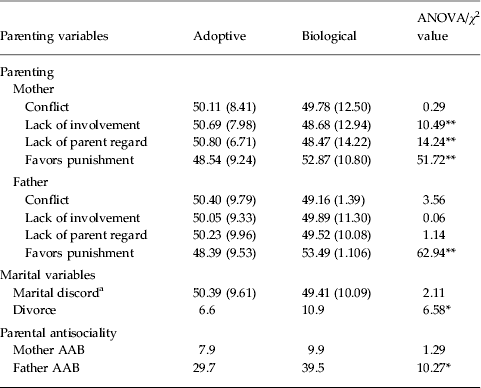
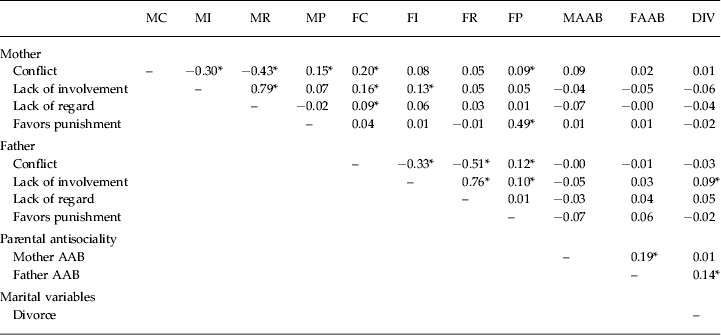
Table 2 presents the t scores for parenting variables, marital discord, percentages of divorce and parental antisociality in adoptive and biological families. Adoptive mothers reported slightly (but significantly) less involvement and parental regard than biological mothers. However, both mothers and fathers in biological families reported favoring physical punishment more than did parents in the adoptive families. Similarly, parents from biological families were more likely to divorce than parents in adoptive families, and fathers in biological families had higher rates of AAB than fathers in adoptive families. Correlations across maternal and paternal parenting behaviors, among measures of marital discord and between maternal and paternal AAB are reported in Table 3.
Parenting variables, dyadic adjustment, divorce and parental antisociality in adoptive and biological families

AAB, Adult antisocial behavior
Scores on each measure (except for divorce) were transformed into t scores with a mean of 50 and standard deviation (s.d.) of 10.
Values given as mean (s.d.) or percentage.
a Marital discord examined in married couples only.
* p < 0.01, ** p < 0.001.
Correlations of parenting variables, parental antisociality and divorce

MC, Mother parent–child conflict; MI, mother lack of involvement; MR, mother lack of regard; MP, mother preference for physical punishment; FC, father parent–child conflict; FI, father lack of involvement; FR, father lack of regard; FP, father preference for physical punishment; MAAB, mother adult antisocial behavior; FAAB, father adult antisocial behavior; DIV, divorce.
* p < 0.01.
Parenting behaviors, adoptive status and child DBDs
Main effects of parenting behaviors and adoptive status
A series of log-linear Poisson mixed-level regression models estimated using generalized estimating equations (a) assessed the relationship between child DBD symptoms and parental measures and (b) tested whether adoption status moderated the strength of the association. Poisson regressions were used because of the non-normal (Poisson) distribution of the child symptom counts. For each family risk factor, we fit two regression models. These models also accounted for multiple observations (e.g. two children) clustered within a higher-order family unit (Hanley et al. Reference Hanley, Negassa, Edwardes and Forrester2003). This technique controls for the correlation between two children within a family because members of a family are likely to be correlated at higher than chance rates. In all analyses, we adjusted for maternal and paternal age, education, child ethnicity and child adoptive status. Additionally, as symptoms of CD, ODD and ADHD differed by sex (F 1 = 66.08, 7.29, 75.69 and 63.90 for CD, ODD, ADHD and EXT respectively, all p's < 0.001) and (except for ADHD) showed a significant association with age (r = 0.13, 0.19 and 0.15 for CD, ODD and EXT respectively, all p's < 0.01), sex and age were used as covariatesFootnote 1 Footnote †. Given previous studies indicating that maternal and paternal parenting styles exert independent effects on child psychopathology (Bornovalova et al. Reference Bornovalova, Blazei, Malone, McGue and Iacono2012), we also controlled for co-parent parenting style. Because of the multiple tests, the significance cut-off was set at 0.01 for all regression analyses.
In the first model (termed Main Effects), we examined the effects of the mother's (or father's) parenting, discord/divorce or parental AAB on child DBD symptoms while adjusting for all covariates. A significant main effect of family risk factors on child DBD symptoms is evidence for a direct environmental effect. The effect of adoptive (versus biological) status of the child was also included in this model, which controlled for differences between biological and adoptive offspring DBD symptom levels. In the second model (termed Interaction Model) we added an interaction term to the main effects regression model to test the interaction between adoptive status and each familial risk factor after controlling for the main effects identified. A significant interaction term was taken as evidence for a stronger relationship between the familial risk factor and child DBD symptoms in one type of offspring (biological) than the other (adoptive). As such, the interaction term was our test of passive r GE.
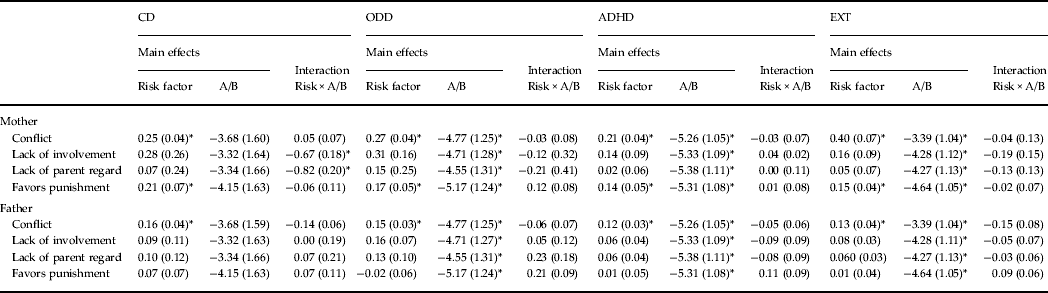
Table 4 shows that there were robust main effects of maternal and paternal parent–child conflict and maternal (but not paternal) willingness to use punishment on child CD, ODD, ADHD and EXT symptoms. Thus, as maternal and paternal conflict and maternal willingness to use punishment increased, so did child DBD symptoms in adoptive and biological children. Because it was possible that effects in the biological families drove the main effects of familial risk factors (incorrectly interpreted as an environmental effect), we repeated all the analyses separately for adoptive families. The results indicate that, out of the 12 original main effects, 11 were significant in adoptive families. The only effect that failed to reach significance was paternal conflict on offspring ADHD symptoms, but the effect was roughly equal in adoptive and biological offspring (B = 0.37, s.e. = 0.21, n.s. and B = 0.26, s.e. = 0.15, n.s. respectively). Thus, we concluded that the main effects were not being driven by a single family group.
Relationship between parenting variables and child DBDs in adoptive and non-adoptive families

DBD, Disruptive behavior disorder; CD, conduct disorder; ODD, oppositional defiant disorder; ADHD, attention deficit hyperactivity disorder; EXT, externalizing factor; A/B, adoptive versus biological.
Values given as unstandardized regression coefficients (B) and standard errors.
The first model is the main effects model and includes all identified covariates, co-parent effects (except in the case of the marital variables), adoption status (A/B) and the risk factor. The second model is the interaction model, including an interaction term between adoption status and the risk factor. Variables are coded so that higher levels of a risk factor indicate more problematic parenting; a positive sign for the regression weight for the ‘Risk Factor’ indicates that, as the value of the scale increases, so do child DBDs. Negative regression weights for A/B indicate lower rates of DBDs in biological children.
* p < 0.01.
Interactions between parenting behaviors and adoptive status
The interaction models in Table 4 show the effects for adoptive status by parenting variable interaction. There were two significant interactions: in the case of lack of maternal involvement and lack of maternal parental regard on child CD symptoms. As maternal involvement decreased, CD symptoms in adoptive offspring increased (B = 0.67, s.e. = 0.11, p < 0.01); however, lack of maternal involvement had no effect on CD symptoms in biological offspring (B = –0.07, s.e. = 0.12, n.s.). Similarly, as maternal parental regard decreased, CD symptoms increased in adoptive (B = 0.78, s.e. = 0.18, p < 0.01) but not in biological offspring (B = –0.07, s.e. = 0.08, n.s.).
Marital quality/divorce, parental antisociality, adoptive status and child DBDs
Main effects of marital quality/divorce, parental antisociality and adoptive status
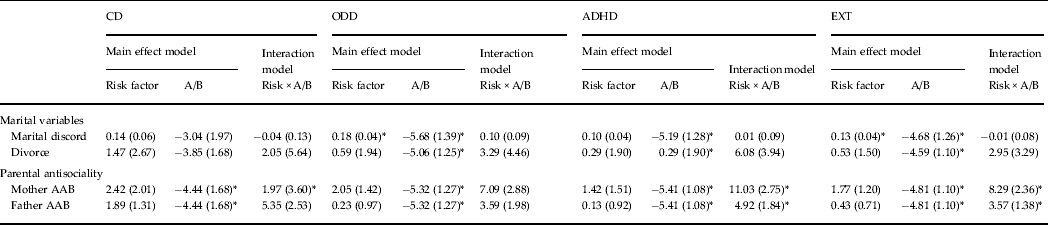
The effects of marital discord and divorce showed minimal association with child DBD symptoms (Table 5). Two main effects, for ODD and EXT, indicated that as marital discord increased, ODD and general EXT symptoms also increased. Out of the two significant original main effects, the effect of marital discord on offspring ODD symptoms was significant in the adoptive offspring. The effect of marital discord on offspring EXT was not significant in the adoptive offspring but the effect was roughly equal in adoptive and biological offspring (B = 0.13, s.e. = 0.06, n.s. and B = 0.13, s.e. = 0.05, n.s.). There were no main effects of divorce, maternal or paternal antisociality on child DBD symptoms.
Relationship between marital conflict, divorce and parental antisociality with child DBDs in adoptive and non-adoptive families

DBD, Disruptive behavior disorder; CD, conduct disorder; ODD, oppositional defiant disorder; ADHD, attention deficit hyperactivity disorder; EXT, externalizing factor; A/B, adoptive versus biological.
Values given as unstandardized regression coefficients (B) and standard errors.
The first model is the main effects model and includes all identified covariates, co-parent effects (except in the case of the marital variables), adoption status (A/B) and the risk factor. The second model is the interaction model, including an interaction term between adoption status and the risk factor. Variables are coded so that higher levels of a risk factor indicate more problematic parenting; a positive sign for the regression weight for the ‘Risk Factor’ indicates that, as the value of the scale increases, so do child DBDs. Negative regression weights for A/B indicate lower rates of DBDs in biological children.
* p < 0.01.
Interaction effects of marital quality/divorce and parental antisociality with adoptive status
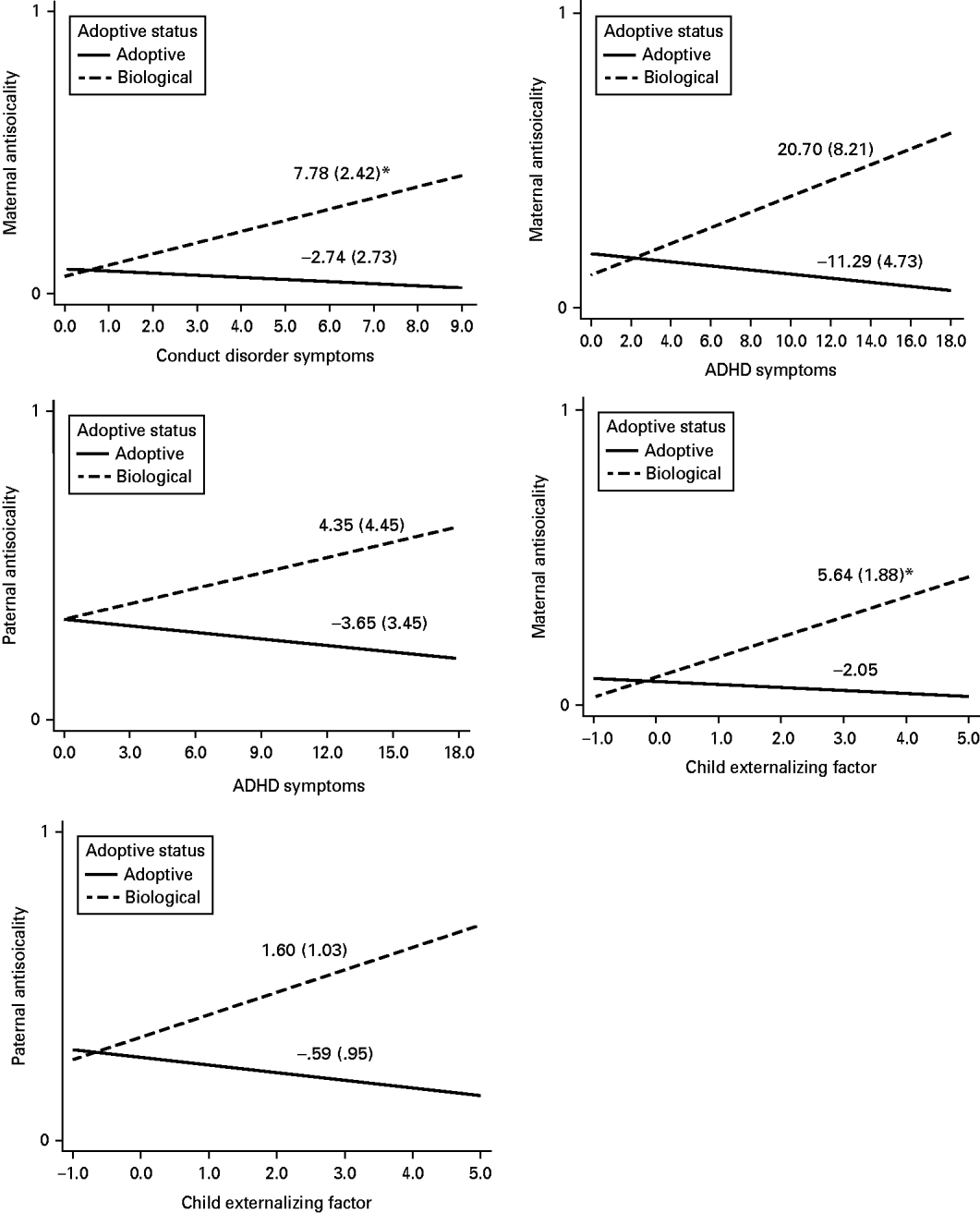
The interaction models of adoptive status by parental antisociality (Table 5) revealed several significant interactions for maternal and paternal antisociality. There were interaction effects of maternal antisociality and adoptive status on offspring CD, ADHD and EXT symptoms. Maternal antisociality had a significant positive effect on CD symptoms and EXT in the biological adolescents but no effect in adoptive adolescents (effects by group are reported in Fig. 1). In other words, as maternal antisociality increased, so did CD and EXT symptoms in biological offspring. The effect of maternal antisociality on offspring ADHD symptoms was weaker, but with identical overall direction and pattern of results. As maternal antisociality increased, so did ADHD symptoms in biological offspring (albeit non-significantly), but maternal AAB had little effect on adoptive offspring. Paternal antisociality was more strongly associated with children's symptoms of ADHD and EXT in biological than adoptive families; nevertheless, effects of paternal antisociality on these problems failed to reach significance in either the biological or the adoptive adolescents. Overall, paternal AAB was significantly more associated with offspring DBD symptoms in biological compared to adoptive families, indicating a passive r GE transmission mechanismFootnote 2 .
Interaction effects of parental antisociality and adoptive status on child disruptive behavior disorder (DBD) symptoms. For parental antisociality: 1 = presence of parental adult antisocial behavior (AAB); 0 = no parental AAB. * p < 0.01.

Discussion
The current study examined relative contributions of passive r GE and direct environmental influences on child psychopathology. In particular, we compared effects of maladaptive parenting, divorce, marital discord and parental antisociality on child DBD symptoms in biological and adoptive families. Our study comprehensively replicates and extends prior literature in five ways. First, we used an entirely different methodological approach than most previous studies (CoT and ECoT designs), with consistent results across methodological approaches adding confidence to the larger body of literature. Second, whereas most studies on the topic concentrate on one type of familial risk factor (e.g. maladaptive parenting), we examined multiple risk factors simultaneously. Third, we examined the relative contributions of both parents. Fourth, we examined all offspring in adolescence, after risk for many DBD symptoms has been expressed. Fifth, we used a large sample, allowing us to detect small r GE effects.
Our results indicate that maternal and paternal parent–child conflict, maternal use of physical punishment and (albeit in fewer cases) marital discord had a similar effect on biological and adoptive children. These results are consistent with conceptual work and empirical studies of biological families on how parental behavior often shapes child behavioral outcomes (Loeber & Stouthamer-Loeber, Reference Loeber, Stouthamer-Loeber, Tonry and Morris1986; Stormshak et al. Reference Stormshak, Bierman, McMahon and Lengua2000; Caspi et al. Reference Caspi, Moffitt, Morgan, Rutter, Taylor, Arseneault, Tully, Jacobs, Kim-Cohen and Polo-Tomas2004; Stanger et al. Reference Stanger, Dumenci, Kamon and Burstein2004; Herndon & Iacono, Reference Herndon and Iacono2005) and with findings from other genetically informed designs indicating that familial factors account for a moderate proportion of the shared environmental effect on child DBD symptoms (Rende et al. Reference Rende, Slomkowski, Stocker, Fulker and Plomin1992; O'Connor et al. Reference O'Connor, Caspi, DeFries and Plomin2000; Burt et al. Reference Burt, Krueger, McGue and Iacono2003; Neiderhiser et al. Reference Neiderhiser, Reiss, Pedersen, Lichtenstein, Spotts and Hansson2004, Reference Neiderhiser, Reiss, Lichtenstein, Spotts and Ganiban2007; Burt et al. Reference Burt, McGue, Krueger and Iacono2007, 2008; Harden et al. Reference Harden, Turkheimer, Emery, D'Onofrio, Slutske, Heath and Martin2007; Narusyte et al. Reference Narusyte, Neiderhiser, Andershed, D'Onofrio, Reiss, Spotts, Ganiban and Lichtenstein2011). Cumulatively, our data and previous work suggest that a large part of the socialization of child behavior is a function of interactions in close relationships constructed and sustained over time. The current findings also add to the literature beginning to specify the nature of shared environmental influences in childhood and adolescence.
Nonetheless, it is important to note two cases where effects of familial factors differed between adoptive and biological adolescents (albeit in an unexpected direction). The effects of maternal involvement and parental regard for punishment were inversely associated with child CD symptoms more strongly in adoptive than in biological children. In the absence of replication, it remains uncertain how much credence to assign these findings, but there are possible interpretations. Adoptive adolescents may be more responsive to positive parenting behaviors because of their adoptive status. Alternatively, adoptive parents might make more effort to use appropriate and healthy parenting techniques because of difficulties bonding with an adoptive child. Our study design is unable to disentangle parent-driven from child-driven effects, and understanding this finding should be a focus of future research. Our study is not unique in this unusual finding, as O'Connor et al. (Reference O'Connor, Caspi, DeFries and Plomin2000) reported that divorce had a higher impact on adopted adolescents' internalizing psychopathology and substance use.
Another important finding was that there was no direct environmental effect of maternal or paternal antisociality; however, both maternal and paternal antisociality had stronger associations with child DBD symptoms in biological than in adoptive families. This finding is consistent with a passive r GE effect, where a general vulnerability toward DBD symptoms is passed down by the parents to the children. Previous research shows that this general vulnerability manifests as antisocial behavior, alcohol use disorders and drug use disorders in the mother/father but as attention problems, oppositionality and conduct problems in pre-adolescent/adolescent offspring (Bornovalova, Reference Bornovalova2010; Silberg et al. Reference Silberg, Maes and Eaves2012). The replication of part of that effect in the current study is important in its own right, given the methodological differences, and provides direction for future work. In particular, future studies will benefit from examining the generality versus specificity of the passive r GE transmission mechanism in the relationship between adult EXT psychopathology and child DBD symptoms.
Several limitations of the present study should be noted. Foremost, it is important to understand that adoptive and biological families differ from each other in more ways than merely the biological relationship between parent and child. Although families were selected to be similar on age and gender, they were not selected to be similar on other characteristics (e.g. income and ethnicity), and thus differ in this respect. Here, the adoptive parents were older, more educated and reported fewer symptoms of paternal antisociality. Although we controlled statistically for these effects, differences between parent–child associations in biologically related and adoptive families cannot automatically be assumed to be due to differences in genetic relatedness. It is necessary to replicate the current study using a sample of families with both a biological and an adoptive child to ensure the consistency of the effects.
Furthermore, the current sample had low rates of divorce and the adoptive families showed higher socio-economic indices than the biological families, opening up the possibility of range restriction. A lack of a main effect of divorce may have stemmed from this fact. Indeed, previous studies reporting a direct environmental effect of divorce on offspring DBD symptoms (e.g. O'Connor et al. Reference O'Connor, Caspi, DeFries and Plomin2000; D'Onofrio et al. Reference D'Onofrio, Turkheimer, Emery, Slutske, Heath and Madden2005, Reference D'Onofrio, Turkheimer, Emery, Maes, Silberg and Eaves2007) have found substantially higher rates of divorce (range 19–23%). The low rate of divorce in the current sample along with differences in methodology could have contributed to the lack of consistency. Notably, however, McGue et al. (Reference McGue, Keyes, Sharma, Elkins, Legrand, Johnson and Iacono2007) showed that range-restricted SES did not substantially affect estimates of shared environmental variance. We also could not rule out the possibility of selective placement, as information about the mental health of the birth parents was not available. However, most of the adoptions were international, with no opportunity for selective placement. In addition, selective placement usually pertains to physical attributes and if an at-risk child were to be placed in a particularly nurturing environment, environmental effects would have diminished. As the current study still detected multiple direct effects, selective placement is unlikely in this case. Finally, although less of a limitation than a future direction, it is important to extend the current design to the relationship between putative environmental risk factors and internalizing psychopathology.
To conclude, the results from the current study indicate that many parental risk factors affect children equally across genetically related and non-related families. Other familial risk factors, however (namely, parental antisociality), are associated with child DBD symptoms through the mechanism of passive r GE. Future directions might include using the current design to track how these effects change as a function of developmental context (late adolescence and adulthood). Indeed, shared environmental factors are major contributors to the variation in child DBD symptoms (Burt, Reference Burt2009), whereas in late adolescence and adulthood this is not necessarily true. Passive r GE effects and direct environmental effects may, in later developmental stages, give way to influences of genetic effects. Understanding this type of developmental gene–environment interplay on child DBD symptoms is likely to contribute substantially to our knowledge of the etiology of child DBD symptoms and inform intervention strategies to help prevent and minimize child psychopathology.
Acknowledgments
Data for this project were collected at the University of Minnesota. This work was supported by National Institute on Drug Abuse Grant DA05147, National Institute on Alcohol Abuse and Alcoholism Grants AA09367 and AA015621, and National Institute of Mental Health Grant T32 MH017069.
Declaration of Interest
None.