1. Introduction
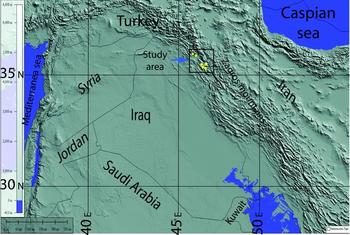
A sedimentological investigation of six exposed sections through the Iraqi red beds led to the recognition of four main units in the Kurdistan region of northern Iraq. Four sections were investigated in the Mawat–Chwarta area located north of Sulaymaniya city, while the Suwais and Merga sections lie in the Qandel area in NW Iraq. The red-bed succession forms part of a foreland basin consisting of Mesozoic and Tertiary rocks thrown into anticline and syncline structures that are mostly well exposed. The red beds occur in the imbricated zone of the foreland basin associated with post-Eocene subduction between the Arabian and Iranian plates (Fig. 1). Because of the complexity of the tectonic activities, the red-bed basin is broken into several parts making correlation and palaeogeographic research difficult. The red-bed sandstones show intra-formational variations in framework composition caused by changes in provenance. The NE Iraq study area has been subjected to strong tectonic influences – the Zagros Orogenic Belt was formed by the collision between the Arabian and Iranian–Turkish plates – and hence source rock variability has the greatest influence on sediment composition. The mineralogical components in the Mawat–Chwarta sections, both laterally and vertically, indicates that the red beds in this part of the basin were supplied by more or from different thrust sheets. In contrast, on other side of the basin towards the Suwais and Merga sections, the main source was radiolarian chert minor contributions from volcanic and metamorphic sources.
Location of the study area.

Petrographic and mineralogical studies show that source rocks supplied detritus to the red beds, reflecting uplift of older rocks coupled with intensive orogenic movements during red-bed deposition. Red beds are divided into two parts: (1) a lower unit is dominated by radiolarian chert detritus with a minor component of ophiolitic detritus; and (2) an upper unit lacks radiolarian chert and has a mixed provenance of volcanic, metamorphic and sedimentary rocks.
2. Geological setting
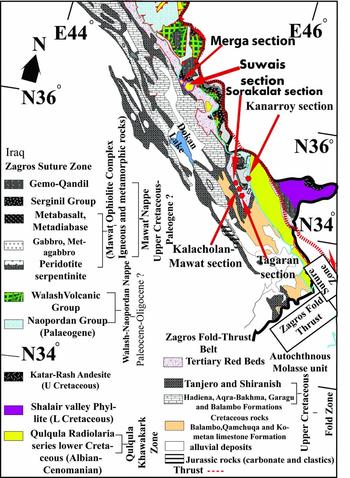
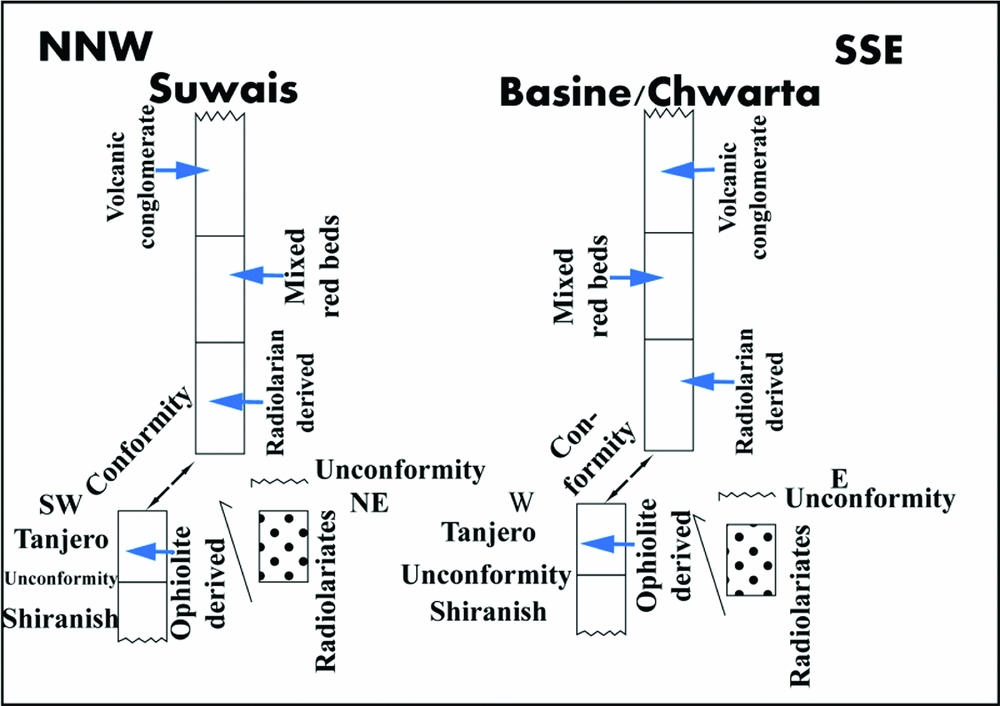
The Zagros Mountains are geologically part of the extensive Alpine mountain belt. They form a narrow strip along the border between Iraq and Iran and include two main zones: the Zagros Simply Folded Belt in the SW and the Zagros Suture Zone in the NE. These zones are included in the Zagros Orogen. A foreland basin occurs SW of the Zagros Mountains. The tectonic development of the Zagros Mountains indicates that the foreland basin was initiated during Late Cretaceous ophiolite obduction along the Zagros Suture Zone followed by continental collision of the Arabian Plate with Eurasia during Cenozoic time (Alavi, Reference Alavi2004; Agard et al. Reference Agard, Omrani, Jolivet, Whitechurch, Vrielynck, Spakman, Monié, Meyer and Wortel2011). The deposits of Late Cretaceous and Palaeogene foreland basin have been folded and are therefore now part of the Zagros Simply Folded Zone. In NE Iraq, the former Zagros foreland basin includes Cretaceous shallow-marine deposits of the Shiranish and Tanjero formations overlain by continental deposits of the Palaeogene red beds (Fig. 2). In order to clarify the tectonics of northern Iraq, stratigraphic relationships between the Late Cretaceous and Palaeogene successions and their relationships with equivalent successions in Iran are considered. The Palaeogene sedimentary rocks in the foreland basin record sedimentation during the Alpine Orogeny. The red beds are structurally overlain by thrust sheets that are part of the Zagros Suture Zone (Fig. 3). In the Mawat–Chwarta area the red beds are structurally overlain by volcanic rocks of the Naopurdan Group (Al-Mehaidi, Reference Al-Mehaidi1975) whereas the contact with the underlying Tanjero Formation is gradational as confirmed by the current study.
Regional geological map of N Iraq (Kurdistan area) and NW Iran showing locations of the study areas and Late Cretaceous formations and thrust sheets.

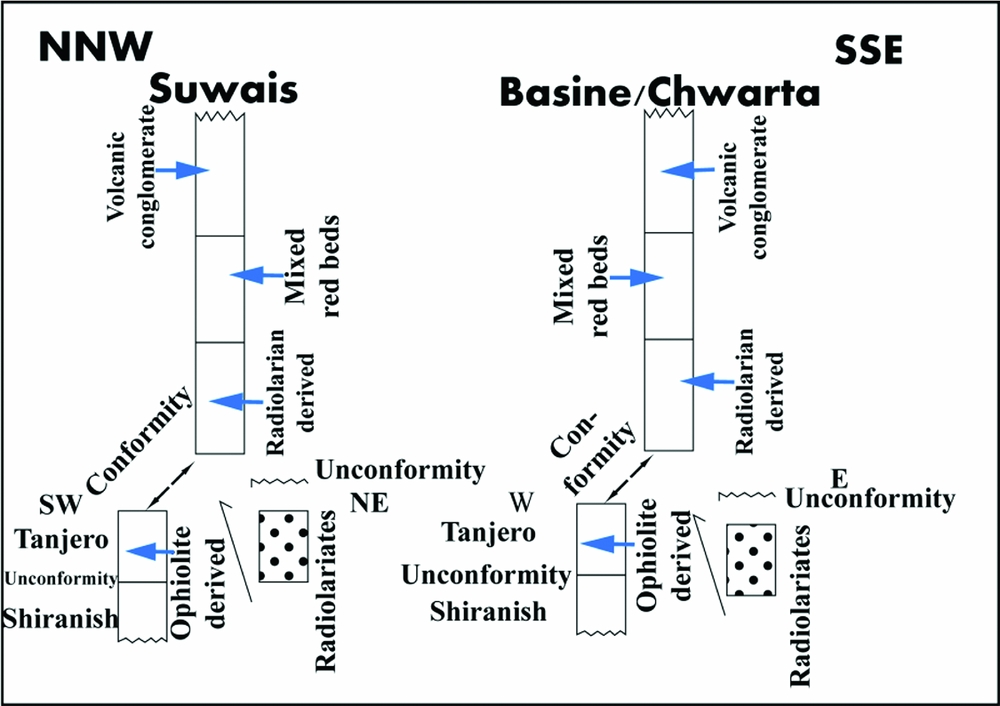
The stratigraphic relationships of the Late Cretaceous – Palaeogene rocks from the Suwais area (Qandel) and Basina–Chwarta area (close to the Kanarroy section in the study area) within the former foreland basin.
2.a. Shiranish Formation (Campanian–Maastrichtian)
The Shiranish Formation is widespread in most of the Kurdistan region in northern Iraq. It comprises two lithological parts: a lower division composed of 130 m of thin-bedded marly limestone and an upper division composed of 100 m of blue-white marl. The age of the lower division is late Campanian while the upper division is of Maastrichtian age. The Shiranish Formation is overlain to the northeast by the Tanjero Formation. In most areas, the upper contact of the Shiranish Formation is conformable with the overlying Tanjero Formation. However, low-angle unconformable contacts between these units have been documented from the Suwais and Do Awan sections in NE Iraq (Karim et al. Reference Karim, Koyi, Baziany and Hessami2011; Fig. 3).
The palaeogeographic distribution and the relationships of the Shiranish Formation with other rocks indicate that this formation was deposited in an open sea with various littoral and sublittoral clastic deposits and neritic reef-type and associated limestone. Abdel-Kireem (Reference Abdel-Kireem1983) studied the palaeoecology and bathymetry of the foraminiferal assemblages in the Shiranish Formation in the Dokan area. He suggested that this formation is the most widespread unit of the Campanian–Maastrichtian transgressive cycle in Iraq (Fig. 2).
2.b. Tanjero Formation (Maastrichtian)
The Late Cretaceous Tanjero Formation is also widespread in the Kurdistan region of northern Iraq (Buday, Reference Buday, Kassab and Jassims1980; Fig. 2) and is over 2010 m thick. The upper part of the Tanjero Formation contains foraminifera consistent with a Maastrichtian age. The lower part of the succession is composed of 480 m of globigerinal marl and rare siltstone. Its upper part consists of 1530 m of mixed siliciclastic and carbonate sedimentary rocks including silty marl, siltstone, sandstone, conglomerate and organic detrital limestone. An interfingering interval (c. 45 m thick) with gradational contacts between the Tanjero and Aqra formations occurs in the Mawat–Chwarta area (Sorakalat section). It is composed of sandy detrital limestone which progressively changes upwards to a calcareous sandstone, rich in shell debris. Additionally shale, siltstone and intraformational conglomerate occur in this interfingering section. The carbonates are ridge- to cliff-forming and consist of limestone and locally dolomitized limestone massive beds 1.5–2 m thick. According to Buday (Reference Buday, Kassab and Jassims1980), the Tanjero Formation represents a turbidite succession deposited in a rapidly sinking NW–SE-trending trough. The boundary between the Tanjero Formation and the overlying red beds in the Mawat–Chwarta area is locally masked by Quaternary sediments. No evidence exists for a sharp contact between the interfingering interval of the upper Tanjero Formation and the overlying red beds; the upper contact in this area is therefore considered conformable and transitional. Furthermore, such a boundary is also recognized in nearby Sorakalat village, where fossiliferous limestone beds are recognized within the lowermost part of the red beds.
2.c. Red beds (Paleocene–Eocene)
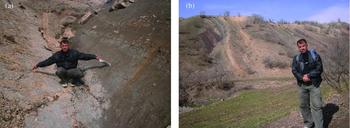
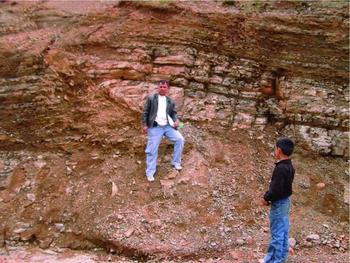
The red beds are composed of mudstone, sandstone and conglomerate. Clastic sedimentary rocks are distributed throughout the succession while carbonate beds are confined to the lower part of the unit. In most places the lower contact of the red beds and the Tanjero Formation is conformable, as occurs in the Mawat–Chwarta area (Fig. 4a, b). Karim et al. (Reference Karim, Koyi, Baziany and Hessami2011) noted that this contact is sharp in some areas and transitional in others. At the transitional contacts, the lower boundary of the red beds is placed at the first appearance of the reddish-brown to purple silty claystone. Close to the Zagros Suture Zone NE of the main outcrops of the Tanjero Formation, an angular unconformity occurs between the red beds and the underlying Qulqula Formation in both the Mawat–Chwarta and Qandel areas (Karim et al. Reference Karim, Koyi, Baziany and Hessami2011). A similar angular unconformity was also recorded in the study area close to the Kanarroy and Suwais sections (Figs 3, 5). The Walash–Naopurdan Nappe is a part of the Zagros Suture Zone and comprises mainly volcanic and turbidite sedimentary rocks that everywhere structurally overlay the red beds.
The contact between the interfingering interval of the Aqra–Tanjero formations and the overlying red beds, Mawat–Chwarta area (Sorakalat section). (a) Limestone bed (L) overlain by olive mudstone dipping 35° NE in the upper Tanjero Formation (35°45′52.68″N 45°27′36.84″E); and (b) red beds with red mudstone and thin beds of siltstone.

Siliceous radiolarian chert showing a medium-scale fold and fault in the Qandel area (Suwais section, 36°21′30.90″N 45°02′11.24″E).

The heterogeneities of detrital components in the stratigraphic column through the red beds reflect the unroofing history of the thrust sheets that provided the components to the red-bed basin.
Petrographic and mineralogical studies show that a diversity of source rocks supplied detritus to the red beds, reflecting uplift of older rocks coupled with intensive orogenic movements during red-bed deposition. The red beds are divided on the basis of provenance into two parts: a lower unit is dominated by radiolarian chert detritus with a minor component of ophiolitic detritus; and an upper unit lacks radiolarian chert and ophiolitic detritus and has a mixed provenance of volcanic, metamorphic and sedimentary rocks.
3. Petrographic studies and results
3.a. Detrital mineralogy
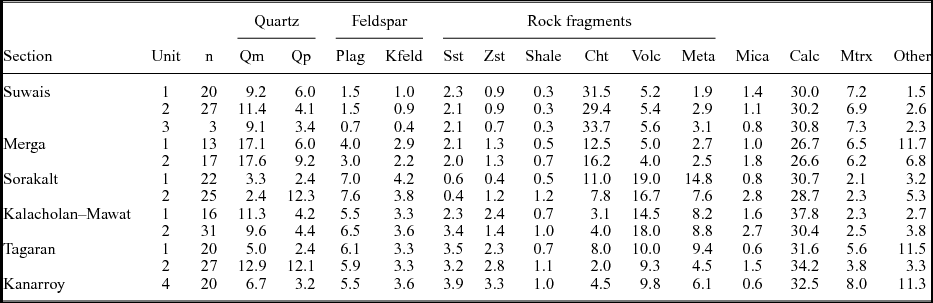
A total of 221 thin-sections were analysed from sandstone samples collected along the lower, middle and upper parts of the red-bed succession (Tables 1, 2). All thin-sections were detected using a point-counting method on 400 points at 0.04 mm spacing. Generally, the red-bed components are similar in all sections but there are a few differences in several important components and proportions.
Average of point count data for the Suwais, Merga, Sorakalat, Kalacholan–Mawat, Tagaran and Kanarroy sections. Qm – monocrystalline quartz; Qp – polycrystalline quartz; Plag – plagioclase; Kfeld – Kfeldspar; Sst – sandstone fragments; Zst – siltstone fragments; Cht – chert fragments; Volc – volcanic fragments; Meta – metamorphic fragments; Calc – calcite cement; Mtrx – matrix.

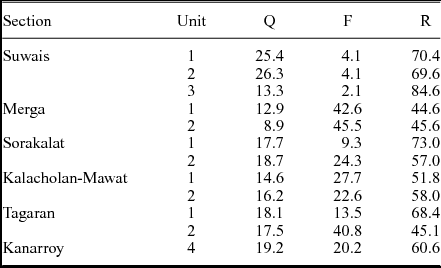
Classification data for the Suwais, Merga, Sorakalat, Kalacholan–Mawat, Tagaran and Kanarroy sections (after Folk, Reference Folk1980)
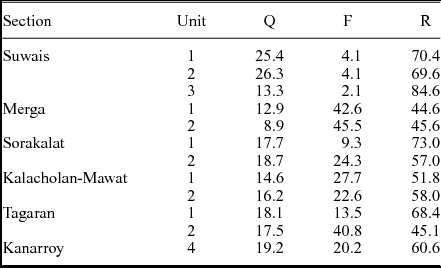
Mean grain size ranges from coarse silt to medium sand, but most samples are very fine- to fine-grained sandstones while the coarse- to very-coarse-grained sands were rarely sampled in the studied sections. Generally, the sandstones are poorly sorted and are composed of angular to subangular grains. The measured sections represent different sides of the basin and reflect the differences in grain size among the studied areas. The diversity of grain size means that it is important to focus on the relationships between grain size and the composition of the red-bed grains. The high component of the diagenetic calcite (up to 50%) in many samples affects the accuracy of the results, because of the extensive replacement of many grain types. Red-bed sandstones were classified according to Folk (Reference Folk1962). The procedure used to classify the red-bed sandstones grouped the framework components into three main groups: (1) quartz grains (all quartz types including meta-quartz); (2) feldspar (all feldspar types including gneiss and granite fragments); and (3) rock fragments (Table 2). The latter are the main component in the red-bed sediments while quartz and feldspar are minor constituents. Considerable variation of the type and ratio of lithic fragments occurs among the stratigraphic units, as well as among the measured stratigraphic sections.
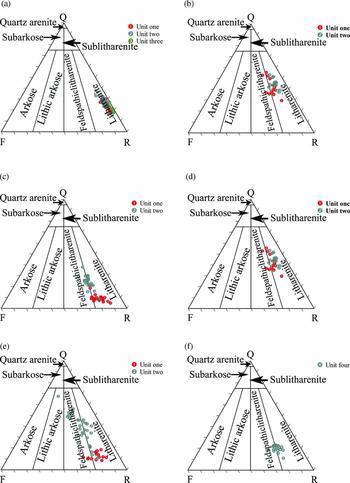
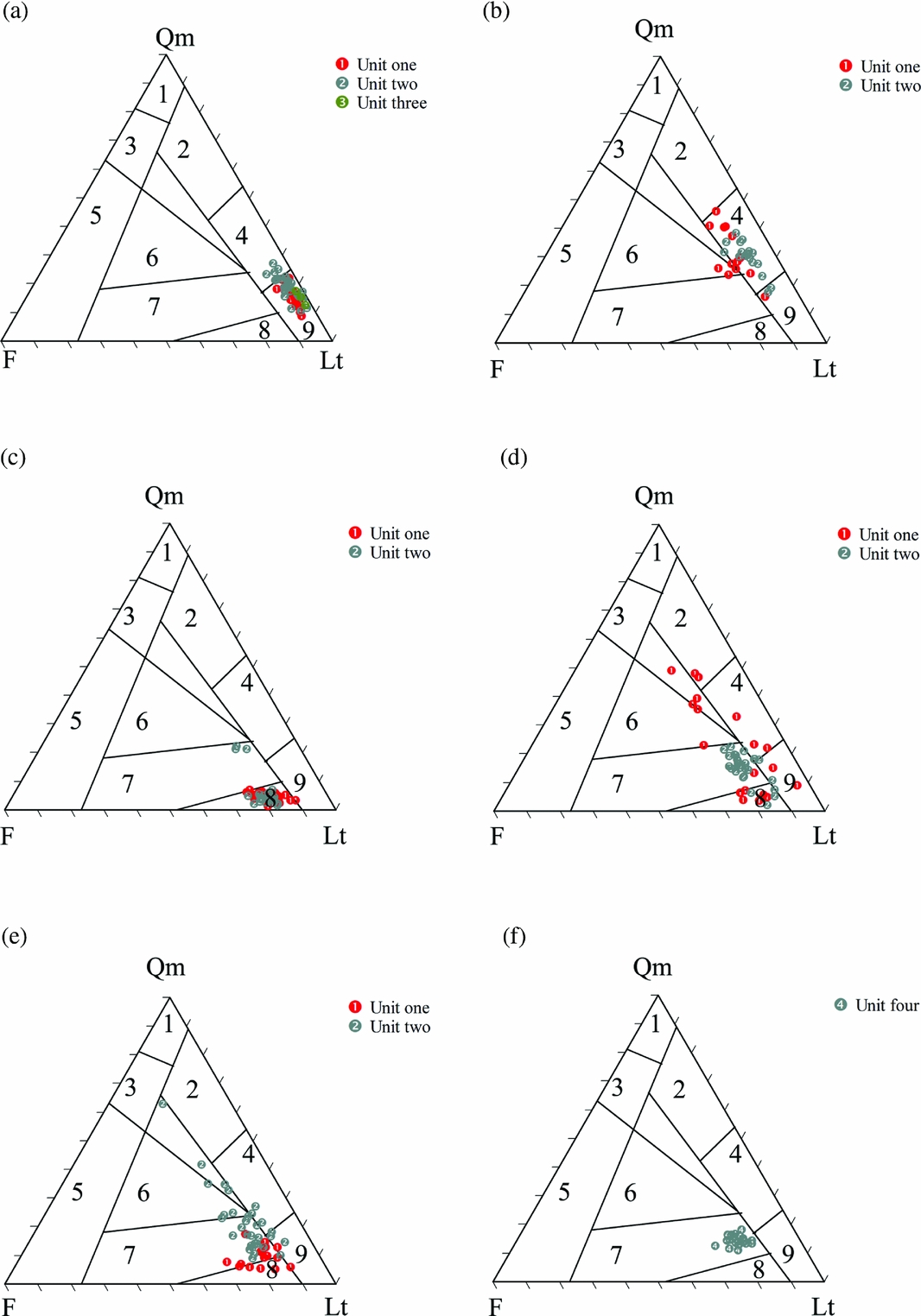
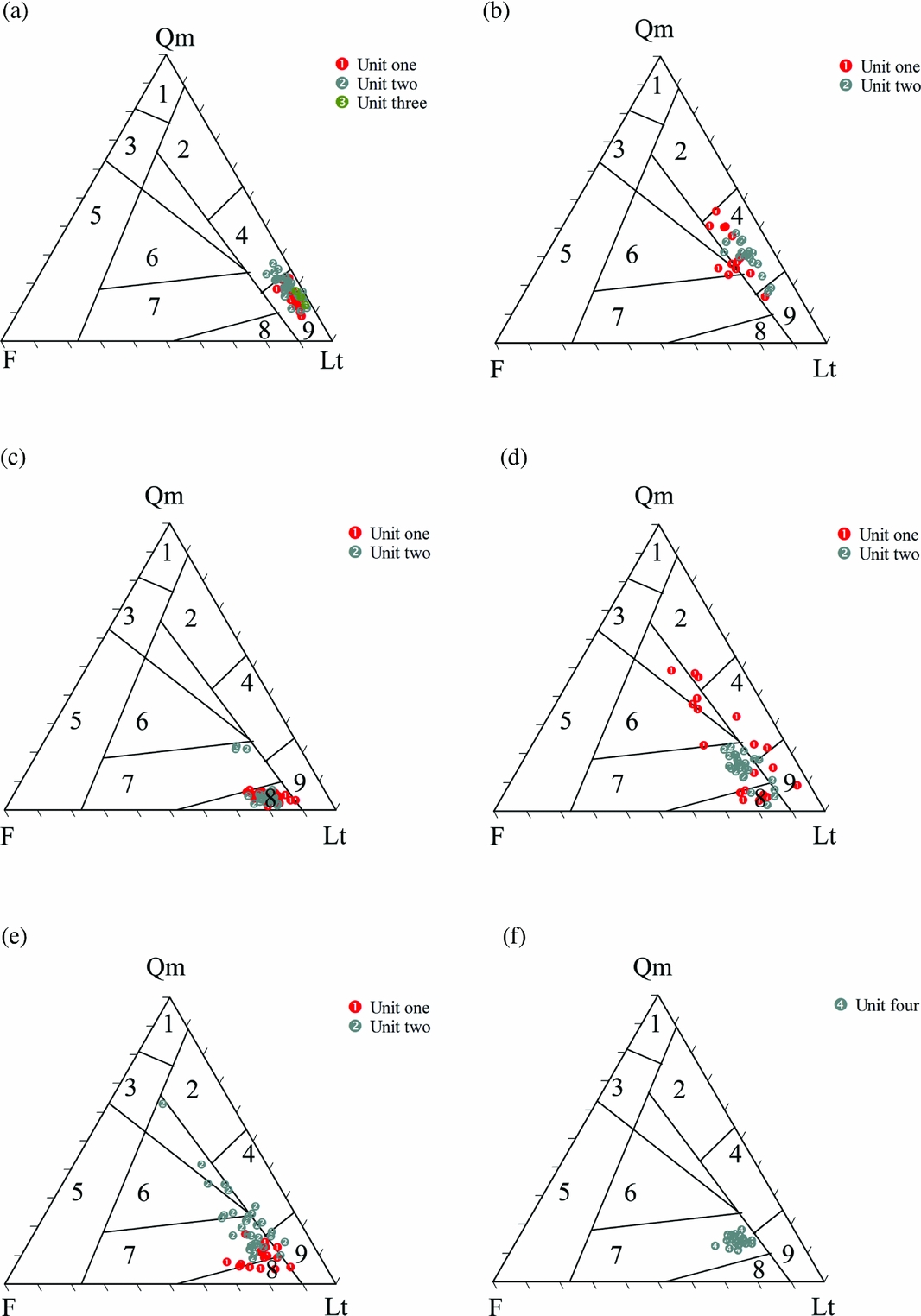
Many classifications have been used in geological studies of sandstone but the nature of the red-bed rocks required the choice of a suitable classification for the present study. Mineralogical studies of all the selected sections from different areas show that the matrix content is less than 15%. As a result, the most suitable classification of sandstones is that suggested by Folk (Reference Folk1962) as shown in Figure 6. The studied sandstones mostly lie in the lithiarenite field in addition to the feldspathic litharenite field (Fig. 6). The litharenite sandstone class can be subdivided in a meaningful manner into three categories on the basis of the kind of rock fragments: volcarenite, phyllarenite and sedarenite. Furthermore, sedarenite can be subdivided into subcategories calclithite, chert arenite and sandstone arenite or shale arenite.
QFR triangle shows the classification of terrigenous sandstone in units one and two in (a) Suwais, (b) Merga, (c) Sorakalat, (d) Kalacholan–Mawat and (e) Tagaran sections and (f) unit four in Kanarroy section, based on the mineralogical composition of Folk (Reference Folk1980). R mainly comprises chert and carbonate sedimentary rock fragments.

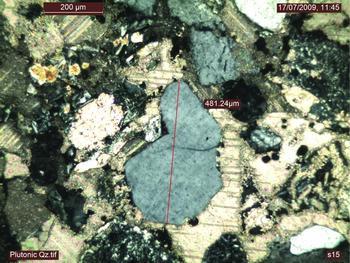
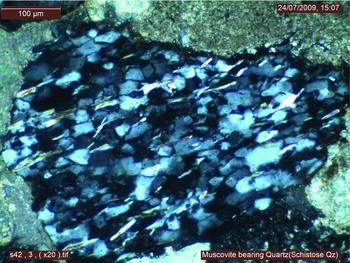
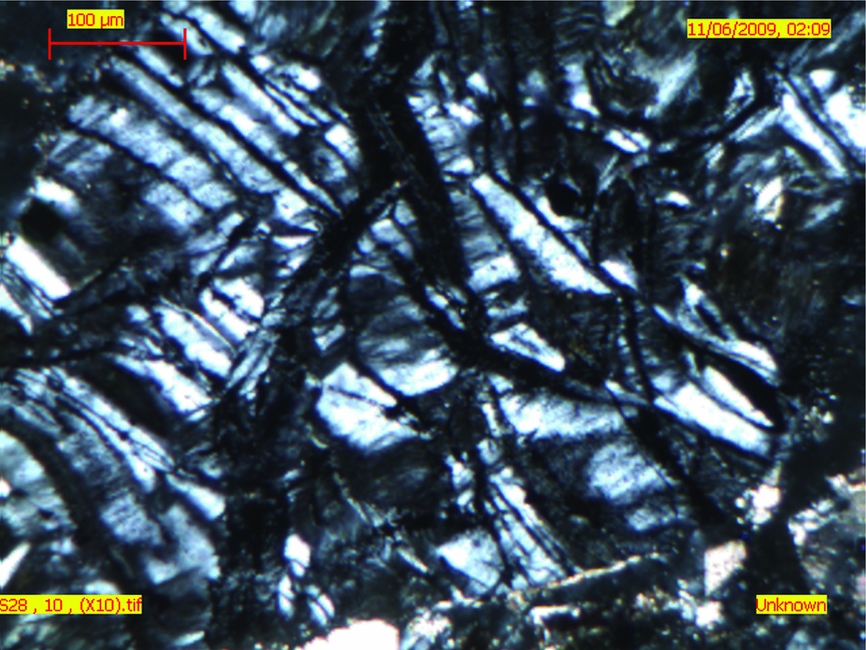
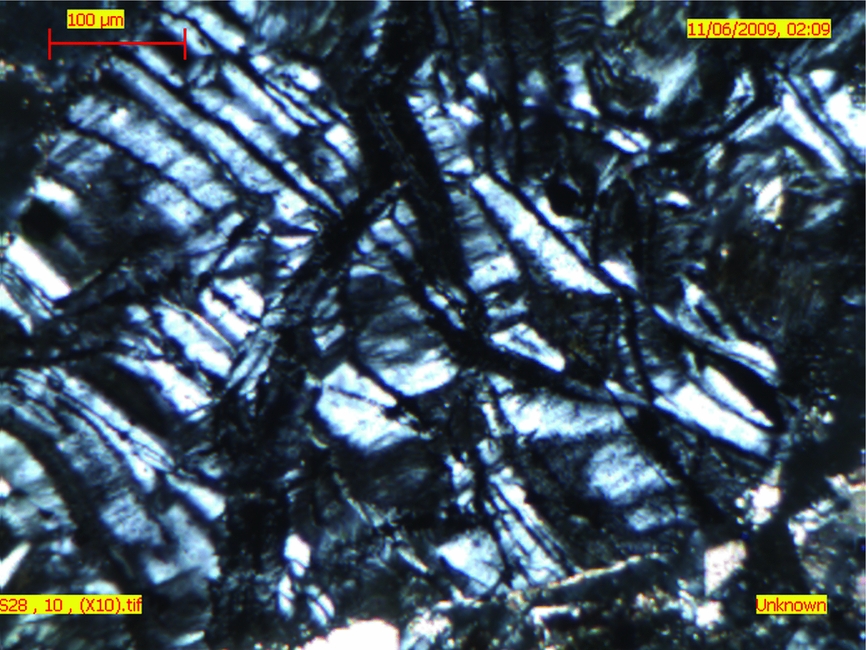
Quartz forms a minor mineral component compared to the lithic fragments in the sandstone samples from the red-bed sediments (Table 1). Monocrystalline quartz is much more common in the red beds than polycrystalline quartz. Most of the monocrystalline quartz has an irregular shape and is angular to subangular with few rounded grains. Most of the quartz in the red beds is distinguished by its straight or slightly undulose extinction (<6º), irregular shape and low amount of inclusions. According to Smyth, Hall & Nichols (Reference Smyth, Hall and Nichols2008), these monocrystalline quartz grains were probably derived from volcanic source rocks that are concentrated in the Mawat–Chwarta area (Fig. 7 and Supplementary Figs S1–S3, available at http://journals.cambridge.org/geo). Some quartz grains show straight extinction but have stress fractures (Fig. 8) which probably give evidence of metamorphic or igneous source rocks (Asiedu et al. Reference Asiedu, Asiedu, Suzuki, Nogami and Shibata2000). Recycled quartz is a minor component mainly found in two areas near Mawat and Suwais. Polycrystalline quartz is less abundant than monocrystalline quartz and is concentrated in the Mawat–Chwarta area, especially in the Sorakalat section. According to the genetic classification of Boggs (Reference Boggs2009) and Krynine (Reference Krynine1940) several types of polycrystalline quartz were differentiated in the red-bed sediments (Fig. 8 and Supplementary Figs S4–S8, available at http://journals.cambridge.org/geo).
Cracked (yellow arrow) quartz grain in the middle part of the Kalacholan section affected by stress, which probably indicates a metamorphic or igneous source. Cross-polarized light.

Thin-section photograph of muscovite-bearing composite quartz (schistose quartz) in the middle part of the Sorakalat section. Cross-polarized light.

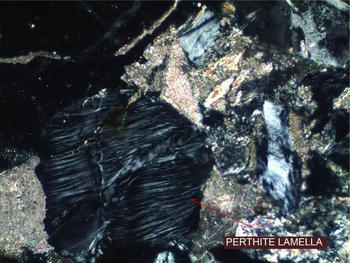
Plagioclase is the most common feldspar mineral in the red-bed sediments. It exhibits platy or lath shapes and commonly displays albite twins, although untwined plagioclase is also present in some samples. In addition, some grains are fresh but others have been partially altered (Supplementary Fig. S9, available at http://journals.cambridge.org/geo) with the generation of gaseous vacuoles. Alkali-feldspar is less abundant, consisting mainly of orthoclase (Supplementary Fig. S10, available at http://journals.cambridge.org/geo) with very rare microcline and sanidine (Supplementary Fig. S11, available at http://journals.cambridge.org/geo) and may indicate the absence of microcline-bearing pegmatite in the source area. No sanidine was found in the Qandel area (Suwais and Merga sections). It is also obvious that orthoclase is more common than microcline, especially in the Mawat–Chwarta area. The orthoclase grains are characterized by their platy and dusty appearance (Supplementary Fig. S10, available at http://journals.cambridge.org/geo) caused by disintegration to clay minerals (kaolinite, sericite). Secondary overgrowths of fresh orthoclase cement have also been noted surrounding cores of highly altered grains with a different optical orientation. Microcline was determined by its cross-hatch twining and altered rims. Some grains with perthitic textures were distinguished (Fig. 9).
Perthite lamella present in the uppermost part of unit two in the Kalacholan–Mawat section. Cross-polarized light.

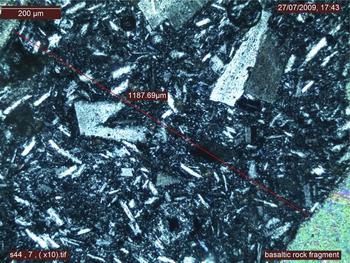
The current study has concentrated on the rock fragments because they are easy to distinguish and provide essential information on the fabric and paragenesis of the parent rocks (Boggs, Reference Boggs1968; Thoreau, Reference Thoreau and Blatt1982). Rock fragments form the dominant detrital grains in the red-bed sandstones but different types of rock fragments occur in different areas. In the Mawat–Chwarta area volcanic and metamorphic rock fragments are dominant; in the type locality (Suwais section), sedimentary rock fragments represented by chert are dominant (see Table 1). The latter also include extrabasinal carbonate rock fragments and minor amounts of volcanic rock fragments (e.g. Critelli et al. Reference Critelli, Mongelli, Perri, Martín-Algarra, Martín-Martín, Perrone, Dominici, Sonnino and Zaghloul2008). The occurrence of igneous rock fragments is variable throughout the studied sections and they are mainly represented by volcanic rock fragments. The publications of Critelli & Ingersoll (Reference Critelli and Ingersoll1995) and Critelli, Marsaglia & Busby (Reference Critelli, Marsaglia and Busby2002) support our current knowledge which conclude that the main volcanic rock fragments include lathwork and microlitic rock fragments; altered felsic and vitric fragments are less common and sometimes it is hard to distinguish them from chert fragments (including radiolarian chert) (Fig. 10; Supplementary Figs S12–S14, available at http://journals.cambridge.org/geo). Volcanic fragments are rather similar in all sections, mostly being subangular to subrounded and within the grain size range 100–800 μm.
Volcanic fragment (feldspatholithic detrital grain) in the middle part of the Sorakalat section in the Mawat–Chwarta area composed of plagioclase set in a fine crystalline matrix derived from the obducted ophiolite. Cross-polarized light.

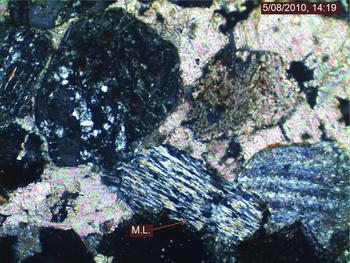
The second most abundant group of rock fragments includes metamorphic rock fragments. Metamorphic grains are concentrated in the middle part (unit two) in the Mawat–Chwarta area (Sorakalat, Kalacholan and Tagaran sections) but are rare in the Qandel area (Suwais and Merga sections). The present research has distinguished several types of metamorphic detritus based on the grade of metamorphism (cf. Critelli et al. Reference Critelli, Mongelli, Perri, Martín-Algarra, Martín-Martín, Perrone, Dominici, Sonnino and Zaghloul2008; Zaghloul et al. Reference Zaghloul, Critelli, Perri, Mongelli, Perroni, Sonnino, Tucker, Aiello and Ventimiglia2010; Perri et al. Reference Perri, Critelli, Martín-Algarra, Martín-Martín, Perrone, Mongelli and Zattin2013). The most common type is low-rank slate fragments (Fig. 11; Supplementary Figs S15–S17, available at http://journals.cambridge.org/geo). Based on the scheme introduced by Dorsey (Reference Dorsey1988), most of the metamorphic grains are low rank (Lm1) with elongate quartz grains, strong cleavage and weakly crystalline sericite (slate and slaty siltstone). In addition, a few grains of higher rank (Lm2) have elongate mica flakes to over 50 μm.
Thin-section photograph of phyllite grain with strong cleavage within unit three in the Sorakalat section. Cross-polarized light.

The serpentinite fragments have angular to subrounded shapes and have grain sizes within the range 100–400 μm in the lower part (Tanjero Formation and unit one) of the Sorakalat section (Mawat–Chwarta area). The serpentinite grains in the red beds are very similar in all units, especially in the fine-grained sediments. Replacement and dissolution are seen surrounding the grains. Moreover, these grains nearly disappear in the sandstone unit (unit two). Two types of serpentinite have been distinguished by petrographic and x-ray diffraction (XRD) (Siroquant) analyses and are present in different shapes and sizes (Figs 11–13).
Rounded to subrounded lizardite serpentinite grain in the lower part of the Kalacholan–Mawat section showing the mesh texture of serpentine. Cross-polarized light.
QFR triangle shows the classification of terrigenous sandstone for units one and two in (a) Suwais, (b) Merga, (c) Sorakalat, (d) Kalacholan–Mawat and (e) Tagaran sections and (f) unit four in Kanarroy section based on the mineralogical composition of Folk (Reference Folk1980). In the Merga and Suwais sections R mainly comprises chert and carbonate sedimentary rock fragments; in the Sorakalat, Kalacholan–Mawat, Tagaran and Kanarroy sections R mainly comprises volcanic (basaltic+ophiolitic) and metamorphic (serpentines+phyllite) rock fragments.
Lizardite occurs as medium-sand-sized rounded to subangular grains with a mesh or reticulate texture. In contrast, antigorite occurs as fine to minute flakes scattered among other crystals and provides a cement material. In most cases, it has been subjected to chloritization.
3.b. Tectonic setting
Figure 13 is a QFL (quartz–feldspar–lithic fragments) diagram clarifying the relationship between sandstone composition of the red beds and their tectonic setting which resulted from the point count analyses (Tables 1, 2; Supplementary Figs S18–S23, available at http://journals.cambridge.org/geo). Most of the red-bed sediments in the Mawat–Chwarta area are plotted in the recycled orogen field with a few clustering into the magmatic arc (dissected arc type) field. As confirmed by Dickinson and Selley (Reference Dickinson and Selley1979) this type of sediment may be derived from volcanic rocks that formed in foreland fold–thrust belts or along collision orogens that were situated in subduction zones. One of the important investigations encompasses the distribution and proportion of petrographic components. As stated by Dickinson and Selley (Reference Dickinson and Selley1979), the relative difference in the distribution of sedimentary rock components is a useful guide to determine the nature of the original rock. Dickinson (Reference Dickinson1970) noted that carbonate contents are high in calcareous rocks with much of the calcite occurring as cement. This is similar to the red-bed sediments where the point count was unrewarding and the accurate results were difficult to obtain because of calcite replacement.
Most of the Suwais and Merga sections show abundant sedimentary rock fragments of chert and carbonate types, while the other sections in the Mawat area are rich in volcanic and metamorphic fragments.
There is an obvious difference between the Suwais and Mawat areas; the Suwais section is composed mostly of sedimentary rock fragments with rare volcanic grains while the Mawat area is composed of volcanic detritus mixed with rank-1 to rank-3 metamorphic grains and some sedimentary detritus. These differences in petrographic components, especially the quantity and type of lithic fragments, probably reflect the evolution of the collision orogen. The sandstone rich in sedimentary fragments in the Suwais section was probably derived during the early stage of collision of the Arabian Plate moving towards Turkey; the sandstones in the Mawat area are however rich in volcanic detritus and probably reflect a later stage of collision.
The difference between the mafic components in the two areas probably reflects the collision history of the two sides of the Mawat–Chwarta and Qandel areas. The Turkish Plate, which collided with the Arabian Plate from the Qandel side, formed a foreland basin which included a dominant sedimentary source. In contrast, the volcanic-rich sediments from the Mawat–Chwarta area reflect collision with the Iranian Plate that supplied magmatic arc sediment. The high proportion of sedimentary rock fragments in the Qandel area, unlike the Mawat area, supports this scenario.
4. Discussion
4.a. Provenance
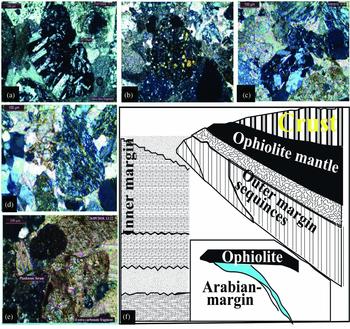
Figure 14 depicts the main components of the red beds and their provenance.
The main diagnostic detritus in the red beds determined from the current study: (a) a lathwork orthopyroxene phyric boninite grain probably sourced from the supra-subduction zone ophiolite; (b) diabase grains from the upper part of the Mawat ophiolite; (c) quartz-mica lithic grain with schistosity from the (d) metamorphic rough cleavage in slaty lithic fragments, similar to those described from western northern Caucasus (Garzanti et al. Reference Garzanti, Doglioni, Vezzoli and Andò2007); (e) carbonate grains from the Mawat area; and (f) general diagram of the source area modified from Garzanti et al. (Reference Garzanti, Doglioni, Vezzoli and Andò2007).

4.a.1. Quartz
Blatt (Reference Blatt1967 a) indicated that massive plutonic rocks rather than schist and gneiss are the main source of monocrystalline quartz of granule to medium-grained sand size. Blatt (Reference Blatt1967 a, p. 401, 414) and Blatt & Christie (Reference Blatt and Christie1963, p. 570) noted there is a low proportion of polycrystalline quartz in mature sediments. In addition, they proposed that plutonic and metamorphic rocks supply the highest proportions of polycrystalline quartz to sedimentary basins, but they did not mention that high proportions of polycrystalline quartz reflect a metamorphic origin. Other authors (e.g. Young, Reference Young1976; Boggs, Reference Boggs2009) suggested that throughout metamorphism, monocrystalline quartz could develop into polycrystalline quartz and may be metamorphic in origin. Young (Reference Young1976) claimed that polycrystalline quartz is a helpful guide for determining source area composition. High portions of polycrystalline quartz occur in sandstones sourced from low-rank metamorphic rocks.
Boggs (Reference Boggs2009, p. 117) and Jargal & Lee (Reference Jargal and Lee2006) supported this idea and suggested that quartz grains containing 2–3 crystals with undulose extinction are sourced from metamorphic rocks. Low quantities of polycrystalline quartz can also be derived from high rank metamorphic rocks. Basu (Reference Basu1975, p. 873) and Smyth, Hall & Nichols, (Reference Smyth, Hall and Nichols2008, p. 340) indicated that quartz containing many crystals per grain is sourced from low-grade metamorphic rocks; high-grade metamorphic rock provide grains with fewer crystals, while quartz from plutonic sources have 2–3 crystals per grain. The same authors said that the small size and subparallel orientation of crystals are indicators of a metamorphic source, whereas randomly oriented crystals are an indicator of quartz that forms in sedimentary, volcanic and plutonic sources. The amount of undulose extinction quartz is another indicator of the origin; plutonic rock shows less than 5% undulose extinction whereas metamorphic rocks show more than 5%.
Note that within the red-bed sediments the distinction between chert and fine-grained stretched quartz is based on crystal size where individual crystals are <10 μm in chert and >20 μm microns in fine-grained metamorphic quartz (Folk, Reference Folk1980).
For all the reasons mentioned above, and by comparison of red-bed quartz with previous literature, it is obvious that polycrystalline quartz in the red beds was generally sourced from various metamorphic grades. Mostly grains are from a low-grade metamorphic source or from plutonic and volcanic igneous rocks. The more characteristic polycrystalline quartz in the red beds is the stretched quartz type with elongate crystals. According to the literature, especially Scholle (Reference Scholle1979), the elongate-shaped crystals in polycrystalline quartz are a good indicator of a metamorphic source.
Based on undulose and non-undulose criteria, most of the monocrystalline quartz distinguished in the red beds is of plutonic origin; only a few are of volcanic origin and sedimentary types are rare.
4.a.2. Feldspar
The composition of twinned plagioclase was determined optically and ranged from andesine to labradorite. Generally, all types of feldspar are influenced by weathering and the outlines of the grains may be corroded due to diagenetic processes. Fresh grains are distinguished, but many have been partially replaced by calcite. The grain size ranges between very fine sand to medium sand. The elongate or lath-like shape of subangular feldspar grains indicates that the source area is located within a short distance and the feldspar was derived from a rugged topography under a humid climate (Folk, Reference Folk1980). According to Blatt (Reference Blatt1967 b, p. 1033) a high portion of orthoclase relative to microcline reflects igneous and metamorphic source rocks. Feniak (Reference Feniak1944) found that where plagioclase was more abundant than orthoclase and microcline, it indicated volcanic rocks. Iron oxides, secondary clays and carbonate have partially replaced the feldspar.
Helmold (Reference Helmold1985) and Milliken (Reference Milliken1988) (Condie, Lee & Farmer, Reference Condie, Lee and Farmer2001, p. 447) suggested that if a large amount of feldspar was replaced it was no longer useful as a tectonic indicator; in the case of the red-bed sediments, it is therefore difficult to depend on feldspar grains to supply precise tectonic indicators.
According to Mousinho de Meis & Amador (Reference Mousinho De Meis and Amador1974) and Basu (Reference Basu1976), feldspar is one of the minerals that reveals the climate of a source area. For example, the proportion of feldspar in humid areas is less than that of quartz, and the reverse is true in an arid area. The ratio of quartz to feldspar also reflects the climate (Basu, Reference Basu1976, p. 701). A similar idea was introduced by Hulka & Heubeck (Reference Hulka and Heubeck2010, p. 295) who suggested that balanced amounts of plagioclase to potassium feldspar and quartz phenocryst ratios reflects dacite input more than andesite.
This study noted that the red-bed sediments contained more plagioclase than K-feldspar in the Mawat–Chwarta area, whereas the quantity of K-feldspar is equal to or greater than the quantity of plagioclase in the Suwais section (Qandel area). The occurrence of feldspar within the red beds therefore reflects a short distance transport of the sediments from the source area during a humid climate (Blatt, Middleton & Murray, Reference Blatt, Middleton and Murray1972; Nichols, Reference Nichols2004; Le Pera et al. Reference Le Pera, Josè, Salvatore and Salvatore2001). In addition, the high portion of feldspar in the Mawat–Chwarta area is related to more volcanic source rocks compared to the Suwais area.
4.a.3. Rock fragments
As mentioned by Pettijohn, Potter & Siever (Reference Pettijohn, Potter and Siever1972), high proportions of metamorphic rock fragments in sandstone refers to the possibility of common metamorphic components in the source area, as well as the source area being close to the sedimentary basin of the red beds. Milliman & Meade (Reference Milliman and Meade1983) suggested that the metamorphic rock fragments shed by collision orogens represent the most important source supplied to sediments around the world. Bokman (Reference Bokman1955, p. 205) proposed that metamorphic sources would supply metamorphic rock fragments only to the neighbouring basins. Al-Rawi (Reference Al-Rawi1980) concluded that the angular metamorphic lithic fragments in the red beds were probably sourced from the Zagros Thrust Zone and Sanandaj–Sirjan Zone to the north of the red-bed basin. In the present study the petrographic results from unit two show that the foliated polycrystalline mica and foliated low-grade metamorphic grains were probably derived from schist, slate and phyllite sources. From the contained assemblages of biotite, muscovite, chlorite and plagioclase, the detritus in unit two was most probably derived from a metamorphic source (Cameron & Blatt, Reference Cameron and Blatt1971).
Volcanic rock fragments commonly increase in abundance upwards through the red-bed sequence, indicating that a volcanic source progressively became more important and is probably related to tectonic emplacement of volcanic rocks at the end of Paleocene time. In addition, most of the volcanic rock fragments contain laths of twinned plagioclase. As claimed by Mack, Thomas & Horsey (Reference Mack, Thomas and Horsey1983) and Critelli, Marsaglia & Busby (Reference Critelli, Marsaglia and Busby2002), this type of volcanic fragment comes from an andesitic or basaltic source. Generally, the content of volcanic and metamorphic grains decreases with a decrease in grain size, but in unit two they slowly increase. In the lower parts of the sections the portion of metamorphic grains decreases suddenly as a result of source dilution by volcanic influxes. In general, the content of volcanic material in the sandstone is largely a function of the tectonic activity in the basin (Bjorlykke, Reference Bjorlykke1989; Critelli & Ingersoll, Reference Critelli and Ingersoll1995; Critelli, Marsaglia & Busby, Reference Critelli, Marsaglia and Busby2002).
The occurrence of chert in the study area may reflect derivation from the thrust sheet represented by the Qulqula Formation. In their provenance research (Hayang Group), Lee & Kim (Reference Lee and Kim2005, p. 292) stated that the common radiolarian chert fragments were sourced from an accretionary complex that was located SW of Japan. Radiolarian chert in northern Iraq, which has a well-rounded shape, is less common in the red beds and was derived from Qulqula Formation (Al-Rawi, Reference Al-Rawi1980; Al-Qayim, Reference Al-Qayim, Kumon and Kus1993).
According to Garzanti et al. (Reference Garzanti, Doglioni, Vezzoli and Andò2007, p. 327), detrital chert may be sourced from an allochthonous platform of pelagic strata situated on the continental palaeo-margin. The sandstone in the Mawat–Chwarta area also contains sparse pelagic foraminifera (Globigerina), coralline limestone detritus and zoned plagioclase. These components in the sandstone, as mentioned by Dorsey (Reference Dorsey1988) and Lee & Kim (Reference Lee and Kim2005, p. 21), were probably derived from a marginal reef on a volcanic arc.
4.a.4. Serpentinites
Two types of serpentinite were distinguished in the red-bed sediments and are very important minerals for inferring the source rocks. Lizardite, also called orthoantigorite, is the most common type of serpentinite in the red beds, occurring as subangular to rounded grains that have a pseudomorphic mesh texture. The lower parts of the red beds in the Mawat area are enriched with lizardite fragments. As reported by Garzanti et al. (Reference Garzanti, Doglioni, Vezzoli and Andò2007), these grains and chrome spinel grains were sourced from serpentine mantle hartzburgite. Antigorite consists of fine minute flakes dispersed among other crystals. Chloritization is found in most cases in this type of serpentinite.
The occurrence of serpentine in the red-bed sequence is a reflection of the source area for the red beds and indicates the presence of ultramafic rocks and minerals. These rocks were altered to serpentinite during weathering and transportation processes. In addition, the occurrence of these minerals reflects the first thrust sheet of ophiolite components that appear in the red beds.
Several petrographic characteristics that vary vertically and laterally reflect changes in provenance and suggest that thrust sheets appeared in the source area during the sedimentation of the red beds. Most red-bed sediments in the Mawat–Chwarta area sections illustrate several thrust sheets starting with ophiolite then radiolarite and thrust sheets of metamorphic rocks ranging from low-grade metapelite to a high-rank metamorphic source, together with thrust sheets that fed the basin with igneous rocks of probably intermediate composition (andesite). Generally, the ophiolitic, volcanic, sedimentary and low-rank metasediment grains deposited in the foreland basin during the initial stage of collision change to high-rank neometamorphic clastic grains during the later stages of the collision (Garzanti, Critelli & Ingersoll, Reference Garzanti, Critelli and Ingersoll1996; White et al. Reference White, Pringle, Garzanti, Bickle, Najman, Chapman and Friend2002).
4.b. Palaeogeography of the red bed units
The depositional sediments of the Iraqi red-bed basin were oriented NW–SE and bordered by the sea to the SW and a continental block to the NE (Bellen et al. Reference Bellen, Bellen, Dunnington, Wetzel and Morton1959). The palaeogeography of the continental block that acted as the source for most of the red-bed components was composed of three main units: (1) the Zagros Fold belt; (2) the narrow Zagros Thrust Zone; and (3) the Sanandage–Sarjan Zone that forms the western area of the Iranian Plate.
Late Cretaceous – Early Tertiary tectonic activity in northern Iraq and Iran formed a continental uplift and the steep thrust mountain morphology controlled the sedimentary environmental style of the red-bed basin. The red-bed clastic rocks were derived from the northern continental mass by SW-flowing rivers, channels and floods that deposited detritus into the adjacent shallow marine sedimentary basin. The basal portion of the red beds includes intertonguing with marine facies, especially in the Mawat area (Sorakalat, Kalacholan–Mawat and Tagaran sections). The subsidence of the basin and the uplifting of the source area are the main controls for the regression and transgression of the sea.
5. Conclusions
QFL diagrams show that the source areas mostly comprised recycled orogenic samples and a few samples from a magmatic arc source in the Mawat–Chwarta sections, while the Suwais section had a mostly recycled orogen source. Schumacher (Reference Schumacher1988) suggested that rocks derived from a magmatic arc have common mafic components and their chemical composition is basaltic. This description is similar to unit two of the red beds from the Mawat–Chwarta area, but not for the Qandel area (Suwais section). The mafic components decrease, probably as suggested by Andersen (Reference Andersen, Dorobek and Rosss1995, p. 60), as the basaltic arc was eroded to reveal a source of more continental character.
There is a clear difference between the Suwais and Mawat areas; the Suwais section is composed mostly of sedimentary rock fragments with rare volcanic grains while the Mawat area is composed of volcanic detritus mixed with rank-1 to rank-3 metamorphic grains and some sedimentary detritus. The differences in the petrographic components, especially the quantity and type of lithic fragments, reflect the evolution of the collision orogen. The sandstone rich in sedimentary fragments in the Suwais section was derived during the early stage of collision of the Arabian Plate moving towards Turkey, whereas the sandstones in the Mawat area are rich in volcanic detritus and probably reflect a different stage of collision. The difference between the mafic components in the two areas probably reflects the collision history of the two sides of the Mawat–Chwarta and Qandel areas. The Turkish Plate, which collided with the Arabian Plate from the Qandel side, formed a foreland basin which included a dominant sedimentary source. In contrast, the volcanic-rich sediments from the Mawat–Chwarta area reflect collision with the Iranian Plate that supplied magmatic arc sediment. The high proportion of sedimentary rock fragments in the Qandel area, unlike the Mawat area, could support this scenario.
As indicated by the petrographic studies, plagioclase is common in the Mawat–Chwarta area, especially in unit four, but is less common in the Suwais section in the Qandel area. As indicated by R. J. Fink (unpubl. MSc thesis, Louisiana State University, 2002) a common occurrence of plagioclase is an indication that magmatic arc source (s) were eroded and transported to the basin. In addition, the different plagioclase abundances within and between the sections and areas of the red beds reflect either temporary differences in the river channel systems that fed this detritus to the basin, or a difference in the availability of the volcanic source rock with time. Data from Dickinson & Rich (Reference Dickinson and Rich1972), Dickinson & Selley (Reference Dickinson and Selley1979), Ingersoll & Suczek (Reference Ingersoll and Suczek1979) and Mack, Thomas & Horsey (Reference Mack, Thomas and Horsey1983, p. 943) suggest that the common intermediate and mafic rock fragments in the Mawat area reflect an arc provenance together with a recycled orogenic source, while the Qandel area was interpreted to represent typical recycled orogen sediments. Other factors that can be used to interpret the source type for the red beds are the mineral constituents. These components were compared between each section in the Mawat–Chwarta area and between this area and the Suwais area.
Most lithic arenites in the red beds contain fine-grained clasts derived from source regions composed mostly of fine-grained volcanic rocks, schists, phyllite, slates, fine-grained sandstones, shales and limestone. Source areas with these characteristics occur primarily in orogenic belts located along sutures zones between collision plates and in magmatic arcs (e.g. Dickinson, Reference Dickinson and Zuffa1985; Boggs, Reference Boggs2009). Also, the lithic-rich sandstones are composed of different sedimentary and metasedimentary lithic fragments derived from the collision accretionary wedge along the collision suture. Vertical and lateral variations of sandstone composition indicate that there are four possible sources for the red-bed sediments: ophiolite, radiolarite, volcanic and metamorphic rocks and an igneous source enriched in amphibole minerals, especially actinolite, with various amounts of feldspar. Within the Mawat–Chwarta sections the occurrence of large amounts of serpentinite within the lower part (unit one) of the red-bed sediments and the low amount of serpentinite in the middle and upper parts of the red-bed succession suggests that an ophiolite source was present in the first thrust sheet, which fed the serpentinite influx to this part of the red beds. This coincides with the conclusion of Alavi (Reference Alavi1994) which stated that the early thrust event during Late Cretaceous time was represented by an ophiolite sheet that covered the Arabian passive margin at that time. A second thrust sheet fed the red beds by supplying radiolarian chert during deposition of the overlying succession (units one and two). Another influx, represented by the occurrence of volcanic and metamorphic rock fragments in the middle part of the red-bed succession (unit two), seems to be of mafic–ultramafic composition. Another thrust sheet is recorded in unit four that differs from the underlying units by including high percentages of feldspar and amphibole minerals (actinolite and hornblende) within this unit. This could belong to another thrust sheet reflecting a volcanic provenance, which is different from the previous volcanic impact of mafic and ultramafic composition. In the Suwais section, the picture is different because of the large effect of the radiolarian chert (Qulqula Formation) and the low proportion of volcanic and metamorphic detritus in this area.
The diversity of mineralogical components in the Mawat–Chwarta sections laterally and vertically indicates that the red beds in this part of the basin were supplied by more than one principle source or different thrust sheets. In contrast, on the other side of the basin towards the Suwais and Merga sections, the main source was radiolarian chert in addition to minor contributions from volcanic and metamorphic sources. The differences between the proportions of detritus (both vertically and laterally) within each unit reflect both the varying intensity of tectonic activity and the quantity of volcanic rocks in the source areas. For instance, the volcanic rock fragments in unit two differ in proportions vertically and these differences were probably caused by variation in the abundance of volcanic source rocks. The occurrence of mixed detritus of volcanic, plutonic, sedimentary and metamorphic origin in the same bed is influenced by weathering and sorting of the grains during their transport from the source area to the red-bed basin. Since the changes during transport are minor, this led to the conclusion that the red-bed basin was close to the source area. A foreland basin is a reasonable geotectonic setting that contains all the relevant sediment sources, as also suggested by Asiedu et al. (Reference Asiedu, Asiedu, Suzuki, Nogami and Shibata2000) and Abanda & Hannigan (Reference Abanda and Hannigan2006).
Acknowledgements
Thanks are extended to the Ministry of Higher Education and Scientific Research in Iraq for financial support and to the School of Earth and Environmental Sciences, University of Wollongong, for the generous support including equipment and facilities that were provided. We are also grateful to the directory of water well drilling, especially H. A. Dafer (managing director) and B. E. Diyah (director of studies division) for their kind support.