Implications
Behavioral observations of a herd managed in a pasture-based automatic milking system help to gain understanding of factors (particularly level of pasture depletion) affecting cows’ behavior (grazing, ruminating, idling or other, as well as bite rate). This may influence the cows’ decision to either stay or leave a given pasture allocation. The aim of this study was to compare the behavior whilst on pasture of cows that had access to supplementary feed either before or after milking. Behaviors were more dependent on pasture biomass than on supplementary feeding management.
Introduction
Since the introduction of automatic milking systems (AMS) in the early 1990s over 10 000 farmers globally have adopted this technology (de Koning, Reference de Koning2011). Although most of them have been commissioned in indoor feeding-based systems, successful adoption has also taken place on commercial and research pasture-based farms with variable levels of grazing in cows’ diet (Lyons et al., Reference Lyons, Kerrisk and Garcia2014).
In an AMS, milking events occur as a consequence of voluntary and distributed cow traffic around the system. Voluntary cow traffic creates the possibility of obtaining greater milking frequencies and consequently greater daily milk yields (Garcia and Fulkerson, Reference Garcia and Fulkerson2005; Stockdale, Reference Stockdale2006). Feed is commonly used as an incentive to encourage cows to move around the system (Prescott et al., Reference Prescott, Mottram and Webster1998a and Reference Prescott, Mottram and Webster1998 Reference Prescott, Mottram and Websterb), therefore timing, placement and size of feed allocations are managed in order to have a positive impact on cow traffic.
Behavioral studies allow the construction of time budgets (Gibb et al., Reference Gibb, Huckle and Nuthall1998), as well as understanding how cows modify their behavior under different management regimes (Johansson et al., Reference Johansson, Redbo and Svennersten-Sjaunja1999). Studies conducted in conventional pasture-based systems have analyzed the impact of supplementation (Phillips and Leaver, Reference Phillips and Leaver1986; Sheahan et al., Reference Sheahan, Kolver and Roche2011), frequency of pasture allocation (Dalley et al., Reference Dalley, Roche, Moate and Grainger2001; Granzin, Reference Granzin2003), pasture height (Gibb et al., Reference Gibb, Huckle, Nuthall and Rook1997) and pasture allowance (Chilibroste et al., Reference Chilibroste, Mattiauda, Bentancur, Soca and Meikle2012), together with available grazing time (Gregorini et al., Reference Gregorini, Clark, Jago, Glassey, McLeod and Romera2009; Kennedy et al., Reference Kennedy, McEvoy, Murphy and O’Donovan2009; Perez-Ramirez et al., Reference Perez-Ramirez, Peyraud and Delagarde2009), prior fasting (Chilibroste et al., Reference Chilibroste, Tamminga and Boer1997 and Reference Chilibroste, Soca, Mattiauda, Bentancur and Robinson2007) and time of the day (Gregorini, Reference Gregorini2012) on cow behavior.
In indoor AMS, where cows had partial access to pasture, most of the behavioral research has been conducted to understand cows’ adaptability to AMS and the consequence it could have on animal welfare (Ketelaar-de Lauwere et al., Reference Ketelaar-de Lauwere, Ipema, van Ouwerkerk, Hendriks, Metz, Noordhuizen and Schouten1999 and Reference Ketelaar-de Lauwere, Ipema, Lokhorst, Metz, Noordhuizen, Schouten and Smits2000). Those studies found that available grazing time caused no difference in lying time (Ketelaar-de Lauwere et al., Reference Ketelaar-de Lauwere, Ipema, van Ouwerkerk, Hendriks, Metz, Noordhuizen and Schouten1999), while sward height had no effect on total time spent grazing (Ketelaar-de Lauwere et al., Reference Ketelaar-de Lauwere, Ipema, Lokhorst, Metz, Noordhuizen, Schouten and Smits2000). Furthermore, the availability of a partial mixed ration (PMR) and concentrates, as opposed to only concentrates, for cows in an indoor AMS with access to pasture, resulted in a 50% reduction in the time spent grazing (Salomonsson and Sporndly, Reference Salomonsson and Sporndly2000).
In addition, in pasture-based AMS, behavioral observations of cows have also been used to identify cow traffic and drinking patterns in relation to social hierarchy (Jago et al., Reference Jago, Jackson and Woolford2003). Furthermore, the authors only reported time spent in different areas, but no actual information on cow behavior whilst on pasture. To date, no research has addressed the impact of different incentive locations on cow behavior in pasture-based AMS.
A previous study conducted in a pasture-based AMS found that providing three v. two allocations of pasture per day increased average milking frequency by 40% (Lyons et al., Reference Lyons, Kerrisk and Garcia2013b). However, in that study no observations were conducted to understand how cows modified their behavior in order to increase cow traffic through the system. Knowing this is critical for any farmer in pasture-based AMS to be sure that any management put in place optimizes cow and system performance but does not compromise behavior patterns, animal welfare or udder health.
In addition, there are no published reports neither on how different management of feed incentives affects cows’ behavior upon arrival at a pasture allocation in pasture-based AMS nor on pasture disappearance rate. If those two issues were known, routing protocols together with sorting and drafting criteria could be developed and implemented to reduce possible negative effects on animal welfare, as well as the occurrence of long milking intervals that compromise milk yield in pasture-based AMS (Lyons et al., Reference Lyons, Kerrisk, Dhand and Garcia2013a).
Behavioral observations were conducted in a pasture-based AMS as part of a study where cows received supplementary feed either before (PRE) or immediately after (POST) milking (Lyons et al., Reference Lyons, Kerrisk and Garcia2013c). The aim of these observations was to understand how changes in behavior could explain changes in cow traffic in a pasture-based AMS. Movement of focal cows in and out of pasture allocations, together with grazing behavior and pasture depletion was analyzed. It was hypothesized that as PRE cows would have spent comparatively more time than POST cows since they ate their respective allocation of supplementary feed, they would be more motivated to go to the paddock in search of additional feed. Thus, they would graze more intensively once they entered their pasture allocation, which would explain why they trafficked toward the dairy facility sooner, in comparison to POST cows.
Material and methods
Experimental design and farm management description
The observation study was conducted between 12 September and 10 October 2011 at the FutureDairy AMS research farm (Elizabeth Macarthur Agricultural Institute, New South Wales Department of Primary Industries, Camden, New South Wales, Australia) as part of a study to compare the effect of two supplementary feed location strategies on cow traffic (for full details please refer to Lyons et al., Reference Lyons, Kerrisk and Garcia2013c). Ethics approval was granted through the Elizabeth Macarthur Agricultural Institute Animal Ethics Committee (New South Wales Department of Primary Industries, project number M10/12) before commencement of the project.
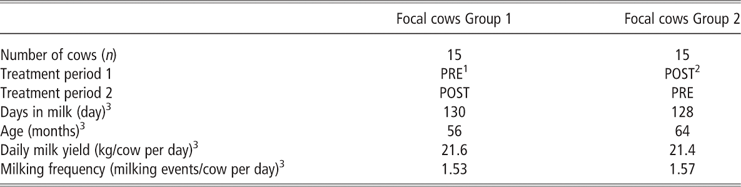
The herd was comprised of 175 cows (the majority Holstein-Friesian and ∼10% to 15% of Illawarra breed), 30% primiparous and 70% multiparous (611±88 kg live weight, as mean±s.d.). Cows were randomly assigned to two groups but managed together as one single herd. Treatments were then allocated to each group in a cross-over study with two periods of 13 days each. Each period comprised a 7-day adaptation period followed by 6-day period of data collection. Fifteen cows within each group were randomly selected as focal cows. Focal group description and treatment allocations are shown in Table 1.
Focal group description of a study conducted with cows in a pasture-based automatic milking system to compare access to supplementary feed in different locations at the dairy facility

1 Provision of supplementary feed before milking.
2 Provision of supplementary feed after milking.
3 All at study start date (all values represent mean). Milk yield and milking frequency values represent a 7-day average.
All cows were fitted with a unique electronic transponder and upon arrival at the dairy facility, if they had milking permission, they were drafted to either PRE or POST milking feeding treatments using automatic drafting gates (DeLaval Smart Selection Gate, Tumba, Sweden). Milking permission was granted 4 h after the last milking session. If milking permission was denied, cows were instead drafted back to the pasture allocation. All cows were milked using a 16-unit prototype robotic rotary parlour (Automatic Milking Rotary, DeLaval, Tumba, Sweden; Kolbach et al., Reference Kolbach, Kerrisk, García and Dhand2012 and Reference Kolbach, Kerrisk and Garcia2013a).
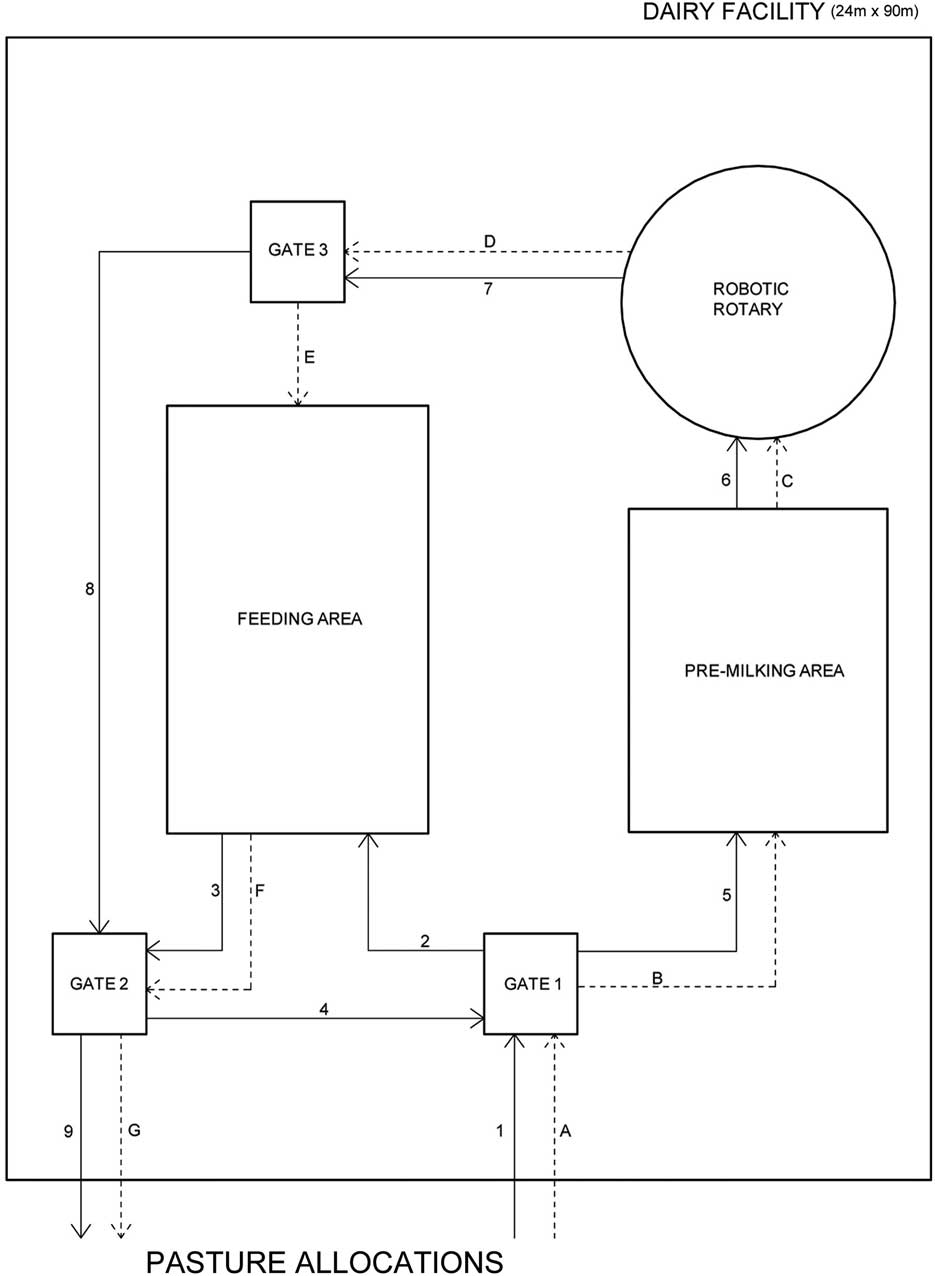
Total target dry matter intake (DMI) was set at 23 kg DM/cow per day. On average, 60% of daily DMI was supplied as grazable pasture (predominantly Ryegrass – Lolium perenne and Lolium multiflorum). The remaining 40% was offered as supplementary feed, consisting of pelleted concentrates (12% of daily DMI) offered through four automatic feed stations (FSC400; DeLaval, Tumba, Sweden) as the rotary palour did not have the functionality to provide grain-based concentrates as ‘in-parlour’ feeding, and a PMR (28% of daily DMI, with 11% cereal hay, 44% maize silage and 44% pelleted concentrate, as % PMR total DM). Supplementary feed was offered on a covered concrete feeding area (28 m×4 m=112 m2) located within the dairy facility. In addition to this, the rotary was fitted and adapted with an auger to offer all the cows 0.41±0.01 kg concentrate/milking. This small amount was offered at the first two units of the RR as a small incentive to encourage them to walk from the pre-milking waiting area onto the robotic rotary platform (Kolbach et al., Reference Kolbach, Kerrisk, Garcia and Dhand2013b; Scott et al., Reference Scott, Thomson, Kerrisk and Garcia2014) but was not intended as individualized and automated in-parlour feeding solution. Both groups shared the same feeding and pre-milking waiting area but the use of automatic drafting gates ensured that each cow was restricted to the designated supplementary feed allocation treatment (PRE or POST; Figure 1).
Farm dairy facility layout indicating main areas and location of automatic drafting gates. Arrows and numbers and letters indicate movement and normal path of cows that received supplementary feed either before (PRE; solid line, numbers) or immediately after (POST; dashed line, letters) milking.

Daily grazing areas were allocated according to pasture biomass assessment conducted using an electronic rising plate meter (Electronic Plate Counter; Farmworks, Feilding, New Zealand) and weekly calibration equations developed at the same experimental site (Garcia et al., Reference Garcia, Fulkerson and Brookes2008). Target post-grazing pasture biomass was set at 1600 kg DM/ha. The herd was managed under a ‘two-way grazing’ system (Lyons et al., Reference Lyons, Kerrisk and Garcia2013b) with 40 : 60 DM allowance in day and night allocations, respectively. Each pasture allocation had a 12-h ‘active access’ period, starting at either 0900 h or 2100 h, followed by a 10-h ‘voluntary exit’ period. After this period, any cows that had not voluntarily trafficked from the pasture allocation were fetched and herded to the dairy facility. Therefore, the maximum amount of time a cow could spend in any given pasture allocation was 22 h (i.e. if a cow were the first cow to enter and the last cow to exit the given allocation).
Data description
Animal data
Focal animals were clearly identified to ensure observers could locate them amongst their herd mates. To aid in identification, each focal animal had a yellow neck collar and a large coded number painted along each side of their body and along their back. In addition, cows were identified by the use of a reflective tape placed on the neck collars and the use of long-range flash lights during night periods. Visual, instantaneous sampling on focal animals were conducted and recorded by trained observers, throughout 24 h (commencing 0700 h and finishing 0700 h the subsequent day) on the 2nd and 4th day of each treatment period (total of 4×24 h periods). All observers were trained before the study to ensure a greater level of consistency was maintained in behavior interpretation and recording at the pre-determined intervals. Observers took particular care to minimize disturbance to cow behavior by maintaining a sufficient distance between themselves and the cows at all times, in order not to disturb cows, but close enough to observe and distinguish their behavior. Pre-study observations and measurements were conducted during both day light and night time to allow the cows to become accustomed to the presence and activities of people in the grazing strip. No obvious modification of normal behavior was observed.
In each pasture allocation (day and night allocations) observers with synchronized stopwatches performed visual instantaneous sampling, routinely at 15 min intervals throughout each 24 h period (Gary et al., Reference Gary, Sherritt and Hale1970; Chilibroste et al., Reference Chilibroste, Mattiauda, Bentancur, Soca and Meikle2012), to detect the instantaneous presence and behavior of each of the focal animals. Presence was used to record cow presence or absence at the time of each observation in a particular pasture allocation. This also facilitated the identification of when a focal cow entered or exited the corresponding pasture allocation, as well as how many focal cows were present at any given point in time. If the animal was present, behavior was also recorded. Behaviors were classified as grazing (animal with head close to forage sward and actively searching or removing pasture from the canopy, which could also include chewing and manipulation of feed bolus; Phillips, Reference Phillips2002), ruminating (head in upright position, animal actively chewing the cud), idling (eyes open or closed, but animal not engaged in grazing or rumination) and other (which included any activity that was not grazing, ruminating or idling, e.g. urinating, social interaction, grooming, walking, etc.). The observations for a particular focal cow ceased at the time the cow exited the pasture allocation (either voluntarily or as a result of being fetched). In addition, bite rate was recorded once every hour by counting the numbers of bites taken over 1 min for at least five cows that were actively grazing. Jaw movement combined with the audible noise of removing forage from the canopy was the criteria used to define a bite (Gibb et al., Reference Gibb, Huckle, Nuthall and Rook1997). Whenever possible, the focal cows were used for the bite rate recording, however, when there were fewer than five focal cows in the pasture allocation actively grazing, a replacement cow was used at that sampling event.
Pasture data
Pasture biomass was assessed using a rising plate meter (Electronic Plate Counter) before the first cow(s) gained access to the pasture allocation and once at every hour thereafter, until fetching time (Chilibroste et al., Reference Chilibroste, Mattiauda, Bentancur, Soca and Meikle2012; Mattiauda et al., Reference Mattiauda, Tamminga, Gibb, Soca, Bentancur and Chilibroste2013).
Statistical analyses
The outcomes of interest related to cow traffic of focal cows were (1) the accumulated proportion of focal cows that entered the pasture allocation, (2) the accumulated proportion of focal cows that exited the pasture allocation and (3) the probability of a focal cow being in the paddock at any point in time. If presence of a focal cow was confirmed, the probability of being engaged in (4) grazing, (5) ruminating, (6) idling or (7) other activities was explored. In addition, (8) bite rate was quantified. For paddocks, the main outcome of interest was (9) pasture biomass.
The main explanatory variables included treatment (PRE or POST), pasture allocation (day or night) and time. For the paddock, time was represented by the time from when the paddock became available (paddock time) and for cows by time since they left the dairy facility (time since dairy).
The entrance and exit of cows from both treatments in relation to paddock time was described using Kaplan–Meier survival curves using GenStat 15th edition (VSN International, UK). The proportion of focal cows present in the pasture allocation together with all the behavior data were analyzed using GLM models. Bite rate and pasture depletion were analyzed using linear mixed models, with parameters estimates calculated using restricted maximum likelihood procedures (REML). The presence, behavior and bite rate models included the main effects of pasture allocation, treatment and time, as well as an interaction between treatment and time. Period and cow (nested within period) were included as random effects. For pasture biomass, time and pasture allocation were included as fixed effects, whereas period and grazing strip (nested within period) were included as random effects. Behavior, bite rate and pasture depletion analysis were conducted in ASREML v 3.1 (VSN International, UK). The assumptions of normality and homoscedascity for REML models were evaluated using residual diagnostics. The assumption of linearity was addressed by creating cubic smoothing splines (Verbyla et al., Reference Verbyla, Cullis, Kenward and Welham1999). Significance was determined if P<0.05 and trends if P<0.10.
Results
The PRE cows returned to the dairy facility 1.4 h earlier, but extended the time spent in feeding and pre-milking waiting areas by 33 and 20 min, respectively, in comparison to POST cows. Consequently, PRE cows had longer milking intervals. Yet, no difference in daily milk yield was observed for cows in both treatments.
Paddock time
Cow entry and exit
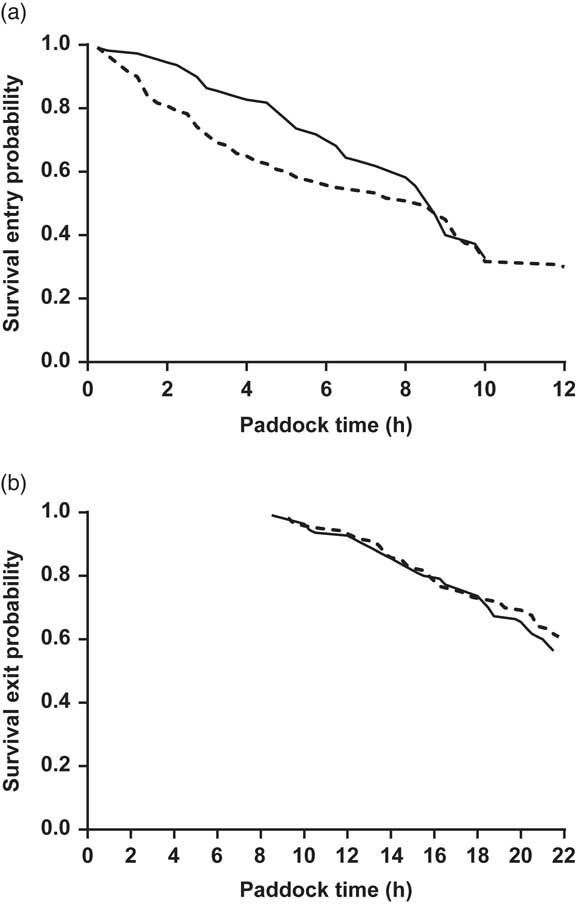
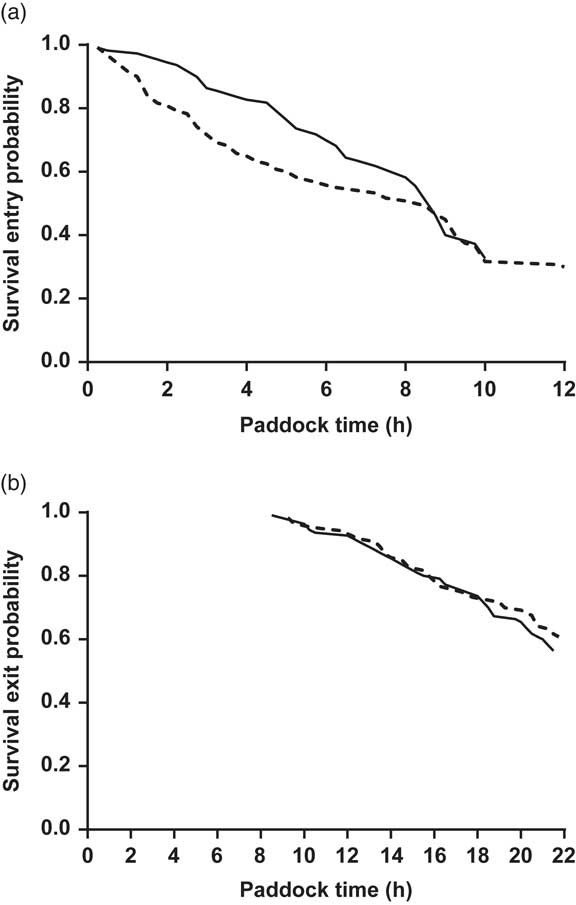
There was a treatment difference in the entrance rate of focal cows to the pasture allocation. On average 10% more POST cows than PRE cows had entered the pasture allocation during the first 8 h of active access. However, by the end of the active access time (12 h) there was no difference in the total proportion of focal cows that had gained access to each pasture allocation (average 68% of cows in each treatment; Figure 2a). Cows in both treatments started exiting the pasture allocation from as early as 8 to 9 h after the start of the active access period and had similar exit rates thereafter. The final proportion of focal cows that voluntarily exited the pasture allocation before fetching time was not different between treatments (average 41% of cows in each treatment; Figure 2b).
Kaplan–Meier curves for cows in a pasture-based automatic milking system with provision of supplementary feed either before (PRE; solid line) or immediately after (POST; dashed line) milking that (a) entered or (b) exited a pasture allocation at different paddock times (h).
Cows present
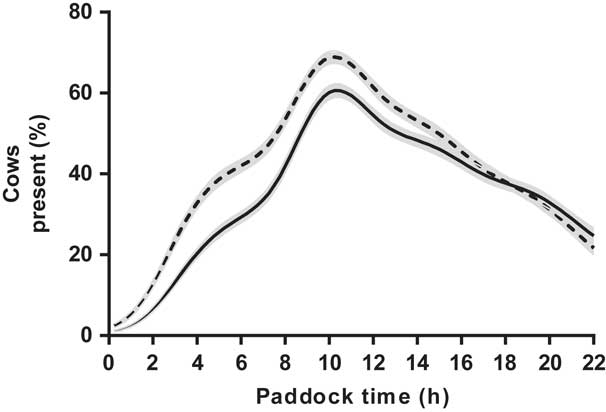
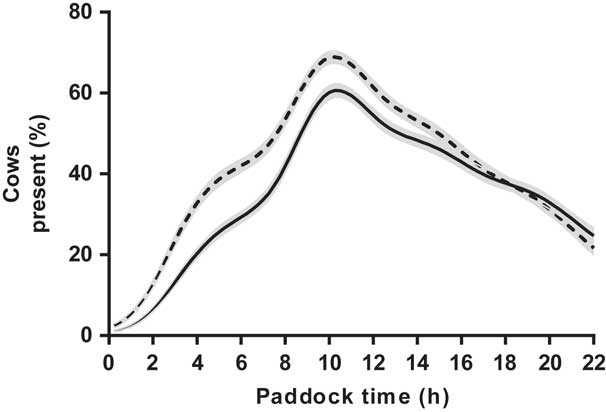
An interaction (P<0.001) between treatment and paddock time was found for the proportion of focal cows present in a pasture allocation, with a greater proportion of POST treatment cows in the pasture allocation during the first 14 h and no difference thereafter (Figure 3).
Percentage of cows present in a pasture allocation in a pasture-based automatic milking system with provision of supplementary feed either before (PRE; solid line) or immediately after (POST; dashed line) milking fitted using a spline smoothing mixed model function. Proportion are relative to the focal group of each treatment (n=15). Shaded area represents mean±s.e.
Behavior
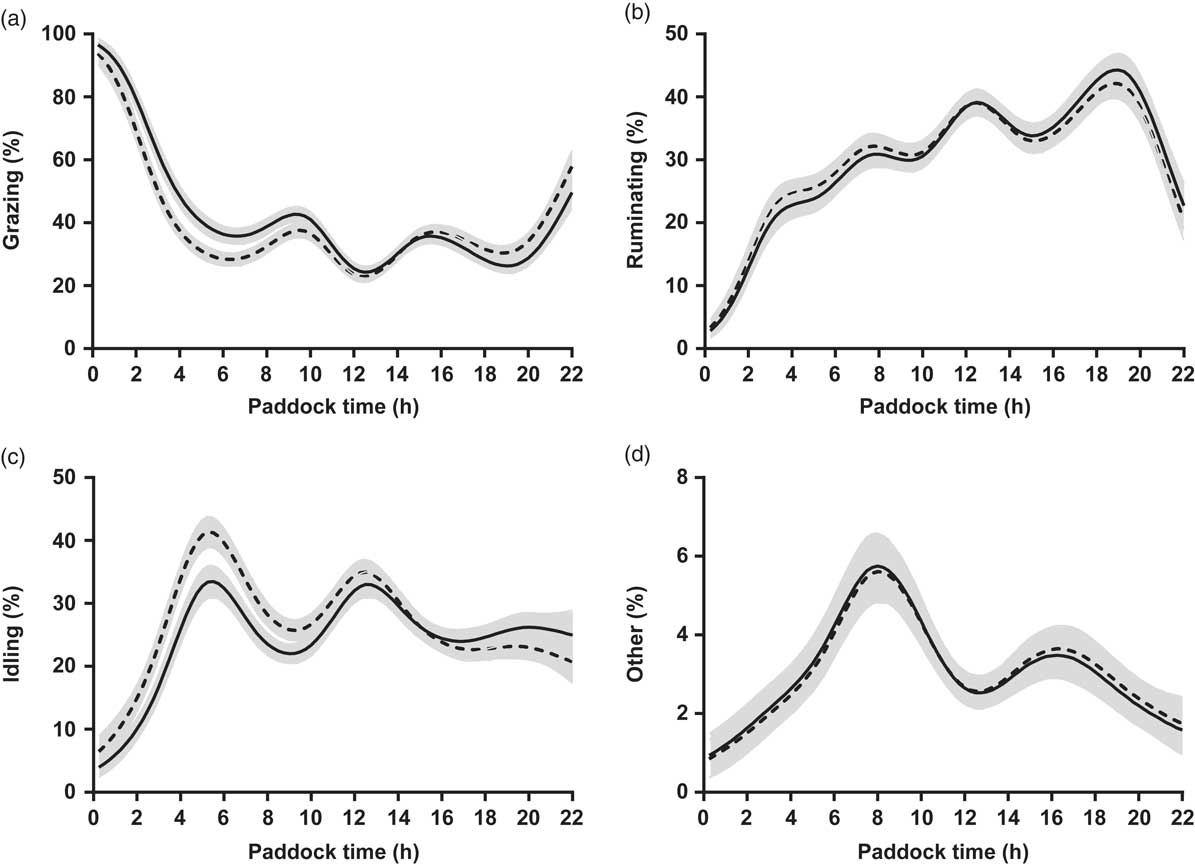
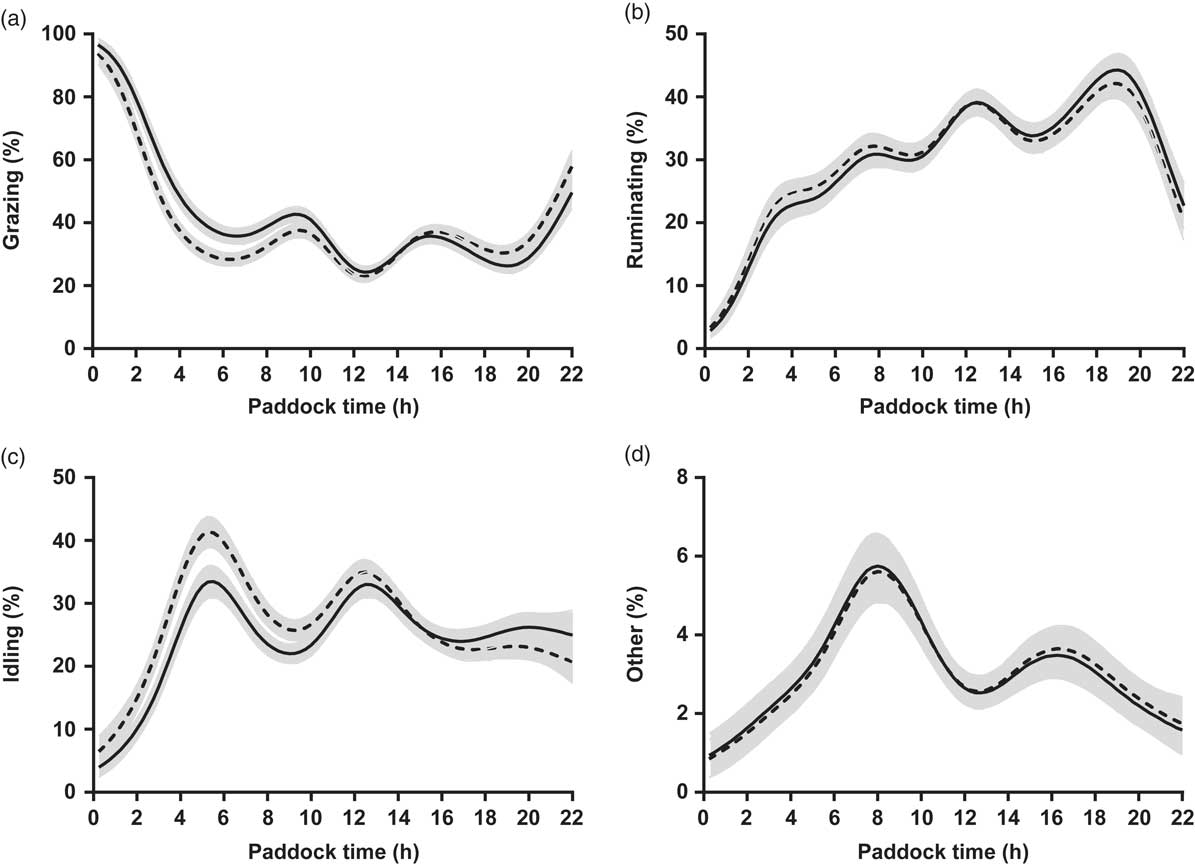
There was an interaction (P<0.001) between treatment and paddock time for the proportion of focal cows ‘grazing’, with a greater proportion of PRE cows, in comparison to POST cows, observed grazing during the initial hours of active access. No difference was observed after 9.5 h of active access (Figure 4a). No difference (P=0.983) between treatments was observed for proportion of focal cows ‘ruminating’. A greater (P<0.001) proportion of cows under both treatments were ruminating toward the end of the pasture allocation time, in comparison to the initial hours of allocation (Figure 4b). There was also an interaction (P=0.004) between treatment and paddock time for the proportion of focal cows ‘idling’, with a greater proportion of POST cows idling during the initial hours of active access. No difference was observed after 10 h of active access (Figure 4c). There was no difference (P=0.971) between treatments on the proportion of focal cows engaged in behaviors categorized as ‘other’ (Figure 4d).
Percentage of cows in a pasture-based automatic milking system with provision of supplementary feed either before (PRE; solid line) or immediately after (POST; dashed line) milking that are (a) grazing, (b) ruminating, (c) idling and (d) other in a pasture allocation fitted using a spline smoothing mixed model function. Percentages are relative to the focal cows of each treatment (n=15) that were present in the paddock. Shaded area represents mean±s.e.
Bite rate and pasture biomass
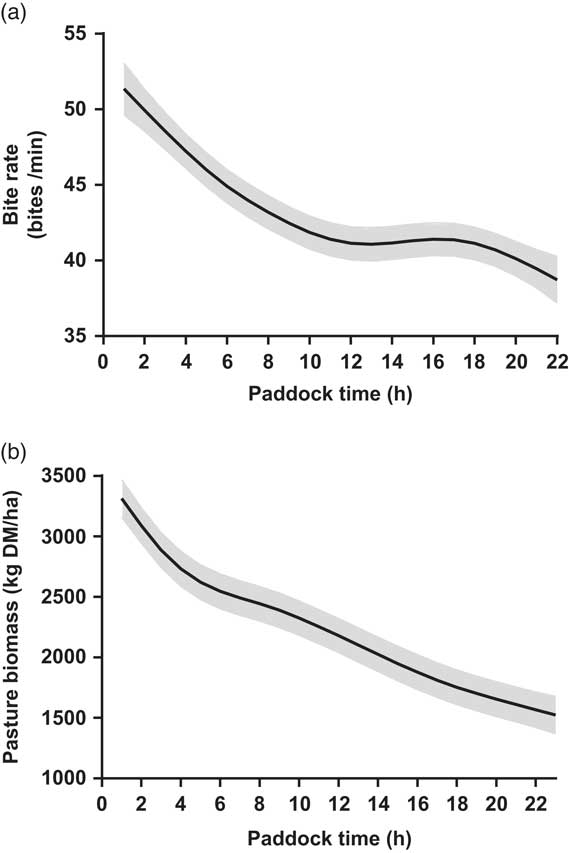
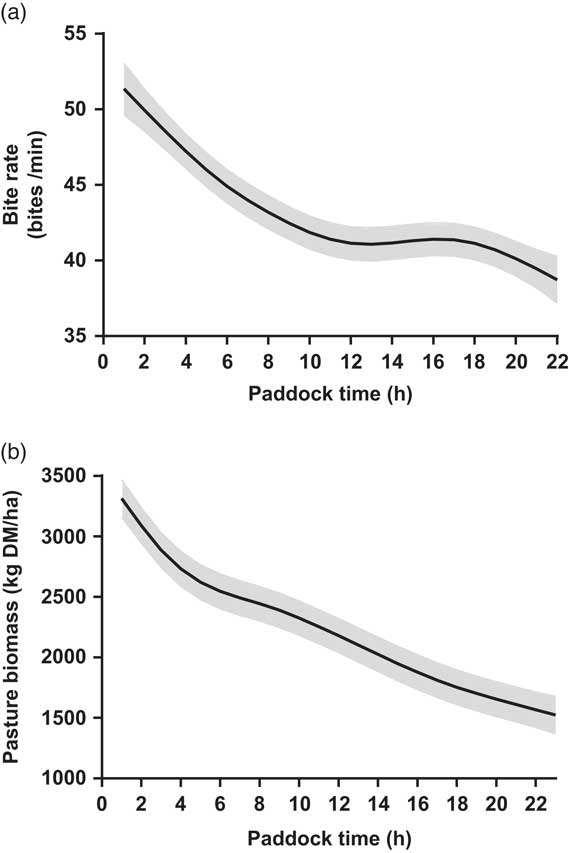
No difference (P=0.885) in bite rate was present between treatments, although paddock time affected (P<0.001) bite rate. The average bite rate when the paddock became available was 51 bites/min and decreased to 38 bites/min by fetching time (Figure 5a). Bite rate followed the trend of pasture biomass that also decreased (P<0.001) through time. Average pre-grazing pasture biomass was 3314±155 kg DM/ha, whereas average post-grazing pasture biomass was 1524±155 kg DM/ha (Figure 5b).
Grazing bite rate (a) and pasture biomass (b) in a pasture-based automatic milking system fitted using a spline smoothing mixed model function. Shaded area represents mean±s.e.
Time since exiting the dairy
Proportion present
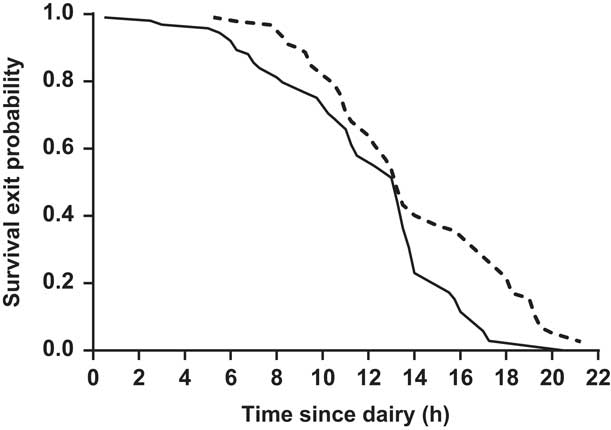
The PRE cows started exiting the pasture allocation 6 h after entering, whereas the POST cows started exiting 8 h after entering (Figure 6). Around 50% of cows from both treatments that entered to an allocation remained in it for over 13 h.
Kaplan–Meier curves for cows in a pasture-based automatic milking system present in the pasture allocation (at time since exiting the dairy) when supplementary feed is provided either before (PRE; solid line) or immediately after (POST; dashed line) milking.

Behavior
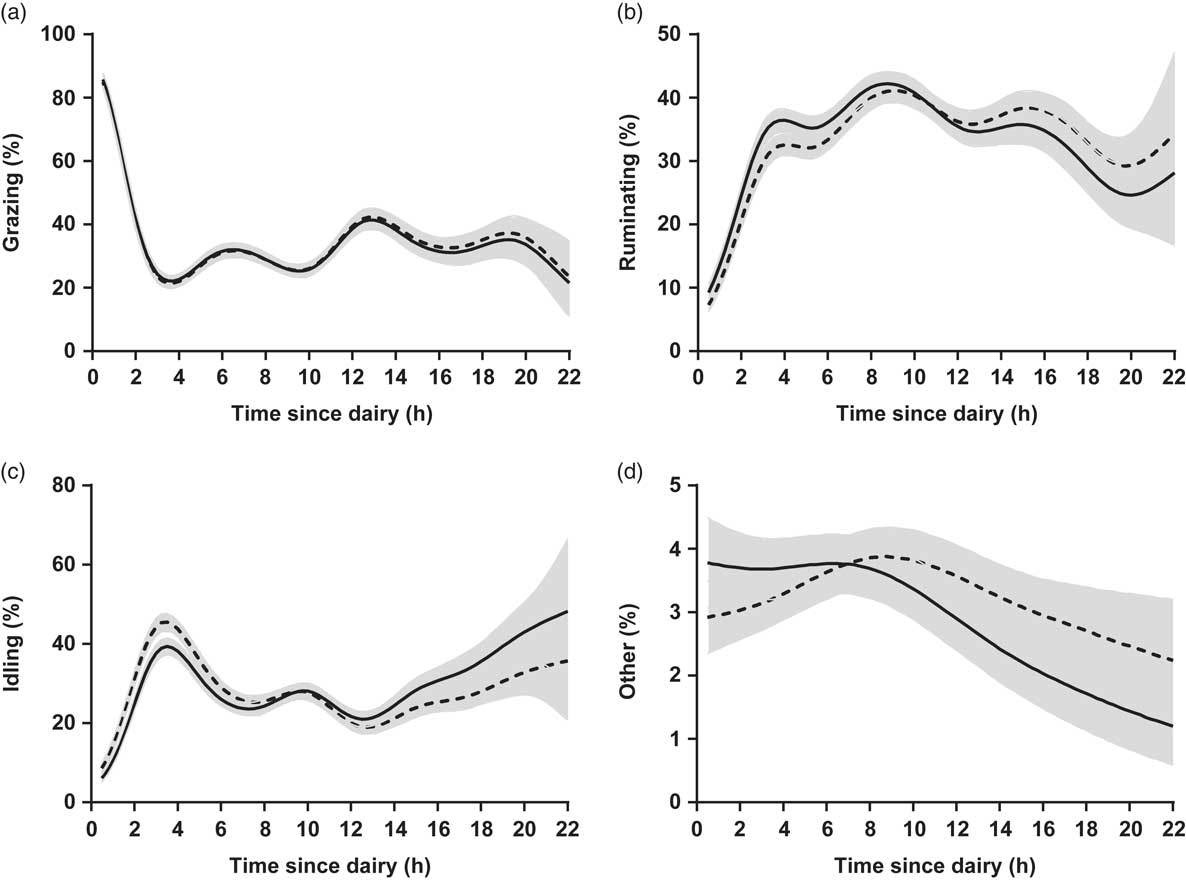
There was no difference (P=0.928) between treatments in the proportion of focal cows ‘grazing’ in relation to time since exiting the dairy facility. A greater (P=0.009) proportion of cows grazed during the first hour after exiting the dairy facility. Thereafter, grazing seemed to occur in bouts with a greater proportion of focal cows in the paddock grazing at 6, 12 and 19 h after exiting the dairy facility (Figure 7a). There was a trend (P=0.057) for more PRE cows to be ‘ruminating’ during the initial hours spent in the paddock and for more POST cows to be ruminating when more time had elapsed since exiting the dairy facility (Figure 7b). An interaction (P=0.003) between treatment and time since cows exited the dairy facility was found for proportion of focal cows ‘idling’, where more POST cows were observed idling during the initial hours after exiting the dairy facility (Figure 7c). There was no difference (P>0.100) in ‘other’ behaviors between treatments or across time after exiting the dairy facility (Figure 7d).
Cows in a pasture-based automatic milking system with provision of supplementary feed either before (PRE; solid line) or immediately after (POST; dashed line) milking that are (a) grazing, (b) ruminating, (c) idling and (d) other in relation to time since leaving the dairy fitted using a spline smoothing mixed model function. Percentages are relative to the focal cows of each treatment (n=15) that were present in the paddock. Shaded area represents mean±s.e.
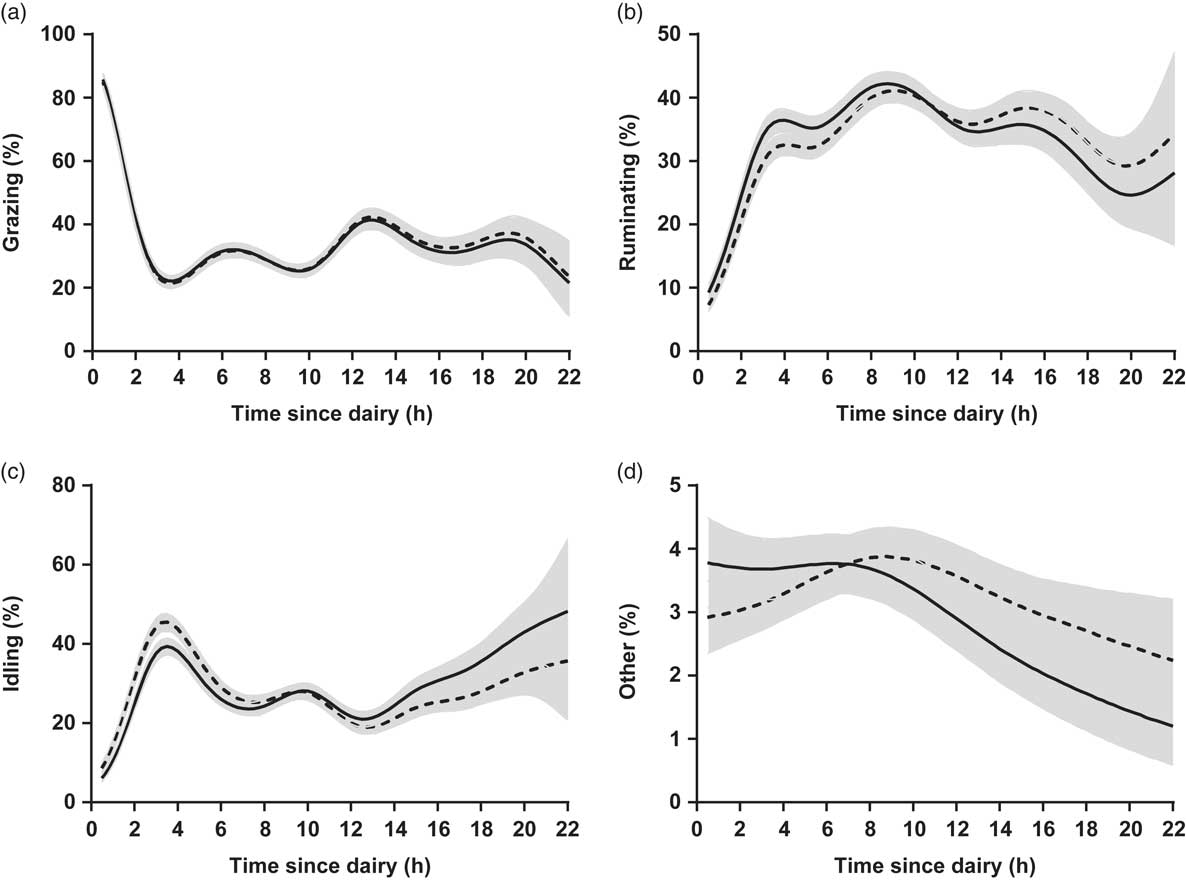
Bite rate
There was neither an effect (P>0.100) of time after exiting the dairy facility nor of treatment on bite rate. The average bite rate was 40 bites/min.
Discussion
The aim of this study was to evaluate differences in behavior at pasture between cows that had access to supplementary feed either before or immediately after milking, in an attempt to understand why PRE cows returned to the dairy facility sooner than the POST cows. There was no difference between treatments either in the total number of cows that entered each pasture allocation, or the grazing behavior relative to time since exiting the dairy facility.
The greater proportion of POST cows, in comparison to PRE cows, present in the pasture allocation during the initial hours of active access is in agreement with the lower feeding (around 30 min less) and pre-milking waiting (20 min less) area times of POST cows compared with PRE cows (Lyons et al., Reference Lyons, Kerrisk and Garcia2013c). The lower times POST cows spent in those areas could be explained by the motivation for the incentive (causing lower pre-milking waiting times) and the time spent on concrete (lower feeding time). Owing to the difference in entering rate, on average 30% and 44% of PRE and POST cows, respectively, could potentially have milking intervals over 16 h, which is known to adversely affect milk yield (Schmidt, Reference Schmidt1960; Lyons et al., Reference Lyons, Kerrisk, Dhand and Garcia2013a) and udder health (Hammer et al., Reference Hammer, Morton and Kerrisk2012). The fact that PRE cows enter the allocation later could also explain why they had on average a 1.4 h lower return time to the dairy facility in comparison to POST cows (Lyons et al., Reference Lyons, Kerrisk and Garcia2013c).
In an AMS, voluntary cow traffic and a defined active access period (12 h in this case) are reasons that explain why not every cow gains access to every allocation. In this study, on average 68% of the cows in both treatments gained access to the grazing strip, therefore there was a temporal 47% over allocation of feed for the individuals that did enter the pasture allocation. This could explain the longer than desired time that cows in both treatments spent on pasture, and the findings by Lyons et al. (Reference Lyons, Kerrisk and Garcia2013c) that around 50% of PRE and over 56% of POST cows had return times over 12 h. In a previous study that compared the effect of accurate and inaccurate pasture allocation at a strip level in a pasture-based AMS, no difference in milking frequency and daily milk yield was found (Dickeson, Reference Dickeson2011). However, although in that study cows were offered within 50% above or below of their requirements in each pasture allocation, target allocation was kept constant within 48 h.
In relation to paddock time, cows from both treatments started exiting 8 to 9 h after the start of active access time, which corresponded to a pasture biomass of around 2350 kg DM/ha. By 13 h, over 10% of the herd had already voluntarily walked out of the pasture allocation toward the dairy facility, which corresponded to a pasture biomass of around 2000 kg DM/ha. Given that feed is the main incentive encouraging cow traffic around the system (Prescott et al., Reference Prescott, Mottram and Webster1998a and 1998Reference Prescott, Mottram and Websterb), it was not unexpected that more cows started exiting the allocation at the lower pasture biomass. Pasture depletion had an average rate of 3% disappearance/h, although disappearance rate tended to decrease with paddock time.
High pasture biomass coincided with greater proportions of cows grazing and greater bite rates, whereas lower pasture biomass tended to coincide with a greater proportion of cows ruminating. Different results were found by Chilibroste et al. (Reference Chilibroste, Mattiauda, Bentancur, Soca and Meikle2012) who compared grazing behavior of early lactation cows at different pasture allowance levels. Chilibroste et al. (Reference Chilibroste, Mattiauda, Bentancur, Soca and Meikle2012) reported that the probability of observing cows grazing increased with days spent in the grazing paddock, which is expected to be inversely related to pasture biomass. If findings by Chilibroste et al. (Reference Chilibroste, Mattiauda, Bentancur, Soca and Meikle2012) are true, it suggests that cows may compensate for a reduction in bite mass at lower pasture biomass, by increasing grazing time to maintain high DMI (Phillips and Leaver, Reference Phillips and Leaver1986; Gibb et al., Reference Gibb, Huckle, Nuthall and Rook1997). Similarly, Gibb et al. (Reference Gibb, Huckle, Nuthall and Rook1997) found an increase in grazing jaw movements at lower sward heights. However, those are behaviors typically observed in conventional milking systems where cows generally have no opportunity to traffic out voluntarily from the given pasture allocation in search for a fresh allocation of feed (such as is the case with AMS). It has been previously shown that the cost involved in obtaining a certain reward could affect the willingness to search for it (Prescott et al., Reference Prescott, Mottram and Webster1998b). Therefore in pasture-based AMS it is possible that cows do not necessarily need to compensate the lower bite mass obtained at lower pasture biomass by increasing grazing time or bite rate. They would instead move out of that pasture allocation in search of a recently available fresh allocation.
The greater proportion of PRE cows observed grazing when pasture biomass were greater, could be explained by an over allowance of pasture, for cows that have suffered some degree of fasting due to management decisions. Research conducted by Gregorini et al. (Reference Gregorini, Clark, Jago, Glassey, McLeod and Romera2009) and Chilibroste et al. (Reference Chilibroste, Soca, Mattiauda, Bentancur and Robinson2007) described the potential use of a fasting period in dairy cows, as a means to increase subsequent grazing behavior. The latter author suggested the possibility of using time since last meal as a means of inducing feeding motivation, which could be the case of PRE cows in this study. Fasting time or time since last feed (calculated as time elapsed from leaving the feeding area to entering the pasture allocation) was much greater for PRE than POST cows. The POST cows had a fasting time of (mean±s.d.) 24±18 min, because it only included time taken to walk from the feeding area to the pasture allocation (ranging between 100 and 1000 m away from the dairy facility). On the other hand, PRE cows had a fasting time of (mean±s.d.) 275±174 min because it involved not only time on the laneways from the dairy facility to the pasture allocation (data not included here), but also time in the pre-milking waiting area (average 97 min according to Lyons et al. (Reference Lyons, Kerrisk and Garcia2013c)) and on the milking platform (data not included here). If fasting times were similar, it would be expected that cows in both treatment would have comparable grazing behavior.
In the current study, cows were offered access to two fresh allocations of pasture per day and received 40% of their requirements as supplements. Under this management there was no significant incentive for PRE or POST cows to spend less than 6 or 8 h, respectively, in the grazing strip. After these periods of time, cows in both PRE and POST treatments began to exit the pasture allocation at different rates and traffic toward the dairy facility. The higher rate for PRE cows confirms the findings by Lyons et al. (Reference Lyons, Kerrisk and Garcia2013c) that offering access to supplementary feed before milking is a greater incentive for cows to move from pasture to the dairy facility and therefore reduce return time. Potentially, if time spent in pre-milking and supplemental feeding areas were minimized and all cows exited continually toward the dairy facility after spending that time (6 to 8 h) in the pasture allocation, a milking frequency of over three milking events/day could be achieved. Yet, in this study PRE and POST cows had a milking frequency of 1.6 and 1.7 milking events/cow per day, respectively, and no difference in daily milk yield (average 19.37 kg/cow per day; Lyons et al., Reference Lyons, Kerrisk and Garcia2013c).
The greater proportion of cows grazing during the first hour confirms previous studies in which access to fresh pasture acted as stimuli strong enough to initiate consumption (Gregorini et al., Reference Gregorini, Clark, Jago, Glassey, McLeod and Romera2009). Those findings support previous justifications for studies that investigated the impact of increased frequency of feed allocation in grazing herds as a way to increase DMI and therefore daily milk yield (Dalley et al., Reference Dalley, Roche, Moate and Grainger2001; Granzin, Reference Granzin2003). They are also in agreement with findings by Lyons et al. (Reference Lyons, Kerrisk and Garcia2013b) where cows in a pasture-based AMS that had access to smaller but more frequent allocations of feed had a 40% increase in milking frequency. The greater proportion of cows grazing at 6, 12 and 19 h after entering the pasture allocation also confirms the likelihood of cows to perform grazing in bouts, separated by periods of ruminating or idling (Gibb et al., Reference Gibb, Huckle, Nuthall and Rook1997). Previous studies found that effective grazing time was related to, but not proportional to, total available time (Chilibroste et al., Reference Chilibroste, Tamminga and Boer1997). In addition, despite certain levels of observed grazing synchrony having been previously described for lactating cows (Rook and Huckle, Reference Rook and Huckle1995) and non-lactating ewes (Rook and Penning, Reference Rook and Penning1991), in this study cows entered the pasture allocation at different times, after different periods of fasting, and could exit at different times owing to voluntary cow traffic. Therefore, less synchrony of behaviors could be expected. Given that cows in both treatments had similar grazing pattern and bite rate, any difference in DMI per allocation would respond to differences in total grazing time (related to time in the allocation itself) or bite mass. Given that bite mass is positively related to pasture height (Gibb et al., Reference Gibb, Huckle, Nuthall and Rook1997), in comparison to PRE cows, the POST cows were more likely to have greater average bite mass as they entered the pasture allocation earlier. Moreover, as PRE and POST cows had similar daily milk yields and PRE cows consumed more concentrate (Lyons et al., Reference Lyons, Kerrisk and Garcia2013c), it is possible that POST cows had some degree of compensation by consuming extra supplementary feed or pasture.
The difference in idling behavior could also be related to fasting time. As POST cows entered the pasture allocation a short time after their last meal, a greater proportion of those animals engaged in idling and ruminating activities. The opposite occurred for PRE cows. These findings support the idea that after a period of fasting, rumination can be postponed in favor of grazing (Kennedy et al., Reference Kennedy, McEvoy, Murphy and O’Donovan2009) and that rumination bouts tend to occur 1 to 2 h after the start of grazing (Chilibroste et al., Reference Chilibroste, Soca, Mattiauda, Bentancur and Robinson2007; Gregorini et al., Reference Gregorini, DelaRue, McLeod, Clark, Glassey and Jago2012). Furthermore, rumination in sheep was not found to be a synchronized activity (Rook and Penning, Reference Rook and Penning1991), which could suggest that animals can decide to engage in rumination on an individual basis.
The behaviors whilst in a pasture allocation, together with the rate at which cows exit the paddock confirms that PRE feeding is a strong incentive to encourage cows to traffic from pasture to the dairy facility. Cows’ response to feed availability and behavior whilst on pasture is influenced more by pasture biomass than supplementary feed location.
According to Hirata et al. (Reference Hirata, Iwamoto, Otozu and Kiyota2002), a 15 min time interval between observations as the one used in this study, could underestimate grazing and ruminating time. Yet, a 15 min time interval was recommended by Gary et al. (Reference Gary, Sherritt and Hale1970) for continuous behaviors, and has recently been used by Granzin (Reference Granzin2003) and Chilibroste et al. (Reference Chilibroste, Mattiauda, Bentancur, Soca and Meikle2012). Furthermore, the main purpose of this study was to explore the likelihood of cows to be involved in different activities, rather than construct time budgets. If the latter were the case, a smaller time interval should have been used. Therefore, although care should be taken when interpreting and extrapolating these results, the authors believe it is unlikely that an increase in frequency of observations of instantaneous sampling would impact significantly on the results presented here.
Conclusion
On average PRE cows entered their respective pasture allocation after POST cows, yet a similar number of focal cows in both treatments finally gained access to their respective pasture allocations. In both treatments, cows spent at least 6 to 8 h at the pasture allocation and only differed in idling behavior. Similar grazing behavior (time and bite rate) was observed between treatments. Thus, observed changes in return time to the dairy facility were not explained by changes in animal behavior in the pasture allocation but rather on actual time spent at pasture, which was in turn related to the time each cow entered the given allocation. Under the conditions of the present study, pasture-based AMS cows appeared not to increase bite rate or grazing time in response to lower pasture biomass that usually causes a reduction in bite mass. The latter is the common situation in conventional milking systems, where cows are not given the option to exit the pasture allocation. This study suggests that cows react to pasture biomass availability and would rather voluntarily walk to the next pasture allocation than continue grazing at lower pasture biomass.
Acknowledgments
The authors would like to thank the investors of FutureDairy (a national industry-driven project); Dairy Australia, NSW Department of Primary Industries, The University of Sydney and DeLaval. The authors would also like to thank the farm staff (Terry Osborne, Shannon Bennetts and Grant Oldfield), technicians (Mikael and Kattis Karttunen) for their assistance in preparing and conducting the study and all of the observers for volunteering their time in the paddock. The authors would also like to thank Dr Peter Thomson for his statistical advice and Dr Arthur Gilmour for assistance in interpreting ASReml data analyses output.