Introduction
The use of pesticides increased after the world warsReference Londres1 and, currently, exposure to these substances has become a global health problem.2 The annual consumption of pesticides worldwide is about 2 million tons.Reference De, Bose, Kumar and Mozumdar3 Humans and other animals are exposed to these substances through the air, contaminated soil, food, and water.2, Reference Acquavella, Alexander, Mandel, Gustin, Baker and Chapman4, Reference Bai and Ogbourne5 Glyphosate [N-(phosphonomethyl) glycine], the active ingredient in ROUNDUP® herbicide, is the most consumed pesticide in Brazil and in the world.Reference Duke and Powles6, 7 Glyphosate is a broad-spectrum herbicide whose mechanism of plant toxicity occurs via interference with the production of essential aromatic amino acids by inhibition of the enzyme enolpyruvylshikimate phosphate synthase, which is responsible for the biosynthesis of chorismic acid.Reference Dill, Sammons, Feng and Nandula8 Since this pathway of synthesis is not shared by any member of the animal kingdom, glyphosate has been classified as of low risk (United States Environmental Protection Agency, EPA) and some authors have described its use as safe for human and animal populations.Reference Duke and Powles6, Reference Williams, Kroes and Munro9 Despite this apparent safety, many studies have shown hazardous effects of exposure to glyphosate,Reference Cattani, Cesconetto and Tavares10–Reference de Souza, Kizys and da Conceição15 including effects on the endocrine system, leading to the investigation of glyphosate as a potential endocrine disrupting chemical (EDC).Reference Romano, Romano, Bernardi, Furtado and Oliveira12, Reference de Souza, Kizys and da Conceição15–Reference Pandey and Rudraiah18
Due to the critical role played by hormones during fetal development, substances that interfere with their actions, such as EDCs, can cause changes in the maternal environment that alter the normal trajectory of intrauterine development and potentially increase the risk of chronic diseases in adulthood.Reference Padmanabhan, Cardoso and Puttabyatappa19, Reference Bergman, Heindel, Jobling, Kidd and Zoeller20 The developmental origins of the health and disease (DOHaD) hypothesis propose that, during specific developmental periods, tissues and organs are particularly sensitive to environmental exposures that program the organism for disease susceptibility later on in life.Reference Agarwal, Morriseau and Kereliuk21 This phenomenon has been extensively reported in the literature, especially for chronic diseases such as obesity, diabetes mellitus, metabolic syndrome, and cardiovascular disease.Reference de Gusmão Correia, Volpato, Águila and Mandarim-de-Lacerda22–Reference Barker24 In addition, data obtained with human and experimental rodent studies demonstrate that the concept of programming can also be applied to the reproductive system and that this system is extremely susceptible to DOHaD effects induced by EDCs.Reference Ho, Cheong and Adgent25, Reference Chadio and Kotsampasi26
The main function of the reproductive system is the production of spermatozoa with capacity for fertilization; this process is mostly performed by the testes and epididymis. Spermatogenesis occurs in the seminiferous epithelium of the testes and leads to the production of sperm from stem cells. Subsequently, the sperm is taken to the epididymis, where it is matured and stored. This process is complex and finely regulated by hormones of the hypothalamus–pituitary–testicular axis.Reference Valli, Phillips, Orwig, Gassei and Nagano27, Reference Robaire and Hinton28 Only a few studies have assessed the toxicity of maternal exposure to glyphosate on the reproductive system and show that different periods of perinatal exposure and different formulations of this herbicide lead to different impacts on offspring morphophysiology. At PND140, offspring from female Wistar rats that were exposed to a commercial formulation of glyphosate-ROUNDUP® during the entire pregnancy and lactation period displayed a decrease in the number of spermatozoa, without changes in plasma testosterone levels.Reference Dallegrave, Mantese, Oliveira, Andrade, Dalsenter and Langeloh16 However, male F1 offspring from female Wistar rats, exposed to glyphosate-ROUNDUP® from the 18th day of pregnancy until to the PND5, exhibited an increase in the number of spermatozoa and in testosterone, estradiol, and luteinizing hormone (LH) levels.Reference Romano, Wisniewski and Viau17 Furthermore, a recent study with Swiss mice showed a reduction in plasma levels of testosterone in PND35 after maternal exposure to glyphosate alone from 10 days of gestation until the end of lactation and a reduction in sperm count after maternal exposure to glyphosate and glyphosate-ROUNDUP®.Reference Pham, Derian and Kervarrec29
Therefore, more investigations are needed to characterize the actions of glyphosate as an EDC and its involvement in DOHaD. Herein, our hypothesis is that maternal exposure to glyphosate during the pre and postnatal period will affect the hypothalamus–pituitary–testicular axis in the F1 offspring, malprogramming the physiological development of reproductive organs during fetal and neonatal life. As such, we evaluated the effects of maternal exposure to glyphosate on reproductive morphofunction in male F1 offspring. Remarkably, our data provide evidence that maternal exposure to glyphosate during gestation and lactation delayed testis descent and impaired mature spermatozoa content in the cauda epididymis. These effects were associated with disruptions in the hypothalamus–pituitary–testicular axis function in male F1 offspring.
Methods
Experimental mice groups
Glyphosate dose and formulation, and maternal (F0) groups
Sexually mature male and female C57Bl/6 mice (60–90 days old, 20–25 g) were obtained from the UNIOESTE’s Central Animal Facility and maintained in the sectorial animal house of the Endocrine Physiology and Metabolism Laboratory at 28 ± 2°C on a 12-h light–dark cycle (lights on at 8:00 am–8:00 pm). Mice had free access to standard laboratory rodent chow diet (Supralab, São Leopoldo, RS, Brazil) and filtered water. Two female mice in the proestrus phase of the estrus cycle were placed in a cage with one male during the dark period for mating. On the subsequent morning, vaginal smears were obtained from all females and examined by light microscopy. Pregnancy was confirmed in females in which spermatozoa were found or that remained in the diestrus phase of the estrus cycle for 4 days after mating. Pregnant females were maintained in individual cages and received filtered water [control (CTRL) group, n = 11] or 0.5% glyphosate [glyphosate-based herbicide (GBH) group, n = 9; ROUNDUP Original DI®, Monsanto, Brazil] in the drinking water from the fourth day of pregnancy until the end of the lactation period.
It is important to highlight that this glyphosate dosage was previously used in the pregnant ratsReference Daruich, Zirulnik and Sofía Gimenez30 and male adult rats;Reference Cassault-Meyer, Gress, Séralini and Galeraud-Denis31 but to confirm the dosage of this herbicide to use in our experiments, we performed a pilot study offering 0.5% or 1% glyphosate-ROUNDUP® in the drinking water to dams during pregnancy and lactation. Since the dams that received 1% glyphosate displayed a higher number of stillbirths, impaired maternal behavior, or reduced survival of pups after birth, we decided to carry on the study using the dose of 0.5% glyphosate. In addition, according to Cassault-Meyer et al.,Reference Cassault-Meyer, Gress, Séralini and Galeraud-Denis31 the 0.5% dose is similar to that found in water after agricultural practices, thus mimicking direct groundwater contamination. Therefore, this dose of glyphosate-ROUNDUP® formulation was used to attempt to mimic the contamination of water, air, and soil by agriculture herbicide usage.
The GBH used was ROUNDUP Original DI® (Monsanto, São Paulo, SP, Brazil). ROUNDUP Original DI® contains 445 g/l N-phosphonomethylglycine diammonium salt, which corresponds to 370 g/l (37.0% m/v) of the active component of glyphosate. A concentration of 0.5% GBH is equivalent to 1.85 mg/ml of pure glyphosate. The mean body weight (BW) of the animals in the glyphosate group was approximately 22 g. Average water intake of mice was 5 ml/d; therefore, the estimated used in the present study was about 420 mg/kg BW/day, representing a concentration below the no-observed adverse effect of level (NOAEL) of ROUNDUP in mice, which is 500 mg/kg BW/day.Reference Bali, Kaikai, Ba-M’hamed and Bennis32, 33
The BWs of the mothers were recorded weekly during pregnancy and on the day of weaning. Mothers were then euthanized, and the kidney and pancreas were removed and weighed. The duration of pregnancy and the number of pups were also recorded.
F1 offspring groups
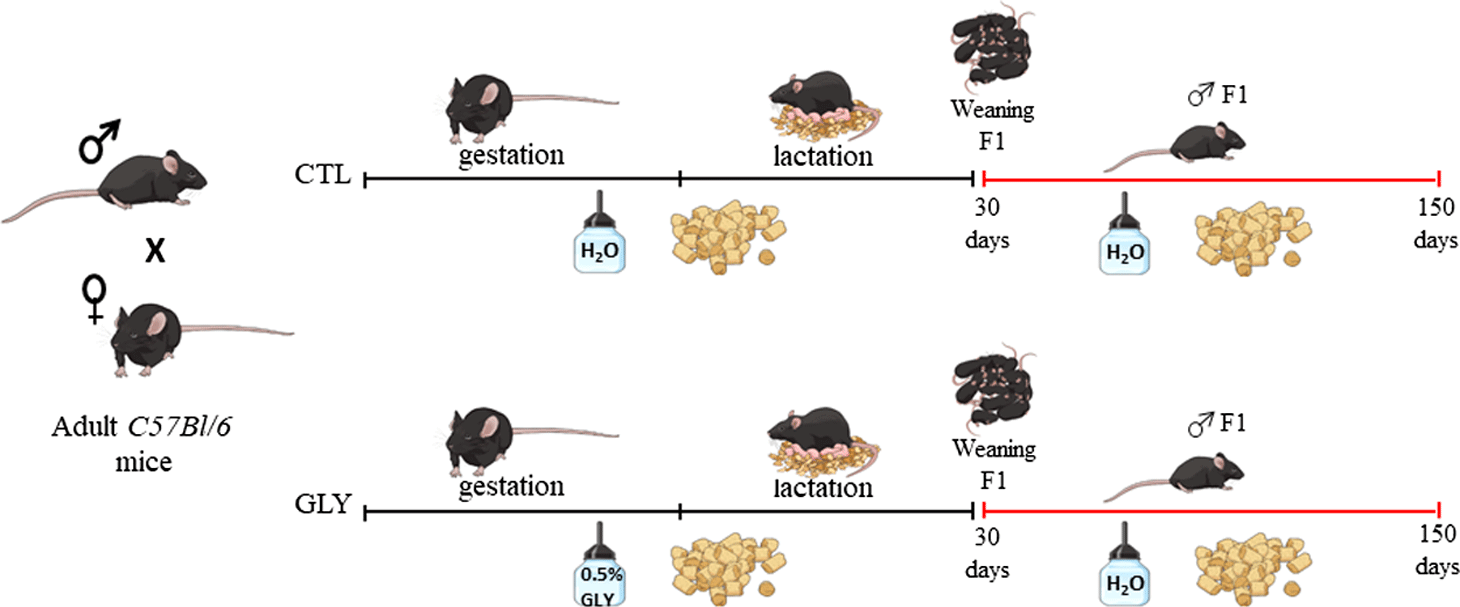
At PND30, the CTRL and GBH-F1 offspring were weaned. Male F1 offspring were designated in accordance to their maternal treatments as CTRL-F1 (n = 12, from 12 litters) and GBH-F1 (n = 8, from 8 litters). The mice were maintained from PND30-PND150 in collective cages with free access to standard rodent chow and filtered water. The testes of the pups were evaluated daily, from PND21, by scrotum palpation for descent. Fig. 1 shows a representation of the F0 and F1 mice groups.
Adult female and male C57Bl/6 mice were mated, and pregnancy confirmed. Pregnant female mice consumed a standard rodent diet, in association with 0.5% glyphosate (GBH group) diluted in drinking water, or filtered water only [control (CTRL) group], from the fourth day of gestation until the end of the lactation period. At PND30, the CTRL and GBH offspring were weaned. Male F1 offspring were designated, in accordance with their maternal treatments as CTRL-F1 and GBH-F1. From PND30-150, F1 offspring had free access to standard rodent chow and filtered water.

Biometric and plasma biochemical parameters
At PND150, 8-h-fasted mice were weighed and the nasoanal length was measured. Blood was collected from the tip of the tail vein for glycemia measurement using a glucose analyzer (G-tech, Accumed-Glicomed, Brazil). All mice were then anesthetized with xylazine (9 mg/kg BW, Anasedan®, Vetbrands, Brazil) and ketamine (90 mg/kg BW, Dopalen®, Vetbrands, Brazil). Once the skin reflex was absent, a total exsanguination was performed by cardiac puncture using a heparinized syringe. Plasma samples were stored at −80°C for posterior measurements of total cholesterol and triglycerides using colorimetric commercial kits (Bioliquid, Laborclin, Pinhais, Brazil); plasma testosterone concentrations were determined by ELISA (ab108666, ABCAM, Cambridge, UK); and LH and follicle-stimulating hormone (FSH) plasma concentrations were measured using the Milliplex Map mouse pituitary magnetic bead panel (MPTMAG-49K, Merck, Millipore, MA, USA), employing the MAGPIX® immunoassay platform.
Epididymal sperm count
The right epididymis was removed, and caput/corpus and cauda were used for counting spermatozoa, according to the protocol described by Marques and Oshio.Reference Marques and Oshio34 Small cuts were made in the epididymis and diluted in 50 μl of saline solution. Subsequently, 20 μl of the mixture was transferred to a volume of 6 ml of distilled water for immobilization of spermatozoa and counting with a hemocytometer.
Testis histopathology and morphometry
For histopathological analysis, the left testis was fixed in Aflac solution for 24 h. After fixation, the testis was embedded in Paraplast® (Sigma Aldrich, St. Louis, MO, USA), and serial sections of 5 µm in thickness were obtained, stained with hematoxylin–eosin, and evaluated by light microscopy (Olympus DP71; Olympus BX60; Olympus, Japan) for qualitative histopathological analysis. Tubular cross sections of the testis were randomly evaluated for signs of germ cell degeneration, detachment (appearance of breaking off cohorts of spermatocytes from the seminiferous epithelium), vacuolization (appearance of empty spaces in the seminiferous tubules), and the presence of multinucleated cells within the lumen of the seminiferous epithelium.Reference Sarkar and Singh35 For morphometric analyses, images were obtained from 20 testis sections (side-by-side) per mouse and used for measurements of the tubular diameter (measured from the basal lamina to the basal lamina in the opposite direction), seminiferous epithelium (from the basal lamina to the most elongated spermatid), and the luminal diameterReference Romano, Wisniewski and Viau17 with Image Pro-plus 6.0® (Media Cybernetics, Maryland, USA) software.
Extraction of intratesticular testosterone
The extraction of intratesticular testosterone was performed following the protocol described by Jeyara et al.,Reference Jeyaraj, Grossman and Petrusz36 with minor modifications. Firstly, the testis was homogenized in 250-μl phosphate-buffered saline (PBS) with the aid of a micro homogenizer (MA1102, Marconi, SP, Brazil). The homogenate was extracted with 5 ml diethyl ether, and after 5 min at room temperature, the upper phase was removed and the precipitate was extracted again with 3 ml diethyl ether. The ether phases of the two extractions were combined, allowed to evaporate at room temperature, and then dissolved in 1 ml PBS. The samples were diluted again with PBS (1:20), and the testosterone concentrations were measured by ELISA, as described above.
Western blotting
For measurement of pituitary LH protein content in CTRL-F1 and GBH-F1 mice, the gland was homogenized in 100 μl tissue protein extraction buffer containing antiprotease agents (T-PER®, Thermo Scientific, USA) using a sonicator (DESRUPTOR, Ultronique, Brazil). The homogenate was centrifuged at 12,600 g at 4°C for 20 min. The supernatant was collected, and the protein concentration was measured by Bradford assay. Subsequently, the samples were incubated at 100°C for 5 min with Laemmli buffer. Proteins (40 μg per lane) were separated by electrophoresis on biphasic polyacrylamide gel (SDS-PAGE). Subsequently, samples were transferred to nitrocellulose membranes (Bio-Rad®, Hercules, CA, USA). The membranes were treated with a blocking buffer (5% nonfat dried milk) and then incubated overnight with primary antibody against the β subunit of LH (β-LH; 1:500, ab180787, Abcam, Cambridge, UK). The specific band was visualized by incubating the membranes with secondary antibodies (1:10.000; cell signaling), followed by incubation with chemiluminescent reagents. The image was registered with the Chemi L-Pix Express photodocumentation system (Loccus Biotecnologia®, SP, Brazil) and the band densitometry was measured using the LabImage analysis 1D software (Loccus Biotecnologia®, SP, Brazil). Western blotting was repeated on all membranes using α-tubulin antibody (1:1000, T5168, Sigma Aldrich, St. Louis, MO, USA) for control of protein expression.
Statistical analysis
Results are presented as means ± SEM of the number of mice indicated in the tables and figures. Data analysis was performed using GraphPad Prism version 6.0 for Windows (GraphPad Software ©, La Jolla, CA, USA) and R software.37 Firstly, the data were submitted to the Shapiro–Wilk test for normality distribution evaluation. Parametric data were analyzed by unpaired Student’s t-test and nonparametric data by the Mann–Whitney U-test. The level of significance was set at p < 0.05.
Results
Maternal (F0) group characteristics
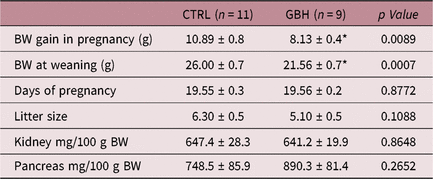
The maternal GBH group displayed reduced BW gain during pregnancy and exhibited lower BW at the end of the lactation period when compared with the CTRL group (Table 1). However, no differences in the duration of gestation, or in the number of pups, were observed between the GBH and CTRL maternal groups (Table 1). Additionally, the weights of kidney and pancreas were similar between the groups (Table 1).
Effects of glyphosate exposure during pregnancy and lactation on general maternal characteristics

BW, body weight.
Data are means ± SEM.
* p < 0.05 versus CTRL (Student’s t-test).
General and macroscopic reproductive characteristics in F1 offspring male mice
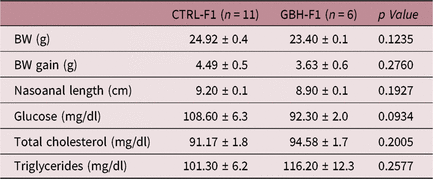
At PND150, the BW, total BW gain, and nasoanal length were similar in the GBH-F1 and CTRL-F1 groups (Table 2). BWs from PND60 until PND150 were also similar in the GBH-F1 and CTRL-F1 groups (data not shown), while biochemical metabolic parameters, such as fasting glycemia, triglyceridemia, and cholesterolemia, did not differ between the GBH-F1 and CTRL-F1 mice (Table 2).
Effects of glyphosate on biometric nutritional parameters and fasting plasma biochemical parameters in F1 offspring male mice at PND150

BW, body weight.
Data are means ± SEM. Mann–Whitney U-test and Student’s t-test.
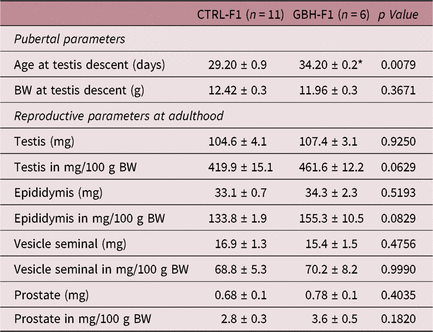
To assess the toxicity of glyphosate on the male reproductive system, we first evaluated whether the herbicide alters testicular descent. Notably, the GBH-F1 mice presented a delay in testis descent, when compared with CTRL-F1 mice (Table 3). This alteration was not associated with any modification in body mass, since the BWs of the mice on the day of testis descent were similar in the GBH-F1 and CTRL-F1 groups (Table 3). In addition, at PND150, GBH-F1 and CTRL-F1 mice did not exhibit differences in the relative or absolute weights of reproductive tissues such as testis, epididymis, seminal vesicle, and prostate (Table 3).
Effects of glyphosate on pubertal parameters and weight of reproductive organs of F1 offspring male mice at PND150

BW, body weight.
Data are means ± SEM. Mann–Whitney U-test and Student’s t-test.
Epididymal sperm parameters
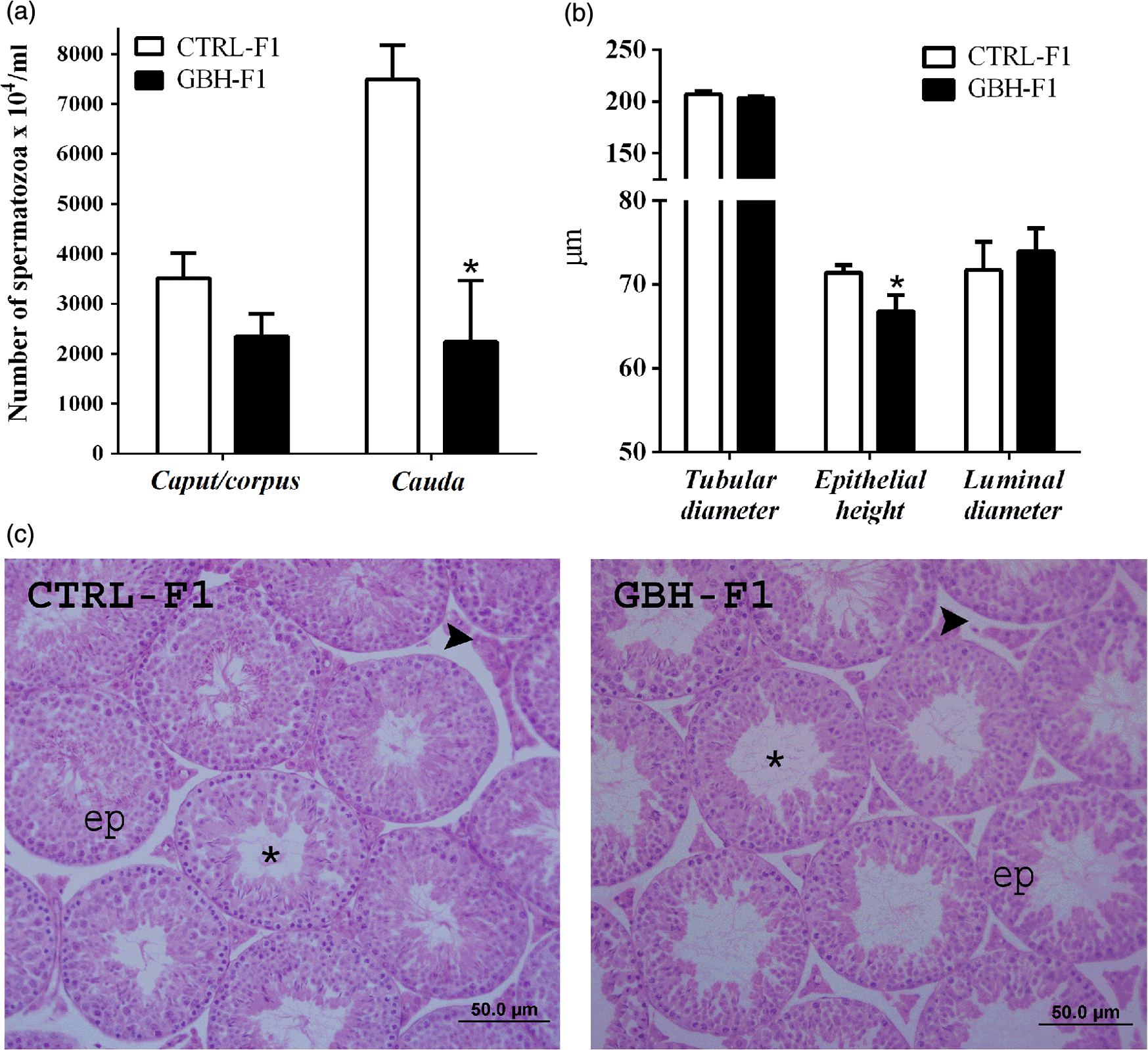
One of the best parameters for estimation of reproductive toxicity is the sperm number. The GBH-F1 mice displayed a reduction of 70% in sperm number in the cauda epididymis, when compared with CTRL-F1 mice (p = 0.0019; Fig. 2a). However, the number of spermatozoa did not differ in the caput/corpus of the GBH-F1 and CTRL-F1 epididymis (p = 0.14; Fig. 2a).
Maternal glyphosate exposure reduces the spermatozoa reserve in the cauda epididymis and epithelial height of seminiferous tubules in F1 male offspring. Means ± SEM of the sperm count in the caput/corpus and cauda epididymis (a) in PND150 – CTRL-F1 (n = 10) and GBH-F1 (n = 7) male mice. (b) Mean ± SEM of tubule diameter, epithelial height, and luminal diameter of the seminiferous tubules of PND150 CTRL-F1 and GBH-F1 male mice. Representative histological sections stained with hematoxylin and eosin: seminiferous tubules (c) of PND150 CTRL-F1 (n = 5) and GBH-F1 (n = 5) male mice. Asterisk = lumen. Ep = epithelium. Arrowhead = interstice. Scale bars = 50 μm. In all experiments, the n was reached using only one male F1 offspring from each litter of the maternal experimental groups. *p < 0.05 versus CTRL-F1 (Mann–Whitney U-test, except for spermatozoa counts, which were compared using Student’s t-test).

Testis histopathology and morphometry
Histopathological analyses demonstrated that GBH-F1 and CTRL-F1 testes exhibited normal morphology, with normal seminiferous tubules, concentric and normally organized germ cell layers, and no significant presence of debris in the lumen, acidophilic cells, vacuole formation, or degeneration (Fig. 2c). However, morphometric analysis showed that GBH-F1 seminiferous tubules displayed decreased height of the germinal epithelium, but without changes in the tubular and luminal diameters (Fig. 2b).
Hormone levels and protein expression
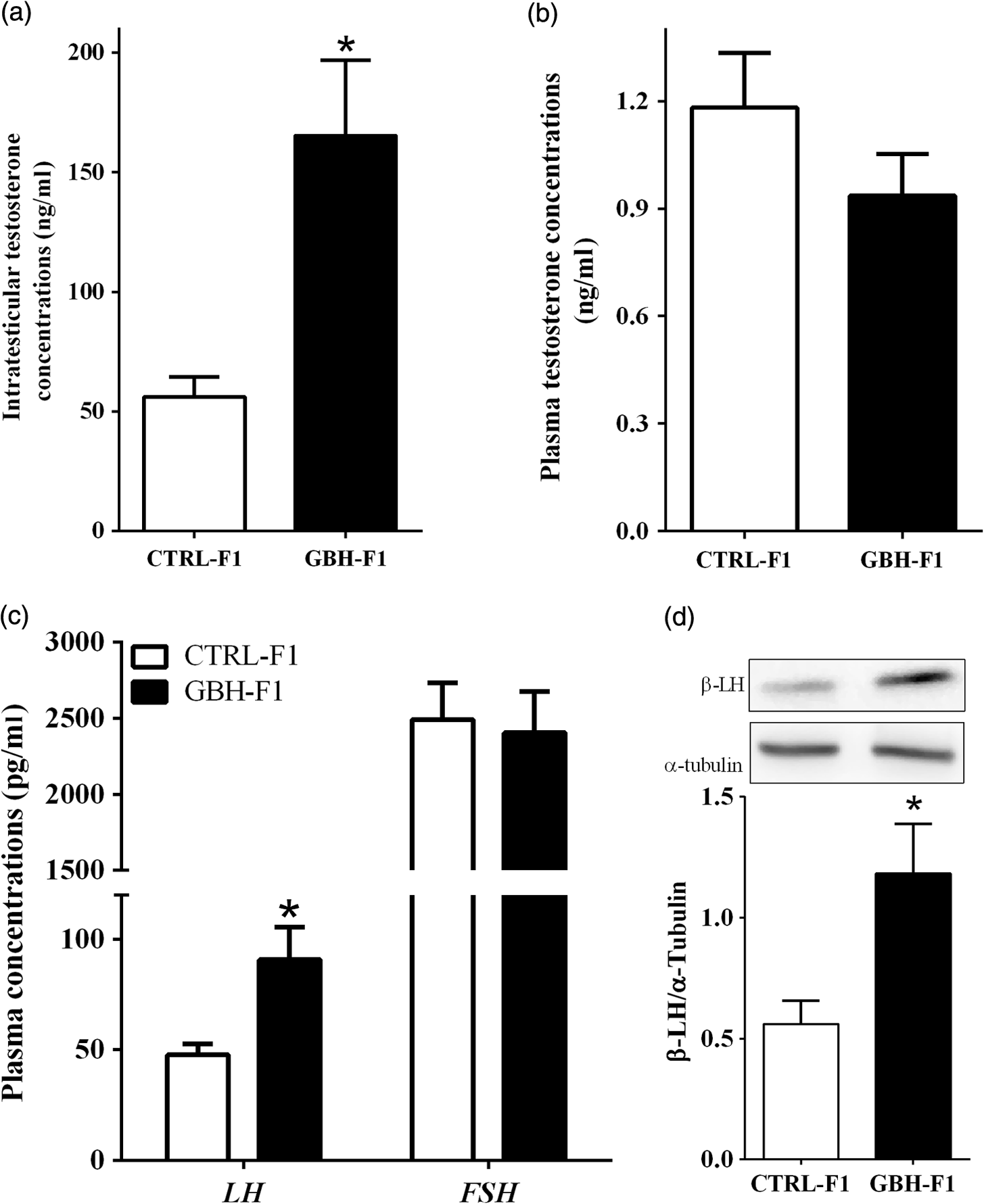
Although the plasma testosterone concentrations were similar between GBH-F1 and CTRL-F1 mice (p = 0.58; Fig. 3b), the intratesticular testosterone content in GBH-F1 mice was 195% higher than that observed for CTRL-F1 mice (p = 0.02; Fig. 3a). Additionally, the GBH-F1 mice displayed increased plasma LH concentrations and an enhancement of 111% in the β-LH pituitary protein content, when compared with the CTRL-F1 group (p = 0.008; Fig. 3c and p = 0.015; Fig. 3d). Plasma FSH concentrations were similar in GBH-F1 and CTRL-F1 mice (p = 0.808; Fig. 3c).
Maternal glyphosate exposure increases intratesticular testosterone concentration, due to an enhancement in pituitary and circulating levels of LH in F1 male offspring. Means ± SEM of intratesticular (a) and plasma (b) testosterone concentrations, and LH and FSH plasma concentrations (c) in PND150 CTRL-F1 (n = 8–11) and GBH-F1 (n = 5–8) male mice. Protein content of β subunit of LH in the pituitary of PND150 CTRL-F1 (n = 8) and GBH-F1 (n = 5) male mice. In all experiments, the n was reached using only one male F1 offspring from each litter of the maternal experimental groups. *p < 0.05 versus CTRL-F1 (Mann–Whitney U-test, with exception of LH and FSH data, which were compared using Student’s t-test).

Discussion
Although the DOHaD phenomenon has historically focused on the effects of under- and overnutrition, currently the field is expanding to cover effects of exposure to chemicals, including substances that act as EDCs.Reference Haugen, Schug, Collman and Heindel38 The long period of differentiation and maturation of the male reproductive system and its regulation by hormones makes this system susceptible to the DOHaD effects of EDCs.Reference Ho, Cheong and Adgent25 Our study demonstrated that exposure to a commercial formulation of glyphosate-ROUNDUP® during pregnancy and lactation disrupts the male reproductive system in F1 male offspring. The commercial formulations of this herbicide, besides containing the active glyphosate ingredient, comprise other compounds that enhance glyphosate stability and penetration into vegetable cells.Reference Vandenberg, Blumberg and Antoniou39 Unfortunately, these ingredients have been declared inert by the industry and are excluded from toxicity tests, but studies have shown that the toxicity of the herbicide formulation may not be due to glyphosate alone.Reference Defarge, Takács and Lozano40–Reference Chłopecka, Mendel, Dziekan and Karlik42 In recent years, the influence of diet on the reproductive system of rodents has been discussed, due to the fact that estrogenic activity is associated with the use of soybeans in animal feed, making this food a potential EDC.Reference Ruhlen, Taylor, Mao, Kirkpatrick, Welshons and Saal43 A limitation of the current study is that we did not evaluate effects of the diet, and further investigations into such effects are necessary.
Despite the lack of investigation, a study has reported that increased plasma glyphosate concentrations are related to the shortening of gestation length in women.Reference Parvez, Gerona and Proctor44 However, as previously demonstrated for pregnant rats that ingest 0.5% glyphosate,Reference Daruich, Zirulnik and Sofía Gimenez30 we found that GBH dams did not present alterations in the length of gestation or pup survival after birth. Additionally, in accordance with data obtained in female Wistar rats exposed to 1% glyphosate during pregnancyReference Beuret, Zirulnik and Giménez13, Reference Daruich, Zirulnik and Sofía Gimenez30 and lactation,Reference Cattani, Cesconetto and Tavares10 we observed lower BW gain during pregnancy and at the end of lactation in GBH dams. The dose used in our study is below the NOAEL of systemic toxicity in mice,Reference Bali, Kaikai, Ba-M’hamed and Bennis32, 33 and organ weight (kidney and pancreas) did not change in the mothers that received glyphosate. It has been reported that pregnant rats exposed to 0.5% and 1% glyphosate demonstrate lower BW gain during gestation and several disruptions in isocitrate dehydrogenase NADP-dependent enzyme, glucose-6-phosphate dehydrogenase, and malic dehydrogenase activities in the liver, heart, and brain.Reference Daruich, Zirulnik and Sofía Gimenez30 Interestingly, glyphosate dose-dependently decreased BW gain and induced inflammation, oxidative stress, and de novo lipogenesis in the liver of male Wistar rats.Reference Tang, Hu, Li and Li45 We speculate that such effects also change intermediate metabolism and the nutritional profile in GBH maternal mice groups in our study, contributing to the lower weight gain during the gestation and lactation periods.
Remarkably, we observed that chronic exposure to glyphosate-ROUNDUP® during pregnancy and lactation delayed testicular descent, in male F1 offspring, without changing BW. Testicular descent is a two-phasic phenomenon, which is hormonally regulated by Leydig cells. The transabdominal phase is under the control of insulin-like 3, while testosterone contributes to the involution of the suspensory ligament and to the inguinoscrotal phase.Reference Hughes and Acerini46, Reference Toppari, Virtanen, Skakkebaek and Main47 Endocrine disrupters with both estrogenic and anti-androgenic effects can interfere with the signaling and hormonal function of Leydig cells during testicular descent.Reference Toppari, Virtanen, Skakkebaek and Main47–Reference Fénichel, Chevalier and Lahlou49 Thus, we suggest that exposure to glyphosate during gestation and lactation can interfere in the production/action or suppression of hormones produced by Leydig cells during the process, leading to the delayed testicular descent observed in GBH-F1 mice. In addition to these data, we found that GBH-F1 mice at PND150 exhibited lower spermatozoa number in the cauda epididymis. This decrease in spermatozoa number was accompanied by a reduction in the epithelial height of the seminiferous tubules, indicating that maternal exposure to glyphosate can malprogram spermatogenesis. Unfortunately, a limitation of our study was not to have performed sperm morphology and motility studies, as this information would be important to evaluate the fertilization capacity of the spermatozoa. It is known that spermatogenesis is dependent on a well-orchestrated hormonal environment in which LH stimulates Leydig cells to produce testosterone, and that this androgen stimulates spermatogenesis, together with FSH. In addition, testosterone reduces LH pituitary secretion via negative feedback signaling in the pituitary and hypothalamus.Reference Jin and Yang50 However, we observed that maternal exposure to GBH induces HPT disruption, since the GBH-F1 mice exhibited enhanced intratesticular testosterone concentrations without modifications in testosterone levels, but increased plasma and pituitary LH contents and consequently reduced male sperm reserve. A similar effect was described by Dallegrave et al.,Reference Dallegrave, Mantese, Oliveira, Andrade, Dalsenter and Langeloh16 in which exposure of female Wistar rats to a GBH during the entire pregnancy and lactation period leads to a decrease in sperm count in offspring at PND140, without changes in plasma testosterone levels. In contrast, a previous study in male F1 offspring from female Wistar rats that were treated with glyphosate-ROUNDUP® Transorb from gestational day 18 to PND5, an increase in LH and testosterone plasma levels, associated with enhanced spermatogenesis, was reported.Reference Romano, Wisniewski and Viau17 F1 offspring from female mice exposed to GBH from gestational day 10 to PND20 also presented a decrease in sperm count and testosterone levels at PND35.Reference Pham, Derian and Kervarrec29 As such, data support the deleterious effects of maternal exposure to GBH in male offspring mice, but the specific effects on sperm count and the role of testosterone levels remain inconclusive.
A testosterone surge from the testes is known to occur in neonatal rodents, which begins prenatally (at approximately embryonic day 18) and peaks on the day of birth.Reference Hughes and Acerini46 This testosterone surge is important to establish the sexually dimorphic brain circuitry that controls male differentiated behavior and reproductive physiological processes. Notably, this androgen surge acts on the developing brain and shapes its subsequent responsivity to the adult hormonal profiles that regulate male reproductive function. After the neonatal testosterone surge, plasma testosterone levels drop, where they persist at low levels until the onset of puberty.Reference Clarkson, Herbison and Clarkson51, Reference Lenz and Mccarthy52 Therefore, our results indicate that maternal glyphosate exposure during pregnancy and lactation can disrupt such male development regulation, which malprograms the reproductive system. We suggest that this malprogrammed phenotype may manifest not only due to disruptions in perinatal and postnatal androgen concentrations, induced by glyphosate, but also due to impairments in androgen actions in the brain of GBH-F1 mice, since most of the actions of testosterone in neurons occur due to its intracellular aromatization to estrogen via cytochrome P450 aromatase.Reference Clarkson, Herbison and Clarkson51, Reference Lenz and Mccarthy52 Supporting this hypothesis, it has been demonstrated that glyphosate dose-dependently inhibits aromatase activity in human embryonic 293 and placental-derived JEG3 cells.Reference Benachour, Sipahutar, Moslemi, Gasnier, Travert and Séralini53
Furthermore, the higher intratesticular testosterone concentrations in the GBH-F1 group seem to contrast with the reduced epithelial height and lower number of spermatozoa in the cauda epididymis. However, although testosterone is important for spermatogenesis, its effect on this mechanism depends on the interaction of testosterone with androgen receptors (ARs) in Sertoli cells.Reference Walker54 Interestingly, a previous study demonstrated that the glyphosate-ROUNDUP® formulation displayed a greater inhibition of the actions of AR than glyphosate alone in HepG2 cells.Reference Gasnier, Dumont, Benachour, Clair, Chagnon and Séralini55 As such, our data indicate that the higher intratesticular testosterone concentrations may be due to increased LH plasma concentrations in GBH-F1 mice. However, these enhanced intratesticular androgen levels fail to induce a compensatory increase in spermatogenesis to levels observed for CTRL-F1 mice, suggesting that GBH-F1 testes present androgen resistance in Sertoli cells, due to compromised programming following maternal exposure to glyphosate. On the other hand, the well-orchestrated environment that is required for spermatogenesis is also dependent on FSH; this circuit is apparently unaffected by exposure to GBH during the perinatal period since plasma FSH levels were not altered in GBH-F1 mice. Similar results were demonstrated by ROMANO et al,Reference Romano, Wisniewski and Viau17 in which plasma and pituitary levels of FSH were not changed by this herbicide. These different effects on gonadotrophic hormones can be explained by different negative feedback circuits in the hypothalamus and pituitary since LH is regulated by levels of testosterone and FSH by inhibin levels.Reference Gregory and Kaiser56 Thus, further studies are needed to verify whether FSH and inhibin pituitary levels can be changed in GBH-F1 mice.
In summary, our results demonstrate that maternal exposure to 0.5% glyphosate-ROUNDUP® Original DI, during pregnancy and lactation, delays testicular descent in male F1 offspring. Furthermore, maternal glyphosate exposure disrupts the hypothalamus–pituitary–testicular axis, enhancing LH secretion and increasing intratesticular testosterone concentrations, likely in an attempt to compensate the lower androgen activity and spermatogenesis in GBH-F1 mice. These findings indicate that glyphosate is an endocrine disruptor that may increase the risk of male infertility when individuals are exposed to this compound during critical moments of development.
Author ORCIDs
Maria Lúcia Bonfleur 0000-0001-5526-7421
Acknowledgements
This study forms part of the MSc thesis of Jakeline Liara Teleken. We are grateful to professors Roberto Barbosa Bazotte PhD and to Christiano Rodrigues Schamber PhD for assistance with the immunoassay in the MAGPIX® platform, Sandra Schmidt de Moraes for technical assistance, and Ariadne Barbosa, Marcia Rudy, and Luana Sinhori for animal care.
Financial Support
This study was supported by the Coordenação de Aperfeiçoamento de Pessoal de Nível Superior (CAPES, PROAP, n: 817693/2015).
Conflicts of Interest
None.
Ethical standards
All experiments were approved by the UNIOESTE’s Committee on Ethics in Animal Experimentation.