Introduction
Pneumonia remains a serious problem, especially in old age, in spite of advances in therapy. The number of hospital admissions due to pneumonia in Slovakia increased by 38% during the period 2001–2007.1, 2 The same trend occurred in England, where the age-standardized incidence of hospitalization with a primary diagnosis of pneumonia increased by 34% between 1997/98 and 2004/05.Reference Trotter, Stuart, George and Miller3 Annual incidence increases with age from 2–15 per 1000 of the total population to 18.2 per 1000 in the age group 65–69 years, reaching 59.9 per 1000 for patients in their tenth decade. The most vulnerable group is nursing home residents, with an annual incidence of 30 per 1000.Reference Jokinen, Heiskanen and Juvonen4 Incidence of hospital-acquired pneumonia (HAP) increases from 2 per 1000 discharged patients younger than 60 years to 17 per 1000 in the over-70 age group.Reference Wesley5
This review was made by searching Pubmed from 1990 to 2010. We used the terms ‘pneumonia’, ‘elderly’ and ‘old age’. The articles were selected according to the quality and relevance of the research. Review articles and textbooks were also consulted to provide background information.
Risk factors for pneumonia
The most important independent risk factor for pneumonia is age itself. About 45% of older patients with community-acquired pneumonia (CAP) have no other risk factor.Reference Koivula, Sten and Makela6 Age plays a major role in the pathogenesis of pneumonia through the age-related impairment of immunity, which is compounded in patients treated with corticosteroids or other immunosuppressive drugs. Many risk factors persist for a long time and therefore a major risk factor for pneumonia is having a history of pneumonia.Reference Hedlund, Örtquist, Kalin and Granath7 Risk factors facilitate the entry of infectious agents or compromise the body's defence mechanisms.
An important role in pathogenesis is played by oral flora which colonizes dental film (pneumonia is less frequent in edentulous people), especially in patients with poor oral hygiene.Reference Terpenning, Taylor, Lopatin, Kerr, Dominguez and Loesche8, Reference Abe, Ishihara, Adachi and Okuda9 The risk of pneumonia increases in hospitalized patients and residents of nursing homes. Presence of Streptococcus pneumoniae was found by PCR in 63% of nursing home patients,Reference Abe, Ishihara and Okuda10 significantly more than that found on culture in community-dwelling older people at 4.9%.Reference Flamaing, Verhaegen and Peetermans11 This difference can, at least partly, be explained by the higher sensitivity of PCR. The other common pathogens include Staphylococcus pyogenes aureus (SPA) (37%), methicillin-resistant Staphylococcus aureus (MRSA) (14.8%), Pseudomonas aeruginosa (5.6%) and Candida albicans (63%).Reference Abe, Ishihara and Okuda10 In the first 48 h of hospitalization, oral cavities of 70–75% debilitated people are colonized by Gram-negative bacteria.Reference Wesley5 This high incidence of colonization of mouths is important because clinically silent aspiration has been noted in 71% of patients with CAP compared with only 10% in a control group without the condition.Reference Marik and Kaplan12
Risk of aspiration due to swallowing disorders is related to ageing itself, as well as accompanying many neurological disorders including stroke, Parkinsonism and dementia. Dysphagia has been reported in 21–73% of patients following a recent stroke. About 34% of these patients acquire pneumonia, the third most frequent cause of death in the first month after stroke.Reference Paik13 Dysphagia resolves in the majority of patients by 2 weeks after a stroke, but persists in some 10% of patients for 4–5 years or more.Reference Perry14 Dysphagia occurs in 58–94% of patients with Parkinsonism during the course of their disease, with pneumonia being their most frequent cause of death.Reference Ratnaike and Hathley15 Antipsychotic drugs increase the risk of pneumonia by 60%, with the risk being highest at the beginning of treatment.Reference Knol, Van Marum, Jansen, Souverein, Schobben and Egberts16 Mechanisms of antipsychotic drug action include their antidopaminergic effect causing dyskinesia of oropharyngeal muscles, an anticholinergic sedative effect, drying-up of mucus and weakening of the cough reflex.Reference Knol, Van Marum, Jansen, Souverein, Schobben and Egberts16 Swallowing is impaired after surgery, intubation, and other manipulations of the pharynx. Local causes of dysphagia include Zencker's diverticula, tumours and changes after irradiation and surgery. The risk of aspiration is not eliminated by nasogastric tube insertion or by percutaneous gastrostomy (PEG).Reference DiSario, Foutch and Sanowski17
Gastroesophageal reflux, which is present in up to 50% of older people, is a risk factor for aspiration.Reference Mold, Reed, Davis, Allen, Decktor and Robinson18, Reference Haag and Holtmann19 Reflux can be caused by drugs that relax the lower oesophageal sphincter (e.g. theophylline, nitrates). The risk of pneumonia is higher in patients using proton pump inhibitors (PPI) or histamine 2 receptor (H2) blockers, through reduced hydrochloric acid (HCl) production, which has a bactericidal effect. Sucralfate, which does not change acidity, does not increase this risk, but has the disadvantage of being 4% less effective in preventing bleeding from stress ulcers.Reference Koerfer20
The risk of oesophageal reflux resulting in aspiration is increased by diminished secondary contractions in old age, which makes cleaning of the oesophagus less effective.Reference Rayner, Horowitz and Pathy21 This plays a crucial role in increasing risk of aspiration of stomach contents and contracting pneumonia. Penetration of the airways is facilitated by a weakened contraction of the vocal cords when contents enter the pharynx at the beginning of the larynx.Reference Cook and Rook22
The cough reflex can become weakened in old age. An attenuated reflex has been noted in more than 70% of older patients with CAP in comparison with only 10% of people without pneumonia.Reference McCue23 The cough reflex is also diminished in smokers, and in frail patients. The effectiveness of coughing is also decreased by the atrophy of respiratory muscles caused by ageing, malnutrition, changes of chest shape due to chronic obstructive pulmonary disease (COPD) or osteoporosis. Significant impairment is present in patients with painful chest or upper abdominal conditions including after surgery, and in bedridden patients. The effectiveness of mucus transport in old age is diminished by degenerative changes, smoking, and dehydration. Colonization of the lower respiratory system is facilitated by fluid accumulation in lungs, for example due to heart failure, or in immobile patients. The fluid impairs mucus transport and dilutes surfactant, which has bactericidal effects.Reference Sahn24, Reference Wright25 The activity of alveolar macrophages is compromised by hypoxia, which is therefore an additional risk factor.
The site of acquisition of pneumonias
Pneumonias are traditionally classified as acquired in the community (CAP) or beginning after a 48 h stay in hospital (HAP). HAPs are the second most frequent nosocomial infection in old age, being responsible for about 20% of cases.26 A specific form of HAP is ventilator-acquired pneumonia (VAP), starting 48–72 h after artificial ventilation. A further recently introduced category of pneumonias is healthcare-associated pneumonia (HCAP). This category includes pneumonia in patients treated for at least 2 days in hospital in the 90 days preceding an infection, in patients treated frequently in hospital, in patients treated by intravenous antibiotics or by chemotherapy, in dialysed patients, in patients with chronic wounds in the 30 days preceding infection, and in people living in close contact with carriers of a multiresistant pathogen.26 A special HCAP subtype is nursing home-acquired pneumonia (NHAP). NHAP has many features in common with HAP, but some authors are of the opinion that NHAP is more similar to CAP.Reference Bartlett27 HCAP is problematic in older people because major risk factors include age and conditions that are frequent in old age such as significant co-morbidity, malnutrition, impaired consciousness and COPD.Reference Ranes, Gordon and Arroliga28
Aetiology of pneumonias
The most frequent agent is Streptococcus pneumoniae, which causes 30–60% of CAPs, 12–24% of NHAPs and 6–15% of HAPs. Streptococcus pneumoniae is more frequent in women, alcoholics, smokers, patients with diabetes or COPD and those with diminished cough reflex. The second most frequent is Haemophilus influenzae (7–15%), which is more frequent in nursing homes. Gram-negative bacteria cause 5–15% of CAP, 12–35% of NHAP and 40–75% of HAP.Reference Wesley5, Reference Marrie29 The most frequent causes of HAP are Gram-negative bacilli or Gram-positive cocci.26Streptococcus pneumoniae is relatively frequent in non-ICU departments.Reference Sopena and Sabria30 Pneumonias caused by Staphylococcus are more frequently found in patients with diabetes or head trauma and in ICU.26 Although some authors suggest that the aetiology of pneumonias is not influenced by age, most are of the opinion that the incidence of pneumonias caused by Gram-negative bacteria and Staphylococcus increases in old age.Reference Marrie31–Reference Ruiz, Ewig, Marcos, Martinez, Arancibia, Mensa and Torres34
A serious problem in HCAP is the increasing frequency of multiresistant bacteria such as methicillin-resistant Staphylococcus aureus (MRSA), Pseudomonas aeruginosa resistant to carbapenems, quinolones, antipseudomonal penicillins and cephalosporins, and Enterobacter, E. coli and Klebsiella pneumoniae producing an extended-spectrum of beta-lactamase (ESBL). Acinetobacter species, Stenotrophomona (Pseudomonas) maltophilia and Burkholderia cepacia are resistant to common antibiotics.Reference Ranes, Gordon and Arroliga28
More than half of viral pneumonias are caused by Influenza virus A and B. Other viruses causing pneumonia are parainfluenza virus and respiratory syncytial virus and, less commonly, herpes zoster. Viral infection can be combined with bacterial infection.Reference Jeng, Karnangar and Sharma35, Reference McDowell36
Clinical presentation of pneumonia in old age
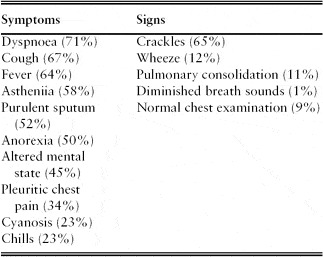
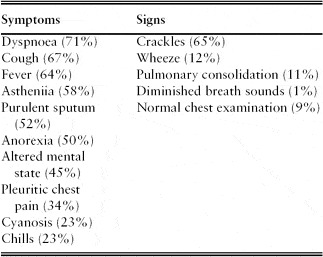
Pneumonias are traditionally categorized into typical pneumonias and atypical pneumonias. The clinical presentation of typical pneumonias is an example of the oligosymptomatology of diseases that can occur in old age. Many typical signs and symptoms may be absent and non-specific signs and symptoms are more pronounced (Table 1). Auscultatory findings may be meagre; the most frequent manifestations of pneumonia in old age are tachycardia and tachypnoea.Reference Wesley5, Reference Fein33
Clinical manifestations of pneumonia in old age (adapted from Riquelme et al. 1997Reference Fein33)
Viral pneumonia
The upper respiratory complaints in older patients with influenza pneumonia are less pronounced than with bacterial pneumonia. Fever and altered mental state may be the only signs of viral pneumonia in older patients with impaired cognitive function. Auscultatory findings are the same as in bacterial pneumonia.Reference Kuhn37
Atypical pneumonias
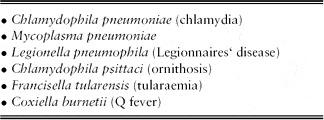
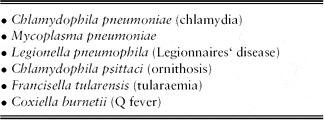
Atypical pneumonias are so described based on atypical pathogens and clinical presentation. The pathogens most frequently implicated are shown in Table 2. It is estimated that 10–20% of CAPs are caused by chlamydophilas (chlamydias).Reference Ewig and Torres38 Incidence of chlamydophila pneumonia varies over a 4-year cycle.Reference Oba and Guntu39 Mycoplasma pneumonias are less frequent in older people, while Legionnaires' disease is more frequent.Reference Schneeberger, Dorigo-Zetsma, van der Zee, van Bon and van Opstal40 Atypical pneumonia in immunocompromised patients may be caused by fungi or protozoa. The other agents are coronaviruses, such as those causing measles and severe acute respiratory syndrome (SARS).
The most frequent causes of atypical pneumonias (adapted from Ewig & Torres, 2003Reference Ewig and Torres38)
Major signs include those from the upper respiratory system and a dry non-productive cough, although clinical signs and symptoms from the respiratory system may be very scarce. There may be fever or malaise. Most of the manifestations of Legionnaires' disease and zoonoses are extrapulmonary. Clues to this aetiology are that the total clinical picture is worse than would be expected on the basis of pulmonary signs and symptoms. X-ray changes may be present earlier than clinical manifestations, so called walking pneumonia.Reference Cunha41
Diagnosis of pneumonia
Diagnosing pneumonia entails diagnosing the inflammatory process, locating this process in the lungs, identifying the aetiological agent and assessing its severity.
Diagnosis of the inflammatory process
The leucocyte count in response to pneumonia is not affected by old age. Though C-reactive protein (CRP) levels in bacterial inflammation are lower in old age, this is not of clinical significance.Reference Wester, Blaasaas and Bruun42 The CRP level is considered to be a better indicator of inflammation than degree of fever or leucocyte count. In the study of Smith et al., all the patients with CAP had a CRP level higher than 50 mg/l, and 75% of them had levels higher than 100 mg/l. Levels over 100 mg/l were useful for differentiating between pneumonia and acute exacerbation of COPD.Reference Smith, Lipworth and Cree43 These findings were confirmed by the study of Hansson et al. Only 5% of their patients with CAP had CRP levels lower than 50 mg/l.Reference Hansson, Hedlund and Ortqvist44 Some authors sense that CRP level is also a prognostic indicator. Levels lower than 100 mg/l have been associated with better prognosis,Reference Chalmers, Singanayagan and Hill45 although this was not the case in the study of Kruger et al.Reference Krüger, Ewig, Marre, Papassotiriou, Richter, von Baum, Suttorp and Welte46
Locating the inflammatory process in the lungs
Because of the low accuracy of the clinical markers of pneumonia, a chest radiograph is a prerequisite to diagnosing pneumonia. Interpretation of X-ray images may be made more difficult by impaired co-operation due to cognitive disorders, or tremor. The extent of X-ray consolidation may be reduced by dehydration. Differential diagnoses include tumour, heart failure, pulmonary embolism and tuberculosis, but these conditions may also accompany pneumonia.Reference Wesley5 X-ray images of viral pneumonias are characterized by peribronchial or perihilar infiltrates that merge when they are large. The findings in influenza (flu) include hyperinflation and multiple atelectases, namely in the right upper and middle lobe, but these changes are not specific enough to differentiate between influenza and bacterial pneumonia.Reference Jeng, Karnangar and Sharma35, Reference Kuhn37 The radiographic changes in atypical pneumonias are most pronounced in peripheral areas, spreading fan-like to the periphery and lower lobes. The X-ray picture of an extended atypical pneumonia can take the shape of lobar pneumonia.
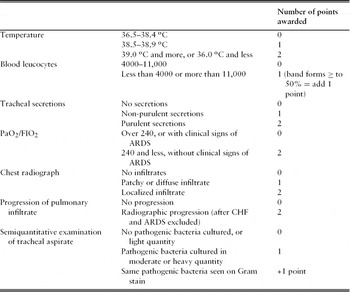
Diagnosing pneumonia in hospitalized patients can be very difficult, especially in those on artificial ventilation. The diagnosis of VAP is based on the presence of two of three clinical criteria (leucocytosis or leucopenia, fever over 38°C, purulent secretions) and pulmonary infiltrates.Reference Ebrega, Ewig and Torres47 Diagnosing VAP can be confirmed by the Clinical Pulmonary Infection Score (CIS).Reference Pugin, Auckenthaler, Mili, Janssens, Lew and Suter48 Its modified version is in Table 3.
Clinical Pulmonary Infection Score (CPIS) (adapted from Singh et al. 2000Reference Singh, Rogers, Atwood, Wagener and Yu49)
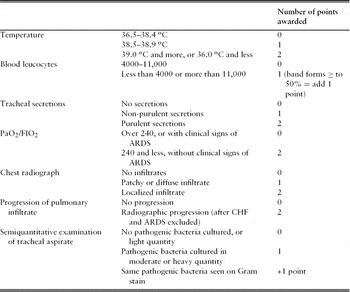
A score >6 at baseline or at 72 h was considered suggestive of VAP. ARDS, acute respiratory distress syndrome; CHF, congestive heart failure.
Identification of the pathogen
In spite of optimal effort, the aetiology of pneumonia is established in fewer than 50% of older patients.Reference Feldman50 Microscopic examination of sputum using Gram staining is quick, but its sensitivity in common settings is only 50% because 10–30% of older patients have a non-productive cough. The yield from this method is decreased by 15% to 30% by any antibiotic treatment started before sampling sputum. The other disadvantage of this method is the need for an experienced examiner.51 Positive results can help in the choice of antibiotic, whereas a negative result has no effect on antibiotic choice.Reference Wesley5 Culture of sputum is essential for confirmation of antibiotic sensitivity, especially important in patients with severe pneumonia and in patients with treatment failure.Reference Andreo, Domingues and Ruiz52 Paracentesis and examination of pleural fluid are indicated where there is a large effusion, to rule out empyema. Blood culture has a high diagnostic and prognostic value, but its sensitivity is low (8–20%).Reference Ranes, Gordon and Arroliga28 A more recent method of infectious agent determination is the identification of antigens in urine or other body fluids. This method is available for Streptococcus pneumoniae and for Legionella. The sensitivity of this test is significantly higher than that of microscopy and culture of sputumReference Andreo, Domingues and Ruiz52 and it is recommended in severe CAP by the British Thoracic Society.51 Diagnosis of pneumonia caused by Chlamydia can be confirmed by serology.51 The most frequently used criterion is a 4-fold increase in IgM antibody titre after 2–3 weeks or IgG titre after 6–8 weeks, although poor standardization of the available tests is problematic and 75% of older people have permanently increased titres of IgG antibodies due to previous chlamydial infections. This test is recommended in severe CAP.51 For diagnosing pneumonia due to Mycoplasma pneumoniae, at least a 4-fold increase of complement fixation reaction titre is necessary.Reference Cunha41 History of exposure, such as contact with animals or a stay in air-conditioned buildings, is important for suspecting the diagnosis of other atypical pneumonias.
Assessment of pneumonia severity
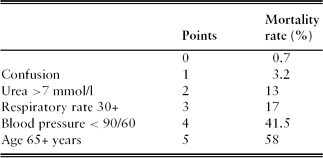
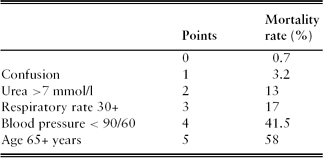
Assessing the severity of pneumonia is important for deciding upon the advisability of hospitalization and for assessment of prognosis. Several scales are used for this purpose. The simplest one is CURB65. Its shorter version, CRB65, is suitable for the initial assessment in the emergency department (Table 4). Patients with CURB65 score 0 or 1 may be treated at home. Patients with score 2+ should be hospitalized and score 3+ is an indicator of severe pneumonia.Reference Lim, Van Der Eerden, Laing, Boersma, Karalus, Town, Lewis and Macfarlane54 CRB65 is based totally on clinical indicators. Patients with score 1+ should be treated in hospital.51
CURB65 scale (adapted from Lim et al. 2003Reference Lim, Van Der Eerden, Laing, Boersma, Karalus, Town, Lewis and Macfarlane54)
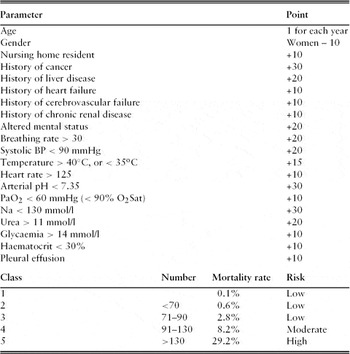
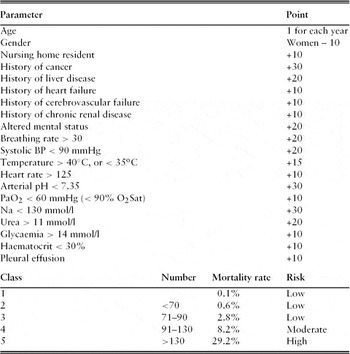
A more comprehensive scale for severity assessment is the Pneumonia Severity Index, or PSI (Table 5). Patients from classes I and II may be treated at home.
Pneumonia severity index (PSI) (adapted from Fine et al. 1997Reference Fine, Auble, Yealy, Hanusa, Weissfeld, Singer, Coley, Marrie and Kapoor55)
The assessment scales are useful, but clinical judgement is important.51 The other indicators for hospitalization are need for parenteral antibiotic treatment, drug or alcohol abuse and the inability of a patient to care for him or herself.
Treatment
Antibiotic treatment
Antibiotic treatment must be started as soon as possible, because a delay in treatment is associated with a worse prognosis.Reference Rello, Paiva and Baraibar56 In one study the mortality rate of HAP where treatment was delayed was 91%, versus 30% in patients whose treatment started early.Reference Celis, Torres, Gatell, Almela and Rodriquez-Roisin57 Antibiotic treatment should ideally be started within 4 h after the first visit of a doctor.51 Treatment of HAP should start within 12 h.Reference Rello, Paiva and Baraibar56 The need for early treatment and problems in establishing pathogens are reasons for empiric treatment.
Recommended antibiotics differ between areas, depending on local patterns of infective agents and their likely drug sensitivity and resistance. The recommended initial treatment of CAP can be a broad spectrum penicillin potentiated against beta-lactamase. In the case of allergy, the options include macrolides, second- or third-generation cephalosporins (although these should be avoided unless absolutely necessary as around 10% with pencillin allergy will be allergic to cephalosoprins), fluoroquinolones or doxycycline.Reference Barta, Foltán, Gajdošík, Hájková, Chovan, Kralinský, Líšková, Profant, Purgelová and Trupl58 The choice of antibiotic for HCAP treatment is based on a probability of involvement of multiresistant strains. The risk of multiresistant pathogens increases in patients who have received antiboitic treatment in the last 90 days, in pneumonia developed after a 4-day stay in hospital especially in departments where these strains were identified, and in immunocompromised patients. Recommended initial HCAP treatment of patients with a lower probability of multiresistant pathogens can be ceftriaxone or fluoroquinolone (ciprofloxacin or ofloxacin) or ampicillin potentiated by sulbactam.26 When a high probability of multiresistant pathogens is expected, treatment could be an antipseudomonal cephalosporin (e.g. ceftazidime) or antipseudomonal carbapenem (e.g. imipenem), or a beta-lactamate antibiotic potentiated by a beta-lactamase inhibitor (e.g. piperacilin-tazobactam) plus an antipseudomonal fluoroquinolone (e.g. ciprofloxacin), or aminoglycoside (e.g. tobramycin) plus vancomycin or linezolid.Reference Ranes, Gordon and Arroliga28 Some authors advise that ciprofloxacin, ceftazidime and imipenem should not be used in monotherapy due to the risk of resistance, but others are of the opinion that monotherapy, which is cheaper, should be used. A synergic effect of antibiotics in combination is not proven and use of unnecessary antibiotics increases the risk of resistance developing. The advantage of an antibiotic combination is better probability of empiric treatment effectiveness.26 When combined therapy including aminoglycoside has been effective, it is possible to stop the aminoglycoside after 5–7 days. When a pseudomonal aetiology is ruled out and the patient is stabilized, the treatment of HAP can be shortened from 14–21 days to 7 days.26 Occurrence of resistance can be reduced by a rotation of antibiotics.26
Atypical pneumonia caused by Mycoplasma or Chlamydia requires treatment with antibiotics that are active intracellularly (e.g. tetracycline, macrolides, fluoroquinolones) for 10–14 days.Reference Schneeberger, Dorigo-Zetsma, van der Zee, van Bon and van Opstal40 When influenza A or B pneumonia is suspected and the symptoms have been present for less than 48 h, the administration of olseltamivir (Tamiflu) is recommended. Due to increasing resistance, zanamivir (Relenza) is recommended in regions with a high prevalence.Reference Sharma59
Antibiotic treatment in old age
Antibiotic treatment is influenced by many factors in old age. Lean body mass is reduced and distribution volume for drugs soluble in water is diminished. Hypoalbuminaemia is present in 25–53% of patients in elderly care.Reference Constans, Guo, Vellas and Guioz60 It may be important for some cephalosporins with strong binding to albumin (cefuroxime axetil, cefoperazone) and for clotrimoxazole. Many antibiotics are eliminated by the kidneys and some are nephrotoxic. For this reason, the higher prevalence of chronic renal failure (about 20% of people over 65) is of concern.Reference Kalman and Barriere61, Reference Coresh, Byrd-Holt, Astor, Briggs, Eggers, Lacher and Hostetter62 Calculation of antibiotic dose needs an assessment of kidney function through creatinine clearance estimation. Knowledge of creatinine level itself is insufficient as creatinine production is lower in old age because of muscular atrophy. The best method for the calculation is the MDRD formula, which does not require a collection of urine and weight. It correlates better with directly measured creatinine clearance than does the Cockroft-Gault formula (78 versus 73%).Reference Stevens, Nolin, Richardson, Feldman, Lewis, Rodby, Townsend, Okparavero, Zhang, Schmid and Levey63 Supportive treatment to ensure adequate hydration, oxygenation and nutrition and a high quality of nursing care is of great importance in old age.
A high prevalence of polypharmacy increases the probability of drug interactions. Nephrotoxicity and ototoxicity of cephalosporins and aminoglycosides is potentiated by furosemide. Macrolides and fluoroquinolones, ceftriaxone and cotrimoxazole increase the effect of warfarin. The greatest interaction potential comes from macrolides, increasing the toxicity of theophylline, carbamazepine, diazepam, cyclosporin and tacrolimus. They also increase the risk of rhabdomyolysis in patients using statins. A combination of macrolides with cisapride or pimozide increases the risk of torsade de pointes and ventricular fibrillation. The lowest risk of interaction is attributed to azithromycin. The fluoroquinolones slow down the transformation of theophylline, phenytoin and diazepam. Clotrimazole increases the effect of oral antidiabetic tablets and hydantoin. Linezolid increases the toxicity of adrenergic drugs, MAO inhibitors and inhibitors of serotonin re-uptake.Reference Göb″oová and Interakcie64
A serious problem with antibiotic treatment is the increasing incidence of Clostridium difficile enterocolitis. Its incidence increased in Bratislava (Slovakia) 3-fold during the period 2006–2008Reference Langšádl65 and this trend has been observed in many countries.Reference Poh, Timothy, Barkham, Dimatatac, Tamuno and Ang66–Reference Zillberg68 Older people are most endangered by Clostridium difficile; the incidence of this infection in the age group 65–74 years is five times higher, and in the group 65–85 years twelve times higher, than that in younger age groups.Reference Zillberg68
Disease course and prognosis in old age
Episodes of pneumonia are more severe and the prognosis is much worse in old age than in younger patients. Mortality rates of CAP in most of the studies are around 25%,Reference Woodhead69 increasing with age from 7% of patients below 30 years, to 38% in patients aged 81–90 years.Reference Wesley5 Ninety per cent of deaths attributed to pneumonia are in the over-65 age group.Reference Mouton, Bazaldua, Pierce and Espinoza70 HAP mortality rate ranges from 30 to 70%, depending on hospital department.26
The effects of treatment are confirmed by clinical stabilization (body temperature below 38.3°C, heart rate below 100 beats/min, systolic blood pressure above 90 mmHg, breathing rate below 24 breaths/min and SaO2 on air above 90%). White blood count and CRP level should decrease too.Reference Halm, Fine, Marrie, Coley, Kapoor, Obrosky and Singer71 Some authors also add the absence of radiographic progression. Effects from treatment can be expected after 3 days. Early failure of treament is diagnosed when clinical stabilization is not reached within 72 h.Reference Daifuku, Movahhed, Fotheringham, Bear and Nelson72, Reference Menendez and Torres73 The independent risk factors for early failure are multilobar pneumonia, pleural effusion, liver disease, leucopenia and high PSI score. Up to 40% of treatment failures are caused by antibiotic resistance. The most frequently occurring resistant pathogens in nursing home residents are MRSA (33%), Gram-negative rods (24%), and Pseudomonas aeruginosa (14%). The other less frequent causes are Legionella and Mycobacterium tuberculosis. Early failure is less frequent in patients vaccinated against influenza and in patients treated with fluoroquinolones.Reference Menéndez, Torres, Zalacaín, Aspa, Martín, Borderías, Benítez, Ruiz-Manzano, Rodríguez de Castro, Blanquer, Pérez, Puzo, Sánchez Gascón, Gallardo, Alvarez and Molinos74 Late treatment failure, which is destabilization in the later course of pneumonia, occurs in 3.9–11%. A frequent cause of late failure is a nosocomial super-infection. Colonization of upper airways with nosocomial flora was observed in 34–59% of patients hospitalized for CAP.Reference Tillotson and Finland75 These results were confirmed by Örtquist et al., who found colonization in 38% of patients, and pneumonia developed in 5.2% of these.Reference Örtquist and Hammers-Berggren76
Progressive pneumonia is characterized by clinical deterioration with or without septic shock and with respiratory failure needing artificial ventilation after at least 72 h of treatment.Reference Garcia and Carratala77 Progressive pneumonia is usually caused by nosocomial pathogens.Reference Arancibia, Ewig, Martinez, Ruiz, Bauer, Marcos, Mensa and Torres78 Treatment failure is more frequent in patients with a positive blood culture (52%) and in patients with Staphyloccoccal pneumonia (50%).51 The cause of failure can also be due to misdiagnosis, mistakenly diagnosing pulmonary embolism, cancer, or heart failure instead of pneumonia.
Radiographic pictures during hospitalization worsen in 25% of patients with CAP. X-ray signs of pneumonia persist much longer in older than in younger patients (10–14 versus 4–8 weeks).Reference Wesley5 X-ray monitoring before 6 weeks is recommended only in the absence of patient stabilization. Repeat X-ray at 6 weeks is advised in older patients to confirm resolution, or need for further investigation.51
Prevention of pneumonia
As pneumonia has a high morbidity and mortality, measures aimed at its prevention are important. Invasive pneumococcal infections are most frequently caused by the first and sixth serotype which are included in 23 valent vaccines.Reference Hoffman, Cetron and Farley79, Reference Plouffe, Breiman and Facklam80 Pneumococcal vaccination decreases incidence of pneumonia associated with bacteriaemia in older patients by 56–70%.Reference Sims, Steinmann and McConville81 Flu vaccination has been reported to decrease pneumonia incidence and mortality rate in older people by 50%.Reference Gross, Hermogenes, Sacks, Lau and Levandowski82 Positive effects and success from flu vaccination have more recently been questioned.Reference Jackson and Nelson83
Cleaning the oral cavity with chlorhexidine decreases incidence of HAP after heart surgery.Reference DeRiso, Ladowski, Dillon, Justice and Peterson84 Antipsychotic drug use should be prudent and patients with swallowing problems must be fed with caution. Insertion of feeding tubes is associated with a higher incidence of sinusitis posing potential dangers for acquiring pneumonia and, because of this, insertion through the mouth has been recommended.Reference Marrie29 Incidence of pneumonia is lower when the tube is inserted beyond the pylorus.Reference Heyland, Drover, MacDonald, Novak and Lam85 Insertion of a feeding tube or PEG does not completely eliminate the danger of aspiration.Reference Mold, Reed, Davis, Allen, Decktor and Robinson18 Elevation of the upper part of the body by 30–45 degrees has been recommended in bedridden patients who are tube-fed to reduce aspiration,26 although this position increases risk of pressure sores. The incidence of pneumonia diminishes in patients who have frequent changing of their position.Reference Schallom, Metheny, Stewart, Schnelker, Ludwig, Sherman and Taylor86 Incidence of pneumonia in intensive care is reduced from 23% to 11% by Continuous Lateral Rotational Therapy (CLRT), using special rotating beds.Reference Staudinger, Bojic, Holzinger, Meyer, Rohwer, Mallner, Schellongowski, Robak, Laczika, Frass and Locker87 Ensuring a meticulous infection control regimen is essential.
Conflicts of interest
The authors declared no conflicts of interest.
Acknowledgement
The authors thank Mr Christopher Garden for help with English.