Introduction
Deprived of sunlight and photosynthetic primary production, the deep ocean floor is generally oligotrophic with the exception of chemosynthesis-based ecosystems driven by the Earth's own geochemistry, such as hot vents and cold seeps (Van Dover Reference Van Dover2000). Microbial chemosynthesis involves deriving energy from reducing compounds such as hydrogen sulphide, and it allows vents and seeps to host very high levels of animal biomass comparable to those of coral reefs, with most species becoming specially adapted to these ecosystems and unable to live anywhere else (Van Dover Reference Van Dover2000).
In addition, organic debris sinking from the sea surface also generates localized, ephemeral ‘oases’ of nutrient enrichment in the deep (Smith & Baco Reference Smith and Baco2003). Primarily comprising sunken wood and large mammal carcasses typified by whales and collectively known as organic falls, these habitats attract and are sources of food for numerous animals, including many typical foundation species such as the bone-eating zombie worm Osedax (Smith et al. Reference Smith, Glover, Treude, Higgs and Amon2015), the wood-boring bivalve Xylophaga and wood-ingesting limpets of the families Pectinodontidae and Cocculinidae (Marshall Reference Marshall1985). Among the limpets, pectinodontids in the genus Pectinodonta typically have gut contents predominantly composed of microscopic pieces of wood, while the gut contents of cocculinids also include large amounts of detritus and sediment, meaning that they probably feed by grazing on the surface bacterial film (Marshall Reference Marshall1985). As organic falls decay, hydrogen sulphide is produced as a by-product, leading to a chemosynthetic ecosystem not unlike vents or seeps (Smith & Baco Reference Smith and Baco2003). As such, organic falls have been hypothesized as evolutionary ‘stepping stones’ towards endemism in vents and seeps (Smith et al. Reference Smith, Glover, Treude, Higgs and Amon2015), but with the exception of deep-sea bathymodioline mussels (Thubaut et al. Reference Thubaut, Puillandre, Faure, Cruaud and Samadi2013), little evidence has been presented to show how such transitions might have occurred.
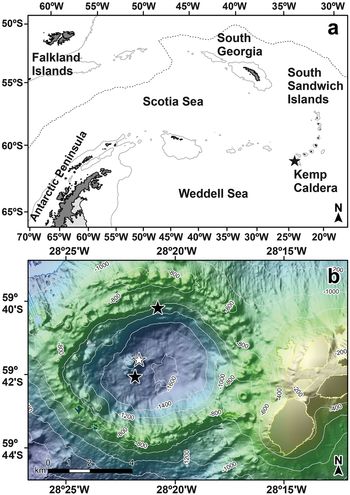
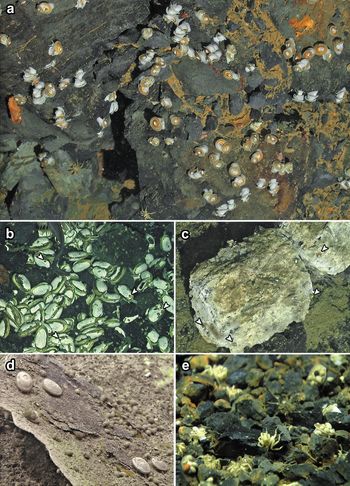
Recently, hydrothermal vents (Roterman et al. Reference Roterman, Copley, Linse, Tyler and Rogers2016) and a natural whale fall (Amon et al. Reference Amon, Glover, Wiklund, Marsh, Linse and Rogers2013) were discovered in close proximity within Kemp Caldera (59°42'S, 28°20'W) in the Southern Ocean, < 100 km away from deeper vents on segment E9 of the East Scotia Ridge (Rogers et al. Reference Rogers, Tyler, Connelly, Copley, James and Larter2012). Located just west of Kemp Seamount on the volcanic South Sandwich Arc (Leat et al. Reference Leat, Fretwell, Tate, Larter, Martin and Smellie2016), Kemp Caldera is 900–1600 m in depth from sill to base with white-smoker and diffuse-flow vents mainly concentrated around a central resurgent cone (Fig. 1). Although a subset of taxa known from the East Scotia Ridge vents was present at Kemp Caldera vents, some were absent (e.g. Kiwa yeti crabs). In contrast, Kemp Caldera hosts large assemblages of chemosymbiotic vesicomyid clams that are absent from the East Scotia Ridge vents. Perhaps the most astonishing taxon presently known only from Kemp Caldera was an undescribed cocculinid limpet found in great abundance (Fig. 2) that represented a molluscan order that was previously unknown from hot vents.
Map of a. South Sandwich Arc showing the location of Kemp Caldera and b. the distribution of Cocculina enigmadonta n. sp. within Kemp Caldera (black stars, hydrothermal vents; white star, natural whale fall).

In situ photographs of Cocculina enigmadonta n. sp. in Kemp Caldera living on a. basalt rock and b. vesicomyid clam shells at the hydrothermally active area near the resurgent cone, c. decaying whale vertebrae at a natural whale fall, d. sulphur crust at the hydrothermally active area on the caldera rim, e. co-occurrence of C. enigmadonta n. sp. with Lepetodrilus concentricus and the sea spider Sericosura sp. Arrowheads indicate positions of C. enigmadonta n. sp. individuals.

The whale fall was also found near the resurgent cone in Kemp Caldera, ~250 m from the nearest hydrothermally active area (Amon et al. Reference Amon, Glover, Wiklund, Marsh, Linse and Rogers2013). Of the species found on the whale bones, which included typical whale fall taxa such as polychaete worms in the genera Osedax and Ophryotrocha (Amon et al. Reference Amon, Glover, Wiklund, Marsh, Linse and Rogers2013), only two species were shared with the nearby vents: the vetigastropod limpet Lepetodrilus concentricus Linse, Roterman & Chen, Reference Linse, Roterman and Chen2019, known from both East Scotia Ridge and Kemp Caldera vents (Linse et al. Reference Linse, Roterman and Chen2019), and an undescribed cocculinid limpet (Amon et al. Reference Amon, Glover, Wiklund, Marsh, Linse and Rogers2013).
Cocculinidae is a family of hermaphroditic, roughly symmetrical gastropods with limpet-like shells, currently placed in the superfamily Cocculinoidea (subclass Neomphaliones, order Cocculinida) (Bouchet et al. Reference Bouchet, Rocroi, Hausdorf, Kaim, Kano and Nützel2017). Previously known only from organic falls, primarily sunken woods (Marshall Reference Marshall1985, McLean & Harasewych Reference McLean and Harasewych1995, Ardila & Harasewych Reference Ardila and Harasewych2005), 7 genera and over 40 species are currently recognized within the family (Zhang & Zhang Reference Zhang and Zhang2018). Despite its near-global distribution, no records have been reported from the Southern Ocean. Cocculina, the nominal genus of Cocculinidae with over 20 species, is one of the most abundant invertebrates commonly associated with sunken wood, although two species have been described from cetacean carcasses, including Cocculina craigsmithi McLean Reference McLean1992 from off California and Cocculina delphinicula Zhang & Zhang, Reference Zhang and Zhang2018 from the East China Sea (McLean Reference McLean1992, Zhang & Zhang Reference Zhang and Zhang2018). Cocculinoidea was originally considered to form a monophyletic clade with Lepetelloidea, another superfamily of morphologically and ecologically similar limpets (Haszprunar Reference Haszprunar1987, Reference Haszprunar1988), but these superfamilies are now considered to be two separate, convergent radiations (Aktipis & Giribet Reference Aktipis and Giribet2012). Cocculinoids are more closely affiliated with neomphaloids, which are also restricted to chemosynthetic habitats but mainly radiated in hot vents (Warén & Bouchet Reference Warén and Bouchet2001), while lepetelloids are placed within the subclass Vetigastropoda (Cunha & Giribet Reference Cunha and Giribet2019).
The Kemp Caldera cocculinid is the first member of the order Cocculinida from hydrothermal vent environments and poses an opportunity to investigate a potential transition from organic falls to hot vents. It is also the first cocculinid from the Southern Ocean, although its locality is barely within the limit of the Southern Ocean (60°S), which is still debated. Here, we characterize the new species morphologically and genetically, provide its formal description and investigate its evolutionary history and adaptations to the hydrothermal vent environment.
Materials and methods
Research cruises
During expedition JC42 of RRS James Cook in 2010, cocculinid limpets were sampled using the suction sampler or manipulator of the remotely operated vehicle (ROV) Isis within Kemp Caldera on the volcanic South Sandwich Arc from hydrothermal vents as well as from a natural whale fall (Fig. 1) (Amon et al. Reference Amon, Glover, Wiklund, Marsh, Linse and Rogers2013). In diffuse-flow areas of the hot vents, limpets were collected from substrates including sulphide chimneys, sulphide rubble, vesicomyid clam shells or whale bones (Fig. 2). Upon recovery, specimens were preserved in pre-cooled 96% ethanol. In 2019, expedition PS119 of RV Polarstern visited Kemp Caldera, with ROV MARUM QUEST dives to known hydrothermal areas near the resurgent cone, as well as newly discovered venting areas on the inner caldera rim.
Morphology
Morphological investigation and dissection were carried out under a Zeiss Stemi SV6 dissection microscope. Radulae were dissected and cleaned using half-strength commercial bleach, rinsed, air dried and mounted on carbon tape for scanning electron microscopy (SEM). The SEM imaging was undertaken using a Hitachi TM3000 SEM (British Antarctic Survey, Cambridge, UK). Shell length (SL) and shell width (SW) were measured using an eyepiece graticule in the Stemi SV6 for a total of 168 specimens with unbroken shells.
Soft parts of a specimen were visualized in hutch #3 of the beamline BL20B2 at the SPring-8 synchrotron facility (Hyogo, Japan) after rehydration for 48 h in Milli-Q water and stained using 1% iodine solution for 24 h. Scans were done using monochromatic X-rays at 25 keV using a Hamamatsu Photonics K.K. charge-coupled device camera. Samples were rotated through 180° yielding 1860 images with effective pixel sizes of 6.5 μm (Chen et al. Reference Chen, Linse, Uematsu and Sigwart2018b, Sasaki et al. Reference Sasaki, Maekawa, Takeda, Atsushiba, Chen, Noshita, Endo, Kogure and Nagasawa2018). The resulting images were processed in Adobe Photoshop CC for contrast enhancement and then imported into Amira v5.3.3 (FEI Visualization Sciences Group). The images were aligned into a single stack and organs of interest were selected manually, their 3D surfaces rendered and their volumes calculated. The rendered surfaces were post-processed by smoothing to generate the final tomographic model following previously published methods (Ruthensteiner Reference Ruthensteiner2008).
Specimens were deposited in the invertebrate collections at the Natural History Museum, London (NHMUK), the University Museum of Zoology, University of Cambridge (UMZC), Muséum National d'Histoire Naturelle, Paris (MNHN) and the University Museum, University of Tokyo (UMUT).
Genetics
Genomic DNA was extracted using whole specimens with the DNeasy Tissue Extraction Kit following the manufacturer's instructions (QIAGEN, Crawley, UK), with quality checks carried out using a Nanodrop 2000 spectrophotometer. Polymerase chain reaction (PCR) with standard reagents in 25 μl total volume (2.5 μl of 10× buffer containing 15 mM Mg2+, 0.5 μl of 10 mM deoxynucleoside triphosphates, 2.5 μl of each 10 μM primer, 0.125 μl od 2.5 U Taq DNA polymerase, 5 μl of ‘Q’ solution, 10.875 μl double-distilled water and 1 μl genomic DNA) was used to amplify the barcoding fragment of the mitochondrial cytochrome c oxidase subunit I (COI) gene using the universal primer pair LCO1490 and HCO2198 (Folmer et al. Reference Folmer, Black, Hoeh, Lutz and Vrijenhoek1994). The PCR conditions were as follows: 94°C for 2 min followed by 35 cycles of 94°C for 20 s, 50°C for 20 s and 72°C for 2 min, ending with 72°C for 7 min. Amplification was confirmed with 1% agarose gel electrophoresis using SYBR green. The PCR purification and DNA sequencing of forward and reverse strands were performed at LGC Berlin, Germany. Alignment was carried out using Geneious R11 (https://www.geneious.com) and manually corrected. In downstream analyses, only those sequences with both good-quality matching forward and reverse reads were used.
For phylogenetic reconstruction, sequences of described species in the order Cocculinida and its sister order Neomphalida in subclass Neomphaliones, as well as the morphologically similar order Lepetellida in subclass Vetigastropoda, were downloaded from GenBank. Two distantly related caenogastropods, Murex pecten Lightfoot, 1986 and Neptunea antiqua (Linnaeus, 1758) were selected as the outgroup. PartitionFinder 2 (Lanfear et al. Reference Lanfear, Senfeld, Frandsen, Wright and Calcott2016) was used to select the most suitable evolutionary model using the Bayesian information criterion. This selected the general time-reversible γ-invariable mixture (GTR + I + R) model for all codon positions in the 621 bp alignment used in the final analyses. Reconstruction was carried out by Bayesian inference using MrBayes 3.2 (Ronquist et al. 2012). Metropolis-coupled Monte Carlo Markov chains were run for two million generations, sampling topologies once every 100 generations, with the first 25% discarded as burn-in to ensure that chains sampled a stationary position. TRACER v1.7 (Rambaut et al. Reference Rambaut, Drummond, Xie, Baele and Suchard2018) was used to assess convergence, confirming split frequencies being < 0.01 before the analysis terminated.
New sequences generated from this study were deposited in GenBank under accession numbers MN539277–MN539281.
Results
Systematics
Order Cocculinida Thiele, 1909
Superfamily Cocculinoidea Dall, 1882
Family Cocculinidae Dall, 1882
Genus Cocculina Dall, 1882
Cocculina enigmadonta n. sp.
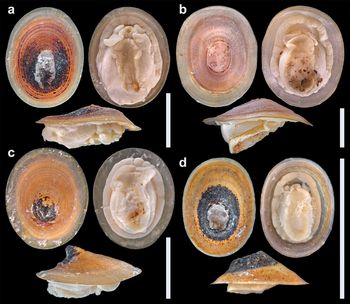
(Fig. 3)
Pyropelta sp. – Amon et al. (Reference Amon, Glover, Wiklund, Marsh, Linse and Rogers2013)
Cocculina enigmadonta n. sp., representative type specimens in dorsal, ventral and lateral (left) views. a. Paratype #1 (NHMUK 20191096), b. paratype #4 (MNHN-IM-2014-7542), c. holotype (NHMUK 20191095), d. paratype #2 (UMZC 2019.47). Scale bars = 5 mm.

ZooBank registration LSID: urn:lsid:zoobank.org:act:0F15867C-6B73-40E3-B0C9-762F8CFE5730
Diagnosis: A large-sized Cocculina (up to 15.2 mm in SL) with thick periostracum, irregular shell margins as adults and a highly characteristic radula exhibiting finely serrated cusps on the inner lateral teeth and a single broad, blunt cusp on the outermost lateral tooth.
Type material: Holotype (Fig. 3c, NHMUK 20191095), SL 9.2 mm, SW 7.0 mm, live collected, fixed and stored in 96% ethanol, ‘North of Glacier’, Kemp Caldera vent site, 59°41.701'S, 28°21.050'W, South Sandwich Arc, 1429 m deep, on clam shell, ROV Isis Dive #149, 2010/ii/9.
Paratype #1 (Fig. 3a, NHMUK 20191096), SL 12.1 mm, SW 9.6 mm, same lot as the holotype. Paratype #2 (Fig. 3d, UMZC 2019.47), SL 4.1 mm, SW 3.0 mm, ‘Seep Fields’, 59°41.675'S, 28°21.081'W, 1431 m deep, on sulphide precipitate, ROV Isis Dive #150, 2010/ii/9. Paratype #3 (UMZC 2019.48), SL 11.4 mm, SW 9.0 mm, same data as paratype #2. Paratype #4 (Fig. 3b, MNHN-IM-2014-7542), SL 14.1 mm, SW 10.8 mm, ‘Great Wall’, 59°41.597'S, 28°21.221'W, 1431 m deep, on basalt rock, ROV Isis Dive #149, 2010/ii/9. Paratype #5 (UMUT RM33193), SL 9.4 mm, SW 7.3 mm, ‘Winter Palace’, 59°41.695'S, 28°20.982'W, 1434 m deep, on sulphur chimney, ROV Isis Dive #149, 2010/ii/9. Paratype lot #6, 11 specimens (NHMUK 20191097), same data as the holotype. Paratype lot #7, 31 specimens (UMZC 2019.49), same data as paratypes #2–3. Paratype lot #8, 21 specimens (MNHN-IM-2014-7543), same data as paratype #4. Paratype lot #9, nine specimens (UMUT RM33194), same data as paratype #5. All specimens were live collected from within the Kemp Caldera vent site on RRS James Cook expedition JC42 and fixed and stored in 96% ethanol.
Further materials measured (Fig. 4): five specimens (NHMUK 20191098), ‘NE Ash Mount Top’, 59°41.670'S, 28°21.036'W, 1430 m deep, on basalt rock, ROV Isis Dive #147, 2010/ii/6. Seventeen specimens (NHMUK 20191099), ‘Clam Road’, 59°42.023'S, 28°21.023'W, 1486 m deep, on vesicomyid clam, ROV Isis Dive #149, 2010/ii/9. Seven specimens (NHMUK 20191100), ‘Glacier’, 59°41.713'S, 28°21.069'W, 1320 m deep, on sediment, ROV Isis Dive #149, 2010/ii/9. Ten specimens (UMUT RM33195), from natural whale fall, 59°41.600'S, 28°21.116'W, 1445 m deep, on whale bone, ROV Isis Dive #149, 2010/ii/9. Two specimens (UMZC 2019.50), ‘Ash Mount’, 59°42.065'S, 28°21.237'W, 1462 m deep, on basalt rock, ROV Isis Dive #149, 2010/ii/9. Eight specimens (UMZC 2019.51), ‘End of Glacier’, 59°41.597'S, 28°21.211'W, 1431 m deep, on sulphide precipitate, ROV Isis Dive #149, 2010/ii/9. Nine specimens (MNHN-IM-2014-7544), ‘Clam Road’, 59°42.024'S, 28°21.233'W, 1431 m deep, on basalt rock, ROV Isis Dive #151, 2010/ii/10. Fourteen specimens (UMUT RM33196), ‘Tube Worm Field’, 59°41.660'S, 28°21.087'W, 1399 m deep, on basalt rock, ROV Isis Dive #151, 2010/ii/10. Five specimens (MNHN-IM-2014-7545), ‘End of Glacier’, 59°41.683'S, 28°21.075'W, 1427 m deep, on sulphide precipitate, ROV Isis Dive #151, 2010/ii/10. All specimens were live collected from within the Kemp Caldera vent site on RRS James Cook expedition JC42 and fixed and stored in 96% ethanol.
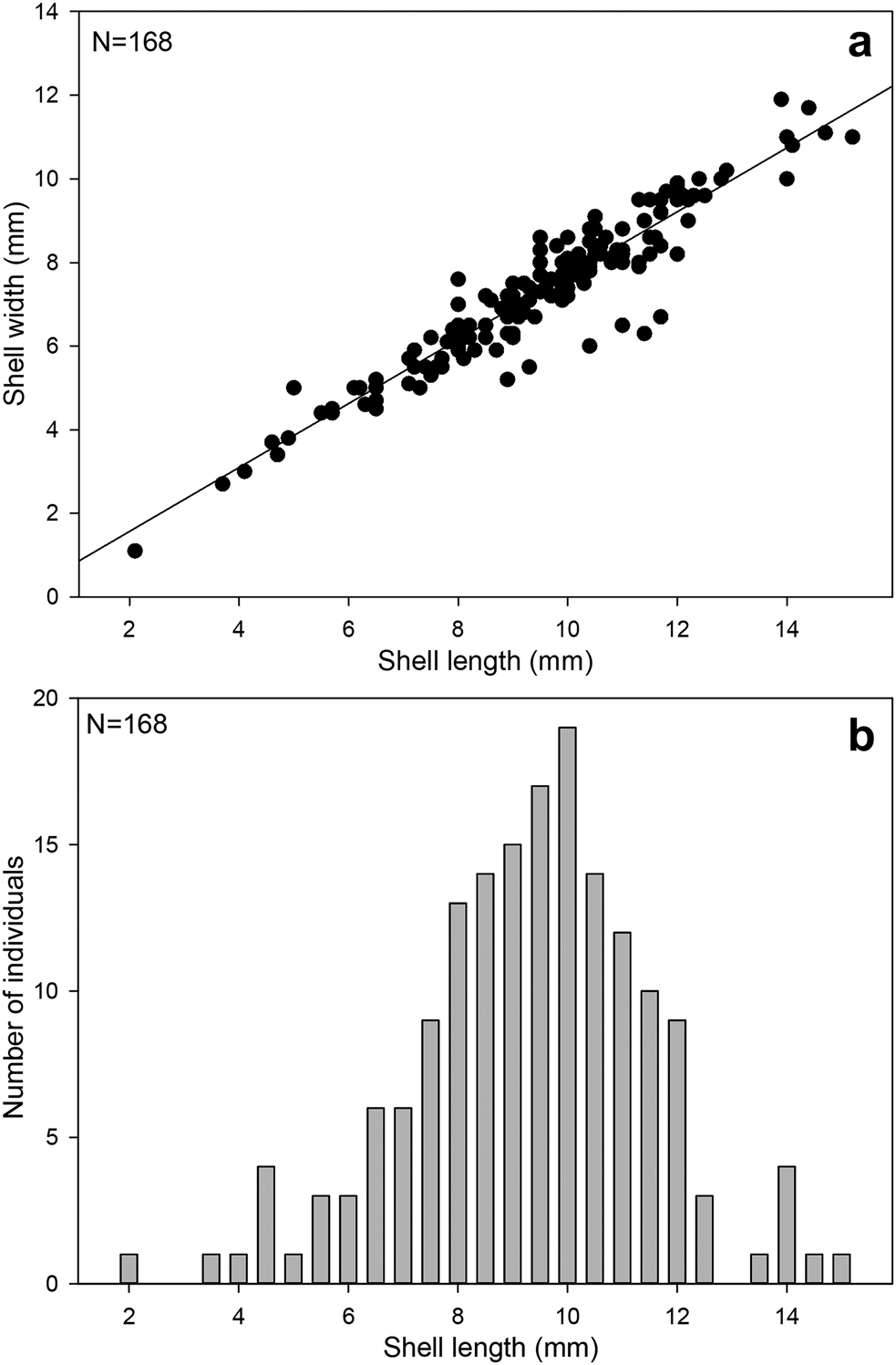
Size measurements of Cocculina enigmadonta n. sp., showing a. the relationship between shell length and shell width and b. the size frequency distribution.

Description: Shell (Fig. 3) large for cocculinids (maximum length 15.2 mm), white, extremely thin and translucent. Protoconch unknown as apex lost to corrosion in all specimens available. Interior of apical area secondarily thickened to compensate corrosion. Teleoconch lacking in sculpture except for fine concentric growth lines. Apex directed posteriorly at about 45° angle when preserved in adults (Fig. 3c). Shell margins in one plane in early growth stages (Fig. 3d), but strongly irregular in later stages (Fig. 3a & b). Lateral profile rather tall in early growth stages, rapidly becoming flattened in later stages, anterior slope slightly convex, posterior slope strongly concave. Dorsal outline oval, with irregular edges when adult. Thick, greenish, smooth periostracum present, often covered by additional layer of sulphide deposits.
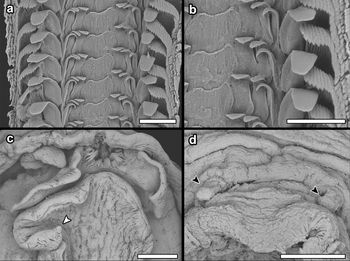
Radula (Fig. 5a & b) rhipidoglossate, formula n - (1 + 3) - r - (3 + 1) - n (n = numerous, r = rachidian), 61 countable rows in specimen figured. Rachidian plate rectangular, greatly broadened laterally, poorly developed, lacking true cusps, anterior edge concave, thickened. First lateral tooth with broad, flattened, straight shaft ending distally in one overhanging, triangular, pointed cusp finely serrated with 20–24 denticles. Second to third lateral teeth similar but progressively narrower. Outermost lateral tooth massive, well reinforced, with one broad, blunt cusp. Marginal teeth ~50 on each side, diminishing in size outwards. Each marginal tooth narrow, elongate, ending distally in one cusp finely serrated into ~20 denticles.
Scanning electron micrographs of Cocculina enigmadonta n. sp. showing a. a section of the radula ribbon with b. a close-up of the lateral teeth, c. anteroventral view of the animal with white arrowhead indicating the copulatory organ and d. posterior view with arrowheads indicating the single pair of epipodial tentacles. Scale bars, a. and b. = 100 μm, c. and d. = 500 μm.

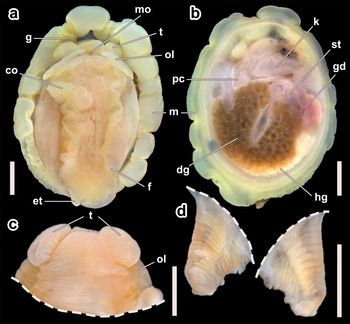
External anatomy (Figs 5 & 6). Animal whitish in colour. Eyes lacking. Snout short. Cephalic tentacles (Fig. 6c, label ‘t’) simple, conical, approximately symmetrical, protruding slightly beyond snout when preserved, but two to three times as long as snout when alive (Fig. 2a). Mouth ventrally situated, with cuticular epithelium lining typical of cocculinids, resembling coat of bristles or hairs (Fig. 5c), surrounded by thick, laterally broadened oral lappets (Fig. 6a, label ‘ol’). Copulatory organ (Figs 5c, arrow & 6a, label ‘co’) situated at right side of foot, posterior of right oral lappet. Mantle margin simple, lacking tentacles. Shell muscle horseshoe shaped, encircling posterior two-thirds of dorsal surface. One pair of simple posterior epipodial tentacles present (Figs 5d, arrows & 6a, label ‘et’). Operculum absent. Pallial cavity shallow, occupying approximately anterior third of body length. Single, triangular pseudoplicate gill (Fig. 6a & d, label ‘g’) situated on pallial mantle roof at right side, dorsal of right oral lappet, with ~10–12 vestigial leaflets without sensory bursicles. Osphradium situated left of pseudoplicate gill, without visible zonation. Posterior part of mantle roof occupied by pericardium on left and rather large kidney on right (Fig. 6b, labels ‘pc’ and ‘k’, respectively). Hypobranchial gland lacking.
External anatomy of Cocculina enigmadonta n. sp., a. ventral view with shell removed, b. dorsal view with shell removed, c. dorsal aspect of the head after removing the mantle, d. ventral (left) and dorsal (right) enlargements of the pseudoplicate gill. co = copulatory organ, dg = digestive gland, et = epipodial tentacle, f = foot, g = pseudoplicate gill, gd = gonoduct, hg = hermaphroditic gland, k = kidney, m = mantle edge, mo = mouth, ol = oral lappet, pc = pericardium, st = stomach, t = cephalic tentacle. Scale bars: a.–c. = 1 mm, d. = 0.5 mm.

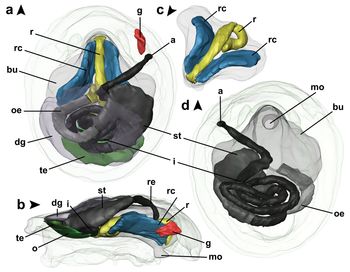
Internal anatomy (Fig. 7). Radular sac approximately half as long as body length, posterior end of radular sac bifurcated with lateral protrusions. Radular sac twisted 180° anteroventrally in a C-shape at posterior end. Single, lateral pair of massive radular cartilages present, bending outwards posteriorly inside laterally expanding buccal mass (Fig. 7c, label ‘rc’). Oesophagus exiting posteriorly to left from buccal mass, gradually recurving in C-shape anterodorsally to enter stomach (Fig. 7d). Stomach very large, curving in reversed C-shape posteroventrally (Fig. 7, label ‘st’). Intestine emerging posteriorly to left from posterior end of stomach, quickly recurving anteriorly to make 3.5 loops before exiting anteriorly to left side, then abruptly turning right into a straight rectum. Anus situated at right side of mantle roof in pallial cavity, posterior to pseudoplicate gill. Digestive gland (Figs 6b & 7a, label ‘dg’) expansive, one part filling dorsal aspect of posterior viscera, while another part fills space between intestinal loops. Intestine contents composed of whitish organic matter mixed with sulphide particles. Animal hermaphroditic, with a single hermaphroditic gland (Fig. 6b, label ‘hg’) situated at posterior end of animal ventral to digestive gland, divided into distinct regions for producing sperm or egg. Testis part (Fig. 7, label ‘te’) of hermaphroditic gland dorsal to ovary part (Fig. 7, label ‘o’), usually testis part smaller than ovary part. Size of hermaphroditic gland, especially ovary part, greatly variable among individuals of different ripeness. Gonoduct emerges from right side of hermaphroditic gland, running along shell muscle anteriorly.
Internal anatomy of Cocculina enigmadonta n. sp. shown through 3D reconstruction, displaying a. dorsal view and b. lateral (left) view showing all reconstructed organs, c. radula apparatus within the buccal mass and d. ventral view showing the alimentary tract. Anterior of the animal is indicated by an arrowhead for each part of the figure. a = anus, bu = buccal mass, dg = digestive gland, g = pseudoplicate gill, i = intestine, mo = mouth, o = ovary part of the hermaphroditic gland, oe = oesophagus, r = radula, rc = radula cartilage, re = rectum, st = stomach, te = testis part of the hermaphroditic gland. Length of the animal is 6.14 mm.

Dimensions: Specimens range between 2.1 and 15.2 mm in SL and between 1.1 and 11.9 mm in SW (Fig. 4), typically ~10 mm in length and ~8 mm in width. The relationship between SL and SW was found to be generally constant across the size range available for study.
Etymology: ‘Enigma’ (Latin), ‘riddle’ or ‘enigma’; ‘-donta, odon’ (Greek), teeth. In reference to its radular morphology, unusual for the genus.
Distribution: Only known from Kemp Caldera, so far it has been collected from hydrothermally influenced areas and a natural whale fall, both near the central resurgent cone (Fig. 1b). Recent survey by RV Polarstern confirmed its presence in newly discovered hydrothermally influenced areas near the northern part of the inner caldera rim. In vent habitats, C. enigmadonta n. sp. was found on basalt rock, sediment rubble, vesicomyid clam shells and precipitated sediments, and it lives in close proximity to vesicomyid clams and actinostylid anemones. It is often associated with an abundance of the vetigastropod limpet Lepetodrilus concentricus and sea spiders in the genus Sericosura (Fig. 2e).
Remarks: The radular characters of C. enigmadonta n. sp. are highly modified from the standard cocculinid radula and unlike any other Cocculina described to date in having finely serrated cusps on the inner lateral teeth and a unicuspid outermost lateral tooth. Nevertheless, its external and internal anatomy agree well with Cocculina and indicate that it should be placed in this genus. Its radula, combined with a thick periostracum and highly irregular shell margins, makes this species impossible to confuse with any other described cocculinid species. Furthermore, it is the only cocculinid known to occur in a hydrothermal vent environment and also the only cocculinid presently known from the Southern Ocean. In an earlier study (Amon et al. Reference Amon, Glover, Wiklund, Marsh, Linse and Rogers2013), it was erroneously reported as ‘Pyropelta sp.’.
Whether the lateral ridges of the wide rachidian tooth in cocculinids represent vestigial first lateral teeth or not remains unsettled. This view was originally proposed by Marshall (Reference Marshall1985), with some authors (e.g. Zhang & Zhang Reference Zhang and Zhang2018) accepting it and others (e.g. McLean & Harasewych Reference McLean and Harasewych1995) continuing to consider there to be only four lateral teeth. The outermost, massive, lateral tooth has sometimes been termed the pluricuspid tooth (McLean & Harasewych Reference McLean and Harasewych1995). Here, we tentatively treat the vestigial ridge as part of the rachidian tooth and suggest there to be four lateral teeth on either side, including the pluricuspid tooth. In any case, the outermost lateral teeth of C. enigmadonta n. sp. are completely smooth and not pluricuspid.
Molecular phylogeny
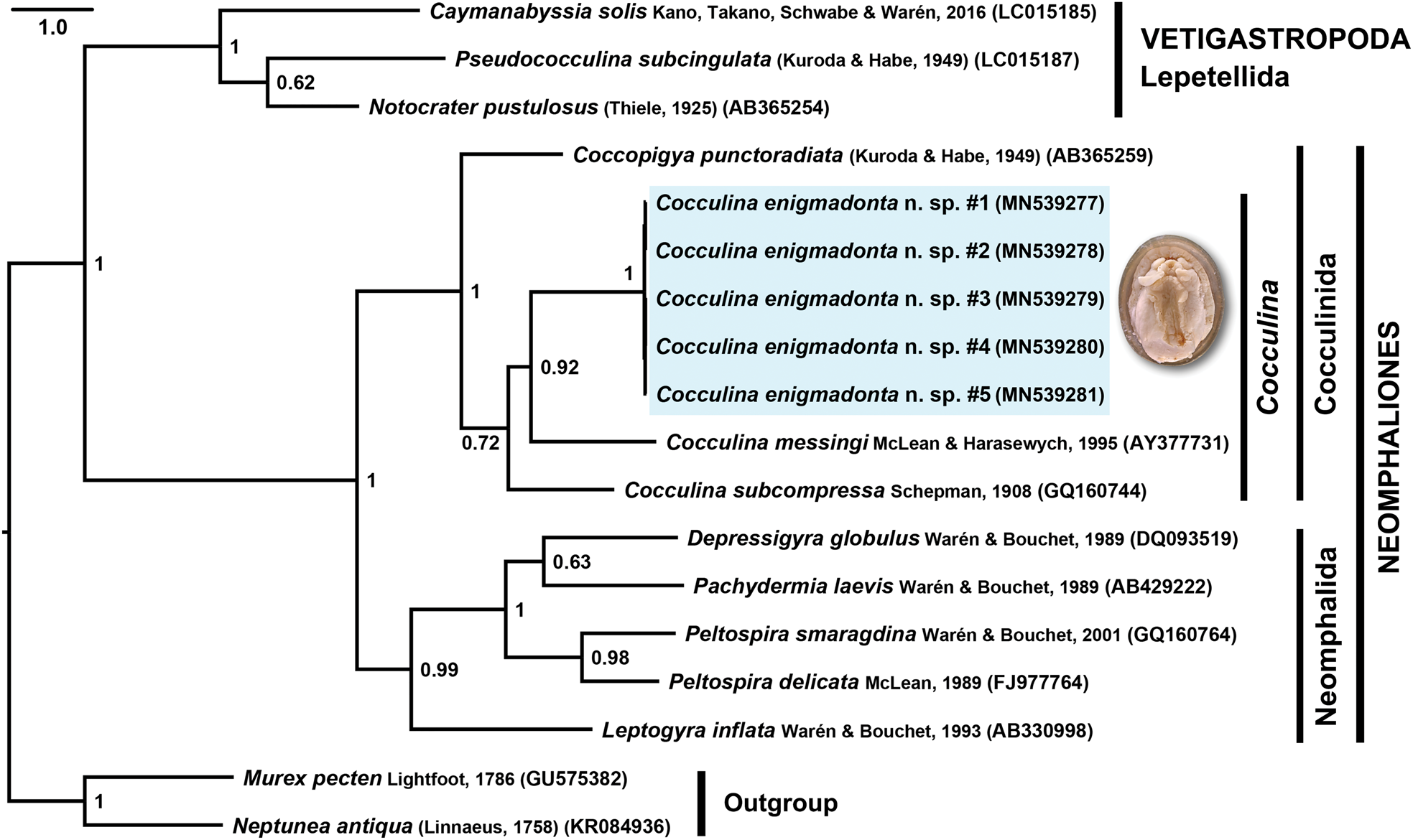
Bayesian phylogenetic reconstruction using 621 bp of the mitochondrial COI gene (Fig. 8) recovered C. enigmadonta n. sp. nested within a fully supported (Bayesian posterior probability (BPP) = 1) genus Cocculina represented by two other described species, confirming its placement in this genus. Cocculina enigmadonta n. sp. was recovered sister to Cocculina messingi McLean & Harasewych, Reference McLean and Harasewych1995, and this pair were in turn sister to Cocculina subcompressa Schepman, 1908. The five individuals of C. enigmadonta n. sp. sequenced emerged as a well-supported lineage (BPP = 0.92) among the sequences sampled. The order Cocculinida, represented by a total of four species in two cocculinid genera, was recovered with strong support (BPP = 1) as a monophyletic clade sister to Neomphalida. Within Neomphalida, a strongly supported Peltospiridae (BPP = 0.99) represented by four species was recovered sister to Melanodrymiidae represented by Leptogyra infalata Warén & Bouchet, Reference Warén and Bouchet1993. The subclass Neomphaliones containing these two orders was found to be genetically distinct (BPP = 1) from morphologically similar vetigastropod limpets in the order Lepetellida.
Bayesian phylogenetic tree constructed using 621 bp of the mitochondrial COI gene showing the systematic position of Cocculina enigmadonta n. sp. within genus Cocculina, family Cocculinidae. GenBank accession numbers are shown in parentheses.

Discussion
Cocculina enigmadonta n. sp. is the only member of the order Cocculinida known from hydrothermal vents, and the fact that it also lives on whale bones means that it is also the first cocculinid known to be capable of inhabiting two different types of chemosynthetic ecosystems. Integrative evidence from external anatomy, internal anatomy and molecular phylogeny together demonstrated that C. enigmadonta n. sp. is a member of the diverse genus Cocculina (Haszprunar Reference Haszprunar1987, Ardila & Harasewych Reference Ardila and Harasewych2005). Furthermore, the phylogenetic reconstruction presented herein (Fig. 8) indicated that it is a more derived member of the family compared to typical wood fall inhabitants such as C. messingi and C. subcompressa, having a highly unusual radula for the group. This suggests that C. enigmadonta n. sp. probably evolved from an ancestor living on sunken wood that subsequently adapted to the hydrothermal vent environment, in line with the evolutionary ‘stepping stone’ hypothesis (Smith et al. Reference Smith, Glover, Treude, Higgs and Amon2015). As C. enigmadonta n. sp. is also found on whale falls, cetacean carcasses may have provided an intermediate stepping stone between wood and vent, as has been suggested for bathymodioline mussels (Thubaut et al. Reference Thubaut, Puillandre, Faure, Cruaud and Samadi2013). The isopod Jaera tyleri Linse et al., Reference Linse, Jackson, Malyutina and Brandt2014, from the same whale fall in Kemp Caldera, also shows shifts in habitat and food source, as it belongs to a normally shallow-water, herbivorous genus (Linse et al. Reference Linse, Jackson, Malyutina and Brandt2014). However, phylogenetic reconstruction did not place it in a derived position within the genus (Linse et al. Reference Linse, Jackson, Malyutina and Brandt2014).
Unlike bathymodioline mussels in which the scenario of stepwise evolution from sunken wood to hot vent is associated with the acquisition of chemoautotrophic endosymbiotic bacteria (Smith et al. Reference Smith, Glover, Treude, Higgs and Amon2015), C. enigmadonta n. sp. clearly feeds by ingesting external food by radular activity and does not rely on symbionts for nutrition. Stomach contents of C. enigmadonta n. sp. are composed of whitish organic matter mixed with occasional mineral particles. In gastropods that graze on bacterial mats in hydrothermal vent environments, such mixtures often comprise bacterial matter mixed with the sulphide mineral particles that make up the vent chimney (Fretter Reference Fretter1989, Warén & Bouchet Reference Warén and Bouchet1993). This is in sharp contrast to typical cocculinids that ingest small pieces of wood, which are the main components of their intestine and stomach contents (Haszprunar Reference Haszprunar1987). In the case of the cocculinids, the stepwise evolutionary transition from living on sunken wood (and whale bones) to hot vents probably became advantageous by simply allowing them to become gradually adapted to sulphidic environments, which typically exhibit more environmental stress, such as higher concentrations of hydrogen sulphide and heavy metals.
The radula of C. enigmadonta n. sp., although still retaining the same formula, is highly modified from the standard cocculinid radula (Marshall Reference Marshall1985), in that the lateral teeth have become broadened and flattened and have lost well-defined major cusps. Instead, the inner lateral teeth now have rake-like, finely denticulate cusps resembling radula of grazing trochoid vetigastropods, and the outermost lateral tooth has only a single cusp that is not well differentiated from the shaft. Gastropods are capable of modifying their radula to suit various food sources over evolutionary timescales (Hickman Reference Hickman1983), and some species are known to modify their radula to suit each food source (e.g. Padilla Reference Padilla1998). We interpret the modifications seen in the radula of C. enigmadonta n. sp. as probably arising from ecological factors in that the radula now exploits a different food source from other cocculinids. The flattened, unicuspid teeth of C. enigmadonta n. sp. with an increased number of marginal teeth are more adapted for sweeping the surfaces (Hickman Reference Hickman1983) of vent habitats for the loosely attached bacterial film than the typical cocculinid radula. The fact that the anatomical features of C. enigmadonta n. sp., particularly the alimentary tract, remain typical for genus Cocculina (Marshall Reference Marshall1985, Haszprunar Reference Haszprunar1987, Reference Haszprunar1988, Sasaki Reference Sasaki1998) is perhaps unexpected considering that a shift in food source often results in changes in the digestive anatomy (Warén & Bouchet Reference Warén and Bouchet1993, Chen et al. Reference Chen, Linse, Uematsu and Sigwart2018b).
The shell of C. enigmadonta n. sp. is usually highly corroded and often covered by sulphide deposits, a condition common in vent molluscs and attributable to the acidic conditions of the vent fluid (Warén & Bouchet Reference Warén and Bouchet1993). The periostracum of C. enigmadonta n. sp. is thickened compared to many other Cocculina species, which have thin periostracum (McLean & Harasewych Reference McLean and Harasewych1995). Although a thin periostracal layer is common in the family, and even abyssal cocculinids in the genus Fedikovella lack a thick periostracal layer (Leal & Harasewych Reference Leal and Harasewych1999), a number of wood-dwelling cocculinids do have a well-developed periostracal layer (e.g. Coccocrater agassizii (Dall, 1908); Haszprunar Reference Haszprunar1987). This is perhaps a response to a reducing environment on wood falls. Thickening of the periostracum in C. enigmadonta n. sp. is probably a similar adaptation in order to limit shell corrosion, a feature also shared by many vent-endemic gastropods (Warén & Bouchet Reference Warén and Bouchet1993). Cocculina craigsmithi, a species that lives on decaying whale carcasses, also possesses a thickened periostracum, as well as a corroded apex (McLean Reference McLean1992), indicating that cocculinids are capable of evolving a thick periostracum in response to sulphidic reducing environments.
Similarly to other cocculinids (Haszprunar Reference Haszprunar1987), C. enigmadonta n. sp. is a hermaphrodite, with distinct areas of the hermaphroditic gland serving the functions of testis and ovary (Fig. 7c). The individuals available to study differed greatly in the ripeness of their gonads, especially the ovary parts. Sexually mature individuals with a greatly expanded ovary containing hundreds of white eggs were visually distinguishable, as the posterior ends of their bodies were greatly inflated and appeared to be much taller (compare Fig. 3b with Fig. 3a). Interestingly, these mature individuals were collected in large quantities in a single sampling event. Figure 2a shows an aggregation of such sexually mature individuals, which were collected in 2010 on basaltic rocks. In aggregations, a stacking behaviour was observed, in which several individuals stacked on top of each other to form ‘limpet towers’ (Fig. 2a). This is reminiscent of ‘mating stacks’ documented for the Antarctic true limpet Nacella concinna (Strebel, 1908), which spawn in temporary stacks to increase fertilization success (Picken & Allan Reference Picken and Allan1983) or more permanent stacking in calyptreid slipper limpets, which are protandric hermaphrodites (Cledón et al. Reference Cledón, Nuñez, Ocampo and Sigwart2016). As cocculinids exhibit internal fertilization (Haszprunar Reference Haszprunar1987, Reference Haszprunar1988), stacking may represent a behaviour to facilitate copulation, as has been speculated for the vent-endemic gonochoristic peltospirid snails in the genus Gigantopelta, which are also internal fertilizers (Chen et al. Reference Chen, Marsh and Copley2018a). Stacking has also been observed in the vetigastropod vent limpet Lepetodrilus fucensis, which live in extreme densities as high as 300 000 individuals per m2, although in this case access to food particles has been hypothesized as the purpose for stacking behaviour (Bates et al. Reference Bates, Tunnicliffe and Lee2005).
Conclusion
Through an integrative taxonomy framework incorporating traditional dissection and observation, electron microscopy, genetic sequencing and 3D anatomical reconstruction using synchrotron computed tomography scanning, we characterized an unusual cocculinid limpet discovered in hydrothermal vent and whale fall habitats in Kemp Caldera, Southern Ocean. Phylogenetically nested in a derived position among the typically wood-dwelling genus Cocculina, C. enigmadonta n. sp. was found to have a highly modified radula suited for feeding on bacterial film instead of wood, but surprisingly retaining other anatomical features typical of the genus. Our results suggest that C. enigmadonta n. sp. probably evolved from an ancestor adapted to living on sunken wood like vast majority of Cocculina species. Most taxa we know today that are capable of living in hydrothermal vents are relatively recently derived in the late Mesozoic or Cenozoic (Little & Vrijenhoek Reference Little and Vrijenhoek2003, Vrijenhoek Reference Vrijenhoek2013). The discovery of C. enigmadonta n. sp., the first species of its order found to have colonized hot vents and the first representative from the Southern Ocean, sheds light on a compelling case study of the ‘stepping stone’ evolutionary trajectory from organic falls to seeps and vents.
Acknowledgements
The authors would like to thank the masters and crews of RRS James Cook and RV Polarstern on board expeditions JC42 and PS119 for their professionalism and support, as well as the logistic and shipboard support of the pilots and technical team of NMF and MARUM with their ROVs Isis and QUEST. We are very grateful to Paul Tyler for leading the ChEsSO consortium, Alex D. Rogers and Gerhard Bohrmann as principal scientists of cruises JC42 and PS119, Veerle Huvenne for the base map used herein, Elaine Fitzcharles for PCR amplifications, Yukiko Nagai for microscopy and Pete Bucktrout for macrophotography. Experiments at SPring-8 were performed under the approval of the SPring-8 Proposal Review Committee under the proposal number 2017A1720 and were technically supported by Kentaro Uesugi and Masato Hoshino. Takenori Sasaki is thanked for enabling access to SPring-8 and for helping with sample scanning. We thank Bruce Marshall, José H. Leal and two anonymous reviewers for comments and edits that improved earlier versions of this paper.
Author contributions
CC and KL conceived and designed the study. KL joined research expeditions and collected the specimens. Both authors collected, analysed and interpreted morphological data by microscopy. CC carried out synchrotron scanning, 3D reconstruction and interpretation of the internal anatomy. KL carried out morphometric measurements and generated the map used herein; CC prepared the other figures. KL collected genetic data, which were analysed by CC. CC drafted the original manuscript, which was revised and improved by KL; both authors gave final approval for submission and publication.
Conflict of interest
The authors declare that they have no conflicts of interest.
Financial support
The ChEsSO consortium and its expedition JC42 were funded by the UK NERC Consortium Grant NE/DO1249X/1. PS119 was funded by BMBF and MARUM. Fieldwork in the East Scotia Sea was undertaken under the permit S3-3/2009 (JC42) issued by the Foreign and Commonwealth Office, London to Section 3 of the Antarctic Act 1994 and permit RAP 2018/064 (PS119) issued by the South Georgia and South Sandwich Government. KL's participation in PS119 was supported by a NERC national capability grant (NC-science) to the British Antarctic Survey. CC was supported by a Japan Society for the Promotion of Science Grant-in-Aid for Scientific Research (18K06401). The funders had no role in the study design, data collection and analysis, decision to publish or preparation of the manuscript.
Details of data deposit
Data generated and/or analysed during the current study are available in the NCBI GenBank repository, with accession numbers MN539277–MN539283. Specimens used in the present study are deposited in the following museums: NHMUK (20191095–20191100), MNHN (MNHN-IM-2014-7542–MNHN-IM-2014-7545), UMZC (2019.47–2019.51) and UMUT (RM33193–RM33196).