Introduction
The lands in the Callide Valley in central Queensland, Australia ‘offer one of the most excellent chances for closer settlement in the State’, declared W. Gordon Graham, Queensland’s Under Secretary for Lands in 1919. He added, ‘with a fair rainfall’, these lands ‘would grow practically anything’, providing farms for ‘hundreds of families’ and he urged the immediate adoption of a land settlement scheme.Footnote 1 This rhetoric typified the government’s Callide Valley promotional material that assured potential settlers of a reliable climate and agricultural success. Yet, as the Gangula Nation people had known for centuries, this land has a subtropical climate; variability, and not reliability, its characteristic.
Closer settlement schemes in Australia have a long history, beginning in the 1860s. Scholars, focusing largely on South Australia and Victoria,Footnote 2 have identified how misunderstandings of climate contributed to their general pattern of failure as agriculture moved to marginal land. By comparison, the Callide Valley scheme was a latecomer, offering the opportunity to learn from past errors.Footnote 3 Modifications were made – rail and road preceded settlement; leasehold land was broadly categorised into first- and second-class grazing or agricultural properties; credit or loans were provided by the state to provide capital and experimental farms offered scientific knowledge. What remained was the optimism and environmental naivety characteristic of all closer settlements. Victoria’s temperate and South Australia’s arid and semi-arid climates had been found wanting. Queensland’s subtropical land had yet to be tested for its margin of agriculture and perhaps advocates believed (ignorantly or willfully) that it would not be found. But despite the state supplying capital, engineering and science, here too unreliable rainfall plagued the settlement. Settlers had yet to accept what George Goyder, South Australia’s Surveyor General, knew in the 1860s, that seasonal reliability and not averages was the true climatic measure and indicator of agricultural success.Footnote 4
Settlers attracted to the promised land of ‘immense opportunity’,Footnote 5 came from interstate and overseas, many lacked life or farming experience in a subtropical climate, leaving them more susceptible to promises of reliable rainfall. As this article shows, the absence of meteorological data left the promise of climate dependability unchallenged, disproven by drought between 1925 and 1927 (soon after the establishment of closer settlement in 1924), then the 1928 flood and drought from 1930 to 1932. This article provides a detailed case study that contrasts the reality of the Callide Valley’s rainfall in the 1920s and 1930s with government promises of an ideal climate and settler expectations. It considers the rhetoric versus the data, the dream and the reality. In doing so, it contributes to our understanding of the complexities of settler understandings of climate.
Climate knowledge is not innate, it must be learned. As Tim Sherratt notes, ‘a new climate cannot be mapped and comprehended like a new continent. It can only be known through time, through averages and extremes, through experience and expectation.’Footnote 6 Colonial scientists in the nineteenth century, serving as meteorologists, officially recorded weather data and codified the unfamiliar climatic patterns for the state.Footnote 7 The compilation of weather records, Chris O’Brien maintains, offered settlers a means of creating order from their new seemingly incomprehensive climate,Footnote 8 creating expectations of weather patterns. Scholars maintain that this cumulative scientific understanding was complemented by settler experiences, their climate knowledge acquired through necessity, labour, time and familiarity and then recorded by memory and oral history.Footnote 9 This dual process of knowledge acquisition has been identified by Mike Hulme et al., who argue that climate knowledge has both ‘statistical and social foundations’.Footnote 10 The statistical foundations are provided by long-term systematic record keeping, both informally by farmers and officially through government bureaus of meteorology. The social foundations of understanding climate are more experiential, imagined and embedded in cultural interpretations, learned through human endeavour and memory. Climate knowledge, as Rebecca Jones reveals in her book Slow Catastrophes, is acquired over time, derived through years of record keeping and lived experience as settlers strived to make sense of their environment.Footnote 11
Recent Australian scholarship has explored settler understandings of climate and maintains that human perceptions of nature, combined with culture, science and nation, have shaped specific times and landscapes.Footnote 12 In Mike Hulme’s book Weathered, he argues that humans’ understanding of climate offers ‘a sense of stability or normality’, reducing unpredictable weather to general assumptions to create an impression of security. In turn, this establishes ‘expectations about the atmosphere’s performance and how we respond to it’.Footnote 13 According to Hulme, climate is a cultural construction, whereby ‘climate dwells in the human imagination’ as much as it does in the ‘material world’.Footnote 14 Notions of ‘normal’ and ‘abnormal’ weather or climate will reflect available meteorological knowledge but equally is formed by the ‘strong influence of individual and collective experiences and memories’; a farmer’s individual or a society’s cultural baggage.Footnote 15 Climate also has political and economic dimensions, as climate narratives and perceptions will be shaped by the needs of the nation state and its socio-economic imperatives.Footnote 16
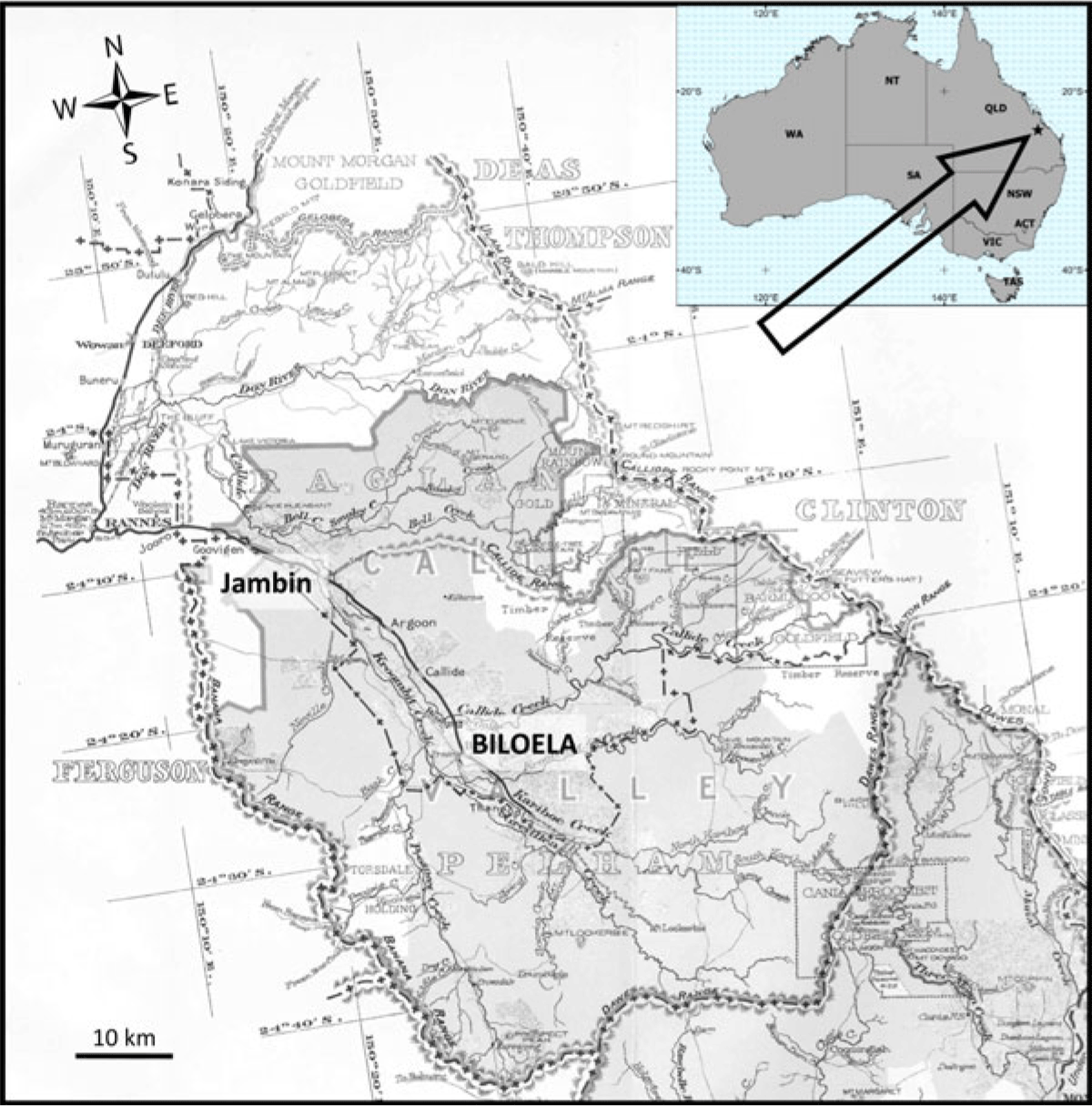
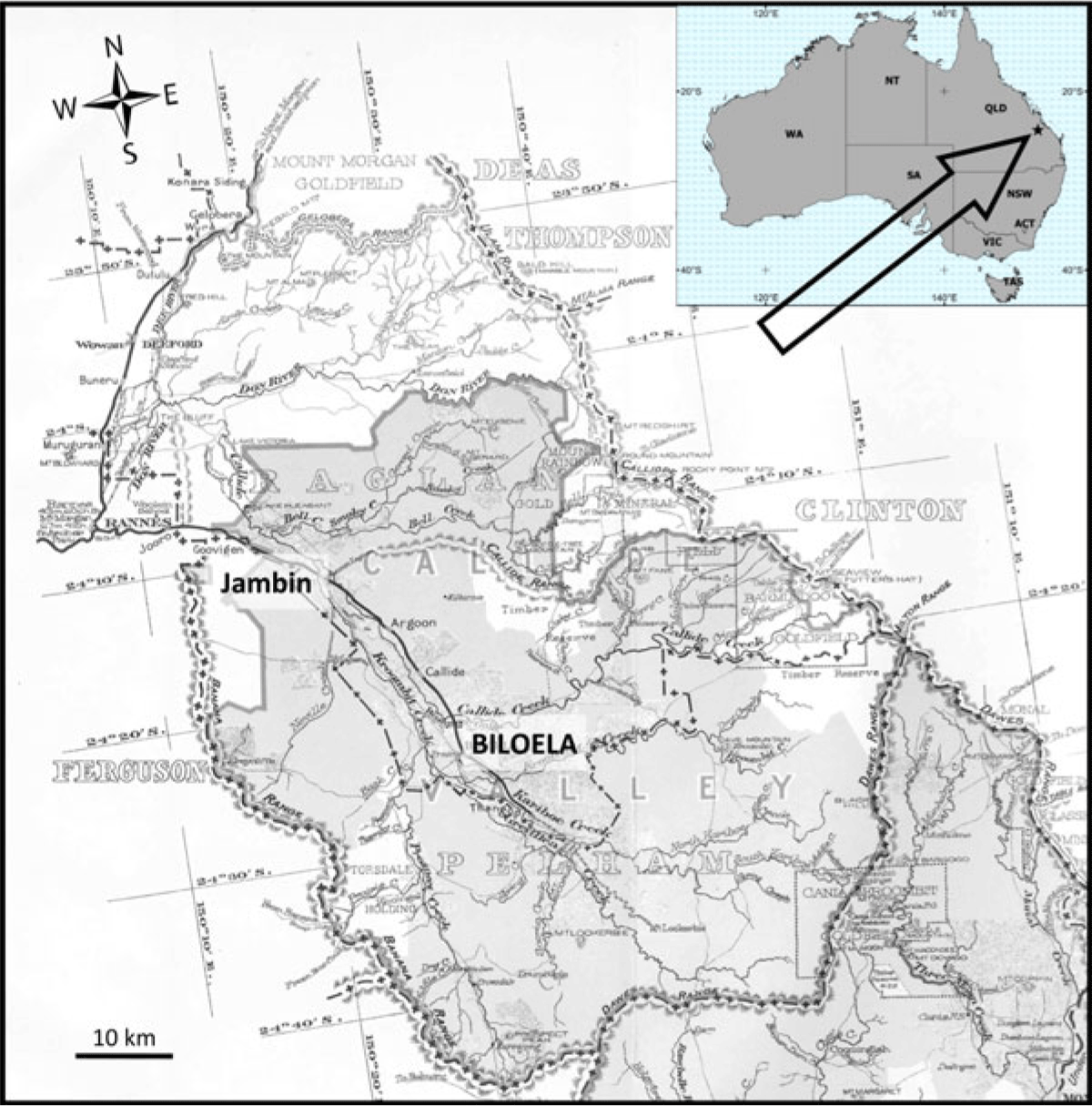
Proponents of the Callide Valley settlement, as in other development schemes, had a vested interest in promoting the concept of stable, ‘normal’ climate, offering predictability and confidence to aspiring settlers who were only too willing to accept a tale that reflected their hearts’ desire. I consider the ideas articulated by Hulme to analyse the intersection of the climatic realities, an imagined climate and state imperatives in the case study of the Callide Valley settlement scheme. This region provides an ideal case study as the commencement of the valley’s closer settlement in 1924 offers defined temporal and spatial boundaries (Figure 1). I explore how climate, real or imagined, can be used as a tool to promote a state’s economic aspirations. The article begins with the meteorological data to describe the climatic realities of the region, which is then contrasted with the state’s promises of rich fertile land, water and ideal climate in promotional material. I then draw on hundreds of settler statements submitted to a 1934 government Committee of Inquiry on the Upper Burnett and Callide Valley Settlement Schemes to reveal farmers’ experience of climate which they measured against contrived notions of normal climate, revealing a vast disparity between rhetoric and reality.
The Callide Valley lands.
The statistical realities
Prior to 1930 there were few official rainfall stations in central Queensland, most with limited longevity. The earliest official records derive from Camboon Station (1870) outside the Callide Valley with Bureau of Meteorology records within the region existing for Kroombit (1918), Barfield (1919), Biloela (1924), Jambin (1927) and Goovigen (1932).Footnote 17 Camboon Station received its lowest annual rainfall of 275 mm during the Federation Drought in 1902, the second lowest of 437 mm in 1932. The highest rainfall occurred in 1893, a year of floods throughout Queensland, when the gauge recorded 1,310 mm. The fourth highest reading, 1,040 mm significantly occurred in 1924, the year the Callide Valley was opened for settlement, bolstering the claims of good rainfall.
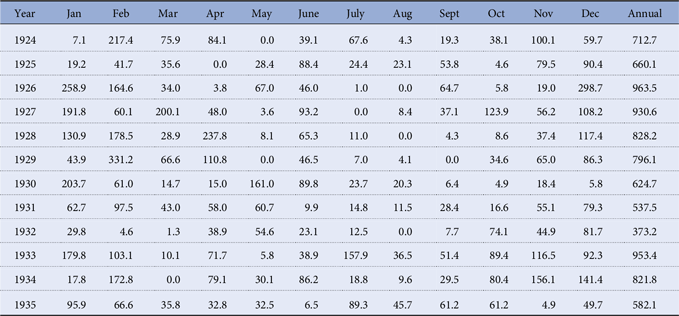
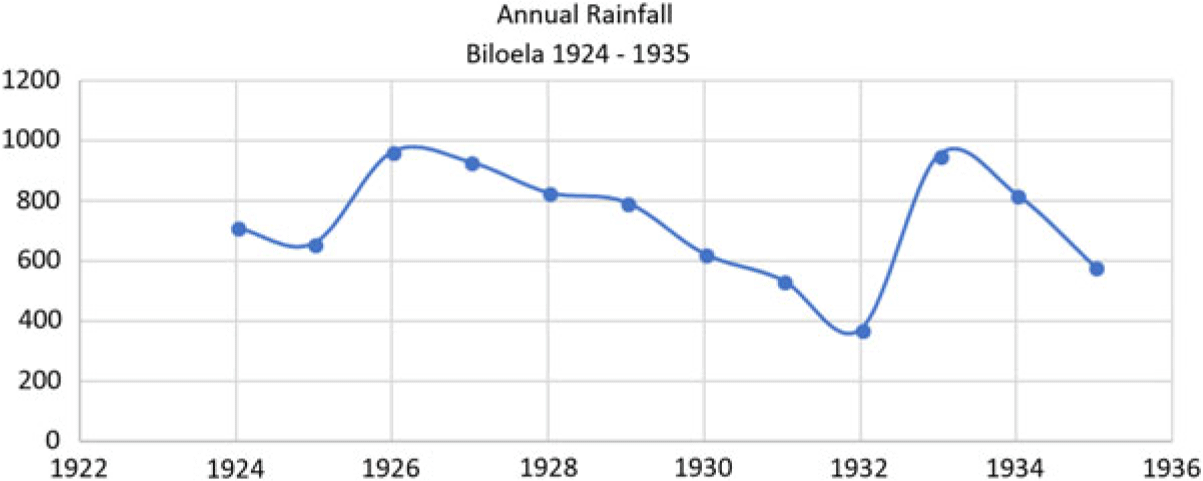
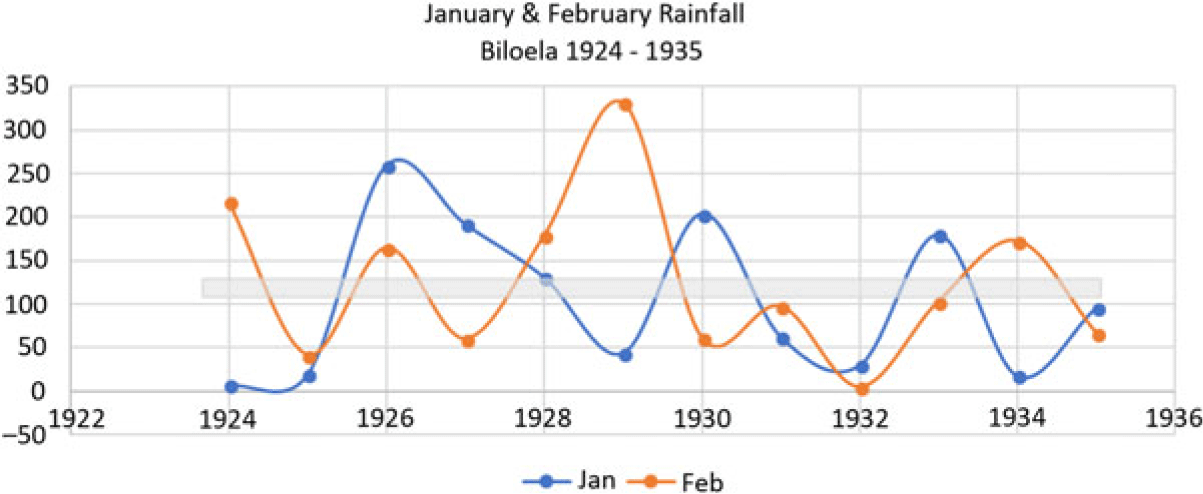
The government’s promotional brochure promised an average annual rainfall in the Callide Valley of 736 mm. This proved reasonably accurate with the records from Biloela between 1924 and 1934 recording an average of 732 mm. However, large variations from the average were the reality (Table 1, Figures 2 and 3).Footnote 18 Seasonal rainfall should be measured from December to March, falling outside traditional calendar measurements. Only one year delivered rainfall within 50 mm of the average. The furthest aberration from the average occurred in 1932 when only half the average was recorded in the entire year, whereas 230 mm more than average fell in 1926. These highs and lows contributed to flood or drought, allowing crops and stock to flourish or perish. In the extreme drought year of 1932, no month exceeded 82 mm, with four months registering fewer than 10 mm. For the farmer surveying his unusable, soggy land after consecutive monthly rainfalls of 299 mm, 191 mm, 60 mm and 200 mm between December 1926 and March 1927, yearly averages offered little comfort, or promise of success. Rainfall timing proved critical, preventing burns or planting, or supporting new growth. Ongoing months of minimal rainfall enticed drought, wet periods with short-lived intense falls culminated in flood.
Biloela Rainfall Station 39006.

Biloela Rainfall Station 39006.

Biloela January and February rainfall (1924–35). Horizontal band represents average of January (103 mm) and February (125 mm) for this period.

Jambin’s records reflected the same variability. In 1928 Jambin received 1,162 mm and in 1933, 1,196 mm. The difference was intensity with 409 mm falling in one month in 1928, compared with monthly extremes of 277 mm and 230 mm in 1933.Footnote 19 Despite less than one decade of official record keeping in Jambin, the Central Queensland Herald felt confident to declare the 1933 rainfall a ‘record for July’;Footnote 20 a statement that perhaps challenged both reality and cultural memory.
When excessive rain fell in April 1929, bringing the third flood to Kroombit Creek within one year, one Jambin newspaper correspondent, critical that new settlers had not been warned of the possibility of floods, pondered, it would be ‘very interesting to know if such has happened before. Perhaps some of the old residents could give some information on the subject.’Footnote 21 A local history, The Big Valley Story, published in 1974, noted that ‘old timers’ recalled that the biggest Callide Valley floods occurred in the 1870s.Footnote 22 Herein lies a recognition of the limitations of both the data and non-Indigenous cultural memory that highlights the cultural dimensions of climate.
Most settlers were new to the region, from interstate or overseas. Farmers in the southern regions’ temperate climates may have had little comprehension of northern subtropical conditions, more prone to dry winters and summers of intense rain. The Russian, Greek and Italian settlers were even less prepared. British immigrants brought with them their experience of relatively low variability in rainfall and droughts measured in days, not years.Footnote 23 Insufficient time had passed for data collection or non-Indigenous settler knowledge to accumulate, with most rainfall stations barely established and most settlement occurring after 1924. It would take human experience and years of data to comprehend what were normal climatic patterns. The paucity of statistical foundations made the settlers more vulnerable to propaganda promoting an ideal and reliable climate, promises that were both naively and willingly accepted.
Proponents of the Callide Valley scheme advertised average rainfalls and plentiful water, the use of averages effectively neutralising the extremes and hiding the great variability. These averages shaped understandings of what was a ‘normal’ climate in the region. When mixed with farmers’ lack of local knowledge and a willing desire to accept the promises of reliable rainfall, this made fertile ground for error. Farmers’ correspondence reveals that settlers clung to notions that normal rainfall was the average, neither a drought nor a flood year. Between 1924 and 1934, the Callide Valley experienced a major flood in one year (1928), drought in six years and three favourable years of which settlers chose the latter to be the rule rather than the exception. But what they may have perceived as an ‘abnormal’ drought or flood, may have indeed been the norm. Who was to say what was normal? While the 1930s drought and the 1928 flood were legitimately an extreme aberration, I argue that settlers were yet to understand that in the subtropical Callide Valley, rather than the promise of a constant climate and reliable water supply, climate variability, along with erratic and uncertain rainfall, was the new normal.
Government promises were construed and misinterpreted, creating misconceptions of ‘normal’ climate. The adoption of a flawed notion of a ‘normal’ climate determined settlement patterns and government agricultural policy in 1920s Queensland drew settlers to the region and fostered unsustainable agriculture in a region where the climate varied widely from the desired ‘normal’ climate. Settler understandings of climate may have been based on a fallacy, insufficient meteorological data or deliberately misleading propaganda, but the legacy of these decisions continues to shape current land use policies and debates. Perhaps with a deeper understanding of climate and environment, different land use decisions may have been made during the scheme’s conception? For example, areas may have been left unsettled or carved into larger, more sustainable agricultural holdings with lower expectations of crop and stock yields and reduced dependence on irrigation. This case study of settlement in the Callide Valley highlights the impact on the environment (human and non-human) that are created by misperceptions of climate that have present-day ramifications.
The social foundations of climate
In 1929 the government declared the scheme the ‘most ambitious land settlement project in Queensland’s history as the Callide Valley was carved into holdings between 65 and 130 hectares’ for agriculture, cotton production, dairying and grazing.Footnote 24 Mirroring earlier schemes interstate, this action reflected the Queensland government’s policy of closer settlement, a scheme designed to break large pastoral holdings into small leases for the occupation of a rural yeomanry of working family farms. Closer settlement reached its zenith under Premier Edward ‘Ted’ Theodore (1919–25) and his Labour agrarian-socialist government that reaffirmed this ideal, promoting closer settlement schemes with ‘evangelical zeal’,Footnote 25 as 2.5 million acres of land opened for closer settlement under the Upper Burnett and Callide Valley Settlement Schemes. Over one million of these acres were in the Callide Valley.
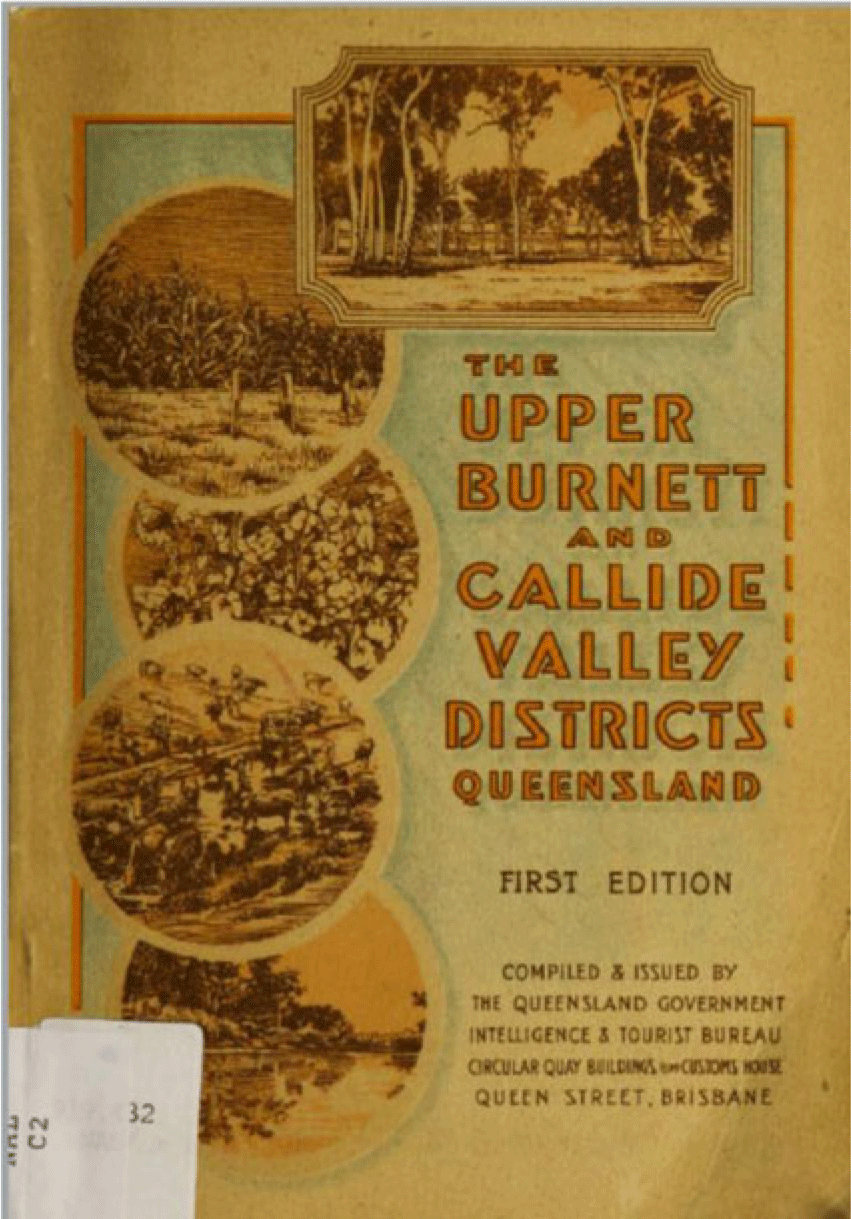
In a 1923 brochure squarely aimed at aspiring selectors, the Queensland Intelligence and Tourist Bureau, the state’s agent of propaganda, promised settlers ‘immense opportunities’ for ‘profitable employment to millions of agriculturalists’ in the ‘vast areas of fertile land’ in the Callide Valley (Figure 4).Footnote 26 The government agenda behind the scheme were the political and economic imperatives of nation building and 1920s population growth. Common to many – if not all – closer settlements was the centrality of the promotional rhetoric, the boosters’ or promoters’ promise of an agricultural ideal, a trend found in the United States of America, Canada, New Zealand and Australia, where the exaggerated promise of prosperity was assured by the gifts of nature.Footnote 27 In reality, as David Cameron and Denis Murphy argue, closer settlement schemes rarely reached the ‘density, scale and success’ that had been promised.Footnote 28 Problems ranged from inadequate-sized land holdings, stringent lease conditions, poor and inaccessible markets, adaptability of crops, the capacity of the farmers, unsuitable soil and most significantly, for the purposes of this article, the vagaries of climate. To achieve its promise, the settlement depended on ‘fair’ or ‘normal’ climatic conditions.
The state government’s promotional brochure produced in 1923.

The 1923 booklet was unambiguous in its praise of the region, with its ideal climate a key promotional component. Queensland, the writers declared, ‘stands pre-eminent’ among the Australian states ‘because of the unlimited possibilities she holds out to new settlers for the development of her agricultural and pastoral activities under the most advantageous conditions’. The Upper Burnett and Callide Valley lay ripe for development, with land described as ‘generally, exceptionally fertile’, its productivity demonstrated by the small agricultural efforts of previous pastoralists. The land was covered by scrub, ‘not to be regarded as stunted vegetation covering useless barren land’, but a ‘tropical jungle in rich volcanic soil – ideal dairying and agricultural land’. ‘Much of the country’ according to the Intelligence and Tourist Bureau was ‘well watered by streams of a permanent character’. The first-class land equalled any ‘farming country with similar rainfall in Australia’, with the second-class land not far behind. In a ‘fair season’ or ‘ordinary climatic conditions’ the soil was productive, capable of growing ‘most kinds of grains and fodder crops’, tubers and citrus fruits.Footnote 29 Words like ‘normal’ and ‘fair’ to describe the seasons were liberally distributed throughout the booklet.
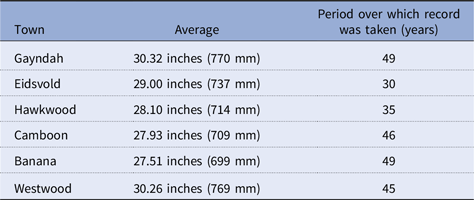
While the brochure’s authors may have used the words ‘generally’ and ‘fair’ as qualifiers or signposts that these favourable conditions were not always the case, these disclaimers could well have been lost in the detail. The brochure provided many examples of successful farmers who had prospered in the region. Although ‘dry spells’ or ‘adverse meteorological conditions’ were casually mentioned, the problem was soon dismissed in the brochure as solvable with the use of science to improve farming methods or the introduction of bores, wells or irrigation.Footnote 30 The authors listed the many creeks and rivers in the region, a ‘number’ of which ‘carry water all the year round, even during dry spells’, with photographs of full waterways and large fish caught to illustrate the claim.Footnote 31 Floods did not rate a mention. A small table provided average rainfall figures from only six recording telegraph stations, all outside the Callide Valley. Decades of future record keeping would show these regions had higher rainfall. Nor did the brochure indicate the great variation in the decades those records were kept, with the statistics reduced to one figure, average over a range of 30–49 years (Table 2). Seasonal variations were mentioned – the wetter months in summer, dryer in winter – but not the vast variations between years.Footnote 32 The promotion succeeded as from 1924 thousands flocked to region from throughout Australia, while also attracting Russian, Albanian, Greek and Italian immigrants.Footnote 33 A land rush began.
Rainfall data from adjacent areas in Queensland Government Intelligence and Tourist Bureau, Upper Burnett and Callide Valley Districts, p. 31.

Settlers soon faced the reality of climate fluctuations, widespread drought (1925–6), wet years and flood (1928). Horses and pigs were drowned as were cattle, their carcasses left stranded in trees twenty-five feet above ground. Miles of fencing washed away ‘twisted and wound around trees’, the cultivated paddocks stripped bare.Footnote 34 At Goovigen, the Callide River was five feet wide.Footnote 35 Catherine Simpson, who arrived in Thangool with her husband in the mid-1920s, recalled that ‘conditions were terrible and the seasons worse’. The drought killed the fowls, wallabies and birds. ‘It was too much and we walked off the farm.’Footnote 36 They were joined by other dispirited settlers, but many stayed on, hoping for better seasons to come.
Floods temporarily halted the path to progress prompting government attention in 1928 when the Land Administration Board held an ‘Economic Investigation’ into the settlement. Their inquiry determined that ‘floods were more severe than usual’, reinforcing the notion that floods were abnormal.Footnote 37 Offering no real level of comfort the Board declared,
[W]e think that, generally, settlers have much more to fear from dry conditions than from excessive rains, unless they take steps to protect themselves by storing fodder. In average years the great bulk of the rich agricultural land in the district may be cultivated without losses by flood.Footnote 38
Insufficient rainfall and drought offered a greater risk than flood. Again, this report includes numerous comparative phrases – ‘more severe than usual’ and ‘average years’. Conceding that ‘in heavy rains’ the creeks flooded, generally the climate was ‘invigorating and healthy’, winds ‘dry and keen’, winters ‘not unduly severe’ and the region’s average rainfall about 29 inches (736.6 mm). The Land Administration Board concluded that the land was ‘capable of producing many and varied products such as different kinds of crops, cream, pigs, and fat stock. For the present cream and cotton are the principal products’, with the area considered ‘specially suited for the production of cotton’.Footnote 39 This success was contingent on favourable seasons but so far these proved elusive.
A few good years followed the 1928 flood, but three consecutive years of drought and crop failures followed in 1931–4. The Central Queensland Herald acknowledged that it was ‘generally contended that the settlement was not realising its early promise, that much of the land was unsuitable to mixed farming’ and farmers could not carry high water costs and rental charges.Footnote 40 Farmer discontent prompted a five-man deputation to Percy Pease, then Minister for Lands, in 1934 calling for an inquiry as settlers were unable to ‘meet their liabilities owing to the past period of drought’, a problem exacerbated by high lease and water fees and low stock and farm-produced prices.Footnote 41
Perhaps in response to this deputation a further government inquiry was held in 1934 to ‘investigate the circumstances of settlers in the Upper Burnett and Callide Valley’. Its intent was to take ‘remedial measures to help the settlers and putting the settlements on a better basis’.Footnote 42 The inquiry’s fourth term of reference dealt with ‘the extent to which drought conditions, which were experienced in the early years of the settlement, hampered its progress and development and caused financial embarrassment to the settlers’.Footnote 43
Ironically the inquiry was held during drenching rain that impeded the investigative committee members’ trip from Brisbane to the Callide Valley over flooded roads.Footnote 44 But the evidence they heard from farmers stressed the recent drought, impact of the flood and the unpredictability of farming in such a variable climate. These data were obtained two ways. Settlers could appear before the inquiry and make oral presentation or provide written testimony. In advance of the inquiry, settlers were sent a questionnaire to report on the size and condition of their holding and their economic returns and losses. E. Harding (Secretary of the Central Queensland District Executive of the Council of Agriculture) was appointed by the Council of Agriculture to assist settlers. Hundreds of settlers completed the questionnaire, at times attaching letters and additional information. Adjectives including ‘variable’, ‘erratic’, ‘irregular’ and ‘uncertain’ were frequently used to describe the rainfall; words that are dependent on measurement against some preconceived cultural perception of normal.
Harding offered a summary of the settlers’ plight, published in the Morning Bulletin in March 1934. Three consecutive drought years and crop failures had ‘left settlers destitute’, with insufficient income even for food. A government requirement that settlers had to fund water facilities (bores and wells) within three years of obtaining a lease may have alleviated the water shortages but more commonly had saddled farmers with large debts. Harding offered his opinion that the government, ‘completely misled by the seasons’, had ‘leased money extravagantly, particularly on water facilities’, whether the settler needed it or not. Harding found water charges to be ‘crippling settlers in the Callide more than any other single item’. While successful bores may have assured economic survival in drought, many failed, leaving the farmer with dry ground, failed crops, starving cattle and large debt.
Harding outlined a scenario, common throughout the Callide Valley. Crops had failed in 1932 through drought, and cream returns were ‘practically nil’. The 1933 crops were planted with ‘borrowed money’, the ongoing drought and a ‘plague of grubs’ reducing crops to 30 per cent, the returns often less than the expenses. With debt growing at £50 to £100 per annum, many farmers faced government arrears of between £150 to £300 plus debts to butchers, storekeepers and machinery companies. While the 1934 season was ‘bountiful, especially for cream production’, a reduction in prices made it difficult to pay arrears. Plummeting cotton prices meant all returns were allocated to pay cotton liens (government loans received prior to planting) and picking costs, leaving the ‘whole of season’s income spoken for’, with an accumulating debt.Footnote 45
Most revealingly Harding informed the Morning Bulletin,
that neither the settlers nor the Government officers had experience of farming conditions as they existed in the Callide, and it was inevitable that serious and costly mistakes would be made by the settlers and the authorities.
A few very good crops in the early years of the settlement gave all concerned an entirely false impression of the seasons and caused settlers to invest the whole of their crop returns in clearing and machinery and to be entirely dependent on the planted crop. Footnote 46
The limited good years had been taken as a promise of success, rather than relying on meteorological data and Aboriginal and pastoralist knowledge that would have given a longer perspective from which to draw an understanding of normal climate.
The desire for ‘normal’ weather
How did the reality challenge government promises and the desire for normal climatic conditions? As Holmes and Mirmohandi found in Victoria's Mallee region, settler accounts reflect their emotional responses to the environment, their aspirations and despair.Footnote 47 The farmers’ reports to the Inquiry reveal the trials and tribulations of climate, a litany of problems from too little or too much rain or poor timing; poor soil and harsh temperatures. The variability and unpredictability were the frequent refrain. The common denominator was the perception that the climate could be better, based on a preconceived notion of normal. William Cahill at Jambin was struggling to survive, the climate contributing to his low productivity. He informed the inquiry:
owing to bad seasons and a very small return from the land, I have not received enough to purchase food to the average standard of living. This is not all, at times I have not had any money at all and have had to receive Government rations, or otherwise starve. Owing to no prospect from the land store-keeper would not give credit.
It was not possible to clear loans and debts with a diminishing income.Footnote 48 Only a good season, with reliable climatic conditions, would rescue Cahill.
G. Curruthers received welcome rain in 1931 when eleven inches fell on his seventy-five acres of cotton and nine inches on his sixty-five acres the following year. In 1933, he felled 110 acres but ‘the wet season came at the wrong time’, too early when he had only burned thirty acres in preparation. In his opinion, the ‘very uncertain’ rainfall made his selection ‘no good to anybody’, providing ‘only a source of expense and worry’.Footnote 49 F. McCaffrey, a dairy farmer, shared his viewpoint, maintaining his land supported dairying when the ‘season permits’ but considered ‘the rainfall too uncertain for safety’.Footnote 50 Citing the ‘the variability of the seasons’ for his request for rate reduction, W. Stewart summed up the sentiment of many, ‘erratic seasons make the carrying capacity and the possible returns a constant gamble’.Footnote 51
The region experienced periodic dry spells and hard droughts, the porous and sandy soils in some areas magnifying the problem. Other holdings had steep hills and stony ground. Daniel Smith reported that on his 286 acres of steep hills, gullies and ‘very stoney’ land, ‘any heavy rain that does happen to fall just runs away and the evaporation is terrific’.Footnote 52
Dry seasons rendered the ground too hard to plough and the roads rough. Drought killed grass and entire crops failed, as stock was sold, agisted or dead.Footnote 53 Noxious weeds, by contrast, flourished.Footnote 54 A. Clarke reported, ‘during the last drought about 80 per cent of the Rhodes grass died out and brigalow suckers got control’.Footnote 55 A. Cox declared,
the climatic conditions in this district are too dry for either farming or dairying. Since coming here in 1930 I have not yet experienced a season of reasonable rainfall. Cotton, the greatest drought resisting crop known is only partially satisfactory here, and dairying which requires a reasonably regular rainfall is a losing proposition.Footnote 56
The words ‘reasonable’ and ‘regular’ referring to rainfall reflected his understanding of normal weather.
Heavy rain proved equally problematic, drowning stock and crops, sweeping away fences and making roads impassable, isolating people and market access for up to four months, especially in areas of bog-prone black soil.Footnote 57 The rains brought ‘pests’, prickly pear and Noogoora Burr, the seeds carried in the floodwaters. They prevented the pre-season burn of the felled scrub and delayed planting.Footnote 58 Some holdings were more prone to flooding, with P. Cavanagh recording that his forested area all flooded, leaving the ‘heavy sodden country’ too wet to plant. He lost crops to floods in three successive years.Footnote 59 Charles Peacock, having earlier complained of dry land, also struggled with floods on other parts of his selection. He noted ‘the best of the land being flooded renders crops growing a gamble’.Footnote 60 The repeated use of the word gamble does not convey a sense of climatic certainty.
Throughout their statements, settlers frequently referred to normal or average seasons or rainfall. For example, A. Richardson estimated his land could carry sixty stock in an ‘average season’, concluding that the 1934 season had been ‘an exception’ where the land could carry ‘carry over 100 head comfortably for the next 12 months’.Footnote 61 Others referred to water supply in ‘ordinary conditions’.Footnote 62 R. Macfarlane leased land on the alluvial flats but despite the inherent problem caused by occupying a floodplain, he complained that in a ‘normal season’, the ‘the whole of this country’ flooded.Footnote 63 Floods isolated H. Paine’s property for months, the swamp grew reeds in a ‘normal season’ but it was ‘barren in dry time’ offering ‘no cultivatable land’.Footnote 64 Despite the cycle of flood and drought he had experienced, Paine clearly regarded moderate rain, precipitation that filled (rather than dried out or flooded) swamps as normal. Others clung to hope for ‘normal’ conditions to improve their lot. Ernest Schunemann of Thangool recorded that his smallholding and ‘uncertain rainfall’ had been insufficient ‘to grow a crop for the last two seasons’. But, he assured the Committee, ‘I am quite sure providing the normal seasons return that I can meet my liabilities’, pinning his future on his notion of normal as a good season.Footnote 65
In response to the farmers’ criticism aired at the Inquiry, Parliamentarian Tom Foley, who as Secretary for Public Lands introduced the closer settlement legislation, defended his government and its scheme. While acknowledging that the Callide Valley settlement scheme had endured ‘three successive bad seasons’, he argued, ‘a succession of bad seasons like that may never happen again’,Footnote 66 implying they were an aberration. He had little choice. The government had invested millions on railway, roads, surveys and water facilities and was keen to divert attention from these setbacks. Successful settlement depended on good seasons and the government needed farmers to believe that these were normal conditions in order to foster settlement of the entire region, or risk the scheme’s failure.
These assurances reflected the dominant rhetoric used by the boosters since the scheme’s inception. Farmers’ complained that they had been misled by the promotional material, the realities of the climate veiled by use of averages that offered generalities, rather than specifics of monthly and regional variations. C. Shelton complained of the ‘unreliable rainfall which looks good on paper’. He considered ‘a district that is subjected to 3 years on end of drought should not be classed as a farming district and farmers should not have been enticed to the district for that purpose’.Footnote 67 G. W. Wickham was even more definitive: ‘I was greatly misled by the prospectus of the country when it was opened for selection. The map showed fertile flats’ in lieu of ‘stoney ridges’.Footnote 68 M. Young maintained that he ‘like many others from NS Wales was misled by your Government in the way that this Valley was advertised in NS Wales [that was] quite a misrepresentation’. He continued, ‘it was stated by your Government that this valley had a 37 inch rainfall’ but ‘to the end of 1931 we have had not seen 37 inches on the last three years’.Footnote 69
Claims of misrepresentation had justification. Prior to the first land release Sydney’s Catholic Press in 1923 had produced a series of articles on the Callide Valley designed to boost the market. In one, the journalist echoed the words of the likely source, W. Gordon Graham, the Under Secretary for Lands, and assured potential settlers the ‘whole valley of the Callide is well watered by many creeks and watercourses and in average seasons there is an abundance of water throughout the valley’. The qualification ‘average season’ was abandoned later in the article, with the more extreme promise that streams carried a ‘plentiful supply of water during all seasons’, ‘even during dry spells’.Footnote 70 Noticeably the overabundance of water in flood did not rate a mention. Sydney publications promised ‘28–30 inches yearly’.Footnote 71 An article in Smith’s Weekly, ‘Meal Tickets for Land Hungry’ in 1923 stated in a bold subheading: ‘No Water Shortage’.Footnote 72 There was no suggestion that this rainfall was ‘uncertain’ or ‘erratic’, the words most commonly used in the settlers’ submissions.
Speaking at a public meeting in 1929, Captain Fred Rhodes, a former naval officer, freelance journalist and General Secretary of the Cotton Grower’s Union, slated the Callide Valley Settlement Scheme and the inadequate records on which the closer settlement had been designed.Footnote 73 He criticised the government’s 1923 promotional brochure, indicating the limited climatic information and implied false advertising. Farmers, he stressed, needed climate knowledge, and meteorological research must occur prior to settlement, rather than ‘trusting setters to take their chance’. Through ‘the most cruel and brutal methods’ the discovery had been made that ‘the particular area should never have been drawn from grazing occupation’. The government, according to Rhodes, had used ‘human lives, instead of the instruments of the scientist, as the means by which to unlock the meteorological mysteries of nature’. He declared,
no area should be made available for closer settlement until the agricultural meteorologist has declared it safe. His rain gauge and thermometers should precede the steel tape and theodolite of the road and railway engineer.Footnote 74
The government’s land settlement scheme, the classification of land and the size of holdings had been determined by limited knowledge and a broad survey of the district, rather than a detailed understanding of the climate. Correspondence between the Queensland State Government and the Commonwealth Development and Migration Commission reveal that a more detailed analysis of the land had been considered in 1928, four years after initial settlement, with the state requesting personnel to conduct the survey. Agreement was reached on the scope of an agricultural survey that would assess the Callide Valley’s fitness for agriculture, the capital required, water supply, access to markets and realistic expectations of income.Footnote 75 The state requested assistance from the Commission’s Agricultural Advisor, E. N. Robinson, but this was refused as it would take too long, up to four weeks. Instead the Queensland Land Administration Board conducted a broad survey, with Robinson’s role limited to a ‘general look over the area’ to formulate opinions on whether the lands to be subdivided were suitable and would provide a ‘fair living for the selectors who may be taking them up’. The matter of land suitability, Walter Devereaux, the Vice Chairman of the Development and Migration Committee explained, had been made more complicated as railway construction had already begun, thereby predetermining the area to be settled.Footnote 76
A Royal Commission on Public Works and Proposed Railways in 1919 had recommended state construction of roads and railway in central Queensland to ‘encourage production and settle the waste spaces which have been languishing for want of a railway’.Footnote 77 Notions of development, equating to improvement, permeated the government rhetoric. These public works were regarded as a ‘sound State investment’,Footnote 78 aligned with a faith in nation building and population growth, while meeting Commonwealth Government imperatives to accommodate immigrants.Footnote 79 The Queensland Land Administration Board’s investigation in 1928 was held after the blocks had been surveyed with many already settled. The result was the previously quoted Report and Recommendations Following on An Economic Investigation by the Land Administration Board that concluded the land was ‘capable of producing many and varied products such as different kinds of crops, cream, pigs, and fat stock. For the present cream and cotton are the principal products’, with the area considered ‘specially suited for the production of cotton’.Footnote 80 Broad generalisations continued. Fred Rhodes was correct, public works and railways and not environmental conditions, had determined where agricultural would be established. The state relied heavily on lived settler experience to uncover the complexities of the climate, rather than meteorological records.
Conclusion
In 1934, after ten years of closer settlement commenced in the Callide Valley, Joseph Toyne on his 249 acres at Scoria informed the Committee of Inquiry that ‘rentals would be allright [sic] in seasons like the present, but we have had four bad out of the eight years I have been here’.Footnote 81 Which was the abnormality? The four good or the bad? With less than a decade of official records for most rainfall stations in the region, the Bureau of Meteorology was largely unable to answer. Clearly Joseph Toyne pinned his future on the bad seasons being the aberration, the good seasons as normal. He was not alone, with other settlers quick to determine ‘average conditions’ based on limited experience.
This article has highlighted that climate knowledge must be learned to appreciate the nuances of local geography and meteorology through a variety of methods including data collection and experience. Behind this ‘ambitious land settlement project’ were thousands of settlers, attempting to learn and respond to the climatic realities (as opposed to the promise), while struggling to meet stringent and inflexible regulations imposed by the government. They had rested their hopes on government-advertised rainfall and ideal climatic conditions, hoping that the published averages reflected the normal conditions, the ones they would experience. Decades of record keeping would, in time, determine that ‘normal’ was indeed variable or erratic weather patterns, including the extremes that the 1930s Callide Valley farmers hoped were the aberration.
Political and economic imperatives of nation building and population growth, the location determined by previously planned railway expansion, had shaped the government rhetoric on climate. Booklets promised an ideal climate and conditions for agriculture, thereby manipulating perceptions of climate to serve the objectives of the state. The Callide Valley was the new promised land of opportunity and settlers had to be found and attracted to the region. Assurances of a reliable climate offered a perceived safety net for prospective farmers, who accepted the average rainfall statistics almost as a guarantee of the real climate, which left them dismayed and potentially destitute when the reality of flood and drought occurred as the climatic cycles assured they inevitably would. These extremes were never uncertain, only their timing. Good and bad seasons, floods and drought remain characteristic of the region. The challenge for these 1930s famers and their government, was to acknowledge and understand the climatic realities and adapt accordingly. In central Queensland, this challenge remains.
In 2019 Australia experienced severe droughts in much of the country’s eastern states, only eight years after central Queensland experienced catastrophic flooding in 2011. Popular narratives still cling to the notion that these events are anomalies, aberrations from so-called ‘normal’ weather. Government drought relief packages and flood relief schemes financially mitigate the extremes. Australia’s agricultural policies still rely on application of the average of bimodal (wet and dry) conditions rather than planning for the climatic realities of vast fluctuations. While floods and drought are extreme, well beyond the average, they nonetheless reflect the cyclical climate pattern of subtropical Australia. With global warming and climate change, floods and droughts are predicted to become more frequent and more extreme, the climate drier and hotter. Australians will be left with no choice but to alter their perceptions of normal weather.
Acknowledgements
Many thanks to Jodi Frawley and attendees at the 2018 Australian Historical Association Conference for providing useful feedback on this article, as did the anonymous reviewers.