Introduction
Suicide and cardiovascular disease rank among the leading causes of disability and premature mortality worldwide (Abubakar, Tillmann, & Banerjee, Reference Abubakar, Tillmann and Banerjee2015; Mokdad et al., Reference Mokdad, Ballestros, Echko, Glenn, Olsen, Mullany and Murray2018). In 2017, 10.7% of U.S. young adults aged 18–25 years have seriously thought about suicide and 1.9% attempted suicide in the past year (Bose, Reference Bose2017). The relationship between depression and cardiovascular disease is well established. Two recent scientific statements from the American Heart Association (AHA) suggest that depression and childhood adversities – two well-established predictors for suicidal behavior (Bridge, Goldstein, & Brent, Reference Bridge, Goldstein and Brent2006) – are also risk factors for cardiovascular disease (Goldstein et al., Reference Goldstein, Carnethon, Matthews, McIntyre, Miller, Raghuveer and McCrindle2015; Suglia et al., Reference Suglia, Koenen, Boynton-Jarrett, Chan, Clark and Danese2018). However, in a population sample of young adults, a history of suicide attempt (SA) was associated with a higher risk of mortality from cardiovascular disease even compared to the risk associated with major depressive disorder (MDD) (Shah, Veledar, Hong, Bremner, & Vaccarino, Reference Shah, Veledar, Hong, Bremner and Vaccarino2011). Longitudinal studies also show that individuals with suicidal ideation (SI) and behavior have poor health outcomes decades later and are at increased risk of death from natural causes including cardiovascular disease (Bergen et al., Reference Bergen, Hawton, Waters, Ness, Cooper, Steeg and Kapur2012; Hawton, Harriss, & Zahl, Reference Hawton, Harriss and Zahl2006). These results suggest that suicide attempters may have an increased burden of cardiovascular risk factors, which could explain their increased risk for cardiovascular disease and mortality (Greenland et al., Reference Greenland, Knoll, Stamler, Neaton, Dyer, Garside and Wilson2003).
Studies report that early smoking initiation is associated with suicidal behavior (Swahn et al., Reference Swahn, Bossarte, Choquet, Hassler, Falissard and Chau2012), and smoking is associated with obesity and high blood pressure (BP) (Goldstein et al., Reference Goldstein, Carnethon, Matthews, McIntyre, Miller, Raghuveer and McCrindle2015; Williams et al., Reference Williams, Hayman, Daniels, Robinson, Steinberger, Paridon and Bazzarre2002), hence increasing the risk for cardiovascular disease (Williams et al., Reference Williams, Hayman, Daniels, Robinson, Steinberger, Paridon and Bazzarre2002). In a population-based study in New Zealand, SA prior to age 24 was associated with a higher composite risk score for cardiovascular disease and metabolic syndrome later in adulthood or midlife (Goldman-Mellor et al., Reference Goldman-Mellor, Caspi, Harrington, Hogan, Nada-Raja, Poulton and Moffitt2014). There are no studies examining the burden of cardiovascular risk in young adult suicide attempters (SA) and whether this burden is different than those with a high-risk population, those with SI who never attempted suicide, which will help us better understand whether the increased cardiovascular risk is unique to the subset of psychiatric patients with suicidal behavior. In this study, we compare the burden of cardiovascular risk factors between youth SA and SI in a population-based sample and replicate these findings in a more severely ill sample of psychiatric inpatients admitted for SI and SA. We hypothesize that attempters will show an increased burden of cardiovascular risk in the two samples.
Methods
Sample
The Collaborative Psychiatric Epidemiology Surveys (CPES)
CPES is a U.S. population-representative study that aimed to report the prevalence of psychiatric disorders and related conditions. Details about the sampling strategies and sample characteristics were reported elsewhere (Alegria, Jackson, Kessler, & Takeuchi, Reference Alegria, Jackson, Kessler and Takeuchi2007). The CPES sample consisted of 16 423 respondents aged 18 and older who were interviewed from 2001 to 2003 and had an assessment of chronic health conditions including cardiovascular disease. Since we are interested in youth, we restricted our analyses to the 4425 CPES participants aged 18–30 (online eFig. 1 in Supplement). There were 303 attempters (SA, 6.1%, standard error (s.e.) = 0.5%), 451 with SI only (SI, 10.2%, s.e. = 0.8%), and 3671 controls with no history of ideation or attempt (83.8%, s.e. = 1.0%).
Inpatient sample
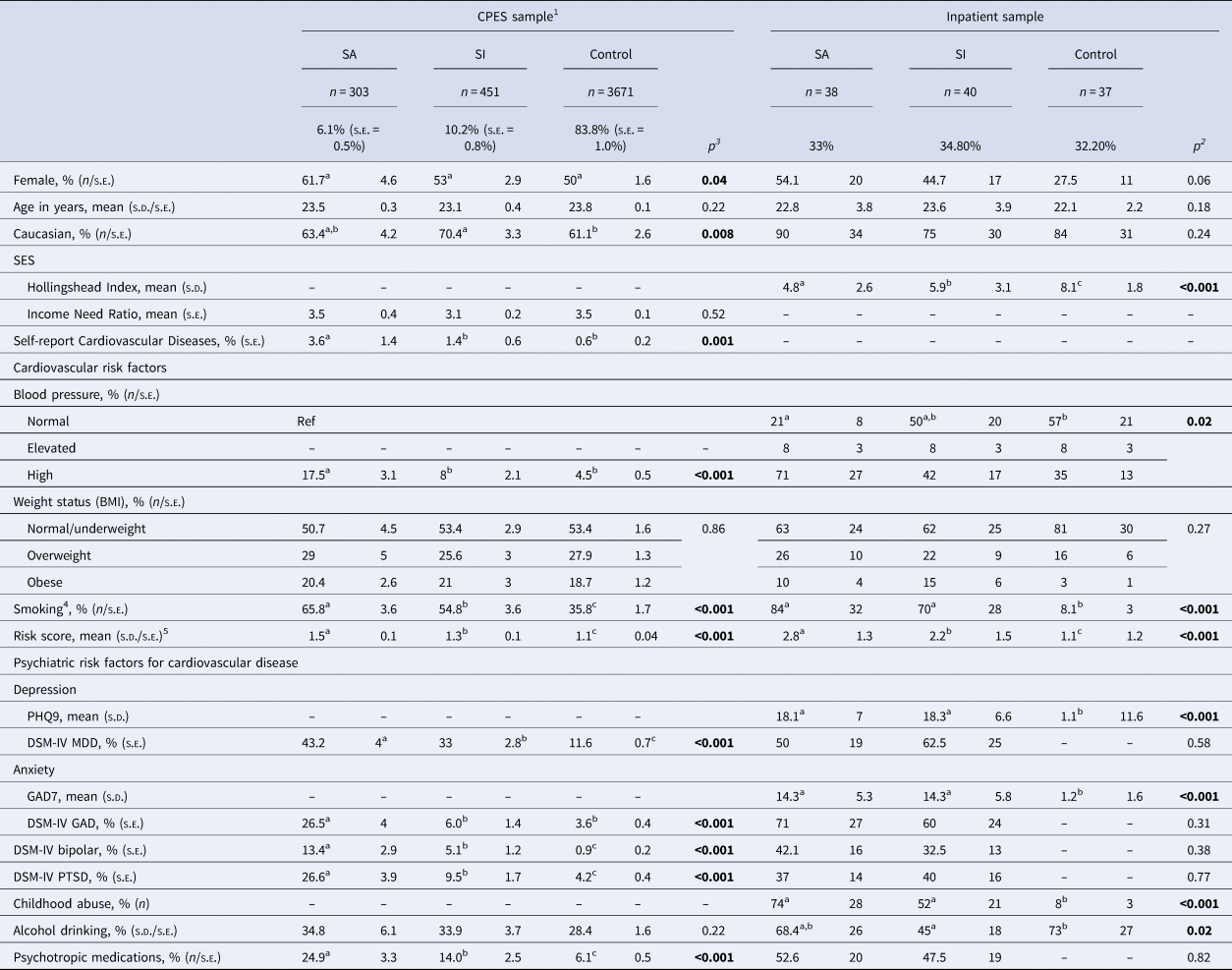
This sample consisted of psychiatric inpatients, aged 15–30 years, admitted for SA (n = 38) or SI with no history of attempt (SI, n = 40); and healthy controls with no history of psychiatric disorders and suicidal and/or self-injurious behaviors (n = 37). We recruited inpatients from Western Psychiatric Hospital of the University of Pittsburgh Medical Center, and healthy controls from the University of Pittsburgh's Clinical and Translational Science Institute participant registry which recruits participants at points of routine clinical care, through MyChart, and other community outreach events. Psychiatric inpatients were recruited on average 3 days after admission (standard deviation (s.d.) = 1.6, range 1–8), and attempters were medically stabilized prior to participation in the study. Detailed sample characteristics were previously reported (Chang et al., Reference Chang, Munroe, Gray, Porta, Douaihy, Marsland and Melhem2019; Melhem et al., Reference Melhem, Munroe, Marsland, Gray, Brent, Porta and Gopalan2017). SA and SI groups had similar psychiatric and comorbidity profiles (Table 1). Participant recruitment followed the Institutional Review Board guidelines at the University of Pittsburgh and provided informed consent/assent.
Characteristics of the inpatient sample and the CPES sample by group
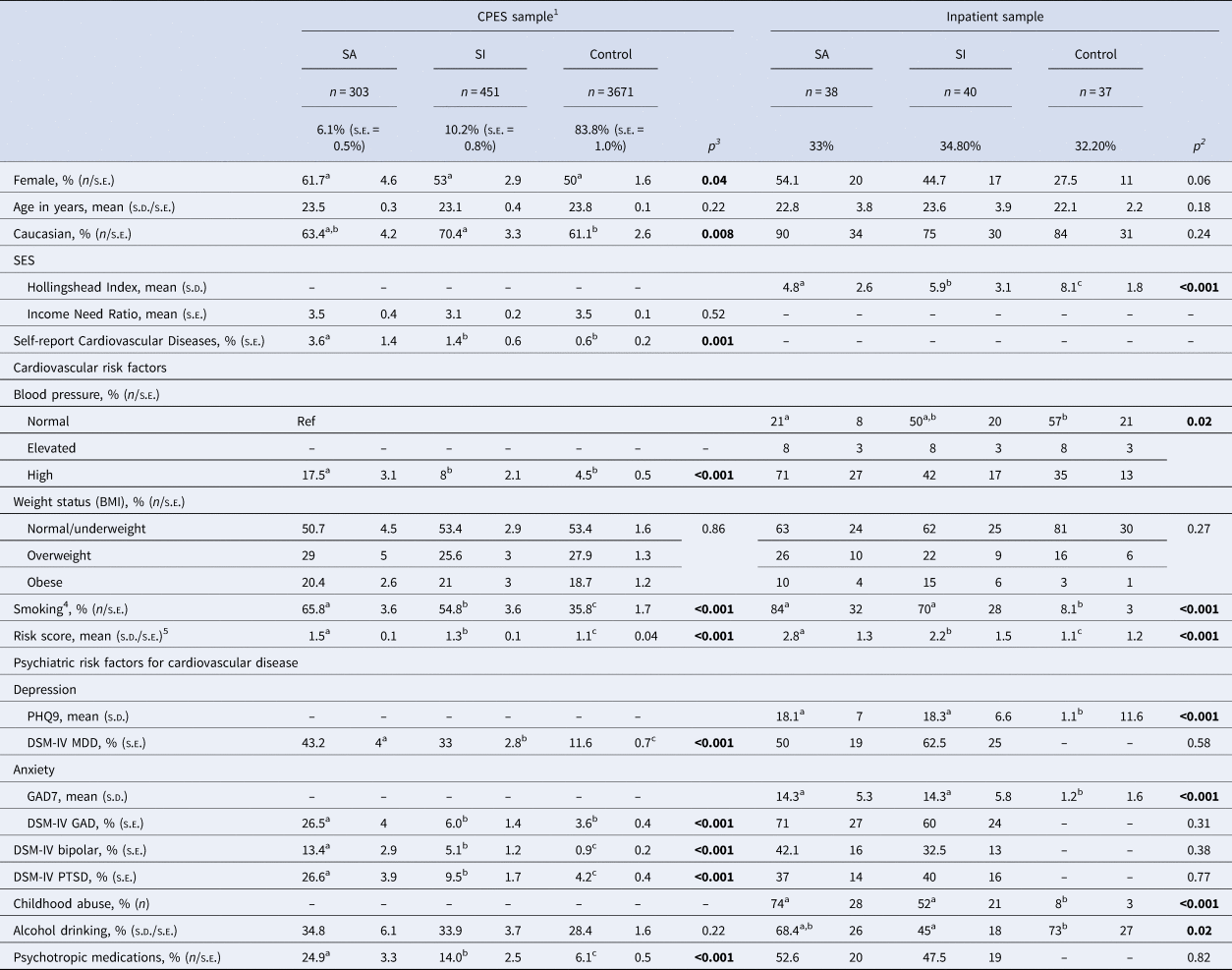
SA, suicide attempt, SI, suicidal ideation; PHQ9, Patient Health Questionnaire 9-item; GAD7, Generalized Anxiety Disorder 7-item; DSM-IV MDD, DSM-IV major depressive disorder; DSM-IV GAD, DSM-IV Generalized Anxiety Disorder; DSM-IV PTSD, DSM-IV post-traumatic stress disorder; DSM-IV bipolar, DSM-IV bipolar disorder; ref, reference group. Bolded values represents significant differences.
1 Weighted prevalence and means (aged 18–30 years).
2 Chi-squared/Fisher's exact test for frequency difference, one-way ANOVA for the mean difference
3 Weighted χ2 for frequency difference, Wald's test for the mean difference
4 Current smoking for psychiatric inpatient and life-time smoking status for a population-based sample.
5 Risk score for psychiatric inpatient sample (range 0–5): BP (normal = 0, elevated = 1, high = 2) + BMI (normal/underweight = 0, overweight = 1, obese = 2) + smoking (no = 0, yes = 1); for the population-based sample (range 0–4): high BP (no = 0, yes = 1) + BMI (normal/underweight = 0, overweight = 1, obese = 2) + smoking (no = 0, yes = 1).
a–c: different letters represent significant post hoc differences and similar letters represent no post hoc differences (Bonferroni's method).
Assessments
The CPES
The World Mental Health Survey Initiative's version of the Composite International Diagnostic Interview (WMH-CIDI) was used to assess psychiatric disorders using the Diagnostic and Statistical Manual for Mental Disorders-IV (DSM-IV). The WMH-CIDI is a fully structured diagnostic interview administered by trained lay interviewers (Kessler & Üstün, Reference Kessler and Üstün2004). SI and SA. Suicide attempters were identified as participants endorsing ever attempted suicide on the WMH-CIDI; youth with SI only were those who endorsed ever seriously thinking about attempting suicide but have no history of attempt (Kessler, Borges, & Walters, Reference Kessler, Borges and Walters1999).
Cardiovascular risk factors and disease: Participants who endorsed ‘a doctor or other health professional ever told you that you had high BP’ were classified as having high BP. Self-reported height and weight were collected and used to calculate body mass index (BMI). For adults aged 18 or over, BMI < 25.0 kg/m2 was classified as underweight/normal, ⩾25.0 kg/m2 and <30 kg/m2 as overweight, and ⩾30 kg/m2 as obese (Jensen et al., Reference Jensen, Ryan, Apovian, Ard, Comuzzie and Donato2014). For youth under age 18 years, we used the extended International Obesity Task Force BMI cut-offs for classification (Cole & Lobstein, Reference Cole and Lobstein2012). We conducted sensitivity analyses excluding individuals who were underweight (prevalence: 3.7%, s.e. = 0.005). Lifetime smoking was determined by self-report. Finally, cardiovascular disease status was defined using a positive response to ‘ever had heart disease, heart attack, or stroke in your lifetime.’
Covariates: We controlled in our analyses for age, sex, race, and income to need ratio in 2003 as a proxy of socioeconomic status (SES). Controls with a history of psychiatric disorders were included. Thus, we controlled for lifetime DSM-IV MDD and Generalized Anxiety Disorders (GADs), which were the most common psychiatric disorders in this sample (Kessler et al., Reference Kessler, Berglund, Demler, Jin, Merikangas and Walters2005). We also controlled for alcohol drinking, defined as ⩾1–2 days per week over the past year, and conducted sensitivity analyses additionally controlling for DSM-IV bipolar disorder (Naiberg et al., Reference Naiberg, Newton, Collins, Dickstein, Bowie and Goldstein2016a; Naiberg, Newton, Collins, Bowie, & Goldstein, Reference Naiberg, Newton, Collins, Bowie and Goldstein2016b) because these are associated with increased risk for cardiovascular disease (Flegal & Williamson, Reference Flegal and Williamson2010; Park, Lee, & Han, Reference Park, Lee and Han2017; Wu et al., Reference Wu, Lu, Yang, Lin, Huang, Wu and Chang2008). Childhood abuse was not publicly available in CPES data and as such, we did not include it as a covariate; however, we included posttraumatic stress disorder (PTSD). We controlled for the use of psychiatric medications (yes/no) in the past year in sensitivity analyses (Casey, Reference Casey2005; Hamer, Batty, Seldenrijk, & Kivimaki, Reference Hamer, Batty, Seldenrijk and Kivimaki2011).
Inpatient sample
We used the Family History-Research Diagnostic Criteria to assess DSM-IV psychiatric disorders (Andreasen, Reference Andreasen1986). SI and SA were assessed using the Columbia Suicide Severity Rating Scale (Posner et al., Reference Posner, Brown, Stanley, Brent, Yershova, Oquendo and Mann2011) administered by master-level clinical interviewers. We previously reported SA and SI to be similar on primary and comorbid diagnoses and mood disorders to be the most common primary psychiatric diagnosis (MDD: 50% in SA v. 62.5% in SI; bipolar disorder: 42.1% in SA v. 32.5% in SI, Fisher's exact test, p = 0.58) (Melhem et al., Reference Melhem, Munroe, Marsland, Gray, Brent, Porta and Gopalan2017).
Cardiovascular risk factors: We collected three consecutive readings of systolic and diastolic BP at rest when seated with 3–5 min intervals between readings. The correlation among three readings was >0.7 and the average of the three readings was used in our analyses [mean (s.d.): systolic = 120.5 (14.2), diastolic = 78.2 (9.3)]. We then classified BP using the latest American College of Cardiology (ACC) and AHA criteria for high BP (Armstrong, Reference Armstrong2018; Flynn et al., Reference Flynn, Kaelber, Baker-Smith, Blowey, Carroll and Daniels2017) for adults into three categories: normal defined as systolic <120 mmHg and diastolic <80mmHg; elevated defined as systolic 120–129 mmHg and diastolic <80 mmHg; and high BP defined as systolic ⩾130 mmHg or diastolic ⩾80 mmHg. We used the same classification for elevated/high BP for adolescents’ participants as those of adults (Flynn et al., Reference Flynn, Kaelber, Baker-Smith, Blowey, Carroll and Daniels2017). We measured height and weight and computed BMI and used the same guidelines for classification into underweight/normal, overweight, and obese as for the CPES sample. Similar to the CPES samples, we conducted sensitivity analyses excluding individuals who were underweight (3%, n = 3). Finally, we measured the number of cigarettes currently smoked per day and classified those smoking at least one cigarette/day as current smokers.
Covariates: We controlled for the effects of age, sex, race, and the Hollingshead index of SES (Hollingshead, Reference Hollingshead1975). Since our controls have no history of psychiatric disorders and suicidal and/or self-injurious behaviors, we controlled for the severity of depression and anxiety symptoms (Goldstein et al., Reference Goldstein, Carnethon, Matthews, McIntyre, Miller, Raghuveer and McCrindle2015), assessed by the Patient Health Questionnaire 9-item (PHQ9; Kroenke and Spitzer, Reference Kroenke and Spitzer2002) and GAD 7-item (GAD7; Spitzer, Kroenke, Williams, and Löwe, Reference Spitzer, Kroenke, Williams and Löwe2006), respectively. We also controlled for childhood abuse because it is associated with cardiometabolic outcomes (Suglia et al., Reference Suglia, Koenen, Boynton-Jarrett, Chan, Clark and Danese2018), assessed using the Child Trauma Questionnaire (CTQ; Bernstein et al., Reference Bernstein, Fink, Handelsman, Foote, Lovejoy, Wenzel and Ruggiero1994) and used the CTQ cut-offs for moderate and severe childhood physical and sexual abuse to compute a binary variable. We also controlled for alcohol drinking in the past year, which was assessed using the revised Drug Use Screening Inventory (Kirisci, Mezzich, & Tarter, Reference Kirisci, Mezzich and Tarter1995) and defined as 3–9 times or more per month over the past year. We also conducted sensitivity analyses comparing SA and SI in this sample controlling for MDD, GAD, PTSD, bipolar disorder, current use of psychiatric medications (yes/no), similar to the CPES sample.
Statistical analyses
We compared the groups on demographic and clinical characteristics using χ2 tests and analysis of variance (ANOVA), followed by Bonferroni's post-hoc comparisons for significant results. We also examined differences between groups on individual cardiovascular risk factors (elevated/high BP, overweight/obesity, and smoking status) and used a Bonferroni correction with α = 0.05/3 = 0.017. We then computed a cardiovascular risk score adding the number and the magnitude of individual risk factors, ranging from 0 to 4 in CPES and from 0 to 5 in the inpatient sample. Linear regression was used to examine the association of SI and SA with the risk score in each sample: Model 1, unadjusted model; Model 2, adjusting for age, sex, race, SES, depressive and anxiety symptoms (MDD and GAD in CPES sample); Model 3, adjusting in addition for alcohol drinking, childhood abuse (inpatient sample), and PTSD (CPES). A dummy coded variable for SI and SA was used as the independent variable with controls as the reference group. When dummy variables for SA and SI showed significant differences, we compared the coefficients resulting from the models post-hoc. Similar models were conducted for the individual cardiovascular risk factors with α = 0.05/3 = 0.017; results are included in the supplementary materials. Analyses were conducted in R (3.5.1) and sampling weights of CPES were accounted for using survey package (3.33-2).
The latent class analysis was used to identify the unobserved (latent) clusters based on observed variables using Mplus (Version 8). We entered the three cardiovascular risk factors to classify participants into high- and low-risk groups for both samples. Similar logistic regression models were conducted to examine the associations of cardiovascular risk groups with SI and SA. In CPES, we also tested the association between a history of cardiovascular disease and SI and SA by weighted logistic regressions: Model 1, an unadjusted model; Model 2, adjusted for age, sex, race, SES, DSM-IV MDD, GAD, and PTSD diagnoses; and we additionally adjusted for self-reported BP, BMI, and smoking in Model 3.
Because of the different nature of controls in the two samples, we conducted sensitivity analyses for all regression models where we repeated them excluding controls. In these models, we also controlled for MDD, GAD, PTSD, and bipolar disorder diagnoses in the inpatient sample, comparable to covariates included in CPES. Additional sensitivity analyses were conducted excluding underweight individuals because the number in the two samples was too small to analyze as a separate category. In addition, we conducted Tobit and logistic regressions to examine the relationship of the cardiovascular risk score with SI and SA given its distribution with left-censored observations towards 0 or low-risk scores. In logistic regression, we combined risk scores of 0 and 1 in one category as the reference category and 2 or more as the risk category.
Results
Cardiovascular risk score
Table 1 shows the sociodemographic and cardiovascular risk factors characteristics by the group for the two samples. There were no differences between SA, SI, and controls on demographic characteristics except that SI was more likely to be Caucasians compared to controls in the CPES sample. In the inpatient sample, SA and SI showed lower SES than controls and SA showed lower SES than SI.
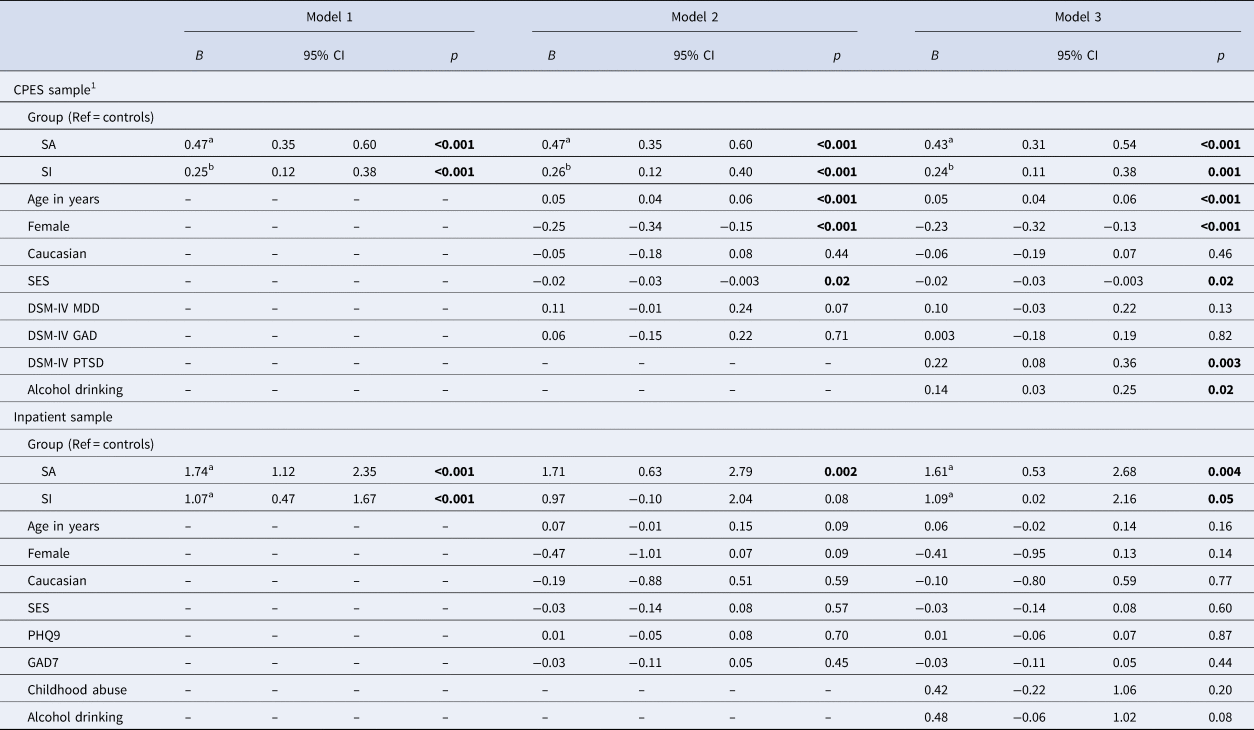
SA and SI showed significantly higher cardiovascular risk scores than controls in unadjusted models in the two samples (Tables 1 and 2). Controlling for covariates, SA (B = 0.43, 95% confidence interval (CI) 0.31–0.54, Cohen's d = 0.11, p < 0.001) and SI (B = 0.24, 95% CI 0.11–0.38, Cohen's d = 0.05, p < 0.001) had significantly increased risk scores in the CPES sample and the coefficients for SA were significantly larger than coefficients for SI in post-hoc comparisons. In the inpatient sample, only SA showed increased risk score (B = 1.61, 95% CI 0.53–2.68, Cohen's d = 0.28, p = 0.004) (Table 2). There were no differences in our cardiovascular risk score between individuals using psychiatric medications (excluding controls) and those who did not, respectively (CPES: 1.42 ± 0.07 v. 1.38 ± 0.14, t = 0.26, df = 98, p = 0.80; inpatient: 2.21 ± 1.49 v. 2.74 ± 1.31, t = 1.69, df = 74.8, p = 0.09). Sensitivity analyses showed similar results in the two samples, when we excluded controls, controlled for diagnoses in the inpatient sample similar to the CPES sample, and controlled for bipolar disorder and psychotropic medications in the two samples (online supplementary eTable S1); and when using Tobit and logistic regression methods (online eFig. S2; eTable S2). Similar findings of sensitivity analyses were observed when underweight subjects were excluded (results are available upon request).
Relationships of cardiovascular risk score with SI and SA
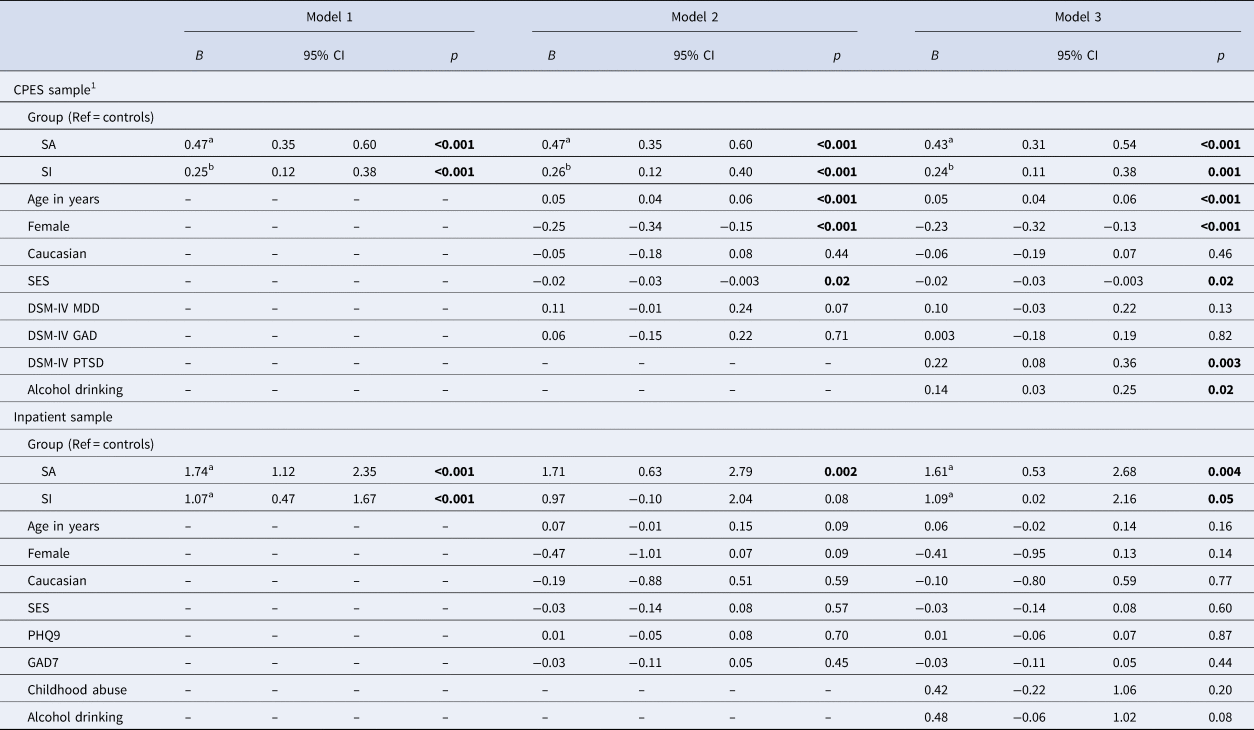
SA, suicide attempt; SI, suicidal ideation; Controls is the reference group; SES, socioeconomic status; PHQ9, Patient Health Questionnaire 9-item; GAD7, Generalized Anxiety Disorder 7-item; DSM-IV MDD, DSM-IV major depressive disorder; DSM-IV GAD, DSM-IV generalized anxiety disorder; DSM-IV PTSD, DSM-IV post-traumatic stress disorder; ref, reference group. Bolded values represents significant differences.
1 Weights linear regression models were used; letters represent Bonferroni post-hoc comparison for the coefficients between SA and SI.
Examining individual risk factors, BP and current smoking status were significantly higher in SA than SI and controls in the two samples; however, there were no significant differences in BMI (Table 1). When controlling for covariates, only SA was significantly more likely to be current smokers (online supplementary e Tables S3–S8). The prevalence of high BP and lifetime smoking differed significantly between the three groups but there were no differences in BMI. Controlling for covariates, SA were more likely to have high BP and to be lifetime smokers. SI was also more likely to be smokers compared to controls.
Clustering of cardiovascular risk factors
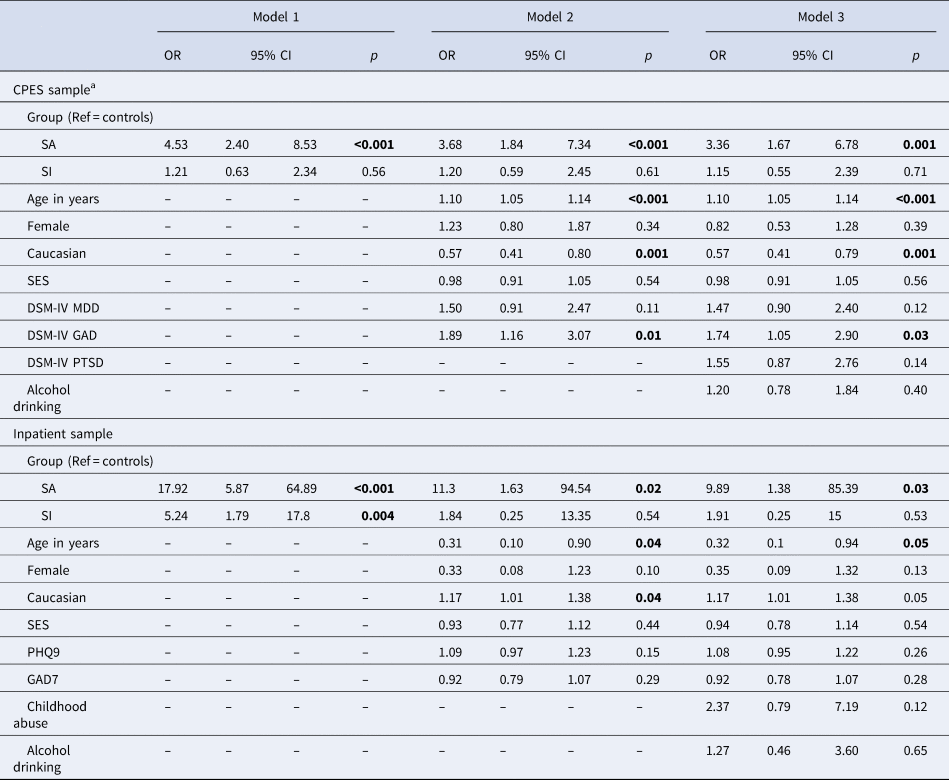
Latent class modeling resulted in two classes with 4.7% (s.e. = 0.4, n = 282) of the CPES sample classified in the high cardiovascular risk group and 44.3% (n = 51) of the inpatient sample. Latent class model indices and class characteristics are presented in online supplementary eTables S9 and S10. Only SA was significantly more likely to be classified in the high-risk group (CPES: OR 3.36, 95% CI 1.67–6.78, p = 0.001; inpatient sample: OR 9.89, 95% CI 1.38–85.39, p = 0.03) after adjusting for covariates (Table 3). Sensitivity analyses excluding controls and controlling for the same covariates in the two samples showed similar results (online supplementary eTable 11).
Logistic regression models for cardiovascular risk latent class by group
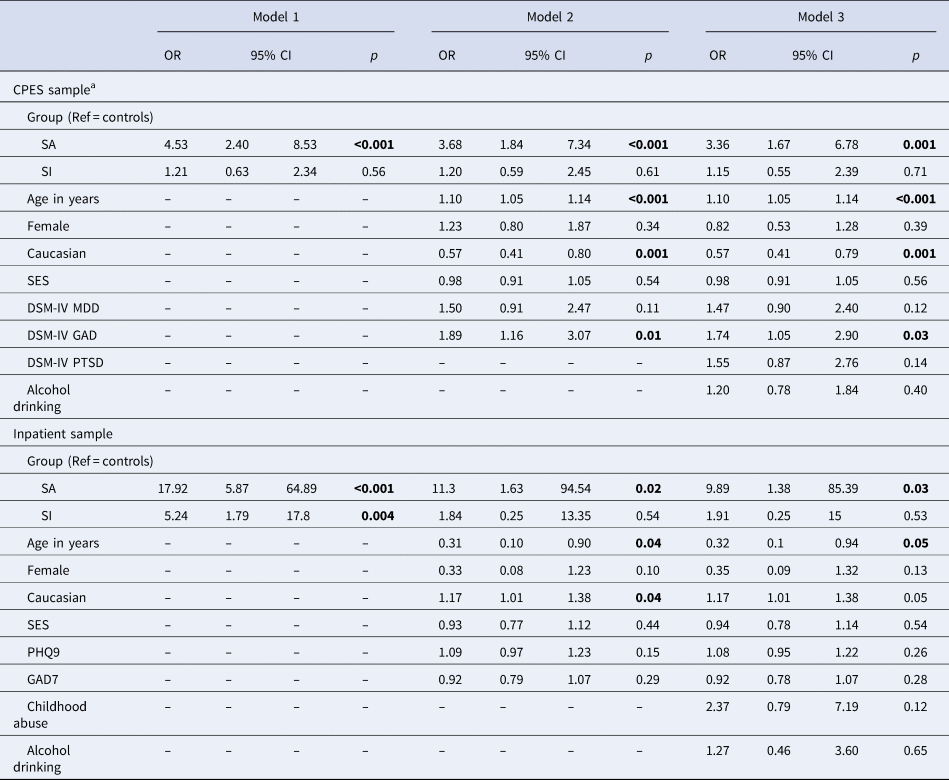
SA, suicide attempt; SI, suicidal ideation; Controls is the reference group; PHQ9, Patient Health Questionnaire 9-item; GAD7, Generalized Anxiety Disorder 7-item; DSM-IV MDD, DSM-IV major depressive disorder; DSM-IV GAD, DSM-IV generalized anxiety disorder; DSM-IV PTSD, DSM-IV post-traumatic stress disorder; ref, reference group. Bolded values represents significant differences.
a Weighted logistic regression models were used.
In CEPS, SA was also significantly more likely to report having been diagnosed with cardiovascular disease (OR 4.28, 95% CI 1.18–15.49, p = 0.03) adjusting for demographic, and psychiatric and cardiovascular risk factors (online supplementary eTable 12).
Discussion
Youth SA showed an increased burden of cardiovascular risk compared to other high-risk youth with SI and was also more likely to report a history of established cardiovascular disease.
This is the first study to examine differences in cardiovascular risk between youth SA and SI. A major strength of our study is including two independent samples: a population-based sample and a severely ill psychiatric inpatient sample. However, there were several limitations. The two samples were cross-sectional and do not include a detailed assessment of cholesterol, blood glucose, physical activity (Goldstein et al., Reference Goldstein, Carnethon, Matthews, McIntyre, Miller, Raghuveer and McCrindle2015), heart rate (Chang et al., Reference Chang, Bjørngaard, Tsai, Bjerkeset, Wen, Yip and Gunnell2016; Lemogne et al., Reference Lemogne, Thomas, Consoli, Pannier, Jégo and Danchin2011; Tadic, Cuspidi, & Grassi, Reference Tadic, Cuspidi and Grassi2018), use of medication for non-psychiatric purposes and cardiovascular risk factors, and family history of cardiovascular disease (Casey, Reference Casey2005; Hamer et al., Reference Hamer, Batty, Seldenrijk and Kivimaki2011; McCusker et al., Reference McCusker, Yoon, Gwinn, Malarcher, Neff and Khoury2004). The two samples differed in their measures of SI and SA, cardiovascular risk factors (measured v. self-report), and in the type of control participants included. However, sensitivity analyses comparing SA and SI while excluding controls and controlling for the same covariates in the two samples showed similar results. In addition, the rates of high BP were high in our sample of psychiatric patients recruited during their hospitalization, which may or may not reflect their BP in a naturalistic setting. We also used the latest ACC/AHA criteria for high BP (Armstrong, Reference Armstrong2018; Flynn et al., Reference Flynn, Kaelber, Baker-Smith, Blowey, Carroll and Daniels2017), which are conservative and may have contributed to these high rates (Doran, McChargue, & Spring, Reference Doran, McChargue and Spring2008). The sample size for the inpatient sample is relatively small; however, we only included attempters who were admitted to the hospital and thus required medical attention. Suicidal behavior is a rare event and as such, our sample size of SA is not small for such a rare outcome. In addition, our sample size is powered to detect medium effect sizes in the order of 0.65 or higher, which we are interested in detecting for effect sizes to be clinically significant. Despite these methodological differences, the results were consistent across the two samples.
We found that SA has an increased burden of cardiovascular risk and are already more likely to report a history of cardiovascular disease, despite being young adults and even after controlling for well-established risk factors. These results are consistent with Shah et al.'s findings showing increased risk for cardiovascular disease mortality in young adult attempters, a risk higher than those with a history of major depression (Shah et al., Reference Shah, Veledar, Hong, Bremner and Vaccarino2011). Our results are cross-sectional and cannot address the temporality between suicidal behavior and the onset of cardiovascular risk factors or disease. However, longitudinal studies suggest patients with self-harm have higher mortalities of both suicide and cardiovascular disease compared to patients without self-harm (Bergen et al., Reference Bergen, Hawton, Waters, Ness, Cooper, Steeg and Kapur2012; Hawton et al., Reference Hawton, Harriss and Zahl2006). It is also important to note that our samples are youth aged under 30 years. The mean age of onset of a heart attack is 65.6 years in males and 72 years in females (Benjamin et al., Reference Benjamin, Virani, Callaway, Chamberlain, Chang and Cheng2018). The mean age of onset of SA was 19.9 (s.d. = 5.1) in the inpatient sample and 15.6 (s.d. = 0.54) in the CPES. The two samples may be different in the severity of SAs, which could explain the younger age of onset in the CPES since our sample only included those who required medical attention. These results suggest that suicide attempters may be a more severely ill population among psychiatric patients and are at risk for cardiovascular disease and other chronic diseases. They also suggest that there might be a common etiology between suicidal behavior and cardiovascular disease. Indeed, there are several potential mechanistic pathways between suicidal behavior and cardiovascular risk, including increased impulsivity (Naiberg et al., Reference Naiberg, Newton, Collins, Bowie and Goldstein2016b), impaired cognitive function (Naiberg et al., Reference Naiberg, Newton, Collins, Dickstein, Bowie and Goldstein2016a), reduced brain volume (Islam, Metcalfe, MacIntosh, Korczak, & Goldstein, Reference Islam, Metcalfe, MacIntosh, Korczak and Goldstein2018), and inflammation (Melhem et al., Reference Melhem, Keilp, Porta, Oquendo, Burke, Stanley and Brent2016; Reference Melhem, Munroe, Marsland, Gray, Brent, Porta and Gopalan2017). Future longitudinal studies are needed in order to interrogate biological pathways for these diseases that can be targeted for early prevention and intervention.
SA was more likely to smoke and have high BP, consistent with current literature on the association between smoking and severe mental illness and suicide (Li et al., Reference Li, Yang, Ge, Hao, Wang, Liu and Huang2012). Smoking is also a common behavioral risk factor for high BP and obesity (Chang et al., Reference Chang, Munroe, Gray, Porta, Douaihy, Marsland and Melhem2019; Goldstein et al., Reference Goldstein, Carnethon, Matthews, McIntyre, Miller, Raghuveer and McCrindle2015; Lee, Taneja, & Vassallo, Reference Lee, Taneja and Vassallo2012). In the inpatient sample, the rate of high BP based on BP readings was higher in each of the SA, SI, and control groups compared to the CPES groups. We used the latest ACC/AHA criteria for high BP (Armstrong, Reference Armstrong2018; Flynn et al., Reference Flynn, Kaelber, Baker-Smith, Blowey, Carroll and Daniels2017), which are more conservative compared to those used at the time of CPES data collection. However, the severity of psychiatric illness in our inpatient sample and the often-comorbid medical illness in these patients may explain the higher rates of high BP. Although obesity is a major cardiovascular risk factor, SA and SI were not different than controls on obesity. Smoking has been reported to be associated with lower BMI (Piirtola et al., Reference Piirtola, Jelenkovic, Latvala, Sund, Honda, Inui and Silventoinen2018). In the inpatient sample, the high cardiovascular risk group showed a higher number of cigarettes per day compared to the low cardiovascular risk group (12.8 ± 12.0 v. 4.4 ± 8.9, p < 0.001). As such, smoking is a potential risk factor that needs to be targeted for interventions.
In conclusion, youth suicide attempters showed an increased burden of cardiovascular risk compared to other high-risk youth with SI. Future studies are needed to further characterize cardiovascular risk in suicide attempters using longitudinal study designs and to examine the biological pathways that are common between suicidal behavior and cardiovascular disease. In the meantime, clinicians should pay particular attention to suicide attempters among psychiatric patients in terms of cardiovascular risk factors in order to reduce their risk for cardiovascular events. In addition, reducing cardiovascular risk factors, especially smoking, could potentially reduce the risk of SAs among high-risk youth.
Supplementary material
The supplementary material for this article can be found at https://doi.org/10.1017/S0033291720003736
Acknowledgements
We would like to thank patients for their participation. We would also like to thank and acknowledge Karen Mathews, PhD, at the University of Pittsburgh for reading and providing critical feedback on the manuscript; and physicians and treatment teams at Western Psychiatric Hospital who helped in patient identification and referrals.
Financial support
Dr Melhem reported receiving research support from the National Institute of Mental Health (NIMH), Brain and Behavior Research Foundation, and the American Foundation for Suicide Prevention (AFSP). Dr Brent received research support from NIMH, AFSP, and the Once Upon a Time Foundation, honoraria from the Klingenstein Third Generation Foundation royalties for scientific board membership and grant review, from Guilford Press, royalties from the electronic self-rated version of the C-SSRS from ERT, Inc., royalties from performing duties as an UpToDate Psychiatry Section Editor, payment for serving as an Associate Editor for Psychological Medicine, and consulting fees from Healthwise. Dr Douaihy received research funding from the National Institute of Mental Health, the National Institute on Drug Abuse, American Foundation for Suicide Prevention, National Heart, Lung, and Blood Institute, Substance Abuse and Mental Health Services Administration, HRSA, and Alkermes, He received royalties for academic books from Oxford University Press, Springer, and PESI Publishing & Media. No other disclosures were reported.
Conflict of interest
This study work was supported by grant nos. MH101208 and MH109493 (PI: Melhem NM) from the National Institute of Mental Health. The National Institute of Mental Health did not participate in the design and conduct of the study; in the collection, management, analysis, and interpretation of the data; or in the preparation, review, or approval of the manuscript.